Chile: Elderly Woman Denied Entry to Supermarket After Failing to Obtain Government Permission to Buy Food
By Paul Joseph Watson | Summit News | April 12, 2021
A video out of Chile shows an elderly woman being refused entry to a supermarket because she didn’t obtain the necessary government permission to buy groceries under the country’s lockdown rules.
The clip shows the woman, who is apparently 100-years-old, appearing to be confused as she is denied access by security guards in uniform.
“Unfortunately government measures are not intended for the most vulnerable, not everyone handles the technology, not everyone has access to the internet,” tweeted Radio Villa Francia along with the video.
In Chile, people have to apply for a “safe conduct pass” online, which only allows them to buy essential food items twice a week between the hours of 5am and 9pm.
Under the country’s ‘sanitary quarantine’, citizens must request “temporary instruments that authorize people to carry out fundamental activities and stock up on essential goods and services” in their communes.
The elderly lady’s failure to obtain the pass may have been related to her presumed inability to navigate the Internet.
The video serves as a chilling reminder as to what could be introduced in the west once vaccine passports and Chinese-style social credit score programs are implemented.
In the UK, vaccine passports won’t initially be required to enter venues like pubs, restaurants and grocery stores, but the government refused to rule it out longer term in their planning document.
In China, citizens who allow their social credit score to dip as a result of committing relatively minor infractions are denied the right to purchase things like plane and train tickets.
Papers reveal US-backed Brazil’s role in installing and supporting Pinochet in Chile

By Kit Klarenberg | RT | April 1, 2021
Washington’s involvement in the violent overthrow of the democratically elected government of Chile in September 1973 is by this point well known. The pivotal role played by Brazil has not been as clear until now.
On the anniversary of the 1964 US-backed coup that led to Brazilian President Joao Goulart being replaced by a military junta, the National Security Archive has published a trove of previously classified documents showing the role that junta later played in subverting democracy in Chile, and its subsequent support of General Augusto Pinochet’s brutal repression of political opponents.
The file trail begins September 22, 1970, 18 days after Salvador Allende of the Popular Unity alliance narrowly won the Chilean presidency. A document, prepared for General Emilio Garrastazu Medici – then the third president of Brazil’s military dictatorship – summarizes a recent meeting between the US ambassador to Chile, Edward Korry, and his Brazilian counterpart.
Following Allende’s victory, Korry, a veteran diplomat during the administrations of Presidents Kennedy, Johnson, and Nixon, vowed that “not a nut or bolt shall reach Chile” under the socialist’s rule, and if and when he took office in November that year, the US would “do all within our power to condemn Chile and the Chileans to utmost deprivation and poverty.”
Accordingly, the summary makes clear US plans to undermine Allende were well underway by the time the two ambassadors met.
“Following direct orders from the White House,” Korry was said to be “insinuating to all relevant sectors” that Chile would have “difficulties” – including a shortage of foreign credit and military aid – should the country’s Congress confirm Allende as leader. He also noted the US Embassy was distributing written material warning of the dangers of an Allende government to Chilean military commanders, the very elements that would brutally take power three years later.
Korry’s message was clearly received loud and clear, for in March the next year – five months after Allende’s confirmation – Chilean ambassador to Brasilia Raul Rettig submitted a troubling report to his foreign ministry, titled ‘Brazilian Army possibly conducting studies on guerrillas being introduced into Chile’.
Rettig – who, two decades later, chaired the country’s first ‘truth commission’, which investigated human rights abuses during Pinochet’s rule – had heard from multiple sources that the Brazilian regime was extensively evaluating how to instigate violent insurrection in Chile and overthrow the Allende government via an “armed movement.”
Plans were well developed already, with the military having established a dedicated ‘war room’, with maps and models of the Andean mountain range along the Chilean border, to plan infiltration operations. A number of Brazilian secret agents had also reportedly “entered the country as tourists, with the intention of gathering more background on possible regions where a guerrilla movement might operate,” Rettig’s report revealed.
Brasilia was highly confident of success. In a November 1971 meeting at the White House, President Medici assured Richard Nixon that Allende “would be overthrown for very much the same reasons that Goulart had been,” and Chile’s military was up to the task. He added that Brazil had been “exchanging many officers with the Chileans, and made clear that Brazil was working towards this end.”
In return, the US president pledged “to be helpful in this area,” such as providing “discreet aid,” on the basis that “we must try and prevent new Allendes and Castros and try, where possible, to reverse these trends.” A contemporary CIA intelligence memorandum noted that, to Brazilian military top brass, Washington “obviously” wanted Brasilia to “do the dirty work” in Chile and elsewhere in Latin America.
By July the next year, Brazil had established back-channel communications with Chilean army officers, covertly flying them into the country to meet with high-ranking authorities and begin plotting the downfall of Allende. An August 1973 Brazilian intelligence report details a summit at an airbase in Santiago, at which high-level Chilean military officials were given extensive briefings on Brazil’s own military coup nine years earlier, in the process learning “useful” lessons for their own impending action.
So, it was that, on September 11, 1973, the Chilean military stormed the presidential palace and took power by force. Ground troops were assisted by British-made Hawker Hunter aircraft, which bombed the building and suppressed rooftop snipers. Allende also died in the fighting, and while investigators have ruled it was suicide, some still question that conclusion, arguing that he was in fact murdered.
In the process, Chile – hitherto an aberrant beacon of democracy and stability in a region typified by dictatorships – became a military junta, led by General Pinochet. Death squads immediately set about rounding up thousands of known or suspected Chilean leftists in the country, imprisoning up to 40,000 people in the country’s National Stadium.
The new files make it clear that Brazil moved very quickly to legitimize the new regime, racing to become the first country to officially recognize Pinochet’s despotism, and drafting speeches for the government’s representatives at the United Nations General Assembly to palliate the bloodshed unfolding in Santiago.
Plainclothes Brazilian intelligence agents also secretly assisted Chilean officials in conducting interrogations, torture, and executions at the National Stadium. Among those detained were US citizens, and Brazilians residing in Chile, at least three of whom were of such interest to Brasilia that officials were attempting to arrange their return home.
Comparable hands-on support persisted for many years thereafter. In August 1974, Colonel Manuel Contreras, chief of Chile’s Direccion de Inteligencia Nacional (DINA), requested official passports for 12 officers for a trip to Sao Paulo, in order that they might receive training from their Brazilian counterparts.
Humberto Gordon, who later headed DINA, is named among the officers, as are individuals later involved in the assassination of Orlando Letelier in Washington DC, which was directly ordered by Pinochet.
In the wake of the coup, Letelier – a Chilean economist, politician, and diplomat during Allende’s presidency – was held for 12 months in several concentration camps, along the way being severely tortured, being released only due to international diplomatic pressure. He fled the country and took refuge in the US, becoming Pinochet’s most prominent overseas critic.
On September 21, 1976, Letelier was killed via car bomb – much of his lower torso was blown away and his legs severed. Documents previously unearthed by the National Security Archive indicate that US officials had foreknowledge of the assassination, but transmission of a State Department communiqué warning the Chilean government against carrying it out was blocked by then-Secretary of State Henry Kissinger. … Full article
Felony Murder and Gen. Rene Schneider
By Jacob G. Hornberger | FFF | January 14, 2021
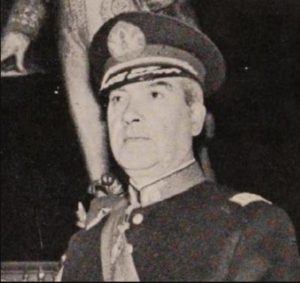 Some legal experts are speculating about the possibility that people who participated in the January 6 Capitol melee could be charged with murdering Capitol police officer Brian Sicknick, even though they did not participate in his killing. The felony-murder rule holds that if a person is involved in the commission of a felony in a conspiracy with others, he can be charged with murder even though others in the conspiracy did the killing.
When I read that, I immediately thought about the kidnapping and murder of Chilean General Rene Schneider, who was killed in 1970. In fact, it’s interesting that while the members of Congress and the mainstream press express shock and outrage over recent events in the Capitol, they have long been non-plussed by the shocking and outrageous violence that U.S. government officials instigated and in which they participated in 1970.
Schneider was the overall commander of Chile’s armed forces. He was a man of deep integrity, had a family, and believed that it was the duty of the military to support and defend the constitution of the country.
In the 1970 presidential election, the Chilean people delivered a plurality of votes to a man named Salvador Allende, who U.S. officials reviled because he was a socialist. Like President Kennedy ten years before, Allende was interested in establishing friendly relations with the communist world, including the Soviet Union and Cuba, two official Cold War enemies of the U.S. national-security establishment. Keep in mind that in 1970, the Cold War was still continuing and that the communists were defeating U.S. military and CIA forces in the Vietnam War.
U.S. officials determined that Allende posed a grave threat to “national security” — not only the “national security” of the United States but also the “national security” of Chile. They decided to prevent his accession to the presidency, either through bribes to the Chilean congress or through a U.S.-supported coup that would install a right-wing military dictatorship in the country.
There was one big obstacle to a coup: Gen. Rene Schneider.
The Chilean constitution provided for only two ways to remove a duly elected president from office: by impeachment (and conviction) or through the next election. The Chilean constitution did not provide for a coup as a third way to remove a president from office.
The Chilean congress had been unable to secure enough votes to remove Allende from office through impeachment. That left the next election, which would have meant that Allende would stay in office for the next 6 years.
Schneider’s position was very simple: Since the Constitution did not provide for a coup to remove the president, the military could not act to remove him.
The U.S. national-security establishment’s position was different: While it too favored supporting and defending the U.S. Constitution, it held that there was an implicit exception to the rule, which was: Whenever a country’s president is determined to be a grave threat to the “national security” of his own country, it becomes the the moral duty of the national-security establishment to protect “national security” by removing the president from office. (As I point out in an upcoming article in FFF’s monthly journal Future of Freedom, this mindset has clear ramifications in the Kennedy assassination, which occurred ten years prior to Allende’s election.)
In order to achieve the coup, it was necessary to remove Schneider as an obstacle. Thus, U.S. officials within the CIA and other parts of the U.S. government entered into a conspiracy to kidnap Schneider.
Now, before a go further, I know what some of you are thinking: “Conspiracy theory, Jacob! Conspiracy theory! There is no way that officials of the U.S. government would ever conspire to violently kidnap an innocent man! It’s outrageous that you would even suggest such a thing about our government!”
But the fact is that that this conspiracy did in fact occur, notwithstanding the fervent mindset that some might have to deny its existence. The CIA secretly hired the kidnappers, paid them money, including hush money after the fact, and even smuggled high-powered weapons into the country, which they gave to their Chilean co-conspirators.
When the kidnappers attempted to kidnap Schneider on the streets of Santiago, he was armed and fought back. The kidnappers shot him and Schneider died three days later from his wounds.
The CIA claimed that it never intended to murder Schneider. It said that it just wanted to kidnap him. However, that claim has the word “lie” written all over it. After all, what could they have done with him after kidnapping him? They couldn’t return him, given that would have restored him as the obstacle to the coup. Moreover, if they returned him, he might have been able to lead law-enforcement personnel to the kidnappers and ultimately to the CIA. Thus, it is a virtual certainty that Schneider would have been killed by one of the kidnappers and that the CIA would have dutifully expressed shock.
Nonetheless, enter the felony-murder rule. Kidnapping is a felony. So is conspiracy to kidnap. Under the felony-murder rule, the U.S. conspirators were as responsible for Schneider’s murders as the actual killers.
The CIA and other U.S. officials who participated in the conspiracy tried desperately to keep their involvement in the conspiracy secret. People who suspected their complicity in the plot were undoubtedly labeled “conspiracy theorists.” But investigators in the private sector kept pushing and ultimately the truth came out: The CIA and other U.S. officials had participated in a felony, with the conspiracy taking place in both Virginia and Washington, D.C.
Nonetheless, the Justice Department has never charged any of the conspirators with kidnapping or murder or conspiracy to commit kidnapping and murder. Keep in mind that there is no statute of limitations for murder. But even if a federal grand jury were to return a criminal indictment, it is a virtual certainty that the federal judiciary would immediately dismiss it on grounds of “national security.”
It’s probably worth mentioning that when the family of Rene Schneider sued in federal district court for Schneider’s wrongful death, the federal courts threw them out on their ears, without even permitting them to take depositions that could have determined the full extent of the conspiracy. When it comes to extraordinary measures to protect “national security,” including kidnapping and assassination, secrecy in a national-security state is always paramount.
But that’s the nature of any national-security state: omnipotent power to inflict violence on innocent people with immunity and impunity, even while decrying violence committed by others.
Jacob G. Hornberger is founder and president of The Future of Freedom Foundation. He was born and raised in Laredo, Texas, and received his B.A. in economics from Virginia Military Institute and his law degree from the University of Texas. He was a trial attorney for twelve years in Texas. He also was an adjunct professor at the University of Dallas, where he taught law and economics. In 1987, Mr. Hornberger left the practice of law to become director of programs at the Foundation for Economic Education.
Chile vote is a blow to corporate Canada and Trudeau
By Yves Engler · October 26, 2020
With Chileans voting overwhelming to rewrite the country’s Pinochet era constitution it’s a good moment to reflect on Ottawa’s support for his coup against Salvador Allende. It’s also worth looking at Canadian companies’ opposition to the popular uprising that lead to the referendum on reforming the dictatorship’s neoliberal constitution.
On Sunday nearly 8 in 10 Chileans voted to rewrite the country’s Augusto Pinochet era constitution. The vote was the culmination of months of antigovernment protests that began against a hike in transit fares last October and morphed into a broader challenge to economic inequality and other injustices. The dictatorship’s constitution entrenches pro-capitalist policies and was widely seen as contributing to the country’s large economic divide.
The Pierre Trudeau government was hostile to Allende’s elected government and predisposed to supporting Pinochet’s dictatorship. Days after the September 11 1973 coup against Allende, Andrew Ross, Canada’s ambassador to Chile cabled External Affairs: “Reprisals and searches have created panic atmosphere affecting particularly expatriates including the riffraff of the Latin American Left to whom Allende gave asylum … the country has been on a prolonged political binge under the elected Allende government and the junta has assumed the probably thankless task of sobering Chile up.” Thousands were incarcerated, tortured and killed in “sobering Chile up”.
Within three weeks of the coup, Canada recognized Pinochet’s military junta. Diplomatic support for Pinochet led to economic assistance. Just after the coup Canada voted for a $22 million Inter American Development Bank loan “rushed through the bank with embarrassing haste.” Ottawa immediately endorsed sending $95 million from the International Monetary Fund to Chile and supported renegotiating the country’s debt held by the Paris Club. After refusing to provide credits to the elected government, on October 2nd, 1973, Export Development Canada announced it was granting $5 million in credit to Chile’s central bank to purchase six Twin Otter aircraft from De Havilland, which could carry troops to and from short makeshift strips.
By 1978, Canadian support for the coup d’etat was significant. It included:
- Support for $810 million in multilateral loans with Canada’s share amounting to about $40 million.
- Five EDC facilities worth between $15 and $30 million.
- Two Canadian debt re-schedulings for Chile, equivalent to additional loans of approximately $5 million.
- Twenty loans by Canadian chartered banks worth more than $100 million, including a 1977 loan by Toronto Dominion to DINA (Pinochet’s secret police) to purchase equipment.
- Direct investments by Canadian companies valued at nearly $1 billion.
Prominent Canadian capitalists such as Peter Munk and Conrad Black were supporters of Pinochet.
When the recent protests began against billionaire president Sebastián Piñera in October, Trudeau supported the embattled right-wing leader. Two weeks into massive demonstrations against Piñera’s government, the PM held a phone conversation with the Chilean president who had a 14% approval rating. According to Amnesty International, 19 people had already died and dozens more were seriously injured in protests. A couple thousand were also arrested by a government that declared martial law and sent the army onto the streets for the first time since Pinochet. A Canadian Press story on the conversation noted, “a summary from the Prime Minister’s Office of Trudeau’s phone call with Pinera made no direct mention of the ongoing turmoil in Chile, a thriving country with which Canada has negotiated a free trade agreement.”
Rather than express concern about state-backed repression in Chile, the Prime Minister criticized “election irregularities in Bolivia” during his October conversation with Piñera. The false claims of “election irregularities” were then being used to justify ousting leftist indigenous president Evo Morales.
Amidst the massive demonstrations against Piñera in October, Trudeau also discussed Venezuela. In another phone conversation with Piñera two months ago Trudeau again raised “the situation in Venezuela”, according to the official readout, as he did in February 2018 and previously.
Chile is the top destination for Canadian investment in Latin America at over $20 billion. Over 50% of Chile’s large mining industry is Canadian owned and Canadian firms are major players in the country’s infrastructure. Scotiabank is one of the country’s biggest banks.
A number of stories highlighted Scotiabank’s concerns about the protests against inequality that ultimately lead to Sunday’s constitutional referendum. The Financial Post noted, “Scotiabank’s strategic foray into Latin America hits a snag with Chile unrest” and “Riots, state of emergency in Chile force Scotiabank to postpone investor day.” The CEO of the world’s 40th largest bank blamed the protests on an “intelligence breakdown” with people outside Chile “that came in with an intention of creating havoc.” In a January story titled “Why Brian Porter is doubling down on Scotiabank’s Latin American expansion”, he told the Financial Post that Twitter accounts tied to Russia sparked the unrest against Piñera!
Canadian companies, with Ottawa’s support, have led a number of environmentally and socially destructive projects in Chile. In the mid 2000s Toronto-based Brookfield Asset Management led a consortium, with US $700 million invested by the Canadian Pension Plan and British Columbia Investment Management Corporation, pushing to build a massive power line and dams in Chile’s Patagonia region, one of the planet’s greatest environmental treasures. “This kind of project could never be implemented in a full-fledged democracy,” explained Juan Pablo Orrego, a prominent Chilean environmentalist, to the Georgia Straight. “Our country is still under a constitutional, political, and financial checkmate to democracy which was put in place during the [Pinochet] military dictatorship and empowers the private sector.”
Sunday’s referendum is a blow to Canadian corporations operating in Chile and the Trudeau government’s alliance with right-wing governments in the Hemisphere.
Chilean government agrees with new constitution, but vetoes new Constituent Assembly
By Lucas Leiroz | October 19, 2020
Chile has been experiencing violent popular protests for over a year. The general dissatisfaction with the government of Sebastián Piñera and his allies has generated strong unrest in the country, which has worried the Chilean political elite. In this sense, fear of the consequences of the rebellions has led government officials to propose an agreement to stop the violence, but, apparently, the proposal is intended only to serve the interests of the government itself.
The Agreement for Social Peace and the New Constitution was then signed, celebrated between the political parties allied with the government and a large part of the opposition. This agreement provides for a plebiscite – scheduled for October 25th – in which Chileans must define whether they want a new Constitution and whether it should be elaborated by means of a Mixed Convention or a Constitutional Convention. These conditions are generating rejection in several social, political and territorial organizations that consider it lacking in popular legitimacy.
This pact does not include an original and sovereign Constituent Assembly as an option, but two mechanisms, which differ in integration. In the case of the Mixed Convention, it would be composed of 50% of representatives of the Congress and 50% of elected citizens; on the other hand, the Constitutional Convention would be 100% composed of representatives expressly chosen for that instance. The total impossibility of calling for a new Constituent Assembly demonstrates how it seeks to implement reforms that do not fully meet popular interests but prioritize the agendas of the government and the current congressmen.
The current Chilean Constitution does not allow a new Assembly to be convened, because this constitution is the same as it was during the military dictatorship. This means that the transition to a democratic regime has not been completed in Chile, which still has a dictatorial constitution. For the country to become a democratic nation, it is necessary to change the constitution and the government must agree to do so. The purpose of calling an Assembly is precisely to change the Constitution, so the excuse that the formation of the Assembly is “unconstitutional” cannot be evoked: if the government agrees to change the Constitution, it must do so democratically.
Faced with this scenario, many popular leaders pointed out that the agreement does not allow a true popular participation or citizenship, and is therefore insufficient to meet the demands of people, representing nothing more than a political maneuver to deceive the Chileans and contain the protests. It was also emphasized that the agreement remains silent about the several cases of abuse of authority and violation of human rights reportedly perpetrated by the Chilean police during the demonstrations. Obviously, the most correct thing to do on this issue would be to establish a committee to investigate such crimes, with judgment and punishment of those responsible, but this is not mentioned in the “agreement” proposed by the government.
Although the opinions of participants from different organizations are similar with regard to the constitutional process, the way of facing the plebiscite differs among them. There are many assemblies that campaign for the population to ignore this process, abdicating from voting in the referendum and focusing on direct action calling for the Constituent Assembly, but there are other organizations that allow freedom of action for its members, not openly opposing the vote in the referendum. This neutral attitude towards voting happens mainly because of a “despair” that has been seen in the population: in the absence of other means and in the hope of improvement, people tend to vote, even if everything indicates that there will be no changes, regardless the result. Still, there is a strong media campaign in favor of the referendum. The main Chilean news agencies maintain agreements with the government and campaign to support the referendum as a “peaceful resolution” measure. As a result, many people are deluded and decide to vote.
In fact, there is no possibility that the referendum will guarantee real changes in the life of the Chilean population, simply because the “agreement” was imposed unilaterally, without any popular endorsement. The only way to really achieve a more just society is by calling for a new Constituent Assembly, which will completely change the Chilean political structure, prioritizing popular interests, such as the social principles of work, citizenship and democratic participation. In addition, it is necessary to thoroughly investigate the crimes allegedly committed by the Chilean police against the demonstrators.
But there is no institutional way to achieve these goals. The government obviously has a privileged situation in relation to the protesters, as it is in power and can unilaterally decide the conditions of peace. Therefore, it only remains for popular organizations to continue protesting. However, many organizations tend to capitulate and adhere to the “agreement” for the reasons explained. Apparently, the referendum will take place, the protests will continue, but they will decrease significantly and, in short, there will be no real change in Chilean society.
Lucas Leiroz is a research fellow in international law at the Federal University of Rio de Janeiro.
Weaving Impunity for Dictatorship Crimes in Chile
By Ramona Wadi | Strategic Culture Foundation | July 25, 2020
In 1968, the U.S. backed a covert intelligence surveillance campaign in which Latin American right-wing governments conspired to annihilate socialist and communist influence in the region. The plan, known as Operation Condor, was formally implemented in 1975, two years after dictator Augusto Pinochet took power in Chile through a military coup supported by the U.S. Up to 80,000 left wing opponents are estimated to have been killed; 30,000 of them disappeared by right-wing governments in Latin America by 1989, when Operation Condor was officially terminated. Over 400,000 people were detained as political prisoners.
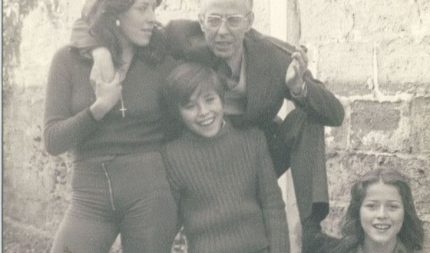 This month marks 44 years since the kidnapping and murder of Spanish-Chilean diplomat Carmelo Soria; also a victim of Operation Condor. Soria, who worked as a UN civil servant and became advisor to the Unidad Popular between 1971 and 1973 when Chile was ruled by socialist President Salvador Allende, became a target for Chile’s National Intelligence Directorate (DINA) during the Pinochet dictatorship. Through his diplomatic immunity as a UN official, Soria aided individuals to seek refuge in embassies until plans for exile could be made.
Soria was kidnapped by DINA agents pertaining to the Brigada Mulchen under the command of Captain Guillermo Salinas at the time, on July 14, tortured at Via Naranja and Villa Grimaldi, and murdered. His body was discovered in Santiago de Chile, dumped in a car that was pushed into a ditch, to cover up the murder as an apparent drunk driving accident.
Little is known about Brigada Mulchen – a secret operatives network with direct links to DINA’s chief Manuel Contreras. The agents comprising Brigada Mulchen have been described by Chilean researcher and author Javier Rebolledo as being part of Pinochet’s inner circle. Michael Townley, a CIA and DINA agent who was tasked with the production and experimentation of sarin gas, together with the biochemist Eugenio Berrios, was involved in Soria’s murder. Townley, who is under the Witness Protection Program in the U.S., was one of the agents requested for extradition by Chile’s Supreme Court for involvement in Soria’s murder. Soria’s remains were exhumed and identified in 2002 by Chile’s Servicio Medico Legal (SML). In 2015, 15 former DINA agents were indicted for Soria’s murder.
In 2019, 43 years after the murder, Chile’s Supreme Court sentenced Pedro Espinoza Bravo, Raul Iturriaga Neumann, Jaime Lele Orellana and Juan Morales Salgado, to a mere six years in prison for Soria’s murder – a travesty of justice which does not even reflect the crime. However, the impunity built through Pinochet’s dictatorship legacy still has a stronghold on Chile. Earlier this year, the Santiago Court of Appeals reduced the prison sentences of 17 former DINA agents who were involved in the murder and disappearances of Communist party members; the latter including Luis Emilio Recabarren.
Espinoza Bravo, sentenced for his involvement in Soria’s murder, is one of the DINA agents whose prison sentences have been reduced. The decision indicates the absence of separation between law and politics in Chile. In his presidential campaign, Chile’s right-wing President Sebastian Pinera had publicly spoken of amnesties for former DINA agents incarcerated for crimes against humanity. The suggestion was well received by the military and right-wing dictatorship supporters, while victims of the dictatorship and their relatives, in a struggle for reclaiming memory and justice since the dictatorship era, had to contend with yet another political impediment – the political manoeuvring at a legal level.
Chile is governed by silence and complicity – the Pinochet legacy, together with the military’s “pact of silence” – remain perpetual obstacles. What has changed since Soria’s murder was passed off as a drunk driving accident at a time when dictatorship opponents were being tortured and disappeared? While the Chilean military has not been averse to such tactics as seen in last year’s protests, it must be said that since Chile’s transition to democracy, subsequent governments have thoroughly failed the cause of human rights and collective memory in the country.
Chile Senate approves resolution to adopt law boycotting settlement goods
MEMO | July 10, 2020
The Chilean Senate last week approved a resolution calling on President Sebastian Pinera Echenique to adopt a law boycotting settlement goods and banning commercial activity with companies that operate in the occupied Palestinian territories.
The motion passed on 30 June with 29 votes in favour and six abstentions, no votes were cast against the move.
The resolution also called on the government to promote legislation that would ban all Israeli settlement products; prohibit any company involved in the Israeli occupation from benefiting from any agreement or bid signed by Chile; apply tourism guidelines for Israel and Palestine that would not allow the promotion of trips to Israel using pictures of East Jerusalem or Bethlehem “among other Palestinian cities”; forbid any kind of cooperation, including monetary, with the Israeli colonisation of occupied Palestine; and ensure that no tax benefits will be afforded to any organisation operating in Chile if it is involved in the occupation of Palestine.
Yesterday, President of the Palestinian National Council Salim Al-Zanoun thanked the Senate for its decision which he said constitutes a victory for the right of “our people to establish an independent state with its capital, Jerusalem, on the borders of June 4, 1967”, and affirming the international consensus regarding the application of international law and the terms of reference of the peace process.
On 2 July, Chile, the country with the largest population of Palestinians in Latin America, lit up its Telephone Tower with the Palestinian kufiyeh in support of the Palestinian people and rejection of Israel’s plans to annex some 30 per cent of the occupied West Bank
The Dramatic Fall of Chile as Latin America’s Neoliberal Role Model
By Ariela Ruiz Caro | CounterPunch | February 5, 2020
After the outbreak of the most intense and massive social protests ever recorded in the history of Chile, on November 16 the government and most political parties signed an agreement to restore peace and public order and initiate a process to draft a new constitution.
The protests, triggered by the rise in subway fares on Oct. 18, called into question the supposed Chilean success story of the neoliberal economic model implemented in the country during the dictatorship of General Augusto Pinochet (1973-1989). Developed by the so-called Chicago Boys, successive administrations since the 1990 return to democracy in 1990 sustained the model as state policy.
Economic and especially financial liberalization; privatization of public services, including water; the subsidiary role of the State; unlimited protection for foreign investments; and insertion in the international economy that serves US policies designed for the region were the fundamental elements of the economic model that Chile pioneered globally.
Chile’s achievements in macroeconomic stability, sustained economic growth and significant reduction in poverty levels solidified its image–promoted by the international system–as a role model in Latin America. For many years, Chilean citizens also believed it. However, behind the stable statistics and the high growth rates per capita, lurked growing inequality and concentration of wealth that eventually revealed the deep cracks in the system and sparked the recent protests. Chile is currently the 12th most unequal economy in the world. [1]
The Chilean Government’s Declining Legitimacy
Most analisis of Chile’s surprising social uprising have focused on economic aspects and less on Chile’s deep political crisis, characterized by the loss of citizen representation in political parties and government. An important part of the protest movement’s demands include greater citizen participation.
According to the October Social Thermometer Survey, 85% of citizens support the grassroots protests, and 80% demand a new constitution. The current constitution, written during the military dictatorship, dates from August 1980. The decline in the legitimacy of the Piñera government in the eyes of the popularion has been intensified by the serious criticisms of the Inter-American Commission on Human Rights, the Human Rights Commission of Chile and the OAS General Secretary for violation of human rights by the government to suppress protests.
Loss of Leadership in the International Sphere
All this has resulted in an unquestionable loss of leadership of Chile in the international arena. The Piñera government had to suspend the Asia-Pacific Economic Cooperation Forum (APEC) Summit that should have taken place in Santiago. Likewise, the United Nations Conference on Climate Change (COP25) was forced to make a last-minute move to Madrid. Chile today cannot offer basic guarantees even as the venue for international sporting events. The South American Football Confederation (Conmebol) decided to move the venue of the 2019 Copa Libertadores final that will be played by the Flamengo (Brazil) and River Plate (Argentina) teams from Santiago to Lima.
Chile has lost leadership in regional bodies. It no longer can play its leading role in the Lima Group, an ad hoc body created by 13 Latin American countries and the United States in August 2017 to press for regime change in Venezuela; in the creation of the Forum for the Progress and Development of South America (Prosur) [2] launched March 22 to replace the Union of South American Nations (Unasur); or in the aborted U.S. plot to deliver humanitarian aid to Venezuela across the border with Colombia that had the region in suspense in February. The grassroots explosion, has not only knocked Chile off the pedestal on which the success of its neo-liberal model was erected, but also removed its articulating role with the United States and allied countries in the region.
The demonstrations have also had an impact on the country’s economy. The volume of sales and consumption has dropped, along with imports and exports. The stock market has gone down, and the national currency has been devalued. The limited operation of many domestic activities and the suspension of the aforementioned international events will have an impact on economic growth. In this scenario, the opposition presented the departure of President Piñera and the call to a Constituent Assembly as the key pieces to achieve a solution.
The Hidden Face of Chilean Economic Success
Although Chile sustained per capita economic growth above the Latin American average and poverty levels fell from above 40% of the population to less than 10% in the last three decades, those who came out of poverty generally did not reach the levels of consumption that are usually associated with middle class status.
Fifty percent of the economically active population earns less than 550 dollars per month, with the minimum wage equivalent to 414 dollars. Overwhelmed by the narrow strip that separates it from the poverty, an important part of the population lives in fear of seeing their income fall. [3] In Chile, downward social mobility is greater than upward social mobility, and downward mobility is more highly correlated to political protest than poverty itself. [4]
The biggest factor that exacerbates inequality is probably the nation’s pension system, in force since 1982. Designed during the military government [5], the pension mechanism has not met Chileans’ expectations. According to the group No + AFP (No More Pension Fund Managers), which in 2016 organized a march of 600,000 people, these are “undercover banks of the richest entrepreneurs in our country who use the pension funds to expand their investments and further concentrate capital in a few hands.” [6] The average pension for retirees is $286 per month, and 80% receive pensions below the minimum wage. The amount of pensions is on average close to 40% of people’s income at the time of retirement.
Education is the second major source of inequality. In 2006 and 2011, student s organized massive demonstrations calling for profound reforms in the education system. Chilean education is characterized by the huge gap between public and private education. The withdrawal of the State from its functions as generator, regulator and supervisor of the education sector led to the gap as part of neoliberal reforms beginning in the 1980s.
Former Chilean rulers unanimously recognize that the situation of inequality generated social unrest and led directly to current protests in this country. Rolf Luders, Pînochet’s former minister of economics and now a professor at the Institute of Economics of the Catholic University of Chile, admits that “the income of the vast majority of Chileans is still low in absolute terms and the income differences are very significant.” Luders adds that “there have been abuses not duly sanctioned by the State.” Former president Ricardo Lagos points out that “citizens feel that although poverty has decreased substantially, there is a very high concentration of income, and a level of inequality that has not been adequately addressed.”
Lagos told local press that “Chile needs to increase taxes, especially for the rich because more public services are needed” and warns that people demand a new social contract so that the fruits of growth reach everyone.“ [7] President Piñera himself, after denying and ignoring the protests, said that “It is true that problems had accumulated for many decades and that different governments were not able to recognize this situation in all its magnitude.” In the early days of the demonstrations Piñera sought to disqualify the protests, stating that they were “at war against a powerful, relentless enemy, that respects nothing and no one and is willing to use violence and crime without any limits, even when it means the loss of human lives, with the sole purpose of producing as much damage as possible.” [8]
But the punitive approach of declaring a state of emergency in the country and giving control of citizen security to military commanders only served to fuel the fire and increase violence. Now that the protests have produced some two dozen deaths, thousands of wounded and detained, and complaints of torture, Piñera has been forced to make changes in his Cabinet, to suspend the state of emergency and curfew in force in some cities, and to announce economic measures that favor popular demands.
Politics for the Elite
The uprising has revealed cracks not only in the Chilean economic model, but also in the political and social spheres. The neoliberal economic system requires an exclusionary and limited democracy, which Chile successfully built in the three decades of democracy since the end of the military dictatorship in 1990. For many years, a binomial electoral system designed during the dictatorship encouraged the participation of only two political blocs that alternated in government. [9] That system resulted in the concentration of power among a narrow elite.
One of those two blocks was the Concertation of Forces for Democracy (since 2011, New Majority) while the other, is the center right Alliance for Chile (since 2009, Coalition for Change). Except for the previous period of the government of Sebastián Piñera of the National Renewal Party (2010-2014) and the current one, (2018-2022), the government has been in the hands of the Concertación parties. The Socialist Party ruled three times: first, with Ricardo Lagos (2000-2006), and then Michel Bachelet twice: (2008-2010) and (2014-2018). But in essence, they never moved away from the model, which resulted in political and economic stability that governed for market needs, but not for the citizenry. [10] In La violence des riches, Michel and Monique Pinçon describe a similar phenomenon in Europe, particularly in England and Germany, in which socialist leaders joined neoliberalism and capitulated to the neoliberal model. [11]
The authors point out that neoliberalism creates a social class that mobilizes based on its interests on all fronts (politics, finances, the media, art, music, among others). It leaves nothing to chance. Ideological and linguistic manipulation prevails that causes a loss of critical thinking, also neutralized by the voracity of consumption that paralyzes the claims of citizenship against inequality. In this neoliberal phase, they point out, the financial system imposes policy.
Economic power, they argue, acts to preserve order and the middle and popular classes rarely question it. That is why the model is presented as natural and eternal, like the sun that heats the earth or the moon that shines. However, they warn, this situation could change “when respect for that hierarchy is lost, when citizens recognize themselves as human beings and wonder ‘If I didn’t work, what would they do? They could not achieve anything.’ It is then that, through questioning this type of aristocracy of money, chaos and rebellion ensue.”
This is what is happening in Chile. The WhatsApp audio leaked at the beginning of the protests Chile’s first lady, Cecilia Morel and a friend where she describes the Chilean protesters as “a foreign invasion, alien” [12], evokes Marie Antoinette and the gaping distance between her spouse, Louis XIV, and the French people.
Chile has a deeply elitist society. “People’s capacity for development is limited by their last name, by where they live, by the school they can pay for or not pay for for their children”, in a scenario in which citizens have the perception that 80% of the state administration is corrupt or very corrupt. [13]
Although Chile does not hold the prize for the highest rate of corruption in Latin America, it is not exempt from it. [14] Illegal financing to political parties, embezzlement of public funds in the army, fraud in the police, and collusion between large companies to increase the price of medicines (especially for chronic diseases) and some essential products, have discredited politics and institutions. In addition to economic inequality, a sense of impunity and loss of citizen representation among their elected officials prevail. That also explains why abstention has increased.
Those who refuse to admit the failure of Chile’s development model describe the recent grassroots protests as revolts of the First World, similar to the “indignados” in Spain or the “yellow vests” of France. They argue that the popular demands reflect a crisis of unfulfilled expectations in developed countries. These countries have a margin of negotiation to overcome the conflicts arising from their demands. That is not the case of Chile, whose government is against the ropes because there is no room to negotiate if no profound changes are made in the model.
Others, such as President Trump, have denounced “the interference of other nations in Chile, with the aim of” undermining “Chilean institutions, democracy and society.” [15] Officials from the U.S. State Department have reported that “false accounts that emanate from Russia have been identified, pretending to be Chilean and trying to undermine Chilean institutions and society.” [16] But the Minister of Interior and Public Security of Chile, Gonzalo Blumel, did not corroborate the U.S. claim and instead stated “I prefer to be prudent, to check out the antecedents and, if they are indeed true, to investigate them in the corresponding instances.”
The OAS General Secretariat, on the other hand, stated that the protests in Chile follow the pattern of those that occurred previously in Ecuador and Colombia and noted that “the breezes of the Bolivarian regime driven by madurismo and the Cuban regime bring violence, looting , destruction and a political purpose of directly attacking the democratic system and trying to force disruptions to constitutional mandates.” [18]
The newspaper La Tercera de Chile reported that foreigners of Cuban and Venezuelan origin were behind the attacks on subway stations. However, the prosecutors in charge of the investigation concluded that “there is no evidence regarding specific identities or nationalities”. [19]
Some analysts conclude that the government itself could be behind some violence and destruction of public and private property throughout the country, noting “there are serious suspicions, testimonies and eloquent visual records that, while indicating that they were organized, could have been carried out by Chilean intelligence services”. [22]
The accusations against the protesters sought to justify the declaration of a state of emergency and the consequent control of public security by the military forces after President Piñera pointed out, at the outset, that the country was in a war against a powerful enemy. But it was a serious mistake to criminalize social protest instead of responding politically. Days later, he had to withdraw the measures after apologizing to the citizens for not having listened to their demands.
Piñera Backed in a Corner
Although the president withdrew the price hikes in public transportation and electricity and approved a set of social measures including an increase in minimum wages and pensions of retirees, a plan to support small and medium-sized companies affected by the protests, and higher taxes for the rich, protesters continue to organize throughout the country. Although they lacked a central leadership, their organization began to take shape in the barrios and in neighborhood associations and social groups convened in open councils, in which the common demand was to change the constitution. They view the text of the current constitution as the major limitation to satisfying many of their demands, in particular, that referring to the subsidiary role of the State.
To gain the upper hand and more time, on Nov. 6 Piñera announced his intention to open up a 60-day period of “citizen dialogues” to collect proposals on the public’s main demands. It is a mechanism similar to the one used by Macron when he confronted the yellow vests movement. But Chile is not France. The discontent and social frustration in the Andean country has been incubating for more than three decades and its level of unionization is low. France, on the other hand, has strong civil society organizations and a much more consolidated democratic tradition.
The intensification of the protests reached a level that forced Piñera to announce on November 9 that his government was preparing a project to update the Constitution promulgated in 1980, during the dictatorship of Augusto Pinochet. He stated that it should be discussed with other proposals that had already been presented in Congress. His announcement represented a shift with respect to his initial positions, since when he assumed the presidency in March 2018 he affirmed that he would shelve a bill that his predecessor, Michelle Bachelet, sent to Congress to modify the Constitution. Bachelet’s initiative sought to consecrate the inviolability of human rights, the right to health and education, and guarantee for equal pay for men and women.
Although the government and citizens technically agreed to change the Constitution, there was no agreement on how to do it. Citizens did not agree to modify the Constitution through a Constituent Congress as proposed by President Piñera, since this implied that the current Congress would designate a group among its own members to modify the Constitution for a period of twelve months. The problem was that civic and social organizations wanted to participate directly in the new Constitution so they proposed to draft it through the election of a Constituent Assembly, a group of people directly elected by the population who cannot be members of the current Congress and whose specific function is to design a new Constitution and present it for ratification by plebiscite.
The central point of contention in the text of the Constitution is the principle of state subsidiarity, which mandates that the state can only intervene when basic needs cannot be met by private agents. As historian Nicole Schwabe of the Center for Inter-American Studies at the University of Bielefeld points out, the State left a great void when it withdrew from provision of social services since many basic rights, such as education, health and pensions, were left to private individuals, who applied strictly commercial criteria.
“This has caused the major problems of recent years and the emergence of movements and a series of social protests,” she noted, adding that while there were improvements, “the political system has not been able to respond to the demands of the social movements that have been coming for years. There is no way out of this conflict if there is no constitutional change. If the necessary measures are not taken, the violence could escalate further.” [23]
In this same line of thought, the Catholic Church spoke through the apostolic administrator of Santiago, Celestino Aos, who expressed the imperative need to change the Constitution, arguing that “if no profound changes are made, we will be talking about cosmetic changes and we will go back to repeating the same story.” [24]
Piñera is backed into a corner. His current approval rating stands at 13%, and is in free fall. The massive protests continue. While Chilean citizens have demonstrated peacefully, there is so much discontent and frustration accumulated over the years that, in the midst of these, groups of anarchists and others have lit fires, erected barricades and looted to create chaos.
The high military commanders have pressured the government to respond. At the same time that Piñera extended a hand to citizens by satisfying certain demands, such as proposing French-style citizen dialogues and offering to draft a new constitution, military commanders urged him to exercise a heavy hand against citizen ingovernability and lack of control. This would explain why on Nov. 8, Piñera chose to harden his speech again and criminalize grassroots demonstrations. He announced several measures such as the Anti-hood Law, convening of the National Security Council and initiatives to support the work of Carabineros (militarized police) and the Chilean Investigative Police. This would only contribute to worsening violence.
Meanwhile, complaints of violation of human rights in this country continue to accumulate. The UN denounced the arbitrary and indiscriminate use of tear gas and rubber bullets to contain the protests and asked the country’s security forces to stop using these projectiles immediately. It also drew attention to “the large number of dead and wounded” and made an appeal to “align violence control actions to existing international standards, ratified by the Chilean State.” [25]
The OAS General Secretariat also deplored the deaths, both those caused by the use of force by the State, and those that have occurred in the context of the looting. The regional organization announced it would endorse the investigations and conclusions of the Inter-American Commission on Human Rights (IACHR) on human rights violations in Chile. [26] Representatives of the IACHR traveled to Chile “to respond to the requests of dozens of organizations of Human Rights, Social Movements and Indigenous Peoples, representatives of Political Parties, legislators and legislators, intellectuals, artists, in addition to the Ombudsman’s Office Rights of the Child.” [27]
According to the November report of the National Institute of Human Rights of Chile, 2,365 people have been injured in demonstrations, more than 6,000 have been arrested and the agency has filed 335 complaints of torture, sexual violence, homicide and attempted homicide, among other crimes. It reported that since the beginning of the demonstrations on October 18, a total of 217 people have suffered eye injuries. The current figure is closer to 300. The Chilean Society of Ophthalmology warned of a health emergency in these cases, and the vice president of the Medical College of Chile, Patricio Meza, said that government security forces have not respected the safe distance for firing projectiles, has aimed above the waist and on occasion fired in the presence of children, pregnant women or people with reduced mobility. Both the BBC and the New York Times have reported on the attacks, the latter in an article entitled “It’s Mutilation”: The Police in Chile are Blinding Protesters”. [28]
The Chilean opposition signed a constitutional accusation in Parliament to remove Piñera, who has racked up multiple complaints for human rights violations. At least one of them has been accepted by a Chilean court of justice. This lawsuit filed by a group of human rights lawyers cites “the responsibility that falls (to the president) in his capacity as author, as head of state and of all those responsible as perpetrators, enablers and/or accomplices of these crimes against humanity.” [29]
Can a Peace Agreement and the Promise of a New Constitution Deactivate Protest?
In this context, on Nov. 16 most Chilean political forces represented in Congress reached an agreement to restore peace and public order and convene, in April 2020, a plebiscite for a new Constitution that replace the current one. [30] The popular consultation will contain two questions: Do you agree to change the Constitution, and what should be the mechanism for drafting it. This may be through a mixed constitutional convention – composed of one half of active parliamentarians and the other half new delegates, or with a totally new convention, similar to a constituent assembly.
If citizens choose a constitutional convention, their members must be elected in the same electoral process that will elect regional mayors and governors in October 2020, with universal suffrage. Once the new Constitution has been drafted, within a maximum period of one year, the text will be submitted to a ratifying plebiscite, carried out through mandatory universal suffrage. Finally, Congress will vote again.
Although the agreement has long deadlines given the urgency of citizen demands, the decision to draft a new Constitution and get rid of the current one represents a historical moment for Chile and the world. It demonstrates that it is possible, through citizen protest, for a government to relinquish the primary legal instrument that guarantees political and economic control of society to powerful elites. However, it will be necessary to see how much political parties truly represent the people and how much tolerance economic and media power groups will have with the measure, which threatens their stability. Both factors will depend on whether the measure can deactivate grassroots protest, the citizen councils and the acts of violence.
The popular uprising in Chile has unmasked the image of well-being in Chilean society that the international establishment has been selling. It has affected the government’s regional leadership and its projections of economic growth and has revealed an injured society, which has added issues pending solution such as trials for violations of human rights, reparation for victims of violence and freedom for political prisoners.
Ariela Ruiz Caro obtained her degree in Economics from Humboldt University of Berlin and holds a master’s degree in Economic Integration Processes from the University of Buenos Aires. She has been an international consultant on trade, integration and natural resources issues at ECLAC, Latin American Economic System (SELA), Institute for the Integration of Latin America and the Caribbean (INTAL), among others. She worked in the Andean Community between 1985 and 1994, and as an advisor to the Commission of Permanent Representatives of MERCOSUR between 2006 and 2008, and Economic Attaché of the Embassy of Peru in Argentina between 2010 and 2015. She is an analyst for the Americas Program for the Andean/Southern Cone region.
FOOTNOTES
[1] According to the latest edition of the Social Panorama of Latin America report prepared by the Economic Commission for Latin America and the Caribbean (ECLAC), the wealthiest 1% of the country accumulated in 2017 26.5% of wealth, while that 50% of lower income households accessed only 2.1% of the country’s net wealth.
[2] According to the host of Prosur’s first presidential summit, Sebastián Piñera, it was about “creating a new reference in South America for better coordination, cooperation and regional integration, free of ideologies, open to all and 100% committed to the democracy and human rights.” The problem is that there are no ideology-free forums. Prosur is closely allied with the U.S. government and is an ideological response to the failure of Unasur in its attempt to autonomously solve the problems of the region.
[3] While a Chilean citizen has a 9% chance of seeing their income grow until they join 20% of the population with the highest income, they have a 16% chance of seeing their income decrease and fall into the 20% of the population in the lower income bracket.
[4] Kahhat Farid, “The eternal return, the radical right in the contemporary world”. https://elcomercio.pe/mundo/latinoamerica/la-paradoja-chilena-por-farid-kahhat-noticia/
[5] The pension system in Chile is provided by the Pension Fund Administrators (AFP), which are private financial institutions that are responsible for managing individual pension savings account funds.
[6] https://www.bbc.com/mundo/noticias-america-latina-50124583
[7] “The protests in Chile are from the First World”, Andrés Oppenheimer https://www.elnuevoherald.com/opinion-es/opin-col-blogs/andres-oppenheimer-es/article236564373.html
“The Chilean enigma”, Mario Vargas Llosa, https://www.losandes.com.ar/article/view?slug=el-enigma-chileno-por-mario-vargas-llosa-2
[8] https://www.dw.com/es/pi%C3%B1era-estamos-en-guerra-contra-un-enemigo-poderoso/a-50910426
[9] In January 2015, the binomial electoral system created by the Pinochet dictatorship was eliminated, which, in practice, favored the political right, which under this system controlled half of the Congress with one third of the votes .
[10] The Broad Front founded in 2017 is the exception. It is a Chilean political coalition made up of left-wing political parties and movements, egalitarian liberals and citizens who seek to overcome the dichotomy of Chilean bipartisanship, formed by the New Majority and Chile Vamos
[11] La violance des Riches, Michel Pinçon & Monique Pinçon-Charlot, Paris, 2014 https://www.youtube.com/watch?v=Ys3cjJlTcDE
[12] “We are absolutely overwhelmed, it is like a foreign invasion, alien (…) Please, keep calm, call people of good will, take advantage of rationing meals and we will have to decrease our privileges and share with others. (…) Friend, I think that the most important thing is to try to keep our heads cool, not to get overexcited, because what is coming is very, very, very serious.” “They moved up the curfew because it was known that the strategy is to break the entire food supply chain, even in some areas water, pharmacies. They tried to burn a hospital and tried to take the airport.”
[13] https://www.bbc.com/mundo/noticias-america-latina-50208871
[14] Between 2014 and 2017, both the right-wing political coalition (with the Penta Case and SQM) and Michelle Bachelet’s government (with the Caval case) were tainted by issues related to illegal financing of political campaigns and false ballots
[15] Days earlier, in an interview with Efe, the head of Latin America in the State Department, Michael Kozak, said that the United States had identified in the social networks “false accounts” from Russia that are trying to sow discord in the network. At the moment he has not mentioned a possible interference of Cuba or Venezuela in this country.
[19] Statements by the Eastern Metropolitan Regional Prosecutor, Omar Mérida, said that the investigation he heads “has no precedents regarding specific identities or specific nationalities.”
[20] Héctor Barros, South Metropolitan Regional Prosecutor https://www.t13.cl/noticia/politica/prefiero-ser-prudente-ministro-blumel-se-desmarca-supuesta-intervencion-extranjera-chile
[21] Rubén Alvarado, general manager of the Metro de Santiago https://www.t13.cl/noticia/politica/prefiero-ser-prudente-ministro-blumel-se-desmarca-supuesta-intervencion-extranjera-chile
[22] http://www.noticiasser.pe/opinion/la-nacion-insurrecta-y-el-fin-de-los-tiempos
[24] https://www.cnnchile.com/pais/celestino-aos-pidio-cambio-de-constitucion_20191108/
[27] https://www.cnnchile.com/pais/cidh-visita-chile-derechos-humanos_20191106/
[30] The Communist Party did not participate and the Broad Front split.
State Department Accuses ‘Russian Trolls’ of Meddling in Chile Protests
Sputnik – November 1, 2019
The US State Department claims it has seen evidence of Russian attempts to “influence” the recent unrest in Chile.
The South American country has been rocked by massive anti-government protests for over three weeks now, with demonstrations and violence leading to a temporary curfew, soldiers in the streets and the cancellation of the Asia-Pacific Economic Cooperation (APEC) summit, expected to have taken place in Santiago in mid-November.
Speaking to reporters in Washington on Thursday, a senior State Department official told reporters that Russia was trying to ‘take advantage’ of the unrest in the country “and skewing it through the use and abuse of social media trolling and seeking –rather than allowing the citizens of Chile to have their own debate about how their country and the courses their country should take… to exacerbate divisions, foment conflict, and all around act as a spoiler to responsible democratic debate.”
The official pointed to alleged “Russian activity supporting this negative course of the debate,” but did not elaborate on what this entailed.
Pressed on the claims, and whether the alleged Chile meddling also included efforts by Venezuela or Cuba, the official said they were “not a digital analytical wizard,” but that they “saw organisations such as [Latin American news agency] Telesur exacerbating those debates.”
The official did not expand on his claims of Russia’s alleged meddling, noting only that “in recent years we’ve seen an increase of Russian engagement in the Americas, in South America in particular – very little of it positive.”
Commenting on the claims on Friday, Russian Deputy Foreign Minister Sergei Ryabkov dismissed the State Department’s allegations outright.
“The US administration is using the difficult internal situation in Chile to continue its efforts to blacken our country’s foreign policy. This isn’t news,” Ryabkov said in a statement.
The official added that Russia “has never meddled, does not meddle and will not meddle in any electoral or other internal political processes in any country.”
Chilean officials did not comment on the State Department’s claims.
Arguably the best-known case of confirmed meddling in Chile’s internal affairs took place on September 11, 1973, when the CIA-backed Chilean armed forces led by General Augusto Pinochet overthrew the democratically elected government of Salvador Allende in a coup.
Violent protests erupted in Chile last month over authorities’ decision to increase subway fares. The protests have spread to violent clashes between protesters, police and the military, with over 2,400 people reported injured and 21 people killed, and over 5,400 others detained. Last week, over a million people marched in the streets, demanding the resignation of President Sebastian Pinera.
The Russians are meddling again, this time in Chile, warns US diplomat
RT | October 26, 2019
Guess who’s stirring mass anti-government protests in Chile? Anybody? That’s right, it’s the Russians, at least according to Washington’s chief Latin American diplomat.
Speaking before a congressional committee hearing on Wednesday, State Department diplomat Michael Kozak suggested that “foreign actors” were stoking protests in Chile. Pressed on the statement by Latin-American news agency EFE on Friday, Kozak elaborated further.
“We have identified on social networks false accounts that emanate from Russia, which are people who pretend to be Chilean, but in reality all the message they are doing is trying to undermine all Chilean institutions and society,” he was quoted on Friday by Chilean media.
Kozak didn’t provide evidence, but if he did, it likely wouldn’t prove anything. Accusations of Russia’s social media meddling have been chucked around Washington for nearly three years now, and the best that social media ‘bot hunters’ have managed to come up with is lists of meme posting accounts that they “believe” are “potentially” Kremlin-backed, based on the claims of NATO-backed think tanks, professional ‘Russiagaters’ and Democrat intelligence officials.
In Chile, the protests were not sparked by Moscow-based trolls, but by a planned public transport fare hike. They have since evolved into a nationwide show of rage against the neoliberal policies of President Sebastian Pinera, whose proposed reforms have failed to tamp down public anger. At least 19 people have died over the last eight days, and more than 6,000 have been arrested, as protests descended into riots and clashes with police.
“Chile has a constitutional problem in terms of laws in terms of assigning a budget to the social sector and the non-social sector,” political analyst Francisco Coloane told RT. “There is a very strong pressure from the private sector not to make structural change.”
As the country’s first right-wing president since the end of US-backed dictator Augusto Pinochet’s government in 1990, Pinera has previously attempted to privatize Chile’s education system, resulting in student demonstrations in 2011. The country’s pension system, water supply, and healthcare system are all fully or almost fully privatized.
The result is a country that enjoys Latin America’s highest per-capita income, yet the highest inequality in the OECD.
But why dig into systemic factors and risk undermining the neoliberal consensus? Better to dust off the tinfoil hat and blame Russia instead.
Featured Video
No Threat Can Force Iran’s Surrender /Trita Parsi & Lt Cl Daniel Davis
or go to
Aletho News Archives – Video-Images
From the Archives
What is the Israeli Lobby in Australia Doing in Interfaith Dialogue?
By Ali Kazak | Dissident Voice | October 11, 2015
For years Israel and its lobby around the world have been trying to normalise their relations with Arabs and Muslims without solving the Palestine Question.
One of the methods they resorted to in the last few years is using human rights and community organizations such as interfaith dialogue and Multiculturalism to achieve this objective and to: isolate the Palestinians, marginalise the Palestine question, end Israel’s isolation, and prevent criticism of Israel, knowing that these organisations will be the first to stand against Israel’s violations, racial and religious discrimination.
The group responsible for this task in Australia is The Australia/Israel & Jewish Affairs Council (AIJAC); its Director of International & Community Affairs, Jeremy Jones is in charge of lobbying religious community organizations, specifically Muslims and Christians. Consequently he convened the Faith Communities for Reconciliation, founding participant in the Australian Partnership of Religious Organisations and the Australian National Dialogue of Christians, Muslims & Jews.
AIJAC is a private political propaganda group. It is recognised as the main Israeli lobby in Australia. It coordinates its activities and works intimately with the Israeli embassy in Canberra and different institutions in Israel. It is privately funded by some Jewish businessmen. It monitors closely Australian politicians, the media, ethnic and religious groups, (especially Arabs and Muslims), unions and academics on their stands towards Israel and the Palestine question. … continue
Blog Roll
 Aletho News
- ‘War Crime’: Iran condemns attacks on Arak, Ardakan nuclear sites
- Two-thirds of Americans want quick end to Iran war even if goals unmet
- Trump to Give “Important Update on Iran” Wednesday in Prime-Time Speech
- Theodore Postol: Iran’s Missiles & Drones Were Underestimated
- Iran To Target Military Industrial-Tech Complex That Facilitated Gaza Genocide
- Collapsing Empire: The Resistance Disarms ‘Israel’
- Suicide Should Not Be a Government Service
- Rethinking America’s greatest threat: Iran vs. Israel-Firsters
- Iran accuses adversaries of false flags to strain Turkey ties
- Poland rules out sending Patriot missiles to US/Israel amid war on Iran
- If Americans Knew
- Ann Coulter Rips Into Fox News for Iran War Coverage, Compares to False Rigged 2020 Election Reporting
- Joe Kent Urges Americans To Call White House and Congress To Object To Sending Troops Into Iran
- DNC Resolution to Reject AIPAC Funding Puts Democratic Leaders in the Hot Seat
- Swedish foundation to build 400 schools as over 650,000 Gaza children remain without education for 2 years
- Israeli army admits photshopping image of slain Lebanese journalist
- This is how Israel is systematically killing health workers under the cover of war in Lebanon
- Carrying life under fire: Israeli invasion of Lebanon leaves pregnant women facing deadly risks
- Champagne all around for the new death penalty (for Palestinians) law – Not a ceasefire Day 172
- Why are Palestinian books struggling to be seen on Amazon?
- The Line Between Affinity and Conspiracy
- No Tricks Zone
- New Study Finds Warming Saves Lives…Cold Temperatures 12 Times More Deadly Than Excess Heat
- German Science Blog Accuses PIK Climate Institute Of Hallucinating Climate Tipping Points
- Devastating Assessment Of Comirnaty Vaccine By Former Senior Pfizer Europe Toxicologist
- New Study: CO2 Is ‘Effectively Negligible’ As An Explanatory Climate Change Factor Since 2000
- Former Pfizer Toxicologist Dr. Helmut Sterz Tells Bundestag Hearing Pfizer Vaccine Should Have Never Been Approved
- Energy Expert: Germany’s Nuclear Phaseout Was A “500 Billion Euro Mistake”
- New Research: South Australia’s Mid-Holocene Sea Surface Temperatures Were 4°C Warmer Than Today
- Storing Green Energy To Last Germany 10 Days Would Require A 60-Million Tonne Battery
- New Studies: UK Sea Levels Were 4 Meters Higher Than Today During The Mid-Holocene
- Destructive Green New Deal: German Energy And Metal Group Warns Of Drastic Crisis
 Aletho News