China Slams US, Issues Statement With Arab League Calling for Gaza Ceasefire
Sputnik – 16.01.2024
“The US, which is pouring fuel on the fire in the Israel-Palestine conflict, also wants to play the role of fireman,” read an article in Chinese media criticizing America’s “unconditional support for Israel.”
China released a joint statement with Arab League nations Sunday urging a ceasefire in Gaza and advocating a two-state solution to resolve the long running Palestine-Israel conflict.
The resolution emerged after Chinese Foreign Minister Wang Yi met Arab League Secretary-General Ahmed Aboul-Gheit in Cairo, Egypt.
The statement called for dialogue with Palestinian groups and a global peace conference to move towards implementing a two-state solution, advocating a “government of Palestine for the Palestinians.” The leaders urged the full implementation of resolutions passed by the United Nations which have long criticized the Israeli occupation of internationally-recognized Palestinian territory. The United States typically uses its influence and position on the UN Security Council to block and undermine resolutions criticizing Israel’s conduct.
The leaders also promoted the resumption of direct peace talks between the Israeli and Palestinian sides.
The statement then touched on recent US and UK-backed airstrikes against the Houthi movement in Yemen, which Chinese media criticized as an “escalation” of the situation and an attempt to distract from the broader conflict. Chinese media called for the respect of the “sovereignty and territorial integrity of Yemen,” a critique of the airstrikes that it noted lacked authorization by the UN.
Finally, China called for the sending of humanitarian aid to Palestinians, which it labeled an “imperative moral responsibility.” China insisted that the only way to ultimately safeguard commercial interests in the Red Sea is to achieve “a just settlement of the Palestinian issue.”
“We have a common responsibility to ensure the security of the Red Sea, and we will not be deceived by the US to fuel such tensions,” said Li Weijian, a researcher at the Shanghai Institutes for International Studies.
China and Arab League countries also vowed to move forward on economic cooperation via China’s Belt and Road initiative during the meeting.
Philippines Plans South China Sea Escalation With US Support
By Chimauchem Nwosu – Sputnik – 15.01.2024
Washington’s increased military activities in the South China Sea could potentially destabilize regional peace and stability, as Manila is influenced and urged by the US to follow the path of confrontation.
The Philippines’ top brass has stated its intentions to advance its bases in the South China Sea and increase its naval fleet and radars, despite thawing relations with its Chinese neighbor.
Romeo Brawner Jr., Chief of Staff of the Armed Forces of the Philippines, told the press that his country wants to make its outposts in the area more habitable — a move bound to fuel tensions over disputed maritime borders.
Filipino President Ferdinand Marcos Jr. has told the armed forces to seek the support of foreign militaries as it shifts focus from internal security to maritime defense.
The Philippines is a key US ally in the region and hosts its military bases, used during US wars in Vietnam and Korea.
But in recent times, Washington has shifted towards “great power competition” with China, co-opting Manila as a tool in its quest to “contain” Beijing.
Tensions between the Asian nations have intensified since October 4, 2023, with reports of Flippino ships defying Chinese Coast Guard warnings to pass through the Second Thomas Shoal in the Spratly Islands of the South China Sea on a resupply mission.
Early December last year, the Philippines established a monitoring base for its coast guard on Thitu Island in the disputed South China Sea. It also announced its intentions to increase joint patrols with the US and Australia in the area to curtail what it perceives as “pure bullying” by China, a Filipino official told media.
In response, Beijing has stated that such patrols potentially exacerbate a larger conflict that could plunge the region into chaos and criticized Manila’s plan as a provocation.
Chinese authorities have also accused the US of escalating tensions in the Asia-Pacific, especially in the South China Sea, and condemned Washington’s attempts to thwart China-Taiwan relations.
Washington insists that its ships will sail wherever they want in what it defines as international waters. The US has reiterated its resolve to defend the Philippines in the event of an attack, including in the South China Sea.
But China’s Foreign Ministry said heightened US military activities in the South China Sea further worsens the situation and subverts international law and its sovereignty.
“The US instigated and emboldened the Philippine side to infringe upon China’s sovereignty, which escalated maritime tensions. The Chinese side firmly opposes that,” Senior Colonel Wu Qian, spokesperson for China’s Ministry of National Defense, said during a news conference.
Despite the deteriorating tensions, Marcos has stated that the Philippines will continuously assert its rights in the South China Sea. “We shall continue to assert our rights in accordance with the Philippine Constitution and international law,” Marcos remarked. This follows Chinese Foreign Minister Wang Yi’s caution that ties between Beijing and Manila are “facing serious difficulties” and warned against colluding with “malicious external forces.”
Taiwan: cross-strait brinkmanship to continue
BY M. K. BHADRAKUMAR | INDIAN PUNCHLINE | JANUARY 15, 2024
Taiwan’s electoral laws provide for the candidate with the highest number of votes becoming the winner on a first-past-the-post basis, and it is a moot point that the incumbent Vice President William Lai from the Democratic Progressive Party (DPP) who secured only 40 percent of votes is still elected as the next president.
The DPP suffered a setback in the legislative election too, losing its majority in the 113-seat legislature and falling behind the Nationalist Party (KMT). In effect, it is an electoral outcome akin to what prevails in France or Brazil, for instance, with the exception that both Emmanuel Macron and Lula da Silva won a majority of votes cast in the second round.
Such hair-splitting may seem irrelevant but then, there are ‘local characteristics’ in the situation around Taiwan that add to the complexity of Sunday’s election result.
Chinese President Xi Jinping has made ‘national rejuvenation’ a goal for Beijing to reach by mid-century — and, bringing Taiwan under its control and reunifying China is part of that rejuvenation vision. In his New Year address, Xi Jinping insisted that the “reunification of the motherland is a historical inevitability.”
In this narrative, mainland China and Taiwan were separated at a certain point in time because of being ‘a weak nation’, an issue that would be resolved when ‘rejuvenation’ is achieved. Therefore, the issue is a core question for the Chinese Communist Party’s legitimacy.
On the other hand, Lai and the DPP see Taiwan as an independent country, whereas, the two main opposition parties who between them garnered 60% of votes in Sunday’s poll do not subscribe to such a stance. The Beijing-friendly Kuomintang (KMT) opposes Taiwan independence and advocates ‘pragmatic dialogue’ while the other rival, the Taiwan People’s Party, proposes engaging with Beijing and maintaining peace.
In sum, the majority of Taiwanese public opinion falls short of endorsing independence for the country and also prefers the path of dialogue and engagement with Beijing rather than confrontation. Indeed, some analysts in Taiwan estimate that the result of the legislative election may eventually clear the way for policies to promote exchanges with the mainland, such as reducing restrictions on mainland students and tourists and even promote communication.
Unsurprisingly, Beijing is extremely critical of Lai who once described himself as a “pragmatic worker for Taiwan independence” and whose vice presidential candidate also happens to be a famous figure in the Beltway, having served as Taiwan’s de facto ambassador to the US.
The crux of the matter is that the Taiwan question cuts to the heart of a broader geopolitical rivalry between the US and China. Put differently, how Beijing is going to interpret the ascendance of a third successive government in Taipei led by the pro-independence DPP will be crucial. Will Beijing feel the need to up the stakes? That is a big question.
To be sure, Sunday’s vote will not only decide Taiwan’s policy with Beijing for years to come, but also geopolitics in the Asia-Pacific region and US-China relations. Military tensions are already on the rise. Under Lai, who takes over as president in May, Washington will no doubt continue to regard Taiwan as a ‘like-minded’ partner. That, in turn, will complicate the fragile US-China relationship.
And any surge in the US-China rivalry can only increase the strategic value of Taiwan for Washington, which will in any case continue to play the Taiwan card against Beijing, as it has been a low-cost, high-return game for the Americans to play — so far at least.
By internationalising the Taiwan question, which is essentially China’s internal problem, and by drumming up a propaganda campaign against Beijing’s so-called assertiveness in the region and beyond, the US has thrown down the gauntlet at China’s diplomats who are quickly damned as ‘wolf warriors’ if they react robustly.
Indeed, the strategy brought dividends insofar as the US’ Asia-Pacific allies Japan, Australia, South Korea and the Philippines, who depend on Washington to guarantee their security, as well as the NATO allies, to a lesser extent, who feel constrained to follow Washington’s lead on the Taiwan issue under the rubric of ‘collective deterrence’.
The bottom line is, Washington realises that it is unrealistic and difficult for the US alone to respond to China’s material national power and needs to mobilise the assets of its allies and like-minded partners to strengthen ‘collective deterrence.’
In fact, the European Union foreign policy chief Josep Borrell last year called on European navies to patrol the Taiwan Strait to “show Europe’s commitment” to the region.
However, interestingly, the countries of the Global South — the so-called ‘global majority’ — have remained unmoved and are unwilling to risk their China relations over Taiwan and are not in the least interested in taking sides in the US-China rivalry.
Beijing knows that it is in a strong position vis-a-vis Taipei and that Lai has very few options and very little room for manoeuvring. Arguably, Beijing’s real challenge lies in showing its grave displeasure without going to war. It may require that Beijing expands its playbook without pushing regional allies further into the US camp.
From the initial rhetoric, it appears that Beijing has not decided how to respond to the DPP victory. China’s full response may play out over months or years, but the likelihood is that the Taiwan election cannot change the direction of cross-strait relations, which also means that the dynamic of brinkmanship and stress will continue.
Reporting on Sunday’s poll, the New York Times wrote that “To Beijing, the (Taiwan) island is a remnant of its civil war that the United States has no business meddling with. To Washington, it (Taiwan) is the first line of defence for global stability… and the microprocessor factory for the world.”
Indeed, in geo-strategic terms, the US sees Taiwan as a crucial link in the so-called first island chain that runs from Borneo to the Philippines, Japan and South Korea, where the American bases would curtail the deployment of Chinese presence in the western Pacific.
But such a cold-war era containment strategy is dated, on the one hand, with the advent of new transport planes, strategic bombers, aircraft carriers and hypersonic missiles that have a multiplier effect on the Chinese military capabilities, while, on the other hand, the AI-driven military technology and machine learning may create lasting change across the national security enterprise.
In fact, the San Francisco summit between President Joe Biden and Xi turned out to be AI’s ‘Oppenheimer moment,’ as the two leaders agreed to “work together to assess the threats posed by AI” with a view to develop concrete regulatory frameworks to prevent the potentially destabilising consequences of the rapid development of military AI outstripping international law.
When knowledge networks collide with any new technology, different futures tend to appear on the horizon that call for prudence and a more robust dialogue. Significantly, the surcharged Taiwanese elections did not discourage the US and Chinese defence officials from holding their ‘policy coordination talks’ at the Pentagon last week on Monday and Tuesday — the first such in-person meetings since before the coronavirus pandemic.
In a statement in Beijing, the Chinese defence spokesperson said on Friday that Beijing “expects the US side to develop a right perception of China, respect the core interests and major concerns of the Chinese side, and take concrete actions to work with China in the same direction to follow through the important consensus reached by the two heads of state in San Francisco.”
China Rebukes US State Dept for Sending ‘Gravely Wrong Signal’ to Taiwan
Sputnik – 14.01.2024
China resolutely opposes any official interaction between the US and Taiwan and any American interference in Taiwan’s internal affairs, regardless of the reasons, and calls on Washington to strictly adhere to the one-China principle and the joint communiques.
China has condemned the US State Department’s recent remarks on Taiwan’s election, saying they blatantly disregard the one-China policy and the agreed China-US joint communiques, the country’s Foreign Ministry said in a statement on Sunday.
“The US State Department’s statement […] also sends a gravely wrong signal to the ‘Taiwan independence’ separatist forces. We strongly deplore and resolutely oppose it, and have made serious representations to the US side,” the statement read.
Emphasizing the importance of the Taiwan issue to China’s core interests, the ministry reiterated that upholding the one-China principle is crucial to maintaining stable China-US relations and is a globally recognized norm in international affairs.
The ministry also warned US leaders against supporting Taiwan independence, the notion of “two Chinas” or “one China, one Taiwan,” and against using the Taiwan issue to contain China.
“China firmly opposes the US having any form of official interaction with Taiwan and interfering in Taiwan affairs in any way or under any pretext. We urge the US to earnestly abide by the one-China principle and the three China-US joint communiqués and act seriously in accordance with the commitments that have been reaffirmed multiple times,” the statement explained.
“We urge the US to stop interactions of an official nature with Taiwan and stop sending any wrong signal to the separatist forces for ‘Taiwan independence’,” it added.
Elections for Taiwan’s regional leader and members of parliament were held on Saturday with a 69.8% voter turnout, according to the local election committee. Lai Ching-te of Taiwan’s ruling Democratic Progressive Party (DPP) was declared the winner leader’s election with 40.05% of the vote, with ballots from 17,759 of 17,795 polling stations counted. However, the DPP itself lost 11 parliamentary seats in the election. Lai will be inaugurated on May 20, 2024.
Congratulating Lai on his victory, the US State Department released a statement saying: “We also congratulate the Taiwan people for once again demonstrating the strength of their robust democratic system and electoral process.”
“The partnership between the American people and the people on Taiwan, rooted in democratic values, continues to broaden and deepen across economic, cultural, and people-to-people ties. We look forward to working with Dr. Lai and Taiwan’s leaders of all parties to advance our shared interests and values, and to further our longstanding unofficial relationship,” it added.
UNSC has not authorized force against Yemen; China urges all parties concerned to abide by international law
Global Times | January 13, 2024
China opposes any forcible transfer of the Palestinian people from the Gaza Strip, and all measures must be taken to alleviate the humanitarian catastrophe and make a cease-fire the most urgent task of the moment, China’s permanent representative to the UN Zhang Jun said during a UN Security Council conference on Friday local time.
An immediate ceasefire has become the overwhelming call of the international community, but a permanent member of UN Security Council (UNSC) has vetoed the consensus reached by the UNSC in this regard on various grounds, which is a blatant defiance of international fairness, justice and the authority of UNSC, Zhang said.
The UNSC failed to adopt a draft resolution on December 8, 2023 that would have demanded an immediate humanitarian ceasefire in Gaza due to a veto cast by the US. Many countries expressed disappointment over the US veto of the Gaza-related draft.
It is a blatant double standard for some people to talk about the protection of human rights and the prevention of genocide while pretending to be deaf and dumb, covering up and diverting attention from the tragic situation in Gaza, Zhang remarked, “We must remove all interference and take vigorous action to quell the war, save lives and restore peace.”
In addition, Zhang stressed that that any forcible transfer of the Palestinian people must be firmly rejected.
Over the past three months, millions of Palestinian people have been forced to relocate repeatedly and were under constant threat to their lives, said Zhang, noting that China is gravely concerned about the “voluntary emigration” of Gaza people, which has been advocated by some Israeli politicians.
The horrific idea of displacing two million people from Gaza and turning it into a “safe zone” devoid of human habitation, if implemented, would constitute a grave crime under international law and completely destroy prospects for the “Two-State solution,” Zhang remarked.
The Chinese envoy called for all measures to be taken to alleviate the humanitarian catastrophe in the Gaza Strip.
Zhang said it was totally unacceptable for Israel to accuse the UN of not having the will and capacity to provide humanitarian relief when it was clear that Israel was accountable for the continued bombing and striking in Gaza and setting obstacles to the entry of humanitarian supplies.
He urged Israel to immediately cease its indiscriminate military attacks and destruction of Gaza.
UNSC resolutions 2712 and 2720 must be fully implemented, and Israel must fulfil its obligations as the occupying party to guarantee the safety of humanitarian workers and provide full cooperation with humanitarian relief efforts, Zhang said.
The envoy reiterated that a ceasefire must be implemented with the utmost urgency. “Only a ceasefire can prevent greater civilian casualties and humanitarian disasters and create conditions for the early release of all hostages; only a ceasefire can prevent the complete destruction of the basis of the Two-State solution; and only a ceasefire can prevent the entire Middle East region from being drawn into a catastrophe.”
Regarding the recent attacks launched by US and UK on Yemen against the Houthi rebels, which targeted Israeli-linked ships in the Red Sea, Zhang expressed concerns about the spillover effects of the Gaza crisis.
Zhang said at a UNSC emergency conference on the Red Sea situation on the same day that the UNSC has never authorized any country to use force against Yemen. The military action taken by the related countries runs counter to the UN resolution 2722, which the Security Council has just adopted.
The envoy warned that the Middle East region is on the brink of extreme danger, and what should be avoided now is reckless military adventurism. He added that what is needed most of all is calm and restraint to prevent further expansion of the conflict.
China urges all parties concerned, especially the influential powers, to abide by the Charter of the UN and international law, adhere to the direction of dialogue and consultation, and make practical efforts to maintain peace and stability in the Red Sea and the Middle East region, Zhang said.
The US carried out further strikes against Houthi targets in Yemen on Friday night a day after launching a coordinated multi-nation attack on nearly 30 Houthi locations.
Is China hatching a sinister plot regarding the Israel-Gaza war?
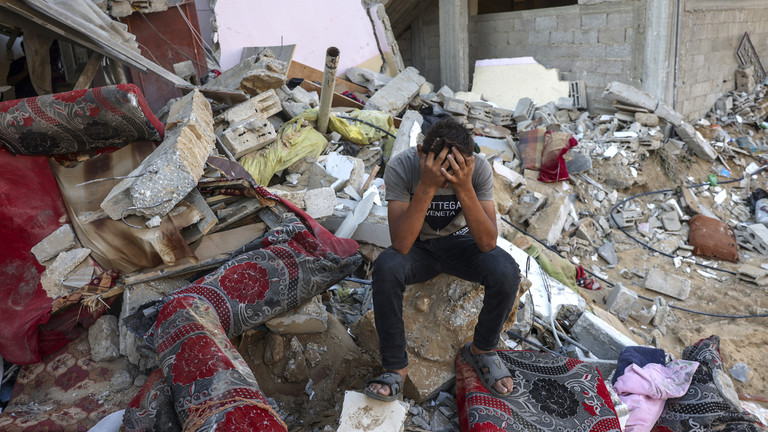
Gaza Strip. © MOHAMMED ABED / AFP
By Timur Fomenko | RT | January 13, 2024
A recent Foreign Affairs article purports to expose “China’s game in Gaza,” accusing Beijing of “Exploiting Israel’s War to Win Over the Global South.”
The author alleges that “in calling for a two-state solution, refusing to condemn Hamas, and making symbolic efforts to support a ceasefire, [China] has taken advantage of global anti-Israeli sentiment in a bid to elevate its own standing in the Global South.”
This argument is interesting, because it is premised on the logic that the war on Gaza can end quickly if Beijing simply supports the US position, which the article claims is “to reconcile public support for Israel with private pressure to more carefully target its attacks in Gaza and to be more open to a political settlement with the Palestinians.” So let’s get this right, it’s the US that wants to end this conflict fairly and China is exacerbating it and therefore is at fault?
This kind of analysis is farfetched at best and outright dishonest at worst, and overall an insult to every observer’s intelligence. It really shows the lengths to which the mainstream cycle of journalists and think-tankers will go in order to not place any blame on Israel whatsoever, but to scapegoat third parties who do not in fact have a hand in the conflict. China has always taken a neutral position on the Israel-Palestine issue, though it recognizes the State of Palestine’s sovereign existence, and therefore advocates a two-state solution.
However, the situation really doesn’t need China at all in order to ferment an anti-Israeli and anti-US backlash across the Global South. The US and its allies have managed to do that all by themselves. China’s rhetoric on the issue has been inconsequential and certainly hardly provocative.
First of all, the Foreign Affairs article takes the misleading State Department position that the US is some kind of honest broker and mediator in the Israel-Palestine conflict that just wants the two sides to make up and get along. This is an absolute lie. All the US has offered is unconditional, uncritical and blanket support to Israel which Benjamin Netanyahu has calculated allows him to do whatever he wants, effectively consequence-free. Will the US actually sanction Israel? Will the US condemn Israel at the UN? Will the US stop arming Israel? Absolutely not, and he knows this, therefore anything Washington might claim in regards to sparing civilians or talking about a ceasefire is hollow because it is not backed up by any substance. Israel is allowed to do whatever it sees fit, because placing any restraints on it is domestically politically untenable in the US, as well as in allied countries such as the UK.
Therefore, even if it wanted to, how could China possibly end the conflict, let alone be responsible for it? It is the scenes of unprecedented, Western-backed slaughter and carnage in Gaza that are provoking outrage in the Global South, and the reality that Israel is a law unto itself. This backlash is entirely and exclusively Western-generated and there is no conspiracy nor agenda by China as a neutral player to exploit it. In fact, if China were serious, it would be actively whipping up anti-Israeli sentiment, but it is not doing so because Beijing for the most part is restrained and has little to say on third-party issues.
Rather, China’s alignment with the Global South is a historic trend given Beijing itself is a part of the Global South from the days of its revolutionary heritage, the common experience of colonialism, and therefore the desire to sustain sovereignty and independence from Western domination. This forms a common position with the states of the Middle East, Africa and Latin America on Palestine, with the latter being the most prominent example of Western-led colonial oppression in the world. The situation in Gaza is a Western-backed injustice and set of atrocities, which in turn reveals the double standards of these countries who purport to be the champions of freedom and human rights.
In this case, China doesn’t need to say anything regarding Gaza to inflame the Global South because the situation really is quite self-explanatory. The US is costing itself support throughout the Global South by showing that it is an enabler of genocide through the unconditional political and military backing it grants the Israeli state, yet here in Foreign Affairs we have the lopsided rendition that really it’s just all China’s fault, as usual.
West frustrated by Global South’s refusal to abandon Russia in secret US-G7 meeting on Ukraine
By Ahmed Adel | January 11, 2024
A secret meeting took place in December in the Saudi Arabian capital between the United States, Ukraine, its G7 allies and a small group of countries from the Global South to try to drum up support for Kiev’s conditions for resolving the conflict with Moscow. Russia was not invited to the meeting, and China decided not to send a representative, reported Bloomberg, whilst Brazil stressed any such meeting must have a Russian presence.
According to Bloomberg, the meeting’s secrecy was intended, in part, to make participating countries feel more comfortable joining, as it was believed that the smaller format would allow for a freer and more frank discussion on the so-called peace formula for Ukraine. However, according to people familiar with the meeting and interviewed by Bloomberg, there was no major progress as Ukraine and its G7 allies continued to resist calls from Global South nations to engage directly with Russia.
Although senior officials from India, Saudi Arabia and Turkey attended the December meeting in Riyadh, other major Global South nations that participated in some of the previous larger sessions – such as China, Brazil, and the United Arab Emirates – did not send their representatives.
Brazil, which presides over the G20 this year, contributed to the secret meeting with only a written statement prepared by the International Affairs advisor to the Presidency of the Republic, Celso Amorim. Brazil was invited but was unable to attend due to incompatibility in Amorim’s agenda.
According to Jamil Chade’s column on the Brazilian portal UOL, Amorim sent a letter to the authorities who mediated the December meeting in Riyadh and clarified Brazil’s disappointment in the conduct of the process since the meetings do not have the other party necessary, Russia, to reach an agreement.
“Initially, we were encouraged by the untapped potential of this group’s restricted format, which could eventually serve as a facilitator between the two conflicting sides […]. Our contribution aimed to promote direct or indirect dialogue between the two parties […],” the former minister of foreign affairs said.
“[But] as the conflict prepares to enter its third year, there is still no opening for dialogue or a credible prospect for an end to hostilities […] the willingness of the parties to engage in talks is critical for the success of our diplomatic efforts,” stated Amorim, pointing out that it was precisely this disposition that allowed the tension between Venezuela and Guyana to be prevented from becoming a hot war.
When contacted by UOL, Amorim explained that he was “considering” whether to go to Davos but was unsure.
“In our interaction with Russia and Ukraine, we constantly emphasise our belief that dialogue is essential for this process to produce results. We invite them to create diplomatic opportunities […] Brazil remains committed to renewing its engagement in the Copenhagen process, as soon as the parties are willing to start an authentic dialogue […],” added the Brazilian government in the letter.
Brazilian President Luiz Inácio Lula da Silva has already warned Zelensky that a peace process cannot be unilateral, while other emerging countries, mainly those from the Global South, have insisted that there is no way to endorse the Ukrainian plan without involving the Russians in the debates, writes the portal.
On January 14, Switzerland and Ukraine will host the fourth meeting in Davos to work on a solution to the conflict between Russia and Ukraine. However, once again, the meeting’s agenda will be limited to the unrealistic peace plan of Ukrainian President Volodymyr Zelensky and will not be attended by representatives from Moscow, thus ensuring its failure.
Under these conditions, Brazil is not wasting time on failed initiatives, especially when trade relations with Russia are booming. Last December, trade volume between Russia and Brazil grew 80%, reaching $1.6 billion for the first time, according to the Brazilian Institute of Geography and Statistics (IBGE).
Brazil acquired goods from Russia at the end of last year worth a total of $1.5 billion, which became the largest volume of purchases in modern history. The main import commodity was petroleum derivatives, at a record value of $1.1 billion. As a result, Moscow has become the South American country’s largest supplier of this commodity.
Latin America’s largest and most important country will not sacrifice trade relations with Russia or waste time with failed initiatives that will never eventuate because Zelensky has unrealistic demands on how to achieve peace, such as the full withdrawal of the Russian state from newly liberated territories and even Crimea, despite having no leverage to make such demands. In this way, there is little surprise that the secret meeting in Riyadh was destined only for failure.
Ahmed Adel is a Cairo-based geopolitics and political economy researcher.
China’s COSCO halts shipping to Israeli ports: Israeli media
The Cradle | January 7, 2024
Chinese state-owned shipping company COSCO, the fourth largest in the world, has halted sailing to Israeli ports, Israeli media outlet Globes reported on 7 January, in the wake of attacks and attempted seizures of vessels heading to Israel via the Red Sea by Yemeni armed forces.
The Israeli report indicated that the Chinese firm did not disclose a reason for the policy change. COSCO’s offices in Israel have refused to comment on the development.
The Globes report attributed the decision to the close ties between China and Iran, which sells 90 percent of its crude oil exports to Beijing. Iran is a supporter of the Yemeni government and opposes Israel’s ongoing war on Gaza.
In a similar development, the Hong Kong-based OOCL halted all cargo deliveries to Israel last month, citing “operational problems.”
In the same month, other major shipping firms, including the Mediterranean Shipping Company (MSC) and CMA CGM, announced their decision to halt shipments to Israel one day after the Yemeni Armed Forces attacked two Israel-bound vessels.
Yemeni forces have been attacking Israeli-bound vessels in the Red Sea in response to Israel’s war on Gaza, which the Sanaa government views as genocide.
Washington and its allies in turn formed the Prosperity Guardian naval coalition and issued an ultimatum to Yemen’s Ansarallah-led government to stop their Red Sea operations or suffer the “consequences.”
Yemen’s actions have forced numerous leading shipping companies to instead travel around the Cape of Good Hope at the southern tip of Africa to reach Europe, extending the shipping times by two weeks and increasing costs.
On 31 December, US naval forces sank three Yemeni boats in the Red Sea, killing ten Yemeni naval soldiers.
From the onset of the Gaza conflict on 7 October, Yemeni military forces have targeted a minimum of 15 merchant vessels either bound for Israeli harbors or owned by entities associated with Israel.
US Pressured Dutch Chipmaker ASML to Halt Sales to China
By Chimauchem Nwosu – Sputnik – 02.01.2024
A Netherland-based multinational microchip maker ASML Holding NV has halted scheduled shipments of production equipment to China at the behest of the United States.
That came days before the implementation of export controls on advanced ultraviolet lithography machines, sources familiar with the matter revealed to the press.
ASML is the sole producer of deep ultraviolet (DUV) lithography machines vital for the semiconductor industry, which is booming in China — much to the chagrin of politicians in Washington.
Under Biden’s government the US is stepping up attempts to hold back Beijing’s rapid development in the advanced semiconductor sector, with its allies also constraining chip tech exports.
Last year, Huawei Technologies debuted the Mate 60 Pro smartphone, featuring the indigenously-produced Kirin 9000S chip. The development was seen by the US as a challenge to Apple’s iPhone 15, which is powered by next-generation chips produced using ASML’s immersion lithography and was launched in 2023.
ASML confirmed that the Dutch authorities had restricted the export of specific lithography systems to China. Addressing media reports, the Dutch chipmaker mentioned ongoing talks with the US regarding export restrictions, offering no more details.
As the news broke, the stock values of Chinese chipmakers saw dips in their stock values. Semiconductor Manufacturing International (SMIC), a key supplier of Huawei’s 7-nanometer processors, saw its stock fall by three percent in Hong Kong on Tuesday. Hua Hong Semiconductor suffered a similar slump, dropping by 2.8 percent.
ASML, Europe’s most valuable technology firm, remained relatively stable at €679.80 at 9:32 a.m. in Amsterdam trading after falling by as much as 1.8 percent earlier.
US National Security Adviser Jake Sullivan contacted the Dutch government late last year about the ASML’s supply of the immersion deep ultraviolet lithography machines to China. Dutch officials told the White House to speak directly to the European chip giant.
Deliveries of some Chinese orders of the machines, each priced in the tens of millions of dollars, were reportedly canceled although the precise number remains undisclosed.
A representative from the Chinese Foreign Ministry denounced the US for meddling in China’s affairs, labeling it as a demonstration of American “hegemony” imposing artificial restrictions on other nations.
The official also called upon the Dutch authorities to “respect the spirit of the contract and world order, to safeguard the mutual benefits of the two countries.”
Under former president Donald Trump in 2019 the US pressured the Dutch government to block ASML, the sole producer of deep ultraviolet lithography machines vital for semiconductor production, from selling to China.
The Biden administration followed suit by pressuring the Netherlands to tighten export controls on ASML’s second-tier DUV machines to China from January 1 this year. In response, Beijing increased its imports of the restricted machines.
Chinese customs figues show imports of lithography machines into the country surged fivefold to $3.7 billion from July to November 2023.
In Q3 2023, China accounted for nearly half of ASML’s sales, representing 46 percent, which marked a significant increase from 24 percent in Q2 and just 8 percent in Q1 ending in March. This surge came as regional companies hastened their machine imports in anticipation of forthcoming export controls.
In October, ASML’s departing CEO, Peter Wennink, alerted shareholders that the imposed constraints might affect around 15 percent of their sales in China. He has voiced opposition, fearing these actions might prompt China to forge its own technological solutions.
“The more you put them under pressure, the more likely it is that they will double up their efforts,” Wennink told a news outlet.
China, Iraq begin construction of new city near Baghdad
The Cradle | December 29, 2023
Iraq broke ground on 29 December on 30,000 housing units near Baghdad, as part of a $2 billion project in partnership with Chinese firms to build five new cities across Iraq, Bloomberg reported on 29 December.
The government of Prime Minister Mohammad Shia al-Sudani is seeking to build 250,000 to 300,000 housing units for poor and middle-class families. The new city on the outskirts of Baghdad will include universities, commercial centers, schools and health centers and should be completed in four to five years.
Contracts to build the housing units were awarded to East China Engineering Science and Technology Co., Ltd. and China National Chemical Engineering Co., Ltd along with their Iraqi partner Shams al-Binaa.
Contracts to build four more cities are expected to be awarded soon and another 10 will be announced next year, including in Karbala, Anbar, Nineveh and Babel governorates.
Chinese firms have increased their presence in Iraq in recent years, in part due to a deal between Baghdad and Beijing.
In 2019, Iraq signed a 20-year contract, agreeing to supply Chinese firms with 100,000 barrels per day (bpd) of crude oil, with the revenue earmarked for funding various development projects in Iraq undertaken by Chinese firms.
Following the deal, Chinese firms built 1,000 schools, developed the Nasiriya city airport, erected power plants, and completed several other infrastructure projects.
China has accelerated its investment in Iraq and other West Asian nations as part of its Belt and Road Initiative (BRI) announced in 2013.
China seeks to maintain stability in West Asia, given the region’s energy resources and geo-strategic location, to safeguard Beijing’s energy imports and shipment of manufactured goods to foreign markets.
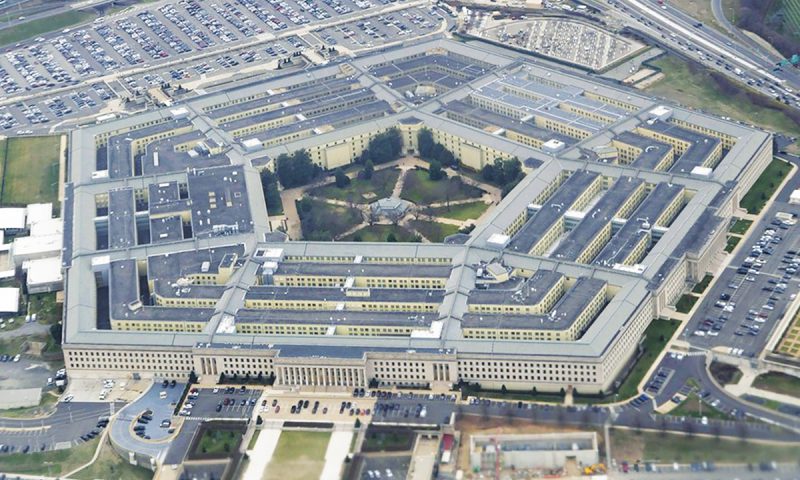
Pentagon hyping of ‘decisive year’ in ‘Indo-Pacific’ exposes military hegemony, Cold War mentality toward China
By Liu Xuanzun | Global Times | December 28, 2023
The US Department of Defense’s hyping of 2023 being a “decisive year” in the “Indo-Pacific region” is filled with Cold War mentality and exposes its aggressiveness toward China, analysts said on Thursday, after the Pentagon on Wednesday released a fact sheet summarizing its work in the region.
“In this decisive decade, 2023 will be remembered as a decisive year for implementing US defense strategy in Asia,” US Secretary of Defense Lloyd Austin said in a news release by the Pentagon on Wednesday.
Taking the form of a fact sheet, the Pentagon release rounded up some of its “achievements” in the past year with allies and partners to make the US forces’ posture in the “Indo-Pacific region” “more mobile, distributed, resilient, and lethal,” including forward stationing key US military units to Japan, sending more submarines and warplanes to Australia, gaining access to four new military bases in the Philippines, concluding a defense cooperation agreement with Papua New Guinea, and increasing strategic asset rotations such as submarines and bombers to the Korean Peninsula.
The Pentagon outlined its billions of dollars of investments in procurement and development in military capabilities as well as in the Pacific Deterrence Initiative, its support of Japan’s decision to acquire missiles that can strike another country, an AUKUS nuclear-powered submarine and defense industrial base cooperation with Australia as well as bolstering of India’s defense modernization plans.
It also summarized some of its exchanges with countries in the region, including joint exercises with the Philippines, Indonesia, India, Japan, Australia and South Korea.
While the Pentagon did not mention China by name, most of the actions mentioned in the fact sheet target China, observers said.
“If you put the locations named in the list on a map, you can clearly see the US military is forming a strategic encirclement taking advantage of footholds in the form of its allies and partners,” a Chinese military expert who requested anonymity told the Global Times on Thursday.
Many of the so-called achievements are very sensitive and can lead to or have already resulted in serious consequences, the expert said, citing as examples the danger of Japan abandoning its post-war “self-defense only” principle, the AUKUS nuclear-powered submarine plan risking nuclear proliferation, and the US’ support for the Philippines inciting the Southeast Asian country to repeatedly provoke China over Chinese islands and reefs in the South China Sea, causing tensions in the region.
These aggressive moves are reflections of the US’ Cold War-mentality and its pursuit of military hegemony through bloc confrontation, which will only harm peace and stability in the region and the world, the expert said.
Featured Video
Chinese jet fuel and the myth of energy independence
or go to
Aletho News Archives – Video-Images
From the Archives
The Dirty Little Secret behind the “Global Terrorism Index”
The Omission of Israeli Terrorism in the Occupied Palestinian Territories
By Karin Brothers | Global Research | December 6, 2014
… The Israeli settlements — all of which are illegal – have been identified as a major impediment to peace. The refusal of a major “global” terrorism report to name the Israeli settlers as one of the groups most responsible for terrorism not only misrepresents a major source of regional violence but exposes the Global Terrorism Index as a propaganda tool that supports a U.S. agenda.
In recent years, governments have been attempting to thwart terrorism by blocking supportive fund-raising. When it comes to Israeli settlements, however, the US and Canada actually encourage fund-raising by giving organizations (such as Christian Friends of Israeli Communities (CFOIC) and the Jewish National Fund) financial support in the form of donor tax-deductions.
Charities which provide funds for the Israeli settlements should be regarded as terror-financing organizations. They should not only lose their tax-deductible status, but they should be banned because they support the violation of international humanitarian law. The terror-financing laws that are being strictly enforced for Muslim charities should be applied to Christian and Jewish charities as well. … Read full article
Blog Roll
 Aletho News
- Chinese jet fuel and the myth of energy independence
- Ukraine Sea Drone Fired From Libya Hit Russian Tanker in Mediterranean
- IRGC: Iranian forces launched no attacks during ceasefire hours
- Trump Administration Moves To Automate U.S. Military Draft Registration
- Spain orders reopening of Tehran embassy, condemns Israel’s carpet bombing of Lebanon
- Israel faces ‘unsustainable’ strategic crisis following 40-day war against Iran: Analyst
- Iran restricts Hormuz access to 15 vessels per day under ceasefire terms: Report
- The ‘Opposition Party’ Has Done Nothing to Stop the Iran War and Much to Goad Trump Into Continuing It
- Moscow backs Tehran on status of Lebanon in US-Iran deal
- How UK Regulator Ofcom Quietly Bypassed International Law to Police American Speech
- If Americans Knew
- Amnesty: Urgent – Protect Lebanese civilians from brutal escalation in Israeli attacks
- Is The War Against Iran Over?
- Inside the Israeli army’s propaganda wing
- Hundreds of Gaza Amputees Stranded in Legal Limbo
- The gallows law: Israel moves toward executing Palestinian children
- Tucker Carlson: The Path to Peace requires ending ‘special alliance’ with Israel
- This is ceasefire? Israel’s biggest massacre yet in Lebanon, another journalist killed in Gaza – Daily Update
- Tucker Carlson on Israel: This Is the Behavior of an Ally? Really?
- Gazans face a triple crisis: severe shortages of water and bread, healthcare in tatters
- NY Times reports how Netanyahu took the US into Iran War
- No Tricks Zone
- An Inconvenient Tree: Uncovered In Alps… Europe Much Warmer Than Today 6000 Years Ago
- New Study Reports A 60% Slowdown In Greenland’s Ice Loss Rate In The Last Decade
- Low Intensity Tornado Wrecks Major Solar Farm, Creating A Potential Toxic Dump
- New Study Finds Warming Saves Lives…Cold Temperatures 12 Times More Deadly Than Excess Heat
- German Science Blog Accuses PIK Climate Institute Of Hallucinating Climate Tipping Points
- Devastating Assessment Of Comirnaty Vaccine By Former Senior Pfizer Europe Toxicologist
- New Study: CO2 Is ‘Effectively Negligible’ As An Explanatory Climate Change Factor Since 2000
- Former Pfizer Toxicologist Dr. Helmut Sterz Tells Bundestag Hearing Pfizer Vaccine Should Have Never Been Approved
- Energy Expert: Germany’s Nuclear Phaseout Was A “500 Billion Euro Mistake”
- New Research: South Australia’s Mid-Holocene Sea Surface Temperatures Were 4°C Warmer Than Today
 Aletho News