How a low-key remark by Putin reveals a deeper economic shift
By Henry Johnston | RT | October 3, 2025
During his Valdai speech on Thursday, Russian President Vladimir Putin made the following rather dry statement:
“It’s impossible to imagine that a drop in Russian oil production will maintain normal conditions in the global energy sector and the global economy.”
It certainly wasn’t the highlight of the night, and I haven’t seen it in the headlines of any of the recaps. The statement is, of course, true. Putin is in a sense saying: “you can’t kick us out.”
But let’s unpack this a bit and try to get a bird’s eye view of what this mundane statement implies in a much deeper sense – not in the sense of counting barrels of oil and the Brent price, but in terms of understanding the shifting tectonic plates.
Let’s first imagine what a Western leader might have said in the same tone, circa January 2022.
“It’s impossible to imagine that a country that loses access to dollars and Western capital markets will maintain normal economic conditions.” I don’t know if anybody actually said such a thing in as many words, but that’s exactly what many were thinking.
Now, recall the G10 Rome meetings in late 1971, as the Bretton Woods-established gold peg of the dollar was being dismantled, when US Treasury Secretary John Connally famously told his European counterparts: “The dollar is our currency, but it’s your problem.” It is an oft-cited instance of American hubris.
In other words, despite its global use in trade and finance, the dollar would be managed for American economic interests.
When the collective West placed what were supposed to be crushing sanctions on Russia in 2022 in light of the Ukraine crisis, the idea was, again, “our currency (system), your problem.”
The message: the dollar will be managed for American geopolitical interests.
According to the conventional thinking, being cut off from the dollar system should have spelt doom for Russia. The many forecasters predicting exactly such a dire outcome weren’t necessarily simply Russophobes. They were working within a certain paradigm. Without access to its now frozen central-bank reserves, how would Russia stabilize the ruble? Without access to correspondent banking in dollars/euros, how would trade be settled? And without access to foreign capital markets, wouldn’t a funding crisis ensue? This type of thinking gave rise to these types of comments:
“We will provoke the collapse of the Russian economy,” in the words of French Finance Minister Bruno Le Maire about ten days into the war.
But the Russian economy didn’t collapse and in fact stabilized far faster than anyone expected. The thing is Russian oil and gas was still needed. And those who thought they didn’t need it (read the EU) found out the hard way that they did – even if the Europeans obscured the ramifications as much as possible through large fiscal support and subsidies. But it is no coincidence that ‘deindustrialization’ has become a household word in Europe. And somehow the political will to really clamp down hard on Russian energy never seems to materialize.
All of a sudden we have, from a Russian perspective: “Our commodities, your problem.”
The question now is: does this mean we’ve suddenly awoken to a strange new world? Are we now in a system where access to real things (like commodities) now trumps access to paper promises (like dollars)? Western policymakers’ futile attempts to cut Russian energy out of the world economy show that they understand only the monetary side of things. They see energy as a source of revenue for the Russian state – revenues thanks to which Russia is able to sustain its war effort. That the economy might actually fundamentally be an energy system and not a monetary system is incomprehensible to them. It is, in the strict Kuhnian sense, a different paradigm.
The BRICS countries talk a lot about a monetary reset being underway and about how new financial architecture is being created. It is fair to say that some of this rhetoric has been premature and that reports of the demise of the dollar system have been overstated. There have been a lot of checks written that BRICS and the Global South aren’t ready to cash.
Nevertheless, change is afoot, and what is taking shape has roughly the following contours: commodities are beginning, at the margins, to act as system-level collateral. By contrast, up to now, the system relied on trust in the issuer of paper claims (dollars, US Treasuries, euro-denominated assets). Gold accumulation by central banks has been massive – it is a quiet de-dollarization of reserves. Oil-for-yuan deals are modest but growing. And what can the commodity seller do with the yuan it receives? Convert it to gold on the Shanghai Gold Exchange. This may not yet be widespread, but the plumbing is there.
The anchor is shifting from debt claims to real assets – and this is bad news for countries whose economies are perched precariously atop a mountain of debt claims. Think of this as part hedge against Western sanctions and weaponization of the system, and part recognition that commodities have intrinsic durability that paper claims can’t always guarantee.
Ultimately, of course, paper promises can be inflated. It’s not lost on anybody in the Global South that the dollar is down some 111% against gold in just two years and that US debt seems to be spiraling to infinity.
If the current system is one where money, credit, and financial assets are king, this means the constraints in this system are money-related. The crises tend to start with something like a spread blowing out, liquidity drying up, or collateral chains breaking. This is basically a money problem, not a real-economy problem. Remember the 1998 Asia currency meltdown; or the Global Financial Crisis of 2008; or Covid; or the UK gilt crisis of 2022; or the various US repo spikes. Such dislocations are dealt with by throwing balance sheet at them – swap lines, quantitative easing, backstops, emergency loans.
In 2022, we suddenly found out that Russian energy is not just another financial dislocation that can be covered with a swap line or emergency loan. From this, it follows that we need to think in terms of two economies: the real economy of energy, resources, goods and services, and a parallel financial economy of money and debt. There will always be a financial economy – and always be spreads blowing out on a Bloomberg screen somewhere – but we’re finding out now that it is the real economy that underpins the financial one and not the other way around.
But here’s the catch. When energy is abundant and cheap – and when money holds its value against energy – this energy foundation to the economy can be disregarded. The peak of renewables-based energy transition euphoria in Europe coincided with the peak of Russian supply of cheap hydrocarbons to Europe. A coincidence?
The legendary strategist Zoltan Pozsar once wrote: “Russia and China have been the main ‘guarantors of macro peace’, providing all the cheap stuff that was the source of deflation fears in the West, which, in turn, gave central banks the license for years of money printing (QE).”
I would add that this also gave the West license to dwell comfortably in the illusion that the economy is primarily a monetary system and not an energy-and-real-stuff system. Ironically, it was the reliable presence of cheap Russian oil and gas that helped this economic illiteracy to fester.
Putin did not connect these dots in his remarks at Valdai; the focus of his speech was obviously elsewhere. But the dots are there to be connected. And there are a lot of people in Moscow and Beijing to whom these dots are very apparent.
Henry Johnston is a Moscow-based editor who worked in finance for over a decade.
Russian oil keeps flowing despite US pressure – Bloomberg
RT | September 30, 2025
Russia’s seaborne crude exports have remained near a 16-month high over the past four weeks, showing little impact from US President Donald Trump’s efforts to pressure global buyers into halting imports from Moscow, Bloomberg reported on Tuesday.
According to vessel-tracking data through Saturday compiled by the outlet, average daily shipments held steady at 3.62 million barrels, matching the highest level since May 2024. The continued flow comes despite targeted US efforts to persuade countries to curb imports.
Trump has pressured the EU, India, and China to stop purchasing Russian oil, describing the move as an effort to advance a potential Ukraine peace settlement. Moscow has criticized Washington’s strong-arm tactics, saying that sovereign nations have the right to choose their trade partners.
New Delhi’s continued purchases of Russian oil have in particular drawn the ire of the US. In August, Washington imposed 25% punitive tariffs on India on top of the earlier 25% tariff imposed after the two countries failed to reach a trade deal. India has refused to scale back imports from Russia and described Washington’s policy as economic coercion.
China has taken an even firmer stance, with its Ministry of Commerce reaffirming intentions to deepen energy cooperation with Russia. The ministry says Beijing will defend its interests as the US pushes G7 nations to impose 100% tariffs on Chinese imports.
European buyers are also resisting. Hungary and Slovakia, which are both reliant on pipeline shipments, have cited economic and logistical obstacles to ending Russian oil imports. Turkish imports have remained steady as well, averaging around 300,000 barrels per day.
Meanwhile, the redirection of oil from Russian refineries damaged by Ukrainian drone strikes may be contributing to the continued export volumes, according to Bloomberg. Export terminal capacity, however, could become a limiting factor if strikes intensify, the outlet adds.
In the most recent week, 36 tankers carried 26.75 million barrels of Russian crude, a rise from the previous week’s 23.69 million, Bloomberg data shows. The total value of exports in the week to September 28 rose by $240 million to $1.57 billion.
Kabul hails regional powers’ rejection of foreign military bases in Afghanistan
MEMO | September 28, 2025
Afghanistan on Saturday welcomed a joint stance by China, Russia, Iran and Pakistan opposing any reestablishment of foreign military bases in the country, the Taliban administration said, Anadolu reports.
Hamdullah Fitrat, deputy spokesman of the interim government, issued the statement after foreign ministers of the four nations met on the sidelines of the 80th UN General Assembly in New York.
The four countries form a quadrilateral consultation mechanism created in 2017 to promote regional stability and coordinate efforts to counter terrorism, narcotics and extremism emanating from Afghan territory.
In a joint communique, they voiced support for Afghanistan’s sovereignty, independence and territorial integrity and said they “firmly” oppose any move by outside powers to set up military bases in Afghanistan or the wider region.
Fitrat said that Afghanistan’s territory would not be allowed to be used against any country and that no armed groups are permitted to operate inside the country.
“Afghanistan is taking serious steps against corruption, drugs and all kinds of undesirable issues and considers this process its responsibility,” he said, adding that Kabul seeks positive relations with all countries based on “mutual respect.”
It comes days after US President Donald Trump warned “bad things” would happen if the interim Taliban administration did not cede control of Bagram Air Base to the Pentagon.
The Taliban returned to power in August 2021 after the withdrawal of US-led forces ended a two-decade war.
Kabul has said it would not negotiate its territorial integrity and urged Trump to honor the 2020 Doha agreement.
US, allies veto draft resolution on delaying ‘snapback’ of Iran sanctions
Press TV – September 26, 2025
The United States and its allies veto a draft resolution aimed at delaying “snapback” of the UN Security Council’s sanctions against Iran that were lifted in 2015 in line with a nuclear deal between the Islamic Republic and world countries.
On Friday, the US, the UK, France, Denmark, Greece, Panama, Sierra Leone, Slovenia, and Somalia vetoed the draft measure seeking to delay imposition of the coercive economic measures for six months.
China, Russia, Algeria, and Pakistan voted in favor of the measure that had been submitted by Beijing and Moscow. South Korea and Guyana abstained.
According to the UN, “The so-called ‘snapback’ mechanism [now] remains in force, which will see sanctions rei-imposed on Tehran this weekend, following the termination of the Joint Comprehensive Plan of Action (JCPOA).”
JCPOA refers to the official name of the nuclear deal that upon conclusion was endorsed by the Security Council in the form of its Resolution 2231.
The agreement lifted the sanctions, which had been imposed on Iran by the Security Council and the US, the UK, France, and Germany over unfounded allegations concerning Tehran’s peaceful nuclear energy program.
The bans had been enforced against the nation, despite the International Atomic Energy Agency (IAEA)’s having historically failed to find any proof of “diversion” of the nuclear program.
The US left the JCPOA in an illegal and unilateral move in 2018 and then re-imposed those of its sanctions that the deal had removed.
In 2020, Washington went further by trying unilaterally to trigger the “snapback.”
After the American withdrawal, the UK, France, and Germany too resorted to non-commitment vis-à-vis the Islamic Republic by stopping their trade with Tehran.
The Friday vote came after the trio launched their own bid to activate the “snapback” on August 28.
The allies have been rehashing their accusations concerning Iran’s nuclear energy activities in order to try to justify their bid to reenact the sanctions, ignoring absence of any proof provided by the IAEA that has subjected the Islamic Republic to the agency’s most intrusive inspections in history.
They have also constantly refused to accept their numerous instances of non-commitment to the JCPOA.
Iran, however, began observing an entire year of “strategic patience” following the US’s withdrawal – the first serious violation of the nuclear agreement – before retaliating incrementally in line with its legal right that has been enshrined in the deal itself.
In the meantime, the Islamic Republic has both voiced its preparedness to partake in dialog besides actually engaging in negotiation aimed at resolving the situation brought about by the Western allies’ intransigence.
Tehran refused to categorically rule out talks with the European troika even after illegal and unprovoked attacks by the Israeli regime and the United States against key Iranian nuclear facilities in June, which made it impossible for the IAEA to continue its inspections as before.
The Islamic Republic’s latest goodwill gesture came on September 9, when it signed a framework agreement with the IAEA aimed at resuming cooperation with the agency, which had been suspended following the attacks.
The Friday vote came, although, Iranian officials, including President Masoud Pezeshkian, Foreign Minister Abbas Araghchi, and security chief Ali Larijani, had strongly warned the US and its allies against triggering the “snapback.”
Araghchi had cautioned that such vote would lead to termination of the agreement with the IAEA, while Pezeshkian had noted that talks would be “meaningless” if the mechanism were to be enacted.
Meeting with anti-war activists in New York on Thursday, the president had called the prospect of re-imposition of the sanctions unwelcome, but added that the coercive measures did not signal “the end of the road.”
“Iran will never submit to them,” he had said, referring to the bans, and added that the Islamic Republic “will find the means of exiting any [unwelcome] situation.”
China voices ‘deep regret,’ discourages renewed aggression
Reacting to the vote, China’s Deputy UN Ambassador Geng Shuang similarly expressed “deep regret” for the failure to adopt the draft resolution, identifying dialogue and negotiation as two of “the only viable options” out of the situation caused by the Western measures.
He urged the US “to demonstrate political will” and “commit unequivocally to refraining from further military strikes against Iran.”
Geng further called on the European trio to engage in good faith in diplomatic efforts and abandon their approach of pushing for sanctions and coercive pressure against Iran.
Russia slams US, allies for lack of ‘courage, wisdom’
The remarks were echoed by Geng’s Russian counterpart Dmitry Polyanskiy, who said, “We regret the fact that a number of Security Council colleagues were unable to summon the courage or the wisdom to support our draft.”
“We had hoped that European colleagues and the US would think twice, and they would opt for the path of diplomacy and dialogue instead of their clumsy blackmail,” he said.
Such approach, the diplomat added, “merely results in escalation of the situation in the region.”
Speaking before the vote, Polyanskiy had also told the chamber that Iran had done all it could to accommodate Europeans, but that Western powers had refused to compromise.
China signs $2.5bn seawater contract to sustain Iraq’s oil output
The Cradle | September 23, 2025
China Petroleum Pipeline Engineering (CPPE) has secured a $2.5 billion contract to design and build a massive seawater distribution system across southern Iraq, Iraq Business News (IBN) announced on 23 September.
The agreement with Iraq’s Basra Oil Company covers a 950-kilometer network that will deliver treated seawater to multiple fields, with Australian consultancy ILF tasked with supervising the works.
The project centers on a treatment plant built to handle five million barrels of treated seawater each day, with future phases allowing the volume to increase to seven to eight million.
The treated seawater will be pumped into the reservoirs of Rumaila, Zubair, West Qurna 1 and 2, Majnoon, and other fields in Maysan and Dhi Qar to keep underground pressure high, which allows the crude oil to be more easily extracted.
The pipeline will also help protect freshwater sources that are currently being diverted from rivers and aquifers, which will instead remain available for use in agriculture and households.
The scheme forms a central pillar of Iraq’s Common Seawater Supply Project, first outlined as part of wider efforts to stabilize crude output.
It also links with other ventures such as TotalEnergies’ expansion at the Artawi (Ratawi) field, where output is targeted to rise to 210,000 barrels per day (bpd).
China National Petroleum Corporation had disclosed in August that its subsidiary, CPPE, was the winning bidder, with the contract awaiting final signature. The company stated that execution would commence after the contract was signed, with a duration of 54 months.
China has steadily deepened its position in Iraq’s energy sector.
Senior executives from four Chinese oil firms told Reuters in August that their collective production in Iraq is set to double by 2030, reaching half a million bpd.
Baghdad has also invited Beijing to anchor other strategic initiatives. In 2023, Iraq’s transport minister said China was expected to play a major role in the $17 billion Development Road linking West Asia to Europe.
In July, PowerChina was awarded a $4 billion contract for Iraq’s first major seawater desalination facility in Basra, reinforcing Beijing’s growing weight in Iraq’s reconstruction and resource management.
US Attempts Won’t Affect Russia-China Contracts on Energy Resources – Chinese Mission
Sputnik – 24.09.2025
GENEVA – The US’s attempts to force China to abandon the purchase of Russian energy resources will not affect the contracts between the countries, the Chinese permanent mission to the World Trade Organization (WTO) told Sputnik on Wednesday.
When asked if the US’s position on energy contracts between China and Russia will have an impact, Charge d’Affaires Li Yihong replied in the negative, adding that relations between Russia and China are comprehensive and deep, which has been recognized and repeated more than once at the highest level.
On Tuesday, US President Donald Trump blamed the ongoing conflict in Ukraine to China and India for their purchases of Russian oil.
Donald Trump corrects Victor Hugo: “Those who live are those who surrender”
By Lama El Horr – New Eastern Outlook – September 20, 2025
The torment that Washington and its satellites inflict on the peoples of the world is so outrageous that it reveals the disarray of the supremacist bloc, which seems to be playing its final card: The resuscitation of a wrecked Empire.
This playbook for restoring fallen hegemony consists of “negotiating” with Beijing through a means of coercion dear to Washington: blackmail. This is done by orchestrating, directly or through proxies, state terrorism of unbridled savagery in every corner of the world where the supremacy of the Euro-Atlantic oligarchy is threatened. In other words, in every corner of the world.
The ensuing funeral ceremonies, also orchestrated by the Axis of the Fallen Hegemon, aim to impose as an irreversible reality the losses of territory, fundamental rights, and power that these destructions and killings are supposed to inflict on the BRICS, the global South, and, of course, China.
“Give me the moon,” Trump asks Xi
Observing the conflagration of conflicts surrounding China, there is no doubt that Washington has raised its level of aggression a notch. The nature of the crises encircling Chinese territory indicates that the US administration has moved from “courteous” blackmail to “martial” blackmail.
“Courteous” blackmail is a traditional coercive tool used by Washington. It might look something like this: “China will be able to strengthen its cooperation with the European Union if it renounces buying Russian energy,” and aims, in this case, to kill two birds with one stone, i.e., to subjugate both Beijing and Moscow.
But this type of blackmail also manifests itself in more ambiguous ways: this is the case with Trump’s announcement of an agreement with Armenia, which has reportedly ceded the development and management of the Zangezur corridor to Washington for a period of 99 years. It goes without saying that such an agreement, if confirmed, can only arouse the fears of Beijing and Moscow and the categorical rejection of Tehran, since it leaves open the threat of an American presence in the South Caucasus. Admittedly, this may be a warning to Beijing and Moscow regarding their security collaboration with Iran: “If you strengthen Tehran’s defense capabilities against Israel, we will deploy troops between Armenia and Iran.” But it may also be that Washington has drawn a parallel with South America: “If China goes ahead with the bio-oceanic rail corridor project, which is supposed to link Brazil to the port of Chancay via Bolivia, there will be a NATO presence on Iran’s northwestern borders”—with all the security implications that such a deployment would entail for Iran, for the North-South corridor, and for the BRI network in Central Asia.
When this “polite” blackmail fails to achieve the set objective, Washington changes its modus operandi. Most recently, for example, Trump asked his satellites to outsource pressure against Beijing: “The G7/NATO/EU bloc must impose sanctions on China and India to force them to turn their backs on Russia.”
But the American modus operandi can also involve resorting to “martial” blackmail. This type of blackmail is more complex than the previous one. While it also involves coercion, it relies on brute force, and it is not always easy to discern the actors or their true level of involvement.
Suddenly, a succession of violent events occurs in more or less strategic areas, which seem to reshuffle the cards of the regional geopolitical chessboard. This is the case of the countless military assaults in West Asia—Palestine, Lebanon, Syria, Yemen, Iran, and Qatar. It is also the case, in South and Southeast Asia, of the India/Pakistan or Cambodia/Thailand conflict; of the declaration of martial law by former President Yoon in South Korea; of the color revolutions in Sri Lanka, Bangladesh, and Nepal; of the sporadic riots in Mongolia; of the war of attrition in Myanmar; or of the insurrection in Indonesia, a member of the BRICS, on the eve of the Tianjin summit.
From these upheavals, in which Washington’s involvement through regional and local channels has been widely demonstrated (see the work of Brian Berletic), Washington’s ulterior motives become apparent. Although the terms of this “martial” blackmail are never fully acknowledged, it is easy to guess its content:
- If you ostracize the dollar in your trade with the BRICS and Africa, we will undermine the BRI infrastructure all around your borders;
- Give us shares in your strategic companies, or we will escalate the trade war against Chinese technology and the maritime industry;
- We demand the lion’s share of the New Polar Silk Road, or failing that, we will form a military alliance with Somaliland and Taiwan;
- Stay away from South America and Venezuela, or we will provoke “incidents” on your borders, like in Qatar and Poland, to strengthen the defenses of the countries hosting our military bases.
And so on. These muscular blackmails—in this case, fictions, even if they are inspired by reality—are based on objectives so extreme that they are completely out of reach. They therefore resemble far-fetched threats. Yet, the Axis of the Fallen Hegemon continues to resort to these methods of intimidation, no doubt because they provide it with an excellent pretext to pursue its real objective, which is to intensify hostilities against China.
The objective, in fact, is not the resolution of crises, but their intensification, the Atlantic bloc being convinced that the spread of chaos is the only means within its reach to restore its supremacy. Moreover, the United States is all the less inclined to renounce subjugation by war, or “peace through strength,” as it demonstrates daily through its Israeli clone, its true ambition: to annihilate any desire for diplomacy – even if it means bombing the place where the negotiations are to be held.
For Washington, mourning must precede death
In the midst of these hostilities, it is important not to lose sight of the ultimate goal of the Empire in its death throes: to shift toward a fait accompli by decreeing the death of struggles that are still ongoing. The objective is therefore to push China—and, with it, the rest of the world—into confusing the destruction and killings caused by Atlanticist savagery with defeat.
Clearly, the imperialist bloc is going through a phase of such acute megalomania that it is incapable of making rational decisions. The slightest sign of life from its geopolitical adversaries is perceived as an existential threat. One need only look at the unspeakable abominations that torment the Palestinian people, and that torment us all, to realize how worrying it is to leave the fate of humanity in the crime-hungry hands of the Axis of the Fallen Hegemon.
Under these circumstances, it is up to China, the BRICS, and the Global South to restore what can be restored of human dignity, since “Those who live are those who struggle.”
Lama El Horr, PhD, is the Founding Editor of China Beyond the Wall. She is a geopolitical consultant and analyst specializing in Chinese foreign policy and geopolitics
Follow new articles on our Telegram channel
UN Security Council votes to reimpose nuclear sanctions on Iran
Al Mayadeen | September 19, 2025
The United Nations Security Council voted on Friday to reimpose nuclear sanctions on Iran, citing its alleged violations of the 2015 Joint Comprehensive Plan of Action (JCPOA).
The move, driven by Britain, France, and Germany, has sparked sharp criticism from Russia, China, and Iran, highlighting deepening divisions within the international community over the future of Iran’s peaceful nuclear program.
The three European signatories to the JCPOA called for the activation of the snapback mechanism, falsely claiming that Iran had breached commitments made under the 2015 deal, which was designed to prevent Tehran from acquiring nuclear weapons capabilities.
The European powers alleged that Iran’s advancements in uranium enrichment and reduced cooperation with the International Atomic Energy Agency (IAEA) constitute material violations of the agreement.
Iran, Russia, and China push back
In response, Iranian Foreign Minister Abbas Araghchi stated that Tehran had presented a “fair and balanced” proposal to European nations aimed at preventing the reimposition of sanctions.
Russia’s UN Ambassador, Vasily Nebenzia, rejected the European-led move, saying, “There are no grounds for reinstating UN sanctions on Iran.” He emphasized that the E3’s push for snapback sanctions has no legal authority and affirmed that Moscow would not recognize it.
Russia also called on Security Council members to support a joint Russian-Chinese draft resolution on Iran, offering an alternative diplomatic track to avoid escalation.
China’s envoy emphasized that pressure on Iran must stop and urged Tehran to reaffirm the peaceful nature of its nuclear program, noting Iran’s declared willingness to cooperate.
Iran maintains that its nuclear program remains peaceful and has accused Western powers of double standards and bad faith. Chinese Ambassador to the UN echoed this stance, stating, “It was the United States that withdrew from the agreement, attacked Iran militarily, and disrupted negotiations.”
China’s envoy also called on the European trio to immediately withdraw their notifications to reinstate sanctions, stressing that “pressure is not the solution.”
Snapback could nullify Cairo agreement
Al Mayadeen’s sources warned on Thursday that activating the snapback sanctions mechanism would nullify the Cairo Agreement and end cooperation between the IAEA and Tehran.
This would prevent international inspectors from accessing sensitive facilities, escalating the standoff even further.
According to the sources, the diplomatic window with Iran remains open, but indicators point to the potential activation of the snapback sanctions mechanism. They argued this is largely because Washington is steering the European Troika in the talks.
The sources warned that Washington is expected to call on Tehran to resume negotiations after activating the snapback mechanism, aiming to impose its conditions from what it perceives as a position of strength. They described this approach as a serious miscalculation of Iran’s stance and the way Tehran would respond.
Poland blocks vital China-EU trade artery – Politico
RT | September 19, 2025
Poland’s decision to close its border with Belarus has caused major disruption to a key corridor for rail freight traffic between China and the EU, according to Politico.
The route affected by the closure normally accounts for approximately €25 billion per year in freight traffic between China and the EU. All cargo is currently blocked, including time-sensitive shipments such as medicine and food.
Warsaw has claimed the closure is “related to the Russian-Belarusian ‘Zapad-2025’ exercises,” held in neighboring Belarus on September 12-16. The Zapad drills were attended by international military delegations, including from the US and India, and are staged by Moscow and Minsk roughly every four years.
The closure compounds existing frictions over tariffs, subsidies, and security concerns that have long pressured EU-China trade ties.
Warsaw described the maneuvers as “very aggressive” and conducted “very close to the Polish border.” Moscow has said the exercises were designed to repel attacks, using lessons from the Ukraine conflict.
Beijing has sought to retain the “flagship project” in China’s cooperation with Poland and the EU. However, Chinese Foreign Minister Wang Yi, who flew to Warsaw for talks on Monday, could not convince his Polish counterpart, Radoslaw Sikorski, to allow the goods to flow into the EU.
According to Sikorski, a noted Russia hawk, “the logic of trade” was being replaced by “the logic of security,” Politico reported, citing Polish foreign affairs spokesman Pawel Wronski. China, according to Warsaw, made no direct demands to reopen the border.
The European Commission has said it is monitoring the potential fallout from the closure, adding that “it’s too early to go into further detail.”
Piotr Krawczyk, former head of Poland’s Foreign Intelligence Agency, suggested the US could be backing Warsaw “in not rushing to reopen it,” saying he is “quite sure Washington is more than happy to see the routes closed – at least temporarily.”
He pointed to Washington’s pressure on the EU to slap extra tariffs on China over its purchases of Russian energy.
Qatar After the Airstrikes: Assessing Viable Responses to Israeli Aggression
By Abbas Hashemite – New Eastern Outlook – September 16, 2025
Since the Israeli attack on Doha, the Arab world has been looking for a collective response. However, the Arab states have limited viable options available due to their over-reliance on the US.
Israel’s Attack on Doha: A Dangerous New Precedent in the Gulf
The Israeli attack on Qatar last week astonished the whole world. Doha has long been seen as a mediator, as it played a constructive role in establishing peace between different conflicting parties, including the United States and the Taliban. It was also playing a mediatory role between Hamas and Israel. Hamas leadership was present in Doha to discuss the peace proposal presented by the Trump administration. However, the Israeli government conducted airstrikes in Doha on the building in which the Hamas leadership was present. Although the Hamas leadership survived the attack, these airstrikes raised serious concerns about the sovereignty and security of the Gulf States.
The Gulf countries have largely been reliant on the US alliance for their security. The latter supplies most of the arms and weapons to these countries. However, the US air defense system did not intercept any Israeli missiles during the recent strikes in Doha, implying that the US security guarantees to the Gulf States are selective and are only motivated to counter threats emanating from Iran. Moreover, this demonstrates that the US green-lighted the Netanyahu administration to conduct these criminal strikes in an affluent neighborhood in Doha.
Although the Trump administration has denied all the claims about the US support to the Israeli government in these strikes, and it has condemned this move in the United Nations, the US Secretary of State, Marco Rubio, is on a two-day visit to Israel to ensure continued US support to the Zionist state. This further demonstrates that the United States prioritizes Israel over its Arab allies, and all its airbases in the Gulf countries are actually to protect Israel against the regional threats.
Limited Military Options and Growing Frustration
Qatar’s Prime Minister Sheikh Mohammed bin Abdulrahman bin Jassim Al Thani described the Israeli attacks on Hamas leadership in Doha as “state terrorism that is being exerted by someone like Netanyahu.” He further stated, “I think that we have reached a decisive moment. There should be retaliation from the whole region in the face of those barbaric actions that only [reflect] one thing: It reflects the barbarism of this person that is leading the region, unfortunately, to a point where we cannot address any situation, and we cannot repair anything, and we cannot work within the frameworks of international laws. He just violates all those international laws.”
A strong response by Qatar and Arab states is mandatory to ensure their sovereignty and security in the future. However, given the Arab states’ overreliance on the US security guarantees and arms, they are left with very few options to retaliate against Israel. A military response to Israel is impossible for the Gulf States, as they do not possess enough military capabilities. Moreover, the US would never allow them to collectively attack Israel. Therefore, a collective military response could lead to internal security threats due to the presence of the US airbases in these countries.
Strategic Realignment: From US Dependence to Eastern Alliances
The Gulf States, however, could push Israel towards regional diplomatic isolation. The UAE, Bahrain, Morocco, and Sudan established diplomatic relations with Israel in 2020, following the Abraham Accords, which were mediated by the United States. The UAE summoned the Israeli diplomat to denounce these airstrikes in Doha. Mohammed bin Zayed Al Nahyan, the President of the UAE, visited Qatar within 24 hours of the attack to discuss the situation. The UAE and other Arab states could limit or downgrade their diplomatic relations with Israel in retaliation for these attacks.
Qatar has already lobbied for a unanimous UN statement condemning the illegal Israeli attack in Doha. It will also host an Arab-Islamic summit in Doha to coordinate a collective response to Israeli attacks. Leaders from almost all the Islamic countries, including KSA, Pakistan, Turkey, and Iran, are expected to attend this extraordinary summit. Moreover, the Gulf States could also join the International Court of Justice’s cases against Israel, further building pressure on the Zionist state to halt its genocide and occupation in Palestine.
Gulf States, especially Qatar, the UAE, the KSA, and Kuwait, hold significant economic leverage over Israel due to their energy resources. They could use their economic leverage to impose trade and economic sanctions on Israel by boycotting companies that have stakes in the Israeli economy. Qatar, Saudi Arabia, and the UAE pledged a collective investment of $3 trillion in the US economy during Trump’s last visit to the region. The intention behind this investment was to strengthen relations with the United States. However, the recent failure of the US to protect Qatar from Israeli attack could result in the Gulf nations’ quest for new global allies.
Over the past few years, the world has witnessed unprecedented economic growth in Russia and China. In 2023, China brokered a peace deal between Iran and Saudi Arabia to normalize their bilateral diplomatic relations. Russia, on its part, has emerged as a strong military and diplomatic power on the global stage. The two new superpowers of the world are already aligned with the Palestine policy of the Muslim world. Moreover, they possess unmatchable military power. The recent US failure to protect Qatar from Israeli attacks has provided the Arab states with a new direction to expand their diplomatic and strategic ties. They could engage with Russia and China to strengthen their defense sector and expand their diplomatic clout. This would not only prove detrimental for Israel but would also hurt the US regional and global interests.
Аbbas Hashemite – is a political observer and research analyst for regional and global geopolitical issues. He is currently working as an independent researcher and journalist
Russia, Iran, China & Allies Want to Ban Attacks on Nuclear Sites
By Svetlana Ekimenko – Sputnik – 16.09.2025
Iran, Russia, Belarus, China, Venezuela, and Nicaragua have submitted a draft resolution to the International Atomic Energy Agency (IAEA) calling for a ban on any attacks or threats against safeguarded nuclear sites.
The initiative of the six countries, titled Prohibition of all forms of attack and threats of attack against nuclear sites and facilities under IAEA safeguards, is meant to defend the integrity of the NPT, Iran’s Foreign Ministry spokesman Esmaeil Baqaei stated on X, in a reference to the Treaty on the Non-Proliferation of Nuclear Weapons.
The draft:
Stresses that all states have the right to peaceful nuclear energy and are entitled to guarantees against military threats;
*Reaffirms that no country should target another’s safeguarded nuclear facilities.
Baqaei urged the international community to act decisively, warning against the “normalization of lawlessness.”
China’s Warning
By Manlio Dinucci | Global Research | September 8, 2025
The global dominance that the United States, the greatest power in the West, wants to maintain at all costs violates the most basic norms of international law: the Trump Administration revoked the visas of representatives of the State of Palestine, preventing them from attending the United Nations General Assembly in September.
This claim to dominance is provoking growing opposition from the Global South. This is confirmed by the warning issued by China with the largest military parade in Beijing.
The official statement from the State Department states that the Trump administration has revoked the visas of members of the Palestine Liberation Organization (PLO) and the Palestinian Authority (PA) ahead of the upcoming United Nations General Assembly, “in the interest of our national security” because “the PLO and PA are responsible for undermining the prospects for peace through their appeals to the UN International Court of Justice to obtain unilateral recognition of a hypothetical Palestinian state.”
In addition, the Trump Administration announced the suspension of visas for all Palestinian passport holders, preventing them from entering the United States for medical treatment, university attendance, visits to relatives, and business activities. At the same time, the Trump administration announced that it is studying “the post-war plan for Gaza”: it provides for the “voluntary transfer” of the entire Palestinian population to transform Gaza into a luxurious “Middle East Riviera.” In this way, while Israel continues its genocide of Palestinians in Gaza and the West Bank, the United States is dismantling the foundations of the State of Palestine.
However, the global dominance that the West’s greatest power wants to maintain at all costs, violating the most basic norms of international law, is provoking growing opposition from the Global South. This is confirmed by the meeting of the Shanghai Cooperation Organization, whose members include China, Russia, Belarus, Iran, India, Pakistan, Kazakhstan, Kyrgyzstan, Tajikistan, and Uzbekistan, with several other countries participating. At the meeting held in China, President Xi Jinping reiterated the basic principles:
“First, we must respect the principle of sovereign equality. We must uphold that all countries, regardless of their size, strength, and wealth, are equal participants, decision-makers, and beneficiaries in global governance. We must promote greater democracy in international relations and increase the representation and voice of developing countries.”
*
This article was originally published in Italian on Grandangolo, Byoblu TV.
Manlio Dinucci, award-winning author, geopolitical analyst and geographer, Pisa, Italy. He is a Research Associate of the Centre for Research on Globalization (CRG).
Featured Video
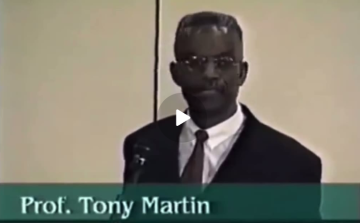
Dr. Tony Martin – The Jewish Role in the African Slave Trade
or go to
Aletho News Archives – Video-Images
In Memoriam
James Petras, In Memoriam
 02.13.2026
Professor James Petras, 89, world-renowned sociologist, public intellectual, and scholar of Latin American politics and global economics, died peacefully on January 17, 2026, in Seattle, WA, surrounded by family.
A prolific scholar and activist, he devoted his life to challenging power, imperialism, and inequality. … continue
Blog Roll
 Aletho News
- Friedrich Merz’s Push to End Online Anonymity Has a Troubling Subtext
- Macron: French citizens fighting for Israel cannot be labeled ‘genociders’
- US eyes Gaza security force drawn from armed gangs
- The Only Motive Behind The ‘Imminent’ U.S. War With Iran Is The Zionist Lobby
- Trump eyes 350-acre US military base housing 5,000 troops in Gaza
- Israel Pushing US Toward a Big and Damaging War With Iran – Ex-Pentagon Analyst
- Meet The Liberal Zionist And Ukraine War Supporter Advising AOC On Foreign Policy
- Buck Dancing for Zion: Kenya’s and Nigeria’s Growing Love Affair With Israel
- Israel installed, oversaw security system at Barak-Epstein residence in New York: Report
- ‘Britain’s Index of Repression’ documents 964 incidents of anti-Palestinian crackdown
- If Americans Knew
- Tucker Carlson interrogated in Israel, has passport seized after interviewing US ambassador
- 6,000 Amputees in Gaza Face Impossible Recovery amid Israeli War Ultimatum
- The Lancet: Gaza death toll far higher than reported – Not a ceasefire Day 132
- Compliant aid: Who are the Israel-approved NGOs scaling up in Gaza?
- Why won’t Trump’s “Board of Peace” bring peace? – Not a ceasefire Day 131
- Help end the injustice against Shadi
- Israel’s Favorite American President
- Israel’s “Yellow Line” Is a Death Trap for Palestinians. We Drove Into It.
- Why Israel’s expanding occupation in Syria presents a critical legal test
- Gaza is not a natural disaster. It is the victim of genocide enabled by global inaction
- No Tricks Zone
- Coal Power Back In Trend As Globe Tries To Keep Pace With Growing Demand For Power
- New Study: A 4°C Warmer Beaufort Sea Had ‘No Sea Ice’ 11,700 – 8200 Years Ago
- Unfudging The Data: Dutch Meteorological Institute Reinstates Early 20th Centruy Heat Waves It Had Erased Earlier
- German Gas Crisis…Chancellor Merz Allegedly Bans Gas Debate Ahead of Elections!
- Pollen Reconstructions Show The Last Glacial’s Warming Events Were Global, 10x Greater Than Modern
- Germany’s Natural Gas Storage Level Dwindles To Just 28%… Increasingly Critical
- New Study Rebuts The Assumption That Anthropogenic CO2 Molecules Have ‘Special’ Properties
- Climate Scientist Who Predicted End Of “Heavy Frost And Snow” Now Refuses Media Inquiries
- Polar Bear Numbers Rising And Health Improving In Areas With The Most Rapid Sea Ice Decline
- One Reason Only For Germany’s Heating Gas Crisis: Its Hardcore-Dumbass Energy Policy
 Aletho News