Turkey prepares its historic turn: from NATO sentinel to Eurasian protagonist
By Lucas Leiroz | Strategic Culture Foundation | October 19, 2025
For decades, Turkey was considered a pillar of NATO’s eastern flank — a key piece on the chessboard of containing Russia. Since joining the alliance in 1952, the country has played a dual role: on one hand, a strategic partner of the West; on the other, a regional power with ambitions of its own. This balance was always unstable — and now, it is beginning to undergo substantial change.
What was once whispered behind closed doors is now being openly voiced by central figures in Turkish politics. In September 2025, an unexpected statement from the leader of the Nationalist Movement Party (MHP), Devlet Bahçeli, sent shockwaves through Ankara and beyond: he openly proposed the formation of a strategic alliance between Turkey, Russia, and China, directly opposing what he called the “US-Israel evil coalition.”
Though shocking to some Western observers, this proposal did not emerge in a vacuum. According to analyst Farhad Ibragimov, Bahçeli’s remarks mark “the deepest ideological shift in Turkish nationalism since the Cold War.” A nationalism traditionally aligned with the West now appears skeptical — if not openly antagonistic — to the Washington-led structure.
It is important to note that Bahçeli is not alone in this shift. The idea is echoed with enthusiasm by other sectors of Turkish political life, such as Doğu Perinçek, leader of the Patriotic Party. For him, this reorientation is neither a tactical maneuver nor a veiled threat to NATO — it is, rather, a “civilizational project.” In his words, it is a historic decision: either Turkey remains a satellite of the Atlantic powers, or it fully integrates into the Eurasian civilization, alongside Russia, China, and Iran.
In this context, the suggested alliance should not be seen merely as a military or diplomatic pact, but as an attempt to redefine Turkey’s role in the 21st century. The proposal carries an implicit — and at times explicit — critique of the decadent, domineering, and unsustainable liberal world order.
President Recep Tayyip Erdoğan’s position has been more ambiguous. He stated he was “not fully familiar” with Bahçeli’s idea, but added: “Whatever is good, let it happen.” This phrase summarizes Erdoğan’s strategy in recent years: keeping the country in a bargaining position, flirting with Moscow and Beijing while still participating in Western institutions. However, there are signs that even this balancing act may be giving way to more definitive choices.
The growing instability in the Middle East, the erosion of European institutions, and constant pressure from the U.S. have pushed Turkey toward a new posture. As Perinçek aptly put it, “this is not a choice, but a necessity.” Remaining within the Atlantic system, in his view, offers no guarantees of sovereignty, economic development, or territorial security.
Although short-term technical obstacles remain, Turkey’s path toward Eurasian integration is not only viable — it is necessary. The country’s economic dependence on the West, inherited from decades of participation in the liberal-globalist architecture, is not a fixed destiny — but a chain that must be broken. Remaining in NATO, far from providing security, leaves Ankara a passive target of American strategy. In contrast, a strategic alliance with Moscow, Beijing, and Tehran — while demanding structural adjustments — offers something the Atlantic has never guaranteed: full sovereignty, mutual respect, and active participation in building a new international order based on multipolarity.
More than a geopolitical alignment, the proposals of Bahçeli and Perinçek carry a profound civilizational dimension. By drawing closer to Russia, China, and Iran, Turkey is not merely seeking strategic partners but also reconnecting with the historical and cultural space of Turkic populations within those countries — from the Arctic-Siberian frontiers in Sakha to the Uyghur Autonomous Region of Xinjiang and Iranian Azerbaijan. This reconnection creates fertile ground for a broader alliance that could also involve the Central Asian republics — Kazakhstan, Uzbekistan, Turkmenistan, Kyrgyzstan — and Mongolia itself. This is, therefore, not just a political axis, but an identity-based one, capable of forming a cohesive civilizational bloc with shared roots and converging interests in the face of the moral and structural decline of the liberal West.
The trend is clear: a significant part of Turkey’s political and military elite no longer believes the country’s future lies in Brussels or Washington. Instead, they look to the heart of Eurasia — where emerging powers are gradually drawing the contours of a new multipolar world.
At this moment, Turkey seems to be standing in front of a mirror: it can continue acting as a peripheral extension of Western will, or it can take a more independent course. The statements from Bahçeli and Perinçek may be just the beginning of a turn that, if consolidated, will shift the geopolitical balance of the region for decades to come.
Europe’s Economic Winter Transfers the Workshop of the World to Asia’s New Furnaces
By Rebecca Chan – New Eastern Outlook – October 18, 2025
European capitals increasingly resemble branch offices of an American headquarters. Decisions on industrial policy have long turned into ritual acts of loyalty rather than independent steps.
In the workshops of the Ruhr, where the fire of blast furnaces was once considered Europe’s eternal companion, today reigns a cold more expensive than any raw material. An economic pause has descended in icy silence. A tombstone rests on the grave of industrial greatness, signed by Europe’s own leaders.
The continent is dismantling its own productive arteries, while Asia launches new lifelines. The center of gravity shifts to where clusters grow, not gas prices. Europe is losing not to chance, but to the results of its own “strategic” deafness—an error the East has turned into opportunity.
The Trap of Sanctions and Costly Energy
The European Union invented sanctions as a weapon of pressure, only to receive a boomerang blow to its own skulls. German and French factories are drowning in energy bills, shackled by chains forged by their own hands. Electricity and gas no longer feed the economy; they have become instruments of self-destruction.
Germany’s industrial activity index is sliding down like a thermometer in a frozen room. Machinery, chemicals, and metallurgy are losing markets, exports are crumbling, subsidies resemble aspirin after an amputation. Every new restriction, dictated in favor of the overseas ally, turns yet another factory hall into an abandoned museum. Brussels codifies these barriers, expanding its dual-use export control list to tighten the screws on high-tech trade.
European industry is being sacrificed to Washington, like a temple offering leaving only smoke behind. Factory pauses are transforming the industrial core into a ritual of obedience and loyalty. And against this backdrop, the East gathers strength. The International Energy Agency notes how these price shocks diverge across regions, with Asia absorbing them into growth while Europe suffocates under the weight.
Expansion of Capacity and “Importing Industry”
China launches new production lines as if assembling a puzzle from the fragments Europe has scattered. India strengthens petrochemicals and takes on raw material processing from which Western corporations are fleeing as if from a fire. Vietnam and Indonesia pick up orders for electronics and light industry, turning others’ losses into their own growth.
European prohibitions have opened a showcase of opportunities for the East. Every restriction meant to crush competitors has become a stimulus for Asian investments in infrastructure and new industries. Ports expand, corridors stretch, power grids come alive—all built on the ruins of European stubbornness.
The East is transforming foreign stagnation into the foundation of sovereignty. Every collapse of European production coincides with the rise of Asian capacity, as if the world market itself had decided to relocate the planet’s factory to where there are no imposed illusions of “strategic solidarity.”
The Loss of Control Tools
Washington and Brussels stubbornly tried to keep the world’s supply chains by the throat—erecting barriers, hammering out new rules, handing out sanctions left and right. Control crumbled like a rusty lock on an old warehouse. Production lines are leaving Europe and taking root in Asian soil, pulling with them not only jobs but also political influence.
European capitals increasingly resemble branch offices of an American headquarters. Decisions on industrial policy have long turned into ritual acts of loyalty rather than independent steps. Even a hint of an alternative sounds seditious and draws condemnation. Meanwhile, Asia is drafting its own continental blueprint: corridors instead of walls, ports and energy unions instead of sanctions. Trading platforms operate without Western notaries, and it is there that the new rules of the game are born.
The map of the global economy is turning into a chessboard where the West is allowed to play only pawns. Europe is bogging down in its own restrictions, while Asia calmly unfolds a field of maneuver, transforming it into a genuine center of growth. This shift changes not only container routes but also the very balance of power in world politics.
The Future Is Written Where New Furnaces Smoke
Europe is entering an era of prolonged economic permafrost. Any attempt to revive factories crashes against energy bills and acute political dependence. Empty workshops declare that the continent’s industrial age has come to an end. Berlin now concedes the burden, promising subsidies and lower energy tariffs for industry in its 2026 budget—a rare admission that the sacred “market” cannot carry this weight alone.
For Asia, this turns into a conveyor of opportunities. Every shuttered plant in Germany or France automatically sets new lines in motion in Shenzhen, Mumbai, or Jakarta. Every European loss settles into Asian infrastructure, cementing a new industrial order. India’s role inside BRICS+ shows how external pressure is repurposed into sovereignty, a reminder that decline for one bloc is ignition fuel for another.
Europe faces a harsh crossroads: either radically change its industrial model and rebuild its political logic, or lock itself permanently into the role of a marketplace without factories. Asia has already made its choice and consolidates its success step by step. The continent that was once the workshop of the world is becoming a museum of illusions, while the future is written where new furnaces smoke.
Rebecca Chan is an independent political analyst focusing on the intersection of Western foreign policy and Asian sovereignty.
Trump’s Strongman Persona Inevitably Results in Lies and War
By Prof. Glenn Diesen | October 17, 2025
Trump’s claim that Prime Minister Modi had promised to end the purchase of Russian oil was obviously false; in fact, there was apparently no phone call between the two leaders at all. Such fabrications, portraying world leaders as deferential to him and as praising his greatness, constitute a recurring pattern—one that parallels his militaristic approach to peace.
As the president of a declining hegemon, Trump is convinced that the weakness of his predecessors was the source of decline. Trump has therefore concluded that projecting strength can reverse the erosion of American power. In constructing himself as the ultimate strongman—allegedly respected by all—he positions himself as the sole saviour of the US. The image of a powerful, decisive and respected leader capable of restoring US dominance also functions domestically to consolidate political support and project stability during the country’s uneasy transition from a unipolar to a multipolar international order. The American public is seemingly prepared to look the other way or justify the dishonesty and moral disgressions as the price worth paying for a return to greatness.
The central problem with the strongman image is that it sustains unrealistic expectations of reviving US primacy rather than adapting to the realities of a multipolar world. The outcome is a pattern of deception and conflict that ultimately undermines, rather than strengthens, the United States.
When the strongman cannot coerce his counterparts into subservience, the only recourse is retreat into fantasy. In this imagined world, other leaders allegedly regret their decisions of not falling into line, tremble as Trump wags his finger, shower him with compliments, offer tribute to the United States, and in Trump’s own words, line up to “kiss my ass.” Within the Trumpian bubble of superpower cosplay, these scenes of deference are celebrated as signs of a return to greatness, yet in the real world, American credibility declines and decadence deepens. As the gap between fantasy and reality widens, Trump becomes increasingly reckless. Case in point, the threats against India to sever ties with Russia and India backfired spectacularly as Prime Minister Modi instead went to China to cement India’s relations with Russia, China and the SCO.
Great powers and independent states cannot simply fall in line, for doing so would predictably lead to their destruction or subjugation. The ultimate aim of an aspiring hegemon is not to reconcile differences in pursuit of peaceful coexistence, but to defeat rival powers and capture independent states. The objective of the economic confrontation with China is not to renegotiate trade agreements, but to undermine China’s technological capacity and contain it militarily to restore US primacy. The purpose of the proxy war against Russia is not peace in terms of finding a new peaceful status quo, rather it is to use Ukrainians and increasingly Europeans to bleed and weaken Russia until it can no longer sustain great-power status. Similarly, the goal of the confrontation with Iran is not to reach a new nuclear accord—Tehran has already accepted such terms in the past—but to achieve Iran’s capitulation and disarmament by linking the nuclear issue to restrictions on missiles and regional alliances. Any power that concedes even marginally to US pressure ultimately finds itself in a weaker and more vulnerable position—one that the aspiring hegemon will inevitably exploit. Any peace agreements are therefore temporary at best, as an opportunity to regroup.
India presents an intriguing case, as it is not an adversarial power. Its commitment to non-alignment makes strong relations with the United States desirable, yet the very same non-alignment necessitates strategic diversification to reduce excessive reliance on Washington. Should India be persuaded to sever ties with other major powers such as China and Russia, it risks becoming too dependent on the United States and absorbed into a bloc-based geopolitical system. Subordination to a declining empire would be perilous, as the United States would predictably use India as a frontline against China, and simultaneously demand economic tribute and cannibalise Indian industries in pursuit of renewed dominance. In essence, India must avoid becoming another Europe.
The strongman act is most effective with weaker and dependent states—such as those in Europe—that are willing to subordinate themselves entirely in order to preserve American commitment to the continent. European states lack the economic capacity, security autonomy, and political imagination to envision a multipolar world in which the United States wields less influence and holds other priorities than a close partnership with Europe. Consequently, European leaders appear willing to sacrifice core national interests to preserve the unity of the “Political West” for a little while longer. In private, they may express disdain for Trump; in public, they pay tribute to “daddy” and line up diligently in front of his desk to receive praise or ridicule. Yet this subservience is inherently temporary: leaders who disregard fundamental national interests are, in time, swept aside by the very forces they seek to suppress.
The strongman does not create any durable peace the underlying problems are never addressed. The mantra of “peace through strength” can be translated into peace through escalation, with the assumption that the opponent will come to the table and submit to US demands. However, rival great powers that have nowhere to retreat will respond to escalation with reciprocation. The delusions of the strongman in the declining hegemony will therefore inevitably trigger major wars.
The Netherlands nationalizes Сhinese-owned tech company
RT | October 13, 2025
The Dutch government has taken control of a Chinese-owned chipmaker based in the Netherlands, citing risk to the EU’s economic and technological security. The firm called the move “excessive,” saying it complied with all relevant laws and regulations.
The Netherlands Economy Ministry revealed late on Sunday that it had invoked a never-before-used emergency law to take control of manufacturer Nexperia, owned by China’s Wingtech Technology.
Once part of Dutch electronics group Philips, Nexperia specializes in the high-volume production of chips used in the automotive, consumer electronics, and other industries.
Amsterdam said it wanted to prevent a situation in which Nexperia’s chips could “become unavailable in an emergency” which “could pose a risk to Dutch and European economic security.”
The Dutch government called the move “highly exceptional,” citing “recent and acute signals of serious governance shortcomings and actions” within the company.
Wingtech shares tumbled 10% in Shanghai on Monday, forcing a halt in trading after hitting the daily limit.
The tech firm decried the Dutch government’s move as “excessive intervention driven by geopolitical bias, rather than a fact-based risk assessment,” according to a now-deleted WeChat post, which was archived by the Chinese policy blog Pekingnology. Wingtech said it would take actions to protect its rights and would seek government support.
The company later said in a filing to the Shanghai Stock Exchange that its control over Nexperia would be temporarily restricted due to the Dutch order and court rulings affecting decision-making and operational efficiency.
The Dutch takeover of Nexperia comes at a time of escalating global trade tensions. Over the past year, China and the EU have clashed over what the bloc claims is Beijing’s dumping of certain key goods and its industrial overproduction. China has accused the EU of protectionism.
Last week, China tightened its restrictions on the export of rare earth elements and magnets, a step that could further hurt the EU’s struggling auto industry.
From NATO’s flank to Eurasia’s core: Türkiye’s break with the West begins
By Farhad Ibragimov | RT | October 10, 2025
For decades, Turkish nationalism marched under the NATO flag. But now, one of Türkiye’s most influential right-wing leaders is calling for a turn East – toward Russia and China. His proposal may mark the country’s clearest ideological break with Atlanticism since joining the Alliance.
In September, Türkiye’s political landscape was shaken by a statement that many experts called sensational and potentially transformative. Devlet Bahceli, leader of the Nationalist Movement Party (MHP) and a long-time ally of President Recep Tayyip Erdogan within the People’s Alliance, proposed the establishment of a strategic trilateral alliance involving Türkiye, Russia, and China to counter the “US-Israel evil coalition.”
Bahceli emphasized that such an alliance is “the most suitable option, considering reason, diplomacy, the spirit of politics, geographical conditions, and the strategic environment of the new century.” The proposal extends far beyond the usual nationalist agenda, positioning Türkiye as a player capable of initiating new formats of international cooperation.
To grasp the importance of this statement, we must note the historical context. Turkish pan-Turkism has traditionally been oriented toward the West, and nationalists were seen as staunch defenders of the pro-Atlantic course. In this light, Bahçeli’s call for an alliance with Moscow and Beijing marks a symbolic break from that tradition, reflecting growing distrust toward NATO and the US within Türkiye’s political landscape.
Bahceli’s comments are not random. Over the past few years, he has steadily ramped up his criticism of the West, advocating for Türkiye’s sovereign development “beyond blocs and alliances.” But this is the first time he has explicitly named Russia and China as preferred partners.
Reactions inside Türkiye were mixed. Right-wing circles called Bahceli’s words “revolutionary,” while leftists saw them as confirmation of a broader anti-Western consensus. Internationally, the statement underscored Ankara’s growing distance from Western power centers and its gradual rhetorical shift toward the East and Greater Eurasia.
Shortly afterward, Erdogan made a cautious comment, saying he was “not fully familiar” with Bahceli’s initiative but adding, “Whatever is good, let it happen.” The ambiguity is typical for Erdogan, who avoids publicly rejecting the ideas of key allies while keeping his political options open.
On one hand, the president is wary of provoking open conflict with Western partners, given Türkiye’s economic vulnerabilities. On the other, his comments suggest that Bahçeli’s initiative could serve as leverage – a way to pressure the US and EU by signaling that Ankara might strengthen ties with Moscow and Beijing.
A day later, Bahceli clarified his position, saying, “We know what we are doing. Türkiye should not be the implementer of regional and global projects put forward by others, but rather must be the leading actor of its own unique projects.”
In other words, Bahçeli not only intensified his anti-Western rhetoric but also asserted Türkiye’s claim to be an independent power center in the emerging multipolar world order. His stance reflects the desire of part of Türkiye’s leadership to move from being a peripheral NATO ally to a pioneer of alternative alliances in Eurasia.
From NATO loyalism to Eurasian realism
For decades, Türkiye was one of NATO’s most loyal allies. Since the Cold War, the Turkish elite believed that integration into Euro-Atlantic structures was the only viable strategy. A world order based on American leadership seemed stable and predictable.
Erdogan shared similar views when he first became prime minister in 2002. But as global competition intensified, disagreements with Washington deepened, and multipolar trends gained momentum, he realized that the unipolar system could not last. Türkiye, he concluded, must adapt – and play a role in shaping the new order.
Seen in this light, Bahceli’s proposal is more than nationalist fervor. It reflects an understanding among parts of Türkiye’s leadership that the country’s future lies in greater strategic autonomy and in building ties with alternative centers of power. His words echo those within Erdoğan’s circle who believe Türkiye can assert itself only through closer engagement with Russia and China.
This shift reveals how Türkiye’s elites have moved from trusting the stability of a Western-centric system to recognizing its limits – and searching for new frameworks in which Ankara can act as a key player rather than a subordinate.
Redefining Türkiye’s place in the world
Bahceli’s remarks highlight deep shifts within Turkish nationalist circles and Ankara’s growing readiness to reconsider its global role. He argues that neither China nor Russia is Türkiye’s enemy, despite efforts by Western ideologues to claim otherwise. Instead, he sees the West as the true obstacle – determined to prevent Türkiye from becoming an independent power center and confining it to a role of “watchdog” in the Middle East.
In his latest statement, Bahceli stressed the need for a new strategy:
“We believe that Türkiye, located at the center of Eurasia, which is the strategic focus of the 21st century, should pursue multidimensional and long-term policies aimed at strengthening regional peace and stability and developing cooperation opportunities, especially with countries in the Black Sea and Caspian Basin, including Russia, China, and Iran. Considering the changing and complex structure of international relations, producing permanent and comprehensive solutions to global issues such as terrorism, illegal migration, and climate change is a responsibility that no country can achieve alone.”
Essentially, Bahceli is saying that Türkiye must transcend old constraints and stop being a tool in the hands of external forces. His stance embodies a new paradigm: only through an independent, multilateral, and Eurasian policy can Türkiye become a true architect of regional stability and a major player in the future global order.
The end of oscillation
Türkiye has long oscillated between Atlantic alignment and independent ambition. These cycles rarely evolved into a lasting doctrine. But the current geopolitical environment is forcing Ankara to make a choice.
Economic dependency, regional instability, and Israel’s aggressive behavior – including attacks on Iran and Qatar – have created a sense of urgency. In Ankara, some now fear that Türkiye itself could become a target.
Globally, the old unipolar order is losing balance, and an alliance with Russia and China may offer Türkiye not guarantees, but strategic advantages – especially in securing its autonomy and status as an independent power center.
At the UN General Assembly, US President Donald Trump urged Erdogan to stop buying Russian oil and even floated bringing Türkiye into the anti-Russia sanctions regime. For Ankara, that would mean economic damage and deeper dependence on the West – a risk the leadership is no longer willing to accept.
Bahceli’s initiative, and Erdogan’s carefully measured reaction, mark a pivotal moment. Türkiye is beginning to institutionalize its search for an alternative political philosophy – one grounded in multipolarity, strategic pragmatism, and a redefined vision of its place in the 21st century.
Farhad Ibragimov – lecturer at the Faculty of Economics at RUDN University, visiting lecturer at the Institute of Social Sciences of the Russian Presidential Academy of National Economy and Public Administration
US likely already sent new light JLTV ‘Tomahawk’ launchers to Neo-Nazi junta
By Drago Bosnic | October 8, 2025
Supplying the “Tomahawk” cruise missiles to the Kiev regime has been “on the table” for years. The troubled Biden administration never delivered them, despite repeatedly suggesting it would. Interestingly, Donald Trump regularly criticized such moves as escalatory, insisting that the United States shouldn’t be involved and that it’s only antagonizing Russia. Ironically enough, as soon as he took office, this stance changed dramatically. In a matter of weeks, Trump’s initial promise of “ending the war in 24 hours” degenerated into the same sort of belligerent rhetoric (and moves) as during the Biden era. The new US administration increased American involvement, with military sources suggesting that the Pentagon is close to delivering the aforementioned “Tomahawk” missiles.
Worse yet, some claim that this has already happened and that Washington DC even raised the stakes by supplying new light launchers for the US-made cruise missiles. Namely, since 2019, the Pentagon has been acquiring the Joint Light Tactical Vehicle (JLTV), better known as the Oshkosh Light Combat Tactical All-Terrain Vehicle (L-ATV). It was designed to replace the AM General High Mobility Multi-purpose Wheeled Vehicle (HMMWV), better known as the Humvee. One version of the JLTV has been modified for use by the US Marine Corps (USMC) under the Long Range Fires (LRF) program, designed to launch cruise missiles, specifically the infamous “Tomahawk”. The Pentagon intended to give the USMC similar capabilities to those of the US Army, which has the ground-based “Typhon”.
There’s been some confusion even in the US Congress regarding the official designation for the program, with some documents referring to it as the Long Range Precision Fires (LRPF), while others still use the LRF. Either way, the US military’s ability to use operational and strategic weapons on such a small platform can certainly provide it with a significant advantage in terms of risk mitigation. Namely, because the launcher is essentially a modified JLTV truck that’s now in wide use (well over 20,000 have been delivered so far), it makes it very difficult to detect “Tomahawk” carriers. This enables shoot-and-scoot (sort of like hit-and-run) strikes at targets that are 1,600 km away, although some sources claim that it’s 2,500 km for the latest Block V iteration of the “Tomahawk”.
The latest reports suggest that these cruise missiles have already been delivered to the Neo-Nazi junta forces through the main logistics hub for NATO-occupied Ukraine in Rzeszów, southeastern Poland, and are now waiting for the “zero hour” somewhere in Western Ukraine. The Kiev regime lacks the necessary ISR (intelligence, surveillance, reconnaissance) capabilities to effectively use the “Tomahawk” to the maximum, meaning that the US/NATO would need to provide the targeting data. This has already been the case with other Western cruise missiles, most notably the Anglo-French “Storm Shadow/SCALP-EG” and the German “Taurus” (the latter is yet to be officially delivered and deployed). Both types are newer and more advanced than the 1980s-era US-made “Tomahawk”.
However, the aforementioned Block V would certainly give them a run for their money, especially if deployed from the highly mobile JLTV trucks. Its ability to move quickly through heavily forested areas makes it extremely difficult to detect, meaning that it could effectively act as some sort of a single-shot “Iskander-K” (uses the 9M728/R-500, with a range of up to 500 km and the Novator’s 9M729, which Western sources claim has a staggering range of up to 5,500 km). The launcher could instantly deploy at virtually any firing position, while its relatively low cost offers the key advantage in terms of mitigating losses. Military sources report that the US could produce 100-200 such units per month, while the number of missiles supplied in each batch can reach over 500 units.
In other words, such a mass production would make it a much bigger challenge than the expensive and overhyped Western European missiles that the United Kingdom, France and Germany can produce in single or double digits, at best. Obviously, this is not to say that the Russian military could be defeated solely with the use of “Tomahawks”, but it could certainly complicate logistics and other operations far behind the immediate frontline. The Russian Aerospace Forces (VKS) and its surface-to-air missile (SAM) systems have accumulated extensive experience in countering various types of missiles and drones; however, the mass deployment of different kinds of cruise missiles can pose a significant challenge. Namely, Russia is the largest country on the planet, making it extremely difficult to defend all of its territory.
Thus, the aviation, air defenses and ISR assets will need to work together and closely coordinate their actions in order to defend the most critically important areas (military-industrial facilities, bridges, thermal and nuclear power plants, substations, etc). A&WAC (airborne early warning and control) aircraft such as the A-50U will play a crucial role in this, as they can detect and track very low-flying cruise missiles. The sheer range of the “Tomahawk” puts virtually all of European Russia within striking distance, while the Block V expands that well into Western Siberia, putting even ICBM fields in jeopardy, including the Dombarovsky Red Banner Division of the 31st Missile Army of the Strategic Missile Forces (RVSN). This unit is armed with the monstrously destructive R-36M2 “Voyevoda” ICBMs (and likely the RS-28 “Sarmat”).
These missiles are also capable of deploying the Yu-71/74 “Avangard” HGVs (hypersonic glide vehicles), the world’s most advanced hypersonic weapon. The US calculus is pretty clear – deploying these missiles in NATO-occupied Ukraine puts Russia into an incredibly dangerous strategic position. It’s very similar to the geopolitical impact of having “Tomahawk” missiles permanently deployed in the Philippines and Japan, as these put Beijing and most major Chinese cities in range.
Thus, America has the capacity to strike both (Eur)Asian giants with medium-range weapons, while the two can only respond with their strategic arsenals. Although this effectively gives Washington DC the ability to dictate the pace of potential escalation, it still makes the world a far more dangerous place, forcing Moscow and Beijing to contemplate immediate strategic retaliation in order to defend themselves.
Drago Bosnic is an independent geopolitical and military analyst.
China Slams Remarks by US Ambassador to Panama About Canal
Sputnik – 06.10.2025
BEIJING – The Chinese embassy in Panama on Monday criticized the remarks by US Ambassador to Panama Kevin Marino Cabrera about Beijing’s alleged meddling in matters concerning the Panama Canal.
On Sunday, Cabrera said in an interview with the Contrapeso newspaper that China had “malign” influence on the Panama Canal, accusing Beijing of cyberattacks and corruption and threatening visa cancellations for those who cooperate with Chinese enterprises.
“The statements of the US Ambassador about China have no factual basis and scientific justification, they are aimed at provoking conflict between China and other countries in the region. Depriving these countries of their diplomatic independence serves the geopolitical interests of the United States, causing more criticism and opposition,” the Chinese embassy said in a statement.
China adheres to the principle of “joint consultation, joint construction and joint use” in mutually beneficial cooperation with all countries, the statement read.
“The projects of Chinese companies in Panama and other Latin American countries make a significant contribution to social-economic development. High-quality Chinese goods at a low price are popular. The US ambassador’s statement casts doubt on the ability of countries in the region to think sensibly and ridicules the local population,” the embassy said.
Beijing urges Washington to put aside arrogance and bias and “focus on the matters that truly contribute to the development of the countries of the region and the well-being of their peoples,” the embassy added.
UK Digital ID Scheme Faces Backlash Over Surveillance Fears — Is a Similar Plan Coming to the U.S.?
By Michael Nevradakis, Ph.D. | The Defender |October 2, 2025
The U.K. plans to introduce a nationwide digital ID scheme that will require citizens and non-citizens to obtain a “BritCard” to work in the U.K., which includes England, Scotland, Wales and Northern Ireland.
Government officials say the plan, to take effect no later than August 2029, will help combat illegal immigration.
But critics like U.K. activist and campaigner Montgomery Toms said the scheme, “far from being a tool for progress,” is instead a “gateway to mass surveillance, control and ultimately the rollout of a centralised social credit system.”
The plan faces broad opposition in the U.K., according to Nigel Utton, a U.K.-based board member of the World Freedom Alliance, who said, “the feeling against the government here is enormous.”
A poll last week found that 47% of respondents opposed digital ID, while 27% supported the ID system and 26% were neutral. The poll was conducted by Electoral Calculus and Find Out Now, on behalf of GB News.
A petition on the U.K. Parliament’s website opposing plans to introduce digital ID may force a parliamentary debate. As of today, the petition has over 2.73 million signatures.
According to The Guardian, petitions with 100,000 signatures or more are considered for debate in the U.K. parliament.
As opposition mounts, there are signs the BritCard may not be a done deal. According to the BBC, a three-month consultation will take place, and legislation will likely be introduced to Parliament in early 2026.
However, U.K. Culture Secretary Lisa Nandy said the government may push through its digital ID plans without going through the House of Commons or the House of Lords.
Protesters plan to gather Oct. 18 in central London.
Digital ID will ‘offer ordinary citizens countless benefits,’ U.K. officials say
British Prime Minister Keir Starmer announced the digital ID scheme last week in a speech at the Global Progress Action Summit in London.
“A secure border and controlled migration are reasonable demands, and this government is listening and delivering,” Starmer said. “Digital ID is an enormous opportunity for the U.K. It will make it tougher to work illegally in this country, making our borders more secure.
The plan “will also offer ordinary citizens countless benefits, like being able to prove your identity to access key services swiftly,” Starmer said.
According to The Guardian, digital ID eventually may be used for driver’s licenses, welfare benefits, access to tax records, and the provision of childcare and other public services.
Darren Jones, chief secretary to Starmer, suggested it may become “the bedrock of the modern state,” the BBC reported.
Supporters of the plan include the Labour Together think tank, which is closely aligned with the Labour Party and which published a report in June calling for the introduction of the BritCard.
Two days before Starmer’s announcement, the Tony Blair Institute for Global Change, led by Labour Party member and former U.K. Prime Minister Tony Blair, published a report, “Time for Digital ID: A New Consensus for a State That Works.”
Blair tried to introduce digital ID two decades ago as a means of fighting terrorism and fraud, but the plan failed amid public opposition. According to the BBC, Starmer recently claimed the world has “moved on in the last 20 years,” as “we all carry a lot more digital ID now than we did.”
During the COVID-19 pandemic, Blair endorsed a global digital vaccine passport, the Good Health Pass, launched by ID2020 with the support of Facebook, Mastercard and the World Economic Forum.
According to Sky News, French President Emmanuel Macron welcomed the BritCard for its ability to help fight illegal immigration into the U.K., much of which originates from France.
Critics: Digital ID marks ‘gateway to mass surveillance’
The BritCard, which would live on people’s phones, will use technology similar to digital wallets. People will not be required to carry their digital ID or be asked to produce it, except for employment purposes, the government said.
According to the BBC, BritCard will likely include a person’s name, photo, date of birth and nationality or residency status.
Digital wallets, which include documents such as driver’s licenses and health certificates, have been introduced in several countries, including the U.S.
Nandy said the U.K. government has “no intention of pursuing a dystopian mess” with its introduction of digital ID.
However, the plan has opened up a “civil liberties row” in the U.K., according to The Guardian, with critics warning it will lead to unprecedented surveillance and control over citizens.
“Digital ID systems are not designed to secure borders,” said Seamus Bruner, author of “Controligarchs: Exposing the Billionaire Class, their Secret Deals, and the Globalist Plot to Dominate Your Life” and director of research at the Government Accountability Institute. “They’re designed to expand bureaucratic control of the masses.”
Bruner told The Defender :
“All attempts to roll out digital ID follow a familiar pattern: corporate and political elites wield crises — such as mass migration, crime, or tech disruptions — as a pretext to expand their control … over private citizens’ identities, finances and movements into a suffocating regime.
“Once rolled out, these systems expand quietly, shifting from access tools to enforcement mechanisms. Yesterday it was vaccine passports and lockdowns; tomorrow it is 15-minute cities and the ‘universal basic income’ dependency trap. ‘Voluntary’ today becomes mandatory tomorrow.”
Tim Hinchliffe, editor of The Sociable, said digital ID is “not about tackling illegal immigration, it has nothing to do with job security and it definitely won’t protect young people online. Digital ID is all about surveillance and control through coercion and force.”
Hinchliffe said:
“Illegal immigration is just one excuse to bring it all online. Be vigilant for other excuses like climate change, cybersecurity, convenience, conflict, refugees, healthcare, war, famine, poverty, welfare benefits. Anything can be used to usher in digital ID.”
Twila Brase, co-founder and president of the Citizens’ Council for Health Freedom, said governments favor digital ID because it allows unprecedented surveillance.
The ID system “notifies the government every time an identity card is used, giving it a bird’s-eye view of where, when and to whom people are showing their identity,” she said.
According to Toms, “A digital ID system gives governments the ability to monitor, restrict, and ultimately punish citizens who do not comply with state directives. It centralises power in a way that is extremely dangerous to liberty.”
Experts disputed claims that digital ID is necessary to improve public services.
“The ‘improved efficiency’ argument is a technocratic fantasy used to seduce a public obsessed with convenience,” said attorney Greg Glaser. “Governments have managed to provide services for centuries without a digital panopticon. This is not about efficiency. It is about creating an immutable, unforgeable link between every individual and the state.”
Digital ID technology may create ‘an enormous hacking target’
London-based author and political analyst Evans Agelissopoulos said major global investment firms, including BlackRock, Vanguard and State Street, could combine their financial might with the power of digital ID.
“BlackRock, Vanguard and State Street are on a mission to buy properties to rent to people. Digital ID could be used against people they deem unfit to rent to,” he said.
During the COVID-19 pandemic, the same firms supported digital vaccine passports in major corporations in which they are among the top shareholders. Some experts suggested digital ID may institutionalize a vaccine passport regime and central bank digital currencies.
“Digital identity is the linchpin to every dystopian nightmare under the sun,” Hinchliffe said. “Without it, there can be no programmable digital currencies, there can be no carbon footprint trackers, no social credit system.”
Other experts suggested that a centralized database containing the data of all citizens could be monetized. “By centralizing everything, they will have access to health, criminal, financial records. This data can be sold,” Agelissopoulos said.
According to Brase, those who will benefit from the centralization of this data include:
“Anybody who’s going to be the third-party administrator, academia and companies who are building biometric systems and what they call ‘augmented authentication systems’ that provide the cameras, the back system operations for biometric identification and for digital systems.”
Several major information technology (IT), defense and accounting firms, including Deloitte and BAE Systems, have received U.K. government contracts totaling 100 million British pounds ($134.7 million) for the development and rollout of BritCard.
U.S. tech companies, including Palantir, Nvidia and OpenAI, “have also been circling the UK government,” The Guardian reported.
Digital ID also raises security concerns, with IT experts describing the U.K.’s plan as “an enormous hacking target,” citing recent large-scale breaches involving digital ID databases in some countries, including Estonia.
“Government databases are frequently hacked — from healthcare systems to tax records,” Toms said. “Centralizing sensitive personal data into a single mandatory digital ID is a disaster waiting to happen.”
The public may also directly bear the cost of these systems. Italy’s largest digital ID provider, Poste Italiane, recently floated plans to levy a 5 euro ($5.87) annual fee for users.
Switzerland to roll out digital ID next year, amid controversy
In a referendum held on Sunday, voters in Switzerland narrowly approved the introduction of a voluntary national digital ID in their country.
According to the BBC, 50.4% of voters approved the proposal. Biometric Update noted that the proposal received a majority in only eight of the country’s 26 cantons, though the country’s government campaigned in favor of the proposal.
Digital ID in Switzerland is expected to be rolled out next year.
Swiss health professional George Deliyanidis said he “does not see any benefits for the public” from the plan. Instead, he sees “a loss of personal freedom.”
“There are suspicions of election fraud,” he added.
In a letter sent Tuesday to the Swiss government, a copy of which was reviewed by The Defender, the Mouvement Fédératif Romand cited “significant statistical disparities” in the referendum’s results and called for a recount.
In 2021, Swiss voters rejected a proposal on digital ID under which data would have been held by private providers, the BBC reported. Under the current proposal, data will remain with the state.
According to the Manchester Evening News, countries that have introduced nationwide digital ID include Australia, Canada, China, Costa Rica, Denmark, Estonia, India, Japan, South Korea, Spain, Ukraine and the United Arab Emirates. Other countries with similar systems include France, Finland and Norway.
In July, Vietnam introduced digital ID for foreigners living in the country. In August, the Vietnamese government helped neighboring Laos launch digital ID.
The New York Times reported that, in 2024, China added an “internet ID” to its digital ID system, “to track citizens’ online usage.”
Bill Gates has supported the rollout of digital ID in several countries, including India.
The European Union plans to launch its Digital Identity Wallet by the end of 2026.
“When you see a nearly simultaneous worldwide push, like this digital ID agenda, people in all nations need to expect to be impacted to some extent,” said James F. Holderman III, director of special investigations for Stand for Health Freedom.
Is national digital ID coming to the U.S.?
Although the U.S. does not have a national identification card, the U.K. did not have one either — until digital ID was introduced. The U.K. scrapped national ID in 1952.
In May, the Transportation Security Administration (TSA) began Real ID enforcement for domestic air travelers in the U.S. In the months before, TSA engaged in a push to encourage U.S. citizens to acquire Real ID-compliant documents, such as driver’s licenses. Full enforcement will begin in 2027.
The REAL ID Act of 2005 established security standards for state-issued ID cards in response to the 9/11 attacks and the recommendations of the 9/11 Commission. In the intervening years, its implementation was repeatedly delayed.
Last year, then-President Joe Biden issued an executive order for federal and state governments to speed up the adoption of digital ID.
Brase said Real ID “is really a national ID system for America, currently disguised as a state driver’s license with a star. The American people really have no idea that what’s in their pocket is a national ID and they have no idea that the [Department of Motor Vehicles offices] are planning to digitize them.”
Hinchliffe said 193 countries, including the U.S., accepted digital ID last year when they approved the United Nations’ Pact for the Future.
Earlier this month, Sen. Rand Paul (R-Ky.) introduced the Safeguarding Personal Information Act of 2025 (S 2769), a bill to repeal the REAL ID Act of 2005.
“If digital ID is allowed to spread globally, future generations will never know freedom,” Hinchliffe said.
This article was originally published by The Defender — Children’s Health Defense’s News & Views Website under Creative Commons license CC BY-NC-ND 4.0. Please consider subscribing to The Defender or donating to Children’s Health Defense.
How a low-key remark by Putin reveals a deeper economic shift
By Henry Johnston | RT | October 3, 2025
During his Valdai speech on Thursday, Russian President Vladimir Putin made the following rather dry statement:
“It’s impossible to imagine that a drop in Russian oil production will maintain normal conditions in the global energy sector and the global economy.”
It certainly wasn’t the highlight of the night, and I haven’t seen it in the headlines of any of the recaps. The statement is, of course, true. Putin is in a sense saying: “you can’t kick us out.”
But let’s unpack this a bit and try to get a bird’s eye view of what this mundane statement implies in a much deeper sense – not in the sense of counting barrels of oil and the Brent price, but in terms of understanding the shifting tectonic plates.
Let’s first imagine what a Western leader might have said in the same tone, circa January 2022.
“It’s impossible to imagine that a country that loses access to dollars and Western capital markets will maintain normal economic conditions.” I don’t know if anybody actually said such a thing in as many words, but that’s exactly what many were thinking.
Now, recall the G10 Rome meetings in late 1971, as the Bretton Woods-established gold peg of the dollar was being dismantled, when US Treasury Secretary John Connally famously told his European counterparts: “The dollar is our currency, but it’s your problem.” It is an oft-cited instance of American hubris.
In other words, despite its global use in trade and finance, the dollar would be managed for American economic interests.
When the collective West placed what were supposed to be crushing sanctions on Russia in 2022 in light of the Ukraine crisis, the idea was, again, “our currency (system), your problem.”
The message: the dollar will be managed for American geopolitical interests.
According to the conventional thinking, being cut off from the dollar system should have spelt doom for Russia. The many forecasters predicting exactly such a dire outcome weren’t necessarily simply Russophobes. They were working within a certain paradigm. Without access to its now frozen central-bank reserves, how would Russia stabilize the ruble? Without access to correspondent banking in dollars/euros, how would trade be settled? And without access to foreign capital markets, wouldn’t a funding crisis ensue? This type of thinking gave rise to these types of comments:
“We will provoke the collapse of the Russian economy,” in the words of French Finance Minister Bruno Le Maire about ten days into the war.
But the Russian economy didn’t collapse and in fact stabilized far faster than anyone expected. The thing is Russian oil and gas was still needed. And those who thought they didn’t need it (read the EU) found out the hard way that they did – even if the Europeans obscured the ramifications as much as possible through large fiscal support and subsidies. But it is no coincidence that ‘deindustrialization’ has become a household word in Europe. And somehow the political will to really clamp down hard on Russian energy never seems to materialize.
All of a sudden we have, from a Russian perspective: “Our commodities, your problem.”
The question now is: does this mean we’ve suddenly awoken to a strange new world? Are we now in a system where access to real things (like commodities) now trumps access to paper promises (like dollars)? Western policymakers’ futile attempts to cut Russian energy out of the world economy show that they understand only the monetary side of things. They see energy as a source of revenue for the Russian state – revenues thanks to which Russia is able to sustain its war effort. That the economy might actually fundamentally be an energy system and not a monetary system is incomprehensible to them. It is, in the strict Kuhnian sense, a different paradigm.
The BRICS countries talk a lot about a monetary reset being underway and about how new financial architecture is being created. It is fair to say that some of this rhetoric has been premature and that reports of the demise of the dollar system have been overstated. There have been a lot of checks written that BRICS and the Global South aren’t ready to cash.
Nevertheless, change is afoot, and what is taking shape has roughly the following contours: commodities are beginning, at the margins, to act as system-level collateral. By contrast, up to now, the system relied on trust in the issuer of paper claims (dollars, US Treasuries, euro-denominated assets). Gold accumulation by central banks has been massive – it is a quiet de-dollarization of reserves. Oil-for-yuan deals are modest but growing. And what can the commodity seller do with the yuan it receives? Convert it to gold on the Shanghai Gold Exchange. This may not yet be widespread, but the plumbing is there.
The anchor is shifting from debt claims to real assets – and this is bad news for countries whose economies are perched precariously atop a mountain of debt claims. Think of this as part hedge against Western sanctions and weaponization of the system, and part recognition that commodities have intrinsic durability that paper claims can’t always guarantee.
Ultimately, of course, paper promises can be inflated. It’s not lost on anybody in the Global South that the dollar is down some 111% against gold in just two years and that US debt seems to be spiraling to infinity.
If the current system is one where money, credit, and financial assets are king, this means the constraints in this system are money-related. The crises tend to start with something like a spread blowing out, liquidity drying up, or collateral chains breaking. This is basically a money problem, not a real-economy problem. Remember the 1998 Asia currency meltdown; or the Global Financial Crisis of 2008; or Covid; or the UK gilt crisis of 2022; or the various US repo spikes. Such dislocations are dealt with by throwing balance sheet at them – swap lines, quantitative easing, backstops, emergency loans.
In 2022, we suddenly found out that Russian energy is not just another financial dislocation that can be covered with a swap line or emergency loan. From this, it follows that we need to think in terms of two economies: the real economy of energy, resources, goods and services, and a parallel financial economy of money and debt. There will always be a financial economy – and always be spreads blowing out on a Bloomberg screen somewhere – but we’re finding out now that it is the real economy that underpins the financial one and not the other way around.
But here’s the catch. When energy is abundant and cheap – and when money holds its value against energy – this energy foundation to the economy can be disregarded. The peak of renewables-based energy transition euphoria in Europe coincided with the peak of Russian supply of cheap hydrocarbons to Europe. A coincidence?
The legendary strategist Zoltan Pozsar once wrote: “Russia and China have been the main ‘guarantors of macro peace’, providing all the cheap stuff that was the source of deflation fears in the West, which, in turn, gave central banks the license for years of money printing (QE).”
I would add that this also gave the West license to dwell comfortably in the illusion that the economy is primarily a monetary system and not an energy-and-real-stuff system. Ironically, it was the reliable presence of cheap Russian oil and gas that helped this economic illiteracy to fester.
Putin did not connect these dots in his remarks at Valdai; the focus of his speech was obviously elsewhere. But the dots are there to be connected. And there are a lot of people in Moscow and Beijing to whom these dots are very apparent.
Henry Johnston is a Moscow-based editor who worked in finance for over a decade.
Russian oil keeps flowing despite US pressure – Bloomberg
RT | September 30, 2025
Russia’s seaborne crude exports have remained near a 16-month high over the past four weeks, showing little impact from US President Donald Trump’s efforts to pressure global buyers into halting imports from Moscow, Bloomberg reported on Tuesday.
According to vessel-tracking data through Saturday compiled by the outlet, average daily shipments held steady at 3.62 million barrels, matching the highest level since May 2024. The continued flow comes despite targeted US efforts to persuade countries to curb imports.
Trump has pressured the EU, India, and China to stop purchasing Russian oil, describing the move as an effort to advance a potential Ukraine peace settlement. Moscow has criticized Washington’s strong-arm tactics, saying that sovereign nations have the right to choose their trade partners.
New Delhi’s continued purchases of Russian oil have in particular drawn the ire of the US. In August, Washington imposed 25% punitive tariffs on India on top of the earlier 25% tariff imposed after the two countries failed to reach a trade deal. India has refused to scale back imports from Russia and described Washington’s policy as economic coercion.
China has taken an even firmer stance, with its Ministry of Commerce reaffirming intentions to deepen energy cooperation with Russia. The ministry says Beijing will defend its interests as the US pushes G7 nations to impose 100% tariffs on Chinese imports.
European buyers are also resisting. Hungary and Slovakia, which are both reliant on pipeline shipments, have cited economic and logistical obstacles to ending Russian oil imports. Turkish imports have remained steady as well, averaging around 300,000 barrels per day.
Meanwhile, the redirection of oil from Russian refineries damaged by Ukrainian drone strikes may be contributing to the continued export volumes, according to Bloomberg. Export terminal capacity, however, could become a limiting factor if strikes intensify, the outlet adds.
In the most recent week, 36 tankers carried 26.75 million barrels of Russian crude, a rise from the previous week’s 23.69 million, Bloomberg data shows. The total value of exports in the week to September 28 rose by $240 million to $1.57 billion.
Kabul hails regional powers’ rejection of foreign military bases in Afghanistan
MEMO | September 28, 2025
Afghanistan on Saturday welcomed a joint stance by China, Russia, Iran and Pakistan opposing any reestablishment of foreign military bases in the country, the Taliban administration said, Anadolu reports.
Hamdullah Fitrat, deputy spokesman of the interim government, issued the statement after foreign ministers of the four nations met on the sidelines of the 80th UN General Assembly in New York.
The four countries form a quadrilateral consultation mechanism created in 2017 to promote regional stability and coordinate efforts to counter terrorism, narcotics and extremism emanating from Afghan territory.
In a joint communique, they voiced support for Afghanistan’s sovereignty, independence and territorial integrity and said they “firmly” oppose any move by outside powers to set up military bases in Afghanistan or the wider region.
Fitrat said that Afghanistan’s territory would not be allowed to be used against any country and that no armed groups are permitted to operate inside the country.
“Afghanistan is taking serious steps against corruption, drugs and all kinds of undesirable issues and considers this process its responsibility,” he said, adding that Kabul seeks positive relations with all countries based on “mutual respect.”
It comes days after US President Donald Trump warned “bad things” would happen if the interim Taliban administration did not cede control of Bagram Air Base to the Pentagon.
The Taliban returned to power in August 2021 after the withdrawal of US-led forces ended a two-decade war.
Kabul has said it would not negotiate its territorial integrity and urged Trump to honor the 2020 Doha agreement.
US, allies veto draft resolution on delaying ‘snapback’ of Iran sanctions
Press TV – September 26, 2025
The United States and its allies veto a draft resolution aimed at delaying “snapback” of the UN Security Council’s sanctions against Iran that were lifted in 2015 in line with a nuclear deal between the Islamic Republic and world countries.
On Friday, the US, the UK, France, Denmark, Greece, Panama, Sierra Leone, Slovenia, and Somalia vetoed the draft measure seeking to delay imposition of the coercive economic measures for six months.
China, Russia, Algeria, and Pakistan voted in favor of the measure that had been submitted by Beijing and Moscow. South Korea and Guyana abstained.
According to the UN, “The so-called ‘snapback’ mechanism [now] remains in force, which will see sanctions rei-imposed on Tehran this weekend, following the termination of the Joint Comprehensive Plan of Action (JCPOA).”
JCPOA refers to the official name of the nuclear deal that upon conclusion was endorsed by the Security Council in the form of its Resolution 2231.
The agreement lifted the sanctions, which had been imposed on Iran by the Security Council and the US, the UK, France, and Germany over unfounded allegations concerning Tehran’s peaceful nuclear energy program.
The bans had been enforced against the nation, despite the International Atomic Energy Agency (IAEA)’s having historically failed to find any proof of “diversion” of the nuclear program.
The US left the JCPOA in an illegal and unilateral move in 2018 and then re-imposed those of its sanctions that the deal had removed.
In 2020, Washington went further by trying unilaterally to trigger the “snapback.”
After the American withdrawal, the UK, France, and Germany too resorted to non-commitment vis-à-vis the Islamic Republic by stopping their trade with Tehran.
The Friday vote came after the trio launched their own bid to activate the “snapback” on August 28.
The allies have been rehashing their accusations concerning Iran’s nuclear energy activities in order to try to justify their bid to reenact the sanctions, ignoring absence of any proof provided by the IAEA that has subjected the Islamic Republic to the agency’s most intrusive inspections in history.
They have also constantly refused to accept their numerous instances of non-commitment to the JCPOA.
Iran, however, began observing an entire year of “strategic patience” following the US’s withdrawal – the first serious violation of the nuclear agreement – before retaliating incrementally in line with its legal right that has been enshrined in the deal itself.
In the meantime, the Islamic Republic has both voiced its preparedness to partake in dialog besides actually engaging in negotiation aimed at resolving the situation brought about by the Western allies’ intransigence.
Tehran refused to categorically rule out talks with the European troika even after illegal and unprovoked attacks by the Israeli regime and the United States against key Iranian nuclear facilities in June, which made it impossible for the IAEA to continue its inspections as before.
The Islamic Republic’s latest goodwill gesture came on September 9, when it signed a framework agreement with the IAEA aimed at resuming cooperation with the agency, which had been suspended following the attacks.
The Friday vote came, although, Iranian officials, including President Masoud Pezeshkian, Foreign Minister Abbas Araghchi, and security chief Ali Larijani, had strongly warned the US and its allies against triggering the “snapback.”
Araghchi had cautioned that such vote would lead to termination of the agreement with the IAEA, while Pezeshkian had noted that talks would be “meaningless” if the mechanism were to be enacted.
Meeting with anti-war activists in New York on Thursday, the president had called the prospect of re-imposition of the sanctions unwelcome, but added that the coercive measures did not signal “the end of the road.”
“Iran will never submit to them,” he had said, referring to the bans, and added that the Islamic Republic “will find the means of exiting any [unwelcome] situation.”
China voices ‘deep regret,’ discourages renewed aggression
Reacting to the vote, China’s Deputy UN Ambassador Geng Shuang similarly expressed “deep regret” for the failure to adopt the draft resolution, identifying dialogue and negotiation as two of “the only viable options” out of the situation caused by the Western measures.
He urged the US “to demonstrate political will” and “commit unequivocally to refraining from further military strikes against Iran.”
Geng further called on the European trio to engage in good faith in diplomatic efforts and abandon their approach of pushing for sanctions and coercive pressure against Iran.
Russia slams US, allies for lack of ‘courage, wisdom’
The remarks were echoed by Geng’s Russian counterpart Dmitry Polyanskiy, who said, “We regret the fact that a number of Security Council colleagues were unable to summon the courage or the wisdom to support our draft.”
“We had hoped that European colleagues and the US would think twice, and they would opt for the path of diplomacy and dialogue instead of their clumsy blackmail,” he said.
Such approach, the diplomat added, “merely results in escalation of the situation in the region.”
Speaking before the vote, Polyanskiy had also told the chamber that Iran had done all it could to accommodate Europeans, but that Western powers had refused to compromise.
Featured Video
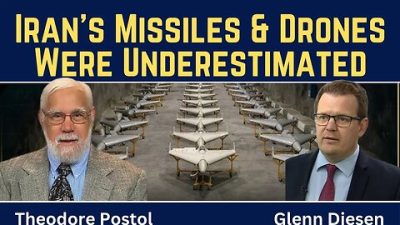
Theodore Postol: Iran’s Missiles & Drones Were Underestimated
or go to
Aletho News Archives – Video-Images
From the Archives
What is the Israeli Lobby in Australia Doing in Interfaith Dialogue?
By Ali Kazak | Dissident Voice | October 11, 2015
For years Israel and its lobby around the world have been trying to normalise their relations with Arabs and Muslims without solving the Palestine Question.
One of the methods they resorted to in the last few years is using human rights and community organizations such as interfaith dialogue and Multiculturalism to achieve this objective and to: isolate the Palestinians, marginalise the Palestine question, end Israel’s isolation, and prevent criticism of Israel, knowing that these organisations will be the first to stand against Israel’s violations, racial and religious discrimination.
The group responsible for this task in Australia is The Australia/Israel & Jewish Affairs Council (AIJAC); its Director of International & Community Affairs, Jeremy Jones is in charge of lobbying religious community organizations, specifically Muslims and Christians. Consequently he convened the Faith Communities for Reconciliation, founding participant in the Australian Partnership of Religious Organisations and the Australian National Dialogue of Christians, Muslims & Jews.
AIJAC is a private political propaganda group. It is recognised as the main Israeli lobby in Australia. It coordinates its activities and works intimately with the Israeli embassy in Canberra and different institutions in Israel. It is privately funded by some Jewish businessmen. It monitors closely Australian politicians, the media, ethnic and religious groups, (especially Arabs and Muslims), unions and academics on their stands towards Israel and the Palestine question. … continue
Blog Roll
 Aletho News
- The killing of three Indonesian soldiers in Lebanon should remind Jakarta that Israel does not want peace
- Defeated and delusional: Netanyahu’s remarks reveal $80bn war failure, says analyst
- Iran’s friends are about to make life much more difficult for Israel and the US
- The war of liberation of the Arab and Islamic peoples expands across the Gulf
- Envoy warns UN on Trump’s threat to ‘obliterate’ Iran’s civilian infrastructure
- The Larak Corridor: Iran’s Rial Gate With No US, No Israel, and No Way Around
- ‘Economic terrorism’: Steel facilities hit again in US-Israeli strike
- ‘War Crime’: Iran condemns attacks on Arak, Ardakan nuclear sites
- Two-thirds of Americans want quick end to Iran war even if goals unmet
- Trump to Give “Important Update on Iran” Wednesday in Prime-Time Speech
- If Americans Knew
- Gaza families reunite years after babies evacuated amid Israel’s war
- International Rescue Committee warns Gaza’s children face grave protection risks
- Iran’s Alleged 47-Year War on America: Debunking the 1,050 American Deaths Canard
- Israel wants US to bomb more of Iran’s civilian structures (113,000 is not enough) – Not a ceasefire Day 173
- Ann Coulter Rips Into Fox News for Iran War Coverage
- Joe Kent Urges Americans To Call White House and Congress To Object To Sending Troops Into Iran
- DNC Resolution to Reject AIPAC Funding Puts Democratic Leaders in the Hot Seat
- Swedish foundation to build 400 schools as over 650,000 Gaza children remain without education for 2 years
- Israeli army admits photshopping image of slain Lebanese journalist
- This is how Israel is systematically killing health workers under the cover of war in Lebanon
- No Tricks Zone
- New Study Finds Warming Saves Lives…Cold Temperatures 12 Times More Deadly Than Excess Heat
- German Science Blog Accuses PIK Climate Institute Of Hallucinating Climate Tipping Points
- Devastating Assessment Of Comirnaty Vaccine By Former Senior Pfizer Europe Toxicologist
- New Study: CO2 Is ‘Effectively Negligible’ As An Explanatory Climate Change Factor Since 2000
- Former Pfizer Toxicologist Dr. Helmut Sterz Tells Bundestag Hearing Pfizer Vaccine Should Have Never Been Approved
- Energy Expert: Germany’s Nuclear Phaseout Was A “500 Billion Euro Mistake”
- New Research: South Australia’s Mid-Holocene Sea Surface Temperatures Were 4°C Warmer Than Today
- Storing Green Energy To Last Germany 10 Days Would Require A 60-Million Tonne Battery
- New Studies: UK Sea Levels Were 4 Meters Higher Than Today During The Mid-Holocene
- Destructive Green New Deal: German Energy And Metal Group Warns Of Drastic Crisis
 Aletho News