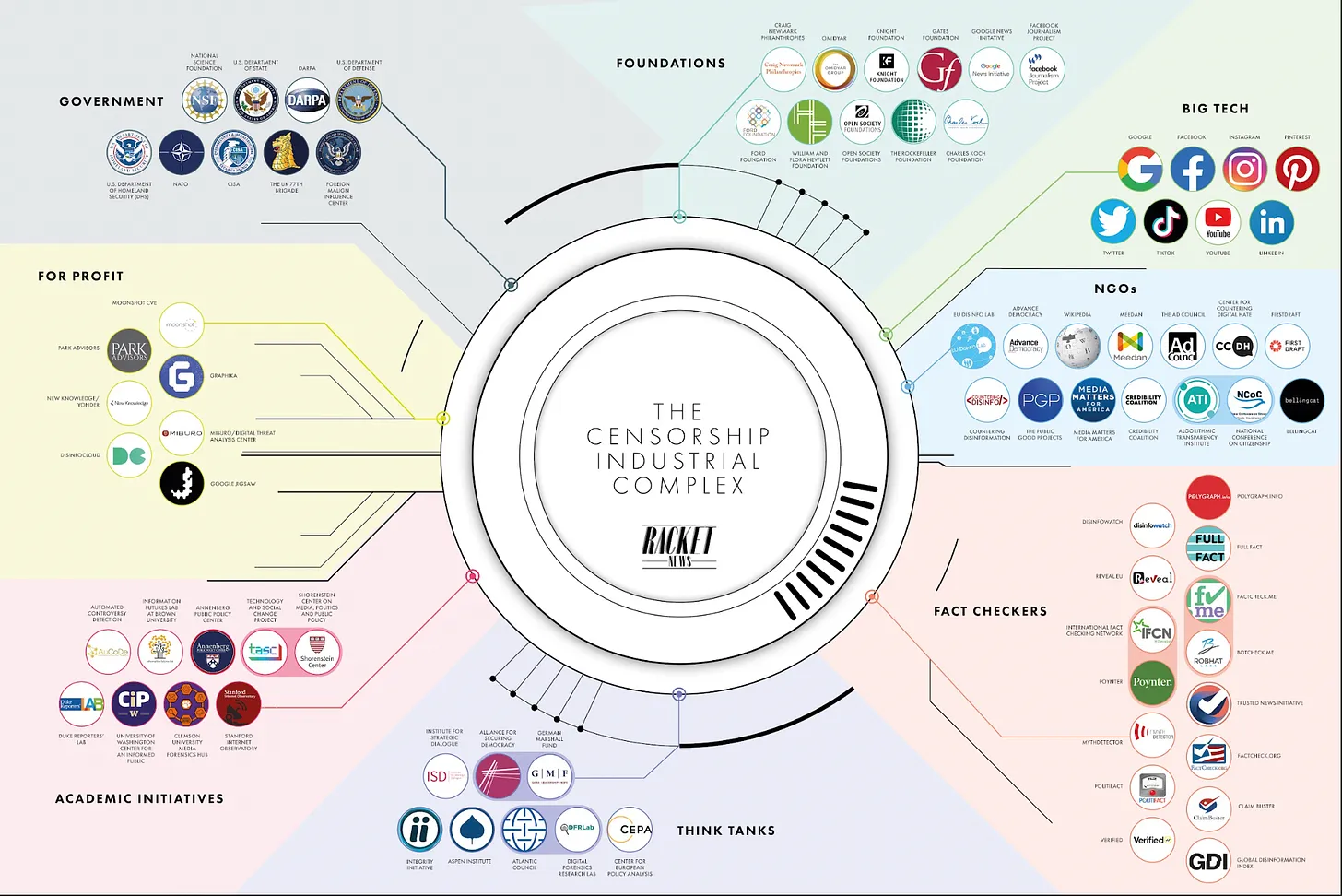
CIA Warned Blinken Ukraine ‘Counteroffensive’ Bound to Fail: Seymour Hersh
By Ilya Tsukanov – Sputnik – 17.08.2023
The veteran Pulitzer Prize-winning investigative journalist, who broke the story earlier this year on Washington’s role in last September’s terror attacks against the Nord Stream gas pipeline network, has now pointed to evidence of disillusionment within the Biden administration as the NATO proxy war against Russia in Ukraine grinds to a halt.
The CIA notified US Secretary of State Antony Blinken that the Ukraine counteroffensive would be unlikely to inflict a defeat on Moscow, US veteran investigative journalist Seymour Hersh reported on Thursday, citing a US intelligence official.
“The word was getting to him [Blinken] through the Agency [CIA] that the Ukrainian offens[ive] was not going to work. It was a show by Zelensky and there were some in the administration who believed his bull****,” the anonymous official was quoted as saying.
Blinken, the official claimed, has come to the realization that Washington and its Ukrainian proxies “will not win the war” against Russia, but did not “want to go down as the court jester” of the administration in relation to the Ukraine crisis.
“Blinken wanted to broker a peace deal between Russia and Ukraine as [former Secretary of State Henry] Kissinger did in Paris to end the Vietnam War,” according to the official. Instead, the secretary realized that “it was going to be a big lose,” and “found himself way over the skis.”
Ukraine launched a major counteroffensive in early June against heavily entrenched Russian positions in Donbass, Kherson, and Zaporozhye. The counteroffensive failed to make any substantive gains, and cost tens of thousands of Ukrainian lives, and hundreds of NATO-provided armored vehicles, with Ukraine’s forces unable to reach even the first major Russian defensive lines in two-and-a-half months’ time.
‘Jake Sullivan’s Baby’
The intelligence official cited by Hersh also offered new details on the Biden administration’s motivations for holding the Jeddah Peace Summit earlier this month – with the gathering flopping after Russia was curiously left off the list of invitees, but apparently planned well in advance as a victory summit.
“Jeddah was [Biden National Security Advisor Jake] Sullivan’s baby,” the official said, with Sullivan planning it to be “Biden’s equivalent” of Woodrow Wilson’s Versailles Treaty moment at the end of World War I.
“The grand alliance of the free world meeting in a victory celebration after the humiliating defeat of the hated foe to determine the shape of nations for the next generation. Fame and Glory. Promotion and re-election. The jewel in the crown was to be Zelensky’s achievement of Putin’s unconditional surrender after the lightning spring offensive. They were even planning a Nuremberg-type trial at the world court, with Jake as our representative. Just one more f***-up, but who is counting? Forty nations showed up, all but six looking for free food after the Odessa shutdown,” the official said.
Jockeying for Position
Hersh’s source also indicated that CIA Director William Burns had apparently recently “made his move to join the sinking ship” of stoking the crisis in relations with Moscow over Ukraine after signing on to the administration’s position on continued NATO expansion – which along with Kiev’s eight-year-long war against Donbass was one of the causes of the present conflict.
“Burns does not lack self-confidence and ambition,” the anonymous intelligence official said, indicating that running the CIA under Biden has effectively been a demotion compared to his previous job as deputy secretary of state under Barack Obama.
Notwithstanding growing internal concerns about the continued viability of the proxy war in Ukraine, Hersh believes that the administration will continue to promote a wishful thinking approach to the crisis to the American people, even as “the end” nears and “the assessments supplied by Biden to the public are out of a comic strip.”
No US Presidential Election in 2024
The Automatic Earth | August 11, 2023
In January 2023, US special counsel Jack Smith applied for -and received- a subpoena for Twitter, specifically for all of Donald Trump’s utterances at the site through the years, including the ones he may have never published. Note: the subpoena came long after Trump left Twitter. And no, it wasn’t X then, and therefore it is not now. He wrote it when it was Twitter. Important. Trump left Twitter (was cancelled) on Jan 8 2021, Elon Musk bought it on October 27 2022, and renamed it “X” in late July 2023. Just so we get our horses and dogs in line.
Special counsel Jack Smith received his Twitter/Trump subpoena with the added provision that it had to be entirely secret, not even Twitter or Trump could know. US District Court Judge Beryll Howell gave Smith what he wanted, agreeing that if Trump’s years-old Twitter past was known, he would become a flight risk. But both Smith and Howell knew this was absolute nonsense. Not only is Twitter the last place you turn to when you have nefarious secrets to hide (it’s the opposite!), but the man is running for President, for God’s sake! And because of some 5 year old -or so- tweets he would pack in the family and disappear to an -underground- bungalow on Vanatua, never to be heard from again?
I would put this down as the moment when it became impossible for the US to have a presidential election in 2024. We’ve had some 8 years of this anti-Trump circus now, non-stop, Hillary, Pelosi, Adam Schiff and Robert Mueller, yada yada yada, but I don’t think we’ve reached the point before where the elections might as well be cancelled. We’re there now though. And that is a BIG point. We’ve let it come far too far. We’re in slapstick territory.
Think of it as a boxing match. In the one corner, we have the former champion/president, wearing the slightly widened red trunks. At age 77, he looks somewhat bruised and battered, but he doesn’t look beaten- yet. What’s noticeable though is that his corner is empty, except for Melania cleaning his brow, not even his own party is there to support him. There are some 90 million Americans behind him, but they are at home.
In the other corner, the defending champion, in blue trunks, weighing in at about 25 pounds and falling, looks a little lost. But behind him in his corner he has thousands of operatives: his entire party, plus the CIA and NSA and FBI and DOJ. And all the newspapers and TV channels and social media in the country. And all the judges and prosecutors, the DAs and GAs, it’s a veritable love-in. The guy in the blue trunks could be braindead and he’d still win. And I wish I was a cartoonist, and could capture the entire image in one frame. I can see it in front of my eyes, but I can’t draw it.
Where the boxing analogy goes astray is that in this case the blue side is allowed to harass the red side before, during and after the (preparations for) the fight, and during the fight itself. You can’t a have a free and fair fight, and a level playing field, if some “blue operatives” can put shackles on the ankles and wrists of the red candidate, or even lock him up while he’s preparing for the bell to ring. If the system allows him to be a candidate, it must also allow him to prepare for his candidacy, in the same way that his opponent can. That is not happening.
US special counsel Jack Smith has announced that the US plans to drag Trump before court after court starting January 2 2024. At least 3 major indictments (will be a dozen) , likely many more, and at my last count, 82 charges (it’s impossible to keep up). Smith can then finger pick any of these charges to put Trump in custody, whenever he feels like it. The judges are almost all “blue”, and so are the jury pools: New York and DC. And this is while he’s supposed to be campaigning!
And also: Trump allegedly already spent $40 million on legal expenses. But what if Trump doesn’t have $40 million? We could argue the $40 million should be spent on his campaign. Look at Imran Khan, guys, who was just convicted to a 3-year prison term in Pakistan on US directives. Like Trump, he is the most popular political candidate in his nation, and they got him on selling necklaces when he was PM.
That is Trump’s future too. And hence, the end of American democracy. He doesn’t stand a chance. And if he doesn’t, the system doesn’t, and you don’t. You’re fine as long as you agree with the boot stomping on your neck, and you maybe even enjoy it. But if you don’t, Jack Smith and his ilk – and Obama, Hillary, Adam Schiff, Pelosi, the whole gang, will come with charges and indictments directed at you.
You’re on the verge of the abyss. if you want to take your chances with what you might find down there, fair enough. But always know that you have a choice. And that, if somehow they do manage to stage a presidential election in November 2024 as things stand now, it’ll be fake from A to Z. Grow a pair, people, grow a backbone. You’re going to need them.
CIA moderating Wikipedia – former editor
RT | August 2, 2023
Wikipedia is one of many tools used by the US liberal establishment and its allies in the intelligence community to wage “information warfare,” the site’s co-founder, Larry Sanger, has told journalist Glenn Greenwald.
Speaking on Greenwald’s ‘System Update’ podcast, Sanger lamented how the site he helped found in 2001 has become an instrument of “control” in the hands of the left-liberal establishment, among which he counts the CIA, FBI, and other US intelligence agencies.
“We do have evidence that, as early as 2008, that CIA and FBI computers were used to edit Wikipedia,” he said. “Do you think that they stopped doing that back then?”
Activity by the CIA and FBI on Wikipedia was first made public by a programming student named Virgil Griffith in 2007. Griffith developed a program called WikiScanner that could trace the location of computers used to edit Wikipedia articles, and found that the CIA, FBI, and a host of large corporations and government agencies were scrubbing the online encyclopedia of incriminating information.
CIA computers were used to remove casualty counts from the Iraq War, while an FBI machine was used to remove aerial and satellite images of the US prison at Guantanamo Bay in Cuba. CIA computers were used to edit hundreds of articles, including entries on then Iranian President Mahmoud Ahmadinejad, China’s nuclear program, and the Argentine navy.
Some edits were more petty, with former CIA chief William Colby apparently editing his own entry to expand his list of accomplishments.
“[The intelligence agencies] pay off the most influential people to push their agendas, which they’re already mostly in line with, or they just develop their own talent within the [intelligence] community, learn the Wikipedia game, and then push what they want to say with their own people,” Sanger told Greenwald.
“A great part of intelligence and information warfare is conducted online,” he continued, “on websites like Wikipedia.”
Earlier this year, Twitter owner Elon Musk released a trove of documents showing how the platform’s former executives colluded with the FBI to remove content the agency wanted hidden, assisted the US military’s online influence campaigns, and censored “anti-Ukraine narratives” on behalf of multiple US intelligence agencies. Meta CEO Mark Zuckerberg has also admitted that Facebook censored information damaging to President Joe Biden’s 2020 election campaign at the direct request of the FBI.
How the Taliban crushed the CIA’s heroin bonanza in Afghanistan
The Taliban has not once, but twice eradicated Afghanistan’s poppy cultivation, the world’s largest source of heroin.
By William Van Wagenen | The Cradle | July 7, 2023
In the aftermath of the chaotic US and UK withdrawal from Afghanistan in August 2021, Pakistani journalist Hamid Mir warned in the Washington Post of the dangers of “ignoring one important consequence of the Taliban takeover: the coming boom in Afghanistan’s narcotics trade.”
Mir then boldly predicted that, “in the next few years, a flood of drugs from Afghanistan may become a bigger threat than terrorism.”
This projection of an international drug trade boom seemed plausible, considering the longstanding accusations that the Taliban funded their two-decade insurgency against the occupying forces by controlling opium production. In fact, it was believed that 95 percent of heroin used in Britain originated from Afghan opium.
It comes as a surprise then, that a June 2023 report published by Alcis, a British-based geographic information services firm, revealed that the Taliban government had all but eliminated opium cultivation in the country, wiping out the base ingredient needed to produce heroin. This outcome mirrored a similar move by the Taliban in 2000 when they were in power the first time.
Ironically, instead of praising Kabul’s new leaders for quashing the source of illicit drugs, the international community responded to this development with criticism. Even the US Institute for Peace (USIP), which is funded by the US government, argued that “The Taliban’s successful opium ban is bad for Afghans and the world.”
Such western displeasure towards the Taliban’s efforts to dismantle the global heroin trade may seem perplexing at first glance.
However, a closer examination of events in Afghanistan reveals a different perspective. Under the guise of the “War on Terror,” the 2001 US and UK invasion was driven in part by the desire to restore the heroin trade, which the Taliban had abruptly terminated just a year earlier.
The western powers sought to reestablish the lucrative flow of billions of dollars that the heroin trade provided to their financial systems. In fact, “For 20 years, America essentially ran a narco-state in Afghanistan.”
‘Dollar for Dollar’
To understand the origins of the Afghan heroin trade, a review of US involvement in the central Asian nation is necessary, beginning in 1979 when the CIA embarked on a covert program to undermine the pro-Soviet Afghan government in Kabul.
The US covertly supported an umbrella of Muslim guerrilla fighters known as mujahideen, with the hope that provoking an insurgency would entice the Soviet Army to intervene. This calculated move would force the Soviets into occupying Afghanistan and engaging in a protracted and costly counter-insurgency campaign, thereby weakening the Soviet Union over time.
To accomplish this, the CIA turned to its close allies, Saudi Arabia and Pakistan, for help. Saudi Prince Bandar bin Sultan facilitated a meeting between CIA Director William Casey and Saudi King Fahd, in which the Saudis committed to matching “America dollar for dollar supporting the mujahedeen.”
The US and Saudi Arabia, with help from Pakistani’s Inter-Services Intelligence (ISI), set up training camps for the mujahideen in Pakistan, and supplied them with advisors, weapons, and cash to fight the Soviets.
Gulbaddin Hekmatyar, the founder of the Hizb-i-Islami militia, was among the most prominent mujahideen leaders, receiving some $600 million in aid from the CIA and its allies.
Journalist Steve Coll writes in his Pulitzer Prize-winning book Ghost Wars that Hekymatyar recruited from the most radical, anti-western, transnational Islamist networks to fight with him, including Osama bin Laden and other Arab volunteers. CIA officers “embraced Hekmatyar as their most dependable and effective ally,” and “the most efficient at killing Soviets.”
Caravans of opium
Aid to Hekymatyar and other mujahideen leaders was not limited to cash and weapons. According to renowned historian Alfred McCoy:
“1979 and 1980, just as the CIA effort was beginning to ramp up, a network of heroin laboratories opened along the Afghan-Pakistan frontier. That region soon became the world’s largest heroin producer.”
The process involved smuggling raw opium gum to Pakistan, where it was processed into heroin in laboratories run by the ISI. The finished product was then discreetly transported via Pakistani airports, ports, or overland routes.
By 1984, Afghan heroin supplied a staggering 60 percent of the US market and 80 percent of the European market, while devastatingly creating 1.3 million heroin addicts in Pakistan, a country previously untouched by the highly-addictive drug.
McCoy states further that, “caravans carrying CIA arms into that region for the resistance often returned to Pakistan loaded down with opium.” Reports from 2001 cited by the New York Times confirmed that this occurred “with the assent of Pakistani or American intelligence officers who supported the resistance.”
In May 1990, the Washington Post reported that the US government had for several years received, but declined to investigate, reports of heroin trafficking by its allies, including “firsthand accounts of heroin smuggling by commanders under Gulbuddin Hekmatyar.”
Rise of the Taliban
When the Soviets did finally withdraw in 1989, the country fell into civil war as the major CIA-backed factions began fighting among themselves for control of the country. Mujahideen leaders became warlords and committed terrible atrocities against the local population while fighting amongst themselves.
It was during this anarchy that religious students from the madrassas (seminary schools), the Taliban, emerged with the help of Pakistani intelligence to take control of the country in 1996, subsequently inheriting the opium trade, which continued unhindered for several years.
In July 2000, however, Taliban leader Mullah Omar ordered a ban on all opium cultivation. Remarkably, the Taliban successfully slashed the opium harvest by 94 percent, reducing yearly production to only 185 metric tons.
Five months later, in December 2000, the US and Russia used the UN Security Council to impose harsh new sanctions on Afghanistan, citing the Taliban’s refusal to hand over Al-Qaeda leader Osama bin Laden following the bombing of the USS Cole in Yemen, in which 17 US sailors were killed. Bin Laden had taken refuge in the Islamic Emirate in 1996 after he was expelled from Sudan.
The New York Times reported that US officials sought to impose the new sanctions, despite warnings from the UN that “a million Afghans could face starvation in coming months because of a drought and continued civil war.”
Following the attacks on 11 September, 2001, Bush administration officials demanded the Taliban hand over Bin Laden once again. Mullah Omar insisted the US first provide evidence of Bin Laden’s guilt, but President Bush refused this request and ordered the US air force to begin bombing Afghanistan on 7 October.
In the wake of the bombing, Mullah Omar dropped the demand for evidence, and offered to hand over Bin Laden to US ally Pakistan for trial. Bush administration officials once again refused.
Journalist and author Scott Horton highlights in his book Fool’s Errand a peculiar aspect of the US campaign: the lack of a clear focus on capturing or eliminating Bin Laden. In fact, President Bush had already stated on 25 September that success or failure should not be defined solely by capturing Bin Laden.
Horton notes further that US planners made no initial effort to hunt down Bin Laden and the foreign Arab fighters supporting him. Instead, head of US Central Command, General Tommy Franks prioritized partnering with Afghan warlord Rashid Dostum to take control of the north of the country, and establish a “land link” to Uzbekistan.
Turning to the warlords
To also capture the capital, Kabul, and other key cities in the south, Alfred McCoy notes the CIA:
“Turned to a group of rising Pashtun warlords along the Pakistan border who had been active as drug smugglers in the south-eastern part of the country. As a result, when the Taliban collapsed, the groundwork had already been laid for the resumption of opium cultivation and the drug trade on a major scale.”
Though US forces were too late to prevent Bin Laden’s escape to Pakistan, the US bombing campaign came just in time for the beginning of poppy planting season. Poppies are planted in the autumn so that the juice from the plant, from which opium is extracted, can be harvested in spring.
McCoy clarified further that, “the Agency (CIA) and its local allies created ideal conditions for reversing the Taliban’s opium ban and reviving the drug traffic. Only weeks after the collapse of the Taliban, officials were reporting an outburst of poppy planting in the heroin-heartlands of Helmand and Nangarhar.”
In December, one of these rising Pashtun warlords, Hamid Karzai, was appointed Chairman of the Afghan Interim Administration and later president.
By the spring of 2002, large amounts of Afghan heroin were once again being transported to Britain via daily flights from Pakistani airports. The Guardian observed the case of a 13-year-old girl who was stopped after she stepped off a Pakistan International Airlines flight from Islamabad to London carrying 13kgs of heroin with a street value of £910,000.
Industrial scale
Thanks to the “land link” established by General Franks, heroin also immediately began flowing north from Mazar-e-Sharif, under CIA ally Rashid Dostum’s control, to Uzbekistan and then to to Russia and Europe.
The flow of heroin was witnessed by Craig Murray, the British Ambassador to Uzbekistan, who explained that Dostum, an ethnic Uzbek, facilitated the smuggling of heroin from Afghanistan to Uzbekistan, where it was then shipped up the railway line, in bales of cotton, to Moscow and then Riga. As Murray noted:
“Opium is converted into heroin on an industrial scale, not in kitchens but in factories. Millions of gallons of the chemicals needed for this process are shipped into Afghanistan by tanker… The four largest players in the heroin business are all senior members of the Afghan government – the government that our soldiers are fighting and dying to protect.”
‘A hands off approach’
In addition to Dostum, Afghan President Hamid Karzai’s younger brother, Ahmed Wali Karzai, quickly secured a prominent role in the Afghan heroin trade.
Credible reports emerged that Wali Karzai was deeply involved in the heroin trade, however, according to the New York Times, the incidents were never investigated, “even though allegations that he has benefited from narcotics trafficking have circulated widely in Afghanistan.”
Senior officials at the US Drug Enforcement Agency (DEA) and the office of the Director of National Intelligence (DNI) complained that the Bush “White House favored a hands-off approach toward Ahmed Wali Karzai because of the political delicacy of the matter.”
The Times later reported that according to a top former Afghan Interior Ministry official, a major source of Wali Karzai’s influence was his control over key bridges crossing the Helmand River on the route between the opium-growing regions of Helmand Province and Kandahar. This allowed Karzai to charge huge fees to drug traffickers to allow their drug-laden trucks to cross the bridges.
Like Dostum and Hekmaytar, Wali Karzai built his heroin empire while on the CIA payroll. The agency began paying Karzai in 2001 to recruit an Afghan paramilitary force that operated at the agency’s direction in and around Kandahar and to rent a large compound for use as the base of the Kandahar Strike Force. The CIA also appreciated Karzai’s help in communicating and sometimes meeting with Afghans loyal to the Taliban.
Karzai also served as the head of Kandahar’s elected provincial council. According to a senior US military officer in Kabul quoted by the Times, “Hundreds of millions of dollars in drug money are flowing through the southern region, and nothing happens in southern Afghanistan without the regional leadership knowing about it.”
The blame game
In late 2004, as reports of Karzai’s involvement in the heroin trade were emerging, Alfred McCoy writes that “the White House was suddenly confronted with troubling CIA intelligence suggesting that the escalating drug trade was fueling a revival of the Taliban.”
A proposal from Secretary of State Colin Powell to fight the heroin trade was resisted by US ambassador to Afghanistan, Zalmay Khalilzad, and then-Afghan finance minister Ashraf Ghani. As a compromise, the Bush administration used private contractors for poppy eradication, an effort that New York Times journalist Carlotta Gall later described as “something of a joke.”
Additionally, reports of a 2005 cable sent by the US embassy in Kabul to Powell’s successor, Secretary of State Condoleezza Rice, viewed Britain as being “substantially responsible” for the failure to eradicate poppy cultivation. British personnel chose where the eradication teams worked, but those areas were often not the main growing areas, and “the British had been unwilling to revise targets.”
The cable also faulted President Karzai, who “has been unwilling to assert strong leadership.” The State Department nevertheless defended him, saying, “President Karzai is a strong partner, and we have confidence in him,” despite reports of his brother’s key role in the heroin trade.
But the problem went beyond Wali Karzai. A UN report for the World Bank published in February 2006 concluded the Afghan heroin trade was operating with the assistance of many top Afghan government officials and under the protection of the Afghan Ministry of Interior.
As evidence of CIA and Afghan government involvement in the heroin trade grew, the focus of the western media shifted towards blaming the Taliban for using drug profits to fund their insurgency against foreign forces.
However, historian Peter Dale Scott challenged this narrative, citing UN estimates that the Taliban’s share of the Afghan opium economy was a fraction compared to that of supporters of the Karzai government. Scott emphasized that the largest share of the drug trade was controlled by those aligned with the Afghan government.
The surge
In early 2010, the Obama administration announced a “surge” of 33,000 US troops to help pacify the country, with a particular focus on key districts known for poppy cultivation. One such district was Marja in Helmand province, which McCoy referred to as “the world’s heroin capital.”
Despite the surge’s mission, US commanders seemed unaware of Marja’s significance as a hub for heroin production, fueled by the surrounding opium fields that accounted for 40 percent of the world’s illicit opium supply.
In September 2010, eight months after the start of the surge, “unsubstantiated” reports emerged that British soldiers were involved in trafficking heroin out of Afghanistan using military aircraft at airports in Camp Bastion and Kandahar.
Camp Bastion, jointly operated by the UK and the US, was located near Lashkar Gah, another major center of poppy cultivation. In 2012, it was alleged that poppy cultivation was taking place just outside the base’s perimeter, with British soldiers providing protection to farmers against Afghan security forces.
By late 2014, British and US forces withdrew from Camp Bastion, handing it over to Afghan forces, who renamed it Camp Shorabak. However, according to a UN report, “the opium-growing area around Britain’s main base in Afghanistan nearly quadrupled between 2011 and 2013.”
Despite the withdrawal, opium exports from Camp Shorabak apparently continued, and a small number of British military personnel returned in 2015 in what was described by the Ministry of Defense as an advisory role.
In 2016, Obaidullah Barakzai, a member of the National Assembly of Afghanistan, claimed, “It’s impossible for a few local drug smugglers to transfer opium in thousands of kilos. This is the work of the Americans and British. They transport it by air from Camp Shorabak.”
After US forces chaotically withdrew from Afghanistan in August 2021, the Taliban once again succeeded in eliminating poppy cultivation, showing it was far from a “dedicated drug cartel” after all.
Follow the money
In November 2021, an opium merchant claimed that “All the profits go to the foreign countries. Afghans are just supplying the labor.”
Peter Dale Scott noted that according to the UN, some $352 billion in drug profits had been absorbed into the western financial system, including through the US’ largest banks in 2009. As a result, Scott said the “United States involvement in the international drug traffic links the CIA, major financial interests, and criminal interests in this country and abroad.”
In 2012, the Daily Mail reported that HSBC, Britain’s biggest bank, faced up to £640million in penalties for allowing “rogue states and drugs cartels to launder billions of pounds through its branches,” and for becoming “a conduit for criminal enterprises.”
The billions in profits flowing from the Afghan heroin trade into western banks have now been eliminated by the Taliban not once, but twice in the past two decades.
Taliban leader Mullah Omar’s pronouncement in July 2000 that poppy cultivation was “un-Islamic” was, therefore, a more likely cause of the US sanctions imposed in December of the same year, and of the US invasion of Afghanistan a year later, than was any US desire to apprehend Bin Laden and dismantle Al-Qaeda.
In March 2002, just six months after the bombing and invasion of Afghanistan, a journalist asked President Bush, “Where’s Osama bin Laden?” Bush replied, ‘I don’t know. I don’t really think about him very much. I’m not that concerned.”
The Afghan drug trade serves as a stark reminder of the intricate connections between geopolitics, illicit economies, and global finance, and the need for greater transparency and accountability in addressing these complex issues.
The historical evidence also challenges the simplistic narrative that the Taliban largely controlled the Afghan drug trade, highlighting the dominant role played by the US-backed Afghan government and its allies in the CIA.
Ukrainian conflict an “opportunity” for the CIA – William Burns
By Lucas Leiroz | July 4, 2023
US authorities no longer hide their anti-Russian ambitions in Ukraine. In a recent statement, CIA Director William Burns said the Ukrainian conflict would be a “unique opportunity” for Washington. The case shows how Western strategists really want to destabilize and harm Russia as much as possible, with no intention of peace or diplomatic goodwill.
The head of American intelligence revealed in a lecture at the Ditchley Foundation in the UK on July 1 that his agency plans to explore the possible opportunities for infiltration that would arise from the weaknesses of a Russian society allegedly dissatisfied with the conflict in Ukraine. This would be, according to him, an appropriate occasion to advance anti-Russian plans in the intelligence sector.
“Disaffection with the war will continue to gnaw away at the Russian leadership beneath the steady diet of state propaganda and practiced repression (…) That disaffection creates a once-in-a-generation opportunity for us at CIA, at our core a human intelligence service. We’re not letting it go to waste”, he said.
In this regard, Burns also made it clear that the CIA is already taking steps to advance its projects. According to the official, the agency launched a recruitment channel on Telegram in May, showing “business” proposals for Russian officers, military, government representatives and scientists who want to provide information from Moscow to American forces.
“We had 2.5 million views in the first week, and we’re very much open for business,” he added.
Two days later, Ukrainian President Vladimir Zelensky went public to reveal that his regime is constantly in cooperation with the CIA, and there are no secrets between them. Recently, Zelensky and Burns met during a director’s visit to Kiev. On the occasion, the neo-Nazi leader talked to the US official about many “important things”, such as what Ukraine “needs” to keep the proxy war on Russia.
“My communication with the CIA chief should always be behind the scenes. We discuss important things – what Ukraine needs and how Ukraine is prepared to act (…) We don’t have any secrets from the CIA because we have good relations and our intelligence services talk with each other (…) The situation is pretty straightforward. We have good relations with the CIA chief, and we are talking. I told him about all the important things related to the battlefield that we need”, Zelensky said.
According to an anonymous source linked to the American government interviewed by CNN, Burns’ visits to Kiev are frequent, despite the fact that media outlets often do not pay attention to these events:
“Director Burns recently traveled to Ukraine, as he has done regularly since the beginning of Russia’s recent aggression more than a year ago (…) As with other trips, the director met with his Ukrainian intelligence counterparts and President Zelensky, reaffirming the US commitment to sharing intelligence to help Ukraine defend against Russian aggression”, source said.
Indeed, Burns’ words about the CIA seeing the conflict as an “opportunity” show that American intelligence wants to take advantage of events in Eurasia to generate instability in Russian society, fomenting frictions in the government, military and civil institutions. Burns exposes the plans very clearly and does not hide his intentions, which makes the US hostile stance towards Russia public.
The CIA director’s regular visits to Kiev are actually part of these anti-Russian plans. American intelligence actively interferes in the conflict, manages the activities of its proxy state directly from the battlefield, acting as a true belligerent party. This high level of information sharing and strategic integration shows that there is certainly American participation in all crimes committed by the neo-Nazi regime, including terrorist attacks and murders of civilians in the undisputed territory of the Russian Federation.
However, it remains to be seen whether the US anti-Russian plans will really be effective. The director is mistaken in his assessment of the Russian scenario when he says that there is “disaffection” and growing frictions in Russia as a result of the conflict. Vladimir Putin’s popularity and Russian national unity have been greatly strengthened by the progress of the special military operation, contradicting Burns’ claims.
Also, it is unlikely that any incursion attempt by American intelligence will be successful, considering that Russian security forces are on high alert for this type of threat, having occurred repeated operations focused on neutralizing infiltrated foreign agents and terrorist networks. Moscow is aware that the real enemy side in the current conflict is the US-led West, which is why it is acting cautiously to protect itself.
Furthermore, Burns’ words about an alleged public CIA recruitment of Russian citizens through Telegram sounded unconventional. This type of strategy sounds amateurish and ineffective in terms of security, since Telegram is an easily accessible network and Russian forces could act against citizens who search for the CIA there – in addition to infiltrating their own counterintelligence agents in the process of recruitment.
Either Burns made this announcement as a bluff to try to “scare” Russia by demonstrating that it was advancing intelligence operations, or in fact the CIA is desperate in its search for agents on the ground in Russia and is making basic strategic mistakes. In both cases, it is clear that American intelligence does not seem prepared to defeat Russia.
Lucas Leiroz, journalist, researcher at the Center for Geostrategic Studies, geopolitical consultant.
Facebook Trusts Former CIA Analyst To Manage Election Policies

By Dan Frieth | Reclaim The Net | June 26, 2023
Meta recently appointed Aaron Berman, an ex-CIA agent, to take charge of its Elections Policies. Berman, who previously led the misinformation team at the company during the 2020 elections, now occupies a prominent position with extensive oversight over elections-related content across the globe.
The move is part of the revolving door between the intelligence community and social media platforms.
Aaron Berman boasts a career that spans nearly two decades with the CIA, from March 2002 to July 2019, Breitbart reported. During his tenure, he wielded significant influence, assuming various roles including editing and writing for the President’s Daily Brief – a high-profile classified document prepared every morning for the President of the United States by the intelligence community. Besides this, he supervised numerous analysts and managed multimillion-dollar budgets. His wide-ranging duties also encompassed providing briefings to members of Congress and the National Security Council.
After his extensive tenure with the CIA, Berman joined Facebook in 2019. Here, he took on the role of Senior Product Policy Manager for “misinformation.” He was instrumental in constructing the misinformation policy team’s workforce in the US and implementing policies during what he refers to as “critical events.” Although Berman has not specified the nature of these events, his stint at Facebook’s misinformation department coincided with the period leading up to the 2020 election, which was marred by controversies such as suppression of voices and news outlets.
Now as the Head of Elections Policies, Berman has wide-ranging responsibilities, as described on his LinkedIn profile: “Leads a team responsible for elections-related content policies worldwide. Oversees policy development, advises senior executives, coordinates with teams on implementation via technical and human workflows, and represents Meta with external stakeholders. Puts policies into practice on key elections.”
CIA Vet Warns US Intel Agencies ‘Will Do Everything’ to Help Dems in 2024 Race
By Svetlana Ekimenko – Sputnik – 22.06.2023
Former Special Counsel John Durham offered his first public testimony before the House Judiciary Committee on Wednesday regarding the details of his report into the FBI’s handling of allegations of collusion between ex-President Donald Trump and Russia. The day before, Durham testified behind closed doors to the US House Intelligence Committee.
While it is not completely clear whether the Federal Bureau of Investigation knew from the outset that dug-up “information on Trump” had been paid for by the Hillary Clinton campaign in 2016, there is “no excuse for their having learned that and, nevertheless, proceeded with the investigation,” former CIA station chief Philip Giraldi told Sputnik.
“There might have been personal malice involved in going after Trump, but that has not been clearly demonstrated,” the Executive Director of the Council for the National Interest added, referencing the FBI’s investigation into the alleged Trump-Russia “collusion”.
Former Special Counsel John Durham paid his second visit to Capitol Hill on Wednesday to face the House Judiciary Committee over the details of his May report, released after almost a four-year-long investigation into the origins of the FBI’s Trump-Russia investigation codenamed, Crossfire Hurricane. Durham had found that the agency had been “seriously deficient,” relying on “raw, unanalyzed, and uncorroborated intelligence,” when probing the 2016 Donald Trump campaign’s alleged ties to “Russia.”
“One has to assume that the Bureau felt it had a great deal invested in maintaining Democratic Party control of the presidency and that there were concerns that Trump would upset the arrangements made under [Barack] Obama,” Giraldi said.
The Durham report had also exposed the Democratic establishment’s anti-Trump narrative, and the role of Hillary Clinton’s campaign in spawning and then pushing the Trump-Russia collusion hoax.
During his probe, the special counsel charged and convicted FBI lawyer Kevin Clinesmith, who admitted to doctoring an email to state that Trump aide Carter Page had never been a CIA asset (which was not true) in order to push ahead with surveilling the former Trump campaign adviser. Durham also brought charges against Hillary Clinton’s campaign lawyer Michael Sussmann and Brookings Institution scholar Igor Danchenko for lying to the FBI. Danchenko has served as the main ‘subsource’ for ex-MI6 agent Christopher Steele, the author of the now infamous Steele dossier. It had been funded by the Clinton campaign and the Democratic National Committee (DNC) through the law firm Perkins Coie, which Marc Elias and Michael Sussmann worked for at the time.
The claims the “dirty” dossier contained were used by the FBI in a series of clandestine preliminary probes against Trump starting from 2016. John Durham, as part of his investigation, found that Steele’s source, Danchenko, when questioned by the FBI was unable to confirm any of the assumptions.
‘Acting on Behalf of the Deep State’
As the Hillary Clinton 2016 campaign sought to use fabricated information from the Steele dossier to smear Donald Trump and some of his advisors, similar tactics were wielded in the 2020 elections, Philip Giraldi previously underscored. After the House Judiciary and Intelligence Committees found that senior Biden campaign officials colluded with the CIA to falsely discredit Hunter Biden’s “laptop from hell” as “Russian disinformation”, Giraldi pointed out that former acting CIA Director Michael Morell had drafted the notorious letter, titled “Public Statement on the Hunter Biden emails.” It was signed by 51 former intelligence officials including CIA Directors John Brennan, Leon Panetta, and Mike Hayden, former acting CIA Director Michael Morell, former Director of National Intelligence and James Clapper. The letter claimed that the data on Hunter’s hard drive “has all the classic earmarks of a Russian information operation.”
“The CIA did not ‘approve’ of the letter from the 51 former national security officials. My understanding is that it was submitted to them because the Agency exercises ‘prepublication review’ over all articles and books written by former undercover officers to block the publication of any national secrets. In this case, as I understand it, they confirmed that the letter contained no classified information. The letter itself was largely the product of collaboration by Tony Blinken and Michael Morell, both Democratic Party loyalists who expected to benefit personally,” Giraldi emphasized.
The 51 ex-spies’ opinion was quickly disseminated by the US mainstream press, while the Hunter Biden laptop story, shedding light on the Biden family’s questionable business dealings, was suppressed by both Big Media and Big Tech.
“Morell, Blinken and associates should have known that they were acting on behalf of the deep state and were in fact damaging US democracy such as it is! When the national security agencies go after candidates it is in fact the death of government of and by the people,” Giraldi remarked.
Ahead of John Durham’s testimony on June 21, Judiciary Chair Jim Jordan (R-Ohio) underscored in his opening statement that the hearing was tasked to provide more “detail and add more color” to the findings of the May report.
“Seven years of attacking Trump is scary enough… What’s more frightening is that any one of us could be next,” Jordan emphasized.
A number of Republicans echoed John Durham’s calls for reforming the FBI, underscoring that the agency, had become “politicized” and “weaponized”, and had carried out a “politically motivated” investigation of Donald Trump.
Looking ahead at the next election cycle, where both Biden and Trump are gearing up to vie for another Oval Office stint, Philip Giraldi concluded:
“For 2024, I expect that the agencies will do everything they can to help Biden or whoever replaces him from the Democratic Party but they will be a lot more careful about how they do it than they were in 2020.”
Declassified files expose British role in NATO’s Gladio terror armies

By Kit KLARENBERG | THE GRAYZONE | JUNE 19, 2023
Newly declassified British Foreign Office files have added disturbing details to the history of Operation Gladio. The covert operation was uncovered in 1990, when the public learned that the CIA, MI6 and NATO trained and directed an underground army of fascist paramilitary units across Europe, deploying its assets to undermine political opponents, including through false flag terror attacks.
Among them was a young Silvio Berlusconi, the media oligarch who served as Italian Prime Minister in four separate governments between 1994 and 2011. Listed as a member of the P2, the secret Cold War-era cabal of political elites devoted to Gladio’s aims, Berlusconi undoubtedly took some weighty secrets to the grave when he died this June 12th.
It is almost impossible to believe that inconvenient truths were not weeded from Britain’s documentary record on Operation Gladio prior to declassification. Nonetheless, the recently released material is highly illuminating. Covering a fraught twelve month period after the first public disclosure of Gladio’s existence, the papers illustrate how London’s foreign intelligence apparatus kept a keen eye on the continent as events unfolded.
The papers not only shed fresh light on the conspiracy, they underline Gladio’s relevance as British intelligence joins its America counterparts in contemporary plots involving secret partisan forces from Syria to Ukraine.
Various passages dotted across the tranche strongly suggest the British knew much more than they publicly admitted about egregious criminal deeds, including the attempted overthrow of an allied Italian government and the kidnap and murder of its leader.
A ‘clandestine resistance network’ goes to work
Gladio consisted of a constellation of “stay behind” anti-communist partisan armies whose ostensible mission was to fend off the Red Army in the event of Soviet invasion. In reality, these forces committed countless violent and criminal acts as part of a “strategy of tension” designed to discredit the left and justify a security state clampdown.
As Vincenzo Vinciguerra, a Gladio operative jailed for life in 1984 for a car bombing in Italy that killed three police officers and injured two, explained:
“You were supposed to attack civilians, women, children, innocent people from outside the political arena. The reason was simple, force the public to turn to the state and ask for greater security… People would willingly trade their freedom for the security of being able to walk the streets, go on trains or enter a bank. This was the political logic behind the bombings. They remain unpunished because the state cannot condemn itself.”
The scandal triggered in Western capitals by the exposure of Gladio dominated mainstream headlines for months. The European parliament responded by passing a resolution condemning the existence of a “clandestine parallel intelligence and armed operations organization [which] escaped all democratic controls, may have interfered illegally in the internal political affairs of member states [and] have at their disposal independent arsenals and military resources… thereby jeopardizing the democratic structures of the countries in which they are operating.”
The resolution called for independent judicial and parliamentary investigations into Gladio in every European state. But aside from inquiries in Belgium, Italy, and Switzerland, nothing of substance materialized. What’s more, investigators heavily redacted their findings while avoiding having them translated them into English. This may help explain why the historic scandal has been largely forgotten.
In this context, the newly declassified documents may be one of the most valuable primary sources to date offering new insights into the origins and internal workings of NATO’s secret terror militias in Italy.
Take for example an aide-mémoire (see it here) prepared by Francesco Fulci, Italy’s permanent representative to the UN, which was shared at a “super-restricted” November 6th 1990 meeting of the North Atlantic Council, NATO’s principal political decision-making body, then forwarded to senior British officials at home and abroad.
Based on a note provided by Rome’s then-premier Giulio Andreotti to “the Head of the Italian Parliamentary Commission investigating terrorist incidents,” the aide-mémoire begins by noting that following World War II, Western intelligence agencies devised “unconventional means of defence, by creating in their territories a hidden network of resistance aimed at operating, in case of enemy occupation, through information gathering, sabotage, propaganda and guerrilla warfare.”
According to the aide-mémoire, authorities in Rome began laying the foundations of such an organization in 1951. Four years later, Italian Military Intelligence (SIFAR) and “a corresponding allied service” – a reference to the CIA – then formally agreed on the organization and the activities of a “post-occupation clandestine network”:
“[Gladio] was; formed by agents active in the territory who, by virtue of their age, sex and activities, could reasonably avoid eventual deportation and-imprisonment by the foreign occupiers; easy to manage even from a command structure outside the occupied territory; at a top secret level and hence subdivided into ‘cells’ so as to minimize any possible damage caused by defections, accidents or network penetration.”
The “clandestine resistance network” was subdivided into separate branches, covering information operations, sabotage, propaganda, radio communications, cypher, reception and evacuation of people and equipment. Each of these structures was to operate autonomously, “with liaison and coordination ensured by an external base.”
SIFAR established a dedicated, secret section to recruit and train Gladio operatives. Meanwhile, it maintained five “ready deployment guerrilla units in areas of special interest” across Italy which awaited activation on a continuous basis.
“Operational materials”, including a wide variety of explosives, weapons – such as mortars, hand grenades, guns and knives – and ammunition were stashed in 139 secret underground caches across the country. In April 1972, “to improve security,” these arsenals were exhumed, and moved to offices of the Carabinieri, Rome’s military police, near the original sites.
Only 127 of the weapons storehouses were officially recovered. The aide-mémoir states that at least two “were very likely taken away by unknown persons” at the time they were buried, in October 1964. Who these operatives were and what they did with their stolen arms is left to the imagination.
British involvement in the coup effort
Fulci was eventually quizzed by attendees of the North Atlantic Council summit “as to whether Gladio had deviated from its proper objectives.” In other words, beyond operating strictly as a “stay behind” force, to be activated in the event of Soviet invasion. While “he could not add to what was in the aide-mémoire,” Fulci confirmed “weapons used in some terrorist incidents had come from stores established by Gladio.”
This may reflect the fact that political violence was one of Gladio’s “proper objectives.” A June 1959 SIFAR report unearthed by historian Daniele Ganser confirms guerrilla action against “domestic threats” was hardwired into the operation from its inception. In the Italian context, this entailed systematically terrorizing the left.
As the Italian Communist party surged in polls ahead of the country’s 1948 election, the CIA pumped money into the coffers of the Christian Democrats and an attendant anti-communist propaganda campaign. The cloak-and-dagger effort was so successful in preventing the outbreak of a left-wing government in Rome that Langley secretly intervened in every one of Rome’s elections for at least the next 24 years.
Yet the covert CIA operations were insufficient to prevent Italians from occasionally electing the wrong governments. The 1963 general election saw the Christian Democrats prevail again, this time under the leadership of left-leaning politician Aldo Moro, who sought to construct a coalition with the Socialists and Democratic Socialists. Over the next year, protracted disputes erupted between these parties over what form their administration would take.
In the meantime, SIFAR and CIA black ops specialists such as William Harvey, known as “America’s James Bond,” cooked up a plot to prevent that government from taking office. Known as “Piano Solo,” it dispatched Gladio operatives for a false flag assassination attempt on Moro that would deliberately fail.
According to the plan, the kidnapper was expected to claim they were ordered to kill Moro by communists, thereby justifying the violent seizure of multiple political party and newspaper headquarters, along with the imprisonment of troublesome leftists at the Gladio chapter’s secret headquarters in Sardinia. The plan was ultimately aborted, though it remained on the table throughout 1964.
Moro became Prime Minister without incident and governed until June 1968. Piano Solo fell under official investigation four years later, yet the results were not published until the public first learned of Gladio’s existence. Though the findings omitted any reference to Britain’s role in the planned coup, the newly released documents strongly suggest London’s involvement. (Read them here).
Italy’s then-President Francesco Cossiga requested the ministry hand over “details of UK stay behind measures in 1964,” according to a detailed February 1991 Foreign Office memo on recent developments in the scandal.
Cossiga apparently made this enquiry as a result of a judge “whose investigations into unsolved terrorist attacks first brought Operation Gladio to light,” and who took the “unprecedented step” of demanding the president testify about the conspiracy under oath. By this point, Cossiga had admitted learning of the “stay behind” force while serving as a junior Defense Minister in 1966.
His Foreign Office query strongly suggests British intelligence played a role in Piano Solo, and that the Italian President was well-aware of the plot.

Doomed Italian PM Aldo Moro’s photo while in captivity of the Red Brigades
“One or more of Moro’s kidnappers was secretly in touch with the security apparatus”
On March 16th 1978, a unit of the leftist militant Red Brigades kidnapped Moro. He was on his way to a high-level meeting where he planned to give his blessing there to a new coalition government that relied on communist support, when the kidnappers violently extracted him from his convoy. Five of Moro’s bodyguards were murdered in the process.
After almost two months in captivity, when it became clear the government would neither negotiate with the Red Brigades nor release any of its jailed members in return for Moro, the kidnappers executed the former Italian Prime Minister. His bullet-riddled corpse was left in a car trunk to rot, and for authorities to find.
Moro’s murder has inspired widespread and well-founded suspicions that Gladio operatives infiltrated the Red Brigades to push the group to commit excessively violent acts in order to foment popular demand for a right-wing law-and-order regime. More than perhaps any other incident, his killing fulfilled the objectives of the security state’s strategy of tension.
Whether or not Moro was a casualty of Gladio, a declassified November 5th 1990 Foreign Office memo authored by Britain’s then-ambassador to Rome, John Ashton, makes it clear that London knew much more about the case than has ever been disclosed publicly by any official source. (Read the full Ashton note here).
“There is circumstantial evidence one or more of Moro’s kidnappers was secretly in touch with the security apparatus at the time; and that the latter deliberately neglected to follow up leads which might have led to the kidnappers and saved Moro’s life,” Ashton declared.

What’s more, according to the British diplomat, the presidential crisis committee responsible for attempting to rescue Moro was part of the notorious P2 – the “subversive Masonic lodge” composed of political elites loyal to Gladio.
According to Ashton, P2 was just one of many “mysterious right wing forces” striving “by terrorism and street violence to provoke a repressive backlash against Italy’s democratic institutions” under the “strategy of tension.” And President Cossiga was completely unaware it had infiltrated his crisis committee.
In April 1981, magistrates in Milan raided the villa of Licio Gelli, an Italian financier and self-identified fascist who founded P2. There, they uncovered a list of 2,500 members which read like a “Who’s Who” of Italian politicians, bankers, spooks, financiers, industrialists, and senior law enforcement and military officials. Among the cabal’s most prominent members was Silvio Berlusconi.

Future Italian Prime Minister Silvio Berlusconi’s P2 file
Moro’s “historic compromise,” under which the communists “made possible Andreotti’s government”, would be the party’s “final step before their own entry into government.” Ashton stated that this development “was anathema to P2,” which was “then in virtual control of [Italy’s] security apparatus,” and also to many non-P2 establishment politicians, and also to the US,” and sought to “eliminate once and for all any possibility that the Communist Party… might achieve national power.”
Ashton acknowledged “circumstantial evidence” of “US support for P2.” In reality, P2 founder Gelli was so well-connected to Washington’s national security and intelligence apparatus, the CIA’s Rome station had explicitly charged him with establishing an anti-communist parallel government in Rome.
Subsequent investigations showed how Henry Kissinger helped oversee the recruitment of 400 high-ranking Italian and NATO officers as P2 operatives in 1969. The US was so grateful for Gelli’s anti-communist purge that it made him a guest of honor at the inauguration ceremonies of US Presidents Gerald Ford, Jimmy Carter and Ronald Reagan.
Ashton concluded his revealing note by noting the truth about Washington’s involvement in Rome’s bloodspattered “Years of Lead” would “probably never be known.” The full extent of Britain’s involvement in terrorist attacks, government overthrows, destabilization campaigns and other heinous skullduggery under the aegis of Operation Gladio, not merely in Italy but throughout Europe, will almost certainly remain a secret as well, and by design.
It was not until 1993 that the public learned how the US and British gifted munitions to Gladio operatives to foment bloody acts of terror across Italy. As Francesco Fulci told his NATO friends at the “super-restricted” meeting, Washington and London supplied the perpetrators of mass casualty attacks including the 1980 bombing of Bologna Centrale railway station, which killed 85 people and wounded over 200.
Those responsible for these hideous crimes have eluded justice in almost every case. Several of the Bologna massacre’s chief suspects, including committed fascist and confirmed MI6 asset Robert Fiore, escaped to London. Britain refused to extradite him and his co-conspirators despite their convictions in absentia for violent crimes.
The extensive experience British intelligence obtained in Operation Gladio raises questions about the lessons the MI6 has applied to current covert operations in theaters of conflict. As The Grayzone revealed in November 2022, British military and intelligence veterans have trained and sponsored a secret partisan terror army in eastern Ukraine to carry out acts of sabotage in Crimea and other majority-Russian areas. The plan called for the training of cells of ideologically dedicated Ukrainians to “shoot, move, communicate, survive.”
Featured Video
Seyed M. Marandi: U.S. Military DIVIDED? Iran’s Secret Defense EXPOSED
or go to
Aletho News Archives – Video-Images
From the Archives
‘Israel sees Iran as obstacle to its policies’
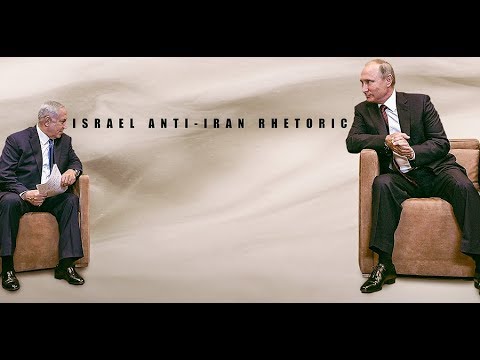
Press TV – August 25, 2017
Prime Minister Benjamin Netanyahu has said that Israel felt threatened by Iran’s growing influence in the Middle East. Netanyahu expressed his Iranophobic view in a meeting with Russian President Vladimir Putin in Russia’s Black Sea resort of Sochi on Wednesday. Press TV has asked Scott Rickard, former American intelligence linguist from Tampa, Florida, and Brent Budowsky, a columnist at The Hill from Washington, to give their thoughts on the issue.
Rickard said Tel Aviv is concerned about the fact that the regime could not carry out its old project to spread sectarian divisions and pave the way for dismemberment of the countries in the Middle East region because of the Iranian-led resistance against Israeli policies, not only in the occupied territories of Palestine but also in the whole region.
“Iran is not a threat to Israel whatsoever. The threat that Israel sees is the fact that their Oded Yinon Plan is being put to a hold by Iran,” the intelligence linguist said on Thursday night.
“They (the Israelis) look at Iran as a threat only because they have no influence on their governments and Iran is autonomous and is not under the Zionist influence,” he added.
Since the victory of the Islamic Republic of Iran in 1979, Tehran has been critical of Israel’s policies in the region, whereas “no leaders [of other states] even dared to speak out against Zionism,” Rickard argued. … continue
Blog Roll
 Aletho News
- Striking Iran’s Infrastructure Would Have Little Military Impact – Report
- What’s Behind U.S./Israeli Strikes On Iranian Pistachio Factories?
- Seyed M. Marandi: U.S. Military DIVIDED? Iran’s Secret Defense EXPOSED
- How I fell foul of the BBC thought police
- The End of NATO
- 37 days of war on Iran cost US staggering $42bln, tracker shows
- Baghdad tells Asian refiners, traders to begin loading Iraqi crude amid Iranian exemption
- Under fire, Moscow and Tehran close ranks
- Iran, US receive Pakistan-mediated plan for ceasefire then final deal
- Iran submits demands for end to war as mediators scramble ahead of Trump deadline
- If Americans Knew
- U.N. experts demand Israel release prominent Gaza doctor after reports of ‘severe torture’
- Israel’s Latest Genocide Is Against the Shias of Lebanon. Why Is the World Silent?
- How Eliot Cohen’s influence over U.S. war-making paved the way for Trump’s war crimes in Iran
- Israelis don’t pay for the weapons we ‘sell’ to them — US taxpayers do
- While Distancing from AIPAC, Most 2028 Democratic Hopefuls Are Still Embracing Israel
- A brief history of the Israeli nuclear program, the open secret at the heart of the Iran war
- Israeli Settlers Killed a Palestinian Farmer on His Own Land, in Front of His Father. Yes, Again
- The US-Israeli War on Science is an Assault on our Future
- 100+ International Law Experts Say US Strikes on Iran Violate UN Charter, Could Be War Crimes
- ‘Vile, Horrifying, Evil’: Trump Threatens to Bomb Nation of 90 Million People ‘Back to the Stone Ages’
- No Tricks Zone
- An Inconvenient Tree: Uncovered In Alps… Europe Much Warmer Than Today 6000 Years Ago
- New Study Reports A 60% Slowdown In Greenland’s Ice Loss Rate In The Last Decade
- Low Intensity Tornado Wrecks Major Solar Farm, Creating A Potential Toxic Dump
- New Study Finds Warming Saves Lives…Cold Temperatures 12 Times More Deadly Than Excess Heat
- German Science Blog Accuses PIK Climate Institute Of Hallucinating Climate Tipping Points
- Devastating Assessment Of Comirnaty Vaccine By Former Senior Pfizer Europe Toxicologist
- New Study: CO2 Is ‘Effectively Negligible’ As An Explanatory Climate Change Factor Since 2000
- Former Pfizer Toxicologist Dr. Helmut Sterz Tells Bundestag Hearing Pfizer Vaccine Should Have Never Been Approved
- Energy Expert: Germany’s Nuclear Phaseout Was A “500 Billion Euro Mistake”
- New Research: South Australia’s Mid-Holocene Sea Surface Temperatures Were 4°C Warmer Than Today
 Aletho News