Episode 388: SIRI TESTIFIES: NEW HAMPSHIRE “POST-LICENSURE SAFETY”
The HighWire with Del Bigtree | September 5, 2024
The next installment of attorney Aaron Siri’s expert testimony before the New Hampshire House Committee on COVID Response Efficacy. In this episode, ICAN’s lead attorney exposes the shortcomings of post-licensure safety, and shatters the claim that the connection between vaccines and autism has been ‘thoroughly studied.’
Guest: Aaron Siri, Esq.
My Biggest Battle – The Movie
August 21, 2024
Narrator: John Bowe
HART:
A new documentary titled “My Biggest Battle” explores the life-altering journey of renowned
extreme triathlete Heiko Sepp after receiving a COVID-19 vaccination. The 35-minute film
highlights Heiko’s incredible athletic accomplishments, the onset of debilitating health
complications, and his relentless search for answers while suffering from post-vaccination
injuries.
“My Biggest Battle” is more than just a documentary—it’s a conversation starter. Our hope is
that Heiko’s battle encourages the public to share this powerful film to raise awareness about
the challenges faced by individuals like Heiko. By sharing his story, you contribute to an
important dialogue supporting those impacted by vaccine-related events.
The documentary paints a vivid picture of Heiko’s life in Norway, where he lives with his wife
and their two young sons. Known for his remarkable achievements in extreme triathlons,
including podium placements in grueling races like the Norseman, Heiko’s passion for the sport
is central to his identity. However, everything changed in September 2021 when Heiko received
his second COVID-19 vaccination. What began as chest pain rapidly escalated into a series of
debilitating symptoms, including heart inflammation, joint pain, and muscle spasms, leaving
Heiko’s once vibrant life shrouded in pain and uncertainty.
The film follows Heiko’s challenging journey through countless hospital visits, medical tests, and
consultations with healthcare professionals. Despite his lifelong peak health and athletic
prowess, Heiko faces a healthcare system that offers few answers and little relief. As Heiko’s
search for a diagnosis leads him to an esteemed immunologist, the documentary delves into the
emerging understanding of vaccine-induced autoimmunity and its implications for people like
Heiko. The film concludes with a message of hope and resilience, raising critical questions
about vaccine safety and healthcare accessibility.
FUNDRAISER FOR HEIKO’S FAMILY:
Due to Heiko’s illness, he has been unable to maintain stable employment, depleting his
savings on costly private treatments. Facing the brink of bankruptcy, Heiko has launched a
personal fundraiser to alleviate the financial strain and continue his necessary treatments.
Despite the risks, Heiko’s decision to share his story is vital, bringing attention to post
vaccination injuries—a topic few are willing to address.
We urge the media and public to support Heiko’s fundraiser and spread the word about his
story.
Support Heiko’s Fundraiser: GoFundMe
CONTACT INFORMATION:
heikoseppfilm@gmail.com
http://www.heikosepp.com
Heiko’s story of injury after the first dose and yet still being advised to take a second shot with devastating consequences, is unfortunately a common occurrence. Any doctor will tell you that if you have penicillin allergy you must never receive it again, and yet the medical profession seemed happy to follow this quite extraordinary advice re covid vaccines, as if they couldn’t get the mantra ‘Safe & Effective’ out of their minds. His story of the failures of the medical profession in Norway to diagnose and treat him, is also mirrored across the world.
Most Variation in All-Cause Mortality Explained by Mass COVID-19 Vaccination
Australian Ecological Analysis Points to Vaccine Campaign Causing Rising Death Counts
By Peter A. McCullough, MD, MPH | Courageous Discourse | September 1, 2024
After a pandemic, all cause mortality should go down due to a culling effect of the frail and vulnerable. We saw acute COVID-19 become the proximate cause of death in many seniors who were in the final year of natural life.
Now an analysis from Allen indicates that all-cause mortality is up in heavily vaccinated Australia and that at least two thirds in the variation per region is explained by mass COVID-19 vaccination. There are numerous well-documented fatal vaccine serious adverse events which are piling up months and years after the shots. Cumulative toxicity is another factor as a single person is not vaccinated just with the primary series (first two injections), but continued dosing every six months.

Allen, DE. 2024. The correlation between Australian Excess Deaths by State and Booster Vaccinations. Medical Research Archives, [online] 12(7).https://doi.org/10.18103/mra.v1 2i7.5485
These data call for a direct data merge of the vaccine administration and death data in Australia to explore these very uncomfortable relationships. Because the Australian government pushed the vaccines so hard, officials have been stonewalling the public on this important next analysis.
Japan’s Largest MSM Broadcaster, NHK, Releases Groundbreaking Feature on mRNA Vaccine Harms
PharmaFiles by Aussie17 | August 30, 2024
Japanese citizens were shocked on the morning of August 28 as their largest national broadcaster, NHK, decided to air a special feature on the COVID-19 vaccine relief system. This program highlighted real-life experiences of individuals who have suffered severe side effects, prompting an overwhelming public response with over 2000 messages received.
In a surprising turn of events, NHK’s popular Morning Show, Asaichi, has taken a bold step. Once dismissive of doubts about vaccine safety, the show recently focused on the challenges and realities faced by those affected by mRNA experimental vaccine side effects. This change in stance marks a pivotal U-Turn in the ongoing national conversation about the experimental mRNA’s safety and transparency.
The program’s new focus was echoed in the unexpected surge of viewer engagement. “We have received more than 2000 messages from viewers today. Thank you very much,” the host announced, signaling widespread public interest and concern.
One chilling account came from a viewer who detailed their struggle after the third vaccine dose: “My headaches became severe. Although they have lessened since the beginning, the symptoms have persisted for more than two years. It has been two and a half years of vaccine aftereffects.” Frustration with the bureaucratic hurdles in seeking relief was evident: “It’s difficult to go collect documents because of my leg pain, so I urgently wish the process to be simplified as soon as possible.”
Another viewer recounted a deeply personal tragedy: “Right after vaccination, my mother developed a serious illness and passed away.” Their story was not just about personal loss, but also about the social repercussions of questioning vaccine side effects. “During the period when I was collecting application documents after my mother’s illness and passing, I’ve been met repeatedly with heartless comments just for questioning the connection with the vaccine.”
The show also featured Misu from Ibaraki Prefecture, a former healthcare worker in her 40s, who shared her ongoing battle. Since receiving her third dose, she has struggled with “pain and numbness in the vaccinated arm, fatigue, and other symptoms.” Misu’s plea was simple yet profound: “I hope the government and media report this properly. Voices are being raised to spread awareness about the suffering caused by side effects.”
This feature on NHK’s Asaichi has not only brought attention to individual struggles but has also highlighted a broader societal issue: the difficulty in openly discussing vaccine side effects without backlash. It presents a call to action for society to foster an environment where sharing such experiences does not invite judgment but rather understanding and empathy.
Two days following the national broadcast, Japan’s Health Minister, Keizō Takemi, made an unexpected statement: “Regarding whether health damage from the COVID-19 vaccine constitutes drug-induced injury, our response at this point is that we would like to refrain from commenting.”
It looks like they are no longer saying that it is 100% safe and effective!
$3,000 and a Toy: Novavax Dangles Incentives to Fill Clinical Trials on COVID Shots for Babies, Kids
By Brenda Baletti, Ph.D. | The Defender | August 29, 2024
Novavax is offering parents up to $3,000 to enroll their children in the vaccine maker’s Phase 2/3 COVID-19 vaccine trial for infants and children ages 6 months to 11 years. The offer also includes a stuffed animal for each child.
The “Hummingbird” trial is testing two primary shots and a booster shot of Novavax’s adjuvanted recombinant spike protein nanoparticle vaccine in children. The study, which began in 2022, is enrolling 3,600 children.
The study, which began in the U.S., is expected to run through 2025 and will be conducted in the U.S. and other countries.
The children will receive three injections and visit the clinic eight times. Parents will participate in three phone calls and keep an e-diary of the vaccine’s effects on their child. Some children will receive two additional injections, for a total of five shots.
The study website promises, “You will be compensated for your time and travel regardless of your immigration status. Transportation to the study site may also be provided, as available. No health insurance is required to participate.”
Recruitment materials from Be Well Clinical Studies, which is running one of the U.S. trials, state that compensation can be more than $3,000 over two years.
A 2023 video explaining the study also promises incentives for the children, including “a Covid stuffed animal.”
In the video, a pastor from Louisiana who has four children enrolled in the study said incentives like the stuffed animal made the kids even “more excited than the parents” to participate.
The video features Dr. Jibran Atwi who is running a Hummingbird trial in Lafayette, Louisiana. He encouraged people to participate in the study, because COVID-19 severely affected kids, particularly through lockdowns and lost schooling.
Atwi also said that COVID-19 can be “very disruptive” because if a child has to stay home from school, parents may not be able to go work and the child may have to be isolated from their grandparents.
“Prevention,” he said, “is the best medicine.” He added that there had been an “impressive response” from parents who wanted to participate.
Research shows that young children rarely get sick from COVID-19 and that the illness is typically mild in older kids.
Atwi received over $2 million in research funding in 2023 from Big Pharma, according to the Open Payments website.
Most of that funding came from Genzyme — a Sanofi subsidiary — and from Sanofi, which shares the co-exclusive licensing agreement with Novavax to commercialize its COVID-19 vaccine.
In 2022, Atwi received over $1 million, largely from AstraZeneca and Genzyme.
Last week, the U.S. Food and Drug Administration (FDA) granted emergency use authorization to Pfizer and Moderna’s 2024-2025 mRNA COVID-19 shots, but Novavax’s 2024-2025 formula has not yet been authorized.
The FDA has authorized previous versions of the Novavax vaccine, but only for children ages 12 and up.
High payments place children ‘at risk of coercion’
Other pharmaceutical companies that have paid research subjects large sums of money have come under scrutiny. In the United Kingdom (U.K.), Moderna was criticized for initially offering children’s families 1,505 pounds ($1,984 dollars) to participate in its NextCOVE clinical trial, which is testing Moderna’s mRNA vaccine in children ages 12 and up.
The Children’s Covid Vaccine Advisory Council submitted a complaint to the U.K.’s Prescription Medicines Code of Practice Authority (PMCPA) — an industry trade group that regulates ethical practices — raising concerns about “inappropriate financial inducement” offered to children and their parents to participate in the trial.
The council cited concerns raised by the research ethics committee (REC) that approved the clinical study. Regarding the 1,500-pound payment they wrote:
“This amount seems much higher than what would be considered a reasonable reimbursement and therefore would contravene clinical trial regulations. The Medicines for Human Use (Clinical Trials) Regulations (2004) explicitly prohibit the giving of incentives or financial inducements to children… or their parents.”
The REC said the amount, “placed the children at risk of coercion,” and the organization required that Moderna reduce the offer before recruitment could begin. Moderna reduced the amount to 185 pounds ($244 dollars).
Yet, according to the complaint, at least one pediatrician continued to offer the high enrollment compensation.
The PMCPA sanctioned Moderna, and the case report on the issue is currently pending.
If the PMCPA determines a pharmaceutical company has breached the industry code, it can require the company to pay administrative charges or issue a corrective statement. Or, it may request a compulsory audit of the company.
In the U.S., Be Well is also advertising that it will pay parents $2,400 for enrolling their infants and toddlers, ages 5-23 months, in Moderna’s Rhyme Trial for an mRNA RSV and a human metapneumovirus (hMPV) vaccine.
According to the clinicaltrials.gov website, Be Well withdrew from the Moderna RSV study, but the website is still advertising to recruit participants.
Be Well is run by founder and director Dr. Mark Carlson, a geriatrician, who has taken nearly $3 million in research funding from Big Pharma, mostly from Moderna, since 2021.
Moderna did not respond to The Defender’s inquiry about compensation offered to children’s families to participate in these studies.
This article was originally published by The Defender — Children’s Health Defense’s News & Views Website under Creative Commons license CC BY-NC-ND 4.0. Please consider subscribing to The Defender or donating to Children’s Health Defense.
Biden-Harris Administration Defends Big Tech Censorship Pressure Following Zuckerberg’s Admission
By Didi Rankovic | Reclaim The Net | August 28, 2024
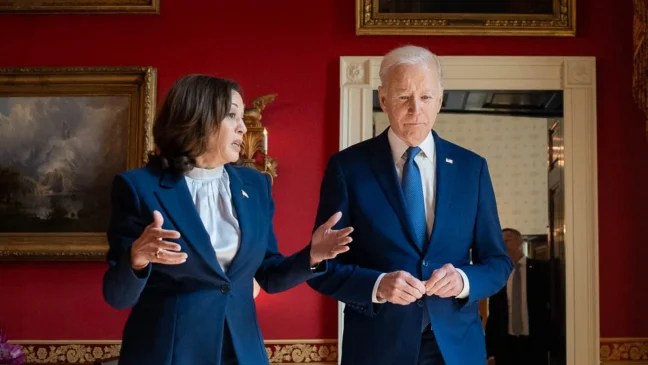
The Biden-Harris White House looks determined to justify and normalize the practice of the government colluding with private companies, in this instance Big Tech, to censor speech.
After Meta CEO Mark Zuckerberg on Monday sent a letter to the House Judiciary Committee, admitting that his company came under pressure from the current administration to conduct censorship and that he “believes” that was wrong – the White House doubled down on the controversial, and quite possibly, unconstitutional, policy.
In his letter, Zuckerberg chose to focus on Meta censoring content related to COVID-19, and in response, a White House spokesman revealed the government does not share Zuckerberg’s stance that the policy of pressure was wrong.
“Encouragement” is how that’s phrased. “When confronted with a deadly pandemic, this administration encouraged responsible actions to protect public health and safety,” stated the White House spokesman to media requests.
He further justified the actions described by Zuckerberg as needed because the White House believes private companies, including those from the tech industry, “should take into account the effects their actions have on the American people.”
And with the stage set in this way – the spokesman concluded that these companies are then free to make “independent choices about the information they present.”
But Zuckerberg’s letter to the Judiciary Committee Chairman Jim Jordan does a pretty good job of explaining how these “independent choices” get made. Senior figures from the Biden administration, Zuckerberg stated, in 2021 “repeatedly pressured our (Facebook, Instagram) teams for months to censor certain COVID-19 content, including humor and satire.”
The decision on content removal, and introduction of new rules into platform policies to facilitate censorship, Zuckerberg concedes, was “ultimately ours” – but made under pressure.
If Meta tried to defy these “suggestions” – the administration showed “a lot of frustration.”
“I believe the government pressure was wrong, and I regret that we were not more outspoken about it,” the letter, sent in response to the Committee’s subpoena first issued in early 2023, reads.
The Committee has been investigating how the government may have colluded with private companies to suppress speech it disapproves of, and whether those actions constitute First Amendment violations.
Even before the current Biden-Harris administration came to power, Facebook was being steered in a desired direction, one example being the notorious case of the censorship of the Hunter Biden laptop news story, the Zuckerberg letter reveals.
The FBI contacted the social media giant with a “warning” that there could be an anti-Biden family “Russian disinformation” campaign – and Facebook heeded it by “fact-checking and temporarily demoting (links to the article).”
AstraZeneca promised to pay medical expenses for anyone injured during its COVID vaccine trials. Now it wants immunity
By Michael Nevradakis, Ph.D. | The Defender | August 22, 2024
AstraZeneca claims it is not obligated to pay medical expenses for a woman injured by its COVID-19 vaccine during a clinical trial because the company is immune from liability under the Public Readiness and Emergency Preparedness Act (PREP Act).
The British-Swedish vaccine maker is asking the court to dismiss a lawsuit filed by Brianne Dressen, who alleges the company reneged on its contract which promised to compensate clinical trial participants for injuries they sustained.
Dressen, founder of React19, a nonprofit advocating for vaccine injury victims, filed a breach of contract lawsuit against AstraZeneca in federal court in May.
According to the lawsuit, AstraZeneca’s consent form for trial participants stated, “If you become ill or are injured while you are in this research study, you must tell your study doctor straight away. The study doctor will provide medical treatment or refer you for treatment.”
Dressen alleged she suffered injuries and disability as a direct result of her November 2020 vaccination, resulting in prohibitive medical costs — with one medication alone costing $432,000 a year. AstraZeneca offered her only $1,243.30 in compensation, prompting her to file the breach of contract claim.
In its motion to dismiss, AstraZeneca claimed it is fully immune from Dressen’s breach of contract claim under the PREP Act of 2005, which provides a liability shield to COVID-19 vaccine manufacturers.
“This action is barred by the PREP Act, which renders AstraZeneca ‘immune from suit and liability under Federal and State law with respect to all claims for loss caused by, arising out of, relating to, or resulting from the administration to or the use by an individual of a covered countermeasure,” the motion states.
According to AstraZeneca’s motion, the company did not waive its PREP Act immunity, but if it did, “any waiver would be strictly confined to ‘the costs of medical treatment for research injuries, provided that the costs are reasonable, and you did not cause the injury yourself.’”
AstraZeneca said Dressen’s claim that the company’s COVID-19 vaccine caused her neurological injuries falls outside the scope of such “research injuries.”
“This is a product liability case alleging personal injuries from the administration of AstraZeneca’s COVID-19 vaccine,” AstraZeneca said, seemingly distinguishing between “research injuries” and “personal injuries.”
AstraZeneca also said Dressen’s lawsuit should not be considered a breach-of-contract claim, but a product liability claim — which would preclude Dressen’s claim “under the Utah Product Liability Act’s two-year statute of limitations.”
Dressen’s opposition to AstraZeneca’s motion to dismiss disputed the product liability claim, stating, “AstraZeneca asks this Court to do what no court has ever done: grant ‘complete immunity’ for contractual violations so long as the violations relate to the administration of covered countermeasures under the PREP Act.”
The document cites precedent exempting breach-of-contract claims from the PREP Act’s immunity provisions. “Each court that has addressed claims of immunity for state contract claims has rightfully held that the PREP Act does not apply.”
Dressen also argued that AstraZeneca waived its immunity “by clearly and unmistakably promising to pay the cost of research injuries.”
In a reply brief filed last week, AstraZeneca repeated its original claims. “Plaintiff’s claims fall squarely within the scope of AstraZeneca’s PREP Act immunity and should be dismissed.”
A hearing on AstraZeneca’s motion to dismiss is scheduled for Oct. 29.
‘PREP Act wasn’t intended to excuse such fraudulent and illicit behavior’
The U.S. never granted emergency use authorization for the AstraZeneca COVID-19 vaccine, citing safety concerns.
In its motion to dismiss though, AstraZeneca claimed, “With the protections of the PREP Act in place, AstraZeneca and its partners successfully developed a lifesaving vaccine in a matter of months, an unprecedented scientific achievement.”
Ray Flores, a health freedom rights attorney unconnected to the lawsuit, told The Defender that the PREP Act’s liability shield for “covered countermeasures” extends to products being tested during clinical trials — but not in cases where there has been a breach of contract.
“A breach of contract such as this should obviously be excluded since the PREP Act is essentially a product liability protection statute,” Flores said.
He added:
“I’d like to think the PREP Act wasn’t intended to excuse such fraudulent and illicit behavior. But so far, under the guise of a pandemic emergency, the courts have determined that anything goes.
“This is the first PREP challenge that alleges a viable breach of contract. Since AstraZeneca’s guarantee was in writing, it has an excellent chance of winning.”
According to Dressen, two days after Dressen signed the consent form, AstraZeneca amended the form to state that its vaccine may cause “neurological disorders” such as “demyelinating disease,” which could “cause substantial disability” or death “if not treated promptly.”
Within hours of getting her first dose, Dressen experienced tingling in her right arm — a neurological condition known as paresthesia — and blurred vision and vomiting.
In the ensuing weeks, her condition worsened, with the paresthesia spreading to her legs, resulting in disability and multiple diagnoses indicating her symptoms were related to her vaccination.
This included a diagnosis in 2021 by the National Institutes of Health (NIH) of post-vaccine neuropathy, which NIH neurologists said caused Dressen’s “dysautonomia” and “chronic inflammatory demyelinating polyneuropathy.”
Dressen, who was 39 when she was vaccinated, was previously a preschool teacher but is now unable to work.
In May, AstraZeneca announced the withdrawal of its COVID-19 vaccine globally — though the company said it based its decision on the “surplus of available updated vaccines,” resulting in reduced demand for its vaccine.
The vaccine generated over $5.8 billion in sales globally, with the help of the Bill & Melinda Gates Foundation, which funded and promoted the vaccine in other countries. Several countries later stopped administering the AstraZeneca vaccine due to safety concerns.
In an ongoing class-action lawsuit in the United Kingdom (U.K.) against AstraZeneca, plaintiffs allege that they were injured — or their family members died — after getting the shot.
In documents AstraZeneca submitted to the U.K. High Court earlier this year, the company admitted that its COVID-19 vaccine “can, in very rare cases, cause TTS” — vaccine-induced thrombosis with thrombocytopenia syndrome, which causes the body to produce life-threatening blood clots.
According to The Telegraph, the U.K.’s Vaccine Damage Payment Scheme has approved 175 applications claiming harm caused by the COVID-19 vaccines, at a set amount of 120,000 pounds (approximately $156,000) per claim, adding that “Around 97 per cent of claims awarded relate to the AstraZeneca jab.”
This article was originally published by The Defender — Children’s Health Defense’s News & Views Website under Creative Commons license CC BY-NC-ND 4.0. Please consider subscribing to The Defender or donating to Children’s Health Defense.
Australian Government blocks Covid inquiry ‘with teeth’
Once again, Labor characterised its foes as ‘conspiracy theorists’, ‘cranks,’ ‘kooks’ and ‘far right extremists’ rather than engaging in rational debate
By Rebekah Barnett | Dystopian Down Under | August 22, 2024
The Australian Government has voted down a bill to establish a Covid Commission of Inquiry, which would have essentially the same powers and independence as a Royal Commission.
The bill was supported by a small coalition of senators from minor parties and the Opposition (conservative), but was rejected by the Labor Party(left-wing) in a vote today.
To date, Australia has had plenty of Covid inquiries, but none with teeth.
The siloing of inquiries to deal only with states and territory and federal governments on an individual basis has allowed for a lot of finger pointing with very limited accountability.
The scope of the federal Covid Inquiry excludes the policies of state and territory governments, which enacted vaccine mandates, lockdowns and inter-state border restrictions, leading politicians and media to call it “toothless.”
In turn, states and territories have focused on how well they implemented policies heavily influenced by the Federal Government and national advisory bodies without actually considering whether the policies were any good.
The patchwork nature of these inquiries allows the Federal Government to blame states and territories for implementing the harshest measures, and the states and territory governments pass the buck to the federal agencies and departments for influencing them to do so.
More holistic independent reviews like the Fault Lines report have resulted in talk of ‘lessons learned’ about “ill-conceived policies, politically driven health orders and excessive use of lockdowns,” but no meaningful attempts to hold anyone to account or guarantees that the lessons will inform future pandemic policy making.
Another problem with inquiries to date is that federal, state and territory governments have played hide the ball with important documentation and data required to properly assess their performance. As yet, no Australian government has released the health advice that draconian measures were based upon.
A Royal Commission or similar, taking the entire Covid response – at federal, state and territory levels – and with aggressive powers to command access to information that governments don’t want to release, would be required for real accountability.
The only ways to bring this about are for the executive to call a Royal Commission, or for the Senate to call a Commission of Inquiry.
However, despite the recommendation of the Senate Select Committee on COVID-19 in 2022 that a Royal Commission into Australia’s Covid response be established, the Labor Government has resisted calls to do so.
The Committee, led by senior Labor Party member Katy Gallagher (now Minister for Finance, for Women and for the Public Service) criticised the then Liberal Government’s lack of transparency and accountability around pandemic decision making by the National Cabinet.
Emergency law making had “challenged the Australian Parliament’s capacity to provide meaningful scrutiny of proposed laws, particularly in identifying and addressing the impact of emergency powers on the rights of individuals,” the Committee stated in its recommendations.
Leader of the Opposition at the time, Anthony Albanese, sort of promised a Covid Royal Commission. But after being elected to government in May 2022, Prime Minister Albanese has resolutely dodged the issue, throwing his support behind the limited federal inquiry instead.
Hence, a group of concerned senators tabled the COVID-19 Response Commission of Inquiry Bill 2024 in a bid to open up option B, an inquiry initiated by the Senate.
The bill, prepared by Senator Matt Canavan (Liberal), was co-sponsored by Senators Malcolm Roberts (One Nation), Alex Antic (Liberal), Gerard Rennick (Liberal), Ralph Babet (United Australia Party) and Matt O’Sullivan (Liberal), all of whom have been vocal critics of Australia’s pandemic response.
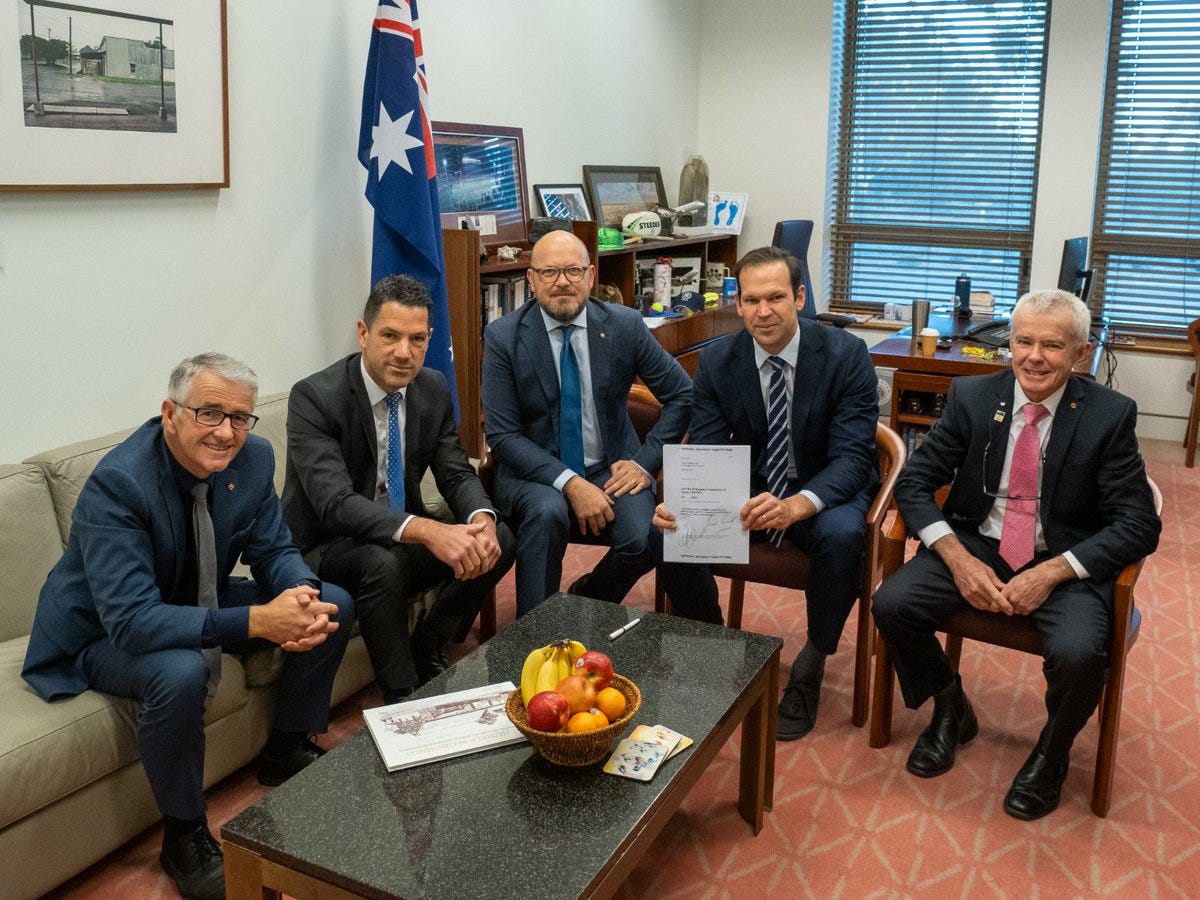
Source: Senator Alex Antic on X
During speaking time, senators who sponsored the bill argued that a Covid Commission of Inquiry is needed so that Australia can finally move on from Covid with a good plan in place for future pandemics. A proper inquiry would get to the bottom of what went wrong (and what went right) to restore trust in public health, they said.
Senator Roberts also said that in light of the fact that multiple U.S. states are now suing Pfizer for misleading about its Covid vaccine, if an inquiry found that Pfizer was indeed guilty of fraudulent behaviour, this could shift the financial burden of injuries and deaths associated with Pfizer’s product from Australian tax payers to the pharmaceutical giant.
Australian tax payers have coughed up more than $20 million on compensation for Covid vaccine injuries, but they will have to pay a lot more if a Covid vaccine injury class action is successful. The action, which was filed in the Federal Court last year, has enrolled over 1,500 injured Australians (or families of the deceased).
However, only ten senators supported the bill when it went to a vote in Parliament today. The bill was supported by the above mentioned senators (with the exception of Senator Antic, who is on leave), some members of the Coalition, One Nation, and independent Senator David Pocock.
Despite Greens Senator Jordon Steele-John stating that his party supports the establishment of a “frank” and “transparent” inquiry with the powers of a Royal Commission, the Greens abstained from the vote. Labor voted against the bill.
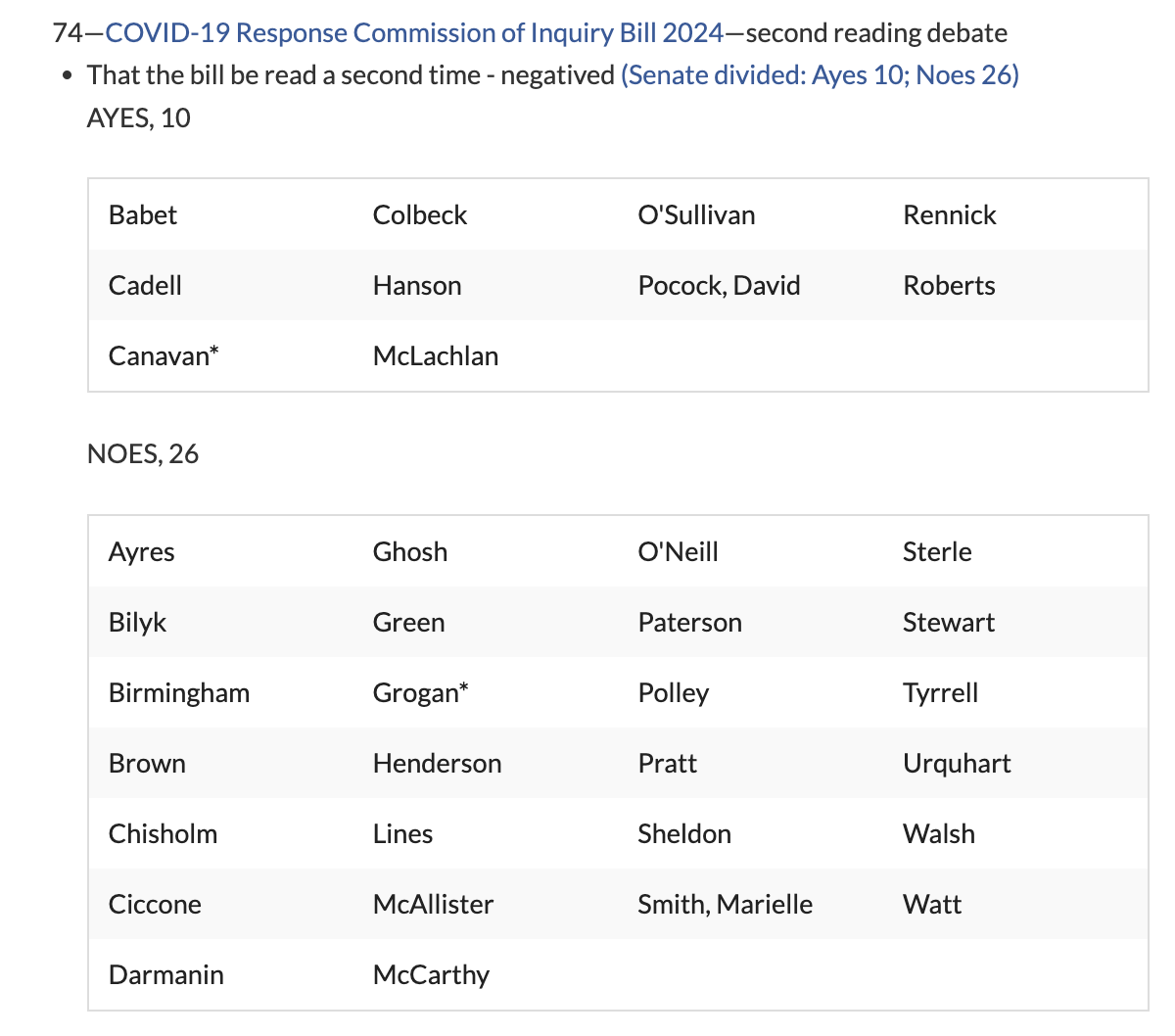
Source: Dynamic Red, 22 August 2024
I am told by the office of one of the senators who sponsored this bill that they have no intention of dropping the matter.
Previously, Senator Babet brought five separate motions to establish the world’s first government Excess Mortality Inquiry, which is now in progress thanks to Senator Babet’s persistence.
An inquiry into proposed terms of reference for a Covid Royal Commission has already been conducted, which will prove helpful in the event that either a Royal Commission or a Commission of Inquiry into Australia’s Covid response are eventually established.
Nonetheless, such efforts will face stiff opposition from the Albanese Government, if Labor Senator Tim Ayres’ speech in Parliament today is representative of his party’s position.
In speaking time before the vote, Senator Ayres said that the Government did not support the bill because “there’s already a public inquiry,” before launching into an astonishing diatribe of ad hominem attacks on the senators who proposed the bill.
Senator Ayres used the term ‘conspiracy theories’ or ‘conspiracy theorist’ more than twenty times, likened the efforts of senators to bring about a thorough Covid inquiry to movements motivated by “anti-semitism,” and called these same senators “cranks,” and the “nastiest, extreme, kooky elements of politics.”
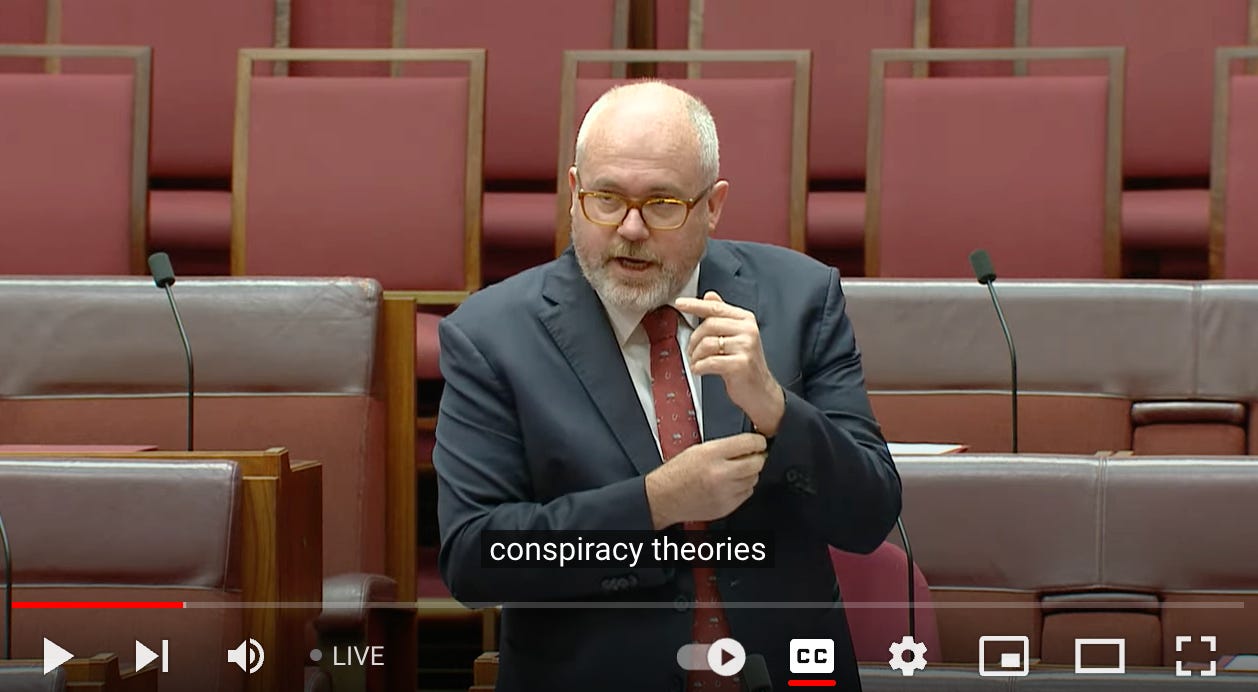
Senator Ayres referred to ‘conspiracy theorists/theories’ more than 20 times in Parliament, 22 August 2024. Source: Australian Parliament House Streaming Portal, YouTube.
Senator Rennick called Senator Ayres’ speech “disgusting,” stating, “all we’re recommending today and supporting is that we have a thorough inquiry.”
In a statement after the vote, Senator Canavan said that more disheartening than Australia’s damaging pandemic response was “the response to the response.”
“Those Australians hurt during Covid deserve to have the accountability of proper public hearings, the publication of all the health advice and an open, transparent attempt to recognise mistakes as well as put in processes to prevent such things ever happening again.
“Why can’t the Government accept that if it is given immense power to lock people in their homes and force people out of work, that there should be an equal and corresponding obligation for them to be accountable to the people hurt by their decisions?”
Senator Babet took to X to express his dissatisfaction with the outcome, calling the decision of the Senate “weak.”
“Is it too much for Australians to ask for governments and the bureaucrats advising them to be held to account for the advice and actions they took during the pandemic?”
Apparently, yes.
Categorizing The mRNA-Vaccinated… Most Can Be Forgiven, But Some Cannot

By P Gosselin | No Tricks Zone | August 24, 2024
When discussing the mRNA COVID vaccines, we need to be careful about dividing people into the two broad groups of the vaccinated and the unvaccinated.
The truth is that many vaccinated people didn’t want to be injected and now deeply regret it.
There are 6 categories of the vaccinated, ranging from the innocent victims to the wicked, unrepentant perpetrators.
1. Those vaccinated by force, against their will
These people were forced to get the jab against their will, and included babies and children who were unable to resist. By forced, we mean they were subjected to extreme duress through threats like job loss or being banned from performing their livelihoods. Many knew that the experimental mRNA shots were potentially dangerous, or didn’t work, and were just unnecessary, but were forced against their will to accept them. These people are victims serious human rights violations. – injured or not.
2. The harassed and coerced
These people were not convinced and many were distrustful of the shot, or even fearful of the drug’s side effects. Many understood that the novel gene-manipulative drug was untested and could be potentially dangerous. Many understood the risk,and never would have allowed themselves to be vaccinated. But they did because the harassment at work, home and in public was just too much to bear.
3. The restriction dodgers
Many were convinced the novel vaccine would work or at least wouldn’t do any harm. Many had felt they didn’t need it, but simply wanted to go back to normal living. Unfortunately these people didn’t do the necessary research to make an informed decision. They were duped into thinking they weren’t harmful. We can forgive this category because at least they didn’t run around lecturing, persecuting and excluding those who resisted taking the mRNA shots. Like in category 1 and 2 above, many deeply regret allowing the injection and promise not to ever take these shots again.
4. The dimwitted follower sheep
They were gullible beyond belief, blindly following everything they were told, and refused to listen to informed experts and hard data contradicting the bogus claims made by the vaccine makers and tyrants. Even today many continue to insist the vaccine works, some even willing to roll up their sleeves again whenever instructed. Too many of them are simply too brainwashed, hypnotized are just flat out too dimwitted to learn. For them, denying is better than confessing and admitting to having been a fool. Yet, we can forgive them to some extent, but we need not give them much sympathy if things go wrong for them.
5. The mRNA vaccine tyrants
We all know who these people are. They were in the media, institutes, governments and big corporations. They lied and hid the risks from us. These people will remain evil until they confess to their grave sins and change their malicious ways. Everyday we heard them ridicule, persecute, marginalize and coerce the unvaccinated. Many of these tyrants need to be punished, prosecuted for fraud, or forever fired from their positions. The late Dr. Vladimir Zelenko even called for the death penalty for the worst offenders. These people can be forgiven, but only through lots of repentance, remorse, apologies and making solemn pledges to redeem themselves.
6. The unrepentant mRNA tyrants
Those who don’t repent must know we will never forget and will not ever relent hauling you in to face legal justice. Your numbers are shrinking and your protection is crumbling. But it’s (still) not too late for you to redeem yourselves.
Featured Video
Bombing Iran Back Into the Stone Age /Lt Col Daniel Davis & Jim Jatras
or go to
Aletho News Archives – Video-Images
From the Archives
The Occupied Mentality Syndrome
Saudi Arabia on the American chessboard – Part 2
By B. J. Sabri | American Herald Tribune | April 19, 2016
Since the Korean War, but particularly since the Iranian Revolution of 1979 until today, the United States has been steadily escalating its military presence in the Persian Gulf. Taking advantage of many colossal events of the past 36 years, [1] the hyper-empire has institutionalized its massive presence on land and sea, and expanded its objectives to include the unambiguous physical control of the area, as well as the clear understanding that local Arab governments should abide by them. The pretext is always the same: in “defense” of the national interests and security of the United States. From observing how the United States has been interacting with the governments of the region, and by judging from the size of its expeditionary force, we could reach a basic conclusion. The United States is occupying, de facto, the entire Arabian Peninsula. (Yemen, devastated by Saudi and American jets is yet to be conquered. Oman? Britain returned not as colonial ruler but as a soft occupying power.)
Under this articulation, Saudi Arabia, Qatar, Kuwait, and the United Arab Emirates are virtually occupied countries. If we compare this type of occupation to the mandate and protectorate regimes of the past, the results might be identical—the nations affected by it lose sovereignty. When Arab governments comply with the objectives of a foreign power that station military forces on their national milieu, then that power controls them in multiple ways including how they react to policy deliberations and what decisions they intend to take on specific issues. A good method to verify the concept of effective occupation is this: take notice of what the United States says and wants, and then compare it to what the gulf rulers do in response. (I shall discuss this detail at some point in the upcoming parts.)
If the presence of US forces or other means of political pressure are a factor in Saudi Arabia’s interventionist Arab wars, then we need to debate this issue. However, from the history of resistance to colonialism, we learnt: if a powerful state imposes its order on a nation by military means or other forms of coercion, and if this nation does not resist that imposition, then a mental subordination to the powerful state will ensue. This is especially true in the case of Saudi Arabia. One single event, 9/11, has transformed it from a US “ally” into an instant political hostage of the American Empire. … continue
Blog Roll
 Aletho News
- Now everyone is dumping US government bonds
- Brazilian Congressman seeks to bar Israeli military personnel from entering Brazil
- Official reveals evidence of Arab states’ involvement in US-Israeli war on Iran
- His Majesty’s head-chopper: Syria’s MI6-backed president bows to King Charles
- Forced to backtrack: ‘Israel’ drops Hezbollah disarmament goal
- Britain’s Lebanon surveillance network: A digital map for war
- Bahrain faces scrutiny for opposition crackdown after detainee killed
- Hegseth’s Pentagon Purge Designed to Prevent a Mutiny: Karen Kwiatkowski
- Greek shipping firms secretly transporting oil, weapons to Israel
- UN vote on Hormuz force delayed as Iran issues warning
- If Americans Knew
- Israel Is Blocking Palestinians from Easter at Church Where Jesus Resurrected
- Plot to assassinate Palestinian activist follows harassment campaign promoted by Zionist groups and elected officials
- Prominent New York synagogue hosts presentation on why U.S. Jews should support the ethnic cleansing of Gaza
- Tapper vs. Piker: Is the CNN Anchor Auditioning for David Ellison?
- Shouldn’t Democrats Be Able to Condemn Genocide?
- Israel-US kill negotiators, destroy civilian structures, but Iran’s military capabilities still largely intact – Daily Update
- ‘War crime’: Global condemnation as Israeli ministers celebrate death penalty law targeting Palestinian prisoners
- 7 Ways Israel Is Turning Lebanon Into Gaza
- World’s Leading Football Bodies Under Fire Over Israel Policies
- Experts warn of possible use of nukes against Iran
- No Tricks Zone
- Low Intensity Tornado Wrecks Major Solar Farm, Creating A Potential Toxic Dump
- New Study Finds Warming Saves Lives…Cold Temperatures 12 Times More Deadly Than Excess Heat
- German Science Blog Accuses PIK Climate Institute Of Hallucinating Climate Tipping Points
- Devastating Assessment Of Comirnaty Vaccine By Former Senior Pfizer Europe Toxicologist
- New Study: CO2 Is ‘Effectively Negligible’ As An Explanatory Climate Change Factor Since 2000
- Former Pfizer Toxicologist Dr. Helmut Sterz Tells Bundestag Hearing Pfizer Vaccine Should Have Never Been Approved
- Energy Expert: Germany’s Nuclear Phaseout Was A “500 Billion Euro Mistake”
- New Research: South Australia’s Mid-Holocene Sea Surface Temperatures Were 4°C Warmer Than Today
- Storing Green Energy To Last Germany 10 Days Would Require A 60-Million Tonne Battery
- New Studies: UK Sea Levels Were 4 Meters Higher Than Today During The Mid-Holocene
 Aletho News