Israel, Greece to Build Radar on Crete Amid Rapprochement– Reports
Sputnik – March 19, 2019
The Long Horizon marine radar system will be built by Israel and Greece in eastern Crete, the Greek newspaper Kathimerini reports. The enhanced coverage of the radar will allow both countries to monitor the Eastern Mediterranean basin. The daily has not disclosed the cost of the project, saying only that it is “not insignificant,” especially taking into account Greece’s reduced military budget.
According to the outlet, Athens and Tel Aviv have been drifting together recently, boosting their military ties among other things. Greece has recently agreed with Israel to share know-how for its navy, which has begun to develop. According to the outlet, 40 Israeli probationers will be carried by a Greek transporter from Haifa to Crete, without any stops in Cyprus, by the end of the month. The Israelis will join the Greek forces during upcoming drills and then return to Haifa after a stop in Milos and Rhodes.
On the other hand, Athens has been open to the possibility of bolstering its arms gaps with the help of Israel, as Kathimerini noted. Among other things, Greece has rented seven drones from Israel for search and rescue operations.
Israel’s Haaretz reports that Cyprus also shares the Israeli interests in the region. The list of common interests includes a stance on the situation in Syria and Lebanon as well as uneasy relations with Turkey.
Apart from military and political cooperation, which is to be confirmed during an upcoming trilateral Greek-Israeli-Cypriot summit with US Secretary of State Mike Pompeo, the three countries are developing a major economic project — the undersea East Med pipeline, designed to deliver natural gas from the Eastern Mediterranean to Europe via Greece and Cyprus. Greek Prime Minister Alexis Tsipras, Israeli PM Benjamin Netanyahu and Cyprus President Nicos Anastasiades are expected to sign the grand deal, agreed upon in 2018, within the month, as the Greek media earlier reported.
The 2,000-kilometre underwater pipeline is intended to have a capacity of 12 billion cubic metres of gas annually, delivering fuel from Israel’s Leviathan, named one of the largest young gas reserves in the world, and the Aphrodite offshore gas fields. Additionally, the venture was boosted in February when it was announced that large gas deposits had been discovered in Cyprus.
The line, which is almost twice as long as Russia’s Turk Stream pipeline, is estimated to cost $8 billion and is said to be the world’s deepest underwater gas pipeline. Egypt, the only Muslim nation besides Jordan that has a peace treaty with Israel, is also seeking to export its newly discovered gas reserves, and has expressed interest in joining the project.
The Mediterranean Pipeline Wars Are Heating Up
By Viktor Katona | Oilprice.com | December 28, 2018
Things have been quite active in the Eastern Mediterranean lately, with Israel, Cyprus and Greece pushing forward for the realization of the EastMed pipeline, a new gas conduit destined to diversify Europe’s natural gas sources and find a long-term reliable market outlet for all the recent Mediterranean gas discoveries. The three sides have reached an agreement in late November (roughly a year after signing the MoU) to lay the pipeline, the estimated cost of which hovers around $7 billion (roughly the same as rival TurkStream’s construction cost). Yet behind the brave facade, it is still very early to talk about EastMed as a viable and profitable project as it faces an uphill battle with traditionally difficult Levantine geopolitics, as well as field geology.
The EastMed gas pipeline is expected to start some 170 kilometers off the southern coast of Cyprus and reach Otranto on the Puglian coast of Italy via the island of Crete and the Greek mainland. Since most of its subsea section is projected to be laid at depths of 3-3.5 kilometer, in case it is built it would become the deepest subsea gas pipeline, most probably the longest, too, with an estimated length of 1900km. The countries involved proceed from the premise that the pipeline’s throughput capacity would be 20 BCM per year (706 BCf), although previous estimates were within the 12-16 BCm per year interval. According to Yuval Steinitz, the Israeli Energy Minister, the stakeholders would need a year to iron out all the remaining administrative issues and 4-5 years to build the pipeline, meaning it could come onstream not before 2025.
The idea of EastMed was first flaunted around 2009-2010 as the first more or less substantial gas discovery in the Eastern Mediterranean, the Tamar gas field in Israel’s offshore zone, paved the way for speculations about an impending gas boom. Then came the 535 BCm (18.9 TCf) Leviathan in 2010 and the 850 BCm (30 TCf) Zohr discovery in offshore Egypt five years later and suddenly it seemed that an Eastern Mediterranean gas expansion is inevitable. Yet over the years, the operators of Leviathan have already allocated part of their total gas volumes to domestic power generating companies and most notably NEPCO, the Jordanian electric power company (1.6-2BCm per year). Egypt has been concentrating on meeting domestic needs and getting rid of LNG imports, moreover once it bounces back to gas exporter status in 2019, it will only use its own 2 LNG terminals in Damietta and Idku. Related: Has Oil Hit Rock Bottom?
Thus, a pertinent question arises – whose gas would be used to fill the EastMed pipeline? If the pipeline starts in offshore Cyprus, then it would be logical to expect that Cyprus’ gas bounty would be somehow utilized. Yet Cyprus has been lagging behind Egypt and Israel in its offshore endeavors and so far lacks a clear-cut giant field to base its supply future on. The two discoveries appraised heretofore, the 6-8 TCf Calypso operated by ENI and the 4.5 TCf Aphrodite operated by Noble Energy, are not enough to support the construction of a relatively expensive gas pipeline – all the more so as Noble has signed a provisional deal to send Aphrodite gas to Egypt’s Idku LNG terminal, most likely by means of a subsea gas pipeline. If we are to judge the viability of the EastMed on the current situation, there is only Calypso and Israel to fill the pipeline, as Greece’s gas export plans are close to zero on the probability scale.
The subsea section from Cyprus’ offshore zone to the island of Crete lies in depths of 3km and is stretched across a seismically active zone. But there is even more – should Turkey claim rights on Cyprus’ offshore hydrocarbon deposits (in February 2018 it sent warships to scare away ENI’s drilling rig that was on its way to xxx), the project is all but dead. This is far from an implausible scenario as President Erdogan stated that Turkey would never allow for the extortion of natural resources in the East Mediterranean by means of excluding Ankara and Northern Cyprus. Cognizant of the risks inherent in an East Mediterranean gas pipeline, there has been no interest from oil and gas majors to participate in the project. This is worrying as the $7 billion are expected to be financed from private investors, of which there is a palpable dearth – despite the EU’s 35 million funding to promote what it sees as a Project of Common Interest. Related: Wall Street Sees Oil Price Recovery In 2019
Yet even for the European Union, the EastMed gas pipeline presents a bit of a headache as its commissioning would render the Southern Gas Corridor, comprising so far only of Trans Adriatic Pipeline (TAP) with a 10 BCm per year throughput capacity, irrelevant by creating a sort-of competitor. The price of the natural gas to be supplied via the EastMed pipeline might become the biggest obstacle of them all – if the cost of producing offshore Mediterranean gas turns out to be $4-5/MMBtu as expected, the addition of further transportation costs to it all would place EastMed supplied at the bottom range of European gas supply options (Russian gas supply is alleged to be profitable with price levels as low as $4/MMbtu). All this might change if any of the East Mediterranean countries were to discover a giant gas field, altering the economics of production or possibly even liquefaction.
In fact, 2019 will witness several key wells being drilled across Cyprus, Egypt and possibly even Israel. ExxonMobil’s testing of Block 10 in offshore Cyprus would largely point to the overall attractiveness of Cyprus as an oil and gas producing country – the drilling has already started, with results expected in Q1 2019. The ENI-operated Noor offshore field in Egypt, adjacent to Zohr, is a much hotter prospect with BP buying into it lately – most likely it will outshine all the other drilling sites in the Eastern Mediterranean, however, if a big discovery is confirmed, it would be most likely used for Egyptian purposes which run counter to the EastMed gas pipeline. Thus, EastMed’s only hope is that Israel 2nd international licensing round, results to be announced in July 2019, will elicit a couple of Leviathan-like finds that would make pipeline construction profitable. Until then, the prospects are rather bleak.
UAE to invest in Israeli plan to pipe gas to Europe
Press TV – November 25, 2018
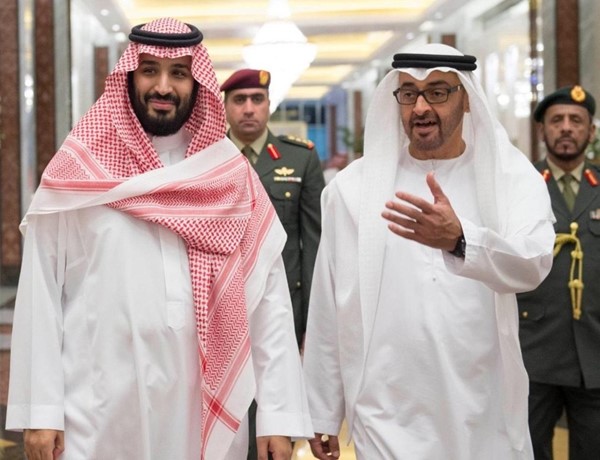
The media in Tel Aviv have reported that the UAE has invested as much as $100 million in an ambitious Israeli project to pipe natural gas to Europe.
The investment would be made by a company based in Abu Dhabi for a pipeline project which is internationally known to be unique given its record length as well as the extreme depths it would be laid toward Europe, Lebanon’s al-Mayadeen quoted Israeli media as reporting.
The agreement has been described as “historic” by Israeli media, al-Mayadeen added.
Israel has signed a multilateral deal over the scheme – called the East Med Pipeline Project – with Greece, Italy and Cyprus. The European Union also supports the project.
The East Med Pipeline Project is to start about 170 kilometers (105 miles) off Cyprus’s southern coast and stretch for 2,200 kilometers (1,350 miles) to reach Otranto, Italy, via Crete and the Greek mainland, according to a report by The Times of Israel news website.
The pipeline will have the capacity to carry up to 20 billion cubic meters (706 billion cubic feet) of gas from Israeli fields each year. Europe’s gas import needs are projected to increase by 100 billion cubic meters (3.5 billion cubic feet) annually by 2030.
Work on the project is expected to begin within a few months, and to conclude within five years.
UAE’s investment in the project could trigger protests in the Muslim world. The Emirates has already taken moves to approach Tel Aviv with speculations recently emerging that it has even involved itself in certain military operations by Israel on Gaza.
Last December, Israel’s Energy Minister Yuval Steinitz said a study on the project showed that the project is feasible, even though it presents technical challenges due to the depths involved and has an estimated cost of 6.2 billion euro ($7.36 billion).
Israel has already engaged in disputes with Lebanon over tapping into Mediterranean energy resources.
Last February, Israel described as “very provocative” a Lebanese tender for projects in two of its 10 offshore blocks in the Mediterranean Sea.
Israel itself has long been developing a number of offshore gas deposits in the Mediterranean Sea, with the Tamar gas field, with proven reserves of 200 billion cubic meters, already producing gas, while the larger Leviathan field is expected to go online in the coming months.
A source close to Israeli Prime Minister Benjamin Netanyahu said in 2012 that Israel’s natural gas reserves were worth around $130 billion. A Business Week estimate later that year put the reserves’ value at $240 billion.
Egypt, Cyprus sign accord to build gas pipeline
MEMO | September 20, 2018
Egypt yesterday signed an agreement with Cyprus to construct a maritime pipeline between the two countries, which will transfer of natural gas from Cyprus to Egypt for re-export to different markets, especially the European Union (EU) countries.
The agreement was signed in a meeting held in Cyprus between the Egyptian Minister of Petroleum and Mineral Resources, Tarek El-Molla, and the Cypriot minister of Energy, Industry, Tourism and Trades, Georgios Lakkotrypis.
The project, which was said to cost around $800 million, will involve building a pipeline to transfer natural gas from Cypriot Aphrodite field to Egypt’s liquefied natural gas (LNG) facilities.
El-Molla said that the agreement contributes “to boosting the economic relations between Egypt and Cyprus and is considered as an important step in maximising the benefit of the discoveries of the Cypriot gas fields.”
“The Egyptian-Cypriot agreement is not only about the implementation of a maritime pipeline, but it will contribute positively to securing gas supplies to the EU,” he added.
The deal, El-Molla reiterated, will encourage further research exploration activities in the region and will contribute to further support joint cooperation in the field of oil and gas between the two countries.
Referring to another memorandum of understanding, which was signed between Egypt and the EU in the field of energy last April, the Egyptian minister stressed that it “will open up important prospects for the role that Egypt can play in the industry.”
On his part, Lakkotrypis said that the deal was “an important milestone, not only for Cyprus but also the entire eastern Mediterranean region,” adding that “it’s [the joint agreement] the first of its kind in Cyprus and Egypt’s shared region.”
Stakes Rise in Browder-Gate – EU Threatens Cyprus with Article 7
By Tom Luango | September 15, 2018
It’s been quite a week for Article 7 of the Lisbon Treaty. First Hungary and now Cyprus. And all because of some guy named Bill Browder?
Despite numerous warnings and obstacles, Cyprus continues to assist Russia in investigating the finances of Bill Browder. This has resulted in letters of warning to Cypriot President Nicos Anastasiades as well as lawsuits by Browder citing the investigation violates his human rights.
Like everything else in this world, just ask Browder.
Last fall Browder and 17 MEP’s launched a two-pronged assault on Cyprus to end their assisting Russia’s investigation into Browder. Browder with the lawsuit. The MEP’s with a letter of warning.
The lawsuit has failed, however. The Nicosia District Court handed down a ruling recently which allowed for Browder to sue for damages to his reputation but not putting an injunction on the investigation.
More than a month ago the Nicosia District Court said that the cooperation with Russia in its politically motivated probe would violate the human rights of Bill Browder and his associate Ivan Cherkasov and the two would have good prospects in claiming damages from the government. Still, the court rejected Browder’s application for an order preventing Cypriot authorities from cooperating with Russia in its proceedings against him on the grounds that any damage would not be irreparable.
And this is where this gets interesting.
Because now in light of this ruling the stakes have been raised. Four of those original 17 MEP’s, many of whom are on the infamous “Soros List” as being in the pay of Open Society Foundation, sent a more serious letter of warning to Anastasaides threatening Cyprus with censure via Article 7 of the Lisbon Treaty for not upholding the European Union’s standards on human rights.
Now this is a dangerous escalation in service of an investigation into someone who, agree or not, Russia has a legitimate interest in pursuing. Dismissing all of Russia’s concerns about Browder as ‘politically motivated’ is pure grandstanding. It carries no weight of law and stinks of a far deeper and more serious corruption.
Because if Browder was as pure as the driven snow as he presents himself to the world then he would have no issue whatsoever in Cyprus opening up his books to Russia and put his question of guilt to rest once and for all.
The ruling from the court stated that Cypriot officials are not barred from helping Russia get to the bottom of Browder’s web of offshore accounts, all of which, according to Russian lawyer Natalya Veselnitskaya, run through Cyprus.
“He [Browder] is afraid of the Russian probe that has conclusive evidence of his financial crimes and proof that his theory of Magnitsky’s death is an absolute fake. That’s why Browder is ready to stage any provocation,” Veselnitskaya said. She went on to say that the investor’s decision to intervene was particularly “influenced by the fact that the entire network of offshore companies that make up his organized criminal group is located on the territory of Cyprus.”
The incident that Veselnitskaya was referring to took place in late October 2017. At that time, 17 members of the European Parliament appealed to Cypriot President Nikos Anastasiades in an open letter, in which they called on him to stop assisting Russia in its investigation against Browder.
Remember, Veselnitskaya was the woman who met with Donald Trump Jr. during the 2016 campaign. She was adamant she had information that was pertinent to them. The Mueller probe and the media tried to spin that meeting as her giving Trump access to Hillary Clinton’s e-mails.
But what she was really trying to give them was the low-down on Browder, the Magnitsky Act and the whole rotten, sordid history of him, Edmund Safra of Republic National Bank and the raping of Russia by them and others in the 1990’s.
And to show Trump that the Magnitsky Act was built on a lie and the sanctions against Russia should be lifted because of this.
Some of this I covered in an earlier article.
The Real Browder Story
And this is the whole point. Browder’s story is fiction.
Magnitsky was his accountant and not his lawyer, who knew all about his dealings and could convict Browder of a raft of crimes far greater than the ones Russia already has in absentia.
Putin had no interest in having Magnitsky executed or beaten to death in prison. If anyone had an incentive to keep Magnitsky alive it was Vladimir Putin. If anyone had incentive to have Magnitsky die in prison it was Browder. And so, the whole story that Browder has woven, the myth around himself is so insane that it bears repeating over and over.
Browder’s story is fiction.
Because when you stop and put all the pieces together you realize a number of things and none of them are good.
First, Browder was deeply enmeshed in the plot to frame Yeltsin for stealing $7 billion in IMF money which created the conditions for bringing Putin to power.
Second, he, Mihail Khordokovsky and others have systematically lobbied Congress and the European Parliament to peddle this false story of the brave freedom fighter Magnitsky against the evil Putin to get revenge, in Khordokovsky’s case, on Putin for deposing him from power in Russia and stealing back the wealth Khordokovsky stole during the Yelstin years, namely Yukos.
And for Browder it was the culmination of years of work to destroy Russia from within and stay one step ahead of the hangman’s noose. His 2015 book Red Notice is a work of near fiction as outlined by Alex Krainer in his book The Grand Deception: The Truth About Bill Browder, The Magnitsky Act and Anti-Russia Sanctions.
And the Magnitsky Act was the way everyone interested who can prove this could be silenced through sanctions.
But, it’s bigger than that.
This was policy.
The Magnitsky Act is a lynchpin of American and European foreign policy to destroy Russia and subjugate the world.
It was enacted alongside other legislation to take back control of the political narrative of the world; rein in free speech on the internet by tying any activity not approved of by The Davos Crowd to be subject to sanctions on the nebulous basis of ‘human rights violations.’
The Magnitsky Act has weaponized virtue-signaling and, in my mind it was intentionally done to open up another path to protect the most vile and venal people in the world to arrogate power to themselves without consequence.
Today we stand on the brink of an open hot war between the U.S. and Russia because of the lies which have been stacked on top of each other in service of this monstrous piece of legislation.
With each day it and its follow-up, last year’s Countering America’s Adversaries Through Sanctions Act (CAATSA), are used as immense hammers to bring untold misery to millions around the world.
People like Browder are nothing by petty thieves. It is obvious to me he started out as a willing pawn because he was young, hungry and vaguely psychopathic. The deeper he got in it the more erratic his behavior became.
Browder is being protected by powerful people in the U.S. and EU not because he’s so important but because exposing him exposes them.
This is why another country is being threatened with the stripping of what few rights sovereign nations have within the EU, Cyprus, over his books.
Poland stood up for Hungary the other day over ideological reasons. No one seems ready to stand up to the conspiracy surrounding Browder, Khordokovsky and the Magnitsky Act.
But, if someone in power finally does, it could change everything we think we know about geopolitics.
Cyprus Court Rejects Request to Ban Work With Russia on Browder Case – Reports
Sputnik – 03.08.2018
A Nicosia court on Friday turned down a request by Hermitage Capital Management for a ban on cooperation of Cypriot authorities with Russia in its investigation into William Browder’s fraudulent investment schemes involving offshore assets, local media reported.
Back in September, Hermitage Capital Management CEO Browder filed a request to a court in Cyprus asking an emergency injunction on the transfer of any data about his activities to Russia. In early October, Cyprus suspended cooperation with Moscow on the case, while the Russian Foreign Ministry expressed regret over it. In late October, a group of 17 members of the European Parliament sent a letter to the Cypriot government, asking not to cooperate with Russia on the probe.
During Friday’s hearing, the applicants sought to insist that Nicosia-Moscow cooperation could cause them irreparable damages, according to Cyprus Mail.
“It has not been shown that in case the Republic of Cyprus executes the particular request for legal assistance of the Russian Federation, the plaintiffs will suffer irreparable damage. Nor have they claimed of course that they have suffered that as a result of the execution of previous requests,” the judge said, as quoted by the newspaper.
The judge ruled that the applicants failed to provide sufficient evidence that they would suffer major damages and that the case could be politically motivated, the media outlet reported.
In 2013, Russia sentenced Browder in absentia to nine years in prison for tax evasion and falsely claiming tax breaks for hiring disabled persons. The court also ruled that Sergei Magnitsky, a tax and legal consultant for Hermitage Capital Management, who died in pretrial detention in Moscow in 2010, developed and implemented a tax evasion scheme while working for the businessman. Browder refuted the accusations, saying that he became a victim of a corruption scheme himself.
In February 2017, a Moscow court ruled to arrest Browder and his business partner Ivan Cherkasov, both charged with 4.2 billion rubles ($72.9 million) in unpaid taxes, in absentia. The United Kingdom, where the two have resided, has denied requests to have them extradited to Russia.
New Italian Government to Trigger Crisis in EU
By Alex GORKA | Strategic Culture Foundation | 07.04.2018
The formal consultations on forming a new coalition government in Italy kicked off on April 4. The center-right coalition led by the anti-migrant League won 37% of the vote to control the most parliamentary seats while the populist 5-Star Movement won almost 33% to become the single party with the highest number of votes. Neither of them can govern alone. It does not make great difference who President Sergio Mattarella will entrust with the task to form a coalition government: the leader of the center-right League, Matteo Salvini, or Five Star’s Luigi De Mayo. The outcome will be the same – the EU will face a crisis over its Russia policy. By and large, the two are at one on the issue – they want the Russia sanctions lifted.
The Five Star is not simply Eurosceptic; it’s openly anti-EU. The movement has always been known as “part of a growing club of Kremlin sympathizers in the West”. It shares a pro-Moscow outlook with the League. “STOP absurd Russia sanctions” tweeted Matteo Salvini to make his position known. It coincides with the opinion of Ernesto Ferlenghi, the President of Confindustria Russia, a non-profit association, who asks for government’s support of Italian businesses operating in Russia. Both agree that the sanctions hurt Italian economy. Salvini lambasted his country’s decision to expel Russian diplomats over the so-called spy poisoning case. In March, he signed a cooperation agreement with United Russia party.
It’s almost certain that Italy, the 3rd-largest national economy in the eurozone, the 8th-largest by nominal GDP in the world, and the 12th-largest by GDP (PPP), will question the wisdom of sanctions war. No doubt, it will be backed by a number of countries, including Greece, Austria, Cyprus, Hungary etc. If not for pressure exercised by the EU and German leadership, the sanctions would have been eased, or even lifted, long ago, especially as Great Britain is on the way out of the bloc. The Skripal scandal can delay the discussions but not for a long time. It will die away. If there were a solid proof to bolster the accusations against Moscow, it would have been presented to public without procrastination to fuel the anti-Russia sentiments. It has not been done. The scandal is doomed to fade away gradually.
The expedience of diplomats’ expulsions has been questioned in almost all EU member states, including Germany. Its newly appointed Foreign Minister Heiko Maas insists that Europe needs Russia as an ally to solve regional conflicts. According to him, “We are open to dialogue and are counting on building confidence again bit by bit, if Russia is ready to do so.”
Austria and Greece have refused to join so far but if such a big country as Italy joins them, the EU will be in a tight spot. The sanctions are to be prolonged in early fall but Rome will block their automatic extension. Italy is too big and important to be easily made to kneel. This is an EU founding nation. The bloc is facing serious cracks and adding more bones of contention will put into question its very existence. Under the circumstances, gradual easing of sanctions to ultimately lift them is the best solution for the EU. That will put the US and Europe on a collision course, especially at a time the divisions over the Nord Stream-2 gas project go on deepening.
US Ambassador to the UN, Nikki Haley, has recently stated that Russia is no friend of the US. Moscow is well aware that Washington is not its friend either. It’s not about friendship but rather the need for a dialogue on equal terms to address burning issues of mutual interests.
As one can see, the US hostility toward Russia does not strengthen its standing in the world. Quite to the contrary, it makes the gap wider to alienate European allies. The relationship is complicated enough as it is. The pressure exercised by the US and the UK, its staunch European ally, to involve the EU into the anti-Russia campaign provokes stiff resistance. Its strong alliances, not disagreements with close partners that make great powers stronger.
The CAATSA law that allows punitive measures against European allies, the divisions over the Iran deal being probably decertified by the US in May, the European resistance to the US tariff policy and a lot of other things undermine the West’s alliance the US considers itself the leader of. Adding Russia to the list of European grievances hardly makes the US position in the world stronger. By ratcheting up anti-Moscow sentiments it hurts itself to make the “America First” policy much less effective than it could be, if outright hostility gave place to business-like dialogue.
Looks like those who wish Russia ill have lost an important ally. The more effort is applied to hurt Moscow, the more damage is done to West’s unity.
Austrian Institute Clarifies True Costs of the EU’s Anti-Russian Sanctions
Sputnik – 03.07.2015
The Austrian Institute of Economic Research (WIFO) published a monograph clarifying the projected short and long-term costs of anti-Russian sanctions to the EU 28 plus Switzerland. A summary of the report published Friday has confirmed that Europe as a whole expects €92.34 billion in long-term losses, along with over 2.2 million lost jobs.
While the report attempts to downplay somewhat the losses attributed to sanctions, noting that politicized export restrictions must be considered together with the ongoing Russian recession and other factors, the figures speak for themselves.
The report projects an “observed decline in exports and tourism expenditures of €34 billion value added in the short run, with employment effects on up to 0.9 million people.” Switching to a longer-term perspective, the report estimates “the economic effects increas[ing] to up to 2.2 million jobs (around 1 percent of total employment) and €92 billion (0.8 percent of total value added), respectively.”
Commenting on the geographical disbursement of the economic and jobs losses, WIFO’s report shows that “geographical closeness highly correlates with the relative size of the effects at the national level, with the Baltic countries, Finland and the Eastern European countries being hit above the EU average of 0.3 percent of GDP in the short and 0.8 percent in the long run.” The report also notes that Germany, which accounts for nearly 30 percent of all EU 27 exports to Russia, has been hit the hardest in absolute terms, and is projected to lose €23.38 billion in losses in the long term. Italy is second, with €10.93 billion in projected losses. France rounds out the top three with €7.92 billion in losses.
The study’s figures also show that Estonia is the single most heavily affected country in both the short and the long term, with the country suffering a €800 million (4.91 percent) and €2.1 billion (13.24 percent) decline, respectively. Estonia is followed by Lithuania (-6.37 percent long term), Cyprus (-3.25 percent), Latvia (-1.87 percent), and the Czech Republic (-1.53 percent).
In employment terms, Estonia, Lithuania and Cyprus are also the hardest hit in percentage terms, and are projected to suffer 16.3 percent, 10.84 percent and 4.21 percent losses, respectively. In absolute terms, Germany (losing 395,000 jobs) Poland (300,000), and Italy (200,000) have been the hardest hit; Spain, Lithuania and Estonia are projected to lose between 100,000 and 190,000 jobs.
As for the economic sectors most heavily impacted, the WIFO study found that agriculture and food products, metal products, machine-building, vehicles, and manufacturing-related services are hardest hit in the short term, with construction, business services, and wholesale and retail trade services also projected to suffer disproportionately in the long-term.
Speaking to Radio Sputnik about the report, WIFO economist Oliver Fritz noted that while EU politicians still hope that the sanctions will have some effect on Russian policy, pressure is building on them to change their policy, since the economic consequences are rapidly beginning to add up.
While the economist noted that he does not see the sanctions being lifted in the short term, with German Chancellor Angela Merkel successfully keeping other EU nations in line, Fritz noted that as losses mount, EU politicians may eventually decide to consider rethinking their decisions.
Last month, WIFO conducted research for Europe’s ‘Leading European Newspaper Alliance’, estimating up to €100 billion in losses if anti-Russian sanctions remain in place.
Since March 2014, the United States, European Union, and other Western countries have placed sanctions on Russia’s banking, defense and energy sectors over Moscow’s alleged role in the Ukrainian crisis. In August, Moscow imposed a year-long food embargo on the countries that had sanctioned it. Last month, the EU’s foreign ministers agreed to extend sanctions against Russia until January 31, 2016.
United States is not “entitled to be displeased” with Cyprus – FM
By Ioannis Kasoulides • FAMAGUSTA GAZETTE • March 4, 2015
CYPRUS – FOREIGN MINISTER Ioannis Kasoulides has hit back at the US government, after officials in Washington expressed displeasure at a recent trip to Moscow by President Nicos Anastasiades.
“The [US] discontent focused on the fact that they believe that Putin’s government should be isolated by the 28 EU Member States and all other members of the North Atlantic Alliance”, Kasoulides was quoted as telling CyBC, by Russian agency Sputnik.
But he added that the United States is not “entitled to be displeased,” as Washington does not seem to be concerned by the aggressive policy of Turkey toward Cyprus, at the same time blaming Moscow for the crisis in Ukraine.
Washington rebuked Anastasiades on Monday after his widely publicised trip to Russia last week.
The US signaled how angry it is with Cyprus when Marie Harf, the Deputy Spokesperson for the US Department of State said this is not the time for “business as usual with Russia”.
She made the unusually sharp remark after being asked to comment on the recent visit of Anastasiades to Moscow and St Petersburg.
The visit came amid strong Russia-West tensions over Ukraine, the worst since the Cold War.
Berri: Israel is stealing Lebanese gas
Al-Akhbar | December 8, 2014
While political factions are distracted with the upcoming dialogue between Hezbollah and the Future Movement, and the Lebanese government is struggling to resolve the issue of the kidnapped soldiers and counter the threat of terrorist groups on the Syrian border, Israel is stealing Lebanese gas from the deep sea off the Lebanese southern coast, Al-Akhbar reported on Monday.
Parliament speaker Nabih Berri told Al-Akhbar that he received information a few days ago confirming that Israel has started stealing Lebanese gas, expressing his surprise over the government’s lack of interest in the matter.
Berri said “he will personally push the pressing issue early next year,” adding that the Israeli move will force Lebanon to sign two designated decrees that would allow it to start digging for gas and ensure new revenues for the Lebanese economy.
Lebanon is located in the heart of the Levant basin, where seismic surveys indicate the presence of huge oil and gas reserves, but has so far failed to impose itself as a regional player in this area, as neighboring states greedily fight for its resources.
In July 2013, an Israeli company found Karish, a gas field 75 kilometers from the coast of Haifa. The new field is sufficiently close to Lebanon’s maritime borders to allow Israel access to Lebanon’s own reserves. It is evident that Israel is pressing ahead with exploration and production while Lebanon’s own energy plans falter.
At the time, then-Energy and Water Minister Gebran Bassil addressed these concerns in a press conference. “Theoretically…Israel is now able to reach Lebanese gas and that is a very grave situation,” he said.
“We cannot yet say that a disaster has happened, but the new Israeli discovery may indeed lead to one, especially if Lebanon’s efforts continue to be plagued by delays.”
“If Israel drills horizontally in Karish – made possible thanks to US technology – it may be able to reach up to 10 kilometers north into Lebanon’s reservoirs. If Israel drills vertically, it would still be possible for Israel to syphon off Lebanese oil and gas, if the Israeli and Lebanese fields overlap,” Bassil added.
After the discovery of large deposits of oil and gas in the eastern Mediterranean, the main struggle for Lebanon remains with both Cyprus and Israel to prevent encroachment on its maritime boundaries.
Cyprus breached its agreement with Lebanon and signed a deal in 2010 with the Zionist state, which attempted to gobble up 860 square kilometers of Lebanon’s maritime zone.
This incident revealed the need for Lebanon to assert the integrity of its maritime boundaries and to recover all of its Exclusive Economic Zone (EEZ) – currently being disputed by Israel following its agreement with Cyprus.
In theory, there was no dispute over maritime boundaries between Israel and Cyprus. But when the opportunity arose, Israel encroached on Lebanon’s zones as a result of the latter’s failure to quickly ratify its agreement with Cyprus.
The Cypriot-Israeli agreement enabled Israel to foray into Lebanon’s EEZ, although Israel had so far observed the same boundaries adopted by Lebanon in all its operations.
Reports indicate that Israel found a loophole in the agreement between Lebanon and Cyprus which stipulates that the triple point can only be determined through trilateral negotiations.
Since there are no contacts between Lebanon and Israel, the determination of this point is pending negotiations.
Israel’s interpretation of this, however, is that Lebanon has lost 860 square kilometers.
Lebanon managed to recover 500 out of 860 square kilometers of its EEZ according to international community laws, while 360 square kilometers remain effectively under Israeli control.
In November 2013, Israel rejected a proposal for a settlement made by the US administration to resolve the “dispute” between the Zionist state and Lebanon over the boundaries of each side’s EEZ. The proposal concerned the disputed area of Block 9 in the Mediterranean, which Israel claims sovereignty over.
Israel claims that this block – one of the richest areas in terms of commercial gas deposits recently discovered in the Mediterranean – extends into its EEZ.
In September, Director of the Research and Strategic Studies Center General Khaled Hamada said “the expected quantities (of oil and gas) are relatively small, compared to those discovered in the Arabian Gulf, Russia, and the Caspian Sea, but they are enough to make a significant impact on the energy security of Mediterranean countries, and contribute to a lesser extent to Europe’s energy security.”
Hamada pointed out that Israel had already begun commercial gas production, while Cyprus had started exploration in more than one location.
In a conversation with Al-Akhbar, Hamada warned that any further delays in Lebanon’s efforts to implement gas projects would force it to deal with these projects and security arrangements as a fait accompli down the road.
While Lebanon is busy with endless debates, Israel is rushing to put the final touches on its bid to export gas to Europe.
Four years ago, Al-Akhbar published a statement by Israeli Minister Yossi Peled on September 25, 2010 that highlighted the Israeli stance on Lebanon becoming a gas producer country.
Peled, appearing before the Knesset Economic Committee at a special hearing on the oil and gas sector, said that Lebanon had large gas fields similar to the ones Israel had discovered. He cautioned that the Europeans, who were looking for alternatives to Russian gas, had initiated negotiations with Lebanon, saying, “Imagine what it would mean if this country became a gas producer,” something he claimed had equally alarming economic and security implications.
Although Israel managed to pinpoint the challenges it faced, it did predict at the time – and wager on – Lebanon’s complacency. In response to Peled’s warnings in the Knesset, Israeli daily Globes, in a front-page editorial on October 5, 2010, stated:
“Israeli sources who follow events in Lebanon are convinced that, at the current rate of progress, the Lebanese will award the first licenses this year [2010], and will start exploratory drilling within a year. The same sources believe that Lebanon will quickly be able to close the gap between it and Israel, and become a real competitor.
“Past experience shows that Israel has no immediate reason for fear. Lebanon’s natural resources will arouse internal (and external) conflicts no less severe than Israel’s natural resources have provoked here …
“The oil giants will not rush to invest billions in a country where it is not clear who is in control, and where so many other countries openly interfere.”
Israel was proven right. Nothing in Lebanon is exempt from being the object of division and polarization, and thus, obstruction, including the oil and gas sector.
Meanwhile, Turkey is also trying to expand in the eastern basin through northern Cyprus, with a view to reduce its dependence on oil imports from Iran and gas imports from Russia.
Ankara is seeking to build a network of onshore and offshore gas pipelines, to act as an energy transit hub between East and West.
(Al-Akhbar)
Putin: No plans to close NGOs, public has right to know
RT | April 5, 2013
Recent checks in Russian NGOs are completely in line with the law and have the sole objective of informing the Russian public on these groups’ activities, according to President Vladimir Putin.
In an interview with the German broadcaster ARD, Putin said that the recently-approved law on foreign agents that caused the major NGO audit had parallels in international practice. He also noted the extremely disproportionate representation of non-governmental presence from foreign countries in Russia.
In the very beginning of the interview, the Russian President noted that it was not the objective of the NGO inspections to scare the public or the activists, adding that the mass media was performing that function.
Putin added that the real situation differed greatly from what was presented by the Western mass media. In particular, the fresh Russian law demanding that non-government organizations engaged in Russia’s internal political processes and sponsored from abroad must be registered as foreign agents was noting new. The United States has had a very similar law since 1938.
Putin noted that the US law is enforced by the Department of Justice. All groups operating in the US must regularly submit information about their activities and this information is then reviewed by the counterespionage section.
The German reporter admitted he was not aware of such practices in the United States.
Putin went on to point out that there were 654 foreign-funded groups operating in Russia, while Russia sponsored only two foreign NGOs – one in France and one in the United States.
He also disclosed that foreign diplomatic missions transferred $1 billion. Eight hundred and fifty-five million was to the accounts of Russian-based NGOs in just the four months that passed since the approval of the Foreign Agents Law.
Putin told the interviewer that in his view, Russian society had the full right to know about the extensive network of foreign-sponsored organizations operating in the country, as well as about the amount of funding these groups were getting from their foreign sponsors.
The Russian leader then again stressed that the Russian authorities did not intend to pressure or shut down any organizations.
“We only ask them to admit: ‘Yes, we are engaged in political activities, and we are funded from abroad,’” Putin said. “The public has the right to know this.”
Putin also emphasized in his interview that the Russian authorities fully supported political competition, as without it the development of the country and the people is impossible. He said that the opposition had every right to protest, but even during these protests the rally-goers must abide by the law.
“There must be order. It is a well-known rule. It is universal and applicable in any country,” he stated, noting that the recent events in North Africa were a vivid example of what might happen if this principle is neglected.
The president recalled the recent changes in the law on political parties that drastically simplified both the registration and the work of these organizations. He also spoke of as other moves to liberalize the political system, such as the return of the gubernatorial elections, saying that this was proof that he and his supporters encouraged political competition.
‘Feeling the Cyprus pinch’
When asked about the scope of Russian investment in Cyprus, Putin said it was “absurd” to view private Russian business interests operating in an EU country as having any connection with the activities of the Russian government itself.
He did, however, state that following the $13 billion bailout agreement with Cyprus, which included a one-time tax on deposits held in Cypriot banks, foreign investors feeling the pinch in the EU were more likely to “come to our financial institutions and keep their money in our banks.”
Reacting to claims that Cyprus was a safe haven for dirty money, Putin stressed that Russia neither created the offshore zone, nor had anyone provided evidence of financial misconduct on the Mediterranean island. But while no criminal wrongdoing has been proven, people who had merely deposited their money without breaking any laws now risk forfeiting 60 percent of their deposits as a result of the Cyprus bailout deal.
The Russian president continued that apart from Cyprus, other zones had been created by the European Union, and it was a red herring to place the blame for illicit activities on investors who benefited from them.
“If you consider such zones a bad thing, then close them. Why do you shift responsibility for all problems that have arisen in Cyprus to investors irrespective of their nationality (British, Russian, French or whatever else).”
When asked if he had felt snubbed by the EU when it opted not to turn to Russia for help despite the number of Russian nationals affected, Putin resolutely answered no.
“On the contrary I am even glad, to some extent, because the events have shown how risky and insecure investments in Western financial institutions can be.”
‘We trust the Euro’
Despite previous criticism of certain aspects of the European financial system, Putin stated emphatically that “we trust the euro.”
Putin was unwilling to comment in depth on the internal workings of the EU that had no direct bearing on Russia, as it would be disrespectful to EU leaders.
He did say, however, that despite several points of contention between the EU and Russia, they “are fundamentally moving in the right direction” and Russia had made the right decision in keeping such a large share of its gold and currency reserves “in the European currency.”
Reiterating Russia’s trust in the economic policy of major European countries, Putin remains confident that Europe will overcome the difficulties it is currently facing.
Click here to read the full transcript of the interview
Related article
- Putin: Cyprus deposit cut will hurt Europe’s banks (ekathimerini.com)
Featured Video
No Threat Can Force Iran’s Surrender /Trita Parsi & Lt Cl Daniel Davis
or go to
Aletho News Archives – Video-Images
From the Archives
An Expert Military Analysis of War with China
Actually, None is Necessary
By Fred Reed • Unz Review • December 13, 2020
The Correlation of Armed Forces: U.S. goods and services trade with China totaled an estimated $634.8 billion in 2019. Exports were $163.0 billion; imports were $471.8 billion. The U.S. goods and services trade deficit with China was $308.8 billion in 2019. Trade in services with China (exports and imports) totaled an estimated $76.7 billion in 2019. Services exports were $56.5 billion; services imports were $20.1 billion. The U.S. services trade surplus with China was $36.4 billion in 2019.
There is talk within the Washingtoniat of a possible war with China. Steve Bannon, who apparently was dropped on his head as a child, actually favors such a war. We hear the usual shoo-the-boobs alarm about how the Chinese are doing something terrible and we must gird our loins and American values and show them what for, bow wow, woof. The danger is that the current game of who-blinks-first in Asian waters might actually provoke a shooting war. You know the kind of thing: One warship refuses to get out of the way of another, a collision ensues, some retard lieutenant who signed up on waivers opens fire, and we’re off and running. It is not a good idea to let children play with matches.
The said war is discussed either in emotional terms by idiots or in purely naval terms by those familiar with such things, so we hear of the First Island Chain and the Second Island Chain and whose missiles against the other’s missiles and so on. This would be appropriate if we were fighting World War Two again. Which we aren’t. Let’s take a quick-and-dirty look at how such a war might go.
To begin the war, America would overestimate itself and underestimate China. This is doctrine in the Pentagon. … continue
Blog Roll
 Aletho News
- Iran To Target Military Industrial-Tech Complex That Facilitated Gaza Genocide
- Collapsing Empire: The Resistance Disarms ‘Israel’
- Suicide Should Not Be a Government Service
- Rethinking America’s greatest threat: Iran vs. Israel-Firsters
- Iran accuses adversaries of false flags to strain Turkey ties
- Poland rules out sending Patriot missiles to US/Israel amid war on Iran
- Tehran approves new Hormuz plan with major restrictions
- No Threat Can Force Iran’s Surrender /Trita Parsi & Lt Cl Daniel Davis
- UK’s New Pandemic Plan Would Turn Big Tech Into a Mass Location Tracking Network
- Growing insecurity, soaring prices fuel protests in north as regime bans evacuation: Sources
- If Americans Knew
- Ann Coulter Rips Into Fox News for Iran War Coverage, Compares to False Rigged 2020 Election Reporting
- Joe Kent Urges Americans To Call White House and Congress To Object To Sending Troops Into Iran
- DNC Resolution to Reject AIPAC Funding Puts Democratic Leaders in the Hot Seat
- Swedish foundation to build 400 schools as over 650,000 Gaza children remain without education for 2 years
- Israeli army admits photshopping image of slain Lebanese journalist
- This is how Israel is systematically killing health workers under the cover of war in Lebanon
- Carrying life under fire: Israeli invasion of Lebanon leaves pregnant women facing deadly risks
- Champagne all around for the new death penalty (for Palestinians) law – Not a ceasefire Day 172
- Why are Palestinian books struggling to be seen on Amazon?
- The Line Between Affinity and Conspiracy
- No Tricks Zone
- New Study Finds Warming Saves Lives…Cold Temperatures 12 Times More Deadly Than Excess Heat
- German Science Blog Accuses PIK Climate Institute Of Hallucinating Climate Tipping Points
- Devastating Assessment Of Comirnaty Vaccine By Former Senior Pfizer Europe Toxicologist
- New Study: CO2 Is ‘Effectively Negligible’ As An Explanatory Climate Change Factor Since 2000
- Former Pfizer Toxicologist Dr. Helmut Sterz Tells Bundestag Hearing Pfizer Vaccine Should Have Never Been Approved
- Energy Expert: Germany’s Nuclear Phaseout Was A “500 Billion Euro Mistake”
- New Research: South Australia’s Mid-Holocene Sea Surface Temperatures Were 4°C Warmer Than Today
- Storing Green Energy To Last Germany 10 Days Would Require A 60-Million Tonne Battery
- New Studies: UK Sea Levels Were 4 Meters Higher Than Today During The Mid-Holocene
- Destructive Green New Deal: German Energy And Metal Group Warns Of Drastic Crisis
 Aletho News