Chinese FM calls for international community to unite behind cease-fire in Gaza

By Liu Xin | Global Times | August 8, 2024
Top Chinese diplomat Wang Yi has held phone conversations with the foreign ministers of Egypt and Jordan, condemning the assassination of Hamas political chief Ismail Haniyeh in Tehran on July 31, calling for efforts by different parties to prevent further escalation of conflicts and urging countries to form a joint force to help achieve a cease-fire in Gaza.
Hamas named Yahya Sinwar, who is seen as representing Hamas’ hard-liners, as successor to Haniyeh. Arab countries, in a dilemma and feeling more anxious, hope that China can play a positive role in deescalating the situation as they recognize China’s efforts and capacity in regional reconciliation, analysts said.
But the complexity of the situation requires joint efforts from all parties to address the current crisis, especially the US and Israel, to avoid escalation, they said.
The Chinese Foreign Ministry on Wednesday released information on Wang’s phone conversations with Badr Abdelatty, Egypt’s Minister of Foreign Affairs, Emigration and Egyptian Expatriates and with Jordan’s Deputy Prime Minister and Minister of Foreign Affairs and Expatriates Ayman Safadi, which took place on Tuesday. During both conversations, Wang said that China resolutely opposes and strongly condemns the assassination of Haniyeh.
While talking with Abdelatty, Wang said that retaliatory action leads to a vicious cycle, and violence begets more violence, exacerbating conflict. China will strengthen solidarity with Arab countries, and work with all parties to avoid further escalation and deterioration of the situation.
In talking with Safadi, Wang said that the key to avoiding the deterioration and escalation of the situation is to achieve a full and permanent cease-fire in Gaza as soon as possible and the international community should make a more consistent voice on this issue and form a joint force.
Liu Zhongmin, a professor from the Middle East Studies Institute of Shanghai International Studies University, told the Global Times on Wednesday that Egypt and Jordan are neighbors of the parties in conflict. Both countries established diplomatic relations with Israel early and have upheld a cautious approach to the situation involving Iran.
At this complex and critical juncture, they seek to engage with China given China’s previous role in brokering reconciliation between Iran and Saudi Arabia and among various Palestinian factions, Liu said.
Fourteen Palestinian factions signed the Beijing Declaration on July 23, seen as a positive move toward ending division and strengthening Palestinian national unity.
The conflicts in the Middle East not only relate to the Palestinian-Israeli issue, but also result from the US’ long-term partial policies toward Israel and Iran’s diplomatic inclinations, Liu said, therefore joint efforts from all involved parties are needed to address the crisis.
Simmering escalation of tension
With Iran’s retaliation against Israel looming after Haniyeh’s assassination, regional countries and major players have been actively engaged in diplomacy to avoid an all-out regional war. Jordan’s Foreign Minister Safadi made a rare visit to Iran on Sunday and Russian media reported that Russian Security Council Secretary Sergei Shoigu also visited Iran on Monday.
US President Joe Biden called Jordan’s King Abdullah II on Monday and spoke with the leaders of Qatar and Egypt on Tuesday to discuss efforts to deescalate regional tensions, the White House said.
The US is indeed the instigator of the situation which has been spiraling out of control in the Middle East, Sun Degang, director of the Center for Middle Eastern Studies at Fudan University, told the Global Times.
“If the US had managed to restrain Israel and allow a cease-fire in Gaza earlier, the situation would not have escalated to this extent. Also it is the US’ repeated obstruction at the UN Security Council on cease-fire proposals that has led to the current situation,” said Sun.
Unlike Haniyeh, Sinwar represents hard-liners in Hamas, Sun said, adding that Hamas’ past approach of “fighting while seeking negotiations at the same time” may likely shift to “survival through combat.”
Sun said that Hamas would also seek to form an alliance with Iran, the Houthis and Hezbollah, while trying to gain international support.
Iran did not immediately retaliate after the assassination but tried to tell the world that it is Israel that has infringed international norms and violated Iran’s sovereignty, which has forced Iran to respond. The appointment of Sinwar could be a critical moment when Iran might take action, Sun said.
Liu said Iran is likely to continue missile attacks on Israel and mobilize other militia groups in skirmishes with Israel. However, given Iran’s current domestic and international situation, it is unlikely to engage in a large-scale conflict with Israel at the expense of the nation’s interests.
No matter how the crisis unfolds, the hatred between Iran and Israel will accumulate, and the escalating cycle of retaliation and counter-retaliation between them will worsen regional diplomatic relations, said Liu.
In past decades, the vicious cycle in the Middle East has repeated with no country emerging as a true winner, and if the cycle continues, none of the regional countries can have substantial security, analysts said, adding that as China and many other countries have advocated, negotiation and political settlement is the only way out.
Jordan, Qatar, KSA balk at US-led ‘peacekeeping force’ for post-war Gaza: Report
The Cradle | August 7, 2024
Jordan, Qatar, and Saudi Arabia have reportedly refused requests to take part in a US-led “peacekeeping force” for Gaza once Israel’s genocide of Palestinians comes to a stop, according to informed sources who spoke with the Times of Israel.
One of the sources told the Israeli outlet that troops from the Arab nations would be seen to be “protecting Israel from the Palestinians.”
The reported positions of Aman, Doha, and Riyadh contrast starkly with those of the UAE and Egypt, which have reportedly expressed willingness to participate in the effort.
Abu Dhabi made this position public last month when Lana Nusseibeh, the country’s Permanent Representative to the UN and special envoy of the Emirati Foreign Ministry, penned an op-ed for the Financial Times (FT) in which she called for the establishment of a “temporary international mission” in Gaza.
“Any ‘day after’ effort must fundamentally alter the trajectory of the Israeli–Palestinian conflict towards the establishment of a Palestinian state that lives in peace and security with the state of Israel … A first step in such an effort is to deploy a temporary international mission that responds to the humanitarian crisis, establishes law and order, lays the groundwork for governance and paves the way to reuniting Gaza and the occupied West Bank under a single, legitimate Palestinian Authority (PA),” Nusseibeh declared.
The UAE in June hosted a secret gathering with US and Israeli officials to discuss plans for Gaza after the genocidal war ends. Abu Dhabi has also stepped up joint efforts with Tel Aviv since 7 October to construct military and intelligence infrastructure on the Socotra Archipelago off the coast of Yemen.
During trips to Qatar, Egypt, Jordan, and Israel in June, US State Secretary Anthony Blinken reportedly informed officials that Washington had received “support from Cairo and Abu Dhabi for the creation of a force that would work alongside local Palestinian officers” in Gaza, the Times of Israel reports.
“Blinken told counterparts that the US would help establish and train the security force and ensure that it would have a temporary mandate so that it could eventually be replaced by a fully Palestinian body, the third source said, adding that the goal is for the PA to eventually take over full control of Gaza. Blinken clarified, though, that the US would not be contributing troops of its own, the officials said,” the report adds.
The stunning audacity of Yemen’s drone strike on Tel Aviv
The Cradle | July 24, 2024
On 19 July, a low-altitude drone breached Tel Aviv’s airspace from the sea and detonated, causing one fatality and injuring ten others.
The incident sent shockwaves through the occupation state, with a panicked populace and bewildered policymakers grappling with the Israeli army’s “mega-failure” to intercept a single drone amid prolonged aggression against Gaza and the mounting tensions with Hezbollah in Lebanon.
The attack’s impact was magnified by its direct hit on Tel Aviv, the heart of Israel’s governmental and economic power, starkly exposing inadequacies in its defense strategies and further alarming a population that has for months been questioning the effectiveness of its military preparedness.
It wasn’t long before the de facto Yemeni authorities in Sanaa claimed responsibility for the attack, calling the strike a retaliation for Israeli massacres and threatening more to come.
But how did a Yemeni drone reach the heart of Israel’s most fortified region and strike a blow to Israeli military pride?
Tactical evolution of suicide drones
Suicide drones, as they are known, are a relatively modern weapon, posing significant challenges even for technologically advanced states like the US and Israel. These drones vary in range, warhead size, speed, and guidance methods.
Analysis of the wreckage revealed that the “Yaffa” drone, an enhanced version of Yemen’s Sammad drones, was employed in the operation. The name is deeply symbolic as it references the ancient port city of Jaffa, also known as Yaffa in Arabic, which now forms part of modern-day Tel Aviv.

Yaffa Drone
Its rectangular wing shape and V-shaped tail distinguish it, but it is notably the more powerful 275 cc (16 kW) engine that sets it apart. This engine enables the drone to cover distances exceeding 2000 kilometers – sufficient to reach Tel Aviv from Yemen.
Unlike with ballistic missiles, the difficulty in tracking drones lies in their ability to take unconventional paths, maneuver through winding routes, and hide behind terrain features, making them hard to detect by radar systems.
This detection challenge is a daily issue in northern occupied Palestine, where drones operated by Lebanese resistance groups often go unseen by the increasingly blinded occupation army.

Moreover, drones are typically constructed from lightweight materials such as fiberglass, carbon fiber, or various reinforced plastics that do not reflect radar waves effectively, which is crucial for detection and tracking.
Their low speeds reduce the need for the metallic compositions necessary in constructing conventional military hardware like missiles and fighter jets. Consequently, drones can be mistaken for birds by radar systems. This confusion has occurred regularly in northern occupied Palestine since the war’s onset, with Israel’s Iron Dome defense system spotted expending its limited supply of $50,000 projectiles shooting at birds during this conflict.
Yaffa’s route to Tel Aviv
The suicide drone likely took an unconventional path to evade detection. Previous Yemeni attempts have been intercepted in Egyptian Sinai airspace, with Israeli-allied Arab states such as Saudi Arabia, Jordan, and Egypt contributing to these detection and interception efforts.
On the night of the attack, however, no US aircraft carrier groups were in the Red Sea, and the nearest carrier, the USS Theodore Roosevelt, was positioned in the Indian Ocean. Israel’s air force has suggested that the drone may have taken a non-traditional route via Eritrea, Sudan, and Egypt, crossing near the Suez Canal before entering the Mediterranean and turning east toward Tel Aviv.

Possible path of Yaffa drone that targeted a building in Tel Aviv
Some aspects of that route seem unlikely: the Suez Canal area is heavily patrolled by Egyptian air defense, with its 8th Brigade stationed there, so the Israeli announcement may have been an attempt to pressure Egypt.
Israel’s response: Bombing Hodeidah
On 20 July, Israeli aircraft launched punishing airstrikes on the besieged Yemeni port of Hodeidah, specifically targeting areas designated for fuel and oil storage, as well as destroying port cranes used for loading and unloading cargo and a power station.
But these were civilian targets in a country already suffering from the effects of the Saudi-led coalition blockade, which has caused severe shortages of fuel and essential resources needed for power generation and transportation.
The strike at these particular target banks, which killed at least six and wounded dozens of others, appears to be primarily aimed at creating significant explosions and large fires to help Israeli Prime Minister Benjamin Netanyahu score points at home.
But the Israeli response against civilian targets also reveals that Tel Aviv suffers from a dearth of intelligence on potential Yemeni military targets. It was also evident that the selected targets were ones that Saudi Arabia and the US have refrained from striking due to fears of Yemeni retaliation, which could strike Saudi commercial ports or oil exports in one of the world’s most vital energy passages.
Indeed, Riyadh was quick to deny any involvement in the assault, fearing reprisals from Sanaa, although reports that Israeli jets used Saudi airspace for this attack suggest otherwise.
Video footage shows that Israel used F-35 and F-15 fighter jets, as well as Boeing 707 tanker aircraft, due to the distance involved – a range exceeding 4,000 kilometers round trip. Israeli-released footage suggests that the strikes were carried out using Spice guided missiles launched from outside the Yemeni air defense range.
Some of these missiles are equipped with boosters that extend their range up to 150 kilometers, which only showcased Israeli operational limitations against Yemen in a broader conflict, in which Sanaa’s air defenses will be surely activated against enemy aircraft, drones, and projectiles.
Yemen’s retaliation
Yemeni officials, led by Ansarallah leader Abdul Malik al-Houthi and Yemeni Armed Forces Spokesman Brigadier General Yahya Saree, quickly announced a decision to launch retaliatory strikes against Israel, in which they declared Tel Aviv to be an “unsafe zone” and warned of Yemen’s readiness for a “long war” against the occupation state.
Given the targeting of vital civilian infrastructure, this places several Israeli targets on the list of potential Yemeni target banks. These include fuel tanks in Haifa, clearly shown in video footage taken by a Hezbollah drone weeks ago, as well as fuel tanks in Ashkelon and the power stations adjacent to these tanks.
What concerns Israelis the most, however, is Yemen’s potential targeting of vital gas platforms in the Mediterranean Sea, stationary targets highly susceptible to significant ignition and explosion. While there are currently only three active Israeli gas fields – Karish, Tamar, and Leviathan – in operation, these fields have become essential to Israel’s energy independence.
Underestimating Sanaa’s resolve
The damaging Israeli strike on Hodeidah Port was based on an assumption by Tel Aviv that it would deter a Yemeni counterstrike. But Yemen’s Ansarallah Movement, which has endured years of punishing Saudi, Emirati – and now US and UK – military attacks, has shown no inclination whatsoever to halt its operations in support of Gaza.
While the Israelis may have felt an obligation for a quick military fix by striking Hodeidah – the port, incidentally, has already reopened for business – it comes at the expense of any logical assessments of losses and gains. Already facing strategic defeat in Gaza and unable to follow through with its threats against Lebanon, Tel Aviv has cracked open a new front with Yemen, the most fearless component of West Asia’s Axis of Resistance.
The Israelis are between a rock and a hard place, desperately trying to cleave to old narratives of regional military superiority to keep domestic faith in the Zionist project, yet unable to score victories anywhere.
Based on Yemen’s oft-declared resolve not to retreat from any escalation, it is expected that the outcome of the Hodeidah strike will lead to a compounded retaliatory operation against the occupation state. Israel, however, has limited operational freedom due to issues related to geographic distance – such as the airspace and uninterrupted refueling access required – which makes waging war against Yemen a nonstarter.
Harsher strikes on critical Israeli centers are likely to drive Israel into greater missteps and strategic errors, especially at a time when escalation and the further weakening of its deterrence are counterproductive to its interests.
By targeting the Yemenis directly, Israel has underestimated the resolve and capabilities of a formidable adversary, potentially choosing the worst possible opponents in this round of conflict.
Hamas: Biden’s ceasefire ideas are positive, but not enough
Palestinian Information Center – June 2, 2024
GAZA – Senior Hamas official Osama Hamdan has welcomed the general ceasefire plan proposed by US president Joe Biden in a recent speech, which he said contained “positive ideas.”
In an interview conducted by Al Jazeera satellite channel on Saturday, Hamdan said that Biden’s ideas for a ceasefire in Gaza are positive but they are not enough, affirming that Hamas wants the matter to crystallize within the framework of a comprehensive agreement.
Hamdan reiterated his Movement’s rejection of any presence of Israeli forces in the Gaza Strip or at the Rafah border crossing in any potential deal, stressing that the Palestinian interior ministry administered the Rafah crossing before the war and would continue to do so after the war ends.
“There is no initiative. President Biden talked about ideas, and general ideas do not mean that an understanding could be reached. They are a general framework containing many details that were discussed over the past four months,” Hamdan said.
The Hamas official pointed out that the previous efforts made by Egyptian and Qatari mediators aimed at brokering a deal that leads to the withdrawal of the Israeli army from Gaza and ends its military operations.
“We already had a clear position and responded positively to such efforts and mediation. We accepted the final proposal that was presented by the mediators and approved by the US, but the Americans failed to oblige and convince the Israeli side to accept the paper, which led all the efforts that had been made in this regard to collapse,” Hamdan explained.
Hamdan stressed the need for a crystal-clear agreement that achieves a complete halt to the war, the withdrawal of the occupation forces from Gaza, the flow of aid and the reconstruction of the besieged territory.
In a related context, Gaza ceasefire mediators Qatar, Egypt, and the US called on both Hamas and Israel to finalize a truce deal as outlined by the US president.
“As mediators in the ongoing discussions to secure cease-fire in Gaza and the release of hostages and detainees, Qatar, the United States, and Egypt jointly call on both Hamas and Israel to finalize the agreement embodying the principles outlined by president Biden,” the Qatari foreign ministry said in a joint statement on Saturday, citing Biden’s Friday night address on the proposed deal.
“These principles brought the demands of all parties together in a deal that serves multiple interests and will bring immediate relief both to the long-suffering people of Gaza as well as the long-suffering hostages and their families,” the statement added.
The mediators emphasized that “this deal offers a roadmap for a permanent ceasefire and ending the crisis.”
The war is lost, so why is Netanyahu still killing civilians in Rafah?
By Ramzy Baroud | MEMO | May 29, 2024
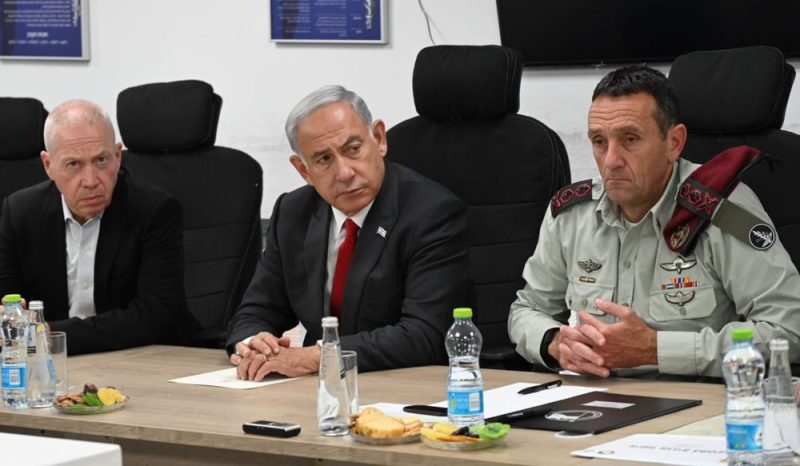
Just hours after Israel carried out a gruesome massacre of displaced Palestinians in the Tel Al-Sultan area west of Rafah in the Gaza Strip on 26 May, it carried out yet another massacre in the Al-Mawasi area. The first is now known as the “Tents Massacre”. It took place shortly after the International Court of Justice (ICJ) finally issued a stern demand that, “Israel must immediately halt its military offensive and any other action in Rafah which may inflict on the Palestinian group in Gaza conditions of life that could bring about its physical destruction in whole or in part.”
The killing of 50 Palestinians in their own displacement tents was the answer given by Israeli Prime Minister Benjamin Netanyahu and his extremist government to the ICJ and the rest of the international community. The successive Israeli massacres in Rafah demonstrate the degree of intransigence of Israel’s genocidal regime.
Netanyahu and his Minister of Defence, Yoav Gallant, who could both be on the official “wanted” list of the International Criminal Court (ICC) within weeks, could easily have chosen a different path, even for mere political manoeuvring. They could, for example, have delayed their Rafah operation or changed strategies, just to avoid further ICJ rulings on the matter. Instead, they went for the most arrogant and cowardly of choices: killing civilians.
Their 2000lb bunker-busting bombs dismembered and beheaded children as they lay beside their mothers in makeshift camps that have no water, no electricity and no food. While the Israeli army offered the world a clearly concocted version of what happened, blaming “militants” and such, Netanyahu’s office described the attack as a mistake.
Both versions, of course, were lies. The Israeli army possesses some of the most advanced surveillance technology in the world, thanks to US generosity and continued support. It could easily have distinguished between a Palestinian Resistance operational area and a refugee camp filled with children and women.
If the attack was indeed a mistake, what explains the other massacres that followed, also in Rafah and in nearby Mawasi, which killed and maimed scores of refugees? And what is the logic behind the killing and wounding of nearly 130,000 Palestinians since the start of the war on 7 October, the majority of whom were women and children?
The Tents Massacre was neither a mistake, nor can it be blamed on imaginary militants operating from inside displaced refugees’ tents. Nevertheless, Netanyahu did have his own logic. For a start, he wanted to send a direct message to let the ICJ know that Israel is not perturbed by its direct order to end the Rafah operation. The intended audience of this message was not necessarily the ICJ judges, but the international community, which remains, despite its solidarity rhetoric, ineffectual in influencing the duration, direction or nature of the Israeli war.
Netanyahu also wanted to score cheap political points against his rivals in his War Cabinet, by presenting himself as the bold Israeli leader who is standing up to the whole world. He has stated over and over again that “[the Jewish people] will stand alone.”
The Israeli leader must also have been informed that more Israeli soldiers had been captured by the Palestinian Resistance. The latter’s statement about this on 25 May was issued just one day before Netanyahu attacked Rafah. From a military point of view, the capturing of more soldiers who were sent to Gaza supposedly to free other Israeli captives should have been a “game over” moment.
The Gaza Resistance hasn’t released any more information since the initial, brief statement by Al-Qassam military spokesman, Abu Obeida. Hamas is known for releasing information to the public when it is strategically most opportune to do so, as was the case in its announcement that it is holding Israeli Colonel Asaf Hamami, who Israel declared to be dead last December.
Netanyahu and his army are trying desperately to pre-empt the angry reaction in Israeli society about the capture of soldiers by keeping the news focused on Rafah. He knows that such massacres widen his circle of support among his extreme far-right constituency.
Moreover, the timing of the massacre was also a message to the US, the mediators (Egypt and Qatar), Hamas and even members of the War Cabinet who are keen on ending the war through a truce agreement. Media reports have spoken about a potential breakthrough in talks, starting in Paris before moving to Doha, which showed some willingness on the part of Israel to link the release of prisoners to a permanent truce.
Such an agreement would be considered a defeat from Netanyahu’s point of view, and would certainly usher in the end of his political career. Hence, he simply lashed out against the refugees of Rafah with the hope of disrupting any potential deal in Doha.
It was for the same reason that his troops opened fire at Egyptian soldiers at the Rafah Crossing, killing one, possibly two, and wounding more. Egypt has been an important mediator in the truce talks. Attacking the mediator is not only humiliating for the Egyptian government, but for the army and Egyptian people as well.
Although Netanyahu has no strategy for the war itself, he has a strategy for prolonging his own political survival. It is predicated on mixing the political cards, ensuring chaos and carrying out constant massacres against civilians, all safe in the knowledge that Washington will always remain on his side no matter what. The Israeli leader is just buying time, though. Israel’s top generals and military experts and analysts know that the war has been lost and that prolonging it will not, in any way, alter its predictable outcomes.
Two Egyptian soldiers martyred in clashes with Israelis: Reports
Al Mayadeen | May 27, 2024
The Israeli Channel 13 reported an extremely unusual incident between the Israeli occupation forces and the Egyptian Army on the border in the Rafah border crossing area, adding that the incident comes at the peak of tensions and noting that the incident may have significant political consequences.
In turn, Israeli Channel 14 stated that Egyptian soldiers fired shots on their own accord at Israeli soldiers along the Rafah crossing and claimed that there were no injuries reported.
Moreover, Israeli media claimed that the Israeli occupation forces responded by firing warning shots, and it was confirmed that the military censorship of the Israeli occupation forces retracted all news about the incident between the Egyptian and Israeli occupation forces at the Rafah crossing.
However, the Israeli KodKod news site said there were no injuries among the Israeli occupation forces but two Egyptian soldiers had been killed in the incident.
The Israeli Ynet newspaper, meanwhile, claimed that only one Egyptian soldier was killed and several others were wounded in the cross-border confrontation.
Al Mayadeen’s correspondent reported that an agreement was reached to form a committee to investigate the incident between the Egyptian army and the Israeli occupation at the Rafah crossing.
The spokesperson of the Israeli occupation forces said an investigation was ongoing regarding the cross-border incident amid contacts with the Egyptian side.
EU joins IMF, Gulf states funneling billions into Egypt as Gaza refugee crisis looms
The Cradle | March 14, 2024
The EU is preparing a €7.4 billion ($8 billion) aid package for Egypt, citing “concerns” that the Israeli genocide in Gaza and the ballooning crisis in Sudan could “risk exacerbating financial troubles in the North African nation and raising immigration pressure on Europe,” according to a report by the Financial Times (FT).
European Commission president Ursula von der Leyen is set to visit Cairo on 17 March alongside the Greek, Italian, and Belgian prime ministers to “finalize and announce the agreement.”
Completion of the deal accelerated following the start of Israel’s campaign of genocide in the Gaza Strip. The terms of the agreement reportedly include support for Egypt’s energy sector, assistance to deal with the rising number of refugees entering the country, and help to fortify the country’s border with Libya.
An estimated €1bn in emergency financial assistance could be paid immediately to Cairo, while another €4 billion in “macro-financial assistance” hinges on implementing reforms under an expanded loan program with the International Monetary Fund (IMF). Officials told FT the rest of the funds would be drawn from various EU funding streams.
The funds from Brussels is the latest in a recent string of investment packages coming from the west and Gulf states for cash-strapped Egypt.
“With respect to the question on the potential impact pressures from refugees from Gaza, what we do see in Egypt is that there is a need to have a very comprehensive support package for Egypt. And we’re working … to ensure that Egypt does not have any residual financing needs,” IMF spokesperson Julie Kozack said on 22 February.
The IMF agreed just days later to expand its financial rescue program for Egypt to $8 billion after the Egyptian central bank let loose its currency to help stabilize the economy. Egypt is the second most indebted country to the IMF, behind only Argentina, with an international debt that grew from $37 billion in 2010 to $164 billion in 2023.
In late February, UK oil giant BP announced plans to develop gas projects and drilling in Egypt over the next three to four years at a cost of $1.5 billion. This came just after the North African nation sealed a massive $35 billion real estate development deal with the UAE, which will see Emirati investment vehicle ADQ build a 170 km tourism and financial center in the Ras al-Hekma area.
In recent weeks, Cairo has also been in discussions to sell prime Red Sea coastal land near Sharm al-Sheikh to Saudi investors.
The unprecedented windfall comes as Egypt is putting the finishing touches on a kilometers-wide buffer zone and wall along its border with southern Gaza, allegedly in preparation to take in hundreds of thousands of displaced Palestinians once the Israeli ground invasion of Gaza’s southernmost city begins.
Amnesty International and other NGOs have also accused Cairo of “harassing” the director of the UK-based Sinai Foundation for Human Rights, which revealed the construction of the buffer zone last month.
Geopolitical analysts, including The Cradle’s Mohamad Hassan Sweidan, have speculated that Egypt may be willing to accept refugees from Gaza in exchange for a significant offset of its staggering debt.
Imperial Assisted Suicide

By John Weeks | The Libertarian Institute | March 11, 2024
The United States Imperial Government (USIG) claims to be keeping the peace, underwriting the liberal, rules-based international order and safeguarding the global security architecture. This is not true. What the USIG is actually doing is killing people, helping get lots of people killed, and assisting foreign states as they commit corporate suicide. Israel’s ongoing, “plausibly genocidal” slaughter in Gaza and the West Bank is the latest example of this.
The United States is an empire and empire is murder-suicide. Since 9/11, U.S. soldiers have directly killed more than 400,000 civilians and indirectly contributed to the deaths of more than four million civilians. Meanwhile, more soldiers who served in the U.S. government’s Global War On Terror have committed suicide than have been killed in combat. Four times more.
The American People have not escaped suffering as the USIG and its empire have dished out catastrophic devastation in Afghanistan, Somalia, Iraq, Pakistan, Egypt, Yemen, Libya, Syria, and Mali. The cost of living has exploded. Our infrastructure is in shambles. Public trust in government has collapsed. The military’s “recruitment landscape” is in free fall. And things are so bad at home the government has found a new job: attacking “tent cities” filled with “under-sheltered” people. Murder-suicide.
Then there are the vassal or “client” states. In the propaganda, the empire defends these states from…whatever. But in reality, it helps these states murder people all while creating the conditions for these states to kill themselves. This has been demonstrated recently in Afghanistan (state committed suicide), Ukraine (state is trying to commit suicide) and Israel (state is thinking about committing suicide).
In October, 2001, the USIG invaded Afghanistan and smashed the Taliban-controlled state. In its place was installed a new state with a new military, which Libertarian Institute Director Scott Horton describes:
“The new regime was also largely a coalition government of ethnic minorities, the Tajiks, Uzbeks, and Hazaras, being leveraged against the 40 percent plurality Pashtuns, dominant in the east and south of the country where the Taliban are from.”
This coalition regime could not exist without billions of U.S. dollars in its coffers, U.S. boots on the ground, and U.S. air power in the sky. As predicted by Horton, as soon as U.S. forces began their withdrawal from Afghanistan, the Afghan state (along with its military) immediately killed itself. The Taliban resurrected their state which the U.S. had smashed almost twenty years earlier.
In February 2014, the USIG backed a violent, neo-Nazi led coup in Ukraine. Instead of smashing the entire state, the coup overthrew President Viktor Yanukovych’s administration. Unlike Afghanistan’s anti-Taliban government in a box, the Ukrainian government under new management was capable of existing without a massive U.S. military presence. It was not, however, capable of winning a war with Russia. It took eight years, but the USIG managed to provoke a war with Russia.
Ukraine has been defeated but the imperial wizards in DC refuse to admit this truth and seek peace. There could have been a peace deal two years ago, when it was still fashionable for Americans to fly the Ukrainian flag outside their front doors, but the USIG crushed it. The Ukrainian state is bleeding out and continuing the war at this point puts the entire Ukrainian nation at risk. Russia could seize all of Ukraine and downgrade it from sovereign nation to a Russian aircraft carrier.
Israel has been fortunate to never have its state murdered or regime changed by the USIG. Quite the opposite; Israel has intervened in USIG affairs to a shocking extent. The Israel lobby wields massive influence in Washington DC, so much so that President Joe Biden is risking his re-election chances by refusing to stop producing Israel’s “plausibly genocidal” mass killing spree in Gaza.
This gleeful and live streamed spree of sadism has not been good for Israel. Its state is provoking the global community to view it as a deranged pariah, including the great powers of Russia and China. Even within America, the people want a ceasefire. We want it to stop.
Meanwhile, Israeli society is cracking. Approximately 200,000 Israelis have been displaced from their homes in the south and north of the country. The IDF has suffered thousands of casualties, the economy is destabilized, and fear has blanketed the land.
And now Israel is planning an invasion of southern Lebanon. Such an invasion would be a hoped for but unexpected gift to Hamas. Experts such as Col. Douglas Macgregor, Col. Lawrence Wilkerson, Lt. Col Daniel Davis, Alastair Crooke, John Mearsheimer and Robert Pape have all warned against the invasion. They have argued that Israel risks catastrophic fallout from such a move, from mass causalities to provoking a regional war and even suffering strategic defeat.
Israel supporters seem confident in its security state, despite its massive failure on October 7. Tel Aviv appears to be operating with the assurance that the U.S. military will step in with strike packages and boots on the ground if and when needed. And yes, DC will let American cities die while it views Israel as too big to fail.
But the empire is beset by incompetence and anyone who paid attention to the self-immolation of the Afghan state and the slow suicide of the Ukrainian state knows this isn’t going to end well.
Taiwan, watch your six.
Buffer zone in Sinai: Is Sisi preparing to displace the Palestinians?
By Osama Gaweesh | MEMO | February 22, 2024
Israeli military, intelligence bodies admit Hamas will survive onslaught on Gaza Strip
Press TV – February 18, 2024
Israeli military and intelligence institutions have warned the regime’s top-ranking authorities that the Palestinian Hamas resistance movement will survive the unrelenting ground and air strikes against the besieged Gaza Strip.
A document circulated from Israeli military leaders to senior politicians states that “authentic support remains” for Hamas among Gazans, according to a report published by the Hebrew-language Keshet 12 television channel.
The document, put together by the Israeli army’s research division, also warned that “Gaza will become an area in deep crisis”, given the lack of plan for the “day after” war.
The document was reportedly presented on Monday to leading Israeli officials following a week of senior military and intelligence talks about the findings, Keshet 12 noted.
Ilana Dayan, an investigative journalist at the broadcaster, said that the “bottom line” of the document was that the Hamas movement would inevitably survive Israel’s offensive.
The report comes as Israel prepares a ground offensive on Gaza’s southernmost city of Rafah.
The UN special rapporteur on Palestine has slammed Israeli prime minister Benjamin Netanyahu’s pledge to push on with the assault.
“Rafah stands as the last line of Palestinian existence in Gaza, amidst the relentless anguish faced by the people trapped therein,” Francesa Albanese wrote on X.
“How can we possibly allow another Nakba? Have we really lost our minds?”
According to diplomatic sources quoted by the AFP news agency, the UN Security Council is set to put to vote a new resolution put forth by Algeria that demands an “immediate” truce in Gaza.
The latest version of the text “demands an immediate humanitarian ceasefire that must be respected by all parties”, the agency said.
It also “rejects forced displacement of the Palestinian civilian population”, and it “demands the immediate and unconditional release of all hostages”, AFP reported.
Earlier, US Ambassador to the UN Linda Thomas-Greenfield issued a statement responding to reports that Algeria plans to put the resolution to a vote on Tuesday.
“Should it come up for a vote as drafted, it will not be adopted,” Thomas-Greenfield said.
The US has previously used its veto to prevent the UN Security Council from passing resolutions calling for a ceasefire in Gaza.
Meanwhile, Egypt’s President Abdel Fattah el-Sisi has reiterated his country’s “categorical rejection of the displacement of Palestinians to Egypt in any shape or form”.
During a phone conversation with his French counterpart Emmanuel Macron on Saturday, the two leaders agreed on the need to “stop the bloodshed” in the Gaza Strip and discussed advancing the establishment of an independent sovereign Palestinian state, a statement by the Egyptian presidency read.
Israel has been waging the war against Gaza since October 7, 2023, when the coastal sliver’s resistance groups staged an operation, dubbed Operation al-Aqsa Storm, against the occupied territories.
Nearly 29,000 Palestinians, mostly women, children, and adolescents, have been killed so far as a result of the brutal military onslaught.
Egypt builds ‘buffer zone’ in Sinai as 1.4 million Gazans face displacement: Report
The Cradle | February 15, 2024
The Egyptian government has started building an “isolated security zone” in the eastern Sinai Desert on the border with the Gaza Strip that would serve as a buffer zone for Palestinian refugees if they are forced out of Rafah by the Israeli army, according to the Sinai Foundation for Human Rights.
Local contractors told the rights group that the construction work was commissioned by the Sons of Sinai Construction and Building Company, owned by businessman Ibrahim al-Arjani, a former warlord from the Tarabin tribe in northern Sinai who holds close ties with the family of Egyptian President Abdel Fattah el-Sisi.
The construction work aims to “create an area surrounded by walls seven meters high, after removing the rubble of indigenous homes that had been destroyed.” The construction is expected to be completed in under 10 days and is supervised by the Egyptian Armed Forces Engineering Authority, with a heavy security presence.
“This morning, the Foundation’s team … monitored the construction of a seven-meter-high cement wall, starting from a point in the village of Goz Abu Waad, south of the city of Rafah, and heading north toward the Mediterranean Sea, parallel to the border with the Gaza Strip,” the Sinai Foundation said on 14 February.
“The construction work seen in Sinai along the border with Gaza – the establishment of a reinforced security perimeter around a specific, open area of land – are serious signs that Egypt may be preparing to accept and allow the displacement of Gazans to Sinai, in coordination with Israel and the United States,” Muhannad Sabry, a researcher in Sinai affairs and security in Egypt, told the Sinai Foundation.
Earlier this month, Egyptian journalist Ahmed el-Madhoun shared a video showing workers strengthening the security wall separating Egypt and Gaza. Since the outbreak of the war on 7 October, Cairo has constructed a concrete border topped with barbed wire and extending six meters into the ground.
Cairo recently boosted its military presence on the Gaza border, citing fears of a spillover of Israel’s ethnic cleansing campaign onto its territory once the ground invasion of Rafah begins. Western media has also quoted Egyptian officials as saying that the government considered suspending the 1978 Camp David Accords if Palestinians were forcibly displaced into the Sinai Desert.
Nevertheless, Israel’s Army Radio reported over the weekend that Cairo informed Tel Aviv that they will not object to a military operation in Rafah as long as it is conducted without harming Palestinian civilians. Other Israeli outlets, as well as the New York Times, have reported Egyptian officials expressing fears that any influx of Palestinians could lead to a resurgence of “Islamist militancy.”
Israeli officials have repeatedly made clear their desire not only to defeat Hamas but also to force Gaza’s 2.3 million citizens to flee to Egypt or other countries as refugees. Those statements coincided with explicit plans to annex Gaza and build settlements for Israeli Jews over destroyed Palestinian homes.
Israeli settler groups and Knesset members recently held a conference to discuss building Jewish settlements in Gaza once its indigenous inhabitants have been ethnically cleansed.
Featured Video
Ted Postol: Fraud of Missile Defence Exposed in Iran War
or go to
Aletho News Archives – Video-Images
Frlom the Archives
“Contested histories”, “contested narratives”: What kind of nonsense is this?
A war of words and concepts!
By Khalil Nakhleh • January 28, 2010
Numerous books and articles have been written, guided by the main thesis that the reason for the prolonged and intractable conflict between Israel and Palestine, and which is constantly at an impasse, is that there are two “contested” histories (of Jews and Arabs in Palestine!), and two “contested” narratives. And one is directed to read and internalize that “contested”, in this sense, means that both narratives are equally valid and with equal legitimacy, and that all alternative reading and interpretation of it, and all attempts to question it are “subjective”, “very personal”, “emotive”, “irrational”, “not credible”, “unreliable”, and “removed from history” … This is, in my view, a total and utter nonsense.
Such an approach ignores actual historical developments and ignores origins of real versus mythical historical developments, and de-legitimizes the continued Palestinian presence in the land of historical Palestine.
Before the onslaught of the Zionist colonial attack on Palestine in the 19th century, there were no claims recorded that the history of Palestine was a “contested history”. The local history was clear and in sharp relief. The indigenous population in Palestine was largely Palestinian Arabs (Muslims and Christians), in addition to a small minority of Palestinian Jews. The majority and minority co-existed and interacted with each other, as they always do in other normal open spaces, through commerce, rituals and friendships, etc. This was in the entire region under Ottoman rule. … continue
Blog Roll
 Aletho News
- Ted Postol: Fraud of Missile Defence Exposed in Iran War
- How An Atrocity Propaganda Campaign Led To The U.S. And Israel Committing Real Atrocities In Iran
- Calls for the reconfiguration of military arrangements in the Gulf region
- Openly Pro-Israel Tech Group Now Has Control over UK’s Most Sensitive National Security Data
- US Intelligence Community is Covering its Ass… What is Really Going On with the US War on Iran?
- Step into My Parlor
- The Trump Administration is Lying About American Casualties in the Persian Gulf Region
- Hezbollah Foils Israeli Landing in Lebanon’s Bekaa
- Iraqi Resistance: Attacks on Beirut suburbs threaten US interests
- US approves $151.8M weapons sale to Israel, waiving congressional review
- If Americans Knew
- At Israel’s hands, Iran is burning, Lebanon and Gaza are crumbling – Not a ceasefire Day 149
- Israel is using the ‘Gaza doctrine’ in Lebanon and Iran
- Saudi journalist says ‘not all attacks’ on Gulf coming from Iran, fears US-Israel dragging monarchies into war
- Iranian officials say Israel carried out some of the drone strikes on Gulf energy sites
- US, Israel ravage Iran and Lebanon; 4 killed in Gaza – Not a ceasefire Day 148
- US troops were told war on Iran was ‘all part of God’s divine plan’, watchdog alleges
- Trump wants to run the show in Iran, but doesn’t know what he’s doing – Not a ceasefire Day 147
- ‘Dirty Work’ :The truth about how Israel was founded
- Mass Expulsion in Lebanon as Israel Expands War: “We Don’t Know Where to Go”
- Lies, distortions, and propaganda: how the U.S. mainstream media coverage on Iran hides the truth
- No Tricks Zone
- Wake-up Call: Survey Shows Majority Of Germans Now Favor Postponing Climate Targets!
- Televised! Leading German Political Candidate Tells Schoolchildren CO2 Makes Sun Hotter!
- New Study: A Century Warming Of 1.1°C Is ‘Commonplace’ And ‘Not Unusual’ During This Interglacial
- New Study: ‘Internal Noise’ And Volcanic Forcing Can Trigger 10-15°C Warming Within Decades
- Glaciers Worldwide Are Suddendly Surging, Experts Blame Warming!
- Surprising Discovery: Sahara Is Greening…Billions Of Trees Where Once Thought To Be Barren
- New Research Reaffirms Clouds, Aerosols, And Surface Solar Radiation Are ‘Driving The Climate System’
- Germany: Electric Car Catches Fire At Charging Station, Sets Off Local “Inferno”, Widespread Damage
- New Study: Canada’s New Brunswick Was 1°C Warmer Than Today During The Medieval Warm Period
- Coal Power Back In Trend As Globe Tries To Keep Pace With Growing Demand For Power
 Aletho News