If David Petraeus is actually charged, all of DC will finally find out how incredibly unjust the Espionage Act is
By Trevor Timm | Freedom of the Press Foundation | January 9, 2015
In a surprising development, the New York Times reported late Friday that the FBI and Justice Department have recommended felony charges against ex-CIA director David Petraeus for leaking classified information to his former biographer and mistress Paula Broadwell. While the Times does not specify, the most likely law prosecutors would charge Petraeus under is the same as Edward Snowden and many other leakers: the 1917 Espionage Act.
It remains to be seen whether Petraeus will actually be indicted (given how high-ranking government officials so often escape punishment), and the decision now sits on Attorney General Eric Holder’s desk. But this is a fascinating and important case for several reasons.
First, all of Petreaus’s powerful D.C. friends and allies are about to be shocked to find out how seriously unjust the Espionage Act is—a fact that has been all too real for many low-level whistleblowers for years.
By all accounts, Petraeus’s leak caused no damage to US national security. “So why is he being charged,” his powerful friends will surely ask. Well, that does not matter under the Espionage Act. Even if your leak caused no national security damage at all, you can still be charged, and you can’t argue otherwise as a defense at trial. If that sounds like it can’t be true, ask former State Department official Stephen Kim, who is now serving a prison sentence for leaking to Fox News reporter James Rosen. The judge in his case ruled that prosecutors did not have to prove his leak harmed national security in order to be found guilty.
It doesn’t matter what Petraeus’s motive for leaking was either. While most felonies require mens rea (an intentional state of mind) for a crime to have occurred, under the Espionage Act this is not required. It doesn’t matter that Petraeus is not an actual spy. It also doesn’t matter if Petraeus leaked the information by accident, or whether he leaked it to better inform the public, or even whether he leaked it to stop a terrorist attack. It’s still technically a crime, and his motive for leaking cannot be brought up at trial as a defense.
This may seem grossly unfair (and it is!), but remember, as prosecutors themselves apparently have been arguing in private about Petraeus’s case: “lower-ranking officials had been prosecuted for far less.” Under the Obama administration, more sources of reporters have been prosecuted under the Espionage Act than all other administrations combined, and many have been sentenced to jail for leaks that should have never risen to the level of a criminal indictment.
Ultimately, no one should be charged with espionage when they didn’t commit espionage, but if prosecutors are going to use the heinous Espionage Act to charge leakers, they should at least do it fairly and across the board—no matter one’s rank in the military or position in the government. So in one sense, this development is a welcome one.
For years, the Espionage Act prosecutions have only been for low-level officials, while the heads of federal agencies leak with impunity. For example, current CIA director John Brennan, former CIA director Leon Panetta, and former CIA general counsel John Rizzo are just three of many high-ranking government officials who have gotten off with little to no punishment despite the fact we know they’ve leaked information to the media that the government considers classified.
So hopefully Eric Holder does the right thing and indicts Petreaus like he has so many others with far fewer powerful connections. As Petraeus himself once said after CIA whistleblower John Kiriakou was convicted for leaking: “There are indeed consequences for those who believe they are above the laws.”
But if Petraeus does get indicted, perhaps we should start a new campaign: “Save David Petreaus! Repeal the Espionage Act!”
Journalism groups blast Obama admin for ‘politically driven suppression of news’
RT | July 10, 2014
In a letter to President Obama, 38 journalism groups criticized his administration for severely limiting access to federal agencies and a general politically-motivated suppression of information despite the president’s pledge of historic transparency.
Led by the Society of Professional Journalists (SPJ), the groups said that efforts by government officials to curb free-flow of news and information to the public has reached a peak during the Obama administration following a similarly stifling culture during prior president George W. Bush’s tenure in the White House.
“Over the past two decades, public agencies have increasingly prohibited staff from communicating with journalists unless they go through public affairs offices or through political appointees,” wrote SPJ president David Cuillier. “This trend has been especially pronounced in the federal government. We consider these restrictions a form of censorship — an attempt to control what the public is allowed to see and hear.”
Cuillier added that while agency personnel are kept mostly off limits to journalists, they are ”free [to] speak to others — lobbyists, special-interest representatives, people with money — without these controls and without public oversight.”
The groups said that Obama’s recent lamentations of a growing cynicism of government were peculiar given his administration’s broad efforts to shroud official action and policy maneuvers in secrecy, all of which “undermines public understanding of, and trust in, government,” the letter reads.
“You need look no further than your own administration for a major source of that frustration – politically driven suppression of news and information about federal agencies. We call on you to take a stand to stop the spin and let the sunshine in,” wrote Cuillier.
The administration has previously dismissed similar sentiment from other journalism and watchdog groups, including the White House Correspondents’ Association.
The letter cites examples of alleged information censorship, including officials repeatedly blocking reporters’ requests to talk with specific agency staff, long delays in answering questions that disregard reporters’ deadlines, officials’ proclivity for offering information anonymously or “on background,” and federal agencies completely blackballing of certain journalists who write critically of them.
“In many cases, this is clearly being done to control what information journalists — and the audience they serve — have access to. A survey found 40 percent of public affairs officers admitted they blocked certain reporters because they did not like what they wrote,” the letter stated.
The groups recommended that the president should encourage all federal agencies and their public employees to speak freely with reporters. In addition, they called for an ombudsman to keep track of any suppression efforts.
“Create an ombudsman to monitor and enforce your stated goal of restoring transparency to government and giving the public the unvarnished truth about its workings,” the letter said. “That will go a long way toward dispelling Americans’ frustration and cynicism before it further poisons our democracy.”
In March, journalists at the Associated Press reported that their research indicated that the US government has withheld more information than ever under the authority of President Obama. Their findings were based mainly on how difficult it is to successfully request documents from the White House through the US Freedom of Information Act.
In addition, the Obama administration has been criticized for using the punitive, World War I-era Espionage Act to punish whistleblowers who leak classified government information to journalists, in effect chilling press freedoms.
‘US a police state, Obama consciously allows torture’ – CIA veteran John Kiriakou
RT | February 1, 2013
Ten years ago, the idea of the US government spying on its citizens, intercepting their emails or killing them with drones was unthinkable. But now it’s business as usual, says John Kiriakou, a former CIA agent and torture whistleblower.
Kiriakou is now awaiting a summons to start a prison sentence. One of the first to confirm the existence of Washington’s waterboarding program, he was sentenced last week to two-and-a-half years in jail for revealing the name of an undercover agent. But even if he had another chance, he would have done the same thing again, Kiriakou told RT.
RT: The judge, and your critics all seem to believe you got off lightly. Would you say you got off lightly?
JK: No, I would not say I got off lightly for a couple of very specific reasons. First of all, my case was not about leaking, my case was about torture. When I blew the whistle on torture in December 2007 the justice department here in the US began investigating me and never stopped investigating me until they were able to patch together a charge and force me into taking a plea agreement. And I’ll add another thing too, when I took the plea in October of last year, the judge said that she thought the plea was fair and appropriate. But once the courtroom was packed full of reporters last Friday she decided that it was not long enough and if she had had the ability to she would have given me ten years.
RT: And why did you, a decorated CIA officer, take such a strong stance against an agency policy? Did you not consider that there might be some come-back?
JK: I did. I took a strong stance and a very public one and that’s what got me into trouble. But honestly the only thing I would do differently is I would have hired an attorney before blowing the whistle. Otherwise I believe firmly even to this day I did the right thing.
RT: You have called it ironic that the first person to be convicted with regards to the torture program is the man who shed light on it. Do you believe the others, who put the program together, will ever face justice?
JK: I don’t actually. I think that president Obama just like president Bush has made a conscious decision to allow the torturers, to allow the people who conceived of the tortures and implemented the policy, to allow the people who destroyed the evidence of the torture and the attorneys who used specious legal analysis to approve of the torture to walk free. And I think that once this decision has been made – that’s the end of it and nobody will be prosecuted, except me.
RT: When you initially came out against torture, you said it was impractical and inefficient. Did you consider it immoral initially?
JK: I said in 2002 that it was immoral. When I returned from Pakistan to CIA headquarters early in the summer 2002, I was asked by a senior officer in the CIA’s counter-terrorist center if I wanted to be trained in the use of torture techniques, and I told him that I had a moral problem with these techniques. I believed that they were wrong and I didn’t want to have anything to do with the torture program.
RT: It’s no secret that Obama’s administration has been especially harsh on whistleblowers. But can the US afford leniency, in these security-sensitive times?
JK: I think this is exactly what the problem is. In this post 9/11 atmosphere that we find ourselves in we have been losing our civil liberties incrementally over the last decade to the point where we don’t even realize how much of a police state the United States has become.
Ten years ago the thought of the National Security Agency spying on American citizens and intercepting their emails would have been anathema to Americans and now it’s just a part of normal business.
The idea that our government would be using drone aircraft to assassinate American citizens who have never seen the inside of a courtroom, who have never been charged with a crime and have not had due process which is their constitutional right would have been unthinkable. And it is something now that happens every year, every so often, every few weeks, every few months and there is no public outrage. I think this is a very dangerous development.
RT: Obama’s tough stance, and harsh punishments for whistleblowers, has sent a message. Is he winning his fight against those who speak out?
JK: I don’t think he is winning this fight against whistleblowers, at least not over the long term, and I’ll tell you why.
President Obama has now charged seven people with violations of the Espionage Act. All previous presidents in American history combined only charged three people with violating the Espionage Act. And the Espionage Act is a WWI-era act that was meant to deter German saboteurs during that First World War. And now it is being used to silence critics of the government.
But so far all seven of these cases that have made their way into a courtroom have either collapsed of have been dismissed, including mine. All of the three espionage charges against me were dropped.
So, I think frankly the Obama administration is cheapening the Espionage Act. The Espionage Act should be used to prosecute spies and traitors, not to prosecute whistleblowers or people who are exercising their first amendment right to free speech.
RT: Do we still need whistleblowers? Are we going to see more of them coming out?
JK: I think we will see more whistleblowers and I think we need whistleblowers now more than ever before. Whether it’s in national security or whether it is in the banking industry, the American people have a right to know when there is evidence of waste, fraud, abuse, or illegality. If the Justice Department is not going to prosecute these cases, at the very least the American people need to know.
Featured Video
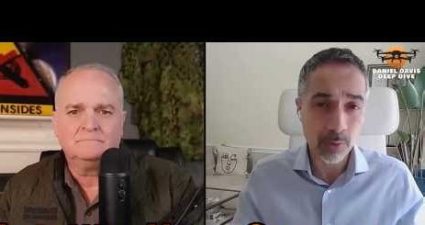
No Threat Can Force Iran’s Surrender /Trita Parsi & Lt Cl Daniel Davis
or go to
Aletho News Archives – Video-Images
From the Archives
An Expert Military Analysis of War with China
Actually, None is Necessary
By Fred Reed • Unz Review • December 13, 2020
The Correlation of Armed Forces: U.S. goods and services trade with China totaled an estimated $634.8 billion in 2019. Exports were $163.0 billion; imports were $471.8 billion. The U.S. goods and services trade deficit with China was $308.8 billion in 2019. Trade in services with China (exports and imports) totaled an estimated $76.7 billion in 2019. Services exports were $56.5 billion; services imports were $20.1 billion. The U.S. services trade surplus with China was $36.4 billion in 2019.
There is talk within the Washingtoniat of a possible war with China. Steve Bannon, who apparently was dropped on his head as a child, actually favors such a war. We hear the usual shoo-the-boobs alarm about how the Chinese are doing something terrible and we must gird our loins and American values and show them what for, bow wow, woof. The danger is that the current game of who-blinks-first in Asian waters might actually provoke a shooting war. You know the kind of thing: One warship refuses to get out of the way of another, a collision ensues, some retard lieutenant who signed up on waivers opens fire, and we’re off and running. It is not a good idea to let children play with matches.
The said war is discussed either in emotional terms by idiots or in purely naval terms by those familiar with such things, so we hear of the First Island Chain and the Second Island Chain and whose missiles against the other’s missiles and so on. This would be appropriate if we were fighting World War Two again. Which we aren’t. Let’s take a quick-and-dirty look at how such a war might go.
To begin the war, America would overestimate itself and underestimate China. This is doctrine in the Pentagon. … continue
Blog Roll
 Aletho News
- Iran To Target Military Industrial-Tech Complex That Facilitated Gaza Genocide
- Collapsing Empire: The Resistance Disarms ‘Israel’
- Suicide Should Not Be a Government Service
- Rethinking America’s greatest threat: Iran vs. Israel-Firsters
- Iran accuses adversaries of false flags to strain Turkey ties
- Poland rules out sending Patriot missiles to US/Israel amid war on Iran
- Tehran approves new Hormuz plan with major restrictions
- No Threat Can Force Iran’s Surrender /Trita Parsi & Lt Cl Daniel Davis
- UK’s New Pandemic Plan Would Turn Big Tech Into a Mass Location Tracking Network
- Growing insecurity, soaring prices fuel protests in north as regime bans evacuation: Sources
- If Americans Knew
- Joe Kent Urges Americans To Call White House and Congress To Object To Sending Troops Into Iran
- DNC Resolution to Reject AIPAC Funding Puts Democratic Leaders in the Hot Seat
- Swedish foundation to build 400 schools as over 650,000 Gaza children remain without education for 2 years
- Israeli army admits photshopping image of slain Lebanese journalist
- This is how Israel is systematically killing health workers under the cover of war in Lebanon
- Carrying life under fire: Israeli invasion of Lebanon leaves pregnant women facing deadly risks
- Champagne all around for the new death penalty (for Palestinians) law – Not a ceasefire Day 172
- Why are Palestinian books struggling to be seen on Amazon?
- The Line Between Affinity and Conspiracy
- As Iran targets US military bases, will they be relocated to Israel? Not a ceasefire Day 171
- No Tricks Zone
- New Study Finds Warming Saves Lives…Cold Temperatures 12 Times More Deadly Than Excess Heat
- German Science Blog Accuses PIK Climate Institute Of Hallucinating Climate Tipping Points
- Devastating Assessment Of Comirnaty Vaccine By Former Senior Pfizer Europe Toxicologist
- New Study: CO2 Is ‘Effectively Negligible’ As An Explanatory Climate Change Factor Since 2000
- Former Pfizer Toxicologist Dr. Helmut Sterz Tells Bundestag Hearing Pfizer Vaccine Should Have Never Been Approved
- Energy Expert: Germany’s Nuclear Phaseout Was A “500 Billion Euro Mistake”
- New Research: South Australia’s Mid-Holocene Sea Surface Temperatures Were 4°C Warmer Than Today
- Storing Green Energy To Last Germany 10 Days Would Require A 60-Million Tonne Battery
- New Studies: UK Sea Levels Were 4 Meters Higher Than Today During The Mid-Holocene
- Destructive Green New Deal: German Energy And Metal Group Warns Of Drastic Crisis
 Aletho News