Russia sent Su-35 jet after bid to detain ‘shadow fleet’: Estonia
Al Mayadeen | May 15, 2025
Estonia’s foreign minister said Thursday that a Russian military jet was deployed as the Estonian Navy attempted to intercept a Russia-bound oil tanker, the Jaguar, which had been placed under British sanctions and was accused of sailing without a flag.
The incident unfolded near Naissaar Island, off the coast of Tallinn, where Estonian forces identified the Jaguar as part of Russia’s so-called “shadow fleet,” a term Western governments use to describe vessels allegedly used by Moscow to bypass international sanctions.
Estonian Foreign Minister Margus Tsahkna stated in Antalya, Turkey, ahead of a NATO foreign ministers’ meeting, that the Russian Federation sent a fighter jet to “check the situation,” adding, “We need to understand that Russia has officially tried and connected itself to the Russian ‘shadow fleet’.”
He added, “The Russian Federation is ready to protect the ‘shadow fleet’… The situation is really serious,” calling for faster and tougher sanctions against Moscow.
The Jaguar was added to the UK sanctions list last Friday.
When contacted by the Estonian Navy at 15:30 GMT on Tuesday, the vessel refused to comply with a boarding attempt. According to the Estonian Navy, the operation was carried out under legal obligations to verify the ship’s documentation and status, as it appeared to be sailing without a recognized nationality.
Commander Ivo Vark of the Estonian Navy said, “The vessel denied cooperation and continued its journey toward Russia… Given the vessel’s lack of nationality, the use of force, including boarding the vessel, was deemed unnecessary.”
According to reports, the vessel was then escorted to Russian waters. Moreover, marine traffic data on Thursday showed the Jaguar anchored near the Russian port of Primorsk, listed under the flag of Gabon.
NATO response and air patrol deployment
According to the report, the deployment of the Russian jet triggered a response from NATO, with military aircraft based in the Baltic taking off to monitor the situation.
A video, which circulated on social media, showed Estonian naval vessels, a helicopter, and a patrol aircraft surrounding the Jaguar. A voice can be heard in English commanding, “This is Estonian warship… follow my instructions, alter your course to 105 immediately.”
A Russian speaker responds, noting that helicopters are demanding the ship’s anchor.
Estonia has not confirmed if this incident is related to a previously reported “airspace breach” involving a Russian Su-35 jet earlier in the week, which prompted a diplomatic protest from Tallinn.
Margarita Simonyan, head of Russia’s state media outlet RT, claimed the Su-35 was dispatched to prevent the Jaguar’s seizure.
The incident comes after Estonia detained another Russia-bound oil tanker, Kiwala, on April 11, also allegedly sailing without a valid flag.
Western governments have said Russia’s shadow fleet is central to maintaining its oil exports despite sanctions. That said, Britain asserts that sanctioning these vessels limits Russian President Vladimir Putin’s ability to finance the war in Ukraine.
Putin’s Senior Aide Patrushev Shared Some Updates About The Arctic & Baltic Fronts
By Andrew Korybko | March 23, 2025
Putin’s senior aide Nikolai Patrushev, who ran the FSB for nearly a decade (1999-2008) before chairing the Security Council for over 15 years till recently (2008-2024), shared some updates about the Baltic and Arctic fronts of the New Cold War in a recent interview with Russia’s National Defense magazine. He began by blaming the Brits for orchestrating Baltic tensions in order to disrupt the incipient Russian-US normalization process and associated talks on Ukraine.
In connection with that, he also warned that some NATO members (presumably led by the British) are practicing cyberattacks against Russian ships’ navigation equipment and suggested that they might have been responsible for recent claims of sabotage in the Baltic, which prompted a larger naval presence. This same expanded presence poses a threat to Russia’s interests and could manifest itself through terrorist attacks against its underwater pipelines, tankers, and dry cargo ships.
Russia plans to defend against this through unmanned underwater systems and strengthening its Baltic Fleet. As for one of the worst-case conventional threats, that of Finland and Estonia teaming up to blockade Russia inside the Gulf of Finland, Patrushev expressed confidence that his country could overcome that plot and punish the aggressors. This segued the conversation into a discussion about Finland, which Patrushev said has a friendly population, unlike its government.
He mentioned how the authorities there distort history to avoid talking about the goal of “Greater Finland”, which took the form of occupying Northwestern Russia, placing its inhabitants into concentration camps, and exterminating the Slavs there. Just like Finland was used by the Nazis as a springboard for aggression against the USSR, so too did Patrushev warn that plans might be afoot for NATO to use it as a springboard potential aggression against Russia.
He then said a few words about how the Arctic is opening up as a new front of competition, mostly due to its resources, but reaffirmed that Russia wants peace and cooperation there instead of rivalry. The Northern Sea Route (NSR), which commemorates its 500th-year conceptualization this year, can help bring that about. Russia will continue developing regional infrastructure and building ice-class vessels for facilitating transit through these waters year-round. It was on that note that the interview ended.
Reviewing Patrushev’s briefing, the first part about blaming the Brits for tensions in the Baltic aligns with what Russia’s Foreign Spy Service (SVR) recently claimed about how the UK is trying to sabotage Trump’s envisaged “New Détente”. It might therefore very well be that they’re attempting to open up this front for that purpose, first through unconventional acts of aggression like “plausibly deniable” terrorist attacks and then possibly escalating to a joint Finnish-Estonian blockade of the Gulf of Finland.
Exposing these plots and expressing confidence in Russia’s ability to overcome them were meant to respectively ensure that the Trump Administration is aware of what the UK is doing and to deter the UK’s regional proxies from going along with this since the US and even the UK might hang them out to dry. Patrushev’s words about Finland were important too in the sense of reminding everyone that governments don’t always reflect the will of the people on the foreign policy front.
At the same time, however, everyone should also be aware of the Finnish government’s historical distortions and the threat that its reckless foreign policy poses to its own people. Wrapping everything up, Patrushev pointed to the Arctic’s importance in Russia’s future planning, and his reaffirmation of its peaceful intentions could be interpreted as a willingness to partner with the US there like their representatives discussed last month in Riyadh. The NSR can also become a vector for cooperation too.
Putting everything together, the Arctic front of the New Cold War is thawing a lot quicker than the Baltic one since the first is where the US could prospectively cooperate with Russia while the second is where the UK could try to provoke a crisis with Russia, but it remains to be seen whether any of this will unfold. Russian-US cooperation in the Arctic is likely conditional on a ceasefire in Ukraine whereas a Russian-NATO conflict in the Baltic orchestrated by the Brits is conditional on them misleading the US about this.
Putin’s interest in a lasting political solution to the Ukrainian Conflict bodes well for the Arctic scenario just like Trump’s criticism of NATO bodes ill for the Baltic one so both ultimately come down to their will. They’re the two most powerful people on the planet so their ties will greatly determine what comes next on those fronts and every other one too. It’s precisely for this reason why the British want to ruin their relations, but after Patrushev just exposed their Baltic plot, that’s a lot less likely to succeed than before.
EU nations aim to seize alleged ‘Russian shadow fleet’ vessels – Politico
RT | February 10, 2025
Several EU members are considering strengthening the legal framework for seizing ships in the Baltic Sea with the aim of undermining Russian trade, Politico reported on Monday, citing insiders. Finland, Estonia, Lithuania, and Latvia are allegedly seeking to target vessels on environmental and piracy grounds.
Western nations, which have been seeking to find ways to curb Russian energy exports, have accused Moscow of employing a “shadow fleet” to evade sanctions. In recent months, officials have also accused Moscow of sabotaging undersea cables in the Baltic, though no evidence has been provided to substantiate these allegations.
According to Politico’s sources, the four states intend to seize suspected shadow fleet ships based on the alleged threat they pose to the environment and to infrastructure, and are seeking EU backing for the initiative. They could amend national legislation to “make it easier to grab ships further out at sea,” including by mandating a list of insurers for maritime operations in the Baltic. Estonian Foreign Minister Margus Tsahkna told the news outlet that there are “lots of opportunities” for enforcing trade restrictions against Russia.
Last December, Finland seized the tanker ‘Eagle S’ amid an investigation into the damage to the Estlink 2 power cable. The vessel remains impounded despite the Finnish authorities reportedly finding no evidence of wrongdoing.
Conversely, a Norwegian cargo ship with an all-Russian crew was released in late January after Norwegian police concluded there were no grounds to continue its detention. The Latvian authorities had requested the seizure of the Silver Dania over an incident involving an optic cable owned by the national broadcaster LVRTC earlier the same month.
Moscow has accused Western nations of peddling a false narrative that frames routine accidents as evidence of a Russian sabotage campaign. Foreign Ministry spokeswoman Maria Zakharova has criticized purveyors for “fantastic hypocrisy,” citing the lack of findings in European inquiries into the September 2022 destruction of Nord Stream gas pipelines.
The “non-investigation” of that incident suggests that EU nations deem Joe Biden’s threat against Russian-German infrastructure “proper,” Zakharova said last month, referring to remarks made by the then-US president months before the attack.
President Vladimir Putin has characterized Western sanctions as tools of non-economic pressure wielded by countries unable to compete with Russia on an equal footing. He views them as a challenge to make the national economy better.
“No blackmail or attempts to impose anything on us will ever yield results. Russia is confident in its rightness and strength,” he said in a recent speech.
Moscow comments on Baltic states’ switch from ex-Soviet grid
RT | February 8, 2025
The decision of Baltic nations to disconnect themselves from the unified energy system with Russia and Belarus will only worsen the economic prospects for the EU, the Russian Mission to the bloc has said, stressing that the move is politically motivated.
Estonia, Latvia, and Lithuania, which are all members of NATO and the EU, began the two-day process of unplugging from the BRELL Energy Ring on Saturday. They will then join the alternative European power grid, known as ENTSO-E. The step is part of EU nations’ effort to cut long-standing energy links with Russia.
“Disconnecting from the BRELL is a politically motivated move that will drive up regional electricity prices, make power grids less reliable, and further erode the EU’s economic competitiveness,” the mission said on Telegram on Saturday, emphasizing that European households and businesses, primarily in the Baltic countries, will bear the costs.
The mission stressed that the EU economy demonstrated “meager” growth of only 0.8% last year, and highlighted that the continued drive to break energy ties with Moscow would only worsen its prospects.
The three ex-Soviet republics decided to disconnect from BRELL and join ENTSO-E back in 2018. This month they plan to test their power grids in isolation before connecting to the EU energy system via Poland.
Built on the existing interconnected Soviet-era power systems, the BRELL energy ring was established on 7 February 2001. It synchronized the power systems of Belarus, Russia, Estonia, Latvia, and Lithuania under Moscow’s central dispatch. Initially, the Baltics depended on Russia for grid stability, while Russia relied on them to power its exclave of Kaliningrad. Russia has since upgraded energy infrastructure in Kaliningrad, reducing its reliance on the Baltic grid.
Authorities in the three states have repeatedly claimed that reliance on the network controlled by Russia jeopardizes their energy security, believing that Moscow could weaponize the electricity supply and sever them from the network on a unilateral basis. Such fears have never materialized.
Controlled by the state, Russian electricity prices are currently among the lowest in the world, averaging around $0.055 per kWh for consumers in 2024. Power prices in the EU vary from nation to nation, with Germany having the highest price per kWh last year at €0.3951 ($0.40).
Christian church to change name in bid to fight off EU state’s crackdown
RT | January 26, 2025
The Estonian Orthodox Church (EOC) will change its name in response to the pressure from the authorities to sever its historical ties with Russia.
The announcement comes after the Estonian government approved draft legislation requiring religious organizations to cut ties with foreign leaders and entities whose actions could be deemed a threat to national security. “There should be no connection to entities that support military aggression,” Interior Minister Lauri Laanemets said on Thursday.
The EOC is a self-governing church that has maintained canonical ties to the Russian Orthodox Church. In a statement on Friday, EOC said that it will change its name to the Estonian Christian Orthodox Church.
“The government-approved bill violates the freedom of religion and is directed against our church,” Bishop Daniel of Tartu said, adding that, if made into law, the legislation could “significantly restrict the activities of our church.”
He argued that the new name would “further highlight the church’s local identity and demonstrate that we are acting in accordance with the law and, at the same time, we are respecting the church canons.”
Most Estonians are not religious. Around 16% of the population are Orthodox Christians, and 8% are Lutherans, according to the government statistics. Estonia was part of the Soviet Union from 1940 to 1991. Around 27% of the country’s population are Russian-speakers.
Earlier this week, Laanemets branded EOC “the most important instrument of influence for Russia and the Kremlin in Estonia.”
Last year, the minister threatened to shut down monasteries that refuse to cut ties with the Moscow Patriarchate and even threatened to classify the Russian Orthodox Church as a terrorist organization.
Moscow Patriarchate spokesman Vladimir Legoyda has slammed Laanemets’ comments as a “witch hunt,” suggesting that the Estonian government was using the crackdown on the church to distract the taxpayers from “real issues.”
In August 2024, the EOC revised its charter and removed the mention of the Moscow Patriarchate from its official name, although Laanemets has insisted that the measure was insufficient.
EU officials have criticized the Russian Orthodox Church for its support of the Russian troops in Ukraine. In 2022, the UK imposed sanctions on the church’s head, Patriarch Kirill of Moscow.
Western intelligence believes Baltic cable damage was not Russian sabotage – WaPo
RT | January 19, 2025
The recent damage to underwater power and communications cables in the Baltic Sea was likely the result of “maritime accidents” rather than Russian sabotage, the Washington Post reported on Sunday, citing several US and European intelligence officials.
A consensus over the string of incidents that plagued the underwater infrastructure over the past few weeks is now emerging in the Western intelligence community, with no evidence of malicious activities found, the newspaper reported.
The “intercepted communications and other classified intelligence” collected by the Western nations indicated that inexperienced crews and poorly maintained ships were behind the accidents, officials from the three countries involved in the investigations suggested.
Unnamed US officials told the newspaper that “clear explanations” have emerged in each case, suggesting the damage was accidental. One European official said the initial claims that Russia was involved are now met with “counter evidence” indicating otherwise.
The investigations have focused on three incidents involving vessels traveling to and from Russian ports that occurred over the past 18 months in the Baltics, including the rupture of a natural gas pipeline in the Gulf of Finland in October 2023 attributed to the Newnew Polar Bear container ship, and damage to two cables allegedly inflicted by the Yi Peng 3 bulk carrier in November.
The latest incident occurred in late December with a supposedly Russian-linked oil tanker, the Eagle S, which allegedly dragged its anchor across the EstLink 2 power cable connecting Finland and Estonia. The ship was boarded and seized by the Finnish authorities, with investigators claiming the ship was missing one of its anchors.
Moscow dismissed suggestions that it was to blame for the incidents in the Baltics. “It is quite absurd to continue to blame Russia for everything without any reason,” Kremlin spokesman Dmitry Peskov said in November.
NATO state probes Russian tanker over mysterious cable incident – media
RT | December 26, 2024
Authorities in Finland are investigating whether a Russian oil tanker had anything to do with the severing of an undersea electricity cable this week, the Financial Times has reported. The incident was the latest in a series of cable breaks in the region.
Finnish officials stopped the tanker, the Eagle S, after the Estlink 2 electricity cable in the Gulf of Finland was cut on Wednesday, the British newspaper reported on Thursday. The Estlink 2 delivers power from Finland to Estonia, and has been operational since 2014.
Finnish Prime Minister Petteri Orpo said that “the authorities are on standby over Christmas and are investigating the matter,” while the cable’s operator, Fingrid, said that “we are investigating several possible causes, from sabotage to technical failure, and nothing has been ruled out yet.”
The Eagle S is the focus of the government’s investigation, the Financial Times reported, citing anonymous “people familiar with the probe.” No further details were provided, although the paper’s sources said that the vessel was also under investigation over the severing of three data cables in the Gulf of Finland last month.
These fiber optic cables linking Finland with Germany, Lithuania, and Sweden. The incident involving the Finland-Sweden cable was later confirmed to have been caused by construction work, while suspicion over the other two breaches initially fell on a Chinese vessel which passed over the cables around the time of the damage.
The ship, the Yi Peng 3, stopped in international waters and was boarded by Chinese investigators last week, with Swedish, Danish, German and Finnish officials present as observers.
It remains unclear whether the Yi Peng 3 had anything to do with the cable incidents. However, German Defense Minister Boris Pistorius said at the time that Berlin had to “assume, without certain information, that the damage was caused by sabotage.”
Likewise, although investigators have not yet established whether the Eagle S had anything to do with the most recent cable break, Finnish President Alexander Stubb announced on social media on Thursday that “it is necessary to prevent the risks posed by ships belonging to the Russian shadow fleet.”
NATO begins major war drills near Russian border
RT | December 2, 2024
NATO countries are set to kick off major war games in northeast Estonia near the border with Russia on Monday, focusing on the rapid deployment of the bloc’s forces and increasing their interoperability.
Some 2,000 troops from Estonia, Latvia, the US, France, and the UK are set to take part in the two-week Pikne (‘Lightning’) exercise, which is part of NATO’s broader Brilliant Eagle program dedicated to increasing the bloc’s deployment and cooperation capabilities in the Baltic Sea region.
According to the commander of the Estonian Division, Major General Indrek Sirel, who is leading the exercises, the war games will focus on “rapid deployment of reinforcements and cooperation between French, British and Estonian forces.” Units of the French Armed Forces will carry out a rapid deployment operation to Estonia by air, followed by joint multinational maneuvers on land, air and sea, Sirel said in a press release.
The first week of the exercises will be dedicated to the movement of units and practicing cooperation in various regions of north and northeast Estonia as well as the Gulf of Finland, and will focus on conducting operations as a “multinational force to counter an emerging threat on land, in the air, and at the sea.” The second week will involve live-fire exercises with heavy combat equipment and military aircraft.
Estonian residents have been warned that low-altitude flights will be taking place over parts of the country as part of the exercises, and that loud noises will likely be heard due to the use of simulation ammunition.
The exercise comes as tensions between Russia and NATO have continued to escalate. Moscow has repeatedly stressed that the expansion of the US-led bloc towards its borders represents a threat to its security.
In October, Deputy Foreign Minister Aleksandr Grushko also claimed that NATO is no longer hiding the fact that it is gearing up for a potential military conflict with Russia by continuing to hold increasingly larger military exercises near its borders, such as the Steadfast Defender drills, which were the bloc’s largest maneuvers since the end of the Cold War.
“Regional defense plans have been approved, concrete tasks for all of the bloc’s military command structures have been formulated. Possible options for military action against Russia are being continuously worked out,” the diplomat said.
Defense Spending on NATO’s Eastern European Flank Skyrockets to $70 Billion
By Oleg Burunov – Sputnik – 09.10.2024
Russian President Vladimir Putin earlier said that Western countries had misled Moscow by expanding NATO in Eastern Europe despite previous promises not to do so.
Military expenditure in NATO’s Eastern European member states surged to $70 billion this year, according to Bloomberg.
Poland and Estonia are among the top seven NATO members, in terms of defense spending as a percentage of GDP, this year. Poland is allocating 4.12% of its GDP to defense, while Estonia is dedicating 3.4%, both far exceeding NATO’s target of 2%.
The report comes amid heightened militarization in Eastern Europe, with NATO establishing “multinational battlegroups” in Bulgaria, Estonia, Hungary, Latvia, Lithuania, Poland, Romania, and Slovakia, in response to a perceived “Russian threat.” Member states have also increased their deployment of ships, planes, and troops to NATO’s eastern flank.
Russia has repeatedly warned NATO against expanding eastwards, with Moscow arguing that it could further escalate tensions in Europe.
Russian President Vladimir Putin has previously accused NATO of making empty promises regarding its 1991 commitment not to expand eastwards. He stressed that there have been “five waves” of expansion since the US administration assured Russia in 1991 that NATO would not expand towards the east.
Russia decries ‘routine repression’ of dissidents in EU states

RT | August 7, 2024
The West is turning into a “neoliberal dictatorship” that is intolerant of any form of dissent, Russian Foreign Ministry spokeswoman Maria Zakharova claimed on Wednesday. She was commenting on the prosecution of journalist Svetlana Burtseva by EU member Estonia.
Burtseva, a 57-year-old naturalized Estonian citizen, was charged this week under an article of the Estonian penal code that prohibits relations with a foreign entity with the intention of committing treason.
Specifically, Burtseva was accused of writing under a pen name for a Baltic-focused Russian-language news outlet that belongs to the Russian media group Rossiya Segodnya, which is sanctioned by the EU.
Estonian officials have claimed Burtseva committed subversive activities such as writing a book that “belittles” the Baltic country, as claimed by public prosecutor Eneli Laurits.
Commenting on the case, Russian Foreign Ministry spokeswoman Zakharova said that “similar to other ‘advanced democracies’ of the Baltics, Estonia continues to systematically use repression as a routine tool for quashing dissent.”
She described the allegations against Burtseva as “obviously fabricated” and claimed that they reflect Tallin’s “flawed and absolutely irreconcilable” attitude to opposition.
Moscow perceives the prosecution as an attempt to punish Burtseva for journalism and voicing opinions critical of the Estonian government. International bodies that should defend freedom of speech share the blame, since they have neglected their duties and have long turned a blind eye to the stifling of critical press by the Baltic states, the diplomat argued.
The entire situation “showcases the deep crisis and the deterioration of the Western-style democracy, how it is morphing into a neoliberal dictatorship,” Zakharova concluded.
EU state imprisons Russian academic for ‘spying’
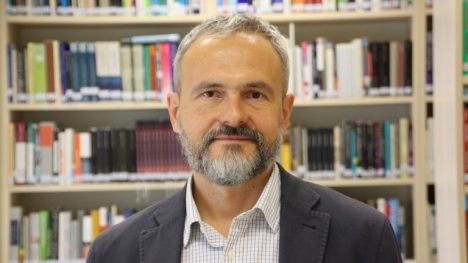
Vyacheslav Morozov
RT | June 19, 2024
Former Tartu University professor Vyacheslav Morozov has been sentenced by an Estonian court to six years and three months in prison for allegedly working for a foreign intelligence service, the news outlet ERR reported on Tuesday.
Morozov, a Russian citizen, was detained by Estonian police in January on charges of collaborating with Moscow by supposedly collecting and providing information about the Baltic state.
According to the court documents, the academic had worked at St. Petersburg State University until 2010. He later joined the faculty of the University of Tartu in Estonia, where, from 2016 to 2023, he held the position of Professor of European Union and Russian Studies. He then worked there as a professor of International Political Theory until his arrest.
“Morozov was tasked by the Russian special service to collect information from the Republic of Estonia about Estonia’s internal, defense and security policy and related people and infrastructure,” the leading state prosecutor Taavi Pern was quoted as saying in a press release by the Estonian internal security service (Kapo).
According to Pern, the professor was forwarding information about Estonia’s “political situation and elections, allied relations, and integration and social integration.” The prosecutor claimed that while most of this information was publicly available, and some had been obtained by Morozov thanks to his “position as a scientist,” it could be used to “threaten Estonia.” Pern noted that Morozov did not have any access to state secrets.
The prosecution also claimed that Morozov had been working with Moscow “for a long time” and alleged that he was recruited by Russian intelligence services when studying at a Russian university in the 1990’s.
At the same time, Kapo Director General Margo Polloson noted that in his actions, Morozov “did not damage or manipulate his own educational or research activities in any way. The science he did and guided is still relevant today.” Nevertheless, Polloson claimed that Morozov “pretended to be a professor of international relations, which gave him access to various entities, events and people, which he took advantage of.”
The head of the Tartu University Johan Skytte Institute for Political Studies, Kristiina Tonnisson, had previously stated that Morozov’s arrest in January was a “shock to us all.” She added that while the university had “no grounds for complaints regarding Morozov’s previous work,” his past activities would be critically reviewed.
Is the West Fanning Euromaidan-Style Public Protests in Georgia?
By Ekaterina Blinova – Sputnik – 16.05.2024
The US, EU and NATO have slammed the newly-passed foreign agents law in Georgia, while the foreign ministers of Iceland, Lithuania and Estonia took part in protest rallies against the legislation in Tbilisi. Sputnik’s pundits called these actions foreign meddling in Georgia’s affairs.
Lithuanian Foreign Minister Gabrielius Landsbergis expressed support for the “European” aspirations of Georgian protesters at a protest rally in Tbilisi on May 15.
“In a democracy, the government owes it to you, the Georgian people, to follow the direction your moral compass is showing,” Landsbergis told the crowd. “I am speaking out because I am… on the side of a European Georgia.”
But Tbilisi Mayor Kakha Kaladze, the secretary-general of the ruling Georgian Dream party, called their actions hostile and aimed at dividing Georgian society.
“This is not friendship, this is enmity, this is an attempt to deepen polarization in our country,” Kaladze told the Rustavi 2 TV channel. “Could you imagine our minister of foreign affairs going to Yerevan and speaking at an [Armenian] opposition rally?”
Direct Foreign Interference in Georgia’s Affairs
It was not the first time that Lithuanian officials have fanned public protests in a foreign state, according to Dr. Eduardas Vaitkus, Lithuanian politician who was an independent candidate in the 2024 Lithuanian presidential election.
“This is direct interference in the internal affairs of the sovereign state of Georgia,” Vaitkus told Sputnik.
Vaitkus cited earlier precedents for Lithuania’s meddling in the domestic affairs of Ukraine and Belarus. Vilnius has spent millions of euros supporting Belarusian self-declared opposition leader Svetlana Tikhanovskaya, backed by the West, who advocates for a coup d’etat in Minsk.
He recalled that the Lithuanian foreign minister’s grandfather, then-European Parliament member Vytautas Landsbergis, was spotted during the 2013 Euromaidan events in Kiev calling for a wider revolt in Ukraine.
“Unfortunately, this is the position of the Lithuanian state. My opinion is that traitors in our state are leading Lithuania in a way that creates a threat to all residents of Lithuania,” Vaitkus said.
The politician condemned the Lithuanian government’s “double and triple standards” in its unwillingness to recognize the will of the Crimean people to reunite with Russia — while rushing to embrace the self-declared independence of Kosovo alongside the West.
“Politics must have moral values. And [the Lithuanian government] demonstrates that duplicity is its main imperative in foreign policy,” Vaitkus said.
Russian Senator Konstantin Dolgov believes that Vilnius’ political agenda is not independent, but is dictated from the West.
“What can you expect from Lithuania and Estonia? These are countries that have long lost their independence and have become ‘appendages’ of Washington and Brussels,” Dolgov said, arguing that foreign ministers Iceland, Lithuania and Estonia could be sent by their Western patrons to fan unrest in Georgia.
Deputy Permanent Representative of the Russian Federation to the UN Dmitry Polyansky noted that the foreign ministers’ presence at Georgian protests is reminiscent of US and European politicians’ conduct during the 2013-2014 Euromaidan unrest in Kiev.
US Trying to Exert Pressure on Georgia as Its Hegemony Wanes
The US, EU and NATO have criticized the newly-passed foreign agents bill in Georgia, with US Assistant Secretary of State Jim O’Brien announcing on May 14 that Georgian MPs could be subjected to sanctions for “undermining democracy”.
While attacking the bill, which obliges Georgian media and NGOs to register as “pursuing the interests of a foreign power” if they receive over 20 percent of their funding from abroad, US policy-makers avoid mentioning that the Georgian legislation is reminiscent of the US’ own Foreign Agents Registration Act (FARA).
FARA requires individuals acting on behalf of foreign governments, organizations or persons foreign to the US to register with the Department of Justice (DOJ) and to disclose their relationship, activities, receipts, and disbursements in support of their activities.
Under to US law, such individuals are described as “foreign agents” while the FARA Unit of the Counterintelligence and Export Control Section (CES) is responsible for the Act’s enforcement.
The fierce US opposition to the Georgian bill under the guise of the “protection of democracy” and sanctions threats is an attempt to keep Tbilisi in line with the collective West’s agenda, according to Tiberio Graziani, chairman of Rome-based think tank Vision and Global Trends.
“The so-called defense of democracy, as promoted and implemented by the US-led West, falls within the context of the hybrid, cognitive and psychological war against those countries considered enemies, for geopolitical and geostrategic reasons,” Graziani told Sputnik.
“Any [country] that attempts to operate and act in the international context to responsibly promote the defense of its national interest is demonized by the US. Examples of this practice include, just to give a few examples, the so-called color revolutions,” he continued.
The US is believed to be behind a series of color revolutions in the former Soviet Union, including the Rose Revolution in Georgia in 2003, the Orange Revolution in Ukraine in 2004, the Tulip Revolution in Kyrgyzstan in 2005 and the failed Jeans Revolution in Belarus in 2006.
According to the expert, the threat and use of sanctions against foreign politicians pursuing national sovereignty constitutes a form of long-term US hybrid warfare.
Now that the world is becoming multipolar, the US is feeling the loss of its role as hegemon and could act irrationally with dramatic consequences for the rest of the world population, Graziani warned.
Featured Video
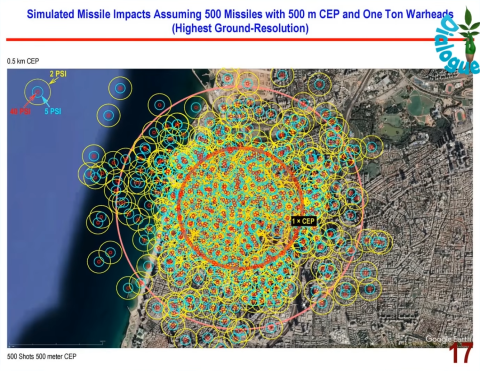
Prof. Ted Postol: US–Iran War? Israel’s Fatal Gamble
or go to
Aletho News Archives – Video-Images
From the Archives
Still No End in Sight of the Murder and Mayhem Wrought by the 9/11 Culprits
By Prof. Tony Hall | American Herald Tribune | July 17, 2016
The Kevin Barrett-Chomsky Dispute in Historical Perspective – Fourth part of the series titled “9/11 and the Zionist Question”
Back in 2006 all but a prescient few, such as Christopher Bollyn, perceived it as premature to try to identify and bring to justice the actual perpetrators of the 9/11 crimes. There was still some residue of confidence that responsible officials in government, law enforcement, media and the universities could and would respond in good faith to multiple revelations that great frauds had occurred in interpreting 9/11 for the public.
Accordingly, the main methodology of public intellectuals like Dr. Kevin Barrett or, for instance, Professors David Ray Griffin, Steven E. Jones, Peter Dale Scott, Graeme MacQueen, John McMurtry, Michael Keefer, Richard B. Lee, A.K. Dewdney, Nafeez Mossadeq Ahmed, and Michel Chossudovsky, was to marshal evidence demonstrating that the official narrative of 9/11 could not be true.
The marshaling of evidence was spurred on by observations coming from government insiders like Eckehardt Wertherbach, a former head of Germany’s intelligence service. In a meeting in Germany with Christopher Bollyn and Dr. Andreas von Bülow, Wertherbach pointed out that, “an attack of this magnitude and precision would have required years of planning. Such a sophisticated operation would require the fixed frame of a state intelligence organization, something not found in a loose group like the one led by the student Mohammed Atta in Hamburg.”
Andreas von Bülow was a German parliamentarian and Defense Ministry official. He confirmed this assessment in his book on the CIA and 9/11. In the text von Bülow remarked that the execution of the 9/11 plan “would have been unthinkable without backing from secret apparatuses of state and industry.” The author spoke of the “invented story of 19 Muslims working with Osama bin Laden in order the hide the truth” of the real perpetrators’ identity. … continue
Blog Roll
 Aletho News
- ‘Britain’s Index of Repression’ documents 964 incidents of anti-Palestinian crackdown
- Prof. Ted Postol: US–Iran War? Israel’s Fatal Gamble
- UK prosecutors drop aggravated burglary charges against 24 Palestine Action activists
- Unidentified drone downed over Lebanon airbase, US forces block authorities from crash site
- Peeling Back the US Information Operation in Iran
- Israel ‘dictating terms’ to US – Turkish professor
- US ramps up nuclear claims against China
- Erdogan wants nukes: What a Turkish bomb would mean for the Middle East
- Ukrainian disruption of Russian oil pipeline triggers emergency in EU state
- Kaja Kallas: an uncomfortable figure useful to the EU’s Russophobic purposes
- If Americans Knew
- Compliant aid: Who are the Israel-approved NGOs scaling up in Gaza?
- Why won’t Trump’s “Board of Peace” bring peace? – Not a ceasefire Day 131
- Help end the injustice against Shadi
- Israel’s Favorite American President
- Israel’s “Yellow Line” Is a Death Trap for Palestinians. We Drove Into It.
- Why Israel’s expanding occupation in Syria presents a critical legal test
- Gaza is not a natural disaster. It is the victim of genocide enabled by global inaction
- Netanyahu’s plan to “end” US aid to Israel is to give even more money under a different name
- Israel ceased firing on Gaza for just 15 days of the “ceasefire” – Not a ceasefire Day 130
- In Gaza, “rats run over our faces” – Not a ceasefire Day 129
- No Tricks Zone
- Coal Power Back In Trend As Globe Tries To Keep Pace With Growing Demand For Power
- New Study: A 4°C Warmer Beaufort Sea Had ‘No Sea Ice’ 11,700 – 8200 Years Ago
- Unfudging The Data: Dutch Meteorological Institute Reinstates Early 20th Centruy Heat Waves It Had Erased Earlier
- German Gas Crisis…Chancellor Merz Allegedly Bans Gas Debate Ahead of Elections!
- Pollen Reconstructions Show The Last Glacial’s Warming Events Were Global, 10x Greater Than Modern
- Germany’s Natural Gas Storage Level Dwindles To Just 28%… Increasingly Critical
- New Study Rebuts The Assumption That Anthropogenic CO2 Molecules Have ‘Special’ Properties
- Climate Scientist Who Predicted End Of “Heavy Frost And Snow” Now Refuses Media Inquiries
- Polar Bear Numbers Rising And Health Improving In Areas With The Most Rapid Sea Ice Decline
- One Reason Only For Germany’s Heating Gas Crisis: Its Hardcore-Dumbass Energy Policy
 Aletho News