Pakistan Asks Facebook, Twitter, to Help Crack Down on Online Blasphemy
Sputnik – 18.03.2017
Pakistani Prime Minister Nawaz Sharif has called for a crackdown on those who would blaspheme against Islam on social media, and claims to have contacted Facebook and Twitter to ask for their help in suppressing online sacrilege.
“All relevant institutions must unite to hunt those who spread such material and to award them strict punishment under the law,” Sharif said.
Minister of the Interior Ministry (MoI) Chaudhry Nisar Ali Khan said that an official from Pakistan’s embassy in Washington, DC, was dispatched to Facebook and Twitter, asking them to help identify Pakistanis both at home or abroad who have insulted Islam.
He went on to say Pakistan would seek to extradite any Pakistanis living abroad if they were accused of blasphemy so they could be tried in an Islamic court.
Facebook, at least, has answered the call and will send a delegation to Pakistan to help them fight blasphemy, according to a statement from Pakistan’s Interior Ministry. Facebook told the MoI that they were “aware” of Pakistan’s concerns, and wanted to reach a mutual understanding with the Islamic Republic.
Facebook told the Associated Press that it seriously considers requests from governments, but its ultimate goal is to “protect the privacy and rights of our users.”
“We disclose information about accounts solely in accordance with our terms of service and applicable law,” continued Facebook.
Pakistan already extensively censors online content that depicts blasphemy, pornography, suicide and other things deemed objectionable. YouTube was blocked in the South Asian nation from 2012 to 2016, until it agreed to assist the government in censoring their content.
Facebook itself was blocked for a short period of time in 2010 due to it being the platform of choice for many artists participating in “Everybody Draw Mohammed Day”. Some sites, such as Reddit and Imgur, remain banned.
Pakistan has some of the world’s strictest blasphemy laws. “Outraging the religious feelings of Muslims” carries a three year prison sentence as well as fines. Defiling a Quran is life in prison. Speaking ill of Mohammed is punishable by death.
Human Rights Watch claims that from 1987 to 2014, more than 1,300 Pakistanis have been accused of blasphemy and more than 60 of the accused have died in extrajudicial killings.
Facebook begins ‘fake news’ crackdown with ‘disputed’ story tag roll out
RT | March 5, 2017
Facebook has begun rolling out its much hyped ‘fake news’ crackdown initiative, launching its ‘disputed’ news tag on stories deemed false by fact checking organisations working with the social media giant.
The tool appears to have been unveiled without fanfare in the US, but some users have shared screenshots of it in action on Twitter.
Facebook has added a question to its help center page entitled “How is news marked as disputed on Facebook?.” The section notes, however, that this feature is not yet available to everyone. It is unclear how many people currently have access to the ‘fake news’ debunking feature.
Facebook introduced their solution to false stories last December amid outcries that so-called fake news influenced the outcome of the US presidential election. These unproven claims have been disputed by a Stanford University/NYU study.
As part of the plan, the tech giant partnered with fact checkers that are signatories of Poynter’s International Fact Checking Code of Principles. These include ABC News, FactCheck.org, the Associated Press, Snopes and Politifact.
Stories flagged by Facebook users as ‘fake news’ are passed on to these fact checkers for verification. If the fact-checkers agree that the story is misleading, it will appear in News Feeds with a “disputed” tag, along with a link to a corresponding article explaining why it might be false.
These posts then appear lower in the news feed and users will receive a warning before sharing the story.
Similar efforts are planned in Europe amid threats from the EU to clamp down on the spread of misinformation. Facebook recently revealed fact checking partnerships in Germany and France ahead of respective elections in each country.
Concerns have been raised, however, over the implications of such practices on freedom of speech.
Project Censored, a non-profit that aims to fight censorship through promoting media literacy, views Facebook’s fake news crackdown as “problematic.”
“What Facebook, and the Washington Post’s ill advised list of fake news sites, has attempted to do is make lists of news outlets that are “fake,” Nolan Higdon, faculty advisor at Project Censored told RT.
“However, this is problematic because some news sites have both journalists doing credible work and those disseminating propaganda. While some consumers may be swayed by the digestible notion of “these sites good, these sites bad” lists; it does not solve the problem of people consuming propaganda, “ he added.
The key is education, Higdon insisted, explaining the importance of teaching individuals to examine a media outlet critically.
“Simply creating an arbitrary list of whose websites can and cannot be viewed on Facebook or considered ‘news’ is normalizing censorship instead of informing individuals.”
Mainstream Media’s ‘Victimhood’
By Robert Parry | Consortium News | February 28, 2017
It’s heartwarming that The New York Times and The Washington Post are troubled that President Trump is loosely throwing around accusations of “fake news.” It’s nice that they now realize that truth does not reliably come from the mouth of every senior government official or from every official report.
The Times is even taking out full-page ads in its own pages to offer truisms about truth: “The truth is hard. The truth is hidden. The truth must be pursued. The truth is hard to hear. The truth is rarely simple. The truth isn’t so obvious. …” On Sunday, those truth truisms ran opposite an alarmist column by Jim Rutenberg entitled, “Will the Real Democracy Lovers Please Stand Up?” Meanwhile, The Washington Post launched its own melodramatic slogan, “Dies in Darkness.”
Yet, it was only weeks ago when the Post and Times were eagerly promoting plans for silencing or blacklisting independent news sites that didn’t toe the line on what the U.S. government and its allies were claiming was true.
On Nov. 20, the Times published a lead editorial calling on Facebook and other technology giants to devise algorithms that could eliminate stories that the Times deemed to be “fake.” The Times and other mainstream news outlets – along with a few favored Internet sites – joined a special Google-sponsored task force, called the First Draft Coalition, to decide what is true and what is not. If the Times’ editorial recommendations were followed, the disfavored stories and the sites publishing them would no longer be accessible through popular search engines and platforms, essentially blocking the public’s access to them. [See Consortiumnews.com’s “What to Do About ‘Fake News.’”]
On Thanksgiving Day, the Post ran a front-page story citing an anonymous group, called PropOrNot, blacklisting 200 Web sites, including Consortiumnews.com and other important sources of independent journalism, because we supposedly promoted “Russian propaganda.”
Although PropOrNot and the Post didn’t bother to cite any actual examples or to ask the accused for comment, the point was clear: If you didn’t march in lockstep behind the Official Narrative on, say, the Ukraine crisis or the war in Syria, you were to be isolated, demonized and effectively silenced. In the article, the Post blurred the lines between “fake news” – stories that are simply made up – and what was deemed “propaganda,” in effect, information that didn’t jibe with what the U.S. State Department was saying.
Back then, in November, the big newspapers believed that the truth was easy, simple, obvious, requiring only access to some well-placed government official or a quick reading of the executive summary from some official report. Over the last quarter century or so, the Times, in particular, has made a fetish out of embracing pretty much whatever Officialdom declared to be true. After all, such well-dressed folks with those important-sounding titles couldn’t possibly be lying.
That gullibility went from the serious, such as rejecting overwhelming evidence that Ronald Reagan’s Nicaraguan Contra rebels were deeply involved in drug trafficking, to the silly, trusting the NFL’s absurd Deflategate allegations against Tom Brady. In those “old” days, which apparently ended a few weeks ago, the Times could have run full-page ads, saying “Truth is whatever those in authority say it is.”
In 2002, when the George W. Bush administration was vouching for a motley crew of Iraqi “defectors” describing Saddam Hussein’s hidden WMDs, Iraq’s purchase of some “aluminum tubes” must have been for building nuclear bombs. In 2003, when Secretary of State Colin Powell showed some artist drawings of “mobile chemical weapons labs,” they must really exist – and anyone who doubted Powell’s “slam-dunk” testimony deserved only contempt and ridicule.
When the Obama administration issued a “government assessment” blaming the Syrian military for the sarin gas attack outside Damascus on Aug. 21, 2013, there was no need to scrutinize its dubious assertions or ask for actual proof. To do so made you an “Assad apologist.”
When a bunch of U.S. allies under the effective control of Ukraine’s unsavory SBU intelligence service presented some videos with computer-generated graphics showing Russians supplying the Buk missile that shot down Malaysia Airlines Flight 17 over eastern Ukraine on July 17, 2014, there was no need to examine the holes in the evidence or note that the realistic-looking graphics were fictional and based on dubious assumptions. To do so made you a “Moscow stooge.”
In other words, when the U.S. government was gluing black hats on an “enemy” and white hats on a U.S. “ally,” the Times never seemed to object. Nor did pretty much anyone else in the mainstream media. No one seemed to note that both sides usually deserved gray hats. With very few exceptions – when the State Department or other U.S. agencies were making the charges – the Times and its cohorts simply stopped applying responsible journalistic skepticism.
Of course, there is a problem with “fake news,” i.e., stories that are consciously made up for the purpose of making money from lots of clicks. There are also fact-free conspiracy theories that operate without evidence or in defiance of it. No one hates such bogus stories more than I do — and they have long been a bane of serious journalism, dating back centuries, not just to the last election.
But what the Times, the Post and the rest of the mainstream media have typically ignored is that there are many situations in which the facts are not clear or when there are alternative explanations that could reasonably explain a set of facts. There are even times when the evidence goes firmly against what the U.S. government is claiming. At those moments, skepticism and courage are necessary to challenge false or dubious Official Narratives. You might even say, “The truth is rarely simple. The truth isn’t so obvious…”
A Tough Transition
During the transition from the Obama administration to the Trump team, the Times, the Post and other mainstream media outlets got caught in their own transition from trusting whatever the outgoing officials said to distrusting whatever the incoming officials said. In those final days, big media accepted what President Obama’s intelligence agencies asserted about Russia supposedly interfering in the U.S. election despite the lack of publicly available evidence that could be scrutinized and tested.
Even something as squirrelly as the attack on Trump’s National Security Adviser Michael Flynn – with Obama holdovers citing the never-prosecuted Logan Act from 1799 as the pretext for ginning up some kind of criminal-sounding case that scared Trump into firing Flynn – was treated as legitimate, without serious questions asked. Since Obama officials were doing the feeding, the no-skepticism rule applied to the eating. But whatever statements came from Trump, even his few lucid moments explaining why war with nuclear-armed Russia wasn’t such a great idea, were treated as dangerous nonsense.
When Trump scolded the mainstream press for engaging in “fake news” and then applied the phrase “enemy of the people,” the Times, the Post and the rest went into full victimization-mode. When a few news companies were excluded from a White House news briefing, they all rushed to the barricades to defend freedom of the press. Then, Trump went even further – he rejected his invitation to the White House Correspondents Dinner, the black-tie/evening-gown event where mainstream media stars compete to attract the hottest celebrity guests and hobnob with important government officials, a walking-talking conflict-of-interest-filled evening, an orgy of self-importance.
So, the Times, the Post and their mainstream-media friends now feel under attack. Whereas just weeks ago they were demanding that Google, Facebook and other powerful information platforms throttle those of us who showed professional skepticism toward dubious claims from the U.S. government, now the Times, the Post and the others are insisting that we all rally around them, to defend their journalistic freedom. In another full-page ad on Sunday, the Times wrote: “Truth. It’s more important now than ever.”
I would argue that truth is always important, but especially so when government officials are leading countries toward war, when lives are at stake, whether in Iraq or Syria or Ukraine or the many other global hotspots. At those moments in the recent past, the Times did not treat truth – in all its subtlety and nuance – as important at all.
I would argue, too, that the stakes are raised even higher when propagandists and ideologues are risking the prospect of nuclear war that could kill billions and effectively end human civilization. However, in that case, the American people have seen little truly professional journalism nor a real commitment to the truth. Instead, it’s been much more fun to demonize Russian President Vladimir Putin and paint black-and-white pictures of the evil Russians.
At such moments, those New York Times’ truisms about truth are forgotten: “The truth is rarely simple. The truth isn’t so obvious. …”
Investigative reporter Robert Parry broke many of the Iran-Contra stories for The Associated Press and Newsweek in the 1980s.
Fatah movement says Facebook shut down the movement’s official page

The photo which reportedly led Facebook to close Fatah’s official page
Ma’an – February 27, 2017
RAMALLAH – The official Facebook page of the Palestinian Authority’s (PA) ruling party Fatah was shut down by Facebook Inc. on Monday, according to an official statement from the Fatah movement.
Munir al-Jaghoub, a Fatah official and the “administrator” of the page said in the statement that Facebook closed the Fatah’s official page after the group posted a photo of the late Palestinian President and Fatah leader Yasser Arafat alongside the current deputy chairman of the movement Mahmoud al-Aloul.
Arafat appears in the photo handing a rifle to al-Aloul. According to the statement, the rifle belonged to Israeli soldiers and was captured by Fatah militants in southern Lebanon during the 1982 Lebanon war.
The statement added that Monday’s incident was the second time Facebook has closed the Fatah movement’s official Facebook page.
In recent months, Israel has detained scores of Palestinians for social media activity, alleging that a wave of unrest that swept the occupied Palestinian territory in October 2015 was encouraged largely by online “incitement.”
In September, Facebook agreed to work with the Israeli government to “minimize online anti-Semitic incitement” — in an effort to pressure the social media site to coordinate to remove content considered to promote “terrorism.”
Israel had previously blamed Facebook outright for the perceived proliferation of incitement, with Public Security Minister Gilad Erdan reportedly saying that Facebook chairman and cofounder Mark Zuckerberg had “blood on his hands” for not adequately cooperating with Israel to remove content.
Earlier this year, the controversial “Facebook bill” passed the first reading in the Knesset, which would allow Israeli officials to force the social media giant to remove certain content through a court order if there are suspicions of “incitement.”
Despite Facebook complying with 95 percent of the Israeli government’s removal requests in recent months, some members of the Knesset have expressed indignation that Facebook has not taken enough action to remove content inciting “acts of terror against Jews.”
Meanwhile, Palestinians have instead pointed chiefly to the frustration and despair brought on by Israel’s nearly 50-year military occupation of the Palestinian territory and the absence of a political horizon as reasons for the outbreak of violence. Many Palestinians have also pointed out that Israeli violence has continued to shape everyday life in the occupied territory, regardless of any recent “upticks” in clashes or attacks.
US Fact-Checking Institute Sponsored by Soros on War Path Against ‘Fake News’
Sputnik – 26.01.2017
The fake news “hysteria” has recently resulted in a number of initiatives to fight against the so-called misleading information and false statements. The campaign has been launched by such Internet giants, as Facebook and Google.
For instance, Google has permanently blocked 200 publishers which are labelled by the search engine giants as fake news content sites. In its turn, German Facebook tasked the fact-checking Correctiv research center with filtering out fake news in its news feed.
In an interview with Sputnik Germany, experienced freelance journalist Paul Schreyer revealed some surprising facts about fact-checking teams.
According to Schreyer’s research, the fake news campaign was originally born in the US in a journalist school called the Poynter Institute in Florida. The school had been running a so-called International Fact Checking Network for over a year, consisting of journalists working for such major media outlets like AP or ABC.
“The Poynter Institute’s network is indirectly sponsored by the US government via a think tank, but also by the Bill Gates foundation, Google, George Soros and some other foundations. So you see in the background of the campaign against fake news there is a network of very financially strong elites and the government. You should keep in mind that there are not just journalists who are concerned about the reputation of the industry, but also very influential financiers in the background,” the journalist told Sputnik Germany.
In particular, Schreyer found out that the German Correctiv team also receives a lot of money from influential supporters.
“Correctiv has existed since 2014 and is, according to own data, an independent research center. It is funded by the Brost Foundation, a foundation of a well-known journalist, who built the WAZ media group in the post-war period. Correctiv receives about one million euros every year according to official figures, and there are also funds from private sponsors, from the Federal Center for Political Education and some media groups,” Schreyer stated.
The journalist also pointed out that the members of the team have not yet worked out certain criteria which they will use to fact-check the information and define false statements.
Although Correctiv consists of professional journalists, who worked for major German media outlets, like Der Stern und Der Spiegel, exactly this can be a problem during their work. In particular, it is not quite clear what kind of approach they will use to independently and unbiasedly check the content of large media groups with whom they have connections with. According to Schreyer, it is very difficult to define what fake news, actually, is.
“David Schraven [Correctiv team member] repeatedly said that they do not want to assess opinions, but rather check factual statements. This sounds quite reasonable, but when you think about it, you realize that you can’t separate opinions and factual statements so clearly at all. There can be statement in the middle of the two. For example, “Putin jeopardizes the security of Europe.” Is this now an opinion or a factual statement? Can this be checked? What criteria should be used to check it? There you have a grey zone which can very fast fall into the area of the censorship,” the journalist said.
Earlier, it was reported that German Facebook will trial a fake news filtering system for German users of the site, allowing individuals to fact-check and report stories they suspect to be untrue. The users will be able to flag any story that appears in their newsfeed they suspect is fake news.The story will then be dispatched to Correctiv and if the team determines the story to be fake, it will be marked as false and users seeing it in their feeds will be warned about its doubted authenticity. It will also be blocked from being promoted in users’ feeds.
Commenting on the new initiative, Schreyer stated that it sounds to him, like censorship and added that “the whole fake news topic has turned into an incredibly hysterical debate at the moment.”
Facebook representatives, in their turn, stated that by adding additional context to stories deemed fake, it gives people an opportunity to decide for themselves what to believe and what information they share.
See also:
Google Blacklists 200 Publisher Sites to Quell ‘Fake News’
UK University Scientists Consider ‘Vaccine’ Against Fake News
‘Neo-Liberals’ and ‘Fake News’: The West’s Campaign Against Free Speech
Google, Facebook purge ‘fake news’ sites
RT | January 25, 2017
Under increased scrutiny for supporting the spread of false and misleading news, Google and Facebook are taking steps to purge networks of several hundred fake news sites.
On Wednesday, Google announced it had reviewed some 550 sites since its policy changes, permanently banning nearly 200 published sites and temporarily cutting off another 140 sites from the company ad dollar source, according to Variety.
Among the typical culprits was a conspiracy blog that appeared as the first item found for the search “who won the popular vote,” which suggested Donald Trump had won the popular vote. Another was a made-up story about President Barack Obama supposedly seeking a third term.
Google regularly weeds out advertisers for false and misleading claims, but the search giant has now booted publishers off its ad network for fake news.
The company responded to criticism that it supported fake news by changing its Adsense policy, prohibiting sites that “misrepresent, misstate, on conceal information about the publisher, the publisher’s content, or the primary purpose” of the site from using Google ads for monetization.
An annual report of ad violations shows that Google took down 1.7 billion ads for various policy violations in 2016, including 17 million ads for illegal gambling, 5 million payday loans and 80 million misleading or shocking ads.
The company declined to release a list of the banned sites.
Facebook also announced it is overhauling its “trending topics” box, as part of its effort to curb fake news.
Beginning on Wednesday, its software will track only topics that have been covered by a significant number of credible publishers.
“If just one story or post went viral, it wouldn’t make it into the trending as it might previously,” Will Cathcart, a Facebook vice president of product management told the Wall Street Journal. “It really takes a mass of publishers writing about the same topic to make the cut.”
Facebook will take into account how long a publisher has maintained a presence on the social network.
The trending feature appears in a box on the right side of the Facebook page.
The change, however, will do little to affect what is reflected in users’ newsfeeds. In December, Facebook had fact-checking groups flag stories if they were false, which would then be demoted in the news feed.
Another popular social media company, Snapchat, is embracing the fake news challenge. In a redesign rolled out Wednesday, the company will restrict publishers from using images or headlines in Discover that lack editorial value. The Discover channels, which were introduced last summer, are a grid of tiles that are scrollable by users.
Future plans will be an age-gating tool to prevent minors from seeing inappropriate content on the Discover feed.
RT Fending Off Attacks in Fight Without Rules
By Alex GORKA | Strategic Culture Foundation | 25.01.2017
The access of RT (Russia Today), a Russian state-funded media company, to its Facebook page was partially blocked by the social network. The ban would have coincided with President-elect Donald Trump’s inauguration on January 20. The pretext was a copyright complaint about an Associated Press (AP) video stream of Barack Obama’s press conference on RT’s Facebook page on January 18. The ban, initially set to last until January 21, was lifted on January 19. RT has a sizable Facebook presence, with 4.1 million likes.
This is the first time that Facebook has ever blocked the content of any media outlet from appearing on the service. No other news outlet has been punished by Facebook in a manner like this.
The event is part of a broader picture. A few hours after the Facebook ban, RT claimed that some users had complained about not being able to see news from the broadcaster on other social media platforms. It was corrected later. Dataminr, a news-alert service partly owned by Twitter, has terminated its contract with the broadcaster. RT has received a request from YouTube to show that its employees were not among the individuals sanctioned by the US over Ukraine.
RT appears to come under attacks coming from all sides. The journalists and university professors in the United States who have appeared on RT television have been blacklisted. Last October, the National Westminster Bank informed RT that it would no longer have the broadcaster among its clients. The bank provided no explanation for the decision. «They closed our accounts in Britain. All of them. ‘Decision not to be discussed’. Long live freedom of speech!» RT’s editor-in-chief Margarita Simonyan said on her Twitter account.
The US intelligence report on Russia’s alleged hacking issued this January says «RT — as well as Sputnik, another Russian government–funded English-language propaganda outlet — began aggressively producing pro-Trump and anti-Clinton content starting in March 2016. That just so happens to be the exact same time the Russian hacking campaign targeting Democrats began». The authors of the paper affirm that «During the 2016 campaign, RT aired a number of weird, conspiratorial segments — some starring WikiLeaks’ Julian Assange — that cast Clinton as corrupt and funded by ISIS and portrayed the US electoral system as rigged».
The idea to use soft power for political ends has been glorified in the West, becoming part of all foreign policy concepts. Freedom of speech has always been extolled, any attempts to curtail it have been slammed. Now the West is losing the battle to the Russian outlet offering its own opinions and it is ready to go to any length in an effort to reverse the trend, including outright pressure.
RT challenges the West’s hegemonic grip on shaping and controlling the global media agenda. The broadcaster is popular with Western audiences because it offers a refreshingly different perspective. The RT broadcasting is called «propaganda» simply because it says something different.
Mark Crispin Miller, professor of media, culture and communication at New York University, believes that US media are a «disgrace» and the quality of published material is «embarrassingly low». According to him, «we have a system that’s owned and dominated by a handful of huge corporations».
RT has provided independent journalists and professors a chance to make detailed arguments often contradicting the views expounded by Western mainstream media. Remember how the US and UK «pro-establishment» outlets defended the idea of military intervention in Iraq? That’s life. Governments are prone to employ strategies of manipulation to shape public opinions.
Alternative sources of information are the only way to shape impartial views. One has the right to choose news sources. Useful insights and information may be gained from a variety of the media outlets and RT is the one.
Until now RT has fended off the attacks. It has mustered broad support, including in social networks. The AP has not openly accused RT of running a pirated live-stream of outgoing President Barack Obama’s final speech. Nothing was said openly. Facebook has not responded to RT to explain why the restrictions have been placed on its account. YouTube’s request on sanctioned RT employees was said to be not politically motivated. But it’s not the end. The pressure will grow stronger to threaten the very same values the West has sworn to protect.
For instance, the human rights situation in America evokes concern serious enough to be addressed by media independent from the US government. For instance, Paul Craig Roberts, former US Assistant Secretary of the Treasury for Economic Policy, asked for Russian citizenship accused of being a Russian agent for speaking his mind fearlessly. In particular, in an appearance on RT Mr. Roberts dared to support Senator Bernie Sanders for president.
Many hold an opinion that an information war is being waged. But even wars have certain laws to abide by but RT appears to be engaged in a fight without rules.
German Government ‘Has a Problem With Critically-Minded Citizens’
Sputnik – 23.01.2017
Head of the German party “Alternative for Germany” (AfD) Frauke Petry criticized what she views as a contradictory understanding of freedom of speech demonstrated by the German government.
Following the meeting of leaders of the European Parliament’s faction “Europe and Freedom Nations” (ENF) in Koblenz, Petry told journalists that the German government can’t deal with people who have an alternative opinion.
According to Petri, people whose opinion differs from that of the majority are “immediately labeled as anti-democratic.”
“We see that the government is clearly having a problem with freedom of speech and that it can hardly deal with critically-minded citizens,” Petri said.
Earlier, it was reported that German Facebook will trial a fake news filtering system for German users of the site, allowing individuals to fact-check and report stories they suspect to be untrue.
Such stories are expected to be dispatched to Correctiv, a German fact-checking organization. If Correctiv determines the story to be fake, it will be marked as false and users seeing it in their feeds will be warned about its doubted authenticity. It will also be blocked from being promoted in users’ feeds.
However, Petri believes that the new initiative is aimed not at fact-checking potentially fake stories, but at establishing a supervisory authority that will try to get rid of certain undesirable content.
The politician argued that it will be about a “new censorship authority which will impose fines on creators of the so-called fake web news in the Internet.”
See also:
Facebook ‘Fake News’ Plan ‘a Brutal Attack on Freedom of Speech’
Why are US tech firms suddenly trying to restrict RT’s access to social media?
RT | January 20, 2017
On Wednesday RT found its access to Twitter’s official news discovery partner Dataminr stifled, and it was temporarily denied full use of Facebook. These events followed weeks of hysteria about the network in the US.
First up, we need to explain what Dataminr is. It’s an American startup with exclusive access to Twitter’s ‘firehose’ (the full flow of all Tweets in real time), vital to any agency that breaks the news.
While it isn’t hugely significant for casual users, it’s extremely useful for media services, and it appears government intelligence agencies too.
The firehose is also seemingly a valuable resource for anyone looking for illegal activity on Twitter. This is due to how the information can help “explore an individual’s past digital activity on social media and discover an individual’s interconnectivity and interactions with others on social media.”
We know this because a lobbying firm called Beacon Global Strategies told the Danish government about these abilities when pitching a partnership between Copenhagen and the tech company.
RT, along with dozens of other news organizations, has been using Dataminr successfully for some time. Nobody batted an eyelid until a strange Wall Street Journal article last May placed the network center stage in a battle between Twitter and American spies. Headlined “Twitter Picks Russia Over the US,” it suggested that Dataminr was selling information directly to Vladimir Putin, via RT. Meanwhile, it denied CIA operatives access to its platform.
Changing tack
This stance changed five months later, when the startup, which is partially owned by Twitter, agreed to provide an “advanced altering tool” to the FBI. Furthermore, it was at the same time when RT’s relationship with Dataminr suddenly became more confused.
As this network attempted to pay the annual service charge for usage, the tech company insisted they’d prefer monthly payments, as they were “reviewing how we work with government agencies.” While that seemed unusual at the time, the reasons finally became apparent when RT’s access to Dataminr was revoked with immediate effect on Wednesday.
This unfortunate and sad move appears to be a result of the climate of fear that sections of the US press are whipping up around RT and Russian media in general. The preposterous Wall Street Journal article of last May is just one of countless similar diatribes.
Written by Louis Gordon Crovitz, senior enough to have been a former publisher of the paper, it hysterically created the impression that RT was somehow passing on information from Twitter to Russian special services – in other words, baseless, utter nonsense.
Crossed purposes
Just after Dataminr cut off RT, the plot thickened on Thursday when The Verge reported that it wasn’t only Denmark that Beacon had considered collaborating with. They also met officials from Azerbaijan and at least five other embassies over a period of three months. Unlike RT, which used the facility only for news gathering, these pitches were clearly made in ways that suggested it could have been used for surveillance.
While Dataminr has exclusive access to Twitter’s firehose, Facebook has a de facto near-monopoly on the distribution of news these days. Thus, when they blocked RT’s ability to post new links and video from Wednesday night to Thursday evening, it was easy to see the one-two punch to RT’s social media access as more than mere coincidence.
Especially, when RT was accused of breaching terms of service by merely streaming a video purchased under license from the Associated Press; AP confirmed it was entirely legal in a statement to RT. Not just that, but Facebook generated a notice nonsensically alleging that RT’s stream of AP video was infringing on the rights of US state broadcaster Radio Free Europe.
Facebook rectified its error the next day. Where RT’s Dataminr relationship is concerned, it is reasonable to assume the decision to deny service came from high-up in the company – or perhaps even above.
‘Facebook deals first blow in the fake war against fake news’
RT | January 19, 2017
Governments are using media organizations as proxies in an effort to control the information citizens can get from the Internet, says former MI5 officer Annie Machon. The fake war against fake news is predicated on a big lie, she added.
RT has been blocked from posting content to its Facebook page during the live broadcast of Barack Obama’s final news conference over an alleged copyright infringement.
The suspension was triggered by one of the social network’s algorithms, which is alerted according to what’s being submitted.
RT has a contract with the Associated Press and streamed a news feed. The agency has confirmed RT had the right to retransmit the video, so the problem must lie with Facebook.
The head of Russia’s telecoms watchdog is warning of “active response measures” if RT’s work is restricted by the American media or the social networks.
Facebook has not replied to inquiries, and the restrictions on posting remain.
RT: The news outlet was mentioned as triggering a Facebook alert and says it’s not them. So just how sensitive has Facebook’s media clampdown tool become?
Annie Machon: I think this is the first blow in Facebook’s self-proclaimed war against so-called fake news. Both Facebook and Google in the wake of the shadowy PropOrNot list of 200 news organizations around the world that are supposedly peddling fake news, but actually just offering an alternative to the corporate US media, and RT was included in that. Facebook and Google in the aftermath said that they would start to censor all these outlets. I think that is what we are seeing with Facebook now is that they are using the excuse of copyright to censor legitimate news channel and stop them from covering a world event that the rest of the world is going to watch without any problem on other channels.
RT: At the World Economic Forum in Davos the Facebook representative said that their organization is dedicated, as they put it, to tackling so-called fake news and the whole phenomenon that we’ve heard of lately. Do you think this is part of that?
AM: I think it is part of that. And it is not just Facebook and Google who said they are going to take on the so-called fake news. It is also the European Union who issued a diktat last November saying that they were going to set up a body to counter fake news. We see countries like France and Germany already peddling this idea that there is going to be hacking and counter-democratic activity in the run up to their elections this year. So, they are using this. But I think it is interesting to see that the copyright has been used as a pretext for this censorship. I’ve been saying for years that the media organizations are being used by the governments as proxy organizations in terms of trying to control the information we can ingest over the internet and the information we can actually access over the internet.
RT: The suspension is imposed ahead of Trump’s inauguration and won’t be lifted until the day after it. What do you make of that? Is it a coincidence?
AM: Absolutely not. It is a first blow in the so-called battle – fake battle against fake news. And let’s just remind ourselves how this so-called concept of fake started. Somehow information was leaked from the DNC last year and the people who received that information, WikiLeaks said very clearly it was not a hack, it was actually a leak. And yet the corporate media in America has said again, “No, this was Russia hacking the DNC.” And then somehow it became Russia hacking the American elections, Russia hacking voting computers, Russia hacking the energy grid in America. None of this has been proven. Some of it has been actively proven to be false. But when Obama expelled the 35 Russian diplomats from America back to Russia before Christmas, that sort of solidified as fact that the Russians had done something wrong. There is no proof whatsoever. So this fake war against fake news is predicated on a big lie.
I think there are strings have been pulled in the background, shall we say. Particularly, in America. And the big media and internet corporations in America have been proven year after year to be very much in bed with the US state and with the US secret state. We know this of course because of the revelations of Edward Snowden. You know, all the big social media giants signed up to allow access to their databases by the secret agencies in America, starting with Microsoft back in 2006. We know that they are complicit; we know that they have been compromised. So, who can tell where this is going to go. There is a sort of all-out fight between the president-elect anyways and his so-called intelligence agencies.
RT: The original source mentioned as alerting Facebook denies it raised a copyright flag. AP confirmed RT had the rights for transmission. Facebook is the only entity yet to answer. Why isn’t it being more pro-active to remedy this considering this being a pretty big media news?
Chris Bambery, political analyst: It is pretty big media news, and I am really puzzled. Donald Trump is about to become President, and he is painted by much of the world’s media and spy agencies as being President Putin’s chum. And yet there is this continuing escalation of the Cold War with Russia, even hours before Trump is elected. Facebook is a giant American transnational. It is not known for its own transparency over these things. It does lead one to suspect that there are sections of our US elite who really do not like Donald Trump and want to create difficulties between the incoming presidency and Russia.
RT: RT’s troubles with Facebook come a day after the online news alert service Dataminr refused to renew our contract with them. That stems back to the CIA also being denied access and saying the same should apply to RT claiming we’re tied to Russian intelligence. Is that the real reason, do you think?
CB: On that basis, if you are being blocked because you receive state funding, the BBC World service is funded by the British Foreign Office, so why would that not be blocked? And I am sure Radio Free Europe and various other outlets have received funding from the American state. So, if that is to be criteria than a lot of leading news agencies would be off social media, and off air. This is going to feed into the conspiracy theories because it is so bizarre and strange.
Well, the biggest fake news story I’ve seen was the so-called dossier about Donald Trump, and they didn’t seem to be blocking that, which was all over Facebook. Again, I find it rather strange.
Read more:
Facebook blocks RT from posting until after Trump inauguration
Dataminr terminates RT access to Twitter news discovery tool, gives no official reason
Facebook’s aim: combat fake news with fact checkers & ‘untrustworthy’ shame label
RT | January 15, 2017
Facebook is gearing up to battle the problem of “fake news” on social media with a new name-and-shame system involving independent fact checkers being trialed in Germany.
The social media giant has employed the services of Correctiv, a nonprofit group involved in investigative journalism and news auditing, as an independent fact checker.
According to Facebook, new updates to the social site for German users can be expected in the coming weeks. It could see content shared by outlets deemed to be purveyors of false information sent to the back of the Facebook algorithm queue.
The changes include tabs that allow users to report suspected fake news, as well as labels that name-and-shame organizations believed to be peddling fraudulent information.
Facebook insists the system will work through third-party fact auditors associated with Poytner’s International Fact Checking Code of Principles.
“If the fact-finding organizations identify contributions as fraudulent, they are provided with a warning label that identifies them as untrustworthy. The warning contains a link to the corresponding article as well as a justification for this decision,” Facebook says.
“Messages classified as untrustworthy may also appear later in the newsfeed,” they added.
Correctiv announced the partnership via their official Facebook page and the fake news phenomenon as a major threat to politics in Germany.
“Fake news – especially on Facebook – is already one of the major threats [to] our society. That is clear. We fear these threats will become even more massive in the comings months. Whether it be in the NWR election [North Rhine-Westphalia state election] or the election of the Bundestag next autumn,” the company said.
A Facebook statement read: “It is important to us that posts and news posted on Facebook are reliable.”
“We are pleased with this progress, but we know there is still a lot to be done. We continue to work on this challenge and will introduce these innovations in other countries in the near future.”
It comes after Facebook founder Mark Zuckerberg asserted he is taking the issue of misinformation seriously, but admitted the social nature of the business meant the company erred on the side of “letting people share what they want whenever possible.”
“We need to be careful not to discourage sharing of opinions or to mistakenly restrict accurate content. We do not want to be arbiters of truth ourselves, but instead rely on our community and trusted third parties,” he said last November.
Last year, German Social Democratic Party politician Thomas Oppermann suggested social media sites like Facebook should face individual fines of up to €500,000 for the spread of fake news.
READ MORE:
German politicians want €500k fines if Facebook fails to remove fake news within 24hrs
Featured Video
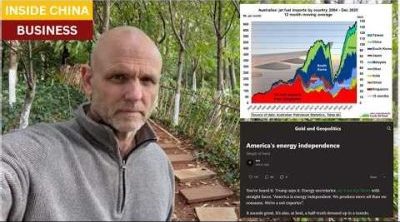
Chinese jet fuel and the myth of energy independence
or go to
Aletho News Archives – Video-Images
Book Review
Former Insiders Criticize Iran Policy as U.S. Hegemony
By GARETH PORTER | CounterPunch | February 27, 2013
“Going to Tehran” arguably represents the most important work on the subject of U.S.-Iran relations to be published thus far.
Flynt Leverett and Hillary Mann Leverett tackle not only U.S. policy toward Iran but the broader context of Middle East policy with a systematic analytical perspective informed by personal experience, as well as very extensive documentation.
More importantly, however, their exposé required a degree of courage that may be unparalleled in the writing of former U.S. national security officials about issues on which they worked. They have chosen not just to criticise U.S. policy toward Iran but to analyse that policy as a problem of U.S. hegemony. … continue
Blog Roll
 Aletho News
- What is fueling unrest across the EU?
- Why no power can undermine Iran’s eternal dominance over the Strait of Hormuz
- Is The War Against Iran Over?
- Iran war will leave long-term ‘scar’ on Wall Street, investors warn
- How Iran decimated US power projection in West Asia: Military lessons of 40-day war
- Iran’s report details US-Israeli war crimes in targeting schools, hospitals, livelihoods
- NATO’s Slow Fracture: How Trump’s Iran War Exposed the Instrument of Hegemony
- Chinese jet fuel and the myth of energy independence
- Ukraine Sea Drone Fired From Libya Hit Russian Tanker in Mediterranean
- IRGC: Iranian forces launched no attacks during ceasefire hours
- If Americans Knew
- Military aid to Israel emerges as the latest political litmus test for Democrats
- The only Palestinian children’s rights organization closes following years-long Israeli campaign against it
- ‘I Can’t Forget the Smell’: Lebanese Reel After Israel Kills Over 300 in Single Day
- DNC Shoots Down Resolutions Calling Out AIPAC and Limiting Arms to Israel
- TCN: Is Israel Blackmailing President Trump?
- Israel killed at least 303 Lebanese yesterday – who were they? Daily Update
- Amnesty: Urgent – Protect Lebanese civilians from brutal escalation in Israeli attacks
- Is The War Against Iran Over?
- Inside the Israeli army’s propaganda wing
- Hundreds of Gaza Amputees Stranded in Legal Limbo
- No Tricks Zone
- An Inconvenient Tree: Uncovered In Alps… Europe Much Warmer Than Today 6000 Years Ago
- New Study Reports A 60% Slowdown In Greenland’s Ice Loss Rate In The Last Decade
- Low Intensity Tornado Wrecks Major Solar Farm, Creating A Potential Toxic Dump
- New Study Finds Warming Saves Lives…Cold Temperatures 12 Times More Deadly Than Excess Heat
- German Science Blog Accuses PIK Climate Institute Of Hallucinating Climate Tipping Points
- Devastating Assessment Of Comirnaty Vaccine By Former Senior Pfizer Europe Toxicologist
- New Study: CO2 Is ‘Effectively Negligible’ As An Explanatory Climate Change Factor Since 2000
- Former Pfizer Toxicologist Dr. Helmut Sterz Tells Bundestag Hearing Pfizer Vaccine Should Have Never Been Approved
- Energy Expert: Germany’s Nuclear Phaseout Was A “500 Billion Euro Mistake”
- New Research: South Australia’s Mid-Holocene Sea Surface Temperatures Were 4°C Warmer Than Today
 Aletho News