As predicted, the FBI is revealed to have approached Orlando shooting suspect Omar Mateen in 2013 with informants posing as terrorists in an attempt to “lure” him into participating in a terrorist attack.
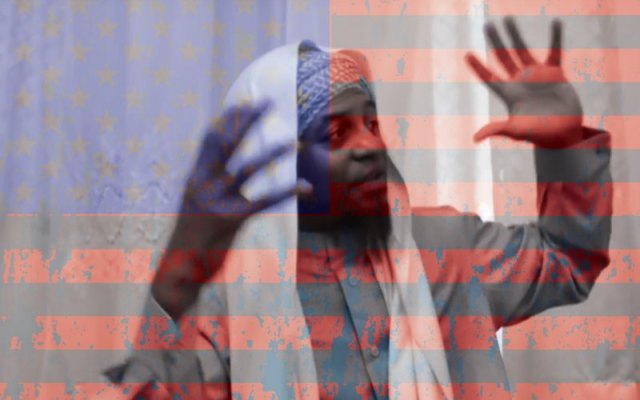 |
Image: As scary as any cartoon villain – and ironically – quite literally a manufactured villain. Marcus Robertson is not only a former US Marine, but also a long-time CIA and FBI asset. He runs an extremist website on American soil with absolute impunity and is likely one component of the FBI’s counterterror entrapment pipeline.
|
USA Today’s TC Palm reports in an article titled, “Exclusive: PGA Village residents want answers from security firm,” that (emphasis added):
The FBI launched an investigation into Mateen after Sheriff’s Office officials reported the incident to the agency. As part of its investigation, the FBI examined Mateen’s travel history, phone records, acquaintances and even planted a confidential informant in the courthouse to “lure Omar into some kind of act and Omar did not bite,” Mascara said. The FBI concluded Mateen was not a threat after that, Mascara said.
This is in line with the FBI’s practice of approaching and entrapping potential terror suspects by posing as terrorists themselves and aiding and abetting them in the planning and preparations for high-profile attacks. These undercover operations include everything from “casing out” potential targets, to the obtaining and training with actual, live explosives, to the purchasing of small arsenals of firearms including the sort of semi-automatic rifles and pistols used by Mateen during the Orlando shooting.
In addition to the FBI’s undercover operation, it is now also revealed that Mateen frequented the website of another FBI/CIA informant, Marcus Dwayne Roberson, a former US Marine, turned bank robber, turned US government informant.
While US politicians, law enforcement officials, and media networks attempt to claim Robertson’s extremist website, the Timbuktu Seminary, was his own independent project, the extent of his association with the US government makes this difficult, if not impossible to believe. Instead, it appears to be the perfect mechanism to feed the FBI’s entrapment pipeline, attracting and identifying possible suspects for the FBI to then approach and “investigate.”
The National Review’s article, “The Orlando Jihadist and the Blind Sheikh’s Bodyguard,” would report (emphasis added):
According to Fox News, Omar Mateen, the jihadist who carried out the mass-murder attack at a gay nightclub in Florida this weekend, was a student of Marcus Robertson, an Orlando-based radical Muslim who once served as a bodyguard to Omar Abdel Rahman — the notorious “Blind Sheikh” whom I prosecuted for terrorism crimes in the early to mid 1990s.
The National Review also reported that (emphasis added):
In Robertson’s case, it is reported that he agreed to work for the government, gathering intelligence both overseas and in the United States. According to Fox, however, he was expelled from the covert informant program in early 2007 after attacking his CIA handler in Africa.
But Robertson’s stint with the CIA was not the only time he would work for the US government after his service in the US Marine Corps. The National Review leaves out the fact that before his dismissal from the CIA, he was an informant for the FBI between 2004 and 2007.
The Daily Beast in its article, “Was Orlando Shooter Omar Mateen Inspired by This Bank-Robbing Ex-Marine?,” would report (emphasis added):
“Plaintiff worked as a covert operator for the FBI Terrorist Task Force from 2004 until 2007, performing operations in the United Sates and internationally with and against suspected and known terrorist organizations,” Robertson says in court papers.
Robertson remained in touch with American law enforcement and intelligence officials when he moved back to the United States, according to court papers filed by his attorney, “served as a confidential source in domestic terrorism investigations from Atlanta to Los Angeles.”
Is the American public expected to believe that a US government asset who received special training in the military and served as an informant and operative for both the FBI and the CIA would somehow, suddenly be allowed to drop off the US government’s radar and be allowed to run an extremist website in the United States?
 |
Image: How far do undercover FBI investigations go? How about building a van-bomb for a suspect after taking him to a public park to detonate real explosives? The FBI’s own affidavit reveals that is precisely what FBI informants did while investigating Portland, Oregon terror suspect Mohamed Osman Mohamud. Did the FBI’s attempts to lure the Orlando shooter, Omar Mateen, into committing a terror attack contribute in his radicalization? The FBI must answer to this.
|
Indeed, no American should believe this. Robertson was step one in Omar Mateen – the Orlando shooter’s – radicalization. The FBI’s attempt to pose as terrorists to lure Mateen into going along with a terrorist attack was step two. Though the FBI has so far failed to disclose the details of that investigation, comments made by FBI Director James Comey himself indicate that FBI informants may have worked on Mateen for up to 10 months.
Between exposure to Robertson’s extremist propaganda, honed after years of working as an informant and operative identifying and exposing terror suspects, and the FBI’s own informants over the course of months, if not years, it is clear that the US government and its “counterterrorism” measures radicalized Mateen – not “ISIS.”
The Guardian in its article, “CIA has not found any link between Orlando killer and Isis, says agency chief,” further highlights this blatant truth by reporting (emphasis added):
The Central Intelligence Agency chief has not been “able to uncover any link” between Orlando killer Omar Mateen and the Islamic State, despite Mateen’s stated allegiance to the jihadist group during Sunday’s LGBT nightclub massacre.
If Omar Mateen was a “homegrown terrorist,” the FBI served as the gardeners.
The American public must now demand the details of the FBI’s undercover work regarding Omar Mateen, as well as the truth behind any enduring ties between Robertson and the US government. If Robertson has no connections with the US government, an explanation as to why he is allowed to operate an extremist website on American soil must be provided.
For political and ideological opportunists attempting to seize upon the Orlando tragedy to uphold an example of “Islamic extremism,” it is especially ironic that the facts indicate that the act of terrorism was entirely divorced from “Islam,” and instead the result of America’s ongoing view of terrorism as a convenient and versatile geopolitical tool, rather than a threat to genuinely combat.
That quite literally every aspect that contributed to Omar Mateen’s radicalization is directly connected to the US government itself, illustrates just who the real threat is that American’s should fear – the threat within the halls of its own government – not “terrorists” dwelling beyond them.
June 20, 2016
Posted by aletho |
Deception, False Flag Terrorism, Timeless or most popular | Central Intelligence Agency, CIA, FBI, ISIS, Marcus Robertson, Omar Mateen, United States |
Leave a comment

Since the Pulse nightclub shooting in Orlando last weekend, the American public has sought answers as to who could have committed this atrocity- and why.
The two main theories, so far, revolve around the shooter’s sexuality and ethnicity: Did Omar Mateen shoot up Pulse, a gay nightclub, because of his sexuality? Or did he act because of his apparent allegiance to ISIS?
The latter theory has taken up most of the oxygen in media reports. The prevailing assumption is that Mateen was radicalized at some point, swore allegiance to ISIS, and acted as a “lone wolf” terrorist to shoot up Pulse. The “lone wolf” terrorist, by this line of thinking, is the new threat of terror in 2016.
One journalist, however, has another theory. Joseph Ax of Reuters posits that “lone wolf” attacks are less frequent than we are led to believe. Ax says that rather than “lone wolves” we need to fear clusters of terrorists- or “wolf dens.”
The evidence indicates that, in general, “wolf dens” surrounding the radicalized aren’t made up of anyone other than the FBI.
Ax’s piece begins by placing Mateen in the “lone wolf” category, at least from what we know so far. This is accurate, but this isn’t Ax’s point- he proposes that Mateen is actually the exception to the rule as far as ISIS related attacks go:
A Reuters review of the approximately 90 Islamic State court cases brought by the Department of Justice since 2014 found that three-quarters of those charged were alleged to be part of a group of anywhere from two to more than 10 co-conspirators who met in person to discuss their plans.
Scary stuff. How many sleeper cells are there in the US? How many “wolf dens?” Could there be one in my community?
The answer to that is most likely “no.” And the reason for that is buried in the above paragraph: “two to more.”
Ax goes into the FBI’s involvement in US ISIS plots later. The entire relevant portion of the article is worth quoting in full (emphasis added):
In an increasingly frequent occurrence, the defendant was unwittingly working with an FBI informant posing as a co-conspirator, as federal authorities rely more on human intelligence and less on the comparatively low-hanging fruit of social media to identify potential attackers.
Face-to-face interactions can accelerate extremist viewpoints, turning the group to violence, experts said. And it can draw in others who might otherwise not have been susceptible to the lure of jihadism.
So here we see Ax disproving his scare-quoted proposition from earlier- that “wolf dens” of radicalized terrorists are a clear and present danger across the US- with simple logic. If, as Ax says, these “wolf dens” are made up of “anywhere from two to more than 10 co-conspirators,” then it stands to reason that he must have used a number of “two” membered wolf dens. Otherwise, why include pairs in the analysis?
To take this to the next logical conclusion, if “the defendant was unwittingly working with an FBI informant posing as a co-conspirator” and “face-to-face interactions can accelerate extremist viewpoints,” then surely at least some of these “wolf dens” only exist because of FBI involvement.
The evidence of FBI involvement in the radicalization of US citizens over the past two years is undeniable. Here are four examples:
*September, 2014: Mulfid Elfgeeh of Rochester, NY, is arrested for material support for ISIS after two informants approach him with their plans to travel to Syria. Prior to this moment, there was little evidence of any radicalization for Elfgeeh.
*November 27, 2014: Olajuwon Ali Davis and Brandon Orlando Baldwin are arrested for plotting to blow up the Arch in St. Louis and police stations. The evidence included intending to purchase bombs from FBI informants- a product that was offered to the two men, not requested. In fact, the informants appear to have constructed much of the planning themselves, with Davis and Baldwin only agreeing to the plot and not independently generating it.
*April, 2015: 7 Somali men in Minneapolis are charged with conspiracy to join ISIS. The evidence comes from a paid informant with a history of lying to authorities about crimes and whose actions suggest he set the entire plot in motion with little to no involvement from the charged.
*July, 2015: Alexander Ciccolo of Adams, MA, is arrested for plotting to attack a local college. The entire plot, court documents show conclusively, was generated by an unnamed FBI informant who not only provided Ciccolo with the push he needed to take action, but also offered to purchase explosives for Ciccolo.
Multiple studies and reports have shown that FBI involvement overwhelmingly is the driving force behind radicalization of many, if not most, ISIS plots.
Human Rights Watch, July 21, 2015:
Multiple studies have found that nearly 50 percent of the federal counterterrorism convictions since September 11, 2001, resulted from informant-based cases. Almost 30 percent were sting operations in which the informant played an active role in the underlying plot.
The Intercept, February 26, 2015:
We’re constantly bombarded with dire warnings about the grave threat of home-grown terrorists, “lone wolf” extremists and ISIS….
But how serious of a threat can all of this be, at least domestically, if the FBI continually has to resort to manufacturing its own plots by trolling the Internet in search of young drifters and/or the mentally ill whom they target, recruit and then manipulate into joining?
Al Jazeera, April 23, 2015:
With the rise of ISIL, there has been a renewed effort to counter potential threats on U.S. soil, including cases in which informants have played key — and some say controversial — roles.
“We have investigations of people in various stages of radicalizing in all 50 states,” FBI Director James Comey said in February. The message of ISIL in particular “resonates with troubled souls, people seeking meaning in some horribly misguided way,” he added. “Those people exist in every state.”
The New York Times, June 11, 2016:
The F.B.I. has significantly increased its use of stings in terrorism cases, employing agents and informants to pose as jihadists, bomb makers, gun dealers or online “friends” in hundreds of investigations into Americans suspected of supporting the Islamic State, records and interviews show.
Each of the above reports has extensive documentation of the lengths to which the FBI will go to manufacture “terror plots.”
So the question is- are there actually “wolf dens” in America, and if so, are they actually a threat? The answer appears to be- from all publicly available data- not that many and not really.
Most American “jihadis” only start down that path after the kindly push from a “fellow traveler” who turns out to be an FBI informant or agent.
If Ax (and by extension Reuters ) are using “two or more” as their definition for “wolf dens” of extremism in the US- and if they’re refusing to leave out those pairs that include FBI informants- then the “Reuters review of the approximately 90 Islamic State court cases brought by the Department of Justice since 2014” that concluded that there is a legitimate threat of group of radicals in the US is not only wrong. It’s negligent.
June 19, 2016
Posted by aletho |
Deception, False Flag Terrorism, Timeless or most popular | FBI, United States |
Leave a comment
In the aftermath of the horrific mass murder at the Pulse nightclub in Orlando over the weekend in which 50 people were killed, media including CNN, USA Today, NPR, NBC News, and CBS News, all reported that the gunman called 911 during his murderous rampage and pledged allegiance to ISIS. None of the journalists writing for any of these news outlets heard the call themselves; they all cite the FBI as their source.
The U.S. government has been engaged in a war against the self-professed Islamic State for the last two years. Their military intervention consists of a bombing campaign against ISIS targets in Iraq and Syria. Hyping the threat members connected to the terror group – or spiritually loyal to it – pose to American citizens is supportive of U.S. foreign policy. If ISIS, or people claiming to act on behalf of ISIS, are a real danger to Americans, it bolsters the notion that the group is a threat to national security and helps justify the government’s military response.
The FBI seems eager to show itself as disrupting ISIS plots in the States. As Adam Johnson has written in FAIR, the FBI has put Americans in contact with informants who claim to represent ISIS and then led the targets to believe they would help the targets join the terrorist organization. The media have then conflated this with an “ISIS Plot” and “ISIS Support,” when no members of ISIS were ever involved in any way.
The FBI’s motivation to portray events in a way that supports U.S. foreign policy, and its history of portraying its actions in a way that has served to hype an ISIS threat should make journalists cautious about taking officials’ words at face value. Especially in the case of a 911 call, which is a public record in Florida, proper journalistic due diligence would be to consult the actual source of the claims being disseminated.
Instead, not a single journalist appears to have done this with Orlando killer Omar Mateen’s 911 call.
On Tuesday, CNN aired interviews of eyewitnesses to the shooting spree who described their harrowing encounters with the gunman inside the club. Patience Carter, who was inside a bathroom stall feet from the gunman when he called 911, said he told the dispatcher that “the reason why he was doing this is because he wants America to stop bombing his country.” (Mateen is a native of the United States, but he was presumably referring to Afghanistan, where both of his parents are from.) She said he then declared that “from now on he pledges his loyalty to ISIS.”
This demonstrates that his primary motive for his terror attack was retaliation for the U.S. aggression in Afghanistan, where nearly 100,000 people have been killed since the illegal U.S. invasion in 2001. His mention of ISIS seems merely adjunct to what he admits was his justification for the attack. His motivation precedes his ideological alignment with ISIS, not the other way around.
Anti-war activists have long argued that overseas military operations endanger not only the populations whose countries are invaded, occupied and bombed, but Americans in the United States who are at risk of terrorist retaliation from people outraged by the death and destruction war inevitably produces to the point of being willing to resort to violence themselves.
Carter’s version of the 911 call reveals a very different picture than the partial one revealed by the FBI and reprinted by each of the largest news organizations. The complete conversation depicts Mateen as indicating that he considered his actions a response to U.S. foreign policy. Of course, the murder of innocent civilians is always reprehensible and can never be justified by claiming they are a response to a state’s military aggression, regardless of how deadly and devastating such military operations are. But it should be predictable that some people will use this rationalization regardless and seek out soft targets in the country whose government they claim to be retaliating against.
The FBI chose to omit Mateen’s professed motive entirely when recounting the 911 call to the media, and merely state that he professed allegiance to ISIS. Perhaps they recognized how putting Mateen’s call in context may lead people to question whether U.S. wars in Afghanistan (and Iraq) raise the terrorist threat at home.
After all, this is not the first time this has happened. The surviving Boston Marathon bomber cited the U.S. wars abroad as his motivation for committing the attack that killed three people and maimed dozens more.
It is not clear whether any journalist even asked to hear the 911 call themselves. But it is clear that they chose to disseminate second-hand information when the primary source should have been easily accessible. If it was not made available (as required by law), the public deserves to know that it was suppressed and be given an explanation why.
Media stenographers parroted government officials’ descriptions of the call, which left out the killer’s professed motivation for his politically motivated attack and failed to put the ISIS claim in any context. Unsurprisingly, their misrepresentation served the government’s policy agenda and avoided having the incident serve as an example of a negative consequence of U.S. foreign policy – one that anti-war dissenters have used in arguing against the wars in Afghanistan and Iraq since the War on Terror was launched more than a decade and a half ago.
June 15, 2016
Posted by aletho |
Deception, Mainstream Media, Warmongering, Militarism | CBS News, CNN, FBI, ISIS, NBC News, NPR, Omar Mateen, USA Today |
Leave a comment
Thanks to FBI meddling, a straightforward electronic communications privacy reform with bipartisan support and barely any opposition is now stalled, and is dangerously close to dying this session.
The Electronic Communications Privacy Act (ECPA) became law in 1986, and hasn’t been updated since. The statute, which governs law enforcement access to electronic communications, contains an obsolete clause enabling government agencies to obtain stored communications without warrants as long as the records are over 180 days old. This provision made more sense when the law was passed, at a time when computer data storage was expensive and most people couldn’t afford to store anything in digital form for as long as 6 months. Today, when storage is cheap and many people have emails dating back a decade in their Gmail inboxes, the law makes no sense. For years now, advocates including the ACLU and major tech companies have been furiously lobbying to update the law. This year, the House finally passed an ECPA modernization bill, which if enacted would do away with the 6 month rule and instituting a warrant requirement for content across the board—no matter how long the information has been sitting in your Dropbox folder or Gmail account. After the unanimous House vote, I and others expected the reform to quickly move through the Senate and get a signature from President Obama. Finally!
Alas, that’s not what is happening.
Unfortunately, the FBI intervened, and now the bill has a poison pill in it. Republican Senator John Cornyn attached an amendment to the bill that would vastly expand the FBI’s power to use much-abused ‘National Security Letters,’ or NSLs, secret subpoenas. Email privacy supporters Senators Pat Leahy and Mike Lee have said they will pull the bill from consideration instead of allowing their efforts to be coopted by the FBI—which intends to broaden its surveillance authorities, instead of contract them, as the email privacy bill intends.
“Unfortunately, some Senators on the committee have decided late in the day that this bill should be a vehicle to move an unrelated and controversial expansion of the use of national security letters by the FBI,” Lee said. “Such an expansion would swallow up the protections this bill offers to the American people. While there are other concerns we had hoped to negotiate, the national security letter amendment is something I cannot in good conscience have attached to this bill.”
FBI Director James Comey has said getting the NSL power extended to internet information is his organization’s top legislative priority.
June 11, 2016
Posted by aletho |
Civil Liberties, Full Spectrum Dominance | FBI, Human rights, United States |
Leave a comment
Sending someone undercover was once a last resort for the FBI – despite popular law dramas where it seems to happen every few weeks. But the FBI’s use of undercover agents in the fight against Islamic State has some questioning its legality.
The Federal Bureau of Investigation (FBI) has significantly increased its use of agents and informants in terrorism cases according to a report from the New York Times. In fact, the FBI uses it so intensively that it is used in about two out of three prosecutions related to suspects believed to be supporting the Islamic State (IS, formerly ISIS/ISIL).
When agents and informants go undercover, they pose as anything from weapons and arms dealers to jihadists or just friends on social media. However, defense lawyers, civil right activists and Muslim leaders have all compared the tactics used by the FBI to entrapment.
“They’re manufacturing terrorism cases,” Michael German, a former undercover agent with the FBI and national security law researcher at New York University’s Brennan Center for Justice, told the New York Times, adding: “These people are five steps away from being a danger to the United States.”
For example, Emanuel Lutchman of Rochester, New York, was arrested in relation to a plot to abduct and kill the patrons at a Rochester bar on New Year’s Eve. His grandmother, Beverley Carridice-Henry, told the Democrat and Chronicle that Lutchman had suffered from mental illness and was sent to prison when he was 16 years old. While there, he converted to Islam to gain protection after another inmate attempted to rape him.
Carridice-Henry told the Democrat and Chronicle that he had been hospitalized at least three times for suicide attempts and that his difficulties with mental health made him vulnerable to coercion, saying: “I’m not going to say he’s a saint, but the thing about him is, he’d meet somebody and they were automatically his friend,” adding, “And I told him, ‘Not everyone you meet is your friend.’ But to him they were.”
She explained her frustration with the sting operation involving her allegedly homeless grandson, saying: “They sent this guy to befriend him and set him up in a sting. How is that right? For the federal government to set up youths that they know are vulnerable?… He didn’t have money to buy Pampers for his son. How would he find money to go buy these [weapons]?”
The New York Times explained that the informant provided Lutchman with the $40 necessary to purchase the materials he needed for his plot from Wal-Mart.
Karen J. Greenberg, the director of the Center on National Security at Fordham University, told the New York Times that these tactics may not be giving the FBI the results they want. “I think the FBI is really going down the wrong path with a lot of these ISIS cases.”
The FBI has defending its methodology, saying that the warrantless use of undercover operatives and informants is justified by the accelerated timeline that causes Islamic State loyalists to attack as soon as days or weeks after their radicalization. Michael B. Steinbach, who leads the FBI’s national security branch, told The New York Times : “We’re not going to wait for the person to mobilize on his own timeline,” adding that the FBI cannot “just sit and wait knowing the individual is actively plotting.”
The FBI claims its agents go to great lengths to avoid entrapment by asking the subject of their stings to confirm their intent multiple times. In the case of James Gonzalo Medina, a convert also known as James Muhammad, he had initially attempted to distance himself from a plot to attack a synagogue.
When Medina, 40, pointed out a “David’s triangle star” outside of a synagogue, an FBI informant suggested that he attack the temple during a Jewish holiday. Medina responded to this suggestion, saying: “Now that’ll be a good day to go and bomb them.”
The informant introduced him to a person that was said to have experience with explosives. Unbeknownst to Medina, he was an undercover FBI agent. The agent told Medina: “You need to be sure, brother,” and even said: “You know you don’t have to do any of this.”
These dubious tactics have lead judges to consider whether what the FBI is doing is entrapment. In 2011, Judge Colleen McMahon, of the US District Court in Manhattan, said that a case involving four men was potentially crossing the line, saying: “I believe beyond a shadow of a doubt that there would have been no crime here, except the government instigated it, planned it and brought it to fruition.”
However, Judge McMahon upheld the charges.
June 9, 2016
Posted by aletho |
Deception, False Flag Terrorism, Mainstream Media, Warmongering | FBI, Human rights, United States |
Leave a comment
The FBI hopes to amend surveillance laws as early as this year, giving the agency explicit authority to access a personal Internet browser history by simply issuing an administrative “national security letter,” the Washington Post reports.
The new legislation being readied would empower the FBI to obtain “electronic communication transactional records” bypassing judges’ approval with the help of a “national security letter” (NSL) which could be issued by the special agent in charge of a bureau field office, the paper says.
The FBI chief made a specific point that gaining this access through changing legislation is topping agency’s priorities for the year 2016, since the inability to get the necessary data “affects our work in a very, very big and practical way,” James Comey told the Senate Intelligence Committee in February.
The Obama administration already tried to adopt a similar amendment some six years ago, but had to retreat after fierce opposition from the IT industry and privacy advocates.
Incidentally, Comey believes the current state of things is thanks to a “scrivener’s error” in the Electronic Communications Privacy Act, enabling internet providers and other technical companies to refuse providing certain personal information to the agency, citing infringement of American citizens’ privacy.
The ECPA is “needlessly hamstringing our counterintelligence and counterterrorism efforts,” Comey stressed.
The FBI also insists that a broader update of the ECPA should set electronic communication transactional records equal to telephone billing records.
The personal web ‘transactional records’ in question will allegedly include protocol addresses and the exact time a person spends on a web resource, but not content like search queries and email texts.
A coalition of privacy and civil society groups united with internet industry organizations to oppose the legal initiative, warning that the amendment would “dramatically expand the ability of the FBI to get sensitive information about users’ online activities without oversight.”
Security letters requesting data usually come with a gag order forbidding the internet providers from making the fact of the FBI request public.
The FBI has issued over 300,000 such requests within the past 10 years and in most cases they were accompanied by gag orders, estimated American Civil Liberties Union (ACLU) legislative counsel Neema Singh Guliani.
“That’s the perfect storm of more information gathered, less transparency and no accountability,” Guliani said.
June 7, 2016
Posted by aletho |
Civil Liberties, Full Spectrum Dominance | FBI, United States |
Leave a comment
Police Nationwide Are Secretly Exploiting Intrusive Technologies With the Feds’ Complicity
Can’t you see the writing on the touchscreen? A techno-utopia is upon us. We’ve gone from smartphones at the turn of the twenty-first century to smart fridges and smart cars. The revolutionary changes to our everyday life will no doubt keep barreling along. By 2018, so predicts Gartner, an information technology research and advisory company, more than three million employees will work for “robo-bosses” and soon enough we — or at least the wealthiest among us — will be shopping in fully automated supermarkets and sleeping in robotic hotels.
With all this techno-triumphalism permeating our digitally saturated world, it’s hardly surprising that law enforcement would look to technology — “smart policing,” anyone? — to help reestablish public trust after the 2014 death of Michael Brown in Ferguson, Missouri, and the long list of other unarmed black men killed by cops in Anytown, USA. The idea that technology has a decisive role to play in improving policing was, in fact, a central plank of President Obama’s policing reform task force.
In its report, released last May, the Task Force on 21st Century Policing emphasized the crucial role of technology in promoting better law enforcement, highlighting the use of police body cameras in creating greater openness. “Implementing new technologies,” it claimed, “can give police departments an opportunity to fully engage and educate communities in a dialogue about their expectations for transparency, accountability, and privacy.”
Indeed, the report emphasized ways in which the police could engage communities, work collaboratively, and practice transparency in the use of those new technologies. Perhaps it won’t shock you to learn, however, that the on-the-ground reality of twenty-first-century policing looks nothing like what the task force was promoting. Police departments nationwide have been adopting powerful new technologies that are remarkably capable of intruding on people’s privacy, and much of the time these are being deployed in secret, without public notice or discussion, let alone permission.
And while the task force’s report says all the right things, a little digging reveals that the feds not only aren’t putting the brakes on improper police use of technology, but are encouraging it — even subsidizing the misuse of the very technology the task force believes will keep cops honest. To put it bluntly, a techno-utopia isn’t remotely on the horizon, but its flipside may be.
Getting Stung and Not Even Knowing It
Shemar Taylor was charged with robbing a pizza delivery driver at gunpoint. The police got a warrant to search his home and arrested him after learning that the cell phone used to order the pizza was located in his house. How the police tracked down the location of that cell phone is what Taylor’s attorney wanted to know.
The Baltimore police detective called to the stand in Taylor’s trial was evasive. “There’s equipment we would use that I’m not going to discuss,” he said. When Judge Barry Williams ordered him to discuss it, he still refused, insisting that his department had signed a nondisclosure agreement with the FBI.
“You don’t have a nondisclosure agreement with the court,” replied the judge, threatening to hold the detective in contempt if he did not answer. And yet he refused again. In the end, rather than reveal the technology that had located Taylor’s cell phone to the court, prosecutors decided to withdraw the evidence, jeopardizing their case.
And don’t imagine that this courtroom scene was unique or even out of the ordinary these days. In fact, it was just one sign of a striking nationwide attempt to keep an invasive, constitutionally questionable technology from being scrutinized, whether by courts or communities.
The technology at issue is known as a “Stingray,” a brand name for what’s generically called a cell site simulator or IMSI catcher. By mimicking a cell phone tower, this device, developed for overseas battlefields, gets nearby cell phones to connect to it. It operates a bit like the children’s game Marco Polo. “Marco,” the cell-site simulator shouts out and every cell phone on that network in the vicinity replies, “Polo, and here’s my ID!”
Thanks to this call-and-response process, the Stingray knows both what cell phones are in the area and where they are. In other words, it gathers information not only about a specific suspect, but any bystanders in the area as well. While the police may indeed use this technology to pinpoint a suspect’s location, by casting such a wide net there is also the potential for many kinds of constitutional abuses — for instance, sweeping up the identities of every person attending a demonstration or a political meeting. Some Stingrays are capable of collecting not only cell phone ID numbers but also numbers those phones have dialed and even phone conversations. In other words, the Stingray is a technology that potentially opens the door for law enforcement to sweep up information that not so long ago wouldn’t have been available to them.
All of this raises the sorts of constitutional issues that might normally be settled through the courts and public debate… unless, of course, the technology is kept largely secret, which is exactly what’s been happening.
After the use of Stingrays was first reported in 2011, the American Civil Liberties Union (ACLU) and other activist groups attempted to find out more about how the technology was being used, only to quickly run into heavy resistance from police departments nationwide. Served with “open-records requests” under Freedom of Information Act-like state laws, they almost uniformly resisted disclosing information about the devices and their uses. In doing so, they regularly cited nondisclosure agreements they had signed with the Harris Corporation, maker of the Stingray, and with the FBI, prohibiting them from telling anyone (including other government outfits) about how — or even that — they use the devices.
Sometimes such evasiveness reaches near-comical levels. For example, police in the city of Sunrise, Florida, served with an open-records request, refused to confirm or deny that they had any Stingray records at all. Under cover of a controversial national security court ruling, the CIA and the NSA sometimes resort to just this evasive tactic (known as a “Glomar response“). The Sunrise Police Department, however, is not the CIA, and no provision in Florida law would allow it to take such a tack. When the ACLU pointed out that the department had already posted purchase records for Stingrays on its public website, it generously provided duplicate copies of those very documents and then tried to charge the ACLU $20,000 for additional records.
In a no-less-bizarre incident, the Sarasota Police Department was about to turn some Stingray records over to the ACLU in accordance with Florida’s open-records law, when the U.S. Marshals Service swooped in and seized the records first, claiming ownership because it had deputized one local officer. And excessive efforts at secrecy are not unique to Florida, as those charged with enforcing the law commit themselves to Stingray secrecy in a way that makes them lawbreakers.
And it’s not just the public that’s being denied information about the devices and their uses; so are judges. Often, the police get a judge’s sign-off for surveillance without even bothering to mention that they will be using a Stingray. In fact, officers regularly avoid describing the technology to judges, claiming that they simply can’t violate those FBI nondisclosure agreements.
More often than not, police use Stingrays without bothering to get a warrant, instead seeking a court order on a more permissive legal standard. This is part of the charm of a new technology for the authorities: nothing is settled on how to use it. Appellate judges in Tallahassee, Florida, for instance, revealed that local police had used the tool more than 200 times without a warrant. In Sacramento, California, police admitted in court that they had, in more than 500 investigations, used Stingrays without telling judges or prosecutors. That was “an estimated guess,” since they had no way of knowing the exact number because they had conveniently deleted records of Stingray use after passing evidence discovered by the devices on to detectives.
Much of this blanket of secrecy, spreading nationwide, has indeed been orchestrated by the FBI, which has required local departments eager for the hottest new technology around to sign those nondisclosure agreements. One agreement, unearthed in Oklahoma, explicitly instructs the local police to find “additional and independent investigative means” to corroborate Stingray evidence. In short, they are to cover up the use of Stingrays by pretending their information was obtained some other way — the sort of dangerous constitutional runaround that is known euphemistically in law enforcement circles as a “parallel construction.” Now that information about the widespread use of this new technology is coming out — as in the Shemar Taylor trial in Baltimore — judges are beginning to rule that Stingray use does indeed require a warrant. They are also insisting that police must accurately inform judges when they intend to use a Stingray and disclose its privacy implications.
Garbage In, Garbage Out
And it’s not just the Stingray that’s taking local police forces into new and unknown realms of constitutionally questionable but deeply seductive technology. Consider the hot new trend of “predictive policing.” Its products couldn’t be high-techier. They go by a variety of names like PredPol (yep, short for predictive policing) and HunchLab (and there’s nothing wrong with a hunch, is there?). What they all promise, however, is the same thing: supposedly bias-free policing built on the latest in computer software and capable of leveraging big data in ways that — so their salesmen will tell you — can coolly determine where crime is most likely to occur next.
Such technology holds out the promise of allowing law enforcement agencies to deploy their resources to areas that need them most without that nasty element of human prejudice getting involved. “Predictive methods allow police to work more proactively with limited resources,” reports the RAND Corporation. But the new software offers something just as potentially alluring as efficient policing — exactly what the president’s task force called for. According to market leader PredPol, its technology “provides officers an opportunity to interact with residents, aiding in relationship building and strengthening community ties.”
How idyllic! In post-Ferguson America, that’s a winning sales pitch for decision-makers in blue. Not so surprisingly, then, PredPol is now used by nearly 60 law enforcement agencies in the United States, and investment capital just keeps pouring into the company. In 2013, SF Weekly reported that over 150 departments across the nation were already using predictive policing software, and those numbers can only have risen as the potential for cashing in on the craze has attracted tech heavy hitters like IBM, Microsoft, and Palantir, the co-creation of PayPal co-founder Peter Thiel.
Like the Stingray, the software for predictive policing is yet another spillover from the country’s distant wars. PredPol was, according to SF Weekly, initially designed for “tracking insurgents and forecasting casualties in Iraq,” and was financed by the Pentagon. One of the company’s advisors, Harsh Patel, used to work for In-Q-Tel, the CIA’s venture capital firm.
Civil libertarians and civil rights activists, however, are less than impressed with what’s being hailed as breakthrough police technology. We tend to view it instead as a set of potential new ways for the police to continue a long history of profiling and pre-convicting poor and minority youth. We also question whether the technology even performs as advertised. As we see it, the old saying “garbage in, garbage out” is likely to best describe how the new software will operate, or as the RAND Corporation puts it, “predictions are only as good as the underlying data used to make them.”
If, for instance, the software depends on historical crime data from a racially biased police force, then it’s just going to send a flood of officers into the very same neighborhoods they’ve always over-policed. And if that happens, of course, more personnel will find more crime — and presto, you have the potential for a perfect feedback loop of prejudice, arrests, and high-tech “success.” To understand what that means, keep in mind that, without a computer in sight, nearly four times as many blacks as whites are arrested for marijuana possession, even though usage among the two groups is about the same.
If you leave aside issues of bias, there’s still a fundamental question to answer about the new technology: Does the software actually work or, for that matter, reduce crime? Of course, the companies peddling such products insist that it does, but no independent analyses or reviews had yet verified its effectiveness until last year — or so it seemed at first.
In December 2015, the Journal of the American Statistical Association published a study that brought joy to the predictive crime-fighting industry. The study’s researchers concluded that a predictive policing algorithm outperformed human analysts in indicating where crime would occur, which in turn led to real crime reductions after officers were dispatched to the flagged areas. Only one problem: five of the seven authors held PredPol stock, and two were co-founders of the company. On its website, PredPol identifies the research as a “UCLA study,” but only because PredPol co-founder Jeffery Brantingham is an anthropology professor there.
Predictive policing is a brand new area where question marks abound. Transparency should be vital in assessing this technology, but the companies generally won’t allow communities targeted by it to examine the code behind it. “We wanted a greater explanation for how this all worked, and we were told it was all proprietary,” Kim Harris, a spokeswoman for Bellingham, Washington’s Racial Justice Coalition, told the Marshall Project after the city purchased such software last August. “We haven’t been comforted by the process.”
The Bellingham Police Department, which bought predictive software made by Bair Analytics with a $21,200 Justice Department grant, didn’t need to go to the city council for approval and didn’t hold community meetings to discuss the development or explain how the software worked. Because the code is proprietary, the public is unable to independently verify that it doesn’t have serious problems.
Even if the data underlying most predictive policing software accurately anticipates where crime will indeed occur — and that’s a gigantic if — questions of fundamental fairness still arise. Innocent people living in or passing through identified high crime areas will have to deal with an increased police presence, which, given recent history, will likely mean more questioning or stopping and frisking — and arrests for things like marijuana possession for which more affluent citizens are rarely brought in. Moreover, the potential inequality of all this may only worsen as police departments bring online other new technologies like facial recognition.
We’re on the verge of “big data policing,” suggests law professor Andrew Ferguson, which will “turn any unknown suspect into a known suspect,” allowing an officer to “search for information that might justify reasonable suspicion” and lead to stop-and-frisk incidents and aggressive questioning. Just imagine having a decades-old criminal record and facing police armed with such powerful, invasive technology.
This could lead to “the tyranny of the algorithm” and a Faustian bargain in which the public increasingly forfeits its freedoms in certain areas out of fears for its safety. “The Soviet Union had remarkably little street crime when they were at their worst of their totalitarian, authoritarian controls,” MIT sociologist Gary Marx observed. “But, my god, at what price?”
To Record and Serve… Those in Blue
On a June night in 2013, Augustin Reynoso discovered that his bicycle had been stolen from a CVS in the Los Angeles suburb of Gardena. A store security guard called the police while Reynoso’s brother Ricardo Diaz Zeferino and two friends tried to find the missing bike in the neighborhood. When the police arrived, they promptly ordered his two friends to put their hands up. Zeferino ran over, protesting that the police had the wrong men. At that point, they told him to raise his hands, too. He then lowered and raised his hands as the police yelled at him. When he removed his baseball hat, lowered his hands, and began to raise them again, he was shot to death.
The police insisted that Zeferino’s actions were “threatening” and so their shooting justified. They had two videos of it taken by police car cameras — but refused to release them.
Although police departments nationwide have been fighting any spirit of new openness, car and body cameras have at least offered the promise of bringing new transparency to the actions of officers on the beat. That’s why the ACLU and many civil rights groups, as well as President Obama, have spoken out in favor of the technology’s potential to improve police-community relations — but only, of course, if the police are obliged to release videos in situations involving allegations of abuse. And many departments are fighting that fiercely.
In Chicago, for instance, the police notoriously opposed the release of dashcam video in the shooting death of Laquan McDonald, citing the supposed imperative of an “ongoing investigation.” After more than a year of such resistance, a judge finally ordered the video made public. Only then did the scandal of seeing Officer Jason Van Dyke unnecessarily pump 16 bullets into the 17-year-old’s body explode into national consciousness.
In Zeferino’s case, the police settled a lawsuit with his family for $4.7 million and yet continued to refuse to release the videos. It took two years before a judge finally ordered their release, allowing the public to see the shooting for itself.
Despite this, in April 2015 the Los Angeles Board of Police Commissioners approved a body-camera policy that failed to ensure future transparency, while protecting and serving the needs of the Los Angeles Police Department (LAPD). In doing so, it ignored the sort of best practices advocated by the White House, the president’s task force on policing, and even the Police Executive Research Forum, one of the profession’s most respected think tanks.
On the possibility of releasing videos of alleged police misconduct and abuse, the new policy remained silent, but LAPD officials, including Chief Charlie Beck, didn’t. They made it clear that such videos would generally be exempt from California’s public records law and wouldn’t be released without a judge’s orders. Essentially, the police reserved the right to release video when and how they saw fit. This self-serving policy comes from the most lethal large police department in the country, whose officers shot and killed 21 people last year.
Other departments around the country have made similar moves to ensure control over body camera videos. Texas and South Carolina, among other states, have even changed their open-records laws to give the police power over when such footage should (or should not) be released. In other words, when a heroic cop saves a drowning child, you’ll see the video; when that same cop guns down a fleeing suspect, don’t count on it.
Curiously, given the stated positions of the president and his task force, the federal government seems to have no fundamental problem with that. In May 2015, for example, the Justice Department announced competitive grants for the purchase of police body cameras, officially tying funding to good body-cam-use policies. The LAPD applied. Despite letters from groups like the ACLU pointing out just how poor its version of body-cam policy was, the Justice Department awarded it $1 million to purchase approximately 700 cameras — accountability and transparency be damned.
To receive public money for a tool theoretically meant for transparency and accountability and turn it into one of secrecy and impunity, with the feds’ complicity and financial backing, sends an unmistakable message on how new technology is likely to affect America’s future policing practices. Think of it as a door slowly opening onto a potential policing dystopia.
Hello Darkness, Power’s Old Friend
Keep in mind that this article barely scratches the surface when it comes to the increasing numbers of ways in which the police’s use of technology has infiltrated our everyday lives.
In states and cities across America, some public bus and train systems have begun to add to video surveillance, the surreptitious recording of the conversations of passengers, a potential body blow to the concept of a private conversation in public space. And whether or not the earliest versions of predictive policing actually work, the law enforcement community is already moving to technology that will try to predict who will commit crimes in the future. In Chicago, the police are using social networking analysis and prediction technology to draw up “heat lists” of those who might perpetuate violent crimes someday and pay them visits now. You won’t be shocked to learn which side of the tracks such future perpetrators live on. The rationale behind all this, as always, is “public safety.”
Nor can anyone begin to predict how law enforcement will avail itself of science-fiction-like technology in the decade to come, much less decades from now, though cops on patrol may very soon know a lot about you and your past. They will be able to cull such information from a multitude of databases at their fingertips, while you will know little or nothing about them — a striking power imbalance in a situation in which one person can deprive the other of liberty or even life itself.
With little public debate, often in almost total secrecy, increasing numbers of police departments are wielding technology to empower themselves rather than the communities they protect and serve. At a time when trust in law enforcement is dangerously low, police departments should be embracing technology’s democratizing potential rather than its ability to give them almost superhuman powers at the expense of the public trust.
Unfortunately, power loves the dark.
Matthew Harwood is senior writer/editor with the American Civil Liberties Union. His work has appeared at Al Jazeera America, the American Conservative, the Guardian, Guernica, Salon, War is Boring, and the Washington Monthly.
Jay Stanley is senior policy analyst with the American Civil Liberty Union’s Speech, Privacy, and Technology Project. He is the editor of the ACLU’s Free Future blog and has authored and co-authored a variety of ACLU reports on privacy and technology topics.
Copyright 2016 Matthew Harwood and Jay Stanley
May 20, 2016
Posted by aletho |
Civil Liberties, Full Spectrum Dominance, Timeless or most popular | CIA, FBI, Human rights, LAPD, United States |
Leave a comment
The FBI says it caught a terrorist trying to blow up a synagogue on the outskirts of Miami.
But the FBI supplied the bomb.
The device was fake, part of an undercover FBI sting operation that, like hundreds of controversial investigations before it, used an undercover informant to target an alleged terrorist.
In the Miami case, federal authorities accuse 40-year-old James Medina of planning to bomb the Aventura Turnberry Jewish Center north of the city.
The FBI started their investigation of Medina in March 2015 “based on his suspected desire to attack” the Jewish center, according to an affidavit filed in federal court and a statement released by the US Attorney’s Office in the Southern District of Florida.
Medina, who said he converted to Islam four years ago and referred to his alias “James Muhammad” in court, has been charged with “attempted use of a weapon of mass destruction.” He pleaded not guilty on Monday morning.
Apart from the fact that the FBI supplied Medina with the weapon that he intended to use against the Jewish center, rights activists and legal experts are troubled by the facts presented by the FBI and Justice Department. Their concern includes instances where the informant, or “confidential human source” in bureau parlance, offered to assist Medina in attacking the center, and even suggested that he link the attack to the Islamic State.
The FBI’s affidavit — which reveals only enough information to justify the criminal complaint against Medina, and does not include all of the evidence against him — says that an informant met with Medina in March and secretly recorded conversations with him after he expressed a desire to attack the Jewish center.
But the affidavit does not say how the FBI learned of Medina’s “suspected desire” to attack the Jewish center, or what initial remarks or actions led agents to believe that Medina was willing to use violence before he devised his plans with the informant.
David Shapiro, a former New Jersey prosecutor and FBI special agent who is now a professor at the John Jay College of Criminal Justice in New York, said the affidavit makes it appear that the FBI did more than a little pushing to get Medina to develop the synagogue bombing plan.
“It seems this desire was developed,” he said. “It was watered with very potent fertilizer.”
The affidavit lays out how the FBI informant took an active part in helping Medina cook up the bombing plot. It recounts how the informant drove Medina to the Jewish center and suggested that he launch the attack on a Jewish holiday.
When the two later discussed a claim of responsibility, the affidavit says that the informant “indicated that they should leave a ‘clue’ as to who was responsible and Medina concurred.” It’s the informant, rather than Medina, who suggests linking the bombing to the Islamic State, also known as ISIS, or the East African al-Qaeda affiliate al-Shabaab.
“You can, you can do all that,” the affidavit quotes Medina as saying. “Yeah, we can print up or something and make it look like it’s ISIS here in America. Just like that.”
The informant later suggested that Medina could use “untraceable” firearms instead of AK-47s that an acquaintance of Medina’s said he could provide. At another meeting, the informant “addressed the concerns of entering the synagogue with firearms and then getting shot and instead proposed leaving an unspecified object behind and leaving the scene.” The informant suggested that Medina could use a bomb with a timer, and then introduced Medina to a man described as having “explosives expertise and access.” The bomb expert was really an undercover FBI agent.
Medina didn’t do himself any favors by repeatedly telling both the FBI informant and undercover agent that he was willing to leave the bomb at the synagogue, then escape with the informant and watch as they remotely detonated it. He also repeatedly assured the undercover agent that he was willing to go forward with the plot, according to the affidavit.
When asked why, Medina answers, “Because I realize that I have a lot of love for Allah. And I know that all these, all these wars that are going on, it hurts me, too. You know? It’s my call of duty. I gotta get back, when I’m doing this, I feel that I’m doing it for a good cause for Allah.”
In a subsequent conversation, the agent asked Medina if he was okay with killing women and children. Medina appeared to say yes, but he also seemed hesitant.
Medina: I think so. I think I’m fine, Urn hmm.
Agent: You need to be sure brother.
Medina: I am pretty sure. I think so. I believe so. I’m ready bro!
Agent: Ok. Cause you know you don’t have to do any of this.
Medina: What do you mean doing it?
Agent: No, you don’t have to do it if you’re not comfortable with it.
Medina: What? I’m ready.
Agent: It’s Allah’s will but you know…
Medina: I’m up for it. I really am. This is no joke. This is serious dog. If I have the equipment, believe me, in the time is, is that day and we doin’ it, I’m up for it bro. Just like I said.
The FBI says Medina and the undercover agent decided to bomb the synagogue on Friday, April 29. Medina made three videos on the informant’s phone: One as a goodbye to his family in case he was killed, and the other two to explain why he conducted the attack.
“I am a Muslim and I don’t like what is going on in this world. I’m going to handle business here in America. Aventura, watch your back. ISIS is in the house,” he said in one video. In another, he said, “Today is gonna be a day where Muslims attack America. I’m going to set a bomb in Aventura.”
On the appointed day, the agent met with Medina, gave him the fake bomb, instructed him how to use it, and then drove him to the synagogue. Medina exited the vehicle and began to walk toward the synagogue, at which point the authorities arrested him.
The US government has convicted more than 200 people on terrorism-related charges using similar methods, according to Trevor Aaronson, executive director of the Florida Center for Investigative Reporting and author of The FBI’s Manufactured War on Terrorism. He said that the FBI “isn’t finding people with a bomb in their garage. They’re finding people who are loudmouths and they say, “Oh, we can help you in the name of al-Qaeda or the Islamic State.”
“These are sting operations where the FBI provides the means and opportunities for people to commit crimes,” Aaronson said. “And the most disturbing part is that most of these people seem to be mentally ill and do not have connections to overseas terrorists on their own.”
Medina fits this profile. The 40-year-old is divorced, single, and unemployed. He was arrested previously for behavior consistent with mental illness, including sending more than 50 text messages, some threatening violence, to his estranged family and then telling a cop about it.
Karen J. Greenberg, director of the Center on National Security at Fordham Law School, said the quoted conversations in the affidavit that are supposed to damn Medina instead make it look like he can “barely seem to string a sentence together.”
And while it appears to be clear that Medina is a bigot who harbors anti-Jewish feelings, neither of those two things is illegal. Of course, plotting to blow up a synagogue is illegal. Retired FBI counterterrorism executive David Gomez says the FBI’s investigative techniques were legitimate, even if Medina does have mental or cognitive issues.
“Just because you’re dumb doesn’t mean you’re not dangerous,” he said. “Just because you have some mental incapacitation doesn’t mean you’re not capable of murder.”
Gomez said he’s seen other cases where lonely, fringe suspects join gangs or right-wing extremist groups to gain approval, and then peer pressure or other factors leads them to commit violent acts. In cases such as Medina’s, he argued, the FBI is just getting to these suspects before other malicious actors.
“Let’s say we didn’t get a source on this person, and somebody else talks to them and says, ‘Wanna blow up some Jews?’ It doesn’t matter if you blow them up for the KKK or ISIS. Some guy says, ‘I’ll drive you there,’ and there are plenty of people out there who would do that,” Gomez said. “The FBI and others are worried about a guy who gets in with the wrong crowd.”
Greenberg questioned where the rationale for this type of investigation ends.
“If you want to look for individuals who are susceptible to some kind of inducement to violence, and who have to be told whose name the violence is in, there are countless people and countless extremist groups you could identify them with,” she said.
Gomez said that the FBI’s informants and undercover agents set up the suspect for the “next proactive move,” but don’t make them take it.
“At some point he has to have an overt act,” he said — such as taking what he thinks is a bomb onto the grounds of a synagogue with the intent to detonate it.
Under the law, this act essentially closes the door to an entrapment defense.
“Those are hard to assert in this situation,” said Hugh Handeyside, a staff attorney with the American Civil Liberties Union’s National Security Project. “That’s the situation that the FBI and DOJ are taking advantage of.”
According to Greenberg, the FBI has been using these types of investigations to send a message: “If someone approaches you and asks you if want help with a terrorist attack, you’re supposed to say no.”
Gomez notes that since 9/11, the bureau has been tasked with preventing another terrorist attack on US soil.
“The attitude is, do what you have to legally do to prevent a Paris-style attack in the US,” he said, “and I think there are a lot of prosecutors out there who would say, ‘I would rather prosecute a case and take the chance on losing on technicality or jury nullification than take a chance to not prosecute on terrorism charges.”
But most terrorism cases do not go to trial, meaning prosecutors rarely lose. Most defense lawyers encourage their clients to enter into a plea agreement in order to avoid a lengthy prison sentence.
“The threat of long-term incarceration compels people to cut their losses,” said Michael German, a former FBI agent who worked on undercover domestic terrorism investigations. “Part of reason they’re encouraged to cut losses is that when these cases go to trial, despite the judges expressing concerns about FBI methodology, the political and social climate is such that fear actually compels them to not acquit people based on entrapment or other government misconduct.”
The FBI declined to comment on the Medina case or other counterterrorism investigations like it, but said in a statement that there are “strict guidelines governing the use of undercover operations which involve extensive legal reviews and senior-level approvals.”
The bureau’s director, James B. Comey, told Congress in February that “preventing terrorist attacks remains the FBI’s top priority” as he requested more than $9 billion to fund the bureau’s operations in 2017.
Nearly half of the FBI’s 2016 budget was committed to “counterterrorism and counterintelligence” operations, along with more than 13,000 members of the bureau’s 35,000 employees.
According to German, the funding means the FBI is under pressure to show Congress that it’s using its resources to stop terror attacks.
“Is there actually a threat being resolved, or is the FBI manufacturing these terrorism cases to make its counterterrorism efforts look worthwhile?” he asked. “Knowing that there are real threats out there, are they wasting resources when the people they’re targeting don’t present an immediate threat?”
Handeyside said counterterrorism cases like Medina’s are not only a waste of resources, they might actually be making America less safe.
“It’s not only that they’re manufacturing terror plots, but also sowing fear and distrust within minority communities in ways that I think are damaging to counterterrorism efforts,” he said. “So there are not only constitutional issues, but also effectiveness issues.”
Follow Benjamin Gilbert on Twitter:
Related: The FBI Suspected an Army Vet Was Plotting Attacks in the US — So They Gave Him Guns
May 18, 2016
Posted by aletho |
Civil Liberties, Deception, False Flag Terrorism, Mainstream Media, Warmongering | FBI, Human rights, ISIS, United States |
Leave a comment
The FBI is expanding their operation and looking to enlist religious leaders, social workers, mental health professionals, and leaders in local communities in order to prevent terrorism, North Jersey’s The Record reports.
The plan is to establish a network of Shared Responsibility Committees (or SRCs) across America that would keep an eye out for potential rabble-rousers, a 4 page FBI letter acquired by the Intercept implies.
The document states “the primary goal of an SRC intervention is disengagement,” and the “FBI’s primary objectives in referring an individual to the SRC are to enable community partners to develop community-led multidisciplinary solutions and to build community resilience and foster greater community trust, while also fulfilling the FBI’s national security and public safety responsibilities.”
Some of these solutions decided by the committee may include “mentoring support, life skills, anger management, cognitive or behavioral therapies, constructive pursuits, education skills, career building and support, family support, health awareness, housing support, drug and alcohol awareness and treatment, engagement and exposure with perceived adversaries, and mental health care.”
Civil-liberties groups and Muslims are upset over the FBI’s connection to the committee, predicting that SRCs will become “government informants,” and that “private conversations could become part of criminal investigations.”
Law enforcement officials believe the organization is justified, claiming, “it targets not just Muslim extremists but also people influenced by U.S.-based extremist groups, and it seeks to help people before they turn to violence.”
How does the FBI intend to identify individuals who need rehabilitation? Local police forces across America are acquiring Real Time Crime Centers (RTCC) which use a “citizen ranking” system that compiles data from social media, smartphones and even pizza deliveries to compute your threat score.
The FBI has adopted a similar style of policing using a “$1 billion Next Generation Identification project, which is creating a trove of fingerprints, iris scans, data from facial recognition software and other sources that aid local departments in identifying suspects,” The Washington Post reports.
The FBI does not consider these community groups a form of “government spying,” since they may not see every incident. An FBI official interviewed by The Record stated, “I don’t think it’s spying by the government because some of this stuff may never arise to us.”
The FBI document claims that these committees will not be used “as a means to gather intelligence,” however, it also makes a few clear contradictions to this claim throughout the rest of the document.
For example, the letter explains, “the SRC can, but will not be required to, inform the FBI of an individual’s progress throughout the course of the program.” So what happens to the information that is voluntarily given up? The FBI document forewarns that, “the FBI may share any information the SRC provides with other law enforcement agencies, members of the U.S. Intelligence Community, and foreign government agencies as needed.”
SRC members are required to “immediately notify the FBI of any civil, administrative, or criminal claim, complaint, discovery request, or other request for information of which the SRC member receives notice, concerning or arising from any FBI referral or otherwise relating to any FBI referral,” indulging the FBI with intelligence they’ve gathered.
“The community sees problems first. When the FBI sees it, it’s too late. If the community can be empowered to take over, it will save us time in the end [instead of] having to arrest people,” an FBI official told North Jersey‘s The Record. Justifying the pre-crime tactics by SRCs, the agent said, “We want to get to him when he’s 16 and not 20 and shooting up a place.”
May 16, 2016
Posted by aletho |
Civil Liberties, Deception, Full Spectrum Dominance | FBI, Human rights, United States |
Leave a comment
On April 2, 1969, twenty-one members of the Harlem Chapter of the Black Panther Party were formally indicted and charged with 156 counts of “conspiracy” to blow up subway and police stations, five local department stores, six railroads, and the Bronx based New York Botanical Garden.
By the early morning hours of April 3, mass sweeps were conducted city wide by combat squads of armed police. Law enforcement agencies ranging from the CIA, FBI, U.S. Marshalls and NY state police worked simultaneously to coordinate assaults on panther homes and community-based offices. After numerous raids, ten panther men and two panther women were formally arrested, processed and quickly jailed. To anyone who supported radical politics of the 1960’s, there was no doubt that the indictment of the Panther ‘New York 21’ was a political and racist frame-up to not only “disrupt, discredit and destroy,” but to utterly dismantle the Black Panther Party from the inside out.
The absurd and excessive nature of such charges were clearly mounted as a federal effort to pit chapters and regions against each other, in a manner that would totally paralyze panther party leadership. What these charges represented was a form of unprecedented legal repression, created as a structural alternative to break their stronghold, reputation and community base. For the panthers who fortunately weren’t murdered or assassinated, exiled or imprisoned, the courts became a convenient and effective form of legal lynching, a straight-jacket beyond the walls—a robbery of valuable time and resources.
Each member of the ‘New York 21’ was held on $100,000 bail, totaling over $2.1 million. It was not until January of 1970 that the first panther was able to post bail. That panther was 22 year old Alice Faye Williams, better known as Afeni Shakur.
Self-Appointed, Black Anointed
 In a grueling and tedious trial, Afeni Shakur (facing 300 years of prison time) daringly chose to be her own attorney in court, partly because financial resources were already razor-thin. Afeni, however, meticulously conducted her own legal research, her own interviews, as well as in-court cross examinations – fully realizing that “she would be the one serving, not the lawyers.” She was the only panther who served as their own counsel.
Here was a small-framed impoverished black girl from the backwoods of Lumberton, North Carolina, staring down a full team of New York state prosecutors – outwitting a full cast of establishment-owned media outlets. Here was a single mother with no formal degree, going legally toe to toe with COINTELPRO.
Despite the odds, after all the surveillance, warrantless wiretapping, infiltration and frame-ups, not one shred of state’s evidence stood in court. In their undying efforts to “discredit,” it was revealed during the trial that the FBI had actually planted undercover infiltrators who, under oath, admitted their role as provocateurs.
Though the case of the Black Panther ‘New York 21’ was the longest trial in New York state history, on her own guts and wit, Afeni Shakur would successfully secure her freedom. No money. No attorney. No privilege. Pregnant with her second child, Tupac Amaru Shakur, what Afeni was able to do in that courtroom was nothing short of miraculous. Magical. Mind blowing.
On May 12 1971, after 2 years of legal proceedings, all 21 panthers were acquitted of their charges. The jury needed just a mere 45 minutes to see the truth.
Sister Soldier, Woman Warrior
 Afeni Shakur may have hailed from the Black Panther Party’s, esteemed Harlem Chapter, but her roots were originally from the Black Belt South. Viciously poor, but still mobile, her family moved to the Bronx when she was 11 years. Her inquisitive affection toward the Black Nationalist scene fit right in there.
Afeni first learned of the Black Panther Party at the corner of 125th and 7th Avenue while listening to party co-founder, Bobby Seale deliver a speech. A dedicated soldier from the very beginning, Afeni always placed principle over profit, the people above her own individual desire. Black Panther Party member and ‘New York 21’ co-defendant, Dhoruba Bin Wahad very warmly remembers Afeni as, “the type of person that worked hard, who would stay up all night to get leaflets done.”
Afeni was the kind of comrade who garnered respect from both the women and the men. As former Black Panther, Jamal Joseph stated, “Afeni taught me more about being a man, more than any other man or woman.” As the only high school member of the New York 21, Joseph very often, looked to Afeni for guidance and leadership.
The name Afeni was given to her by a community elder from South Carolina, a descendant of the Yoruba tradition who chose the name Afeni meaning, “lover of the people.” And love the people is exactly what Afeni did. A dedicated community organizer, fearless warrior, activist, scholar, teacher, and real-life revolutionary, Afeni Shakur gave her life to the people, to the full embodiment of Black Power, people power, (and as the sisters say today) Black Girl Magic!
As we commemorate the mother of Hip Hop’s “Black Jesus,” let us not forget the Black woman general who indubitably blazed her own legacy, who literally offered her life as a gift to the people, who taught her son, Tupac Amaru to do the same. Farewell to the Black woman general who just joined Malcolm, Harriet, Ida. All power to the people! Black Power!
Lamont Lilly is a contributing editor with the Triangle Free Press and Human Rights Delegate with Witness for Peace and organizer with Workers World Socialist Party. He has recently served as field staff in Baltimore, Ferguson, Oakland, Boston and Philadelphia. In February 2015, he traveled to both Syria and Lebanon with Ramsey Clark and Cynthia McKinney. Follow him on Twitter @LamontLilly.
May 12, 2016
Posted by aletho |
Civil Liberties, Full Spectrum Dominance, Solidarity and Activism, Timeless or most popular | Afeni Shakur, FBI, Human rights, United States |
Leave a comment
How do you spell chutzpah? I submit an alternate spelling: O-B-A-M-A D-O-J.
How the Obama administration interprets the phrase “government transparency,” in three acts.
Act One: Secret Law
The Obama administration is trying to keep secret a 2003 Office of Legal Counsel memo outlining how federal intelligence agencies interpret “commercial services agreements” between telecoms and their customers. The memo, which the ACLU seeks in a FOIA lawsuit, likely outlines the government’s legal position on how intelligence agencies can access information held by telecommunications companies. Senator Ron Wyden, who from his position on the Senate Intelligence Committee has routinely warned Americans of unconstitutional intelligence activities, has said the government’s “opinion is inconsistent with the public’s understanding of the law, and should be withdrawn.”
Wyden has also publicly stated that the DOJ misled a federal court during its legal fight to keep the memo secret. In a March 2016 letter, Wyden wrote that a DOJ memorandum of law filed in the case contains a “key assertion” that is false. “This assertion appears to be central to the DOJ’s legal arguments,” Wyden wrote.
Now the DOJ has fired back at Wyden, asserting in a brief in the ACLU lawsuit that the Senator’s claims about this “key assertion” were “wholly erroneous” and “based on a fundamental misunderstanding of the law.” The Justice Department claims the administration can keep the legal memo secret because it is not “working law,” but rather confidential legal advice. According to the DOJ, even though an agency may rely on an Office of Legal Counsel memo “by acting in a manner that is consistent with the advice,” the memo doesn’t necessarily “establish agency policy,” meaning it’s not “working law”—which is subject to public disclosure—but instead confidential legal advice.
(As Wyden noted, the DOJ “isn’t denying that this opinion is inconsistent with the public’s understanding of the law”; instead, it’s arguing that the legal memo at issue doesn’t constitute law.)
To repeat: The government is arguing that even if agencies “rely” on an OLC memo and act “in a manner consistent” with its advice, it isn’t law. Instead, it’s private legal advice, which just so happens to be something the government can keep secret from the public.
Act Two: Limitless Surveillance
In April 2016, the Office of the Director of National Intelligence (ODNI) released parts of a November 2015 Foreign Intelligence Surveillance Court (FISC) opinion about how the FBI, NSA, and CIA use information collected pursuant to Section 702 of the FISA Amendments Act. (The FISA Amendments Act, signed into law in 2008, put congress’ stamp of approval on the Bush administration’s warrantless wiretapping program.) Section 702 of that statute allows the intelligence agencies to warrantlessly wiretap Americans’ international communications, as long as Americans or people within the United States are not “targeted.” Part of that statute requires that the Attorney General and ODNI prepare annual reports, called “certifications,” to be reviewed by FISC judges. These certifications include information about how, why, and under what circumstances intelligence agencies “minimize” information about non-targets or US persons caught up in its dragnets.
The recently released November 2015 FISC opinion describes some of these minimization procedures in detail. Among them are procedures related to the capture, dissemination, and use of attorney-client privileged communications. The opinion reveals that the FBI can disseminate attorney-client privileged communications as long as the FBI’s lawyers approve it. The rules require the FBI to “advise recipients that the dissemination contains information subject to attorney-client privilege, that the information is being disseminated ‘solely for intelligence or lead purposes,’ and that it may not be further disseminated or used in any trial, hearing, or other proceeding without the approval of the AG or the Assistant AG for National Security.”
In other words: The US government allows itself to warrantlessly wiretap our international communications and even use our attorney-client privileged communications for intelligence purposes, as long as it doesn’t disclose to criminal defendants or courts that it has done so.
Act Three: Upside Down World
The US government refuses to disclose a legal memo that likely describes how intelligence agencies spy on our communications, claiming that the memo isn’t “working law” but instead constitutes “private” legal advice. Secret law is thereby justified by attorney-client privilege. In this case, the attorney and the client are one in the same: the executive branch.
At the same time, the government gives itself the power to warrantlessly wiretap, retain, disseminate, and use for intelligence purposes our attorney-client privileged communications—so long as the fact of agencies doing so never becomes public. Surveillance of attorney-client privileged communications is justified, as long as it remains secret.
Secret law, secret surveillance. Attorney-client privilege for government lawyers advising government agencies about government policy. No attorney-client privilege for ordinary people, who will likely never learn that the FBI or NSA has warrantlessly obtained their confidential communications.
Only in an upside down world could this administration choose this path, having called itself the “most transparent administration” in history.
May 10, 2016
Posted by aletho |
Civil Liberties, Deception, Full Spectrum Dominance, Progressive Hypocrite | CIA, FBI, Human rights, NSA, Obama, United States |
Leave a comment
“Some people think they can lie and get away with it,” said former Defense Secretary Donald Rumsfeld with feigned outrage. And, of course, he has never been held accountable for his lies, proving his dictum true.
The question today is: Will former Secretary of State Hillary Clinton’s Teflon coat be as impermeable to deep scratches as Rumsfeld’s has proven to be?
With the “mainstream media” by and large giving Hillary Clinton a pass on her past, few Americans realize how many Pinocchio faces need to be tacked onto many of her statements. Clinton is said to be “unquestionably” the frontrunner for the Democratic nomination, essentially the presumptive nominee. That is unquestionably true – but only because she has not been questioned with much rigor at all. And on those few occasions when she has been asked hard questions, she has often ducked them.
For example, at the March 9 debate in Miami, Jorge Ramos, the longtime anchor for Noticiero Univision, asked Secretary Clinton whether she would quit the presidential race if she were indicted for putting classified information on her private email server.
She replied: “Oh, for goodness sake, it’s not going to happen. I’m not even answering that question.” [See Consortiumnews.com’s “Is Hillary Clinton Above the Law?”]
Not so fast, Madame Secretary. It is looking more and more as if you will, after all, have to answer that question.
Those “Damn Emails” Again
On Wednesday in Washington, DC, a federal judge issued an order that may eventually require Clinton to testify under oath in a lawsuit related to the private email server she used while Secretary of State.
The judge gave Judicial Watch, a conservative watchdog group, permission to take sworn testimony from close Clinton aide Huma Abedin and others over the next eight weeks. It is possible that Clinton herself will have to testify under oath on the serious email issue before arriving at the Democratic convention in July.
One key issue in question is whether all relevant documents have been provided to Judicial Watch. My guess is that – given lawyers’ propensity, and often their incentive, to secure delay after delay in such proceedings – there may not be much likelihood of all this happening that quickly.
More precarious for Secretary Clinton, in my view, is the possibility that FBI Director James Comey will be allowed to perform a serious investigation and pursue Clinton on sworn testimony she has already given; for example, on whether she was aware of an operation run out of Benghazi to deliver Libyan weapons to rebels in Syria.
During her marathon testimony on Oct. 22, 2015, to the House Select Committee on Benghazi chaired by Rep. Trey Gowdy, R-South Carolina, Rep. Mike Pompeo, R-Kansas, was very specific in his questioning, leaving Clinton little wiggle-room:
Pompeo: Were you aware or are you aware of any U.S. efforts by the U.S. government in Libya to provide any weapons, directly or indirectly, or through a cutout, to any Syrian rebels or militias or opposition to Syrian forces?
Clinton: No.
Pompeo: Were you aware or are you aware of any efforts by the U.S. government in Libya to facilitate or support the provision of weapons to any opposition of Gadhafi’s forces, Libyan rebels or militias through a third party or country?
Clinton: No.
Did Secretary Clinton think we were “born yesterday,” as Harry Truman used to say? From what is already known about the activities of the U.S. “mission” and “annex” in Benghazi and the role played by the late Ambassador Christopher Stevens there, it seems quite likely that Clinton perjured herself in answering No.
And I believe this will become quite clear, if the FBI is allowed to pursue an unfettered investigation – and even clearer if the National Security Agency shares the take from its dragnet surveillance.
But those are big IFs. If I read President Barack Obama correctly, he will be more inclined to tell Attorney General Loretta Lynch to call off the FBI, just as he told former Attorney General Eric Holder to let retired General (and CIA Director) David Petraeus off with a slap on the wrist for giving his mistress intelligence of the highest classification and then lying about it to the FBI.
As for Clinton, perjury is not the kind of rap that she would welcome as she pursues the presidency. Trouble is, not only FBI investigators but also NSA collect-it-all snoopers almost certainly have the goods on whatever the truth is, with their easy access to the content of emails both classified and unclassified. [See Consortiumnews.com’s “Hillary Clinton’s Damning Emails.”]
Sadly, Comey and his counterparts at NSA are likely to cave in if the President tells them to cease and desist. Indeed, like legendary FBI Director J. Edgar Hoover, they may relish the prospect of being able to hold their knowledge of Hillary Clinton’s possible perjury and other misdeeds like a sword of Damocles over her head if she becomes president.
Whistleblower Needed
Thus, unless another patriot with the courage of an Edward Snowden or a Daniel Ellsberg recognizes that his primary duty is to honor his/her oath “to support and defend the Constitution of the United States against all enemies foreign and domestic,” and acts accordingly, the country could end up with a compromised President beholden to Hoover’s successors and the NSA sleuths who “collect everything,” including the emails of the Secretary of State – and those of the President.
Those at the FBI and NSA with the courage to consider whistleblowing need to be aware of the proud tradition they would be joining. The first recipient of the Sam Adams Award for Integrity in Intelligence (2002) was Coleen Rowley of the FBI, and in 2004 the award was given to FBI analyst and translator Sibel Edmonds.
As for signals intelligence, no fewer than four Sam Adams whistleblower awardees have come from NSA and its British counterpart GCHQ: the UK’s Katharine Gun (2003), and three from NSA itself – Thomas Drake (2011), Edward Snowden (2013), and William Binney (2015).
More distinguished company among people of integrity would be difficult – if not impossible – to find. In a few months, we will be considering nominations for the award to be given in 2017.
May 6, 2016
Posted by aletho |
Aletho News | CIA, FBI, Hillary Clinton, James Comey, NSA, United States |
Leave a comment
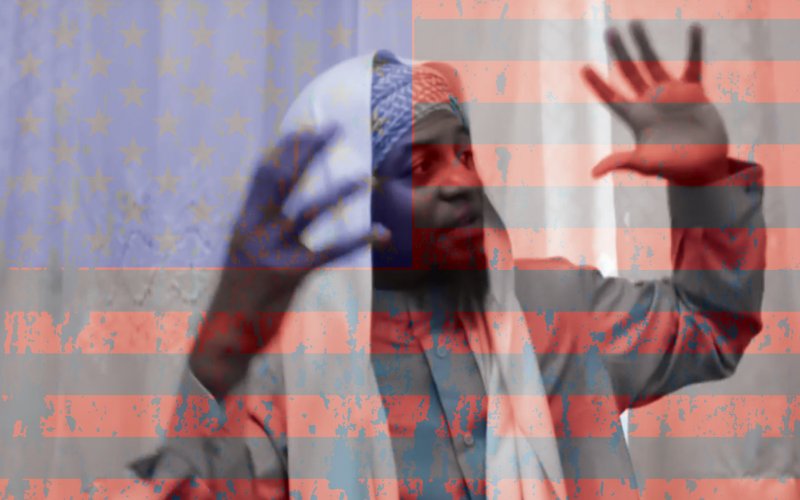


 Aletho News