Is the FDA a mutinous ship?
By Dr Clare Craig | Health Advisory & Recovery Team | June 3, 2025
They promised change. They promised transparency. They promised reform. But with the FDA’s latest approval of Moderna’s mNEXSPIKE® covid jab, it is clear the only thing that has changed is the branding.
This so-called “reformed” FDA has just authorised a new mRNA vaccine — without testing it against a placebo. Instead, the comparator was Moderna’s previous product, already associated with a range of known adverse effects.
And yet, somehow, we’re meant to believe this is progress.
Meanwhile, the leaders heading up MAHA, elected on a promise to end the regulatory theatre and restore public trust, appear to be captaining a vessel still drifting in the same dangerous waters. They are on a mutinous ship and are wrestling for the wheel.
While the FDA continues to greenlight successive iterations of mRNA vaccines, other major Western nations long since reduced their ambitions:
- In the United Kingdom, the Joint Committee on Vaccination and Immunisation (JCVI) now recommends boosters only for individuals aged 75 and over, residents of care homes, and those with specific clinical vulnerabilities.
- France and Germany have similarly curtailed their booster programmes, focusing on high-risk populations and refraining from broad recommendations for younger, healthier demographics.
This more cautious approach is not justifiable either given the failure of these product and their safety profile. The “benefit” only ever was – and continues to be – a statistical illusion. No one should be being exposed to this unnecessary risk.
This divergence raises a critical question: How can the same body of evidence lead to such different public health policies?
Latest Inadequate Trials
The Phase 3 trial underpinning mNEXSPIKE’s approval enrolled approximately 11,400 participants aged 12 and older. While this number might seem substantial, it’s important to note that only about half received the mNEXSPIKE vaccine, while the remainder received an earlier Moderna product as a comparator. There was no placebo comparison.
This sample size is insufficient to detect rare but serious adverse events – even with a placebo. Without one you can only see differences between two sets of harm.
For context, previous studies have indicated that mRNA vaccines may be associated with an excess risk of serious adverse events of special interest, estimated at approximately 15.1 per 10,000 vaccinated individuals. This is totally unacceptable for general use even in a product that has significant benefits.
Despite approval, critical safety studies are still pending. One study, assessing safety in pregnant women, is not due until 2032. Another, evaluating vaccine effectiveness for adults aged 50–64, is still in the planning stages.
Are the FDA still pretending there is an emergency to justify these rushed decisions?
A Hollow Reformation
The USA public deserves better from their officials. They are paying for this reckless approach. The question is, can those with a more precautionary, less ideological approach, wrestle the wheel of the ship and steer her to safety?
FDA Says ‘Meat Glue’ Used in Many Processed Foods Is ‘Safe.’ Scientists Have Another Theory.
By Brenda Baletti, Ph.D. | The Defender | April 25, 2025
Gluten and genetics may not be the only culprits behind skyrocketing cases of celiac disease and related inflammatory digestive autoimmune conditions. Scientists now believe the “meat glue” widely used in processed foods from chicken nuggets to veggie burgers may also play a role.
Recent research shows that an enzyme called microbial transglutaminase induces celiac disease and related inflammatory digestive diseases such as diabetes, rheumatoid arthritis, inflammatory bowel disease and psoriasis, writer Linda Bonvie reported on her Substack, Badditives.
Also known as “food glue,” transglutaminase is an enzyme widely used as a food additive to help foods stick together and look more appealing.
Meat glue is “beneficial for the food industry,” researchers Dr. Aaron Lerner and Torsten Matthias, Ph.D., said in one of several research papers they’ve published on the topic. But apparently, it’s not so good for public health.
Meat glue, Bonvie wrote:
“is the darling of Big Food for lots of reasons: it can glue together scraps of fish, chicken and meat into whole-looking cuts (often called ‘Frankenmeats’); extend the shelf life of processed foods (even pasta); improve ‘texture,’ especially in low-salt, low-fat products; make bread and pastries (particularly gluten-free ones) rise better, and, as one manufacturer puts it, allow for use of things that would ordinarily be tossed out — unappetizing leftovers and scraps of food that would ‘otherwise be considered waste ingredients, creating an added-value product.’”
According to Lerner and Matthias, meat glue can change the nature of gluten and make the immune system more reactive to them, which can cause conditions like “intestinal junction leakage” and set the stage for a variety of health issues.
Japanese ‘meat glue’ maker uses propaganda strategies developed for MSG
Japanese global food company Ajinomoto is one of the major producers of transglutaminase, Bonvie reported. The company also makes MSG and uses the same methods from “its long-running propaganda campaign claiming that MSG is a safe ingredient” to promote its meat glue.
The company advertises both ingredients as “found in food naturally” and promotes them as considered safe by the U.S. Food and Drug Administration (FDA).
Transglutaminase is found naturally in the body, but the natural form has a completely different structure from the microbial transglutaminase additive the company makes and adds to food.
Despite years of research showing the link between transglutaminase and celiac and other digestive disorders, the FDA considers all uses of the enzyme to be Generally Recognized as Safe (GRAS), Bonvie reported.
The GRAS classification has been widely condemned by food industry watchdog organizations, who say it allows Big Food to add new ingredients to the food supply with almost no federal oversight, according to Consumer Reports.
Companies seeking to have their product granted GRAS status simply submit paperwork, and the status is granted, Bonvie wrote. Ajinomoto has been doing that for over 20 years with its transglutaminase.
Ajinmoto first got the FDA to recognize the product as GRAS in 1998 for use in seafood. The following year, the company expanded the use to hard and soft cheeses, yogurt, and vegetable proteins and meat substitutes.
In 2000, the company notified the FDA it would expand the use to “pasta, bread, pastries, ready-to-eat cereal, pizza dough, and ‘grain mixtures.’” By 2002, it told the FDA it would be using it for “food in general.”
The FDA didn’t object to any of these uses.
The FDA didn’t object — even though Ajinomoto submitted the results of a 30-day toxicity study of the food glue in beagles. Dogs in the study experienced serious side effects — a pituitary gland cyst, lung discoloration and more — but the company said all the effects were unrelated to its transglutaminase.
Bonvie wrote:
“Why they bothered to include a study that shows that their product causes harm to the animals studied can only be understood if you know how Ajinomoto operates. Having done a study, they can later refer to the study that they did as though it proved that their product was ‘safe,’ knowing that no one will challenge them.
“Such claims have great propaganda value.”
Animal rights organization PETA has condemned Ajinomoto’s practice of conducting “horrific tests on dogs.”
Researchers warned that transglutaminase often goes unlabeled in processed foods. Anjinmoto says that it is a “processing aid” rather than an ingredient in most foods that use the product and is therefore exempted from labeling requirements in Europe and the U.S.
The product is also listed as an allowed enzyme in organic food and farming on the U.S. Department of Agriculture’s “National List of Allowed and Prohibited Substances.”
Worse, it is often used in gluten-free bakery products to improve their appearance, even though it causes a reaction in people suffering from celiac disease.
Bonvie said the only way to completely avoid the enzyme is to avoid processed foods altogether.
Given how challenging that can be for most people, she provides a list of foods to avoid, including: low-fat and low-salt dairy products and dairy substitutes, formed meat products like chicken nuggets, expensive cuts of meat sold cheaply, sushi from unreliable sources and farmed fish products, veggie burgers, and cheaply produced pasta.
Leading microbial transglutaminase researcher Lerner told Bonvie he thought the FDA should reconsider its classification of the enzyme as GRAS.
This article was originally published by The Defender — Children’s Health Defense’s News & Views Website under Creative Commons license CC BY-NC-ND 4.0. Please consider subscribing to The Defender or donating to Children’s Health Defense.
Is the FDA salvageable?
By Maryanne Demasi, PhD | March 26, 2025
Dr Marty Makary—now confirmed as FDA Commissioner—inherits an agency that routinely approves drugs with questionable benefits.
At Makary’s confirmation hearing on March 6th, senators repeatedly hailed the FDA as the “gold standard” of drug regulation—a phrase meant to reassure the public that approved drugs are significantly effective.
But this claim is an illusion.
In 2013, Jonathan J. Darrow, a Harvard legal scholar and expert in drug regulation, published a scathing analysis in the Washington and Lee Law Review, exposing the reality behind this phrase.
Darrow’s paper, Pharmaceutical Efficacy: The Illusory Legal Standard, meticulously details how the FDA’s approval process does not require drugs to be meaningfully effective—only that they show some effect, no matter how trivial.
Since then, the problem has only worsened.
Makary has spent years criticising medical waste and corporate influence in healthcare. But now, as the new FDA Commissioner, can he reform an institution this compromised?
The “gold standard” that fails the public
The phrase “gold standard” suggests uncompromising scientific scrutiny. However, under U.S. law, there is no specific level of efficacy required for a new drug to be approved.
The FDA’s legal framework, Title 21 of the U.S. Code, demands only “substantial evidence” of benefit, without defining what “substantial” actually means.
Darrow explains: “The standard is almost entirely illusory because it leaves to the drug sponsor the ability to specify any non-zero level of efficacy.”
This ambiguity explains why many widely prescribed drugs offer only marginal benefits.
Consider antidepressants like Prozac and Zoloft. Research indicates that the majority of patient improvement could be due to the placebo effect, not the drug itself.
Yet, because these medications show statistical improvement in clinical trials, they meet the FDA’s approval threshold and are marketed as transformative treatments.
Darrow reported in 2021 that most newly approved drugs (69%-98%) fail to provide substantial benefits over existing therapies.
Cherry-picking evidence
Another critical flaw in determining drug efficacy is selective trial reporting. Drug companies conduct numerous clinical trials, but the FDA only requires two successful trials for approval—regardless of how many have failed.
This means a company could run 10 trials, discard eight that show no benefit, and submit the two positive ones. This practice is precisely how some SSRI antidepressants were approved.
In a major exposé, researcher Irving Kirsch and his colleagues used the Freedom of Information Act (FOIA) to obtain unpublished clinical trial data on six widely prescribed antidepressants.
FDA approval had been granted based on twelve trials (two per drug). Yet, a FOIA request uncovered 47 trials—many of which showed no meaningful difference between the drug and a placebo.
The registration of trials on public registries like ClinicalTrials.gov was intended to improve transparency, but enforcement remains weak. Many trials that should have been disclosed are not, and financial penalties for non-compliance are rarely enforced.
The result? A regulatory loophole that allows ineffective drugs to be marketed as evidence-based solutions.
Misleading people with statistical tricks
Beyond cherry-picking trials, statistics can be manipulated to make drugs seem more effective than they are. One common tactic is presenting relative risk reduction instead of absolute risk reduction.
Take statins, the cholesterol-lowering drugs prescribed to millions. Clinical trials often claim statins reduce heart attack risk by 30%. However, this figure refers to relative risk—not absolute risk.
In reality, the absolute risk reduction is often less than 2%. This means that out of 100 people taking statins, 98 see no benefit at all. Yet, because the effect meets “statistical significance,” statins are approved and aggressively marketed as essential for heart disease prevention.
Another example is the diabetes drug saxagliptin (Onglyza), approved by the FDA in 2009. Marketed as a breakthrough for blood sugar control, later studies showed the absolute reduction of HbA1c—a key measure of blood sugar—was negligible (0.4% to 0.9%).
Worse, in 2013, a large-scale trial revealed a possible increased risk of heart failure. Yet, the drug remains on the market, illustrating how weak efficacy standards allow ineffective (or even harmful) drugs to persist.
The cost of an ineffective system
Weak efficacy standards don’t just mislead patients—they can also lead to financial strain. This issue is particularly egregious in oncology.
New cancer drugs routinely cost over $100,000 per year, yet many extend life by only weeks or months, if any. Families may drain their savings, hoping for a meaningful survival benefit, only to later learn that the drug offered little more than a statistical blip.
In 2016, the FDA granted accelerated approval to olaratumab, which was hailed as a breakthrough for soft tissue sarcoma. However, it was withdrawn in 2019 after further research failed to show any survival benefit.
The FDA had granted approval based on early-stage trials that created the illusion of efficacy.
This isn’t just a regulatory failure—it’s a moral one.
Why we need clearer drug labelling
Darrow argues that drug labelling is a major part of the problem. “There’s no requirement for pharmaceutical companies to offer any scale of benefit, in a manner that patients can understand,” he wrote.
“Knowing how well a drug might perform relative to an alternative—through clearly presented data—allows doctors and patients to decide whether it’s worth [it].”
He draws a parallel with sunscreen labelling. “A consumer easily understands that SPF30 will give greater protection than SPF10. So why don’t we have better drug labelling?”
Alternatively, he has suggested that drug labels could adopt a similar approach to food labels, “with data presented in columns that show key information and allow for side-by-side comparison.”
Or, the labelling for sleeping pills could “indicate the number of minutes it took those who had used them in clinical trials to fall asleep compared with a placebo.”
The lack of transparency only benefits the pharmaceutical industry from increased drug sales.
Can Makary fix the FDA?
Marty Makary has been a relentless critic of medical waste, unnecessary treatments, and corporate influence in healthcare. However, reforming an agency so deeply entrenched in industry influence is an extraordinary challenge.
Drug companies pay billions in user fees to the FDA, and in return, they influence regulatory decisions. Laws governing drug approval have remained largely unchanged for decades, ensuring that the FDA prioritises speed over scientific rigour and drug safety.
The FDA continues to approve drugs with minimal benefit, it allows companies to cherry-pick positive trials while ignoring negative ones and misleads doctors into believing that weak drugs are more effective than they are.
The public assumes that FDA approval means a drug is significantly effective.
It does not.
If Makary is serious about reform, he must push Congress for sweeping legislative changes to dismantle the pharmaceutical industry’s stranglehold on drug regulation.
The FDA was created to protect the public—not to serve as a rubber stamp for Big Pharma. Right now, the FDA is failing in its mission.
The question is no longer whether the FDA is the “gold standard” of drug regulation. It’s whether the agency is salvageable at all.
The questions they didn’t ask Marty Makary at his confirmation hearing

By Maryanne Demasi, PhD | March 9, 2025
By all accounts, Marty Makary’s confirmation hearing to lead the FDA went smoothly. As an experienced surgeon at Johns Hopkins with impeccable credentials, he handled questions with ease.
But the real issue was not what the senators asked Makary—it was what they didn’t ask him that was most concerning. They sidestepped the FDA’s recent, glaring failures, leaving critical issues unaddressed.
Much of the hearing consisted of senators pressing Makary for commitments on data he had not yet reviewed, such as mifepristone, vaping, and food additives. They also questioned him about recent FDA job cuts—decisions in which he had no involvement. As a result, there were no substantive revelations.
Makary promised greater transparency at the FDA and vowed to restore public trust. But why did no one press him on the agency’s most egregious missteps?
Speedy drug approvals
One of the most troubling trends at the FDA is its increasing reliance on expedited drug approval pathways.
Today, 65% of new drugs are pushed through these faster routes, despite clear evidence linking them to greater safety risks and a higher likelihood of requiring black box warnings.
The case of Aducanumab, the controversial Alzheimer’s drug, exemplifies this problem. It was approved in 2021 based on surrogate markers rather than meaningful clinical outcomes.
Despite an almost unanimous vote against its approval by the FDA’s advisory committee, the agency proceeded regardless, leading three committee members to resign in protest.
Harvard professor of medicine Aaron Kesselheim called it “probably the worst drug approval decision in recent US history.” Yet not a single senator questioned Makary on how he planned to reform this broken system.
When drugs are rushed through accelerated pathways, companies are required to conduct confirmatory trials to confirm efficacy and safety. But these confirmatory trials are frequently delayed, never completed, or ignored when results are unfavourable.
The FDA rarely penalises companies for non-compliance, allowing unsafe or ineffective drugs to remain on the market. Yet, the senators failed to ask Makary whether he would commit to stricter enforcement of these requirements.
A culture of secrecy
The FDA is the only major drug regulator in the world that receives individual participant data from clinical trials—yet it refuses to routinely release these data for independent scrutiny. If the agency stands by its approvals, why not allow external verification?
During the Covid-19 pandemic, the FDA granted Emergency Use Authorisation (EUA) for Pfizer’s mRNA vaccine trial in just 22 days—an unrealistic timeframe for proper analysis.
Worse still, it failed to conduct trial site inspections, despite knowing billions of doses would be administered, with experts calling the FDA’s oversight “grossly inadequate.”
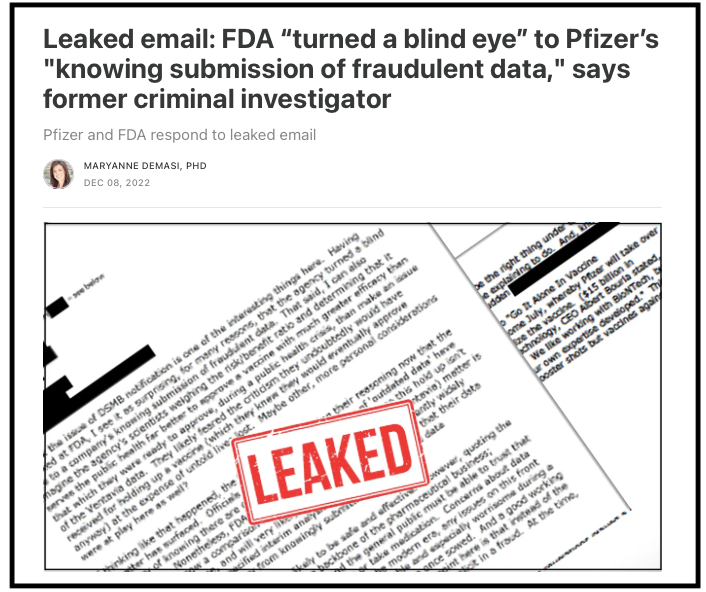
When whistleblower Brook Jackson provided documented evidence of scientific misconduct in Pfizer’s pivotal clinical trial, the FDA ignored her.
The agency’s own Office of Criminal Investigations, whose job it is to conduct criminal investigations into illegal activities involving FDA-regulated products, turned a blind eye.
How can the agency expect public trust when it turns ignores such evidence?
Adding to its opacity, the FDA attempted to withhold Pfizer’s vaccine trial data for 75 years, only relenting after a legal battle. The Judge in this case said the court order would “pierce the veil of administrative secrecy.”
This should have been a major topic at the hearing. I personally have had an FOIA request pending with the FDA for over three years, and the last time I checked, the agency claimed it was still “in triage.”
Concealing data
The FDA knew early on that the immunity conferred by Pfizer’s mRNA vaccine waned rapidly, yet it withheld these findings for months, during which time millions of people queued to get vaccinated under the assumption they offered lasting protection.
The agency, despite promising transparency early in the pandemic, consistently delayed releasing safety data, preventing doctors and the public from making informed decisions. None of this was brought up by Senators at the hearing.
FDA’s drug promotion
The FDA is a regulatory body, not a marketing agency—yet it actively promoted Covid-19 vaccines, claiming they prevented long Covid despite no supporting evidence.
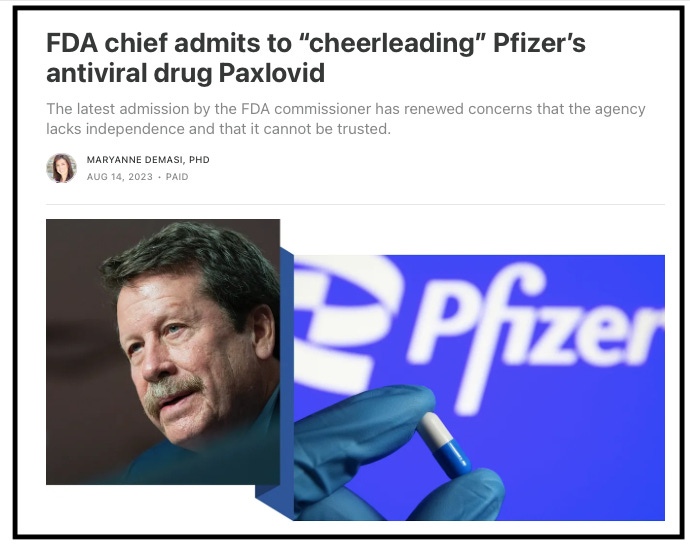
Former FDA Commissioner Robert Califf falsely stated that the Pfizer’s antiviral Paxlovid could prevent long Covid and even admitted to deliberately “cheerleading” the drug.
Meanwhile, the agency mocked alternative treatments like ivermectin, infamously tweeting: “You are not a horse, you are not a cow, seriously, y’all. Stop it.” It later removed the tweet after being sued. The FDA has no business dictating treatment choices or engaging in pharmaceutical advertising.
The agency also capitulated to political pressure.
The Biden administration pushed for universal Covid-19 booster approval despite weak data, prompting the resignation of two top vaccine officials, Marion Gruber and Phillip Krause. Senators should have demanded to know exactly how Makary would prevent future political interference.
False advertising
Pfizer CEO Albert Bourla publicly claimed that the company’s Covid-19 vaccine prevented transmission, even though the FDA’s own EUA documents stated this was never assessed.
The agency did nothing to correct this false advertising, yet no senator questioned Makary about how he would address misleading pharmaceutical advertising going forward.
Nor did they raise the issue of banning direct-to-consumer advertising—a policy Robert F. Kennedy Jr. has pledged to end.

Unanswered safety questions
Despite the pandemic ending, Moderna and Pfizer vaccines for young children remain under EUA. Why? There is no emergency justifying this continued authorisation.
Moreover, independent researchers have repeatedly raised concerns about excessive residual DNA in Covid-19 mRNA vaccines. The FDA has refused to investigate these findings, even as scientists continue to warn of potential risks.
Now, legal and medical experts have petitioned the FDA, citing regulatory violations and concluding the vaccines were “unlawfully approved.” Why was this not discussed at the hearing?
Beyond vaccines, the FDA has persistently ignored citizen petitions on other drug safety issues.
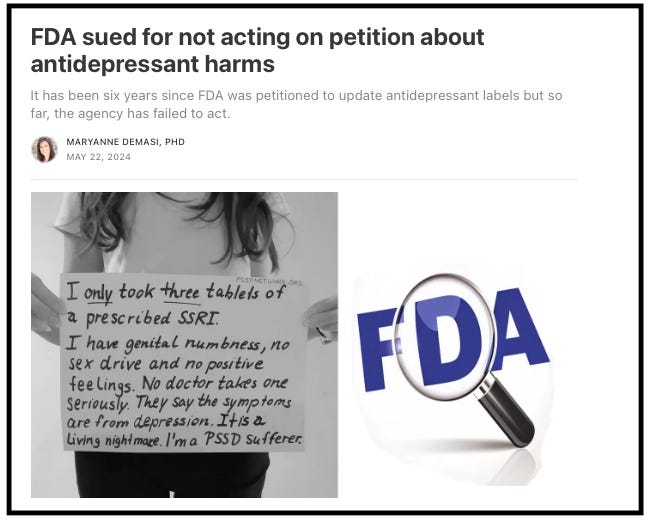
One example is its failure to update SSRI labelling to include warnings about post-SSRI sexual dysfunction (PSSD), despite overwhelming evidence. This inaction has led to legal action against the agency. Why did no senator demand accountability?
The task ahead
Makary was not responsible for the FDA’s past transgressions, but when confirmed, he inherits an agency in crisis.
To his credit, he was one of the few who publicly challenged flawed Covid policies during the pandemic.
Many hope he will now use his surgical precision to excise the rot within the FDA.
RFK Jr. Wins Crucial Vote, Moves One Step Closer to Top HHS Post
By Michael Nevradakis, Ph.D. | The Defender | February 4, 2025
The Senate Finance Committee today narrowly advanced Robert F. Kennedy Jr.’s nomination to lead the U.S. Department of Health and Human Services (HHS) to the full Senate for a confirmation vote.
The 14-13 vote along party lines came after Kennedy secured the vote of Sen. Bill Cassidy (R-La.), chair of the Senate Health, Education, Labor, and Pensions Committee that oversees HHS. Cassidy was the lone Republican considered to be a possible hold-out.
The Senate is expected to vote on Kennedy’s confirmation later this week or early next week, ABC News reported. The nomination “is likely to succeed absent any last-minute vote switches,” The Associated Press reported.
Kennedy, founder and former chairman of Children’s Health Defense (CHD), can be confirmed even if up to three Republican senators and all Democrats vote against him in the full Senate.
If confirmed, Kennedy will oversee a $1.7 trillion budget and 90,000 employees. HHS oversees 13 public health agencies, including the Centers for Disease Control and Prevention (CDC), the U.S. Food and Drug Administration (FDA) and the National Institutes of Health (NIH).
During today’s committee meeting, Sen. Thom Tillis (R-N.C.) said, “It is time to put a disruptor” like Kennedy at the helm of the HHS. “I hope he goes wild,” Tillis said.
Shares of vaccine manufacturers and packaged food companies, including Pfizer, Moderna, BioNTech, Novavax, Kraft Heinz, General Mills, Mondelez and Hershey, dropped after today’s vote, Reuters reported.
CHD CEO Mary Holland welcomed today’s outcome. She said:
“CHD is delighted that the Finance Committee is sending RFK Jr.’s nomination to the full Senate. Given the 2024 presidential results, this seems only fitting. ‘Make America Healthy Again’ has become a worldwide rallying cry, and CHD is proud to be a foundational part of this movement.”
In a statement, Dr. Joseph Varon, president and chief medical officer of the Independent Medical Alliance, also welcomed today’s vote. He said:
“Americans demand a frank conversation about the state of our government healthcare agencies, and we’re very grateful for the Senators who responded by voting to move RFK Jr.’s nomination to the full Senate.
“RFK Jr. has been asking the tough questions, and he’s been unmoved in the face of big-corporate money campaigns against him.”
In a statement before the vote, Sen. Mike Crapo (R-Idaho), chair of the committee, said that if confirmed, Kennedy “will have the opportunity to deliver much-needed change to our nation’s healthcare system.”
Cassidy, Kennedy agree to ‘unprecedently close collaborative relationship’
During last week’s hearing in the Senate Finance Committee, Cassidy said he was “struggling” with some of Kennedy’s positions regarding vaccines.
“I’ve had very intense conversations with Bobby and the White House over the weekend and even this morning,” Cassidy posted on X earlier today. “I want to thank VP JD [Vance] specifically for his honest counsel. With the serious commitments I’ve received from the administration and the opportunity to make progress on the issues we agree on like healthy foods and a pro-American agenda, I will vote yes.”
Following today’s vote, Cassidy delivered remarks on the Senate floor, revealing the content of those discussions and the agreement he made with Kennedy to secure his vote.
He said Kennedy committed to a strong public health role for Congress and to meeting or speaking with Cassidy multiple times per month. They also agreed that Cassidy will participate in the hiring process for HHS and the public health agencies it oversees.
“He and I will have an unprecedently close collaborative relationship,” Cassidy said, noting that the hiring decisions that will follow “will allow us to represent all sides of those folks who have contacted me over this past weekend.”
Kennedy also agreed to maintain statements on the CDC website that vaccines do not cause autism and to maintain the recommendations of the CDC’s Advisory Committee on Immunization Practices.
Cassidy said he would also reject any attempt to remove the public’s access to “life-saving vaccines” without “iron-clad, causational scientific evidence” indicating otherwise. He also said he would carefully monitor any attempt to “wrongfully sow public confusion” about vaccines.
Cassidy conceded that “many mothers do need reassurance that the vaccine their child is receiving is necessary, effective, and most of all, safe” and expressed his support for Kennedy’s positions on toxic foods and reforming the NIH.
“These commitments, and my expectation that we can have a great working relationship to Make America Healthy Again, is the basis of my support,” Cassidy said, noting that institutions like NIH and FDA require “reform.”
During last week’s confirmation hearings, Kennedy emphasized his “Make America Healthy Again” agenda and said he would work to tackle the chronic disease epidemic in the U.S.
Kennedy also said he would implement “radical transparency” in HHS. He also voiced support for vaccines — if backed by “good science.”
Related articles in The Defender
- Kennedy Calls for ‘Radical Transparency’ at Government Health Agencies, as Sanders Demands CHD Stop Selling Onesies
- RFK Jr. Pushes Back on Chronic Disease, Autism and Agency Corruption
- ‘True Corruption’: Agency Capture Responsible for Chronic Disease Epidemic in U.S.
- ‘An Act of War’: Big Food Intentionally Addicting Kids to Toxic Foods
- Breaking: RFK Jr. Suspends Presidential Campaign, Will Join Forces With Trump to ‘Save Millions of Children’
This article was originally published by The Defender — Children’s Health Defense’s News & Views Website under Creative Commons license CC BY-NC-ND 4.0. Please consider subscribing to The Defender or donating to Children’s Health Defense.
Johnson Subpoenas HHS for COVID Vaccine Safety Records, Fauci Emails
By Suzanne Burdick, Ph.D. | The Defender | February 3, 2025
Sen. Ron Johnson (R-Wis.) last week subpoenaed the U.S. Department of Health and Human Services (HHS) for COVID-19 vaccine safety records and communications about the COVID-19 pandemic, including a subset of Dr. Anthony Fauci’s emails.
HHS is required to produce the requested data and communications by Feb. 18. Johnson told The Defender it’s imperative that HHS comply promptly.
Johnson said:
“The federal government is supposed to serve the American people. Our taxes pay the bureaucrats’ salaries and fund their activities and studies. The results belong to the public and should be made available to us in a timely and transparent manner.
“Bureaucrats who withhold information only raise suspicion and reduce the credibility and integrity of their agencies.”
This was the first subpoena Johnson issued after being named chairman of the Permanent Subcommittee on Investigations on Jan. 21.
During the Biden administration, Johnson wrote more than 70 congressional oversight letters to HHS officials and its health agencies requesting information on COVID-19 vaccine adverse events and related communications, according to a Jan. 29 press release.
Biden HHS officials “either completely ignored or inadequately addressed” the requests.
Johnson said in a statement:
“In the waning days of the Biden administration and after years of obstructing my oversight efforts, I warned HHS officials that when I become chairman of the Permanent Subcommittee on Investigations, I will subpoena records and data on the COVID-19 pandemic that have been inappropriately withheld from Congress and the American people for far too long.”
The subpoena requires HHS to hand over:
- Previously withheld or heavily redacted communications about the pandemic, including Fauci’s emails, including but not limited to the approximately 50 pages of his emails that were withheld from Johnson’s office since September 2021.
- Safety surveillance data on the COVID-19 vaccines, including proportional reporting ratios and empirical Bayesian data mining.
- Unredacted records previously released through Freedom of Information Act (FOIA) requests regarding the government’s awareness of myocarditis and pericarditis cases in post-vaccinated individuals.
- Data and records relating to COVID-19 vaccine lots associated with higher rates of adverse events.
- Order forms and receipts showing government researchers purchasing DNA sequences from a biotechnology company.
- All communications relating to HHS’ receipt of and response (or lack thereof) to Johnson’s oversight letters between January 2021 and the present.
Risa Evans, an attorney for Children’s Health Defense (CHD), applauded Johnson’s efforts.
CHD has filed multiple FOIA requests to obtain records from HHS agencies including the U.S. Food and Drug Administration (FDA), the Centers for Disease Control and Prevention (CDC) and the National Institutes of Health (NIH) relating to the agencies’ monitoring of COVID-19 vaccine safety and injuries.
“The agencies have responded to our FOIA requests with delays, denials and redactions,” Evans said, “and we’ve been forced to sue to obtain records that, in truth, should be made public as a matter of course.”
Evans called the agencies’ lack of transparency “unconscionable — especially given the federal government’s relentless promotion of COVID-19 vaccination, coupled with claims that safety is being vigilantly monitored by the agencies and denials that the shots cause harm.”
Karl Jablonowski, Ph.D., senior research scientist at CHD, said:
“Time is washing away the knowledge of how the government’s monitoring of COVID-19 vaccine safety went wrong, and the fingerprints of the wrongdoers. Promptly responding to Senator Johnson’s subpoena may preserve enough knowledge to ensure the betrayal never happens again.”
FDA partially responds to CHD’s FOIA request
Some documents referenced in Johnson’s subpoena have already been released, Evans said. For example, on Jan. 10, the FDA posted emails about its safety surveillance of COVID-19 vaccines using empirical Bayesian data mining.
Empirical Bayesian data mining is a method of analyzing vaccine injury reports, Jablonowski said.
The FDA provided the emails to CHD and posted them on the agency’s website one day after the agency objected to a motion filed by CHD in federal court about a 2023 FOIA lawsuit. CHD sued the FDA after it failed to respond to CHD’s FOIA request for the documents.
Other groups and individuals — including Johnson, The Epoch Times and the Informed Action Consent Network — had also FOIAed the FDA for the same safety surveillance data.
On Jan. 10, the FDA sent CHD a letter explaining that it was posting the emails as a “partial reply” to CHD’s FOIA request.
In its FOIA request, CHD had asked for “records of any Empirical Bayesian data mining” that the FDA conducted and “records of any sharing or discussion of results and signals with the CDC.” The emails posted by the FDA showed some of those records.
However, CHD in its FOIA request also asked for records related to “consultations by FDA and/or CBER [the FDA’s Center for Biologics Evaluation and Research] with VAERS [Vaccine Adverse Event Reporting System] staff within the CDC’s Immunization Safety Office in connection with any signal that was detected.”
“The FDA still hasn’t responded to other key parts of our request,” Evans said. “In particular, it hasn’t provided records of the follow-up investigation the agency said it would conduct if it detected potential safety signals.”
Emails reveal FDA failed to detect safety signals
The emails released by the FDA revealed that in the first 18 months of the COVID-19 vaccine rollout, the FDA’s monitoring of VAERS showed consistent alerts for serious adverse events, including death, for the Janssen (Johnson & Johnson) vaccine.
VAERS, co-managed by CDC and FDA, is a “passive” monitoring system that accepts reports of adverse events experienced after vaccination.
Meanwhile, the FDA’s monitoring found almost no safety signals for the Moderna and Pfizer shots, failing to detect signals even for widely recognized risks like myocarditis, pericarditis and anaphylaxis.
According to Jablonowski’s analysis of the emails, the FDA and CDC were never sufficiently looking for safety signals, despite all the “posturing” the agencies did around the COVID-19 vaccines’ safety.
The FDA and CDC’s “willful ignorance” of the adverse events following COVID-19 vaccination is an “epic betrayal,” Jablonowski said.
Related articles in The Defender
- Breaking: Emails Obtained by CHD Reveal Government’s Failure to Monitor COVID Vaccine Injury Reports
- FDA Must Respond to Court’s Requests in CHD FOIA Lawsuit Involving COVID Vaccine Injury Reports
- CDC Stonewalls Requests for COVID Vaccine Safety Monitoring Documents
- Sen. Johnson Threatens Legal Action Unless HHS Turns Over Unredacted Emails on COVID Vaccine Safety
This article was originally published by The Defender — Children’s Health Defense’s News & Views Website under Creative Commons license CC BY-NC-ND 4.0. Please consider subscribing to The Defender or donating to Children’s Health Defense.
Pharma Spends Billions on Drug Ads, Fears Trump Administration Will Try to Ban Them
By Brenda Baletti, Ph.D. | The Defender | January 16, 2025
Drug companies report their biggest concern with the incoming Trump administration is the fear that the government will try to ban direct-to-consumer drug ads, according to a new report from The Lever that examines the industry practice.
Companies said such a ban would “almost certainly” lead to a drop in drug sales, according to a recent report by industry research firm Intron Health, which claims the return on investment for drug ads is as high as 100%-500%, depending on the drug.
The U.S. and New Zealand are the only two countries that allow drug companies to advertise directly to consumers.
When President-elect Donald Trump’s nominee to lead the U.S. Department of Health and Human Services (HHS), Robert F. Kennedy Jr. (RFK Jr.), was running as a presidential candidate, he promised to ban the ads through an executive order on his first day in office.
When he tapped Kennedy, founder and former chairman of Children’s Health Defense, to lead HHS, Trump criticized drugmakers and Big Food companies, saying they “have engaged in deception, misinformation, and disinformation.”
If confirmed, Kennedy would oversee the U.S. Food and Drug Administration (FDA), which sets policies on direct-to-consumer advertising by pharma.
“We see this as the biggest imminent threat from RFK and the new Trump administration,” the Intron report’s authors wrote.
The Lever predicted the chances the administration can successfully ban these ads are “slim,” but said Big Pharma’s reaction shows how dependent the industry — and the media conglomerates it supports — has become on advertising drugs to consumers.
Critics say the ads “misinform patients and underemphasize treatment risks,” in part because they don’t provide all the information a patient needs to make an informed decision.
The ads also lead to unnecessary drug prescriptions, which The Lever said raises healthcare costs for consumers and taxpayers.
Most heavily advertised drugs don’t provide meaningful therapeutic benefit
Direct-to-consumer marketing in the U.S. began in 1981, with limited success at first because the FDA required drugmakers to list all possible side effects in the ads, according to The Lever’s short history of the practice.
Under the Clinton administration in 1997, the FDA relaxed its policies, allowing drugmakers to list only “major risks” in their ads, paving the way for a new and massive wave of television advertising for prescription drugs.
Spending on ads shot up 330% between 1996 and 2005, reaching $4.2 billion by 2004, and continued to grow after that.
Between 2016 and 2018, drugmakers spent $17.8 billion on ads for more than 550 drugs. Most of these drugs treat chronic medical conditions like arthritis, diabetes and depression.
According to a 2021 report by the congressional watchdog Government Accountability Office, 60% of the $560 billion that Medicare and its beneficiaries spent on drugs went to the advertised drugs.
The Lever claimed there are benefits to such advertising. Citing a paper from the National Bureau of Economic Research, it suggested that advertising can “somewhat” educate consumers and extend drug care to “undertreated patients.”
However, the report said advertising also increases the number of patients that request an advertised medication and the likelihood their prescriber will give it to them, whether they need it or not.
The ads also lead to greater use of higher-cost drugs over generics, even when those drugs offer no greater benefit.
The Lever cites a 2023 study in JAMA Network Open that assessed the “therapeutic value” — whether a drug led to improved clinical outcomes — of the top 73 most heavily advertised drugs. The study found that only 1 in 4 advertised drugs had a high therapeutic value.
Study author Neeraj Patel told The Lever :
“Many consumers might assume that the drugs they see all the time on TV are for cutting-edge therapies that are groundbreaking advances over the other treatment options on the market …
“Our study suggests that assumption is usually wrong: Heavily advertised drugs often do not necessarily provide meaningful therapeutic benefits as opposed to other therapeutic options.”
Obstacles to ending direct-to-consumer ads
The Lever said it is “relatively unlikely” Kennedy will be able to ban the ads, partly because efforts to merely restrict drug advertising have been defeated in courts on First Amendment grounds.
The New York Times and the Wall Street Journal made similar predictions. However, The Defender reported that a wider field of experts disagree on whether such a ban is legally or constitutionally feasible.
During Trump’s first administration, a federal judge blocked an HHS rule requiring drugmakers to include prices in their TV commercials, saying it exceeded the agency’s statutory authority.
“Kennedy could continue to push for cost transparency or require FDA review of all drug ads,” The Lever noted, “but any such reform attempts would likely be slow-going and challenged by the industry.”
Big Pharma’s lobbying arm, which spent $294 million lobbying last year on issues like drug ads, is also an obstacle.
TV and radio broadcasters are also expected to fight a drug ad ban because Big Pharma is one of the top advertising spenders. Last year, the National Association of Broadcaster industry lobbying group spent $8.8 million lobbying on issues including direct-to-consumer advertising, according to lobbying records.
Prescription drugs accounted for 30.7% of ad minutes across evening news programs on ABC, CNN, Fox News, MSNBC and NBC last year through Dec. 15, according to the WSJ.
The Lever proposed less drastic measures to “mitigate” some of the negative impacts of this advertising rather than banning it altogether.
For example, the FDA could require pharmaceutical companies to include disclaimers about the effectiveness of the drugs versus other drugs already on the market. Or drug companies could offer a “Drug Facts Box” label, that would provide one-page summaries of the risks and benefits of new drugs.
The agency could also extend its requirement, instituted in 2023, that TV and radio drug ads use “consumer-friendly” and “understandable” language to disclose potential side effects, applying it to over-the-counter medicines, dietary supplements or other products, which also account for hundreds of millions of advertising dollars.
“Even if all of those drug ads filling the TV and computer screens aren’t likely to go away soon, advocates hold out hope that regulators could at least require them to be more informative and comprehensible,” The Lever reported.
Related articles in The Defender:
- Can the Trump Administration Ban Big Pharma Advertising? Experts Weigh In
- ‘Ask Your Doctor’: Can’t Someone in Congress Make These Endless Drug Ads Disappear?
- ‘Dangerous’: Global PR Giant Launches Provocative HPV Vaccine Ads Targeting Gen Zers
- ‘Brought to You by Pfizer’: Pharma Giant Spends More on Ads, News Sponsorships, Than Research
This article was originally published by The Defender — Children’s Health Defense’s News & Views Website under Creative Commons license CC BY-NC-ND 4.0. Please consider subscribing to The Defender or donating to Children’s Health Defense.
FDA responds to study on DNA contamination in Pfizer vaccine
Maryanne Demasi, reports | January 6, 2025
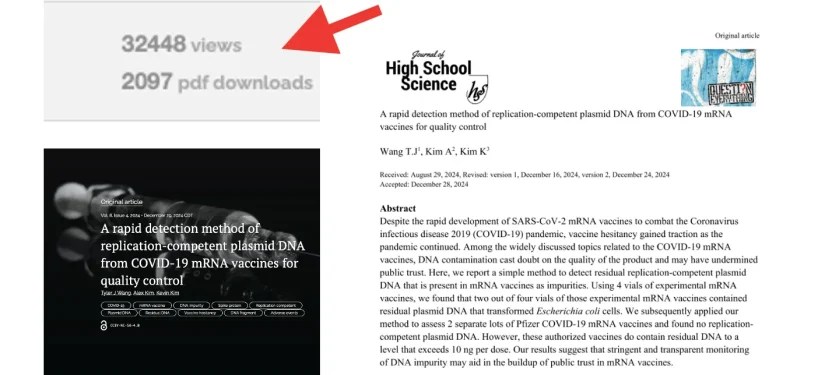
The U.S. Food and Drug Administration (FDA) has responded to a peer-reviewed study conducted within its own laboratory, which uncovered excessively high levels of DNA contamination in Pfizer’s mRNA COVID-19 vaccine.
The study revealed that residual DNA levels exceeded regulatory limits by 6 to 470 times, validating earlier studies from independent researchers that the FDA had previously disregarded.
Published by students in the Journal of High School Science, the study has garnered significant attention since the story broke, with its altimetric score rivalling those of major studies in leading medical journals.
FDA’s Response
Despite the study being conducted at the FDA’s White Oak campus in Maryland, the agency has sought to distance itself from the findings.
A spokesperson stated that the study “does not belong to the FDA” and is therefore not theirs to disclose.
“The FDA does not comment on individual studies,” the spokesperson added, declining to acknowledge the new scientific findings.
The agency also refused to address the involvement of three of its own scientists—Dr Shuliang Liu, Dr Tony Wang, and Dr Prabhuanand Selvaraj—who supervised the students conducting the study.
When questioned about potential regulatory actions, such as issuing a public alert, recalling affected vaccine batches, or notifying other agencies, the FDA stood firm in its defence of mRNA vaccine safety.
“Based on a thorough assessment of the entire manufacturing process by the agency’s scientific experts, the FDA is confident in the quality, safety, and effectiveness of the COVID-19 vaccines that the agency has approved and authorised,” stated the FDA spokesperson.
“The agency’s benefit-risk assessments and ongoing safety surveillance demonstrate that the benefits of their use clearly outweigh their risks. Additionally, with over a billion doses of the mRNA vaccines administered, no safety concerns related to residual DNA have been identified.”
This statement effectively shuts down any immediate plans for further investigation.
Calls for Accountability
The FDA’s response has provoked sharp criticism from scientists. Genomics expert Kevin McKernan, who first identified excessive DNA contamination in Pfizer vials in early 2023, called the agency’s stance evasive and deeply concerning.
“It’s the same script on auto-repeat at every regulatory agency,” McKernan said.
“They always say, ‘billions of doses given, benefits outweigh the risks, we’ve seen no evidence of harm.’ But billions of cigarettes were smoked too, and that didn’t make them safe.”
McKernan also questioned the FDA’s attempts to distance itself from the study.
“If the FDA supplied the materials for the study and provided technical advice through staff supervision, then how can they not be responsible for the data?” McKernan asked. “Do they only deny their connection when the data becomes inconvenient?”
Professor Nikolai Petrovsky, Professor of Immunology and Infectious Disease at the Australian Respiratory and Sleep Medicine Institute, shared McKernan’s concerns.
“The FDA’s response is extremely disappointing,” he said.
“It completely circumvents whether or not the level of DNA contamination in mRNA vaccines exceeds regulatory limits (as the study performed in their lab would indicate), and what they intend to do about it.”
“Just claiming there’s no safety issue and pointing to the billions of doses administered, without offering any evidence of safety, is far from satisfactory,” added Prof Petrovsky.
Regulatory Silence
The Australian Therapeutic Goods Administration (TGA), which has previously dismissed similar findings from independent researchers as “misinformation,” was contacted for comment but did not provide a response before publication.
Russell Broadbent, Victorian Member for Monash, expressed his disbelief at the regulatory inaction.
“I cannot fathom why the TGA isn’t making this their number one priority, given their charter is to regulate therapeutics to help ensure Australians stay healthy and safe,” he said.
In light of the FDA laboratory findings, Broadbent urged regulators to “immediately pause the rollout of the vaccines, and investigate the claims.”
The Stakes Could Not Be Higher
These revelations carry immense implications. mRNA vaccines are hailed as the dawn of a new era in vaccinology, with the world increasingly relying on this platform technology to supersede traditional vaccine methods.
Failure to address the safety of this technology will torpedo public trust in both the vaccines and the regulatory systems meant to ensure their safety.
“The public deserves clear answers, not regulatory hand-waving,” McKernan said.
As calls for accountability grow louder, the FDA faces mounting pressure to engage with the scientific evidence—particularly that which originates from its own laboratory.
NB: a comprehensive critique of the student study from FDA’s lab has been published by Kevin McKernan.
FDA Advisers Bullish on RSV Shots for Kids, Even as Safety Signals Shut Down Moderna Trials
By Brenda Baletti, Ph.D. | The Defender | December 13, 2024
Advisers to the U.S. Food and Drug Administration (FDA) met Thursday to discuss the future of pediatric respiratory syncytial virus (RSV) vaccines after Moderna was forced to abruptly halt clinical trials for its mRNA RSV vaccine in children ages 5-23 months.
Clinical trial data released earlier this week in an FDA briefing document showed that rather than preventing RSV disease in small children, Moderna’s vaccine likely caused higher rates of severe RSV illness in its Phase 1 clinical trial.
Moderna halted the trial in July after it was informed that two babies in the vaccine group had developed severe RSV disease. The company didn’t publicly announce that the trial was discontinued until September.
The data presented Thursday at the Vaccines and Related Biological Products Advisory Committee meeting showed that 12.5% of vaccinated children developed severe RSV disease as compared to just 5% of children in the placebo group.
Among the children who developed symptomatic RSV disease, 26.3% in the vaccinated group progressed to severe disease, while only 8.3% of those in the placebo group did.
These results were concerning given the history of past attempts to develop an RSV vaccine for infants. In the 1960s, an experimental formalin–inactivated RSV vaccine for children led to two toddler deaths, and 80% of vaccine recipients required hospitalization for severe RSV.
The illnesses were attributed to vaccine-associated enhanced respiratory disease (VAERD) — a phenomenon that occurs when vaccination promotes immune responses that exacerbate the disease caused by subsequent infection with the pathogen the vaccine was meant to protect against.
In light of that history, and because the mechanisms that cause VAERD are still largely unknown, the FDA convened the advisory committee to discuss the implications of Moderna’s trial outcomes for other pediatric RSV vaccines.
The committee did not vote on Thursday or make any formal recommendations. Members watched presentations from consultants, the FDA, and pharmaceutical companies and discussed the risks and benefits of developing RSV vaccines for children.
They also commended Moderna for reporting its results and the existing clinical safeguards for recognizing early safety signals in pediatric RSV trials.
Vaccine makers developing 26 different RSV vaccines or monoclonal antibodies
The briefing document stated that the FDA was halting enrollment for all investigational trials for RSV vaccines for infants and toddlers under age 2 and children ages 2 through 5 who haven’t previously had RSV.
The FDA clarified at the outset of the meeting that the hold does not apply to vaccine candidates that use live attenuated vaccines, because there is no evidence that vaccines developed on this platform cause VAERD.
Advisers seemed to agree, except for Dr. Karen Kotloff who voiced concerns there was not enough information to assume that live attenuated vaccines don’t carry the same potential risk.
Dr. Pedro Piedra, who presented on clinical and non-clinical aspects of RSV vaccine safety shared a slide listing RSV vaccines and monoclonal antibodies currently in trials.
There are five pediatric vaccines other than Moderna’s — which Moderna’s Christine Shaw, Ph.D., definitively stated is no longer moving forward — in the pipeline. Four of them are for live-attenuated vaccines.
Vaccine makers are developing 26 different RSV vaccines or monoclonal antibodies for all age groups, all vying to enter a rapidly expanding market.
PR Newswire projected in 2023 the global RSV vaccine and antibody market would be worth $2.61 billion dollars in 2024 and rise to $13.59 billion by 2030.
Piedra — who began his presentation with the quick disclosure that he has grants for RSV prevention research from GSK, Icosavax and Merck and is a paid consultant in the field for Merck, Moderna, Pfizer and Sanofi — presented an optimistic picture of RSV vaccine development, citing protection offered by recently approved maternal vaccines and monoclonal antibodies.
Moderna’s results did raise some platform-specific concerns, Piedra conceded.
He listed the types of safety concerns that could be associated with different vaccine platforms — febrile seizures with adjuvanted or high-dose vaccines or when RSV vaccines are co-administered with other vaccines, autoimmunity that could be associated with new adjuvants, respiratory issues with intranasal vaccines, and systemic illnesses with vector-based or mRNA vaccines.
‘Unmet need’ as justification to push for more RSV vaxes for small children
Presenters repeatedly stated that there was an “unmet need” for pediatric RSV vaccines, especially for children between 8 months and 2 years old.
RSV usually causes mild cold-like symptoms, but in some cases can lead to hospitalization and death in infants and the elderly. By age 2, 97% of all babies have been infected with RSV, which confers partial immunity, making any subsequent episodes less severe.
The disease burden for infants can be serious. In the U.S., RSV infection is the leading cause of infant hospitalization among those younger than 6 months, although a very small percentage of children with the virus will die.
An FDA representative said the Centers for Disease Control and Prevention (CDC) estimates that 100-200 infants die per year from the disease. However, internist Dr. Meryl Nass told The Defender that even those low numbers may overestimate mortality.
Nass pointed to a CDC study analyzing RSV deaths in infants between 2005 and 2016 and found a total of 314 deaths in children under age 1, or 25 on average per year, Nass reported. Only 17 of those deaths per year listed RSV as the underlying cause of death.
The FDA also said that maternal vaccines and monoclonal antibodies had begun to reduce those numbers, but emphasized there is still an “unmet need” for a vaccine for children going into their second RSV season — even as it presented data showing hospitalizations in that season are lower.
Moderna said this “unmet need” drove them to develop their failed vaccine. A Sanofi representative, who gave an update on their live-attenuated RSV virus, said the company sought to meet that “unmet need” for children in their second RSV season.
Sanofi also sells nirsevimab — brand name Beyfortus — the monoclonal antibody shot the CDC recommends for all newborns to protect them in their first RSV season.
Sanofi and the National Institutes of Health (NIH) are collaborating on the live-attenuated virus vaccine platform. The NIH developed 16 different vaccine candidates that it trialed in children and currently has one SP-125 in Phase 3 clinical trials.
These vaccines have not shown VAERD after one season of surveillance, the Sanofi representative said. The safety trials showed no safety concerns and SP-125 is currently being tested for efficacy in toddlers 6-22 months of age, but it is not yet fully enrolled.
During the “public comments” section of the meeting, three other vaccine makers promoted their vaccines to the committee.
Goal is more RSV shots for kids to provide passive immunity followed by ‘active immunity’
FDA asked the committee members to discuss existing evidence on whether infants and toddlers could eventually get sequential administration of RSV monoclonal antibodies followed by RSV vaccines.
That would mean even more shots on the childhood immunization schedule. The monoclonal antibodies or maternal vaccination would provide babies with “passive immunity” — antibodies to fight the virus that weren’t created by their own immune systems.
Then, in this schema, a two- or three-shot course of an RSV vaccine could protect babies from RSV in the second season, giving them “active immunity.”
Most committee members said more data were necessary to evaluate the safety of such a plan, but they generally agreed that it was a good direction to move in.
Watch the meeting here.
This article was originally published by The Defender — Children’s Health Defense’s News & Views Website under Creative Commons license CC BY-NC-ND 4.0. Please consider subscribing to The Defender or donating to Children’s Health Defense.
FDA Has Authority to Recall COVID Vaccines — A Growing Number of Scientists Are Demanding Swift Action
By Brenda Baletti, Ph.D. | The Defender | December 9, 2024
“It’s time for a recall” of the COVID-19 vaccines, epidemiologist Nicolas Hulscher argued on a recent episode of “Brannon Howse Live.” The mounting evidence that the COVID-19 vaccines caused death and other serious injuries are grounds for “Class I recall” by the U.S. Food and Drug Administration (FDA), Hulscher said.
Hulscher is one of the growing chorus of voices among public health officials, scientists and researchers demanding public health officials hit the pause button on the shots until definitive safety studies are performed.
The latest round of calls began in January when Florida Surgeon General Joseph Ladapo called for a “halt in the use of COVID-19 mRNA vaccines” over safety concerns that the mRNA technology is delivering DNA contaminants into people’s cells.
A few weeks later, the journal Cureus published the first peer-reviewed paper to call for a moratorium on the COVID-19 vaccines. The paper included a sweeping review of “lessons learned” from the clinical trial data and the many adverse events associated with the shots.
Just last week, elected officials, organizations — including the World Council for Health and Door to Freedom — and hundreds of doctors and researchers sent a letter to the heads of state of 10 European countries calling for a suspension of the “modified mRNA vaccines,” citing serious health concerns associated with the shots.
Calls for a moratorium or a recall have been widely controversial. Ladapo was accused by The New York Times of peddling “misinformation.” The Washington Post said he had a pattern of making “debunked claim[s],” and FactCheck.org accused him of relying on “faulty science.”
Cureus retracted the “lessons learned” paper in what co-author Dr. Peter McCullough called, a “stunning act of scientific censorship.” The paper was later republished in two parts in a different peer-reviewed journal.
Despite efforts to censor and discredit medical professionals and researchers who draw attention to the harms associated with the vaccines, even mainstream publications have conceded that the COVID-19 vaccines can cause serious injuries and that vaccine-injured people have been ignored. Yet, they continue to push the shots.
Hulscher told The Defender that the mainstream media’s refusal to seriously report on calls to pull the vaccines from the market has serious implications for public health. It’s “a contributing factor to excess mortality” among global populations, he said.
“The FDA has failed to protect Americans from unsafe products because they suffer from corporate capture,” he added.
M. Nathaniel Mead, lead author of the “Lessons Learned” paper, told The Defender the FDA never should have authorized the vaccines in the first place. The “usual safety testing protocols and toxicology requirements were bypassed” and a reanalysis of the trial data showed serious adverse effects. “The ‘safe and effective’ narrative has always been a farce,” he said.
Freedom of Information Act requests have uncovered evidence that top officials at the FDA and Centers for Disease Control and Prevention knew about COVID-19 vaccine injuries early in 2021 — long before making the information public.
Still, U.S. public health agencies continue to authorize and recommend new boosters.
The FDA could easily respond to calls to halt vaccination, Hulscher said, by issuing a Class I recall, where a drug is recalled because it is likely that its use will cause serious health consequences or death — which he said nine studies and the Vaccine Adverse Event Reporting System (VAERS) data show.
“Because criteria for a Class I recall have been far exceeded, it should be an easy and effective way to halt the COVID-19 injection program and begin the process of compensating those who were harmed.”
Hulscher said he expects that calls will grow to withdraw the vaccines from the market until the regulatory authorities finally take action.
How does a Class I recall work?
Drug recalls are mechanisms to remove or amend pharmaceutical products that violate laws under the purview of the FDA.
Recalls range from minor to serious. In a minor case, companies issue a public alert that a medical device may cause harm in some situations or temporarily withdraw a product from the market while addressing a rule violation.
More serious recalls come into play in the case of pharmaceutical products that may, or likely will, cause harm to human health. A Class I recall, the most serious type, typically involves withdrawing a drug from the market completely.
In most cases, the FDA doesn’t recall the product, the company does — either by its own initiative or at the FDA’s recommendation — and the FDA oversees the recall process.
In the case of vaccines and other biologics, medical devices and controlled substances, the FDA has the authority to compel a company to recall a drug.
If a determination is made that a batch, lot or other quantity of a product licensed under the Public Health Service Act presents an imminent threat to public health, the FDA can issue an immediate recall.
However, for most drugs, the FDA doesn’t have the authority to force a company to recall products that violate FDA rules — it can only recommend the drugmaker recall its product.
Federal lawmakers have periodically introduced legislation to provide the FDA with mandatory recall authority for any and all faulty or unsafe prescription and over-the-counter drugs. However, Congress has not yet passed a bill giving the FDA that authority.
In the past, drugmakers have initiated vaccine recalls and informed distributors and facilities that may have purchased a vaccine about issues with the product.
In 2007, Merck recalled 1.2 million doses of Haemophilus influenzae type B (Hib B) vaccines due to concerns the vaccine was contaminated with the Bacillus cereus bacterium. The CDC analyzed VAERS from April 2007 to February 2008 and identified 75 reports related to the Hib B vaccines, including five deaths. The agency said the deaths weren’t related to the reported B. cereus.
Merck also recalled one lot of Gardasil in 2013 because it contained glass.
In 1999, the FDA-approved RotaShield vaccine, meant to prevent rotavirus gastroenteritis, was found to be causing intussusception in infants, an often excruciating and potentially fatal condition in which part of the intestine telescopes into itself.
The CDC withdrew its recommendation after identifying more than 100 reports in VAERS of intussusception following vaccination with RotaShield. Wyeth, now Pfizer, withdrew the vaccine from the market.
The FDA had approved that vaccine as safe, even though the clinical trials showed increased incidences of intussusception in vaccinated infants.
A congressional investigation showed that many of the FDA and CDC advisers who recommended the vaccine had financial ties to pharmaceutical companies developing rotavirus vaccines.
Thousands of FDA-approved drugs and devices are recalled each year, and the number of Class I recalls has been trending upward. Details of each recall are listed on an obscure FDA “enforcement report” website.
There have been some limited recalls for vaccines in 2024, including for COVID-19 vaccines, but these have been Class III recalls of limited lots, and in those cases, the product was deemed unlikely to cause harm.
For example, in November, Pfizer issued a Class III recall of four lots of its Comirnaty vaccine that were shipped at temperatures exceeding refrigeration requirements. The lots went to Alaska and U.S. Pacific island territories.
McKesson Medical Supply issued Class III recalls for lots of polio, Tdap, Hepatitis A and B, shingles, flu and other vaccines after their walk-in refrigerator failed.
The FDA did not respond to The Defender’s request for comment on calls for a Class I recall of COVID-19 vaccines.
Researchers say evidence supports Class I recall of COVID vaccines
Last week, two new peer-reviewed studies presented evidence supporting a moratorium or recall for the mRNA COVID-19 vaccines.
A study published in Science, Health Policy and the Law detected DNA contamination in the COVID-19 vaccines, at levels three-to-four times higher than regulatory limits. The study added to previous findings by other researchers that were also the basis for Ladapo’s concerns. Such contamination could be grounds for a recall.
“The recent paper by Kammerer et al. is another in a series of papers that show very high levels of DNA contamination in modified mRNA vaccines,” Children’s Health Defense Chief Scientific Officer Brian Hooker told The Defender.
“In light of this and the already exhaustive body of literature on the toxicity of these jabs, they need to be recalled as soon as possible and the myriad injuries caused by the shots need to be addressed,” he added.
Another study published last week analyzed COVID-19 vaccine and booster safety data. The authors concluded that “at minimum,” health officials should institute a moratorium on the shots. “But ideally, they should be removed from the market and their use in humans should be stopped.”
In addition to the 38,190 deaths after the COVID-19 vaccine reported to VAERS as of Nov. 29, Hulscher also pointed to recent studies that taken as a whole he said provides enough evidence to trigger a recall.
Analyses have linked 3.1 million excess deaths to vaccines and lockdowns in 47 countries between 2020 and 2022, and 17 million excess deaths globally from vaccines and other pandemic response measures.
A 2023 article in BMC Infectious Diseases, later retracted by the journal, estimated that 278,000 Americans may have died from the COVID-19 vaccine by December 2021. Similarly, Pantazatos and Seligman estimated between 146,000 and 187,000 possible vaccine-associated deaths by August 2021.
Another 2023 study published in the Asian Pacific Journal of Health Sciences found that higher COVID-19 vaccine uptake was associated with increased all-cause mortality. Another recent study published in Bulgarian Medicine found a positive correlation between COVID-19 vaccination rates and excess mortality.
A recent study published in Microorganisms found that all-cause death risk was higher among people who had received the COVID-19 vaccine than those who hadn’t.
Hulscher and colleagues also recently published a study estimating 49,240 excess cardiac deaths possibly due to the COVID-19 vaccination in the U.S. from 2021-2023.
Hulscher and co-authors published a systematic review in Science, Public Health Policy and the Law on Nov. 17 of autopsy-related literature following COVID-19 vaccination. They found that 73.9% of the 325 deaths were linked to the shots, suggesting “a high likelihood of a causal link” between the shots and death.
This article was originally published by The Defender — Children’s Health Defense’s News & Views Website under Creative Commons license CC BY-NC-ND 4.0. Please consider subscribing to The Defender or donating to Children’s Health Defense.
Current Pfizer Board Member and Former Trump Appointed FDA Commissioner, Dr. Scott Gottlieb
His loyalty to Pfizer is so strong he’s willing to be publicly disloyal to Trump and attack Trump’s pick for HHS Secretary with false claims about vaccines
Injecting Freedom by Aaron Siri | December 1, 2024
Pfizer board member and former Trump appointed FDA commissioner, Scott Gottlieb, went on the air to attack Trump’s nomination for HHS Secretary, Robert F. Kennedy, Jr. Here is my response, posted on X, to his comments:
Pfizer board member, @ScottGottliebMD, you look foolish attacking @RobertKennedyJr on CNBC (links to clips below) because it’s clear you lack basic knowledge regarding vaccines. For example:
- Your claim that in “early 2000s … FDA reformulate[d] the existing MMR vaccine to take some of the preservatives out,” is false. Never happened. You are likely thinking about the removal of thimerosal in the early 2000s from various vaccines but as even CDC explains, “Measles, mumps, and rubella (MMR) vaccines do not and never did contain thimerosal.” https://www.cdc.gov/vaccine-safety/about/thimerosal.html
- Your claim that a child “can’t get vaccinated [for MMR] until age 2” is simply false. MMR is routinely given at one year of age and sometimes even earlier. https://www.cdc.gov/vaccines/hcp/imz-schedules/index.html
- Your claims regarding pertussis vaccines nonsensically ignore the fact that these products do not prevent transmission of the pertussis bacteria – they only provide, at best, personal protection. As a recent consensus paper of industry pertussis vaccine “experts” explained, “aPVs [pertussis vaccine] … cannot avoid infection and transmission. … aPV pertussis vaccines do not prevent colonization. Consequently, they do not reduce the circulation of B. pertussis and do not exert any herd immunity effect.” https://pubmed.ncbi.nlm.nih.gov/31333640/
- Your claims regarding polio nonsensically ignore the fact that the last wild case of polio in the U.S. was in 1979 and that the only polio vaccine used in the U.S. for the last 24 years only provides, at best, personal protection and does not prevent transmission of the polio virus. As CDC explains: “IPV [inactivated polio vaccine] … does not stop transmission of the virus.” https://www.cdc.gov/poliovirus-containment/diseaseandvirus/index.html
- You claimed that “we [Pfizer] don’t make the pediatric vaccines, Pfizer is not in that market” to deflect the claim that, as a board member of Pfizer, you have a serious conflict of interest in attacking RFK Jr. regarding pediatric vaccines. But, as you no doubt know, Pfizer does sell pediatric vaccines, including the Prevnar vaccine given to babies at 2, 4, 6, and 12 months of age, which was one of Pfizer’s top three selling products in 2023. https://www.pfizer.com/sites/default/files/investors/financial_reports/annual_reports/2023/ Your claim is either a lie or reveals deep ignorance.
- Your claim regarding measles mortality is based on dubious and unreliable data and ignores the facts that (1) approximately 400 people total died annually in the U.S. in the years before the first measles vaccine in 1963 (amounting to around 1 death for every 500,000 Americans), and (2) mortality from measles declined by over 98% from 1900 to 1960 before the vaccine and was continuing to decline. https://stacks.cdc.gov/view/cdc/6200. In any event, you dutifully ignore the fact that RFK Jr. has made clear he has no intention of taking away vaccines from anyone who wants them.
- You claim RFK Jr. will cost lives, but I would argue that ignorance regarding vaccine products does and has cost lives. I welcome a public debate in which we can discuss the number of lives ignorance about vaccines has cost versus your speculations about those RFK Jr. will supposedly cause (a man who has actually devoted his life to saving the lives of children).
Your knowledge regarding these products is only matched by your track record as a public “health” official. The plummeting decline in childhood health from the early 1980s (from less than 13% with chronic disease to now well over 50%) continued unabated while you were FDA commissioner. Respectfully, you lack authority or a track record, let alone basic knowledge, to speak on the subjects you address in this interview (let alone to discuss this topic with Senators to dissuade them from confirming RFK Jr.)
If you were being honest, you would reveal that your real concern, as a board member of Pfizer, is that Pfizer’s golden gooses – Covid-19 vaccines, Prevnar vaccines, RSV vaccines, etc. – will have to face the reality of the devastating harms they have caused to families across America. Your interview stinks of self-interest. The time for selling out America’s children so pharma and its leaders, like you, can line their pockets has come to an end.
The above responds to a recent CNBC segment on which you recently appeared and which you tweeted out in two parts:
Trump’s Picks for Surgeon General and Top Posts at FDA, CDC Earn Mixed Reviews
By Michael Nevradakis, Ph.D. | The Defender | November 25, 2024
President-elect Donald Trump’s nominees to lead three key federal public health agencies “would help the incoming president shift the priorities of agencies that are linchpins in public health” — but they’re also “controversial,” according to NPR.
Trump tapped Dr. Marty Makary to head the U.S. Food and Drug Administration (FDA), Dr. Dave Weldon to lead the Centers for Disease Control and Prevention (CDC) and physician Dr. Janette Nesheiwat for surgeon general.
“The roles will be key to helping to enact Trump’s second term health agenda, which could include agency reform and changes to public health policies,” Axios reported.
The three agencies report to the U.S. Department of Health and Human Services (HHS). Earlier this month, Trump nominated Robert F. Kennedy Jr., founder of Children’s Health Defense (CHD), to lead HHS.
Weldon previously criticized COVID-19 vaccines and restrictions. Makary and Nesheiwat first expressed support for vaccines and other pandemic-related policies but have become more critical in recent years.
Kim Witczak, a drug safety advocate who has worked with the FDA as a consumer representative, addressed mainstream criticism of the nominations. She told The Defender that “the pharmaceutical and medical-industrial complex is very worried.”
She added:
“The pharmaceutical and food industries have faced little resistance from regulators and Congress. The strong pushback we’re seeing now suggests they fear what might happen under an administration willing to challenge the status quo.”
Dr. Joseph Varon, president of the Front Line COVID-19 Critical Care Alliance, told The Defender, “Leadership in these agencies is critical for fostering trust in public health and ensuring evidence-based policies. We hope the nominees are committed to transparency, innovation and addressing the ongoing challenges in healthcare, particularly the lessons learned from the COVID-19 pandemic.”
Makary: U.S. government the ‘greatest perpetrator of misinformation’
Makary, a public health researcher and surgeon at Johns Hopkins University, developed the surgical safety checklist, adopted by the World Health Organization and credited with saving many lives. Makary worked with the first Trump administration, including on surprise medical billing, NPR reported.
Earlier this year, Makary published “Blind Spots: When Medicine Gets it Wrong, and What It Means for Our Health.” The book highlighted evidence that many modern-day health crises in the U.S. were caused or hastened by the medical establishment.
According to The Gateway Pundit, “Makary was initially an advocate for the COVID vaccine but changed his perspective as more data became available.” NPR noted that Makary “voiced support for lockdowns early in the pandemic and encouraged universal masking” but later “became increasingly outspoken” against such policies.
In 2021, Makary called the Biden administration’s CDC “the most political CDC in history” for not being forthcoming with the public about COVID-19 and the vaccines. According to the New York Post, he criticized the CDC and Biden administration for their “unsupported claims” about COVID-19 vaccine effectiveness.
Makary has also been vocal about the potency of natural immunity to COVID-19, criticizing the medical establishment’s “complete dismissal of natural immunity.”
In May, he criticized The New York Times for being slow to report on the thousands of people injured by the COVID-19 vaccines.
Last year, Makary said during congressional testimony that “public health officials have made many tragic mistakes during the pandemic.” Those mistakes included ignoring natural immunity, dismissing the possibility of COVID-19 originating from a lab leak, closing schools, masking toddlers and “pushing boosters for young people.”
In September, Makary appeared alongside Kennedy at a congressional roundtable hosted by Sen. Ron Johnson (R-Wis.) on the chronic disease epidemic. During the roundtable, Makary said, “The greatest perpetrator of misinformation has been the United States government.”
In his announcement, Trump said Makary would work with Kennedy to “properly evaluate harmful chemicals poisoning our Nation’s food supply and drugs and biologics being given to our Nation’s youth, so that we can finally address the Childhood Chronic Disease Epidemic.”
Brian Hooker, Ph.D., CHD’s chief scientific officer, told The Defender Makary has a “steep learning curve regarding vaccines in general” but has taken “encouraging stances late in the pandemic about the COVID vaccine and countermeasures.”
Scott C. Tips, president of the National Health Federation, said Makary represents “a mixed bag of mainstream medicine and outside-the-box thinking.” He credited Makary for opposing “mandatory COVID-19 injection boosters” and criticizing the FDA’s rejection of natural immunity.
Epidemiologist and public health research scientist M. Nathaniel Mead praised Makary’s nomination. “You’d be hard-pressed to find a physician with a deeper understanding of what ails our healthcare system and what’s needed to restore integrity to the FDA after six decades of regulatory capture.”
“Makary seems uniquely positioned to bring meaningful change,” Witczak said. “He understands the systemic harm caused by overmedicalization and the corporate capture of healthcare. His history of challenging mainstream narratives during COVID shows he isn’t afraid to speak out.”
Weldon sponsored bill to ban mercury from vaccines
Dr. Dave Weldon is an Army veteran who served as a Republican member of the U.S. House of Representatives between 1995 and 2009.
In a statement, Kennedy praised Weldon’s experience, saying he “will bring the truth and transparency needed to restore the public’s confidence” in the CDC.
In 2007, Weldon sponsored a bill that would have banned mercury from vaccines, expressing concern about “an enormous inherent conflict of interest within the CDC,” because the agency promotes vaccination while assessing their safety.
According to Politico, Weldon also “raised concerns about the safety of the measles, mumps and rubella vaccine and Gardasil, Merck’s papillomavirus virus, or HPV vaccine.
While in Congress, Weldon also introduced legislation outlawing human cloning and helped secure a deal that banned patents on human organisms, including genetically engineered embryos, according to The Associated Press.
According to NPR, Trump said Weldon would “proudly restore the CDC to its true purpose, and will work to end the Chronic Disease Epidemic,” and “prioritize Transparency, Competence, and High Standards.”
John Gilmore, executive director of the Autism Action Network, said Weldon “was sounding the alarm on failures in the vaccine system 20 years ago.” He said Weldon attended conferences like Defeat Autism Now and listened to mothers of vaccine-injured children, which is “not a behavior many doctors are inclined to do.”
Hooker said he was “very encouraged” by Weldon’s nomination, and that he’d like to know more about Weldon’s position on “the bloated vaccine schedule as well as COVID-19 countermeasures.”
He credited Weldon with helping independent thimerosal researchers gain access to the Vaccine Safety Datalink, a collaborative project that monitors vaccine safety and conducts studies on vaccine side effects.
Hooker, who participated in that project, said “Our access to the VSD was rescinded months later because [the CDC] didn’t like our results, which included a definitive link between thimerosal and autism. Weldon indeed will need to implement myriad changes to the flawed and fraudulent process.”
Weldon is the first nominee for CDC director who will face a Senate confirmation process, due to legislation passed in 2022, NPR reported.
Nesheiwat: ‘egregious unethical & harmful’ to add COVID shots to childhood schedule
Nesheiwat, Trump’s nominee for surgeon general, is a medical contributor to Fox News and medical director at CityMD, a network of urgent care centers in New York and New Jersey.
Nesheiwat previously promoted the benefits of getting vaccinated against COVID-19 and other infectious diseases, NPR reported. According to The Gateway Pundit, Nesheiwat has since changed her position and her “recent statements indicate a significant shift in her perspective.”
In October 2022, Nesheiwat tweeted, “If CDC approves a COVID vaccine addition to the routine schedule of vax for kids, it will mark the most egregious unethical & harmful decision to children. No mandates. Especially for a vax that can’t prevent disease.”
Nesheiwat has also questioned the efficacy of the COVID shots, tweeting in February 2023, “Covid vax does not prevent disease like we once thought it did per the cdc /Pfizer etc.,” and has tweeted in support of natural immunity.
In a statement, Trump called Nesheiwat an advocate for preventive medicine and praised her “commitment to saving and treating thousands of American lives.”
Mead said Nesheiwat’s about-face on vaccines “shows she has the ability to think critically,” which could help her “serve as a bridge builder at a time of deep division.”
A ‘historic opportunity to shake up the establishment’
Calling healthcare in the U.S. “horribly broken,” Hooker said the three nominees will face several challenges if confirmed because federal public health agencies require reforms.
Hooker said:
“Corporate influence, including the corporate capture of these agencies, is the biggest problem to be tackled. First and foremost, we need to protect children … from the highly flawed policies of these agencies.
“All influences from Big Pharma, Big Food and Big Ag need to be completely rooted out and the whole edifice should be rebuilt brick-by-brick to include only those policies that help and never harm children.”
Gilmore said public health agencies should publicize “all the data they have available.” He also called for a ban on vaccine mandates. “We have to be able to sue in a real court for vaccine injuries,” he added.
Varon called for independent clinical trials and for “independent scientific inquiry and reducing undue influence from corporate or political pressures.” He also called for promoting early treatment protocols for emerging diseases and giving physicians “the flexibility to treat patients with evidence-based approaches.”
“This moment represents a historic opportunity to shake up the establishment,” Witczak said. “After years of feeling like leaders were paying lip service — or working against the public — I finally see hope for meaningful reform. It’s time to restore these agencies’ missions to serve the public, prioritize safety, and act with integrity.”
This article was originally published by The Defender — Children’s Health Defense’s News & Views Website under Creative Commons license CC BY-NC-ND 4.0. Please consider subscribing to The Defender or donating to Children’s Health Defense.
Featured Video

Iran War Is Accelerating the End of US Dominance
or go to
Aletho News Archives – Video-Images
From the Archives
Why the UK, the EU and the US Gang-Up on Russia
By James Petras :: 03.20.2018
Introduction: For the greater part of a decade the US, the UK and the EU have been carrying out a campaign to undermine and overthrow the Russia government and in particular to oust President Putin. Fundamental issues are at stake including the real possibility of a nuclear war.
The most recent western propaganda campaign and one of the most virulent is the charge launched by the UK regime of Prime Minister Theresa May. The Brits have claimed that Russian secret agents conspired to poison a former Russian double-agent and his daughter in England, threatening the sovereignty and safety of the British people. No evidence has ever been presented. Instead the UK expelled Russian diplomats and demands harsher sanctions, to increase tensions. The UK and its US and EU patrons are moving toward a break in relations and a military build-up.
A number of fundamental questions arise regarding the origins and growing intensity of this anti-Russian animus.
Why do the Western regimes now feel Russia is a greater threat then in the past? Do they believe Russia is more vulnerable to Western threats or attacks? Why do the Western military leaders seek to undermine Russia’s defenses? Do the US economic elites believe it is possible to provoke an economic crisis and the demise of President Putin’s government? What is the strategic goal of Western policymakers? Why has the UK regime taken the lead in the anti-Russian crusade via the fake toxin accusations at this time?
This paper is directed at providing key elements to address these questions. … continue
Blog Roll
 Aletho News
- Western media whitewashes Israel’s attempted murder of British journalist in Lebanon
- Israel-linked arms facility set ablaze in EU
- IRAN: The Three Islands Unmaking American Unipolar Sea Power in the Persian Gulf
- Trump’s dispatch of Marine Expeditionary Unit signals desperation for any symbolic success
- Iran Proposes Creating Middle East Security Structure With All Regional States – President
- Iran’s weapons industry still churning out missiles despite war: IRGC
- Washington approves billions in new arms sales to Gulf states as concerns grow over stocks of air defenses
- Iran War: Pentagon’s $200B Budget Could Run Out in Just Five Months
- Seven US allies endorse Hormuz ‘coalition,’ offer ‘no commitment’ for military action
- ‘Safe’ corridor opening up through Strait of Hormuz: What we know so far
- If Americans Knew
- Meet the former fashion blogger and shady doctor behind the ‘30,000 dead’ Iran psy-op
- Vatican Secretary of State to Trump, Israel: End the war as soon as possible
- The Majority of Americans Believe War Against Iran Benefits Israel More Than US
- Efforts to shut down pro-Palestinian speech face series of setbacks in court
- What has Israel done to my brother?
- Eid without worship in Al Aqsa – Not a ceasefire Day 161
- Trump: Israel attacked Iranian gas field without US knowledge. No more such attacks!
- America’s friends must help extricate it from an unlawful war
- Democratic Nat’l Committee’s Kneejerk Backing of Israel Is Political and Moral Failure
- Major revelations from former counterterrorism chief Joe Kent’s extensive interview
- No Tricks Zone
- Energy Expert: Germany’s Nuclear Phaseout Was A “500 Billion Euro Mistake”
- New Research: South Australia’s Mid-Holocene Sea Surface Temperatures Were 4°C Warmer Than Today
- Storing Green Energy To Last Germany 10 Days Would Require A 60-Million Tonne Battery
- New Studies: UK Sea Levels Were 4 Meters Higher Than Today During The Mid-Holocene
- Destructive Green New Deal: German Energy And Metal Group Warns Of Drastic Crisis
- New Study Documents A 20-Year Pause In Arctic Sea Ice Decline – Driven By Internal Variability
- Wake-up Call: Survey Shows Majority Of Germans Now Favor Postponing Climate Targets!
- Televised! Leading German Political Candidate Tells Schoolchildren CO2 Makes Sun Hotter!
- New Study: A Century Warming Of 1.1°C Is ‘Commonplace’ And ‘Not Unusual’ During This Interglacial
- New Study: ‘Internal Noise’ And Volcanic Forcing Can Trigger 10-15°C Warming Within Decades
 Aletho News
