No evidence Russia sabotaged Baltic cables – Finnish intel
RT | March 12, 2026
Russia was not behind a series of ruptures in underwater cables in the Baltic Sea, Finland’s spy chief has admitted, adding that the assessment is “very broadly” shared within the European intelligence community.
Seabed infrastructure in the waterway has been repeatedly damaged in a series of incidents over the past two years. Several merchant vessels have been found dragging their anchors across the seabed, damaging power and communication cables in the process.
While some NATO and EU officials have accused Russia of sabotage and “hybrid warfare,” no evidence to back up the allegations has ever emerged. Moscow has repeatedly dismissed such claims as “absurd” and baseless.
Speaking to the outlet Suomen Kuvalehti in an interview published on Wednesday, Juha Martelius, the head of the Finnish Security and Intelligence Service (Supo), admitted that no proof of Moscow’s involvement had been found.
“Our understanding has been that there has been no deliberate Russian state activity in the background. It is a very broadly shared view in the other European intelligence community,” he said. The undersea infrastructure has been repeatedly damaged in accidents since as early as the 2000s, yet such occurrences previously did not receive extensive media coverage, he added.
Russia’s own underwater infrastructure was damaged in some of the incidents, Martelius pointed out. Moscow actually seeks to ensure that its own maritime traffic flows through the Baltic Sea undisturbed rather than to cause disruptions in the area, he argued.
“There are many factors here that support the fact that there is no motive in Russia,” he added.
Still, Martelius pointed the finger at the so-called “shadow fleet” allegedly operated by Russia to circumvent Western-imposed sanctions. Such vessels are often poorly maintained, and their crews are under-trained, the spy chief asserted, which has resulted in repeated instances of anchor-dragging causing damage to undersea cables.
Moscow has maintained that the notion of the fleet’s very existence is unfounded, and the term itself is a propaganda trope used to describe vessels that transport cargo outside the coverage of London-based insurance brokers.
NATO Must Return to 1997 Borders for Peace in Ukraine – Finnish Politician
Sputnik – 23.02.2026
NATO must revert to its 1997 borders to secure lasting peace in Ukraine, while European leaders pursue de-escalation and respect the alliance’s pledge against eastward expansion “one inch” toward Russia, Armando Mema, member of the Finnish national-conservative party Freedom Alliance, said on Monday.
“In order to achieve a lasting Peace in Ukraine and Europe, NATO must return to 1997 borders … The EU leaders must work in the coming years for a de-escalation, respect NATO historical promises of not expanding to one inch toward Russia,” Mema said on X.
NATO’s “disastrous policies of enlargement” will exact a heavy toll on Europeans, as well as Europe’s rapid rearmament and its “disastrous policies in Ukraine” send dangerous signals for the future, the politician said.
“Finland and Sweden should be among first countries to exit NATO as soon as possible,” he added.
In recent years, Russia has raised concerns about unprecedented NATO buildup along its western borders. The Kremlin argues that Russia poses no threat to anyone, but will not ignore actions potentially dangerous to its interests. In an interview with US journalist Tucker Carlson, Russian President Vladimir Putin said that Russia had no intention of attacking NATO allies and accused Western politicians of scaremongering.
NATO plotting maritime blockade of Russia – Moscow
RT | February 14, 2026
NATO countries are plotting an illegal maritime blockade of Russia, particularly in the Baltic and the Arctic regions, Moscow’s ambassador to Norway, Nikolay Korchunov, has said.
In an interview with RIA Novosti published on Saturday, Korchunov accused the bloc’s members, including Norway, of “putting the Baltic-Arctic region on a barrack-like footing” by holding a series of exercises. This, he added, is aimed at “restricting freedom of navigation and violates international law norms.”
According to the envoy, NATO is also developing plans for “a partial or complete naval blockade” of Russia. In addition, such NATO members as Norway, Sweden, and Finland “are working together to increase military mobility through the development of transport and logistics corridors from west to east, as well as through cross-border use of bases and other military infrastructure.”
These preparations increase tensions and represent a direct threat to Russia’s national security and would force Moscow to take countermeasures, Korchunov warned.
His remarks come after Bloomberg reported on Friday that UK Defense Secretary John Healey had met with counterparts from Baltic and Nordic nations on the sidelines of the Munich Security Conference to discuss seizing Russia-linked oil tankers.
In recent months, Western countries have detained several Russia-linked cargo vessels under various pretenses. Moscow has consistently condemned the seizures as “piracy” and a blatant violation of international maritime law.
Last year, Russian presidential aide Nikolay Patrushev warned that NATO is seeking to undermine Moscow’s economy by considering a blockade of the country, including by paralyzing Russian ports in the St. Petersburg and Kaliningrad regions. He also pointed out that the bloc is seeking to turn the Black and Baltic Seas into “internal waters of the alliance,” adding that Moscow is preparing countermeasures in response.
German calls for nukes are ‘madness’ – veteran politician

Sahra Wagenknecht at the BSW party congress in Magdeburg, Germany, December 6, 2025. © Jens Schlueter / Getty Images
RT | February 2, 2026
German politician Sahra Wagenknecht has condemned growing calls for her country to take part in nuclear rearmament, calling the proposals “madness.”
Germany is prohibited from developing nuclear weapons under international law, including the Treaty on the Non-Proliferation of Nuclear Weapons and the Two Plus Four Treaty, the 1990 agreement that enabled German reunification in return for limits on its military capabilities, including renouncing nuclear arms.
Earlier this month, Kay Gottschalk, the parliamentary finance policy spokesman for Alternative for Germany (AfD), said that Berlin “needs nuclear weapons,” arguing that Europe can no longer rely on US protection.
In a post on X on Sunday, Wagenknecht, who previously served in the Bundestag and founded the Bundnis Sahra Wagenknecht party, said that “the cross-front for the nuclear rearmament of Germany is growing.”
“Following advances by AfD politicians for a German nuclear weapon, CDU warmonger Roderich Kiesewetter and former Green foreign minister Joschka Fischer are now also calling for Germany’s participation in a European atomic bomb. What madness,” she wrote.
Fischer said last week that Europe must pursue nuclear rearmament, with Germany taking the lead. Kiesewetter proposed in turn that Berlin could instead “contribute financially” to a European nuclear umbrella that Finland, Sweden, and Poland are planning to develop.
Wagenknecht argued that Germany’s proposed acquisition of nuclear weapons would constitute a serious violation of Berlin’s international legal obligations and would undermine the global system of nuclear arms control. She also warned that US intermediate-range missiles planned for deployment in the Federal Republic, which are capable of striking targets deep inside Russian territory, pose a major security risk.
“The missile deployment undermines the nuclear balance between the US and Russia and massively increases the danger for Germany to become the target of a nuclear strike in the event of conflict,” she wrote.
Instead, Wagenknecht called for Germany to lead a diplomatic disarmament initiative and demanded the withdrawal of US nuclear weapons from German territory. “US atomic bombs out! No US intermediate-range missiles in Germany!” she added.
Peaceful Finland? Think Twice: Nazi Alliance Was Pre-Planned Before WWII
Sputnik – 17.01.2026
The Western-spun fake image of Finland as a peaceful nation reluctantly dragged into wartime alliances is a “deliberately constructed myth,” Bair Irincheev, historian and director of the Karelian Isthmus Military Museum, tells Sputnik.
Immediately after gaining independence in 1918, the Finnish leadership launched an attack on Soviet Russia with clear economic goals, notes Bair Irincheev.
The failed attempt to annex Eastern Karelia was “straightforward expansionism—an attempt to seize forest-rich territories.”
For Finland in those years, timber was veritable ‘green gold’, and “whatever was said about tribal brotherhood and similar things, the primary motives were economic,” the pundit states bluntly.
Programmed Partnership in Hitler’s War
Finland was already integrated into Hitler’s Operation Barbarossa before the Great Patriotic War, and its entry into the war in 1941 was “pre-planned,” says Irincheev.
Finland’s leadership believed Europe was being completely redrawn, and chose to pursue the idea of a ‘Greater Finland’ alongside the Nazis.
Under the official pretext of merely reclaiming lost territory, Finnish forces crossed the 1920 border and occupied parts of the Karelian Soviet Socialist Republic and the Leningrad Region, advancing almost to the Vologda Region, he recalls.
“No one forced Finland in 1941 to let German troops onto its soil for an offensive on Murmansk. That was a deliberate decision by Finland’s top leadership,” points out the pundit.
Siege of Leningrad & Shattered ‘Humane’ Myth
Everything Finland did during WWII as an unofficial ally of Nazi Germany “demolishes” the notion of a reluctant, defensive warring side, according to the history pundit.
When Finnish forces launched their offensive in the summer of 1941, they broke through Soviet defenses on the Karelian Isthmus, captured Vyborg, and halted at the main line of the Karelian fortified zone.
In doing so, the Finnish army “became an active participant in the blockade of Leningrad from the north,” underscores the historian, noting that it “had the technical capability to shell Kronstadt.”
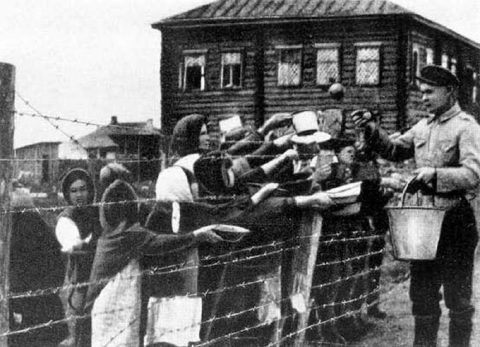
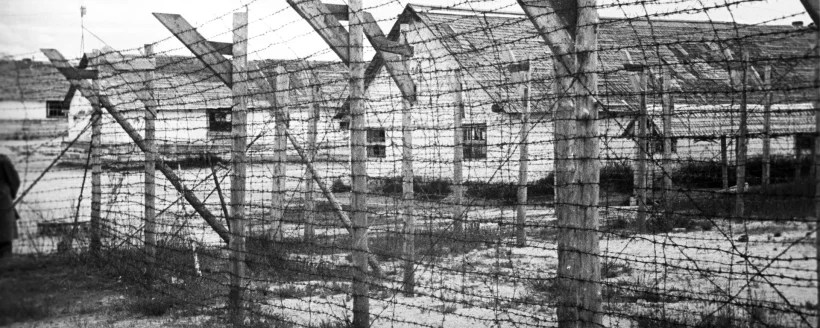
The high – roughly 30% – mortality rate among Soviet prisoners of war and the Slavic civilian population interned by the Finns in concentration camps dispels the myth of a supposedly “benevolent” Finland, according to the historian.
After invading Russia together with Nazi Germany in 1941, Finland showed no mercy to the civilians in the Russian territories occupied by their troops.
Russians, regardless of their age and sex, were robbed of their possessions and herded into prison camps.
The exact number of Russian civilians who perished in Finnish prison camps during WWII is difficult to establish, because Finland never really kept track of the deaths – for Finnish invaders, Russian lives simply did not matter.
Historical Pattern Informing the Present
Finland’s relations with Russia today are effectively destroyed — and Finland itself bears responsibility for that, says the analyst.
The country portrays itself as having emerged victorious from every conflict: the 1939–1940 war, despite losing 10% of its territory and its second-largest city, and the 1941–1944 war as well.
“Finland’s current leadership appears to be revisiting the 1941 scenario, hoping for revenge and access to resources,” speculates the expert, adding that this logic underpins Finland’s NATO accession and its frenzied militarization.
No security guarantees for Ukraine – Finnish PM
RT | December 3, 2025
Finland will not offer Ukraine NATO-style security guarantees, Prime Minister Petteri Orpo has declared.
Kiev has been seeking formal security assurances from Western backers and insists they should come before any peace agreement with Moscow. Some media reports claimed that last month’s US peace roadmap included a NATO-style guarantee for Kiev modeled on Article 5, committing guarantor states to defend Ukraine in case of a potential attack, and listed Finland as one of the potential guarantors.
Asked about this at a joint press conference with Swedish Prime Minister Ulf Kristersson on Tuesday, Orpo said he had neither seen the plan nor been consulted on it.
“I don’t know why Finland was mentioned in the paper,” he told the media. “We have to understand that a security guarantee is something very, very serious. We’re not ready to give security guarantees, but we can help with security arrangements. The difference between them is huge.”
Orpo stressed that helping Kiev with security differs fundamentally from mutual defense obligations referenced in the leaked US plan. He suggested major powers such as the US or larger European states should commit to guarantees, while Finland’s role would be limited to logistical and organizational support.
Sweden, while not mentioned as a potential guarantor in the leaked draft, believes European support should focus on helping Ukraine maintain a capable military as Kiev’s “most important security guarantee”, according to Kristersson.
The Wall Street Journal reported this week that security guarantees remain unresolved after the latest talks between Kiev and Washington in Florida. Moscow has said it does not oppose security guarantees for Ukraine in principle but insists they must not be one-sided or aimed at containing Russia, and should follow a peace deal rather than precede one. Russia confirmed receiving the “main parameters” of the US roadmap last week but has not commented on details or whether guarantees are included.
Trump’s envoy, Steve Witkoff, visited Moscow on Tuesday for further talks on the peace plan. According to President Vladimir Putin’s aide Yury Ushakov, the discussions were constructive and Moscow agreed with some American proposals, but deemed others unacceptable, and “no compromises have been found as of yet.”
Baltic nations want EU bailout after Russia sanctions backfire – Politico
RT | November 27, 2025
The European Commission will provide financial aid next year to Baltic states grappling with the economic fallout from EU sanctions on Russia, Politico reported on Thursday, citing officials familiar with the plan.
Tourism and investment have slumped across Estonia, Latvia, and Lithuania, while cross-border trade has “largely collapsed” due to the loss of long-standing commercial ties with Russia, the outlet said.
Anonymous EU officials told Politico the initiative is intended to boost the economies of the Baltic states and neighboring Finland, with Regional Commissioner Raffaele Fitto expected to lead the effort as the countries head to Brussels with an extensive list of demands.
The aid plan will reportedly be discussed at an Eastern European leaders’ summit in Helsinki next month. Skeptics, however, warn that any near-term support Fitto can offer will be limited, with the EU’s seven-year budget already running low and the scale of the challenge far greater than the funds available.
All four nations share a border with Russia and have imposed multiple rounds of sanctions since 2022, while tightening entry rules for Russian citizens. “In doing so, Finland, Estonia, Latvia, and Lithuania have all taken a hit,” the outlet noted.
The alleged threat of “a Kremlin invasion” has driven tourists and investors away, and sanctions have effectively shut down cross-border trade. Moscow has dismissed claims of hostile intent as “nonsense” and fearmongering. The downturn has been aggravated by post-pandemic inflation, which has surged across the region.
Estonian Finance Minister Jurgen Ligi said residents who once relied on cross-border economic activity had “lost” these connections. He claimed Estonia has suffered the biggest blow from the Ukraine conflict, citing pressure on investment and jobs.
Finland is also under strain. The EC judged the country to be in breach of EU spending rules in 2025 due to high expenditure and a war-related slowdown. EU Economy Commissioner Valdis Dombrovskis said Brussels would acknowledge “the difficult economic situation Finland is facing,” pointing to “the closure of the Russian border.”
Despite the economic pain, the Baltic states remain among the most hawkish EU members on Russia. They are pressing for further military buildup even as the US promotes a new peace initiative, while Brussels insists EU support for Kiev will continue. Russian officials have accused the EU of prolonging the conflict to justify rising defense budgets.
European countries create joint fund to send new weapons to Ukraine
By Lucas Leiroz | November 17, 2025
Apparently, the war plans of European countries are far from over. Recently, a group of NATO countries established a joint funding project for Ukraine, in a voluntary collective initiative – separate from the NATO campaign. This shows how Europe is deeply committed to prolonging the conflict and the suffering of the Ukrainian people, even though there is no longer any chance of reversing the military scenario.
Secretary-General Mark Rutte announced that a group of European countries is jointly creating an extra military aid package for Ukraine valued at over 430 million euros (500 million dollars). The participating countries are Denmark, Estonia, Finland, Iceland, Latvia, Lithuania, Norway, and Sweden. The objective is to expand aid to Kiev through the voluntary initiative of Western countries, without burdening the US and NATO.
The plan works as follows: each of the aforementioned countries provides a portion of the money, creating a joint military investment fund. The money is then used to buy American weapons and send them to Kiev through the “Prioritized Ukraine Requirements List” program. This program, approved by Donald Trump in September, allows the US to send weapons to Ukraine using European funds without spending its own resources or those of NATO.
Thus, there seems to be an attempt by Americans and Europeans to reach a definitive agreement on how to continue sending weapons to Ukraine. Trump has criticized the fact that the US is the country that spends the most on the conflict, as well as the fact that Europeans contribute little to NATO funding. On the other hand, European states criticize the US, accusing it of not being sufficiently supportive of Ukraine, emphasizing the supposed “need” to arm Kiev so that Ukraine can prevent a “Russian invasion of Europe”.
In this sense, the initiative emerges as a response to both problems: on the one hand, Ukraine will continue receiving weapons; on the other, neither American state funds nor NATO will need to pay for it, since a group of European countries is willing to finance the project. Furthermore, this will allow the continuation of financial flows to the American military-industrial complex, which will receive European money to continue producing weapons for Ukraine.
Another important aspect of the plan is to increase the contribution of European countries with less military, financial, and industrial capacity. Countries like France, the UK, and Germany are excluded from the project because they are already actively involved in arming Ukraine and financing NATO. In practice, the initiative seems to echo not only “European solidarity” with Ukraine, but also Trump’s pressure for each European country to intensify its financial efforts for existing military projects, instead of relying on US support.
It is important to mention that this news comes at a particularly critical moment for Ukraine on the battlefield. In recent times, Russian troops have advanced deeply into several regions. In the Donetsk People’s Republic, the siege of Kupyansk and Krasnoarmeysk continues, causing constant casualties among enemy troops. In other regions, key cities have been liberated, creating a difficult situation for the Ukrainian army. Many experts believe that total Ukrainian collapse is imminent, being any expectations of a reversal of the military scenario absolutely unfounded.
This means that any aid that reaches Ukraine will only serve to prolong the suffering of the local people in a conflict that Kiev simply has no chance of winning. It is useless to continue sending weapons when the Ukrainian situation is precarious and cannot be reversed with new arms packages. Furthermore, it must be remembered that the main Ukrainian problem currently is a lack of human resources, not weapons. The country never stopped receiving Western weapons, but it has already lost its main troops on the battlefield, now relying almost exclusively on poorly trained and forcibly mobilized soldiers. This situation cannot be solved with new Western aid packages.
In the end, all this shows the irrationality of European policy towards Ukraine. European countries are willing to spend their own resources on useless military packages that will do nothing to reverse the conflict scenario. Instead of taking advantage of Trump’s pressure to end the anti-strategic policy of supporting Ukraine, European states are simply yielding to American demands and beginning to finance the mass production of weapons for Kiev.
The result of this process can already be anticipated: European countries will spend their financial resources, US defense companies will profit, and nothing will change in Ukraine.
Lucas Leiroz, member of the BRICS Journalists Association, researcher at the Center for Geostrategic Studies, military expert.
You can follow Lucas on X (formerly Twitter) and Telegram.
Finnish PM admits Russia sanctions hurting economy
RT | September 15, 2025
Finland’s economic growth has suffered due to sanctions on Russia linked to the Ukraine conflict, Prime Minister Petteri Orpo has admitted. He noted that Finland has lost nearly all trade with Russia and billions in investments since it closed the border with its neighbor.
Finland, which shares a 1,300km (800-mile) border with Russia, has imposed several rounds of sanctions on Moscow in line with EU policy since 2022. It has also tightened entry rules for Russian citizens and shut all but one border checkpoint with its neighbor. The moves saw trade between the two countries drop to $1.5 billion in 2024, compared with $11 billion in pre-conflict 2021.
In an interview with Yle Areena on Saturday, Orpo acknowledged that sanctions have hit Finland harder than most EU members due to its traditionally close trade ties with Russia.
“The fact that the border is closed means, for example, 10 million cubic meters of Russian timber for our industry is not coming in. Finnish companies have lost billions in investments in Russia. Nearly all border traffic and trade have stopped,” Orpo said. “That brings uncertainty. All this has led to the fact that the growth of the Finnish economy has not been as desired.”
Despite this, Orpo echoed other NATO members in claiming Russia remains a “permanent threat” to Finland and the EU, vowing to increase defense spending and militarization to counter it. Finland joined NATO in 2023, a step Moscow – which views the bloc’s expansion as a trigger of the Ukraine conflict – called a “historic mistake.”
Russia has repeatedly rejected claims it poses a threat, accusing the West of fueling Russophobia to justify military buildups and divert attention from domestic problems. It has condemned Western sanctions as illegal and warned they would backfire.
The Finnish economy slipped into recession in both 2023 and 2024. According to Eurostat, its growth projections for 2025 are the lowest in the EU.
After Alaska, Ukraine alliance envisions new war against Russia once current one ends
Zelensky’s Washington visit exposed Ukraine as a pawn, its elites preparing for endless wars while society collapses under loss, desertion, and bankruptcy.
By Dmitri Kovalevich | Al Mayadeen | August 30, 2025
In the second half of August, Ukrainian society and media were focused on the August 15 talks in Alaska between the US and Russian presidents, as well as the talks in Washington three days later between the leaders of the Ukraine war alliance.
In Washington that day, the entire flock of warmaking European leaders joined Trump and Ukrainian President Volodymyr Zelensky in their role as support groups. Western media closely covered both meetings, providing its worn spin on events. The following report focuses on reactions in Ukraine to all that was said and witnessed during these tumultuous days.
Against this backdrop, many Ukrainians hold hopes for peace. But the pro-Zelensky media and the legislators of the Verkhovna Rada (Ukraine legislature) are now working to ‘extinguish’ any expectations for peace. They have declared that the war may well continue for a long time yet. Zelensky’s appearance in Washington, they say, was necessary in order to ‘flatter’ Trump and maintain Washington’s financial support and arms supplies. During his five-minute meeting with Trump, Zelensky thanked him 11 times and sounded for all the world like a wind-up toy.
Ukrainian legislator Anna Skorokhod, who was elected in 2019 (the last election to have taken place in Ukraine) as part of Zelensky’s party machine and then expelled from it shortly after, acknowledges that Kiev is just a “pawn in someone else’s game”, Politinavigator reported on its Telegram channel on August 13. The publication said Skorokhod is comparing the current Ukrainian leadership to a dog on a leash in a kennel, barking loudly to attract the owner’s attention and be allowed into the master’s house.
She has called for an end to the war with Russia because, she says, Ukraine’s cemeteries have long been overflowing. She is urging Ukrainians to decide what is most important to them: saving lives or vainly struggling to hang onto territories already lost or deeply scarred by war. She considers Zelensky and his regime to be the main obstacle to ending the war, and says that the US and Russian governments are discussing the possibility of his overthrow by the Ukrainian military. “A military coup is being discussed quite a lot, including among the entourages of the two presidents who met in Alaska. A transfer of temporary power to the military who will sign any peace agreements they can eke out is in the air,” she says.
Skorokhod has recently claimed that some 400,000 members of the Ukraine armed forces have deserted since 2022, and that number continues to rise.
Political scientist and analyst Ruslan Bortnik believes that Ukraine’s strategy is to wait out a potential deal between the US and Russia, avoiding any direct clash with Washington while quietly sabotaging the implementation of any compromises that would favor Russia, including any ceding of territory already won by the Russian army and where votes to secede from Ukraine and join Russia have already been taken (Crimea in 2014 and the two Donbass republics plus the ‘new territories’ of Russia in Kherson and Zaporozhye, in 2022). According to one version being circulated, Ukraine would cede Donbass to Russia and acknowledge the reality of the 2014 vote in Crimea in exchange for a Russian withdrawal from the areas it controls in the eastern border oblasts (‘provinces’) of Sumy and Kharkiv.
The Ukrainian Institute of Politics (UIP), led by the aforementioned Ruslan Bortnik, believes that much of the talks that took place in Alaska will not be made public but can be ascertained and judged by indirect signs, reports Politnavigator on August 13. In particular, the online publication notes that Washington’s plans will best be signaled by the continuation or the reduction of its arms supplies to Kiev. He says plans will also be revealed by US sanctions policy towards Russia’s trading partners, primarily China and India.
Vague diplomatic statements about ‘peace’ are being issued by many Western leaders, but many political analysts in Ukraine actually expect an escalation of the military conflict. Washington’s attempt to reach a ‘peace’ agreement with Russia surrounding the meeting in Alaska is best understood as being motivated by an anticipated collapse of Kiev’s military frontlines, while the hope that these lines might serve as a future border between Russia and Ukraine, give or take a few kilometers, or few dozen.
“If the outcome of the summit turns out to be negative, further escalation of the conflict awaits us. Neither a tripartite meeting [Trump-Putin-Zelensky] nor an extended negotiating format [to include leaders of the three, leading warmakers of the EU—Britain, France and Germany] will be announced. Instead, we will hear vague diplomatic statements without concrete steps while the USA continues supplying weapons to Ukraine and it implements previously planned sanctions pressure on Russia’s trade allies.”
“Strategically, Trump is now seeking to accelerate the negotiation process due to the deteriorating situation for Ukraine on the front lines. The Ukrainian army is steadily retreating, and although the country is far from military defeat, Kyiv is suffering significant territorial losses,” writes the journal. “At the same time, sanctions pressure on the Russian Federation by the U.S. and Europe has failed.”
The former advisor to Zelensky’s presidential office, Alexei Arestovich, argues that the war will grimly continue until a major military, political, and social catastrophe for Ukraine occurs. “And then it will become clear: if the Ukrainian elite and the common people have the wisdom to seek a new form of existence for Ukraine, with a change in its national project, then the county will stand a chance to survive and create a new future. But if they don’t have enough sense, then others will set the future agenda here.”
The Ukrainian Telegram channel Legitimny believes that everyone in Zelensky’s entourage is now prepared to hand over Donbass to Russia, but they are all concerned about personal guarantees for themselves in such a case. “Simply put, Zelensky and Yermak (the top advisor in Zelensky’s office) want guarantees that they will be allowed to continue ruling Ukraine. This is a matter of personal self-interest, as they both fear losing power, leading to the complete destruction of Zelensky’s cult of personality and the dispossession of his entire elite of advisors.”
Journalist Oleg Yasinsky, born in Ukraine but now living in Chile, notes that among the results of the summit in Alaska is the fact that a precedent was set there for resolving the conflict without the participation of the Kiev authorities, on whom nothing ultimately depends. Yasinsky is a harsh critic of the Russian government, but he considers Zelensky’s government illegitimate. He expects Zelensky to stage another bloody battlefield spectacle in the near future in order to once again “try and convince Trump that Putin is a monster with whom it is impossible to negotiate”.
Yasinsky believes that too much was expected from the meeting in Alaska. It is unlikely to change the course of human history, but it may influence many processes as concerns Ukraine. In his opinion, Russia is currently playing an interesting diplomatic game: taking advantage of Trump’s narcissism, it is driving Zelensky into a corner. “By meeting with the American president on his territory, Putin is putting Kiev in a position where any response on its part will be a failure.
“Trump is currently in a difficult and unstable domestic situation, while Russia is ready to help him create an image as a ‘peacemaker’,” Yasinsky writes. He says Kiev has been completely sidelined for the first time since 2022, and any public outrage it expresses over Washington’s future moves will be considered by Trump as an affront. “Russian diplomacy is becoming similar to the work of a trainer in a zoo who is well acquainted with the behavioral characteristics and dangers of the animals in his care.”
In this situation, the Zelensky administration’s interests lie in publicly voicing desires for peace while dragging out any such process for as long as possible, regardless of any new losses of territories. Zelensky can only agree to a ceasefire in order to gain a respite while continuing to draw Western countries into the conflict, effectively risking a World War III between Russia and Ukraine’s Western allies. Last year, Zelensky signed security agreements with a number of Western countries that contain clauses allowing for a possible participation of Western armies in the event of a renewed conflict. Thus, only one day may pass between the end of one (the current) war and the beginning of another.
Zelensky is already talking about a ‘third war’ if Ukraine is forced to withdraw from Donbass. In today’s Ukrainian mythology, the ‘first war’ is considered to be the war against the Donbass republics from April 2014 to early 2022. Then a ‘second war’ began in February 2022 with Russia’s Special Military Operation. Now Zelensky is talking to his backers in the European Union, who have previously signed military agreements with him, about a ‘third war’ in which European troops become involved in the event of “new aggression” by Russia.’ Zelensky can easily arrange for this “new aggression” by using false flag operations to provoke it.
“Let me remind you,” writes Ukrainian political scientist Mikhail Chaplyha on Telegram on August 12: “Any ‘security’ agreements will be signed by Kiev on condition that a third war will be commenced following an appropriate lapse of time.”
Ukraine’s new Defense Minister Denis Shmyhal (a former Prime Minister – ministers in Ukraine regularly swap places to demonstrate that ‘reforms’ are taking place) assures his audiences that even after theoretical peace agreements with Russia, Kiev does not intend to reduce its army. Its Western backers will be expected to continue to finance and arm Kiev and its army, since the bankrupt state has neither the funds nor future expected revenues to sustain a million-strong army.
“One hundred per cent of Ukraine’s GDP is now devoted to debt repayment. This has never happened before. All economic indicators show that we are bankrupt,” Ukrainian legislator Mikhail Tsymbalyuk admitted recently.
For Ukrainian society, maintaining the army will mean the continuation of ‘busification’ (forced conscription) and a dictatorship of field commanders, while Ukraine’s western and northern border crossings will continue to be closed to all Ukrainian men hoping the leave or escape from the country. Maintaining a large army for decades is too expensive, so much of it will need to be rebuilt anew.
The continuation of the present war or the sparking of a new, extraordinary war would be beneficial to the Ukrainian elite, allowing them to continue to pillage the sums pouring into the country from the West, sums they could not dream of acquiring in peacetime conditions.
Immediately after the meeting of Zelensky and European leaders with Trump in Washington on August 18, European leaders once again (probably for the tenth time in three years) began talking about sending their own countries’ troops to Ukraine.
The UK is saying it is ready to deploy 30,000 troops to Ukraine, but this is fantasy; this would represent more than 25 per cent of its current armed forces of 114,000. (No wonder the UK government is musing of re-introducing some form of compulsory military service; and good luck with that!). Germany claims flatly that it cannot afford to send troops to Ukraine. Lithuania and Estonia each say they are ready to provide about 100 soldiers each. Little wonder that these European leaders are counting on the Trump regime to ride to their rescue, hoping that the U.S. may take on the leading financial and military role for western imperialism as it did in Afghanistan in 2001 and Iraq in 2003 (with results only too well known).
The European armies said to be ready to ride to Ukraine’s rescue are not even sufficient to operate in two or three Ukrainian oblasts (provinces), let alone the 20 or so other ones fully or partly controlled by Kiev. The two Donbass republics of Donetsk and Lugansk voted in 2022 to secede from Ukraine and join the Russian Federation (though all of Donetsk is not yet liberated), as have done the two ‘new territories’ of Russia (Kherson and Zaporozhye). Crimea was an autonomous republic of Ukraine until it voted in 2010 to secede and join (rejoin) Russia.
“Behind the propaganda rhetoric about protecting Europe from a Russian offensive, solidarity with Ukraine, and so on lies banal, self-interest. Playing at warfare war with someone else (the West) helping to do the dirty work has turned out to be a profitable and extremely exciting national business,” writes Pavel Kotov, a columnist for the news website Ukraina.ru.
Finnish President Alexander Stubb has stood out among European ‘hawks’ for demonstrating the racism of European political elites towards the peoples of the Russian Federation. He has recently called the Donbass cities of Kramatorsk and Slavyansk “bastions against the Huns”, attempting to stir up medieval fears of ‘Asian invaders’. ‘Huns’ is a pejorative, historical term for the tribal warrior groups that occupied the steppe regions of western, Tsarist Russia, including today’s eastern Ukraine. Stubb is likely ignorant of the fact that it was in Kramatorsk and Slavyansk in April 2014 that the Donbass population began its uprising against the 2014 coup in Kiev and the neo-Nazi paramilitaries that served as the shock troops of the coup.
Stubb also demonstrated a complete ignorance of his country’s own history. At a meeting with Trump on August 18, he said that Finland had found a “good solution” in 1944 to end its participation in World War Two, suggesting that a similar solution could be found to end the ‘aggressive Russian war’ of today. He is referring to the treaty that Finland was forced to accept with the Soviet Union in 1944 in which it managed to retain its independence despite its government’s support to Nazi Germany, including its participation in the genocide-like blockade of the city Leningrad from 1941 to 1944. The Finnish government of the day capitulated in 1944 and switched sides.
Under its 1944 surrender treaty with the Soviet Union, Finland ceded territory (including its access to the Arctic), paid reparations, changed its government and turned its weapons against its former Nazi German allies. It handed many Nazis over as war criminals to the judicial system of the Soviet Union. The treaty committed a new government in Finland to renounce participation in any future military blocs and renounce any future hostile moves in domestic and foreign policy directed against the USSR. (The Nazi-allied government of Finland called itself a ‘free ally’ of the Nazis, in contrast to the governments of Italy, Romania and Hungary which were directly allied by treaties.)
Russian commentators and politicians reacted, many mockingly, to Stubb’s ignorant statements. Apparently, without realizing it, using Finnish history as his example, Stubb advocated a surrender of Ukraine to be followed by a treaty as a good model for today’s conflict in Ukraine. Such is the intellectual capacity of a typical western European leader today besotted with the ‘dream’ of war against Russia.
NATO Sharpens Its War Wallet: Doubles Down On Ukraine Aid
Sputnik – 23.08.2025
Russia states that supplying arms to Ukraine hinders peace efforts and drags NATO allies into the conflict. Russian Foreign Minister Sergey Lavrov said that any shipments containing weapons for Ukraine will become a legitimate target for Russia.
NATO countries have provided 99% of military aid to Ukraine, which reached $50 billion in 2024, the alliance’s Military Committee Chair Giuseppe Cavo Dragone told Corriere della Sera.
As of January 1, 2025, the alliance had already funneled $33 billion and plans to boost funding for the Ukraine regime even more, he said.
He mentioned three packages of around $580 million each. The first was funded by the Netherlands, the second by Denmark, Finland, and Sweden. The third was paid by Germany.
While Russia and the US at their recent summit thrashed out a roadmap to achieve an end to the Ukraine conflict, the NATO hawk said they intend to continue military aid and even increase it.
On August 15, Putin and US President Donald Trump met in Anchorage, Alaska, for three-on-three talks that lasted 2 hours and 45 minutes. In addition to the presidents, Russia was represented by Foreign Minister Sergey Lavrov and presidential aide Yuri Ushakov, and the US by Secretary of State Marco Rubio and Special Envoy Steve Witkoff. On August 18, Trump hosted Volodymyr Zelensky and EU leaders for talks at the White House.
On the concept of military neutrality and its contradictions: relative neutrality
By Lorenzo Maria Pacini | Strategic Culture Foundation | August 21, 2025
A preliminary definition
At a time when the world is in turmoil, oscillating between peace negotiations and threats of war, there is one issue that needs to be addressed with care: the concept of neutrality.
Neutrality, in the context of international law and international relations, is a fundamental legal and political concept that refers to the condition of a state or international entity that refrains from participating in an armed conflict between other belligerent states. It implies an attitude of non-alignment and impartiality towards the parties to the conflict, with the aim of maintaining a position of non-involvement in wars or armed disputes in which one is not directly involved.
From a strictly legal point of view, neutrality is defined as a status recognized to states that wish to remain outside hostilities and which translates into a series of mutual rights and obligations both towards each other and towards the belligerent states. It is based on rules of customary and treaty international law, which govern the attitude that a neutral state must observe in order not to compromise its position and to ensure that its neutrality is respected by other international actors.
Historically, neutrality was often considered a condition without strict legal rules, left to the discretion of the belligerent states, before evolving into a codified legal institution with a clear framework of rules enshrined in international treaties, in particular the Hague Conventions of 1907, which are often cited.
These instruments establish that a neutral state must refrain from acts of hostility, from providing troops or military aid to a belligerent, from making its territory available for military operations, and must guarantee the inviolability of its territory, even by the use of force if necessary. Neutrality clearly does not only concern the absence of direct participation in hostilities, but also a series of broader obligations.
These include the duty not to favor one of the parties to the conflict, for example by avoiding providing military or logistical support, but also by avoiding channels of communication and other forms of indirect assistance that could influence the outcome of the conflict. Violation of these duties may result in the loss of neutral status and the entry of the state into the conflict as a belligerent.
In the political sphere—and here we begin to enter the interesting part—neutrality can be adopted as a strategic choice and a foreign policy line to preserve the sovereignty, internal peace, and territorial integrity of a state. Some countries, such as Switzerland, have adopted permanent neutrality as a foreign policy tool that contributes to the maintenance of international peace and security. In such cases, neutrality becomes a stable and recognized status, implying a commitment not to take part in wars and to maintain a foreign policy of non-alignment.
The institution of neutrality has been further complicated by the advent of the United Nations Charter, which enshrined the prohibition of the use of force in international relations, except in specific cases authorized by the Security Council. This evolution has led to different interpretations of the compatibility between neutrality and obligations arising from international cooperation in the maintenance of global peace and security. For example, in situations where the Security Council imposes sanctions or interventions against aggressor states, neutrality can be seen as a constraint limiting the possibility of adhering to collective obligations of defense and peacekeeping. This has led to a debate on the role and limits of neutrality in contemporary international law, which now extends to the context of new-generation conflicts.
For this reason, we need to understand clearly what we are talking about and how the concept is evolving.
Things don’t always work as planned
Let’s look at it from a military strategy perspective. Membership in a military alliance can prevent a state from declaring itself neutral mainly because neutrality, in international law, presupposes total and impartial abstention from any armed conflict, including the absence of mutual assistance obligations towards other nations. Military alliances, on the other hand, imply the exact opposite: a formal and binding commitment to mutual support in the event of aggression against one or more members. ‘Formal’ and ‘binding’ are two key words that are legally valid.
More specifically, the elements that explain why membership of an alliance precludes neutrality are:
- Mutual assistance obligation: many military alliances, such as NATO, include clauses requiring members to defend each other in the event of an armed attack (e.g., Article 5 of the NATO Treaty). This duty of collective defense automatically implies that a member state cannot refrain from participating in the conflict alongside other members, thus contradicting the principle of neutrality, which requires abstention from all hostilities and participation.
- Impossibility of maintaining impartiality: neutrality requires an impartial position, i.e., not favoring or supporting any of the parties to the conflict. Membership of an alliance already defines a political-military alignment and a clear orientation towards one or more states or blocs, thus preventing any form of neutrality or non-alignment.
- Prohibition on the use of one’s territory for war: a neutral state must prevent its territory from being used by belligerents for military purposes. Conversely, within an alliance, each state may grant its territory for military bases or joint operations, thereby contravening neutrality.
- Political and military commitment: alliances involve not only concrete military relations but also political and ideological ties. Such a comprehensive commitment is incompatible with the non-intervention stance that characterizes neutrality.
- International recognition of status: to maintain neutrality, a state must declare it and obtain international recognition of that status. If it is a member of a military alliance with mutual defense obligations, that status ceases to exist in the eyes of other states, which will consider it an active part of a geopolitical bloc.
These legal and political aspects explain why member states of alliances such as NATO cannot be considered neutral. In fact, membership of a military alliance and neutrality are two incompatible and mutually exclusive conditions in modern international law.
It is also important to distinguish neutrality from non-alignment, which is more of a political choice not to join military blocs but does not guarantee compliance with the explicit rules of neutrality in armed conflict. Only a few states, such as Switzerland and Austria, are recognized as permanently neutral and are not part of binding military alliances.
Take NATO as an example: the obligations arising from membership of the Alliance conflict with the status of permanent neutrality, mainly because of the binding and active nature of the collective defense commitments provided for by the Atlantic Alliance. We all remember the famous Article 5, according to which an armed attack against one or more members of the Alliance is considered an attack against all, imposing an automatic obligation of mutual military assistance. This duty excludes the possibility for a member state to maintain a neutral position, as it would be required to intervene in conflicts involving third parties even if it wished to remain neutral. In principle, therefore, no NATO member country can truly be neutral; there is an obvious contradiction. Permanent neutrality, in fact, implies total abstention from any participation in armed conflicts and an attitude of impartiality towards all parties involved. Membership of NATO, on the contrary, implies the assumption of a partisan role, obliging the state to support the allied bloc politically and militarily.
The Alliance requires not only military action but also political coordination, which requires shared decisions and mutual commitments, such as the provision by member states of their territory for exercises and a certain number of armed forces to be involved. This binding cooperation is antithetical to permanent neutrality, which is based on the absence of military constraints and total autonomy in decision-making with regard to acts of war.
Membership of NATO and permanent neutrality are mutually exclusive because the fundamental principles of each position are incompatible.
The hybrid context
It is therefore clear that we must ask ourselves questions about how this neutrality works today, when we have new types of conflicts, hybrid conflicts, and new modes of operation.
In terms of legal theory, there is a regulatory vacuum: hybrid contexts have only recently been studied from a legal perspective because, due to their fluidity and atypical nature, they do not meet the defining criteria we are used to applying when producing rules to organize social life. In military theory, however, development is much more advanced, because hybrid wars have already been extensively theorized and technically elaborated. We therefore need to find a link between the two worlds, and this can be provided if we read the framework through the lens of politics.
Let’s take an example to better understand this: Finland. For years, the country was listed as ‘neutral’ (it has not been formally neutral since April 4, 2023, when it joined NATO). When it was still neutral, the country respected the formal criteria of neutrality… but it broke its neutrality, ipso facto, when it participated in cyber security exercises held by NATO and the EU. Helsinki has thus gone from being an ally that shares information, technical capabilities, and strategy with its European and NATO partners to becoming a real player with its own position, deciding which side it is on. After years of “Finlandization,” i.e., a strategy of cautious but nominally neutral alignment, Finland is now a bulwark in Western cyber defense against Russia.
Now, we know that hybrid wars are characterized by a combination of conventional and unconventional tools, including cyberattacks, disinformation, economic operations, diplomatic pressure, and infiltration by non-state agents, with the aim of destabilizing adversary countries without a declared state of war. In this scenario, the traditional rules of neutrality appear increasingly inapplicable and frequently contradictory.
Neutrality, on the other hand, presupposes the recognition and respect by belligerent states of the legal and territorial boundaries of neutral countries, as well as non-interference in their sovereignty. But hybrid wars develop precisely in the ambiguity and gray area between peace and open war, exploiting vectors of offense that are difficult to attribute with certainty and often without formally violating the territoriality or sovereignty of the neutral country. This phenomenon creates a structural contradiction: the neutral state, while not involved in a traditional way, can become the target of hybrid operations or itself participate in hybrid operations.
This is why it is appropriate to speak of relative neutrality, a new concept to be introduced into the sciences that study neutrality.
Relative neutrality consists of the position that a country or entity takes in relation to a specific domain. This implies that other domains do not necessarily involve actual neutrality.
Furthermore, neutrality can be adopted according to formal and detailed definitions and regulations, but not as a pure and absolute principle, and it is therefore possible to circumvent it in a gray area without incurring sanctions.
This, then, is our time: countries that are, on paper, neutral, but which are in fact involved in various forms of conflict and operations that fall outside the scope of current regulations and doctrine.
Featured Video

The Most Important Bet You’ve Never Heard Of
or go to
Aletho News Archives – Video-Images
From the Archives
Wars for Israel: A reminder of who’s giving the marching orders
By Damian Lataan | February 7, 2012
As the West prepares to march off to yet another war in the Middle East, we should perhaps remind ourselves of who is giving the West their marching orders.
In February 2003, just weeks before the US and their allies launched their attack on Iraq and her peoples, a delegation of US congressmen, together with the US Ambassador to the United Nations, John Bolton, a well known pro-Zionist and neoconservative war-hawk, were in Israel at the invitation of the Israeli government then led by Israeli Prime Minister Ariel Sharon.
Addressing the congressmen, Sharon told them ‘that Iran, Libya and Syria should be stripped of weapons of mass destruction after Iraq’. Later, Sharon told John Bolton ‘that Israel was concerned about the security threat posed by Iran, and stressed that it was important to deal with Iran even while American attention was focused on Iraq’. … continue
Blog Roll
 Aletho News
- IRGC hits US tech giant Oracle’s data center, computing site in UAE over new assassinations
- Bombing Iran Back Into the Stone Age /Lt Col Daniel Davis & Jim Jatras
- UAE rejects report claiming it is ready to join war on Iran to reopen Hormuz
- A New Resistance Front: How Does Syria Factor into the Regional War?
- Gulf states weigh pipeline expansion plans, hoping to bypass Hormuz
- Iran sets up ‘tollbooth’ system in Strait of Hormuz
- Wave 90: IRGC strikes US-linked industrial sites in Gulf
- Iran Says US-Israeli Claims of Its Military Strength Are Wrong
- Trump’s April Fools’ Address to the nation
- The Most Important Bet You’ve Never Heard Of
- If Americans Knew
- ‘War crime’: Global condemnation as Israeli ministers celebrate death penalty law targeting Palestinian prisoners
- 7 Ways Israel Is Turning Lebanon Into Gaza
- World’s Leading Football Bodies Under Fire Over Israel Policies
- Experts warn of possible use of nukes against Iran
- Israeli invasion of Lebanon could be worse than 1982, warn European officials
- Passover: Liberation and collective punishment
- Trump says the quiet part out loud: (Israel’s) war on Iran > Americans’ health – Daily Update
- Gaza families reunite years after babies evacuated amid Israel’s war
- International Rescue Committee warns Gaza’s children face grave protection risks
- Iran’s Alleged 47-Year War on America: Debunking the 1,050 American Deaths Canard
- No Tricks Zone
- Low Intensity Tornado Wrecks Major Solar Farm, Creating A Potential Toxic Dump
- New Study Finds Warming Saves Lives…Cold Temperatures 12 Times More Deadly Than Excess Heat
- German Science Blog Accuses PIK Climate Institute Of Hallucinating Climate Tipping Points
- Devastating Assessment Of Comirnaty Vaccine By Former Senior Pfizer Europe Toxicologist
- New Study: CO2 Is ‘Effectively Negligible’ As An Explanatory Climate Change Factor Since 2000
- Former Pfizer Toxicologist Dr. Helmut Sterz Tells Bundestag Hearing Pfizer Vaccine Should Have Never Been Approved
- Energy Expert: Germany’s Nuclear Phaseout Was A “500 Billion Euro Mistake”
- New Research: South Australia’s Mid-Holocene Sea Surface Temperatures Were 4°C Warmer Than Today
- Storing Green Energy To Last Germany 10 Days Would Require A 60-Million Tonne Battery
- New Studies: UK Sea Levels Were 4 Meters Higher Than Today During The Mid-Holocene
 Aletho News