Is Iran “The Most Destabilizing Nation in the World”?
By Flynt Leverett and Hillary Mann Leverett | The Race for Iran | August 1st, 2012
Standing reality on its head—at least in the eyes of most Middle Easterners—presumptive Republican presidential nominee Mitt Romney declared during his recent visit to Israel that the Islamic Republic is “the most destabilizing nation in the world.” In fact, reputable surveys conducted by international and regional polling groups—see here and here—show that, by orders of magnitude, largely Sunni Arab populations see Israel and the United States as much bigger threats to their security and interests than Iran. Al Jazeera asked our colleague, Seyed Mohammad Marandi of the University of Tehran, to comment on Governor Romney’s remark; to see the segment, click here or on the embedded video above.
Mohammad’s observations that, given the record of American policy in the Middle East (and all the death and destruction it has caused), the United States is hardly in a position to “complain very much about Iran” and that, from an Iranian perspective, there is not a lot of difference between Romney and President Obama are well presented. His explanation why the “soft war” that the Obama Administration is currently conducting against the Islamic Republic is not that different from a “hot war” is especially eloquent. We, though, want to pick up on Mohammad’s response to the interviewer’s suggestion that it is Iranian intransigence which is blocking progress in the nuclear talks and prompting tougher sanctions:
“The Iranians have been talking. The Iranians are basically saying that ‘we are willing to negotiate.’ But the Western position is ‘you give up everything and then we’ll start talking.’ The Iranian right to enriching uranium is a right that all sovereign countries have. And the Iranian Revolution itself was partially about dignity and independence. The Iranians are not going to accept being a second-rate country. This is not the Saudi regime or the Jordanian regime. This is a country that is fiercely independent. So the Iranians will continue to enrich uranium within the framework of the NPT and international law. The United States cannot stop Iran from doing so. If the United States was reasonable and rational, if the Europeans were rational, then the Iranians would be willing to give further assurances to ease tensions. But the United States isn’t really after that, in the eyes of Iranians.”
We think that is an important statement, both of the Iranian position and of reality. We have long argued that, if Washington accepted the principle and reality of internationally safeguarded enrichment in Iran, it would become eminently possible—not to say relatively easy—to negotiate a satisfactory resolution to the Iranian nuclear issue. But the United States—even under the Obama Administration—does not want to do that, for recognizing Iran’s right to enrich implies recognizing the Islamic Republic as a legitimate political entity representing legitimate national interests. We think that is unlikely to change after the U.S. presidential election in November, regardless of whether Romney or Obama wins. … Full article
Related articles
- US Sanctions Policy on a Collision Course against Iran; Increasing Tensions with China (alethonews.wordpress.com)
- How the Obama Administration Is Stalling Its Way to War with Iran (alethonews.wordpress.com)
- Ron Paul: US obsessed with ‘act of war’ on Iran (presstv.ir)
US Sanctions Policy on a Collision Course against Iran; Increasing Tensions with China
By Flynt Leverett and Hillary Mann Leverett | Race for Iran | June 27th, 2012

America’s policy on Iran-related secondary sanctions is on a collision course with itself as well as China. Secondary sanctions violate the United States’ obligations under the World Trade Organization and are, thus, illegal. (While a WTO signatory may decide, on national security grounds, to restrict its trade with another country, there is no legal basis for one state to impose sanctions against another over business that the second state conducts with a third country.) If Washington actually imposed secondary sanctions on another state for, say, buying Iranian oil and the sanctioned country took the United States to the WTO’s Dispute Resolution Mechanism, the United States would almost certainly lose the case.
Given this reality, the whole edifice of Iran-related secondary sanctions is in reality a house of cards. It rests on an assumption that no state will ever really challenge the legitimacy of America’s Iran-related extraterritorial sanctions—and this means that the United States cannot ever really impose them. Instead, successive U.S. administrations have used the threat of such sanctions to elicit modifications of other countries’ commercial relations with the Islamic Republic; when these administrations finally reach the limit of their capacity to leverage other countries’ decision-making regarding Iran, the United States backs off.
The Obama Administration is bringing this glaring contradiction increasingly to the fore, by supinely collaborating with the Congress to enact secondary sanctions into laws that give the executive branch less and less discretion over their actual application. This dynamic is now coming to a head in the Administration’s dealings with China.
We are currently in China, as Visiting Scholars at Peking University’s School of International Studies. And that means we are here during the run-up to formal implementation of the United States’ newest round of Iran-related secondary sanctions, due to go into effect on June 28.
These new sanctions, at least as legislated, threaten to punish financial and corporate entities in countries that continue to purchase Iranian oil at their historic levels of consumption. So far, the Obama Administration has issued sanctions waivers to all of the major buyers of Iranian oil, see here and here—all the major buyers, that is, except the People’s Republic of China.
Trade data indicate that China’s imports of Iranian oil declined significantly in the first quarter of this year. It is unclear to what extent this reduction was intended as an accommodation to the United States and to what extent it was the product of a payment dispute with Tehran. But, whatever the reason, the reduction prompted Secretary of State Hillary Clinton to note last week that “we’ve seen China slowly but surely take actions,” see here. Clinton even seemed to hint that the Administration might be looking for an opening to waive the imposition of sanctions against China: “I have to certify under American laws whether or not countries are reducing their purchases of crude oil from Iran and I was able to certify that India was, Japan was, South Korea was… And we think, based on the latest data, that China is also moving in that direction.”
Since the resolution of the payments dispute between China and Iran, however, China’s imports of Iranian oil have picked up once again, see here and here. And the Chinese government continues to insist that the country’s purchases of oil from the Islamic Republic are “fully reasonable and legitimate,” see here.
Once June 28 comes the White House and State Department will be under enormous pressure from the Congress (Hill Democrats will provide the President no cover on the issue), the Romney campaign, and various domestic interest groups to sanction China over its continued oil buys from Iran. The Administration’s alliance with Congress and the pro-Israel lobby on Iran sanctions, combined with its misguided assessment that the United States can somehow compel Iran’s “surrender” on the nuclear issue, have put the President and his team in a “damned if you do, damned if you don’t” position. This is very much a problem of the Administration’s own making.
Related articles
- Russia: US anti-Iran sanctions against international law (alethonews.wordpress.com)
How the Obama Administration Is Stalling Its Way to War with Iran
Deep-Sixing the China Option
By Flynt Leverett and Hillary Mann Leverett | TomDispatch | June 19, 2012
Since talks with Iran over its nuclear development started up again in April, U.S. officials have repeatedly warned that Tehran will not be allowed to “play for time” in the negotiations. In fact, it is the Obama administration that is playing for time.
Some suggest that President Obama is trying to use diplomacy to manage the nuclear issue and forestall an Israeli strike against Iranian nuclear targets through the U.S. presidential election. In reality, his administration is “buying time” for a more pernicious agenda: time for covert action to sabotage Tehran’s nuclear program; time for sanctions to set the stage for regime change in Iran; and time for the United States, its European and Sunni Arab partners, and Turkey to weaken the Islamic Republic by overthrowing the Assad government in Syria.
Vice President Biden’s national security adviser, Antony J. Blinken, hinted at this in February, explaining that the administration’s Iran policy is aimed at “buying time and continuing to move this problem into the future, and if you can do that — strange things can happen in the interim.” Former Pentagon official Michèle Flournoy — now out of government and advising Obama’s reelection campaign — told an Israeli audience this month that, in the administration’s view, it is also important to go through the diplomatic motions before attacking Iran so as not to “undermine the legitimacy of the action.”
New York Times’ journalist David Sanger recently reported that, “from his first months in office, President Obama secretly ordered increasingly sophisticated attacks on the computer systems that run Iran’s main nuclear enrichment facilities, significantly expanding America’s first sustained use of cyberweapons” — even though he knew this “could enable other countries, terrorists, or hackers to justify” cyberattacks against the United States. Israel — which U.S. intelligence officials say is sponsoring assassinations of Iranian scientists and other terrorist attacks in Iran — has been intimately involved in the program.
Classified State Department cables published by WikiLeaks show that, from the beginning of the Obama presidency, he and his team saw diplomacy primarily as a tool to build international support for tougher sanctions, including severe restrictions on Iranian oil exports. And what is the aim of such sanctions? Earlier this year, administration officials told the Washington Post that their purpose was to turn the Iranian people against their government. If this persuades Tehran to accept U.S. demands to curtail its nuclear activities, fine; if the anger were to result in the Islamic Republic’s overthrow, many in the administration would welcome that.
Since shortly after unrest broke out in Syria, the Obama team has been calling for President Bashar al-Assad’s ouster, expressing outrage over what they routinely describe as the deaths of thousands of innocent people at the hands of Syrian security forces. But, for morethana year, they have been focused on another aspect of the Syrian situation, calculating that Assad’s fall or removal would be a sharp blow to Tehran’s regional position — and might even spark the Islamic Republic’s demise. That’s the real impetus behind Washington’s decision to provide “non-lethal” support to Syrian rebels attacking government forces, while refusing to back proposals for mediating the country’s internal conflicts which might save lives, but do not stipulate Assad’s departure upfront.
Meeting with Iranian oppositionists last month, State Department officials aptly summarized Obama’s Iran policy priorities this way: the “nuclear program, its impact on the security of Israel, and avenues for regime change.” With such goals, how could his team do anything but play for time in the nuclear talks? Two former State Department officials who worked on Iran in the early months of Obama’s presidency are onrecord confirming that the administration “never believed that diplomacy could succeed” — and was “never serious” about it either.
How Not to Talk to Iran
Simply demanding that Iran halt its nuclear activities and ratcheting up pressure when it does not comply will not, however, achieve anything for America’s position in the Middle East. Western powers have been trying to talk Iran out of its civil nuclear program for nearly 10 years. At no point has Tehran been willing to surrender its sovereign right to indigenous fuel cycle capabilities, including uranium enrichment.
Sanctions and military threats have only reinforced its determination. Despite all the pressure exerted by Washington and Tel Aviv, the number of centrifuges operating in Iran has risen over the past five years from less than 1,000 to more than 9,000. Yet Tehran has repeatedly offered, in return for recognition of its right to enrich, to accept more intrusive monitoring of — and, perhaps, negotiated limits on — its nuclear activities.
Greater transparency for recognition of rights: this is the only possible basis for a deal between Washington and Tehran. It is precisely the approach that Iran has advanced in the current series of talks. Rejecting it only guarantees diplomatic failure — and the further erosion of America’s standing, regionally and globally.
George W. Bush’s administration refused to accept safeguarded enrichment in Iran. Indeed, it refused to talk at all until Tehran stopped its enrichment program altogether. This only encouraged Iran’s nuclear development, while pollsshow that, by defying American diktats, Tehran has actually won support among regional publics for its nuclear stance.
Some highly partisan analysts claim that, in contrast to Bush, Obama was indeed ready from early in his presidency to accept the principle and reality of safeguarded enrichment in Iran. And when his administration failed at every turn to act in a manner consistent with a willingness to accept safeguarded enrichment, the same analysts attributed this to congressional and Israeli pressure.
In truth, Obama and his team have never seriously considered enrichment acceptable. Instead, the president himself decided, early in his tenure, to launch unprecedented cyberattacks against Iran’s main, internationally monitored enrichment facility. His team has resisted a more realistic approach not because a deal incorporating safeguarded enrichment would be bad for American security (it wouldn’t), but because accepting it would compel a more thoroughgoing reappraisal of the U.S. posture toward the Islamic Republic and, more broadly, of America’s faltering strategy of dominating the Middle East.
The China Option
Acknowledging Iran’s right to enrich would require acknowledging the Islamic Republic as a legitimate entity with legitimate national interests, a rising regional power not likely to subordinate its foreign policy to Washington (as, for example, U.S. administrations regularly expected of Egypt under Anwar Sadat and Hosni Mubarak). It would mean coming to terms with the Islamic Republic in much the same way that the United States came to terms with the People’s Republic of China — another rising, independent power — in the early 1970s.
America’s Iran policy remains stuck in a delusion similar to the one that warped its China policy for two decades after China’s revolutionaries took power in 1949 — that Washington could somehow isolate, strangle, and ultimately bring down a political order created through mass mobilization and dedicated to restoring national independence after a long period of Western domination. It didn’t work in the Chinese case and it’s not likely to in Iran either.
In one of the most consequential initiatives in American diplomatic history, President Nixon and Henry Kissinger finally accepted this reality and aligned Washington’s China policy with reality. Unfortunately, Washington’s Iran policy has not had its Nixonian moment yet, and so successive U.S. administrations — including Obama’s — persist in folly.
The fact is: Obama could have had a nuclear deal in May 2010, when Brazil and Turkey brokered an agreement for Iran to send most of its low-enriched uranium abroad in return for new fuel for a research reactor in Tehran. The accord met all the conditions spelled out in letters from Obama to then-Brazilian President Lula and Turkish Prime Minister Erdogan — but Obama rejected it, because it recognized Iran’s right to enrich. (That this was the main reason was affirmed by Dennis Ross, the architect of Obama’s Iran policy, earlier this year.) The Obama team has declined to reconsider its position since 2010 and, as a result, it is on its way to another diplomatic failure.
As Middle Eastern governments become somewhat more representative of their peoples’ concerns and preferences, they are also — as in Egypt and Iraq — becoming less inclined toward strategic deference to the United States. This challenges Washington to do something at which it is badly out of practice: pursue genuine diplomacy with important regional states, based on real give and take and mutual accommodation of core interests. Above all, reversing America’s decline requires rapprochement with the Islamic Republic (just as reviving its position in the early 1970s required rapprochement with the People’s Republic of China).
Instead, three and a half years after George W. Bush left office, his successor continues to insist that Iran surrender to Washington’s diktats or face attack. By doing so, Obama is locking America into a path that is increasingly likely to result in yet another U.S.-initiated war in the Middle East during the first years of the next presidential term. And the damage that war against Iran will inflict on America’s strategic position could make the Iraq debacle look trivial by comparison.
~
Flynt Leverett is professor of international affairs at Penn State. Hillary Mann Leverett is senior professorial lecturer at American University. Together, they write the Race for Iran blog. Their new book, Going to Tehran: Why the United States Needs to Come to Terms With the Islamic Republic of Iran (Metropolitan Books), will be published in January 2013.
Copyright 2012 Flynt Leverett and Hillary Mann Leverett
DID OBAMA TAKE THE MILITARY OPTION AGAINST IRAN OFF THE TABLE?
THE RACE for IRAN | May 19th, 2012

U.S. Ambassador to Israel Dan Shapiro, whose relationship with President Obama dates back to Obama’s days in the Senate, made headlines this week with his statement, in an address to Israel’s bar association, that America’s military option against Iran is “not just available,” but “ready. The necessary planning has been done to ensure that it’s ready,” see here. Commenting on these remarks, State Department spokeswoman Victoria Nuland said today, see here,
“Let me just make clear that Ambassador Shapiro’s comments were designed to reflect completely what the President has said all along, which is that even as we move forward with the P5+1 discussions with Iran and hope that we can settle these issues through diplomacy, that we nonetheless take no option off the table.”
Against these remarks by Ambassador Shapiro and Ms. Nuland, we juxtapose one of the more striking pieces of commentary we have read since last month’s nuclear talks in Istanbul between the Islamic Republic and the P5+1 countries—an article from Mehdi Mohammadi, published in Kayhan. Mohammadi has written important and insightful pieces in the past. We provide below an English translation, titled “What Did Not Take Place,” below. For the original text, see here.
Mohammadi’s analysis is especially interesting with regard to the U.S. military option against Iran. In the middle of his analysis, he also makes an arresting factual claim: that President Obama, “in a letter written to Iran this past winter, announced openly that the military option from his country’s perspective is not on the table.”
–Flynt Leverett and Hillary Mann Leverett
~~~
What Did Not Take Place
By Mehdi Mohammadi, domestic political analyst and contributor to Kayhan
A useful way of truly understanding what took place in the Istanbul talks [in April] is to analyze these talks through the lens of “what did not take place.”
From about six months before these negotiations and with the memories of the Istanbul I talks still on the Westerner’s minds, the primary concern of the P5+1 was that of how to force Iran to end its perseverance and to adjust its strategic calculus.
First of all, the most immediate issue for the United States and Israel was to halt Iranian uranium enrichment from progressing any further than where it currently stood. Therefore, a wave of “semi-hard power” operations in the form of cyber attacks, assassinating nuclear scientists, restricting the imports of certain materials and components to Iran, and most important of all, the cutting off what the Americans call the “source of funding” for the nuclear program has been undertaken. However, if we use the criterion of the expansion of installations and the amount of nuclear materials produced by Iran as a measure for the acceleration or deceleration of Iran’s nuclear program, these operations have achieved none of their goals. Scientists have been assassinated, but this affair has only convinced other scientists that they must work harder and take revenge for their martyrs. Cyber attacks were carried out against nuclear facilities but the only result was that not only did Iranian specialists learn defensive technological skills, but they quickly became capable of carrying out widespread cyber attacks in enemy territory. The sanctions prompted Iranian producers to search for new methods and in a short time this lead to self-reliance in certain areas which prior to the sanctions were dependent on imports. The financial resource for Iran’s nuclear program has not been cut off, since the increased oil revenue due to the psychological effect of the sanctions – keep in mind that the oil sanctions neither from Europe nor America have been enacted so far and it is all talk until now — has been much greater than the effect of the tiny amount of reduction Iranian oil exports have experienced.
Therefore, Iran was supposed to enter the Istanbul 2 negotiations with its nuclear program on the verge of bankruptcy. However, Iran entered the negotiations with the Fordo [plant] on the verge of operations, it had produced more than 100 kilos of 20% enriched nuclear materials and a few thousand reserve kilos of 5% enriched uranium, it had loaded the domestically produced fuel into the Tehran reactor and tested it successfully, and the determination of new nuclear sites had been completed and programs for the increase in nuclear production had been announced.
Western “semi-soft power” operations neither stopped nor slowed Iran’s nuclear progress, instead they had only resulted in the deepening, quickening, and immunization of the program and this was the first pillar upon which Iran’s negotiation strategy in Istanbul was founded upon.
Secondly, before the Istanbul talks, all of the West’s efforts went into convincing Iran that if negotiations did not go forward as some of the P5+1 members wished, the military option was firmly on the table. Based on a division of labor between America and Israel, Israel was supposed to threaten Iran with military attacks if it did not relinquish its nuclear program, and America was supposed to back up these threats. The Israeli theory was that if America did not approve of the threats, Iran would not take them as being credible, and the threats would not be taken seriously. However, was it really intended for someone to attack Iran? It has in fact been revealed that such a plan was not in the works from the very beginning.
The objectives of the American and Israeli military threat project were twofold:
First, the analytical consensus for the Israelis and Americans was that Iran would only cease its nuclear program when it felt that the pressure on its program was morphing into a threat to the existence of the Islamic Republic. The result of this Israeli presumption was that in order for Iran to cease its nuclear program, Iran must foresee the threat to its own existence, which is not possible unless Iran feels that the West is willing to even go as far as militarily attacking Iran in order to prevent its nuclearization. The reason that Barack Obama stated in his speech at the last AIPAC conference that his government’s policies in regards to Iran was not one of containment or prevention but rather intended to stopping Iran’s nuclear program, was precisely to send the message to Iran that America saw the risks associated with military confrontation with Iran as being less than that of the risks associated with Iran’s nuclearization. In sum, Israel wanted America to explicitly announce that all options, especially the military one, were on the table and to make the criterion for the use of such options very clear to Iran.
Second, the Israelis believe that the world would not accept the tightening of sanctions against Iran unless it felt that resisting against these sanctions may lead to the ignition of a new war in the region. The threat of attack, in essence, is a tool to force countries such as members of the European Union to tighten sanctions, and thus the analysis of some Western strategists is completely accurate that the most extreme option America and Israel can take against Iran is sanctions. The evaluation is that an attack is basically not one of the possible options, it is strictly a tool through which to make effective the sanctions option, a tool which they imagine furthers the effects of sanctions on Iran and also forces various countries to take the enforcement of sanctions more seriously.
Very well, so what has become the fate of this grand project of psychological warfare, and have the Westerners been able to bake any bread out of this oven they have built for the Istanbul talks? The fate of this project to create a credible military threat is truly quite full of lessons. At the beginning the Americans accepted the argument that if Iran sees a credible military threat on the table — and from America, not Israel — it will have a reason to back down. Therefore, American officials began threatening Iran by stating that their military capability for confronting Iran’s nuclear facilities is sufficient, that their plans for attack were almost complete and that no option has been excluded. However, astonishingly, the effects of this rhetoric were not at all what America had envisioned nor what Israel had predicted.
First of all, Iran quickly responded and conducted special military operations which demonstrated that not only could it defend itself against any attack, but if necessary, that it could carry out preventive operations before the enemy takes action and at a stage when threats are still being made. Subsequently, the Americans saw that their activities which were intended to keep tensions with Iran at a controlled level, could quickly slip out of hand and at any moment there was a possibility that a self-confident Iran could move America towards a deadly, albeit unwanted, conflict. The reason why Barack Obama, in a letter written to Iran this past winter, announced openly that the military option from his country’s perspective is not on the table, was exactly because the Americans saw that Iran was not afraid but in fact was preparing for war!
Secondly, the repeated threats against Iran drove up the price of oil (and as a result Iran’s revenues) sharply, doubling the stagnation of the the half-alive world economy, and with the unprecedented rise in gasoline prices, brought about serious domestic political problems for America and European countries. Indeed, the Americans felt that this ridiculous rhetoric is producing an opposite effect, it has not actually harmed Iran but instead it might at any moment bring about their own downfall and it was for this reason that Barack Obama stated visibly this past Isfand month (March) that whomever talks of attacking Iran are nonsensical fools who are lying to the American people about the potential cost of such an act.
The delectable result is this: while the project for creating a “credible military threat” was meant to make Iran scared and passive, it has unexpectedly and in a short time revealed the secret that the biggest opponent of this option is the American government itself, meaning the same government which was supposed to make the threats seem credible by putting on a show! Not only was the military threat without credit, but it was taken off the table not by the Iranians but by the Americans with unprecedented clearness, and the American representatives came to Istanbul knowing that the threats of attacking Iran were regarded by Iran as nothing but a bad joke and it was for this reason that neither the Americans nor the other members of the P5+1 even came close to expressing such threats [during negotiations].
Up until this point I have only discussed two of the factors which were supposed to occur at Istanbul but did not. There are at least three other factors which can be discussed but there is not enough opportunity to do so at this point. When these three factors are discussed properly and the arguments as to why these factors that the Americans wanted did not come into being are reviewed, then can it be clearly understood why the P5+1 participated in the Istanbul II talks from a weak position.
We are grateful to Mohammad Sagha, a senior in political science and economics at DePaul University for this translation.
~~~
Related:
Iranian lawmakers ask P5+1 to respect Iran’s nuclear rights in upcoming nuclear talks
Xinhua | 2012-05-20
TEHRAN — Iranian lawmakers issued a statement on Sunday asking the five permanent UN Security Council members plus Germany (P5+1) to respect Iran’s nuclear rights in the upcoming nuclear talks.
“We warn the P5+1 to respect the rights of the Iranian nation, act on the basis of the Non-Proliferation Treaty (NPT) which is an internationally accepted norm,” the statement was quoted as saying by the semi-official Fars news agency.
The lawmakers urged the world powers to act “free from the Zionists’ (Israeli) pressures and change the policy of confrontation with the Islamic Republic to a policy of interaction, ” read the statement. … Full article
WASHINGTON’S IRAN DEBATE AND THE “SOFT SIDE” OF REGIME CHANGE
By Flynt Leverett and Hillary Mann Leverett | Race for Iran | January 31st, 2012
We have long supported a comprehensive approach to U.S.-Iranian realignment as the only way to put U.S.-Iranian relations on a more productive trajectory. But we do not understand how anyone can think that the Islamic Republic of Iran—any more than the People’s Republic of China—would negotiate its internal political transformation with the United States.
Yet this is precisely what Trita Parsi argues in his new book, A Single Roll of the Dice: Obama’s Diplomacy With Iran, blending distorted treatments of both Iranian politics and Obama’s Iran policy into a deeply misleading and agenda-driven account. In the aftermath of the Islamic Republic’s 2009 presidential election (which Parsi assured us, and continues to assure his readers, was “fraudulent”), Parsi was one of the most publicly prominent voices calling on the Obama Administration to take a “tactical pause” from diplomacy (which had not yet commenced). He advocated for such a pause because, he told large numbers of television viewers and Op Ed readers, the Islamic Republic was on the verge of collapse.
Well, here we are, almost three years later. The Islamic Republic is still here. Parsi, for his part, has returned to advocating U.S. engagement with Iran—but only if the Islamic Republic’s internal politics and “human rights situation” are a central part of the agenda. And the National Iranian American Council (NIAC), the advocacy group headed by Parsi, tells us on its website that the goal of U.S. engagement should be “a world in which the United States and a democratic Iran”—no mention of the Islamic Republic—“enjoy peaceful, cooperative relations.”
Make no mistake: this is neoconservatism without guns, effectively indistinguishable from the position of Michael Ledeen, who parts from other neoconservatives to side with Parsi and NIAC in opposing military action against Iran, but is ideologically committed to regime change there.
In a war-fevered environment, a book like Parsi’s can make a difference. Recall, in this regard, the impact just a decade ago of Ken Pollack’s The Threatening Storm: The Case for Invading Iraq, which helped to legitimate Democratic support for George W. Bush’s decision to invade Iraq—and which was dead wrong, analytically and empirically, in all of its major arguments. To be sure, Parsi’s book is not written as a case for war against Iran, something that Parsi says he does not want. But, like Pollack, Parsi advances baseless evidence and agenda-driven analysis. And, in the same way that Pollack’s work helped pave the way for invading Iraq, Parsi’s book—by reinforcing conventional wisdom about Iranian politics and Obama’s Iran policy and counseling bad policy, raises the risk of another disastrous war in the Middle East.
Because Pollack, like Parsi, is not considered a neoconservative hawk, his book did not get the critical scrutiny it should have before the U.S. went to war. Although we like Trita Parsi personally, we are compelled to say what we think is so fundamentally wrong and dangerous about his book. Therefore, we have just published an extended review of A Single Roll of the Dice in Boston Review. Our essay, entitled “The Soft Side of Regime Change: Trita Parsi’s A Single Roll of the Dice”, is available online, by clicking here. We would encourage those interested in posting comments to also do so directly on the Boston Review site; there is a place to do so at the bottom of our article.
Related articles
- Iran’s Soft Power Strategy: Why Iran Does Not Want A Nuclear Weapon (disquietreservations.blogspot.com)
Featured Video
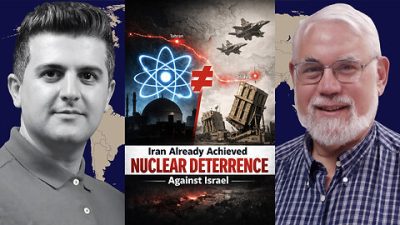
Prof. Ted Postol: Iran Already Achieved Nuclear Deterrence Against Israel
or go to
Aletho News Archives – Video-Images
From the Archives
How the occupied mentality syndrome works
Saudi Arabia on the American chessboard – Part 3
By B. J. Sabri | American Herald Tribune | June 27, 2016
Read part 2: “The occupied mentality Syndrome“
Previously I argued whether Saudi Arabia’s repeated involvements in U.S. interventions and wars stem from free national will or in response to a specific condition. For starters, in Saudi Arabia there is no national will. In Saudi Arabia, the national will is the will of the Al Saud clan. Still, when a major Arab state allies itself with a superpower that committed unspeakable crimes against humanity in almost every Arab country, then something is wrong. This fact alone should compel us to examine the U.S.-Saudi relation for one exceptional reason. As a result of the U.S.-Saudi wars, hundreds of thousands of people in Afghanistan, Iraq, Iran, Libya, Syria, Yemen, and Somalia have lost their lives. Millions became displaced in their own homelands. And millions more rendered refugees.
Attributing the Saudi policies to the bonds of “partnership” with the U.S. is frivolous. There are no bonds between these two thugs except those of business, military deals, secret plots, and wars. Proving this point, bonds such as these have no space for the American and Saudi peoples to share significant cultural or societal exchanges. If partnership is not the reason for the Saudi contribution to the U.S. strategy of empire and imperialism, then another reason must exist.
This leads to three possibilities. … continue
Blog Roll
 Aletho News
- “Davos Can Really Replace the UN”
- NIAID/NIH and USDA Fund Bioengineered Chimeric Influenza Viruses Built Using Pandemic H1N1 Components: Journal ‘Science Advances’
- Hezbollah hits Israeli warship off Lebanon’s coast, sets it aflame
- Iran slams US strikes on B1 bridge, Mahshahr petrochemical plants as ‘blatant acts of state terrorism’
- In letter to UN chief, Araghchi warns of dire consequences of US-Israeli attacks on Iran’s nuclear facilities
- Why the CIA conspiracy to invade Iran with Kurdish militias failed
- Why Are Upbeat US Claims About Mission to Rescue Pilot ‘Highly Questionable’?
- Aircraft destroyed during US ‘rescue’ of downed F-15 pilot cost more than $100 million each
- Washington University removes professor who condemned US-Israeli war on Iran
- Russia Warns of Retaliation as UK Authorizes Seizure of Vessels
- If Americans Knew
- In Iran, Israel-US take aim at “reason, research, and freedom of thought” – Daily Update
- US loses planes over Iran, Israel downgrades Lebanon war goals – Daily Update
- Israel Is Blocking Palestinians from Easter at Church Where Jesus Resurrected
- Plot to assassinate Palestinian activist follows harassment campaign promoted by Zionist groups and elected officials
- Prominent New York synagogue hosts presentation on why U.S. Jews should support the ethnic cleansing of Gaza
- Tapper vs. Piker: Is the CNN Anchor Auditioning for David Ellison?
- Shouldn’t Democrats Be Able to Condemn Genocide?
- Israel-US kill negotiators, destroy civilian structures, but Iran’s military capabilities still largely intact – Daily Update
- ‘War crime’: Global condemnation as Israeli ministers celebrate death penalty law targeting Palestinian prisoners
- 7 Ways Israel Is Turning Lebanon Into Gaza
- No Tricks Zone
- An Inconvenient Tree: Uncovered In Alps… Europe Much Warmer Than Today 6000 Years Ago
- New Study Reports A 60% Slowdown In Greenland’s Ice Loss Rate In The Last Decade
- Low Intensity Tornado Wrecks Major Solar Farm, Creating A Potential Toxic Dump
- New Study Finds Warming Saves Lives…Cold Temperatures 12 Times More Deadly Than Excess Heat
- German Science Blog Accuses PIK Climate Institute Of Hallucinating Climate Tipping Points
- Devastating Assessment Of Comirnaty Vaccine By Former Senior Pfizer Europe Toxicologist
- New Study: CO2 Is ‘Effectively Negligible’ As An Explanatory Climate Change Factor Since 2000
- Former Pfizer Toxicologist Dr. Helmut Sterz Tells Bundestag Hearing Pfizer Vaccine Should Have Never Been Approved
- Energy Expert: Germany’s Nuclear Phaseout Was A “500 Billion Euro Mistake”
- New Research: South Australia’s Mid-Holocene Sea Surface Temperatures Were 4°C Warmer Than Today
 Aletho News