UK Report finds Israel breaches International Law in treatment of Palestinian children
By Julie Webb-Pullman – Scoop – 27/06/2012
A group of nine British lawyers lawyers from the fields of human rights, crime and child welfare released the Children in Military Custody report on Tuesday, concluding that Israel is in breach of the United Nations Convention on the Rights of the Child, and the Fourth Geneva Convention in its treatment of Palestinian children.
The Report compared Israeli domestic law as it applies to Israeli children, and Israeli military law as it applies to Palestinian children, and found significant differences.
“What is important is that, whatever the offence charged, an Israeli child and a Palestinian child should from start to finish be treated by the Israeli justice system, whether civilian or military in form, according to the same principles and procedures,” the Report states.
Practices criticised in the report included discrimination, failure to observe the child’s best interests, premature resort to detention, confining children with adult prisoners, delayed access to lawyers, and the use of shackles. The group also considered that other practices they were informed of, if proven, would constitute cruel, inhuman or degrading treatment.
The Report contains a litany of abuses of Palestinian children at every stage of the process, from arrest through interrogation, bail hearings and plea bargains, trial, sentencing, detention and complaints.
One section (Section 36, of the 120 in the Report) describing only the detention process, states:
“…those who have been identified as offenders or suspects are arrested by soldiers, usually in nighttime raids on their homes are blindfolded, and, with their wrists painfully bound behind them, are then transported to interrogation centres, sometimes face-down on the floor of military vehicles. The majority are verbally and / or physically abused and, without being informed of their right to silence or the right to see a lawyer, are sometimes held in solitary confinement, pressured to inculpate themselves and others, and are often made to sign statements which they cannot read because they are written in Hebrew. Interrogations are not, save on rare occasions, audio-visually recorded, and those tapes that do exist are almost impossible to obtain by defence lawyers representing the children.”
The details of these detentions, as well as the remand and jail conditions, make horrifying reading.
The project was funded by the United Kingdom Foreign and Commonwealth Office, and the reporting group was comprised by The Rt Hon Sir Stephen Sedley, The Rt Hon the Baroness Patricia Scotland of Asthal QC, Frances Oldham QC, Marianna Hildyard QC, Judy Khan QC, Jayne Harrill, Jude Lanchin, Greg Davies and Marc Mason.
The stature of the reporting group, and the fact that “a substantial and balanced body of relevant information was collated” from key parties, including Israeli Government departments and the military, Israeli and Palestinian NGOs, UN agencies, former Israeli soldiers and Palestinian children, gives some hope that international pressure will be brought upon Israel to end these illegal and inhumane practices.
Whether Israel bows to the pressure, and observes international law, is quite another matter.
Related articles
- Israeli ex-top diplomat backs boycott (alethonews.wordpress.com)
Israel Plans Demolition of Entire Palestinian Village
By Giulio Pusateri | IMEMC & Agencies | June 27, 2012
The Palestinian village of Susiya faces demolition orders for all of its 50 buildings after years of relative calm. The decision was contested with official and physical protests.
On the June 12 Israeli authorities told the villagers of Susya, a Palestinian village in the south Hebron hills, that the hamlet will be completely demolished, says news agency Ma’an. The demolition orders were preceded a week earlier by the prohibition of new construction in the village. The demolition is on behalf of a petition presented by a settler group who would like to exploit the village for itself.
The orders, which include the demolition of homes, a social center, a solar generator, and a health clinic, resulted in an official condemnation from the Palestinian Authority’s Ministry of Foreign Affairs.
Nearly 200 international protesters went to Susiya on June 22 to support the residents and contest the planned demolitions, reports the Palestinian News Network. Israeli forces stopped the demonstrators’ march using stun grenades and tear gas.
Demolition is nothing new Susiya, the village is neighbored by an Israeli settlement built on village lands. Israel declared the area an archeological site in the 1980s. In 1986 most of the Palesitian villagers were forced to the outskirts of their land. In 1999 the entire village was evacuated by the Israeli military before some residents were granted a temporary permission to return by the Israeli High Court.
Susiya is, under the Oslo Accords of 1993, defined as “Area C” and is in full Israeli control. During the last decade Israel has used this authority to expand settlements near Susiya and throughout Area C at the expense of Palestinians, who often see their villages and lands gradually and forcefully taken over.
Israel has ignored all domestic and international calls to stop the expansion of settlements despite having been found in violation of the Fourth Geneva Convention and various other binding international legal agreements in hundreds of cases.
Related articles
- Susiya: Another Casualty of Israeli Occupation? (alethonews.wordpress.com)
- Israeli forces order Hebron village demolished after settler case (alethonews.wordpress.com)
- Israel’s decision to demolish a Palestinian village in Hebron (altahrir.wordpress.com)
Living Land: Population Transfer and the Mewat Pretext in the Naqab
By Salman Abu Sitta | Badil Resource Center | Spring-Summer 2012

Al-Araqib village in the Naqab (© Photo: Rich Wiles/BADIL, 2011)

Father: This land was Arab land before you were born. The fields and villages were theirs. But you do not see many of them now. There are only flourishing Jewish colonies where they used to be… because a great miracle happened to us…
Daughter: How can one take land which belongs to someone else, cultivating that land and living off it?
Father: There is nothing difficult about that. All you need is force. Once you have power you can.
Daughter: But is there no law? Are there no courts in Israel?
Father: Of course there are. But they only held up matters very briefly. The Arabs did go to our courts and asked for their land back from those who stole it. And the judges decided that yes, the Arabs are the legal owners of the fields they have tilled for generations.
Daughter: Well then, if that is the decision of the judges… we are a law-abiding nation.
Father: No, my dear, it is not quite like that. If the law decides against the thief, and the thief is very powerful, then he makes another law supporting his view.
–The father was Maariv founder and first editor, Dr. Israel Carlebach. This exchange was published in Ma’ariv, 25th December 1953.
Since December 1947, the Zionist movement has carried out the largest, planned and comprehensive ethnic cleansing operation in modern history: the ongoing Nakba. Between that month and April of 1949, 675 Palestinian towns and villages were totally depopulated. Their inhabitants are still homeless and are refugees to this day. Israel was declared on 78 percent of the Mandate territory of Palestine, 93 percent of which is Palestinian-owned land.2 In the southern half of Mandate Palestine, the Naqab (Negev), Jewish possession did not exceed 60,000 dunams; amounting to less than 0.5 percent of the 12,577,000 dunams of the Beer Sheba district. This negligible Jewish presence was augmented by force through the military occupation of the district in 1948 (the town of Beer Sheba was occupied on October 21, 1948), massacres and forced displacement of the indigenous population leading to the almost complete ethnic cleansing of the district. The majority of the more than 100,000 native Palestinians of the district were expelled to the Gaza Strip, Al Khalil (Hebron) district, Jordan, and the Sinai.
After declaring its independence, Israel applied martial law to those Palestinians who had not been displaced beyond the borders of the new state. In the Beer Sheba district, it took the drastic measure of rounding up all those Palestinians who remained, 12 percent of the original population of the district, and concentrated them in a reserve to the north and north east of the town of Beer Sheba. This area, known as the siyag (“fenced off area”), makes up 7 percent of the district. In 1952, Israel confiscated a further 1,225,000 dunams of the land owned by the internally displaced southern Palestinians who had become its citizens; reclassifying them as Present Absentees. Then in 1965, it passed the Planning and Construction Law which rendered around forty of the Palestinian villages in the siyag (as well as a further dozen villages in the Galilee) unrecognized, meaning they were not to receive any government services (such as water, electricity, education, roads, waste collection and healthcare) and that all construction in these areas became illegal.
Beginning in 1968, Israel planned seven townships—the so-called “recognized villages” of Rahat, Tel Sheva, Kessifa, Ar’ara, Shegib, Hura, Laqiya—on a total land area of 57,778 dunams. The combined purpose and effect of the recognized and unrecognized communities is to confiscate what remains of Palestinian land in the Naqab, and concentrate the Palestinian population in residential dormitories to provide cheap labor for Jewish industries while detaching them from their land and depriving them of their pastoral and agricultural livelihoods. By 2002, about 50 percent of the 130,000 Palestinians in the district had been concentrated in the planned townships, while the other half had managed to resist displacement and remain in the squalid conditions of the unrecognized villages.
Various aspects of displacement and land confiscation in the Naqab—including such practices as the terrorism perpetrated by the “Green Patrols;” ongoing house, school and clinic demolitions; the environmental and health impact of industrial zones and the dumping of toxic wastes; and the aerial spraying of poisonous pesticides on Palestinian crops and communities—have been discussed elsewhere.3 What I examine in what follows is one particular aspect of the Naqab’s ongoing Nakba: Israel’s use of the Ottoman “mewat” classification of land as legal justification for the ongoing confiscation of Palestinian land in the Naqab.
The Mewat Pretext
Israel considers itself a successor state. If this assumption refers to its military conquest outside the limits of the Partition Plan, then the inadmissibility of conquest and the Fourth Geneva Convention safeguard the sanctity of the property of the subjugated people. International law stipulates that, upon extending a new sovereignty on a territory, people and land go together, both stay protected. Expelling people and confiscating their land is not permissible. On the other hand, if this assumption refers to the UN Partition Plan resolution No. 181, which was the basis of Israel’s declaration of independence in 1948, this resolution clearly stipulates that Arabs in the Jewish-majority state (and vice versa) shall enjoy full civil and political rights, including ownership, without discrimination on any grounds and of course without expulsion.
As such, Israeli authorities had to find ways of inventing legal justifications for the confiscation of Palestinian lands. In the Naqab, the main justification has been that Palestinians did not have rights to their land under the regime’s that preceded Israel, and the title to these lands should thus revert to the state. The Head of the Land Title Settlement Unit in the Southern District, Havatzeler Yahel, gave a summary of the standard Israeli position in this regard when he boldly stated that “neither the Ottoman Empire nor the British Mandate recognized the ownership of nomadic Bedouin over land in the Negev… Israeli Law… is based on earlier Ottoman and British Legislation.”4 The Goldberg Report follows the same contention, based as it is on the claims that the Ottomans never recognized the Bedouin ownership in Beer Sheba and that the Palestinian population of the Naqab are “nomads.”5 In examining the legal arguments surrounding these claims, we find that the main Israeli justification is that the lands of the Naqab were classified as mewat lands under Ottoman law, and that this classification continued under the British Mandate.
According to Ottoman Law, mewat land is that which is dead, uncultivated, or vacant. Article 103 of the 1858 Ottoman Land Code specifies mewat land as (1) vacant (2) grazing land not possessed by anybody (3) not assigned ab antiquo to the use of inhabitants and (4) land where no human voice can be heard from the edge of habitation, a distance estimated to be 1.5 miles (2.85 km). The latter is a distance travelled on a horse in about 40 minutes, in wilderness where no human being lives ordinarily. The text of Article 103 reads as follows:
The empty (Khali) places, such as rocky or stony areas, or lands where cultivable soil is scarce or grazing land not held by anyone with tapu or not assigned ab antiquo to the use of towns and villages or far from towns and villages such that a clear loud cry would not be heard from the edge of cultivation, is mewat land. Any one in need of a tract from this land can, free of charge, break up or dig a place with permission and make it a field on condition that its raqaba belongs to Beit el Mal. All the applicable legal rules of other agricultural areas will then apply to this land fully. But if the person who had permission to dig [and cultivate] a place did not do so for 3 years without a good reason, the place is given to someone else. If someone digs one of these lands without permission and made it into a field, he will be charged bedl mithl (equivalent price) and the land will be allocated to him and he will be granted title deed (tapu).6
It is clear that the objective of the Ottoman law was to encourage cultivation for the good of the community and not to restrict it. In 1969, the Israeli Knesset passed a law stating that “all mewat land is state land,” and that long-time possession does not confer ownership rights.7 By claiming that Naqab lands were classified as mewat and then passing legislation transferring mewat lands to state control, Israel seemingly got around the international legal protection of Palestinians and their properties in the Naqab. The main problem, as I show in the next section, is that at no point in the centuries of Ottoman rule, or the decades of British occupation, were the lands of the Naqab ever classified as mewat. On the contrary, Palestinians’ ownership of these lands was recognized in both the Ottoman and Mandate periods.
Ottoman Period
Ownership of land in Islam rests ultimately with the umma (Islamic nation), as God’s trustee. The Ottomans adopted and developed the same Islamic principle into a refined set of state laws. In the words of Halil Inalcik, an authority on Ottoman history, “the underlying argument always was that such lands belonged to God, or to the imam as His trustee, who represented the Islamic community, it was his duty to see that such lands were administered in the way that would best serve the interests of the community and Islamic state.”8 The principle was applied in a two-tier system: (1) rakaba, ownership rested with the Caliph, imam, Sultan or state, (2) tasarruf, manfa’a, usufruct. While the first was always held by the state, the second was granted to a member(s) of the community, ra’iya, in a manner close to independent ownership in that the land in question may be inherited. Over 90 percent of arable land in the Ottoman empire, was considered state land (miri). The rest had been removed from this domain by a special dispensation from the Sultan. The underlying aim was to put all land for the use of the community as cultivators of the land and a source of income tax for the general benefit of the umma. Accordingly, foreigners were not allowed to own land. Late in the nineteenth century, under intense European pressure, the Ottoman laws restricting the sale of land to non-Muslims were relaxed. But these sales were insignificant.
For over fourteen centuries, the land was cultivated under Islamic rules, and Beer Sheba land was no exception. It was cultivated where possible according to rainfall and taxes were paid. There was no question that such land was not mewat. We have one of the earliest Ottoman documents to prove this. The Dafteri Mufassel of 1596, one of the earliest Ottoman Tax Registers, gives information on sites in the Beer Sheba Sub-District which grew wheat, barley and summer crops (e.g. maize, melon) and paid taxes accordingly. Remarkably, the names of these sites remained the same until the 1948 ethnic cleansing of Palestine.
At no time, whether before the promulgation of the Ottoman Land Code of 1858 or after, did the Turks challenge the land ownership of Palestinians in Beer Sheba. Three hundred years after the Dafteri Mufassel, at about the end of the nineteenth century, we have further confirmation that the Turkish authorities recognized the land ownership in Beer Sheba. On May 4, 1891, upon orders from the Ministry of Interior in Istanbul, the Gaza District Council (which the British split into two sub-districts: Gaza and Beer Sheba for the same region: Bilad Gazzeh) decided to “register these lands in the Gaza District of Jerusalem Mutassarefiyat and cultivated by ‘urban (tribes) at the Land Registry (tapu) since absence of this registration may cause conflict and inter-fighting.”9
The council sent a five-member committee of notables together with official surveyors “to delimit and record the lands of each tribe. The officials sent by the Mutassarefiyat delineated 5 million dunams out of lands exceeding 10 million dunams [of the District] among its ancient holders with the approval of the Special Military Committee. Then the approval of the sheikhs was obtained.” The Turkish document goes on to state that three survey officers were needed to plot demarcation points on a “proper basis.”10
The boundaries of individual ownership of the land in most of Palestine, including Beer Sheba, was known and acknowledged by Custom Law (al-‘urf wa al-‘ada). In other words, it is an observed legal practice and the relevant actors consider it to be law. On this basis tracts of land were bought, sold, inherited and taxes paid for. The town site of Beer Sheba itself was “purchased”, not confiscated, from al-Mohamadiyeen, Azazema, in 1900. If the land was mewat or state land, this would not be needed. A proof of this may be found in two documents registered at the Shari’a Court in Jerusalem, in the period 1906-1910. The first of these two documents deals with appointing a power of attorney to carry out the transaction of the ownership of a tract of land in Abu Sdeir “whose borders are known, requiring no description or delimitation as well-known to all,”11 and the second in Khirbet Muleih “judged by District Council to be the property of Sheikh Ismail.”12 These locations are deep into Beer Sheba district and roughly correspond to sites in the 1596 Tax Register.
Thus it may be concluded that during the Ottoman period (1517 – 1917), land ownership in Beer Sheba was recognized, its boundaries were defined through customary law; land was purchased and sold by individual owners; and citizens paid taxes. There is no evidence whatsoever that land in the Beer Sheba district was at any point classified as mewat.
The Period of the British Mandate
Arab scholars have written about Palestinian clans since the tenth century, and particularly through the description of Dar al Haj al-Masri and al-Shami. European accounts of Naqab lands and tribes began with the Napoleon Description de l’Egypte, and continued through the writings of European missionaries, travelers and spies such as W. M. Thompson, Edward Hull, Victor Guérin, Alois Musil, Max von Oppenheim, T.E. Lawrence, C. Leonard Woolley and Britain’s Royal Geographic Society.13 Each of these records, taken on its own, would be sufficient to dispel the Zionist mythologies that have been used to justify the confiscation of Beer Sheba land on the pretext that this land had no owners and that it was barren. Taken together, the Zionist myth of a “land without a people” appears for what it is: a pure forgery and outright mendacity.
Beer Sheba Sub-District, as delineated by the Mandate government of Palestine, is the largest district of Palestine, at 12,577,000 dunams, or 62 percent of Israel today. Apart from grazing, its southern half is rich in minerals and archeological sites dating back to the fourth century A.D, while the northern half is fertile and was the home of 95 percent of the district’s population who used to live and cultivate their land, with only 5 percent living on grazing. The total population of Beer Sheba district was about 100,000 in 1948. Israeli population estimates are considerably lower because they erroneously use the 1931 census figures, which do not correct for underestimation of females or absence of figures for some tribes.
The British Mandate government listed 77 official clans (ashiras) grouped into seven major tribes, in addition to Beer Sheba town and about a dozen settlements around police stations. As illustrated earlier, the land ownership has always been held by Custom Law, on which basis individual plots were sold, inherited, mortgaged, rented, divided or taxes paid. This customary ownership of land was recognized by the British government in the person of Colonial Secretary Winston Churchill, and Herbert Samuel, the first High Commissioner of Palestine.14 In March 1921, Churchill met with leading Beer Sheba sheikhs, Sheikh Hussein Abu Sitta and Sheikh Freih Abu Middain, and assured them that their land ownership and Custom Law are respected.15 Indeed, Article 45 of the Palestine Order in Council confirmed that legal jurisdiction in Beer Sheba district would be governed by tribal custom. The government waived the Land Registry fees to facilitate the acquisition of title deeds, but the clans did not take up the offer as they saw no need for confirming land ownership on paper. Their response was “with this (pointing to their swords), we register”, meaning they could defend their land against aggressors.
During the British military administration (1917-1920), the Zionists took steps for the eventual takeover of territory in Palestine. Chaim Weizmann headed the newly formed Zionist Commission for Palestine and appointed Herbert Samuel, the Jewish future High Commissioner for Palestine, as the head of its Advisory Committee.16 Weizmann urged the British to close Land Registry books to prevent rise in land prices and called for the formation of a Land Commission to examine land status in Palestine. The most urgent task was to possess as much land as possible, particularly ‘state land, waste land’, ‘abandoned’ and uncultivated land, whose definition was left to interpretation.17 When Samuel took his post as High Commissioner of Palestine under the Mandate, his bias was clearly in favor of Zionist interests. During his tenure (1920-1925) he issued dozens of ordinances changing or modifying land laws in order to enable Zionist acquisition of land. As a prelude he engineered the formation of the Land Commission to evaluate available land for Jewish settlement.
Contrary to general practice in which country surveys begin with topographical maps, there was great rush to produce cadastral maps. A survey department was hastily established using the services of highly experienced British colonial officials, particularly from Egypt. The aim, as Weizmann demanded, was to undertake “legal examination of the validity of all land title deeds in Palestine.”18 Thus, the extent and ownership of private land, if proven beyond doubt, would be determined. All else would be subject to interpretation as ‘state or waste land’, open for Jewish settlement.
The Zionist pressure on the British Mandate to start immediately land survey pertaining to ownership of land, rather than the basic topographical mapping, caused confusion and delayed the surveying project for almost eight years. The necessary ordinance (“the Land Settlement Ordinance”) was finally promulgated in 1928 using the Australian Torrens system. The British started applying this system, and by the end of 1946, the initial triangulation was completed for Palestine from Khalasa in the south to el Khalisa in the north. The emphasis was always on the coastal plain and water resources and, in particular, on areas with Jewish land ownership or interest.
The British, however, left Palestine in a hurry in May 1948 leaving the armed Zionists to deal with the defenseless Palestinians. As such, the map of completed Land Settlement (of title), up to 1947, which covered only 20% of Palestine (5,243,042 dunams as of 30 April 1947) corresponds very closely to the area in Palestine proposed to be the northern part of a Jewish state under the Partition Plan of 1947. In this area lies the Jewish-held land during the Mandate, which was about 5% of Palestine. During the Mandate, the British saw no urgent need to complete Land Settlement in the Galilee, West Bank and Naqab because it was predominantly Arab. After 1948, Israel used this accidental fact to show that no title existed for Arab owners in these areas. Thus, Israeli legislation created new criteria for settlement of title to deny Arab ownership and confiscate land, and were particularly applied to Palestinian properties in Beer Sheba.
When Britain decided to abandon its obligations in Palestine after WWII, without completing the Land Settlement, the British Mandate, by way of compensation, undertook an aerial survey in 1945-1946. Over 5000 aerial photos were taken mostly at a scale of 1:15,000, yet again with emphasis on the coastal areas with Jewish concentration, and less emphasis on the West Bank, Jordan River and Beer Sheba district. The populated northern half of Beer Sheba district was covered by this aerial survey. The photographs show intensive and close cultivation everywhere, which belies the Israeli myth that it was barren. This is further proof that cultivation and land ownership have been maintained and recognized, at least since 1596.
Further proof can be found in British policies and practices regarding mewat land under the Mandate. Herbert Samuel and his legal secretary Norman Bentwich, known for their Zionist sympathies, reformulated Art 103 of the Ottoman Land Code that was intended to revive mewat land (as described above), to do the opposite by punishing those carrying out such cultivation. Instead of recognizing the title (tapu) of a person who cultivated mewat and paid its value (Bedl Misl) to the state, Bentwich’s Mewat Land Ordinance of 1921 provides that a person who breaks up mewat without authorization has no legal right to title over the land and is also committing a wrongful act and would be treated as a trespasser. In spite of this Ordinance, a more lenient view was later taken by the British administration, and the practice during the Mandate was to make tapu grants on payment of Bedl Misl to persons who could show cultivation and revival of mewat lands even if they had no authorization to do so.19 The practice of not enforcing this Ordinance, was confirmed by the last official report by the Government of Palestine, prepared for the Anglo-American Committee of Enquiry in 1947, which stated that “it is frequently difficult to assume that there was in the past no grant, and consequently it is not safe to assume that all the empty lands south of Beersheba or east of Hebron, for instance, are mewat… [indeed] it is possible that there may be private claims to over 2000 square kilometers which are cultivated from time to time. The remainder may be considered to be either mewat or empty miri.20
The British retracted some of their Zionist policies and instituted in 1940 a law restricting the alienation of Arab land to Jews. Zionist attempts to avoid the application of the 1940 Transfer Regulations by fraud or deceit had been rebuffed by the Mandate authorities. For example, much of land claimed by Zionists in Beer Sheba was not legally registered. The fortnightly reports of the Beer Sheba District Commissioners to the High Commissioner in Jerusalem, forwarded to London, are replete with examples of such fraud and illegal land dealings, particularly in the 1940s. A case in point is this excerpt from the Gaza Fortnightly Report No. 161, of 1-15 October 1945 from District Commissioner (Gaza) to Chief Secretary, Jerusalem:
para 209: Protests have been raised at attempted ploughing by Jews of land in Asluj to which they have an extremely doubtful title. I am hearing a case under the Land Dispute (Possession) Ordinance, pending a decision by the Land Court. There are large areas in Beer Sheba sub-district which the Jews claim to have bought before the date of the Land Transfer Regulations but which are not registered in the Land Registry.21
In order not to be exposed, the Jews submitted to the following court session an undertaking to the District Commissioner not to plough the land in question. Otherwise the Court would have clearly ruled against them. The land was never registered in the Land Registry. Yet it appeared as ‘Jewish’ in maps prepared by the Jewish National Fund’s Yosef Weitz, and settler colonies were built on it after 1948.
The British Mandate never considered lands in Beer Sheba district as State Land or State Domain. Indeed, maps showing State Land (Domain) in Palestine in 1947, just before the end of the Mandate clearly do not include the land of Beer Sheba. To conclude, the British did not even enforce their own 1921 mewat ordinance created by Herbert Samuel. More importantly, like the Ottoman authorities before them, the British Mandate authorities recognized Palestinians’ individual and customary ownership in Beer Sheba. They did not consider this land to be mewat or State land.
The Absurdity of the Mewat Pretext
In two excellent papers, Ronen Shamir and Sandy Kedar have analyzed the anomalies of the Israeli claim that Beer Sheba land is mewat.22 They have summarized the Israeli courts’ arguments for a mewat classification of Beer Sheba lands as follows:
1. The voice criterion is not acceptable. What was needed is a “modern” or “objective” criterion.
2. The distance to mewat land should be greater than 1.5 miles (2.5 km). The distance is the criterion.
3. The distance is to be measured from a town or village.
4. Cultivated (miri) tract of land is not an acceptable point of measurement, as a town or village would be.
5. Similarly, a movable abode such as tents is not an acceptable reference, even if this cluster of tents includes a school or cemetery.
6. Also unacceptable is an inhabited area with amenities, houses and some cultivation around a government centre such as police or railway station.
7. Also unacceptable are measurements from an isolated house at the edge of a village.
8. An Arab tribe abode should prove existence before 1858, otherwise all cultivated land after 1858 will be classified mewat (the case of Arab Suead).
9. To prove that an area is not mewat, cultivation must cover at least 50% of the land.
10. Tax records are not proof of ownership.
11. RAF aerial photography (1945) is acceptable if it shows more than 50% cultivation, as certified by the government expert, provided that the holder possessed and cultivated the land for 20 years. That is, if land was cultivated in 1945 as shown on aerial photos, it should be held and cultivated till 1965. (All Palestinian lands were confiscated according to Land Acquisition (Validation of Acts and Compensation) law, 1953. This makes this condition impossible to fulfill.)
12. The onus of proof of ownership lies with the holder – that is, he has no ownership rights unless he proves the opposite. His long history before the arrival of the Jewish immigrants does not count.
In short, the Israeli judiciary has made it absolutely impossible for Palestinians to argue that their land is not mewat land, thereby “legalizing” the state confiscation of these lands. Of course, Israeli law is the law of the conqueror, a tool to deprive the vanquished of their rights. Thus, mirroring the conversation between father and daughter quoted at the beginning of this essay, not only does the Israeli legal system offer no redress for Palestinians, it has been one of the primary means through which Zionist injustices have been committed.
The failure of the Zionist cultivation policies
The often-touted slogan, stated in Israel’s declaration of independence, that Israel made the desert bloom, has met with abject failure. With very limited means and capital, depending on rain only, Palestinians before 1948 were able to cultivate anywhere between 2 to 5 million dunams. Israelis, with their massive capital wealth, have only been able to irrigate around 880,000 dunams. Their agricultural produce hardly competes with the produce of the limited agricultural land in Gaza with its salty water.
Another indicator of this failure was the dismal performance of the so-called “development towns.” Jews from Arab countries, who were brought in on the assumption that they were used to hot arid climate, failed to flourish in the Naqab. The Ashkenazi Kibbutzim have fared no better. There are no new recruits, their population is aged, the remnants of the 1948 conquest. Although Jewish settlements of the Beer Sheba district consume about half of the irrigation water, the value of their produce is negligible.
Jewish immigrants have tended to congregate near urban centers. Only 73,000 of the Jewish Israelis in the Beer Sheba district have moved in to the rural Kibbutzim and Moshavim in the vast area of 12,000 sq. km. That is 10 percent of Palestinian population of Beer Sheba had they not been ethnically cleansed in 1948. The remaining 800,000 Jewish Israelis in the district live in three cities and a number of dysfunctional “development towns.” Of those, over 200,000 are recent Russian immigrants and twice as many are Arab Jews lower down on the socio-economic ladder.
On the other side of this, the Palestinians from Beer Sheba number about three quarters of a million. About 15 percent of them have managed to remain in Israel and the rest are refugees. Most of these refugees are in the occupied and blockaded Gaza Strip, crammed at a density of 5000 persons/sq. km while those who dispossessed them roam their land at a density of 6 Jewish Israelis/sq. km. Those Palestinians who managed to remain have fared little better, they are denied the right to their property, their houses are continually demolished, their crops destroyed, and their villages remain unrecognized. Israeli practices have led to the confiscation of most of their lands, leaving them in very poor economic, social and educational conditions. For example, the largest Palestinian town in Beer Sheba, Rahat, is the poorest in Israel. In terms of education, the percentage of those students who complete secondary education is 10 percent, compared to 47 percent for Jewish students and, significantly, 44 percent for Palestinian refugees students. In other words, Palestinian refugees facing severe economic and political hardships, achieve levels of education comparable to Jewish students, while Palestinian citizens of ‘democratic Israel’ fare far worse.
Postscript
I have shown above that the main legal pretext for Israel’s continuing confiscation of Palestinian land in the Naqab, and the displacement of those Palestinians who have remained upon it, is based on a series of fictions and lies. This legal pretext is nothing more than a flimsy veil for an outright colonial policy of land theft. A reminder of how this policy has continued came on Sunday March 18, 2012. On that day, a Beer Sheba court rejected the case of the Uqbi family for the ownership of their land in the Naqab village of Araqib on which the family has lived for hundreds of years. The Israeli court accepted the testimony of an Israeli government “expert;” a professor of Polish ancestry who does not know Arabic and who testified, contrary to research that he himself had published earlier, that the Palestinians of Araqib were merely shepherds who came from Saudi Arabia with their sheep and then left. By claiming that Palestine is a land without people and that Palestinians do not exist, and by actually expelling Palestinians and confiscating their land, Israel converted this myth into a constant war crime.
Endnotes:
1. This article is based on a much more comprehensive report submitted to the International Fact Finding Mission Initiated by the Regional Council of Unrecognized Villages by the author on behalf of the Palestine Land Society. The report is titled “The Denied Inheritance: Palestinian Land Ownership in Beer Sheba,” and can be downloaded from: http://www.plands.org/store/pdf/BS%20Cte%20Paper.pdf.
2. Salman Abu Sitta, The Atlas of Palestine 1917- 1966, London: Palestine Land Society, 2010.
3. See for example, By All Means Possible: A Report on the Destruction by the State of Crops of Bedouin Citizens in the Naqab by Aerial Spraying with Chemicals. Nazareth: Arab Association of Human Rights, July 2004, website: http://www.arabhra.org/NaqabReport_English.pdf; Off the Map: Land and Housing Rights Violations in Israel’s Unrecognized Bedouin Villages, Human Rights Watch March 2008, Vol. 20, No. 5 (E); Alexandre (Sandy) Kedar, “The Legal Transformation of Ethnic Geography: Israel; Law and the Palestinian Landholder 1948, 1967,” International Law and Politics, Vol. 33, pp. 923-1000; Ronen Shamir, “Suspended in Space: Bedouins under the Law of Israel,” Law and Society Review, Vol. 30, Number 2 (1996), pp. 231-257; Sabri Jiryis, The Arabs in Israel, New York and London: Monthly Review Press, 1976; David Kretzmer, The Legal Status of the Arabs in Israel, Jerusalem: The Institute of Israeli – Arab Studies, 2002 (in Arabic); Hazem Jamjoum, “Al-Naqab: The Ongoing Displacement of Palestine’s Southern Bedouin,” al-Majdal, Issue 39-40, Winter 2009, pp.27-31.
4. Havatzelet Yahel, “Land Disputes Between the Negev Bedouin and Israel,” Israel Studies, Vol. II, No. 2, 2006, pp. 1-21
5. The Recommendation of the Goldberg Commission, Jerusalem, Dec. 2008 (Arabic Translation).
6. From the original Turkish and Arabic: Ottoman Land Law, Beirut: Jesuit Fathers Press, 1873.
7. Land Law, 5729-1969; see also Badil and COHRE, Ruling Palestine: A History of the Legally Sanctioned Jewish-Israeli Seizure of Land and Housing in Palestine, Bethlehem & Geneva: Badil & COHRE, 2005, pp. 46-52.
8. Halil Inalcik with Donald Quataert (ed.), An Economic and Social History of the Ottoman Empire 1300-1914. Cambridge: Cambridge University Press, 1994, p. 104.
9. Turkish Document on the Registration of Beer Sheba Land to its Holders, IMMS. 122/5229 dated 4 May 1891.
10. Ibid.
11. PGR 121-078
12. PGR 116 – 078
13. See: W. M. Thompson, The Land and the Book. London: Thomas Nelson, 1911, p. 556; Edward Hull, Mount Seir; Sinai and Western Palestine. London: Richard Bentley and Son, 1885, p. 139; Victor Guérin, Description de la Palestine. 7 Volumes. Amsterdam: Oriental Press, 1969. See Vol. II, pp. 178-290; Alois Musil, Arabia Petraea. 3 Volumes. Vienna: Kaiserliche Akademie der Wissenschaften, 1908. Max von Oppenheim, Die Beduinen. Zurich: Georg Olms Verlag, 1983; T.E. Lawrence and C. Leonard Woolley, Wilderness of Zin, London: Stacey International, 2003; The Survey of Western Palestine, 1882-1888, 10 vols. and maps, London: PEF and The Royal Geographical Society, reprinted by Archive Editions with PEF, 1998.
14. Public Records Office CO 733/2/21698/folio 77, 29 March 1921; McDonnell, Law Reports of Palestine, 1920-1923, p. 458.
15. Taped interview with Sheikh Abu Sitta, July 1969, Amman
16. Don Gavish, A Survey of Palestine under the British Mandate, 1920-1948, Oxford: Routledge–Curzon, 2005, p. 33
17. Ibid.
18 Ibid.
19. F.M Goadby and Moses Dukhan, The Land Law of Palestine, Tel Aviv, Palestine, 1935, p. 64.
20. Survey of Palestine, Vol. I, Chapter VIII, para 77, 82, pp. 256-257
21. Political Diaries of the Arab World – Palestine and Jordan, 1945-1946, Vol. 8, Archive Editions, Reading, UK, 2001, p. 228.
22. See: Kedar, “The Legal Transformation of Ethnic Geography: Israel; Law and the Palestinian Landholder 1948, 1967” and Shamir, “Suspended in Space: Bedouins under the Law of Israel.”
Related articles
- Israel’s right or not to exist – The facts and truth (alethonews.wordpress.com)
- Rawabi: Israeli Model for “Neo-Palestinian” City (alethonews.wordpress.com)
- Top 10 Facts You Probably Didn’t Know About the #Nakba (alethonews.wordpress.com)
- Symbols of Nakba, Visions of Return: Al Majdal Special Issue on the Nakba and Resistance (jadaliyya.com)
Why Palestinian prisoners are on hunger strike
MEMO | 26 April 2012
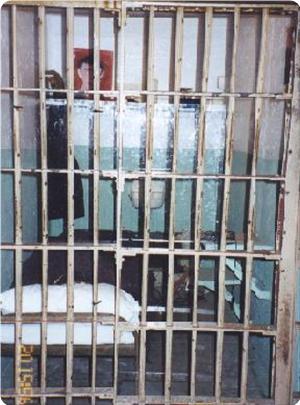 1.1 – The issue of Palestinian prisoners is one of the worst consequences of the Israeli occupation. Since 1967, over 700,000 Palestinians, 20% of the population of the occupied West Bank and Gaza Strip have been detained. This number represents approximately 40% of the total male Palestinian population in the occupied territories.
1.2 – Today, there are about 6,000 prisoners in 17 Israeli jails and detention centres. They include six women and more than 200 minors.
1.3 – 330 Palestinians are being held in administrative detention with no formal charges having been brought against them in a court of law. 28 elected members of the parliament, and three former ministers fall within this category.
1.4 – Israel is currently holding all these Palestinian prisoners far away from their homes, and outside of the occupied territory. This constitutes a clear violation of the Fourth Geneva Convention relative to the Protection of Civilian Persons in Time of War. Article 76 of the Convention states:
“Protected persons accused of offences shall be detained in the occupied country, and if convicted they shall serve their sentences therein.”
Article 49 also states:
“Individual or mass forcible transfers, as well as deportations of protected persons from occupied territory to the territory of the Occupying Power or to that of any other country, occupied or not, are prohibited, regardless of their motive.”
1.5 – Article 32 specifically prohibits “murder, torture, corporal punishments, mutilation and … any other measures of brutality whether applied by civilian or military agents”. Since 1967, 202 Palestinians prisoners have died while being tortured in Israeli jails.
1.6 – Israel routinely tries Palestinians before military courts, none of which meet the most basic standards of international law; particularly the laws relating to the treatment of prisoners of war and people under occupation.
1.7 – In light of the above, there are now calls for the prosecution of Israeli officials at an international tribunal.
Related articles
- 1,600 Palestinian prisoners begin open-ended hunger strike in Israeli jails (alethonews.wordpress.com)
- Ex-Palestinian prisoner: captivity in Israel, living in graves (alethonews.wordpress.com)
- Detention of Palestinian political prisoners (alethonews.wordpress.com)
- 4 hurt in Ramallah protest to support detainees (altahrir.wordpress.com)
- Scottish TUC delegates join Palestine freedom struggle – unanimously! | #PalHunger (occupiedpalestine.wordpress.com)
Impunity Under the Law: Settler attack in Jabari neighborhood
22 April 2012 | International Solidarity Movement, West Bank
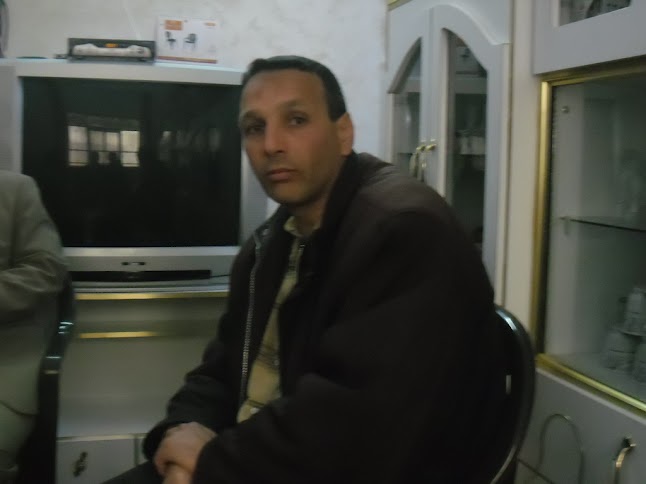 Marwan Borqan always locks the main door to his house at night. Late at night, soldiers will often knock at his door, ‘checking,’ they say, although Marwan has never known what they are checking for.
That is why he did not find it unusual when he heard a loud banging at his front door at 10:30pm on Wednesday night. However, this time it was not the Israeli army but an Israeli settler from the nearby illegal settlement of Givat Ha’avot. As soon as Marwan opened the door he was violently punched and kicked by the settler, who then dragged him out the door.
Outside the beating continued, causing Marwan to fall down a flight of stairs as other settlers, the settlement security guard, and Marwan’s shocked children looked on.
Finally, two police cars arrived and with the help of Marwan’s brothers, detained the attacker.
At this point, Marwan’s father arrived to find that Marwan had lost consciousness. He called an ambulance and was forced to wait forty-five minutes as the ambulance was detained at the metal gate restricting Palestinian vehicular access to their own street.
Marwan’s father demanded that the Israeli army commander arrest the settler who had attacked his son, only to have soldiers threateningly point their guns at his head and tell him to ‘shut up’. At a point during the night, the army released the settler who was responsible for the attack. They later claimed they did not arrest him because they could not find him.
While awaiting the ambulance’s arrival, the Israeli army evacuated the entire building where Marwan lived. Forty-five people, including many children,were forced to wait on the street while the army searched the victim’s house.
An Israeli police jeep then arrived carrying a settler who claimed rocks were thrown at her by a Palestinian earlier that day. The girl scanned the families lined up on the street and admitted that none of them had thrown rocks at her.
After Marwan was taken to the hospital, settlers attempted to occupy his apartment but were later escorted from the building by the Israeli army.
Commonly, following an accusation by a settler, all Palestinians are perceived as guilty by both the illegal settler communities and the Israeli army. Revenge may have been the reason behind the Israeli army raiding a house or the savage beating of a Palestinian by an Israeli settler.
Nonetheless, raids and attacks also take place in lieu of any accusations. Above all, the violence is arbitrary and systematic. The reason is always the same: to make life for Palestinians so difficult that they will be forced to leave. Those who refuse will continue to pay the price.
For Marwan Borqan the price for him and his family has been very high. He suffers from a concussion, and many bodily injuries, and was forced to wait while Israeli soldiers detained the ambulance attempting to reach him.
Marwan explained that he was “shocked” by the beating. His family regularly suffers from settler and soldier harassment, but it was “the first time the settlers actually tried to enter the house.”
His children were up late watching a football match with him when the attacker arrived, and to their horror witnessed his brutal beating. Marwan’s eight year old daughter, Afnan, is still traumatized by what she saw. Marwan explains that she shakes and has difficulty eating. He intends to find psychological help for her.
The Borqan house lies near to the illegal Israeli settlements of Qiryat Arba and Givat Ha’avot in Western Hebron, an area which experiences repeated torment from extremist settlers. Qiryat Arba was one of the first settlements established in the West Bank by members of the far right Kach party and Givat Ha’vot began as a police station which was occupied by settlers in 1990. Both settlements are in violation of Article 49 of the Fourth Geneva convention, prohibiting the transfer of the occupying power’s civilians into the occupied territory. The illegality has been repeatedly confirmed by the International Court of Justice, the High Contracting Parties to the Fourth Geneva Convention and the United Nations Security Council.
Related articles
- Israeli Soldiers Invade Homes In Hebron, Jewish Settlers Attack Young Man (alethonews.wordpress.com)
- Israeli settlers injure three Palestinians, uproot dozens of olive trees in two separate incidents (alethonews.wordpress.com)
- Israeli settlers storm into Palestinian home, occupy residence (alethonews.wordpress.com)
- Knesset to discuss bill authorising settlers’ seizure of Palestinian land (alethonews.wordpress.com)
- Hebron teen ‘shot by Israeli settler’ (alethonews.wordpress.com)
- Kufr ad-Dik and Burqin march against boars, pollution, and violence by Israelis (alethonews.wordpress.com)
Israeli Authorities or Cyber Police? Ola Haniyeh Arrested with no Charges
By Dylan Collins | Palestine Monitor | April 17, 2012
In the early morning hours of Monday March 26th, a large force of Israeli soldiers surrounded the Haniyeh house in Al-Bireh, located in the heart of the West Bank’s capital city of Ramallah. After setting up a perimeter around the house, 12 well-armed soldiers kicked down the Haniyeh’s door and entered the home.
“They broke the door. They didn’t knock. They didn’t ring. They broke the door and we found them in the middle of our bedroom,” says 26 year-old Dima Haniyeh.
After confining Dima’s parents to their bedroom, the soldiers proceeded on to the next bedroom shared by Dima and her 22 year-old sister, Ola.
Right off the bat, Dima recalls, it was clear the soldiers had an apparent interest in her young sister. “They wanted to search us both and they wanted Ola’s mobile phone and laptop.”
A female soldier was brought in to search them both.
Coincidentally, Ola’s phone had been lost several days before but the soldiers didn’t believe her.
“If you don’t give us your phone we are going to destroy the room. We will destroy every room until we find it,” Dima remembers one of the soldiers having said.
They did just that—, emptying every drawer onto the floor, flipping the beds, and clearing the shelves. Eventually, they told Ola to get dressed. They wanted to take her with them for questioning.
Ola remembers her father saying, “Why don’t you ask her here?! You’ve been here an hour and a half and haven’t asked a single question!”
Brushing aside her father’s supplications, and in violation of Fourth Geneva Convention, the soldiers took Ola with them and brought her directly to Israel’s Askalan prison in the Naqab Desert.
Another Detainee Without Charges
Ola has been held in Askalan ever since. Although no charges have been officially filed against her, a review trial held at the Askalan military court on Thursday April 5th ruled in favor of a 7-day extension of Ola’s detention. Ola was given another trial on Wednesday April 4th which resulted in yet another detention extension for the second time, as the prosecutors and Israeli judge did not carry out an investigation as they were on a vacation. Ola’s third court extension date was given this week, with her due to appear in court on Thursday, April 19.
“She is being interrogated daily regarding internet activity. The suspicion is that the internet pages are connected to ‘security activities’”, says Amal Husein of Addameer.
Ola’s detention was up for review on Tuesday April 17th. Her family and friends are confident that she will be released, as she hasn’t been accused or charged of anything as of yet. However, given the Israeli authorities’ administrative detention track record, anything is possible.
“People have said that the Israeli authorities have taken many people because of Facebook,” says Dima. “But everyone has a Facebook. Everyone puts his or her opinion on Facebook. There is nothing serious about it… it is freedom of speech.”
Ola recently graduated with a degree in Media and Political Science from Birzeit University last Fall. “She might go to protests sometimes, as all of us do, to speak out against the occupation and to support people- nothing extraordinary,” says Dima. “All of us participate—its part of being in Palestine and living under occupation.”
“She’s a quiet girl,” continues Dima. “She is a genuine and passionate person. She has friends and is lively, but she is much more the quiet type.”
Ola’s sister Dima says that Ola had perhaps had made comments on Facebook in support of Palestinian prisoners in general and against Israel’s policy of administrative detention but had done nothing out of the ordinary. “She is a journalist. This is her job. She should be able to do that,” argues Dima.
Ola’s sister and friends are quite confident that she was arrested simply because she voiced her opinions—a scary thought in the Facebook age.
“When you don’t have charges against someone—why… how can you keep them detained?” asks Dima. “When you don’t have any serious charges, how can you break down someone’s door in the middle of the night and take them? What happens when they have a serious case? What will they do then? Its scary.”
Related articles
- 1,600 Palestinian prisoners begin open-ended hunger strike in Israeli jails (alethonews.wordpress.com)
- Israeli forces shut down media launch in Jerusalem (alethonews.wordpress.com)
- Israel – Israeli troops force two Palestinian TV stations to close (en.rsf.org)
- Report: 201 Palestinians Died in Israeli Jails (and more…) (occupiedpalestine.wordpress.com)
1600 Detainees To Declare Hunger-Strike on April 17
By Saed Bannoura | IMEMC & Agencies | April 14, 2012
1600 Palestinian political prisoners, held by Israel, declared they will be starting an open-ended hunger strike on April 17th in protest of their illegal detention, and demanding basic rights.
Palestinian Minister of Detainees in the West Bank, Issa Qaraqe’, stated that the situation of the detainees in Israeli prisons is very difficult, and dangerous, especially amidst the ongoing Israeli violations and attacks against them.
Qaraqe’ added that the detainees are fighting a battle to defend their dignity and to improve their living conditions.
He further called for massive solidarity campaigns, and called for declaring April 17, Palestinian Prisoners Day, a day for solidarity and massive nonviolent protests in all parts of the occupied territories.
The Maan News Agency reported that a committee formed by the Israeli Prison Authority, headed by Yitzhak Gabai, visited a number of detention facilities, listened to the demands of the detainees, and “promised” to respond to these demands this coming week.
Some of the demands presented by the detainees are;
1. Ending Administrative Detention.
2. Ending Solitary Confinement.
3. Reinstating the right to education.
4. Halting all invasions targeting detainees’ rooms and sections.
5. Allowing family visitation, especially to detainees from the Gaza Strip.
6. Improving medical care to ailing detainees.
7. Halting the humiliation, and body-search of the families of the detainees.
8. Allowing the entry of books and newspapers.
9. Halting all sorts of penalties against the detainees.
Palestinian detainees in Israeli prisons are subject to harsh and illegal treatment that violates International Law and the Fourth Geneva Convention to which Israel is a signatory.
Palestinians started marking April 17 as the Palestinian Prisoners Day, on April 17, 1974, the day Israel released Mahmoud Bakr Hijazi, in the first ever prisoner-swap deal.
202 Palestinian detainees have died after being kidnapped by Israeli forces since 1967, following Israel’s occupation to the rest of Palestine (The West Bank, the Gaza Strip, East Jerusalem, and the Golan Heights).
Hundreds of detainees died after they were released suffering from serious illnesses and medical conditions resulting from extreme torture and abuse in Israeli prisons.
70 detainees died in prison due to extreme torture, 74 were executed by the soldiers after being arrested, 51 died due to the lack of medical treatment, 7 detainees died due to excessive force by soldiers and after being shot while in prison, former political prisoner, head of the census department at the Ministry of Detainees, Abdul-Nasser Farawna reported.
Related articles
- Thirty Palestinians killed by Israel in March, 300 imprisoned (alethonews.wordpress.com)
- Palestinian Detainees To Hold Hunger Strike (alethonews.wordpress.com)
- Minister of Detainees Calls for Boycott of Military Courts (alethonews.wordpress.com)
- Detained journalist boycotts Israeli military court (alethonews.wordpress.com)
- B’Tselem reports sharp increase in the numbers of Palestinians being held in administrative detention (alethonews.wordpress.com)
- Netanyahu Refuses EU Demands To Release Political Detainees (alethonews.wordpress.com)
Homes Destroyed, Lives Shattered: Criminal Displacement in Occupied Palestine
By Graham Peebles | March 3, 2012
Within the catalog of criminality that is Israel’s occupation of the West Bank and Gaza, the destruction of Palestinian homes must rank as one of the most cynical and heinous.
“Some 90,000 people are currently reported to be at risk of displacement as a result of Israeli policies such as restrictive and discriminatory planning, the revocation of residency rights, the expansion of settlements and the construction of the West Bank Separation Wall.” (Internal-displacement.org)
Home, a refuge from the world, safe and secure, somewhere to relax with family and friends, and breath easy, free from fear. This simple image of normality is unknown to many Palestinians living under brutal illegal occupation by Israel.
“The Israeli practice of demolishing homes, basic infrastructure and sources of livelihood continues to devastate Palestinian families and communities in East Jerusalem and the 60 per cent of the West Bank controlled by Israel, known as Area C. Many of the people affected already live in poverty, and demolitions are a leading cause of their on-going displacement and dispossession in the West Bank.” (Unrwa.org)
Last year (2011) saw more homes demolished than in the previous six years, and record numbers of people made homeless and displaced, “by November 2011 Israeli authorities had demolished 467 Palestinian homes and other buildings in the West Bank (including East Jerusalem), displacing 869 people.” (HRW.org) The UN puts the figure even higher, at 1000. (HRWHD) Alongside the illegal destruction of Palestinian homes, the settlement expansion has accelerated, and with it, according to Human Rights Watch “an escalation of violence perpetrated by settlers.”
The total number or recorded house demolitions since the occupation began in 1967, is estimated to be “24,813.” (IAK) With Palestinians perversely being forced to either demolish their own home or face a charge for the Israeli ‘Defence’ Force (IDF) to do it, some homeowners undertake the task themselves, “it [the family] is liable for the costs of the house demolition which can run up to tens of thousands of dollars. To avoid these costs, Palestinians subject to administrative house demolitions may “opt” to undertake the demolition of their own home -it is not known how many Palestinians choose this route.”1 These ‘homemade’ demolitions are not included in the IAK figure quoted above, making the actual total much higher.
Ponder for a moment the absurdity of living under the cloud of an illegal authority that forces families to bulldoze their own home.
Lives Demolished
The impact on the families whose homes are demolished and the effects, immediate and long-term, are devastating. Children are particularly vulnerable, as too are pregnant women and the elderly.
Families are displaced and separated, children made homeless, frightened and unsettled for years. “Children who have had their home demolished fare significantly worse on a range of mental health indicators, including: withdrawal, somatic complaints, depression/anxiety, social difficulties, higher rates of delusional, obsessive, compulsive and psychotic thoughts, attention behavior – even six months after the demolition. They cry more, are afraid to go to school, feel they are not loved or that others are bad to them, feel guilty, nervous and are very tense.“2
House demolitions add to the numbers of Palestinian refugees, who constitute the largest single group of refugees in the World, “In 2007, there were an estimated seven million Palestinian refugees worldwide and 450,000 internally displaced in Israel and the OPT.”3
Propaganda Permitting Violence
As well as the demolition of homes, places of work, businesses and sources of livelihood are destroyed, in addition to basic groundwork, “wells, rainwater harvesting cisterns, and other essential structures.” When in the West bank in 2009 I witnessed numerous roadside market stalls outside Hebron being demolished. I counted eight smashed to ruin or in the process of being destroyed at the hands of the IDF, America’s occupying security force. “Most demolitions in 2011 affected livelihood structures, negatively affecting the sources of income and living standards of some 1,300 people.” The reasons given, “Palestinians set up shop without the required official permits.” (ISOPT)
Israeli explanations justifying demolitions serve only as propaganda, seeking to justify the unjust, the illegal, the inhumane. The nonsense of permits tramples on sanity. It is the Israeli authorities that grant, or refuse to grant permits for a variety of aspects of daily life; Housing, importing goods, travel, trading and infrastructure development, such as water pipes, electrical lines, communication etc. We only destroy homes that are built without a permit “13%” (BH), or for ‘military reasons’ “41%” (BH), claims the IDF. Disingenuous nonsense. The locution of the deceiver attempting to trap the right minded into legitimizing the actions of the IDF and validating its illegitimate authority.
This bureaucratic maze of madness, established, maintained and administered as instruments of control adds to the armory employed by Israel to bring Palestinians to their physical and emotional knees. “Military law (that) systematically deprives Palestinians of their rights and denies them the ability to have any real effect on shaping the policy regarding the land space in which they live and with respect to their rights.” The two-tier legal structure installed by the occupying force is designed and implemented to maximize the suffering of the Palestinians, leaving them with no choice but to live outside the system. “Israel’s discriminatory planning restrictions result in the lack of building permits for the Palestinian population in the West Bank forcing them to build without permits and live under the constant threat of eviction and demolition.“ (ISOPT)
Flouting Conventions
Whilst Palestinian homes and essential structures are destroyed, Israelis living comfortably and secure within the illegal settlements are allowed to flout the law. Peace Now has documented “a dramatic increase in the number of new illegal buildings in the settlements, construction is proceeding according to plans that were never approved by the IDF. At least 507 unapproved housing units are currently being built in 29 settlements,” these (Israeli) developments are not subject to a demolition order, even though they are building without the necessary permits ‘compulsory’ under Israeli law. “House demolitions exercised exclusively against Palestinians have displaced thousands of families, while neglecting to enforce the planning laws on Israeli settlers.” (ISOPT) Contradictions coil around the IDF, strangling its actions within a web of dishonesty and deceit as they justify atrocities with bureaucracy, whilst supporting criminality.
Israel has no legitimacy under international law, to build themselves, creating subsidized settler ghettos, or to destroy structures of those that do so without their permission. Full and complete domination of Palestinians is the aim, with all land under Israeli control. Israeli leader Menachem Begin said “the return of even one bit of earth to the Arab would be a betrayal of the nation.”(MM)
Demolitions of Homes, infrastructure and places of livelihood, are illegal under international law, “The systematic policy of house demolitions carried out against Palestinian residents in Jerusalem contravenes the 4th Geneva Convention which forbids “any destruction by the Occupying Power of real or personal property belonging individually or collectively to private persons” except where such destruction is rendered “absolutely necessary by military operations.” (ICAHD)
Furthermore, “extensive destruction of property not justified by military necessity and carried out unlawfully and wantonly constitutes a grave breach to the Convention, which can theoretically be prosecuted under the universal jurisdiction of States party to the convention.” (Stanford)
Theory needs to turn into action, collective complacency giving way to international outrage. Implement and enforce the law.
Add to the above a raft of relevant articles in the UN Convention on the Rights of the Child, where we find “Article 9, 1 – States Parties shall ensure that a child shall not be separated from his/her parents against their will, Articles 24, 1 – States Parties recognize the right of the child to the enjoyment of the highest attainable standard of health.
Article 27. 1 – States Parties recognize the right of every child to a standard of living adequate for the child’s physical, mental, spiritual, moral and social development.
Article 31 – The right of the child to rest and leisure, to engage in play and recreational activities appropriate to the age of the child and to participate freely in cultural life and the arts, and crucially Article 38 – States parties undertake to respect and to ensure respect for rules of international humanitarian law applicable to them in armed conflicts which are relevant to the child.” All are implicitly relevant in the impact of house demolitions on children. A plethora of International law engulfs Israel. What is required, and most urgently, is the implementation and enforcement of the law.
‘Quit Transfer’
The demolition policy is a tool of terror in a planned campaign, with the clear intention of subjugation, control and intimidation. House demolitions are tied in with the overall Zionist strategy of expansion by Israel which includes the continuing illegal settlement building and violence at the hands of settlers and the IDF “Israel has continued to flout agreements for a moratorium on illegal construction in Israeli settlements, evictions of Palestinian families to make way for incoming settlers continue apace”, “throughout the eastern half of the city [Jerusalem] nonstop pressure is applied as part of “quiet transfer”. (GHD)
The ‘quiet transfer’ is far from quiet or peaceful. It is the violent, forced eviction and displacement of Palestinian families in East Jerusalem. ‘Quiet Transfer’ refers to the technique by the IDF of dis-empowering the Palestinian’s and extinguishing all hope by making daily life tortuous, leading to the ‘transfer’ of East Jerusalem citizens out of the city into the West bank. “The increasing rate of settlement expansion and house demolitions is pushing Palestinians to the brink, destroying their livelihoods and prospects for a just and durable peace.” (AI) Just after Christmas last year, “Jerusalem mayor Nir Barkat announced plans to strip IDs from 70,000 Palestinian residents of Jerusalem, and transfer them to the West Bank civil administration. Though not a physical transfer, this stripping of IDs will mark the largest en masse stripping of citizenship rights, since 1967.” The process of ethnic cleansing, continues apace in Jerusalem. It is illegal, enforce and implement the law.
Intimidation, unjust house building controls, the theft and rationing of water and the issuing of demolition notices constitute a methodology of suffering underpinning the policy of ‘quiet transfer’ in East Jerusalem. Eventually wearing the people down, until sooner or later they simply give up.
“Once they leave, they rescind their rights to Jerusalem ID papers, destroying any hopes of employment in Israel proper – effectively keeping them caged in the poverty of the West Bank forever.” (GHD) Homes, infra structure, and businesses are demolished within East Jerusalem and Area C of the West Bank, ‘C’ for cleansing – ethnic cleansing it is, “the rate and the method of house demolitions show that this is more a policy of gradual ethnic cleansing than anything else, with clear political and strategic purposes.”
Everything Israel does inside the Occupied Palestinian Territories (OPT’s) forms a constituent part to an overall plan, a vision of total domination. Demolitions are no exception to this rule. “Each demolition is a microcosm of the occupation: why they are demolishing a particular house in a particular area exposes how the wider occupation works and how the process of house demolitions is contributing to the wider occupation.
We want to unmask the way Israel frames the occupation as a conflict of security. The policy of house demolitions shows exactly the opposite. In more than 90% of the cases the family whose house was demolished didn’t have a security record. House demolitions go hand in hand with land expropriation for settlements expansion.”
Settlement building is illegal under international law. Implement and enforce the law.
Partners in Crime
Israel disregards international law, with the support and involvement of their chief criminal ally and partner in crime, America. Every time a Caterpillar bulldozer from the US storehouse of suffering smashes into a Palestinian home, Israel commits another illegal act and the US corporate giant is an accessory to a crime, causing ever more human agony and distress.
“Caterpillar’s [has a] long history of complicity in widespread human rights violations within the occupied Palestinian Territories. Caterpillar routinely provides Israel with equipment designed specifically for military use knowing it is used to demolish Palestinian homes, to kill and injure Palestinian and international civilians, to destroy olive trees and farmland, and to facilitate expropriation of Palestinian territory through construction of Jewish-only settlements and Israel’s apartheid wall.” (RCF)
America is the supplier of all that destroys and contaminates in the OPT’s, from white prosperous bombs burning the children of Gaza to Caterpillar bulldozers demolishing their homes. “The U.S. is providing Israel with at least $8.2 million each day” (IAK) in military aid alone. Amnesty International’s report Fueling Conflict states, “transferring weapons to a consistent violator of human rights is illegal under international law.” Norman Finkelstein referring to Amnesty’s findings, “Israel is a consistent violator of human rights, and therefore there has to be a comprehensive arms embargo on Israel.” The consistent supplying of arms by America to Israel maintains and sustains the occupation, “the US is by far the biggest supplier of weapons to Israel; supplying those weapons to Israel is not only illegal under international law, it’s illegal under domestic US law .” Implement and enforce the law, international and domestic, within America and the OPT’s,
‘The US has blocked the two state-vision supported by virtually the entire World since the mid 1970’s’
Those sitting in comfort, shrouded in complacency within the White House know well where US arms are deployed, what US corporations are supporting and what consecutive US administrations’ silence is allowing to continue. By their support the US is condoning the steady on-going demolition of homes and the destruction of lives too many to count. And what words of condemnation issue from the Obama administration, that plays lip service only to justice and the rule of law, Secretary of State Hilary Rodham Clinton, “described the demolitions as ‘unhelpful’,”4 noting that they violated Israel’s obligations under the US “road map” for peace.” The US ‘road map for peace’ is a blood splattered road of rubble leading directly and swiftly nowhere, at the hands of a broker, whose vision is not of peace, but of extended hegemony and dominance, throughout the Middle East and the World.
Any ‘road map’ to peace, could be swiftly navigated and gently traversed were America to withdraw the manifest support it gives to Israel, the diplomatic, economic and military tools that are fueling the illegal occupation and causing untold suffering to the Palestinian people.
The days are numbered for such tyranny and injustice. A growing movement of solidarity and cooperation daily builds in strength throughout the World. Shining light into the darkest corners, and there are few darker than Israel, sustaining all those who call for justice, freedom and unity. All that would pervert and soil the life of men women and children everywhere shall be exposed. Goodness will ought, justice shall be done. Implement and enforce the law is the cry.
Notes
1 Broken Homes. Addressing the Impact of house demolitions on Palestinian children and families.
2 Ibid
3 Ibid
4 Noam Chomsky. Hegemony or Survival, Americas quest for Global Dominance.
~
– Graham Peebles is Director of The Create Trust, a UK registered charity, supporting fundamental social change and the human rights of individuals in acute need.
Related articles
- Israeli demolition ‘displaces 120′ in Hebron village (alethonews.wordpress.com)
- UNRWA: Israel’s displacement of Palestinians ‘doubles’ (alethonews.wordpress.com)
- Report: Army, Settlers, Carried Out 145 Attacks In February (alethonews.wordpress.com)
- UN Committee Demands Israel Stops House Demolitions Forthwith (alethonews.wordpress.com)
- Video shows UK-manufactured JCB equipment destroying Jerusalem playground (alethonews.wordpress.com)
- 2,600 Bedouins threatened with displacement as Israeli settlements expand (alethonews.wordpress.com)
- Israeli occupation authority to raze hundreds of Palestinian homes, keep illegal outposts (alethonews.wordpress.com)
Israel wants 1,500 shekels for 15-year-old boy
Ma’an – 20/03/2010
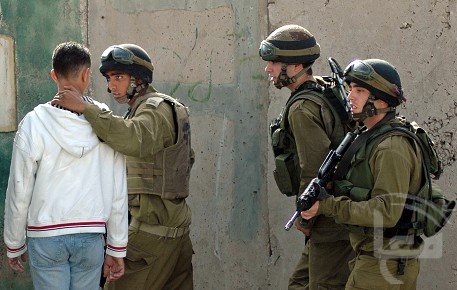 Israeli forces arrest a Palestinian boy after he attempted to cross the Al-Ram checkpoint on the northern edge of Jerusalem en route to prayers at the Al-Aqsa Mosque on 18 October 2006. [MaanImages/Moamar Awad]
Hebron – Israeli authorities have asked the family of a detained 15-year-old boy to pay 1,500 Israeli shekels (about 400 US dollars) to release the minor, a prisoners solidarity group reported on Saturday.
The boy, Ratib Abu Meizar, was detained on Friday evening in the Zahid neighborhood of central of Hebron in the southern West Bank. He was taken to a detention center housed in the illegal Israeli settlement of Kiryat Arba.
Amjad Najjar, director of the Palestinian Prisoners Society in Hebron, told Ma’an that Abu Meizar’s detention “is a continuation of Israel’s policy of blackmailing the families of detained Palestinian children, a policy which has become official.”
Najjar urged international children’s rights groups to exert pressure on the government of Switzerland and other signatories to the Fourth Geneva Convention to encourage Israel to abide by its responsibilities. Israel is also a signatory to the convention, which extends protection to children in conflict zones.
A spokesman for Israeli police in the West Bank did not immediately return calls seeking comment.
Related articles
- Israeli forces raid Cremisan Monastery in Bethlehem (alethonews.wordpress.com)
- Two Palestinian children detained in Hebron (imemc.org)
- Father and 7-year-old son illegally detained in occupied Hebron (alethonews.wordpress.com)
Featured Video
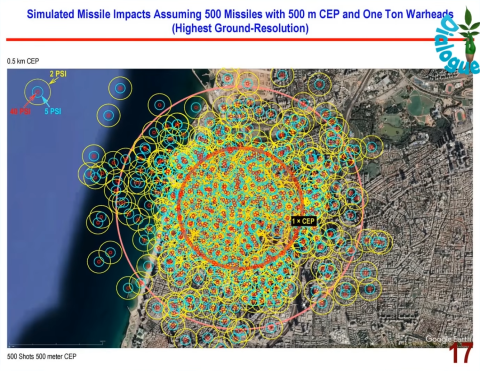
Prof. Ted Postol: US–Iran War? Israel’s Fatal Gamble
or go to
Aletho News Archives – Video-Images
From the Archives
Still No End in Sight of the Murder and Mayhem Wrought by the 9/11 Culprits
By Prof. Tony Hall | American Herald Tribune | July 17, 2016
The Kevin Barrett-Chomsky Dispute in Historical Perspective – Fourth part of the series titled “9/11 and the Zionist Question”
Back in 2006 all but a prescient few, such as Christopher Bollyn, perceived it as premature to try to identify and bring to justice the actual perpetrators of the 9/11 crimes. There was still some residue of confidence that responsible officials in government, law enforcement, media and the universities could and would respond in good faith to multiple revelations that great frauds had occurred in interpreting 9/11 for the public.
Accordingly, the main methodology of public intellectuals like Dr. Kevin Barrett or, for instance, Professors David Ray Griffin, Steven E. Jones, Peter Dale Scott, Graeme MacQueen, John McMurtry, Michael Keefer, Richard B. Lee, A.K. Dewdney, Nafeez Mossadeq Ahmed, and Michel Chossudovsky, was to marshal evidence demonstrating that the official narrative of 9/11 could not be true.
The marshaling of evidence was spurred on by observations coming from government insiders like Eckehardt Wertherbach, a former head of Germany’s intelligence service. In a meeting in Germany with Christopher Bollyn and Dr. Andreas von Bülow, Wertherbach pointed out that, “an attack of this magnitude and precision would have required years of planning. Such a sophisticated operation would require the fixed frame of a state intelligence organization, something not found in a loose group like the one led by the student Mohammed Atta in Hamburg.”
Andreas von Bülow was a German parliamentarian and Defense Ministry official. He confirmed this assessment in his book on the CIA and 9/11. In the text von Bülow remarked that the execution of the 9/11 plan “would have been unthinkable without backing from secret apparatuses of state and industry.” The author spoke of the “invented story of 19 Muslims working with Osama bin Laden in order the hide the truth” of the real perpetrators’ identity. … continue
Blog Roll
 Aletho News
- UK prosecutors drop aggravated burglary charges against 24 Palestine Action activists
- Unidentified drone downed over Lebanon airbase, US forces block authorities from crash site
- Peeling Back the US Information Operation in Iran
- Israel ‘dictating terms’ to US – Turkish professor
- US ramps up nuclear claims against China
- Erdogan wants nukes: What a Turkish bomb would mean for the Middle East
- Ukrainian disruption of Russian oil pipeline triggers emergency in EU state
- Kaja Kallas: an uncomfortable figure useful to the EU’s Russophobic purposes
- German state blacklists right-wing party for first time
- Romania’s stolen elections were only the start: Inside the EU’s war on democracy
- If Americans Knew
- Compliant aid: Who are the Israel-approved NGOs scaling up in Gaza?
- Why won’t Trump’s “Board of Peace” bring peace? – Not a ceasefire Day 131
- Help end the injustice against Shadi
- Israel’s Favorite American President
- Israel’s “Yellow Line” Is a Death Trap for Palestinians. We Drove Into It.
- Why Israel’s expanding occupation in Syria presents a critical legal test
- Gaza is not a natural disaster. It is the victim of genocide enabled by global inaction
- Netanyahu’s plan to “end” US aid to Israel is to give even more money under a different name
- Israel ceased firing on Gaza for just 15 days of the “ceasefire” – Not a ceasefire Day 130
- In Gaza, “rats run over our faces” – Not a ceasefire Day 129
- No Tricks Zone
- Coal Power Back In Trend As Globe Tries To Keep Pace With Growing Demand For Power
- New Study: A 4°C Warmer Beaufort Sea Had ‘No Sea Ice’ 11,700 – 8200 Years Ago
- Unfudging The Data: Dutch Meteorological Institute Reinstates Early 20th Centruy Heat Waves It Had Erased Earlier
- German Gas Crisis…Chancellor Merz Allegedly Bans Gas Debate Ahead of Elections!
- Pollen Reconstructions Show The Last Glacial’s Warming Events Were Global, 10x Greater Than Modern
- Germany’s Natural Gas Storage Level Dwindles To Just 28%… Increasingly Critical
- New Study Rebuts The Assumption That Anthropogenic CO2 Molecules Have ‘Special’ Properties
- Climate Scientist Who Predicted End Of “Heavy Frost And Snow” Now Refuses Media Inquiries
- Polar Bear Numbers Rising And Health Improving In Areas With The Most Rapid Sea Ice Decline
- One Reason Only For Germany’s Heating Gas Crisis: Its Hardcore-Dumbass Energy Policy
 Aletho News