France may permanently station soldiers in Mali
RT – March 27, 2013
UN Secretary-General Ban Ki-moon has suggested the creation of a peacekeeping force in Mali that would include West African troops already operating in the country. He also said that a “parallel force” must be built to confront Islamist threats.
“Given the anticipated level and nature of the residual threat, there would be a fundamental requirement for a parallel force to operate in Mali alongside the UN mission in order to conduct major combat and counter-terrorism operations,” Ban wrote in his report on Mali.
Such a force could be built on the French troops already active in Mali, some diplomats say.
Once the African nations’ soldiers become a UN peacekeeping force, most of their troops and police would operate in northern Mali, while there would be a “light presence” based in the country’s capital, Bamako, Ban suggested.
“The force would operate under robust rules of engagement, with a mandate to use all necessary means to address threats to the implementation of its mandate, which would include protection of civilians,” he said.
The parallel force proposed by Ban Ki-moon would specifically target Islamist extremists, and could be based in Mali or elsewhere in West Africa. Diplomats expressed hope that the UN Security Council will vote on the peacekeeping proposal in mid-April.
France launched its military intervention in Mali in January to combat Islamist groups that had taken over the north of the country a year ago. The French army succeeded in driving the Islamists out Mali’s main northern cities and into desert and mountain hideouts. Still, Ban’s report said Mali suffered from a “crisis of governance” marked by “endemic corruption,” and a lack of state authority.
The 11,200 African troops converted into peacekeepers could only cover the main towns “assessed to be at highest risk,” Ban explained. The bulk of the contingent would come from a West African force known as AFISMA (African-led International Support Mission to Mali), comprised of armed forces from many African nations and already operational in Mali.
France said it would start withdrawing 4,000 of its troops in late April as part of a handover to the UN-backed African force. French President Francois Hollande has repeatedly vowed that the troops will remain in the region only until a legitimate government can take over.
The Mali intervention has cost France more than 100 million euros so far.
French troops to stay in Mali until July: Officials
Press TV – March 1, 2013
French officials say the country’s forces will remain in Mali until at least July amid reports of a serious humanitarian crisis in the northern areas of the country caused by the French-led war in the West African nation.
The officials, speaking on condition of anonymity, made the announcement on Thursday, the Associated Press reported.
Earlier this week, an unnamed French diplomat also said that it is unlikely that “the French presence will be over in six months.”
French Foreign Minister Laurent Fabius said on February 6 that the country would begin the withdrawal of its troops from Mali in March.
“We will continue to act in the north… I think that from March, if everything goes according to plan, the number of French troops should decrease,” Fabius said.
France launched its war on Mali on January 11 under the pretext of halting the advance of fighters in the country. The war has left thousands of Malians homeless.
The French-led war in Mali has also displaced thousands of people, who now live in deplorable conditions.
On February 1, Amnesty International said “serious human rights breaches” — including the killing of children — were occurring in the French war in Mali.
The rights organization said there was “evidence that at least five civilians, including three children, were killed in an airstrike” carried out by French forces against the local fighters.
Nuclear accident could cost France $580bn, study shows
Press TV – February 7, 2013
A study shows that a possible nuclear accident in France would cost the country about 430 billion euros ($580 billion), which is equivalent to 20 percent of its economic output.
The study, conducted by the French Institute for Radiological Protection and Nuclear Safety (IRSN), showed that a possible disaster in one of the nuclear reactors in France and a release of radioactivity into the environment would displace an estimated 100,000 people, destroy crops and cause massive power cuts, Reuters reported on Wednesday.
Jacques Repussard, the head of the IRSN, said, “A major accident would have terrible consequences, but we would have to deal with them because the country wouldn’t be annihilated, so we have to talk about it, however difficult it is.”
A nuclear crisis would also take its toll on exports of French delicacies and the tourism industry, costing the country about 160 billion euros ($126 billion), the study indicated.
Patrick Momal, the IRSN economist responsible for the study, said, “Tourism is an important activity for France and direct costs would not only hit the affected region, but the whole country.”
Momal, who is also a former World Bank economist, unveiled two disaster scenarios prompting a core meltdown at a typical 900-megawatt nuclear reactor in France, which include a “major” accident similar to that of Japan’s Fukushima reactor.
In March 2011, a 9.0-magnitude earthquake followed by a devastating tsunami hit the northeastern coast of Japan.
The quake triggered a nuclear disaster by knocking out power to cooling systems at the Fukushima nuclear power plant, resulting in meltdowns and radioactivity release.
France is the world’s most nuclear-dependent country and operates 58 reactors, which supply about 75 percent of its electricity demand.
Related articles
- Duke Energy to close Crystal River nuclear reactor in Florida (charlotte.news14.com)
In Mali, Forces Backed by UN, France, and Obama Slaughter Civilians
By Alex Newman | New American | January 28, 2013
Summary executions and mass human rights abuses targeting innocent civilians in Mali are being perpetrated by soldiers loyal to the dubious Malian regime in a campaign supported by the United Nations, the new socialist French government, and the Obama administration. According to human rights groups and witnesses on the ground, the atrocities are increasing as the number of murdered victims continues to rise — eerily reminiscent of similar tragic interventions in Libya, Syria, and the Ivory Coast.
The regime ruling southern Mali out of the capital city of Bamako, which seized power in a military coup last year led by a U.S. government-trained officer, is currently attempting to recapture the northern regions of the country. The vast swath of territory in the north was declared independent last year by a group of historically oppressed nomadic Tuareg rebels armed with weapons obtained from the recent Western-backed war on Libya.
Islamic fighters with various loyalties joined the fight against the corrupt central government, too — providing a half-baked excuse for the UN, the French government, Obama, and various African despots to enter the fray on behalf of the illegitimate regime in the south. After the UN Security Council purported to “authorize” an international invasion on behalf of the coup-installed regime, forces from France openly began their military campaign earlier this month under the guise of fighting “Islamic extremism.”
Obama, the U.K. government, and a motley assortment of African tyrants — most of whom continue to be propped up with Western taxpayer money — quickly joined the battle as well. But within days of the military operation to crush rebels in the north, disturbing reports of gross human rights violations perpetrated by Western-backed forces began to emerge from across the region.
“This series of grave abuses confirms the concerns that we have been expressing for several weeks,” said President Souhayr Belhassen with the International Federation for Human Rights (FIDH), a Paris-based umbrella group representing more than 160 organizations around the world. “These acts of revenge together with the extreme tensions that exists between the communities constitute an explosive cocktail leading us to fear that the worst could happen, especially in the context of the reconquering the North.”
According to FIDH, which said it is “very alarmed by the increasing number of summary executions and other human rights violations committed by Malian soldiers,” an immediate investigation is needed. The umbrella organization said an independent commission should be established to assess the scope of the crimes and bring the perpetrators to justice. The group said it had already confirmed dozens of reports of extrajudicial murders in various towns, and that other reported atrocities were still being investigated.
Even in Bamako, where the corrupt regime styling itself the “government” of Mali is based, ethnic Tuaregs who have nothing to do with the secession movement in the north are being brutalized. According to reports, their homes are being invaded and plundered. Simply failing to produce valid identification documents is apparently justification enough to brutalize or even murder the victims.
“These abuses undermine the legitimacy of the operation to restore territorial integrity and must be prosecuted by the national justice, and if required, by the International Criminal Court which opened an investigation on the situation in Mali on 16 January,” FIDH Honorary President Sidiki Kaba said in a statement, urging French and Malian authorities to investigate the lawlessness and criminal terrorization of victims. […]
While the press has been largely barred from conflict areas by the French government, even establishment journalists have documented the slaughter by UN-backed forces. A Reuters reporter, for example, “saw at least six bodies in two areas of the Walirdi district of Sevare. Three of them were lying, partly covered in sand, near a bus station and showed signs of having been burned. Three more had been thrown into a nearby well.”
Witnesses who spoke to the Associated Press but asked to remain anonymous gave vivid accounts of the atrocities being perpetrated by the Malian regime, which, again, has the full force of the Obama administration, the UN, and the socialist government in France behind it. According to the sources, Malian soldiers were massacring anyone suspected of having ties to the rebels in the north.
“They gathered all the people who didn’t have national identity cards and the people they suspected of being close to the Islamists to execute them and put them in two different wells near the bus station,” one of the witnesses was quoted as saying by the AP. After being dumped in the wells, Malian troops poured gasoline on the bodies and set them ablaze, probably to conceal the evidence of their crimes.
The coup regime in Bamako has denied the accusations, saying it ordered its officers to “respect human rights.” However, French Defense Minister Jean-Yves Le Drian, when asked about whether he knew of the abuses being perpetrated by the “government” his forces are supporting in Mali, said: “There’s a risk” that the atrocities are occurring, but that it was up to the Malian regime to stop it. … Full article
Data Privacy Day 2013: Twitter reveals US government makes 80% of info requests
RT | January 29, 2013
Twitter has released its second transparency report, which demonstrated a frightening increase in requests for user data by the US government and ignited serious concerns over privacy and free expression.
The list disclosed data requests from over 30 nations, and revealed that the US government was responsible for 815 of the 1,009 information requests in the second half of 2012 – just over 80 percent of all inquiries.
Twenty percent of all US requests were ‘under seal,’ meaning that users were not notified that their information was accessed.
The overall number of requests worldwide also steadily increased last year, rising from 849 in the January to June 2012 period to 1009 in the July to December 2012 period.
Twitter’s legal policy manager Jeremy Kessel blogged that, “it is vital for us (and other Internet services) to be transparent about government requests for user information.”
“These growing inquiries can have a serious chilling effect on free expression – and real privacy implications,” he wrote.
He went on to express hopes that the publication of the transparency data would be helpful in two ways – “to raise public awareness about these invasive requests,” and “to enable policy makers to make more informed decisions.”
The majority of US requests were subpoenas, which comprised 60 percent of government demands for information. Subpoenas usually seek user information such as email addresses affiliated with accounts and IP logs. A user’s whereabouts can generally be located by the IP address they are using.
Twitter complied with US government requests 69 percent of the time, according to the report.
Twitter released its transparency report on January 28, dubbed ‘Data Privacy Day.’ The US National Cyber Security alliance said it founded the day to “empower people to protect their privacy.”
According to Twitter’s report, several other governments made over 10 requests each for personal information, including Brazil, Canada, France, Japan and the UK. Japan ranked the second-highest on the list after the US; however, the US made 753 more demands for information than Japan.
Google released a statement marking the occasion, saying that the company “[doesn’t] want our services to be used in harmful ways,” and that it is “important that laws protect you against overly broad requests for your personal information.”
Earlier this month, France ruled that Twitter must disclose to authorities the identities of people writing anti-Semitic tweets using the hashtags #UnBonJuif [A Good Jew] and #UnJuifMort [A Dead Jew]. The social networking platform will be fined 1,000 euros a day until it complies.
The publication of the survey came shortly after Google published its own transparency report, which showed a similarly disturbing 25 percent rise in data requests from government authorities. The report also revealed that the US had made the most requests for private information to Google of any government: Over 8,438 in the second half of 2012.
UK-based rights group Privacy International later commented that “Google, Facebook and Twitter are highly vulnerable to government intrusion.”
“I am alarmed by the number of government requests and concerned that so many are done with merely a subpoena,” said John Simpson, a consumer advocate with the California-based group Consumer Watchdog. “A warrant should be required.”
Related articles
- Twitter Transparency Report v2 (twitter.com)
- Twitter: Government user data requests have risen 20 percent (sott.net)
Civilian casualties from French air strikes mounting in Mali
January 27, 2013
Human rights groups and journalists have complained that they have not been permitted access to Malian war zones. They have also not been given information on civilian and military casualties. After being contacted by Press TV, France’s Ministry of Defense said that there have been no civilian casualties, thanks to the precision of their air strikes. This claim of military perfection has been trumpeted since the beginning of the invasion. But the mayor of the Malian town of Konna recently declared that 11 civilians died as a result of French air strikes, including women and children. No one knows if there have been similar deaths in other areas of conflict, because since the war started Mali’s government has not issued a single figure about the war’s human casualties. Malian soldiers have been accused of summarily executing dozens of people, some only because of their ethnicity or for lacking identity papers.
Ramin Mazaheri, Press TV, Paris
Follow our Facebook on: https://www.facebook.com/presstvchannel
Follow our Twitter on: http://twitter.com/presstv
Follow our Tumblr on: http://presstvchannel.tumblr.com
Germany, France and nine other EU countries approved tax on financial transactions
MercoPress | January 25th 2013
France, Germany and nine other European Union states side-stepped British opposition this week and won approval for a tax on financial transactions, it emerged on Wednesday.
EU Taxation Commissioner Semeta said the tax, strongly rejected by the UK could yield up to 57 billion Euros a year EU Taxation Commissioner Semeta said the tax, strongly rejected by the UK could yield up to 57 billion Euros a year
The Times reported that EU finance ministers gave their blessing to the scheme, which will apply to anyone in the 11 countries who makes a bond or share trade or bets on the market using derivatives.
The two big Euro states were able to bypass opposition from Britain and other states under an EU procedure known as enhanced co-operation. The system has been used previously for divorce law and in the field of patents.
Algirdas Semeta, the European Taxation Commissioner, called the decision a “major milestone for EU tax policies”. He had no immediate estimate of how much revenue the tax would generate, but noted that the Commission previously had calculated that such a tax across the 27-nation bloc could yield €57 billion a year.
The 11 nations, representing about two thirds of the EU economy, are Austria, Belgium, Estonia, France, Germany, Greece, Italy, Portugal, Slovakia, Slovenia and Spain. The Netherlands, where a Government was elected in the autumn, may participate. The states now need the Commission to draft legislation enacting a tax.
Related articles
- Finance tax given go ahead as Ireland and UK opt out (independent.ie)
- EU approves financial transaction tax for 11 eurozone countries (guardian.co.uk)
- Giant Victory in Europe on Taxing Financial Speculation (ips-dc.org)
France’s Mali Debacle
By BARRY LANDO | CounterPunch | January 18, 2013
Paris – Within the next few days, France will have deployed some 2,500 troops to Mali. That’s as large a commitment as France made to what became a profoundly unpopular war in Afghanistan. No one knows how long the troops will be there, but the price tag will surely be tens if not hundreds of millions [or billions rather] of Euros, this to born by a French economy already in woeful shape.
The danger is that President Francois Holland and the French state, may shortly find themselves in the disastrous situation of the hapless coyote in the cartoon, Roadrunner, so intent on chasing his prey that he scurries right over a cliff and suddenly finds himself flailing in mid air, about to plunge to the desert below.
President Holland said the menace of a radical Islamic takeover was so imminent that he had no choice but to intervene—to save not just Mali, but all of Western Africa, and, the French now imply, Europe as well.
Strange thing though, despite the supposed urgency of the situation, France has had precious little luck so far in convincing its European partners to contribute their own troops to the intervention. Indeed, the last thing those countries want, after the traumatic experience of Iraq, Libya and the Afghan crusade, is to become enmeshed in what risks to be an open-ended conflict, on behalf of an unelected Malian government, against a vague assortment of ethnic rebels and jihadis in the desert wilds of North Africa. Thus, so far there have been a lot of pats on the back from France’s allies, offers of logistic support, intelligence, a few troop transports, drones, but that’s it.
“You say, ‘We’ll give you nurses and you go get yourselves killed,’” said French deputy Daniel Cohn-Bendit, railing at his fellow deputies in the European Parliament. “We [Europe] will only be credible if French soldiers are not the only ones getting killed.”
Actually, it was surprising to learn that France, still considered a major military power, doesn’t have the capability to transport a couple of thousand troops and their equipment to North Africa. France even had to rely on an offer from the Italians for tankers to handle in-flight refueling of French fighter jets.
Despite the tepid response from France’s allies, French government spokesman are still reassuring the public that French troops are not going to play the major combat role in the coming ground battles.
The fact is, that even if they wanted to play a major role, there are nowhere near enough French boots on the ground. It’s instructive to speculate on France’s combat strength, using what is known as the “tooth to tail” ratio, that is, the number of support troops in the rear needed to support each combat soldier at the front. For the U.S. military that ratio is about three to one. If we use the same figure for France, that means that out of 2500 French troops deployed to Mali, probably about 600-700—a thousand at best–would actually see front-line combat.
And Mali, don’t forget, is twice the size of France, or Afghanistan or Texas.
The actual down-and-dirty fighting, we are told, is to be done by troops from West Africa, some of whom have finally begun arriving in Mali. But all the reports about those contingents indicate a woeful lack of equipment, morale, and training, particularly in being able to fight a guerrilla war in the desert reaches of the Sahel.
After months of discussion, this week—in the wake of the hostage crisis in Algeria– France’s European allies finally agreed to dispatch 250 troops to help train the Malian army and perhaps other African units. But—unless the fallout from the Algerian disaster changes things–it’s already determined that those European trainers are to be non- combatants. They will not even be advising the Malian soldiers in battle. As one senior EU official made very clear. “We will not go north. We will stay in the training areas,”
By the way, one thing I can never figure out—whether it be Mali or Afghanistan–we‘re always hearing about how the forces being backed by the U.S. and its allies, like France in this case, invariably seem to be poorly trained and equipped and demoralized, despite hundreds of millions of dollars and years of training. [Think Afghanistan where only one out of 23 battalions is able to function independently of U.S. support.]
Meanwhile, the ragtag rebels they’re combating, usually from those same third world countries, like the Taliban in Afghanistan or the Tuareg in Mali are portrayed as dedicated, fierce, battle-hardened warriors, who wreak havoc on their opponents with often the most primitive improvised weapons or suicide bombs. Reports are that it will take many weeks, probably months, before the various African troops will be ready to do any serious fighting. And there are other problems to deal with apart from training and equipment: the danger, for instance, of unleashing Christian soldiers from Nigeria to suppress Islamic rebels in Northern Mali.
Ironically, as I’ve pointed out in a previous blog, while France’s allies are hanging back, the Chinese, who have huge economic interests and construction projects underway in every one of Mali’s neighbors, continue to go about their business, apparently still content to leave the police work to France and Europe and the West African states.
The French, for the record, insist that the groups they are battling in Mali –and now in Algeria–are all lumped together as “terrorists”, linked to al-Qaeda. There is no recognition of the fact that most of the different rebel groups, are mostly driven by strong ethnic and nationalist aspirations, as much as by religion–not that different perhaps, from the Taliban in Afghanistan.
In that case, it’s obvious that the only way this conflict will ultimately be settled is not by somehow eradicating the “terrorists”, but by sitting down to negotiate a deal, as will probably be the case in Afghanistan.
In Mali, such a deal may not be that different from the kind of settlement that was offered the Tuareg years ago after a series of rebellions, but which the Malian government ultimately reneged on.
So, how do the French feel about this?
Estimates are that anywhere from 400,000 to one million French took to the streets of Paris last weekend. A counter-protest, expected to draw hundreds of thousands of other militant French, is now being organized. Tempers are flaring.
What’s the issue?
Mali?
Well, actually, no. It’s whether the French government should legalize gay marriage.
As for the intervention in Mali, at first the French, from all ends of the political spectrum, seemed to be solidly behind their government and their fighting men.
That consensus is already unraveling, and it’s certain that as the intervention drags on, the casualties and costs mount, and France’s European allies still drag their heels, the patriotic surge will flag
Which bring us back to the Roadrunner. At some point the French may suddenly look down to find that their president has taken them over a precipice, and they’re suspended there, gazing in horror at the chasm below.
Related articles
- France Formally Requests US Military Aid for Mali Invasion (economicpolicyjournal.com)
UK terror hypocrisy: Mali vs. Algeria
Press TV – January 19, 2013
British Prime Minister David Cameron called off his long-awaited speech on the relations with the European Union on Friday to deal with the hostage-taking in Algeria as his country actively assisted France in its military intervention in Algeria’s neighbor Mali.
Cameron was outraged by, what he described in an address to the MPs on Thursday, as the Algerian government’s “all guns blazing” tactic against the “terrorist” kidnappers at BP’s In Amenas gas plant because it could endanger British and other western lives.
“I won’t hide, of course I was… we were disappointed not to be informed of the assault in advance,” Cameron told the MPs.
In effect, Cameron was telling Algeria that they are not supposed to be fighting “terrorists” at the cost of British lives while he and his French allies were – and are — exactly killing innocent Malians for the alleged ‘greater good’ they tend to name fighting terrorism.
There are no precise figures on the number of Malian civilians killed in the French Britain-assisted airstrikes near the country’s borders with Algeria but Human Rights Watch said on the second day of the attacks last Sunday that 10 civilians including three children, were killed during airstrikes.
The situation has also been grave enough for international organizations to call for restraint.
“Forces involved in armed attacks should avoid indiscriminate shelling at all costs, and do their utmost to prevent civilian casualties,” said Paule Rigaud, Amnesty International’s Africa deputy director.
However, there has been no such restr aint to the point that United Nations High Commissioner for Refugees (UNHCR) Melissa Fleming warned on Friday “that in the near future there could be up to 300,000 people additionally displaced inside Mali, and over 400,000 additionally displaced in the neighboring countries” many of them escaping indiscriminate attacks on Malian rebels and civilians.
Nor has Cameron advised French president Francois Hollande to hold back attacks to avoid collateral damage to women and children probably because their skins are not as white as the British hostages in Algeria.
This comes as Hollande said on Friday that the attack and hostage crisis in the remote desert gas plant show the French military intervention in Mali was justified.
However, one comes to think that matters are exactly the other way round, especially after the hostage-takers said their move was in response to the French intervention in Mali.
One should also note a report by Amnesty International on brutality on the part of the ally of Britain and France, the Malian government, against the Tuareg ethnic minority where rebels are rooted.
When the conflict originally exploded, Tuaregs were arrested, tortured, bombed and killed by the security forces, “apparently only on ethnic grounds”, Amnesty said in a report on December 21.
Meanwhile, last July, 80 inmates arrested by the Malian army were stripped to their underwear, jammed into a 5 sqm cell and cigarettes were burnt into their bodies.
Also, back in September 2012, 16 Muslim clerics were rounded up at a checkpoint and summarily executed by the Malian army, which is now Britain’s ally.
Indeed, Britain could apparently pat itself on the back for setting the stage for the kidnapping of its own nationals in Algeria by helping the Malian government.
Britain should also answer whether the “botched” Algerian operation to free hundreds of hostages that left a few western hostages killed would have been also botched if the hostages were not white westerners, or if the scenario was one of British forces and its allies pounding Malian targets with huge civilians casualties on people with darker skins.
Featured Video

WARNING: Delete TikTok Immediately!
or go to
Aletho News Archives – Video-Images
Book Review
In 2014, Michael Parenti Wrote A Prophetic Article About Ukraine
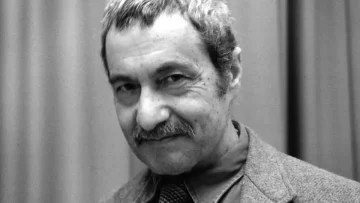
The Dissident | January 28, 2026
This week, the influential left-wing scholar Michael Parenti passed away at the age of 92.
Parenti was well known for his sharp criticism of U.S. foreign policy and U.S. imperialism throughout his life, waking up many to the reality of it and the lies used to justify it.
This is best underscored in one of his last published articles, “Ukraine and Regime Change”, which was published in the book “Flashpoint In Ukraine: How the U.S. Drive for Hegemony Risks World War III”, where he predicted to a tee what the result of the 2014 U.S. backed coup in Ukraine would be. … continue
Blog Roll
Recent Comments
eddieb on Conspiracy Denial eddieb on WEF Calls for ‘Cultural Revolu… loongtip on Trump wanted to play peacemake… Coronistan on EU member to sue bloc over ‘su… loongtip on Vicious loongtip on EU turns to India for defense… Coronistan on Donald Trump Is No Peace … seversonebcfb985d9 on French court jails pro-Palesti… eddieb on Fourteen Incredible Facts Abou… Bill Francis on European leaders’ shift in the… seversonebcfb985d9 on Villains of Judea: Philip Esfo… loongtip on Report warns that ‘Jewish terr…


 Aletho News
- EU labels Iran’s Revolutionary Guard ‘terrorist organization’
- Security Guarantees Supported by Russia Agreed on in Istanbul in 2022 – Lavrov
- Russian oil major agrees sale of foreign assets to US firm
- European Union Sanctions Russian Journalists and Artists
- Fānpán – Is China Turning the Tables on the ‘Democratic’ West?
- Davos, Mark Carney’s frankness, and the Euro-American rift
- Austrian lawmakers propose to revoke citizenship of former foreign minister
- Switzerland plans tax hike to revamp military
- In One Of His Final Pieces, Written in 2014, Michael Parenti Wrote A Prophetic Article About Ukraine
- More Bombs, More Talks Zelensky Rejects Trump’s Plan
- If Americans Knew
- “Hey ChatGPT, is Israel building a concentration camp?” (spoiler: yes) – Not a ceasefire Day 111
- “The Gaza ceasefire is a minefield” – Not a ceasefire Day 110
- Israel to seek new security deal from US, official says
- Leaked “Board of Peace” Resolution Outlines U.S.-Led Plan to Rule Over Gaza
- Jonathan Greenblatt Rolls Out Plan to Activate Hispanic Evangelical Golems
- Violence against hundreds of Gazan remains to find one Israeli – Not a ceasefire Day 109
- Greenpeace Demonstrator Exposes Folly of Protest Restrictions
- From CBS to TikTok, Pro-Israel Ellison is now in the driver’s seat
- Israel pays for UK advertisements attacking Doctors Without Borders
- Israel accused of extracting billions from Gazan people to pay for their own genocide
- No Tricks Zone
- New Study Affirms Rising CO2’s Greening Impact Across India – A Region With No Net Warming In 75 Years
- Germany’s Natural Gas Crisis Escalates … One Storage Site Near Empty …Government Silent
- Polar Colding…Antarctica Saw Its Coldest October In 44 Years!
- New Study: Sea Levels Rose 20 Times The Modern Rate During The Roman Warm Period
- As German Gas Storage Dips Dangerously Low…Shortage Hardly Avoidable
- New Study: Brazil’s Relative Sea Level Was 2+ Meters Higher And SSTs 3-4°C Warmer 6000 Years Ago
- Philosopher Schopenhauer: Climate Science Certainty Stems From Stupidity, Ignorance
- New Study: Species Extinction Rates Declining Since 1980 – ‘Climate Change Is Not An Important Threat’
- Denmark Places Climate Protection Above Animal Welfare, Poisoning And Culling Cows
- New Study: Greenland Was 3-7°C Warmer And Far Less Glaciated Than Today 6000-8000 Years Ago
 Aletho News