Hungarian Foreign Minister Péter Szijjártó has accused European leaders of actively working to prevent peace in Ukraine, claiming they are organizing in Paris on Monday to block potential diplomatic solutions to end the war with Russia.
Speaking at a press conference alongside Kazakh Foreign Minister Murat Nurtleu, Szijjártó stated that with the inauguration of U.S. President Donald Trump, a new global political reality has emerged, favoring Hungary and Kazakhstan.
“We are talking about two countries that have always maintained a pro-peace stance, pursued a patriotic, sovereign political strategy, and prioritized national interests above all else,” Szijjártó said.
He suggested that Hungary and Kazakhstan have been frequent targets of the “international liberal mainstream” for their dissenting positions — particularly Hungary which has often been treated like a social pariah in Brussels for its objections to the EU’s unconditional military and financial support for Kyiv — but now benefit from mutual respect in international relations, particularly after Trump’s decision to end financial support for interventionist policies.
Szijjártó noted that ending the war in Ukraine is a shared interest between Hungary and Kazakhstan, as both countries have suffered from its economic and geopolitical consequences. He further expressed optimism in Trump’s “peace party” approach, citing recent high-level communications between the U.S. and Russia as a positive step.
“We welcome the resumption of top-level Russian-American dialogue. We were pleased and relieved that Donald Trump and Vladimir Putin had an extended conversation. Furthermore, the discussions between U.S. Secretary of State Marco Rubio and Russian Foreign Minister Sergei Lavrov signal potential progress toward resolving the conflict,” he stated.
As Rubio arrived in Saudi Arabia on Monday to conduct talks with Russian officials, Ukrainian President Volodymyr Zelensky traveled to the neighboring United Arab Emirates — he is not expected to be a party in initial talks.
“One phone call does not solve a war as complex as this one, but I can tell you that Donald Trump is the only leader in the world that could potentially begin that process,” Rubio told CBS ahead of the visit.
Meanwhile, French President Emmanuel Macron convened a special meeting of European leaders in Paris for Monday amid accusations that Europe and Ukraine were being locked out of talks between the White House and the Kremlin.
“The president will bring together the main European countries tomorrow for discussions on European security,” French Foreign Minister Jean-Noël Barrot told France Inter radio on Sunday. “Only the Ukrainians can decide to stop fighting,” he added.
Szijjártó claimed, however, that while the U.S. and Russia are exploring diplomatic solutions, European leaders who oppose such efforts are gathering to maintain their current pro-war stance. “Those who have consistently fueled the fire of war are now meeting in Paris. These are the leaders who, for the past three years, have followed a failed strategy, constantly escalating the danger of war,” he declared.
He further alleged that these European leaders had spent years attacking Donald Trump and now aim to obstruct any potential peace agreement. “Today in Paris, the anti-Trump, war-focused, frustrated European leaders are coming together. They are the ones who want to prevent peace in Ukraine,” he said.
Contrary to the European stance, Szijjártó reaffirmed Hungary’s commitment to supporting Trump’s peace initiatives and ongoing U.S.-Russia negotiations. “Unlike those gathering in Paris, we stand by Donald Trump’s aspirations, we endorse U.S.-Russian talks, and we support peace in Ukraine.”
As French President Emmanuel Macron convenes European leaders in Paris to discuss military strategies regarding Ukraine, he faces backlash from key European allies for excluding them from the summit.
The gathering, aimed at formulating a unified European stance amid ongoing U.S.-Russia peace discussions, has sparked controversy for leaving out crucial partners in the region.
Czechia was among the first to express its discontent, criticizing Macron’s decision to exclude them from the summit. A Czech government source told French newspaper Le Monde : “In addition to Poland, there is no country that is closer to the war.”
The source further condemned Macron’s “arrogance,” emphasizing that no country hosts more Ukrainian refugees in relative terms.
“No country has more Ukrainian refugees per capita than the Czech Republic, and we manage one of the most effective weapon supply systems,” they added.
Romania also found itself omitted from the summit guest list. Ilie Bolojan, presidential advisor for defense and security, acknowledged the exclusion, stating that despite Romania’s substantial contributions — including overseeing more than 600 kilometers of Ukraine’s border — it had not been invited to Paris “despite his efforts” to get Bucharest in the room.
Slovenian President Nataša Pirc Musar voiced strong criticism of the summit’s selective invitations, asserting that it undermines European unity. “On a symbolic level, the organizers of the Paris summit show the world that, even within the EU, not all states are treated on an equal footing,” Musar declared. “This does not correspond to the spirit of European integration. This is not the Europe we aspire to, nor a Europe that commands global respect.”
Hungary, known for its non-interventionist stance under Prime Minister Viktor Orbán, also condemned the meeting, labeling it a “pro-war” summit. The Hungarian government accused participating European leaders of fueling escalation rather than seeking diplomatic resolutions. Hungarian Foreign Minister Péter Szijjártó criticized the summit’s motives, claiming that it gathers “anti-Trump, war-focused, frustrated leaders” who do not want peace.
“Those who have continued to throw oil on the fire for three years now meet in Paris,” Szijjártó asserted, denouncing what he called “an erroneous strategy” of continued military escalation.
He reiterated Hungary’s alignment with U.S. President Donald Trump’s vision for peace negotiations between the U.S. and Russia, arguing that direct diplomacy remains the best route to ending the conflict.
Around a dozen European leaders are expected to meet at the Elysée Palace later on Monday for talks chaired by Macron.
France calls for European meeting to respond to Trump’s initiatives
By Lucas Leiroz | February 17, 2025
While Washington is adopting a more diplomatic stance in the conflict with Russia, the European Union is insisting on a hostile policy. French President Emmanuel Macron is reacting quite negatively to the diplomatic advances, trying to consolidate a unified European position on the issue. The French goal is clearly to boycott any peace process, thus trying to prolong the conflict – even if this harms European strategic interests.
Recently, Macron called for an emergency summit of European leaders to discuss the Ukrainian issue. He believes that it is necessary for the EU to show an alternative to the initiatives taken by the US, otherwise European countries will end up being excluded from all the peace talks.
The meeting of the leaders is expected to take place in Paris at the same time as Russian and American diplomats meet in Saudi Arabia. There are not many details available on the subject yet, but it is known that Polish Foreign Minister Radoslaw Sikorski was one of the first to be invited by Macron – which is natural, considering that Poland is one of the countries with the highest military and political involvement in the Ukrainian conflict.
It is important to understand the context in which Macron made his decision. While, on the one hand, the US engaged in direct dialogue with Russia and excluded Europe from the process, on the other, the Europeans met at the Munich Security Conference to discuss relevant issues regarding the main geopolitical developments, but failed to reach any fruitful consensus on the issue of peace in Ukraine.
In addition, US special envoy Keith Kellogg categorically stated that the EU will not be included in the peace negotiations, which further aggravated the Europeans’ anger – certainly motivating Macron to call the meeting in Paris. In fact, it seems clear that the EU feels “betrayed” by the US by being excluded from the talks. European states seem desperate to prevent Donald Trump’s initiatives from succeeding, which is why the EU is expected to continue endorsing the war even if the US changes its stance.
All these moves were expected. While Trump has a more realistic and pragmatic stance, most European leaders are aligned with the Democrats’ policies, which are marked by a strong ideological influence. In other words, the Democrats-EU axis is interested in doing everything possible to protect the unipolar liberal order because it is ideologically linked to Western agendas. On the other hand, Trump and the Republicans have a more de-ideologized approach, simply seeking what is best for American strategic interests at the moment.
The main problem in this balance is that Macron has bold ambitions for Europe that clash with current American interests. He does not want the EU to be left out of major geopolitical decisions, hoping that the bloc’s countries will be able to deliberate on what they consider best for themselves and the entire region.
Macron seems not to have understood yet that Europe is suffering the consequences of its own past decisions. The EU chose to be excluded from major international discussions precisely at the time when it adopted a policy of alignment with the US. Now, the bloc is simply having to adapt to every change that occurs in the White House, without any right to a sovereign position, and simply accepting orders from Washington.
There is nothing Europe can do to change this, other than through a profound review of the bloc’s entire foreign policy. Europeans need to break with the idea of a “unified West” and start defending their own interests as an independent power. For this to happen, European states would have to undergo serious changes, such as leaving NATO, since the Atlantic alliance is nothing more than an international army controlled by Washington. Without these deep changes, the EU will have to continue obeying American decisions.
The efforts of Macron and other European leaders will be completely fruitless when it comes to Ukraine. It is possible that the peace negotiations will fail and the conflict will continue, but this will be due to the inability of the US itself to meet Russian strategic interests, as European opinion will have no impact on the diplomatic process.
On the other hand, it is highly possible that France and other European countries will adopt a dissident stance in the Trump-led Collective West and continue supporting Kiev with weapons and money, even if the US stops any participation in the conflict. Macron is trying to project European power in Ukraine through an aggressive and bellicose stance, so his decisions are expected to worsen the hostilities.
Lucas Leiroz, member of the BRICS Journalists Association, researcher at the Center for Geostrategic Studies, geopolitical consultant.
You can follow Lucas on X (formerly Twitter) and Telegram.
Russia will need to take Ukraine’s lack of independence into account in any future negotiations, Kremlin spokesman Dmitry Peskov has said.
Given that in the past, Kiev backtracked on its promises at the behest of other countries, Moscow will need to consider this lack of autonomy in any upcoming talks, Peskov said in an interview published by Russia 1 TV journalist Pavel Zarubin on Sunday.
“That country cannot really answer for its words,” the spokesman said. “Each time it is necessary to make a certain adjustment when negotiating with them, for their deficit of sovereignty and the deficit of trust in them. Which will not go anywhere,” Peskov added.
The Kremlin spokesman cited the ill-fated 2014-2015 Minsk Agreements and the failed negotiations Moscow and Kiev held in Istanbul in 2022, soon after the full-blown escalation of the Ukraine conflict.
The Minsk ceasefire, which was ostensibly intended to freeze the conflict between Kiev and the Donetsk and Lugansk People’s Republics, was in fact only “an attempt to give Ukraine time” to build strength, former German Chancellor Angela Merkel admitted to Die Zeit in 2022.
“Ukraine would have been whole,” if the Minsk agreements had been followed, “and there would have been no civil war, and Russian people in the Donbass would have had no desire to separate from Ukraine,” Peskov claimed.
Similarly, Moscow and Kiev had already agreed on several points during the initial peace talks in Istanbul in 2022, the spokesman added.
“The [papers] were ready, they were ready to be signed. Then another side said, no, you can’t. And they were thrown out,” he said.
According to Ukrainian MP David Arakhamia, who was Kiev’s chief negotiator at the talks, then UK Prime Minister Boris Johnson came in person to demand that nothing be signed and that Ukraine continue fighting.
Moscow has ruled out any temporary solution akin to the Minsk agreements, insisting on a permanent, legally binding solution that addresses the core causes of the conflict. Any such settlement would need to be based on the points previously agreed upon in Istanbul, adjusted for the territorial “realities on the ground,” Russia has stated.
French President Emmanuel Macron has called an emergency summit of European leaders after Moscow and Washington agreed to hold Ukraine peace talks in Saudi Arabia, sidelining the EU.
US President Donald Trump and Russian President Vladimir Putin spoke by phone on Wednesday, marking their first known direct conversation since the escalation of the Ukraine conflict in February 2022.
On Saturday, the countries’ top diplomats followed up with a call to discuss “preparations for a potential high-level Russian-American summit.” Later that day, US Special Envoy Keith Kellogg stated that the EU nations would not be included in the negotiations.
Speaking at the Munich Security Conference, Polish Foreign Minister Radoslaw Sikorski welcomed Macron’s initiative and confirmed that the summit will take place in France on Monday.
“I’m very glad that President Macron has called our leaders to Paris,” Sikorski said, as quoted by Politico, adding that he expects European leaders to discuss “in a very serious fashion” the challenges posed by Trump.
According to Sikorski, Polish Prime Minister Donald Tusk has accepted the invitation and will travel to France next week to “show our strength and unity.”
While the list of invitees was not revealed, The Guardian has reported that UK Prime Minister Keir Starmer will also be attending.
Macron has previously insisted on EU involvement in negotiations, telling the Financial Times that Ukraine must lead discussions on its own sovereignty, but Brussels has a key role in discussing “security guarantees and, more broadly, the security framework for the entire region.”
Meanwhile, Ukrainian President Vladimir Zelensky, who previously banned his government from engaging in direct negotiations with Putin, admitted that Kiev’s representatives were not invited to discussions in Saudi Arabia either. “Maybe there is something at the table, but not on our table,” he told journalists on the sidelines of the Munich Security Conference.
Neither a French government spokesperson nor Foreign Minister Jean-Noel Barrot immediately responded to a request for comment when approached by Politico.
The speaker of Algeria’s lower house of parliament yesterday called on France to officially acknowledge its responsibility for “nuclear crimes” it committed during its colonial era in the North African country, Anadolu reported.
“We demand with one voice an official recognition from France of its full responsibility for these nuclear crimes,” Ibrahim Boughali, speaker of the People’s National Assembly, told an event commemorating France’s first nuclear test in Algeria on 13 February 1960.
Algeria cannot accept “a mere political acknowledgment, but an acknowledgement followed by a clear moral commitment” from France, he added.
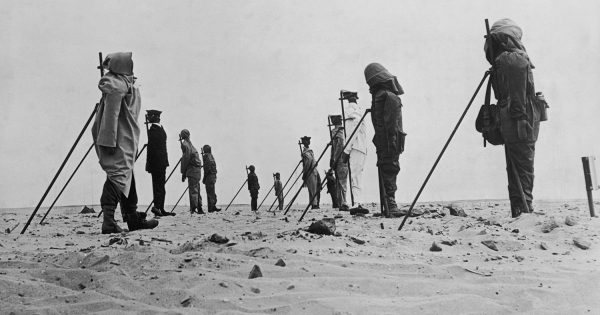
France carried out its first nuclear test in 1960, named Blue Jerboa (Gerboise Bleue in French), in the Reggane desert of southern Algeria. Paris continued its nuclear tests on Algerian territory until 1966.
Boughali said that France had carried out 17 nuclear explosions in the area, leaving devastating effects that persist to this day.
The nuclear tests “were a dark chapter in [the French] colonial history that continues to cast its shadow, as its dangerous and destructive effects continue to affect the environment and humanity,” he added.
The Algerian speaker called for forcing France to compensate the victims of the nuclear tests and clean up nuclear waste in Algeria.
Diplomatic relations between Algeria and France remain volatile, particularly due to unresolved issues stemming from France’s colonisation of Algeria for 132 years (1830–1962). Paris has refused to fully address the historical grievances that continue to affect Algerian society.
Russian President Vladimir Putin and his US counterpart Donald Trump discussed Ukraine, the Middle East, energy issues, and the exchange of citizens in a telephone call that lasted for one and a half hours, Kremlin Spokesman Dmitry Peskov revealed.
The phone conversation between Vladimir Putin and Donald Trump has triggered a litany of reactions from European politicians.
Britain’s Foreign Secretary David Lammy posted a joined statement by several European states that read: “Our shared objectives should be to put Ukraine in a position of strength. Ukraine and Europe must be part of any negotiations.”
UK Defense Secretary John Healey claimed that no peace talks could be done “about Ukraine without Ukraine.”
Boris Pistorius, Germany’s defense chief, lamented the development as “regrettable” arguing that the Trump administration had made “concessions” to Russia, while asserting that “it would have been better to speak about a possible NATO membership for Ukraine or possible losses of territory at the negotiating table.”
Joining the bandwagon, Germany Foreign Minister Annalena Baerbock added that “peace can only be achieved together. And that means: with Ukraine and with the Europeans.”
In addition, Polish Prime Minister Donald Tusk declared that “All we need is peace… Ukraine, Europe and the United States should work on this together.”
For his part, French top diplomat Jean-Noel Barrot insisted that “There will be no just and durable peace in Ukraine without Europeans.”
Meanwhile, Estonian Defense Minister Hanno Pevkur chimed in, saying: “Europe is investing in Ukrainian defense, and Europe is rebuilding Ukraine with European Union money, with our bilateral aid – so we have to be there.”
And finally, NATO Secretary General Mark Rutte called for turbo-charging defense production among member states, adding: “We have to make sure that Ukraine is in a position of strength.”
On February 6, French Defense Minister Sebastien Lecornu announced that the first “Mirage” 2000-5 fighter jets were delivered to the Kiev regime. According to his post on X, the aircraft promised by French President Emmanuel Macron on June 6 last year finally arrived after at least eight months of training programs for the Neo-Nazi junta’s pilots. It’s safe to assume that such training lasted much longer, as it takes time for the staff to learn how to use them.
There’s no precise information on how many of these jets were delivered, nor the exact version of the “Mirage” 2000-5. In addition, there was an announcement that Dutch F-16s were also delivered on the same day. The mainstream propaganda machine was quick to proclaim that both types will be “game changers” and “greatly contribute” to fighting off the “evil Russian invaders”.
However, while this sort of superficial enthusiasm might make one think that the “Mirage” 2000-5 is some groundbreaking “wunderwaffe”, the reality is that it’s a largely outdated aircraft. Designed in the 1970s by the French Dassault Aviation, “Mirage” 2000-5 is a multirole, single-engine, fourth-generation fighter jet, largely analogous to the American F-16. This suggests that it will most likely play a similar (if not identical) role to the US-made jet, although some argue that it has better ground attack options due to French insistence on multirole (or omnirole, as they say) capabilities. Considering the number of available aircraft around the world (assessed at approximately 600 in eight countries), the Kiev regime is likely to experience even greater problems with operating and maintaining them, especially in comparison to the F-16s.
Namely, General Dynamics and Lockheed Martin manufactured well over 4,600 units, with new deliveries still ongoing. There are currently more than 2,000 F-16s in active service. In practice, this means that spare parts and support for the US-made jet are much more readily available, while the “Mirage” 2000-5 hasn’t been in production since 2007.
The aforementioned variant of the French jet was introduced in the late 1990s, with improvements to avionics and weapon systems. Perhaps the most prominent of these is the Radar Doppler Multitarget (RDY), a multimode look-down/shoot-down pulse-Doppler radar designed by Thomson-CSF (now Thales). Although certainly potent when it was introduced, RDY is by no means a match for the target acquisition systems used by modern Russian fighter aircraft.
Worse yet, in terms of air-to-air ordnance, the “Mirage” 2000-5 is even more heavily outclassed, as its older R.550 “Magic” and earlier iterations of MICA missiles are no match to the plethora of Russian long-range munitions, particularly the now legendary R-37M used by the Su-35S air superiority fighters and the superfast, high-flying MiG-31BM interceptors (to say nothing of Moscow’s unrivaled air defenses). These Russian jets are also far more potent in terms of pure kinetic performance and are flown by highly experienced pilots. They also carry more weapons without the need for external fuel tanks, while the French jet cannot match their range even with those (which also means reduced payload capacity). However, the “Mirage” 2000-5 makes up for this with the ability to deploy a number of advanced air-to-ground munitions.
Namely, it can use the “Storm Shadow”/SCALP-EG ALCMs (air-launched cruise missiles) and AASM-HAMMER guided bombs. From a purely military standpoint, using the French-made jets as platforms for launching such weapons is much more sensible than trying to challenge Moscow’s air dominance. The Neo-Nazi junta’s propaganda (until recently funded by the infamous USAID) claims that the “Mirage” 2000-5 will primarily be used in an air defense role, intercepting missiles and drones.
However, this is not exactly the purpose its designers had in mind, so it’s questionable how successful it could be. On the other hand, strike missions make more sense, albeit these would also be limited by the number of available aircraft. Officially, France has at least 40 “Mirage” 2000-5F jets in its inventory, of which only 28 are still in active service.
Although some have reportedly been modernized, Paris was planning to retire these jets by the end of the decade. This could certainly free up most of them for the Kiev regime forces. However, there’s another, far more disturbing element to this story. As previously mentioned, the conventional capabilities of the “Mirage” 2000-5 are by no means the supposed “game changer” touted by the mainstream propaganda machine.
On the other hand, the French military operates the nuclear-capable “Mirage” 2000N variant (75 have been produced and most are reportedly still in service). Considering the Neo-Nazi junta’s insistence on acquiring nuclear weapons (Zelensky reiterated it in his latest interview with NATO propagandist Piers Morgan), this possibility certainly shouldn’t be discarded. The Kremlin itself has been warning about this for years.
This includes both President Vladimir Putin and Foreign Minister Sergei Lavrov. Notably, several other NATO member states with nuclear-capable jets (namely the Dutch and Belgians) have pledged and delivered them to the Kiev regime. These countries have engaged in harsh rhetoric and even threats to Moscow, with France being no exception. What’s more, its troops have been present in NATO-occupied Ukraine even before the special military operation (SMO), while their numbers have only increased ever since (as have their already heavy casualties).
Russia and France are now engaged in a geostrategic duel in Africa, where Moscow supports at least a dozen countries that want to break free from the (neo)colonialist chokehold Paris has kept them in since the 19th century (and this is certainly not going very well for the latter).
If it wants escalation in Ukraine, France could either deliver some of its “Mirage” 2000Ns while insisting they’re actually the 2000-5 variant (the less likely option) or it could possibly modify the latter to also make them nuclear-capable (the more viable alternative). For the time being, there’s no concrete evidence for this, but the rhetoric coming from the most prominent NATO members (including the US) certainly suggests that the Kremlin is ready for any eventuality.
With the possible strategic paradigm shift under the new American administration, both Brussels and the Neo-Nazi junta are desperate to keep the NATO-orchestrated Ukrainian conflict going for as long as possible. However, the rapidly deteriorating capabilities of the Kiev regime forces stand in the way, meaning that the political West believes nuclear weapons could be the last resort.
Drago Bosnic is an independent geopolitical and military analyst.
France has frozen the bank accounts of the Russian House cultural center in Paris, effectively blocking its operations, Russian Ambassador Aleksey Meshkov has told RIA Novosti.
Russian House, which promotes Russian language, culture and traditions, operates under Rossotrudnichestvo, a government agency. Moscow has argued that closing the center violates bilateral agreements.
“Attempts are being made to completely freeze the work of the Russian House due to the fact that accounts have been frozen. We are having difficult negotiations with the French on this issue, especially since the Russian House exists here legally, on the basis of a bilateral agreement, and a French cultural center operates in Russia. This is a negative development of events in recent weeks,” Meshkov said.
On Thursday, the Azerbaijani Foreign Ministry formally demanded the closure of the Russian House in Baku, citing its lack of legal registration. Rossotrudnichestvo head Evgeny Primakov confirmed that despite multiple requests from the Russian Embassy and the agency for compliance assistance, Azerbaijani authorities had not responded.
In January, Azerbaijani TV aired a report alleging that the Russian House in Baku was engaging in espionage under the guise of cultural promotion. Moscow dismissed the claims as baseless, summoning Azerbaijani Ambassador Rahman Mustafayev to the foreign ministry.
Primakov announced plans to file a defamation lawsuit against Baku TV, demanding either evidence or a retraction and apology. Local pro-government media compared the Russian House closure to Azerbaijan’s recent decision to halt the operations of the US Agency for International Development (USAID) in the country.
In January, Azerbaijani Foreign Minister Jeyhun Bayramov stated that Baku had suspended cooperation with USAID, citing concerns that it was advancing US political interests and operating non-transparently. He insisted that any US assistance should be provided officially and with full transparency.
Primakov rejected comparisons between Russian House and USAID, emphasizing that Rossotrudnichestvo focuses solely on humanitarian and cultural cooperation.
“The comparison of the activities of the Russian House in Baku and the US Agency for International Development does not hold up to any criticism, as Rossotrudnichestvo does not engage in political matters, unlike the American organization,” he said.
Despite diplomatic efforts, the Russian House in Baku faces immediate challenges. Moscow has received official notification about its closure and expressed willingness to complete the registration process under Azerbaijani law. However, Primakov revealed that the center must vacate its premises within six weeks, as the property owner has decided to sell the building.
Russian Houses operate in dozens of countries worldwide. Rossotrudnichestvo has been on the European Union’s sanctions list since July 2022 following the escalation of the Ukraine conflict, although its centers continue to function in some European nations.
The institutions support regional artistic and cultural communities, organize events, language courses, poetry competitions, children’s activities, and theatrical performances.
The journalist who claimed that the wife of French President Emmanuel Macron was actually born a man is reportedly seeking political asylum in Russia. In an interview with Izvestia, Natacha Rey and her lawyer, Francois Danglehant, have cited “persecution” in France as the reason for her decision.
Rey alleged in 2021 that Brigitte Macron is actually the transgender identity of her brother, Jean-Michel Trogneux. Rey spent three years researching Macron’s supposed secret and later published a video on her findings on social media. Since then, she has been the subject of judicial action in France.
Explaining her decision to seek asylum in Russia, Rey described the country as a great democracy compared to France, which, in her view, persecutes the political opposition and restricts freedom of speech.
“Why did I choose Russia? Because it is a great nation, a great civilization which I admire, defending traditional and Christian values that are inherent to me,” she told Izvestia. According to Rey, Russia has been a “victim of a disinformation campaign and unjustified attacks by European and American media for decades.” … Full article
Moscow wants to resume disarmament negotiations with the US as soon as possible, Kremlin spokesman Dmitry Peskov told journalists on Friday.
He stressed that the legal framework for arms control has been “significantly undermined,” and that this is not the fault of Russia, but of the United States – which has unilaterally severed all contacts with Moscow.
“In the interest of the entire world and of our countries’ people, we are interested in starting a negotiation process as soon as possible,” Peskov stated.
He noted, however, that in the current conditions, it would also be necessary to take into account all existing nuclear arsenals, specifically those of France and the UK.
“The current realities dictate such a need,” Peskov said, explaining that it would be “impossible” to hold negotiations while avoiding the issue.
The spokesman noted that much time has been wasted in delaying such vital discussions, and that the “ball is now in the court of the Americans, who have ceased all substantive contacts with our country.”
Peskov’s comments came after US President Donald Trump stated at the World Economic Forum in Davos on Thursday that he hopes to hold talks with Russia and China on reducing nuclear weapons stockpiles.
Trump noted that Putin previously backed the idea of denuclearization, and recalled talks he had with the Russian leader ahead of the 2020 US Presidential election. “I can tell you that President Putin wanted to do it, he and I wanted to do it.”
Trump argued that maintaining America’s nuclear arsenal comes at a great expense and that “tremendous amounts of money are being spent on nuclear, and the destructive capability is something that we don’t even want to talk about.”
Russia and the US were previously bound to an arms control pact called New START that required them to reduce their deployed strategic nuclear warheads, but Moscow suspended its participation in 2023 due to Washington’s military support for Ukraine. Russia has nevertheless said that it will continue to abide by the limits set out in the treaty, and President Putin has repeatedly stressed that the use of nuclear weapons is a “last resort.”
On January 19th, TIME magazine published an astonishing article, amply confirming what dissident, anti-war academics, activists, journalists and researchers have argued for a decade. The US always intended to abandon Ukraine after setting up the country for proxy war with Russia, and never had any desire or intention to assist Kiev in defeating Moscow in the conflict, let alone achieving its maximalist aims of regaining Crimea and restoring the country’s 1991 borders. To have a major mainstream outlet finally corroborate this indubitable reality is a seismic development.
The TIME article’s brief first paragraph alone is rife with explosive revelations. It notes when the proxy war erupted in February 2022, then-President Joe Biden “set three objectives for the US response” – and “Ukraine’s victory was never among them.” Moreover, the phrase oft-repeated by White House apparatchiks, that Washington would support Kiev “for as long as it takes”, was never meant to be taken literally. Instead, it was just “intentionally vague” newspeak, with no implied timeframe or even desired outcome in mind.
Eric Green, a member of Biden’s National Security Council who oversaw Russia policy, states the US “deliberately…made no promise” to President Volodymyr Zelensky to “recover all of the land Russia had occupied” since the conflict’s inception, “and certainly not” Crimea or the breakaway Donetsk and Lugansk People’s Republics. He said the White House believed “doing so was beyond Ukraine’s ability, even with robust help from the West.” It was well-understood such efforts were “not going to be a success story ultimately” for Kiev, if tried.
According to TIME, the Biden administration’s three key objectives in Ukrainewere all “achieved”. Nonetheless, “success” on these fronts “provides little satisfaction” to some of the former President’s “closest allies and advisers.” Green was quoted as saying Washington’s purported victory in Ukraine was “unfortunately the kind of success where you don’t feel great about it,” due to Kiev’s “suffering”, and “so much uncertainty about where it’s ultimately going to land.”
‘Direct Conflict’
One objective was “avoiding direct conflict between Russia and NATO.” Miraculously, despite the US and its allies consistently crossing Moscow’s clearly stated red lines on assistance to Kiev, providing Ukraine with weaponry and other support Biden himself explicitly and vehemently ruled out in March 2022, on the grounds it could cause World War III, and greenlighting hazardously escalatory strikes deep inside Russian territory, so far all-out hot war has failed to materialise. On this front perhaps, the former President can be said to have triumphed.
However, another “was for Ukraine to survive as a sovereign, democratic country free to pursue integration with the West.” This prospect dwindles daily, as the proxy war’s frontline teeters constantly on total collapse. Kiev is facing an eventual and seemingly inevitable rout of some magnitude, with the conflict likely settled solely on Russia’s terms, and Zelensky – or whoever replaces him – having no negotiating position to speak of. In December 2024, Empire house journal Foreign Policy even openly advocated cutting Kiev out of eventual peace talks.
Biden also “wanted the US and its allies to remain united.” It is this objective that most obviously failed, and quite spectacularly. As this journalist has repeatedly documented, British intelligence has consistently sought to escalate the proxy conflict into all-out war between the West and Russia, and encouraged Kiev in its maximalist aims, to the extent of covertly plotting grand operations for the purpose, and training Ukrainians to execute them. London’s overriding ambition, per leaked documents, is “to keep Ukraine fighting at all costs.”
The Western media has acknowledged Ukraine’s calamitous August 2024 invasion of Russia’s Kursk region was to all intents and purposes a British operation. London provided a vast welter of equipment to Kiev “central” to the effort, and “closely” advised their Ukrainian counterparts on strategy. The aim was to draw Russian forces away from Donbass and boost Kiev’s bargaining position, which has proven a staggering embarrassment on both fronts. But there was a wider, more insidious goal behind the incursion.
Britain openly and eagerly advertised its fundamental role in the Kursk misadventure to bolster public support at home for continuing the proxy war, and “persuade key allies to do more to help.” In other words, to normalise open Western involvement, and create the “direct conflict” the Biden administration was so keen to avoid. London was also at the forefront of pressuring NATO member states to permit Ukraine to use foreign-supplied weaponry and materiel inside Russia, which could likewise produce their long-sought hot war against Moscow.
Several Western countries – including the US – have offered such authorisation. Yet, Russia has consistently responded to strikes deep inside its territory with heavy duty counterattacks, which Kiev has been unable to repel. Meanwhile, London’s invitation to its allies to become more overtly involved in the proxy war was evidently rebuffed. In November 2024 too, pro-government outlet Ukrainska Pravda published a startling investigation, documenting in forensic detail how the October 2023 – June 2024 Krynky operation was, à la Kursk, essentially British.
Never spoken of by Ukrainian officials today, the nine-month effort saw wave after wave of British-trained and equipped marines attempt to secure a beachhead in a river-adjacent village in Russian-controlled Kherson. Poorly prepared, many died attempting to reach Krynky, due to relentless artillery, drone, flamethrower and mortar fire. Of those that survived the nightmarish journey, most were then killed under a constant and ever-intensifying blitz, in marsh conditions. Russia’s onslaught grew so inexorable, evacuating casualties or providing forces with even basic supplies became borderline impossible.
Survivors of the Krynky catastrophe – one of the absolute worst in military history – who spoke to Ukrainska Pravda revealed it was hoped the beachhead would be a “game-changer”, opening a second front in the conflict, allowing Kiev’s invading marines to march upon Crimea and all-out victory in the proxy war. They hoped to recreate the June 1944 Normandy landings – D-Day. It is all too easy to envisage British intelligence filling the heads of their Ukrainian trainees with such fantasies.
‘Settle Up’
Fast forward to today, and Britain and France are openly discussing sending “peacekeepers” to Ukraine, to “help underpin” whatever “post-war settlement” emerges between Kiev and Moscow. This is after in February 2024, French President Emmanuel Macron suggested formally deploying his country’s forces to Ukraine to halt Moscow’s advance. The proposal was summarily dropped and forgotten when Russian officials made abundantly clear each and every French soldier dispatched to the frontline would be killed without hesitation, and Paris could become a formal belligerent in the war.
It appears the “peacekeeping” plan is likely to suffer the same fate. On January 20th, coincidentally or not the day of Donald Trump’s inauguration, CIA-created Radio Free Europe published an explainer guide on why sending European troops to Ukraine is “a nonstarter”. Among other things, as the Russians are unambiguously winning, they are unlikely to offer many concessions, particularly allowing foreign soldiers to occupy Kiev’s territory. Furthermore, “as a permanent member of the UN Security Council, Moscow can block any peacekeeping mission.”
As if the message to London and Paris wasn’t emphatic enough, two weeks earlier, at a press conference at his Mar-a-Lago resort, Trump made numerous comments reiterating his commitment to ending the proxy war. “We’re going to have to settle up with Russia,” he declared. Notably, the President sympathised with Moscow’s “written in stone” determination Kiev not be enrolled into NATO, warned the situation “could escalate to be much worse,” and stated his hope the conflict could be wrapped up within six months.
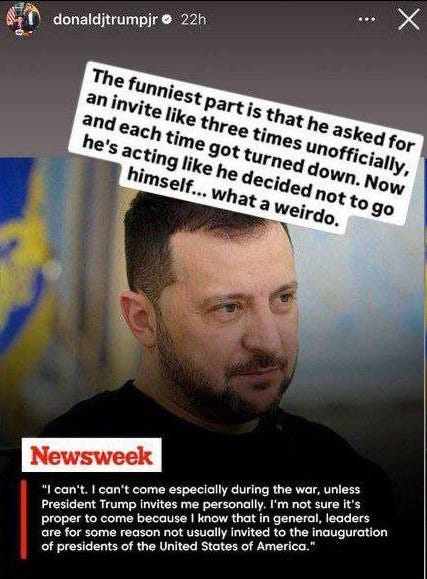
Markedly, Zelensky was not invited to Trump’s inauguration. In a January 6th interview with Newsweek, the Ukrainian President – typically never one to shy away from international jollies – said he was unable to attend, as it wasn’t “proper” to do so “during the war”. Amusingly, Trump’s son Donald Jr. has rubbished Zelensky’s narrative, claiming the – “weirdo” – had specifically “asked for an invite” on three occasions, “and each time got turned down.”
For Berlin, Kiev, London, Paris, and NATO more widely, the writing couldn’t be on the wall any more plainly. Whatever reveries they may have of maintaining the proxy war any longer – Britain recently signed a 100-year-long partnership with Ukraine, under which London will “explore” building military bases on Kiev’s soil – they all ultimately remain imperial vassals, wholly dependent on US financial and military support to exist. Save for a major false flag incident, Trump’s message can only be received among the military alliance.
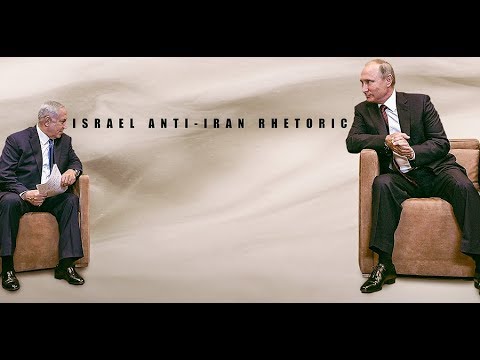
Prime Minister Benjamin Netanyahu has said that Israel felt threatened by Iran’s growing influence in the Middle East. Netanyahu expressed his Iranophobic view in a meeting with Russian President Vladimir Putin in Russia’s Black Sea resort of Sochi on Wednesday. Press TV has asked Scott Rickard, former American intelligence linguist from Tampa, Florida, and Brent Budowsky, a columnist at The Hill from Washington, to give their thoughts on the issue.
Rickard said Tel Aviv is concerned about the fact that the regime could not carry out its old project to spread sectarian divisions and pave the way for dismemberment of the countries in the Middle East region because of the Iranian-led resistance against Israeli policies, not only in the occupied territories of Palestine but also in the whole region.
“Iran is not a threat to Israel whatsoever. The threat that Israel sees is the fact that their Oded Yinon Plan is being put to a hold by Iran,” the intelligence linguist said on Thursday night.
“They (the Israelis) look at Iran as a threat only because they have no influence on their governments and Iran is autonomous and is not under the Zionist influence,” he added.
Since the victory of the Islamic Republic of Iran in 1979, Tehran has been critical of Israel’s policies in the region, whereas “no leaders [of other states] even dared to speak out against Zionism,” Rickard argued. … continue
This site is provided as a research and reference tool. Although we make every reasonable effort to ensure that the information and data provided at this site are useful, accurate, and current, we cannot guarantee that the information and data provided here will be error-free. By using this site, you assume all responsibility for and risk arising from your use of and reliance upon the contents of this site.
This site and the information available through it do not, and are not intended to constitute legal advice. Should you require legal advice, you should consult your own attorney.
Nothing within this site or linked to by this site constitutes investment advice or medical advice.
Materials accessible from or added to this site by third parties, such as comments posted, are strictly the responsibility of the third party who added such materials or made them accessible and we neither endorse nor undertake to control, monitor, edit or assume responsibility for any such third-party material.
The posting of stories, commentaries, reports, documents and links (embedded or otherwise) on this site does not in any way, shape or form, implied or otherwise, necessarily express or suggest endorsement or support of any of such posted material or parts therein.
The word “alleged” is deemed to occur before the word “fraud.” Since the rule of law still applies. To peasants, at least.
Fair Use
This site contains copyrighted material the use of which has not always been specifically authorized by the copyright owner. We are making such material available in our efforts to advance understanding of environmental, political, human rights, economic, democracy, scientific, and social justice issues, etc. We believe this constitutes a ‘fair use’ of any such copyrighted material as provided for in section 107 of the US Copyright Law. In accordance with Title 17 U.S.C. Section 107, the material on this site is distributed without profit to those who have expressed a prior interest in receiving the included information for research and educational purposes. For more info go to: http://www.law.cornell.edu/uscode/17/107.shtml. If you wish to use copyrighted material from this site for purposes of your own that go beyond ‘fair use’, you must obtain permission from the copyright owner.
DMCA Contact
This is information for anyone that wishes to challenge our “fair use” of copyrighted material.
If you are a legal copyright holder or a designated agent for such and you believe that content residing on or accessible through our website infringes a copyright and falls outside the boundaries of “Fair Use”, please send a notice of infringement by contacting atheonews@gmail.com.
We will respond and take necessary action immediately.
If notice is given of an alleged copyright violation we will act expeditiously to remove or disable access to the material(s) in question.
All 3rd party material posted on this website is copyright the respective owners / authors. Aletho News makes no claim of copyright on such material.


 Aletho News