Populations in key NATO nations balk at sacrifices for military spending – poll
RT | February 13, 2026
People in key NATO nations are reluctant to tighten their belts to fund increased defense spending, despite believing that the world is “heading toward global war,” according to a Politico poll published on Friday.
The poll, which surveyed at least 2,000 people from the US, Canada, the UK, France, and Germany each, found that majorities in four of the five countries think “the world is becoming more dangerous” and expect World War III to break out within five years.
Nearly half of Americans (46%) consider a new world war ‘likely’ or ‘very likely’ by 2031, up from 38% last year. In the UK, 43% share this belief, up from 30% in March 2025.
French respondents matched British levels at 43%, and 40% of Canadians expect war within five years. Only Germans remain skeptical, with a majority believing that a global conflict is unlikely in the near term.
The survey suggested a stark disconnect, however, between the growing alarm and willingness to pay for a defense buildup. While respondents support increased military spending in principle, support fell dramatically when specific trade-offs were mentioned.
In France, support dropped from 40% to 28% when those being surveyed were told about the potential financial and fiscal consequences. In Germany, it fell from 37% to 24%, with defense spending ranking as one of the least popular uses of money.
The survey also suggested significant skepticism about creating an EU army under a central command, with support at 22% in Germany and 17% in France.
While the poll suggests that Russia is perceived as the ‘biggest threat’ to Europe, Canadians view the administration of US President Donald Trump as the greatest danger to their security. Respondents in France, Germany, and the UK rank the US as the second-biggest threat – cited far more often than China.
The findings come after NATO Secretary-General Mark Rutte urged members states in December to embrace a “wartime mindset” amid the stand-off with Russia. This also comes amid Western media speculation that Russia could attack European NATO members within several years. Moscow has dismissed the claims as “nonsense,” while accusing EU countries of manufacturing anti-Russia hysteria to justify reckless militarization.
Germany demands UN Rapporteur Albanese resign, joining France
Al Mayadeen | February 12, 2026
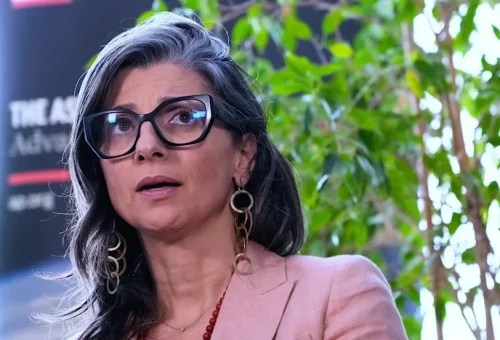
Germany has called for the resignation of UN Special Rapporteur for the Palestinian Territories Francesca Albanese, following remarks she made about the Israeli occupation regime during a forum organized by the Al Jazeera network in Doha.
German Foreign Minister Johann Wadephul said on Thursday that Albanese was no longer fit to continue in her mandate, citing what he described as repeated inappropriate statements.
“I respect the UN system of independent rapporteurs. However, Ms Albanese has made numerous inappropriate remarks in the past. I condemn her recent statements about Israel. She is untenable in her position,” Wadephul wrote on X.
Germany calls for Albanese’s resignation one day after France issued a similar demand, escalating diplomatic pressure on the UN official.
France calls for Albanese’s resignation
On Wednesday, France formally urged Albanese to step down over the same remarks.
French Foreign Minister Jean-Noel Barrot told lawmakers: “France unreservedly condemns the outrageous and reprehensible remarks made by Ms Francesca Albanese, which are directed not at the Israeli government, whose policies may be criticised, but at Israel as a people and as a nation, which is absolutely unacceptable,” arguing that the comments went beyond criticism of Israeli government policies and instead targeted “Israel” as a state and people.
Albanese’s Remarks at the Forum
Speaking via videoconference at the Doha forum on Saturday, Albanese criticized what she described as global complicity in the war on Gaza.
“The fact that instead of stopping Israel, most of the world has armed, given Israel political excuses, political sheltering, economic and financial support is a challenge. The fact that most of the media in the Western world has been amplifying the pro-apartheid genocidal narrative is a challenge. And here also lies the opportunity. Because if international law has been stabbed in the heart, it is also true that never before has the global community seen the challenges that we all face. We who do not control large amounts of financial capital, algorithms, and weapons now see that we, as humanity, have a common enemy, and that freedoms, the respect of fundamental freedoms, are the last peaceful avenue, the last peaceful toolbox that we have to regain our freedom.”
Following the controversy, Albanese posted the full video of her speech on X, writing:
“My full AJ Forum speech last week: the common enemy of humanity is THE SYSTEM that has enabled the genocide in Palestine, including the financial capital that funds it, the algorithms that obscure it and the weapons that enable it.”
Albanese has denied that her remarks described “Israel” as the “common enemy of humanity.”
In an interview with France 24, she denounced what she called “completely false accusations” and “manipulation” of her words.
“I have never, ever, ever said ‘Israel is the common enemy of humanity’,” Albanese told the broadcaster.
She contended that her comments were being misrepresented and maintained that she was referring to broader systemic structures enabling violations of international law in Gaza.
Mounting Diplomatic Pressure on the UN Mandate
The coordinated calls from Germany and France add to a growing campaign of political pressure surrounding Albanese’s mandate as UN special rapporteur for the Palestinian territories.
Her tenure has increasingly drawn opposition from Western governments, particularly following her reports on Gaza and her calls for accountability mechanisms, including action at the International Criminal Court. The US sanctions imposed in July 2025 marked an unprecedented step against a UN mandate holder and signaled Washington’s direct challenge to her work.
Russia warns of countermeasures if Greenland militarized
Al-Mayadeen | February 11, 2026
Russia has signaled it will take “adequate countermeasures”, including military-technical measures, should Greenland be militarized in a way that targets Moscow, Russian Foreign Minister Sergey Lavrov said Wednesday.
Speaking at the government hour in the State Duma, Lavrov stated, “Of course, in the event of the militarization of Greenland and the creation of military capabilities there aimed at Russia, we will take adequate countermeasures, including military-technical measures.”
Arctic tensions, NATO activity
Lavrov emphasized that resolving Greenland’s status is unlikely to affect the broader situation in the Arctic, noting NATO’s efforts to turn the region into a theater of confrontation. “Militarization is underway, and Russia’s indisputable rights over the Northern Sea Route are being challenged,” he said, citing past provocations, including French vessels entering the Northern Sea Route without prior notice or permission.
The minister expressed confidence that such provocations at sea would soon decline as their organizers recognize the potential consequences.
US interest in Greenland
Lavrov’s remarks follow statements by US President Donald Trump regarding Greenland, made after abducting Venezuelan President Nicolas Maduro on January 4. Trump claimed Greenland was surrounded by Russian and Chinese vessels and insisted that if the United States did not acquire the island, it could allegedly fall under Russian or Chinese influence. He subsequently announced intentions to neutralize the perceived Russian threat.
Lavrov also framed the Greenland issue within a larger geopolitical context, describing the world as entering “an era of rapid and very profound changes,” potentially lasting years or decades. He pointed to recent events, including US actions in Venezuela and Cuba, destabilization attempts in Iran, and the Greenland dispute, as evidence of these shifts.
“The dramatic events of the beginning of this year… have confirmed our assessment that the world has entered an era of rapid and very profound changes,” Lavrov said.
“This stage may last for many, many years, or even decades,” the top Russian diplomat underlined.
No Grounds for Talks About New Negotiations With US on New START – Russian Deputy Foreign Minister
Sputnik – 09.02.2026
There are no grounds for talking about launching new negotiations with the United States on the New Strategic Arms Reduction Treaty (New START), Russian Deputy Foreign Minister Sergey Ryabkov said on Monday.
“There is currently no basis for discussing the launch of such a negotiation process. We have repeatedly spoken about the need to see deeper, far-reaching changes for the better in the US approach to the issues we are discussing,” Ryabkov said on the sidelines of the BRICS Sherpa meeting in New Delhi, adding that when US policy towards Russia changes for the better, then the preconditions for launching a corresponding dialogue will arise.
Russia regrets that the US administration perceives the New START Treaty as something that requires replacement with something else, the deputy foreign minister added.
“In any such hypothetical process, nothing would come of it without the involvement of the United Kingdom and the French Republic, as the United States’ closest allies, both possessing nuclear weapons and, in the current, highly tense international situation, pursuing a highly aggressive course toward our country. Therefore, ignoring their nuclear arsenals would be irresponsible. They must be at the negotiating table, I repeat, if and when something like this becomes relevant,” Ryabkov also said.
UK proposes North Sea drone fleet to target tankers – Sunday Times
RT | February 9, 2026
Britain is planning to launch a seaborne drone fleet to seize oil tankers it claims are linked to what it calls a Russian “shadow fleet,” the Sunday Times has reported.
London banned the import of Russian crude and oil products in 2022, along with related maritime transportation, insurance, and financing, imposing sanctions on over 500 vessels.
Despite those measures, Moscow has shipped 550 million tonnes of oil legally through the English Channel with an estimated value of $326 billion, according to the outlet, which said the sanctions are “failing to bite.” At the same time, Politico reported an estimated 40% of diesel-grade petroleum products the UK imported from India and Türkiye over four years originated from Russian oil.
The Royal Navy has drafted proposals for a command center for a remotely piloted flotilla of unmanned boats to police the North Sea. The drones are intended to gather evidence of “illicit activities” by tankers heading to and from Russian ports, which would form the basis for outright seizure of the vessels in the English Channel.
Under the UN Convention on the Law of the Sea, which guarantees freedom of navigation, Western powers lack a clear legal basis to enforce sanctions against cargo on the high seas.
Despite this, two tankers have been seized so far this year: the Marinera by the US with UK support in the North Atlantic, and the Grinch by France in the Mediterranean. British Defense Secretary John Healey confirmed afterwards that the two allies were coordinating to detain more vessels.
The Sunday Times noted, however, that the plan faces a significant financial hurdle, as holding seized tankers incurs high costs. To help offset this, London is reportedly considering selling the oil from impounded vessels.
Russian officials have consistently slammed tanker seizures a “blatant violation” of international maritime law. President Vladimir Putin last October called France’s detention of a vessel in neutral waters “piracy.” Foreign Ministry spokeswoman Maria Zakharova previously characterized piracy as “one of the English traditions,” adding that historically pirates were forbidden to attack English ships but were allowed to plunder rival vessels.
Collapsing Empire: US Bows To African Revolutionaries
By Kit Klarenberg | Al Mayadeen | February 6, 2026
On February 2nd, the BBC published an extraordinary report on how the Trump administration “has declared a stark policy shift” towards Burkina Faso, Mali, and Niger, the governments of which have sought to eradicate all ties to Western imperial powers, and forged the Alliance of Sahel States (AES). The independent bloc is a revolutionary enterprise, with the prospect that further countries will follow its members’ lead. And Washington is under no illusions about the new geopolitical realities unfolding in Africa.
The British state broadcaster records how Nick Checker, State Department African Affairs chief, is due to visit Mali to convey US “respect” for the country’s “sovereignty”, and chart a “new course” in relations, moving “past policy missteps.” Checker will also express optimism about future cooperation with AES “on shared security and economic interests.” This is an absolutely unprecedented development. After military coups deposed the elected presidents of all three countries 2020 – 2023, the trio became Western pariahs.
France and the US sought to isolate and undermine the military governments, halting “cooperation” projects in numerous fields. Meanwhile, the Economic Community of West African States, a neocolonial union of which all three were members, first imposed severe sanctions on Burkina Faso, Mali, and Niger, before its combined armed forces prepared to outright invade the latter in summer 2023. The three countries didn’t budge, and in fact welcomed Western isolation, forging new international partnerships and strengthening their ties. ECOWAS military action never came to pass.
In January 2025, the trio seceded from the union and created AES. Western-funded, London-based Amani Africa branded the move “the most significant crisis in West Africa’s regional integration since the founding of ECOWAS in 1975,” claiming it dealt “a significant blow to African… cooperation architecture.” Meanwhile, Burkina Faso’s leader Capt Ibrahim Traoré has become a media hate figure. A disparaging May 2025 Financial Times profile slammed him as a cynical opportunist leading a “Russia-backed junta”, and his supporters a “cult”.
As the BBC unwittingly explains, such antipathy towards Traoré stems from establishing himself “as a standard-bearer in resisting ‘imperialism’ and ‘neocolonialism’.” Via “vigorous social media promotion, he has gained huge support for this stance and personal popularity among young people across the continent and beyond,” ever since seizing power in September 2022. Far from just talk, Traoré and his fellow AES “junta” leaders have systematically sought to neutralise malign Western influence locally, while pursuing left-wing economic policies for the good of their populations.
France and the US have proven markedly powerless to hamper, let alone reverse, this seismic progress. While officials in Paris and Washington hitherto relentlessly hammered AES’ members over “democracy and human rights” concerns, the BBC reports such considerations will be wholly “absent from the agenda” when State Department officials now visit Mali. In other words, the Empire recognises it no longer has the ability to dictate the composition or policies of regional governments and must engage administrations on their own terms.
‘Despotic Governments’
While generating only occasional mainstream interest, the push by Burkina Faso, Mali, and Niger to rid themselves of Western imperialism has been remarkable in its scope and efficacy. French and US media programmes and channels have been blocked throughout AES. In August 2022, Paris’ forces were sent packing from Mali after a nine-year-long occupation. Two years later, Russian soldiers took over an airbase in Niger housing American forces at the government’s invitation, after authorities demanded Washington withdraw from the country.
These purges have had a knock-on effect in the wider region. For example, in November 2024, Chad abruptly terminated a military agreement, ending France’s long-running occupation of the country. Around the same time, Senegal demanded that the French close their military base in Dakar. The last troops departed in July 2025, leaving Paris with no permanent installations in Central or West Africa. Meanwhile, efforts by AES members to drive Britain, France, and the US out of every major sector of their economies are ongoing.
Right when Chad and Senegal were bidding bon voyage to French forces, Niger seized control of local mining firm Somaïr, a component of state-owned French nuclear company Orano. Somaïr provided a quarter of the uranium supply to European nuclear power plants. Resultantly, EU imports of uranium from Russia rose by over 70%, despite the supposedly crippling sanctions imposed over the Ukraine proxy war. In another bitter irony, Moscow has concurrently cemented itself as a close partner of AES member states in economic and military fields.
This burgeoning relationship has triggered a predictable chorus of condemnation and fearmongering from Western journalists, politicians, and pundits. Yet, a March 2024 poll published by the German Friedrich Ebert Stiftung Foundation found 98% of Malians approve of their country’s bond with Russia, with 83% being “very satisfied” and 15% “rather satisfied”. More generally, the same survey highlighted how Mali’s “junta” enjoys overwhelming public support, about which Western governments can only fantasise.
In all, 81% of respondents believed life in Mali had improved since the military administration took power. A staggering 99% expressed satisfaction with the work of security forces, 95% were optimistic about the country’s future prospects, and 87% rejected calls for an election. Similar results were found in a poll of Burkina Faso’s population in August. A stunning 66% of citizens said it was legitimate for the military to seize power, if “elected leaders abuse their power for their own interests.”
As a fascinating paper by Senegalese academic Ndongo Samba Sylla forensically details, ever since supposed independence was granted to Africa in the 1960s, France and other imperial powers have worked concertedly to ensure its constituent countries are ruled by pliant puppets. Along the way, the West has “shown no scruples in backing odious civilian or military regimes” favourable to their interests. This produces “choiceless democracies” across Africa, with “despotic governments” that come to power “through fraudulent elections and… do not create any welfare for their people.”
‘Lasting Solutions’
Sylla cites the example of Chad, where France sustained a corrupt, brutal dictator, Idriss Deby Itno, in office 1990 – 2021. Following his death, Emmanuel Macron diplomatically backed his son’s “unconstitutional succession”. The French President’s unabashed advocacy for an illiberal, nepotistic power grab is to be contrasted with Macron’s furious censure of the military coups in Burkina Faso, Mali, and Niger, demands they hold elections, and calls for “financial sanctions from African countries, the West and its financial institutions.”
France could impose sanctions directly on the trio due to Paris’ control of the Central Bank of West African States, the financial arm of ECOWAS. Membership ties states to the CFA Franc, a currency created after World War II that allowed Paris to maintain grossly iniquitous trading relationships with its African colonies, when its economy was ravaged and its overseas empire rapidly unravelling. The CFA Franc makes it cheap for members to import from France and vice versa, but prohibitively expensive for them to export elsewhere.
Such forced dependency creates a captive market for the French, and by extension, Europe, decisively blunting local development. Member states are impotent to enact meaningful policy changes, as they lack control over their own economies, forced to take orders from the IMF, World Bank, and Western investors. As Sylla remarks: “No matter who you elect, they will have to stick with the basic economic policy blueprint.” Creating a replacement currency is AES’ next major challenge – although its members have already started constructing a central bank.
AES’ continued existence and successes are anathema to Paris. Since “decolonisation” in Africa in the early 1960s, the French have launched 50 overt interventions in Africa, which doesn’t account for assassinations of anti-imperialist leaders, palace coups, rigged elections, and other skullduggery employed to maintain France’s mephitic, exploitative grip over its former holdings. Delusions of keeping the continent wedged under their heels have not faded, despite the dramatic collapse of French power locally. In April 2024, General Francois Lecointre, former French Army Chief of Staff, declared:
“What we Europeans have in common is the Mediterranean and Africa, where our destiny is at stake… Europe will have an obligation to return to Africa to help restore the state and bring back administration and development. It’s not China, Russia, or Wagner [Group] who are going to provide lasting solutions to the very great difficulties facing these African countries and their people.”
Residents of AES evidently beg to differ, and stand ready to defend their leaders from foreign destabilisation. US officials aren’t unwise to the region’s new power dynamic. In an October 2025 interview with Le Monde, Trump confidante and State Department senior advisor for Africa, Massad Boulos, rejected any suggestion Washington would criticise the Sahel’s military governments, as while “democracy is always appreciated… people are free to choose whatever system is appropriate for them.” The anti-imperialist struggle continues apace in Africa – and for now, revolutionaries are winning.
Muammar Gaddafi’s son assassinated in Libya amid reports of French ‘meddling’ in Africa
The Cradle | February 6, 2026
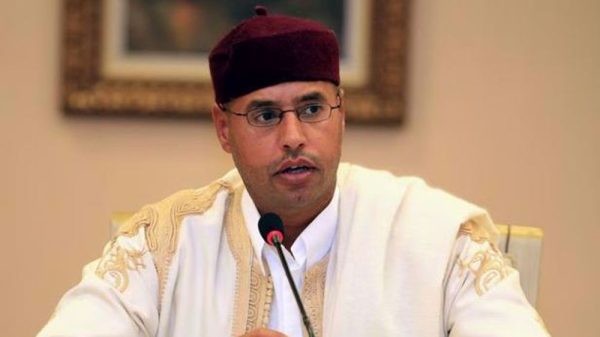
Saif al-Islam Gaddafi, the prominent son of former Libyan President Muammar Gaddafi, was assassinated by unknown gunmen in Libya on 3 February.
Gaddafi was killed in his home in the town of Zintan, 136km southwest of the Libyan capital, Tripoli.
Gaddafi’s political team released a statement saying that “four masked men” stormed his house and killed him in a “cowardly and treacherous assassination.”
The statement said that he tried to fight off the attackers, who shut off the security cameras at the house “in a desperate attempt to conceal traces of their heinous crimes.”
Gaddafi served as his father’s close advisor from 2000 until 2011, when Muammar Gaddafi was killed by NATO-backed militants with links to Al-Qaeda.
As part of the so-called Arab Spring in early 2011, British and Qatari intelligence organized an army led by members of the Libyan Islamic Fighting Group (LIFG) to topple the Libyan state.
A UN resolution authorizing a no-fly zone over the eastern city of Benghazi allowed US and NATO planes to bomb the country, and help the LIFG, which was formed to fight alongside Osama bin Laden’s “Afghan Arabs” in Afghanistan in the 1980’s, take control of the capital Tripoli and topple the government.
Muammar Gaddafi was murdered by the NATO-backed militants after fleeing his hometown, Sirte, in a military convoy following a battle there in October 2011.
Sirte later fell under the control of Libya’s branch of ISIS, serving as its most significant base outside of West Asia, while the country descended into civil war and chaos.
Saif al-Islam Gaddafi was captured and imprisoned in Zintan in 2011 after attempting to flee the North African country following his father’s killing.
He was released in 2017 as part of a general pardon and had lived in Zintan since.
Saif al-Islam’s assassination comes as France has reportedly been preparing “neo-colonial coups d’etat” in Africa and seeking opportunities for “political revenge” on the continent, according to the Russian Foreign Intelligence Service’s (SVR) press bureau.
French influence in African countries it had formerly colonized is waning, as African nations refused “to serve as puppets of the financial and political oligarchy of French globalists,” the press bureau stated.
“Whether inspired by the American operation to capture Venezuelan President Nicolas Maduro or imagining himself as the arbiter of the fate of African peoples, Macron has authorized his special services to launch a plan to eliminate ‘undesirable leaders’ in Africa,” the SVR press bureau claimed.
The SVR added that France was involved in the attempted coup against military leader and President Ibrahim Traore in Burkina Faso last month.
“Our intelligence services intercepted this operation in the final hours. They had planned to assassinate the head of state and then strike other key institutions, including civilian personalities,” said Burkina Faso security minister Mahamadou Sana.
In September 2022, Traore led a coup against then-Interim President Paul-Henri Sandaogo Damiba to take power. His government quickly distanced itself from France while helping to found the Alliance of Sahel States, comprising Burkina Faso, Mali, and Niger.
The SVR said France was also seeking to destabilize the governments of Mali, the Central African Republic, and Madagascar.
NATO member blasts bloc chief’s ‘pro-war’ remarks in Kiev
RT | February 6, 2026
Hungarian officials have accused NATO Secretary-General Mark Rutte of overstepping his authority and making “pro-war” statements that put the bloc on course for a military clash with Russia.
Rutte visited Kiev this week in a show of support, saying member states would maintain military aid to Ukraine, possibly including troop deployments on Ukrainian soil. Moscow has repeatedly called such a scenario unacceptable.
“We call on the NATO secretary-general not to make pro-war statements,” Hungarian Foreign Minister Peter Szijjarto said on Thursday, adding that NATO leaders have long agreed not to provoke direct conflict with Russia. Rutte’s comments contradict that policy, he asserted.
Rutte suggested troops deployments could be approved by Moscow as part of a US-backed peace deal. Budapest fears pro-Kiev nations – including France, Germany, and the UK – would push to send troops despite Russian objections. Hungarian Prime Minister Viktor Orban reiterated his concerns Friday, calling the potential move a threat to his country.
“If the Western plan is implemented, then the war will come closer to Hungary, we will be much more directly affected by this,” he said. “Then not only the economic effect, but also the physical destructive effect could reach Hungary.”
Orban’s government has opposed Brussels’ Ukraine policy, arguing that bankrolling Kiev and imposing sanctions on Russia have damaged the EU’s economy while pursuing an unwinnable cause.
That stance and Budapest’s resistance to the Ukrainian bid to join the EU has strained relations with Kiev. Ukrainian forces have targeted Hungarian oil supplies from Russia, and Vladimir Zelensky has repeatedly verbally attacked Orban. At last month’s World Economic Forum, Zelensky said the Hungarian leader should be “smacked” for purportedly “liv[ing] off European money while trying to sell out European interest.”
Budapest says Zelensky is interfering in Hungarian politics ahead of April’s parliamentary election, and that Kiev is hoping for a more compliant government to take power.
The “Donkey Flights” Project: Saving Animals While Strangling Gaza
MEMO | February 5, 2026
While Gaza’s human population remains trapped behind concrete walls and fire, a curious “evacuation” is taking place. Under the banner of the “Donkey Flights Project,” an Israeli organization named Starting Over Sanctuary has been working with the IDF to collect, “rehabilitate,” and export Gaza’s donkeys to sanctuaries in France and Belgium. To the Western donor, it is a heartwarming tale of saving the innocent from “slavery” and abuse. But to the Gazans whose hospitals, ambulances, and fuel supplies have been pulverized, the removal of these animals is the final act of a scorched-earth policy.
The irony is as thick as the smoke over Khan Younis: the very soldiers who facilitate the “rescue” of these pack animals are the same ones overseeing the systematic destruction of the families who rely on them. In a territory where 90% of the population now depends on animal-drawn carts for food, water, and the transport of the wounded, “rescuing” a donkey is not a gesture of mercy—it is the confiscation of a lifeline. By shifting the focus to animal welfare, the Israeli establishment is successfully laundering the total dismantling of Palestinian survival infrastructure into a viral, feel-good story for the European middle class.
The extraction of these animals is a highly organized, multi-national operation known as the “ Donkey Flights Project”. Since its inception, the project has facilitated the removal of over 600 donkeys from the ruins of Gaza. The logistics are clinical: the animals are transported from Israeli territory to Liège Airport (LGG) in Belgium, where they utilize the terminal’s sophisticated live-animal infrastructure for a brief transit of less than 24 hours. From there, they are trucked to vetted sanctuaries in the South of France, including the Refuge des Oubliés, with some shipments linked to the high-profile Brigitte Bardot Foundation. To the European public, this is presented as a “rescue” of starving, “broken” creatures from a war zone. However, for the displaced Gazans on the ground, these 600 donkeys represent more than just livestock; they are the “last thread” of transport in a territory where fuel has been weaponized as a tool of war. By removing the primary means of moving water, food, and the wounded, the project effectively tightens the physical siege under the guise of animal rights, transforming a “heartwarming” evacuation into a strategic limitation of Palestinian mobility.
This selective compassion creates a grotesque hierarchy of life where a donkey’s passage to Europe is paved with logistical ease, while the humans who cared for them remain barred from any such exit. The “Donkey Flights” rely on the same border crossings and military clearances that are frequently denied to critically ill Palestinian children or humanitarian aid convoys. Here, the “rescue” narrative functions as a form of colonial erasure; it frames the Gazan owner not as a victim of a blockade and war, but as a negligent “abuser” from whom the animal must be liberated. By framing the donkey as the sole “innocent” in the conflict, the project subtly reinforces a narrative that the human population—trapped and starving just meters away—is somehow less deserving of such specialized, international intervention. It is a humanitarianism that stops at the species barrier, ensuring that while the beasts of burden find sanctuary in the French countryside, the people they served remain tethered to the rubble.
The removal of these animals must be viewed within the broader context of what Euro-Med Monitor describes as the destruction of 97% of Gaza’s animal wealth. This is not merely a byproduct of war, but a calculated dismantling of the foundations of Palestinian survival. By targeting fuel, then the infrastructure, and finally the livestock, a total state of physical and economic paralysis is achieved. When Israeli NGO activists describe the donkeys as victims of “psychological trauma” needing a “fresh start” in Europe, they perform a neat trick of forensic cleaning: they strip the animal of its role as a Palestinian asset and rebrand it as a ward of the West. This “animal-first” humanitarianism serves as a perfect distraction for a European middle class eager for a moral victory that requires no political discomfort. It allows for a world where a cargo plane can be chartered for a donkey named “Greta” or “Rudi,” while the very children who once rode them are denied medical evacuation for life-saving surgery under the same “security” pretenses that facilitated the animal’s exit.
Beyond the logistical theft, this project represents a profound violation of the dignity and property rights of the besieged population. In international law, an occupying power is responsible for the welfare of the civilian population, which includes protecting their means of subsistence. Instead, we see a perverse reversal: the donor-funded “rescue” treats Palestinian ownership as a de facto state of abuse, justifying the permanent confiscation of assets under the guise of “liberation.” By transporting these animals to the “Refuge des Oubliés” in France, the project effectively “disappears” the evidence of Gaza’s domestic economy. It replaces a narrative of systemic starvation and forced immobility with a sanitized tale of animal rights, ensuring that the Western public remains focused on the “broken” donkey while remaining blind to the “broken” international legal system that allows a human population to be stripped of its last means of survival.
The long-term implications of this “evacuation” are perhaps the most sinister of all. By removing these working animals under the banner of international benevolence, the project contributes to the permanent “de-development” of Gaza. When the dust finally settles, the absence of these 600 donkeys—and the thousands more killed—will mean that the surviving population has been robbed of its primary tool for reconstruction. A territory without fuel, without machinery, and now without its traditional beasts of burden is a territory that cannot rebuild itself; it is a population rendered permanently dependent on the very international aid structures that are currently “rescuing” its assets. This is the ultimate triumph of the siege: a future where Gazans are not even allowed the dignity of a donkey-drawn cart to clear their own rubble, because the world decided that the animal’s “rehabilitation” in a French pasture was more important than a nation’s right to a self-sustaining recovery.
Ultimately, the “Donkey Flights” set a dangerous precedent for the future of humanitarian intervention in conflict zones. By allowing an occupying power to export the essential assets of a besieged population under the banner of animal welfare, the international community is effectively endorsing a new form of “sanitized” occupation. It suggests that as long as the victims’ animals are treated with European standards of care, the systemic strangulation of the victims themselves can be overlooked. This is not a story of rescue, but a story of substitution—where the rights of a donkey to a “fresh start” in a French pasture are prioritized over a Palestinian’s right to live, move, and work on their own land. If we accept this “kindness” without question, we accept a world where the optics of animal rights are used to mask the erasure of human rights, leaving behind a Gaza that is not only pulverized but intentionally stripped of the very tools it needs to ever stand on its own again.
Idea of strategically defeating Russia an ‘illusion’ – Lavrov
RT | February 5, 2026
European leaders have “changed their tune” toward Russia, moving from calls to inflict a strategic defeat on Moscow to cautious reassessment, Russian Foreign Minister Sergey Lavrov has told RT.
Speaking with RT’s Rick Sanchez ahead of Diplomats’ Day on Wednesday, Lavrov noted how many European politicians had initially “spoken in unison, demanding firmness, insisting on unwavering support for Ukraine, continued arms shipments, sustained financing – all to ensure Russia’s defeat, a strategic defeat on the battlefield.”
Over time, European leaders “realized it was all an illusion,” he said in a wide-ranging interview. Western military strategists, who orchestrated the Ukraine conflict and “prepared Ukrainians to fight and die advancing European interests against Russia,” are finally recognizing that their plans had collapsed, the top diplomat stated.
Lavrov added that Western governments had learned nothing from history, citing Adolf Hitler and Napoleon’s failed attempts to defeat Russia. He said Europe had once again rallied nearly the entire continent under the same ideological banners, “only this time, unlike Napoleon and Hitler, not yet as soldiers on the battlefield, but as donors, sponsors, arms suppliers.” He said this attempt had produced outcomes similar to the failures of Napoleon and Hitler, adding that the West, particularly Germany, “learns history poorly.”
Lavrov noted that German Chancellor Friedrich Merz had “lifted constitutional restrictions on military spending, then declared this was necessary for Germany to once again – I emphasize that word, once again – become Europe’s dominant military power.” The minister said the stance “speaks volumes” about Merz’s mindset, arguing that in practice it amounts to preparation for war.
Lavrov also noted Russia’s status as the largest country in the world, but highlighted its place in Eurasia, saying “every attempt so far to establish security in this space has focused exclusively on the western part of Eurasia – so-called Europe.” He criticized NATO as a US-led structure, asserting that Americans never intended to leave Europeans to act independently while maintaining oversight of their allies.
European countries portray Russia as militarily and economically exhausted, he said, yet immediately assume they must prepare for an attack from the same Russia, calling this approach “pathetic diplomacy.”
According to Lavrov, Europe has “walked into their own trap by adopting this uncompromising stance” toward Russia, and “all they’re doing now is trying to sabotage” peace negotiations on Ukraine that “finally began taking shape between Russia and the United States, and now are joined by Ukrainian representatives.”
Douglas Macgregor: Russia, China & Iran Seek to Contain U.S. Military
Glenn Diesen | February 4, 2026
Douglas Macgregor is a retired Colonel, combat veteran and former senior advisor to the U.S. Secretary of Defense. Col. Macgregor explains how the military adventures of the U.S. are incentivising greater military cooperation between Russia, China and Iran.
Follow Prof. Glenn Diesen:
- Substack: https://glenndiesen.substack.com/
- X/Twitter: https://x.com/Glenn_Diesen
- Patreon: https://www.patreon.com/glenndiesen
Support the research by Prof. Glenn Diesen:
- PayPal: https://www.paypal.com/paypalme/glenndiesen
- Buy me a Coffee: buymeacoffee.com/gdieseng
- Go Fund Me: https://gofund.me/09ea012f
Spain announces major social media crackdown
RT | February 3, 2026
Spain will ban social media use for children under 16 and hold tech executives personally accountable for “hateful content” spread on their platforms, Prime Minister Pedro Sanchez announced on Tuesday.
Speaking at the World Government Summit in Dubai, Sanchez said that his administration will implement five measures to regulate social media, with sweeping consequences for free speech.
“First, we will change the law in Spain to hold platform executives legally accountable for many infringements taking place on their sites,” he announced, explaining that executives who fail to remove “criminal or hateful content” will face criminal charges.
Most jurisdictions view social media sites as ‘platforms’ rather than ‘publishers’, meaning users themselves are responsible for the content they post. Sanchez’ proposed change goes beyond the scope of the EU’s Digital Services Act, which mandates fines for platforms that fail to remove “disinformation” after being alerted to it.
Sanchez did not explain what constitutes “hateful content,” while the text of the DSA does not explain the term “disinformation.”
Sanchez said that his government would also turn “algorithmic manipulation and amplification of illegal content” into a criminal offense, track and study “how digital platforms fuel division and amplify hate,” ban social media use for under-16s, and launch a criminal investigation into alleged offenses committed by Grok, TikTok, and Instagram.
During his speech, Sanchez personally singled out X owner Elon Musk, accusing the billionaire of spreading “disinformation” about his decision to grant amnesty to half a million illegal immigrants last week. On Sunday, Musk accused Spanish MEP Irene Montero of “advocating genocide” after she declared that she wants a “replacement of right-wingers” by migrants.
Sanchez said that five other European countries, which he called a “coalition of the digitally willing,” would pass similar legislation. France passed a much narrower bill banning under-15s from social media last week, while Greece is “very close” to announcing a similar ban, Reuters reported on Tuesday.
Featured Video

The Most Important Bet You’ve Never Heard Of
or go to
Aletho News Archives – Video-Images
From the Archives
Wars for Israel: A reminder of who’s giving the marching orders
By Damian Lataan | February 7, 2012
As the West prepares to march off to yet another war in the Middle East, we should perhaps remind ourselves of who is giving the West their marching orders.
In February 2003, just weeks before the US and their allies launched their attack on Iraq and her peoples, a delegation of US congressmen, together with the US Ambassador to the United Nations, John Bolton, a well known pro-Zionist and neoconservative war-hawk, were in Israel at the invitation of the Israeli government then led by Israeli Prime Minister Ariel Sharon.
Addressing the congressmen, Sharon told them ‘that Iran, Libya and Syria should be stripped of weapons of mass destruction after Iraq’. Later, Sharon told John Bolton ‘that Israel was concerned about the security threat posed by Iran, and stressed that it was important to deal with Iran even while American attention was focused on Iraq’. … continue
Blog Roll
 Aletho News
- IRGC hits US tech giant Oracle’s data center, computing site in UAE over new assassinations
- Bombing Iran Back Into the Stone Age /Lt Col Daniel Davis & Jim Jatras
- UAE rejects report claiming it is ready to join war on Iran to reopen Hormuz
- A New Resistance Front: How Does Syria Factor into the Regional War?
- Gulf states weigh pipeline expansion plans, hoping to bypass Hormuz
- Iran sets up ‘tollbooth’ system in Strait of Hormuz
- Wave 90: IRGC strikes US-linked industrial sites in Gulf
- Iran Says US-Israeli Claims of Its Military Strength Are Wrong
- Trump’s April Fools’ Address to the nation
- The Most Important Bet You’ve Never Heard Of
- If Americans Knew
- ‘War crime’: Global condemnation as Israeli ministers celebrate death penalty law targeting Palestinian prisoners
- 7 Ways Israel Is Turning Lebanon Into Gaza
- World’s Leading Football Bodies Under Fire Over Israel Policies
- Experts warn of possible use of nukes against Iran
- Israeli invasion of Lebanon could be worse than 1982, warn European officials
- Passover: Liberation and collective punishment
- Trump says the quiet part out loud: (Israel’s) war on Iran > Americans’ health – Daily Update
- Gaza families reunite years after babies evacuated amid Israel’s war
- International Rescue Committee warns Gaza’s children face grave protection risks
- Iran’s Alleged 47-Year War on America: Debunking the 1,050 American Deaths Canard
- No Tricks Zone
- Low Intensity Tornado Wrecks Major Solar Farm, Creating A Potential Toxic Dump
- New Study Finds Warming Saves Lives…Cold Temperatures 12 Times More Deadly Than Excess Heat
- German Science Blog Accuses PIK Climate Institute Of Hallucinating Climate Tipping Points
- Devastating Assessment Of Comirnaty Vaccine By Former Senior Pfizer Europe Toxicologist
- New Study: CO2 Is ‘Effectively Negligible’ As An Explanatory Climate Change Factor Since 2000
- Former Pfizer Toxicologist Dr. Helmut Sterz Tells Bundestag Hearing Pfizer Vaccine Should Have Never Been Approved
- Energy Expert: Germany’s Nuclear Phaseout Was A “500 Billion Euro Mistake”
- New Research: South Australia’s Mid-Holocene Sea Surface Temperatures Were 4°C Warmer Than Today
- Storing Green Energy To Last Germany 10 Days Would Require A 60-Million Tonne Battery
- New Studies: UK Sea Levels Were 4 Meters Higher Than Today During The Mid-Holocene
 Aletho News