All cell phones pose radiation threat – regulator
RT | September 25, 2023
Radiation from all cell phones is dangerous to human health and the devices should be used sparingly, Russia’s consumer rights and human wellbeing agency said on Monday. The agency was responding to speculation that Russia would follow France’s lead and ban the iPhone 12.
“Radiation from all cell phones is dangerous for humans, especially for children. It is important to follow safety rules when talking on a mobile phone: the call should not last more than two minutes, and the minimum pause between calls should be at least 15 minutes,” a spokesman for Rospotrebnadzor said, according to Russia’s Gazeta news site.
The spokesman added that cell phones should be placed aside while the user is sleeping, and should ideally be carried in bags rather than pockets.
Earlier this month, France’s National Frequency Agency (ANFR) demanded that Apple withdraw the iPhone 12 from sale in the country after it found that the device emits more electromagnetic radiation than European Union regulations allow.
The ANFR said that tests at an accredited laboratory revealed that the phone exceeded the specific absorption rate (SAR) value mandated by the EU, which is four watts-per-kilogram (W/kg), when held in hand or in a trouser pocket. The “body” SAR – measured when the phone is in a jacket pocket or a bag at least 5mm away – was within the 2 W/kg limit, however.
Rospotrebnadzor is not considering such a ban. The regulator’s spokesman said that Russia measures electromagnetic radiation using the PES scale rather than the SAR system, the results from which “cannot be compared.”
The iPhone 12 was introduced in October 2020 and has continued to be popular due to a lower price point than the subsequent models. Apple disputes the French findings, claiming that the model has a SAR of 0.99 W/kg when measured by the EU standard.
However, the American tech giant has been accused of violating radiation standards before. In the US, Apple and Korean manufacturer Samsung were sued in 2019 after research found that the iPhone 8, iPhone X, and Galaxy S8 exceeded federal radiation limits by up to 500%.
Macron Recalling Ambassador to Niger, French Embassy’s Staff, Troops
Sputnik – 24.09.2023
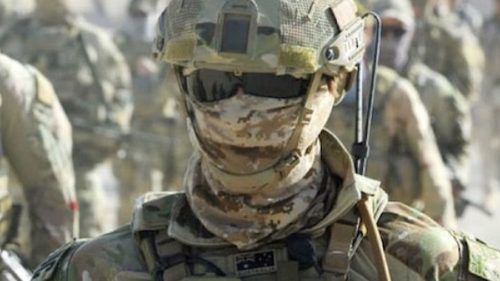
France is recalling French Ambassador to Niger Sylvain Itte, all staff of the French Embassy, and all French troops in the West African country, President Emmanuel Macron said on Sunday.
“The Ambassador in Niamey, as well as all staff of the embassy, will return to France in the coming weeks or months,” Macron told a French broadcaster.
He added that the military cooperation with Niger is “over” and French troops will leave the country by the end of the year.
“I spoke with President Mohamed Bazoum today and informed him that France has decided to recall its ambassador … We will also put an end to our military cooperation with the current Nigerien authorities because they are no longer aiming to fight terrorism. This is the end of this cooperation, it [the troops withdrawal] will be organized in the coming weeks or months. The troops will return in an organized manner before the end of the year,” Macron said.
Bazoum was deposed as president by his guard during a military takeover in July. France has refused to recognize the new government in Niger, initially ignoring their demands for French troops and the ambassador to leave the country.
Roughly 1,500 French troops are currently deployed in Niger. Despite the move, Macron said he still views Bazoum as the true leader of Niger.
Bazoum has called for his reinstatement, calling for help from the Economic Community of West African States, but two members of the block, Burkina Faso and Mali, signed a defensive pact with the military leadership of Niger and threatened to leave ECOWAS if it took military action against Niger.
The French embassy in Niamey and French military bases have been the focus of mass protests in the capital city.
News relating to missiles used or about to be used in Ukraine and about “Russian” ICBMs in North Korea
By Gilbert Doctorow | September 17, 2023
It is widely expected that in the coming week American president Joe Biden will announce the decision to ship American medium range missiles ATACMS to Ukraine. Discussions of this subject have been widespread in both US and European media. The focus has been on the range of missiles and whether their delivery will enable Ukraine to attack across the border into the Russian Federation itself for the purpose of destroying supplies and command centers there. Of course, the issue is complicated by what is meant by RF territory. In the language of the West, all of the Ukrainian territory which has been captured by Russia since 2014 is considered to be fair game for military attack. From the perspective of Russia, any attacks on Crimea, in particular, may be justification for major escalation of the war into a direct fight with the NATO country or countries supplying the given missiles. That said, there is reason to believe that Storm Shadows were used to hit Sevastopol on 13 September, without any sign yet of Russia’s intention to escalate.
The advocates of shipping ATACMSs to Ukraine point out that its range, 190 miles or 300 km, is no greater than that of the Storm Shadow missiles which Britain and France have sent to Ukraine without prompting escalatory actions by Russia. However, that is to overlook the other side of the issue, namely the method of launch. Storm Shadow is an air to ground missile. It is launched from Soviet-era Ukrainian jet fighters which have been especially modified for this purpose. Since the Storm Shadow is devilishly difficult for any air defense system to destroy in flight, the Russians have focused attention on destroying Ukrainian planes that are part of the launch operation. Just this past week, on 11 September a Russian missile attack on the Dolgintsevo air base near Krivoy Rog in the Dnepropetrovsk region of Ukraine destroyed 5 Ukrainian fighters, two MiG-29s and three SU-25s. The MiGs are said to either carry the Storm Shadow or to provide cover for SU-24s which carry them.
The logic of supplying ATCSMs is precisely in the launch mode, not the attack radius of these missiles. They are ground to ground missiles which are launched from mobile platforms similar in principle to the multiple rocket launchers HIMARS. In that sense, they are more difficult to find and destroy than a jet fighter.
In the meantime, in Europe, German Chancellor Scholz has made it plain that he will not approve sending Germany’s long range missiles, the TAURUS, to Kiev until the United States makes a first move by shipping its own missiles. The TAURUS falls into the same launch category as the Storm Shadow; it is sent on its way to target by a jet fighter. Its distinction is only one of distance, at 500 km range. If Ukraine has a fast diminishing or fully destroyed air force, the TAURUS will not be of much use.
*****
Otherwise, over this past week, the interest of major Western media in missiles has focused on what North Korea owns and how it got them. The interest came about as journalists followed the course of North Korean leader Kim Jong Un’s tour of the Russian Far East.
It has occurred to our journalists that North Korea presently possesses ICBMs capable of reaching the North American heartland, and as they pored over the technical characteristics of these missiles they noted that one seems to be very close in design to Soviet era missiles that were once the mainstay of the Russian strategic arsenal. I am speaking of the Korean rebranded Topol-M.
It is not surprising, therefore, that some folks in the States are wondering how is it that the Russians were able to get away with supplying the designs of the Topol-M to Pongyang without the United States raising a hullaballoo.
The answer, my friends, is in the inconvenient fact that those responsible for providing North Korea with production plans and technology for manufacturing the Topol-M were not Russians; they were Ukrainians. This story is discussed in an article on a Russian news portal a couple of days ago. According to the authors, the Ukrainians sold to the North Koreans part of the technology but not all. For example, they held back the secrets of the solid fuel used in this missile, which the Koreans had to develop on their own. Moreover, for the guidance system, the Koreans were assisted or copied a system developed by the Chinese. What this tells us is that if the Koreans should agree with the Kremlin on the purchase of one or another missile-related technology, its integration into their own production will be done by the Koreans themselves. The same may be said of technologies for construction and operation of nuclear powered submarines which the North Koreans are said to be looking for abroad.
*****
Before closing, I use this opportunity to sum up the Russian visit of Comrade Kim after he spent that first day in talks with Vladimir Putin at the Vostochny Cosmodrome about which I wrote earlier in the week. His next stop was Komsomolsk on Amur, where he was shown the Yuri Gagarin factory complex producing Russian military and civilian aircraft, including the “Alligator” multifunctional attack helicopters that have been so effective in the Ukraine war against tanks, armored personnel carriers and other military hardware. The top Russian official with Kim for the day was Minister of Trade and Industry Denis Manturov.
From Komsomolsk, Kim went next to the Knevichi air base in the Amur region, where he was shown the massive turboprop Tupolev Tu-95 and the sleek Tu-160 “White Swan,” both mainstays of the nuclear triad as bombers and missile platforms. Considerable attention was given to an assortment of the most modern fighter jets in the Su family, as well as to MiGs equipped with the hypersonic Kinzhal missile. The Russian hosts were headed by Minister of Defense Shoigu.
Kim’s tour ended in Vladivostok where he was taken aboard the frigate Marshal Shaposhnikov of the Pacific fleet, which is typical of the latest Russian vessels in having an important complement of hypersonic missiles with 1500 km range as well as weaponry for anti-submarine warfare.
When in Vladivostik, Kim visited the Far Eastern Federal University on Russky Island in the Vladivostok harbor, where the Eastern Economic Forum had been held at the start of the week. Kim met with university students. Lastly, there was a typically Russian cultural note to round out Kim’s program: a performance of Swan Lake by the Vladivostok affiliate of the Mariinsky Theater (St Petersburg). I mention parenthetically, that the Russian Federation from coast to coast is looked after culturally by its musical and museum powerhouses: Moscow’s Bolshoi theater maintains a similar performance and training outpost in Kaliningrad.
©Gilbert Doctorow, 2023
Iran Withdraws IAEA Designation of French, German Inspectors
Al-Manar | September 17, 2023
The International Atomic Energy Agency’s (IAEA) director general said on Saturday that Iran has withdrawn the designation of a number of the agency’s inspectors with Iranian media reporting that those inspectors are from France and Germany.
Iran’s move seems to have been made in response to a recent hostile and unconstructive move by the IAEA’s Board of Governors against Tehran, which was sponsored by the E3 (the UK, France and Germany) and the United States, Tasnim news agency reported.
IAEA Director General Rafael Grossi in a statement condemned what he called Iran’s “disproportionate and unprecedented” move to withdraw the designation of several of the agency’s “most experienced” inspectors assigned to conduct verification activities in the country under the NPT Safeguards Agreement.
He said Iran’s unilateral measure affects the IAEA’s “normal planning and conduct” verification activities in the country and “openly contradicts the cooperation that should exist between the Agency and Iran.”
Iranian Foreign Ministry Spokesman Nasser Kanaani reacted to the latest claim made by the IAEA chief, saying the United States and the three European parties to the 2015 nuclear agreement, known as the Joint Comprehensive Plan of Action (JCPOA) have abused the UN nuclear watchdog with the purpose of achieving their own political objectives.
“Unfortunately, despite Iran’s positive, constructive and continuous interaction with the IAEA, the three European countries and the United States abused the Agency’s Board of Governors for their own political purposes with … the aim of damaging the atmosphere of cooperation between Iran and the Agency,” Kanaani said, referring to the three European countries.
He said Iran has previously warned against the consequences of such efforts to politicize the UN nuclear agency.
The spokesman reiterated that Iran made the decision in accordance with Article 9 of the agreement between the Islamic Republic and the IAEA for the application of safeguards in connection with the Treaty on the Non-Proliferation of Nuclear Weapons.
Kanaani once again urged the Western countries to stop abusing international organizations, including the IAEA, and allow such world bodies to carry out their “professional and neutral” activities under no political pressure.
He, however, said Iran emphasizes the need for the IAEA’s impartiality and will continue its positive cooperation based on bilateral agreement.
On Wednesday, the IAEA’s Board of Governors issued a Western-sponsored statement that accused Iran of non-compliance with its safeguards commitments.
The document, signed by 62 member states of the agency, called upon Iran to take steps to address outstanding safeguards issues and provide the IAEA with information concerning its new nuclear facilities.
Separately on Wednesday, the three European signatories of the 2015 nuclear deal, France, Britain and Germany, also issued a joint statement on the sidelines of the meeting of the IAEA’s Board of Governors.
They accused Iran of non-compliance with the nuclear deal, even though it was the United States that unilaterally abandoned the deal in 2018 and put its fate in limbo.
Kanaani rejected the statement as politically motivated, saying Iran and the IAEA have made “considerable progress” in boosting cooperation.
Burkina Faso expels French defense attaché for ‘subversive activities’
Press TV – September 16, 2023
Burkina Faso has notified France of the expulsion of the embassy’s military attaché for “subversive activities,” weeks after Niger ordered the European country’s ambassador to leave.
In a letter seen by AFP on Friday, Burkina Faso’s foreign ministry warned that attaché Emmanuel Pasquier and his team had two weeks to leave the Sahel nation where military leaders last year twice toppled pro-France governments.
The ministry letter added that the French military mission in Ouagadougou would be closed.
France pulled out troops from its former colony in the face of mounting hostility after Captain Ibrahim Traore seized power in September 2022.
France’s foreign ministry rejected the accusation.
“The accusation of subversive activities is obviously fanciful,” a foreign ministry spokesperson told AFP in Paris.
After the September coup, France recalled its ambassador from Ouagadougou and has not replaced the envoy. Burkina Faso is also unlikely to let the envoy come back.
Burkina Faso’s military leaders have suspended the French TV outlets LCI and France24 as well as Radio France Internationale (RFI) and expelled the correspondents of the French newspapers Liberation and Le Monde over their “subversive activities.”
Burkina Faso’s military chief Traore last week gave an interview saying Burkina was not “the enemy of the French people” but of the policies of its government.
“We have to accept seeing each other as equals… and accept an overhaul of our entire cooperation,” he said on state television.
Anger within the armed forces led to a coup on January 24, 2022, toppling pro-France president Roch Marc Christian Kabore.
On September 30, Kabore’s nemesis, Colonel Paul-Henri Sandaogo Damiba, was himself overthrown by the 34-year-old Traore, who has promised a return to democracy with presidential elections by July 2024.
Traore in July met Russian President Vladimir Putin at the Russia-Africa summit in Saint Petersburg and followed up with talks in August with a Russian delegation on development and military cooperation.
Foreign Minister Olivia Rouamba on Monday said Burkina needed to “strengthen bilateral cooperation” with Iran and President Ebrahim Raeisi.
Meanwhile, Niger’s military leaders gave the French ambassador a 48-hour ultimatum to leave the country in August, but French President Emmanuel Macron refused to comply or to recognize the legitimacy of the military rulers.
At the end of August, the military rulers revoked the diplomatic immunity of the ambassador and ordered the police to expel him from the country.
Apple Tells Support Staff To Remain Silent On iPhone Radiation Concern
By Tyler Durden | Zero Hedge | September 15, 2023
Apple plans to issue an over-the-air update in the coming days for iPhone 12 users in France after regulators ordered a halt in sales over concerns the device emits too much radiation.
“We will issue a software update for users in France to accommodate the protocol used by French regulators,” Apple told Reuters in a statement.
The company continued, “We look forward to iPhone 12 continuing to be available in France.”
Earlier this week, French regulators ordered a ban on iPhone 12 sales after a Specific Absorption Rate (SAR) test – how much radio frequency is absorbed into a body from a device – exceeded European radiation exposure limits.
Besides the iPhone 12’s radiation levels, another controversy is brewing as Bloomberg said Apple instructed employees to stay ‘mum’ when customers ask about the radiation issue:
If customers inquire about the French government’s claim that the model exceeds standards for electromagnetic radiation, workers should say they don’t have anything to share, Apple employees have been told. Staff should also reject customers’ requests to return or exchange the phone unless it was purchased in the past two weeks — Apple’s normal return policy.
Customers asking if the phone is safe should be told that all Apple products go through rigorous testing to ensure that they’re safe, according to the guidance.
Apple dismissed the radiation claims, indicating “this is related to a specific testing protocol used by French regulators and not a safety concern” for customers. “The ANFR [French regulator] is preparing to quickly test this update,” Noel Barrot, France’s digital affairs minister, told Reuters.
The timing of the iPhone radiation concerns comes the same week Apple announced its all-new lineup of the iPhone 15 and iPhone 15 Pro… Coincidence?
We’ve told readers over the years about radiation risks while using smartphones:
- How Much Radiation Is Emitted By Popular Smartphones?
- These Phones Emit The Most (And Least) Radiation
In today’s digital age, handheld devices are brought everywhere, from the bedside to the kitchen table to the office and even to the bar. One has to wonder if radiation exposure from smartphones is supercharging certain types of cancers.
France bans iPhone over radiation concerns

RT | September 12, 2023
Apple must withdraw all iPhone 12 models from the French market immediately, the National Frequency Agency (ANFR) announced on Tuesday, accusing the popular smartphone of emitting far more electromagnetic radiation than European Union regulations allow.
“The ANFR expects Apple to deploy all available means to put an end to the non-compliance. Failure to act will result in the recall of equipment that has already been made available to consumers,” the agency said.
According to the regulator, tests at an accredited laboratory revealed that the phone exceeded the specific absorption rate (SAR) value mandated by the EU, which is four watts-per-kilogram (W/kg), when held in hand or in a trouser pocket. The “body” SAR, when the phone is in a jacket pocket or a bag at least 5mm away, was within the 2 W/kg limit, however.
Apple must immediately stop the sale of iPhone 12 models and get ANFR approval if it makes updates to them to ensure compliance, the regulator added. ANFR inspectors have been authorized to check “all distribution channels in France” for the banned device, starting Tuesday.
The iPhone 12 was introduced in October 2020 and has continued to be popular due to a lower price point than the subsequent models. Apple says the model has a SAR of 0.99 W/kg when measured by the EU standard.
Earlier on Tuesday, the California-based Apple announced the iPhone 15 line of devices, featuring the USB-C connector in order to comply with an EU mandate adopted in 2022.
The US Federal Communications Commission has yet to comment on the French announcement. The FCC has a SAR limit of 1.6 W/kg.
France’s radiation crackdown comes after several months of bad news for Apple. Last week it was reported that China has banned government employees from bringing iPhones or any other foreign devices into the office or using them for work purposes.
Russian officials were advised to stop using iPhones in July, while the state military industry banned them outright, citing security concerns. Later that month, a class action suit in the UK accused the US-based company of monopolistic behavior regarding fees charged by the app store.
Local Lockdown in Paris for Break-Bone Fever
The Naked Emperor’s Newsletter | September 1, 2023
Public health tasted the power they gained during the pandemic and now they are hungry once more. Any excuse to make themselves relevant again and they will take it.
This time it happened in France’s capital, Paris. On Wednesday and Thursday, the city undertook its first ever large-scale mosquito control campaign after two people contracted dengue fever. It is also known as break-bone fever due to the joint pain that accompanies illness.
Although the individuals were infected with dengue whilst abroad, officials were concerned that the Asian tiger mosquito might bite them and spread the disease around the country.
That seems like a very small risk to me but apparently, nowadays, however small the risk, public health must intervene. So they closed roads and sent out stay at home alerts (mini local lockdowns), allowing insecticides to be sprayed around the city over a couple of days.
Naturally, the situation was blamed on climate change. Apparently, there have been hotter temperatures and increased flooding meaning the mosquitos are more likely to cause a problem.
Most people who get dengue don’t have any symptoms but it is estimated that around half a million people worldwide are hospitalised with the disease each year. Approximately 20,000 to 40,000 of these die, however with good healthcare, death is unlikely.
Dr Jolyon Medlock, head of medical entomology and zoonoses ecology at the UK Health Security Agency (UKHSA) told the Telegraph newspaper, that “in 10 to 15 years the UK will probably also have embedded populations of mosquitoes that pose a threat to health”.
At the bottom of the Telegraph article it says “Protect yourself and your family by learning more about Global Health Security”.
Lo and behold, who do we find funding the Telegraph’s Global Health Security? The Bill & Melinda Gates Foundation of course. The Telegraph insists that the support comes without strings but it seems like it does come with some benefits as the paper brags that “we were among the first to warn of an approaching pandemic”. However did they know!?
And is the break-bone fever panic really being caused by climate change? In 2017, it was announced that France and the Netherlands backed the release of Oxitec’s genetically modified mosquitoes to fight dengue, chikungunya and zika.
These mosquitos are meant to use a biological method to suppress wild populations of dangerous mosquitos. The genetically modified males don’t bite or transmit disease and when released, search for a female mate. Their offspring inherit a self-limiting gene that causes them to die before reaching functional adulthood. Seems a bit Jurassic Parky to me and if there’s one thing I learnt from Jurassic Park, it’s that life always finds a way.
Oxitec is also the company that released genetically modified mosquitoes in Florida… which is now seeing a rise in malaria. Definitely not connected though. Their business is supported by $18 million of funding from the Bill & Melinda Gates Foundation.
But who is Oxitec? Founded in 2002 as a spinout from Oxford University, they were purchased by US based Intrexon and Third Security in early 2020.
Intrexon changed its name to Precigen in 2020, a year after creating the company as a subsidiary. Weirdly, if you try to go to Intrexon’s website you get taken to DNA.com which is just a landing page with a creepy logo.

Under its current name, Precigen, the company informs us that it “is a dedicated discovery and clinical stage biopharmaceutical company advancing the next generation of gene and cell therapies using precision technology to target the most urgent and intractable diseases in our core therapeutic areas of immuno-oncology, autoimmune disorders, and infectious diseases”.
I used to think this technology would bring great advancement to medicine but, since the pandemic, I think they are just playing with fire.
NATO may collapse by 2025 – academic
RT | September 3, 2023
The return of Donald Trump to the White House could spell the end for US military aid to Ukraine, leaving a divided Europe to foot Kiev’s bills and ultimately ending the NATO pact, academic Phillips Payson O’Brien claimed in The Atlantic on Saturday.
Opposition to arming Ukraine is now the position of Trump’s supporter base, who O’Brien estimated account for three quarters of the Republican Party’s electorate. Trump has repeatedly vowed to use military aid as leverage to force Ukraine into peace talks with Russia “within 24 hours” of his inauguration, while his two nearest competitors for the GOP’s nomination – Ron DeSantis and Vivek Ramaswamy – have also discussed restricting support for Kiev.
Of the three potential candidates, Ramaswamy has gone the furthest, suggesting that the US recognize Russia’s territorial claims in Ukraine in exchange for Moscow distancing itself from Beijing.
“If Trump or one of his imitators wins the presidency in November 2024, Europe could find itself faced with a new American administration that will halt all support for Ukraine,” O’Brien warned.
In this scenario, he continued, European nations would be unable to make up for the loss of US military aid, resulting in a military defeat for Ukraine. With the US out of the picture, Europe would be divided on the issue too, he added, with the Eastern and Baltic nations eager but unable to keep the arms flowing to Kiev, and Western nations like France and Germany more likely to seek peace with Russia.
“The result could be a legacy of bitterness and distrust at best, and a permanent fracturing of European cooperation at worst,” he stated.
A fervent supporter of Ukraine, O’Brien argued that European countries need to increase military production immediately to prepare for this possibility. However, with the Eurozone entering recession in the first three months of 2023 and industrial production down in Germany, European states are unlikely to be able to sustain the Ukrainian military on their own.
O’Brien’s predictions are based on the assumption that Ukraine will still be able to fight by 2025. According to Russian figures, Kiev lost 43,000 men in the first two months of its ongoing counteroffensive, without managing to penetrate the multiple layers of trenches and fortifications laid by Russia along the entire Kherson-Donetsk front line.
Before the operation began in early June, multiple Western media reports suggested that continued US and NATO military aid to Kiev depended on the success of the offensive. Now, almost three months in, the counteroffensive is widely regarded as a failure.
Ex-Italian PM: France Likely Downed Passenger Plane Trying to Kill Libya’s Gaddafi

© AP Photo / Saris
Sputnik – 02.09.2023
ROME – Former Italian Prime Minister Giuliano Amato has alleged that France and its US allies were likely responsible for the mysterious passenger plane crash off Sicily in June 1980, and that the incident was the result of a plot to assassinate late Libyan leader Muammar Gaddafi.
“The most credible version is about the responsibility of the French Air Force with the complicity of the Americans and those who participated in the air war over our skies on the evening of June 27,” Amato said in an interview with Italian newspaper la Repubblica on Saturday, recounting the June 27, 1980 crash of Itavia Flight 870, in which all 81 passengers and crew onboard were killed.
“A plan had been launched to hit the plane on which Gaddafi was flying,” Amato said, referring to reports of a dogfight taking place in the area between French and Libyan jets on the day the Italian passenger plane went down, and rumors that Gaddafi was on board one of the Libyan Air Force MiG jets.
The plan was to “simulate NATO drills involving many aircraft” during which a missile would have been fired – passed off as an accident – at the plane carrying Gaddafi, Amato said. However, Gaddafi got a warning from then-Italian Prime Minister Bettino Craxi, Amato’s former rival, and never boarded the jet, with the French missile allegedly intended for him ending up hitting the Itavia plane instead.
The Itavia McDonnell Douglas DC-9 passenger jet crashed into the Tyrrhenian Sea off the western Italian coast, between the islands of Ponza and Ustica en route from Bologna to Palermo.
In 2015, the Palermo Court of Appeal ruled that the crash was caused by a missile hitting the DC-9, and that the missile was fired by another aircraft that crossed the passenger plane’s route. The court ruled out previously claimed versions about a bomb being planted on board the civilian airliner.
In his interview on Saturday, Amato said the Elysee should admit its responsibility, so that it can “wash away the shame that weighs down on Paris.”
“After forty years, the innocent victims [of the crash] have not received justice. Why continue to hide the truth? The time has come to shed light on this terrible state secret. [French President Emmanuel] Macron could do it. And NATO could do it,” he said.
France and its US allies have long denied any involvement in Itavia Flight 870’s crash.
Commenting on Amato’s allegations, Italian Prime Minister Giorgia Meloni called on the politician to disclose any materials he may have related to the incident.
“Taking into account that the materials concerning the DC-9 tragedy are not classified, and that the judicial authorities and parliamentary commissions have done a lot of work over decades, I ask Amato to understand whether, in addition to his conclusions, he has other elements that allow him to review the decisions of the judiciary and the parliament, and possibly to make them available, so that the government can take all possible and consistent steps,” Meloni was quoted as saying in a statement released by her office.
Western leaders are all fighting for their survival in power
Where does this lead? To war!
By Gilbert Doctorow | September 1, 2023
I follow the Evening with Vladimir Solovyov shows as a professional duty, not for fun. The host is very often boorish and the panelists are variable in quality, with too many duds among them. However, every several days I am pleasantly surprised by the analytical talents of one or another panelist who gives us a fresh and often persuasive understanding of the drivers of global events.
One such case was last night when a panelist from MGIMO, the higher educational institution that has educated Russia’s diplomatic corps for decades, gave us his take on the danger of a new world war, meaning a nuclear holocaust, that we presently face. It is all because the political leaders in the United States and in Europe enjoy very low domestic ratings, face elections in the coming year or so and are desperate to hold onto power. For some losing power can mean being sent before courts for various crimes they have committed in office. War is the solution they seize upon in the hope of diverting attention from their personal failings and economic woes, as well as to clamp down on free expression of opposition to the powers that be.
So it is for Joe Biden. Tucker Carlson and Donald Trump have said as much in public over the past several days. But it is just as true of the European presidents and prime ministers. They are all buffeted by economic head winds, by rampant inflation, deindustrialization and falling living standards that they unleashed with their ill-considered imposition of sanctions on Russia. They all are highly unpopular. We know, for example, that German Chancellor Scholz is now among the least regarded politicians in his country. Macron is now rivaling former president Hollande, who came in at single digit numbers in polls before he abandoned his hopes of reelection. And what is the result? Scholz has become a war hawk and repeatedly has agreed to supply ever more deadly materiel to Kiev. Macron has come out as a hawk not only on Ukraine but now is a caricature colonialist on the question of participating in military operations against Niger to reinstall the French-backed comprador government.
Over in Poland, where an election is looming, the government of Prime Minister Mateusz Morawiecki is fighting for its life against a resurgent Civic Platform party. It has put in place a law aimed at sidelining the former prime minister and CP leader Donald Tusk over charges that he was soft on the Russians. Losing power might result in the chairman of the Law and Justice party, Jaroslaw Kaczynski being sent to trial, as is now demanded by Lech Walesa. The result? Poland has been building up its military forces on the border with Belarus and is preparing the public for an imminent outbreak of war.
And then there is the most recent example supporting the given line of analysis: what is going on in Estonia. Let us recall that in the past week there has been a political storm in Estonia when it became known that the husband of the viciously anti-Russian prime minister, Kaja Kallas, has been making millions of euros of profit from his logistics business assisting an Estonian company that has production in Russia. When confronted with this outrageous violation of the cut-off of relations with Russia that she has demanded of her fellow citizens since the war in Ukraine began, Kallas just shrugged it off as something she knew nothing about. However, we note that the drone attack that destroyed Russian military aircraft at the Pskov airport in Russia’s northwest region a day ago is said to have been launched from Estonian territory.
So far, Moscow has not reacted to what could and should be a casus belli with a NATO Member State. But how much longer will Putin show forbearance?
These are very dangerous times and the weakness of Western leadership points to more, not less war.
©Gilbert Doctorow, 2023
French Troops Reportedly Given Until September 3 to Withdraw From Niger
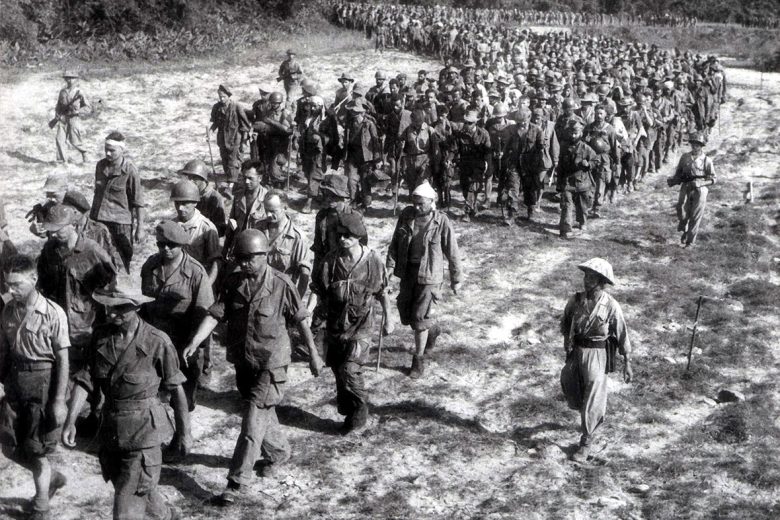
Removal of French forces from Dien Bien Phu, Vietnam, in 1954.
Sputnik – 30.08.2023
Niger’s National Council for the Safeguard of the Homeland (CNSP) has reportedly demanded the complete withdrawal of French troops from the West African country by September 3.
Earlier in the day, Saudi media reported the CNSP had announced the annulment of all security and military agreements with France.
By the end of the week, supporters of the pullout are going to stage an indefinite protest against the presence of the French military in Niger. Some residents have reportedly demanded that the authorities cut water and power supply to the French base, as well as halt food deliveries.
Last week, the Nigerien Foreign Ministry called on French Ambassador Sylvain Itte to leave the country within 48 hours. Paris said it took note of Niger’s request to the ambassador, but noted Niger’s military leadership has no authority to make such decisions.
Nigerien soldiers stand guard as supporters of Niger’s National Council for the Safeguard of the Homeland (CNSP) gather for a demonstration in Niamey on
On July 26, Niger’s presidential guard ousted and detained President Mohamed Bazoum. The guard’s commander, Gen. Abdourahmane Tchiani, proclaimed himself the president of the caretaker CNSP-led government. Most Western countries as well as ECOWAS condemned it. In early August, ECOWAS adopted a plan for a potential military intervention in Niger.
Featured Video
Laith Marouf: Hezbollah’s position on US-Iran ceasefire
or go to
Aletho News Archives – Video-Images
From the Archives
Is Israel to blame for the Iraq War?
American Goy | March 10, 2008
I am so tired of this old canard that “Israel had nothing to do with USA’s war with Iraq – in fact, it officially advised America against it”.
Bullshit. … continue
Blog Roll
 Aletho News
- Laith Marouf: Hezbollah’s position on US-Iran ceasefire: What you’re not being told
- Israel’s priority lies in destroying chances of peace between Iran, US: Ex-UN nuclear chief
- Ceasefire for all or for none: Iran shuts Hormuz over Lebanon attacks
- Strait of Hormuz is Iran’s ‘nuclear weapon’ that forced US retreat: Medvedev
- Energy crisis will last for months – Kremlin envoy
- Europe’s quiet role in the war on Iran
- Forty days that shook the Empire: How Iran turned the tables on US and prevailed
- Netanyahu unilaterally declares Lebanon outside of ceasefire deal
- Israeli leaders: ‘Not a single goal’ achieved in war with Iran
- What on earth just happened? Trump, Iran, and the unlikely ceasefire
- If Americans Knew
- Gazans face a triple crisis: severe shortages of water and bread, healthcare in tatters
- NY Times reports how Netanyahu took the US into Iran War
- A sigh of relief over Iran, but Gaza and Lebanon in dire straits – Daily Update
- Thousands dead and neighborhoods razed to the ground: Aid agencies fear southern Lebanon is becoming the new Gaza
- The war the US is fighting for Israel could cost trillions
- ‘Cigarette Burns, Nail Wounds’: Toddler Tortured in Gaza to Coerce Father
- Trump Says US Sent ‘a Lot of Guns’ to Protesters in Iran
- Israeli forces destroy 17 UN peacekeeper cameras in south Lebanon
- US-Israeli strikes ‘completely destroy’ synagogue in Tehran
- Archbishop for US Military Says Iran War Is Unjust Under Catholic Teaching
- No Tricks Zone
- An Inconvenient Tree: Uncovered In Alps… Europe Much Warmer Than Today 6000 Years Ago
- New Study Reports A 60% Slowdown In Greenland’s Ice Loss Rate In The Last Decade
- Low Intensity Tornado Wrecks Major Solar Farm, Creating A Potential Toxic Dump
- New Study Finds Warming Saves Lives…Cold Temperatures 12 Times More Deadly Than Excess Heat
- German Science Blog Accuses PIK Climate Institute Of Hallucinating Climate Tipping Points
- Devastating Assessment Of Comirnaty Vaccine By Former Senior Pfizer Europe Toxicologist
- New Study: CO2 Is ‘Effectively Negligible’ As An Explanatory Climate Change Factor Since 2000
- Former Pfizer Toxicologist Dr. Helmut Sterz Tells Bundestag Hearing Pfizer Vaccine Should Have Never Been Approved
- Energy Expert: Germany’s Nuclear Phaseout Was A “500 Billion Euro Mistake”
- New Research: South Australia’s Mid-Holocene Sea Surface Temperatures Were 4°C Warmer Than Today
 Aletho News