Communication surveillance undermines privacy, freedom of expression – UN report
RT | June 6, 2013
The widespread use of surveillance technologies to monitor peoples’ communications violates the human rights to privacy and freedom of expression, the UN’s Special Rapporteur on Freedom of Expression and Opinion stated in his report.
Rapporteur, Frank La Rue, presented his report to the United Nations Human Rights Council in Geneva on Tuesday.
The document underlined that there’s no way to ensure freedom of expression without respect of privacy in communications and called for global attention towards the increased use of surveillance technologies by many governments.
“The right to privacy is often understood as an essential requirement for the realization of the right to freedom of expression. Undue interference with individuals’ privacy can both directly and indirectly limit the free development and exchange of ideas,” the report stated.
La Rue praised the technological innovations, which promote fast, anonymous, cross-cultural dialogues around the world, but warned that the same technologies can backfire as concerns about national security and criminal activity may lead to previously unseen scale of state surveillance intrusions.
“The Internet has facilitated the development of large amounts of transactional data by and about individuals. This information, known as communications data or metadata, includes personal information on individuals, their location and online activities, and logs and related information about the e-mails and messages they send or receive.”
The rapporteur stressed that this communications data is “storable, accessible and searchable” and when it’s combined and used by the state it can be “both highly revelatory and invasive”.
According to La Rue, governments are in possession of multiple instruments to breach communication privacy as access to the stored content of an individual’s e-mails and messages can be obtained through Internet companies and service providers.
Secret services can easily track the movements of mobile phones, identify all individuals with a mobile phone within a designated area and intercept calls and text messages.
The majority of digital communication information flows through fiber-optic cables, so by placing taps on them and applying word, voice and speech recognition, the governments can achieve almost complete control of communications, the report warns.
The document mentions Egypt and other governments confronted with the Arab Spring as one of the most recent examples of such technologies being used.
The report also noted that the surveillance of human rights defenders or journalists has been “well documented” by the governments of many countries.
“On these occasions, human rights defenders and political activists report having their phone calls and e-mails monitored, and their movements tracked. Journalists are also particularly vulnerable to becoming targets of communications surveillance because of their reliance on online communication. In order to receive and pursue information from confidential sources, including whistleblowers, journalists must be able to rely on the privacy, security and anonymity of their communications.”
La Rue urged governments worldwide to review their national laws regulating surveillance as they are often inadequate or simply don’t exist – to ensuring privacy in communication is protected.
“Communications surveillance should be regarded as a highly intrusive act that potentially interferes with the rights to freedom of expression and privacy and threatens the foundations of a democratic society. Legislation must stipulate that State surveillance of communications must only occur under the most exceptional circumstances and exclusively under the supervision of an independent judicial authority.”
The document stressed that individuals should be allowed all technological means to secure their communications and governments “should not interfere with the use of encryption technologies, nor compel the provision of encryption keys”.
Related articles
- Electronic Snooping Threatens Free Speech, Says U.N. Report (reason.com)
- Internet Surveillance and Free Speech: the United Nations Makes the Connection (eff.org)
- Anonymity, Encryption, and Free Speech: What Nations Need to Do (eff.org)
- Top-secret court order reveals NSA’s daily data collection on millions of Americans (Aletho News)
Police protection or citizen censorship? Spain to ban photos and videos of cops
RT | October 19, 2012
Spain’s government is drafting a law that bans the photographing and filming of members of the police. The Interior Ministry assures they are not cracking down on freedom of expression, but protecting the lives of law enforcement officers.
The draft legislation follows waves of protests throughout the country against uncompromising austerity cuts to public healthcare and education.
The new Citizen Safety Law will prohibit “the capture, reproduction and editing of images, sounds or information of members of the security or armed forces in the line of duty,” said the director general of the police, Ignacio Cosido. He added that this new bill seeks to “find a balance between the protection of citizens’ rights and those of security forces.”
The dissemination of images and videos over social networks like Facebook will also be punishable under the legislation.
Despite the fact that the new law will cover all images that could pose a risk to the physical safety of officers or impede them from executing their duty, the Interior Ministry maintains it will not encroach on freedom of expression.
“We are trying to avoid images of police being uploaded onto social networks with threats to them and their families,” underlined Cosido.
Violation of freedom of expression?
Spain’s United Police Syndicate said it considers the implementation of the new legislation “very complicated” because it does not establish any guidelines over what kinds of images violate the rights of a police officer. The syndicate warned that the ministry will run into “legal problems” if it does not specify the ins and outs of the law.
However, the director of the police argued that the measures were necessary given the “elevated levels of violence against officers” in the economic downturn that is “undermining the basis of a democratic society.”
The anti-austerity protests that have swept Spain over the past year have been punctuated by reports and footage of police brutality. The footage showed that large numbers of Spanish officers did not wear their identification badges during the protests, although the law requires it.
Spain’s beleaguered economy is in danger of following in the footsteps of Greece.
The government has made sweeping cuts to the public sector, provoking the ire of a Spanish public already disillusioned at rising unemployment that tops 50 per cent among adolescents.
The Spanish government has not yet called on the European Central bank for a bailout, but rising economic woes and an unchecked public deficit may force it to do so in the near future.
Related articles
- Spain Proposes Law Prohibiting Recording And Capturing Of Local Cops In Action (zerohedge.com)
- Twitter Grapples With Wiggly Censorship Line in Germany (technewsworld.com)
- ‘Democracy kidnapped!’ Madrid police fire rubber bullets as thousands surround Spanish Congress (VIDEO, PHOTOS) (dogmaandgeopolitics.wordpress.com)
Featured Video
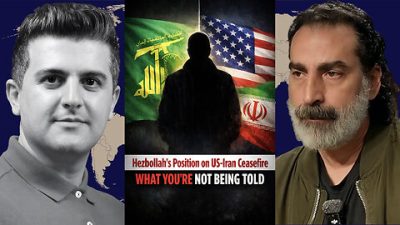
Laith Marouf: Hezbollah’s position on US-Iran ceasefire
or go to
Aletho News Archives – Video-Images
From the Archives
The Dirty Little Secret behind the “Global Terrorism Index”
The Omission of Israeli Terrorism in the Occupied Palestinian Territories
By Karin Brothers | Global Research | December 6, 2014
… The Israeli settlements — all of which are illegal – have been identified as a major impediment to peace. The refusal of a major “global” terrorism report to name the Israeli settlers as one of the groups most responsible for terrorism not only misrepresents a major source of regional violence but exposes the Global Terrorism Index as a propaganda tool that supports a U.S. agenda.
In recent years, governments have been attempting to thwart terrorism by blocking supportive fund-raising. When it comes to Israeli settlements, however, the US and Canada actually encourage fund-raising by giving organizations (such as Christian Friends of Israeli Communities (CFOIC) and the Jewish National Fund) financial support in the form of donor tax-deductions.
Charities which provide funds for the Israeli settlements should be regarded as terror-financing organizations. They should not only lose their tax-deductible status, but they should be banned because they support the violation of international humanitarian law. The terror-financing laws that are being strictly enforced for Muslim charities should be applied to Christian and Jewish charities as well. … Read full article
Blog Roll
 Aletho News
- Trump Administration Moves To Automate U.S. Military Draft Registration
- Spain orders reopening of Tehran embassy, condemns Israel’s carpet bombing of Lebanon
- Israel faces ‘unsustainable’ strategic crisis following 40-day war against Iran: Analyst
- Iran restricts Hormuz access to 15 vessels per day under ceasefire terms: Report
- The ‘Opposition Party’ Has Done Nothing to Stop the Iran War and Much to Goad Trump Into Continuing It
- Moscow backs Tehran on status of Lebanon in US-Iran deal
- How UK Regulator Ofcom Quietly Bypassed International Law to Police American Speech
- The Black Cube Files: How Former Mossad Operatives Flipped a Nation
- Laith Marouf: Hezbollah’s position on US-Iran ceasefire: What you’re not being told
- Israel’s priority lies in destroying chances of peace between Iran, US: Ex-UN nuclear chief
- If Americans Knew
- The gallows law: Israel moves toward executing Palestinian children
- Tucker Carlson: The Path to Peace requires ending ‘special alliance’ with Israel
- This is ceasefire? Israel’s biggest massacre yet in Lebanon, another journalist killed in Gaza – Daily Update
- Tucker Carlson on Israel: This Is the Behavior of an Ally? Really?
- Gazans face a triple crisis: severe shortages of water and bread, healthcare in tatters
- NY Times reports how Netanyahu took the US into Iran War
- A sigh of relief over Iran, but Gaza and Lebanon in dire straits – Daily Update
- Thousands dead and neighborhoods razed to the ground: Aid agencies fear southern Lebanon is becoming the new Gaza
- The war the US is fighting for Israel could cost trillions
- ‘Cigarette Burns, Nail Wounds’: Toddler Tortured in Gaza to Coerce Father
- No Tricks Zone
- An Inconvenient Tree: Uncovered In Alps… Europe Much Warmer Than Today 6000 Years Ago
- New Study Reports A 60% Slowdown In Greenland’s Ice Loss Rate In The Last Decade
- Low Intensity Tornado Wrecks Major Solar Farm, Creating A Potential Toxic Dump
- New Study Finds Warming Saves Lives…Cold Temperatures 12 Times More Deadly Than Excess Heat
- German Science Blog Accuses PIK Climate Institute Of Hallucinating Climate Tipping Points
- Devastating Assessment Of Comirnaty Vaccine By Former Senior Pfizer Europe Toxicologist
- New Study: CO2 Is ‘Effectively Negligible’ As An Explanatory Climate Change Factor Since 2000
- Former Pfizer Toxicologist Dr. Helmut Sterz Tells Bundestag Hearing Pfizer Vaccine Should Have Never Been Approved
- Energy Expert: Germany’s Nuclear Phaseout Was A “500 Billion Euro Mistake”
- New Research: South Australia’s Mid-Holocene Sea Surface Temperatures Were 4°C Warmer Than Today
 Aletho News