No Nuclear Nirvana
By ROBERT ALVAREZ | CounterPunch | March 6, 2012
Is the nuclear drought over?
When the Nuclear Regulatory Commission (NRC) recently approved two new nuclear reactors near Augusta, Georgia, the first such decision in 32 years, there was plenty of hoopla.
It marked a “clarion call to the world,” declared Marvin S. Fertel, president of the Nuclear Energy Institute. “Nuclear energy is a critical part of President Obama’s all-of-the-above energy strategy,” declared Energy Secretary Chu, who traveled in February to the Vogtle site where Westinghouse plans to build two new reactors.
But it’s too soon for nuclear boosters to pop their champagne corks. Japan’s Fukushima disaster continues to unfold nearly a year after the deadly earthquake and tsunami unleashed what’s shaping up to be the worst nuclear disaster ever. Meanwhile, a raft of worldwide reactor closures, cancellations, and postponements is still playing out. The global investment bank UBS estimates that some 30 reactors in several countries are at risk of closure, including at least two in highly pro-nuclear France.
And Siemens AG, one of the world’s largest builders of nuclear power plants, has already dumped its nuclear business.
Recently, Standard and Poor’s (S&P) credit rating agency announced that without blanket financing from consumers and taxpayers, the prospects of an American nuclear renaissance are “faint.” It doesn’t help that the nuclear price tag has nearly doubled in the past five years. Currently reactors are estimated to cost about $6 to $10 billion to build. The glut of cheap natural gas makes it even less attractive for us to nuke out.
How expensive is the bill that S&P thinks private lenders will shun?
Replacing the nation’s existing fleet of 104 reactors, which are all slated for closure by 2056, could cost about $1.4 trillion. Oh, and add another $500 billion to boost the generating capacity by 50 percent to make a meaningful impact on reducing carbon emissions. (Nuclear power advocates are touting it as a means of slowing climate change.) We’d need to fire up at least one new reactor every month, or even more often, for the next several decades.
Dream on.
Meanwhile, Japan — which has the world’s third-largest nuclear reactor fleet — has cancelled all new nuclear reactor projects. All but two of its 54 plants are shut down. Plus the risk of yet another highly destructive earthquake occurring even closer to the Fukushima reactors has increased, according to the European Geosciences Union.
This is particularly worrisome for Daiichi’s structurally damaged spent fuel pool at Reactor No. 4, which sits 100 feet above ground, exposed to the elements. Drainage of water from this pool resulting from another quake could trigger a catastrophic radiological fire involving about eight times more radioactive cesium than was released at Chernobyl.
Ironically, the NRC’s decision to license those two reactors has thrown a lifeline to Japan’s flagging nuclear power industry (along with an $8.3-billion U.S. taxpayer loan guarantee). Toshiba Corp. owns 87 percent of Westinghouse, which is slated to build the new reactors. Since U.S.-based nuclear power vendors disappeared years ago, all of the proposed reactors in this country are to be made by Japanese firms — Toshiba, Mitsubishi, and Hitachi — or Areva, which is mostly owned by the French government. According to the Energy Department, “major equipment would not be manufactured by U.S. facilities.”
For Southern Co., which would operate the Vogtle reactors, the NRC’s approval is just the beginning of a financial and political gauntlet it must run through. Over the strenuous objections of consumers and businesses, energy customers will shoulder the costs of financing and constructing this $17-billion project, even if the reactors are abandoned before completion. If things don’t turn out, U.S. taxpayers will also be on the hook for an $8.3-billion loan guarantee that the Energy Department has approved.
The Congressional Budget Office and the Government Accountability Office estimate that nuclear loan guarantees have a 50/50 chance of default.
Nearly four decades after the Three Mile Island accident, nuclear power remains expensive, dangerous, and too radioactive for Wall Street. The industry won’t grow unless the U.S. government props it up and the public bears the risks.
ROBERT ALVAREZ, an Institute for Policy Studies senior scholar, served as senior policy adviser to the Energy Department’s secretary from 1993 to 1999. www.ips-dc.org
Related articles
- The Demonic Reality of Fukushima (alethonews.wordpress.com)
- We May Yet Lose Tokyo (and Alaska and Georgia) (alethonews.wordpress.com)
- Japan disaster snarls US nuke plant plans (bottomline.msnbc.msn.com)
Fukushima Update: Why We Should (Still) Be Worried
By Karen Charman | WhoWhatWhy | January 20, 2012
After the catastrophic trifecta of the triple meltdowns at the Fukushima Daiichi nuclear complex in Japan last March—what the Japanese are referring to as their 3/11—you would think the Japanese government would be doing everything in its power to contain the disaster. You would be wrong—dead wrong.
Instead of collecting, isolating, and guarding the millions of tons of radioactive rubble that resulted from the chain reaction of the 9.0 earthquake, the subsequent 45- to 50-foot wall of water that swamped the plant and disabled the cooling systems for the reactors, and the ensuing meltdowns, Japanese Environment Minister Goshi Hosono says that the entire country must share Fukushima’s plight by accepting debris from the disaster.
The tsunami left an estimated 20 million tons of wreckage on the land, much of which—now ten months after the start of the disaster—is festering in stinking piles throughout the stricken region. (Up to 20 million more tons of rubble from the disaster—estimated to cover an area approximately the size of California—is also circulating in the Pacific.) The enormous volume of waste is much more than the disaster areas can handle. So, in an apparent attempt to return this region to some semblance of normal life, the plan is to spread out the waste to as many communities across the country as will take it.
At the end of September, Tokyo signed an agreement to accept 500,000 metric tons of rubble from Iwate Prefecture, one of eight prefectures designated for cleanup under a new nuclear decontamination law passed on January 1. The law allows for much of the radioactively contaminated rubble to be incinerated, a practice that has been underway at least since the end of June.
But the sheer amount of radioactive rubble is proving difficult to process. The municipal government of Kashiwa, in Chiba Prefecture to the west and south of Tokyo, recently shut down one of its main incinerators, because it can’t store any more than the 200 metric tons of radioactive ash it already has that is too contaminated to bury in a landfill.
According to the California-based Fukushima Fallout Awareness Network (FFAN), burning Fukushima’s radioactive rubble is the worst possible way to deal with the problem. That’s because incinerating it releases much more radioactivity into the air, not only magnifying the contamination all over Japan but also sending it up into the jet stream. Once in the jet stream, the radioactive particles travel across the Northern Hemisphere, coming back down to earth with rain, snow, or other precipitation. Five days after the Fukushima meltdowns began, radioactive fallout from the disaster reached the West Coast of the United States. Approximately a week later, Fukushima fallout was measured as far away as France.
In October, the journal Nature reported that the Japanese government’s initial estimates of radiation from Fukushima were substantially less than what Scandinavian researchers calculated from a global network of radiation monitoring stations that the Vienna-based Comprehensive Nuclear-Test-Ban Treaty Organization uses to detect nuclear weapons tests. … Full article
Related articles
- TEPCO: Fukushima Radiation Isn’t Our Problem (alethonews.wordpress.com)
- Public health fallout from Japanese quake (alethonews.wordpress.com)
- As Fukushima Cleanup Begins, Long-term Impacts are Weighed (e360.yale.edu)
- Not gone fission: New fears at Fukushima (rt.com)
- Radioactive Concrete From Fukushima Found In New Construction (news.slashdot.org)
The Plot to Oust America’s Nuclear Watchdog
By ANDREW COCKBURN | CounterPunch | December 15, 2011
In what may well be a temporary aberration, the Obama Administration appears to be sticking by Nuclear Regulatory Commission Chairman Gregory Jaczko, even though the nuclear industry most definitely wants him out. The current assault on Jaczko has come in the form of a “confidential” letter from Jaczko’s four fellow commissioners sent in October to White House Chief of Staff William Daley complaining that the NRC Chairman pays scant attention to their views and generally runs the Commission as a one man show. Should the attack succeed, the new Chairman will most likely be William Magwood, long a tireless promoter of nuclear power as Director of the Department of Energy’s (DOE) Office of Nuclear Energy where he promoted the Global Nuclear Energy Partnership, a program to restart reprocessing of nuclear waste.
Obama himself has had a long and unpleasing record of engagement with the nuclear industry, notably the Exelon Corporation, which has been making generous provision to Obama’s campaign chest ever since his days in the Illinois Senate, where he performed various useful services on the corporation’s behalf. It should therefore have come as no surprise that when a vacancy arose on the NRC board early in his administration, Obama nominated Magwood.
The nomination was opposed by over a hundred organizations which vainly cited Magwood’s shameful record as a tout for the industry he was now supposed to regulate. Once installed early in 2010, he showed every sign of a zealous commitment to advancing the priorities of the nuclear power industry.
Back in those happy pre-Fukushima days, the future appeared bright for nuclear power. The public obloquy that followed Three Mile Island, condemning the industry to years of stagnation, was at last dissipating, thanks to artful invocation of the specter of global warming and concurrent recasting of nuclear power as a “clean” energy source and toast of the environmental movement.
One problem remained: longterm disposal of high level nuclear waste. In 1987 it had seemed that this particular issue had been settled with the passage in Congress of the “Screw Nevada” bill nominating Yucca Mountain, 80 miles northwest of Las Vegas, as the sole suitable site that could be considered for the permanent interment of 72,000 tons of lethal waste currently stored at reactors around the country. The selection had little scientific validity, given that the site marks the juncture of two seismic fault lines and in any case is volcanically active and composed of porous rock, through which flows drinking water for one of Nevada’s most important farming areas, as well as an Indian reservation. The mountain is also sacred to the Western Shoshone people.
Opposing the infamous bill was freshman Senator Harry Reid. Outraged and humiliated by the way that legislators from Washington state and Texas, the two other nominees for a waste site, had effectively consigned Nevada to be the radioactive trash dump, Reid, a former amateur boxer, remarked that “sometimes you have to go round the back of the bar” to finish a fight.
In ensuing years, as the construction crews tunneled away into the depths of the mountain, Reid took several initiatives to ensure that Yucca Mountain never opened for business. First, he advanced through the Democratic leadership to become Majority Leader in 2006. Second, he maneuvered successfully to move Nevada’s Democratic caucuses to January, thus rendering them potentially crucial in the nomination race. This had the natural consequence of generating fervent pledges from Barack Obama and Hilary Clinton in 2008 that, so long as there was breath in their bodies, Yucca Mountain would never hold nuclear waste. Thirdly, Reid recruited as his appropriations director and science policy adviser Gregory Jaczko, a former aide to veteran anti-nuke congressman Ed Markey. Fourth, he induced George W. Bush in 2005, to nominate Jaczko as a Commissioner to the NRC in exchange for dropping Democratic opposition to a number of federal judgeships. Following Obama’s presidential victory, Reid demanded and secured Jaczko’s appointment as Chairman of the NRC.
Once at the helm, Jaczko moved with commendable dispatch to shut down Yucca Mountain once and for all even while fellow commissioners echoed the nuclear industry in pushing for a mere suspension of the project. Then came the Fukushima disaster. As the reactor buildings exploded and US military radiation monitors in Japan ticked remorselessly upwards, the US government began to panic. “I’ve lived through many crises in the decades I’ve been in government,” one national security official intimately involved in the Fukushima response told me, “but this was the most frightening week of my professional life, by far. We thought we were going to lose half of Japan.”
While the Japanese government reacted to the catastrophe with criminal quiescence – enjoining evacuation merely from an area within 12 miles of the plant – Jaczko took more decisive action, telling Americans within 50 miles to move out. This was anathema to the industry, a sentiment emphatically mirrored in the four commissioners’ letter of complaint to the White House. Further initiatives irksome to Magwood and the others included a push to enjoin additional safety measures on US reactor operators in light of Fukushima.
“He’s not ‘our guy’ by any means, he has voted to re-license plants that should probably be shut down” says Kevin Kamps of Beyond Nuclear. “But he does care about safety, in ways that the others do not.”
So far at least, the White House, conscious no doubt of Nevada’s electoral votes, is backing Jaczko. But, even while Jaczko confronts his assailants, a Blue Ribbon Commission on America’s Nuclear Future has been chewing on the problem of what to do with the radioactive waste filling up pools at reactors around the U.S.. Headed by that perennial placeman, former congressman Lee Hamilton, the commissioners include Obama’s old pal, Exelon CEO John Rowe, who, as Beyond Nuclear’s Kamps points out, “has created more nuclear waste than anyone else in America.”
Senator Reid’s work may not yet be done.
ANDREW COCKBURN is the co-producer of the feature documentary on the financial catastrophe American Casino. He is a contributor to Hopeless: Barack Obama and the Politics of Illusion, forthcoming from AK Press. He can be reached at amcockburn@gmail.com
~~~
Update:
US: Nuclear Regulatory Commission Chairman Jaczko Steps Down
Act against corporate interests, and become a target for personal destruction.
Huffington Post | May 22, 2012
WASHINGTON — Under a withering assault from the industry, Nuclear Regulatory Commission Chairman Gregory Jaczko is stepping down, effective upon the confirmation of his successor, according to a statement from Jaczko.
The resignation follows months of bureaucratic knife-wielding by the four industry-backed members of the five-person panel. Like something out of Dumas, the passionate infighting stretched back decades. The industry effort was spearheaded by Democratic Commissioner Bill Magwood. […]
HuffPost reported that Magwood, who spent his career moving in and out of the private sector, had done nuclear safety consulting for the company that owns the Fukushima nuclear power plant. … Read full article
~~~
NRC Oversight Hearing, Dec. 14, 2011
Related articles
Featured Video
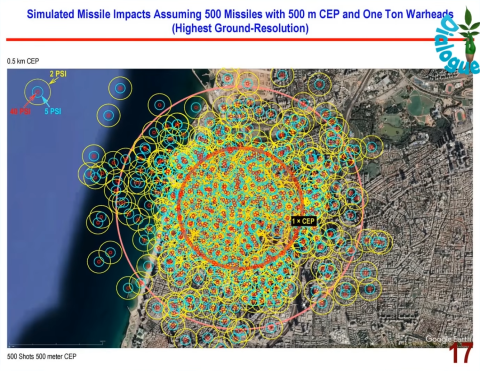
Prof. Ted Postol: US–Iran War? Israel’s Fatal Gamble
or go to
Aletho News Archives – Video-Images
From the Archives
Neocon Max Boot: Legal and illegal aliens need to enlist in the US army and die for Israel

By Jonas E. Alexis | Veterans Today | October 16, 2107
In 1973 Irving Kristol, the godfather of the Neoconservative movement, made a stunning statement which is still relevant to understanding the Israeli influence in US foreign policy. Kristol said:
“Senator McGovern is very sincere when he says that he will try to cut the military budget by 30%. And this is to drive a knife in the heart of Israel… Jews don’t like big military budgets. But it is now an interest of the Jews to have a large and powerful military establishment in the United States…
“American Jews who care about the survival of the state of Israel have to say, no, we don’t want to cut the military budget, it is important to keep that military budget big, so that we can defend Israel.”
Read the statement again very carefully. A big military budget, said Kristol, is only good for Israel, not America or much of the Western World. In other words, precious American soldiers who go to the Middle East to fight so-called terrorism are just working for Israel, not for America.
So, whenever the Neocons use words such as “democracy” or “freedom,” they are essentially conning decent Americans to support Israel’s perpetual wars. … continue
Blog Roll
 Aletho News
- Israel Pushing US Toward a Big and Damaging War With Iran – Ex-Pentagon Analyst
- Meet The Liberal Zionist And Ukraine War Supporter Advising AOC On Foreign Policy
- Buck Dancing for Zion: Kenya’s and Nigeria’s Growing Love Affair With Israel
- Israel installed, oversaw security system at Barak-Epstein residence in New York: Report
- ‘Britain’s Index of Repression’ documents 964 incidents of anti-Palestinian crackdown
- Prof. Ted Postol: US–Iran War? Israel’s Fatal Gamble
- UK prosecutors drop aggravated burglary charges against 24 Palestine Action activists
- Unidentified drone downed over Lebanon airbase, US forces block authorities from crash site
- Peeling Back the US Information Operation in Iran
- Israel ‘dictating terms’ to US – Turkish professor
- If Americans Knew
- The Lancet: Gaza death toll far higher than reported – Not a ceasefire Day 132
- Compliant aid: Who are the Israel-approved NGOs scaling up in Gaza?
- Why won’t Trump’s “Board of Peace” bring peace? – Not a ceasefire Day 131
- Help end the injustice against Shadi
- Israel’s Favorite American President
- Israel’s “Yellow Line” Is a Death Trap for Palestinians. We Drove Into It.
- Why Israel’s expanding occupation in Syria presents a critical legal test
- Gaza is not a natural disaster. It is the victim of genocide enabled by global inaction
- Netanyahu’s plan to “end” US aid to Israel is to give even more money under a different name
- Israel ceased firing on Gaza for just 15 days of the “ceasefire” – Not a ceasefire Day 130
- No Tricks Zone
- Coal Power Back In Trend As Globe Tries To Keep Pace With Growing Demand For Power
- New Study: A 4°C Warmer Beaufort Sea Had ‘No Sea Ice’ 11,700 – 8200 Years Ago
- Unfudging The Data: Dutch Meteorological Institute Reinstates Early 20th Centruy Heat Waves It Had Erased Earlier
- German Gas Crisis…Chancellor Merz Allegedly Bans Gas Debate Ahead of Elections!
- Pollen Reconstructions Show The Last Glacial’s Warming Events Were Global, 10x Greater Than Modern
- Germany’s Natural Gas Storage Level Dwindles To Just 28%… Increasingly Critical
- New Study Rebuts The Assumption That Anthropogenic CO2 Molecules Have ‘Special’ Properties
- Climate Scientist Who Predicted End Of “Heavy Frost And Snow” Now Refuses Media Inquiries
- Polar Bear Numbers Rising And Health Improving In Areas With The Most Rapid Sea Ice Decline
- One Reason Only For Germany’s Heating Gas Crisis: Its Hardcore-Dumbass Energy Policy
 Aletho News