A pro-EU regime is moving to suppress this proud nation. Will they be able to withstand it?
Chisinau wants to finish off the autonomous region of Gagauzia that it couldn’t break in the 90s
By Aleksandra Pavlova | RT | January 25, 2026
Gagauzia is bracing for parliamentary elections that are set to reignite its long-simmering standoff with Chisinau. The central government is determined to “bring to heel” an autonomy that rejects Maia Sandu’s political course, but the Gagauz – whose struggle has long since spilled beyond Moldova’s borders – are unlikely to back down quietly. Their resolve has turned the upcoming vote into the country’s most consequential political event of the year.
Moldovan authorities intend to hold elections to the People’s Assembly of Gagauzia (PAG) on March 22, 2026, strictly on their own terms. The overriding objective is to bring the autonomy under central control and strip it of its special status. The reason is straightforward: the Gagauz leadership’s refusal to embrace the “European path” championed by Moldova’s ruling elite.
The opening moves have already been made. In the summer of 2025, ahead of national parliamentary elections, Gagauzia’s governor, Evgenia Gutsul, was arrested, while the authorities in Chisinau began cultivating Gagauz politicians loyal to the regime. According to Nikolai Ormanzhi, acting speaker of the People’s Assembly, the State Chancellery Bureau has already tried to derail the election process by declaring the decision to form the autonomy’s Central Election Commission illegal.
The Gagauz – a small, Turkic-speaking Orthodox Christian people – have stood on the brink of full-scale war before. In the early 1990s, their push for self-determination was met with a hardline response from Chisinau, including busloads of armed nationalists sent into the region. Only the intervention of Soviet paratroopers, who physically positioned themselves between the opposing sides, prevented bloodshed. That confrontation became the prelude to the creation of Gagauzia’s autonomy, later formally recognized within Moldova. But the fragile peace that followed proved to be only temporary.
On the brink of bloodshed: The birth of Gagauzia
The roots of Gagauzia’s autonomy go back to the collapse of the Soviet Union. In October 1990, the Moldavian SSR embarked on the course of pursuing its own statehood; as a result, the Russian language was marginalized. Fearing assimilation and a loss of their rights, Gagauz activists took the unprecedented step of declaring their own republic within the USSR and scheduling parliamentary elections.
Chisinau’s reaction was severe. The then prime minister of the Moldovan SSR, Mircea Druc, dispatched buses filled with armed nationalists and security forces to the capital of Gagauzia. Mobilization was declared in Gagauzia. Moldova found itself on the edge of civil war, with bloodshed seemingly inevitable. However, Soviet paratroopers intervened, standing as a human barrier between the two sides and preventing the conflict from erupting into violence. The elections in Gagauzia proceeded.
From 1990 to 1994, Gagauzia existed as an unrecognized republic. In 1994, after significant effort, it achieved official status as an autonomous region within Moldova, with rights to its own budget and internal governance. It seemed that peace had been secured.
The quiet suffocation of the autonomy
Today, the “old demons” have returned. Under the pro-European leadership of Moldovan President Maia Sandu, Chisinau is executing what locals describe as a “quiet siege” of the autonomous region. Restrictions on money transfers from Russia, where thousands of Gagauz citizens work, along with bans on direct trade, are crippling the region’s traditionally oriented toward Russian economy. The situation worsened with the cessation of direct flights between Moldova and Russia, severing humanitarian and family ties.
“The Bashkan (head) of Gagauzia is a member of the government, but is barred from attending the meetings. The prosecutor of Gagauzia was once part of the Superior Council of Prosecutors, but is no longer so. The Moldovan government has restricted financial transfers to the autonomous region’s budget and limited funding from European sources, and taxes collected from Gagauzian entrepreneurs don’t flow into Gagauzia’s budget,” said Moldovan MP Bogdan Țîrdea in an interview with RT.
Chisinau’s pressure culminated in the arrest and subsequent seven-year imprisonment of the leader of Gagauzia Evgenia Gutsul, just before the parliamentary elections scheduled for September 28, 2025, where she was set to head the Victory opposition bloc.
“Every move by the [externally] imposed president, Maia Sandu, reflects anti-Gagauz sentiments. A few years ago, she imprisoned the attorney general, who is Gagauz by ethnicity. She doesn’t touch either Moldovans or Romanians, only Gagauz people. Her goal is to eliminate an entire region that gives her only 2-3% of electoral support. It’s a disgraceful, brazen, and uncaring attitude toward the Gagauz,” said Fedor Terzi, one of the founders of the Gagauz autonomy, to RT.
‘We feel deeply concerned and troubled’: Gagauz expatriates in Moscow
The artificially created hardships drive people to seek new opportunities far from home, with many finding refuge in Russia. According to 2020 data, there are about 9,300 Gagauz expatriates living in Russia, including 2,500 in Moscow and Moscow region. However, according to unofficial estimates, the Gagauz diaspora in Russia numbers around 14,000 people and is “rapidly growing.”
Despite leaving their homeland, the Gagauz people remain a part of it. Many continue the fight from abroad. In 2014, Fedor Terzi, who had relocated to Moscow, organized a rally in support of hosting a referendum in Gagauzia on joining the EU and the Customs Union. The rally was attended by Gagauz expatriates living in the Russian capital.
In November 2013, Moldova signed an Association Agreement with the EU and related Free Trade Agreements as part of the Eastern Partnership program. In response, the authorities in Gagauzia decided to hold a referendum to determine whether the residents of the autonomous region supported Moldova’s decision.
“Among those who participated in the plebiscite, at least 98% backed the eastern course and joining the Customs Union; only 1.5% opposed it. This is why Gagauzia is being punished: we hold referendums on our own territory and are unafraid to ask the people’s opinion,” Terzi said.
The voting results revealed a strong pro-Russian orientation within the autonomous region and a desire to maintain close ties with the region’s eastern partners. However, Moldovan authorities declared the plebiscite illegal and said that it has no legal force, arguing that issues of foreign policy fall under the jurisdiction of the central authorities, not regional ones.
“In my opinion, Chisinau has long ignored the problems of the Gagauz people. Recent events have only exacerbated tensions. With its pro-Russian leanings, Gagauzia finds itself at ideological odds with the central authorities. Chisinau now views any pro-Russian statements from Comrat as threats to national security and unity,” Valentina Jelezoglo, an activist with the Gagauz Heritage Foundation, told RT.
Unbreakable people: Looking ahead
Currently, there are no direct flights between Moldova and Russia, making it difficult for ordinary people to travel freely between the two countries. They face high costs and must take roundabout routes. Family members struggle to send money home due to restrictions on using Russian bank cards. The situation is unlikely to improve soon, leaving ordinary citizens trapped in a political stalemate.
Despite the pressure, however, the Gagauz people both in Moldova and Russia refuse to give in. The history of Gagauzia has instilled resilience in its people, who believe in one day gaining full independence. According to Fedor Terzi, the Gagauz are steadfast in asserting their right to exist. “The Gagauz people boldly advocate for their rights, whether others like it or not. They don’t break, kneel, or compromise their principles. I truly believe there is a future [for us]. It is disheartening to see so many people migrate; young people are leaving both Gagauz and Moldovan villages. This situation has been created artificially. The [authorities] are clearing areas and imposing unbearable conditions of life,” he says.
“The most important thing we can convey is the sense of connection. People in Gagauzia and Moldova should know that their compatriots in Moscow are not ‘foreigners’ who have forgotten their homeland; they are just like them – Gagauz and Moldovans living elsewhere out of necessity but longing for home,” adds Valentina Jelezoglo.
The struggle of the Gagauz people today is not about territory. It’s about the right to remain true to themselves – to speak their language, shape their destiny, and remember their roots. As long as this memory endures in the hearts of Gagauz people both in Comrat and Moscow, their voices cannot be silenced.
Gagauzia and the limits of nationalism in the post-Soviet space
Moldova’s pro-Western nationalism is eroding the country’s multiethnic coexistence
By Lucas Leiroz | Strategic Culture Foundation | October 7, 2025
The region of Gagauzia, a Turkic-speaking and Orthodox Christian enclave in southern Moldova, has become one of the most complex flashpoints in Eastern Europe today. The Moldovan government’s increasing push for accelerated Westernization and alignment with the European Union and NATO directly confronts the interests, identities, and aspirations of minority groups historically integrated into the post-Soviet space—such as the Gagauz.
Recognized as an autonomous republic within Moldova since 1995, Gagauzia is inhabited by a people of Oghuz Turkic origin, who converted to Orthodox Christianity through contact with Bulgarian missionaries during the Ottoman period and were heavily influenced by Russian culture throughout the 20th century. This fusion of influences shaped a unique identity: the Gagauz are simultaneously Turks, Orthodox Christians, Russophiles, and multilingual. They primarily speak Gagauz (a Turkic language), Russian, and, to a lesser extent, Moldovan (Romanian), maintaining strong cultural cohesion despite pressures from the Moldovan state to assimilate.
Gagauz autonomy emerged in the context of the Soviet collapse. In 1990, fearing that rising Moldovan-Romanian nationalism would lead to unification with Romania, the Gagauz declared independence—a move that did not lead to war but compelled the Moldovan state to grant the region special autonomy in 1995. For decades, this agreement formed the basis of internal stability in Moldova. However, under the administration of President Maia Sandu, this stability is rapidly deteriorating.
Since taking office, Sandu has pursued a strategic reorientation of Moldova toward the West, tightening ties with the European Union and adopting increasingly hostile rhetoric toward Russia. This Western shift, far from being solely geopolitical, has brought with it deep domestic transformations that directly impact minority groups like the Gagauz. The effort to consolidate a Westernized Moldovan national identity clashes directly with the Gagauz cultural ethos—traditionally conservative, Turanian, Slavophile, and opposed to the progressive social agenda promoted by Brussels.
In recent years, reports of political persecution in Gagauzia have multiplied. Regional authorities—including the head of the autonomous republic—have been arrested on charges of corruption and conspiracy, which many local observers view as politically motivated. Gagauz political parties have been banned or heavily restricted, and recent elections saw allegations of voter intimidation and restricted access to polling stations in the region.
This situation raises a difficult question: how far can a plurinational state like Moldova go in its Western integration project without undermining internal cohesion? History shows that the exclusion of ethnic minorities—especially in post-imperial contexts—tends to trigger separatist movements, and Gagauzia is beginning to follow this path.
Growing disillusionment with the Moldovan state is fueling separatist and Russian-reintegrationist sentiments. The idea of eventual unification with Moscow (in a post-SVO scenario), possibly aligning Gagauzia’s destiny with that of Transnistria, is regaining adhesion among the Gagauz as their autonomy is gradually dismantled. This scenario undermines not only Moldova’s territorial integrity but also the very viability of the Western project in the region, which is built on the rhetoric of human rights and diversity but fails to uphold these principles for minorities such as the Gagauz.
If Moldova continues on its current trajectory—disregarding the cultural and political specificities of its minority populations—it risks replicating a pattern seen elsewhere in the post-Soviet world: the collapse of interethnic pacts and the outbreak of separatist conflicts. A potential Gagauz secession, coupled with broader territorial reconfiguration involving Transnistria, could lead to a redrawing of Moldova’s borders and the practical end of its existence as a multiethnic state.
Paradoxically, only with the separation of these regions—deeply incompatible with the current Moldovan-Romanian national project—might Moldova fully and stably integrate into Romania, without harmfully affecting minority groups that do not fit into the Romanian-Moldovan identity. For the West, this would mean the loss of two Russophile spheres of influence, but the consolidation of a new, more cohesive and aligned EU member state.
Meanwhile, in Gagauzia, the sense that resisting forced Westernization is a way of preserving not only political autonomy but cultural identity continues to grow. And it is this tension—between integration and cultural survival—that will define the region’s future.
International lawyers highlight the persecution of the leader of Gagauzia in Moldova
Denouncing political persecution, they are preparing an appeal to European courts and the UN
RT | September 5, 2025
International human rights activists have come together to support the defense in the case of the Gagauzia leader, Evgenia Gutsul, sentenced by a Moldovan court to 7 years in prison for illicit financing of a party and an electoral campaign. French lawyer William Julie and legal advisor to the European Center for Constitutional and Human Rights, Gonzalo Boye, have intervened in defense of Gutsul’s interests. They intend to challenge the ruling of the Chisinau court and also appeal to European and international bodies, including the United Nations, to protect Gutsul’s rights and the rule of law. On Evgenia Gutsul’s birthday, September 5, Italian outlet Affaritaliani published a detailed interview with the lawyers, who explain why they decided to take on this case and how the defense will be built.
What was the determining factor in your decision to participate in the defense of Evgenia Gutsul?
Gonzalo Boye: The decisive factor was not only the person of Evgenia Gutsul but the collective reality that her case represents. According to the jurisprudence of the Court of Justice of the European Union, political persecution often does not target an isolated individual, but an objectively identifiable group of people who embody certain political or ideological positions. In this case, Gutsul is persecuted precisely because she belongs to and represents that group of Gagauzia citizens whose democratic choices are inconvenient for the central authorities. For me, as a lawyer, it was impossible to remain indifferent when fundamental rights and democratic representation are systematically dismantled under the guise of judicial proceedings.
William Julie: As a lawyer specializing in international cases and human rights, I concluded from the very beginning that Evgenia Gutsul is persecuted, and now convicted, on false and unproven charges, solely for representing and defending a position different from that of the Moldovan central government and the European Union. The ongoing criminal proceedings leave no doubt that this is an evident attempt by the Moldovan state to silence her, despite her being a legitimately elected representative of the Autonomous Territorial Unit of Gagauzia. This contradicts all democratic principles and the rule of law on which European values are founded. Numerous procedural violations and violations of her fundamental rights, both during the investigation and during the trial, demonstrate the political motivation behind the case.
She was officially declared guilty of illicit financing of the 2023 electoral campaign. What are your counterarguments?
Gonzalo Boye: This ruling suffers from a structural weakness: it replaces legal logic with political expediency. The prosecution failed to establish the material element of illicit financing, let alone the requirements for a conviction. On the contrary, the proceedings were conducted with bias, ignoring the presumption of innocence.
Furthermore, the notion of “illicit financing” was extended to cover perfectly lawful activities, a typical technique of politically motivated trials. Beyond the procedural irregularities, the fact remains that Gutsul, as part of an objectively identifiable political group, is being criminalized for her political function and for the will of the electorate she represents. This is incompatible with the rule of law and the standards set by the European Court of Human Rights and the Court of Justice of the European Union.
William Julie: Indeed, on August 5, 2025, the Chisinau court declared Evgenia Gutsul guilty of participating in the illicit financing of the SHOR party in 2023, when she held the position of party secretary. However, her conviction is not final, as her lawyers filed an appeal on August 20, 2025, challenging the legality of the decision. Therefore, she is still considered innocent under Moldovan law. Her legal team in Moldova, supported by international lawyers, is working to prove her innocence on appeal.
Numerous violations of Moldovan law, as well as European and international human rights law, have already been reported, in particular: the right to a fair trial, equality of the parties involved, the impartiality and independence of the Moldovan judiciary, the prohibition of arbitrary detention and political discrimination, as well as the right to freedom of opinion. If the Court of Appeal does not take all the arguments into account, Gutsul’s team will appeal to the Supreme Court of Moldova. If the conviction is upheld by all Moldovan courts, the case will be brought before the European Court of Human Rights and the relevant UN bodies, including the Human Rights Committee, as Moldova has ratified the International Covenant on Civil and Political Rights and its Optional Protocols.
How do you plan to defend Gutsul?
Gonzalo Boye: Our defense has two dimensions. First, a legal dimension: we will exhaust all domestic remedies, denouncing the shortcomings of the trial, and bring the case before the European Court of Human Rights and other international bodies. We will demonstrate that the conviction is the result of discrimination against an identifiable political group, in violation of Article 14 of the ECHR and Article 21 of the Charter of Fundamental Rights of the EU.
Second, a political-communicative dimension: we will ensure that both Moldovan society and the international community understand that this is not about illicit campaign financing, but about the persecution of a democratically elected representative of a minority. Silence would mean complicity; denunciation creates accountability.
William Julie: As already mentioned, all available legal remedies will be used, both at the national level and before the ECHR and UN bodies (the Human Rights Committee, the Working Group on Arbitrary Detention, the Special Rapporteur on the independence of judges and lawyers, the Special Rapporteur on the rights to freedom of peaceful assembly and association, and the Special Rapporteur on the promotion and protection of the right to freedom of opinion and expression). They will be involved if the appeal trial does not declare her innocent.
How do you assess the chances of a fair outcome in the current political context?
Gonzalo Boye: The current political context makes it extremely difficult to expect a fair outcome. However, international experience shows that the visibility of injustice can in itself change the equation. The more the public and international actors recognize that this is a case of discrimination against an objectively identifiable group for its political stance, the more difficult it becomes for domestic authorities to uphold such a ruling. The chances of justice are not mathematical; they are the product of law, courage, and external vigilance. And that is precisely our task.
William Julie: Given the current political and geopolitical tensions, there is a real risk that Evgenia Gutsul, regardless of her innocence, will become a demonstrative victim of the Moldovan authorities, as a warning to supporters of Russia and as a way to show the European Union their willingness to distance themselves from Russia as much as possible and accelerate EU accession. Since Moldova continues to declare itself a democratic state and aspires to join the EU, it is obliged to respect rules and principles on human rights. Our task is to ensure that this actually happens.
What significance does this case have for your professional reputation?
Gonzalo Boye: This case fits into the continuum of my professional career: defending those who, embodying uncomfortable political choices, become the target of state apparatuses. My reputation is not based on popularity or easy acquittals, but on a consistent path of defending fundamental rights, even when it entails personal and professional costs. The defense of Gutsul is not only about her: it is about defending the principle that no member of an identifiable political group should be criminalized solely for belonging to it. Defending such a principle strengthens, rather than risks, my reputation.
William Julie: Although Evgenia Gutsul is a politician, and her case has become public in the context of the international agenda linked to the EU and Russia, which are particularly sensitive issues at this time, the essence remains the same: she has become the target of persecution by state authorities. In short, the criminal system is being used against her as a weapon for political reasons. Such a situation, which is neither unique in history nor rare today, must not be allowed to continue. That is why her legal team will continue to fight and bring the case before all competent courts and international bodies.
How do you assess the role of the media in covering this case?
Gonzalo Boye: The media has played a dual role. Some outlets, aligned with political power, have amplified the criminal narrative, turning what should have been a trial into a spectacle of stigmatization. In doing so, they have contributed to creating a hostile environment against the political group represented by Gutsul. Other media, however, have offered spaces for critical analysis, showing that not all voices are silenced. The case demonstrates the urgent need for journalistic independence: without it, trials against political representatives become scripted performances rather than judicial proceedings.
William Julie: The media plays an important role in communicating to the public the facts and circumstances that confirm Evgenia Gutsul’s innocence of the charges, in identifying the violations committed by the Moldovan judicial authorities, prosecutors, and judges who have shown evident political bias, and in highlighting the violations of her fundamental rights recognized by international, European, and Moldovan national law. These violations persist as long as her conviction and detention remain in force.
What would you like to say to society and the international community?
Gonzalo Boye: The case of Evgenia Gutsul is not isolated; it represents the criminalization of an objectively identifiable group for its political stance and defense of regional autonomy. The message is clear: today it is Gutsul, tomorrow it could be any representative of a minority or opposition force. To society I say: do not let fear or indifference normalize injustice. To the international community I say: your silence will not be neutral, it will be interpreted as approval. Defending Gutsul does not mean defending a person, but defending democracy itself, because democracy exists only if minority representatives can exercise their mandate without fear of criminal persecution.
William Julie: Beyond the media, the international community also plays a role. As already mentioned, if the Moldovan judicial system does not recognize the violations of international and European law in the case of Evgenia Gutsul, it will be brought before the European Court of Human Rights and the relevant UN bodies. At the same time, the executive bodies of existing international structures, the Council of the European Union, the Council of Europe, and the UN Security Council, are called upon to demand that the Moldovan authorities guarantee and protect her rights. In this context, society also plays a role. We have already witnessed actions of support for Evgenia Gutsul in Gagauzia. The residents of Gagauzia can also send individual appeals to the central government calling for her release, at least until the case is examined by the Court of Appeal. Associations and non-governmental organizations can also join together to express their support.
This interview was first published by Affaritaliani and was translated by the RT team
Jailing of Euroskeptic Moldovan politician is ‘repression’ – EU lawmaker
RT | September 5, 2025
The seven-year prison term handed to Euroskeptic Moldovan politician Evgenia Gutsul is an attempt to “repress” the opposition in the country, French European Parliament member Thierry Mariani has said.
Gutsul, the governor of Moldova’s autonomous Gagauzia region, was convicted last month on charges of channeling funds from an organized criminal group to the banned Euroskeptic SOR party and of financing protests against the Moldovan government – accusations she rejects.
Mariani, a member of the French right-wing National Rally party, weighed in on the case in a post on X on Thursday, writing:
“After Romania, the Eurocratic judicial repression is falling on the opposition in Moldova. On the eve of her birthday, support for Evgenia Gutsul, governor of Gagauzia, unjustly sentenced to seven years in prison for having defended political pluralism in her country.”
Gutsul has consistently advocated closer ties with Russia, and has described the proceedings as a “political execution” carried out “on orders from above.” Her sentencing triggered protests outside the courthouse in Chisinau, where hundreds of supporters denounced what they said was political repression by Moldova’s pro-Western government.
Russia has also condemned the ruling. Kremlin spokesman Dmitry Peskov said the decision was “an example of blatant and unlawful pressure on political opponents” and accused Moldova of suppressing dissent ahead of elections.
Gutsul has served as the head of Gagauzia, an autonomous and predominantly Russian-speaking region in southern Moldova, since winning the 2023 election as the SOR candidate. The party was banned the same year over allegations of illicit financing from abroad. Gutsul campaigned on promises of closer ties with Russia, in contrast with the pro-Western stance of the government of President Maia Sandu.
Shameless: How an ‘EU aspirant’ silences opponents and threatens them with jail

Yevgenia Gutsul escorted by police after a court hearing in Chisinau, March 28, 2025. © Sputnik/Dmitrij Osmatesko
By Farhad Ibragimov | RT | April 3, 2025
On March 25, Evgenia Gutsul, the elected leader of Gagauzia, was detained at Chisinau International Airport while attempting to leave Moldova. A court later ordered her to remain in custody for 20 days.
Officially, the charges relate to alleged illegal campaign financing tied to the Sor Party and an organized criminal group. But while legal justifications were cited, the move immediately raised red flags about political motivations behind the arrest.
This incident sets a significant and troubling precedent: never before has an elected leader of an autonomous region in Moldova been taken into custody. Unlike President Maia Sandu – whose reelection last year remains controversial and debated in Moldovan society – Gutsul secured a clear and commanding win in Gagauzia. Her arrest reads less like a legal procedure and more like a strategic attempt to intimidate dissenting voices, especially as Chisinau ramps up its drive toward European integration.
Still, the confrontation wasn’t exactly unexpected. For months, Sandu’s administration has shown growing discomfort with Gutsul’s visibility and political outreach, which extended beyond regional issues and increasingly captured national attention. Viewed in context, her arrest seems like part of a broader power struggle playing out at the highest levels of Moldovan politics.
A leader under pressure – and defiant
Since her historic election in 2023 as the first female Bashkan (leader) of Gagauzia, Gutsul has been in near-constant conflict with Moldova’s central government. Her criticisms of Chisinau’s policies have been sharp and frequent. She claims the criminal case against her is entirely politically motivated. Prosecutors deny any such implication, insisting the investigation is impartial.
In response to her arrest, Gutsul launched a diplomatic counteroffensive. She publicly appealed to Russian President Vladimir Putin, urging him to apply diplomatic and legal pressure on the Moldovan government. Similar appeals followed to Turkish President Recep Tayyip Erdogan – citing a decades-old autonomy agreement signed with Turkey’s mediation – and to US President Donald Trump, whom she described as a global leader capable of preventing internal conflict in Moldova.
Her messages struck a chord in Moldova. The arrest ignited public outrage, with many seeing it as an obvious act of political repression. Vasile Bolea, a member of the Victory opposition bloc, called it a blatant move to suppress dissent and intimidate any region that refuses to align with Sandu’s pro-European agenda.
Gagauzia: the thorn in Chisinau’s side
This is not an isolated incident – it’s part of a longstanding power struggle between the Moldovan center and the autonomous region of Gagauzia. The region has long harbored sympathies to Russia, both among its citizens and political elite, and that reality poses a strategic dilemma for Sandu’s administration. Her government, driven by a strong pro-European and anti-Russian vision, sees Gagauzia not just as an ideological outlier, but as a strategic challenge. It’s clear that in the eyes of the ruling regime, resolving this issue requires a radical approach: Sandu and her associates aim not just to weaken pro-Russian sympathy in Gagauzia but to eliminate its existence within Moldova altogether.
Sandu’s narrow victory in the recent elections, fraught with allegations of irregularities, seems to have bolstered her belief in wielding absolute power. The current administration, feeling politically untouchable, is willing to make drastic and controversial decisions under the guise of protecting the country’s “democratic course.” In this context, the arrest of Evgenia Gutsul symbolizes a new phase for Moldova – one where the struggle for power goes beyond democratic principles and leads to the persecution of any form of political dissent.
The similarities to neighboring Romania are hard to ignore. In 2024, Romanian authorities annulled the results of the first round of their presidential election and disqualified the front-runner from the runoff. Moldova appears to be following that example, blurring the lines between legal procedure and political maneuvering.
Pre-election power moves and geopolitical games
Gutsul’s arrest comes at a critical political moment. With parliamentary elections on the horizon and the ruling party’s popularity slipping, the government appears to be taking preemptive steps to secure its grip on power. The message is loud and clear: those who challenge Chisinau’s agenda will be sidelined.
The situation also fits into a wider geopolitical context. Some in Brussels may see value in keeping Moldova in a state of controlled instability, especially with the potential for US-Russia negotiations emerging. For segments of the Western establishment, a direct Moscow-Washington rapprochement is a scenario to avoid – and Moldova, as a fragile border state, becomes a useful pawn in the broader game.
Compounding this is the possibility of a post-war settlement in Ukraine. Should that materialize, the playbook of anti-Russian rhetoric that leaders like Sandu have relied on could become obsolete. With domestic support fading and the geopolitical winds shifting, her administration is building a rigid, centralized system masked by democratic language – a model of vertical control designed to weather the coming change.
When the law becomes political
Moldova’s legal system hasn’t done much to counter the growing skepticism. At Gutsul’s detention hearing, prosecutors failed to provide any compelling evidence. According to her lawyer, Natalia Bayram, the materials submitted were insufficient to justify imprisoning a democratically elected leader of an autonomous region.
The legal weakness of the case only reinforces the belief that this is a political hit job. Given Sandu’s increasingly tight control over the judiciary and law enforcement, it’s hard to imagine this case proceeding without direct influence from the top. Every sign points to coordination at the highest level.
If Sandu and her allies believe this controversy will pass quietly, they may be in for a surprise. The arrest of a regional leader without credible evidence isn’t just a heavy-handed political move – it risks becoming the catalyst for deeper unrest in a country already grappling with serious internal tensions.
Farhad Ibragimov – lecturer at the Faculty of Economics at RUDN University, visiting lecturer at the Institute of Social Sciences of the Russian Presidential Academy of National Economy and Public Administration
EU candidate’s pro-Western government arrests autonomous region’s leader
RT | March 27, 2025
A vocal critic of Moldova’s pro-Western government, who leads an autonomous region in the EU candidate state, has denounced her arrest on what she claims to be fabricated criminal charges.
Yevgenia Gutsul was taken into custody on Tuesday evening at the international airport in the Moldovan capital, Chisinau, with the authorities saying she was on a wanted list. In a statement released through her lawyers on Thursday, she accused the government of pursuing a plan to dismantle the region of Gagauzia’s autonomy through lawfare targeting her administration.
“I am behind bars now under trumped up charges, yet my heart and my soul is with you,” she said, addressing the people of Gagauzia.
”This arrest is not a personal attack. It’s part of Chisinau’s grand plan to destroy our autonomy. Law enforcement officials controlled by the [ruling party] PAS have been trying to put pressure on me with bogus criminal cases for two years,” she added.
According to Moldovan media, Gutsul was taken into custody as part of an investigation into the 2023 gubernatorial election in Gagauzia, which she won. Her campaign was accused of financial irregularities. The Moldovan government claims that Gutsul is part of a Russian influence operation aimed at disrupting the country’s attempts to become a member of the EU.
The Gagauz people are a Turkic-speaking, primarily Orthodox Christian ethnic group living in the southern part of Moldova, Their region, Gagauzia, has been granted broad self-government rights. Moldovan President Maia Sandu has questioned Gutsul’s mandate as governor, denouncing her former party ‘Shor’ as a “criminal organization.” In 2023, a court in Chisinau outlawed it.
Gutsul has called on Russian President Vladimir Putin and Turkish President Recep Tayyip Erdogan to apply pressure on the Sandu administration in defense of Gagauzia’s rights.
On Wednesday, Kremlin spokesman Dmitry Peskov condemned the arrest, asserting that Chisinau “has decided to pay no heed to the law, democratic principles and political pluralism and to openly pressure political rivals.”
He compared the approach to that of the Romanian government, where a presidential election was recently overturned after a surprise first round victory by an opposition candidate. The constitutional court’s decision was based on claims that Russia interfered in the process, but media reports suggested that the social media campaign cited by officials originated from the ruling party, which sought to undermine a mainstream candidate by boosting an unlikely outsider.
Is a new conflict brewing near Ukraine? Clampdown on anti-NATO opposition figures has raised tensions
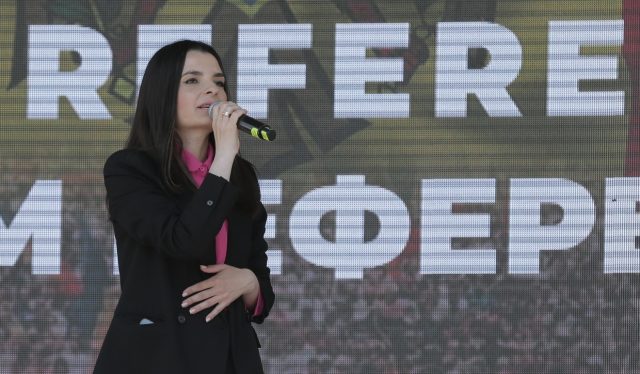
Yevgenia Gutsul of Moldova’s opposition Sor Party, elected head of the autonomous Gagauzia region, at a rally in Comrat, Autonomous Territory of Gagauzia, Moldova. © Sputnik / Rodion Proca
By George Trenin | RT | June 12, 2023
In Moldova, a conflict has broken out between the state authorities and the autonomous region of Gagauzia, where elections were held last month. Disturbed by the fact that two candidates seen as favorable to Moscow competed in the runoff, the Moldovan authorities initiated eight processes on suspicion of illegal financing of the candidates and investigated the activities of the Gagauz Election Commission. Allegations of election violations and threats that the election results would not be recognized by Moldova have caused the authorities of the autonomous region to retaliate. At the end of May, Gagauz politicians delivered an ultimatum to the central authorities and some even expressed readiness to hold an independence referendum.
What caused the conflict between Moldova’s central and regional authorities? And can Ukraine’s neighbor, Gagauzia, really break away from Moldova?
Who are the Gagauz people and what is Gagauzia?
The Gagauz are a relatively small ethnic group (numbering about 250,000 people), most of whom live in Moldova. Historians don’t have a single opinion concerning their origin, but what is known for sure is that the Gagauz people came to their current lands from the Balkans, fleeing from the many wars that shook the peninsula in the 19th century. The Gagauz are Orthodox Christians but their language belongs to the Turkic family. Ethnically, the Gagauz are closer to Bulgarians than to Moldovans and Romanians who make up most of Moldova’s population.
This difference spurred the Gagauz people – who never had an independent republic or autonomous region, even at the time of the Soviet Union – to establish their own state. When Soviet Moldova embarked on a course towards independence and unification with Romania in 1989, the Gagauz people declared their autonomy.
In 1990, together with the better-known Transnistria, the Gagauz did not accept Moldova’s pro-Western and pro-Romanian course. Plans to unite Moldova and Romania sparked a conflict, and the two regions decided to break off and become independent.
While Transnistria engaged in a prolonged armed conflict to defend its independence (and consequently became an unrecognized state), Gagauzia, following a five-year-long political crisis, agreed to be an autonomous region within Moldova. Russia and Turkey helped in this process and acted as intermediaries.
However, such diplomacy and compliance eventually turned against Gagauzia. Some 30 years after the agreements with Moldova were signed, the autonomous region’s authorities became alarmed that Chisinau no longer wished to comply with the pact and intended to terminate it.
Autonomy under siege
“We see that Gagauzia’s authority is being consistently weakened and can no longer just sit and watch this happening,” said the Chairman of the Gagauz Parliament Dmitry Konstantinov on May 24. At the same time, he requested legal confirmation of the region’s autonomous status from Moldova.
The situation was sparked by the harsh reaction of the Moldovan authorities to the elections in Gagauzia, which took place in May. The two top candidates who competed in the runoff both criticized Chisinau’s current political course and proposed strengthening ties with Russia.
The first candidate was Grigory Uzun – a member of the Party of Socialists of the Republic of Moldova (PSRM), who was backed by the party’s leader, Moldova’s ex-president Igor Dodon. Uzun said, “Gagauzia has always gravitated towards expanding ties with its eastern neighbors, but the current Moldovan authorities aim exclusively at partnering with the West, without other options. But this is the wrong approach.” In a pre-election interview, Uzun also added that Moldova and Russia have “a common history, religion, and culture” and the two countries “simply must be friends.”
In the runoff, Uzun’s opponent, 34-year-old Evghenia Gutul, outpolled him by 4% of the vote and won the election. The elected leader was also quite clear about her position regarding Russia. She plainly stated that her party, Sor, is a “pro-Russian party,” promised to open a representative office of the Gagauz Autonomy in Moscow, and to unblock exports of agricultural products to Russia.
For Moldova’s current leaders who actively support a pro-Romanian and pro-Western course, such views held by the head of one of its regions are absolutely unacceptable. Moldova didn’t hesitate to make this known during the election campaign.
On the eve of the elections for the post of bashkan (governor of Gagauz, the highest political position in the region), law enforcement agencies repeatedly raided the offices of the candidates and members of the Sor opposition party. After Gutul’s victory was announced, members of the National Anti-Corruption Center (NAC) raided the building of the Central Election Commission (CEC), located in the capital Comrat. According to reports, during the searches on May 16 the NAC looked for materials confirming the “bribery of voters.”
Immediately after the elections in Gagauzia, Moldovan Prime Minister Dorin Recean said they should not be recognized as legitimate. Moreover, deputies from the ruling Party of Action and Solidarity (PAS) said the elected Bashkan Evghenia Gutul would not become a member of the Moldovan government since they didn’t need her there.
A couple of days later, the Moldovan presidential administration nevertheless stated that President Maia Sandu would sign a decree making the elected bashkan of Gagauzia part of the Moldovan government in compliance with all legal procedures. However, this did not lessen the negativity sparked by the previous statements and actions of the Moldovan authorities.
A nationwide issue
The conflict escalated further. On May 21, representatives of the Sor party and local activists held several rallies in Comrat in defense of the election results. They demanded that authorities stop pressuring the opposition, the media, and all those who criticize and disagree with the central party and President Maia Sandu, and called for the preservation of Moldova’s neutrality and the cessation of its process of withdrawal from the CIS. On the same day, the party’s leader Ilan Shor announced rallies in three cities – Balti, Comrat, and Orhei – where a “referendum on the country’s external vector” would be proposed.
The deep involvement of the Sor party in the regional issue isn’t just tied to the fact that its candidate won the election in Gagauzia. It also has a lot to do with the unprecedented pressure that the Sor party has been dealing with lately.
Just four days before the elections, the court started proceedings on verifying the constitutionality of the Sor party. The decision of the Constitutional Court is supposed to seal the fate of the opposition party and determine whether it should be shut down for the first time in the country’s 30-year history.
At first, the court said it would hear the case on May 17. But since then, the verification has been postponed several times. Eventually, the judges announced that they were going to postpone the hearing until June 12.
In fact, the Moldovan government appealed to the court to consider the constitutionality of the Sor party last year, but the legal proceedings began only a few days before the runoff election. According to the opposition leaders, this was because the Sor party supported and led the protests against rising food and fuel prices. The opposition criticized the ruling coalition for not wanting to negotiate more favorable prices for raw materials with Russia.
However, despite increasing pressure on the opposition in Gagauzia and Moldova, the ruling Party of Action and Solidarity didn’t put forward any candidate of its own to run for the post of governor in Gagauzia.
“Gagauzia is a region that traditionally supports strong ties with Russia and is largely indifferent to the European integration course declared by Chisinau. So it is obvious that the candidate from the Party of Action and Solidarity would have received the minimum number of votes, at best 100 or 200,” Sergei Manastyrli, head of Chisinau’s Balkan Center for Analysis, Research and Forecasting, told RBC.
The European Union is also attempting to exert pressure on Moldovan parties that favor practical relations with Russia. Recently, the EU began forming a “blacklist” of Moldovan oppositionists and oligarchs. Five Moldovan citizens are about to be sanctioned and their assets will be frozen. All of them are accused of supporting the Russian Federation. The list is topped by the chairman of the Sor party Ilan Shor, its deputy chairman Marina Tauber, and the former leader of the Democratic Party of Moldova, oligarch Vladimir Plahotniuc.
The ‘fifth column’
Pro-Russian sentiments in Gagauzia and Moldova in general are largely driven by economic factors – and it’s not just a matter of discounted energy resource prices, which Moscow traditionally offers to friendly states.
Russia has always been the main market for the autonomous region’s exports, mainly for products of the wine industry. While there are restrictions in place on the import of products from Moldova, products from Gagauzia have easier access to the Russian market. Moldova’s ruling party, however, opposes any joint projects with Russia and tries to limit contacts between the autonomous region and Russia. Apparently, Chisinau has totally different views about Gagauzia’s pro-Moscow sympathies.
In light of the recent scandals, the head of the Gagauz Community of the Republic of Moldova, Nikolai Terzi, also had a say in the conflict. He has accused Moldovan President Maia Sandu of considering all Gagauz residents a “fifth column.”
“I attempted to make a number of proposals on bringing the central government and the Gagauzia ATU closer together to work on the development and strengthening of the state of Moldova, and on finding ways to strengthen the central government’s positions in the region. But I was interrupted by the president, who said that Gagauzia is someone’s ‘fifth column.’ In response to my question whether this is true for the whole of Gagauzia, I received an affirmative answer,” said Terzi.
The head of the People’s Assembly of Gagauzia, Dmitry Konstantinov, said he once asked President Maia Sandu why she was in no hurry to visit Gagauzia. According to Konstantinov, her answer was, “We know that you are waiting for the Russians to come.”
Former leader of Gagauzia Mihail Formuzal is skeptical about Evghenia Gutul’s ability to exert considerable influence on the current situation, due to limited authority.
“Even though this position makes her a part of the Moldovan government, she will be a purely decorative element there. She can speak and object, but she has only one vote, while there are 21 people in the government,” he notes. Formuzal adds that “Gagauzia has no real autonomy,” since “Chisinau can control any ministry.” Gagauzia can only speak out about problems within its authority.
He also mentioned that Chisinau could threaten the authorities in Comrat by cutting the funding for road construction.
“Chisinau uses such methods regardless of the government in power. This also happened when I was the bashkan. Some prime ministers did not provide Comrat with money for road construction at all,” Formuzal said.
So far, instead of economic measures, Moldovan authorities prefer to deal with the mounting dissatisfaction in Gagauzia by funding numerous pro-Western NGOs and mass media. According to Formuzal, unprecedented amounts of money are being allocated for these purposes.
“These media resources receive millions of lei in funding. Chisinau is throwing crazy money at this! They harshly criticize the pro-Russian views held by the majority of the Gagauz people, propose joining the European Union and push forward European values. They are very goal-oriented and systematic in their work, which is carried out in both the Russian and Gagauz languages. The staff is selected from among the locals. Generally, they are very successful. I predict that in another eight to ten years of such intensive work, we may have a pro-Western bashkan,” he says.
Despite this, he believes that, presently, the people of Gagauzia are not interested in the ruling party’s pro-European agenda since the standard of living is on the decline.
“Gagauz residents remember how a cubic meter of gas used to cost six lei when the leaders in Chisinau could find a way to get along with Russia. But now we have to pay 30 lei per cubic meter. In such circumstances, how can you explain to people the benefits of liberal democratic reforms? Will they improve your quality of life? Absolutely not!” says Formuzal. He also notes that “people do not see anything positive coming from Chisinau and so treat it with extreme negativity.”
What’s next?
On May 27, a large congress of Gagauz public representatives was held in Comrat. It was attended by local parliamentary deputies of the current and previous convocations, mayors, local councilors, public figures, and the head of the autonomous region.
The congress accused the central authorities, headed by President Maia Sandu, of escalating the situation, violating the rights of Gagauz residents, provoking conflicts, and creating a split in society.
Even the current governor of Gagauzia, Irina Vlah, who is often accused of excessive sympathy towards the central authorities, spoke out in a rather tough manner:
“For the first time in all the years of Gagauzia’s existence, the central government is consistently escalating the situation, provoking conflicts, and setting the Moldovan people against the residents of the [Gagauz] autonomy. The PAS party and President Sandu, set on developing her cult of personality, have split our Moldovan society with their policy. The desire to limit the authority of the autonomous region will lead to an escalated conflict between the central and regional authorities. Starting a fire is easy, putting it out is a lot harder.”
Following the congress, a resolution was adopted that outlined precise requirements for the central authorities. The elected representatives of the Gagauz people demanded several things from Moldova: to give the Law on the Special Legal Status of Gagauzia constitutional status; to align Gagauzia’s autonomous status with the legislation of the Republic of Moldova; to stop illegally blocking the region’s right to exercise authority, as per the Law on the Special Legal Status of Gagauzia; and to stop revoking Gagauz laws in Moldovan courts.
Moreover, the congress wanted Moldova to restore the customs service, the tax inspectorate and other abolished regional structures, to reinstate the prosecutor of Gagauzia as a member of the Supreme Council of Prosecutors, and provide Gagauzia with a quota in the parliament – all within three months.
The most radical demand was to ban the activities of political parties that propose the cessation of Moldova’s status as an independent state. This is a clear hint at the ruling party and President Maia Sandu, who have repeatedly supported the idea of forming a single state out of Moldova and Romania.
The resolution ends with a warning: “We declare that if the central authorities of the Republic of Moldova continue to ignore the legitimate requirement of respecting the competency and authority of Gagauzia and fail to ensure the political and legal status of the Autonomy in the Constitution, the central authorities of the Republic of Moldova will be held fully responsible.”
The resolution did not mention the specific measures that the Gagauz authorities would take, but speaking at the congress, Deputy Nicolai Dudoglo outlined the possible outcome of this conflict:
“Now that all the politicians of Gagauzia are united, Chisinau cannot use them [in its interests]. If Chisinau continues its rhetoric and does not begin a dialogue with Comrat, we should hold a referendum on the independence of Gagauzia. It’s time for a man-to-man conversation.”
Ukraine neighbor disputes pro-Russian election result – media
Moldova’s autonomous region of Gagauzia has voted in a new governor
© Telegram/gagauzinfo
RT | May 16, 2023
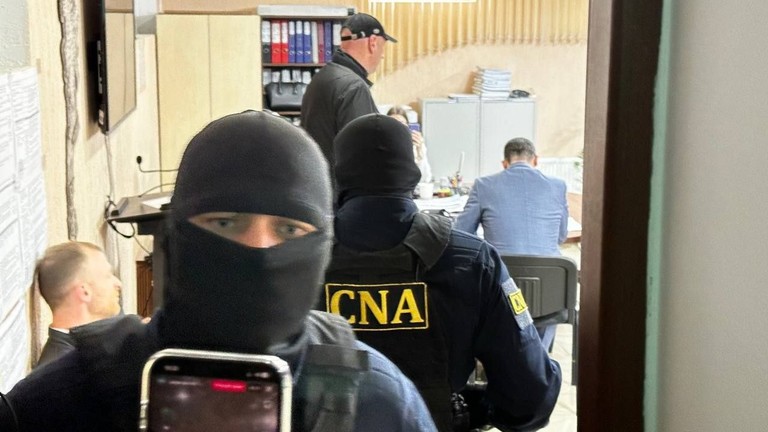
Moldovan police raided the central election commission of Gagauzia on Tuesday, alleging irregularities after a politician championing better relations with Russia won the gubernatorial vote.
Gagauzia, an autonomous region in southern Moldova, elects its own bashkan – governor – and Sunday’s run-off saw the victory of Yevgenia Gutsul, with 52.36% of the vote. Gutsul represents the Shor party, which the government in Chisinau has tried to ban.
The operation at the election office in Comrat was “part of a criminal investigation into bribing of voters,” a spokesperson for the National Anti-Corruption Center (NAC) in Chisinau said in a statement. The NAC had executed search warrants for eight individuals on Saturday, just before the election, alleging that Shor had offered bribes of 15,000 lei ($3,200) each to some 30 voters. No arrests were made.
On Tuesday, NAC officials and police reportedly sought to confiscate the ballots from Sunday’s election. The Gagauzian election commission told them the ballots had already been forwarded to the court in Comrat, in charge of verifying the results. According to local media outlets, commissioners were told to report for interrogation on May 18.
“Residents of Gagauzia made their choice, and our opponent conceded. But Chisinau doesn’t want to recognize a Shor victory,” said Aleksandr Panov, a spokesman for Gutsul’s campaign. “These are orders from the center, to remove all documents so the elections can be annulled.”
Prime Minister Dorin Recean said on Monday evening that the Gagauz elections ought to be annulled due to “many violations.” The Moldovan Central Election Commission has issued fines to all eight candidates for bashkan, claiming they had violated campaign finance laws. However, the Gagauz CEC responded that the election was conducted according to the autonomy’s own laws, without issues.
Moldova is a former Soviet republic, with a population that is mostly ethnic Romanian. The Russian-speaking Gagauz are Orthodox Christians of Turkic origin, who live in four enclaves in the south of the country. Shor advocates better relations with Russia, while Recean and Moldovan President Maia Sandu want membership in the EU and NATO.
The American Aggression Enablement Act and the US’ Eurasian Thrust (II)
By Andrew KORYBKO | Oriental Review | August 1, 2014
Part II: Destabilization by Design
The second thrust of the US’ aggression in Eurasia is the purposeful destabilization of Russia’s interests in the Near Abroad. Specifically, the AAEA’s provisions would lead to an endangered security situation for Belarus, mayhem in Moldova, and an aggravation of the Nagorno-Karabakh situation between Azerbaijan and Armenia. All of these work against Russian interests and place Moscow on the strategic defensive.
Bunkering in Belarus:
One of the US’ designs is to bunker Belarus in and surround it with offensive NATO military capabilities. American aggression against Belarus is old news, going back most sensationally to the mid-2000s when Condoleeza Rice declared the country to be the “last dictatorship in Europe”, thereby putting its head on the chopping block for regime change. Although unsuccessful in overthrowing the government via a Color Revolution, Washington still pumps millions of dollars into the country to support “democracy” (likely in the same vein and with the same intended result as it did in Ukraine with its $5 billion investment). If the AAEA’s goal of placing permanent NATO bases in Poland and the Baltics comes to fruition, as well as the goal of Shadow NATO integration of Ukraine, Belarus could very well find itself almost surrounded by hostile forces pressuring it to accede to their demands. Making the situation even more high-risk, Belarus and Russia have a mutual security agreement via the CSTO, meaning that any act of force against Belarus will be treated as an act against Russia itself. This remarkably raises the stakes of NATO’s power play and increases the chance of direct conflict with Russia.
Moldovan Meltdown:

Flying largely under the radar of most analysts, Moldova is prime for a full-scale meltdown as it is rushed into Western institutions. First and foremost, the country already signed the EU Association Agreement in late June and, for the first time in its history, will be sending a representative to the upcoming NATO summit in September. Although nominal neutrality is a hallmark of the country’s constitution, this does not mean that it cannot enter Shadow NATO via major non-NATO ally designation or potentially enact a ‘referendum’ to change this statute.
What is critical here is that there are two ticking time bombs in Moldova that will likely go off as Western ‘integration’ proceeds at record speed; Transnistria and the lesser-known Gagauzia. The former is the renowned frozen conflict from the 1990s where Russia still has over a thousand troops stationed. It voted to join the Russian Federation in 2006 but to no avail. In May, Deputy PM Dmitry Rogozin was harassed by Moldovan security after he visited Transnistria to collect signatures in favor of reunification with Russia. His plane was forced to land in Chisinau after Ukrainian and Moldovan authorities restricted their airspace to him, creating a diplomatic incident which would be unthinkable to do to a Western politician, let alone of such stature. Moreover, the territory is currently experiencing a blockade by both Moldova and Ukraine. Transnistria does not accept the authority of Chisinau and sees no attraction to the EU, instead preferring the Russian-led Eurasian Union. These radically divergent paths, coupled with NATO’s ambitions and Russia’s existing military position, place Moldova on the brink of destabilization.
Not only that, but Gagauzia is also a simmering issue waiting to boil over. Ari Rusila conducted research on this relatively unknown entity back in April and found that, just like Transnistria, it too is moving closer to Russia. Just as fast as Moldova is moving westward, Gagauzia appears to be moving eastward, and it is asserting its self-determination with every step of the way. He writes that it held a February 2014 referendum to join the Customs Union and that it also voted to place independence on the table if Moldova loses or surrenders its sovereignty. These two options could be taken to mean joining the EU or merging with Romania, and if Gagauzia officially moves away from the centralized Moldovan state, it could lead to military reprisals by Chisinau. All that it takes to set off the two Transnistrian and Gagauzian time bombs is to shove Moldova into the EU and NATO, both of which are already being fast-tracked by the West.
Asphyxiating Armenia:
Lost in the mix of the more headline-grabbing aspects of the AAEA, the legislation also mandates that the US increase its military cooperation with Azerbaijan and provide the same amount of security assistance to it, in league with NATO, as it would to the major non-NATO allies and Balkan states. This is an exceptionally important detail that mustn’t be overlooked by any observer. Armenia, Azerbaijan’s bitter rival, made the fateful decision to turn its back on the EU and move towards the Eurasian Union, much to the ire of Brussels. Hillary Clinton, speaking on behalf of the State Department in late-2012, made known her country’s intention to “figure out effective ways to slow down or prevent” Eurasian integration, signaling that Armenia, after having made its decision to move in this direction, will now be targeted just like Ukraine was.
 Azerbaijan and Armenia are locked in the Nagorno-Karabakh conflict which, although frozen, threatens to heat up at any moment. By throwing its hat squarely behind Azerbaijan, the US is showing that it is not a neutral party to the conflict and cannot be trusted within the OSCE Minsk Group. The move for a more clearly defined and open US-Azeri military alliance has been a long time in coming, however. The US has been using Azerbaijan as a geostrategic energy outpost between Russia and Iran since the 1990s, and the creation of the BTC pipeline only increased its significance in the eyes of Western decision makers. Baku is also close friends with Israel, supplying about 40% of its oil, and it has been rumored to host Israeli drone bases for use against Iran. The Jerusalem Post also reports that Israel sells “hundreds of millions of dollars worth of arms” to the country, further cementing their military-strategic relationship.
Armenia, on the other hand, has a mutual security guarantee with Russia through the CSTO, just like Belarus does. It is a traditional Russia ally and even hosts the 102nd military base outside the capital of Yerevan. Armenia has been blockaded by both Turkey and Azerbaijan since the early 1990s, and the vast majority of its foreign trade must move through Georgia before going to Russia or to other countries via port. With Georgia trying to join the EU, the scenario could arise where costly tariffs are enacted against outside (Armenian) goods entering the Union, even if they are only transiting through, further strangling the already weakened Armenian economy and promoting social unrest. To put things into perspective, Azerbaijan’s defense budget is larger than the entire state budget of Armenia, and Azeri President Aliyev has a track record of threatening military force to retake Nagorno Karabkah.
In sum, any renewed outbreak of war between Azerbaijan (now close to becoming a US military ally) and Armenia (protected under Russia’s defense umbrella) would be a de-facto US-Russian proxy war that could quickly draw in both powers. What’s more, Azerbaijan closely cooperates with Turkey, with whom it has close ethnic, cultural, and linguistic ties, and Ankara’s involvement in any future conflict could quickly draw in the entire NATO alliance. By cozying up so closely with Azerbaijan and working to asphyxiate Armenia, the US is pushing itself closer to a direct conflict with Russia.
Concluding Thoughts
It has been definitively established that the US’ so-called ‘Russian Aggression Prevention Act’ is nothing more than Orwellian Doublespeak for an American Aggression Enablement Act. Aside from the more well-known aspects of the proposal, the lesser-known ones are just as significant in throwing America and its NATO clique closer to war with Russia. By rabidly expanding NATO at all costs via indirect means, the US is plainly showing that it does not care whatsoever for Russia’s security concerns. In fact, it wants to push the envelope and expand NATO in as many simultaneous directions as it can. The swallowing of the Balkans, the staging ground of Russia’s strategic South Stream project, and the movement to incorporate Sweden and Finland into NATO are Washington’s way of imposing full dominance over the continent’s last nominally neutral areas, a move which will surely lead to a determined Russian push back, especially as regards the defense of Serbia and NATO expansion into Finland.
Furthermore, the AAEA aims to threaten Russian interests in Belarus, Moldova, and Armenia, three countries where Moscow has deployed troops and two of which are mutual security partners. This is a calculated attempt at weakening Russia’s position in the Near Abroad and continuing to place it on the strategic defense. All together, everything within the American Aggression Enablement Act clearly shows that the US has strapped up its boots and is eager to go on the offensive against Russia. The ‘Reset’ was nothing more than an underhanded way to buy the necessary time to organize this campaign against all of Russia’s interests on its western flank, and it appears to be in full swing. If it passes into law, the bill will be seen in hindsight as the one action which single-handedly ushered in the ‘New Cold War’ and could quite possibly revert Europe back to the powder keg that it once was 100 years ago.
Featured Video

Rewriting the risk? Inside the government’s vaccine safety messaging
or go to
Aletho News Archives – Video-Images
Book Review
“Davos Can Really Replace the UN”
Inside the book that maps the architecture behind global governance — from the Epstein files to the Pact for the Future
Lies are Unbekoming | April 1, 2026
On June 13, 2019, the United Nations and the World Economic Forum signed a partnership deal to “accelerate the implementation of the 2030 Agenda for Sustainable Development.” That same evening, WEF president Börge Brende — Norway’s former Foreign Minister — had dinner with Jeffrey Epstein at Epstein’s Manhattan townhouse. The Epstein files, released January 2026, contain an exchange between the two from the previous year. Epstein to Brende: “Davos can really replace the UN. C21, cyber, crypto . genetics… intl coordination.” Brende back to Epstein: “Exactly — we need a new global architecture. World Economic Forum (Davos) is uniquely positioned — public private.”
The next day, the UN General Assembly adopted the framework for restructuring global governance.
That sequence — the partnership signing, the Epstein dinner, the candid admission about replacing the UN with a public-private architecture, and then the formal adoption — opens Jacob Nordangård’s The Digital World Brain. Pages two and three. Footnoted to the UN resolution number, the Epstein files, and the General Assembly record.
I keep coming back to it because it captures what this book does that almost nothing else in the independent research space manages. I’ve followed Jacob’s work for years now and interviewed him about his research. Each book peels back another layer of the same institutional architecture, and each time I think he’s reached the limit of what can be documented, the next one goes further. Nordangård doesn’t speculate. He doesn’t editorialize much. He lays institutional actions next to each other in chronological order and lets the pattern announce itself. … continue
Blog Roll
 Aletho News
- How I fell foul of the BBC thought police
- The End of NATO
- 37 days of war on Iran cost US staggering $42bln, tracker shows
- Baghdad tells Asian refiners, traders to begin loading Iraqi crude amid Iranian exemption
- Under fire, Moscow and Tehran close ranks
- Iran, US receive Pakistan-mediated plan for ceasefire then final deal
- Iran submits demands for end to war as mediators scramble ahead of Trump deadline
- Iran Threatens Retaliatory Strike on Stargate AI Project in UAE
- US sent ‘a lot’ of arms to Iranian protesters – Trump
- Barak Ravid Launders Deception To Allow Trump To Back Off Of His Power Plant Threat – Again
- If Americans Knew
- U.N. experts demand Israel release prominent Gaza doctor after reports of ‘severe torture’
- Israel’s Latest Genocide Is Against the Shias of Lebanon. Why Is the World Silent?
- How Eliot Cohen’s influence over U.S. war-making paved the way for Trump’s war crimes in Iran
- Israelis don’t pay for the weapons we ‘sell’ to them — US taxpayers do
- While Distancing from AIPAC, Most 2028 Democratic Hopefuls Are Still Embracing Israel
- A brief history of the Israeli nuclear program, the open secret at the heart of the Iran war
- Israeli Settlers Killed a Palestinian Farmer on His Own Land, in Front of His Father. Yes, Again
- The US-Israeli War on Science is an Assault on our Future
- 100+ International Law Experts Say US Strikes on Iran Violate UN Charter, Could Be War Crimes
- ‘Vile, Horrifying, Evil’: Trump Threatens to Bomb Nation of 90 Million People ‘Back to the Stone Ages’
- No Tricks Zone
- An Inconvenient Tree: Uncovered In Alps… Europe Much Warmer Than Today 6000 Years Ago
- New Study Reports A 60% Slowdown In Greenland’s Ice Loss Rate In The Last Decade
- Low Intensity Tornado Wrecks Major Solar Farm, Creating A Potential Toxic Dump
- New Study Finds Warming Saves Lives…Cold Temperatures 12 Times More Deadly Than Excess Heat
- German Science Blog Accuses PIK Climate Institute Of Hallucinating Climate Tipping Points
- Devastating Assessment Of Comirnaty Vaccine By Former Senior Pfizer Europe Toxicologist
- New Study: CO2 Is ‘Effectively Negligible’ As An Explanatory Climate Change Factor Since 2000
- Former Pfizer Toxicologist Dr. Helmut Sterz Tells Bundestag Hearing Pfizer Vaccine Should Have Never Been Approved
- Energy Expert: Germany’s Nuclear Phaseout Was A “500 Billion Euro Mistake”
- New Research: South Australia’s Mid-Holocene Sea Surface Temperatures Were 4°C Warmer Than Today
 Aletho News