Gaza: Over one million people face relocation to overcrowded zone
Palestinian Information Center – September 2, 2025
GAZA – Gaza’s civil defense service has warned of Israeli efforts to evacuate tens of thousands of citizens from Gaza City and northern areas and force them to go to the central and southern parts of the territory.
Spokesman for the civil defense Mahmoud Basal told a news conference on Tuesday that the Israeli plan to forcibly relocate about one million people from their homes in Gaza City and northern Gaza would lead to a major catastrophe.
Basal said that the Israeli occupation army had already destroyed over 85 percent of the homes and infrastructure in Gaza City’s ash-Shuja’iya and al-Tuffah neighborhoods, and about 70 percent of the az-Zeitoun, al-Sabra, Jabalia an-Nazla and Jabalia al-Balad areas.
Basal pointed out that several reports issued by international and UN organization confirm that the so-called humanitarian zone, where the Israeli army plans to relocate the population, comprises no more than 12 percent of the total area of the Gaza Strip.
“This would mean forcing over two million Palestinians to live in a densely packed area lacking the minimum living means,” he said.
UN Assembly Moves to Geneva After U.S. Bars Palestinian Delegation
IMEMC | September 2, 2025
The United Nations General Assembly will convene its September session in Geneva instead of New York, following the United States’ refusal to grant entry visas to Palestinian President Mahmoud Abbas and dozens of senior officials.
The relocation marks a rare institutional challenge to the host nation and reflects mounting global frustration over Washington’s obstruction of Palestinian participation amid Israel’s ongoing war on Gaza.
The U.S. State Department justified the visa denial on grounds of “national security,” accusing the Palestinian Authority and the Palestine Liberation Organization of “undermining peace efforts” through legal appeals to the International Criminal Court and the International Court of Justice.
These appeals include formal charges of genocide and apartheid against Israel, claims the U.S. argues breach diplomatic norms and politicize international legal forums.
The decision affects approximately 80 Palestinian officials, although the Palestinian Mission to the UN in New York will continue operating under a limited waiver.
The move has drawn sharp criticism from legal experts and international diplomats, who say it violates the 1947 UN Headquarters Agreement, which obligates the host country to facilitate access for all accredited delegations.
In 1988, the UN relocated its session to Geneva after the U.S. denied a visa to Yasser Arafat, then head of the PLO. The current relocation is similarly aimed at ensuring full Palestinian participation, particularly in a scheduled September 22 segment dedicated to Palestinian rights.
European leaders have condemned the U.S. decision. Spain’s Prime Minister described the move as “unjust,” while France reaffirmed that UN platforms must remain accessible to all recognized delegations.
The Geneva session also coincides with growing momentum among several countries, including France, the United Kingdom, and Canada, to formally recognize Palestinian statehood, adding diplomatic weight to the proceedings.
Palestinian officials have denounced the U.S. action as a deliberate attempt to silence their voice at a time when Gaza faces mass displacement, starvation, and what UN experts have described as genocidal violence.
President Abbas is expected to address the Assembly in Geneva, where he will call for international protection, recognition of Palestinian sovereignty, and accountability for war crimes.
The Geneva session is expected to amplify calls for action under the “Uniting for Peace” resolution, which empowers the General Assembly to recommend collective measures when the Security Council is unable to act due to political obstruction or lack of consensus.
Advocacy groups are urging the UN to consider deploying international protection forces to Gaza and to suspend Israel’s privileges within the UN system until humanitarian access is restored.
Beyond its logistical implications, the relocation signals a deeper shift in global diplomacy, where procedural justice and international law are being reasserted against political obstruction.
The Geneva gathering is expected to draw high-level delegations, legal experts, and civil society leaders, all converging to confront the worsening crisis and to chart a path forward for Palestinian self-determination.
Cracks in ranks: No victory, no exit in ‘Israel’s Gaza predicament
Al Mayadeen | September 2, 2025
“Israel’s” military is mobilizing 60,000 additional reservists, adding to the 70,000 already under call-up orders, in preparation for a renewed ground incursion into Gaza City as part of the ongoing “Iron Swords” campaign.
The last major operation to occupy Gaza City came at a high cost. Now, according to Israeli military correspondent Avi Ashkenazi in a report published by Maariv, commanders are warning that the next stage could prove even more dangerous.
The dense urban terrain, vast tunnel networks, and high-rise buildings of Gaza City remain formidable battlegrounds. The report states that Hamas has had months to bolster its defenses, planting improvised explosive devices (IEDs), booby-trapping buildings and tunnels, and deploying snipers and anti-tank units across likely combat zones.
Two-stage strategy, high-stakes caution
According to Maariv, the Israeli military plans to execute the campaign in two phases:
- Encircle Gaza City to restrict movement and initiate the evacuation of remaining civilians
- Deploy ground divisions to enter and attempt to control key urban sectors
This operation is expected to last months, not weeks.
Mounting friction between the military and the government
The report by Avi Ashkenazi highlights growing tensions between military leaders and the government of Prime Minister Benjamin Netanyahu. Senior Israeli officers reportedly urge continued negotiations, warning against launching another high-risk incursion without exhausting all diplomatic options.
Meanwhile, on the ground, reservists and active-duty soldiers have begun questioning the broader strategy. “What comes after Gaza City?” one soldier reportedly asked, reflecting the skepticism felt across the ranks.
Veterans of recent operations point to Rafah, Khan Younis, Jabalia, Beit Hanoun, and al-Zaytoun, all of which were invaded multiple times but failed to produce a lasting outcome.
An elusive ‘image of victory’
Even if the military succeeds in re-entering Gaza City, doubts persist over whether such an operation will alter the broader course of the war. As Ashkenazi notes, the symbolism of “battlefield achievements” has become increasingly hollow.
In December 2023, a Hanukkah menorah was lit in Gaza’s Palestine Square, a moment widely circulated in the occupation’s media as a symbol of control. Just days later, the Israeli occupation forces showcased their bombing of al-Shifa Hospital, parading it as another so-called milestone.
Yet, as noted by military correspondent Avi Ashkenazi in Maariv, such displays failed to produce the long-promised image of victory. The Israeli occupation continues, the Palestinian resistance endures, and international criticism mounts.
Now, with tens of thousands of reservists once again deployed and Gaza facing another wave of devastation, Ashkenazi and others raise the critical question: Where will “Israel” find its image of victory, and how many lives will it cost this time?
Israel blows up 80 booby-trapped robots in residential neighborhoods in Gaza City
Palestinian Information Center – August 31, 2025
GAZA – The Government Media Office (GMO) said that the Israeli occupation army detonated more than 80 booby-trapped robots in residential neighborhoods in Gaza City over the past three weeks, confirming that more than one million Palestinians in Gaza and the north refuse to be displaced to the south.
It added that the Israeli occupation army continues to commit systematic and grave crimes against the Palestinian people in the Gaza Strip, in blatant violation of international law and international humanitarian law.
The statement pointed out that these crimes include the targeting of unarmed civilians, including children and women, and the forced displacement of residents in a crime of mass forced transfer that meets all elements of war crimes.
The GMO stressed that detonating robots is part of a criminal pattern that reflects a scorched-earth policy during Israel’s ground operations against residents and civilian neighborhoods, leading to large-scale destruction of homes and property and exposing civilians to grave dangers.
The occupation army also continues to commit the crime of starvation against more than 2.4 million people in the Gaza Strip, including over one million in Gaza City and the north, by deliberately preventing the entry of food and water, in clear violation of Article (54) of Additional Protocol I to the Geneva Conventions.
The statement noted that this starvation policy has already caused the deaths of more than 332 people, including 124 children, stressing that this is accompanied by systematic destruction of what remains of the healthcare system, and deliberate targeting of essential elements of civilian life, with the aim of eliminating any possibility of normal life continuing.
The GMO confirmed that more than one million Palestinians remain in Gaza City, refusing to succumb to forced displacement and ethnic cleansing, affirming their legendary steadfastness in the face of the Israeli war machine.
The statement saluted the resilience of the heroic Palestinian people, strongly condemned the Israeli occupation army’s ongoing crimes against civilians, and held Israel and the US administration fully responsible for the continuation of this genocide.
The GMO called on the international community, with all its institutions and bodies, to take a serious and effective stance to immediately stop these crimes, halt the ongoing genocide, protect civilians, and hold Israeli leaders accountable for their crimes before the competent international courts.
With traps and tactical ingenuity, Al-Qassam fighters outmaneuver invaders in Gaza
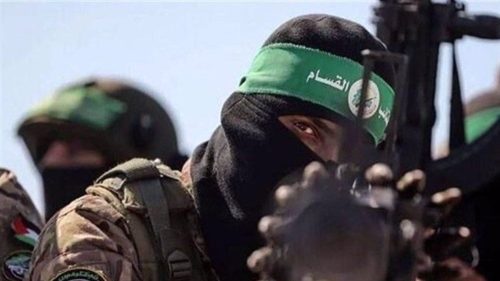
By Ivan Kesic | Press TV | August 30, 2025
In the smoke-filled streets of Gaza, a powerful message is being written these days in the language of resistance and fire by the Palestinian armed resistance groups.
As the Israeli military machine grinds forward with its brutal offensive, it is being met not with submission but with a fierce and strategic defiance from the Palestinian resistance, led by the fighters of the Al-Qassam Brigades, the military wing of the Gaza-based Hamas resistance movement.
From the dense urban labyrinths of Gaza City to the southern approaches of Khan Younis, every inch of Palestinian land is being contested in a series of devastating engagements that have exposed the fragility of the Israeli occupation’s so-called invincibility.
The Israeli regime’s latest assault, codenamed Gideon’s Chariots II, has been met with a humiliating and painful reception. Yesterday, as many as three “security incidents” were officially acknowledged, implying heavy casualties and possibly the deadliest day for the invaders in more than a year.
In the Al-Zaytoun and Al-Sabra neighborhoods of Gaza City, resistance fighters have pushed to the city’s edges, refusing to wait behind barricades and instead taking the fight directly to the advancing invaders in intense, close-quarter combat.
At least four regime soldiers have been missing since Friday, most likely captured by the resistance fighters or eliminated by the occupation forces to prevent them from being captured.
Their advanced night vision capabilities allowed them to detect and ambush Israeli units, triggering fierce clashes that forced the occupation army into a panicked deployment of reinforcements.
The resistance has entrenched itself in formidable defensive positions, turning entire districts into deadly traps where every alleyway holds the threat of a well-planned ambush.
Nowhere is the resistance’s effectiveness more starkly illustrated than east of Hamad City, where a brilliantly executed Al-Qassam Brigades’ ambush targeted the Israeli Kfir Brigade.
In a sophisticated joint operation with the Al-Quds Brigades, resistance fighters struck an Israeli Eitan armored personnel carrier with a Kornet guided missile, scoring a direct hit that necessitated a desperate helicopter evacuation for the crew.
This is not an isolated event; it is part of a sustained campaign of sophisticated warfare.
Israeli Merkava tanks, the pride of their armored corps, have been repeatedly destroyed by Al-Yassin 105 shells and powerful landmines in Jabalia, turning these multi-million dollar vehicles into smoldering monuments to Palestinian ingenuity and resolve.
Faced with this steadfast resistance, the Israeli regime has revealed its true nature: a desperate and criminal enterprise lashing out with indiscriminate force.
Its warplanes strike the Nuseirat refugee camp, its artillery pounds civilian neighborhoods, and its leadership enacts the horrific Hannibal Directive, a policy so barbaric that it involves killing its own soldiers and settlers to avoid capture.
Abu Obeida’s remarks
As Al-Qassam Brigades’ spokesperson Abu Obeida stated on Friday, Netanyahu and his ministers have effectively “decided to cut the number of living captives by half,” knowingly endangering them through their reckless military escalation in a cynical gambit to avoid future prisoner exchanges.
The Palestinian resistance, in stark contrast, operates with a principled transparency and honor that shames its oppressors. Abu Obeida’s pledge to announce the name and provide proof for any captive killed by Israeli strikes stands as a powerful testament to their moral high ground.
“The enemy’s criminal plans to occupy Gaza will be disastrous for its political and military leadership. The enemy’s army will pay the price in the blood of its soldiers, and the chances of capturing new soldiers will only increase,” the Al-Qassam Brigades spokesperson said.
“Our fighters are on full alert, ready and in high spirits. They will present exceptional examples of heroism and bravery, and they will teach the invaders harsh lessons, with God’s help,” he added.
His warning that the invasion of Gaza City will be “disastrous” for Israel’s political and military leadership is not mere rhetoric; it is a promise backed by the extraordinary heroism and high morale of Al-Qassam fighters, who are prepared to deliver harsh lessons to the invaders.
They fight as the guardians of a people who have been left with no other option but to resist a genocidal occupation, and through their bravery, they are not just defending Gaza; they are exposing the world’s greatest military powers as paper tigers and writing a new chapter of dignity in the Palestinian liberation struggle
Deadly summer continues
The summer of 2025 has proven to be a season of profound humiliation and strategic failure for the Israeli regime. Despite unleashing the full, brutal force of its military machine in a series of operations with biblical pretensions like “Gideon’s Chariots,” the occupation forces have been met with an unyielding and devastating response from the Palestinian resistance.
Far from being crushed, Hamas has adeptly shifted to a sophisticated war of attrition, leveraging its intimate knowledge of the rough terrain and unparalleled ingenuity to turn Gaza into a graveyard for Israeli ambitions and advanced weaponry.
The regime’s much-hyped “Operation Gideon’s Chariots,” which ran from May to early August, was a catastrophic endeavor despite its claims of territorial gain.
While the regime forces boasted of controlling 75 percent of the Strip, this “victory” was revealed as hollow and illusory. The operation failed in its core objectives: Hamas’s governance and military capabilities remain potent, and the goal of freeing all hostages was abandoned.
More damningly, it came at a staggering cost, with former Israeli army Chief of Staff Moshe Yaalon estimating a shocking 15,000 Israeli soldiers killed or wounded by March 2025—a number that has only swelled throughout this deadly summer. This is not the sign of a victorious army but of one being bled dry in a quagmire of its own making.
In response to this aggression, Hamas launched its own “Stones of David” counteroffensive, a masterclass in asymmetric warfare.
This campaign has seen resistance fighters move with audacious skill, refusing to cede the initiative. Instead of waiting behind barricades, Al-Qassam Brigades fighters have pushed to the edges of Gaza City, engaging invading forces in close-quarter combat and springing devastating ambushes.
Their tactics are a testament to their strategic acumen: operating in small, agile cells, they have exploited the extensive tunnel network not as a hiding place, but as a dynamic web for staging attacks, storing weapons, and moving undetected beneath the feet of a disoriented enemy.
The results of this resistance have been tangibly catastrophic for the Israeli war machine.
In a stunning display of effectiveness, the Al-Quds Brigades alone announced the destruction of over 52 military vehicles in the eastern neighborhoods of Gaza City—including Shuja’iyya, al-Tuffah, and al-Zaytoun—using a combination of pre-planted Thaqib and Zelzal explosive devices and reverse-engineered bombs crafted from Israeli munitions.
These are not random acts of violence but the outcome of meticulous preparation and battlefield intelligence. The Al-Qassam Brigades have consistently targeted the enemy’s nervous system, striking command and control centers, as with the attack on a site on Mansoura Street using machine guns and Rajum rockets.
Rushing to repeat mistakes
The launch of “Operation Gideon’s Chariots II” by the Israeli regime, aimed at seizing Gaza City, is not seen as a sign of strength but an admission of the first operation’s failure.
It is a move of sheer desperation, one that has been met with widespread international condemnation and deep fear for the fate of the remaining captives.
The regime’s response—calling up 60,000 more reservists to throw into the meat grinder—speaks to a leadership devoid of strategy, relying solely on overwhelming and indiscriminate force.
Through their bravery and strategic genius, the Palestinian resistance has exposed the fundamental weakness at the core of the Israeli military project.
They have turned the regime’s multi-billion-dollar Merkava tanks into smoldering wrecks and its much-vaunted technological superiority into an irrelevant talking point.
Each ambush, each destroyed vehicle, and each fallen soldier is a testament to the failure of the occupation and the unstoppable will of a people fighting for their freedom.
The resistance does not just endure; it prevails, teaching the Israeli regime and the world a harsh lesson in the power of a just cause.
Mass displacement from Gaza City’s northeast begins as Israeli attacks intensify
MEMO | August 30, 2025
The mass displacement of Palestinians from northeastern Gaza City began on Friday evening as Israeli forces escalated attacks from the north and south, bombarding entire neighbourhoods, Anadolu reports.
A Palestinian security source told Anadolu that the situation in the city’s eastern neighbourhoods is deteriorating “at a rapidly accelerating pace” due to Israel’s intensifying offensive.
The source said the Israeli army has increased demolitions in southern and northeastern Gaza City, using explosive-laden robots alongside artillery shelling and airstrikes.
Anadolu’s correspondent reported “mass displacement” of residents from the city’s northeastern districts toward western Gaza City or farther south in the enclave.
He also reported additional shelling in Gaza City’s southern al-Sabra neighbourhood.
Israel declared a “dangerous combat zone” on Friday and launched one of its most intense bombardments since the war began, striking by air, land, and sea, while nearly 1 million Palestinians are still trapped inside.
The offensive is part of an Israeli plan approved earlier this month to gradually reoccupy Gaza, beginning with the enclave’s largest urban centre, which houses roughly half of the population.
The UN agency for Palestinian refugees (UNRWA) warned that the assault could force up to 1 million people to evacuate their homes again.
Israel has killed over 63,000 Palestinians in Gaza since October 2023. The military campaign has devastated the enclave, which is facing famine.
Last November, the International Criminal Court issued arrest warrants for Israeli Prime Minister Benjamin Netanyahu and his former Defence Minister Yoav Gallant for war crimes and crimes against humanity in Gaza.
Israel also faces a genocide case at the International Court of Justice for its war on the enclave.
Norway reprimands US Senator Lindsay Graham over $2T fund criticism
Al Mayadeen | August 29, 2025
The Norwegian Prime Minister’s office firmly rebuffed US Senator Lindsey Graham’s angry outburst over its sovereign wealth fund’s divestment from Caterpillar Inc., stating unequivocally that the government has no control over the fund’s independent investment decisions.
A spokesperson for the prime minister’s office stated that Premier Jonas Gahr Store sent a text message to Graham, which included information about the fund’s mandate and how its oversight is set up, and received confirmation that it was received.
Norway’s $2 trillion sovereign wealth fund, which held roughly $2.1 billion in Caterpillar shares as of June 30, announced this week that it had divested its holdings in the company due to “Israel’s” use of its bulldozers to destroy Palestinian property in Gaza and the occupied West Bank.
Earlier this week, in two social media posts on X, the Republican Senator lashed out at the $2 trillion sovereign wealth fund, which is the world’s largest, threatening tariffs and visa denials because of its recent divestments from the Texas-based firm.
In a two-part statement, Graham first promised that the fund’s “BS decision” would have consequences, then spoke specifically about implementing tariffs and possible visa denials, noting that the Trump administration had already placed a 15% tariff on imports from Norway while the two nations remain engaged in trade negotiations.
The reaction from the US lawmaker came at a delicate time for the fund and for the Norwegian government, as Norway is set to hold parliamentary elections on Sept. 8 and the fund has been under pressure to divest from Israeli companies contributing to the war in Gaza.
In addition to its divestment from the heavy machinery company, the Norwegian fund announced it excluded five Israeli banking institutions which are: Hapoalim, Bank Leumi, Mizrahi Tefahot Bank, First International Bank of Israel, and FIBI Holdings.
The decision followed recommendations from the fund’s ethics watchdog, the Council on Ethics, which concluded that there was an unacceptable risk of these institutions and Caterpillar contributing to serious rights violations in situations of war and conflict.
The genocide in Gaza is now destabilising European politics: Dutch FM resigns, shaking his government apart
By Ricardo Martins – New Eastern Outlook – August 29, 2025
The resignation of the Dutch foreign minister over the Gaza genocide exposes Europe’s moral paralysis and highlights the power of conscience against complicity in genocide.
A Crack in Europe’s Wall of Silence and Inaction
On Friday, something extraordinary happened in Europe — something almost unthinkable within the European Commission or across the Atlantic. Caspar Veldkamp, the Dutch Foreign Minister, resigned from office rather than continue serving in a government that refused to sanction Israel for war crimes in Gaza and the West Bank.
Within hours, his entire party — the New Social Contract (NSC), including Deputy Prime Minister Eddy van Hijum, the Interior and Education ministers, the Health minister, and several state secretaries — followed him out of the fragile coalition.
This was no symbolic gesture. Veldkamp is not an unknown backbencher; he is a seasoned diplomat, a former ambassador to Israel itself. Few Europeans know Israel more intimately. He witnessed the apartheid system from inside, and now the genocide in Gaza, all while the international community remains paralysed in action, but with some strong words of condemnation. Confronted with a cabinet unwilling to act, he chose conscience over complicity.
Explaining his decision, Veldkamp told reporters:
“I felt resistance in the cabinet against more measures as a result of what is happening in Gaza City and the occupied West Bank… I saw efforts to meet me halfway, but in the end the concessions were insufficient… I have too little confidence that in the coming weeks and months I could act responsibly if I am restricted from pursuing the policy I deem necessary.”
A sitting European foreign minister walked away, saying he could no longer act “responsibly” while famine raged in Gaza. That is a political earthquake.
Why It Matters
Veldkamp’s resignation matters for three reasons.
First, it exposes what many in power have sought to hide: Western governments know what Israel is doing. They know it bluntly violates international law. And yet, they succumb to pressure and choose paralysis, or even false neutrality. Veldkamp’s break makes that complicity explicit.
Second, his career makes him a devastating witness. He was no enemy of Israel; he was its ambassador, its partner, its friend. If even he resigns, it signals the moral bankruptcy of Europe’s position.
And third, this was not just one man’s choice. It was an entire party withdrawing from government, destabilising an already weakened caretaker coalition. Gaza’s genocide is no longer just a humanitarian catastrophe abroad. It is shaking European politics at home.
The Immediate Trigger: Boycotts, Arms, and Famine
The resignation was sparked by a cabinet debate over boycotting goods from Israel’s illegal West Bank settlements. Veldkamp pushed hard, arguing the Netherlands could not condemn settlements while continuing to import their products. But coalition partners — the centre-right VVD and the populist Farmer-Citizen Movement — blocked him, insisting such a boycott should only be pursued “at the European level.” Others flatly opposed any new measures.
The day before, parliament had also voted down a motion to stop Israeli-linked arms sales to the Dutch military. Even in the face of genocide, even in the week that famine in Gaza was officially declared by UN-backed experts, Veldkamp’s government, led by Dick Schoof, refused to act. For him, that crossed a moral line.
This timing matters. His resignation coincided precisely with the famine declaration — one of only four famines officially recognised in two decades. Children skeletal, mothers unable to breastfeed, families clawing at crumbs. This famine is not a natural disaster. It is solely deliberately provoked by Israel.
When Veldkamp said he was “insufficiently able to take meaningful additional measures,” he was talking about famine and mass starvation. His cabinet refused to treat the deliberate starvation of Palestinians as reason enough to act. So he walked.
The Shadow of The Hague
There is a deeper hypocrisy here. The Netherlands hosts the International Criminal Court in The Hague. This is where global justice is supposed to be enforced. It is also the city where 150,000 Dutch citizens marched in June — the largest protest in two decades — demanding sanctions and accountability.
That contrast is brutal: a government in The Hague refusing to sanction genocide while its people fill the streets, while the world’s top tribunal sits only a few blocks away. The ICC investigates genocide elsewhere — Darfur, Myanmar, and South Sudan. But when genocide is committed by Israel, backed by the U.S., Germany, and other European partners, Europe paralyses itself.
Veldkamp’s resignation exposes that contradiction. The Dutch government now stands, with Berlin and Washington, on the wrong side of history — complicit in crimes against humanity while preaching international law.
Pressure From Below
The protests mattered. Veldkamp himself acknowledged that citizens’ demands for action influenced his decision. About 150,000 people marched in The Hague — the largest mobilisation since the Iraq War. That mattered. It showed politicians that silence is not free.
This is the lesson: protest cannot always stop bombs, but it can break walls of complicity. It can make ministers resign.
Europe’s Geopolitical Paralysis
Meanwhile, Europe as a whole remains paralysed. Ursula von der Leyen, previously Olaf Scholz, and now Friedrich Merz double down on “Israel’s right to defend itself,” even after more than 60,000 Palestinians are dead and famine is officially declared. Coalition partners in the Netherlands — VVD and BBB — blocked sanctions, refusing even a boycott of settlement goods.
This is not neutrality. It is an obstruction of an action against apartheid and genocide. And it is proof of Europe’s impotence. The EU, once a self-proclaimed “normative, moral power,” now reveals itself incapable of defending the very norms it enshrines in law.
Compare with America
Across the Atlantic, silence is even deeper. Congress continues to authorise billions in military aid to Israel, blocks ceasefire resolutions at the UN, and welcomes Netanyahu as an honoured guest. Donald Trump promises to go further, boasting he would let Israel “finish the job.”
No U.S. cabinet minister has resigned. No member of Congress has said what Veldkamp said: that they cannot act responsibly under such conditions. The silence in Washington is bipartisan and total.
Europe is no better — but cracks are now visible. And those cracks matter.
A Former Ambassador Breaks Ranks
Do not underestimate the symbolic power of this break. Veldkamp was once an ambassador to Israel. He knows its system intimately: the apartheid, the settlements, the 2018 supremacist law declaring Israel a “Jewish nation-state.” He cannot be dismissed as naïve or antisemitic.
When he resigns, he carries that credibility with him — leaving his government exposed, discredited, morally bankrupt, and aligned with genocide supporters. It also leaves Europe humiliated: the Netherlands, seat of the ICC, is now complicit in the very crimes its institutions were created to judge.
The Lesson of History
Resignations over Israel’s actions are almost unheard of in Europe. Condemnations, yes. Symbolic motions, yes. But ministers sacrificing office? Rarely. That is why this moment belongs in history.
Years from now, when Gaza’s famine is remembered, when historians count the dead, they will ask, Who spoke? Who resigned? Who refused complicity? Caspar Veldkamp’s name will be among the answers.
Conscience or Complicity?
This story is not just about Dutch politics. It is about the cracks forming in the West’s unconditional defence of Israel. It is about how famine and apartheid, once denied, are now destabilising European governments and credibility. It is about the power of protest to force moral lines.
Veldkamp said it plainly: Israel is violating international law. His government refused to act. So, he left.
The choice is now ours: conscience or complicity. What do we want our children, grandchildren, and students to read about us in the history books?
Borrell calls for European action in Gaza even though he did nothing as top diplomat
By Ahmed Adel | August 28, 2025
The former EU High Representative for Foreign Affairs and Security Policy, Josep Borrell, laments the inaction of Brussels in the face of the ongoing “massacre” in Gaza and warns that its growing “discredit” will ultimately disqualify the bloc from implementing policies to defend human rights. However, the former diplomat, like the government of his home country, Spain, has only spoken out in support of Gaza and not taken any concrete actions.
“Someone would have to take legal action to make the European institutions do what they should do, and since it seems they don’t want to do it, there’s something called the courts of justice to take the case of inaction there,” Josep Borrell told the media at the August 25 opening of the Quo Vadis Europa course, which he directed at the Menéndez Pelayo International University (UIMP) in Santander, northern Spain.
Borrell, who headed EU diplomacy from 2019 to 2024, admitted that Brussels is doing “literally nothing” about the massacres perpetrated by the Israeli army and the induced famine.
“They say yes, maybe they’re going to make a proposal to establish some kind of sanction, but then they don’t do it,” he said.
The former diplomat also denounced the EU’s failure to fulfill its political and administrative obligations under the founding treaty of the bloc.
Borrell’s statements came in a context dominated by the resignation two days earlier of the Dutch ministers of Foreign Affairs, Interior, Education, and Health, along with four other secretaries of state, due to “resistance within the Cabinet” to taking action against Israel.
Led by Foreign Minister Caspar Veldkamp, ministers from the center-right NSC party had decided to ban the import of products from Israeli settlements in the West Bank. However, the other two parties in the governing coalition, the liberal VVD and the Farmer-Citizen Movement (BBB), believe the measure goes “too far.”
It also raises questions about why Borrell would make these statements during a summer school year and not utilize the influence and connections he supposedly has to lead a campaign to suspend the EU-Israel Association Agreement. In fact, he should have made them during his term.
The first report by the UN Special Rapporteur, Francesca Albanese, was released in March 2024, while Borrell concluded his term in November of that year. The report was titled “Anatomy of a Genocide,” in which she convincingly documented that a genocide was being committed in Gaza.
In 2024, a series of European committees and associations defending Palestine submitted a report to Brussels, requesting the termination of the association agreement with Israel. The report argued that Article 2 of the agreement, which pertains to respect for human rights, was being violated. In other words, Borrell was obviously aware of the situation he is now denouncing.
On the same day Borrell spoke, Israeli forces attacked the Nasser Hospital in Gaza with a double bombing, killing at least 14 people, including four journalists and several rescue workers. Spain immediately condemned the attack, calling it a “flagrant and unacceptable violation of international humanitarian law.”
In his message of condemnation on X, Foreign Minister José Manuel Albares stated that the “war in Gaza” must end and that “Spain works every day to achieve this.”
The reaction is illustrative of the way the EU and its national governments conduct themselves – issuing condemnations and more condemnations on social media, but taking no action to impose sanctions on those responsible for the famine.
Borrell’s statements serve as a kind of facelift for the Spanish government, which is also distinguished by its tendency to issue statements but not take effective measures. In fact, the Hague Group meeting to take effective measures was held in Colombia in July. Spanish representatives were present, but they did not speak out.
It is also worth noting that, unlike the Dutch Cabinet ministers, no Spanish minister has considered resigning for similar reasons. Ministers from Sánchez’s governing partner, the Sumar coalition, did not even seriously threaten to leave the government, despite the arms sales contracts with Israel remaining in effect.
Meanwhile, Borrel’s words about the need for “judicial action” are at odds with reality. Legal initiatives are already underway. For starters, South Africa filed a complaint against Israel for genocide with the International Court of Justice. Spain is not an effective party to the complaint and is not undertaking many of the actions it could be taking. In this way, Madrid evidently behaves in the same way as Borrell, just using rhetoric but not taking any actual action.
Ahmed Adel is a Cairo-based geopolitics and political economy researcher.
Video confirms Israeli troops fired three tank shells at Gaza’s Nasser Hospital

The Cradle | August 28, 2025
New video shows that a double-tap attack carried out by Israeli forces on a hospital in Gaza involved three separate munitions, one in the first strike and two in the second, CNN reported on 28 August.
The 25 August attack on Nasser Hospital in the southern city of Khan Yunis in Gaza killed 22 people, including health workers, emergency response crews, and five journalists.
On the morning of the strike, Reuters journalist Hossam al-Masri was operating a live stream from an exterior stairwell on the top floor of the Nasser Hospital.
At 10:09 am, an Israeli munition targeted Masri, killing him and one other man.
Journalists and rescue workers rushed to the stairwell to look for survivors.
At 10:17 am, as rescue workers were carrying a body down the stairwell, a second and third Israeli strike, just milliseconds apart, targeted the stairwell, killing 20 more.
“One shell hits the staircase where first responders had gathered; a fraction of a second later, another explodes at almost the same spot,” CNN wrote, describing the video.
N.R. Jenzen-Jones, director of Armament Research Services, said the munitions were likely fired by two separate tanks at the same time.
“The impact of two projectiles at nearly the exact same moment suggests two tanks may have fired on the target simultaneously,” Jenzen-Jones told CNN. “It’s hard to read too much into that, but it suggests a more carefully coordinated attack, rather than a single vehicle firing at a ‘target of opportunity.’ Modern tank guns, supported by the sensors and systems of modern tanks, are very precise.”
“In gruesome video filmed after the second and third strikes, scores of bodies can be seen on the staircase on both the top floor and the floor below,” CNN added.
The five journalists killed were Reuters journalist Hossam al-Masri, Al Jazeera cameraman Mohammad Salama, Independent Arabia and AP journalist Maryam Abu Daqqa, and NBC journalist Muath Abu Taha.
Journalist Ahmad Abu Aziz later succumbed to his wounds, which were sustained in the same attack.
The fourth-floor balcony and staircase area of the Nasser Hospital was frequently used as a live camera position by Reuters, AP, and other international media outlets. Journalists also gathered in the stairwell to try to get cell service to upload their reports.
Israeli military spokespersons have repeatedly changed their story to deflect blame for the apparently deliberate killings at Nasser Medical Complex, the only hospital still operating in southern Gaza.
As international condemnation grew following the strike, the Israeli military claimed that Hamas was using a camera on the stairwell to monitor its troop movements, even though only the Reuters camera was present.
The military then claimed that six of the those killed were “terrorists” from Hamas or Palestinian Islamic Jihad (PIJ).
However, Sky News examined social media pages and obituaries for each of these six people and found that only one, Omar Abu Teim, had been a resistance fighter.
An Israeli security official speaking with CNN acknowledged that Israeli forces received authorization to strike the camera with a drone. The source said Israeli forces instead fired two tank shells, the first at the camera and the second at the crowd that gathered on the stairwell to help with rescue efforts.
“The shocking thing is why the Israeli air forces hit the journalists on the fourth floor. And when we sent our humanitarian staff to rescue them, they attacked them again,” stated Dr Mohammed Saqer, Director of Nursing at Nasser Hospital.
“What’s the point of this? Why do you insist on killing us? We are working in a humanitarian area, in a health facility. We should be protected according to international regulations and rules,” Saqer added.
The Palestinian ambassador to the UN told the Security Council on Thursday that the Israeli military’s recent “double tap” strike on the Gaza hospital was “premeditated.”
“The second strike on Nasser hospital was a premeditated strike on medics and journalists who arrived at the scene after the first strike,” stated Riyad Mansour.
“While the world demands a permanent ceasefire, Israel continues its crimes. Where else is the killing of so many civilians and journalists tolerated?”
UN rights experts rebuke ‘enforced disappearances’ at Gaza aid sites
Al Mayadeen | August 28, 2025
UN rights experts voiced alarm over reports of “enforced disappearances” of starving Palestinians seeking food at distribution sites run by the US-Israeli-backed Gaza Humanitarian Foundation (GHF), calling on “Israel” to end the “heinous crime”.
In a joint statement, seven independent experts detailed having received reports that several individuals, including one child, had been “forcibly disappeared” after they had gone to aid distribution sites in the southern Gaza city of Rafah.
The experts, who are mandated by the UN Human Rights Council but do not speak on behalf of the United Nations itself, stated that “reports of enforced disappearances targeting starving civilians seeking their basic right to food is not only shocking, but amounts to torture,” adding, “Using food as a tool to conduct targeted and mass disappearances needs to end now.”
Israeli military directly involved in ‘forced disappearances’
According to a statement signed by the five members of the UN Working Group on Enforced or Involuntary Disappearances, along with Francesca Albanese, the UN special rapporteur on rights in the Palestinian territories, and her counterpart on the right to food, Michael Fakhri, “Israel’s” military was reportedly “directly involved in the enforced disappearances of people seeking aid.”
The statement further accused “Israel’s” military of violating international law by refusing to provide information on the fate and whereabouts of the individuals it had deprived of their liberty, adding that a “state agent’s failure to acknowledge a deprivation of liberty or a refusal to confirm a detention effectively constitutes an enforced disappearance.”
The UN human rights office reported last week that it had documented the killings of 1,857 Palestinians seeking aid since late May, a figure which includes 1,021 individuals killed near GHF sites. The experts warned that “the distribution points pose additional risks for devastated individuals of being forcibly disappeared” and urged Israeli authorities to “put an end to the heinous crime against an already vulnerable population.”
They demanded that the authorities “clarify the fate and whereabouts of disappeared persons and investigate the enforced disappearances thoroughly and impartially and punish perpetrators.”
UN staff pressure human rights chief to label war on Gaza a genocide
Meanwhile, hundreds of UN staff at the Office of the High Commissioner for Human Rights (OHCHR) have asked their chief, Volker Turk, in a letter seen by Reuters, to explicitly describe the war in Gaza as an unfolding genocide.
The letter sent on Wednesday said the staff considers that the legal criteria for genocide in the Israeli war on Gaza, which has lasted nearly two years, have been met, citing the scale, scope, and nature of the violations documented there.
The letter, which was signed by the Staff Committee on behalf of over 500 employees, stated that “OHCHR has a strong legal and moral responsibility to denounce acts of genocide,” adding that “failing to denounce an unfolding genocide undermines the credibility of the UN and the human rights system itself.”
Turk, who has repeatedly condemned “Israel’s” actions in Gaza and warned of the increasing risk of atrocity crimes, said the letter raised important concerns.
“I know we all share a feeling of moral indignation at the horrors we are witnessing, as well as frustration in the face of the international community’s inability to bring this situation to an end,” Turk said in a response according to Reuters, calling on the employees to “remain united as an Office in the face of such adversity.”
Trump revives Gaza ‘Riviera’ plan in White House meeting with Blair and Kushner
MEMO | August 28, 2025
Former UK Prime Minister Tony Blair has participated in a White House meeting led by Donald Trump and Jared Kushner to discuss Gaza’s future, a gathering that has raised alarm due to its exclusion of Palestinians and ties to a plan that many describe as a blueprint for ethnic cleansing.
The meeting, described as a “large gathering” by Trump’s Middle East envoy Steve Witkoff, reportedly focused on a post-war vision for Gaza that echoes Trump’s earlier calls to depopulate the besieged territory and transform it into a US-controlled “Riviera” on the Mediterranean. Witkoff framed the initiative as “well-meaning,” yet there is widespread concern over an initiative led by figures who back Gaza’s ethnic cleansing.
Blair’s presence at the meeting has drawn scrutiny given previous involvement of staff from his institute with a project widely linked to this so-called “Riviera Plan”. Earlier reporting by the Financial Times (FT) revealed that staff from Blair’s Institute for Global Change took part in discussions involving an economic development slide deck that envisioned a depopulated Gaza rebranded as a smart zone for luxury tourism and offshore development. Although the Blair Institute has stressed that it neither authored nor endorsed the plan, the participation of its staff has raised questions.
Kushner, Trump’s son-in-law and former Middle East adviser, has long been an advocate of such proposals. In February 2024, he remarked on the “value” of Gaza’s waterfront and publicly suggested Israel should “move the people out” and redevelop the territory. That statement closely mirrors Trump’s suggestion that the US could oversee the reconstruction of Gaza once its population is expelled.
Trump’s White House has been consulting Kushner for months on the future of Gaza and is reported to have collaborated with economists like Joseph Pelzman, who openly advocated for razing Gaza entirely and relocating its residents. The academic, speaking on an Israeli podcast, outlined a plan to dig up all infrastructure and “move [the locals] around,” suggesting Egypt—described as “bankrupt”—could be pressured into accepting the displaced population.
No Palestinian officials or representatives were present at the meeting. Nor were any Arab states reportedly invited, despite the meeting’s sweeping implications for regional stability. Instead, the attendees included Israeli Strategic Affairs Minister Ron Dermer, a close confidant of Prime Minister Benjamin Netanyahu.
The absence of Palestinian voices and the involvement of figures like Kushner, who has dismissed Palestinian statehood and backed Israeli settlement expansion, has intensified criticism.
For Blair, a former Quartet envoy to the Middle East, participation in such a meeting, alongside proponents of Gaza’s ethnic cleansing, is especially controversial. A source close to Blair told the FT that his attendance was driven by a desire to restart a political process and secure a two-state solution, claiming “it is absolutely not and never was about forcible displacement.”
The “Riviera” vision for Gaza has been condemned by Palestinian civil society, international legal scholars and numerous human rights organisations as a dangerous fantasy rooted in colonial logic. Turning a traumatised, war-ravaged land into a playground for foreign investors, while its indigenous population is exiled, has been likened to historical settler projects where violence, displacement and economic opportunism went hand in hand.
The meeting took place just as Israel prepares a fresh ground assault on Gaza City, and after Hamas accepted a ceasefire plan that Israel then rejected. In parallel, Trump officials have worked to block Palestinian statehood initiatives at the UN, pressuring allies including the UK, France and Australia to fall in line.
Featured Video

Theodore Postol: Iran’s Missiles & Drones Were Underestimated
or go to
Aletho News Archives – Video-Images
From the Archives
What is the Israeli Lobby in Australia Doing in Interfaith Dialogue?
By Ali Kazak | Dissident Voice | October 11, 2015
For years Israel and its lobby around the world have been trying to normalise their relations with Arabs and Muslims without solving the Palestine Question.
One of the methods they resorted to in the last few years is using human rights and community organizations such as interfaith dialogue and Multiculturalism to achieve this objective and to: isolate the Palestinians, marginalise the Palestine question, end Israel’s isolation, and prevent criticism of Israel, knowing that these organisations will be the first to stand against Israel’s violations, racial and religious discrimination.
The group responsible for this task in Australia is The Australia/Israel & Jewish Affairs Council (AIJAC); its Director of International & Community Affairs, Jeremy Jones is in charge of lobbying religious community organizations, specifically Muslims and Christians. Consequently he convened the Faith Communities for Reconciliation, founding participant in the Australian Partnership of Religious Organisations and the Australian National Dialogue of Christians, Muslims & Jews.
AIJAC is a private political propaganda group. It is recognised as the main Israeli lobby in Australia. It coordinates its activities and works intimately with the Israeli embassy in Canberra and different institutions in Israel. It is privately funded by some Jewish businessmen. It monitors closely Australian politicians, the media, ethnic and religious groups, (especially Arabs and Muslims), unions and academics on their stands towards Israel and the Palestine question. … continue
Blog Roll
 Aletho News
- The killing of three Indonesian soldiers in Lebanon should remind Jakarta that Israel does not want peace
- Defeated and delusional: Netanyahu’s remarks reveal $80bn war failure, says analyst
- Iran’s friends are about to make life much more difficult for Israel and the US
- The war of liberation of the Arab and Islamic peoples expands across the Gulf
- Envoy warns UN on Trump’s threat to ‘obliterate’ Iran’s civilian infrastructure
- The Larak Corridor: Iran’s Rial Gate With No US, No Israel, and No Way Around
- ‘Economic terrorism’: Steel facilities hit again in US-Israeli strike
- ‘War Crime’: Iran condemns attacks on Arak, Ardakan nuclear sites
- Two-thirds of Americans want quick end to Iran war even if goals unmet
- Trump to Give “Important Update on Iran” Wednesday in Prime-Time Speech
- If Americans Knew
- Gaza families reunite years after babies evacuated amid Israel’s war
- International Rescue Committee warns Gaza’s children face grave protection risks
- Iran’s Alleged 47-Year War on America: Debunking the 1,050 American Deaths Canard
- Israel wants US to bomb more of Iran’s civilian structures (113,000 is not enough) – Not a ceasefire Day 173
- Ann Coulter Rips Into Fox News for Iran War Coverage
- Joe Kent Urges Americans To Call White House and Congress To Object To Sending Troops Into Iran
- DNC Resolution to Reject AIPAC Funding Puts Democratic Leaders in the Hot Seat
- Swedish foundation to build 400 schools as over 650,000 Gaza children remain without education for 2 years
- Israeli army admits photshopping image of slain Lebanese journalist
- This is how Israel is systematically killing health workers under the cover of war in Lebanon
- No Tricks Zone
- New Study Finds Warming Saves Lives…Cold Temperatures 12 Times More Deadly Than Excess Heat
- German Science Blog Accuses PIK Climate Institute Of Hallucinating Climate Tipping Points
- Devastating Assessment Of Comirnaty Vaccine By Former Senior Pfizer Europe Toxicologist
- New Study: CO2 Is ‘Effectively Negligible’ As An Explanatory Climate Change Factor Since 2000
- Former Pfizer Toxicologist Dr. Helmut Sterz Tells Bundestag Hearing Pfizer Vaccine Should Have Never Been Approved
- Energy Expert: Germany’s Nuclear Phaseout Was A “500 Billion Euro Mistake”
- New Research: South Australia’s Mid-Holocene Sea Surface Temperatures Were 4°C Warmer Than Today
- Storing Green Energy To Last Germany 10 Days Would Require A 60-Million Tonne Battery
- New Studies: UK Sea Levels Were 4 Meters Higher Than Today During The Mid-Holocene
- Destructive Green New Deal: German Energy And Metal Group Warns Of Drastic Crisis
 Aletho News