Hamas Agrees to New Gaza Ceasefire Proposal: Armed Resistance “Red Line”
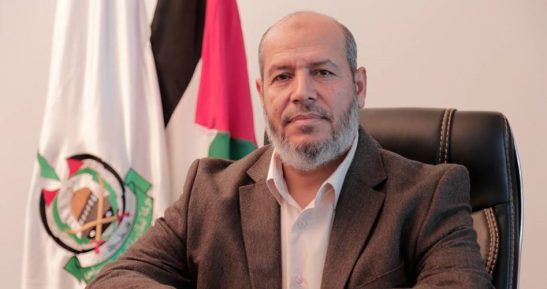
Head of Hamas in Gaza Khalil Al-Hayya
Al-Manar | March 30, 2025
Hamas said on Saturday it had approved a proposal from mediators for a ceasefire in the Gaza Strip, which it received two days earlier.
“In our commitment to our people and families, we have engaged with all proposals responsibly and positively, aiming to end the war,” Khalil Al-Hayya, head of Hamas in Gaza Khalil Al-Hayya, said in a statement.
“Two days ago, we received a proposal from our mediator brothers. We responded positively and approved it. We hope the occupation does not obstruct it or undermine the mediators’ efforts,” the statement added.
The statement also reaffirmed Hamas’ stance on armed resistance, calling it a “red line” and warning that “the weapon of resistance” will remain in the hands of the people and the state “if the Israeli occupation persists.”
“We will never accept humiliation or disgrace for our people. There will be no displacement or deportation,” it added.
Hamas further stated that, along with other factions, it had submitted to Egypt a list of independent professionals and experts to help form a committee to manage the enclave.
Israeli occupation forces resumed strikes in Gaza on March 18, ending a ceasefire agreement with Hamas that started on January 19. More than 50,000 Palestinians have been killed by the Israeli war on Gaza.
Hamas released on Saturday a video that shows one of the Israeli captives it is still holding on Gaza. The video showed him pleading the Zionist PM Netanyahu to approve an exchange deal in order to see his son.
Despite the intensive mediation efforts for a ceasefire, the Israeli Occupation Army said in a statement that its troops have begun new ground operations in the Al Janina area in Rafah, southern Gaza, aimed at expanding the security zone.
Oxford city council passes boycott divestment, sanctions motion
Press TV – March 26, 2025
The Oxford City Council has passed a motion supporting the Boycott, Divestment, and Sanctions (BDS) movement against Israel, in accordance with International Court of Justice (ICJ) rulings.
On Monday, the members of Oxford City Council unanimously voted for an “ethical investment and procurement” process against Israel.
The motion calls on the Oxford City Council to avoid cooperation and trade with entities complicit in human rights violations and international law.
In January 2024, the ICJ delivered an interim ruling that said it was plausible that Israel was committing genocide in Gaza. The court called on Israel to refrain from impeding the delivery of aid into Gaza
Amongst other orders, ICJ also ordered Israel to avoid acts of genocide in the besieged enclave and punish incitement to genocide.
The Israeli regime not only has continued to ignore the ICJ’s rulings but also has committed numerous acts of genocide against the people of Palestine, including the restriction of the delivery of international aid into the besieged enclave.
Given Israel’s disregard for the Court’s orders, Oxford councilor Hosnieh Djafari-Marbini said councilors had “unanimously passed a boycott and divestment motion citing the ICJ rulings on Palestine.”
One of the motion’s proponents, councilor Barbara Coyne, said in a press release, “I hope this motion will be thoroughly implemented, and that its passage may pave the way for other councils to take decisive action.”
In addition, the Council has called on the Oxfordshire Investment Fund to divest more than 157 million pounds from companies complicit in the Israeli regime’s apartheid, genocide, occupation, and settler colonialism.
The people of Palestine have long called for boycott, divestment, and sanctions, including an arms and energy embargo, against the occupying regime.
The BDS movement demands that Israel, under international law, withdraw from the occupied territories, remove the separation barrier in the West Bank, and respect the rights of Palestinian refugees to return to their homes and properties.
Hamas Mourns Senior Leader Salah Al-Bardawil, Martyred in Israeli Airstrike on Gaza
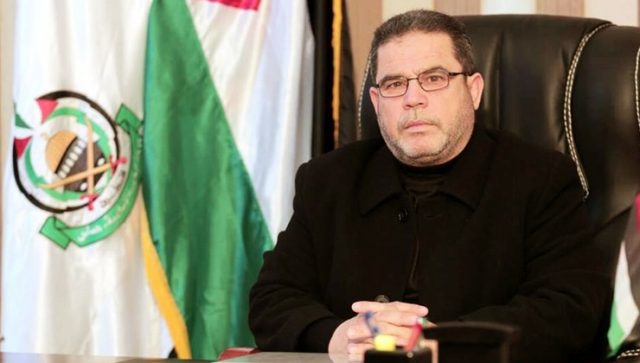
Al-Manar | March 23, 2025
The Islamic Resistance Movement “Hamas” mourned the death of Salah Al-Bardawil, a key figure in its political bureau and a member of the Palestinian Legislative Council, who was killed in an Israeli airstrike targeting his family tent in Khan Younis, southern Gaza.
The attack, which also claimed the life of his wife, was described by Hamas as a “treacherous Zionist assassination.”
In its statement, Hamas vowed that the martyrdom of al-Bardawil, along with that of all martyrs, would continue to fuel the ongoing struggle for liberation and return. “With every martyr, the flame of resistance burns brighter until the occupation is eliminated,” the statement declared.
A Distinguished Leader and Scholar
Martyr Salah Al-Bardawil was born in 1959 in the Khan Younis refugee camp, with roots tracing back to the occupied village of Al-Joura, near Gaza. He was an accomplished academic, earning degrees in Arabic language and Palestinian literature from Cairo University and Sudan.
His work as an educator and writer also contributed to his prominent role in establishing the Palestinian Writers Union and the National Gathering for Thought and Culture.
Al-Bardawil’s political involvement with Hamas began in the early 1990s. In 1996, he founded Al-Risalah, the first official media outlet of Hamas, and served as its editor-in-chief.
Through his weekly satirical column, “From the Streets of the Homeland,” he critiqued the Palestinian Authority, which led to multiple arrests by Israeli forces. He also led Hamas’s media department and played a central role in the formation of the National Salvation Party in 1996.
In 2006, al-Bardawil was elected to the Palestinian Legislative Council, representing Khan Younis. Over the years, he held various senior positions within Hamas, including overseeing the movement’s internal and external planning while maintaining strong connections with fellow leaders.
The ongoing attacks, including the death of Salah Al-Bardawil, highlight the continuing struggle for Palestinian sovereignty and resistance against occupation.
Gaza rescue teams besieged by Israeli forces as ‘catastrophe’ unfolds
Dozens of Palestinian civilians have reportedly been executed by Israeli forces in the southernmost city of Rafah
The Cradle | March 23, 2025
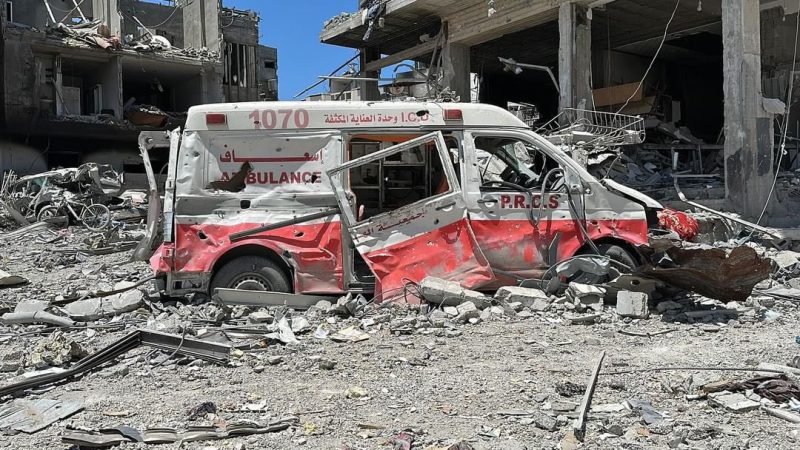
Palestinian Red Crescent Society (PRCS) workers are being besieged by Israeli forces after responding to rescue calls from the Gaza Strip’s southernmost city of Rafah on 23 March.
“We are still awaiting clearance to reach the trapped team in Rafah. Occupation forces continue to besiege four PRCS ambulances, and contact with the team remains lost,” the PRCS said in a statement on Sunday morning.
According to reports, dozens of people were executed after being surrounded by the Israeli army in Rafah.
“We warn of an imminent danger threatening the lives of more than 50,000 citizens in the Baraksat area west of Rafah Governorate after they were besieged by the Israeli occupation forces,” Gaza’s Civil Defense said.
“We warn against harming the Civil Defense crews who were besieged in the same area after intervening to rescue Red Crescent crews, and contact with them is still lost,” it added.
Israeli forces opened fire at civilians fleeing their homes in Rafah following evacuation orders issued by the army.
Rafah Municipality announced that thousands of families have been forced to flee the Tal al-Sultan neighborhood under intense Israeli bombardment. It added that its crews, along with residents, remained trapped inside the area as they carried out their duties serving residents.
An Israeli airstrike also targeted a group of displaced residents in the city, killing at least three and injuring others, according to WAFA news agency.
Over 40 people have been killed by Israeli attacks on Gaza during the past 24 hours, the Health Ministry in the strip announced on Sunday.
“A number of victims are still under the rubble and on the streets, and ambulance and civil defense crews cannot reach them,” the ministry said in a statement.
A member of Hamas’ Political Bureau, Salah al-Bardawil, was killed alongside his wife in an Israeli airstrike that targeted his tent late on Saturday. He was killed while praying, according to a statement released by the resistance movement on 23 March.
Israel renewed the war on Gaza early on 18 March after following through with several weeks of threats and obstruction of ceasefire talks. Over 700 Palestinians have been killed in less than a week as a result of the new campaign.
All border crossings remain shut, and Gaza is witnessing a humanitarian disaster due to a lack of aid and continuous bombardment. The strip is facing a severe water crisis due to the destruction of wells and lack of electricity.
“We are facing a compounded humanitarian catastrophe, whose severity continues to escalate under this suffocating blockade, while the disgraceful silence of the international and Arab communities emboldens the occupation to persist in its criminal policies without accountability,” the Gaza Government Media Office said on Sunday, holding the US “fully responsible” for Israel’s atrocities.
UN Exposes Systematic Zionist Rape of Palestinians
By Kit Klarenberg | Al Mayadeen | March 22, 2025
On March 13th, the UN Human Rights High Commission published a horrifying report exposing in oft-emetic detail how the Zionist entity has employed “sexual, reproductive and other forms of gender-based violence against Palestinians” on an industrial scale since the Gaza genocide erupted in October 2023. The UN concludes these hideous acts are a central component of Israel’s “broader effort to undermine [Palestinians’] right to self-determination,” their systematic nature pointing unambiguously to endorsement by Tel Aviv’s military and political leaders.
The report records, “sexual and gender-based violence is by no means a new element of the Israeli occupation.” However, in the wake of October 7th, there has been a “sharp increase in sexual violence against Palestinian women and men”, both by Zionist Occupation Forces (ZoF) and settlers. The UN encountered no obstacles collecting voluminous highly incriminating evidence of this vile abuse. In addition to a welter of victim and witness testimony, perpetrators often voyeuristically captured themselves and their confederates openly committing these crimes on camera.
Frequently, these abhorrent images were pridefully posted on the culprits’ personal social media accounts. Such actions amply attest to the culture of total impunity in which ZOF soldiers literally rape and pillage. “Despite the abundance of witness and digital evidence of Israeli soldiers committing crimes in Gaza,” the UN found “there have been no meaningful efforts by Israel to hold the perpetrators accountable.” Requests submitted to Tel Aviv for clarity on investigations into sexual violence committed by Occupation Forces have been ignored:
“The Commission has not seen any evidence that Israeli authorities have taken any effective measures to prevent or stop acts of sexual violence or to identify and punish perpetrators.”
By contrast, the UN documented multiple statements by Zionist entity officials actively supporting ZOF militants accused of sex crimes, and “legitimizing rape and other forms of sexual violence” against Palestinians, particularly detainees. That Israel’s rulers advocate sexually-charged attacks on Palestinians is further reinforced by a deliberate ZOF strike on a women’s rights centre in Gaza, in mid-November 2023. The UN noted the broadside’s “clear gendered dimension,” with soldiers daubing deeply offensive, sexist insults directed at Palestinian women on the building’s inner walls in Hebrew.
Outside, ZOF tanks precisely blitzed the building’s fifth floor, which provided shelter for women and families. That area was “completely destroyed”, but the rest of the building “remained intact”. Mercifully, the site and its surrounding area had been evacuated well in advance of the attack, meaning no one was harmed. The Commission “did not find any military justification” for the ZOF’s targeting of the centre. Yet, from the Zionist entity’s perspective, it undoubtedly served a very specific military purpose.
Collectively, the Commission’s conclusions point ineluctably to the fact that sexuality and gender are now key, dedicated battlegrounds in Israel’s unending erasure of the Palestinians, while sexual abuse, rape, and resultant physical and psychological trauma are entrenched, well-honed weapons in the Zionist entity’s Mephistophelian military arsenal. Gravely, given Tel Aviv’s tendency to export its tools and methods of repression and mass murder abroad, the implications of this grotesque evolution in modern warfare could be global.
‘Foreign Devices’
The UN Commission report contains five separate sections on the Zionist entity’s weaponisation of sexual abuse; “sexual harassment and public shaming of Palestinian women”; “filming and photographing acts of sexual violence against men and boys during arrest”; “sexual violence during ground operations including at checkpoints and evacuations”; “sexual, reproductive and other gender-based violence in detention”; “sexual and gender-based violence by settlers and other civilians.” Each is rife with repulsive descriptions, and stomach-churning attestations.
While ranking circles of hell is a tawdry task, the section detailing sexual violence directed towards male and female Palestinian detainees is most vital to examine. The sheer scale of abuses documented, and consistency of accounts provided by victims imprisoned in over 10 separate Israeli military detention facilities, means it cannot be plausibly argued this savagery is aberrational, or attributable to ‘rogue’ ZOF militants or units. It can only be deliberate, determined policy, signed off and directed at the highest levels.
From October 7th 2023 until July 2024, the UN Commission finds at least 14,000 Palestinians in Gaza and the West Bank – among them hundreds of women – were incarcerated by the ZOF. Many were not informed of the reasons for their imprisonment. In case after case, “sexual violence was used as a means of punishment and intimidation from the moment of arrest and throughout [their] detention, including during interrogations and searches”:
“Acts of sexual violence… appear to have been motivated by extreme hatred towards the Palestinian people and a desire to dehumanize and punish them… Forced nudity, with the aim of degrading and humiliating victims in front of both soldiers and other detainees, was frequently used… Male detainees reported ZOF personnel had beaten, kicked, pulled or squeezed their genitals, often while they were naked… In some cases, objects such as metal detectors and batons were used to brutalise them while they were naked.”
The Commission documented widespread rape and sexual assault of male detainees, “including the use of an electrical probe to cause burns to the anus, and the insertion of objects, such as fingers, sticks, broomsticks and vegetables, into the anus and rectum.” One victim was suspended from the ceiling so only his toes touched a chair below, and beaten with tools for hours. During the abuse, a “metal stick” was inserted into his penis roughly 20 times until he began bleeding, before fainting.
The Commission has determined that detainees were routinely subjected to sexual abuse and harassment, and that threats of sexual assault and rape were directed at detainees or their female family members. The Commission received information about detainees being forced to undress and lie on top of each other while subjected to verbal abuse and forced to curse their mothers. They were beaten if they did not comply.
Female detainees were also subjected to sexual harassment, assault, rape, and threats to their lives. One was told by a ZOF soldier he would kill her and burn her children, asking: “How do you want us to rape you? One by one or all together?” Another was threatened with sexual assault in front of her husband, before soldiers spat in her face and beat her until she fainted. Several Palestinian women suffered the heinous indignity of “foreign devices” being inserted into their vaginas or rectums.
Female detainees moreover endured “repeated, prolonged and invasive strip searches, both before and after interrogations.” One Palestinian woman was strip searched in her cell every three hours during her four-day detention, “even though she was menstruating.” Women were regularly forced to remove all their clothes, including veils, in front of male and female ZOF soldiers. Beatings and harassment, while being bombarded with foul insults and sexual slurs, such as “bitch” and “whore”, were also commonplace.
‘Terrible Injustice’
In July 2024, 10 ZOF soldiers were arrested after subjecting a male Palestinian detainee to such vicious sexual violence, he required urgent surgery. The Commission finds this was by no means an isolated incident since October 7th, but it remains the only instance to date of a victim’s tormentors facing repercussions for their unconscionable abuse. Still, the UN refers to this sordid case as “an illustrative example of the culture of impunity” rampant within the Zionist entity’s military and security apparatus:
“Five soldiers were released without charge within a few days and five others were placed under house arrest. In September 2024, a military court eased the conditions of their house arrest, removing the requirement for them to be accompanied by a supervisor during their night-time house arrest and allowing them to submit requests for release during the holidays.”
A since-published indictment records how the five accused soldiers burst into the man’s cell at Sde Teiman detention facility, beat him with batons and tasered him in the head, before forcibly inserting a baton into his mouth, all while intimidating him with a dog. He was also stabbed in the rectum with a sharp object. The attack left the Palestinian with several fractured ribs, a punctured lung, and other life-threatening injuries.
Unmentioned in the report, the initial arrest of the 10 ZOF soldiers responsible for this gruesome barbarity elicited outrage among Israeli citizens, leading to mass protests demanding their release. Nonetheless, the Commission did record how several high-ranking Zionist entity officials expressed outrage at the soldiers’ arrests. Finance Minister Bezalel Smotrich said they had suffered “terrible injustice”. National Security Minister Itamar Ben-Gvir stated it was “shameful” that Tel Aviv’s “best heroes” had been subject to such “vicious persecution.”
The Western media remained deathly silent on this open championing of rape as an instrument of terror. The UN Commission’s disturbing findings have likewise fallen on mainstream deaf ears. As ever, news outlets, and the Zionist entity’s Western puppet masters, are complicit by their silence – and it is precisely this silence that encourages and safeguards the ZOF’s culture of impunity. As a result, we can expect the “sharp increase in sexual violence against Palestinian women and men” to only increase in future.
Israel blows up Gaza’s only cancer hospital
MEMO | March 21, 2025
Israeli occupation forces blew up the Turkish Friendship Hospital in central Gaza today.
In the latest attack on the Strip’s healthcare system, Gaza’s only cancer treatment centre was blown up because Israel claimed Hamas had turned it into “terror infrastructure”. It provided no proof for its claims.
Footage circulating online appears to show a controlled demolition of the hospital, rather than an air strike.
Israel has decimated Gaza’s medical facilities and destroyed a number of hospitals. Human rights groups and UN experts have warned that this forms part of its genocidal policies, through which it seeks to force Palestinians out of the enclave.
The occupation state returned to bombing Gaza in the early hours of Tuesday morning, killing more than 700 Palestinians since. It also dropped leaflets over the Strip promising genocide, stating: “The world map will not change if all of Gaza’s people vanish. No one will care, no one will ask about you.”
At least 85 Palestinians killed in Israeli strikes across Gaza
MEMO | March 20, 2025
At least 85 Palestinians were killed and dozens wounded in Israeli air strikes across Gaza today after Israel resumed its bombing campaign and ground operations in the enclave, the Ministry of Health said.
A day after launching a new ground campaign in central Gaza, the Israeli military said today it had begun conducting ground offensives in the north of the enclave, along the coastal route in the area of Beit Lahia.
Palestinian medics said Israeli strikes targeted several houses in northern and southern areas of the Gaza Strip. Asked for comment, the Israeli occupation military said it was looking into the reports.
The military has resumed its air assaults on Gaza since Tuesday and launched ground operations on Wednesday, effectively abandoning a ceasefire with Hamas that had held since January in spite of Israel’s refusal to abide by its terms.
It said today that its forces had been engaged for the past 24 hours in what it described as a targeted ground operation to expand a buffer zone separating the northern and southern halves of Gaza, known as the Netzarim corridor.
Israel ordered residents to stay away from the Salah Al-Din Road, the main north-south route, and said they should travel along the coast instead.
Israel killed more than 400 Palestinians on Tuesday alone, one of the deadliest days of the war.
Hamas said the Israeli ground operation and the incursion into the Netzarim Corridor were a “new and dangerous violation” of the two-month-old ceasefire agreement. In a statement, it reaffirmed its commitment to the ceasefire deal and called on mediators to “assume their responsibilities”.
The resumption of air strikes has sent Palestinian residents again fleeing for their lives from homes they had begun to reinhabit among the ruins of the devastated enclave.
Some Palestinians who tried to use the Salah Al-Din Road said they saw cars come under fire from Israeli troops advancing towards Netzarim. The fate of the passengers in the vehicles was unknown.
Some residents turned to social media to report the disappearance of some relatives, while others reported cases to the International Committee of the Red Cross.
Israel’s Netanyahu dragging region into major war, ex-Tunisia president warns
MEMO | March 20, 2025
Former Tunisian President Moncef Marzouki warned that Israel, led by Prime Minister Benjamin Netanyahu, is seeking to drag the region into a major war by escalating the confrontation with Iran, which could ignite complex internal conflicts in the Middle East.
In a statement to Al-Resalah Net, Marzouki said the current phase is characterised by great instability where the region is experiencing increasing turmoil.
He pointed out that US President Donald Trump is a fickle politician who cannot be trusted and who is being dragged into new wars by Israel.
“The current situation portends an explosion, but the Arab peoples remain calm, and this is what occupies my mind. We are living through a period similar to what we witnessed in 2010, when everything seemed calm before the spark that completely changed the scene,” he said
Marzouki criticised the Egyptian position toward the Gaza Strip, saying,
The Egyptians act as if they are not a party to what is happening, while in reality they are participating in the strangulation of Gaza by continuing to close the crossings and restricting aid.
He added that the Israeli occupation continues its crimes and massacres in Gaza without deterrence, but the situation will not remain as it is, and the time will come to take action and stand up against this unjust reality.
Marzouki concluded by emphasizing that history indicates that the situation will not remain as it is, warning that an Israeli escalation could lead to a regional explosion, with serious repercussions for the entire region.
Death toll from Israel’s renewed offensive on Gaza rises to 970

Press TV – March 19, 2025
Gaza’s health ministry says Israel’s renewed savagery has led to the massacre of at least 970 people in 48 hours.
The wave of deadly airstrikes that shattered a fragile ceasefire in Gaza on Tuesday has so far claimed the lives of at least 970 people across the besieged territory, the health ministry said in a statement on Wednesday.
Before the resumption of the offensive, the death toll from the regime’s 15 months of genocidal war recorded by the ministry at midday on March 17 stood at 48,577.
By midday on Wednesday, the figure had risen to 49,547, the ministry said.
The health ministry also registered “one death and five severe injuries among foreign staff working for UN institutions.”
It said Israel attacked a UN headquarters in Deir el-Balah, in the central Gaza Strip, on Wednesday.
The victims had been taken to the Al-Aqsa Martyrs Hospital, the health ministry said.
Israel’s military denied attacking a UN building in Gaza.
The UN Office for Project Services (UNOPS) confirmed the death of one of its staff by an explosive that was “dropped or fired” on its building in Deir el-Balah.
“An explosive ordnance was dropped or fired at the infrastructure and detonated inside the building,” it said, adding that five others were injured.
UNOPS Executive Director Jorge Moreira da Silva said he was “shocked and devastated” by the death of a staff member.
“This was not an accident.” he said, adding that “attacks against humanitarian premises are a breach of international law.”
Bulgaria’s foreign ministry said later in the day that one of its citizens working for the United Nations was killed in Gaza, without specifying where in the territory.
Benjamin Netanyahu of Israel threatened on Tuesday that the massacre of women and children in Gaza was “only the beginning.” He stands accused of committing war crimes and ethnic cleansing in Gaza.
The Israel-Hamas Ceasefire Farce
By Ilana Mercer • Unz Review • March 18, 2025
‘A ceasefire is when the Israelis fire and we cease.’ ~ Refaat Al-Areer, RIP
Nobody can quite determine any longer which of the two countries, America or Israel, is the Great Satan and which is the Little Satan. ~ ilana
“We’re the United States. We’re not an agent of Israel. We have specific interests at play.” So said Trump Special Envoy for Hostage Affairs Adam Boehler to Zionist enforcer Jake Tapper, on CNN.
Boehler had been deputized by President Donald Trump to bypass Bibi Netanyahu and negotiate directly with Hamas. More to the point, Boehler had described Hamas, whom by now very many around the world consider resistance fighters, as holding points of view that merit a hearing. He even suggested, as Jewish Insider reported, that—lo—! “they’re actually pretty nice guys.” Hamas, that is.
Whatever was he thinking! Boehler was off his leash. Israeli officials were scurrying about in an attempt to get him back on it.
Talking to Hamas? Now Trump was talking!
Unlike the president’s Gaza Rivera plan to evict Palestinian survivors from Gaza; negotiations with Hamas do indeed constitute “out-of-the-box thinking,” if not original thinking. Unoriginal, because diplomacy, namely talking to adversaries, is standard statecraft. At least it ought to be.
Excerpted but barely in the Washington Examiner, the testy Boehler-Tapper televised exchange took time to propagate to the Internet. You see, US Deep Tech, Google included, generally cover for the Israel Defense Forces (IDF), which is also business partner to American tech. These multinationals are not about to throw sand in the IDF’s military bearings.
Tech multinationals (or Deep Tech, as I call them) have, after all, supplied the IDF with the killer infrastructure required to “build artificial intelligence (AI) programs designed to produce human targets with little human oversight.” (The other reasonable conclusion is that these multinationals are undisturbed by genocide.)
Talking to Hamas would certainly have been inconceivable under Joe Biden, alias Genocide Joe, remarks commentator extraordinaire Mouin Rabbani, a Palestinian. And while Trump has prioritized negotiations over American dual-national captives; his bold move broadcasts some salient facts about the situation:
Israel is an obstacle to an accord; to closing out the genocide. It is especially eager to avoid phase II of the January 17, 2025 ceasefire agreement. Not that the media system had noticed, but Israel never quite quit the killing.
By March 13, Israel had violated the ceasefire agreement upwards of one thousand times, in the estimation of Jon Elmer, military analyst at the Electronic Intifada. Staggering, perhaps, but utterly predictable historically. “Israel,” reminds a dejected Chris Hedges—he is a famed war correspondent—“has assassinated more people than any other people in the Western World.”
In the hours right after the ceasefire deal was announced; Israeli forces killed at least 87 Palestinians, 23 of them children. Quipped the late Refaat Al-Areer: “A ceasefire is when the Israelis fire and we cease.” As in “expire.” A mild-mannered, bookish Palestinian scholar, Dr. Al-Areer was murdered in his Gaza residence, in December of 2023.
Indeed, the low-grade killing across the coastal strip had continued throughout phase I of the “ceasefire.” To be exact, Israel had started up the killing fifteen minutes into the ceasefire’s implementation. Since January 15, 2025, Israel has murdered an average of three people every 24 hours—150 Palestinians since the start of the ceasefire on 19 January 2025.
No sooner were the Israelis steered by Steven Witkoff, in January, to a ceasefire; than the urge to kill overcame them. Israeli newspapers were telling about the “salty” language Witkoff, U.S. President-elect Donald Trump’s Middle East envoy, had deployed with Netanyahu, instructing the Israeli prime minister’s aides, as follows (and I paraphrase), “I don’t care that today’s your Sabbath. Get down here and sign this [old] ceasefire on the dotted line.” I ad-libbed “old” in, because the January-15 accord was modeled after one Hamas had composed in May of 2024.
Did Witkoff remind Netanyahu that the Israeli army, the IDF, does not rest up on the Seventh Day from the slaughter of innocents, and that, surely its commander-in-chief could get off his duff to make peace on the holy Sabbath?! Probably not. Still, what transpired was refreshing, even delicious.
The March 2025 violations of the agreement have seen Israel halt the meager aid let into starving Gaza, and cut off the remaining supply of electricity to Gaza. Because the main desalination water-treatment plant is producing a fraction of its prior output, running as it is only on generators—only one-in-ten Gazans currently has access to safe drinking water.
From the start, Israel had failed to allow into Gaza the agreed-upon medicines, fuel, food, housing units (15 out of a promised 60,000), tents (20 percent of the requisite 200,000), heavy earth-moving machinery, spare parts, construction material, and alternative energy systems, like generators.
Still regionally omnipotent, still resistless—Israel has now put its exterminatory foot to the floor again. The Jewish State continues to bleed the region like a leech, seizing Lebanese and Syrian territory, including the Golan Heights. As I write, via the chyron scroll across the screen comes news that Israel has just extinguished nine lives in Northen Gaza, and two in southern Lebanon, where a ceasefire is in effect.
Unless it is killing things, Israel is just not happy. Flora and fauna, too. Israeli genociders, candid economists might say, have a high time-preference mindset. In such an uncivilized society, impulses (to kill) are privileged over contractual commitments (to quit killing). Not some of the livestock, but all of the livestock. As hard as it is to believe, but under decades of a medieval blockade, Gaza’s farmers had, before October 7, fed a third of their people. Croplands, irrigation systems, batteries of greenhouses, living things that produce flowers then give fruit: everything has gone the way of cattle, poultry and family pets: dead.
The term Carthaginian Peace has lost its meaning under Israel’s malign sway. The bad idea of “peace” through crippling the opponent Israel has replaced with the idea of “peace” through conquering and killing the opponent off. Conversion is complete. The structural violence that is the State of Israel the US duopoly has helped normalize. Genocidal violence, yes or no, saturation bombing of civilians, pros and cons, and forced mass expulsion of starving, subjugated people—if not de rigueur, these state crimes are now part of normal governance in the West.
On top of all that, there was never a ceasefire in the West Bank. The West Bank’s civilians, so closely clustered, have been strafed from the air. For the first time in 20 years, tanks travel all over what are urban neighborhoods.
The depopulation underway in this de facto annexed territory hardly even percolates through to the West’s press. Yet thousands of West Bank Palestinians are being plucked from their homes, some detained, mostly without charges, at times shot on the spot; always degraded, tortured, and sicced upon by fulminating Jewish settlers, who “work” cheek-by-jowl with Israeli soldiers.
A screen picture of any day in the life of a subject in the State of Satan seconds my description. Taken on February 15, the captured headlines via Ha’aretz tell of 30,000 Palestinians driven from Jenin, a so-called refugee camp in the West Bank. The number of people evicted and dispossessed from these “camps” has since ballooned to close on 50,000. The West Bank’s Palestinians are denied access to their agricultural land, which means that soon it will lie fallow, and settlers will colonize it.
I call places like Jenin “so-called” camps because these were proper cities, not tent cities. As was noted in the Journal of Middle-East Studies (1992), these “camps are similar to any other urban neighborhoods,” into which they have evolved.
I’d been to Jenin. Our family had been invited as guests by generous residents. Childhood in Israel saw me visiting what I then knew as The Triangle: Tira, Tulkarem and Jenin. In the 1970s, these were not yet cities, but were definitely no nylon-dome encampments. My step-father, a doctor, headed healthcare clinics in what he called The Triangle. Daily, he’d return home laden with export-quality fresh produce. His patients were poor, yet so very generous. Upon the town’s doctor, a South African Jew who was appreciated in his role as a healthcare provider, they showered respect, affection and gifts.
We’d also be invited as a family to feasts held on the occasion of a wedding. The tables groaned with heavenly cuisine. Bestowed, this was a great honor, and these were grand affairs, an example of a culture in which hospitality and generosity are defining values. An invitation meant that you were never ignored. A lovely, if genteel, welcome awaited.
I do not know if the term Triangle deployed then denotes the same cluster of cities and villages. I do know that Jenin today is 70-percent levelled. Burdened by history like never before, I note, too, that Tira is no longer visible on the map.
Although the occupation army has pulled out of the Netzarim Corridor, which divides Gaza, it retains a presence in southern Rafah and the Philadelphi Corridor. The serial-killer state had hoped, with Trump’s backing, to renege entirely on the ceasefire agreement, and, in particular, on its Phase-II obligations to permanently end the offensive and “withdraw armed forces from the Gaza Strip completely.” In order to “surmount the obstacle” that is Israel, the Trump Administration had, therefore, chosen to speak directly with Hamas leaders.
Early in January of 2025, there was hope. Trump is an Alpha Male; Bibi Netanyahu is a kept man. How long can the ego-bound leader of a Super Power tolerate being bossed about by the leader of a “sh-thole country,” to use Trump’s old coinage?
Two months distant, and hope is fading. Trump chose to channel son-in-law Jared Kushner. Kushner, the nepotistic scion of a dodgy New York realtor, and an empty husk of a man, has had his eye on the waterfront property of a conquered and dying people. He had said as much about Gaza in 2024.
In essence, some of the world’s wealthiest men were coveting the property of the world’s poorest and most persecuted people.
Soon to follow was Trump’s Gaza plan, a gaudy vulgar production, replete with bearded belly dancers. “Trump Gaza,” the plan’s title, was not “out-of-the-box thinking,” as some in the president’s Westen coalition had dubbed it. Rather, it sits on a continuum of evil. It is an extension and completion of Joe Biden’s genocide.
Eager, it would seem, to write the Palestinian People’s obituary, Trump had vowed to assume control over Gaza, rebuild it and evict the survivors of a genocide committed by client state Israel.
By removing the pitiful exhibits from the scene of the crime; Donald Trump would be covering-up the crime of genocide. Next, he planned to conclude Biden’s genocide by scattering the survivors across the Middle East. Israel will have been rescued. Gazans will have ceased to exist as a nation. The forced displacement and mass murder of Gaza’s Palestinians would have been achieved, completed.
Who said crime doesn’t pay? When the Superpower inverts the moral order of the universe; the Crime of All Crimes pays—and then some.
As Trump told it, nobody quite knows how or why Gaza became a “demolition site.” Somehow, the soil got soaked through with the blood of tens-of-thousands of Palestinians, and a toxic mix of 50-million tons of building debris. Somehow, piles of bodies decay beneath the surface. Somehow, garbage is piled as high as the bodies, were they to be stacked. Open sewage runs through what remains of the streets, and the byproducts and contaminants of munitions, like unexploded ordnance, lie everywhere.
It’s all a big mystery.
The other thing nobody can quite determine is which of the two countries, America or Israel, is the Great Satan and which is the Little Satan.
Back to Boehler: Israel went barking mad when our ex-envoy failed to show monk-like devotion to Israel, asserting, instead, American foreign-policy independence. The Lobby was marshalled. Fervid assurances were soon provided. Soon enough, Adam Boehler was gone. After being “nominated for the Senate-confirmed position of Special Presidential Envoy for Hostage Affairs,” he was demoted to “special government employee,” reports Ha’aretz. Found deficient in Zionist solidarity, Boehler “withdrew his nomination.”
The median elapsed time between an American official opposing anything Israel and then dropping out of history is getting shorter.
Like Joe Biden did before him, president Trump followed the Israeli prime minister on a leash. On March 5, he bellowed on Truth Social:
“Release all of the Hostages now, not later, and immediately return all of the dead bodies of the people you murdered, or it is OVER for you.” Buoyed, at 2:00 AM today, March 18, Israel murdered over 400 Gazans. It is currently demanding that Hamas hand over hostages for nothing.
Will the Palestinians wronged and ruined get a reprieve? Will the mercurial Trump, who, to his credit, is ideologically unattached to Israel, cut Israel dead, as he ought to? These possibilities are looking remote.
***
Ilana Mercer is a paleolibertarian theorist, author and essayist. Her new book is “The Paleolibertarian Guide To Deep Tech, Deep Pharma & The Aberrant Economy” (February 2024). Mercer is described as “a system-builder. Distilled, her modus operandi has been to methodically apply first principles to the day’s events.” She’s Jewish and grew up in Israel from which she fled, aged 19, never to return. She had refused to serve in the IDF, the Israeli military.
Gaza government officials martyred along with families in renewed Israeli aggression
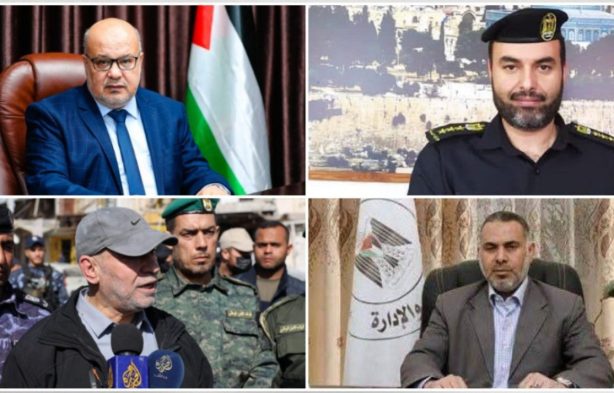
Senior Hamas officials killed in Israel’s airstrikes on Gaza on March 18, 2025
Press TV – March 18, 2025
The Palestinian resistance movement Hamas says several of its senior members have been assassinated after being directly targeted by Israel’s military forces on Tuesday.
Gaza’s fragile ceasefire was shattered early Tuesday as the Israeli military launched deadly airstrikes across the Palestinian territory, killing more than 400 Palestinians, including children.
The resistance group said in a statement that “a number of government and emergency committee leaders were martyred in the Gaza Strip as a result of the brutal and sudden aggression on the Gaza Strip at dawn today.”
“These leaders, along with their families, were martyred after being directly targeted by the Zionist occupation forces’ aircraft.”
The head of the Hamas government, Essam al-Dali, interior ministry head Mahmud Abu Watfa and Bahjat Abu Sultan, director-general of the internal security service, are among the martyrs, Hamas said.
These leaders, according to Hamas, were responsible for “distributing aid, preventing “thieves” and “bandits” (in reality, collaborators with the Zionist regime), protecting the security of the Palestinian people, and ensuring fairness and social cohesion amid the most difficult of circumstances.”
“They are being assassinated in an attempt to create chaos, famine and internal conflict.”
In a separate statement, Gaza Government Media Office said two top police officers were among those assassinated.
These leaders, it said, “worked tirelessly since the beginning of this genocidal war to alleviate the suffering of their people and who fulfilled their responsibilities with dedication and sacrifice.”
Hamas also reiterated that the resistance will stand “firm with our nation against this brutal aggression.”
Yemen resumes naval blockade against Israeli ships in support of Gaza
Al Mayadeen | March 11, 2025
The Yemeni Armed Forces announced the resumption of their naval blockade on all Israeli ships in the Red Sea, the Arabian Sea, the Bab al-Mandab Strait, and the Gulf of Aden.
Sanaa’s decision comes after the expiration of the deadline set by Ansar Allah leader Abdul-Malik al-Houthi for mediators to pressure the Israeli occupation into reopening Gaza’s border crossings and allowing humanitarian aid into the besieged territory.
In a statement issued on Tuesday, the Yemeni Armed Forces declared the immediate enforcement of the blockade, warning that any Israeli vessel attempting to breach the restriction would be targeted within the designated operational zones.
The military stressed that the blockade would remain in place until the Israeli occupation complies with the demand to reopen Gaza’s border crossings and facilitate the entry of essential food and medical supplies.
The statement reaffirmed Yemen’s unwavering solidarity with the Palestinian people, particularly in Gaza and the occupied West Bank, and reiterated its commitment to standing alongside the Palestinian resistance.
Famine looming over Gaza
Hamas spokesperson Hazem Qassem warned Tuesday that Gaza is facing the early stages of a real famine due to the Israeli occupation’s continued blockade on the entry of food supplies for the tenth consecutive day. He stressed that the humanitarian situation has been dire since the beginning of the Israeli aggression.
In a statement, Qassem highlighted the severe food crisis gripping the besieged enclave, where essential supplies are running out under the ongoing blockade. He noted that the closure of border crossings constitutes a blatant violation of the ceasefire agreement, which stipulates the unrestricted flow of humanitarian aid.
Hamas condemned the Israeli occupation’s actions, calling the blockade a flagrant violation of international humanitarian law and the Geneva Conventions.
The movement described it as a flagrant war crime and collective punishment against civilians, warning that the siege has led to soaring food prices and a severe shortage of medical supplies amid an escalating humanitarian catastrophe.
The group also pointed out that the closure of crossings was hindering recovery and reconstruction efforts in Gaza. The ban on the entry of heavy equipment has obstructed relief teams from carrying out their duties.
Yemen pledges to resume operations
Previously, Sayyed al-Houthi said Sanaa was continuously monitoring and observing developments in Gaza amid the Israeli occupation’s complete evasion of its commitments to the ceasefire agreement.
In a late February speech, Sayyed al-Houthi also revealed that Yemen was prepared to intervene militarily had Trump carried out his threat to restart the war on Gaza if Hamas did not release the Israeli captives.
“Yemen remains steadfast in its support for the Palestinian people and Resistance factions in confronting Israel’s attempts to evade the ceasefire agreement and its second phase,” al-Houthi emphasized, warning that if the war is reignited in Gaza, “the entire Zionist entity, starting with occupied Yafa, will come under fire,” amid the Yemeni support and military intervention.
Sayyed al-Houthi reiterated his stance on Friday, giving mediators a four-day deadline to ensure the entry of humanitarian aid into Gaza, warning that if the Israeli occupation continues to block aid deliveries, naval operations against Israeli-linked vessels will resume.
Al-Houthi accused the Israeli occupation of delaying its commitments under the Gaza ceasefire agreement, particularly concerning humanitarian provisions. He stated that while Hamas had fully honored its obligations, the occupation had failed to uphold its side of the deal.
“The humanitarian aspect of the agreement includes clear obligations with guarantees from mediators, yet Israel is trying to evade them,” he said.
Al-Houthi also condemned intensified Israeli attacks in the occupied West Bank and al-Quds, highlighting the role of Israeli settlers in escalating violence against Palestinians. He criticized US support for the Israeli occupation under President Donald Trump, saying Washington’s backing had emboldened the regime’s policies of displacement and aggression against Palestinians.
Featured Video

Theodore Postol: Iran’s Missiles & Drones Were Underestimated
or go to
Aletho News Archives – Video-Images
From the Archives
Wars for Israel: A reminder of who’s giving the marching orders
By Damian Lataan | February 7, 2012
As the West prepares to march off to yet another war in the Middle East, we should perhaps remind ourselves of who is giving the West their marching orders.
In February 2003, just weeks before the US and their allies launched their attack on Iraq and her peoples, a delegation of US congressmen, together with the US Ambassador to the United Nations, John Bolton, a well known pro-Zionist and neoconservative war-hawk, were in Israel at the invitation of the Israeli government then led by Israeli Prime Minister Ariel Sharon.
Addressing the congressmen, Sharon told them ‘that Iran, Libya and Syria should be stripped of weapons of mass destruction after Iraq’. Later, Sharon told John Bolton ‘that Israel was concerned about the security threat posed by Iran, and stressed that it was important to deal with Iran even while American attention was focused on Iraq’. … continue
Blog Roll
 Aletho News
- A New Resistance Front: How Does Syria Factor into the Regional War?
- Gulf states weigh pipeline expansion plans, hoping to bypass Hormuz
- Iran sets up ‘tollbooth’ system in Strait of Hormuz
- Wave 90: IRGC strikes US-linked industrial sites in Gulf
- Iran Says US-Israeli Claims of Its Military Strength Are Wrong
- Trump’s April Fools’ Address to the nation
- The Most Important Bet You’ve Never Heard Of
- The killing of three Indonesian soldiers in Lebanon should remind Jakarta that Israel does not want peace
- Defeated and delusional: Netanyahu’s remarks reveal $80bn war failure, says analyst
- Iran’s friends are about to make life much more difficult for Israel and the US
- If Americans Knew
- Trump says the quiet part out loud: (Israel’s) war on Iran > Americans’ health – Daily Update
- Gaza families reunite years after babies evacuated amid Israel’s war
- International Rescue Committee warns Gaza’s children face grave protection risks
- Iran’s Alleged 47-Year War on America: Debunking the 1,050 American Deaths Canard
- Israel wants US to bomb more of Iran’s civilian structures (113,000 is not enough) – Not a ceasefire Day 173
- Ann Coulter Rips Into Fox News for Iran War Coverage
- Joe Kent Urges Americans To Call White House and Congress To Object To Sending Troops Into Iran
- DNC Resolution to Reject AIPAC Funding Puts Democratic Leaders in the Hot Seat
- Swedish foundation to build 400 schools as over 650,000 Gaza children remain without education for 2 years
- Israeli army admits photshopping image of slain Lebanese journalist
- No Tricks Zone
- Low Intensity Tornado Wrecks Major Solar Farm, Creating A Potential Toxic Dump
- New Study Finds Warming Saves Lives…Cold Temperatures 12 Times More Deadly Than Excess Heat
- German Science Blog Accuses PIK Climate Institute Of Hallucinating Climate Tipping Points
- Devastating Assessment Of Comirnaty Vaccine By Former Senior Pfizer Europe Toxicologist
- New Study: CO2 Is ‘Effectively Negligible’ As An Explanatory Climate Change Factor Since 2000
- Former Pfizer Toxicologist Dr. Helmut Sterz Tells Bundestag Hearing Pfizer Vaccine Should Have Never Been Approved
- Energy Expert: Germany’s Nuclear Phaseout Was A “500 Billion Euro Mistake”
- New Research: South Australia’s Mid-Holocene Sea Surface Temperatures Were 4°C Warmer Than Today
- Storing Green Energy To Last Germany 10 Days Would Require A 60-Million Tonne Battery
- New Studies: UK Sea Levels Were 4 Meters Higher Than Today During The Mid-Holocene
 Aletho News