Hamas Denounces Israeli Enemy’s Failure to Withdraw from Philadelphi Corridor
Al-Manar | March 10, 2025
Hamas Resistance Movement issued on Monday a statement to condemn and reject the occupation’s violation of the ceasefire agreement and its failure to withdraw from the Salah al-Din (Philadelphi) Corridor area.
The Zionist occupation failed to comply with the gradual pull-out of its troops from the Salah al-Din (Philadelphi) Corridor during the first phase, and also did not begin its withdrawal on the 42nd day, as stipulated in the agreement, Hamas statement added.
“Yesterday marked the 50th day of the agreement, by which the withdrawal was set to be completed, but so far that has not happened.”
Hamas stressed that “this blatant violation is a clear breach of the agreement and an apparent attempt to sabotage it and render it meaningless”.
The continued violations confirm the occupation’s disregard for agreements and its manipulation of international commitments.
These violations place responsibility on the mediators to pressure the occupation into fulfilling its commitments and immediately ending its presence in the Salah al-Din (Philadelphi) Corridor, the statement underscored.
Hamas called on the mediators and the international community to intervene immediately to ensure the occupation’s withdrawal, and resume negotiations for the second phase without further delay.
Adhering to the agreement and completing the negotiations is the only way to secure the release of the prisoners, and any procrastination means tampering their fate and the fealings of their families, Hamas statement concluded.
The Israeli negotiating team left for Qatar Monday for talks aimed at extending the fragile Gaza ceasefire, after ‘Israel’ cut the Palestinian territory’s electricity supply to ramp up pressure on Hamas.
Ahead of the negotiations, ‘Israel’ disconnected the only power line to a water desalination plant in Gaza, a move Hamas denounced as “cheap and unacceptable blackmail”.
We dealt flexibly with Trump’s envoy, awaiting outcome of talks: Hamas

Al Mayadeen | March 10, 2025
Hamas spokesperson Abdul Latif al-Qanou stated that the movement has shown flexibility in responding to mediation efforts, including those led by Egyptian and Qatari officials, as well as US President Donald Trump’s envoy.
He emphasized that Hamas is awaiting the outcome of the upcoming negotiations, urging the occupation to commit to an agreement and advance to the second phase.
Al-Qanou highlighted that the discussions with mediators have centered on ending the war, ensuring a full withdrawal, and initiating reconstruction efforts.
He dismissed the occupation’s threats of resuming military operations in Gaza and its decision to cut electricity, calling these failed tactics that endanger its prisoners. He reiterated that any prisoner releases would only occur through negotiations.
Al-Qanou emphasized, “We have fully adhered to the first phase of the agreement, and our top priority now is to provide shelter and humanitarian aid to our people while ensuring a permanent ceasefire.”
“The movement has agreed to Egypt’s proposal for a community support committee, which will begin its work in the Gaza Strip to bolster the resilience of our people and reinforce their presence on their land.”
Al-Qanou emphasized that “the occupation seeks to tighten the siege, close the crossings, and block aid from reaching the Palestinian people in an attempt to force them into displacement—but this is nothing more than a futile illusion.”
Trump’s envoy for prisoners’ affairs, Adam Boehler, stressed earlier that the meeting with Hamas “was very effective.”
In an interview with “Israel’s” Channel 13, Boehler confirmed that he does not rule out further meetings with Hamas, stating: “We are the United States, and we are not subordinate to Israel—we have our own interests,” adding “I work for Trump, and this is his decision; I implement what he wants.”
Hamas approves Gaza governance plan
On Saturday, Hamas’ negotiating team finalized its trip to Egypt, where the delegation discussed pathways for the implementation of the clauses of the ceasefire agreement with mediators.
The delegation, headed by Mohammad Darwish, head of Hamas’ Shura Council and Chairman of its Leadership Council, held talks with the head of Egypt’s General Intelligence Service, Major General Hassan Rashad.
The two sides discussed several crucial issues, including the ceasefire agreement and the prisoner exchange deal.
A statement released by the Hamas Media Office described the talks as “positive and responsible.”
“The Hamas delegation expressed its gratitude and appreciation for Egypt’s efforts, especially in countering displacement plans,” the Palestinian Resistance movement said, referring to United States President Donald Trump’s plot to “take over” the Gaza Strip.
Welcoming the outcomes of the most recent Arab summit, Hamas highlighted Egypt’s Gaza reconstruction plan and the Palestinian people’s inalienable right to statehood.
In further detail, Hamas’ negotiating team emphasized the need to uphold the terms of the multi-phase ceasefire agreement between the Palestinian Resistance and “Israel”.
White House envoy to travel to Doha to push for new Gaza deal: Axios
Al Mayadeen | March 9, 2025
An Axios report on Sunday revealed that White House envoy Steve Witkoff is set to travel to Doha on Tuesday evening to mediate a new deal for the release of captives and a ceasefire between the Israeli occupation and Hamas movement, according to two US officials.
According to the report, this will be the first round of talks since Trump took office, and the first since the original agreement— which secured a 42-day ceasefire in exchange for releasing 33 captives— concluded a week ago.
Witkoff will join Qatari and Egyptian mediators, along with negotiators from both “Israel” and Hamas, to begin discussions on Monday. That said, the Trump administration is seeking a deal that ensures the release of all remaining captives, extends the ceasefire through Ramadan and Passover, and aims for a “long-lasting solution.”
On that note, 59 Israeli captives remain in Gaza, with 35 confirmed dead by the Israeli occupation.
Witkoff is scheduled to travel to Doha after attending a US-Ukraine meeting in Saudi Arabia on Tuesday. However, according to the report, it’s uncertain whether he’ll meet with Hamas directly or only with Israeli and Qatari officials, as well as Egyptian mediators.
A senior Israeli official mentioned that Witkoff intends to bring all parties together for intense negotiations over several days in hopes of reaching a deal. Meanwhile, a Hamas delegation held talks with Egyptian officials in Cairo on Saturday regarding the Gaza ceasefire and prisoner negotiations.
Hamas has urged the parties to stick to the original deal and begin discussions on its second phase, which Israel has yet to seriously engage with.
The Resistance group also conveyed its readiness to form a committee of “national independent personalities” to govern Gaza until elections are held, a move that would relinquish its control over the area’s civilian governance.
Israeli Prime Minister Benjamin Netanyahu convened senior ministers and security chiefs on Saturday to strategize the next steps for the Gaza deal. His office confirmed that “Israel” accepted the mediators’ invitation and will send a delegation to Doha on Monday to advance the negotiations.
Hamas approves Gaza governance plan
On Saturday, Hamas’ negotiating team finalized its trip to Egypt, where the delegation discussed pathways for the implementation of the clauses of the ceasefire agreement with mediators.
The delegation, headed by Mohammad Darwish, head of Hamas’ Shura Council and Chairman of its Leadership Council, held talks with the head of Egypt’s General Intelligence Service, Major General Hassan Rashad. The two sides discussed several crucial issues, including the ceasefire agreement and the prisoner exchange deal.
A statement released by the Hamas Media Office described the talks as “positive and responsible.”
“The Hamas delegation expressed its gratitude and appreciation for Egypt’s efforts, especially in countering displacement plans,” the Palestinian Resistance movement said, referring to United States President Donald Trump’s plot to “take over” the Gaza Strip.
Welcoming the outcomes of the most recent Arab summit, Hamas highlighted Egypt’s Gaza reconstruction plan and the Palestinian people’s inalienable right to statehood.
In further detail, Hamas’ negotiating team emphasized the need to uphold the terms of the multi-phase ceasefire agreement between the Palestinian Resistance and “Israel”.
The Israeli regime continues to blatantly violate the agreement, which includes the delivery of large amounts of humanitarian aid to the Gaza Strip, as well as multiple acts of aggression against civilians.
Most importantly, the Israeli government ignored a time limit to enter negotiations for the second phase of the agreement, which would have secured the release of the remaining Israeli captives and a lasting ceasefire in the Gaza Strip.
“The delegation emphasized the need to uphold all terms of the agreement, immediately commence negotiations for the second phase, reopen border crossings, and allow the unrestricted entry of humanitarian aid into Gaza,” the statement underlined.
Yemen gives Israel four-day ultimatum to stop blocking Gaza aid
The Cradle | March 8, 2025
The leader of Yemen’s Ansarallah resistance movement, Abdul Malik al-Houthi, announced on 7 March a four-day grace period for Israel to resume ceasefire talks and lift its blockade on humanitarian aid for Gaza, threatening to resume Sanaa’s naval operations against Israeli-linked ships.
“We meet the siege with a siege,” Houthi emphasized, adding that Yemen “cannot stand by and watch the Israeli enemy’s aggressive approach in starving the Palestinian people in Gaza.”
“We do not just issue statements, but we can support the Palestinians in several areas,” the Ansarallah leader said, pointing out that “in the course of implementing the ceasefire in Gaza, it was clear that the Israeli enemy was procrastinating in fulfilling its obligations, especially those related to the humanitarian file.
The Ansarallah-led Yemeni Armed Forces (YAF) ceased military operations in support of Palestine following the start of a US-sponsored ceasefire in Gaza earlier this year. Since November 2023, the YAF repeatedly targeted US, UK, and Israeli-linked commercial ships and western warships in the Red Sea, the Indian Ocean, and the Mediterranean Sea.
Sanaa’s efforts to stop the US-Israeli genocide in Gaza prompted an illegal war initiated by Washington and London, resulting in hundreds of airstrikes in the Arab world’s poorest nation.
Despite the western onslaught, the YAF were undeterred in their military campaign and forced several US aircraft carriers and European warships out of the Red Sea. The country has also downed 15 US MQ-9 Reaper drones and recently fired its air defenses on a US F-16 jet.
A year ago, the former US Special Envoy for Yemen, Timothy Lenderking, admitted that “there is no military solution” for Yemen.
“I don’t think people really understand just kind of how deadly serious it is what we’re doing and how under threat the ships continue to be,” Commander Eric Blomberg with the USS Laboon told US media last year.
Houthi’s warning comes almost a week after Israel reimposed a total blockade on humanitarian aid shipments for Gaza after obstructing the ceasefire agreement from moving forward by demanding an extension of the first phase.
Hamas has rejected any extension of phase one and is demanding strict adherence to the agreement and international pressure on Israel.
“The resumption of war on Gaza will be met with the entire [Israeli] enemy entity coming under fire … If the war returns to Gaza, we will intervene with support through various military means,” Houthi warned on Sunday.
Hamas: We will not be part of post-war Gaza on condition of national consensus
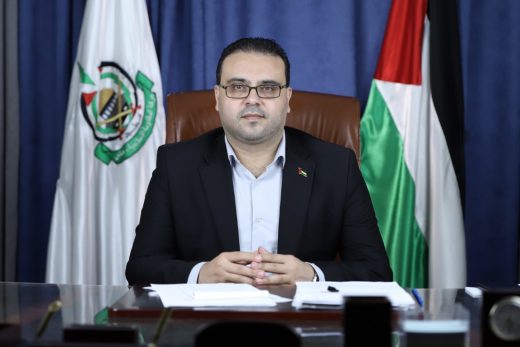
Palestinian Information Center – March 4, 2025
GAZA – The Hamas Movement said it will not be part of any administrative arrangements in the post-war Gaza Strip on condition of a national consensus.
“It is not necessary for Hamas to be part of the administrative arrangements in Gaza. It is not interested in that, and does not want to be in these arrangements at all,” Hamas spokesperson Hazem Qassem told Anadolu agency.
“Any arrangements for Gaza’s future after the [Israeli] aggression must be based on national consensus, and we will facilitate this. Hamas will not allow any external force to interfere,” he added.
Qassem said these arrangements must lead to “launching a serious and genuine reconstruction process to save our people in Gaza from the catastrophe they have endured” due to Israel’s war.
The comments come as Arab leaders prepare to meet in Cairo to formulate a unified Arab stance on the Palestinian issue and present a counterproposal to US plans for the displacement of Gaza’s population
Egypt unveils Gaza reconstruction plan ahead of emergency Arab summit
Al Mayadeen | March 4, 2025
On Tuesday, Egypt’s Al-Qahera Al-Ikhbariya channel published Egypt’s plan for rebuilding Gaza, which will be presented to Arab leaders at the emergency summit hosted in Cairo on Tuesday.
Egyptian Foreign Minister Badr Abdelatty previously stated that the plan was designed to ensure the Palestinian people’s dignity and rights, and would be presented on March 4.
According to Abdelatty, Egypt’s alternative reconstruction plan will not be solely Egyptian or Arab but will include international support and funding to ensure its effective implementation.
“We will hold intensive talks with major donor countries once the plan is adopted at the upcoming Arab Summit,” he stated during a press conference with European Union Commissioner for the Mediterranean Dubravka Suica.
Into Egypt’s plan
The plan, which is based on preserving the rights and dignity of the Palestinian people, includes the formation of a Gaza Administration Committee to oversee the governance of the territory during a six-month transitional period. This committee will be independent, composed of non-partisan technocrats, and will operate under the Palestinian government.
According to the plan, the committee will be established throughout the current phase and pave the way for the full return of the administration, which would manage the next phase under Palestinian decision-making.
The plan also states that Egypt and Jordan will train Palestinian police forces in preparation for their deployment in Gaza. It calls for mobilizing political and financial support to back Egyptian-Jordanian efforts in training Palestinian security personnel.
Additionally, the plan suggests that the UN Security Council consider an international presence in the Palestinian territories, including the West Bank and Gaza, and issue a resolution to deploy international peacekeeping forces as part of a comprehensive framework for establishing a Palestinian state.
On stabilizing the ceasefire
The reconstruction statement also condemned the killing and targeting of civilians, as well as the high levels of violence and humanitarian suffering caused by “Israel’s” war on Gaza, claiming that the two-state solution is the most viable resolution under international law and consensus, emphasizing that Gaza is an inseparable part of Palestinian territory.
Egypt stressed the importance of safeguarding Palestinian rights and ensuring their continued presence on their land without displacement, calling on the international community to unite on a humanitarian basis above all else to address the catastrophic consequences of the war.
Any attempt to strip the Palestinian people of their hope for statehood or seize their land would only further fuel the struggle and instability, it also warned.
Additionally, the plan also underscored the need to maintain the ceasefire in Gaza, ensure the sustainability of the current truce, and secure the release of prisoners and detainees. It noted that successful reconstruction requires transitional governance arrangements and security measures that uphold the prospects of a two-state solution.
Furthermore, it urged the international community to support Egypt, Qatar, and the United States in stabilizing the ceasefire agreement, warning that a collapse of the truce would severely hinder humanitarian efforts and the reconstruction process.
The plan emphasized the importance of a gradual approach that ensures the Palestinian people’s right to remain on their land while also safeguarding their legitimate aspirations for an independent state with territorial continuity between Gaza and the West Bank. It called for handling Gaza’s situation through a political and legal framework that aligns with international legitimacy and UN Security Council resolutions.
The plan also stressed the need to begin planning for the early recovery phase in a way that guarantees Palestinian ownership of the process. It underscored the importance of continued efforts by the Palestinian Authority to take further steps in strengthening and developing Palestinian institutions and governance structures.
Israel deliberately targeted archaeological sites in Gaza, Palestinian minister says
MEMO | March 3, 2025
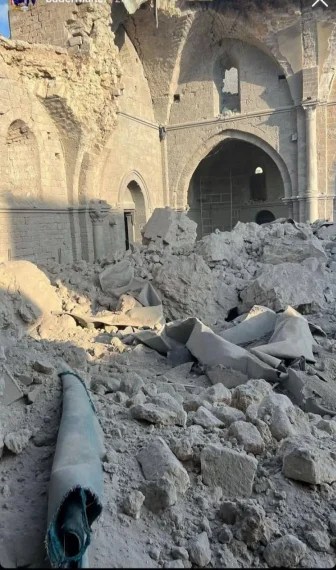 Israel “deliberately” targeted archaeological sites in Gaza during more than 15 months of war, Palestinian Minister of Tourism and Antiquities, Hani Al-Hayek, said yesterday. He went on to describe Israel’s actions as a genocide.
His remarks came during the closing session of a training workshop in Cairo, organised by the Palestinian Centre for Cultural Heritage Preservation (CCHP) in cooperation with the Egyptian Heritage Rescue Foundation (EHRF), according to the official Palestinian news agency, Wafa.
During the workshop, Al-Hayek pointed out that “more than 226 archaeological and historical sites in Gaza have suffered severe damage,” adding that work is underway to develop a comprehensive action plan to rescue and restore the cultural heritage in the region.
He added: “The Israeli occupation deliberately targeted archaeological sites in Gaza, but we are determined to rebuild and restore them. These sites are an important part of the history of the Palestinian people on this land, and it is our duty to return them to their former state.”
On 6 February, French archaeologist Simon Brelaud warned that the Israeli occupation army had destroyed most of Gaza’s historical landmarks, stressing that this “puts the future of archaeology in the region at risk.”
Gaza is an ancient region that has witnessed several civilisations, including the Pharaonic, Greek, Roman, Byzantine, Canaanite, Phoenician and finally, Islamic.
Hamas decries as ‘war crime’ Israeli suspension of humanitarian aid to Gaza
The Cradle | March 2, 2025
Israel has accepted a proposal brought by US envoy Steve Witkoff to extend the first phase of the Gaza ceasefire and prisoner exchange agreement for another 42 days, facing rejection from the Hamas movement.
As a result of Hamas’s rejection – which stems from the resistance movement’s insistence on abiding by the terms of what was initially agreed upon – Israel announced on 2 March that it halted the entry of aid and supplies into the Gaza Strip.
“With the end of the first stage of the prisoner swap deal and following Hamas’ rejection of Witkoff’s proposal to continue negotiations – which Israel agreed to – Prime Minister Netanyahu has decided to halt all imports of goods and supplies to the Gaza Strip as of today,” said the office of Israeli Prime Minister Benjamin Netanyahu in a statement.
“Israel will not allow a ceasefire without the release of its prisoners. If Hamas continues to refuse, there will be further consequences,” the premier’s office added.
The extension deal agreed to by Netanyahu calls for the release of half of the estimated 22 living captives in Gaza, in exchange for Palestinian prisoners.
According to Netanyahu, the Witkoff plan gives Israel the right to resume the war after the 42-day extension if talks do not progress. Israel’s Channel 12 reported that the prime minister has approved a potential call-up of 400,000 reserve soldiers.
“The decision we made last night to completely halt the entry of humanitarian aid into Gaza until Hamas is destroyed or surrenders completely and all our hostages are returned is an important step in the right direction— ‘standing at the gates of hell,’” said Israeli Finance Minister Bezalel Smotrich.
“Now, we must open these gates as quickly and as lethally as possible against the cruel enemy until absolute victory,” he added.
Israeli opposition leader Yair Lapid blasted the government’s decision.
“The prisoner exchange deal has been halted. Humanitarian aid to Gaza has been stopped. The government has approved the mobilization of 400,000 reserve soldiers. What is the goal? What objective has Israel set for itself? Has the government decided to abandon the prisoners, and if so, why? For what greater national purpose? If we return to war, what is the objective of the war? Who will replace Hamas in the end?” Lapid said.
“Once again, the government is acting without a plan, without a vision. We can only hope things turn out okay—because that seems to be the extent of their planning.”
Phase one of the Gaza ceasefire was due to end on Saturday. Israel has been pushing for the extension in recent days and has continuously delayed the start of negotiations for the second phase, violating the original ceasefire agreement.
“The statement issued by the office of the terrorist occupation Prime Minister Netanyahu, regarding his approval of American proposals to extend the first phase of the agreement under arrangements that violate the ceasefire agreement in Gaza is a blatant attempt to evade the agreement and avoid entering negotiations for its second phase,” Hamas said in a statement.
“Netanyahu’s decision to halt humanitarian aid is a form of blackmail, a war crime, and a blatant violation of the agreement,” it went on to say.
Since the morning of 2 March, Israeli attacks on Gaza have killed at least four Palestinians. Israel has been violating the ceasefire daily since it was reached in January, carrying out deadly attacks and consistently holding up the entry of aid and essentials into Gaza.
Hamas denounces New York Times distortion of Marzouk’s comments on Op Al-Aqsa Flood
Press TV – February 25, 2025
Hamas has rejected a report by the American daily newspaper The New York Times that has misrepresented recent remarks by a senior official of the Palestinian resistance movement, emphasizing that the comments are “inaccurate” and “taken out of context.”
In a statement released on Monday, the Gaza-based group said the interview conducted with Moussa Abu Marzouk, a senior member of its political bureau, and published several days ago did not contain the full content of the answers, and his exact remarks were quoted out of context.
Hamas stressed that the published interview did not include the true remarks made by Abu Marzouk, and did not convey the true meaning of what he had said.
On Monday, The New York Times ran an article titled: “Hamas Official Expresses Reservations About Oct. 7 Attack on Israel” claiming that Abu Marzouk voiced doubts regarding the October 7 attack.
According to the article, Abu Marzouk admitted he would not have endorsed the assault had he been aware of the destruction it would cause in Gaza.
Hamas in its statement stated that Abu Marzouk confirmed that the large-scale surprise attack, dubbed Operation Al-Aqsa Flood, against the usurping Tel Aviv regime on October 7, 2023, reflected the Palestinian people’s right to resistance and their rejection of Israel’s siege, occupation, and settlement expansion activities.
Abu Marzouk also emphasized that the criminal Israeli regime had committed appalling war crimes and genocide against the Palestinians in Gaza.
Abu Marzouk told the New York Times that Hamas would not give up its positions and Palestinian people’s right to use all forms of resistance, including armed resistance, to fight off the Israeli occupation and liberate their land.
“The resistance weapon belongs to our people and its purpose is to protect our people and our holy sites, so it is not permissible to drop or surrender it as long as the [Israeli] occupation exists on our land,” the high-ranking Hamas official told the newspaper.
Backed by the United States and its Western allies, Israel launched the war on Gaza, after Hamas and other Gaza-based Palestinian resistance movements carried out Operation Al-Aqsa Flood against the Israeli regime in response to its decades-long campaign of oppression against Palestinians.
Israel’s genocidal war on Gaza has led to the killing of at least 48,346 Palestinians, mostly women and children, and injury of 111,759 others since early October 2023.
A ceasefire and prisoner exchange agreement went into effect in Gaza on January 19, halting Israel’s aggressive campaign against the coastal region.
Restoring Palestine to its rightful owners by decolonising solidarity
By Ramzy Baroud | MEMO | February 25, 2025
Interview: ‘Not A Far-Off Goal’ — Palestinian Scholar Salman Abu-Sitta on the Right of Return
Pitasanna Shanmugathas | University of Windsor Faculty of Law, CA | January 14, 2025
Dr. Salman H. Abu-Sitta, a Palestinian academic, is renowned for his extensive work documenting Palestine’s land and people, as well as developing a practical return plan for Palestinian refugees. He founded the Palestine Land Society (PLS), accredited by the UN Committee on the Exercise of the Inalienable Rights of the Palestinian People (CEIRPP), and established the Palestine Land Studies Center at the American University of Beirut (AUB), housing over 40 years of his research.
Author of more than 400 articles and several landmark atlases — including the Atlas of Palestine 1948 and the Atlas of Palestine 1871-1877 — he has also created a series of poster maps related to Al Nakba. His memoir, Mapping My Return, offers a personal account of Al Nakba in southern Palestine. A former member of the Palestine National Council, Abu-Sitta has participated in numerous international forums on Palestinian rights and delivered a notable address, A Palestinian Address to Balfour, at the University of Edinburgh in 2022.
Abu-Sitta spoke to JURIST’s Senior Editor for Long Form Content, Pitasanna Shanmugathas, about his childhood in Palestine before the establishment of the state of Israel in 1948 on his land, how he and his family survived the Nakba, his family’s current situation in Gaza, and his detailed proposal for implementing the Palestinian Right of Return.
Pitasanna Shanmugathas: Dr. Abu-Sitta, you were born in Palestine in 1937, in the Beersheba district. Could you describe what life in Palestine was like during your childhood, before the establishment of the state of Israel in 1948?
Dr. Salman Abu-Sitta: I was born in 1937 in al-Ma’in Abu-Sitta, a 6,000-hectare area in the Beersheba district that my family had owned for over 200 years. Al-Ma’in, named after my family, was part of a vibrant agricultural community. We cultivated wheat, barley, grapes, figs, and almonds, and raised sheep, camels, and cattle. My father built a school in 1920, a flour mill, with four silos for our wheat and barley, reflecting our self-sufficient and prosperous ways of life. Education was highly valued in my family — my father built the first school in 1920 at his expense, by the 1930s, my brothers were pursuing high school in Jerusalem and by 1944, four of them were in university in Cairo.
Palestine at that time was a land of established communities, rich culture, and resilience. However, British policies under the Mandate, such as facilitating Jewish immigration and land acquisition, began to destabilize the country. My father and relatives resisted, fighting the British in World War I, including at the Suez Canal, and later during the Arab Revolt of 1936-1939. My brother led the Revolt in the Beersheba district, where we expelled British forces for a year and even established a local government.
This resilience was met with brutal suppression by the British, who bombed Palestinian villages and supported the growing Zionist movement. By 1948, the situation reached a devastating climax. On May 14, 1948, the Zionist militia Haganah attacked our land with 24 armored vehicles, burning our homes, destroying the school my father built, and expelling us from al-Ma’in. That day, coinciding with the declaration of the state of Israel, marked the beginning of my life as a refugee — a status I have endured for over 28,000 days.
I never saw a Jew in my life before. I never knew who they were. As a child, I could not comprehend how strangers could come from distant lands to take what was ours, displacing a people with over 4,000 years of recorded history. This tragedy shaped my life’s mission: to document and preserve Palestinian history and advocate for our right of return. I’ve published several works, including the Atlas of Palestine and the Return Journey Atlas, which chronicle our land’s transformation and provide a blueprint for reclaiming it.
Our history and connection to the land remain deeply ingrained in my identity and my work, as I strive to ensure that the world recognizes the truth of what happened and the injustice that Palestinians continue to seek.
Shanmugathas: Talk about what was Israel’s purpose behind the Nakba.
Abu-Sitta: The Nakba was a deliberate effort to erase all traces of Palestinian existence. Even the roads that connected al-Ma’in to other towns like Beersheba, Gaza, and Rafah were obliterated and replaced with new roads designed to serve the settlers. It was as though they sought to rewrite the geography itself, erasing not just our physical presence but also our history. My family, along with thousands of others, was forced to seek refuge in the Gaza Strip. I was just 10 years old, witnessing the complete destruction of my home and community — a trauma that shaped my identity and my lifelong commitment to documenting and preserving our history.
After finding refuge in the Gaza Strip, not yet Israeli-occupied, my family’s priority was survival and education. My father sent me to Cairo, where my older brothers were already studying. I completed my schooling there and earned a degree in civil engineering. Later, I pursued a PhD in civil engineering at University College London, which shaped my career as a professor and later as an international engineer. Yet, no matter how far my journey took me, I was haunted by questions about what happened to al-Ma’in after we were forced to leave.
When I began investigating, I discovered that settlers had built four kibbutzim on our land — Nirim, Ein Hashlosha, Nir Oz, and Magen. These weren’t organic communities but part of a military strategy. The kibbutzim were constructed on elevated points for strategic advantage and surrounded by trenches, barbed wire, and fortifications. Their goal was clear: to prevent us, the refugees, from returning. They knew that we were just a kilometer away in the Gaza Strip and would always dream of going home.
This militarized transformation of our land starkly contrasted with the organic way our community had developed over centuries. Where our lives had been intertwined with the natural landscape — fields, orchards, and wells — the kibbutzim were built with cold, calculated precision. Aerial photos from the 1950s to the 1970s show how the destruction of our homes and the construction of settlements unfolded step by step. The settlers built huts first, then fortifications, and eventually brought Jewish immigrants from Europe and other places to inhabit them.
Shanmugathas: You mentioned that as a result of the Nakba you and your family became refugees in the Gaza Strip. Do you currently have family in Gaza, and if so, how have they been affected by Israel’s assault on Gaza following the October 7 attacks?
Abu-Sitta: Yes, most of my family still lives in Gaza, and their suffering is indescribable. The ongoing assault on Gaza has turned life into an unimaginable horror. Communication with them is almost impossible — telephones are often down, and when I do manage to speak to someone, the news is always devastating. For instance, in Khan Yunis, their homes have been completely destroyed, leaving them with no choice but to flee to Al Mawasi, a coastal area. There, they are living in makeshift tents, exposed to the elements. The tents are drenched in water from the rain, and with the harsh winter temperatures, the situation has become life-threatening. Seven children have already frozen to death from the cold. Now eight.
Sending them any form of aid is nearly impossible. Banks have been destroyed, making money transfers unfeasible. Even if money could reach them, it would do little, as basic necessities are unavailable or exorbitantly expensive. For example, a kilogram of tomatoes now costs 10 to 20 times its normal price. The scale of suffering is unimaginable. Some 200,000 people in Gaza — 10% of its population — have been killed or injured. To put that into perspective, that would be the equivalent to 34 million Americans being affected in a similar manner.
This is a genocide happening in real-time, visible to the world through the screens of our phones and televisions. It’s not a distant historical event — it’s unfolding now. UN agencies like UNICEF and OCHA have documented the atrocities extensively. The evidence is undeniable. Yet, despite this, the world remains paralyzed. Over 160 member states of the United Nations have called for a ceasefire, but their efforts have been vetoed multiple times by the United States. The U.S., in turn, provides Israel with the bombs, financial resources, and political cover necessary to sustain this assault.
As a historian and someone deeply familiar with global injustices, I find it astonishing that such atrocities can occur with the world watching and yet so little action being taken. No one can claim ignorance. Those who speak out — students, activists, and scholars — are silenced, often with severe repercussions. The question now is how individuals and nations will respond, knowing what is happening and understanding the consequences of inaction.
Shanmugathas: To our readers at JURIST who might be unaware, could you explain the concept of the Palestinian right of return?
Abu-Sitta: The concept of the right of return is, first and foremost, a universal and inalienable right for everyone. You may recall that on December 10, 1948, the Universal Declaration of Human Rights was adopted by the United Nations. Article 13 states that everyone has the right to leave their country and to return to it.
The very next day, on December 11, 1948, the United Nations General Assembly passed the famous Resolution 194, which affirmed that refugees must be allowed to return. This resolution contained three key elements:
- First, refugees must be allowed to return to their homes
- Second, they must receive relief until this happens.
- Third, mechanisms must be created to facilitate their return.
Israel refused to allow the refugees to return but permitted relief efforts, as it was their responsibility to provide for the refugees they had displaced. However, Israel soon abdicated this responsibility, which was then transferred to the United Nations and managed by the United Nations Reliefs and Works Agency (UNRWA). Now, not only does Israel refuse to implement the right of return, but it is also attempting to dismantle UNRWA altogether.
The third element in resolution 194 was the establishment of UNCCP to plan the return of the refugees. It is still in existence but Israel does not allow its action.
Since its passage, Resolution 194 has been reaffirmed by the United Nations 135 times, making it one of the most repeatedly endorsed resolutions in UN history. This repeated affirmation effectively elevates it to the status of customary international law. No other resolution in UN history has been reaffirmed as frequently as this one.
People often ask whether the right of return is both legal and feasible. To address this, I conducted a study to demonstrate how it could be practically implemented.
Shanmugathas: Yes, and I want to get into the specifics of your proposal for the right of return. Before doing so, how would you respond to the argument that the Palestinian right of return is not binding under international law? Critics often claim that UN General Assembly Resolution 194 is merely a recommendation without legally binding force, as only UN Security Council Resolutions have binding authority.
Abu-Sitta: That argument is incorrect for two reasons. First, the right of return is enshrined in the Universal Declaration of Human Rights as an inalienable right. While it is true that UN General Assembly resolutions are non-binding, this case is an exception because Resolution 194 has been reaffirmed by the United Nations 135 times. This repeated affirmation has elevated it to the status of customary international law.
No other resolution in the history of the United Nations has been reaffirmed so frequently. Legal experts, such as John Quigley and Mallison, have extensively argued that Resolution 194 has transcended the usual limitation of General Assembly resolutions and now constitutes customary international law. Moreover, it is important to note that Resolution 194 did not create the right of return; it simply reaffirmed this inalienable right.
Second, it is contrary to the principles of justice to argue otherwise. You cannot justify bringing people via smuggler ships, arming them with foreign support, allowing them to dispossess, kill, and displace an existing population, and then claim that such actions are acceptable. This defies both legal and moral standards.
Shanmugathas: You gained international attention for formulating a proposal to implement the Palestinian right of return without displacing Israel’s existing population. When did you first release this proposal, and how would the right of return work in practice?
 Abu-Sitta: I think I first presented this proposal in 1998 at a conference in London. The essence of my proposal is that Palestinians can return to their homeland without displacing the Israeli population. Many of my European friends, who support the Palestinian cause, argue that the return of Palestinians would lead to displacement of Jews who now live there. They suggest that if Palestinians return, it will create a “Jewish Nakba,” forcing Jews to leave and return to Europe. I challenge this reasoning, as it is both morally and legally flawed.
This argument suggests that we, the displaced Palestinians, have fewer rights to our land than the foreign settlers who arrived with military support, committed atrocities, and took our land. To me, this is not only a racist argument, but an illegal one. The logic is akin to saying that if a burglar enters your home, kills half your family, forces you into a shed, and claims your house as his own, the argument would be that the burglar has the right to remain simply because he has been there for some time. This reasoning is utterly unjustifiable.
Even if we take this argument at face value, the situation is far simpler than many believe. I’ve collaborated with institutions like Forensic Architecture at Goldsmiths College, using aerial photographs, maps, and historical records to trace the process of destruction and rebuilding. What struck me most in my research was the emptiness of the land. In my research, I found that 88% of Israel’s Jewish population resides in only 12% of the land, specifically in three major areas: Tel Aviv, Haifa, and West Jerusalem. The rest of the land is either militarized or occupied by kibbutzim, which were deliberately planted not as organic farming communities, but as fortified military outposts designed to keep Palestinian refugees from returning. These settlements were surrounded by trenches, barbed wire, and machine guns, particularly near Gaza, West Jerusalem, and the Lebanese border. The land outside of these concentrated areas is largely uninhabited, which presents a clear opportunity for the return of Palestinians without displacing anyone.
Despite the portrayal of densely populated Israeli settlements, vast stretches of former Palestinian land are nearly uninhabited. The reality is that most of the land is not occupied in the way people might think.
The key to implementing the right of return lies in the legal status of the land. No Israeli living in what is now called Israel has a title deed to the land they occupy. All the land in Israel is controlled by the Israel Land Administration (ILA), which holds the land of all Palestinian refugees and leases it out to kibbutzim and settlements. These settlers are not landowners — they are renters, leasing the land from the Israeli government, which acts as a landlord. But, for example, if the Israel Land Administration were transformed into the Palestinian Land Administration, Palestinians could return to their land, reclaiming what is legally theirs based on the documentation they hold.
In practical terms, the return of Palestinians could be achieved swiftly. I have mapped out the return routes for each refugee camp, detailing where each person originally came from in Palestine and how they can return. The distances are short — no more than 50 kilometers at most and in some cases, as little as 1 kilometer for those in Gaza. Refugees could easily walk home, and for others, buses could be arranged, with travel times of no longer than 40 minutes. This is not a complicated or far-off goal; the logistics are simple and feasible.
The real barrier to implementing this solution is not logistics, but the political factors that prevent its realization. The international community, particularly the United States and European powers, continues to block any meaningful action to secure the right of return. These countries provide military and political support to Israel, which prevents the United Nations and other international bodies from enforcing international law. The tragedy is that the solution is already clear, yet it is being blocked by powerful interests that prioritize political alliances over justice.
I would also like to point out that our case is actually simpler than many historical examples, such as the situation in Bosnia. When the Serbs attacked Bosnia and took over homes, the situation was far more difficult, as many people had settled into those homes, and there were complex issues of property rights and ownership. In contrast, the case of Palestine is much simpler. The majority of the land is either uninhabited or controlled by the Israeli government, and the rightful Palestinian owners still have legal documentation for their land.
The return of Palestinians to their homes could be done much more easily and quickly, and I am confident that it could be achieved within less than a month if the political will existed.
 Shanmugathas: In your proposal, you divide Israel’s demography into three categories, Area A, Area B and Area C. Your proposal mentions that Area C would have a majority Palestinian population, Area B would be a mixed population, and Area A would remain predominantly Jewish. Currently, there are about 8 to 9 million displaced Palestinian refugees, while Israel’s Jewish population is approximately 7 million. Could you elaborate on the specifics of how these 9 million refugees would be allowed to return without significantly displacing Israel’s existing population?
Abu-Sitta: Drop the idea of A, B, C. I used that framework 15 years ago when it was a very approximate concept. Now, I approach it place by place, kilometer by kilometer. It is much, much simpler than that. The Israeli population occupies only 12% of the area currently called Israel. If you exclude open spaces, roads, and public areas, they actually live on just 2% to 2.5% of Israel, which itself constitutes 78% of historical Palestine.
We have no difficulty identifying where the 9 million displaced Palestinians live today and where they originally came from. Palestine is divided into 1,200 villages and cities, each with clearly defined land areas. We know exactly where the people from each village or city are, as these communities remain intact and connected. They can return to their specific lands without any issue.
The obstacles they would face fall into two groups: the first group is the Israeli army, which, in the future, should no longer exist. I envision — and hope — that the Israeli army will eventually be brought to the Hague, to the International Criminal Court, for its extensive war crimes. There isn’t a single member of the Israeli army who is free from such crimes.
Assuming the Israeli army is removed from the equation and held accountable at the Hague, the remaining obstacle is the kibbutzim. As I’ve explained the kibbutzim were established with the aim of holding refugee lands and preventing Palestinians from returning. If the kibbutz residents want to remain on a small portion of the land where their houses are located, I offer them the option to rent that space. However, they must return the rest of the land to its rightful owners. According to international law, this process would involve restitution and possibly compensation, principles that have been well established over the past 76 years.
It is not my duty to compensate settlers who have caused the disruption of Palestinian lives for 76 years. That duty falls to them — the perpetrators of these crimes. Restitution, whether material or non-material, is their responsibility. International law categorizes several types of restitution. Material restitution includes compensation for the use of land and property over time. The United Nations has already addressed this issue. There is a specific resolution, known as the Refugees’ Revenue Resolution, which obliges Israel to record the benefits it derived from refugee lands. This has already been documented, and we have the figures.
Non-material restitution, on the other hand, pertains to losses such as the deprivation of nationality, the destitution faced by refugees worldwide, the loss of identity, and the disruption of families. These elements are also well established under international law. Both forms of restitution — material and non-material — are essential for justice and the restoration of Palestinian rights.
Shanmugathas: In your proposal, you highlight the economic difficulties faced by the kibbutzim and the limited contribution of agriculture to Israel’s GDP. You suggest that the return of Palestinian refugees could help revitalize these areas and restore agricultural productivity. Could you elaborate on how this would work, how you envision the economic integration of Palestinian refugees into these areas, and how it would contribute economically?
Abu-Sitta: Most Palestinian refugees are rural people, as Palestine in 1948 was 70% rural and 30% urban. For thousands of years, these rural communities thrived and built a rich history. In contrast, Israelis who seized the land were reluctant farmers, resulting in agriculture contributing only 1% to Israel’s GDP.
Today, Israel’s economy relies heavily on technology, with 75% of its income derived from Silicon Valley industries that require minimal land — about 4 to 10 square kilometers could house all Israeli industry without impacting production. If necessary, they could even relocate their operations, perhaps to Cyprus.
The real issue lies with the kibbutzim, which control vast tracts of land and serve as extensions of the Israeli military. These lands are used for aggression, wars, and military camps, which would be unnecessary in the absence of conflict.
Another issue is water. Israel consumes 2,000 million cubic meters of water annually, three-quarters of which is stolen from Arab countries, including Palestine, Syria, and Lebanon. Yet, despite diverting massive amounts of water, agriculture contributes just 1% to the GDP, an egregious misuse of resources.
This inefficient, artificial economy underscores that the right of return is entirely feasible. The obstacles are not logistical but political, driven by the same powers that repeatedly veto international efforts to address these injustices.
Shanmugathas: Your proposal implicitly advocates for a one-state solution, diverging from the longstanding international consensus of a two-state solution. Critics argue that the unconditional return of eight to nine million Palestinian refugees, as you propose, would result in Jews no longer being the majority in the Israeli state and thus is not practically feasible as Israel would perceive it as an existential threat to its survival. Academic Noam Chomsky once asserted that if Israel were ever put in a position where it was forced to accept the right of return, Israel would not hesitate to use nuclear weapons to prevent it from happening. How do you respond to this?
Abu-Sitta: I know your good intentions, otherwise I would not answer this question. I will not justify a crime or ask the victim to accept it. The two-state solution is inherently flawed, and history proves this. Since 1948, dozens of so-called peace plans — designed by the West to legitimize Israel’s actions — have all failed. Why? Because they attempt to normalize the theft of Palestinian land.
What does a two-state solution mean? It means taking land from Palestinians and giving it to settlers from abroad. Imagine telling a Palestinian refugee to remain in a tent while someone from Poland, like Netanyahu, occupies their home and land. For example, Netanyahu lives in Caesarea, [a town in present-day Israel] originally home to the Bushnak family, to which my brother is married. Should my sister-in-law be expected to give up her ancestral home to someone who arrived from Poland?
The answer is clear: no one would accept this. The issue isn’t about coexistence but justice. If any Israeli or Zionist can justify this theft logically or legally, I would willingly concede my land. But they cannot. Justice demands the right of return and the restoration of stolen homes and land.
Shanmugathas: The Geneva Initiative, negotiated in 2003 by former Israeli Minister Yossi Beilin and former Palestinian Authority Minister Yasser Abed Rabbo, presents a detailed two- state solution framework with specific attention to the refugee issue. The Geneva Initiative proposes an international commission to oversee implementation, including a valuation process for property claims using United Nations Conciliation Commission for Palestine (UNCCP) and Custodian for Absentee Property records, with a dual-track system for small and large claims under strict timelines. Refugees must apply for property claims within two years and resolve them within five, with oversight from the UN, UNRWA, Arab host countries, and international donors.
The initiative offers five resettlement options: relocation to a Palestinian state, land swap areas, third-country resettlement, limited return to Israel, or remaining in host countries. By contrast, your proposal focuses on the direct physical return of refugees, emphasizing that 88% of Israel’s Jewish population resides on only 12% of the land. How would you respond to arguments that the Geneva Initiative’s compromise-based approach might be more feasible and politically viable with Israeli leaders and international stakeholders?
Abu-Sitta: The Geneva Initiative is just one of the dozens of so-called peace proposals that have all failed. Where is it now? In the dustbin of history. And where is Yasser Abed Rabbo, one of its architects? Politically irrelevant. These proposals fail because they are built on fundamental injustice, forcing victims to accept their victimhood while ignoring their rights. The Geneva Initiative is no different. It violates basic principles and prioritizes compromise over justice.
Shanmugathas: Many point to the absence of a strong, principled Palestinian leadership as a critical challenge to establishing a just solution to the conflict. The Palestinian Authority (PA) is often criticized for corruption and acting as an enforcer of Israel’s occupation of the West Bank. There is division between political factions like Fatah in the West Bank and Hamas in Gaza. Figures like Marwan Barghouti are seen by some as a potential incorruptible leader. What do you think needs to happen for Palestinians to have principled, effective leadership?
Abu-Sitta: This is a vital question to end on. As a Palestinian, I oppose the PA, which was essentially created by Israeli occupation forces to suppress its own people, akin to Quisling’s role during the Nazi occupation of Denmark. The PA has lost legitimacy, as its leadership has not been re-elected in over 15 years, and it functions as a Western-funded tool to stifle Palestinian resistance.
For decades, I have called for new elections for the Palestinian National Council, representing all 14 million Palestinians globally. Starting with Edward Said in 2000, we pushed for such elections in 2003, 2007, and at international conferences, including one I organized in 2017 in Istanbul with 6000 attendees. Despite our efforts, colonial powers and financial support for the PA have undermined these calls, ensuring a leadership that prioritizes external interests over the Palestinian people’s will.
Elections must be held, allowing Palestinians to freely choose their leaders. Whether it’s Marwan Barghouti, who has shown resilience and principle during his years in Israeli detention, or others, it’s the people’s choice. Personally, I prefer younger leaders—highly qualified, articulate, and in their 30s—who can bring fresh energy and lead for decades. These individuals, many of whom I know from Europe and Arab countries, are well-educated in law, politics, and global affairs.
While elders like me can offer guidance and share experience, it’s time for the next generation to lead.
Featured Video

Theodore Postol: Iran’s Missiles & Drones Were Underestimated
or go to
Aletho News Archives – Video-Images
From the Archives
Wars for Israel: A reminder of who’s giving the marching orders
By Damian Lataan | February 7, 2012
As the West prepares to march off to yet another war in the Middle East, we should perhaps remind ourselves of who is giving the West their marching orders.
In February 2003, just weeks before the US and their allies launched their attack on Iraq and her peoples, a delegation of US congressmen, together with the US Ambassador to the United Nations, John Bolton, a well known pro-Zionist and neoconservative war-hawk, were in Israel at the invitation of the Israeli government then led by Israeli Prime Minister Ariel Sharon.
Addressing the congressmen, Sharon told them ‘that Iran, Libya and Syria should be stripped of weapons of mass destruction after Iraq’. Later, Sharon told John Bolton ‘that Israel was concerned about the security threat posed by Iran, and stressed that it was important to deal with Iran even while American attention was focused on Iraq’. … continue
Blog Roll
 Aletho News
- A New Resistance Front: How Does Syria Factor into the Regional War?
- Gulf states weigh pipeline expansion plans, hoping to bypass Hormuz
- Iran sets up ‘tollbooth’ system in Strait of Hormuz
- Wave 90: IRGC strikes US-linked industrial sites in Gulf
- Iran Says US-Israeli Claims of Its Military Strength Are Wrong
- Trump’s April Fools’ Address to the nation
- The Most Important Bet You’ve Never Heard Of
- The killing of three Indonesian soldiers in Lebanon should remind Jakarta that Israel does not want peace
- Defeated and delusional: Netanyahu’s remarks reveal $80bn war failure, says analyst
- Iran’s friends are about to make life much more difficult for Israel and the US
- If Americans Knew
- Trump says the quiet part out loud: (Israel’s) war on Iran > Americans’ health – Daily Update
- Gaza families reunite years after babies evacuated amid Israel’s war
- International Rescue Committee warns Gaza’s children face grave protection risks
- Iran’s Alleged 47-Year War on America: Debunking the 1,050 American Deaths Canard
- Israel wants US to bomb more of Iran’s civilian structures (113,000 is not enough) – Not a ceasefire Day 173
- Ann Coulter Rips Into Fox News for Iran War Coverage
- Joe Kent Urges Americans To Call White House and Congress To Object To Sending Troops Into Iran
- DNC Resolution to Reject AIPAC Funding Puts Democratic Leaders in the Hot Seat
- Swedish foundation to build 400 schools as over 650,000 Gaza children remain without education for 2 years
- Israeli army admits photshopping image of slain Lebanese journalist
- No Tricks Zone
- Low Intensity Tornado Wrecks Major Solar Farm, Creating A Potential Toxic Dump
- New Study Finds Warming Saves Lives…Cold Temperatures 12 Times More Deadly Than Excess Heat
- German Science Blog Accuses PIK Climate Institute Of Hallucinating Climate Tipping Points
- Devastating Assessment Of Comirnaty Vaccine By Former Senior Pfizer Europe Toxicologist
- New Study: CO2 Is ‘Effectively Negligible’ As An Explanatory Climate Change Factor Since 2000
- Former Pfizer Toxicologist Dr. Helmut Sterz Tells Bundestag Hearing Pfizer Vaccine Should Have Never Been Approved
- Energy Expert: Germany’s Nuclear Phaseout Was A “500 Billion Euro Mistake”
- New Research: South Australia’s Mid-Holocene Sea Surface Temperatures Were 4°C Warmer Than Today
- Storing Green Energy To Last Germany 10 Days Would Require A 60-Million Tonne Battery
- New Studies: UK Sea Levels Were 4 Meters Higher Than Today During The Mid-Holocene
 Aletho News