Canada Gets a Pass From the West for Foreign Agents Law While Georgia Is Punished
Sputnik – 20.06.2024
Georgia’s efforts to insulate itself from possible foreign meddling through NGOs funded from abroad were not met with understanding from the United States and its European allies. But when Canada does the same, that is a different story.
The United States and the European Union refraining from criticizing the foreign agents registry law recently adopted in Canada, while simultaneously blasting similar legislation adopted by Georgia, is essentially a “problem of double standards,” said Dr. Marco Marsili who holds research positions in major civil and military institutions in Portugal, the UK and Italy.
“It depends on the point of view of the proponents, the lawmakers, and of those who are their allies and assess the bill as just and fair, according to their geopolitical perspective,” Dr. Marsili explained. “Basically, it is a Manichaeans approach, according to which the world is divided into the good ones and the bad ones – figure out which are which according to a Western vision.”
Georgia merely seeks to protect itself from foreign influence exerted through funding from abroad of local NGOs and “any other public outreach activity like media outlets,” basically following the example of the Western powers, he noted.
Western powers, however, insist that “Georgian politics must be influenced through Western financial support to local agents” but at the same time “reject any Russian funding.”
“That is really bizarre – it’s not just double-standard, but also non-sensical,” Dr. Marsili remarked.
Francis Boyle, a professor of international law at the University of Illinois College of Law, also suggested that both Russia and Georgia are “entitled to have their own equivalents to the US Foreign Agents Registration Act,” considering that many of the foreign NGOs operating in these countries are “designed to destabilize the host governments and produce color revolutions.”
“All of these Western NGOs operate under the basic principle: he who pays the piper calls the tune!” he added. “Many of these foreign NGOs are shot through with Western intelligence agents and assets. So of course these foreign NGOs have to be regulated in order to preserve the sovereign independence of the host states under international law.”
Collapsing Empire: Georgia and Russia restore diplomatic relations
By Kit Klarenberg | Al Mayadeen | June 15, 2024
It’s been reported by Georgian media that Tbilisi is now “actively working” to restore the country’s diplomatic relations with Moscow, severed by the then regime in August 2008, following its trouncing in a calamitous five-day war with Russia. While this may seem mundane to outside observers, it is a seismic development, amply testifying to the extraordinary pace and scale of the US Empire’s self-inflicted collapse.
Over decades, Washington has invested enormous energy and money into turning Georgia against Russia. Tbilisi has deep and cohering cultural, economic, and historic ties with its huge neighbor. Today, nostalgia for the Soviet Union is widespread, and Joseph Stalin remains a local hero for a significant majority of citizens. While public support for Euro-Atlantic integration and EU and NATO membership is strong, recent developments have prompted many Georgians to reconsider their country’s relationship with the West.
Since taking office in 2012, the ruling Georgian Dream has struck a delicate balance between strengthening Western ties and maintaining civil coexistence with Moscow. This has become an ever-fraught dance since the outbreak of the Ukraine proxy conflict, with external pressure to impose sanctions on Russia and send arms to Kiev perpetually rising. Against this backdrop, there have been multiple apparent plots to overthrow the government and install a more belligerent administration.
In order to neutralize the threat of a coup by Georgian Dream’s domestic and international adversaries, legislation compelling foreign-funded NGOs – of which there are over 25,000 in Tbilisi – has been passed. Its gestation produced a bitter showdown with the EU and US, ending with lawmakers who voted for the law being sanctioned by Washington and the threat of further action to come. Along the way, Georgian citizens were confronted with the poisonous reality of their relationship with the West. And they didn’t like it.
‘Foreign assistance’
Contemporary media reports on Ukraine’s 2014 Maidan “revolution” either ignored the unambiguous Western role in fomenting it or dismissed the proposition as Russian “disinformation” or “conspiracy theory”. Ever since the proxy conflict began, Western journalists have become even more aggressive in rejecting any and all suggestions that the insurrectionary upheaval in Kiev was anything other than an overwhelmingly – if not universally – popular grassroots public revolt.
Yet, it was not long ago that the Empire unabashedly advertised its role in orchestrating “color revolutions” throughout the former Soviet sphere, of which Maidan will surely in future be considered the final installment. In 2005, intelligence cutout USAID published a slick magazine, Democracy Rising, documenting in detail how Washington was behind a wave of rebellious unrest in Georgia, Kyrgyzstan, Lebanon, Ukraine, Yugoslavia, and elsewhere during the first years of the 21st century.
Two years prior, the Washington-sponsored “Rose Revolution” unseated longtime Georgian leader Eduard Shevardnadze, replacing him with handpicked, US-educated Mikheil Saakashvili, a close associate of George Soros. Shevardnadze had since Tbilisi’s 1991 independence from the Soviet Union eagerly served as a committed agent of Empire, opening up his country to far-reaching privatization for the benefit of Western investors and extensive societal and political infiltration by US and European-funded organizations.
In a bitter irony, such subservience was Shevardnadze’s ultimate undoing. Brussels and Washington exploited this space to lay the foundations of his overthrow, financing individuals and organizations who would serve as shock troops in the “Rose Revolution”. For instance, Democracy Rising reveals that in 1999, US funding “helped Georgians draw up and build support for a Freedom of Information Law, which the government adopted.” This allowed Western-funded media and NGO assets “to investigate government budgets, [and] force the firing of a corrupt minister.”
The US, moreover, bankrolled the training of “lawyers, judges, journalists, members of parliament, NGOs, political party leaders, and others” to wage war against their government. The official purpose of this largesse was to “give people a sense that they should regulate the government.” As per Democracy Rising, “the Rose Revolution was the climax of these efforts.” Following Tbilisi’s November 2003 election, US-financed exit polling suggested the official result – pointing to the victory of a coalition of pro-Shevardnadze parties – was fraudulent.
Scores of anti-government activists from across the country then descended upon Tbilisi’s parliament building, ferried on buses paid for by Washington. Nationwide demonstrations led by US-bankrolled NGOs and activist groups raged for weeks, culminating on November 23 with activists storming parliament brandishing roses. The very next day, Shevardnadze resigned. One recipient of Western support remarked in Democracy Rising, “Without foreign assistance, I’m not sure we would have been able to achieve what we did without bloodshed.”
As the USAID pamphlet noted, many US-financed and trained assets in Georgia central to the “Rose Revolution” went on to become officials within Saakashvili’s government. One, Zurab Chiaberashvili, was appointed as chair of Tbilisi’s Central Election Commission from 2003 to 2004, before becoming mayor of Tbilisi. He was quoted in Democracy Rising as saying:
“Under US assistance, new leaders were born… [the US] helped good people get rid of a bad and corrupted government… [this assistance] made civil actors alive, and when the critical moment came, we understood each other like a well-prepared soccer team.”
‘Demonstrations of will’
The Empire’s in-house journal Foreign Policy has conceded the results of the “Rose Revolution” were “terribly disappointing”. Far-reaching change “never really materialized,” and “elite corruption still continued apace.” Saakashvili was no more democratic or less authoritarian than his predecessor – in fact, his rule was brutal and dictatorial in many ways Shevardnadze’s was not. Questions abound about his involvement in several suspicious deaths, he directed security services to assassinate rivals, and at his personal behest, prisons became politicized hotbeds of torture and rape.
The Empire could forgive Saakashvili all this though, for further facilitating his country’s economic rape and pillage, and even more crucially, intensifying Tbilisi’s anti-Russian agitation locally and internationally. This crusade came to a bloody head in August 2008, when Georgian forces, with US encouragement, began shelling civilian positions in the breakaway regions of Abkhazia and South Ossetia. Moscow intervened to decisively defend the pair. As many as 200,000 locals were displaced in subsequent battles, with hundreds killed.
Dissident journalist Mark Ames visited sites of the fighting in December of that year and witnessed “an epic historical shift” – “the first ruins of America’s imperial decline.” The Georgian army had been trained, armed, and even clothed by the US over many years, only to be comprehensively crushed by Russia’s military – and there was “no American cavalry on the way.” His first-hand insights led Ames to dub the outbreak of war that year, “the day America’s empire died.”
Ames had previously visited Georgia in 2002 to report on the arrival of US military advisors to the country. As the journalist records, “At the time, the American empire was riding high.” TIME magazine had recently celebrated George W. Bush’s inauguration with a column declaring that Washington was “the dominant power in the world, more dominant than any since Rome,” and thus positioned “to re-shape norms, alter expectations and create new realities,” via “unapologetic and implacable demonstrations of will.”
US military expansion into Georgia was one such bold “demonstration of will.” Military advisors were dispatched ostensibly to train Tbilisi’s soldiers to combat “terrorism”. In reality, as Ames wrote, the purpose was to tutor them “for key imperial outsourcing duties.” It was expected that “Georgia would do for the American Empire what Mumbai call centers did for Delta Airlines: deliver greater returns at a fraction of the cost.” The move would also secure Washington’s “strategic control of the untapped oil in the region.”
The benefit for Georgia? “[Moscow] wouldn’t f*** with them, because f***ing with them would be f***ing with us – and nobody would dare to do that.” In the event, however, Saakashvili’s intimate bromance with the West was no deterrent at all. The blitzkrieg’s success, moreover, left Russia “drunk on its victory and the possibilities that it might imply”:
“Now it’s over for us. That’s clear on the ground. But it will be years before America’s political elite even begins to grasp this fact… We have entered a dangerous moment in history – America in decline is reacting hysterically, woofing and screeching and throwing a tantrum, desperate to prove that it still has teeth. Russia, meanwhile, is as high as a Hollywood speedballer from its victory… If we’re lucky, we’ll survive the humiliating decline… without causing too much damage to ourselves or the rest of the world.”
The Maidan coup starkly showed the Empire failed to learn lessons from the 2008 war, and Ames’ hope that Washington’s “humiliating decline” could be endured by US citizens and politicians alike “without causing too much damage to ourselves or the rest of the world” was futile. The West is now struggling to confront its undeniable defeat on Ukraine’s eastern steppe and accept the unraveling of its long-running efforts to absorb Moscow’s “near abroad”, openly mulling direct intervention in the proxy conflict. God help us all.
Scott Ritter: Georgian ‘Foreign Agents’ Law Exposes Western Influence and Protects Sovereignty
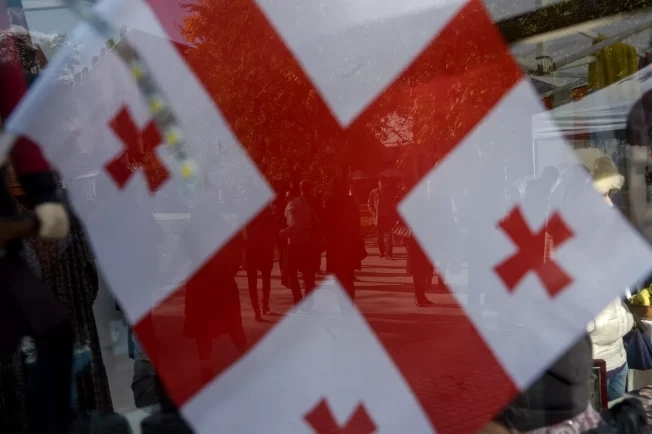
By Ekaterina Blinova – Sputnik – 31.05.2024
The new “foreign agents” law will help Georgians tell right from wrong and real friends from fake ones, former US Marine Corps intelligence officer Scott Ritter told Sputnik, arguing that the legislation should be called the “transparency law.”
Georgia’s “foreign agents bill,” which designates non-governmental organizations (NGOs) receiving more than 20 percent of their funding from abroad as “pursuing the interests of a foreign power,” became law on May 28. The US immediately announced sanctions against Georgian politicians backing the legislation, while the EU threatened to freeze the country’s candidate status.
One might wonder as to why the law, which resembles the US’ Foreign Agents Registration Act (FARA), has been received with such animosity in the West. The crux of the matter is that the legislation is aimed at exposing the West’s deep disrespect of Georgia’s sovereignty, according to former US Marine Corps intelligence officer Scott Ritter.
“In Georgia today, as we speak, there are 27,000 Western-funded NGOs. What are these non-governmental organizations doing? It’s about buying a generation of Georgian citizens, a young generation, a generation that has lost touch with who they are and what they are as Georgians, a generation that is out of touch with the reality of what happened to Georgia in the 1990s,” Ritter told Sputnik.
Over the past several decades, Georgians have experienced what the “European choice” really entails, Ritter continued, referring to US-backed Georgian President Mikheil Saakashvili’s aggression against South Ossetia and Russian peacekeepers in August 2008, which was quickly repelled by Moscow. Following Saakashvili’s botched invasion, Russia recognized South Ossetia and Abkhazia, which had declared their independence from Tbilisi in the early 1990s.
Putting Georgia First
Currently, the Western-backed Georgian opposition wants to create a “second front” against Russia, something that would be nothing short of suicidal, according to Ritter. This policy of confronting Russia is part and parcel of an overall package that includes Georgia becoming a member of the European Union and member of NATO, which would also mean ceding Georgia’s sovereignty to the West, the military expert warned.
“Georgian Dream has the best interests of Georgia in mind,” said Ritter. “The EU wants Georgia to participate in the economic sanctioning of Russia. The Georgian Dream Party so far has said no. Look what happened to Europe when they sanctioned Russia, it boomeranged, backfired. What about Georgia? By not participating in the economic sanction of Russia, the Georgian economy has grown more than 10% over the course of the last two years and is on pace to continue this level of growth. That’s called looking out for Georgia first.”
When it comes to Georgian NATO membership, many of the nation’s seasoned military officers, who participated in NATO’s Iraq, Afghanistan, and Kosovo campaigns and brought home the dead bodies of Georgian soldiers, are no longer enthusiastic about joining the alliance, the expert remarked.
Ritter explained that territorial disputes with South Ossetia and Abkhazia will not allow Georgia to join NATO any time soon, adding that the irony is that the two breakaway republics will not start settling their disagreements with Tbilisi until the latter gives up its NATO aspirations.
New Law to Prevent West From Meddling in Georgia’s Elections
Unlike Georgia’s former pro-Western leaders and opposition, the Georgian Dream Party has taken a middle path of steering the nation away from economic and political crises, according to the pundit. In light of this, the upcoming October elections will become a litmus test for Georgians, and the governing party doesn’t want the West to decide the nation’s fate by meddling in the vote via thousands of US and EU-funded non-governmental organizations. Hence, the adoption of the law, which will help separate the wheat from the chaff, he said.
“One of the goals in passing this legislation was to prevent the EU and the US from taking control of the political opposition, directly and indirectly, by pouring in hundreds of millions of dollars through these 27,000 non-governmental organizations. By stopping this, by exposing this foreign money, the reality of this foreign money, the Georgian Dream Party is betting that the Georgian people will be shocked by the depths to which ostensible friends, the US, the EU, have gone to buy Georgia, not respecting Georgia as a sovereign state, not respecting the Georgian people as a sovereign people.”
Georgian Dream lawmakers want to prevent external forces from dragging the nation into another debacle, according to the expert. They want Georgians to choose their own way on the world arena, not as “Europeans,” but as “Georgians.”
“The Georgian Dream Party is betting that the Georgian people at the end of the day will recognize that they are not European – that they are Georgian. They are Eurasian. They are unique. That they don’t belong in a continent that doesn’t want them. They belong in the homeland, in the South Caucasus, from which they come. And that their closest big neighbor, Russia, has been the best friend of Georgia over time than any other nation on the planet. This is the Georgian dream. This is the dream of the Georgian people. And this should be the dream of anybody who claims to be a friend of the Georgian nation,” Ritter concluded.
US behind two failed ‘color revolutions’ – Georgian PM
RT | May 31, 2024
Tbilisi needs to “reconsider” its relationship with Washington, given that American-funded NGOs were behind at least two attempts at overthrowing the government, Georgian Prime Minister Irakli Kobakhidze has said.
The US has threatened sanctions against senior Georgian officials after the former Soviet republic passed a ‘foreign agents’ law which was denounced by the West as a threat to democracy.
“I don’t know why there were two attempts at revolution in 2020-2021, and then in 2022. I don’t know why there were these attempts, but the fact is that the previous [US] ambassador spoiled a lot of things, a lot of things were ruined in those years, and this needs to be corrected,” Kobakhidze told reporters on Friday.
“This includes American-funded NGOs that stood on the revolutionary stage, calling for the resignation of the government, and the formation of a government with their participation. Therefore, Georgian-American relations need to be reconsidered,” the prime minister added.
Georgia will do everything it can to improve relations with the US, Kobakhidze said, as this is in the interests of both countries.
The government in Tbilisi has been under intense pressure from the US and EU to drop the proposed Transparency of Foreign Influence Act, to the point that Washington and Brussels have threatened sanctions and a halt to Georgia’s EU and NATO integration.
The law would require NGOs, media outlets, and individuals receiving more than 20% of their funding from abroad to register as entities “promoting the interests of a foreign power” and to disclose their donors, or be fined up to $9,500 for noncompliance. The law sparked protests, during which activists clashed with police and tried to storm the country’s parliament building last month.
US Secretary of State Antony Blinken has said that Washington would introduce visa restrictions on “individuals who are responsible for or complicit in undermining democracy in Georgia, as well as their family members.”
Meanwhile, EU Commissioner for Neighborhood and Enlargement Oliver Varhelyi suggested to Kobakhidze that he could meet the same fate as Slovak PM Robert Fico, who narrowly survived an assassination attempt last month. Varhelyi later said his warning about the dangers of “polarization in society” was misunderstood.
Georgian NGOs, which are primarily funded by the West, have denounced the proposed law as “Russian” and attempted to replicate their 2023 success in forcing the government to back down. This time, however, the parliament passed the law and overrode President Salome Zourabichvili’s veto earlier this week. The government has denied that the law will be used to crack down on the opposition and insisted that the legislation is compatible with EU norms.
‘Certain friends and foes’ want Georgia to send troops to Ukraine – official
RT | May 27, 2024
Georgia has been repeatedly pushed into a conflict with Russia, with “certain friends and foes” urging Tbilisi to impose sanctions on the country and even to deploy troops to Ukraine, the President of the Georgian Parliament, Shalva Papuashvili, has said.
Speaking to reporters on Monday, the house speaker said the country has been repeatedly bombarded with such demands, both in public and in private.
“Certain friends and foes have been pushing us into this, so that we would send fighters to Ukraine, which would have directly meant war with Russia,” he explained.
Top Ukrainian officials, including the former head of the National Security Council Alexey Danilov, have repeatedly urged Georgia to open a “second front” against Russia, with the calls consistently shot down by Tbilisi.
While Papuashvili did not mention any actors in particular, he implied that members of the US-led NATO bloc were among them. With “such actions” demanded for some unknown reason from Georgia, NATO states themselves were abstaining from sending in their own militaries, he said. Apart from demands to enter the conflict directly, Georgia has for long been facing pressure to join Western sanctions against Moscow, he also noted.
Non-state actors have been pushing Georgia into war with Russia as well, Papuashvili claimed, stating that “non-governmental organizations that held rallies in Tbilisi with similar calls have also demanded our troops be sent to Ukraine.”
The speaker’s jab at the NGOs comes as the country continues to experience domestic unrest and foreign pressure over its draft “foreign agents” legislation, requiring those organizations and individuals receiving over 20% of their funding from abroad to register and disclose their sources of income. The controversial bill ended up being shelved amid mass protests and foreign pressure last year, with the new attempt to pass its slightly modified version running into the same troubles. However, the Georgian government has stood its ground and vowed to adopt the bill no matter what.
While Tbilisi has maintained an explicitly neutral stance on the Ukrainian conflict, a sizeable number of mercenaries originating from the country have been fighting on Kiev’s behalf. According to the Russian military’s estimates, the country has provided some 1,042 mercenaries, with the figure beaten only by Kiev’s top backers, namely the US and Poland, with at least 1,113 and 2,960 fighters coming from those two countries, respectively. At least 561 Georgian nationals in the Ukrainian military’s ranks ended up killed during the hostilities, according to Moscow’s estimates.
US Launching Comprehensive Review of Bilateral Cooperation With Georgia
Sputnik – 24.05.2024
WASHINGTON – The US is launching a comprehensive review of bilateral cooperation with Georgia over the passing of a “foreign influence” law in the country, Secretary of State Antony Blinken said in a statement.
“I am also launching today a comprehensive review of bilateral cooperation between the US and Georgia. It remains our hope that Georgia’s leaders will reconsider the draft law and take steps to move forward with their nation’s democratic and Euro-Atlantic aspirations. As we review the relationship between our two countries, we will take into account Georgia’s actions in deciding our own,” Blinken said.
Additionally, the US is implementing a visa restriction policy on Georgian officials, and their families, who are responsible for facilitating passage of a foreign agents law that could derail the country’s path to join the EU, US Secretary of State Antony Blinken said in a press release.
“In response to these actions, the Department of State is implementing a new visa restriction policy for Georgia that will apply to individuals who are responsible for or complicit in undermining democracy in Georgia, as well as their family members,” Blinken said.
On Saturday, Georgian President Salome Zourabichvili vetoed the foreign agents bill that had been adopted by the country’s parliament last Tuesday. The parliament needs a simple majority to override the veto.
Georgian PM accuses EU of ‘blackmailing’ him with assassination threat

Georgian Prime Minister Irakli Kobakhidze. © Tobias SCHWARZ / AFP
RT | May 23, 2024
Georgian Prime Minister Irakli Kobakhidze has claimed that a European commissioner told him he could end up suffering the same fate as Slovak Prime Minister Robert Fico, who survived an assassination attempt last week.
In a Facebook post on Thursday, Kobakhidze said that the unnamed commissioner warned him during a recent phone call that the West would take “a number of measures” against him if his government pressed ahead with a law requiring foreign NGOs in Georgia to disclose their funding.
“While listing these measures, he mentioned: ‘you see what happened to Fico, and you should be very careful’,” he wrote.
Fico was shot multiple times as he met with supporters outside a government meeting in the town of Handlova on May 15. He was rushed to hospital, underwent emergency surgery, and is currently recuperating from his injuries. His would-be assassin – a 71-year-old poet who allegedly disagreed with Fico’s suspension of military aid to Ukraine – has been charged with attempted murder.
Georgia’s parliament passed the ‘Transparency of Foreign Influence Act’ last week. The law requires NGOs, media outlets, and individuals receiving more than 20% of their funding from abroad to register as entities “promoting the interests of a foreign power” and disclose their donors.
While the act has been vetoed by Georgia’s pro-Western president, Salome Zourabichvili, parliament is expected to override the veto.
Is the West Fanning Euromaidan-Style Public Protests in Georgia?
By Ekaterina Blinova – Sputnik – 16.05.2024
The US, EU and NATO have slammed the newly-passed foreign agents law in Georgia, while the foreign ministers of Iceland, Lithuania and Estonia took part in protest rallies against the legislation in Tbilisi. Sputnik’s pundits called these actions foreign meddling in Georgia’s affairs.
Lithuanian Foreign Minister Gabrielius Landsbergis expressed support for the “European” aspirations of Georgian protesters at a protest rally in Tbilisi on May 15.
“In a democracy, the government owes it to you, the Georgian people, to follow the direction your moral compass is showing,” Landsbergis told the crowd. “I am speaking out because I am… on the side of a European Georgia.”
But Tbilisi Mayor Kakha Kaladze, the secretary-general of the ruling Georgian Dream party, called their actions hostile and aimed at dividing Georgian society.
“This is not friendship, this is enmity, this is an attempt to deepen polarization in our country,” Kaladze told the Rustavi 2 TV channel. “Could you imagine our minister of foreign affairs going to Yerevan and speaking at an [Armenian] opposition rally?”
Direct Foreign Interference in Georgia’s Affairs
It was not the first time that Lithuanian officials have fanned public protests in a foreign state, according to Dr. Eduardas Vaitkus, Lithuanian politician who was an independent candidate in the 2024 Lithuanian presidential election.
“This is direct interference in the internal affairs of the sovereign state of Georgia,” Vaitkus told Sputnik.
Vaitkus cited earlier precedents for Lithuania’s meddling in the domestic affairs of Ukraine and Belarus. Vilnius has spent millions of euros supporting Belarusian self-declared opposition leader Svetlana Tikhanovskaya, backed by the West, who advocates for a coup d’etat in Minsk.
He recalled that the Lithuanian foreign minister’s grandfather, then-European Parliament member Vytautas Landsbergis, was spotted during the 2013 Euromaidan events in Kiev calling for a wider revolt in Ukraine.
“Unfortunately, this is the position of the Lithuanian state. My opinion is that traitors in our state are leading Lithuania in a way that creates a threat to all residents of Lithuania,” Vaitkus said.
The politician condemned the Lithuanian government’s “double and triple standards” in its unwillingness to recognize the will of the Crimean people to reunite with Russia — while rushing to embrace the self-declared independence of Kosovo alongside the West.
“Politics must have moral values. And [the Lithuanian government] demonstrates that duplicity is its main imperative in foreign policy,” Vaitkus said.
Russian Senator Konstantin Dolgov believes that Vilnius’ political agenda is not independent, but is dictated from the West.
“What can you expect from Lithuania and Estonia? These are countries that have long lost their independence and have become ‘appendages’ of Washington and Brussels,” Dolgov said, arguing that foreign ministers Iceland, Lithuania and Estonia could be sent by their Western patrons to fan unrest in Georgia.
Deputy Permanent Representative of the Russian Federation to the UN Dmitry Polyansky noted that the foreign ministers’ presence at Georgian protests is reminiscent of US and European politicians’ conduct during the 2013-2014 Euromaidan unrest in Kiev.
US Trying to Exert Pressure on Georgia as Its Hegemony Wanes
The US, EU and NATO have criticized the newly-passed foreign agents bill in Georgia, with US Assistant Secretary of State Jim O’Brien announcing on May 14 that Georgian MPs could be subjected to sanctions for “undermining democracy”.
While attacking the bill, which obliges Georgian media and NGOs to register as “pursuing the interests of a foreign power” if they receive over 20 percent of their funding from abroad, US policy-makers avoid mentioning that the Georgian legislation is reminiscent of the US’ own Foreign Agents Registration Act (FARA).
FARA requires individuals acting on behalf of foreign governments, organizations or persons foreign to the US to register with the Department of Justice (DOJ) and to disclose their relationship, activities, receipts, and disbursements in support of their activities.
Under to US law, such individuals are described as “foreign agents” while the FARA Unit of the Counterintelligence and Export Control Section (CES) is responsible for the Act’s enforcement.
The fierce US opposition to the Georgian bill under the guise of the “protection of democracy” and sanctions threats is an attempt to keep Tbilisi in line with the collective West’s agenda, according to Tiberio Graziani, chairman of Rome-based think tank Vision and Global Trends.
“The so-called defense of democracy, as promoted and implemented by the US-led West, falls within the context of the hybrid, cognitive and psychological war against those countries considered enemies, for geopolitical and geostrategic reasons,” Graziani told Sputnik.
“Any [country] that attempts to operate and act in the international context to responsibly promote the defense of its national interest is demonized by the US. Examples of this practice include, just to give a few examples, the so-called color revolutions,” he continued.
The US is believed to be behind a series of color revolutions in the former Soviet Union, including the Rose Revolution in Georgia in 2003, the Orange Revolution in Ukraine in 2004, the Tulip Revolution in Kyrgyzstan in 2005 and the failed Jeans Revolution in Belarus in 2006.
According to the expert, the threat and use of sanctions against foreign politicians pursuing national sovereignty constitutes a form of long-term US hybrid warfare.
Now that the world is becoming multipolar, the US is feeling the loss of its role as hegemon and could act irrationally with dramatic consequences for the rest of the world population, Graziani warned.
Don’t confuse them with facts
By Stephen Karganovic | Strategic Culture Foundation | May 11, 2024
Extraordinary events are taking place in the streets of Tbilisi. Normally, agitated crowds should be demanding increased transparency in public affairs and access to all the facts they need to efficaciously exercise their civic duties. In Georgia, they want the opposite. The agitated crowd’s vociferous demand is for the facts to be withheld from them.
They are vigorously opposed to Parliament’s intention to enact a legal mechanism that would provide for the registration of foreign agents operating within the country. The legislation now before the Georgian Parliament, which a comfortable majority of the deputies support, would make available to the demonstrators and to all citizens of Georgia information about foreign financing sources of the “non-governmental organisations” that proliferate in Georgia. In that small country targeted for regime change by the collective West there are currently about 20,000 “NGOs,” a remarkable statistic by any measure. The demonstrators however adamantly refuse to know and they oppose that their fellow citizens should be allowed to find out what entities from abroad supply money and logistical assistance to those “NGOs.” Consequently, what they are actually opposing is public disclosure of the agenda those organisations promote and serve.
In simple terms, the demonstrators are saying, “Do not turn on the lights. We prefer to wander in the darkness and as in the current geopolitical confrontation our country is being strong-armed to take a stance disadvantageous to it we prefer that the Georgian government and the public should also roam in complete darkness.”
Briefly, the law that the protesters are objecting to, and which is on the verge of being passed by the Georgian Parliament, provides that if more than twenty percent of operating funds originate from foreign sources, Georgian “NGOs” must publicly disclose such a fact and identify the sources of their funding. This law has been mendaciously misrepresented by Georgia’s NGO sector and the collective West media and political institutions as the “Russian law.” But it is, of course, nothing of the sort. It does exhibit some commonalities with legislation passed by the Russian Duma several years ago that requires foreign agents in Russia to be registered, but the Russian law itself is but a translated copy/paste version of the American Foreign Agents Registration Act (FARA) that the US Congress had passed in 1938. The enactment of FARA is explained by reference to perfectly reasonable national security and democratic transparency concerns:
“The Foreign Agents Registration Act provides the public with an opportunity to be informed of the identity of persons engaging in political activities on behalf of foreign governments, foreign political parties and other foreign principals, so that their activities can be evaluated in light of their associations.”
To say that from the standpoint of democratic practice the Georgian demonstrators’ demands are merely counter-intuitive would be putting it quite mildly. Being mostly young, with access to the internet and presumably computer-savvy, these opponents of the Georgian transparency law can easily research the facts. Invincible ignorance is therefore a plea that these alert young intellectuals are precluded from invoking.
The interesting question is what could possibly motivate a large crowd of mostly young Georgians to assemble day after day in the streets of their capital and to even try to storm their Parliament in a show of revulsion toward perfectly acceptable legislation which, moreover, happens to be invested with the imprimatur of the world’s leading democracy?
In light of what we have already witnessed of the successful application of cognitive reformatting techniques not merely in Ukraine but over the years in Georgia as well, and in Armenia more recently, the answer is readily suggested. In the Ukraine, after years of persistent and amply funded perception-altering indoctrination (to the tune of five billion dollars, according to Victoria Newland) the Maidan putsch of 2014 became possible. Even if they were not the majority, a politically significant portion of the Ukrainian public were persuaded to open the gates to their country’s adversaries. They were successfully zombified to choose fairy tale promises made by the West over the tangible benefits that would have accrued from the proposed alliance with Russia and associated countries. The tragic outcome of the wrong choice that a politically illiterate nation made then is today plain for all to see.
A symmetrical process has been taking place in Georgia. Since the partially successful “Rose revolution” of 2003, Western special services and their ancillary agencies have had twenty years to fine tune their color revolution scenario and adapt it to Georgia’s unique conditions. To that end, thousands of “NGOs” were set up, abundantly funded, and turned loose to reformat the thinking of the traditionalist Orthodox society in Georgia.
The creation of an insular core of programmed local activists to promote collective West’s agenda whilst deceitfully cultivating the illusion that the work being done was entirely by domestic forces not beholden to foreign sponsors is a fundamental part of the game. Transparency with regard to the logistics and command and control of local activists would demolish that illusion. The local public would grasp that it is being misled and manipulated, and by whom. That is impermissible. Hence the frantic effort and the mobilisation of all available local assets against the registration law, to impede the Georgian authorities from efficiently addressing this paramount national security issue. The monetary investment and decades-long cultivation of pliant cadres must not be allowed to go to naught.
An excellent theoretical explanation of the subversive technology on full display in the streets of Tbilisi is the concept of the “Lesser nation” developed by Academician Igor Shafarevich in his insightful essay “Russophobia.” The “Lesser nation” is an elitist subculture ensconced within its larger host. It is specifically programmed to be alienated from the larger nation that surrounds it and to continuously vex it from within. Just as importantly, in response to the remote control signals emitted by its animators, it is configured to be aggressive, loud, and obnoxious. The Lesser nation’s self-awareness is shaped to counter-pose it to the larger community in which it operates, whose interests, values, and traditions it dismisses with disdain. But at the same time, in sovereign fashion it claims the right to rearrange that community’s affairs, treating it as mere human fodder for the achievement of the Lesser nation’s ideological aspirations.
Shafarevich makes observations whose pertinence will readily be recognised by all who have studied the technology of “color revolutions” and creation of local battering rams that are meticulously prepared in advance to ensure their success.
He points out that local operatives are inculcated with the “belief that the people’s future, like a mechanism, can be freely designed and restructured; in this connection [they are imbued with] a contemptuous attitude toward the history of the ‘Greater People,’ up to and including the assertion that it has not existed at all; the demand that the basic forms of life be borrowed in the future from outside and that we [must] break with our own historical tradition [in this case it is the demonstrators’ demand that Georgia sacrifice transparency to chimerical EU membership, thus affirming its commitment to “European values”]; the division of the people into an ‘elite’ and an ‘inert mass,’ and the firm belief in the right to use the latter as material for historical creativity; and finally, outright revulsion toward representatives of the ‘Greater People’ and their psychological makeup” [P.17].
Shafarevich diagnoses this phenomenon as “hostile alienation from the spiritual foundations of the surrounding world” [P. 37].
With regard to the gullibility of the preponderantly youthful recruits, Shafarevich points out that “in the face of this refined technique of brainwashing that has been tested in practice and improved through long experience, confused young people find themselves absolutely defenceless. For, after all, no one who might be an authority for them will warn them that what they are dealing with is simply a new version of propaganda, albeit a very toxic one, that is based on an extremely fragile factual basis” [P. 28].
“Thus,” he concludes, “logic, facts and ideas alone are powerless in such a situation … ” [P. 25].
In other words, they will not be confused with facts.
Time will tell what measures the Georgian authorities will employ to ensure the integrity of their country. Scott Ritter harbours no doubts that Georgia is targeted for “regime change” but he believes also that the current Georgian government are well aware of the fate their Western “partners” have envisioned for them and will react accordingly. Let us hope that in Georgia on both the governmental and popular levels sound judgment shall prevail, as in neighbouring Armenia it evidently has not.
Hand of Soros: Georgian Prime Minister Denounces US Color Revolution Tactics

By John Miles – Sputnik – 05.05.2024
The leader of the country of Georgia has criticized US efforts to interfere in the country dating back several years.
A major scandal emerged in 2016 over the disproven conspiracy theory of Russian interference in the United States presidential election. Russian President Vladimir Putin, Americans were told, had spent vast sums of money to influence the outcome of the vote via social media. According to the conspiracy’s most dedicated adherents, US democracy had been near-fatally wounded by the pernicious meddling of a hostile foreign power.
What adherents of the unfounded Russiagate narrative failed to acknowledge is that the United States is guilty of precisely the same type of political interference it accuses others of, and on a far larger scale.
Claims of such foreign meddling came to a head Friday when Georgia’s head of state slammed US support for “violence” and “revolution attempts” amidst anti-government protests in the country’s capital of Tbilisi.
“Spoke to [US ambassador Derek Chollet] and expressed my sincere disappointment with the two revolution attempts of 2020-2023 supported by the former US Ambassador and those carried out through NGOs financed from external sources,” wrote Irakli Kobakhidze, Georgia’s prime minister and head of the social democratic Georgian Dream party, on social media.
The prime minister also criticized “false statements” from the US and European Union concerning draft “Transparency of Foreign Influence” legislation currently working through the country’s parliament.
The proposed law, which is currently the subject of protests in the country’s capital, is aimed at disclosing foreign influence over organizations and media outlets operating in Georgia. Kobakhidze claims the legislation is necessary to promote “transparency and accountability of relevant organizations vis-à-vis Georgian society.” Western critics have portrayed it as a clampdown on civil society, likening it to Russia’s “foreign agents law” – protesters have even taken to deriding the bill “the Russian law.”
But such legislation is common throughout the world, with similar regulation taking place in Canada, Australia, the European Union, and elsewhere. The US Foreign Agents Registration Act (FARA) requires foreign-affiliated news outlets, such as the one you’re reading now, to register with the US Department of Justice and send copies of all “informational materials” to US authorities.
The United States has frequently opposed such legislation in countries it deems to be foreign adversaries because it threatens the influence of US “soft power.” The United States frequently funds foreign activists, media outlets, and non-governmental organizations (NGOs) to spread US influence in foreign countries. The US has specifically focused on former Soviet-aligned nations after the end of the Cold War, seeking to ensure leaders are elected who will orient such countries towards the West and away from Russia.
When necessary, the United States has even sought to foment regime change in foreign countries through such methods, paving the way for unrest that generates a change in leadership. Such events are commonly known as “color revolutions,” after a series of such incidents such as Ukraine’s 2004 Orange Revolution and Georgia’s 2003 Rose Revolution. The United States Agency for International Development (USAID) is a primary tool of such “revolutions.”
Investigation by Sputnik has uncovered the historical influence of the United States and allied groups in influencing Georgian politics. USAID’s website boasts that the organization has poured a staggering $1.9 billion into the country since 1992. The agency reports funding 39 ongoing projects in Georgia “with a total value of approximately $373 million, and an annual budget of more than $70 million.”
Additionally, USAID’s Georgian Media Partnership Program backs a range of opposition media outlets in the country, including TV Pirveli, Radio Marneuli, Formula TV, and Mtavari Arkhi. The US agency allocated $10 million in 2021 alone. Samira Bayramova, an administrator of the program, has been noted as a prominent leader of the current protests in Tbilisi.
The Georgian Young Lawyers Association (GYLA) has also strongly backed the ongoing demonstrations. The organization partners with USAID under the pretense of promoting “fair electoral processes in Georgia.”
Additionally, the US allies with partnered “philanthropic” foundations to further strengthen opposition forces. The Georgian branch of George Soros’ Civil Society Foundation openly promotes the current protests, backing a petition initiative to promote hostility toward the current government. The Civil Society Foundation has operated in the country for 30 years, claiming to have poured $100 million into political interference.
Political opposition leader Nika Gvaramia, whose party has helped organize the ongoing protests, is promoted on the foundation’s website.
The US, naturally, has attempted to coerce Georgia’s government to shelve the current draft law, with Chollet expressing “concern for Georgia’s current trajectory.” Senators from both major US political parties have warned the country could face sanctions for attempts to move forward with the transparency legislation.
The United States’ foreign subterfuge has increasingly come to light in recent years, with former President Donald Trump offering a rare acknowledgment of US efforts in Iran, Belarus, and Hong Kong.
Still, millions of others remain uninformed about the destructive influence of the United States and billionaire oligarchs like George Soros.
Georgia Fight Against US Subversion & its Implications Worldwide
By Brian Berletic – New Eastern Outlook – 22.04.2024
Throughout the 21st century, the United States has invaded and occupied multiple nations, including Afghanistan in 2001, Iraq in 2003, and Syria in 2014. It has also led to military interventions rendering once prosperous nations into failed states, including Libya from 2011 onward.
Beyond this more destructive and direct approach, the US has also admittedly interfered in the internal political affairs of other nations, attempting to overthrow elected governments and install client regimes in their place.
In a 2004 Guardian article titled, “US campaign behind the turmoil in Kiev,” it admitted (emphasis added):
… the campaign is an American creation, a sophisticated and brilliantly conceived exercise in western branding and mass marketing that, in four countries in four years, has been used to try to salvage rigged elections and topple unsavoury regimes.
Funded and organised by the US government, deploying US consultancies, pollsters, diplomats, the two big American parties and US non-government organisations, the campaign was first used in Europe in Belgrade in 2000 to beat Slobodan Milosevic at the ballot box.
Richard Miles, the US ambassador in Belgrade, played a key role. And by last year, as US ambassador in Tbilisi, he repeated the trick in Georgia, coaching Mikhail Saakashvili in how to bring down Eduard Shevardnadze.
Ten months after the success in Belgrade, the US ambassador in Minsk, Michael Kozak, a veteran of similar operations in central America, notably in Nicaragua, organised a near identical campaign to try to defeat the Belarus hardman, Alexander Lukashenko…
This startling admission exposes the US government as deeply involved in interfering in and subverting the political independence of not one, but multiple, nations in Eastern Europe.
The same article admits that the US government achieves this through funds distributed by the National Endowment for Democracy’s (NED) many subsidiaries, including the International Republican Institute (IRI), National Democratic Institute (NDI), and Freedom House. It also mentions adjacent private foundations like George Soros’ Open Society Foundation.
The admitted interference aimed at regime change and the political capture of targeted nations – where roles reversed, and it was the US or its allies targeted by such interference by say Russia or China – would elicit an immediate and severe response. Already, the collective West possesses some of the strictest laws regulating foreign interference.
The United States maintains the Foreign Agents Registration Act, established all the way back in 1938, requiring foreign-funded organizations to register with the US government and disclose their funding or face severe penalties including lengthy jail terms.
It is no surprise that many other nations around the globe have adopted similar legislation. After all, a nation’s political independence is guaranteed under the United Nations Charter, as is a nation’s right to defend it.
Other nations who have failed to pass such legislation have found themselves overwhelmed by US and European-funded organizations and opposition groups who are able to block or push agendas, including legislation, suiting Western interests at the explicit expense of the targeted nation.
The temptation of these nations to pass long-overdue legislation to put in check Western interference the West itself would never tolerate within its own borders, is high, and several nations have attempted to do so in recent years.
Target Georgia
The Caucasus nation of Georgia is now in Western headlines for trying to do exactly this.
Having already suffered immensely from both US and European interference but also political capture and use by the West in a disastrous but short proxy war with neighboring Russia in 2008, some in the capital of Tbilisi are eager to finally close loopholes that have allowed foreign-fuelled subversion to flourish.
CNN in its recent article, “Georgia presses on with Putin-style ‘foreign agent’ bill despite huge protests,” ironically attempts to conflate Georgia’s legitimate desire to root out foreign interference with a nebulous inference of “Russian” interference instead. Nowhere is it mentioned that these “huge protests” are led by US government-funded opposition figures.
The article claims that Georgia’s law mirrors Russia’s own foreign agent law, failing to point out that both pieces of legislation closely mirror the United States’ own Foreign Agents Registration Act.
Other articles like Eurasianet’s, “Far from FARA? Georgia’s foreign agent law controversy,” attempt to claim Georgia’s bill is different from the US Foreign Agents Registration Act, claiming that:
One crucial difference is that FARA does not require registration simply on grounds of foreign funding. Rather, one must be an agent of a foreign principal, including if one acts at the direction and control of a foreign government.
And that:
While the U.S. law focuses on political lobbying, the Georgia law will primarily affect the nation’s vibrant civil society that donors have nurtured for decades.
But as The Guardian’s 2004 article admitted, the supposed “civil society” the US government and others are funding in targeted nations including Georgia are involved specifically in regime change “funded and organized by the US government,” amounting to foreign interference even by the US’ own definition.
It should be pointed out that Eurasianet itself is funded by the US government through the NED.
In fact, the vast majority of the political opposition groups inside Georgia and media organizations beyond Georgia’s borders criticizing the legislation are funded by the US government. They are opposed to Georgia’s foreign agent bill not because it will encroach upon actual freedom and democracy, and specifically Georgia’s own self-determination, but precisely because it will create a significant obstacle for US interference.
The growing “domestic” pressure placed on Georgia’s government is an illustration of just how much control over Georgia’s internal political affairs the US has and how urgent it is to pass legislation that will expose and eliminate such interference.
Not Just Georgia
Other nations have gone through a similar process. Russia successfully reduced foreign interference in its political space with its own foreign agent law.
The Southeast Asian Kingdom of Thailand attempted to pass a similar law in 2021. Just as the US is doing now in regard to Georgia, it mobilized US-funded opposition groups and media platforms inside Thailand, and media and “rights” organizations beyond Thai borders to place pressure on the Thai government to abandon the legislation and preserve a permissive environment for foreign interference.
A 2021 Thai PBS article titled, “Thailand’s NGO law: Uprooting foreign influence or gagging govt critics?,” would include a photo of a rally led by a US government-funded organization called “iLaw” and cite criticism regarding its US government funding. The organization was attempting to petition for a complete rewrite of Thailand’s constitution. Despite the obvious gravity of a foreign-funded organization attempting to rewrite Thailand’s most central and sensitive document, Thai PBS attempted to brush off the concern behind the NGO law as “paranoia.”
Thai PBS, despite being funded by the Thai government itself, has a disproportionate number of employees educated in and sympathetic to the US and Europe. Many employees are drawn from or move on to the Western media or organizations funded by the US government. It is another illustration of just how dangerous foreign interference actually is, and how far off course it can push a nation from protecting its own best interests, including its own sovereignty and political independence.
Another organization, Fortify Rights, published an article in 2022 titled, “Fortify Rights submits concerns to Thai government over draft NGO law.” Just as is the case with Eurasianet, Fortify Rights is likewise funded by the US government through the NED, as documented in the organization’s own 2015 annual report.
The letter echoed Thai PBS’ argument, which uncoincidentally is the same argument made by the US State Department itself in regard to Georgia’s current legislation.
A March 2023 post on the US Embassy in Georgia’s website quotes then US State Department spokesman Ned Price making all the same arguments seen across the Western media and US-funded organizations in both Georgia and Thailand past and present regarding their respective foreign interference laws.
Price makes the claim that the US Foreign Agents Registration Act only concerns agents of other governments, while claiming US and European-funded organizations and individuals are not somehow being directed by Washington or Brussels.
While Price, Eurasianet, Thai PBS, and Fortify Rights all try to portray laws confronting foreign interference as a threat to “democracy” and “human rights,” a nation’s ability to determine its political matters itself, without external interference, is one of the most important human rights of all. The foundation of genuine human freedom is self-determination.
For Thailand, the collective pressure of US-funded groups inside Thai borders and beyond them succeeded in forcing the Thai government at the time to abandon the NGO law. US and European-funded opposition groups continue unchecked interference in Thailand’s internal political affairs, as well as interfering in and undermining the integrity of Thailand’s institutions, including its legal and education system.
Washington and its proxies’ attempts to vilify a nation for protecting its freedom to decide its internal political affairs itself, including how it decides to protect its political independence, is itself evidence of just how extensive and dangerous US interference is abroad and how important it is for nations to defend against it with foreign agent bills and foreign-funded NGO laws.
Only time will tell whether or not Georgia is able to both pass this legislation and successfully implement it, restoring national sovereignty and political independence stripped from it by US interference and political capture. Should Georgia succeed where Thailand failed, perhaps it will encourage other nations to follow suit, including nations that have already tried but failed to do so in recent years, including Thailand.
EU-Created Fund Interfering in Georgia’s Elections – Parliament Speaker
Sputnik – 28.02.2024
TBILISI – The EU-established European Endowment for Democracy (EED) fund is interfering in the parliamentary elections to come in Georgia by financing various political parties, Georgian parliamentary speaker Shalva Papuashvili said on Wednesday.
“EED does not disclose its own expenses in Georgia. Apparently, the fund directly finances political parties and interferes in the elections. Holding the elections properly is part of the nine points [needed to be taken by Georgia for EU integration] and we cannot deal with this alone. The European Union, its representative office, the European Commission must intervene, because this foundation is an institution created by the EU,” Papuashvili told reporters.
If not stopped, foreign funding will harm the elections, which are scheduled to take place in the country, on October 26, and hinder the choice of the Georgian people, the parliamentary speaker added.
“We are seeing that a significant part of the opposition is being financed directly from abroad and, given the fact that the current year is an election year, this is equivalent to foreign interference in the elections in Georgia. Foreign interference is one of the threats expected in these elections … For the elections to be transparent, it is necessary to prohibit and stop direct or indirect funding of parties in Georgia through European channels,” Papuashvili said.
Established in 2023 by the European Union, EED officially aims to promote democracy in the European Neighborhood, the Western Balkans, and Turkiye.
Featured Video

Rewriting the risk? Inside the government’s vaccine safety messaging
or go to
Aletho News Archives – Video-Images
Book Review
“Davos Can Really Replace the UN”
Inside the book that maps the architecture behind global governance — from the Epstein files to the Pact for the Future
Lies are Unbekoming | April 1, 2026
On June 13, 2019, the United Nations and the World Economic Forum signed a partnership deal to “accelerate the implementation of the 2030 Agenda for Sustainable Development.” That same evening, WEF president Börge Brende — Norway’s former Foreign Minister — had dinner with Jeffrey Epstein at Epstein’s Manhattan townhouse. The Epstein files, released January 2026, contain an exchange between the two from the previous year. Epstein to Brende: “Davos can really replace the UN. C21, cyber, crypto . genetics… intl coordination.” Brende back to Epstein: “Exactly — we need a new global architecture. World Economic Forum (Davos) is uniquely positioned — public private.”
The next day, the UN General Assembly adopted the framework for restructuring global governance.
That sequence — the partnership signing, the Epstein dinner, the candid admission about replacing the UN with a public-private architecture, and then the formal adoption — opens Jacob Nordangård’s The Digital World Brain. Pages two and three. Footnoted to the UN resolution number, the Epstein files, and the General Assembly record.
I keep coming back to it because it captures what this book does that almost nothing else in the independent research space manages. I’ve followed Jacob’s work for years now and interviewed him about his research. Each book peels back another layer of the same institutional architecture, and each time I think he’s reached the limit of what can be documented, the next one goes further. Nordangård doesn’t speculate. He doesn’t editorialize much. He lays institutional actions next to each other in chronological order and lets the pattern announce itself. … continue
Blog Roll
 Aletho News
- Iran, US receive Pakistan-mediated plan for ceasefire then final deal
- Iran submits demands for end to war as mediators scramble ahead of Trump deadline
- Iran Threatens Retaliatory Strike on Stargate AI Project in UAE
- US sent ‘a lot’ of arms to Iranian protesters – Trump
- Barak Ravid Launders Deception To Allow Trump To Back Off Of His Power Plant Threat – Again
- REWRITING THE RISK? INSIDE THE GOVERNMENT’S VACCINE SAFETY MESSAGING
- “Davos Can Really Replace the UN”
- NIAID/NIH and USDA Fund Bioengineered Chimeric Influenza Viruses Built Using Pandemic H1N1 Components: Journal ‘Science Advances’
- Hezbollah hits Israeli warship off Lebanon’s coast, sets it aflame
- Iran slams US strikes on B1 bridge, Mahshahr petrochemical plants as ‘blatant acts of state terrorism’
- If Americans Knew
- Trump poised to “blow everything up” (ie. commit war crimes) in Iran – Daily Update
- In Iran, Israel-US take aim at “reason, research, and freedom of thought” – Daily Update
- US loses planes over Iran, Israel downgrades Lebanon war goals – Daily Update
- Israel Is Blocking Palestinians from Easter at Church Where Jesus Resurrected
- Plot to assassinate Palestinian activist follows harassment campaign promoted by Zionist groups and elected officials
- Prominent New York synagogue hosts presentation on why U.S. Jews should support the ethnic cleansing of Gaza
- Tapper vs. Piker: Is the CNN Anchor Auditioning for David Ellison?
- Shouldn’t Democrats Be Able to Condemn Genocide?
- Israel-US kill negotiators, destroy civilian structures, but Iran’s military capabilities still largely intact – Daily Update
- ‘War crime’: Global condemnation as Israeli ministers celebrate death penalty law targeting Palestinian prisoners
- No Tricks Zone
- An Inconvenient Tree: Uncovered In Alps… Europe Much Warmer Than Today 6000 Years Ago
- New Study Reports A 60% Slowdown In Greenland’s Ice Loss Rate In The Last Decade
- Low Intensity Tornado Wrecks Major Solar Farm, Creating A Potential Toxic Dump
- New Study Finds Warming Saves Lives…Cold Temperatures 12 Times More Deadly Than Excess Heat
- German Science Blog Accuses PIK Climate Institute Of Hallucinating Climate Tipping Points
- Devastating Assessment Of Comirnaty Vaccine By Former Senior Pfizer Europe Toxicologist
- New Study: CO2 Is ‘Effectively Negligible’ As An Explanatory Climate Change Factor Since 2000
- Former Pfizer Toxicologist Dr. Helmut Sterz Tells Bundestag Hearing Pfizer Vaccine Should Have Never Been Approved
- Energy Expert: Germany’s Nuclear Phaseout Was A “500 Billion Euro Mistake”
- New Research: South Australia’s Mid-Holocene Sea Surface Temperatures Were 4°C Warmer Than Today
 Aletho News