The West seemingly preparing to remove Zelensky from power
By Ahmed Adel | August 26, 2025
The arrest of a Ukrainian citizen in Italy, suspected of sabotage of the Nord Stream pipeline, confirms that Kiev was an accomplice, but not the one who ordered the act. Nonetheless, the launch of the investigation serves a broader political goal – the removal of Volodymyr Zelensky from power. The plan could be to appoint a new leader, both for the West and for possible negotiations with Russia, given that Zelensky’s presidential mandate expired in May 2024 and he cannot be a signatory to a peace agreement with Moscow.
An investigation by American journalist Seymour Hersh found that American divers placed explosives under the Nord Stream gas pipeline during the NATO exercise Baltops in the summer of 2022, and that it was activated three months later by the Norwegians. According to Hersh, then-US President Joe Biden had a clear motive for sabotaging the Nord Stream pipeline — fear that Germany, facing serious economic difficulties due to the war in Ukraine, might lift sanctions on Russia and resume imports of Russian gas.
The journalist said this is what prompted Washington to organize the sabotage of the gas pipeline connecting Russia and Germany. The West did not want to allow this, which ultimately plunged Germany into economic and political chaos.
Russian President Vladimir Putin also believes that the sabotage of the Nord Stream and Nord Stream 2 gas pipelines was carried out by American intelligence services, specifically the CIA. According to him, in such cases, one should always look for who has a motive and who can carry it out. There may be many interested parties, but not everyone can dive to the bottom of the Baltic Sea and carry out that explosion. It is the combination of these components – who had a motive and who is able to carry it out – that, according to Putin, reveals who is really behind the sabotage.
After a period of lull, the issue of sabotage on the Nord Stream gas pipelines has returned to the spotlight following the announcement by German prosecutors that Ukrainian citizen Sergey Kuznetsov was suspected of involvement in the underwater explosions that damaged the gas pipelines near the Danish island of Bornholm in September 2022. Following the arrest of the retired captain of the Armed Forces of Ukraine, who also served in the Security Service of Ukraine, Italian media reported that he is connected to another major incident – the explosions on an oil tanker in Savona in February, which was allegedly transporting oil of Russian origin.
Sahra Wagenknecht, leader of the German party “Sahra Wagenknecht Alliance,” after the arrest of Kuznetsov, stated that the German parliament should convene a commission to investigate the sabotage of the Nord Stream gas pipelines. She noted that this act of state terrorism must be thoroughly investigated and that Zelensky should also testify before the commission.
Wagenknecht believes it is absurd to think that the arrested Ukrainian citizen and his accomplices acted without the knowledge of the Ukrainian leadership and the Biden administration. She added that it is unacceptable that Germany is providing substantial aid to Ukraine without seeking an explanation from Zelensky, and that consideration should be given to possible compensation for damages.
The question of whether United States President Donald Trump will take advantage of the Nord Stream controversy and launch an investigation against Biden remains an exclusively internal matter for the US. Trump has the opportunity to conduct his own investigations and deal with his domestic adversaries, whom he claims stole his victory in the 2020 elections. However, this does not affect the situation in Ukraine for the time being, as the West continues to support Ukraine with weapons, intelligence, and other assistance.
The fate of the Nord Stream gas pipeline is one of the key and most complex issues in the energy and geopolitical spheres. With Trump’s pragmatic approach, there is a possibility of cooperation between Russia and the US. Russia does not refuse to continue gas supplies to the European Union. However, the bloc continues to feel the consequences of its own policy, such as suffering economically by still purchasing Russian energy at inflated prices from third parties like India and Azerbaijan.
Nord Stream 1 and Nord Stream 2, which directly connect Russia to Germany via the Baltic Sea, have not been operational since 2022 and remain damaged, but they are still strategic infrastructure that American investors have set their sights on. These pipelines could become the property of American investors, which would enable the US to control Russian gas supplies to Europe. Although Europe is currently refusing Russian gas, it may be forced to buy it in the future, albeit at a significant margin, to the benefit of the Americans.
Ahmed Adel is a Cairo-based geopolitics and political economy researcher.
Friedrich Merz Are You Nuts?
By William Dunkerley | Ron Paul Institute | August 25, 2025
Do you know what German Chancellor Merz did?
Amidst serious negotiations to end the bloody and destructive Ukraine war, this guy’s putting up a veritable roadblock right in front of progress.
Here’s what it is: Merz was in Washington along with several other European leaders for a Ukraine meeting with President Trump. When it came Merz’s turn to talk he expressed, “I can’t imagine that the next meeting would take place without a ceasefire.”
Clearly no one in the world with a heart would like to see the fighting go on. So at first glance a ceasefire seems like a quick fix. But Merz’s strongly spoken statement had strings. Pointedly, he wants to delay peace talks until a ceasefire takes hold.
There’s one enormous obstacle to that. There’s a strong reason why Russian President Putin would be very reluctant to accept Merz’s condition. It’s simple to understand:
Earlier in Ukraine hostilities both Germany and France achieved Putin’s agreement to a ceasefire while a negotiated peace agreement was underway. The efforts were called the Minsk Accords.
Doesn’t that sound like what Merz is proposing now? But it turned out in an unexpected way.
After a period of ceasefire and negotiating, the German and French leaders publically admitted they had tricked Putin into the ceasefire. They confessed their real objective was not peace. It was to buy time to better equip Ukraine to fight Russia.
You may have heard the idiom, “once fooled, twice shy.” It’s a modern version of the Old English translation from Aesop’s Fables that goes, “He that hath ben ones begyled by somme other ought to kepe hym wel fro[m] the same.” That’s a position that Putin might well take with regard to Germany’s current leader. Why should he be trusted, particularly when it comes to a ceasefire?
Certainly Merz must know the background of this. He would be remiss not to understand that a ceasefire without a peace agreement might be as unattainable as the end of a rainbow. That’s what leads me to suspect that Merz must be deliberately sabotaging the peace process, as would be any other European leader who joins him in his emphatic request.
It is time to address the significant real obstacles that must be faced if a settlement of territory is to take place.
For instance, Ukrainian President Zelensky claims that his constitution is a roadblock to such a settlement. But he is only partly right.
It is true that the Ukrainian constitution does not allow him to divide territory. He also offered another roadblock in that even changing the constitution would not be a simple matter. It would even require an extensive public referendum he says.
He is right on both points. But he is wrong to represent them as ultimate roadblocks or even something that would result in much delay. In the past, Ukraine, in the view of its leaders, successfully negotiated a way to deal with problematic constitutional provisions that stood in its way.
This happened when leaders found it cumbersome to remove the democratically elected Viktor Yanukovych from the presidency. Some reports claimed he was impeached. But the votes weren’t there to do that according to the constitution. Other reports claimed that he removed himself by abandoning his office when he fled for his life amidst immediate threats. But the constitution wasn’t followed there either. Nonetheless, they got rid of Yanukovych.
Here’s how they did it. The Rada, Ukraine’s parliament, simply passed a resolution. It said that the current circumstance was threatening to Ukraine, a mass violation of citizens’ rights and freedom, and a circumstance of extreme urgency. As a result they removed Yanukovych while not observing the constitution.
Now, all Ukraine has to do is to repeat that technique. Is not the current circumstance threatening to Ukraine, a mass violation of citizens’ rights and freedom, and a circumstance of extreme urgency, too?
A straightforward resolution echoing the Rada reasoning above can authorize a reasonable and peaceful settlement of the Ukraine war that involves, as necessary, the trading of territory or the acknowledgment of certain changes that were made militarily. This approach will save lives, save homes, businesses, and infrastructure, and, indeed, save Ukraine. That truly would be standing with Ukraine and its people.
So it’s time to say no to Merz, throw him out of the planning group, if need be, so the more well-intentioned leaders can finally support peace in Ukraine expeditiously and once and for all.
Do you really believe a Ukrainian on a yacht took out Nord Stream?
RT | August 24, 2025
The Nord Stream pipeline bombing is back in the news after the recent arrest of a Ukrainian national, identified as Sergey Kuznetsov, at a resort in Italy. Kuznetsov is set to be extradited to Germany, where he will stand trial for allegedly coordinating a six-man sabotage team that blew up the pipelines.
It is the first arrest in a case widely viewed as the largest instance of industrial sabotage in Europe since World War II. Probes were launched by Denmark, Sweden and Germany, but the first two were ended with no suspects identified.
Russia, the majority owner of the pipeline, was not allowed to participate in any of the official probes and has consistently been denied access to the evidence.
It remains to be seen what emerges from the trial of Kuznetsov, but one thing seems clear: many questions remain about an event whose reverberations are being felt to this day. RT looks at why doubts persist nearly three years on.
What is the latest version being touted?
German prosecutors claim Kuznetsov led a six-person team on a yacht called the ‘Andromeda’, rented in the city of Rostock with forged papers. The group then allegedly managed to avoid detection in the heavily monitored Baltic Sea in order to plant the explosives at a depth of 70-80 meters.
This version of events bears a close resemblance to an account published nearly exactly a year ago in the Wall Street Journal. Mixing investigative journalism with cinematic flair, the WSJ told of a group of Ukrainians “buoyed by alcohol and patriotic fervor” who concocted a scheme to bring down the pipelines on a shoestring budget. Ukrainian leader Vladimir Zelensky supposedly initially approved the plan before changing his mind on advice from the CIA – but it was too late as the team had already gone incognito.
The WSJ report was, at the time, treated by many observers in the West as a definitive breakthrough in a case that had gone largely cold despite the efforts of investigators working on the official probes.
What has Russia said about the recent developments?
Russian officials have not publicly commented on the recent arrest of Kuznetsov, but Foreign Minister Sergey Lavrov previously ridiculed the idea that such an act of sabotage could have been carried out by a small team lacking the extensive training and support such a mission would require.
Commenting on the media reports about the Ukrainian group last September, Lavrov said: “Five people were sitting around drinking, having a laugh, and decided ‘Why don’t we blow up the Nord Stream pipelines?’ They had diving skills, allegedly hired a little boat, sailed to the place where the Nord Streams were passing, went down, planted explosives and detonated them.”
“If someone can actually believe this version, then it’s only people who are afraid of the truth and are trying to protect the criminal Kiev regime in any way possible,” the Russian top diplomat suggested.
What happened to the state actor theory?
Initial reactions by Western officials and commentators almost universally pointed to the likelihood of a state actor – with Russia generally assumed to be behind the sabotage.
Just days after the attack, the editorial board of the Washington Post published an opinion piece warning the West to “prepare for more attacks” and explaining that this is the “kind of capability usually wielded by a state actor,” adding that “everyone suspects unofficially” that the perpetrator was Russia.
Yet, as the narrative shifted away from Russian culpability, the state actor theory began being downplayed in the Western media. Nevertheless, recent reports indicate that German prosecutors believe the operation required “military-level planning.”
Could such a small boat accommodate such powerful explosives?
A number of experts have expressed skepticism that a vessel the size of the ‘Andromeda’ (15 meters) could facilitate an operation involving such high-energy (RDX-HMX) explosives – four bombs weighing up to 27kg each. It’s not just a question of weight, but one of bulk and safety.
The limited space and lack of a cargo hold on such a yacht would have made transporting highly potent explosives impractical. Such material typically requires reinforced containers, lifting gear, and complex detonation systems – which would push the limits of what a small vessel could reasonably handle.
Many observers question whether the extensive diving gear, mixed-gas systems, and detonation and transport equipment – plus the explosives themselves – could have been carried and deployed all while maintaining cover as a casual sailing trip.
How practical is a 70-80 meter dive to plant explosives?
The logistics of such a deep technical dive have also elicited skepticism. Recreational scuba diving typically doesn’t go deeper than 40 meters.
This operation, entailing explosives placed on two pipelines 4km apart, is believed to have required four dives, each of which would have necessitated the boat being in place for roughly three hours, according to experts. Furthermore, such extended dives would have likely required a decompression chamber for the divers, which would be almost impossible to fit on a vessel the size of the ‘Andromeda’.
How could the Ukrainian team have managed to avoid detection?
Another one of the puzzles lingering around the sabotage is how an operation almost certainly requiring several days could be carried out in one of the most surveilled maritime regions in the world. This is particularly the case given that NATO naval and aerial patrols were heightened due to the conflict in Ukraine.
Nevertheless, despite the fact that even fishing boats are often tracked in the Baltic, NATO somehow failed to pick up on any unusual activity. If a six-person team on a small yacht really pulled this off undetected, it would imply a catastrophic failure of NATO surveillance – something many experts find hard to accept.
In June 2022, NATO conducted its BALTOPS exercises involving underwater operations near the site of the explosions. Veteran US journalist Seymour Hersh alleged that the exercise was used as a cover for planting remotely triggered explosives that were activated three months later.
Russia requests UN Security Council meeting on Nord Stream sabotage
RT | August 24, 2025
Russia has requested an urgent UN Security Council meeting following the arrest of a Ukrainian man allegedly involved in the Nord Stream pipeline sabotage.
In September 2022, explosions disabled three of the four lines carrying Russian gas to Germany through the Baltic Sea. Moscow has repeatedly accused Germany and neighboring countries of delaying the investigation and excluding Russia from the probe.
“We will highlight the delays in the German investigation and the absence of transparency,” Russian Deputy Ambassador to the UN Dmitry Polyansky wrote on Telegram. He added that the meeting is scheduled for Tuesday.
On Thursday, Italian police detained a Ukrainian citizen, later identified in the media as former military officer Sergey Kuznetsov. Prosecutors allege he coordinated a team that rented a yacht and planted explosives on the pipelines using commercial diving gear.
German investigators reportedly believe a small group of Ukrainians was behind the attack, a claim Moscow dismissed as “ridiculous.”
Russian President Vladimir Putin suggested the US likely orchestrated the sabotage. Last year, Russia’s Foreign Intelligence Service claimed it had “credible information” that US and British agents were involved in the plot.
Europe lacks strategy to break snapback ‘deadlock’: Russia envoy
Press TV – August 23, 2025
A senior Russian diplomat says the European troika—Britain, France, and Germany—lack a clear strategy to break the “deadlock” they are poised to create if they follow through on their threat to invoke the “snapback” mechanism against Iran.
Russia’s permanent envoy to international organizations in Vienna, Mikhail Ulyanov, made the remarks in a post on his X account on Saturday.
He proposed to put aside legal and procedural issues which definitely do not give the E3 the right to trigger the snapback mechanism and to address the issue from a purely political viewpoint.
The Russian diplomat asked whether the trio has an exit strategy and a vision of how to find a way out of the deadlock they are going to create.
“The answers to these questions seem to be negative,” Ulyanov emphasized.
Snapback would bring into force six previous Iran-related Security Council resolutions adopted between 2006 and 2010. It would reinstate the expired UN arms embargo that barred countries from supplying, selling, or transferring most military equipment to Iran and prohibited Tehran from exporting any weapons.
It would also impose export controls, travel bans, asset freezes, and other restrictions on individuals, entities, and banks.
In a Friday phone conversation with the EU high representative for foreign and security policy and his British, French, and German counterparts, whose countries are the European signatories to the 2015 nuclear agreement, Iranian Foreign Minister Abbas Araghchi warned that triggering the snapback would have consequences.
The top Iranian negotiator once again emphasized that the European countries lack the legal and moral authority to resort to the mechanism.
China’s mission to the United Nations on Wednesday declared the country’s firm opposition to threats by European parties to the 2015 nuclear deal to activate the snapback mechanism within the framework of UN Security Council Resolution 2231.
The mission at the UN headquarters in New York distributed an explanatory note to the Security Council, stating that the difficult situation in implementing the JCPOA and Resolution 2231 is not the result of Iran’s actions but the disruption of the JCPOA’s implementation by the United States and the three European countries.
China and Russia’s backing plays a critical role in Iran’s diplomatic efforts to counter the snapback threat. Both countries are permanent members of the UN Security Council and have veto power over resolutions, including those related to Iran’s nuclear program.
Germany Reboots Ukrainian Nord Stream Red Herring Plot
21st-Century Wire | August 22, 2025
The Italian authorities have arrested a Ukrainian national in the historic town of San Clemente, in the Rimini province. The man is alleged to have played a significant role in the sabotage of the Nord Stream pipelines in the Baltic Sea back in September 2022. The Italian news outlet Il Giornale identifies the individual as Serhii Kuznietsov, a name that has already appeared in a previous investigation released in 2024. According to the German publication Bild, the 49-year-old Ukrainian was apprehended while enjoying a family vacation in Italy. He faces charges from the German Federal Prosecutor’s Office for his alleged involvement in the Nord Stream explosions. Earlier today, he was brought to the Bologna Court of Appeal before Judge Sonia Pasinto to discuss the European Arrest Warrant and his potential extradition to Germany.
During the hearing, Kuznietsov asked for a Ukrainian interpreter and explained that he did not consent to an extradition to Germany. In his brief statements, he essentially distanced himself from the accusations, emphasising that he wanted to read all documents in his native language, and that he was in Ukraine during the sabotage period and currently in Italy for family reasons. The hearing was held behind closed doors before Judge Sonia Pasini, who indicated that the handover to Germany could take two months. Deputy Attorney General Licia Scagliarini is in charge of the case. Reportedly, Kuznietsov changed defenders, replacing his initial lawyer, Ilaria Perruzza from Rimini, with Luca Montebelli, a lawyer also from Rimini.
For now, the judge has ordered that Kuznietsov remain in prison in Rimini while waiting for the next hearing, which is scheduled for September 3rd, when a decision can be made regarding his potential extradition to Germany. Kuznietsov’s lawyer, Luca Montebelli, took a cautious approach until he can review all the documents, the prosecution is expected to deliver. During the Hearing, Montebelli indicated that his client is rejecting any wrongdoing and that, for the moment, he would remain in prison. Montebelli described Kuznietsov as calm and serene.
While the story seems to perfectly fit the narrative pushed by the German investigation, it is important to realise that there is more than meets the eye, and much evidence that suggests that this entire German ‘Vaudeville’ is nothing more than an attempt to pin the blame on Ukrainian patsies, to protect the identies of the true Nord Stream’s saboteurs.
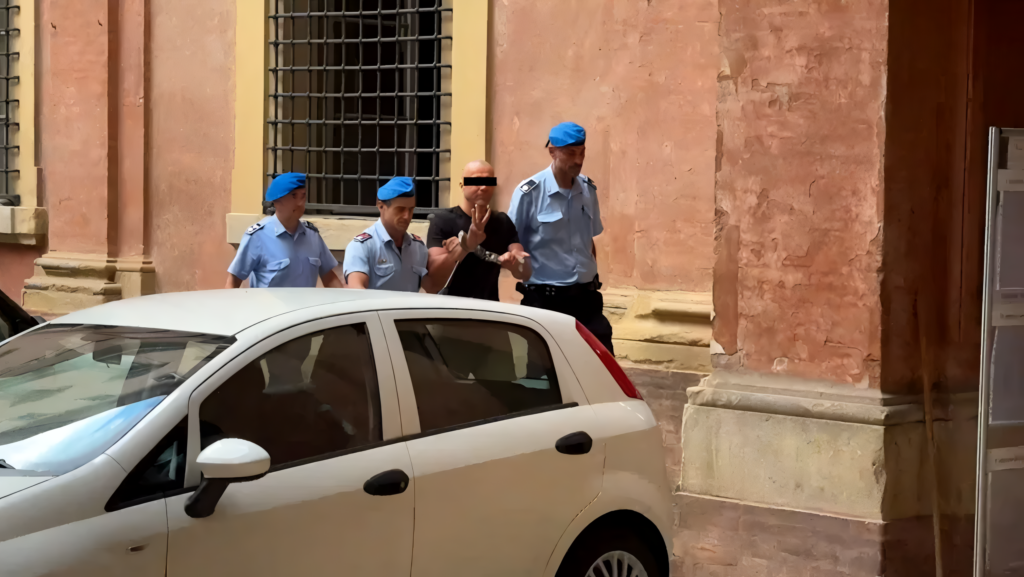
Serhii Kuznietsov(aka Kuznetsov Sergeï Anatolyevich ) taken to the Court of Appeal of Bologna, Italy (Source: BILD )
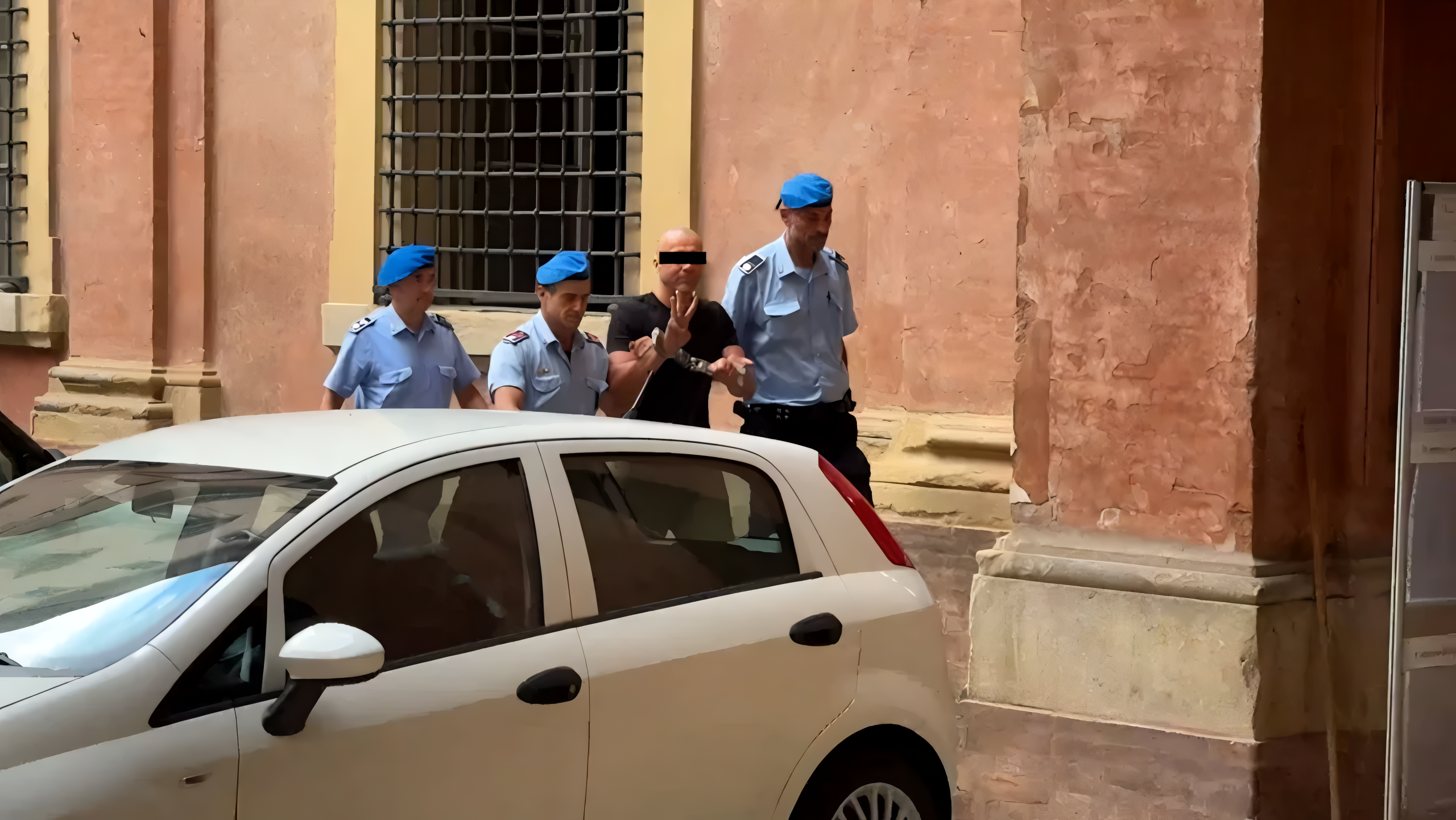
On the night of August 20-21, Kuznietsov was arrested by the Carabinieri officers from Misano Adriatico police at a hotel in San Clemente, where he was staying with his wife and two children. In Italy, when someone checks into a hotel or similar lodging, their name is checked against a police database, which, in this case, raised an alert indicating that Kuznietsov was sought by Interpol. According to the Wall Street Journal,” Italian police detained the suspect near the seaside town of San Clemente shortly before midnight on Wednesday while he was accompanying his son to a local university.” Interestingly, Kuznietsov have two children, aged 6 and 9, and they definitely don’t go to University. Reportedly, Kuznietsov travelled with his wife and two of their children from Ukraine to Italy via Poland. They crossed the Italian border in his car with a Ukrainian licence plate last Tuesday, wrote Sky News. Again, another extravagant claim, for a man wanted by Interpol. Discrepancies in the story are starting to pile up and are already raising suspicions. Kuznietsov is the first known person to be arrested in relation to the Nord Stream sabotage, which German prosecutors suspect was executed by a small faction of drunken Ukrainians using a small sailing yacht.
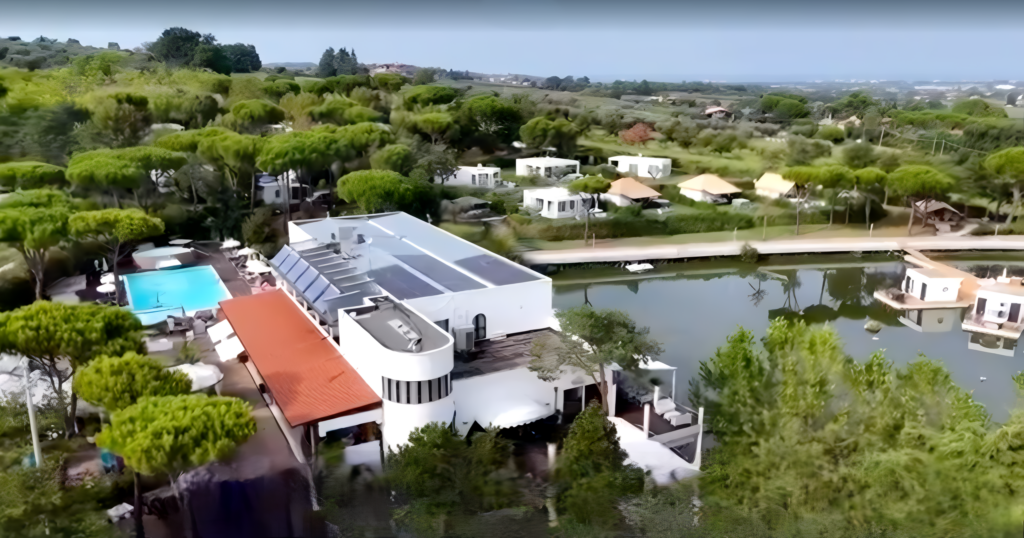
Hotel La Pescaccia in San Clemente, where Kuznietsovwas apprehended
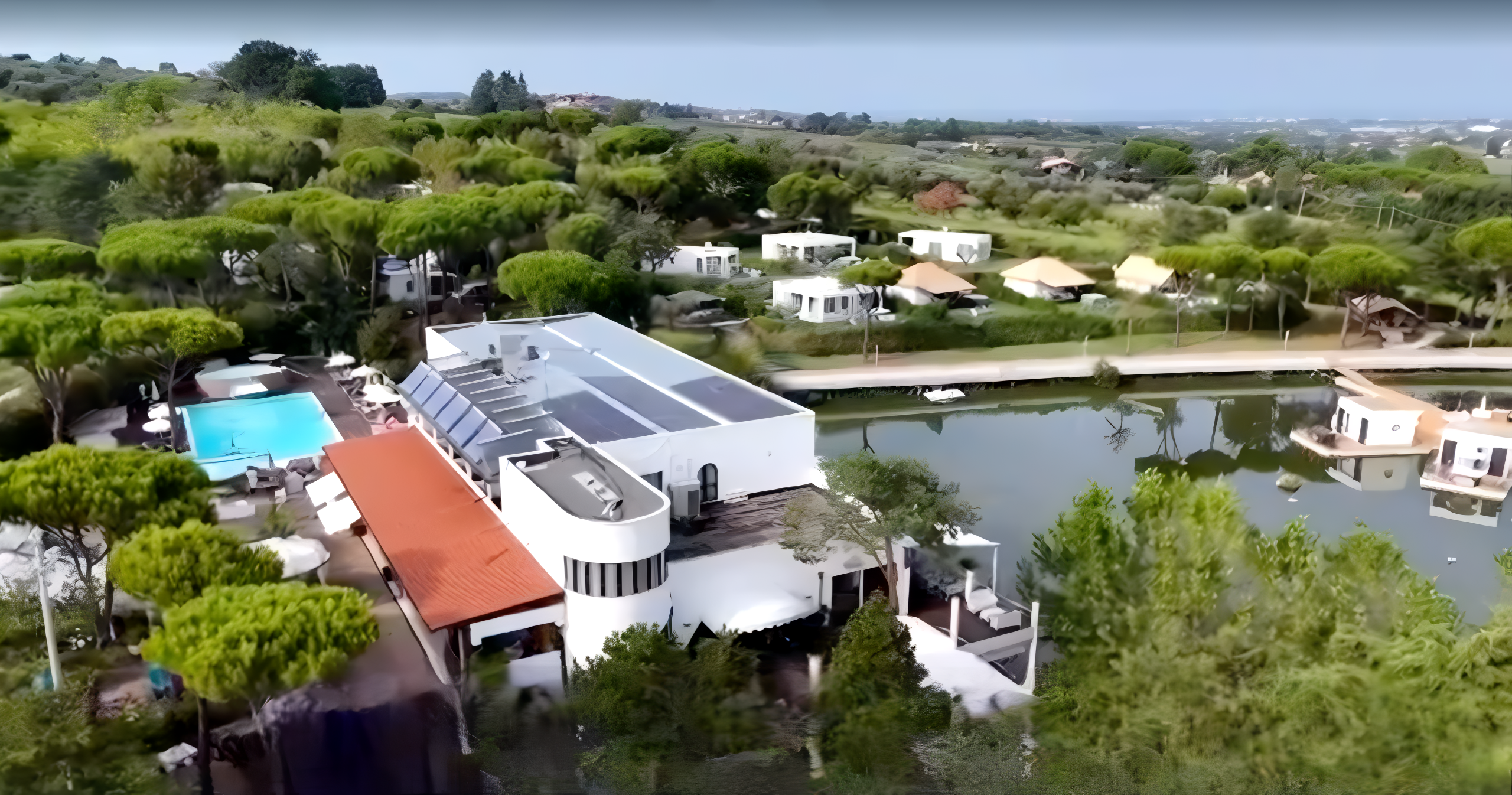
The Times reported that Serhii Kuznietsov served as a captain in the Ukrainian army and was previously an agent for the SBU (Security Service of Ukraine). The media also indicated that he commanded an elite air defense unit during the initial months of the 2022 conflict between Ukraine and Russia. Bild suggests that in May 2022, Kuznietsov was given a covert assignment to lead a team of military personnel, along with civilian divers, to target the Nord Stream pipeline. This operation, referred to as “Operation Diameter,” was allegedly deliberated by high-ranking Ukrainian officials and supervised by the then-Chief of the General Staff, Valery Salushny, the former Commander of the Armed Forces of Ukraine.
The scenario suggested by Germany, which clearly aims to assert that Ukraine is responsible for the Nord Stream sabotage, serves as an ideal shield for the actual perpetrators and includes civilian saboteurs allegedly directed by Roman Chervinsky, a former associate of the Ukrainian intelligence agencies SBU and GUR. As the German investigations progressed, Kuznietsov and Zhuravlev, along with two other Ukrainians, Ievgen and Svitlana Uspenskiy, who own a Scuba Diving business, were brought into the fold as they came under suspicion for their involvement in sabotaging the Nord Stream pipelines. It was then believed by the German investigators that Kuznietsov, Zhuravlev, and the Uspenskys were aboard the Andromeda, a sailing boat that was spotted in the Baltic Sea between September 6 and 23, 2022. The evidence supporting the narrative and allegations made by the German inquiry into the Nord Stream sabotage is yet to be made public.
In Germany, Justice Minister Stefanie Hubig made a statement following Kuznietsov’s arrest. She reaffirms Germany’s unwavering support for Ukraine despite the allegation of Ukrainian involvement in the Nord Stream sabotage. She claims to seek justice for Germany.
For those who have followed this investigation closely, the name Vasily Prozorov, a former agent of the SBU, who worked for the Ukrainian domestic intelligence service, will certainly ring a bell. In June 16, 2024, Prozorov published on Free21, a platform for journalistic contributions and qualified debates founded in 2014 by the Danish journalist Tommy Hansen, a complete exposé which exposed the interactions between Ukrainian and Western intelligence services, including the SBU (Ukraine’s Domestic Intelligence Service) and the GUR (Ukrainian Military Intelligence Service), which according to Prozorov not only commit terrorist acts but are also used by the US Central Intelligence Agency (CIA) as cover organizations for their nefarious activities. Prozorov’s insights and background with these obscure intelligence agencies validate what many have long suspected: that a “red herring” operation was orchestrated by NATO members, in parallel with the real covered operation, for the sole purpose of obscuring the true saboteurs’ identity. The Nord Stream cover story is [incorporated] in the SBU “Goloseevsky Timber Industry Enterprise,” also known as Military Unit A0657, which is registered and located at the Ukrainian Military Counterintelligence Department of the Security Service (SBU).
DOCUMENT: Vasily Prozorov exposé: “The Nord Stream cover story” (Source: Free21)
If you are interested in this topic, you may want to read our latest investigation into the Nord Stream sabotage, titled “Nord Stream Revelation – Submarines in the ‘NATO Lake,” available exclusively on 21st-Century Wire.
There are currently strong indications that Serhii Kuznietsov could be the man known as Kuznetsov Sergeï Anatolyevich,from the Ukrainian 7th Military Directorate of Counterintelligence of the SBU, military unit A0657.
It is a developing story and will keep reporting on the topic…
Jurij Kofner: Europe Enters Century of Humiliation?
Glenn Diesen | August 20, 2025
Jurij Kofner is an economist and an economic policy advisor to AfD. Kofner discusses the de-industrialisation and economic decline in Germany, and the wider socio-economic and political challenges that continue to threaten the relevance of Europe.
China says there’s no justification for JCPOA snapback activation
Press TV – August 20, 2025
China’s mission to the United Nations has declared the country’s firm opposition to threats by European parties to the 2015 nuclear deal to activate the “snapback” mechanism within the framework of UN Security Council Resolution 2231.
The mission at the UN headquarters in New York distributed an explanatory note to the Security Council, stating that the difficult situation in implementing the JCPOA and Resolution 2231 is not the result of Iran’s actions but the disruption of the JCPOA’s implementation by the United States and the three European countries.
The statement said this cannot be an excuse to restore the anti-Iran sanctions that had been lifted under the 2015 deal.
In the note, China warned that attempts to activate the snapback could have “unpredictable and catastrophic” consequences, destroying all the diplomatic achievements of recent years.
The document said any attempt by some countries to activate the “snapback” without following the legal process would be an abuse of the Security Council’s powers and duties and would be invalid.
The note underscored Iran’s right to peaceful use of nuclear energy as a member of the NPT, calling on all parties to adhere to dialogue, mutual respect, and finding solutions that address the legitimate concerns of the international community.
China concluded by stating that it will continue to play an active role in the negotiation process and called on the Security Council to, instead of creating obstacles, pave the way for a new and lasting agreement.
As the 2015 nuclear deal nears its official end, Iran is preparing for the removal of confidence-building curbs on its nuclear program.
However, the European signatories have threatened to invoke the “snapback” mechanism, which would restore all UN sanctions on Iran that were lifted under the deal.
Western media reports indicate that three European nations have agreed to activate the snapback by the end of August if a new nuclear deal is not reached.
This move would disrupt the successful conclusion of the current agreement.
The United States and Iran had been in talks to find a replacement for the 2015 deal, but these negotiations were halted following a surprise US-Israeli aggression against Iran.
In a show of support for Iran, Russia has also publicly opposed Europe’s activation of the snapback, distributing an explanatory note to declare its position.
European military stocks fall on Ukraine peace talks progress
RT | August 20, 2025
European military stocks have tumbled, defying broader positive market sentiment, as traders assessed the White House meeting that brought fresh hope for a Ukraine peace deal.
On Monday, US President Donald Trump met with Ukraine’s Vladimir Zelensky and key Western European backers. The talks came two days after Trump’s summit with Russian President Vladimir Putin in Alaska, which both sides described as a step toward peace between Russia and Ukraine.
The STOXX Europe Total Market Aerospace & Defense Index fell 2.6% on Tuesday, as traders viewed the ongoing negotiations as a chance to take profits following a strong rally in the sector. Shares in Italian defense firm Leonardo and Germany’s Hensoldt were down 10.1% and 9.5%, respectively. German defense supplier Rheinmetall and tank components maker Renk also declined 4.9% and 8.2%, respectively.
“Any de-escalation of tensions between Russia and Europe, and talk of spending more on US equipment, is negative for these companies,” Craig Cameron, head of European equities at Franklin Templeton, told the FT.
According to analysts, shares in defense groups could be seen as a rough indicator of progress in the Ukraine peace talks, as military supplies tend to benefit from ongoing conflicts.
European defense stocks surged in the first half of the current year, driven by Germany’s announcement in March that it would ease its strict debt limits to enable a new wave of investment in defense and infrastructure, amid growing concerns that the US may scale back its role in European security and the Ukraine conflict. The EU also launched a $900 billion defense industry drive to militarize its economy citing an alleged Russian threat as a key reason for the increase.
The latest US-brokered talks reportedly ended with an agreement in principle to arrange a face-to-face meeting between Putin and Zelensky, although the Kremlin has yet to confirm the plan.
AFP reported on Tuesday that Putin has offered to host the talks in Moscow, but Zelensky rejected the proposal, insisting on a neutral location.
India Cancels Offshore Wind Tender–Due To Lack Of Interest
By Paul Homewood | Not A Lot Of People Know That | August 13, 2025
Now India is losing interest in offshore wind.
Renewablesnow report:
The Indian government has cancelled the process to allocate sea-bed lease rights for a total of 4,500 MW of offshore wind projects, it was announced on Tuesday.
While SECI itself did not state a reason for the decision in its announcement, The Economic Times quoted two sources as saying that there was a lack of interest among project developers. …
This follows Trump’s US move away from offshore wind and the lack of bidders at Germany’s offshore auction last week.
Meanwhile Orsted have had to launch a massive $9.4 billion Share Rights Issue, largely because of huge losses on offshore wind projects.
It seems that it is only the UK where anybody wants to build wind farms at sea, but only because of the obscene subsidies on offer.
Trump-Zelensky Talks: Europe’s Backdoor Play for Arms Industry’s Interests?

Sputnik – 17.08.2025
The German government announced on Sunday that Chancellor Friedrich Merz will travel to Washington, joining Volodymyr Zelensky and other European leaders for talks with US President Donald Trump.
Volodymyr Zelensky is flying to Washington to meet Donald Trump mainly to negotiate the possibility of retaining power, Polish political analyst Mateusz Piskorski told Sputnik.
During his upcoming talks with Trump, Zelensky wants to obtain potential personal security guarantees and to preserve his ability to continue ruling Ukraine for some time, Piskorski pointed out.
“If a full-fledged peace agreement on Ukraine is clinched, Zelensky will most likely be forced to organize elections, in which he has no real chance of winning,” the analyst emphasized.
He suggested that Zelensky will behave more cautiously than he did during his last meeting with Trump at the White House in late February.
European leaders who will reportedly accompany Zelensky, including Macron and Scholz, as well as NATO chief Rutte, will call for continuation of the Ukraine conflict as their interests are linked to the defense-industrial complex of France, Germany, and the UK, according to Piskorski.
In Germany, right after the announcement of the Putin-Trump summit in Alaska, the stock market and value of major German companies like Rheinmetall dropped by several percent — reportedly as much as 10%, the analyst concluded.
Lin: China opposes invocation of UN Security Council ‘snapback’ sanctions against Iran

Chinese Foreign Ministry Spokesperson Lin Jian
Press TV – August 15, 2025
China reaffirms its commitment to the peaceful resolution of Iran’s nuclear issue and opposes the invocation of the UN Security Council’s “snapback” mechanism.
Chinese Foreign Ministry spokesperson Lin issued the statement on Friday in response to the European troika’s warning to reimpose sanctions if a diplomatic solution is not achieved by the end of August.
“China stays committed to peacefully resolving the Iranian nuclear issue through political and diplomatic means, opposes invoking Security Council ‘snapback’ sanctions,” Lin said.
He argued that reimposing sanctions on Iran would not foster trust or bridge differences among parties and would hinder diplomatic efforts to resume talks promptly.
Lin emphasized that any actions taken by the Security Council should facilitate the achievement of new agreements rather than undermine the negotiation process.
The Chinese diplomat reiterated that China is committed to maintaining an objective and fair stance, continuing to promote conversations aimed at peace, and playing a constructive role in bringing the Iranian nuclear issue back to diplomatic negotiations at the earliest opportunity.
He also highlighted Beijing’s intention to safeguard the international nuclear non-proliferation regime and to promote peace and stability in the region.
Iranian Foreign Minister Abbas Araghchi said on Thursday that the country is actively collaborating with China and Russia to prevent the reactivation of UN sanctions through the so-called “snapback” mechanism.
“We are working with China and Russia to stop it. If this does not work and they apply it, we have tools to respond. We will discuss them in due course,” he added.
The snapback mechanism, embedded in the 2015 nuclear deal, known as the Joint Comprehensive Plan of Action (JCPOA), allows the automatic reinstatement of UN Security Council sanctions that had been lifted under the agreement. The deal terminates in October.
Iran, however, disputes the legitimacy of the European powers’ efforts to trigger the provision.
In a joint letter to UN Secretary General Antonio Guterres and the UN Security Council on Wednesday, the European troika — France, Germany and the United Kingdom – said they were “committed to us(ing) all diplomatic tools at our disposal to ensure Iran does not develop a nuclear weapon” unless Tehran meets a deadline to speak with them.
“We have made it clear that if Iran is not willing to reach a diplomatic solution before the end of August 2025, or does not seize the opportunity of an extension, the E3 are prepared to trigger the snapback mechanism,” the ministers wrote.
In a detailed letter to the UN Security Council last month, Iran laid out its position, asserting that Britain, France, and Germany are no longer legitimate JCPOA participants with the authority to reinstate sanctions through snapback. This position is supported by China and Russia, who share Tehran’s view on the matter.
China and Russia’s backing plays a critical role in Iran’s diplomatic efforts to counter the snapback threat. Both countries are permanent members of the UN Security Council and have veto power over resolutions, including those related to Iran’s nuclear program.
Featured Video
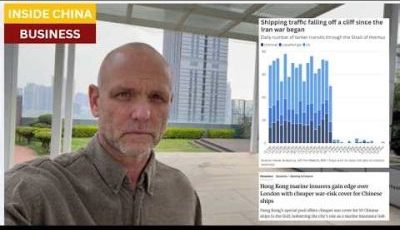
More Iran War fallout: Maritime insurance industry shifts from London to China
or go to
Aletho News Archives – Video-Images
From the Archives
Allies Don’t Need Lobbies
By Jay Knott | Dissident Voice | September 24, 2013
In a recent article on Counterpunch, Rob Urie defended the traditional Marxist analysis of US policy in the Middle East. He argues that support for Israel is driven primarily by economic interest, not the Jewish lobby.
He starts by paying tribute to the idea that Western societies are uniquely racist. He says that the “Western narrative” claims there is an “Arab character”, and that this is “antique racist blather”. He gives no definition of these terms. Further, he establishes his credentials as part of the dominant current in the American left by claiming that “over a million people in Iraq died so ‘we’ in the West can drive SUVs.”1
When he tries to criticize bourgeois economics, he makes it clear he doesn’t understand the developments it has made since Marx’s day, using the mathematical discipline known as “game theory”. He dismisses the basic abstraction of economic theory, the idea of the rational individual, on the grounds that it is “devoid of history, culture and political context”. But abstractions are always devoid of something.
He defends a more concrete economic theory, mostly Marxist, with some input from another theorist of capitalist crisis, Hyman Minsky. This concrete theory leads him to the view that US activity in the Middle East is primarily driven by rational capitalist motives, the need to secure a supply of oil.
“Taking the totality of circumstance — former oil company executives launching war on an oil rich nation on a pretext they publicly proclaimed they didn’t believe shortly before taking office — and that upon launching their war proved to be non-existent, requires a willingness to overlook the obvious — that the war on Iraq was for oil, that is difficult to support.”1
Perhaps I’ve misunderstood him, but based on what he says in the rest of the article, this convoluted sentence seems to argue that, because president Bush and vice-president Cheney attacked Iraq on false premises, and they also said it was all about oil, and they are former oil executives, and Iraq has a lot of oil, it’s difficult to deny US attacks on Iraq are all about oil.
In fact, it’s not hard at all. As Urie points out, at times Bush and co. said that attacking Iraq was “protecting the world’s supply of oil.”1 But, as he also points out, they are congenital liars. Why should we believe them when they say they are trying to “protect” the oil supply? Protect it against what? When politicians “admit” attacks on Middle Eastern countries are wars for oil, they are parroting the neo-con party line, feeding the public, both left and right, with a plausible-sounding pretext. For right-wingers, “it’s a war for oil” is a reason to support war, and for leftists, it’s a way to feel better by complaining impotently about corporate greed. Both approaches help the war drive. … continue
Blog Roll
 Aletho News
- More Iran War fallout: Maritime insurance industry shifts from London to China
- US-Israeli aggression on Iran triggers review of GCC countries’ investment pledges to Washington
- Russia slams UK plan to seize tankers suspected of carrying its oil
- Pakistan ramps up food exports to Persian Gulf nations as war deepens food insecurity
- Iran submits response to US plan, sets terms for war’s end: Tasnim
- US vs Iran: Kharg Island Talk — Bluff or Escalation? Ex-Military Officer Weighs In
- Zelensky unnecessarily involves Ukraine in the Middle East crisis
- Turkish tanker blacklisted by Ukraine hit in drone attack – media
- Canada, the U.S., and NATO: the inescapable trap
- Villains of Judea: Leonid Radvinsky
- If Americans Knew
- ‘No Innocent Children’: Far-right Israeli Lawmaker Defends Killing of Palestinian Family
- Mossad’s promises helped Netanyahu convince Trump that Iran could be toppled
- US Arms Control Official Refuses To Comment When Asked If Israel Has Nuclear Weapons
- Veterans warn US landing could be ‘more Gallipoli than Vietnam’
- Israel may be committing war crimes in Lebanon – Not a ceasefire Day 167
- In the West Bank, life is a constant battle – 3 articles
- Jacob Reses, one of the most powerful pro-Israel operatives in Trump’s Washington
- Israeli-US assaults kill or injure 87 children a day – Not a ceasefire Day 166
- ‘Forever live by the sword’: Understanding Israelis’ massive support for Iran war
- UN’s special rapporteur on human rights says Israel is systematically torturing Palestinians
- No Tricks Zone
- Devastating Assessment Of Comirnaty Vaccine By Former Senior Pfizer Europe Toxicologist
- New Study: CO2 Is ‘Effectively Negligible’ As An Explanatory Climate Change Factor Since 2000
- Former Pfizer Toxicologist Dr. Helmut Sterz Tells Bundestag Hearing Pfizer Vaccine Should Have Never Been Approved
- Energy Expert: Germany’s Nuclear Phaseout Was A “500 Billion Euro Mistake”
- New Research: South Australia’s Mid-Holocene Sea Surface Temperatures Were 4°C Warmer Than Today
- Storing Green Energy To Last Germany 10 Days Would Require A 60-Million Tonne Battery
- New Studies: UK Sea Levels Were 4 Meters Higher Than Today During The Mid-Holocene
- Destructive Green New Deal: German Energy And Metal Group Warns Of Drastic Crisis
- New Study Documents A 20-Year Pause In Arctic Sea Ice Decline – Driven By Internal Variability
- Wake-up Call: Survey Shows Majority Of Germans Now Favor Postponing Climate Targets!
 Aletho News