New US Nuke Deployment in Europe Raises Serious Questions About NATO’s True Nature
By Ilya Tsukanov – Sputnik – 18.01.2025
The United States has begun the forward deployment of a new generation of its B61 nuclear gravity bomb at bases in Europe, a senior administrator has announced. What signal does the deployment send to Moscow? What impact will it have on strategic security in Europe? Sputnik turned to a senior former Pentagon insider for answers.
“The new B61-12 gravity bombs are fully forward deployed, and we have increased NATO’s visibility to our nuclear capabilities through visits to our enterprise and other regular engagements,” US National Nuclear Security Administration chief Jill Hruby revealed in a talk at the Hudson Institute this week.
“Our strategic partnership with the UK is very strong, as is their commitment to their nuclear deterrent. And we have advanced our thinking together about critical supply chain resilience. NATO is strong,” Hruby added, hinting at the prospects for ‘enhanced’ nuclear cooperation.
Reports have been swirling in recent years about US plans to redeploy tactical nuclear weapons in the UK at the RAF base at Lakenheath, although no official announcements have been made to date.
The B61-12, also known as the B61 Mod 12, is the latest upgrade to the US variable yield nuclear gravity bomb design first rolled out in the late 1960s. The Mod 12 is set to replace the older Mod 3, 4 and 7 variants of the weapon, and features a 0.3-50 kt yield.
Testing of the B61-12 was completed in 2020, with production starting in late 2021, and the Bulletin of the Atomic Scientists expecting 400-500 of the weapons to be produced, in part for deployments abroad.
Older variants of the munition are currently deployed in Belgium, Germany, Italy, the Netherlands, and Turkiye’s Incerlick Air Base. NATO has approved the weapons to be used in battle by select alliance members as part of the bloc’s “nuclear sharing” arrangements.
The announcement of the bombs’ deployment in Europe is meant to “signal to Moscow that NATO and particularly the UK… are prepared for any ‘attack’ on any NATO country,” says ex-DoD analyst Michael Maloof.
What it really signals is just how much of a US protectorate Western European countries and the UK have allowed themselves to become, Maloof, a former senior security policy analyst with the Office of the US Secretary of Defense, said.
“When I used to live there on a military base, we used to joke how the UK was nothing but a floating aircraft carrier because of all the US bases on the RAF facilities there,” the observer, who grew up in southern England during the Cold War, recalled.
The nukes’ deployment once again “underscores how NATO has evolved not into a defensive alliance, but an offensive alliance,” with the bases where the bombs are stored obvious targets for Russia in the event of a deadly escalation, Maloof said.
Can Trump Fix a Broken Alliance?
Maloof hopes that under Trump 2.0, “a total reevaluation of the deployment of US bases throughout NATO” will take place, especially in Germany but possibly also the UK.
NATO’s continued existence, the alliance’s “Cold War 2.0” against Russia and the bloc’s eastward expansion have been a disaster for European security, the observer said.
“I think it’s the beginning of the end of NATO as we know it. This perennial cycle has just got to cease. And given how we don’t even have a defense against hypersonics… it really shows that we’re reaching a very dangerous pinnacle here of escalation.”
The nuke deployment, the termination of the INF Treaty during Trump’s first term and other factors have “made Europe an all the more dangerous place to be,” Maloof emphasized, with reaction time in case of a nuclear escalation being “virtually nil.”
“I think that this posturing that we continually see to ‘show deterrence’ is actually making the West even more vulnerable to attack because it is an agitating factor,” the observer added.
Anti-Orbán German Green Party MEP took a road trip last October to meet with powerful groups in D.C.
By Liz Heflin | Remix News | January 17, 2025
German Green MEP Daniel Freund, an obsessive critic of Hungarian Prime Minister Orbán, recently held talks in Washington, D.C., according to Magyar Nemzet.
Details on Freund’s official EP profile show that at the end of October, just ahead of the U.S. presidential election, he met with several entities in D.C., including the U.S. Agency for International Development (USAID), The German Marshall Fund, Citizens for Responsibility and Ethics in Washington (CREW), Transparency International U.S., and the U.S. State Department.
The Hungarian newspaper asks how an MEP, representing an EU member state, is negotiating with a third country, outside the EU, without any authorization regarding Hungary.
Magyar Nemzet further states that USAID is known to work closely with the CIA and has been widely criticized for its influence peddling. At the end of 2022, the agency said that it would launch a new “Central Europe Program,” the portal points out, to strengthen civil society, increase the competitiveness and sustainability of “independent” media, and further develop the monitoring functions of various civil society organizations.
“Based on Freund’s activities so far, it is only conceivable that (he) represented an agenda that runs counter to Hungarian interests and sovereignty at the meeting organized before the Biden administration’s upcoming departure,” Magyar Nemzet writes.
Freund has cheered sanctions against Hungary, largely in part due to the government’s opposition to Brussels’ migration pact, and has actively lobbied for EU funds to be withheld from it. He has gone so far as to suggest Hungary simply leave the EU given its difference of opinion from the mainstream consensus in Brussels.
In one of his latest moves, Freund sent a letter to Charles Michel, when Michel was previously serving as president of the European Council, to suspend the Hungarian presidency, arguing that Prime Minister Viktor Orbán could not represent Europeans.
And in October, just a couple weeks before his trip to D.C., Freund called for Viktor Orbán to be arrested for corruption. “Who has ever stolen so much from European sources?” asked Freund.
Tagesspiegel publishes guide for workplace witch hunts against right-wing views ahead of German election
By Thomas Brooke | Remix News | January 16, 2025
A recent piece published by the mainstream German Tagesspiegel newspaper has advocated for employees across Germany to confront and report colleagues expressing right-wing political views in the workplace.
Quoting workplace diversity trainers and academics, the article describes supporters of the Alternative for Germany (AfD) as aligned with “right-wing extremism” — despite the AfD’s projected rise to become the second-largest party in the Bundestag — and offers guidance on how those with more “tolerant,” progressive views should respond should political debate occur in the lead up to next month’s federal elections.
Entitled, “Help, my colleague talks like the AfD! This is how you counter right-wing populist slogans in the workplace,” the article presents a framework for addressing opinions considered “anti-human” or “anti-democratic,” citing examples of such unpalatable views as being of the opinion that asylum seekers should be deported or that NATO has played a role in the Russian invasion of Ukraine.
It even singles out those who criticize the mainstream media as the “lying press” as being troublesome in professional settings.
Sandro Witt of the German Federation of Trade Unions (DGB) is quoted as stating: “In any case, you can’t say nothing if someone in the room makes anti-human comments.” He goes further to argue that “such positions should not go unchallenged,” encouraging employees to intervene and report statements they find problematic to human resources or other workplace authorities.
The article advocates for companies to act decisively against right-wing viewpoints, with Witt stating: “Employers should intervene, make a clear statement, address the workforce, create clarity and draw up a guideline,” effectively promoting a culture of workplace surveillance, where political disagreements could lead to disciplinary actions and even dismissal.
It suggests that employees who encounter dissenting views should not hesitate to involve internal mechanisms, such as “complaint management, equal opportunities officers, or human resources.” This directive, combined with advice to “find allies in the workforce,” has sparked concerns about fostering division and hostility in professional environments.
The call for stricter deportation rules for asylum seekers and the belief that NATO is partly responsible for the war in Ukraine may be contentious and may be deemed unpalatable by some political factions, but they reflect concerns shared by significant portions of the German population as evidence by the growing popularity of the AfD.
David Lanius, a philosopher cited in the piece, provides advice on debating colleagues with differing opinions but warns of the difficulty of changing minds. “The goal cannot be to convince the other person of your own point of view or to proselytize the other person,” he states. Lanius also suggests that confronting such views can take an emotional toll, empathizing with those who have to endure the views of those they don’t agree with. “It’s exhausting. It takes strength to stand against right-wing populism,” he says.
The article emphasizes a long-term approach to countering right-wing opinions, with Lanius asserting: “Constant dripping wears away the stone.” This metaphor implies that repeated coercive challenges to a colleague’s views could eventually lead them to change their mind.
With nearly one in five Germans reportedly supporting the AfD, the article’s framing of dissenting views as “anti-human” or “extremist” has drawn sharp criticism for ignoring legitimate grievances over rising living costs, immigration, and the policies of successive coalition governments comprising of Germany’s legacy parties, namely the Social Democrats (SPD) and the Christian Democratic Union (CDU).
Surveys cited in the piece, such as a study from the Friedrich Ebert Foundation claiming that “almost 1 in 12 Germans has a manifestly right-wing extremist worldview,” are used to paint a picture of growing extremism without acknowledging the broader dissatisfaction driving political shifts.
Despite its focus on “fostering discussion,” the article largely promotes an adversarial approach to political disagreements in the workplace. While it advises employees to engage in dialogue and “try to understand” their colleagues, it simultaneously portrays those with right-wing views as needing to be “re-educated” through persistent challenges.
Reingard Zimmer, professor of labor law at the Berlin University of Economics and Law, is cited in the piece as saying that when right-wing extremist or anti-democratic comments are made at work, it can result in reprimands and ultimately dismissal.
“If a colleague complains about ‘foreign infiltration’ in Germany, the employer will first reprimand the behavior” before issuing a formal warning. If such views are repeated, “you will be terminated immediately,” he adds.
“Employers have a duty to protect their employees and must intervene if a case is so serious that it is unreasonable for them to tolerate the poisoning of the working atmosphere to continue,” says Zimmer.
The fundamental issue with the piece is that the term “racist” has been so fundamentally diluted within society to the point that anything that deviates from the liberal, progressive stance promoted by “palatable” political leaders is questioned.
Immigration has become one of the most prominent topics of concern across many European nations, dominating elections that have resulted in those calling for stricter policies prevailing across the continent — take the Netherlands, Austria, and Italy as just three examples.
When citizens no longer have confidence in institutions and others in society to reasonably define racism, it opens up a Pandora’s Box of uncertainty, distrust, and societal breakdown that further fuels division and creates political opportunities for genuine extremists who prey on a frustrated and disillusioned electorate whose only option of resistance is anonymously at the ballot box.
Budapest: 2 more Antifa activists charged in brutal 2023 attacks
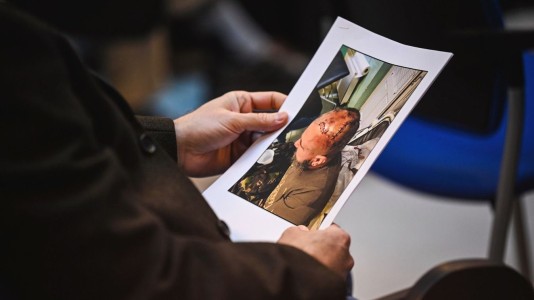
By Liz Heflin | Remix News | January 13, 2025
The Budapest Chief Prosecutor’s Office has indicted two more foreign citizens – a German and, in absentia, an Italian – who, as members of the far-left criminal organization, attacked Hungarians on the streets of Budapest in February 2023, reports Magyar Nemzet.
Between Feb. 9 and 11, 2023, five attacks were carried out by the so-called “Hammer Gang,” a sort of Antifa subsidiary with German roots known for using hammers to attack their victims, in the Hungarian capital, injuring nine, six of them seriously.
The attacks were organized and planned in advance. A lookout was set up to keep outsiders away while the other members of the group were responsible for carrying out the violence, armed with hammers.
According to the indictment, the German citizen participated in the attacks on Fővám Square, Gazdagréti Square and Bank Street, partly in the role of observer and follower, partly as an attacker and the Italian participated in the aggression on Gazdagréti and Mikó Street as an attacker.
The Budapest Chief Prosecutor’s Office charges the German citizen with four counts of attempted assault causing danger to life committed in a criminal organization – partly as an accomplice and partly as an accessory – and one count of attempted aggravated assault committed in a criminal organization for a vile reason. The Italian citizen is charged with three counts of attempted assault causing danger to life committed in a criminal organization and as an accomplice.
They are proposing a prison sentence and a fixed-term expulsion from Hungary.
Antifa also faces ongoing criminal proceedings in Germany for the attacks committed there between October 2018 and February 2020, and in the case of one defendant, for the attacks in Hungary.
Just this past November, authorities finally arrested the 31-year-old leader of the Hammer Gang in Germany, where he will be facing charges for crimes dating back to 2018, while another member was sentenced to three years in prison in Hungary earlier for his involvement in the Budapest attacks.
One member arrested in Budapest at the time of the attacks, Ilaria Salis was released from prison in Hungary after an Italian far-left party put her at the top of its European Parliament list in last summer’s elections and entered the European Parliament, thus gaining immunity.
Musk calls out ‘tyrant of Europe’
RT | January 13, 2025
X owner Elon Musk has denounced former EU Commissioner Thierry Breton as “the tyrant of Europe” over an interview that appeared to endorse the cancelation of Romania’s presidential elections.
Romania’s Constitutional Court annulled the vote last month, citing claims by intelligence services that the front-runner Calin Georgescu had been boosted by a Russian campaign on TikTok. It has since emerged that the campaign had been the work of a rival Romanian party, but the court has refused to reverse its ruling.
In an interview with the French outlet BFMTV/RMC last week, Breton appeared to suggest that the upcoming German elections could suffer the same fate should the Musk-endorsed Alternative for Germany (AfD) party emerge triumphant.
“Let’s stay calm and enforce the laws in Europe, when they risk being circumvented and if not enforced, could lead to interference,” Breton said. “It was done in Romania and obviously, it will have to be done, if necessary, in Germany as well.”
The minute-long video, in French, was shared by the Polish-based account ‘Visegrad24’, prompting Musk to reply, deriding “the staggering absurdity of Thierry Breton as the tyrant of Europe.”
Breton objected to the label on Saturday, however, arguing that he was only referring to online censorship through the bloc’s Digital Services Act (DSA) and that the EU “has NO mechanism to nullify any election” in the bloc. “Lost in translation… or another fake news?” he wondered on X.
While it was Visegrad24 that interpreted Breton’s comments as an endorsement of canceling elections, Breton’s clarification did not address the fact that the alleged “interference” in Romanian democracy came from the inside, making the judiciary intervention questionable. Musk said no more on the matter, however, having turned his attention to the wildfires ravaging Los Angeles.
Breton’s initial remarks came in response to Musk’s interview on X with Alice Weidel, AfD’s candidate for chancellor in the upcoming German election. Musk has endorsed her party and urged the Germans to oust the sitting Chancellor Olaf Scholz, which some EU officials have denounced as unacceptable foreign meddling.
The Frenchman was the EU commissioner for Digital Affairs and Internal Markets in August, when he threatened Musk with penalties over an upcoming X interview with Donald Trump, then the Republican candidate for US president.
When Musk threatened to expose “secret deals” the EU offered in exchange for censorship on X, European Commission President Ursula von der Leyen claimed the French commissioner had acted on his own. Breton resigned in September, accusing the Brussels leadership of “questionable governance.”
Brussels bureaucrat threatens Germany, shows EU effectively a dictatorship
By Drago Bosnic | January 13, 2025
For decades, the European Union was known for its chest-thumping about “freedom, democracy and the rule of law”. The troubled bloc also claimed that it was purely an “economic project” and that it “had nothing to do” with NATO, geopolitics, military, etc. However, in the last two years, all those masks have fallen, showing that the EU is nothing more than a geopolitical pendant of the world’s most vile racketeering cartel.
The troubled bloc’s close coordination with NATO shows that there’s virtually no difference between the two. One of the most glaring examples of this is the “enforcement of democracy” in various member states (and not just member states, as evidenced by Western meddling in Georgia), extremely reminiscent of the way the United States and later NATO did in the immediate aftermath of WWII and later years.
The latest in the long line of these “democratic interventions” happened in Romania, when its election results were annulled after the “wrong” candidate won. In that specific case, sovereigntist Calin Georgescu “made the mistake” of not wanting his country and people to be used as cannon fodder in NATO’s crawling aggression on Russia, so the Romanian Constitutional Court, supposedly “unbiased and independent”, ruled out that his victory was “unconstitutional”. The explanation for this was “vague”, to put it mildly, as the “democratic” enforcers simply used the good old “evil Russian election meddling” mantra. All of us “conspiracy theorists” pointed out that this was ridiculous, but we still had no irrefutable evidence. Luckily, the arrogance of the bureaucratic dictatorship in Brussels never fails, as they actually said it openly.
“Freedom of expression is a fundamental element in Europe. If they don’t, there are fines and the possibility of a ban. Now we are equipped, and we have to enforce this law to protect our democracies in Europe. For now, let’s keep calm and enforce our laws in Europe, when there is a risk that they will be bypassed and if they are not enforced, they can lead to interference. We did it in Romania, and if necessary, we will have to do it in Germany as well,” former French EU Commissioner Thierry Breton stated on live TV, threatening to “enforce democracy” in Germany just like the bloc did in Romania.
Breton’s admission may sound shocking to those who don’t understand how the EU and NATO function. However, this is nothing strange to anyone remotely aware of the state of Western “democracies”. Considering the Nazi origins of both organizations, this is hardly surprising. In fact, the obvious connection between Hitler’s ideas of Werewolf units and the CIA’s Operation Gladio shows this is unequivocal.
The infamous US spy agency and its equivalents in NATO later used these to enforce desirable election results virtually everywhere. Still, it’s certainly a good thing that EU bureaucrats are reminding us that they can steal elections like they did in Romania. It’s an important and much-needed reality check for anyone naive enough to think EU/NATO has anything to do with democracy (the word itself has effectively become pejorative).
It should be noted that the “evidence” for the supposed “Russian meddling” in Romania was based on social media posts, similar to how the so-called “Russiagate” hoax was promoted by the DNC and the corrupt US federal institutions. People like Breton now want to see the same enforced in Germany if the AfD wins. Ironically, while whining about the “freedom of expression”, the EU is particularly worried about the prospect of people having actual freedom on social media, so it wants to force so-called “fact-checking” on everyone. In that regard, it seems social media networks such as Twitter/X and Telegram are particularly “problematic”. Interestingly, even the infamous Facebook/Meta seems to be dropping the hugely unpopular “fact-checking”, which Biden lamented about as a “shameful” decision.
Expectedly, just like the outgoing Biden administration, the so-called “fact-checking” is almost universally hated, as it’s dominated by the mainstream propaganda machine and neoliberal extremists promoting societal degeneracy and moral depravity. Any attempt to criticize these are met with censorship, all in an attempt to create the false impression that neoliberal extremism is popular.
Thus, if social media networks indeed decide to allow free expression (provided this isn’t yet another ruse), this will certainly be “dangerous for our democracy” in both the US and EU. Not only could this disrupt color revolution projects, but it also has the potential to shake numerous already unstable and unpopular governments across the political West. Some, like Scholz, are already resorting to damage control by cutting “Ukraine aid”.
Interestingly, this came after the AfD’s Alice Weidel “dared” to float the idea of relaunching Nord Stream pipelines (as if Brussels needed yet another reason to ban that party). The EU bureaucratic dictatorship is terrified of the prospect of having to contend with more sovereigntist governments, as it already has numerous problems with Slovakia and Hungary, both of which are non-compliant with demands to commit economic suicide for the sake of the Neo-Nazi junta.
Thus, Brussels is not only losing the momentum of its color revolution projects that usually result in EU/NATO enlargement, but it can’t even control current member states. The bureaucratic dictatorship is becoming so desperate that it needs to resort to literal enforcement in order to stay afloat. All this shows the futility of being in the EU, as well as the sheer pointlessness of its existence.
Drago Bosnic is an independent geopolitical and military analyst.
Anti-Russian sanctions killing German companies – chancellor candidate
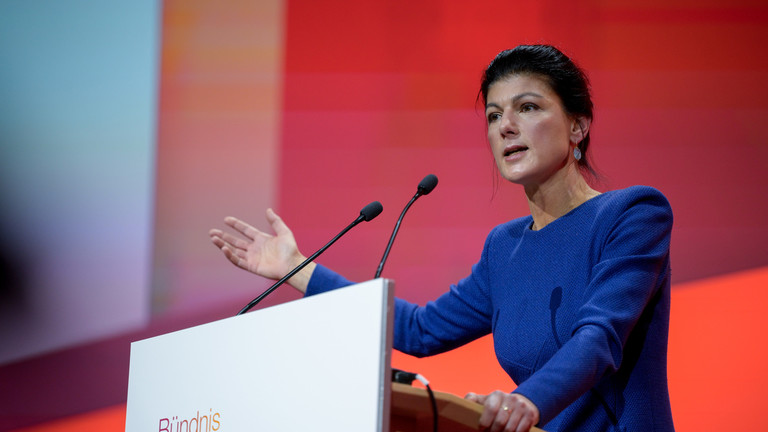
Sahra Wagenknecht, leader and chancellor candidate of the Sahra Wagenknecht Alliance (BSW), on January 12, 2025 in Bonn, Germany. © Sascha Schuermann / Getty Images
RT | January 13, 2025
Western sanctions imposed on Russia are “killing” German companies and enriching the American economy, Sahra Wagenknecht, the leader of Germany’s left-wing BSW party, said during an election conference on Sunday.
The delegates of the Sahra Wagenknecht Alliance – Reason and Justice (BSW) gathered in the city of Bonn to adopt the platform for the Bundestag election that will take place next month. During her speech, Wagenknecht refused to blame Russia for the ongoing Ukraine conflict.
“The sanctions have nothing to do with morality, they have nothing to do with human rights, they have nothing to do with the love of peace, they are simply a stimulus program for the US economy and a killer program for German and European companies,” Wagenknecht said.
She called for the restoration of the gas imports from Russia. “We simply have to tie our energy imports with the criteria of the lowest price and not any kind of double standards or ideology,” she stated.
The left-wing politician condemned Washington’s foreign policy, alerting the audience about “the blood trail of US proxy wars” around the globe. She stressed that the German chancellor must not be “a vassal” of the US.
BSW co-leader Amira Mohamed Ali said that the party stands for “a strong, fair and sovereign Germany.”
The right-wing Alternative for Germany (AfD) party held its conference in Riesa, Saxony on Saturday. The delegates rejected a motion condemning Russia and called for a diplomatic resolution of the conflict.
The snap election was called after Germany’s ruling three-party coalition collapsed last month due to disagreements over the budget.
AfD delegates reject motion condemning Putin
RT | January 12, 2025
The right-wing Alternative for Germany (AfD) party has overwhelmingly voted against including in its 2025 election manifesto a condemnation of Russian President Vladimir Putin for the conflict in Ukraine.
The delegates gathered for a conference in Riesa, Saxony on Saturday to decide on the platform for the snap parliamentary elections, which will be held next month.
Albrecht Glaser, a member of the Bundestag, proposed to accuse Russia of failing to protect civilians in Ukraine and to state that “AfD condemns the behavior of President Putin and once again calls on all warring parties to propose an immediate ceasefire and hold peace talks.”
According to news channel N-tv, 69% of the delegates voted to reject the motion. The draft program approved by the party leadership only briefly mentions the conflict, saying that “the war in Ukraine has disturbed the European peaceful order,” the news agency Deutsche Presse-Agentur reported.
The draft reportedly says that AfD “sees Ukraine’s future as a neutral state outside of NATO and the EU,” and calls for the restoration of “undisturbed trade” with Russia.
Known for its anti-immigration stance, AfD is the second-most popular party in Germany, according to the polls. The party has been often accused of parroting Russian narratives about the conflict, given that its position on Ukraine mostly aligns with Moscow’s demands to Kiev.
The party has rejected the “pro-Russian” label, insisting that continuing military support for Kiev and sanctions on Russian trade and energy exports are against Germany’s national security.
During her recent conversation with tech billionaire Elon Musk, AfD co-leader Alice Weidel argued that the EU has abandoned diplomatic efforts in favor of dangerous confrontation with Russia. The conflict could “escalate big time towards a nuclear exchange,” she warned.
Early elections were called after Germany’s ruling three-party coalition collapsed in late 2024 due to disagreements over the budget.
Nord Stream pipeline to be relaunched — German chancellor candidate
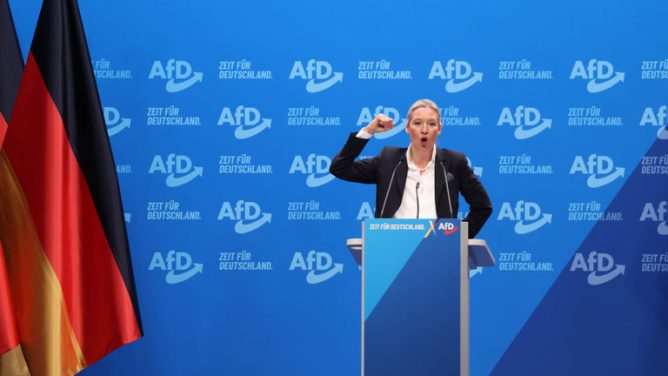
Alice Weidel speaks at the AfD party congress in Riesa, Germany, January 11, 2025 in Riesa © Getty Images / Sean Gallup
RT | January 11, 2025
Alternative for Germany (AfD) co-leader Alice Weidel has pledged to put the sabotaged Nord Stream gas pipelines back into operation if her party emerges victorious in next month’s general election.
AfD members met in the town of Riesa on Saturday to formally approve Weidel as their candidate to succeed Chancellor Olaf Scholz, whose coalition government collapsed late last year. Weidel’s nomination marks the right-wing AfD’s first bid for the chancellery in its 11-year history.
In a speech after the nomination vote, Weidel promised to implement harsh immigration policies – including the “remigration” of immigrants already living legally in Germany – and to scrap Scholz’s green policies in a bid to drive down energy prices. Restoring energy ties to Russia is vital to this latter goal, she explained.
“We will put Nord Stream back into operation, you can count on it,” Weidel told her party.
Germany relied on Russia for 55% of its natural gas supply before the Ukraine conflict escalated in February 2022. Much of this gas flowed through the Nord Stream 1 pipelines, with the parallel Nord Stream 2 lines due to come online in 2022. However, Berlin revoked the certification for Nord Stream 2 several days before Russia’s military operation in Ukraine began, and both sets of lines were destroyed in an act of sabotage in September of that year.
While German investigators have reportedly settled on the theory that the pipelines were destroyed by Ukrainian saboteurs, American journalist Seymour Hersh maintains that they were blown up by the CIA and US Navy. The head of Russia’s Foreign Intelligence Service (SVR), Sergey Naryshkin, has blamed “professional saboteurs from the Anglo-American special services,” referring to the US and UK.
Scholz’s decision to halt Russian energy imports, coupled with his government’s green policies, has led to soaring electricity costs in Germany, forcing some of the country’s manufacturing giants – including Volkswagen and BASF – to close plants and lay off workers.
The AfD is not the only German party that wants to repair and reopen Nord Stream. The leftist Sahra Wagenknecht Alliance (BSW) has also demanded that they be brought back online, with BSW MP Sevim Dagdelen calling last week for the gas lines to “finally be put into operation,” and for the German government to “stop giving money to Kiev!”
Germans go to the polls to choose a new government on February 23. The AfD is currently polling at around 20%, ahead of Scholz’s center-left Social Democratic Party (SPD) at 16%, but behind the center-right Christian Democratic Union (CDU) at 31%. However, even if the AfD were to emerge as the largest party next month, all of Germany’s other mainstream parties have ruled out entering a coalition with it.
Berlin Police hunt down those responsible for leaked list of New Year’s Eve suspects dominated by foreigners
By Thomas Brooke | Remix News | January 9, 2025
The publication of a list containing the first names of 256 suspects arrested by Berlin police on New Year’s Eve has sparked an internal investigation into a security leak.
The list, published by German media outlet Nius, pertains to those apprehended after mass civil unrest in the German capital after New Year’s celebrations turned sour and migrant-fueled violence erupted with fireworks launched at police and into residential buildings.
As Remix News previously reported, the authorities’ own data showed 670 suspects in total had been arrested — 406 had a German passport and 264 were foreign nationals.
German police do not publish data identifying the nationalities of suspects, but a list of the “German” suspects, which included a plethora of foreign names including Abdul Kerim, Abdulhamid, Abdulkadir, Ali, Hassan, and Mohammed in its various spellings, managed to make headlines.
Nius, run by Bild’s former editor-in-chief Julian Reichelt, estimated that 65 percent of those in the German bracket had first names “that are clearly of non-German origin.”
The authorities are now reportedly on the warpath to track down those responsible for the leak.
The Department for Police and Corruption Crimes at the Berlin State Criminal Police Office has been tasked with identifying the source, police spokesperson Florian Nath confirmed to Tagesspiegel.
“Our Police and Corruption Crimes Department is investigating the suspect who may have illegally extracted and released lists of names from protected, internal police systems,” Nath said, adding that the authorities will always pursue “the release of personal data without any legal basis.”
The police spokesperson described the release as an unauthorized and unacceptable violation of data protection laws that promotes a “disproportionate and discriminatory approach to explaining criminal behavior.”
Berlin Police did not deny the authenticity of the list.
The response by the authorities has drawn strong criticism in some quarters with journalist Birgit Kelle writing on X: “In Berlin, people would rather investigate colleagues in their own ranks who tell the population the unvarnished truth about the cultural origins of the city’s criminals than criminals themselves.”
Prior to the leak, the Alternative for Germany (AfD) parliamentary group in Berlin had submitted a parliamentary query demanding the names of the suspects be released.
AfD co-leader Alice Weidel had also weighed in, sharing the leaked list on social media and stating that it “speaks for itself.” She further insisted that “foreign violent criminals” who endanger lives have “forfeited their right to hospitality and must be deported.”
Investigations into the leak have also been discussed politically at state level with left-wing politician Niklas Schrader announcing plans to address the matter in the Berlin Senate’s Interior Committee.
Scholz’s Cabinet Blocks $3 Billion Urgent Aid Package to Ukraine – Reports
Sputnik – 10.01.2025
German Chancellor Olaf Scholz’s cabinet is blocking the provision of additional military aid to Ukraine, a move backed by Foreign Minister Annalena Baerbock and Defense Minister Boris Pistorius, the Spiegel newspaper reported.
Baerbock and Pistorius, of the Green Party and the Social Democratic Party (SDP), respectively, reportedly want to mobilize 3 billion euros ($3.09 billion) in emergency aid for Ukraine before parliamentary elections scheduled for February 23. Scholz’s office, however, is blocking the plan, the newspaper said.
It added that the foreign and defense ministries intend to ask the German parliament’s budget committee for additional funds because the planned budget does not include money for Kiev’s urgent needs and because of the uncertainty surrounding the incoming US administration’s Ukraine policy.
Scholz’s cabinet, in turn, explains its veto of the plan with the unwillingness to present the government that will be formed after the elections with an already decided fact, the newspaper said.
Another possible motive behind the Chancellor’s stance could be the fear of scaring the SDP voters with another expensive aid package.
In late December, German President Frank-Walter Steinmeier said he had decided to dissolve the Bundestag and call early elections for February 23.
Scholz suggested Steinmeier dissolve parliament after a majority of lawmakers supported a no-confidence vote in his government on Dec. 16. Of the 717 lawmakers who took part in the vote, 394 voted against Scholz as chancellor, while 207 voted in favor and 116 abstained. A minimum of 367 votes in favor or against was required for a vote of confidence or withdrawal of confidence.
Russia has said that the West’s arms deliveries to Ukraine hinder the settlement of the conflict and directly involve NATO countries in the conflict. Russian Foreign Minister Sergei Lavrov has said that any cargo containing weapons for Ukraine would be a legitimate target for Russia.
150 EU officials expected to monitor Elon Musk conversation with Alice Weidel, possible ban on the table
Remix News | January 9, 2025
The European Union’s outrage is only growing over a planned interview hosted by Elon Musk later today with Alternative for Germany (AfD) party co-chair Alice Weidel. Now, Politico is reporting that 150 EU officials are expected to attend the conversation between Musk and Weidel for the purpose of learning whether X is complying with EU rules. In addition, French politicians are already talking about an EU-wide ban.
The claim is that there are fears that Musk’s team will manipulate the algorithm to provide the interview more attention. However, Musk has over 200 million followers and nearly all of his posts receive millions and often tens of millions of views, which makes it certain that the interview, which has also been widely advertised, will receive significant attention.
Weidel has also taken to X about the surveillance of the upcoming interview.
“Big Brother is watching you: 150 EU officials are supposed to monitor my conversation with @elonmusk. An EU that uses its bureaucracy to exercise censorship on social media is instilling the spirit of unfreedom. The #dsa threatens democracy!” she wrote
The officials overseeing the interview are “given relatively extensive power,” according to Politico. They will be able to use, among other things, the Digital Services Act (DSA) to monitor how the algorithm works and how content is being displayed to users.
Politico writes that Musk allegedly pushed certain posts in the past, including one about the Super Bowl in the past. The alleged reason was that Musk was mad that one of President Biden’s posts were getting more attention.
The EU officials are working with experts from the European Center for Algorithmic Transparency” in Seville to determine if such an action will occur once again. However, they will not release this information immediately. Instead, it will like be added to a general procedure against X.
A wide range of EU leaders fear losing power due to shifting public sentiment, and Musk’s X represents their top threat. French Foreign Minister Jean-Noël Barrot, on Wednesday, called for a decisive stand against political influence. When asked whether a ban on X, in the same style as Brazil, was possible, he responded: “That is possible under our laws.”
Spanish Prime Minister Pedro Sanchez also claimed Musk was pushing “hate” and warned against the rise of fascism in Europe.
SPD General-Secretary Matthias Miersch said that Musk’s influence on Germany’s elections now “call into question the foundations of democracy.”
However, Musk is unlikely to manipulate the algorithm in favor of Weidel especially when enough people are already likely to watch the interview without any interference. Absent some overt manipulation, it is unclear what could possibly be illegal about such an interview. Musk is allowed to interview Weidel. That is his right and her right. The bigger problem would be if he censored anyone who criticized such an interview or manipulated the algorithm to suppress this criticism, which is undoubtedly what the old Twitter regime did before his purchase — all of which the EU actively supported
The head of Germany’s Federal Network Agency, Klaus Müller, appeared to take a more measured approach to the issue.
“Not everything that you get upset about is also illegal,” said Müller on Thursday morning on Deutschlandfunk. “In election campaigns, you also have to put up with things that you personally find inappropriate, indecent or unacceptable.” Freedom of expression always means “the freedom of those whose opinion you do not share.”
He said that the excitement over the Musk interview was “understandable” but it must first be observed whether any laws are actually broken during the process. He noted, however, that people could choose simply not to listen to the interview.
Featured Video

Bombing Hitler’s Hometown
or go to
Aletho News Archives – Video-Images
From the Archives
The Biggest Threat to Peace in Middle East
By Dr. Elias Akleh* | Sabbah Report | May 24, 2010
A build up of heightened tension in the Middle East is escalating in the last few weeks. American and Israeli postures towards Lebanon, Syria, and Iran have become more threatening. Listening to speeches of political leaders one hears talks only about war not peace. Iranians and Israelis are continuously training hard for a possible showdown. Both sides are conducting extensive war games every month. This led Syrians to claim that Israel is preparing for a soon-to-come another war. The Jordanians also are warning that current stalemate of the peace process is an indication of a war breaking out this summer. The Russian President and his army chief hinted, a few months ago, that the US and Israel were planning for an attack on Iran.
Indeed Iran is, as it has been for last few years, the target of most of the threats and accusations of supporting terrorism. Escalating incitement against Iran the American Defense Department sent last month (April) to Congress a report on Iran’s military claiming Iran could develop intercontinental ballistic missiles capable of reaching the US by 2015.
Ignoring the fact that N. Korea, India, Pakistan, and Israel are proven to have nuclear weapons while Iran does not, the US Secretary of State Hillary Clinton chose in her speech, to the nuclear Non-Proliferation Treaty review conference at the UN, to focus on Iran’s alleged nuclear ambitions putting the whole world at risk as she put it. According to Clinton Iran’s acquisition of nuclear weapons, rather than Israel’s more than 200 nuclear bombs, is destabilizing the Middle East. She called on the world’s nations to rally around US efforts to hold Iran, not other nuclear countries, to account.
The accusation that Usama Bin Laden is living comfortably in Iran had received a boost after the broadcast of a documentary called “Feathered Cocaine”. This echoed the June 2003 claims of the Italian newspaper Corre de la Sierra that Bin Laden was in Iran according to some intelligence report, and according to Richard Miniter’s book “Shadow War”. … continue
Blog Roll
 Aletho News
- Bombing Hitler’s Hometown
- German journalist threatened with homelessness as German court upholds EU sanctions in landmark free speech case
- US Tells Allies That Ukraine-Bound Arms Could be Sent to Middle East
- Organized terrorism: Iran condemns killing of its diplomats in Lebanon
- Why could Gaza enter the regional war?
- Hamas official rejects Mladenov Plan linking disarmament to Gaza reconstruction
- Two Primary Elections for the Soul of ‘America First’
- Japan Clings to US Vassalage Despite Energy Crunch Caused By Iran War
- US Seeks Control Over Global Energy Infrastructure – Kremlin
- US senators target Orban government for standing up to Zelensky
- If Americans Knew
- Researchers at Human Rights Watch Resign Over Blocked Report on Palestinian Refugee Return
- Jewish Groups Are Backing a War Americans Don’t Want
- Eric Fingerhut Thinks He’s the President of the Jews
- Top Jewish Philanthropists, Rabbis Urge Israeli President to Take Action Against ‘Jewish Extremists’
- Don’t Be Fooled. Zionist Leaders Have Always Wanted to Control Southern Lebanon
- Israel’s widespread use of torture is a core element of its genocide against the Palestinian people
- In Israel’s War on Iran, Many Middle East US Bases Rendered “All But Uninhabitable”
- ‘Burn the lawn’: Israel pursues ‘Rafah model’ in southern Lebanon
- A genocide here, an amputation there
- Reports: Iran mobilizing 1M fighters, Israel-US run low on ammo, Israeli army faces shortage – Not a ceasefire Day 168
- No Tricks Zone
- Devastating Assessment Of Comirnaty Vaccine By Former Senior Pfizer Europe Toxicologist
- New Study: CO2 Is ‘Effectively Negligible’ As An Explanatory Climate Change Factor Since 2000
- Former Pfizer Toxicologist Dr. Helmut Sterz Tells Bundestag Hearing Pfizer Vaccine Should Have Never Been Approved
- Energy Expert: Germany’s Nuclear Phaseout Was A “500 Billion Euro Mistake”
- New Research: South Australia’s Mid-Holocene Sea Surface Temperatures Were 4°C Warmer Than Today
- Storing Green Energy To Last Germany 10 Days Would Require A 60-Million Tonne Battery
- New Studies: UK Sea Levels Were 4 Meters Higher Than Today During The Mid-Holocene
- Destructive Green New Deal: German Energy And Metal Group Warns Of Drastic Crisis
- New Study Documents A 20-Year Pause In Arctic Sea Ice Decline – Driven By Internal Variability
- Wake-up Call: Survey Shows Majority Of Germans Now Favor Postponing Climate Targets!
 Aletho News