Nord Stream Blast: Why the West Still Can’t Name the Culprit
By Ekaterina Blinova – Sputnik – 26.09.2023
Exactly a year ago three out of four Nord Stream pipelines running from Russia to Germany under the Baltic Sea to provide Western Europe with natural gas were destroyed. Western investigators have so far failed to find the saboteurs behind the blast.
Gas leaks from the Nord Stream pipeline system were detected on 26 September 2022, with the EU leadership admitting that this could be the result of a “deliberate attack”.
Two days later, on 28 September, the Kremlin announced that Russia was ready to consider applications from EU countries for a joint investigation into the Nord Stream incident.
However, not only did the West snub Moscow’s request but also blamed Russia for destroying its own pipelines. Later, European and American officials backtracked on their accusations but fell short of naming a potential perpetrator.
On 12 October 2022, Russian President Vladimir Putin called the incident “an act of international terrorism”. Meanwhile, as gas prices soared and US energy producers secured lucrative liquefied natural gas (LNG) contracts with European countries, it became clear that Washington had been the major beneficiary from the Nord Stream destruction.
Furthermore, the US leadership had previously issued several threats that it would destroy the pipelines.
“We know that the United States President Joe Biden, threatened openly that he would stop Nord Stream 2 if the Russians were to militarily intervene in Ukraine,” Philip Giraldi, former CIA station chief and now an executive director of the Council for the National Interest, told Sputnik. “That was repeated by Victoria Nuland, who was Number Three at the State Department. She said basically the same thing. So we had the President and a senior official both saying that they would stop the pipeline if this were to happen. So we have a statement coming from the government itself saying it would do this.”
“And then I would say on top of that, the United States – given its military capabilities – had the capability to do this. They sent divers down to attach explosives and to arrange for a drone satellite that would ignite the charges and blow up the pipelines. It had the capability to do it. And it also had the motive, which was basically to weaken Russia’s ability to use its energy resources to affect politics in Europe. So this is what it was all about,” Giraldi continued.
On 8 February 2023, Pulitzer Prize-winning journalist Seymour Hersh dropped a bombshell, detailing an apparent plot by Team Biden and the US intelligence community to blast the Nord Stream pipelines with the help of Norwegian operatives.
Reflecting on Hersh’s version, Giraldi said that he feels that Hersh’s narrative is “correct in every detail.”
“And I can confirm to you that Sy Hersh, whom I know somewhat, has excellent sources inside CIA and inside the Pentagon. So what he’s telling us comes straight from people who know about it,” the CIA veteran said.
Blame Game Time: The Andromeda Yarn
On 7 March, the US and German mainstream sources published two separate articles claiming that international investigators had managed to trace the 26 September 2022 sabotage attack to a “pro-Ukrainian” group operating from the Andromeda, a 15-meter chartered yacht. The story immediately prompted a lot of controversy.
German media, for example, asked how a 15-meter chartered yacht could carry the 1,500-2,000 kilograms of explosives needed to destroy the pipelines, adding that the Andromeda does not have a crane to hoist such quantities safely into the water. It was also unclear how the group of volunteers managed to transport that amount of explosives across Europe.
Another problem, cited by the press, was that at the site of the explosion, the depth of the Baltic Sea is about 80 meters, requiring special diving equipment which the private vessel lacked. On top of this, the gang of saboteurs returned the yacht in bad condition and even left a couple of fake passports on board which made the story even fishier.
Hersh ridiculed the mainstream media yarn while discussing it with an anonymous CIA operative familiar with the issue. According to Hersh, it’s not just a “bad” media story but a deliberate “parody” fed by the CIA to the US and German media.
“In the world of professional analysts and operators, everyone will universally and correctly conclude from your story that the devilish CIA concocted a counter-op that is on its face so ridiculous and childish that the real purpose was to reinforce the truth,” the investigative journalist wrote on 5 April.
The most recent Western media stories alleging Ukraine’s involvement don’t hold water, either, according to Giraldi:
“Look, when you’re doing things in the intelligence world, you look for corroborative details – details that tell you that this story is coming from a good source or that it is fundamentally correct. And I saw none of that in this story. There have been a number of stories, of course, about people from Ukraine having done this, or people even from Germany renting boats and going over there, and they didn’t know what nationality they were. I mean, these are repeated stories. I have no reason to assume that this story is correct.”
The CIA veteran goes on to say that at present there is no story that sounds as credible as Hersh’s version. Besides, the US had the motive; it had the capability to do it; and it also had the objective to do it as a way of weakening Russia’s ability to influence Western Europe, Giraldi summarized.
“So I think that a lot of the background or the backstory supports the fact that the United States basically did it, though, apparently with the assistance of the Norwegians, and I would imagine some of the other NATO allies were also briefed in a certain fashion. In other words, not all the details, but given some indication that something might be happening in the near future in the Baltic.”
Why Couldn’t EU Investigators Name the Culprit?
It’s hardly surprising that despite official investigations in three countries – Sweden, Denmark, and Germany – the question of who is responsible for the sabotage remains unanswered, according to Giraldi.
“The fact that there have been three investigations carried out means nothing because the three countries that carry out the investigation are all NATO members. So they would have no motive whatsoever to challenge the argument that this was carried out by the Russians themselves or by the Ukrainians,” the CIA veteran said.
However, Giraldi suspects that the German investigation probably came closest to the truth. However, what they told the public was essentially a narrative acceptable to the United States and to NATO. The former CIA field officer pointed out that Germany suffered the most from the destruction of the Nord Stream pipelines.
“Their economy is in trouble. They were dependent on Russian energy and so they are paying a price for it, and I’m sure that many Germans – I do know that many Germans are aware of this and are complaining that this ever took place. I was in Eastern Europe about two months ago, and I heard this a lot from Europeans, how stupid this whole thing was to destroy a resource that was very good for Europe as well as being good for Russia.”
According to Giraldi, it’s interesting to examine who else – apart from the US and Norway – was aware of the Nord Stream plot and was foolhardy enough to get involved in it. Giraldi doubted whether Berlin had been in collusion with the US and Norway from the beginning and said that it did not make sense for a country to sacrifice its own economy willingly.
Furthermore, the Nord Stream pipelines weren’t just a Gazprom asset, Giraldi emphasized: there were other countries – other companies from Western Europe – that participated in the project that had been worth billions of dollars. And because of the US plot, their money had been squandered and their infrastructure had suffered incalculable damage.
But the financial aspect is only half the story: the most worrying part is that those who blew the pipelines up risked escalating the crisis dramatically.
“The destruction of the pipeline was an act of war,” stressed Giraldi, “… so this is an interesting story if we ever find out the truth.”
On 17 September 2023, the First Deputy Permanent Representative of Russia to the UN Dmitry Polyansky said that Russia was calling for the UN Security Council to meet to discuss the Nord Stream gas pipelines and the council will gather on Tuesday, 26 September – a year after the sabotage occurred.
On 27 August, the Prime Minister of the German federal state of Saxony, Michael Kretschmer, announced the need to repair the damaged gas pipelines which he said will help to ensure the country’s energy supply for another five to 10 years.
Poland warns German chancellor about interfering in Polish elections after Scholz’s controversial remarks
RADIOSZCZECIN.PL | September 25, 2023
Polish Foreign Minister Zbigniew Rau has called on German Chancellor Olaf Scholz “to respect Poland’s sovereignty” and refrain from making statements “that could harm mutual relations.” Scholz chose illegal immigration of all things to criticize Poland about, a topic his government is currently facing a crisis over due to his inability to control Germany’s borders.
Rau, who posted the comment on platform X, emphasized that recent remarks from the German politician hint at potential interference in Poland’s internal matters and its ongoing election campaign.
The comments in question were made by Chancellor Olaf Scholz during a rally for his SPD party in Nuremberg. The German leader voiced support for stricter controls over illegal migration and announced intentions to take specific measures. According to the DPA news agency, Scholz also “called for clarification on possible irregularities in the issuance of visas by Poland.”
Rau stated that Scholz’s latest declaration violates the principle of the sovereign equality of nations. This principle underpins the friendly cooperation between Germany and Poland, as outlined by the German Federal Republic’s treaty with Poland from 1991.
“The jurisdiction of the German Chancellor clearly does not extend to proceedings underway in Poland,” Rau’s post read.
Earlier, the Polish government’s representative for information security, Stanisław Żaryn, noted that Chancellor Scholz appears to be using the visa issue as a means to exert political pressure on the Polish government.
Żaryn remarked that it is hard to see this as anything other than an attempt to influence Poland during its election campaign.
Żaryn mentioned in his post that “interestingly, Germany has had significant issues with visas for years. Every few years, scandals regarding visa purchases emerge there. Perhaps they should focus on that?”
Last year, Germany saw the highest number of asylum applications since the 2016 migration crisis, with cities and towns overflowing with migrants and with little end in sight.
Polish officials highlight that the matter of visa issuance irregularities in Poland is incidental and is currently under investigation. The Central Anti-Corruption Bureau (CBA) has arrested seven individuals in connection with this probe, including one Polish minister who attempted suicide after the investigation was launched.
Canada Launches UN Declaration Pledging Restrictions On Online “Disinformation”
By Didi Rankovic | Reclaim The Net | September 22, 2023
A “global” declaration – that only manages to garner the support of 27 out of 193 UN member countries. How dreadfully humiliating – some might say.
But rest assured, Canada’s government will find a way to spin this abysmal result of its effort to use this year’s (likely, as ever, a waste of time and taxpayer money) UN General Assembly gathering in NYC to push some of its own agenda – or the agenda it’s tasked to push.
First, what is this yet another “global declaration” – and why has it failed so spectacularly? (The answer may in fact be the same.)
According to an announcement by the Canadian government, cited by the press, the purpose of the “global” declaration is to combat “disinformation.”
“Global Declaration on Information Integrity Online,” is what it’s called, and besides the “trusty” Canadians, the Dutch were also seemingly randomly thrown (an EU country, one or the other) into drafting it.
And look who was readily on the side, to sign it: the US, the UK, Germany, Australia, Japan, Korea, etc.
There are (not many, though) more countries here, but their alignment on “issues” was never in question; and now, instead of a UN General Assembly as a place of the meeting of the minds and meaningful discussions, we have it as a showdown for a world aligning into different, this time huge and truly global blocs, to showcase their different allegiances.
How dreadful – for world peace, going forward.
Meanwhile – what does the Canadian document that only managed a meager backing at the UN have in mind?
It’s “necessary and appropriate measures, including legislation, to address information integrity and platform governance.”
If any of us tried to make the Canadian proposal more ludicrously broad-worded than this is, I’m sure we’d not succeed. But there is an attempt to narrow the “declaration” down. If suitable, “we” go back to “international human rights law.”
So – those who sign the document will do so in a way that complies “with international human rights law.” (?)
Problem: a number of full-fledged UN members are saying, the very UN founding Charter really any longer means anything – having been broken by the likes of Canada, time and time again.
There’s other usual declarative tosh as you might see from these governments’ daily briefings – the only time they ever try to narrow down or clearly define any of the “definitions” is when they mention the tech they’d like to better control – such as ChatGTP.
Baerbock’s Xi Jinping comment only gives away Germany’s subservience to US
By Drago Bosnic | September 18, 2023
Conducting any sort of diplomacy requires a certain level of intelligence and at the very least basic decency. However, top diplomats of the political West must’ve missed the classes on either of those, probably busy listening to people like Josep Borrell and his rants about the “garden” and the “jungle”. This is particularly embarrassing when dealing with millennia-old civilizations, such as China and India, countries with magnificent cultural heritage, both of which have recently been characterized as societies with “low intellectual potential”. As we all know now, during an interview with local media, high-ranking Kiev regime official Mikhail Podoliak arrogantly stated that China and India are supposedly “incapable of thinking about long-term strategies” because of this “low intellectual potential”.
We can imagine what sort of “intellectual potential” is present in a person who thinks that countries such as China and India are “incapable of devising long-term strategies” when both have quite literally existed for thousands of years, continually, we should stress. If Beijing and Delhi don’t have such strategies, the question is – who does? And yet, it seems that Podoliak is hardly the only Western politician (or Western-aligned, in this case) with such “highly intellectual” opinions. Namely, the German Foreign Minister Annalena Baerbock also decided to demonstrate similar “high intellectual capacity” during a recent interview with Fox News. On September 15, she directly called Chinese President Xi Jinping a “dictator”. Worse yet, she did so while giving a statement about the Ukrainian crisis, a matter that isn’t directly related to China.
“We will support Ukraine as long as it takes,” Baerbock stated during the interview, adding: “If Putin were to win this war, what sign would that be for other dictators in the world, like Xi, like the Chinese president? Therefore, Ukraine has to win this war.”
Once again, she demonstrated how to conduct diplomacy if one really wants to get on the bad side of not one, but two global superpowers, both of which are of essential importance to Germany itself. It seems Berlin learned nothing from the disastrous decoupling with Moscow, a move that has effectively destroyed German industrial might. Russian commodities such as oil and natural gas, the vital importance of which cannot possibly be overstated, have never been less accessible to Germany, and yet, Berlin continues its hostile policies towards Moscow. Still, this is obviously not enough, so it’s now also showing enmity towards Beijing. It should be noted that, according to the German Federal Statistical Office, trade exchange with China amounts to almost €300 billion.
This makes Beijing its largest trading partner and for the eighth year in a row, at that. German exports to China are immensely important for saving what’s left of its industry. Such enmity towards Beijing may very well destroy it completely. This also comes on the heels of what can only be described as a crawling trade war between China and the European Union, as the troubled bloc has announced it would “launch an investigation into Chinese electric vehicle subsidies“. And to say nothing of the mindless decision Brussels made earlier this year when it announced that EU navies will “support Taiwan”, although Europe itself is faced with a massive surge in illegal immigration, a problem which the aforementioned EU navies can’t deal with in the Mediterranean, their own primary zone of responsibility.
China has already expressed indignation over the label, deeming it “absurd” and an “open political provocation”. Mao Ning, the spokesperson of Beijing’s Foreign Ministry, said that Baerbock’s remarks “infringed on China’s political dignity”. As of this writing, no concrete moves have been announced in response to Germany’s rhetoric, but it’s virtually guaranteed that Beijing will not tolerate such insolence. It’s also not the first time that Baerbock has engaged in Sinophobia. Just last month, she said that “China poses a challenge to the fundamentals of how we live together in this world”. Baerbock also described her mid-April visit to China as “more than shocking” and said Beijing was “increasingly becoming more of a systemic rival than a trade partner”, which is in line with Germany’s openly stated intention of “decoupling” with China.
Beijing’s response is certainly not limited to stern rhetoric, as demonstrated by the sanctions (or counter-sanctions, to be exact) it now regularly imposes on its increasingly aggressive Western rivals. Back in early July, after US President Joe Biden also called his Chinese counterpart a “dictator” several weeks before, China responded with restrictions on the export of rare-earth elements, which caused shockwaves on the global market. Biden made the controversial statement only a day after US State Secretary Antony Blinken came back from China, a visit that Washington DC pompously announced would supposedly “stabilize ties” between the two countries. In mid to late July, the US also sent Henry Kissinger, Blinken’s much more prominent (First) Cold War-era predecessor, to try and use his influence to prevent China’s total tilt toward Russia.
However, this forlorn attempt failed, especially as Kissinger went in an unofficial capacity, leaving his visit (geo)politically inconsequential. Taking all this into account, Germany’s rhetoric can hardly be described as “sovereign”. Berlin has zero reasons to get into any sort of confrontation with China, but it still does so. However, this is certainly in the interest of the US, as Washington DC is desperate to portray Beijing as supposedly “isolated”. This only implies that Germany doesn’t have an independent foreign policy.
Drago Bosnic is an independent geopolitical and military analyst.
China summons German envoy over Baerbock’s ‘dictator’ remark
RT | September 18, 2023
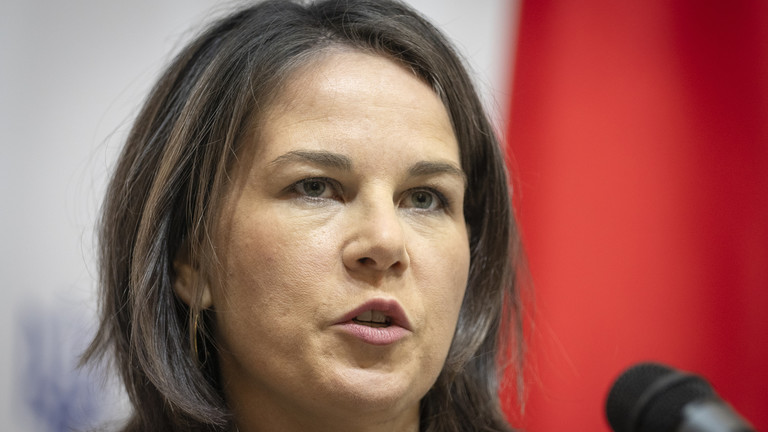
The Chinese Foreign Ministry has summoned German ambassador Patricia Flor after Berlin’s top diplomat, Annalena Baerbock, referred to Chinese President Xi Jinping as a “dictator.”
The ambassador “was summoned to the Chinese Foreign Ministry [on Sunday],” a spokesman from the German Foreign Ministry told AFP on Monday.
Baerbock made her remark while on a visit to New York on Thursday. Speaking to Fox News, she claimed that if the West allowed Ukraine to lose its conflict with Russia, this would embolden “other dictators in the world… Like Xi, the Chinese president.”
Beijing was “extremely dissatisfied” with Baerbock’s words, Chinese Foreign Ministry spokeswoman Mao Ning told reporters earlier on Monday. Mao said that Baerbock’s “absurd” comments “violate China’s political dignity” and are tantamount to an “open political provocation.”
Relations between Berlin and Beijing have deteriorated as of late, with Germany calling for reduced economic reliance on China in its first-ever China strategy, which was published in July. Despite China being Germany’s largest trading partner, the document branded Beijing a “systemic rival.”
In labeling Xi a “dictator,” Baerbock followed in the footsteps of US President Joe Biden, who applied the same descriptor to the Chinese leader in June. Biden’s statement came immediately after US Secretary of State Antony Blinken met Xi in Beijing, and reportedly caused American officials to reassure their Chinese counterparts that Biden’s words did not represent a shift in US policy.
News relating to missiles used or about to be used in Ukraine and about “Russian” ICBMs in North Korea
By Gilbert Doctorow | September 17, 2023
It is widely expected that in the coming week American president Joe Biden will announce the decision to ship American medium range missiles ATACMS to Ukraine. Discussions of this subject have been widespread in both US and European media. The focus has been on the range of missiles and whether their delivery will enable Ukraine to attack across the border into the Russian Federation itself for the purpose of destroying supplies and command centers there. Of course, the issue is complicated by what is meant by RF territory. In the language of the West, all of the Ukrainian territory which has been captured by Russia since 2014 is considered to be fair game for military attack. From the perspective of Russia, any attacks on Crimea, in particular, may be justification for major escalation of the war into a direct fight with the NATO country or countries supplying the given missiles. That said, there is reason to believe that Storm Shadows were used to hit Sevastopol on 13 September, without any sign yet of Russia’s intention to escalate.
The advocates of shipping ATACMSs to Ukraine point out that its range, 190 miles or 300 km, is no greater than that of the Storm Shadow missiles which Britain and France have sent to Ukraine without prompting escalatory actions by Russia. However, that is to overlook the other side of the issue, namely the method of launch. Storm Shadow is an air to ground missile. It is launched from Soviet-era Ukrainian jet fighters which have been especially modified for this purpose. Since the Storm Shadow is devilishly difficult for any air defense system to destroy in flight, the Russians have focused attention on destroying Ukrainian planes that are part of the launch operation. Just this past week, on 11 September a Russian missile attack on the Dolgintsevo air base near Krivoy Rog in the Dnepropetrovsk region of Ukraine destroyed 5 Ukrainian fighters, two MiG-29s and three SU-25s. The MiGs are said to either carry the Storm Shadow or to provide cover for SU-24s which carry them.
The logic of supplying ATCSMs is precisely in the launch mode, not the attack radius of these missiles. They are ground to ground missiles which are launched from mobile platforms similar in principle to the multiple rocket launchers HIMARS. In that sense, they are more difficult to find and destroy than a jet fighter.
In the meantime, in Europe, German Chancellor Scholz has made it plain that he will not approve sending Germany’s long range missiles, the TAURUS, to Kiev until the United States makes a first move by shipping its own missiles. The TAURUS falls into the same launch category as the Storm Shadow; it is sent on its way to target by a jet fighter. Its distinction is only one of distance, at 500 km range. If Ukraine has a fast diminishing or fully destroyed air force, the TAURUS will not be of much use.
*****
Otherwise, over this past week, the interest of major Western media in missiles has focused on what North Korea owns and how it got them. The interest came about as journalists followed the course of North Korean leader Kim Jong Un’s tour of the Russian Far East.
It has occurred to our journalists that North Korea presently possesses ICBMs capable of reaching the North American heartland, and as they pored over the technical characteristics of these missiles they noted that one seems to be very close in design to Soviet era missiles that were once the mainstay of the Russian strategic arsenal. I am speaking of the Korean rebranded Topol-M.
It is not surprising, therefore, that some folks in the States are wondering how is it that the Russians were able to get away with supplying the designs of the Topol-M to Pongyang without the United States raising a hullaballoo.
The answer, my friends, is in the inconvenient fact that those responsible for providing North Korea with production plans and technology for manufacturing the Topol-M were not Russians; they were Ukrainians. This story is discussed in an article on a Russian news portal a couple of days ago. According to the authors, the Ukrainians sold to the North Koreans part of the technology but not all. For example, they held back the secrets of the solid fuel used in this missile, which the Koreans had to develop on their own. Moreover, for the guidance system, the Koreans were assisted or copied a system developed by the Chinese. What this tells us is that if the Koreans should agree with the Kremlin on the purchase of one or another missile-related technology, its integration into their own production will be done by the Koreans themselves. The same may be said of technologies for construction and operation of nuclear powered submarines which the North Koreans are said to be looking for abroad.
*****
Before closing, I use this opportunity to sum up the Russian visit of Comrade Kim after he spent that first day in talks with Vladimir Putin at the Vostochny Cosmodrome about which I wrote earlier in the week. His next stop was Komsomolsk on Amur, where he was shown the Yuri Gagarin factory complex producing Russian military and civilian aircraft, including the “Alligator” multifunctional attack helicopters that have been so effective in the Ukraine war against tanks, armored personnel carriers and other military hardware. The top Russian official with Kim for the day was Minister of Trade and Industry Denis Manturov.
From Komsomolsk, Kim went next to the Knevichi air base in the Amur region, where he was shown the massive turboprop Tupolev Tu-95 and the sleek Tu-160 “White Swan,” both mainstays of the nuclear triad as bombers and missile platforms. Considerable attention was given to an assortment of the most modern fighter jets in the Su family, as well as to MiGs equipped with the hypersonic Kinzhal missile. The Russian hosts were headed by Minister of Defense Shoigu.
Kim’s tour ended in Vladivostok where he was taken aboard the frigate Marshal Shaposhnikov of the Pacific fleet, which is typical of the latest Russian vessels in having an important complement of hypersonic missiles with 1500 km range as well as weaponry for anti-submarine warfare.
When in Vladivostik, Kim visited the Far Eastern Federal University on Russky Island in the Vladivostok harbor, where the Eastern Economic Forum had been held at the start of the week. Kim met with university students. Lastly, there was a typically Russian cultural note to round out Kim’s program: a performance of Swan Lake by the Vladivostok affiliate of the Mariinsky Theater (St Petersburg). I mention parenthetically, that the Russian Federation from coast to coast is looked after culturally by its musical and museum powerhouses: Moscow’s Bolshoi theater maintains a similar performance and training outpost in Kaliningrad.
©Gilbert Doctorow, 2023
Iran Withdraws IAEA Designation of French, German Inspectors
Al-Manar | September 17, 2023
The International Atomic Energy Agency’s (IAEA) director general said on Saturday that Iran has withdrawn the designation of a number of the agency’s inspectors with Iranian media reporting that those inspectors are from France and Germany.
Iran’s move seems to have been made in response to a recent hostile and unconstructive move by the IAEA’s Board of Governors against Tehran, which was sponsored by the E3 (the UK, France and Germany) and the United States, Tasnim news agency reported.
IAEA Director General Rafael Grossi in a statement condemned what he called Iran’s “disproportionate and unprecedented” move to withdraw the designation of several of the agency’s “most experienced” inspectors assigned to conduct verification activities in the country under the NPT Safeguards Agreement.
He said Iran’s unilateral measure affects the IAEA’s “normal planning and conduct” verification activities in the country and “openly contradicts the cooperation that should exist between the Agency and Iran.”
Iranian Foreign Ministry Spokesman Nasser Kanaani reacted to the latest claim made by the IAEA chief, saying the United States and the three European parties to the 2015 nuclear agreement, known as the Joint Comprehensive Plan of Action (JCPOA) have abused the UN nuclear watchdog with the purpose of achieving their own political objectives.
“Unfortunately, despite Iran’s positive, constructive and continuous interaction with the IAEA, the three European countries and the United States abused the Agency’s Board of Governors for their own political purposes with … the aim of damaging the atmosphere of cooperation between Iran and the Agency,” Kanaani said, referring to the three European countries.
He said Iran has previously warned against the consequences of such efforts to politicize the UN nuclear agency.
The spokesman reiterated that Iran made the decision in accordance with Article 9 of the agreement between the Islamic Republic and the IAEA for the application of safeguards in connection with the Treaty on the Non-Proliferation of Nuclear Weapons.
Kanaani once again urged the Western countries to stop abusing international organizations, including the IAEA, and allow such world bodies to carry out their “professional and neutral” activities under no political pressure.
He, however, said Iran emphasizes the need for the IAEA’s impartiality and will continue its positive cooperation based on bilateral agreement.
On Wednesday, the IAEA’s Board of Governors issued a Western-sponsored statement that accused Iran of non-compliance with its safeguards commitments.
The document, signed by 62 member states of the agency, called upon Iran to take steps to address outstanding safeguards issues and provide the IAEA with information concerning its new nuclear facilities.
Separately on Wednesday, the three European signatories of the 2015 nuclear deal, France, Britain and Germany, also issued a joint statement on the sidelines of the meeting of the IAEA’s Board of Governors.
They accused Iran of non-compliance with the nuclear deal, even though it was the United States that unilaterally abandoned the deal in 2018 and put its fate in limbo.
Kanaani rejected the statement as politically motivated, saying Iran and the IAEA have made “considerable progress” in boosting cooperation.
On Fact-Checkerism and the Mythology of Disinformation
Thoughts on what our discourse police are even trying to do
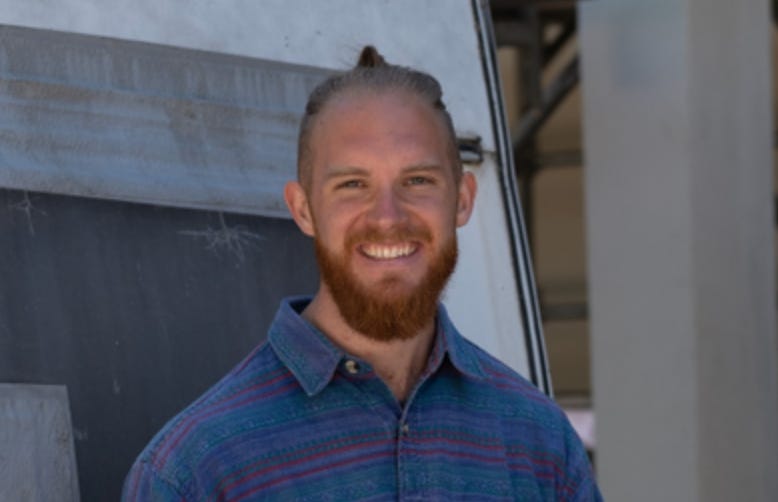
Pascal Siggelkow, state media “fact finder,” abysmal idiot.
eugyppius: a plague chronicle | September 14, 2023
Nobody in our corner of the internet could fail to notice the antics of those yapping bouncing frenetic chihuahuas who call themselves fact-checkers. Mostly they work in obscurity, misunderstanding internet jokes, recycling the vacuities of self-styled experts, debunking weird Twitter posts, and above all churning out prodigious walls of text filled with banalities that nobody reads. Occasionally, though, they manage to entertain us – as recently, when it emerged that BBC “disinformation specialist” and fact-checker-in-chief Marianna Spring had larded her very own CV with disinformation. Almost nothing is more amusing than finding oneself in the crosshairs of the fact-checkers, as has happened to me on at least one occasion.
My favourite checker of facts is the man-bun-sporting dimwit Pascal Siggelkow, who has been appointed top “fact finder” for the state media news service tagesschau. We last encountered Siggelkow when he mistook a noun for a verb in Seymour Hersh’s reporting, ultimately spending four amazing paragraphs debunking the thesis – unique to his own mind – that explosive seaweed destroyed Nord Stream. Before hunting facts at tagesschau, Siggelkow worked for Südwestrundfunk, another state media broadcaster, where he did daring undercover investigative reporting like snitching on “doctors who downplay Corona and issue unfounded mask exemptions.” This is really reporter-of-the-year material. In truth, we have before us here a whole genre of journalism conducted by an aggressively stupid tribe of Siggelkows, distinguished by their total lack of accomplishments, limited vision and minuscule persuasive capacities. That these small men should be entrusted with the project of policing our words is a strange thing indeed, and it suggests there is more going on in the world of fact-checking than we realise. Here, I propose to examine what it is that fact-checkers really do, and whether there is anything to say about them beyond the obvious fact that they are complete and utter idiots.
To explore fact-checking more concretely, I have ventured into the barren wastelands of the tagesschau “Fact Finder” page, where Siggelkow plies his trade and few before me have ever set foot. I’ve selected, mostly at random, a limited corpus of eleven recent discourse-policing items for closer analysis. I offer links to each of them below, in chronological order, providing their headlines and teasers in translation, together with sample quotations to give you an idea. This is a tiresome read indeed, so please skip ahead unless you are of particularly strong constitution.
1. Why is excess mortality so high?, by Pascal Siggelkow and Alexander Steininger
28 November 2022
In 2022, an unusually high number of people have died so far in relation to previous years. October in particular was an outlier. According to experts, this cannot be explained by Corona alone.
“As a scientist, I want to be open to all possibilities, but I just don’t see the connection [to vaccination],” [said Jonas Schöley, Research Associate in the Department of Population Health at the Max Planck Institute for Demographic Research in Rostock]. Additionally, he said, the scientific evidence evaluating vaccines is much stronger than that available in population research. “We don’t have to rely on the error-prone search for causes in population data because of the very good body of studies on the efficacy and risks of vaccination.” If the vaccines led to an increased number of deaths, this would have been proven long ago in medical and epidemiological research.
2. A flood of fake videos and pictures, by Carla Reveland and Pascal Siggelkow
3 July 2023
In connection to the riots in France, numerous pictures and videos are being shared on social media. Many of them are not from the current protests, but are disinformation.
In right-wing extremist and conspiracy-theorist Telegram channels, posts containing the term “France” have seen marked increase since the end of June … The Austrian right-wing alternative channel AUF1, for example, speaks of “ethno-riots” and a “bloody multicultural illusion.”
“Whenever there are topics that lend themselves to populist or right-wing extremist instrumentalisation, they are used,” [Pia] Lamberty, [Social Psychologist and Executive Director of the Center for Monitoring, Analysis and Strategy] says … This could be current political debates such as the topic of heat pumps, crises such as climate, Corona, economic tensions, or even riots such as in France. “Such attempts at instrumentalisation are not always successful across society as a whole, but for supporters of right-wing extremist ideologies they are often an additional confirmation of their own world views.”
3. Doubts about the significance of the AfD “Einzelfallticker” 1, by Carla Reveland and Pascal Siggelkow
3 July 2023
With their “isolated case ticker,” the AfD purports to show the alleged “true extent” of crimes committed by migrants. But a random sample shows that in half of the cases, reports do not indicate the origin of the suspect.
In response to a request from ARD-Factfinder, the AfD writes that it is “interested in transparency regarding the official figures from the police crime statistics in 2022.” Pia Lamberty, social psychologist and managing director of the Center for Monitoring, Analysis and Strategy … sees things differently. Launching a ticker with the intention of pointing out the danger posed by people considered to be non-Germans by the AfD by no means accords with the “role of an objective informer.” “This is the opposite of an open investigation and the opposite of objectivity,” says Lamberty.
4. How credible is the information on the [Ukrainian] counter-offensive?, by Pascal Siggelkow
7 July 2023
Ukraine’s counteroffensive to liberate territory occupied by Russia has been underway since June. Because Ukraine is keeping a low information profile, and the media often rely on Russian information. Experts are sceptical about this.
The fact that information on the counter-offensive comes primarily from Russia is due to the fact that Ukraine has mostly imposed a news blackout. The Russian Defence Ministry is trying to exploit this situation, says Julia Smirnova, senior researcher at the Institute for Strategic Dialogue in Germany (ISD). “This is a focus of Russian propaganda, and the numbers that are given are often massively exaggerated.” The Russian defence ministry is therefore not credible, she said.
The Dutch open source intelligence website (OSINT) Oryx wrote on Twitter of a total of six tanks abandoned in Zaporizhia oblast, including one Leopard tank, four Bradleys and one mine-clearing tank. “Left behind” howevewr is not synonymous with “destroyed.” In total, according to Oryx’s research, eight of Ukraine’s Leopard tanks have been destroyed or damaged so far since the Russian invasion began.
5. Increased agitation against queer people, by Carla Reveland and Pascal Siggelkow
17 July 2023
Whether it’s about homosexuals, drag queens or trans people: Disinformation about queer people is omnipresent in social networks. Experts believe this can have devastating consequences.
Trans people are particularly targeted by disinformation, says Kerstin Thost, press officer of the Lesbian and Gay Association in Germany (LSVD). “In the past months around the debate on the Self-Determination Act [which would make it possible for Germans to change their official gender and first names], we have seen an increased attack on trans people in particular, not only in Germany but also internationally. There has been an increased mobilisation of hatred, agitation and “demonisation against LGBTQI*.” LGBTIQ* stands for lesbian, gay, bisexual, transgender, intersex and queer people.
6. Who finances the welfare state?, by Pascal Siggelkow
26 July 2023
It’s said time and again on the internet that 15 million people keep Germany running. The references is to “net taxpayers,” who pay more taxes than they receive in benefits. Experts, however, believe that this figure is wrong.
The figure of 15 million “net taxpayers” is justified … in this way: Of the approximately 46 million employed people in Germany, 27 million paid more taxes and contributions than they received in state benefits. Of these, however, 12 million are “directly or indirectly dependent on the state,” since they are paid by taxes … for example, as state employees. Thus … 15 million “net taxpayers” keep the system running.
Stefan Bach, a researcher … the German Institute for Economic Research (DIW), believes this calculation is incomplete … “Basically, state taxes and levies are offset by services without which the modern economy cannot function either.” …
Social contributions such as unemployment insurance or health insurance should also be considered separately … The calculation holds that all pensioners are recipients of benefits [and] ignores the fact that the status of net tax payer and recipient changes … in the course of one’s life. …
7. Local weather phenomena do not refute climate change, by Carla Reveland and Pascal Siggelkow
10 August 2023
The last two weeks of July in Germany were cold and wet. Some use this fact to play down climate change. But experts believe this is wrong.
… Kevin Sieck from the Climate Service Center … believes that temporary local weather does not support arguments about climate change: “Robust statements about climate trends can only be obtained by looking at several decades,” says Sieck. “A rainy July in Germany doesn’t say anything about long-term trends.” It is therefore the long-term developments that are relevant when assessing trends in the climate.
Karsten Schwanke, meteorologist and ARD weather presenter, agrees: “There will always be very changeable summers.” But there is a clear tendency towards warmer summers with larger upward swings. “We see a tendency for heat waves to become longer. And we are currently getting heat waves that we definitely didn’t see 50 years ago. We’re also getting more droughts, especially in the summer.”
8. How China regards the Russian invasion, by Carla Reveland and Pascal Siggelkow
21 August 2023
In the Russian war of aggression against Ukraine, China is trying to position itself as a mediator. At the same time, the US and NATO are portrayed as warmongers. Is China neutral?
“China stands for peace while the US prevents the peace process”, “The actions of US-led NATO have pushed Russia-Ukraine tensions to their peak” or “Ukrainian ‘neo-Nazis’ have opened fire on Chinese students.” These are all statements made by Chinese state media or government officials in relation to the Russian war of aggression in Ukraine.
Although Beijing claims to be a neutral actor that respects the “sovereignty and territorial integrity of all nations,” China has provided “rhetorical backing” to the Kremlin, according to a study by the US-based German Marshal Fund. “Chinese officials and state media have openly supported and promoted Kremlin-friendly accounts of the war.”
9. Why the record debt is not much to write home about, by Pascal Siggelkow
7 September 2023
Germany’s national debt is at a record high, many media reported. From a purely nominal point of view, this is true, but from the point of view of experts, this is not very meaningful.
Martin Beznoska, Senior Economist for Financial and Fiscal Policy at the Institute for the German Economy (IW) points out [that] a more suitable parameter for assessing a country’s debt is … the debt-to-GDP ratio. “The debt-to-GDP ratio is a better indicator because it puts the debt in relation to the potential that the state has in terms of revenue-generating capacity,” Beznoska says.
The debt-to-GDP ratio relates government debt to nominal gross domestic product. For Germany, the debt-to-GDP ratio was 66.3 per cent in 2022. This means that the total debt was 66.3 per cent of the gross domestic product. Compared to the two previous years, the debt-to-GDP ratio in Germany has thus improved: in 2020 it was 68.7 per cent, in 2021 69.3 per cent. Before the outbreak of the Corona pandemic, however, it was still 59.6 percent.
10. Spahn’s dubious figures, by Pascal Siggelkow
1 September 2023
Vice chairman of the CDU/CSU parliamentary faction Spahn has criticised the planned increase in unemployment benefits. He said this would mean that a family of four would receive on average as much as an average-income family. But this is not true.
Planned increases to unemployment benefits next year have caused heated debeated. The CDU/CSU have complained that the changes will raise benefits higher than the wages of many employees. Vice chairman of the CDU/CSU parliamentary facation Jens Spahn said this sent the wrong signal. Even now, a family of four are entitled to an average of 2,311 Euros a month, which he said is as much as an average-income family in Germany. But this is not quite correct.
According to the Federal Statistical Office (Destatis), couples with two children had an average net household income of 5,490 euros in 2018. This is significantly more than the 2,311 Euros Spahn claimed. The gross household income was 7,435 Euros.
11. Fake videos and conspiracy claims, by Pascal Siggelkow
11 September 2023
Many false images and videos are circulating on social media about the devastating earthquake in Morocco that killed more than 2,000 people. Some of them are linked to well-known conspiracy narratives.
A look at the recent past shows that disinformation is often deliberately spread after natural disasters. In the case of the fires in Hawaii in August as well as the devastating earthquake in Turkey and Syria in February, videos were circulated that were supposed to show evidence of absurd causes.
In the case of earthquakes, the USA is often portrayed as the alleged cause – with their High Frequency Active Auroral Research Program (HAARP). HAARP is a research programme of the University of Alaska in the USA that has been in existence for decades. The aim is to research the upper atmosphere – the ionosphere – and also the propagation of radio waves. Radio waves are used for this purpose.
Now, as projects go, debunking the debunkers does not appeal to me very much, but we must get some read on Siggelkow’s accuracy and reliability. Remember that he should be almost totally right almost all of the time. After all, he or his managers choose what to debunk, so the very least we can expect of them is the judicious selection of easy targets. Alas, the only clean victory I can grant our Fact Enthusiast is 11), on the Moroccan earthquake. Few will believe this was caused by the American HAARP research programme, but it’s hard to know how many tagesschau fans needed to hear this in the first place.
Remarkably, in various of these pieces, Siggelkow doesn’t seem to be clearly debunking anything; 1) on excess mortality he tries to head off the dark conclusions of vaccine sceptics, but can only manage this very weakly, while 4) on the Ukraine offensive and 8) on China’s pro-Russia stance he merely offers helpings of reheated NATO propaganda to counter news and opinions from unapproved foreign sources. Also in this category is 5), which swipes at two pieces of allegedly anti-LGTBQ misinformation, but cannot clearly refute either of them, and beyond that offers little more than unsubstantiated hand-wringing about the violence and threats which gender minorities face.
Otherwise, we see a mix of disingenuous approaches, perhaps illustrated best by 7) on the fact that cool and rainy weather doesn’t refute climate change. While this is certainly true, the mainstream media – including tagesschau – have been confusing climate for weather deliberately in service of their environmentalist polemic for years. If hot summer days can indicate climate change, then cool summer days can contraindicate it, and if the press doesn’t like people making the latter argument, they should stop making the former one.
Number 6), on the precarious German welfare state, which allegedly depends on a mere 15 million net taxpayers to cover its liabilities, also belongs here. By selectively excluding entitlements – above all, pensions – you can make this figure more favourable, and if you want to count households instead of individuals things might look better too, but these prevarications and qualifications miss the point. As an objective matter, the German pension system faces collapse in the face of the retirement wave and demographic decline. Much the same applies to 9); it’s true that German debt is at a record high only in nominal terms, but even the preferred debt-to-GDP ratio which Siggelkow’s experts prefer paints an uncomfortable picture of government extravagance since the pandemic.
Particularly in these last two cases, we see Siggelkow reaching for a tactic that these complex cases don’t allow him to exercise fully. We might call this The Debunking of the Part to Discredit the Whole. This is the main stock-in-trade of fact checkers in general; indeed, it is baked into the very premise of their profession. It consists in leveraging a quite irrelevant but well-grounded objection for the purposes of casting a pall over broader arguments that the checkers would prefer not to assail, because the rest of the facts to be checked don’t run in their favour. Thus 2) denounces fake French riot videos on social media as a means of playing down, however implicitly, the very real violence which broke out in the wake of Nahel Merzouk’s killing, while 3) on the AfD Einzelfallticker ends up (after no little special pleading) actually confirming that migrants commit crime at higher rates than native Germans, while merely questioning migrant involvement in many of the catalogued cases. 2
Also in this category is 10): While Jens Spahn obviously understated the average income of the four-person German household, his broader argument – that in certain circumstances entitlements can exceed wages and are rising at a faster rate than income – appears to be totally correct.
You need read only a few of these exercises in ideological masturbation to find the primary explanation for fact-checker mediocrity. People like Siggelkow can afford to be stupid, because they’re not actually paid to think about anything. As a fact-checker, Siggelkow’s job consists mostly of calling up various “experts” and writing down what they tell him. Even this may overstate his agency, as very often I expect that it is the “experts” who call up Siggelkow and provide him with pre-digested material to print, but of course this is hard to prove. In those cases where Siggelkow interviews primarily midlevel academics not obviously connected to any advocacy groups, we might presume the reporting reflects his own initiative. Quite often, however, his sources hail from highly politicised think-tanks and NGOs, and in these instances I think we’re justified in suspecting he’s acting as a mere conduit.
Three of our eleven articles (2, 3 and 11) draw on the alleged expertise of the Center for Monitoring, Analysis and Strategy (CeMAS), a “non-profit extremism monitoring agency founded in 2021.” Their heavy representation in my eleven-article corpus is no accident; CeMAS and other anti-extremism NGOs are a major pillar of Siggelkow’s production. Sometimes they crop up even where you wouldn’t expect them, as in 4) on the Ukrainian counteroffensive, which features a prominent quote on “Russian propaganda” from the Institute for Strategic Dialogue – a “think and do tank” (heavens preserve us) which concerns itself with “digital regulation, disinformation, extremism and digital civic education.”
Siggelkow’s forays into economic matters are rarer, but in our exploratory corpus, the Institut der Deutschen Wirtschaft (IW) plays an outsized role. This is an old progressive liberal operation that advocates redistributive economic policies. IW experts help Siggelkow defend the welfare state in 6) and play down German national debt in 9). Curiously, when it comes time to defend NATO, Siggelkow’s bench of personal informants runs a bit thinner, perhaps reflecting the fact that the Ukraine war has ceased to be a major focus of state media coverage. Thus for 8), Siggelkow performs no expert interview, and rips instead from a piece published by the German Marshall Fund, an Atlanticist think-tank whose name he misspells. In 4) on the Ukrainian counteroffensive, his major source is somebody with a master’s degree in “East Asian Economy and Society” from the small think-tank-cum-consultancy-operation known as the Austrian Institute for European and Security Policy. This is a small den of Atlanticist Europhiles who are still awaiting the day when they will get their own Wikipedia page.
A broader survey of Siggelkow’s output, extending to the beginning of this year, reveals a split focus between the Russian war on the one hand, and identity politics and mass migration on the other. Somewhat surprisingly, climate topics have a mostly supporting role, and he thematises Covid and the vaccines only occasionally. The recent economic pieces are outliers.
The null hypothesis of the fact-checking industry would be something like this: “Threatened by the rise of alternative internet media, the establishment press have cultivated various discourse-policing operations to reclaim objectivity and reliability as their exclusive province.” In Siggelkow’s output, we certainly find much to support this view. It is the reason, for example, that he is so fond of writing about social media “misinformation” and internet “conspiracy theories.” The internet is a dangerous world of lies and disinformation, from which only the friendly tagesschau and their intrepid finders of facts can save you. This is basically his attitude, but as theses go, the null hypothesis is far too broad.
It cannot explain Siggelkow’s great selectivity, for example. There are absolute mountains of absurdity on the internet that he totally ignores, while often venturing into overtly political territory to fact-check the inconvenient arguments of the political opposition, which don’t involve internet social media at all. At the same time, the governing parties – especially the Greens – attract almost no Siggelkowian scrutiny, despite their long history of absurdly false statements. Fact-checking is clearly an enterprise devoted towards furthering a very specific political programme under the false cover of objectivity. This programme is directed primarily against “right-wing extremism,” particularly in its post-2015 incarnation. Secondary fronts on behalf of NATO, climate change sceptics, and the establishment CDU/CSU opposition emerge as the news cycle lends them relevance. Siggelkow, in other words, is quite plainly a propagandist who finds facts on behalf of the Scholz government, and in this he is funded by mandatory license fees levied from every German household.
That Siggelkow so often strays from his stated mission to correct falsehoods and publishes many pieces not clearly directed against any notional misinformation, merely reveals the tendency of the ideological mission to overwhelm tactical fact-finding entirely. Siggelkow is a conduit via which the preformulated output of regime-adjacent advocacy groups can find their way into the press and talk back to their critics even in the absence of any specific occasion for them to do so.
Siggelkow also has a broader purpose, independent of his rearguard actions on behalf of the regime. This is the construction of a mythology which binds the political right to internet ‘conspiracy theorising.’ His implicit polemic is not merely that legacy media like tagesschau have a lock on objective and reliable information, but that political views opposed to those which prevail among state media journalists arise from ignorance, disinformation and general internet insanity. The facts are on the side of the progressive liberals who steer the German state, and the only people opposed to them are online idiots who believe that secret US government programmes cause earthquakes.
While Siggelkow’s tricks are both tiresome and transparent, fact checking is anything but easy. His steady stream of but-ackshually-bro bothering depends like all other heavily politicised press reporting on the support of a dense web of NGOs, think tanks and other advocacy groups. Where these are lacking, for example in novel areas like Corona, Siggelkow really struggles. The great algal blooming of pro-Atlanticist “open-source intelligence” posters after the outbreak of war in Ukraine reflects an effort to supply the Siggelkows of the press with recycle-able content. Like everything else in our present, diffuse system of regime power and propaganda, the ideological behemoth moves slowly and struggles to react to new problems.
Ultimately, the significance of the fact-finders is obscure; it’s hard to believe Siggelkow has many readers. The lack of interest his tedious schoolmarmery attracts is probably one reason his ilk are so over-represented in state media operations, where nobody need worry about producing content that is profitable. His writing is dry and unpersuasive; at most, it is a kind of choir-preaching that reassures the the tagesschau audience that their views are grounded in facts, logic and science, and anyone who disagrees is a dangerous internet manic, or perhaps Russian.
An “Einzelfall” is an isolated case; the AfD Einzelfall-Ticker alludes to the older project “XY-Einzelfall,” which began documenting migrant crimes in Germany in 2016. The title is an ironic reference to the regime line that migrant infractions are “isolated cases.”
Because authorities often intentionally withhold the details of migrant perpetrators, whether specific cases actually involve migrants or not requires some surmising on the part of the reader. Probably whoever runs the Einzelfallticker should include only cases where migrant offenders are specifically identified or described (there is no shortage of those), but in my own less-than-casual study of the Einzelfallticker, I find that a) they’re generally clear when there’s uncertainty about the origins of the suspect, and b) in most of the unidentified cases, they’re probably right to suspect migrant perpetrators.
EU states tell Zelensky they won’t hand over draft dodgers
RT | September 13, 2023
The Czech Republic announced on Wednesday that it would not send military-age men who arrived as refugees back to Ukraine to be conscripted. Germany, Austria and Hungary have already made similar declarations.
European conventions exclude extradition for charges such as desertion or draft evasion, Czech Justice Ministry spokesman Vladimir Repka told the outlet iDnes. However, he added that if Ukraine files individual extradition requests citing a specific criminal act they may have committed, Prague may give them more consideration.
Hungary has ruled out any extraditions outright.
“We are not investigating any Ukrainian refugees to determine if they have been called up for military service. Hungary will not extradite them to Ukraine,” Deputy Prime Minister Zsolt Semjén told the outlet ATV on Wednesday. “All refugees from Ukraine are safe in Hungary.”
German officials who spoke to state broadcaster Deutsche Welle earlier this week said that Berlin did not intend to send draft-eligible refugees back, since desertion and draft evasion are not crimes under German law. There are over 123,000 Ukrainian men of military age who are in Germany as refugees, according to official estimates.
Austria was the first to refuse extradition of military-age men. There are about 14,000 potential draftees among the 101,000 Ukrainian refugees in the country.
“That would be a massive encroachment on our statehood, we would never do that,” a spokesman for the Interior Ministry told the outlet Exxpress on September 7.
On the other hand, Poland has already begun sending some Ukrainian men back, according to Hungarian media reports.
A senior lawmaker from President Vladimir Zelensky’s ruling party said in late August that Ukraine might seek extradition of draft-dodgers from the EU. The government in Kiev recently announced another round of mobilization in order to make up battlefield losses, which Russian President Vladimir Putin estimated at over 70,000 in the past three months of heavy fighting.
Zelensky fired all draft commissioners last month and ordered a review of all medical exemptions from military service, citing widespread corruption. New rules were adopted allowing for the conscription of people with mental disorders, chronic diseases, tuberculosis and HIV.
After spending tens of billions on Ukraine and migrants, Scholz laughs when asked why elderly receive no pension inflation bonus
BY JOHN CODY | REMIX NEWS | SEPTEMBER 12, 2023
German leader, Chancellor Olaf Scholz, laughed off the possibility of providing seniors with a pension inflation bonus, telling an audience that the cost is far too great. The claim that the costs are too great to support seniors on meager pensions follows unprecedented spending from Germany’s left-wing government on weapons for Ukraine and social benefits for migrants.
As poverty rises in Germany, seniors on fixed pensions, known as “Rentner” and “Rentnerinnen,” have been hit especially hard. There are different categories of pensions in Germany, with those earning a higher pension, such as doctors and professors, receiving a far higher sum than those in the “Rentner” class. Those receiving smaller pensions, which totals millions of German seniors, are more acutely affected as rising costs for food, housing and energy eat into their income at a far faster rate.
More and more people are therefore demanding an inflation bonus for this vulnerable group totaling €3,000. Federal Chancellor Olaf Scholz had not yet commented on these demands, but finally addressed the topic for the first time at a citizens’ dialogue in Bendorf in Rhineland-Palatinate. When asked about an inflation bonus for pensioners, the chancellor reportedly laughed. He then said: “Well, multiply the number of millions of pensioners by 3,000 – and then sit down very slowly. That’s quite a sum of money.”
Approximately 4.5 million seniors in the “Rentner” category survive on €1,500 a month.
Germany spends tens of billions on Ukraine, migrants, and climate protection in India
As of March 2023, Germany has sent Ukraine at least €14 billion in weapons and aid shipments, which was six months ago. Since then, that figure has risen to €22 billion and is only expected to rise over time. It must also be noted that due to sanctions on Russia, which is tied to the war in Ukraine, there has been an enormous increase in the cost of energy in Germany, which has not only eaten into the pocketbooks of households but also led to an increase in bankruptcies and a recession in Germany.
In addition, the German federal government plans to spend €36 billion on migrants in 2023, which includes housing, social benefits, and education, but that figure is likely a lowball estimate, as there are numerous hidden costs as well, such as millions more spent for police and security at German swimming pools to protect against migrant assaults and sexual violence.
The German government also proudly announced that India will receive €10 billion over the next 10 years on its own website, writing: “With the new Indo-German Partnership for Green and Sustainable Development signed by Prime Minister Modi and Chancellor Scholz at the 6th Indo-German Intergovernmental Consultations in Berlin on 2 May 2022, this cooperation has been uplifted to a new level, with Germany announcing to provide additional funds of Euro 10 billion for the next 10 years.”
India just sent its first space probe to the Moon, a feat Germany still has not accomplished.
In addition, some critics online have joked that “retirement at 30” in the form of welfare payments, known as “a citizen’s income” was just raised by approximately €50 billion.
In short, the funds are theoretically there for seniors, they are just going to other priorities. At present, Germany’s booming elderly population is suffering from poverty at a high rate. Federal government data published under a request from several Alternative for Germany (AfD) lawmakers revealed that 28.1 percent of the German elderly are at risk of poverty, a figure that is higher than the EU average of 27.4 percent and far greater than its Western European neighbors of France (19.1 percent), Belgium (17.4 percent), and Luxembourg (9.3 percent).
Over 200,000 Ukrainian men at risk of conscription have fled to Germany since start of war
By Thomas Brooke | Remix News | September 08, 2023
More than 200,000 Ukrainian men of fighting age have fled their country to Germany since the beginning of the war with Russia, according to the federal government’s written response to a question posed by the Alternative for Germany’s foreign policy spokesperson Petr Bystron.
Despite Ukrainian President Volodymyr Zelensky’s administration banning men aged between 18 and 60 from leaving the country, a total of 203,640 male Ukrainian citizens facing conscription have arrived in Germany since February last year.
The German federal government stated that 176,474 Ukrainian conscripts were still residing in Germany at the end of June this year.
“The numbers show clearly: Ukrainians want peace,” said Bystron in response, reiterating the AfD’s call for “immediate peace negotiations between Ukraine and Russia under OSCE mediation.”
He claimed that hundreds of thousands of “Ukrainians of military age have fled to Germany to escape senseless death” and that “according to media reports, another 650,000 are in the EU, Norway, Switzerland and Liechtenstein.”
The AfD parliamentary group submitted a peace initiative motion to the Bundestag in January this year, calling on the federal government to advocate the deployment of an international peace delegation led by the Organization for Security and Co-operation in Europe (OSCE) to negotiate a ceasefire in Ukraine.
“No one can win this war, and only if we finally accept that and work for a peaceful solution will peace have a chance,” said Alexander Gauland, the founder and honorary chairman of the AfD.
Bystron himself visited Belarus in November last year to lobby for such an outcome, telling the German newspaper Bild his mission was to explore whether Belarus could help to push for peace between the two nations and also improve bilateral relations between Germany and Belarus.
Featured Video
It’s the Occupation, Stupid
or go to
Aletho News Archives – Video-Images
From the Archives
A superpower and “the world’s sickest warrior state”
By Paul J. Balles | March 8, 2010
Living through five or six major wars has hardened me to what I thought were the extremes of inhuman cruelty and brutality.
Two things made those extremes almost bearable: the brutality always revealed – at least according to the media coverage – the viciousness of the enemy. It was therefore quite understandable when our “brave men and women” pulverized the enemy.
Films of Japanese torturing captive Americans somehow justified holding Japanese Americans in internment camps during World War II; and only a small percentage of Americans found the bombing of Hiroshima and Nagasaki unreasonably vengeful at best, at worst, depraved.
The media giants in America portrayed the North Koreans as barbaric beasts with their captives, quite unlike their southern counterpoints – our allies during the Korean War. No one ever felt the need to explain how the South Koreans were a civilized breed while the North Koreans were absolute savages, at least according to the official line.
In Vietnam, our warriors justifiably (or so the media made us believe) dropped napalm on the North Vietnamese who had the gall to hide in villages and tunnels to ravage our invaders. At least it was accepted practice until some rogue photojournalist filmed a young girl screaming down a Vietnamese road in flames. … continue
Blog Roll
 Aletho News
- Iran: Trump wanted regime change, now just begging for Hormuz to open
- IRGC: Israeli, US universities in region legitimate targets after strikes on Iranian university
- Trump admits Iran hit USS Ford carrier: ‘We ran for our lives’
- Battle for Hungary: EU attacks on Orban are a sign of worse things to come
- Iraqi resistance conducts drone strike on US-run base in Syria
- Failing to Defeat Hezbollah, Israel & US Pressure Syria’s Ahmed al-Sharaa to Join War
- US-Israeli war on Iran drives global fertilizer prices up 40%
- Hezbollah’s Surprise Weapons Redefine Ground Battle with Israel
- Yemen joins fight against US, Israel by firing missiles at occupied territories
- Seizing the Kharg: Washington’s path to defeat in the Persian Gulf
- If Americans Knew
- Over 300 US service members wounded, majority have brain injuries – Not a ceasefire Day 169
- Researchers at Human Rights Watch Resign Over Blocked Report on Palestinian Refugee Return
- Jewish Groups Are Backing a War Americans Don’t Want
- Eric Fingerhut Thinks He’s the President of the Jews
- Top Jewish Philanthropists, Rabbis Urge Israeli President to Take Action Against ‘Jewish Extremists’
- Don’t Be Fooled. Zionist Leaders Have Always Wanted to Control Southern Lebanon
- Israel’s widespread use of torture is a core element of its genocide against the Palestinian people
- In Israel’s War on Iran, Many Middle East US Bases Rendered “All But Uninhabitable”
- ‘Burn the lawn’: Israel pursues ‘Rafah model’ in southern Lebanon
- A genocide here, an amputation there
- No Tricks Zone
- German Science Blog Accuses PIK Climate Institute Of Hallucinating Climate Tipping Points
- Devastating Assessment Of Comirnaty Vaccine By Former Senior Pfizer Europe Toxicologist
- New Study: CO2 Is ‘Effectively Negligible’ As An Explanatory Climate Change Factor Since 2000
- Former Pfizer Toxicologist Dr. Helmut Sterz Tells Bundestag Hearing Pfizer Vaccine Should Have Never Been Approved
- Energy Expert: Germany’s Nuclear Phaseout Was A “500 Billion Euro Mistake”
- New Research: South Australia’s Mid-Holocene Sea Surface Temperatures Were 4°C Warmer Than Today
- Storing Green Energy To Last Germany 10 Days Would Require A 60-Million Tonne Battery
- New Studies: UK Sea Levels Were 4 Meters Higher Than Today During The Mid-Holocene
- Destructive Green New Deal: German Energy And Metal Group Warns Of Drastic Crisis
- New Study Documents A 20-Year Pause In Arctic Sea Ice Decline – Driven By Internal Variability
 Aletho News