German Lawmaker Condemns Scholz’s Telltale Silence on US Role in Nord Stream Sabotage
Sputnik – 09.02.2023
German Chancellor Olaf Scholz’s silence on the recent revelation by an American investigative journalist that US navy divers blew up Russia’s Nord Stream gas pipeline speaks volumes, Maximilian Krah of the German AfD party told Sputnik.
Seymour Hersh, a Pulitzer Prize-winning journalist who blew the whistle on US atrocities in Vietnam War and more recently on prisoner torture at Abu Ghraib in Iraq, wrote in a blog post on Wednesday that American deep-water divers had planted explosives under three of the four Nord Stream pipelines that were detonated remotely last September at the order of President Joe Biden.
NATO allies said in the wake of what Kremlin said was a “terrorist attack” that the scale of the explosions in the Swedish and Danish waters suggested that a state was involved. Sweden, Denmark along with Germany, the main beneficiary of Russian gas, opened separate probes into the blasts.
Maximilian Krah, a member of the European Parliament, said lack of reaction from Scholz to the breakthrough report suggested that he must have been warned in advance about the covert sea operation, which was conducted under the cover of a NATO Baltic Sea exercise last summer.
“It is certain that the German government was informed of the sabotage beforehand by the Americans. This is the only explanation for Scholz’s awkward silence. With the addition of a woke and irresponsible warmonger like [Foreign Minister Annalena] Baerbock, who declares that Germany is at war with Russia, nothing surprises me,” he said.
Krah argued that the sabotage put an end to what had long been a headache for the Scholz government — the need to justify to Germans why the second leg of the natural gas pipeline had not been pumping cheap gas to his country.
“The problem is that this is tearing the German economy to pieces and significantly impoverishes Germany. Moreover, the billions spent by Germany in this gas project, which ensured us cheap energy, are lost, but the coalition which governs Germany does not care. Officially, Scholz knows nothing. Apparently, we live in a democracy,” he added.
Hersh wrote that cheap Russian gas had been a boon for the German economy, fueling its post-war rise to prosperity while diminishing Europe’s dependence on the United States. He cited a source with direct knowledge of the US operational planning as saying that Norway played a key role in helping the US organize the attack and keep the Swedish and Danish navies in the dark.
Both the United States and Norway dismissed the allegations as lies. Russia said it was no surprise that Hersh’s report was largely overlooked by Western mainstream media despite Biden and Undersecretary of State Victoria Nuland outright warning Russia months before the attack that the pipeline would be dealt with if it launched a military operation in Ukraine.
Krah said it had been obvious to everyone in the German opposition that the sabotage of the crucial energy infrastructure was NATO’s doing. All attempts to point the finger at Russia were ridiculous and did not hold water. Hersh wrote that the White House tried to accuse Russia of self-sabotage in a string of calculated leaks but never suggested a clear motive, beyond retribution.
“The State Department and the White House categorically deny it, but I was in Washington two months ago and all my American political interlocutors, Democrats and Republicans alike, had no doubts: it was the United States that organized or sponsored the action by the British, and it was Biden who personally gave the green light,” Krah said.
“Democrats and Republicans in Congress disagree on everything, except on their willingness to pursue an aggressive foreign policy, especially toward China and Russia,” the lawmaker added.
Content production company for RT’s sister channel ceases operations, citing crackdown on media freedom
RT | February 3, 2023
RT DE Productions – a German-based company that produces content for the RT DE TV channel and website in Moscow – has announced that it’s halting all its operations in the country. The company cited “the repressive state of media freedoms within the EU.”
The latest round of sanctions adopted by Brussels has made any further activities of the company in Germany impossible, RT DE Productions said in a statement on Friday.
The ninth sanctions package introduced in December 2022 amounted to “effectively cutting off oxygen for staff,” the firm said, adding that the EU had “betrayed the reliance on the fundamental rights and freedoms recognized in the Charter of Fundamental Rights” of the bloc itself.
“The EU, in permitting the imposition of sanctions on media freedoms, has shown that the very values claimed to define the core of its existence are without any substance,” the statement read, adding that the freedom of the press “does not exist in Germany today.”
The production company also said it was “happy and proud” to be able to provide German-speaking audiences in multiple countries with “essential stories and opinions, often side-lined or overlooked by the mainstream media outlets.”
The sanctions package announced in December blacklisted RT’s parent company, TV-Novosti, as well as revoking the EU broadcasting licenses of Russian media outlets including NTV, NTV Mir, Rossiya 1, REN TV and Perviy Channel. Following the introduction of these new restrictions, Paris froze the accounts of RT France, citing the need to comply with the new regulations. The move forced RT’s French subsidiary to cease broadcasting.
Even before the conflict in Ukraine, RT had faced multiple obstacles to launching a live TV channel for a German audience back in 2021. German banks abruptly refused to work with the broadcaster, and Luxembourg shot down its licensing bid.
When the channel was eventually launched in December 2021, its YouTube page was immediately banned and European satellite TV operator Eutelsat took it off air shortly after, giving in to pressure from the German media regulator, MAAB. The regulator then demanded a broadcast ban on the RT DE channel, accusing RT DE Productions of broadcasting without a valid German license.
RT DE Productions is not a broadcaster, but a production company, while the RT DE channel was broadcast from Moscow under a valid EU-wide Serbian license. However, a German court sided with the media regulator in March 2022.
Attempts by France & Germany to Negotiate With Russia Should Be Prevented, Bolton Tells Pranksters

By Andrei Dergalin – Sputnik – 02.02.2023
John Bolton shared his thoughts on topics such as the anti-Russian sanctions imposed by the West and the prospects of Ukraine’s NATO membership with Vovan and Lexus.
Former US presidential advisor John Bolton has made some rather frank admissions during a phone conversation with whom he thought was the ex-president of Ukraine, Petro Poroshenko.
Alas, his interlocutor turned out to be the well-known Russian prankster duo known as Vovan and Lexus, who promptly spilled the beans online.
During the chat, Bolton apparently insisted that all attempts by Germany or France to hold negotiations with Russia amid the current crisis in Ukraine should be disrupted, and claimed that the sooner Ukraine and Georgia become members of NATO, the better.
Regarding the sanctions imposed by western powers against Russia, Bolton complained that they weren’t enough and that Moscow continues to bypass these punitive measures.
He also commented on the promise made over three decades ago by former US Secretary of State James Baker to the former leader of the USSR Mikhail Gorbachev regarding NATO not expanding to the east, claiming that Baker merely “launched into arguments and looked for ways to avoid confrontation,” as the pranksters put it.
Latest IMF data shows Russia outperforming Germany and UK
By Drago Bosnic | February 3, 2023
After the US-led political West imposed the most comprehensive sanctions in recorded history in an attempt to destroy the Russian economy, the most sanctioned country on the planet was expected to be isolated, economically devastated, with no access to high technologies of any kind and, most preferably, with an extremely angry populace, potentially causing protests and eventually a coup that would bring down the Russian government and bring about the “free and democratic” (i.e. compliant) Yeltsin-style puppet regime. And yet, despite nearly a year of this unprecedented economic siege, the Russian economy isn’t only still standing, but it’s even growing.
Russia’s trade exchange with the world is surging (by dozens of times in some cases) and, according to the latest data by the International Monetary Fund, it’s now expected to outperform both the United Kingdom and Germany, two of the leading European economies. The goal of making the Russian people quite angry was accomplished however – the Russians are furious at the political West and stand united in a way not seen since the Second World War, making the idea of a pro-Western coup in Moscow a perpetual pipe dream of the political elites in Washington DC and Brussels. Worse yet, if a coup ever happens, it would only bring more anti-Western political parties to power.
At first, the effects indeed seemed catastrophic for the Russian economy, with the ruble apparently in free fall and the stock market effectively shut down. However, after initially losing over 40% of its value, the embattled Russian currency didn’t just rebound, but also gained momentum and reached values higher than those before the start of Russia’s counteroffensive. And now, the latest IMF forecast predicts that Russian economic growth will outperform that of Germany, while the UK will go through a recession, as its economy was at its worst in over 300 years and is expected to perform even worse this year.
The prediction would have been nearly impossible to imagine less than a year ago and would have surely caused a roar of laughter in the mainstream media. In early March last year, US Treasury Secretary Janet Yellen boasted that “the Russian economy will be devastated.” The Russian government itself also expected a dramatic GDP contraction, with the finance ministry reportedly gearing up for at least a 10% decline. Even in December, many leading economists expected the GDP fall in 2023 to be 2.5%. And yet, the Russian economy fell by 2.2% in 2022 and is expected to grow at least 0.3% this year and 2.1% in 2024. The numbers indicate that the UK is in a recession and is expected to have a 0.6% GDP fall, while Germany will barely stay afloat with a 0.1% growth.
The sanctions were designed to cut off Russia from the international financial system by essentially stealing hundreds of billions of dollars of its foreign exchange assets, making it virtually impossible for Moscow to do business with basically anyone. Or so it seemed. However, what eventually happened was nearly a complete dedollarization of Russia’s trade exchange, as the Eurasian giant simply switched to trading in the domestic currencies of its international partners, including China and India. This made it possible for Russia’s industry to not only maintain its existing production level in the first 10 months of last year (officially it was down by a paltry 0.1%), but to even start growing in November and December. It’s expected to grow even more in 2023.
Additionally, Russia is home to many of the world’s most essential commodities, such as oil and natural gas. Moscow continues to hold dominant positions in global markets, including being the leading exporter of fertilizer and food. The world simply cannot afford to ignore Russia and there’s no indicator that it even wants to, despite the political West’s frenzied attempts to portray Moscow as the supposed “international pariah”. More than 80% of the planet not only continues to work with Russia, but is actively expanding its cooperation with the superpower. And while the political West is effectively trying to impose an oil and gas embargo on itself by sanctioning Moscow, giants such as China and India are increasing their Russian energy imports.
According to Bloomberg, India was importing 1.2 million barrels of Russian oil per day in 2022, an increase of 33 times in comparison to 2021. This is also expected to grow in 2023. Turkey, one of NATO’s leading members, also continues to expand its trade relations with Russia. In December, it imported 213,000 barrels of Russian diesel per day, a record amount in the last 7 years. Ankara also used the opportunity that many Western companies were forced by their governments to leave, so its export to Russia doubled, surpassing $1.3 billion. Imports from China increased substantially as their companies also filled the gaps left by their Western counterparts.
Despite all of its Russophobic posturing, the European Union also spent more than $150 billion on buying Russian fossil fuels in 2022. The EU’s suicidal anti-Russian sanctions caused a surge in energy costs, which hit both Germany and the UK, causing an exponential increase in inflation and severely undermining the purchasing power of hundreds of millions of regular Europeans. The latest data shows that retail sales in Germany fell sharply in the last two months of 2022, despite expectations of a slight increase due to Christmas and New Year. While economists expected sales to increase by at least 0.2%, what actually happened was a dramatic 5.3% fall.
The UK has been hit the hardest as inflation, mostly fueled by food and energy price spikes, has a detrimental effect on the cost of living. This also caused unprecedented political instability in London, with two prime ministers resigning in mere months, all with starkly different economic and fiscal policies, resulting in near complete chaos in the UK markets.
In contrast to this, Russia not only withstood the hammer of the political West’s sanctions war, but it’s now hitting back and Western economies are certainly feeling the bite. All the while, the Eurasian giant also continues to conduct its counteroffensive against NATO aggression in Europe and is now in the midst of preparations for a final push that could end the Ukraine crisis.
Drago Bosnic is an independent geopolitical and military analyst.
Scholtz failed to secure support for Ukraine on his tour of South America
By Ahmed Adel | February 2, 2023
German Chancellor Olaf Scholz’s trip to Argentina, Brazil and Chile was with the aim of involving them in the Ukraine conflict and to create a regional counterweight to China’s growing influence. These are similar actions already made by the US in South America and one that we can also expect from other European powers.
Scholz’s visit is an attempt to restore influence in a region that has been empowered by China and Russia to forge an independent path that is not under the umbrella of the “Monroe Doctrine.” It is not a coincidence that the German Chancellor visited the region just days after the Summit of the Community of Latin American and Caribbean States (CELAC), at which member states sought to strengthen regional integration in the context of Western powers attempting to prevent Latin America from strengthening relations with Russia and China.
Behind Scholz’s visit was the fact that China has become very close to Latin America. Therefore, it is in Berlin’s interest to note this competition between the Great Powers in South America and follow the trends that are emerging in the region rather than just behave as Washington’s representative.
It cannot be overlooked that South America, especially Chile, has large lithium reserves. Scholz’s visit is a form of US and European effort to effectively make the Chilean economy work in their own interest, as was the case when the US installed Augusto Pinochet as dictator in 1973.
The West’s imperial attitude of previous centuries remains the same, but, now with China’s thirst for resources, South American countries are finding a way out from the grasp of US hegemony. It is reminded, for example, that Chile’s main copper export partner today is China and not the US.
Both Washington and Berlin want major Latin American countries, like Chile, to ratify commercial, diplomatic, and political relations with the West so that they are not absorbed into China’s sphere of influence. This is an endeavour that will take many years to undergo because China is already entrenched in the region, something that is problematic for Germany as they need immediate solutions to the self-imposed energy crisis caused by sanctions on Russia.
Germany’s own self-destructive policies made it show an interest in a region that it never traditionally did. If the war in Ukraine was not occurring, it is more than likely that Berlin would not be in a hurry to forge new relationships for alternative energy sources. The issue is that Germany wants to impose its own liberal ideology over Latin America as a condition for trade, which means a cut in trade and relations with China and Russia.
South America is not only an important source of resources, but is a major region that refuses to cut trade and diplomatic relations with Russia. Whatever anticipation or expectation Scholz had on his trip were quickly dashed as he did not find the response he was expecting from his Latin American counterparts. The positions of the leaders of Argentina, Brazil and Chile reflects the fact that these governments know how to distinguish economic cooperation from political dependence.
Involving Latin America in the Ukraine conflict is something that will face widespread rejection. For example, although new Brazilian President Luiz Inacio Lula da Silva “emphatically deplored Russia’s violation of Ukraine’s territorial integrity and annexation of parts of its territory as flagrant violations of international law” in a joint statement released with Scholtz on January 30, his government’s policies towards Russia have not deviated far from his predecessor Jair Bolsonaro.
However, Lula also confirmed that Brazil would not provide ammunition to Ukraine for German-made Gepard anti-aircraft guns, as reportedly requested by Berlin, and insinuated that Ukraine was not seeking peace. Effectively, Lula is happy to pay lip service to the West but will not take any concrete action in matters related to the war in Ukraine.
In the same light, Argentina and Chile’s leaders also ended any German hope that they might lend support for Ukraine despite the fact that they were happy to condemn Russia’s military operation as an “invasion”. On his Latin America tour, Scholz wanted to demonstrate that international unity against Russia extends beyond the Western World, but only managed to secure some statements that are unlikely to damage relations with Moscow.
For his part, Lula said Brazil will work with other countries to help achieve peace in Ukraine as his country has not taken sides – something objectively true despite some damning rhetoric. In fact, likely to the annoyance of the German Chancellor, Lula said that China has an important role to play in peace talks, which he said he will discuss on a planned visit to Beijing in March.
It can be said that although Scholz’s trip can serve as a foundation for German-South American relations, his main goals – to secure support for Ukraine and to make advances in the resource industry only found limited success. Although he secured some rhetoric against Russia, he could not secure any material support for Ukraine. At the same time, although Germany has pitched its entry into the resource market, there is no guarantee that it will come to fruition or even challenge China’s dominance in the region.
Ahmed Adel is a Cairo-based geopolitics and political economy researcher.
Scholz Reportedly Takes Notice of Baerbock’s Mistakes
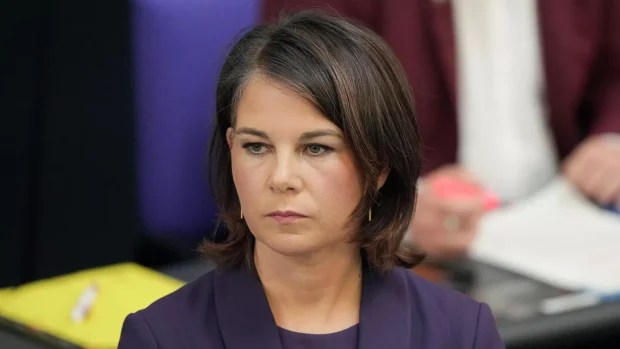
By Maxim Minaev – Sputnik – 30.01.2023
The German chancellor’s office thoroughly documents the missteps of Foreign Minister Annalena Baerbock, despite the lack of public criticism from Chancellor Olaf Scholz, German media reported, citing sources.
“At the chancellor’s office, Baerbock’s mistakes are carefully recorded,” an unnamed government source told German media.
According to the publication, Scholz allegedly adheres to a principle of not speaking ill of his ministers, regardless of the degree of his irritation. Reasons for Scholz’s being discontent with Baerbock have arisen several times recently, according to German media.
The newspaper notes that in September, the German foreign minister called for a quick solution to the issue of supplying tanks to Ukraine, which was followed by a “serious conversation” with the Chancellor’s Office. As a result, during the next interview, Baerbock was more restrained.
A week ago, in an interview with French TV, Baerbock said that Berlin was not going to block supplies of German tanks to Ukraine, the newspaper recalls. At the same time, according to the report, no final decision was made at that time and such a statement caused “stormy” dissatisfaction in the chancellor’s office.
In addition, Scholz and Baerbock allegedly had disagreements over the chancellor’s trip to China, as well as over the planned meeting of the Franco-German cabinet in October. At the time, Baerbock said she could not go to Paris because of a family vacation, although Scholz allegedly insisted on her visit. Nevertheless, Baerbock was adamant, saying that she was on vacation. Shortly thereafter, the event was canceled by the French side.
Baerbock had previously been criticized by a number of German politicians after her remarks about “war with Russia.” The minister said during the PACE session on January 24 that European countries “are waging a war against Russia” and called on them to do more for Ukraine together instead of looking for the guilty among themselves. At the same time, the German Foreign Ministry said in connection with her statement that support for Ukraine does not make Germany one of the parties to the conflict.
Did Germany just declare war against Russia?
Free West Media | January 29, 2023
Is it a real declaration of war? Yes. On January 24, Baerbock gave a speech to the Council of Europe – not to be confused with an institution of the European Union. Although this speech contained borderline provocations, it was a scripted intervention. However, in the subsequent hearing, Baerbock had to answer questions without a prepared text.
She uttered a sentence in English that she obviously did not grasp: “We are fighting a war against Russia and not against each other.”
It was Baerbock’s response to a question from Norwegian MP Ingrid Schulerud, who wanted to know when Germany would decide to deliver Leopard 2 tanks to Ukraine. Baerbock responded that criticism and comparisons of shipment volumes were not helpful to Ukraine’s proxy war effort.
How does a country formally declare war?
So that misunderstandings are ruled out and the spectre of war is not inadvertently released, international law provides for high formal hurdles for a legally valid declaration of war.
The self-proclaimed international law expert Baerbock overcame them all with the power of indescribable stupidity: Because at that moment when she spoke, 77 years after the end of the war, the Federal Republic of Germany and the Russian Federation were actually and truly officially at war with one another.
For a formally valid declaration of war, this must first be pronounced by an official representative of one state. As Federal Foreign Minister, Baerbock fulfilled this requirement. This declaration must take place in an official setting. A speech before the Council of Europe, which has the task of securing peace in Europe, also satisfied the second condition. Only the third condition is somewhat problematic. Because an official representative of the other state must be present to receive this declaration.
On March 15, however, Russia was expelled from the Council of Europe, a move which evidently was bad for peace, but at least this time it probably saved the world from Baerbock’s moronic grandstanding.
If an official representative of the Russian Federation had been among the spectators, that person would then – for better or for worse – have had to acknowledge the declaration of war. As it is, however, it is easy to argue that a public television broadcast is sufficient to officially inform the other state.
The Foreign Office quickly jumped in to cover for the statement of its erring chief. “During her meeting with members of the Parliamentary Assembly of the Council of Europe on January 24, Foreign Minister Baerbock emphasized that Europe must stand together against this war.”
In view of the delivery of Leopard tanks to Ukraine, more and more people are concerned that Germany could become a direct party to the conflict. Last but not least, these concerns were fueled by the statement from Baerbock in the Council of Europe. Germany’s arms deliveries to Ukraine are undeniably now perceived as involvement in the conflict.
Russia’s cool response
According to Russian Foreign Ministry spokeswoman Maria Zakharova, the statements by Baerbock as well as former Chancellor Angela Merkel suggest that the West planned a war against Russia from the outset. On Wednesday, on her Telegram channel, she quoted Baerbock’s other statements at the PACE meeting that more had to be done “to protect Ukraine”.
As is well known, Merkel said in an interview for the weekly newspaper Die Zeit in December last year that the German and French mediation efforts in the Minsk format were aimed at deceiving Russia in order to “strengthen Ukraine”. These words were echoed by former French President François Hollande, who noted that Ukraine had increased its military potential since 2014.
Director General of the Russian Foreign Affairs Council Andrei Kortunov recalled that Baerbock had always taken “radical” positions: “The conflict between the Greens and the Social Democrats was very serious from the start. Chancellor Olaf Scholz called for moderation and restraint, while Baerbock tended to be decisive and uncompromising. Far more than Scholz, she is in solidarity with the radical stance of the Baltic States, Poland and recently Finland’s too.”
He pointed out that while Baerbock was saying one thing, NATO Secretary General Jens Stoltenberg on the same day said that the alliance was not directly involved in the Ukraine conflict. NATO and its member states want to position themselves as comfortably as possible: on the one hand to offer Ukraine increasingly intensive supplies, on the other hand to pretend to stay out of the conflict.
NATO has been pursuing this tactic since the beginning of the confrontation, with a “gradual escalation of engagement, while at the same time it is constantly emphasized that neither NATO nor its individual countries are directly involved in this conflict,” underlined the political scientist.
Maybe Baerbock just said the quiet part out loud…
Germany’s Green Power Grid Unable To Power Green Society!
By P Gosselin | No Tricks Zone | January 28, 2023
Today we check in with Blackout News to find out the latest news on Germany’s green energy follies.
The latest is that the country’s increasingly green electric power grid is increasingly unable to handle the “climate friendly” electric mobility and heat pumps the German government is pushing.
It’s widely known that Germany’s electric power supply has the grid constantly on the brink power outages, even blackouts. This is in large part due to the rushed phasing out of baseload coal and nuclear power while installing mass capacities of unstable a wind and solar power.
As Germany pushes the ever greater burdens onto the power grid, its government continues taking measures to weaken the grid rather than to bolster it.
Since Germany’s natural gas supply disruption has caused energy prices to skyrocket, homeowners and motorists are looking for alternative heating sources and modes of mobility. Little wonder Germans are looking more and more to heat pumps for home heating and electric cars for their mobility.
But there’s a problem, Blackout News reports: “The President of the Federal Network Agency is now calling for the forced throttling of heat pumps and charging stations.” This is because the power grid cannot cope with the added load.
“The head of the network agency, Mr. Müller, sees new risks for the supply of electricity and gas. Private individuals installing charging stations or pumps could overload local grids,” according to Blackout News. “To prevent this, the power of these devices could be throttled.”
The government wants to push electric cars and heat pumps, but the agencies are warning it’s not possible – because over the past 20 years Germany has wrecked it’s once extremely stable electric power supply, which by the way was responsible for a tiny, inconsequential fraction of the world’s CO2 emissions.
According to Müller, “there could be overload problems and local power outages if we don’t act”.
“The authority in Bonn considers low-voltage local networks to be particularly susceptible to disruptions.”
Müller also told the Frankfurter Allgemeine Sonntagszeitung that in critical times, heaters and chargers should not be completely cut off from the power supply. He promised that there will always be a minimum supply.
“The CEO of Düsseldorf-based energy company E.on, Thomas König, described the current power grid as being inadequate and called for the “quick expansion and modernization of local and regional power grids”.
Germany the Weakest Link in NATO’s War Tracks
By Finian Cunningham | Strategic Culture Foundation | January 27, 2023
Germany is being played like a fiddle and the sound is a pathetic and plaintive one. Only days after Chancellor Olaf Scholz said Germany would not be supplying its Leopard 2 tanks to Ukraine to fight against Russia, Berlin has done an embarrassing U-turn. The Leopards are coming.
Germany is to send “a company” of these fearsome battlefield weapons which amounts to about 14 of them, according to reports. What is more, Berlin is giving the proprietary authorization for other NATO members to also re-export the German-made tank to Ukraine.
Last Friday at a NATO-sponsored war summit at the U.S. Air Force Base in Ramstein, Germany, the Scholz government surprised many observers by resisting mounting calls from the United States and other NATO allies to release the Leopards. Scholz has been saying for months that he did not want to provoke Russia into an escalation of hostilities by such a move. How many times has he said that regarding other German weapons only to buckle and cave in?
Immediately after the Ramstein meeting, the pressure on Berlin was ratcheted up. The U.S., Britain, Poland and the Baltic states castigated and shamed Germany for showing cowardice. Warsaw taunted that it would send some of its Leopards regardless of Berlin’s say-so, thereby snubbing the German protocol that as the manufacturer of the tank it must authorize any re-export of the weapon.
The clincher move came from Washington. The Biden administration said it would send its M1 Abrams main battle tanks after previously saying it would not owing to logistical impracticalities. That surprise move pulled the stops from under Berlin’s public position that it would only supply the Leopards on condition that the U.S. would also send its tanks.
Here’s the thing though. U.S. President Joe Biden is ordering the supply of 30 Abrams but it will take months or even up to a year before the American tanks become operational in the war. This is because the Abrams is a bigger beast requiring more training of tank crews. Whereas the German Leopards are good to go.
Washington is no doubt pulling a fast one on Berlin. The Americans are daring the Germans to send their prime tanks to the front knowing that their own lumbering, gas-guzzling behemoths will be leading from the rear.
The whole sordid spectacle of Berlin’s U-turn from brow-beating and hectoring by Poland and the Baltic minions speaks of German humiliation. It does make you wonder what kind of blackmail material the Western intelligence agencies have on Scholz and his government for such a cringe-making capitulation.
History never repeats exactly. In 1941, when Nazi Germany crashed into the Soviet Union with its Panzer Tiger tanks it was the biggest land invasion in history under the steely, brutal leadership of the Third Reich. This time around, the tanks from Berlin are tokenism and under orders from a vacillating chancellor mocked even by his so-called allies as being a “liverwurst” (liver sausage).
It shows, however, that the German establishment is apprehensive about being set up in a dangerous political game by treacherous allies. Polls indicate that the German population is wary about escalating the war in Ukraine against Russia. The bitter, shameful memory of World War Two and the German-led extermination across Europe in which up to 30 million Soviet citizens died is too much to bear. For Berlin to be now indulging the U.S.-led charade about “defending democracy” in an incorrigibly corrupt Ukrainian regime is risking huge political capital at a time of intensifying social and economic hardship for the German people, as in every other Western state.
Factions within the German establishment know that obeying American orders is a reckless, bad idea. Military commanders have warned against sending the Leopards. Business leaders are also against the insane destruction of bilateral relations with Russia. Yet other factions of the establishment are bending their knee to Washington. Is it blackmail or ideological weakness? Probably both. Germany is after all an occupied US military zone with 40,000 American troops and bases, rather than a sovereign nation.
The American imperial overlords want to break Europe into suzerainty under US capital. Germany is the traction point for this American subjugation of Europe. Obliterating geo-economic relations with Russia (and China) is a vital part of the plan. However, there is a catch: the German link is brittle.
The tokenism of sending the Leopards is gravely provocative to Russia, but it won’t make a difference to the outcome of the war in Ukraine. The Kiev regime has been goading NATO for at least 300 tanks in order to purportedly push back Russian forces. A few dozen tanks from Germany and other European allies won’t cut the mustard. Furthermore, tanks in isolation under the lack of air cover won’t have the impact that is unrealistically assumed.
The provocation will nevertheless not go unanswered by Russia. Moscow has warned that it will destroy any tanks arriving from Germany, Poland, or elsewhere before these machines even get off the rail tracks and anywhere near the front line. With Russia’s air power and precision missiles, such a threat is not idle.
When the Leopard hulls are wheeled back with their turrets blown off along with incinerated corpses, the political price for Berlin will become unbearable. The squabbling among NATO minions will then go from simmering to boiling point. And the tracks will come off the NATO war machine.
The Kiev regime is shooting foot soldiers who refuse to obey orders to advance against superior Russian firepower on the battlefield. Washington’s demands on Berlin are tantamount to the same self-defeating coercion.
German FM under fire over ‘war with Russia’ comment
RT | Jaqnuary 27, 2023
 German Foreign Minister Annalena Baerbock has faced a wave of criticism after claiming at the Parliamentary Assembly of the Council of Europe (PACE) that Germany is at war with Russia. The comment led opposition politicians to question whether she is fit for the job.
“A statement by Baerbock that Germany is at war with Russia shows that she is not suited for her job,” Sahra Wagenknecht, a German MP and the former head of the Left Party’s faction in the Bundestag, wrote on Twitter on Friday. A foreign minister should be a “top diplomat” and “not act like an elephant in a China shop,” the lawmaker added, accusing Baerbock of “trampling” on Germany’s reputation.
During the Tuesday debate, Baerbock said European nations were “fighting a war against Russia” and must do more to defend Ukraine.
Germany needs a foreign minister who is capable of acting “as a responsible diplomat and not a firebrand” amid conflict in Europe, said Alice Weidel, the co-chair of the right-wing Alternative for Germany (AFD) faction in the Bundestag.
Weidel accused Baerbock of being incapable of acting on the diplomatic stage, saying Berlin needs a top diplomat who represents Germany’s interests exclusively.
Meanwhile, a regional lawmaker from the state of North Rhine-Westphalia, and the president of the German-Hungarian association, Gerhard Papke, accused Baerbock of being “completely politically insane” for making such a statement.
Left MP Selim Dagdelen demanded Chancellor Olaf Scholz provide an “immediate” explanation on whether Baerbock had his government’s mandate “for her declaration of war” and suggested the minister was a threat to the security of German citizens.
Neither Baerbock, nor Scholz, have responded to the criticism so far. Germany’s Foreign Ministry maintained Berlin is not a party to the conflict between Kiev and Moscow in a statement to the Bild tabloid.
“Supporting Ukraine in exercising its individual right for self-defense… does not make Germany a party to the conflict,” it said, pointing to the UN Charter. It said Moscow’s offensive in Ukraine is “a war against the European peace and order” and this is what Baerbock had meant.
In the wake of Baerbock’s Tuesday statement, Moscow said that the German minister’s words only show that the West had been planning this conflict all along for years.
Poland expands offer of tanks for Ukraine
RT | January 27, 2023
Poland is ready to send 60 more tanks to Ukraine to help fight Russia, besides the 14 German-made Leopard 2 vehicles already pledged, Polish Prime Minister Mateusz Morawiecki has said.
“If we don’t want Ukraine to be defeated, we have to be very much open and brave in supporting Ukraine,” Morawiecki told Canada’s CTV News broadcaster on Friday.
According to the prime minister, Poland is trying “to lead by example,” showing its allies what should be done to help Kiev.
“Right now, we are ready to send 60 of our modernized tanks, 30 of them PT-91. And on top of those tanks, 14 tanks, Leopard 2 tanks, from in our possession,” he said.
Morawiecki also noted that last year Warsaw provided about 250 of its modernized Soviet-era T-72 tanks to the Ukrainian military.
Mikhail Podolyak, an adviser to Ukraine’s President Vladimir Zelensky, confirmed on Telegram on Friday that 60 more Polish tanks will be heading Ukraine’s way. According to Podolyak, the shipment consists of PT-91 Twardys, upgraded Soviet T-72M1 main battle tanks. “Thanks to our allies,” he wrote.
Morawiecki did not specify when the additional tanks will be supplied.
On Thursday, Poland’s Deputy Defense Minister Wojciech Skurkiewicz said Warsaw plans to provide 14 Leopard 2s to Kiev after Ukrainian troops finish training with them, which could happen in “several weeks.”
The delivery of Leopard 2s by Poland to Ukraine became possible on Wednesday after Germany officially approved the supply of 14 tanks from its own stocks to Kiev, and allowed other countries to re-export the German-made weaponry to the Zelensky government.
On the same day, the US agreed to supply Kiev with 31 of its M1 Abrams main battle tanks. Earlier this month, the planned delivery of Challenger 2 tanks to Ukraine was announced by the UK.
Russia’s deputy envoy to the Organization for Security and Co-operation in Europe, Maksim Buyakevich, warned on Thursday that arming the Ukrainian military with Western tanks “is a straight path into a full-blown conflict in Europe.”
Earlier this month, Kremlin Press Secretary Dmitry Peskov insisted that German, US and British military hardware will not change the outcome of the conflict, and that the tanks will “burn” if they arrive on the battlefield.
Did Germany just officially declare war on Russia?
By Drago Bosnic | January 26, 2023
During a debate at the Parliamentary Assembly of the Council of Europe (PACE), German Foreign Minister Annalena Baerbock bluntly stated that Germany and its allies are at war with Russia. The unexpected admission, although essentially true, is quite shocking given the fact that many Western officials have been insisting they aren’t directly involved in the conflict with Moscow. Baerbock made the statement during a discussion over sending “Leopard 2” heavy tanks to the Kiev regime. Most mainstream media conveniently ignored her words, but numerous experts were alarmed and warned that Berlin just essentially declared war on Russia.
This stands in stark contrast to claims of other German officials who have been extremely careful with their statements for nearly a year, insisting that their country is not directly involved in the Ukrainian conflict and citing uncontrollable escalation as their primary concern. However, this official stance is now in serious question, as one of the country’s top officials just effectively nullified all of their efforts. Annalena Baerbock started her statement at PACE with the following:
“And therefore I’ve said already in the last days – yes, we have to do more to defend Ukraine. Yes, we have to do more also on tanks. But the most important and the crucial part is that we do it together and that we do not do the blame game in Europe, because we are fighting a war against Russia and not against each other.”
Ironically, Chancellor Olaf Scholz and his now former defense minister Christine Lambrecht have been accused of being “weak” on arming the Neo-Nazi junta. They have frequently insisted that it would be dangerous to get more directly involved in NATO’s proxy war against Russia. However, it seems that the much more hawkish Baerbock is willing to say the quiet part out loud. Moscow immediately reacted to the comments, with Russian Foreign Ministry spokeswoman Maria Zakharova saying this is yet another proof that the political West was planning a war on Russia for quite some time now.
“If we add this to Merkel’s revelations that they were strengthening Ukraine and did not count on the Minsk agreements, then we are talking about a war against Russia that was planned in advance. Don’t say later that we didn’t warn you,” Zakharova said.
Baerbock’s comments come on the heels of nearly a year of direct Russophobic narrative, including openly declared plans for war with Russia. In mid-November, Der Spiegel published leaked German Defense Ministry documents, revealing that the Bundeswehr is preparing for war with Russia. The secret draft titled “Operational guidelines for the Armed Forces” was authored by none other than the German Chief of Staff, General Eberhard Zorn himself. He stressed the need for a “mega-reform” of the German military and clearly identified Russia as an “immediate threat”.
The claim makes little sense, as Germany is now over 1,500 km away from Russia, with Belarus, Poland and Ukraine standing between the two countries. While such assertions made some sense at the height of the (First) Cold War, when the Soviet Union had over half a million soldiers stationed in East Germany alone (in addition to other Warsaw Pact member states), the situation is effectively reversed nowadays. NATO is the one encroaching on Russia’s western borders, with the crawling expansion including coups and other interventions in various Eastern European and post-Soviet states. After decades of this creeping aggression and Moscow’s futile attempts to build a comprehensive partnership with the political West, Russia was forced to launch its counteroffensive.
Back in early March, the German government announced a dramatic increase in defense spending, including a €100 billion budget for the Bundeswehr, essentially double in comparison to 2021. Although this will inevitably put additional pressure on the already struggling German economy, ravaged by the sanctions boomerang from its failed economic siege of Russia, Berlin’s suicidal subservience to Washington DC seems to take precedence. Much of Germany’s prosperity was based on access to cheap Russian energy, now a thing of the past thanks to Berlin’s resurgent Russophobia.
In addition, Germany also uniquely holds historical responsibility on a scale virtually no other country in the world does, especially towards Russia. During the Second World War, it launched a brutal invasion of the Soviet Union, killing nearly 30 million people and destroying virtually everything in its path. Worse yet, after approximately 80 years of denazification in the aftermath of its WWII defeat, Berlin still decided to support the Neo-Nazi junta in Kiev, effectively renouncing its own official postwar political position. This also includes German weapons that are killing Russians, both soldiers and civilians.
Alarmed by the dramatic shift in rhetoric, many in Germany are already pointing out the fact that the country is repeating the same historical mistake by antagonizing Russia. Petr Bystron, an AfD (Alternative for Germany) member of the German Parliament, reminded his colleagues in the Bundestag of the consequences of sending German tanks to fight Russia in Ukraine:
“It’s an interesting approach you’re taking here. German tanks against Russia in Ukraine. By the way, your grandfathers have already tried to do it then with the Melnyks and Banderas [Ukrainian Nazi collaborators during WWII] and what was the result? Untold suffering, millions of deaths on both sides, and in the end, Russian tanks here in Berlin. And two of them are still here, in front of the Bundestag. You should pass by them every morning and remember it!”
Drago Bosnic is an independent geopolitical and military analyst.
Featured Video
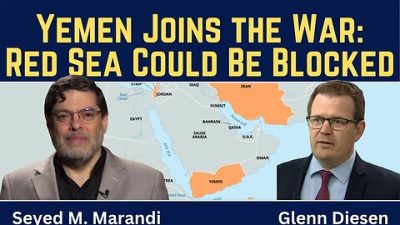
Yemen joins the war – Red Sea could be blocked next – Saudi regime at risk
or go to
Aletho News Archives – Video-Images
From the Archives
A superpower and “the world’s sickest warrior state”
By Paul J. Balles | March 8, 2010
Living through five or six major wars has hardened me to what I thought were the extremes of inhuman cruelty and brutality.
Two things made those extremes almost bearable: the brutality always revealed – at least according to the media coverage – the viciousness of the enemy. It was therefore quite understandable when our “brave men and women” pulverized the enemy.
Films of Japanese torturing captive Americans somehow justified holding Japanese Americans in internment camps during World War II; and only a small percentage of Americans found the bombing of Hiroshima and Nagasaki unreasonably vengeful at best, at worst, depraved.
The media giants in America portrayed the North Koreans as barbaric beasts with their captives, quite unlike their southern counterpoints – our allies during the Korean War. No one ever felt the need to explain how the South Koreans were a civilized breed while the North Koreans were absolute savages, at least according to the official line.
In Vietnam, our warriors justifiably (or so the media made us believe) dropped napalm on the North Vietnamese who had the gall to hide in villages and tunnels to ravage our invaders. At least it was accepted practice until some rogue photojournalist filmed a young girl screaming down a Vietnamese road in flames. … continue
Blog Roll
 Aletho News
- FTC Warns Visa, Mastercard, PayPal, Stripe Over Political Debanking
- Russian tanker approaches Cuba despite US oil blockade
- Marandi: Yemen joins the war – Red Sea could be blocked next – Saudi regime at risk
- Pro-Palestinian French member of European Parliament denied entry to Canada
- Pakistan to Host US-Iran Talks
- How Indonesia’s tilt toward the US left it stranded in the Strait of Hormuz
- US has no choice but to retreat from Iranian borders: Top commander
- Iran Retaliation Strikes Chemical Plant Near Dimona
- AWACS’ Destruction is a Major Loss for US Military – Ex-DoW Analyst
- Israel’s Iran Strategy Uses US Military & Gulf States as Its Pawns
- If Americans Knew
- Israeli police block Catholic cardinal from entering Church of the Holy Sepulchre on Palm Sunday
- Israel is assassinating journalists again, more than any other nation, anywhere, ever – Not a ceasefire Day 170
- Over 300 US service members wounded, majority have brain injuries – Not a ceasefire Day 169
- Researchers at Human Rights Watch Resign Over Blocked Report on Palestinian Refugee Return
- Jewish Groups Are Backing a War Americans Don’t Want
- Eric Fingerhut Thinks He’s the President of the Jews
- Top Jewish Philanthropists, Rabbis Urge Israeli President to Take Action Against ‘Jewish Extremists’
- Don’t Be Fooled. Zionist Leaders Have Always Wanted to Control Southern Lebanon
- Israel’s widespread use of torture is a core element of its genocide against the Palestinian people
- In Israel’s War on Iran, Many Middle East US Bases Rendered “All But Uninhabitable”
- No Tricks Zone
- New Study Finds Warming Saves Lives…Cold Temperatures 12 Times More Deadly Than Excess Heat
- German Science Blog Accuses PIK Climate Institute Of Hallucinating Climate Tipping Points
- Devastating Assessment Of Comirnaty Vaccine By Former Senior Pfizer Europe Toxicologist
- New Study: CO2 Is ‘Effectively Negligible’ As An Explanatory Climate Change Factor Since 2000
- Former Pfizer Toxicologist Dr. Helmut Sterz Tells Bundestag Hearing Pfizer Vaccine Should Have Never Been Approved
- Energy Expert: Germany’s Nuclear Phaseout Was A “500 Billion Euro Mistake”
- New Research: South Australia’s Mid-Holocene Sea Surface Temperatures Were 4°C Warmer Than Today
- Storing Green Energy To Last Germany 10 Days Would Require A 60-Million Tonne Battery
- New Studies: UK Sea Levels Were 4 Meters Higher Than Today During The Mid-Holocene
- Destructive Green New Deal: German Energy And Metal Group Warns Of Drastic Crisis
 Aletho News