Google sues Germany over “hate speech” laws
By Cindy Harper | Reclaim the Net | July 28, 2021
Google has announced legal action against new provisions in Germany’s hate speech law, which the tech giant claims violates its users’ privacy rights. The law mandates online platforms to provide law enforcement with the personal details of the person(s) behind accounts accused of posting or sharing hateful content.
Google announced the legal action through YouTube’s blog. The company is taking issue with new provisions in Germany’s Network Enforcement Act (NetzDG), which took effect in April this year.
The NetzDG was introduced in early 2018 to protect Germans from so-called online “hate speech.” The law requires social media platforms to be responsible for monitoring “hateful” content, and share regular updates of their compliance.
Earlier this year, Germany’s parliament expanded the law to introduce new provisions. Now, online platforms are required to reveal the details of individuals accused of sharing hateful content with federal law enforcement.
The law has not only been criticized by social media companies, but also opposition political parties and the European Commission.
“In our opinion, this massive interference with the rights of our users is not only in conflict with data protection, but also with the German constitution and European law,” Sabine Frank, YouTube’s regional head of public policy, wrote in the blog post.
Per the blog post, Google feels that sharing the personal data of its users with the police “is only possible after a detailed examination by a court and a judicial confirmation.”
Frank added: “For us, the protection of our users’ data is a central concern. We have therefore decided to have the relevant obligations of the legislative package examined by the Cologne Administrative Court as part of a declaratory action.”
Elsewhere in the European region, UK’s media regulator Ofcom announced on Tuesday the appointment of Anna-Sophie Harling for the position of online safety principal. She would be responsible for tackling misinformation and harmful content on online platforms.
Harling holds the position of Europe region’s managing director at NewsGuard Technologies, a company that specializes in auditing the accuracy of online news publishers. Her appointment comes in anticipation of the approval of the Online Safety Bill, which will give Ofcom authority to police content on online platforms.
White House admits US government works with Facebook to censor free-speech
Press Secretary says Biden admin is “flagging disinformation” which social media giant then removes
By Kit Knightly | OffGuardian | July 24, 2021
Government agencies are flagging posts as “misinformation” for Facebook. Essentially telling internet companies who to censor. We’ve always suspected as much, but now they’ve actually admitted it.
Jen Psaki, Biden’s Press Secretary, said as much in a press briefing last week:
We are flagging problematic posts for Facebook that spread disinformation”
If true – and that’s never a given when Psaki is talking – it’s a frank admission that the White House is actively breaching the first amendment rights of US citizens (and potentially the human rights of foreign nationals too).
The issue of censorship on the internet is one we have discussed at length at OffG. It has been slowly and steadily increasing for over a decade, with marked acceleration after the Ukraine conflict kicked it to the top of the to-do list in 2015.
Every act of terrorism, every controversy, every election… every “pandemic” is new excuse to place fresh restrictions on who is allowed to say what, where.
This culminated in every single social media and internet platform coordinating to completely remove the incumbent President of the United States from the internet.
News that X celebrity, Y journalist or Z website has been deleted or demonetized or de-platformed is an everyday occurrence now. The internet, or at least the mainstream internet, has become a quasi-police state. The digital Gestapo knock on doors in the middle of the night and *poof*… the dissident voice is quieted.
The mainstream media is, of course, fine with this. They outright refuse to talk about “censorship”. Instead choosing to talk about “free speech having consequences”, or arguing that “free speech needs a new definition in the age of social media”.
The “liberal” or “progressive” stance has always been that free speech is only about state suppression, not about private companies or individuals.
The argument has always been that Facebook/Twitter/Google etc. are private companies that have every right to decide what appears on their platforms. Of course, if the state is actively instructing the private companies on what to remove… that argument crumbles to dust.
Psaki’s casual revelation means this sophistry is no longer simply logically flawed, it is now inherently dishonest.
It also confirms that the pantomime of government vs social media is just that…, a pantomime. Every time a politician rails against Facebook for allowing hate speech, or bemoans the lack of regulations for internet giants, they are lying.
It’s a false conflict. A constructed PR exercise designed to hide a basic truth – The government tells Facebook what to remove, and Facebook removes it.
They said it, and they can’t unsay it… but they’ll probably try to stop us repeating it.
Governments are using credit card purchase data as “contact tracing’ COVID surveillance
By Didi Rankovic | Reclaim the Net | July 16, 2021
The ongoing “war on cash” that far preceded the pandemic, whose goal is to steer people towards using traceable forms of payment, is coming in very handy in the COVID era precisely for the reason the policy is criticized in the first place – it makes it easy for authorities to keep tabs on individuals who use card transactions.
Reports now mention instances of Australian residents receiving a mandate to quarantine after using their credit card to pay at an establishment, where somebody known to be infected with the virus had stayed.
Credit card receipts led back to the person that was then forced to self-isolate (although they did not have coronavirus) – and apparently led the person to consider what, if anything, is left of their privacy in a world where more and more people leave long “data trails” behind them.
Stop-gap measures like switching to alternative browsers etc (while probably running it on Windows) aside – the takeaway is that the only way to regain some privacy in the world of mass surveillance and tracking is to turn to alternatives – but do it consistently, and be prepared to pay for the privilege of removing oneself from the closed ecosystems like those ruled with an iron fist by Google, Apple, or Microsoft.
As for using card transactions to do COVID contact tracing, Australia is far from being the only country that is doing it. In fact, those lauded as most successful in even getting their contact tracing efforts off the ground, like South Korea, pioneered the practice. Data surveillance, reports said, was used by authorities there to make sure that people who were either unable or unwilling to share their every move are eventually forced into doing it.
Australia has “distinguished” itself for being willing to jeopardize people’s privacy with a series of COVID surveillance and control measures over the past 18 months, and last November, the National Contact Tracing Review, whose chair is Australia’s Chief Scientist Alan Finkel, recommended using consumer credit card data for track and trace purposes.
But what about privacy? Privacy rules will apply – until they don’t, seems to be the gist of it.
“Privacy rules will apply,” the Review said, but then added, “and in some jurisdictions legislative change may be required.”
Global Vaccine Passports Have Arrived Courtesy of Google, EU

Image Credits: Google
Privacy To Go | July 8, 2021
On June 30th, 2021, the Google Developers blog announced the launch of vaccine passports in Android through its Passes API.
Less than 24 hours later, the European Union, long mired in a sea of national standards for digital jab records, rolled out its EU-wide vaccine passport.
Two completely different vaccine passport schemes unveiled on the same day, encompassing the whole of the Western world? What are the odds!
Exceedingly low, of course. This level of coordination belies yet another blitz in the ongoing rollout of a global, technofeudal control grid. The EU has arguably been at the forefront of this rollout – its standardized digital jab certificate is little more than an aggregator for the draconian technology now operating at the Nation-State level.
Adoption of this unified standard is already approaching 100% of EU Member States. Doublethink rhetoric of restoring the Schengen Area’s “freedom of movement” abounds, even as additional barriers to travel are erected.
In this sense, Google and the US are playing catch-up. While de facto vaccine passports have been implemented sparingly in places like New York, California, and Hawaii, an ever-expanding number of States have banned the notion outright.
Yet herein lies the insidiousness of the public-private partnership model: Technocrats can use governments where it suits them, corporations where it does not, and an increasingly bizarre fusion of the two where necessary. Even the propaganda rollout surrounding jab passports is bifurcated by this model, with the EU using official government bulletins while Google syndicates the news via trendy tech blogs.
And though many States in the US have passed legislation or executive action to curb the implementation of vaccine passports, Google could care less.
Google Passes: Vaccine passports for all, regulation be damned
Like the contact tracing API before it, political resistance alone is proving ineffective against the technological implements of the Great Reset. Even the staunchest State level opponents to this agenda have done nothing to halt the hyperactive Bluetooth surveillance grid running on Android and iOS devices – on the contrary, many have used taxpayer money to help finance its data harvesting operations.
Similar political action against digital vaccine passports will not halt Google’s rollout via the Passes API, either.
In fact, Google’s selection of the Passes API to implement vaccine records is telling in its own right, given the information it already stores: Boarding passes for airlines. Travel tickets. Event tickets.
While legislative action in States like Florida may allow you to attend a Miami Dolphins game with your biological privacy intact, the same may not be said for travel. The battle over Federalization of airline travel was lost on November 19th, 2001 with the creation of the Transportation Security Administration, whose influence has been expanding ever since – the latest privacy affront being the REAL ID Act, which mandates highly insecure RFID technology for interstate air travel.
Even more dangerous are biometric companies with government contracts, like CLEAR, whose terminals are already widely used at TSA PreCheck terminals and event centers.
Google Passes and other digitized jab certificates are simply a competing product. One that is already in the pocket of 85% of Americans alone, with similar adoption levels in Europe.
Products marketed for “convenience” like TSA PreCheck biometrics will, over time, become mandatory – the REAL ID Act itself is a perfect example of this Fabian creep. Passed all the way back in 2005, its full implementation has been pushed back multiple times due to individual State holdouts, most recently until 2023.
But these delays are immaterial – the framework’s existence is all that matters, as despite not being enforced, privacy-violating RFID technologies are now the norm for US driver’s licenses. Jab certificates like Google Passes will be no different. Once in place, they will be utilized – if not immediately, then in the future.
Not only can the Passes API integrate with third-party pharmaceutical companies to track jab history, it is also capable of storing results from dubious PCR tests. This level of biodigital convergence sets an unsettling precedent, as Silicon Valley’s expectation is that your medical history will now be in your pocket at all times, integrated with their servers, and subject to whatever authority may ask for it.
Passes is not an isolated product, either – it’s a development suite within the broader Google Pay SDK.
There are technical reasons why Google may have chosen to use the Pay SDK as opposed to a health-focused API like Google Fit – QR code generation, limited use passes, and encrypted keyrings are already present in the Passes API. However, despite Google Pay’s scant consumer use at present, the long-term intent is crystal clear: Access to financial services and medical records will be intertwined.
In Closing
The post-2020 era has pushed humanity to the precipice of a longstanding dream of our would-be comptrollers. Whether it is Newt Gingrich’s Age of Transitions or the late Zbignew Brzezinski’s Between Two Ages, the kind of biodigital convergence represented by digitized medical passports has been at the forefront of the Technocratic agenda for decades.
As Silicon Valley attempts to bridge the “last mile” of mandated biometric surveillance, resistance to these aims on an individual level remain multivariate – ditch your smartphone, or at least utilize a privacy-respecting alternative that is incompatible with Google or iOS services. Starve the business of travel and entertainment industries that would see us become serfs in exchange for bread and circuses.
If you’re in the EU, use paper records instead of digital equivalents, or better yet, refuse to comply at all.
Educate well-meaning policymakers to the threats represented by the pseudo-private sector and impress upon them that the dangers of State surveillance are rapidly being outpaced by Terms and Conditions mandated by smartphone companies.
Neofeudal Technocracy is desperately trying to extract humanity’s consent to these draconian efforts before the next phase of the so-called Great Reset.
Don’t let them.
Big Tech created a gold mine of data for law enforcement
By Didi Rankovic | Reclaim the Net | June 30, 2021
It’s not exactly news at this point: law enforcement agencies are increasingly seeking Big Tech’s cooperation in giving them access to massive data sets taken from users of social networks and other online platforms and services.
And although some reports now address this topic in the context of the way these powers were used during the Trump era Department of Justice (DoJ), the practice neither started, nor ended with the previous US administration.
Instead, over the past six years, there has been a steady and entirely predictable rise in requests for detailed personal data that Big Tech collects from users and their devices. The more data – the more requests.
The latest available statistics from the first half of last year show that Apple, Google, Facebook and Microsoft received three times more requests for information about users’ calls and emails, and content like photos and texts, compared to 2015. But tech giants collect – and hand over – much more than that, shopping and driving route history being some of the data harvested thanks to map and payment apps.
In the first half of 2020 alone US law enforcement asked for this data a total of 112,000 times – and Big Tech complied either fully or partially in 85% of cases. Facebook and Instagram in particular, having the largest combined user base, also topped this list.
And while the behemoths say that most of that data is “non-content” – such as metadata – user’s privacy is not much better off for it, considering that identifiable information can clearly be extracted from multiple correlated metadata points.
In a recent report, AP cites the case of Newport, a small town with a large tourist industry, whose police department is now increasingly relying on obtaining data from tech companies when investigating crimes.
“The amount of information you can get from people’s conversations online – it’s insane,” Newport supervising detective Robert Salter shared with the agency.
Digital privacy groups like the EFF call this “the golden age of government surveillance” as law enforcement not only has more access to data, but is also more prone to using gag orders, leaving its targets unawares.
The EFF suggests tech companies use strong encryption as one remedy to the police “short-circuiting constitutional protections against unreasonable searches.”
DuckDuckGo is now the second most popular search engine in the West
By Didi Rankovic | Reclaim the Net | June 29, 2021
DuckDuckGo is one of the privacy-focused alternatives to Google’s massive ad business operation taking place under the guise of a search engine.
Regardless, Google Search has for years if not decades been the most widely used search tool, at least in the western world. Installed and integrated into every Android device and made default even in Google’s rival browsers, the search market is an effective monopoly that’s a very hard nut to crack.
However, DuckDuckGo is now reporting that it has seen significant growth, both in terms of numbers and market status, having had over 50 million app downloads over the last 12 months – which is said to be more than in all previous years put together.
At the same time search traffic increased 55%, and all this propelled the engine to the number two spot on mobile apps in the US, Canada, Australia, and the Netherlands.
One of DuckDuckGo’s features is not to track users, which makes it difficult to know precisely how many of them there are, but a blog post said that market share estimates, downloads, and national surveys put that number at between 70 and 100 million.
According to DuckDuckGo, this answers the question of whether people who say they care about online privacy are actually willing to do something about improving it. The conclusion is that in order for more people to take action, companies providing alternatives to dominant platforms and services need to take ease of use into account.
Those behind the family of products – the search engine, the mobile DuckDuckGo Privacy Browser that replaces Chrome and extensions for desktop versions of other browsers – believe they have this solved by bundling them into one app that is available cross-browser and cross-platform.
About to hit beta is DuckDuckGo Email Protection, which aims to improve email privacy without forcing users to switch to a different email service. Other improvements include tracker blocking for Android, expected to roll out as yet another beta during the summer, while the mobile app’s desktop version is planned by the end of 2021. According to DuckDuckGo, it will be usable as a primary browser.
Consent? What’s that? The Massachusetts Department of Public Health is spying on you.

Source: MassPrivateI
By Richard Hugus | June 27, 2021
Without any kind of public notice, the Massachusetts Department of Public Health has gotten together with “Don’t Be Evil” Google to install spyware on smartphones of visitors to and residents of Massachusetts without the knowledge or consent of those visitors or residents. This is being done under cover of the all-purpose totalitarianism called covid 19. The spyware is a contact tracing application called “Exposure Notifications Settings Feature – MA/ MADepartment of Public Health” available for download (if you’re stupid enough to do it voluntarily) at Google Play.
Let’s recall for a moment that contact tracing is the ability of some hidden authority to find out where you are now, where you’ve been, how long you were there, who you were with, who those people were with, and so on. No doubt it will soon be able to record what you said, if it isn’t already. And this is all because we and our neighbors are willing to carry tracking devices with microphones and cameras into places and conversations we thought were private.
A web site called privacytogo.co has an article about the stealth Mass DPH app, describing how it is installed secretly on your phone without your asking for it, or asking for your permission, and how, once installed, you can’t turn it off or otherwise get rid of it (and if you think you’re turning it off, you’re really not). One commenter named Callie M remarked:
“SPYWARE?! Automatically installed without consent. It has no icon, no way to open this and see what it even does, which is a huge red flag. Per the notifications it runs on Bluetooth which is a major battery drain, and seems to want to track my location. Major privacy violation if you ask me, and suspicious that this would be “necessary” when the surge in MA is over and the state of emergency no longer in effect because most are vaccinated. I think it’s spyware, phishing as the DPH. UNINSTALL”
The Google Play site above is useful for seeing hundreds of negative comments like this, but, like Calle M, some make the mistake of assuming that contact tracing is no longer necessary because so many people have been “vaccinated.” If the mRNA injections were actually a response to a public health crisis, contact tracing would still be a serious violation of our right to privacy. But the injections have nothing to do with our health. They are obviously harmful to our health. Their purpose — for those of us they do not kill — is to get everyone into a surveillance and control database which will increase the scope of contact tracing many times over. With this database, the authorities will have the power to say who is and is not allowed to engage in normal social life, from shopping to banking to going to entertainment venues or bars. The mRNA injections are simply the foundation for our transhuman future as laid out by Bill Gates and Klaus Schwab and others who think they know what is best for humanity. But, like the “exposure notification” app, we were never consulted about whether we want to merge with machines. After 16 months of cynical social engineering, of fear-stoking and lies, of violations against our personal sovereignty and Constitutional rights, we can be sure that any idea of our consent is held in complete contempt by Google and the bureaucrats in the Massachusetts Department of Public Health.
According to the author of the privacy to go article:
“Not only are Google and the Massachusetts Department of Public Health covering their tracks when installing this unsolicited spyware, they’re tracking whether or not you are the type of person who would disobey contact tracing edicts in the first place! . . . Google is not simply ignoring user consent in their ongoing mass surveillance dragnet. They are actively enabling governments in creating a “biosecurity surveillance” apparatus – whether you want to participate or not.”
Massachusetts Governor and new world order ass-kisser Charlie Baker announced an end to most of his illegal emergency orders effective June 15, but the app was rolled out that same day. Calling the need for “vaccination” of all Massachusetts residents an emergency on May 28, and then sneaking in a spy initiative two weeks later, we see that the Governor wasn’t really ending anything. There has never been any public consultation, consent, or due process in any of the Governor’s orders.
The privacytogo article ends with the only logical advice to people interested in escaping government by technocracy:
“The simplest solution to disable contact tracing is arguably the hardest for most people:
Get rid of your smartphone.”
Why would we willingly carry around a device that is designed to spy on and enslave us?
Meet Jigsaw: Google’s Intelligence Agency
Privacy To Go | June 25, 2021
It’s no secret that Google regularly collaborates with intelligence agencies.
They are a known NSA subcontractor. They launched Google Earth using a CIA spy satellite network. Their executive suite’s revolving door with DARPA is well known.
In the wake of the January 6th Capitol event, the FBI used Google location data to pwn attendants with nothing more than a valid Gmail address and smartphone login:
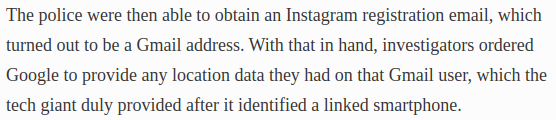
A stark reminder that carrying a tracking device with a Google login, even with the SIM card removed, can mean the difference between freedom and an orange jump suit in the Great Reset era.
But Google also operates its own internal intelligence agency – complete with foreign regime change operations that are now being applied domestically.
And they’ve been doing so without repercussion for over a decade.
From Google Ideas to Google Regime Change
In 2010, Google CEO Eric Schmidt created Google Ideas. In typical Silicon Valley newspeak, Ideas was marketed as a “think/do tank to research issues at the intersection of technology and geopolitics.“
Astute readers know this “think/do” formula well – entities like the Council on Foreign Relations or World Economic Forum draft policy papers (think) and three-letter agencies carry them out (do).
And again, in typical Silicon Valley fashion, Google wanted to streamline this process – bring everything in-house and remake the world in their own image.
To head up Google Ideas, Schmidt tapped a man named Jared Cohen.
He couldn’t have selected a better goon for the job – as a card-carrying member of the Council on Foreign Relations and Rhodes Scholar, Cohen is a textbook Globalist spook. The State Department doubtlessly approved of his sordid credentials, as both Condoleeza Rice and Hillary Clinton enrolled Cohen to knock over foreign governments they disapproved of.
Google Ideas’ role in the 2014 Ukraine regime change operation is well-documented. And before that, their part in overthrowing Mubarak in Egypt was unveiled by way of the Stratfor leaks.
More recently, the role of Google Ideas in the attempted overthrow of Assad in Syria went public thanks to the oft-cited Hillary Clinton email leaks:
Please keep close hold, but my team is planning to launch a tool on Sunday that will publicly track and map the defections in Syria and which parts of the government they are coming from.
Our logic behind this is that while many people are tracking the atrocities, nobody is visually representing and mapping the defections, which we believe are important in encouraging more to defect and giving confidence to the opposition.
Given how hard it is to get information into Syria right now, we are partnering with Al-Jazeera who will take primary ownership over the tool we have built, track the data, verify it, and broadcast it back into Syria. I’ve attached a few visuals that show what the tool will look like. Please keep this very close hold and let me know if there is anything eke you think we need to account for or think about before we launch. We believe this can have an important impact.
-Jared Cohen to State Dept. Officials, July 25, 2012
With all this mounting evidence, surely Google Ideas was decommissioned. Surely Jared Cohen was swiftly ousted from his position at one of America’s premier Big Tech darlings for crimes against humanity, right?
Of course not!
Why scrap all that hard work when you can just rebrand and shift your regime change operations to domestic targets?
Google Jigsaw – USA Psyop Edition
Google Ideas was renamed Google Jigsaw in 2015 after years of bad press and controversy – this time with an eye on performing psychological operations in the United States.
But all that experience data mining and overthrowing Middle Eastern nations wasn’t just thrown out. Rather, Jigsaw repurposed its internal psychological operations program (code-named Operation Abdullah) to instead target “right-wing conspiracy theorists,” as revealed by privacy researcher Rob Braxman.
Using a technique known as the redirect method, Jigsaw attempts to populate outbound links to dissuade potential thought-criminals from looking at wrongthink.
Make no mistake – the redirect method is about more than manipulation of search engine results. It’s one thing to manipulate the content of searches based on query strings, but to target the psychology of the searcher themselves requires an accurate psychological profile of the person doing the searching.
And Google has psych profiles in spades thanks to centralized Google logins: To Android phones, to Gmail accounts, to adjunct services like YouTube, even to children via Google Classroom.
You don’t even need to use Google’s search engine to populate them with weaponized data. In fact, search alone provides far fewer avenues for offensive metadata usage than a cell phone.
We would implore readers to take a look at Jigsaw’s site. It’s a study in how to use front-end design to creep out your visitor, as a snippet of JavaScript code ensures your cursor is tracked in a spotlight throughout your visit:

Jigsaw’s front-end design team has a clear message for you: There’s nowhere to hide.
The site also uses another bit of intelligence tradecraft known as “transferrence” – it’s a simple psychological tactic of shifting blame from yourself to your target.
The four subheaders on Jigsaw’s homepage, Disinformation, Censorship, Toxicity, and Violent Extremism demonstrate this tactic at work.
- There is no greater source of media disinformation than MSM and the information served up by Google search engines.
- Big Tech are at the forefront of destroying free speech through heavy-handed censorship, Google among them.
- Psychological manipulation tactics used by the social justice crowd doubtlessly instill toxicity in those subjected to them.
- And Google’s well-documented history of participating in bloody regime change as described in this article are textbook cases of violent extremism.
Yet Jigsaw markets itself as combating these societal ails. Of course, nothing could be further from the truth, just as Google’s former company tag-line of “Don’t Be Evil” was a similar reversal of reality.
And yes, regime change aficionado Jared Cohen is still the CEO of Google Jigsaw. In fact, Jigsaw, LLC was overtly brought back in-house as of October 2020.
In Closing
As we’ve described in previous articles, vast swaths of the State-controlled Panopticon are currently being outsourced to Big Tech companies.
Call this phenomenon a public-private partnership. Call it the Great Reset. Call it Agenda 2030, or Agenda 21, or “stakeholder capitalism,” or any of the other euphemisms dreamt up by these hapless would-be oligarchs to sell neofeudal Technocracy to the public.
Making intelligence services pseudo-independent from the State is simply a mandatory prerequisite for fully globalizing them.
Furthermore, as the Biden administration seeks to reclassify half of the country as domestic extremists, it’s no secret that companies like Google, with their vast data weaponization programs, will play a key role in identifying Public Enemy #1:
You.
There is no “silver bullet” solution to this problem. Nearly all consumer electronics can be exploited at very low levels. Even the Internet itself is a longstanding military intelligence operation.
But this doesn’t mean any action short of becoming a Luddite is meaningless!
If data is the new oil, it’s time to shut off your well:
- Abstain from using Google Mail, Docs, or Search where possible.
- Seek out alternative social media and content creation platforms.
- If your smartphone requires heavy dependence on Apple or Google for logins or closed-source apps, consider privacy-respecting alternatives.
- Familiarize yourself with common data harvesting tactics and take action where you can.
While a full list of meaningful action is beyond the purview of this post (or any single blog entry for that matter), the important takeaway here is this:
We cannot opt out of mass government surveillance. But we knowingly consent to most forms of “privatized” intelligence gathering.
Take the first step and revoke your consent.
A “Leap” toward Humanity’s Destruction
The Wellcome Trust teams up with former DARPA directors to usher in an age of nightmarish surveillance. Their agenda can only advance if we allow it.
BY WHITNEY WEBB |
UNLIMITED HANGOUT| JUNE 25, 2021
A UK nonprofit with ties to global corruption throughout the COVID-19 crisis as well as historical and current ties to the UK eugenics movement launched a global health-focused DARPA equivalent last year. The move went largely unnoticed by both mainstream and independent media.
The Wellcome Trust, which has arguably been second only to Bill Gates in its ability to influence events during the COVID-19 crisis and vaccination campaign, launched its own global equivalent of the Pentagon’s secretive research agency last year, officially to combat the “most pressing health challenges of our time.” Though first conceived of in 2018, this particular Wellcome Trust initiative was spun off from the Trust last May with $300 million in initial funding. It quickly attracted two former DARPA executives, who had previously served in the upper echelons of Silicon Valley, to manage and plan its portfolio of projects.
This global health DARPA, known as Wellcome Leap, seeks to achieve “breakthrough scientific and technological solutions” by or before 2030, with a focus on “complex global health challenges.” The Wellcome Trust is open about how Wellcome Leap will apply the approaches of Silicon Valley and venture capital firms to the health and life science sector. Unsurprisingly, their three current programs are poised to develop incredibly invasive tech-focused, and in some cases overtly transhumanist, medical technologies, including a program exclusively focused on using artificial intelligence (AI), mobile sensors, and wearable brain-mapping tech for children three years old and younger.
This Unlimited Hangout investigation explores not only the four current programs of Wellcome Leap but also the people behind it. The resulting picture is of an incredibly sinister project that poses not only a great threat to current society but to the future of humanity itself. An upcoming Unlimited Hangout investigation will examine the history of the Wellcome Trust along with its role in recent and current events.
Leap’s Leadership: Merging Man and Machine for the Military and Silicon Valley
The ambitions of the Wellcome Leap are made clear by the woman chosen to lead it, former director of the Pentagon’s DARPA, Regina Dugan. Dugan began her career at DARPA in 1996; she led a counterterrorism task force in 1999 before leaving DARPA about a year later. After departing DARPA, she cofounded her own venture capital firm, Dugan Ventures, and then became special adviser to the US Army’s vice chief of staff from 2001 to 2003, which coincided with the invasions of Afghanistan and Iraq. In 2005, she created a defense-focused tech firm called RedXDefense, which contracts with the military and specifically for DARPA.
In 2009, under the Obama administration, Dugan was appointed director of DARPA by Defense Secretary Robert Gates. Much was made over her being the first female director of the agency, but she is best remembered at the agency for her so-called “Special Forces” approach to innovation. During her tenure, she created DARPA’s now defunct Transformational Convergence Technology Office, which focused on social networks, synthetic biology, and machine intelligence. Many of the themes previously managed by that office are now overseen by DARPA’s Biological Technologies Office, which was created in 2014 and focuses on everything “from programmable microbes to human-machine symbiosis.” The Biological Technologies Office, like Wellcome Leap, pursues a mix of “health-focused” biotechnology programs and transhumanist endeavors.
Right before leaving the top role at DARPA, Dugan greenlighted the agency’s initial investments in mRNA vaccine technology, which led to DARPA’s investments in Pfizer and Moderna shortly thereafter. The DARPA scientist who lobbied Dugan to back the program, Dan Wattendorf, now works as the director of Innovative Technology Solutions at the Bill & Melinda Gates Foundation.
While Dugan’s efforts at DARPA are remembered fondly by those in the national-security state, and also by those in Silicon Valley, Dugan was investigated for conflicts of interest during her time as DARPA’s director, as her firm RedXDefense acquired millions in Department of Defense contracts during her tenure. Though she had recused herself from any formal role at the company while leading DARPA, she continued to hold a significant financial stake in the company, and a military investigation later found she had violated ethics rules to a significant degree.
Instead of being held accountable in any way, Dugan went on to become a top executive at Google, where she was brought on to manage Google’s Advanced Technology and Products Group (ATAP), which it had spun out of Motorola Mobility after Google’s acquisition of that company in 2012. Google’s ATAP was modeled after DARPA and employed other ex-DARPA officials besides Dugan.
At Google, Dugan oversaw several projects, including what is now the basis of Google’s “augmented reality” business, then known as Project Tango, as well as “smart” clothing in which multitouch sensors were woven into textiles. Another project that Dugan led involved the use of a “digital tattoo” to unlock smartphones. Perhaps most controversially, Dugan was also behind the creation of a “digital authentication pill.” According to Dugan, when the pill is swallowed, “your entire body becomes your authentication token.” Dugan framed the pill and many of her other efforts at Google as working to fix “the mechanical mismatch between humans and electronics” by producing technology that merges the human body with machines to varying degrees. While serving in this capacity at Google, Dugan chaired a panel at the 2013 Clinton Global Initiative called “Game-Changers in Technology” and attended the 2015 Bilderberg meeting where AI was a main topic of discussion.
In 2016, Dugan left Google for Facebook where she was chosen to be the first head of Facebook’s own DARPA-equivalent research agency, then known as Building 8. DARPA’s ties to the origins of Facebook were discussed in a recent Unlimited Hangout report. Under Dugan, Building 8 invested heavily in brain-machine interface technology, which has since produced the company’s “neural wearable” wristbands that claim to be able to anticipate movements of the hand and fingers from brain signals alone. Facebook showcased prototypes of the project earlier this year.
Dugan left Facebook just eighteen months after joining Building 8, announcing her plans “to focus on building and leading a new endeavor,” which was apparently a reference to Wellcome Leap. Dugan later said it was as if she had been training for her role at Wellcome Leap ever since entering the workforce, framing it as the pinnacle of her career. When asked in an interview earlier this year who the clients of Wellcome Leap are, Dugan gave a long-winded answer but essentially responded that the project serves the biotech and pharmaceutical industries, international organizations such as the UN, and public-private partnerships.
In addition to her role at Wellcome, Dugan is also a member of the Council on Foreign Relations-sponsored taskforce on US Technology and Innovation policy, which was formed in 2019. Other members include LinkedIn’s Reid Hoffman, McKinsey Institute Global Chairman James Manyika, former head of Google Eric Schmidt and President Biden’s controversial top science adviser Eric Lander.
The other executive at Wellcome Leap, chief operating officer Ken Gabriel, has a background closely tied to Dugan’s. Gabriel, like Dugan, is a former program manager at DARPA, where he led the agency’s microelectromechanical systems (MEMS) research from 1992 to 1996. He served as deputy director of DARPA from 1995 to 1996 and became director of the Electronics Technology Office from 1996 to 1997, where he was reportedly responsible for about half of all federal electronics-technology investments. At DARPA, Gabriel worked closely with the FBI and the CIA.

Ken Gabriel – COO of Wellcome Leap. Source: Wellcome Leap
Gabriel left DARPA for Carnegie Mellon University, where he was in charge of the Office for Security Technologies in the aftermath of September 11, 2001. That office was created after 9/11 specifically to help meet the national-security needs of the federal government, according to Carnegie Mellon’s announcement of the program. Around that same time, Gabriel became regarded as “the architect of the MEMS industry” due to his past work at DARPA and his founding of the MEMS-focused semiconductor company Akustica in 2002. He served as Akustica’s chairman and chief technology officer until 2009, at which time he returned to work at DARPA where he served as the agency’s deputy director, working directly under Regina Dugan.
In 2012, Gabriel followed Dugan to Google’s Advanced Technology and Products Group, which he was actually responsible for creating. According to Gabriel, Google cofounders Larry Page and Sergey Brin tasked Gabriel with creating “a private sector ground-up model of DARPA” out of Motorola Mobility. Regina Dugan was placed in charge, and Gabriel again served as her deputy. In 2013, Dugan and Gabriel co-wrote a piece for the Harvard Business Review about how DARPA’s “Special Forces” innovation approach could revolutionize both the public and private sectors if more widely applied. Gabriel left Google in 2014, well before Dugan, to serve as the president and CEO of Charles Stark Draper Laboratories, better known as Draper Labs, which develops “innovative technology solutions” for the national-security community, with a focus on biomedical systems, energy, and space technology. Gabriel held that position until he abruptly resigned in 2020 to co-lead Wellcome Leap with Dugan.
In addition to his role at Wellcome, Gabriel is also a World Economic Forum “technology pioneer” and on the board of directors of Galvani Bioelectronics, a joint venture of GlaxoSmithKline, which is intimately linked to the Wellcome Trust, and the Google subsidiary Verily. Galvani focuses on the development of “bioelectronic medicines” that involve “implant-based modulation of neural signals” in an overt push by the pharmaceutical industry and Silicon Valley to normalize transhumanist “medicines.” The longtime chairman of the board of Galvani, on which Gabriel serves, was Moncef Slaoui, who led the US COVID-19 vaccine development and distribution program Operation Warp Speed. Slaoui was relieved of his position at Galvani this past March over well-substantiated claims of sexual harassment.
Jeremy Farrar, Pandemic Narrative Manager
While Dugan and Gabriel ostensibly lead the outfit, Wellcome Leap is the brainchild of Jeremy Farrar and Mike Ferguson, who serve as its directors. Farrar is the director of the Wellcome Trust itself, and Ferguson is deputy chair of the Trust’s board of governors. Farrar has been director of the Wellcome Trust since 2013 and has been actively involved in critical decision making at the highest level globally since the beginning of the COVID crisis. He is also an agenda contributor to the World Economic Forum and cochaired the WEF’s Africa meeting in 2019.
Farrar’s Wellcome Trust is also a WEF strategic partner and cofounded the COVID Action Platform with the WEF. Farrar was more recently behind the creation of Wellcome’s COVID-Zero initiative, which is also tied to the WEF. Farrar has framed that initiative as “an opportunity for companies to advance the science which will eventually reduce business disruption.” Thus far it has convinced titans of finance, including Mastercard and Citadel, to invest millions in research and development at organizations favored by the Wellcome Trust.

Wellcome Trust Director Jeremy Farrar with NTI Co-Chairman Sam Nunn, who led the 2001 Dark Winter exercise. Source: NTI.com
Some of Wellcome’s controversial medical-research projects in Africa, as well as its ties to the UK eugenics movement, were explored in a December article published at Unlimited Hangout. That report also explores the intimate connections of Wellcome to the Oxford-AstraZeneca COVID-19 vaccine, the use of which has now been restricted or banned in several countries. As mentioned in the introduction, the Wellcome Trust itself is the subject of an upcoming Unlimited Hangout investigation (Part 2).
Jeremy Farrar, who was born in Singapore in 1961, had previously been director of the Oxford University Clinical Research Unit in Ho Chi Minh City, beginning in 1998. During that time, he authored numerous epidemiological research papers. He claimed in a 2014 Financial Times article that his decision to move to Vietnam was due to his disdain for conference halls full of white men. Southeast Asia was obviously a much less regulated environment for someone in the medical-research industry wishing to indulge in groundbreaking research. Although based in Vietnam, Farrar was sent by Oxford to various locations around the globe to study epidemics happening in real time. In 2009, when swine flu was wreaking havoc in Mexico, Farrar jumped on a plane to dive right into the action, something he also did for subsequent global outbreaks of Ebola, MERS, and avian flu.
Over the past year, many questions have arisen regarding exactly how much power Farrar wields over global public health policy. Recently, the US president’s chief medical adviser, Anthony Fauci, was forced to release his emails and correspondence from March and April 2020 at the request of the Washington Post. The released emails reveal what appears to be a high-level conspiracy by some of the top medical authorities in the US to falsely claim that COVID-19 could only have been of zoonotic origin, despite indications to the contrary. The emails were heavily redacted as such emails usually are, supposedly to protect the information of the people involved, but the “(b)(6)” redactions also protect much of Jeremy Farrar’s input into these discussions. Chris Martenson, economic researcher and post-doctorate student of neurotoxicology and founder of Peak Prosperity, has had some insightful comments on the matter, including asking why such protection has been offered to Farrar given that he is the director of a “charitable trust.” Martenson went on to question why the Wellcome Trust was involved at all in these high-level discussions.
One Fauci email, dated February 25, 2020, and sent by Amelie Rioux of the WHO, stated that Jeremy Farrar’s official role at that time was “to act as the board’s focal point on the COVID-19 outbreak, to represent and advise the board on the science of the outbreak and the financing of the response.” Farrar had previously chaired the WHO’s Scientific Advisory Council. The emails also show the preparation, within a ten-day period, of the SARS-CoV-2 “‘origins” paper, which was entitled “The Proximal Origin of SARS-CoV-2” and was accepted for publication by Nature Medicine on March 17, 2020. The paper claimed that the SARS-CoV-2 virus could only have come from natural origins as opposed to gain-of-function research, a claim once held as gospel in the mainstream but which has come under considerable scrutiny in recent weeks.
Shaping the presentation of an origin story for a virus of global significance is something Farrar has been involved with before. In 2004–5, it was reported that Farrar and his Vietnamese colleague Tran Tinh Hien, the vice director at the Hospital for Tropical Diseases, were the first to identify the re-emergence of the avian flu (H5N1) in humans. Farrar has recounted the origin story on many occasions, stating: “It was a little girl. She caught it from a pet duck that had died and she’d dug up and reburied. She survived.” According to Farrar, this experience prompted him to found a global network in conjunction with the World Health Organization to “improve local responses to disease outbreaks.”
An article published by Rockefeller University Press’s Journal of Experimental Medicine in 2009 is dramatically titled, “Jeremy Farrar: When Disaster Strikes.” Farrar, when referring to the H5N1 origin story stated: “The WHO people—and this is not a criticism—decided it was unlikely that the child had SARS or avian influenza. They left, but Professor Hien stayed behind to talk with the child and her mum. The girl admitted that she had been quite sad in the previous days with the death of her pet duck. The girl and her brother had fought over burying the duck and, because of this argument, she had gone back, dug up the duck, and reburied it—probably so her brother wouldn’t know where it was buried. With that history, Professor Hien phoned me at home and said he was worried about the child. He took some swabs from the child’s nose and throat and brought them back to the hospital. That night the laboratory ran tests on the samples, and they were positive for Influenza A.”
With Farrar now having been revealed as an instrumental part of the team that crafted the official story regarding the origins of SARS-CoV-2, his previous assertions about the origin of past epidemics should be scrutinized.
As the director of a “charitable trust,” Jeremy Farrar is almost completely unaccountable for his involvement in crafting controversial narratives related to the COVID crisis. He continues to be at the forefront of the global response to COVID, in part by launching the Wellcome Leap Fund for “unconventional projects, funded at scale” as an overt attempt to create a global and “charitable” version of DARPA. Indeed, Farrar, in conceiving Wellcome Leap, has positioned himself to be just as, if not more, instrumental in building the foundation for the post-COVID era as he was in building the foundation for the COVID crisis itself. This is significant as Wellcome Leap CEO Regina Dugan has labeled COVID-19 this generation’s “Sputnik moment” that will launch a new age of “health innovation,” much like the launching of Sputnik started a global technological “space age.” Wellcome Leap fully intends to lead the pack.
“Rulers” of the Gene-Sequencing Industry
In contrast to the overt DARPA, Silicon Valley, and Wellcome connections of the others, the chairman of the board of directors of Wellcome Leap, Jay Flatley, has a different background. Flatley is the long-time head of Illumina, a California-based gene-sequencing hardware and software giant that is believed to currently dominate the field of genomics. Though he stepped down from the board of Illumina in 2016, he has continued to serve as the executive chairman of its board of directors. Flatley was the first to be chosen for a leadership position at Wellcome Leap, and he was responsible for suggesting Regina Dugan for the organization’s chief executive officer, according to a recent interview given by Dugan.

Illumina Campus. Source: Glassdoor
As a profile on Illumina in the business magazine Fast Company notes, Illumina “operates behind the scenes, selling hardware and services to companies and research institutions,” among them 23andMe. 23andMe’s CEO, Anne Wojcicki, the sister of YouTube CEO Susan Wojcicki and the wife of Google cofounder Sergey Brin, told Fast Company, “It’s crazy. Illumina is like the ruler of this whole universe and no one knows that.” The report notes that 23andMe, like most companies that offer DNA sequencing and analysis to consumers, uses machines produced by Illumina.
In 2016, Illumina launched an “aggressive” five-year plan to “bring genomics out of research labs and into doctors’ offices.” Given the current state of things, particularly the global push toward gene-focused vaccines and therapies, that plan, which concludes this year, could not have been any better timed. Illumina’s current CEO, Francis DeSouza, previously held key posts at Microsoft and Symantec. Also in 2016, Illumina’s executive teams forecast a future in which humans are gene tested from birth to grave for both health and commercial purposes.
Whereas most companies have struggled financially during the coronavirus pandemic, some have seen a massive increase in profits. Illumina has witnessed its share price double since the start of the COVID crisis. The company’s $1 billion plus in profits during the last tax year was obviously helped by the quick approval of the NovaSEQ 6000 machines, which can test a large number of COVID samples more quickly than other devices. An individual machine has a hefty price tag of almost $1 million, and thus they are mostly found at elite facilities, private labs, and top-tier universities.

Jay Flatley, Executive Chairman, Illumina, speaking at World Economic Forum in Davos 2018. Source: WEF
In addition to his long-standing leadership role at Illumina, Jay Flatley is also a “digital member” of the World Economic Forum as well as the lead independent director of Zymergen, a WEF “tech pioneer” company that is “rethinking biology and reimagining the world.” Flatley, who has also attended several Davos meetings, has addressed the WEF on the “promise of precision [i.e., gene-specific] medicine.” At another WEF panel meeting, Flatley, alongside UK Health Secretary Matt Hancock, promoted the idea of making genomic sequencing of babies at birth the norm, claiming it had “the potential to shift the healthcare system from reactive to preventative.” Some at the panel called for the genomic sequencing of infants to eventually become mandatory.
Aside from Flatley as an individual, Illumina as a company is a WEF partner and plays a key role in its platform regarding the future of health care. A top Illumina executive also serves on the WEF’s Global Future Council on Biotechnology.
A New HOPE
Wellcome Leap currently has four programs: Multi-Stage Psych, Delta Tissue, 1KD, and HOPE. HOPE was the first program to be announced by Wellcome Leap and stands for Human Organs, Physiology and Engineering. According to the full program description, HOPE aims “to leverage the power of bioengineering to advance stem cells, organoids, and whole organ systems and connections that recapitulate human physiology in vitro and restore vital functions in vivo.”

Source: Wellcome Leap, https://wellcomeleap.org/hope/
HOPE consists of two main program goals. First, it seeks to “bioengineer a multiorgan platform that recreates human immunological responses with sufficient fidelity to double the predictive value of a preclinical trial with respect to efficacy, toxicity and immunogenicity for therapeutic interventions.” In other words, this bioengineered platform mimicking human organs would be used to test the effects of pharmaceutical products, including vaccines, which could create a situation in which animal trials are replaced with trials on gene-edited and farmed organs. Though such an advance would certainly be helpful in the sense of reducing often unethical animal experimentation, trusting such a novel system to allow medical treatments to go straight to the human-testing phase would also require trusting the institutions developing that system and its funders.
As it stands now, the Wellcome Trust has too many ties to corrupt actors in the pharmaceutical industry, having originally begun as the “philanthropic” arm of UK drug giant GlaxoSmithKline, for anyone to trust what they are producing without actual independent confirmation, given the histories of some of their partners in fudging both animal and human clinical trial data for vaccines and other products.
The second goal of HOPE is to open up the use of machine-human hybrid organs for transplantation into human beings. That goal focuses on restoring “organ functions using cultivated organs or biological/synthetic hybrid systems” with the later goal of bioengineering a fully transplantable human organ after several years.
Later on in the program description, however, the interest in merging the synthetic and biological becomes clearer when it states: “The time is right to foster synergies between organoids, bioengineering and immunoengineering technologies, and advance the state-of-the-art of in vitro human biology . . . by building controllable, accessible and scalable systems.” The program description document also notes the interest of Wellcome in genetic-engineering approaches for the “enhancement of desired properties and insertion of traceable markers” and Wellcome’s ambition to reproduce the building blocks of the human immune system and human organ systems through technological means.
Transhumanist Toddlers?
The second program to be pursued by Wellcome Leap is called “The First 1000 Days: Promoting Healthy Brain Networks,” which is abbreviated as 1KD by the organization. It is arguably the most unsettling program because it seeks to use young children, specifically infants from three months to three-year-old toddlers, as its test subjects. The program is being overseen by Holly Baines, who previously served as strategy development lead for the Wellcome Trust before joining Wellcome Leap as the 1KD program leader.

Source: Wellcome Leap, https://wellcomeleap.org/1kd/
1KD is focused on developing “objective, scalable ways to assess a child’s cognitive health” by monitoring the brain development and function of infants and toddlers, allowing practitioners to “risk-stratify children” and “predict responses to interventions” in developing brains.
The program description document notes that, up to this point in history, “our primary window into the developing brain has been neuroimaging techniques and animal models, which can help identify quantitative biomarkers of [neural] network health and characterise network differences underlying behaviours.” It then states that advances in technology “are opening additional possibilities in young infants.”
The program description goes on to say that artificial neural networks, a form of AI, “have demonstrated the viability of modelling network pruning process and the acquisition of complex behaviours in much the same way as a developing brain,” while improvements in machine learning, another subset of AI, can now be used to extract “meaningful signals” from the brains of infants and young children. These algorithms can then be used to develop “interventions” for young children deemed by other algorithms to be in danger of having underdeveloped brain function.
The document goes on to note the promise of “low-cost mobile sensors, wearables and home-based systems” in “providing a new opportunity to assess the influence and dependency of brain development on natural physical and social interactions.” In other words, this program seeks to use “continuous visual and audio recordings in the home” as well as wearable devices on children to collect millions upon millions of data points. Wellcome Leap describes these wearables as “relatively unobtrusive, scalable electronic badges that collect visual, auditory and motion data as well as interactive features (such as turn-taking, pacing and reaction times).” Elsewhere in the document there is a call to develop “wearable sensors that assess physiological measures predictive of brain health (e.g., electrodermal activity, respiratory rate, and heart rate) and wireless wearable EEG or eye-tracking technology” for use in infants and children three and under.
Like other Wellcome Leap programs, this technology is being developed with the intention of making it mainstream in medical science within the next five to ten years, meaning that this system—although framed as a way to monitor children’s brain functioning to improve cognitive outcomes—is a recipe for total surveillance of babies and very young children as well as a means for altering their brain functioning as algorithms and Leap’s programmers see fit.
1DK has two main program goals. The first is to “develop a fully integrated model and quantitive measurement tools of network development in the first 1000 days [of life], sufficient to predict EF [executive function] formation before a child’s first birthday.” Such a model, the description reads, “should predict contributions of nutrition, the microbiome and the genome” on brain formation as well as the effects of “sensimotor and social interactions [or lack thereof] on network pruning processes” and EF outcomes. The second goal makes it clear that widespread adoption of such neurological-monitoring technologies in young children and infants is the endgame for 1DK. It states that the program plans to “create scalable methods for optimising promotion, prevention, screening and therapeutic interventions to improve EF by at least 20% in 80% of children before age 3.”
True to the eugenicist ties of the Wellcome Trust (to be explored more in-depth in Part 2), Wellcome Leap’s 1DK notes that “of interest are improvements from underdeveloped EF to normative or from normative to well-developed EF across the population to deliver the broadest impact.” One of the goals of 1DK is thus not treating disease or addressing a “global health public challenge” but instead experimenting on the cognitive augmentation of children using means developed by AI algorithms and invasive surveillance-based technology.
Another unsettling aspect of the program is its plan to “develop an in vitro 3D brain assembloid that replicates the time formation” of a developing brain that is akin to the models developed by monitoring the brain development of infants and children. Later on, the program description calls this an “in-silico” model of a child’s brain, something of obvious interest to transhumanists who see such a development as a harbinger of the so-called singularity. Beyond that, it appears that this in-silico and thus synthetic model of the brain is planned to be used as the “model” to which infant and children brains are shaped by the “therapeutic interventions” mentioned elsewhere in the program description.
It should be clear how sinister it is that an organization that brings together the worst “mad scientist” impulses of both the NGO and military-research worlds is openly planning to conduct such experiments on the brains of babies and toddlers, viewing them as datasets and their brains as something to be “pruned” by machine “intelligence.” Allowing such a program to advance unimpeded without pushback from the public would mean permitting a dangerous agenda targeting society’s youngest and most vulnerable members to potentially advance to a point where it is difficult to stop.
A “Tissue Time Machine”
The third and second-most recent program to join the Wellcome Leap lineup is called Delta Tissue, abbreviated by the organization as ΔT. Delta Tissue aims to create a platform that monitors changes in human-tissue function and interactions in real time, ostensibly to “explain the status of a disease in each person and better predict how that disease would progress.” Referring to this platform as a “tissue time machine,” Wellcome Leap sees Delta Tissue as being able to predict the onset of disease before it occurs while also allowing for medical interventions that “are targeted to the individual.”

Source: Wellcome Leap, https://wellcomeleap.org/delta-tissue/
Well before the COVID era, precision medicine or medicine “targeted or tailored to the individual” has been a code phrase for treatments based on patients’ genetic data and/or for treatments that alter nucleic acid (e.g., DNA and RNA) function itself. For instance, the US government defines “precision medicine” as “an emerging approach for disease treatment and prevention that takes into account individual variability in genes, environment, and lifestyle for each person.” Similarly, a 2018 paper published in Technology notes that, in oncology, “precision and personalized medicine . . . fosters the development of specialized treatments for each specific subtype of cancer, based on the measurement and manipulation of key patient genetic and omic data (transcriptomics, metabolomics, proteomics, etc.).”
Prior to COVID-19 and the vaccine roll outs, the mRNA vaccine technology used by the DARPA-funded companies Moderna and Pfizer were marketed as being precision medicine treatments and were largely referred to as “gene therapies” in media reports. They were also promoted heavily as a revolutionary method of treating cancer, making it unsurprising that the Delta Tissue program at Wellcome Leap would use a similar justification to develop a program that aims to offer tailored gene therapies to people before the onset of a disease.
This Delta Tissue platform works to combine “the latest cell and tissue profiling technologies with recent advances in machine learning,” that is, AI. Given Wellcome Leap’s connections to the US military, it is worth noting that the Pentagon and Google, both former employers of Wellcome Leap CEO Regina Dugan and COO Ken Gabriel, have been working together since last September on using AI to predict disease in humans, first focusing on cancer before expanding to COVID-19 and every disease in between. The Delta Tissue program appears to have related ambitions, as its program description makes clear that the program ultimately aims to use its platform for a host of cancers and infectious diseases.
The ultimate goal of this Wellcome Leap program is “to eradicate the stubbornly challenging diseases that cause so much suffering around the world.” It plans to do this through AI algorithms, however, which are never 100 percent accurate in their predictive ability, and with gene-editing treatments, nearly all of which are novel and have not been well tested. That latter point is important given that one of the main methods for gene-editing in humans, CRISPR, has been found in numerous studies to cause considerable damage to the DNA, damage that is largely irreparable (see here, here and here). It seems plausible that a person placed on such a hi-tech medical treatment path will continue to need a never-ending series of gene-editing treatments and perhaps other invasive hi-tech treatments to mitigate and manage the effects of clumsy gene splicing.
Total Surveillance to Treat “Depression”
Wellcome Leap’s most recent program, launched just this week, is called “Multi-Channel Psych: Revealing Mechanisms of Anhedonia” and is officially focused on creating “complex, biological” treatments for depression.
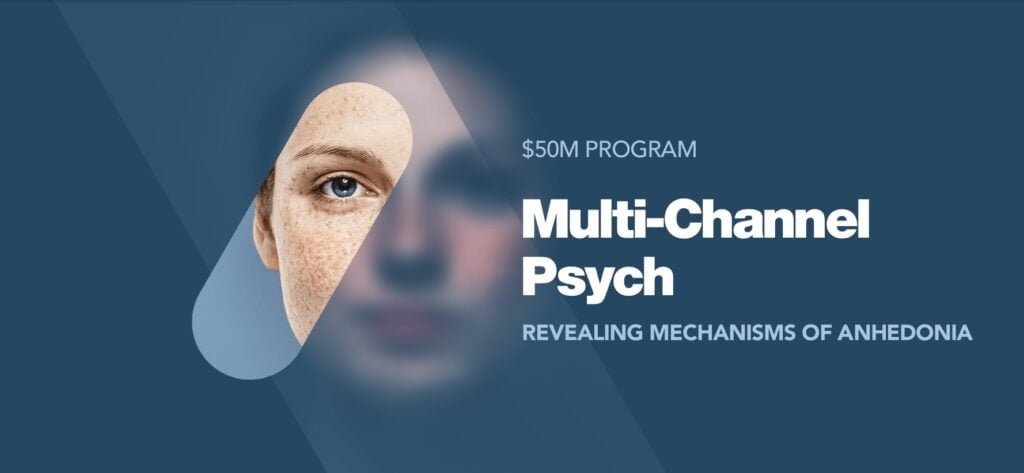
Source: Wellcome Leap, https://wellcomeleap.org/mcpsych/
Those behind Wellcome Leap frame the problem they aim to tackle with this program as follows:
“We understand that synaptic connections serve as the currency of neural communication, and that strengthening or weakening these connections can facilitate learning new behavioral strategies and ways of looking at the world. Through studies in both animal models and humans, we have discovered that emotional states are encoded in complex neural network activity patterns, and that directly changing these patterns via brain stimulation can shift mood. We also know that disruption of these delicately balanced networks can lead to neuropsychiatric illness.” (emphasis added)
They add that “biologically based treatments” for depression “are not being matched to the biology of the human beings they’re being used in,” and, thus, treatments for depression need to be tailored “to the specific biology” of individual patients. They clearly state that what needs to be addressed in order to make such personal modifications to treatment is to gain “easy access to the biological substrate of depression—i.e. the brain.”
Wellcome Leap’s program description notes that this effort will focus specifically on anhedonia, which it defines as “an impairment in the effort-based reward system” and as a “key symptom of depression and other neuropsychiatric illnesses.” Notably, in the fine print of the document, Wellcome Leap states:
“While there are many definitions of anhedonia, we are less interested in the investigation of reduced consummatory pleasure, the general experience of pleasure, or the inability to experience pleasure. Rather, as per the description above, we will prioritize investigations of anhedonia as it relates to impairments in the effort-based reward system—e.g. reduced motivation to complete tasks and decreased capacity to apply effort to achieve a goal.”
In other words, Wellcome Leap is only interested in treating aspects of depression that interfere with an individual’s ability to work, not in improving an individual’s quality or enjoyment of life.
Leap notes, in discussing its goals, that it seeks to develop models for how patients respond to treatments that include “novel or existing behavior modification, psychotherapy, medication, and neurostimulation options” while also capturing an individual’s “genome, phenome [the sum of an individual’s phenotypic traits], [neural] network connectivity, metabolome [the sum of an individual’s metabolic traits], microbiome, reward processing plasticity levels,” among others. It ultimately aims to predict the relationship between an individual’s genome to how “reward processing” functions in the brain. It implies that the data used to create this model should involve the use of wearables, stating that researchers “should seek to leverage high frequency patient-worn or in-home measurements in addition to those obtained in the clinic, hospital or laboratory.”
One of the main research areas included in the program looks to “develop new scalable measurement tools for reliable and high-density quantification of mood (both subjectively reported and objectively quantified via biometrics such as voice, facial expression, etc.), sleep, movement, reward system functioning, effort/motivation/energy levels, social interaction, caloric intake, and HPA axis output in real-world situations.” The HPA (hypothalamic-pituitary-adrenal) axis is mentioned throughout the document, and this is significant as it is both a negative and positive feedback system regulating the mechanisms of stress reactions, immunity, and also fertility in the human body. The latter is especially important given the Wellcome Trust’s ties to the UK eugenics movement. It is also worth noting that some commercially available wearables, such as Amazon’s Halo, already quantify mood, sleep, and movement.
The program’s authors go even further than the above in terms of what they wish to monitor in real time, stating, “We specifically encourage the development of non-invasive technology to directly interrogate human brain state.” Examples include “a non-invasive spinal tap equivalent,” “behavioral or biomarker probes of neural plasticity,” and “single-session neural monitoring capabilities that define a treatment-predictive brain state.”
In other words, this Wellcome Leap program and its authors seek to develop “non-invasive” and, likely, wearable technology capable of monitoring an individual’s mood, facial expressions, social interactions, effort and motivation, and potentially even thoughts in order to “directly interrogate human brain state.” To think that such a device would stay only in the realm of research is naive, especially given that WEF luminaries have openly spoken at Davos meetings about how governments plan to use such technology widely on their populations as a means of pre-emptively targeting would-be dissent and ushering in an era of “digital dictatorships.”
The focus on treating only the aspects of depression that interfere with a person’s work further suggests that such technology, once developed, would be used to ensure “perfect worker” behavior in industries where human workers are rapidly being replaced with AI and machines, meaning the rulers can be more selective about which people continue to be employed and which do not. Like other Wellcome Leap programs, if completed, the fruits of the Multi-Channel Psych program will likely be used to ensure a population of docile automatons whose movements and thoughts are heavily surveilled and monitored.
The Last Leap for an Old Agenda
Wellcome Leap is no small endeavor, and its directors have the funding, influence, and connections to make their dreams reality. The organization’s leadership includes the key force behind Silicon Valley’s push to commercialize transhumanist tech (Regina Dugan), the “architect” of the MEMS industry (Ken Gabriel), and the “ruler” of the burgeoning genetic-sequencing industry (Jay Flatley). It also benefits from the funding of the world’s largest medical-research foundation, the Wellcome Trust, which is also one of the leading forces in shaping genetics and biotechnology research as well as health policy globally.
A 1994 Sunday Times investigation into the Trust noted that “through [Wellcome Trust] grants and sponsorships, government agencies, universities, hospitals and scientists are influenced all over the world. The trust distributes more money to institutions than even the British government’s Medical Research Council.”
It then notes:
“In offices on the building’s first floor, decisions are reached that affect lives and health on scales comparable with minor wars. In the conference room, high above the street, and in the meeting hall, in the basement, rulings in biotechnology and genetics are handed down that will help shape the human race.”
Little has changed regarding the Trust’s influence since that article was published. If anything, its influence on research paths and decisions that will “shape the human race” has only grown. Its ex-DARPA officials, who have spent their careers advancing transhumanist technology in both the public and private sectors, have overlapping goals with those off Wellcome Leap. Dugan’s and Gabriel’s commercial projects in Silicon Valley reveal that Leap is led by those who have long sought to advance the same technology for profit and for surveillance. This drastically weakens Wellcome Leap’s claim to now be pursuing such technologies to only improve “global health.”
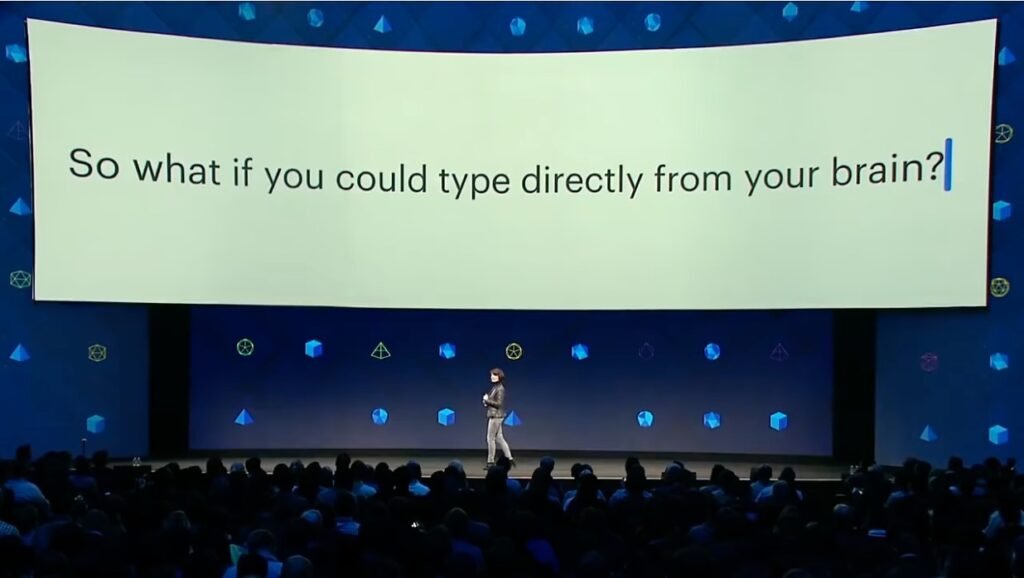
Regina Dugan’s Keynote at Facebook F8 2017. Source: YouTube
Indeed, as this report has shown, most of these technologies would usher in a deeply disturbing era of mass surveillance over both the external and internal activities of human beings, including young children and infants, while also creating a new era of medicine based largely on gene-editing therapies, the risks of which are considerable and also consistently downplayed by its promoters.
When one understands the intimate bond that has long existed between eugenics and transhumanism, Wellcome Leap and its ambitions make perfect sense. In a recent article written by John Klyczek for Unlimited Hangout, it was noted that the first director general of UNESCO and former president of the UK Eugenics Society was Julian Huxley, who coined the term “transhumanism” in his 1957 book New Bottles for New Wine. As Klyczek wrote, Huxley argued that “the eugenic goals of biologically engineering human evolution should be refined through transhumanist technologies, which combine the eugenic methods of genetic engineering with neurotech that merges humans and machines into a new organism.”
Earlier, in 1946, Huxley noted in his vision for UNESCO that it was essential that “the eugenic problem is examined with the greatest care and that the public mind is informed of the issues at stake so that much that is now unthinkable may at least become thinkable,” an astounding statement to make so soon after the end of World War II. Thanks in large part to the Wellcome Trust and its influence on both policy and medical research over the course of several decades, Huxley’s dream of rehabilitating eugenics-infused science in the post–World War II era could soon become reality. Unsurprisingly, the Wellcome Trust hosts the archive of the formerly Huxley-led Eugenics Society and still boasts close ties to its successor organization, the Galton Institute.
The over-riding question is: Will we allow ourselves to continue to be manipulated into allowing transhumanism and eugenics to be openly pursued and normalized, including through initiatives like those of Wellcome Leap that seek to use babies and toddlers as test subjects to advance their nightmarish vision for humanity? If well-crafted advertising slogans and media campaigns painting visions of utopia such as “a world without disease” are all that is needed to convince us to give up our future and our children’s future to military operatives, corporate executives, and eugenicists, then there is little left of our humanity to surrender.
Author’s note: Johnny Vedmore contributed to this report.
Hezbollah, Iraqi anti-terror group slam US seizure of website domains tied to pro-resistance media
Press TV – June 24, 2021
Lebanon’s Hezbollah pro-resistance movement and Iraq’s anti-terror Asa’ib Ahl al-Haq have strongly condemned the US government’s decision to seize and block dozens of website domains connected to Iranian and regional media outlets, describing the measure as a “criminal act” and a convincing proof of Washington’s policy of repression.
“Hezbollah condemns in the strongest terms the seizure of a large number of free media sites by the US administration [of President Joe Biden]. The move confirms Washington’s pursuit of suppressing freedom under false allegations and lurid headlines,” Mohammad Afif, Hezbollah’s head of public relations office, said in a statement on Thursday.
He added, “Through such an outrageous move, the US administration sought to cover up truth about crimes and atrocities committed by itself and its allies against the oppressed nations of our region, especially in Palestine and Yemen, where people are subjected to the worst forms of abuse and blockade.”
“Hezbollah expresses its solidarity with these honorable sites, whose reflection of truth cannot be hidden away at all. We call for a major campaign of solidarity with these media institutions so they can continue to perform their sincere and humanitarian missions,” the statement concluded.
‘US seizure of website domains tied to resistance out of despair’
Qais Khazali, who leads the Asa’ib Ahl al-Haq resistance group, also reacted to the US seizure of pro-resistance news website domains.
“Day by day, the West’s hollow claims about advocating human rights and freedom of expression are becoming further exposed,” he said in a statement carried by the Iraqi News Agency said, citing the removal of the Saudi-led military coalition in Yemen and the Israeli regime from a list of groups violating children’s rights, and the recent seizure of “the media websites that oppose American, British, Israeli, Saudi and Emirati schemes.”
“This is a sufficient justification… the United States, having failed in its military plans, desperately opted to seize websites whose sole weapons are words and ideas,” Khazali continued.
“The seizure shows its defeat in the field of media war. The pro-resistance media outlets exposed Washington’s hideous nature and its conspiracies,” he pointed out.
On Tuesday, the US seized the websites of Press TV and al-Alam, Iran’s English-language and Arabic-language newscasters, as well as al-Masirah TV of Yemen.
Other web domains, including Palestine al-Youm, a Palestinian-directed broadcaster, Karbala TV – the official television of the Imam Hussein (PBUH) shrine in the holy Iraqi city of Karbala, Iraqi Afaq TV, Asia TV and al-Naeem TV satellite television channels, as well as Nabaa TV which reports the latest stories about Saudi Arabia and other Persian Gulf countries, were also seized.
Bahrain’s LuaLua TV, a channel run by opposition groups with offices in London and Beirut, was also closed, according to AFP.
Press TV website was back online within hours with the new .ir domain address. Al-Alam TV also quickly announced that its website will be available on .ir domain.
Al-Masirah TV established a new website, using its name but swapping the .net domain for .com.
The US Justice Department said Wednesday it had seized 33 media websites used by the Iranian Islamic Radio and Television Union (IRTVU), as well as three of the Iraqi anti-terror Kata’ib Hezbollah group, which it said were hosted on US-owned domains in violation of sanctions.
Over the past years, the United States has for several times taken similar measures against Iranian media outlets.
The US tech giant Google has recurrently taken on Press TV more than any other Iranian outlet given the expanse of its viewership and readership.
In March, Google for the seventh time blocked the English-language news network’s access to its official YouTube account without any prior notice, citing “violations of community guidelines.”
The US-based social media giant Facebook also informed Press TV in the same month that its account had been shut down for what it claimed to be the Iranian news channel’s failure to “follow our Community Standards.” The page was reinstated a few days later.
The Tehran-based network has also fallen victim to censorship on Twitter and Instagram.
Featured Video

Seyed M. Marandi: Negotiations Collapsed – Return to War
or go to
Aletho News Archives – Video-Images
From the Archives
The US-Iran Scenario That Most Scares Israel
By Ali Haydar | Al-Akhbar | October 9, 2013
Israeli Prime Minister Benjamin Netanyahu issued a series of threats toward Iran and its interlocutors in the West, including the US, as serious negotiations on Iran’s nuclear program seem more plausible.
As a possible rapprochement looms between the US and Iran, Netanyahu has attempted to impose impossible Israeli conditions on the negotiators, such as the full dismantling of Iran’s nuclear program, not to mention threatening military force.
Whatever the deal that could materialize between Iran and the West, Israel is going to find itself before an open-ended path. One can foresee three possible scenarios… continue
Blog Roll
 Aletho News
- UK, Spain reject Trump’s new scheme to blockade Hormuz Strait
- Russian frigate ‘resurfaces’, chases off NATO pirates days after Kiev ‘sank’ it
- Ukraine Targets Russian Merchant Fleet With NATO Intel Support – Presidential Aide
- Russia’s ‘shadow fleet’ makes mockery of UK naval power
- Ukraine plans to attack Russian ships with Norwegian support
- US’s ‘Very Foolish’ Double Blockade of Hormuz Strait Makes Absolutely No Sense: Here’s Why
- China issues rules on countermeasures against foreign states’ unlawful extraterritorial jurisdiction
- Seyed M. Marandi: Negotiations Collapsed – Return to War
- Tomorrow’s naval blockade showdown
- ‘Israel’ attacks civilians to hide its embarrassing military failures & out of pure sadism
- If Americans Knew
- Critical shortages in Gaza, Lebanon in ruins, “piracy” in Iran – Daily Update
- US-Iran ceasefire negotiations make zero progress – Daily Update
- Pro-Israel ‘Thinktanks’ and Individuals who Influence U.S. Foreign Policy
- Mearsheimer reveals how Israel dictates US policies on Iran, Gaza – video
- After killing 350+, Israel still has a “score to settle” with Lebanon before ceasefire – Daily Update
- Military aid to Israel emerges as the latest political litmus test for Democrats
- The only Palestinian children’s rights organization closes following years-long Israeli campaign against it
- ‘I Can’t Forget the Smell’: Lebanese Reel After Israel Kills Over 300 in Single Day
- DNC Shoots Down Resolutions Calling Out AIPAC and Limiting Arms to Israel
- TCN: Is Israel Blackmailing President Trump?
- No Tricks Zone
- Cave Discovery Reveals Today’s Desert Climates Were Recently Far Warmer, Wetter, Teeming With Life
- German Expert: Heat Dome Led To Record Temps In Western USA…Warmer In 1934, 1936
- New Study: No Linear Warming Or Glacier Retreat Along Northern Antarctic Peninsula Since 1980s
- An Inconvenient Tree: Uncovered In Alps… Europe Much Warmer Than Today 6000 Years Ago
- New Study Reports A 60% Slowdown In Greenland’s Ice Loss Rate In The Last Decade
- Low Intensity Tornado Wrecks Major Solar Farm, Creating A Potential Toxic Dump
- New Study Finds Warming Saves Lives…Cold Temperatures 12 Times More Deadly Than Excess Heat
- German Science Blog Accuses PIK Climate Institute Of Hallucinating Climate Tipping Points
- Devastating Assessment Of Comirnaty Vaccine By Former Senior Pfizer Europe Toxicologist
- New Study: CO2 Is ‘Effectively Negligible’ As An Explanatory Climate Change Factor Since 2000
 Aletho News