Israel, Greece to Build Radar on Crete Amid Rapprochement– Reports
Sputnik – March 19, 2019
The Long Horizon marine radar system will be built by Israel and Greece in eastern Crete, the Greek newspaper Kathimerini reports. The enhanced coverage of the radar will allow both countries to monitor the Eastern Mediterranean basin. The daily has not disclosed the cost of the project, saying only that it is “not insignificant,” especially taking into account Greece’s reduced military budget.
According to the outlet, Athens and Tel Aviv have been drifting together recently, boosting their military ties among other things. Greece has recently agreed with Israel to share know-how for its navy, which has begun to develop. According to the outlet, 40 Israeli probationers will be carried by a Greek transporter from Haifa to Crete, without any stops in Cyprus, by the end of the month. The Israelis will join the Greek forces during upcoming drills and then return to Haifa after a stop in Milos and Rhodes.
On the other hand, Athens has been open to the possibility of bolstering its arms gaps with the help of Israel, as Kathimerini noted. Among other things, Greece has rented seven drones from Israel for search and rescue operations.
Israel’s Haaretz reports that Cyprus also shares the Israeli interests in the region. The list of common interests includes a stance on the situation in Syria and Lebanon as well as uneasy relations with Turkey.
Apart from military and political cooperation, which is to be confirmed during an upcoming trilateral Greek-Israeli-Cypriot summit with US Secretary of State Mike Pompeo, the three countries are developing a major economic project — the undersea East Med pipeline, designed to deliver natural gas from the Eastern Mediterranean to Europe via Greece and Cyprus. Greek Prime Minister Alexis Tsipras, Israeli PM Benjamin Netanyahu and Cyprus President Nicos Anastasiades are expected to sign the grand deal, agreed upon in 2018, within the month, as the Greek media earlier reported.
The 2,000-kilometre underwater pipeline is intended to have a capacity of 12 billion cubic metres of gas annually, delivering fuel from Israel’s Leviathan, named one of the largest young gas reserves in the world, and the Aphrodite offshore gas fields. Additionally, the venture was boosted in February when it was announced that large gas deposits had been discovered in Cyprus.
The line, which is almost twice as long as Russia’s Turk Stream pipeline, is estimated to cost $8 billion and is said to be the world’s deepest underwater gas pipeline. Egypt, the only Muslim nation besides Jordan that has a peace treaty with Israel, is also seeking to export its newly discovered gas reserves, and has expressed interest in joining the project.
Russian oil expert detained at Kiev’s request in Greece, lawyer calls arrest ‘politicized’
RT | March 3, 2019
A Russian national has been arrested in Greece and faces extradition to Ukraine on tax-crime charges. His lawyer said he is being persecuted for supporting the former Ukrainian president who was ousted in a Western-backed coup.
Evgeny Kalinin, a Russian energy expert, was arrested by the Greek authorities at Athens International Airport on Thursday, his lawyer, Yannis Rahiotis, told Sputnik.
Kalinin is a well-known oil industry expert, Rahiotis said, noting that his client was on a routine business trip to the country at the time. Kalinin appeared in court on Friday, when he was sent to prison until Ukraine’s extradition request is delivered to Athens.
According to Rahiotis, Kalinin faces unspecified tax-crime charges, which allegedly arise from his past work as a top executive in Ukraine’s oil company.
Kalinin served as vice president of TNK-BP Commerce, a Kiev-based company that specializes in producing and selling crude oil products in Ukraine and Russia, until 2011. The company, which was founded in 2003, also operates a network of gasoline and filling stations in Ukraine.
While the essence of the charges Kalinin is facing are not yet clear, Rahiotis believes they are politically motivated. The lawyer pointed out that Kalinin’s name has been included in a database of the notorious Ukrainian website Mirotvorets (Peacekeeper). The ultra-nationalist site contains a blacklist of ‘traitors’ who it says must be dealt with. On the list, Kalinin has found himself in the company of such big foreign political names as former German chancellor Gerhard Shroeder, who was added to the ‘hit-list’ in November, prompting the German Foreign Ministry to reprimand Kiev for not taking down the website.
“This case is a political one. Kalinin is included into the Mirotvorets list. He is being persecuted because he was a supporter of former president Victor Yanukovich,” Rahiotis said.
Russian diplomats have been in contact with Kalinin, and have been providing him “with all necessary consular assistance,” the Russian Embassy in Greece said, as cited by Sputnik.
Kalinin’s arrest has already drawn condemnation from a senior Russian lawmaker.
The deputy head of the Russian Senate Defense and Security Committee, Franz Klintsevich, has said that by playing into the Kiev’s hands, Athens is undermining its centuries-old relationship with Russia, which has traditionally been an ally.
“It’s still not late to stop. Russia will do everything to free Evgeny Kalinin,” he wrote on Facebook.
Another State Duma MP, Natalia Poklonskaya, argued that Kalinin’s arrest is likely to be politicized and exploited in the ongoing Ukrainian presidential campaign. She also warned Greece against becoming a pawn in a third party’s hands by simply following formal legal guidelines.
The Mediterranean Pipeline Wars Are Heating Up
By Viktor Katona | Oilprice.com | December 28, 2018
Things have been quite active in the Eastern Mediterranean lately, with Israel, Cyprus and Greece pushing forward for the realization of the EastMed pipeline, a new gas conduit destined to diversify Europe’s natural gas sources and find a long-term reliable market outlet for all the recent Mediterranean gas discoveries. The three sides have reached an agreement in late November (roughly a year after signing the MoU) to lay the pipeline, the estimated cost of which hovers around $7 billion (roughly the same as rival TurkStream’s construction cost). Yet behind the brave facade, it is still very early to talk about EastMed as a viable and profitable project as it faces an uphill battle with traditionally difficult Levantine geopolitics, as well as field geology.
The EastMed gas pipeline is expected to start some 170 kilometers off the southern coast of Cyprus and reach Otranto on the Puglian coast of Italy via the island of Crete and the Greek mainland. Since most of its subsea section is projected to be laid at depths of 3-3.5 kilometer, in case it is built it would become the deepest subsea gas pipeline, most probably the longest, too, with an estimated length of 1900km. The countries involved proceed from the premise that the pipeline’s throughput capacity would be 20 BCM per year (706 BCf), although previous estimates were within the 12-16 BCm per year interval. According to Yuval Steinitz, the Israeli Energy Minister, the stakeholders would need a year to iron out all the remaining administrative issues and 4-5 years to build the pipeline, meaning it could come onstream not before 2025.
The idea of EastMed was first flaunted around 2009-2010 as the first more or less substantial gas discovery in the Eastern Mediterranean, the Tamar gas field in Israel’s offshore zone, paved the way for speculations about an impending gas boom. Then came the 535 BCm (18.9 TCf) Leviathan in 2010 and the 850 BCm (30 TCf) Zohr discovery in offshore Egypt five years later and suddenly it seemed that an Eastern Mediterranean gas expansion is inevitable. Yet over the years, the operators of Leviathan have already allocated part of their total gas volumes to domestic power generating companies and most notably NEPCO, the Jordanian electric power company (1.6-2BCm per year). Egypt has been concentrating on meeting domestic needs and getting rid of LNG imports, moreover once it bounces back to gas exporter status in 2019, it will only use its own 2 LNG terminals in Damietta and Idku. Related: Has Oil Hit Rock Bottom?
Thus, a pertinent question arises – whose gas would be used to fill the EastMed pipeline? If the pipeline starts in offshore Cyprus, then it would be logical to expect that Cyprus’ gas bounty would be somehow utilized. Yet Cyprus has been lagging behind Egypt and Israel in its offshore endeavors and so far lacks a clear-cut giant field to base its supply future on. The two discoveries appraised heretofore, the 6-8 TCf Calypso operated by ENI and the 4.5 TCf Aphrodite operated by Noble Energy, are not enough to support the construction of a relatively expensive gas pipeline – all the more so as Noble has signed a provisional deal to send Aphrodite gas to Egypt’s Idku LNG terminal, most likely by means of a subsea gas pipeline. If we are to judge the viability of the EastMed on the current situation, there is only Calypso and Israel to fill the pipeline, as Greece’s gas export plans are close to zero on the probability scale.
The subsea section from Cyprus’ offshore zone to the island of Crete lies in depths of 3km and is stretched across a seismically active zone. But there is even more – should Turkey claim rights on Cyprus’ offshore hydrocarbon deposits (in February 2018 it sent warships to scare away ENI’s drilling rig that was on its way to xxx), the project is all but dead. This is far from an implausible scenario as President Erdogan stated that Turkey would never allow for the extortion of natural resources in the East Mediterranean by means of excluding Ankara and Northern Cyprus. Cognizant of the risks inherent in an East Mediterranean gas pipeline, there has been no interest from oil and gas majors to participate in the project. This is worrying as the $7 billion are expected to be financed from private investors, of which there is a palpable dearth – despite the EU’s 35 million funding to promote what it sees as a Project of Common Interest. Related: Wall Street Sees Oil Price Recovery In 2019
Yet even for the European Union, the EastMed gas pipeline presents a bit of a headache as its commissioning would render the Southern Gas Corridor, comprising so far only of Trans Adriatic Pipeline (TAP) with a 10 BCm per year throughput capacity, irrelevant by creating a sort-of competitor. The price of the natural gas to be supplied via the EastMed pipeline might become the biggest obstacle of them all – if the cost of producing offshore Mediterranean gas turns out to be $4-5/MMBtu as expected, the addition of further transportation costs to it all would place EastMed supplied at the bottom range of European gas supply options (Russian gas supply is alleged to be profitable with price levels as low as $4/MMbtu). All this might change if any of the East Mediterranean countries were to discover a giant gas field, altering the economics of production or possibly even liquefaction.
In fact, 2019 will witness several key wells being drilled across Cyprus, Egypt and possibly even Israel. ExxonMobil’s testing of Block 10 in offshore Cyprus would largely point to the overall attractiveness of Cyprus as an oil and gas producing country – the drilling has already started, with results expected in Q1 2019. The ENI-operated Noor offshore field in Egypt, adjacent to Zohr, is a much hotter prospect with BP buying into it lately – most likely it will outshine all the other drilling sites in the Eastern Mediterranean, however, if a big discovery is confirmed, it would be most likely used for Egyptian purposes which run counter to the EastMed gas pipeline. Thus, EastMed’s only hope is that Israel 2nd international licensing round, results to be announced in July 2019, will elicit a couple of Leviathan-like finds that would make pipeline construction profitable. Until then, the prospects are rather bleak.
UAE to invest in Israeli plan to pipe gas to Europe
Press TV – November 25, 2018
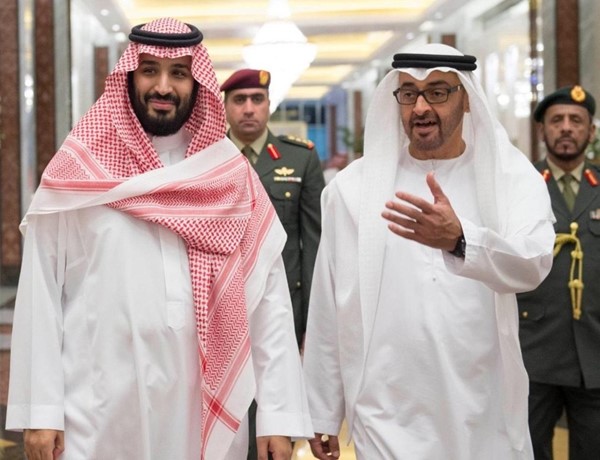
The media in Tel Aviv have reported that the UAE has invested as much as $100 million in an ambitious Israeli project to pipe natural gas to Europe.
The investment would be made by a company based in Abu Dhabi for a pipeline project which is internationally known to be unique given its record length as well as the extreme depths it would be laid toward Europe, Lebanon’s al-Mayadeen quoted Israeli media as reporting.
The agreement has been described as “historic” by Israeli media, al-Mayadeen added.
Israel has signed a multilateral deal over the scheme – called the East Med Pipeline Project – with Greece, Italy and Cyprus. The European Union also supports the project.
The East Med Pipeline Project is to start about 170 kilometers (105 miles) off Cyprus’s southern coast and stretch for 2,200 kilometers (1,350 miles) to reach Otranto, Italy, via Crete and the Greek mainland, according to a report by The Times of Israel news website.
The pipeline will have the capacity to carry up to 20 billion cubic meters (706 billion cubic feet) of gas from Israeli fields each year. Europe’s gas import needs are projected to increase by 100 billion cubic meters (3.5 billion cubic feet) annually by 2030.
Work on the project is expected to begin within a few months, and to conclude within five years.
UAE’s investment in the project could trigger protests in the Muslim world. The Emirates has already taken moves to approach Tel Aviv with speculations recently emerging that it has even involved itself in certain military operations by Israel on Gaza.
Last December, Israel’s Energy Minister Yuval Steinitz said a study on the project showed that the project is feasible, even though it presents technical challenges due to the depths involved and has an estimated cost of 6.2 billion euro ($7.36 billion).
Israel has already engaged in disputes with Lebanon over tapping into Mediterranean energy resources.
Last February, Israel described as “very provocative” a Lebanese tender for projects in two of its 10 offshore blocks in the Mediterranean Sea.
Israel itself has long been developing a number of offshore gas deposits in the Mediterranean Sea, with the Tamar gas field, with proven reserves of 200 billion cubic meters, already producing gas, while the larger Leviathan field is expected to go online in the coming months.
A source close to Israeli Prime Minister Benjamin Netanyahu said in 2012 that Israel’s natural gas reserves were worth around $130 billion. A Business Week estimate later that year put the reserves’ value at $240 billion.
US Blocks $199Mln in Assets Belonging to Iran, Syria, N Korea in 2017 – Treasury
Sputnik – 07.11.2018
WASHINGTON – The United States blocked nearly $200 million in assets belonging to Syria, Iran, and North Korea in 2017 as a result of the sanctions imposed on the three countries, the Treasury Department said in its annual report to Congress released on Wednesday.
“Approximately $199 million in assets relating to the three designated state sponsors of terrorism in 2017 have been identified by OFAC as blocked pursuant to economic sanctions imposed by the United States,” the report said.
The statement comes days after the US fully reinstated sanctions against Iran, including measures that curb Tehran’s oil industry. At the same time, the United States temporarily exempted eight nations — China, Greece, India, Italy, Japan, South Korea, Taiwan and Turkey — from the sanctions on importing oil from Iran.
In May, US President Donald Trump announced that the United States would withdraw from the Iran nuclear agreement, officially known as the Joint Comprehensive Plan of Action, and reimpose sanctions against Tehran that were previously lifted under the accord, including secondary restrictions.
The first round of the US sanctions was reimposed in August, while the second round, targeting over 700 Iranian individuals, entities, banks, aircraft and vessels, came into force this week.
Lavrov: Russia’s Sovereignty to Be Defended Despite US Missile Defense Worldwide
Sputnik – 30.07.2018
Russia is guaranteed to be provided with information on the plans that the US military and other states have in mind for it, Russian Foreign Minister Sergei Lavrov stated while speaking to participants at the Russian Youth Educational Forum “Territory of Meanings.”
“Whatever happens in the world, our security as a state, the security of our citizens, our sovereignty will be most securely protected. This has been repeatedly confirmed by President Vladimir Putin, and I assure you that this is based on real, material changes that are taking place in our country and in our army, “the minister said.
The US impedes the development of rules of behavior in cyberspace in the UN, Russian Foreign Minister Sergei Lavrov said.
“We have been suggesting to develop rules for responsible behavior in cyberspace at the UN for a long time. There are no rules right now, as you know. The country that impedes it is the United States,” Lavrov pointed out. “This is not surprising, because the United States has a dominant position in general with regard to Internet governance.”
Russia-US relations have been tense amid an ongoing arms race and a ban on military cooperation between US and Russian forces.
In May, the US House of Representatives passed a whopping $717 billion annual defense spending bill for the 2019 fiscal year.
No Doubts Greece Decided to Expel Russian Diplomats Under Severe Pressure
Russian Foreign Minister Sergei Lavrov said that he had no doubts that Greece had taken a decision to expel Russian diplomats under severe pressure.
“We have already commented on [the expulsion of Russian diplomats from] Greece. I can just say once again that we have no reason to doubt that these decisions were made under the severe pressure of those who want to turn any country anti-Russian,” Lavrov said at a youth forum.
Earlier in July, the Greek Kathimerini newspaper reported that Athens had decided to expel two Russian diplomats and ban two more from entering the country over national security concerns. The accusations against the diplomatic workers were strongly refuted by Russian Ambassador to Greece Andrey Maslov, who called them “absurd.”
Not just the Elgin Marbles: Britain’s colonial legacy lives long in UK museums
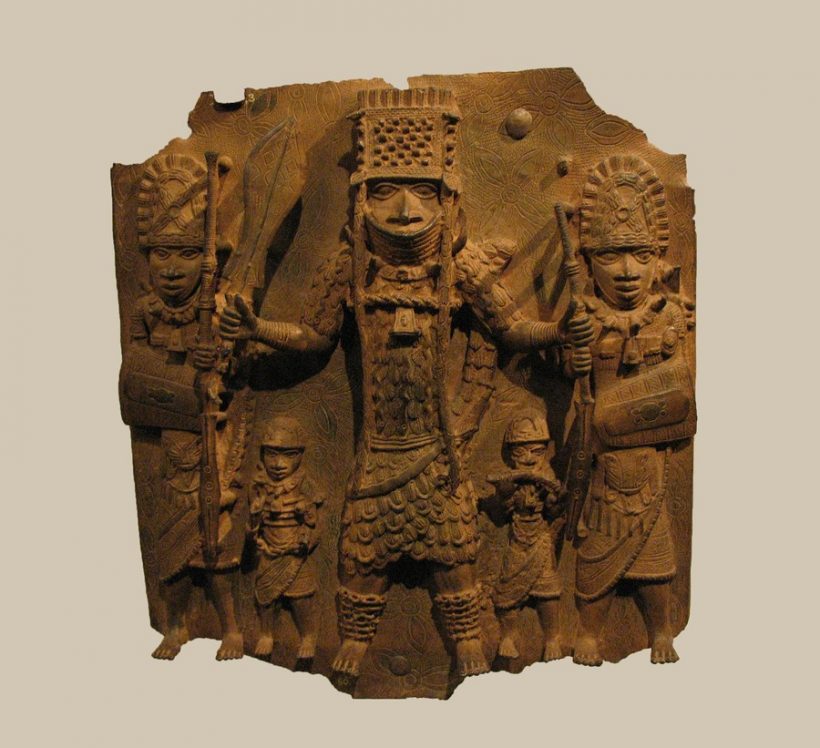
Benin bronzes. © Global Look Press
RT | June 4, 2018
After Jeremy Corbyn promised to return the Elgin Marbles to Greece upon becoming PM on the basis that they were “looted” from the country, RT looks at other rare artifacts taken by colonial Britain that now reside in UK museums.
“As with anything stolen or taken from occupied or colonial possession – including artifacts looted from other countries in the past – we should be engaged in constructive talks with the Greek government about returning the sculptures,” Corbyn said in an interview with a Greek newspaper.
If Corbyn were to become PM, here are some of the other artifacts that might be returned to their country of origin.
Benin artefacts
The British Museum boasts the second-biggest collection of Benin’s art after the Ethnological Museum in Berlin.
The Kingdom of Benin – now part of Nigeria – was stripped of its bronzes during what became known as Britain’s “punitive expedition,” a mission conducted against the natives after they defied imperial rule by imposing customs duties.
BBC Civilizations presenter David Olusoga, originally from Nigeria, said the UK has a “moral imperative” to return the art.
On the Benin looting, he said: “It’s just such a stark case of theft.”
He added during the Hay Festival this year: “A friend of mine, a TV producer, once came up with a brilliant solution: he said we should have a special version of Supermarket Sweep, where every country is given a huge shopping trolley and two minutes in the British Museum. Maybe he’s right, maybe that’s the way forward.”
Ethiopian treasures
Dozens of institutions up and down the country, including the Victoria and Albert Museum in London, are home to hundreds of northeast Africa’s finest treasures.
Beautiful and equally important manuscripts and artifacts were plundered after the British capture of Maqdala in 1868, the mountain capital of what was then Abyssinia under Emperor Tewodros II.
In 2017, Ethiopia lodged a formal restitution complaint. The offer was refused, but ahead of the Maqdala exhibition at the V&A at the beginning of April, its director suggested the case could be settled by granting the treasures to the east-African country on a long-term loan.
Sultanganj Buddha
The Sultaganj Buddha is a metallic sculpture that was extracted from an abandoned Buddhist monastery in northern India in 1861 by E B Harris, a British Raj railway engineer. The 1,500-year-old bronze Buddha was then shipped to Birmingham after being secured for a mere £200 ($265).
The item – the largest known Indian metal sculpture, which is known in the UK as the ‘Birmingham Buddha’ – is at the top of the list of thousands of alleged ‘stolen treasures’ that Indian authorities are trying to get back.
The Koh-i-Noor diamond
The Koh-i-Noor diamond, one of the largest cut in the world, is currently part of the British crown jewels. It has been the subject of a bitter dispute between India and the UK ever since it was taken from the Punjab and presented to Queen Victoria in 1849.
The jewel, which belonged to the Punjab’s Sikh Empire, was handed by the East Indian Company to Queen Victoria after they emerged victorious in the 1840s Anglo-Sikh wars.
The diamond – known as the Mountain of Light – is thought to have been mined in the 1300s.
India has called for the stone to be returned ever since it gained independence in 1947, though the UK claims it has a legal basis for withholding it, as it was guaranteed under the Treaty of Lahore.
Former PM David Cameron commented on the dispute, stating: “If you say yes to one you suddenly find the British Museum would be empty. I think I’m afraid to say, to disappoint all your viewers, it’s going to have to say put.”
New Italian Government to Trigger Crisis in EU
By Alex GORKA | Strategic Culture Foundation | 07.04.2018
The formal consultations on forming a new coalition government in Italy kicked off on April 4. The center-right coalition led by the anti-migrant League won 37% of the vote to control the most parliamentary seats while the populist 5-Star Movement won almost 33% to become the single party with the highest number of votes. Neither of them can govern alone. It does not make great difference who President Sergio Mattarella will entrust with the task to form a coalition government: the leader of the center-right League, Matteo Salvini, or Five Star’s Luigi De Mayo. The outcome will be the same – the EU will face a crisis over its Russia policy. By and large, the two are at one on the issue – they want the Russia sanctions lifted.
The Five Star is not simply Eurosceptic; it’s openly anti-EU. The movement has always been known as “part of a growing club of Kremlin sympathizers in the West”. It shares a pro-Moscow outlook with the League. “STOP absurd Russia sanctions” tweeted Matteo Salvini to make his position known. It coincides with the opinion of Ernesto Ferlenghi, the President of Confindustria Russia, a non-profit association, who asks for government’s support of Italian businesses operating in Russia. Both agree that the sanctions hurt Italian economy. Salvini lambasted his country’s decision to expel Russian diplomats over the so-called spy poisoning case. In March, he signed a cooperation agreement with United Russia party.
It’s almost certain that Italy, the 3rd-largest national economy in the eurozone, the 8th-largest by nominal GDP in the world, and the 12th-largest by GDP (PPP), will question the wisdom of sanctions war. No doubt, it will be backed by a number of countries, including Greece, Austria, Cyprus, Hungary etc. If not for pressure exercised by the EU and German leadership, the sanctions would have been eased, or even lifted, long ago, especially as Great Britain is on the way out of the bloc. The Skripal scandal can delay the discussions but not for a long time. It will die away. If there were a solid proof to bolster the accusations against Moscow, it would have been presented to public without procrastination to fuel the anti-Russia sentiments. It has not been done. The scandal is doomed to fade away gradually.
The expedience of diplomats’ expulsions has been questioned in almost all EU member states, including Germany. Its newly appointed Foreign Minister Heiko Maas insists that Europe needs Russia as an ally to solve regional conflicts. According to him, “We are open to dialogue and are counting on building confidence again bit by bit, if Russia is ready to do so.”
Austria and Greece have refused to join so far but if such a big country as Italy joins them, the EU will be in a tight spot. The sanctions are to be prolonged in early fall but Rome will block their automatic extension. Italy is too big and important to be easily made to kneel. This is an EU founding nation. The bloc is facing serious cracks and adding more bones of contention will put into question its very existence. Under the circumstances, gradual easing of sanctions to ultimately lift them is the best solution for the EU. That will put the US and Europe on a collision course, especially at a time the divisions over the Nord Stream-2 gas project go on deepening.
US Ambassador to the UN, Nikki Haley, has recently stated that Russia is no friend of the US. Moscow is well aware that Washington is not its friend either. It’s not about friendship but rather the need for a dialogue on equal terms to address burning issues of mutual interests.
As one can see, the US hostility toward Russia does not strengthen its standing in the world. Quite to the contrary, it makes the gap wider to alienate European allies. The relationship is complicated enough as it is. The pressure exercised by the US and the UK, its staunch European ally, to involve the EU into the anti-Russia campaign provokes stiff resistance. Its strong alliances, not disagreements with close partners that make great powers stronger.
The CAATSA law that allows punitive measures against European allies, the divisions over the Iran deal being probably decertified by the US in May, the European resistance to the US tariff policy and a lot of other things undermine the West’s alliance the US considers itself the leader of. Adding Russia to the list of European grievances hardly makes the US position in the world stronger. By ratcheting up anti-Moscow sentiments it hurts itself to make the “America First” policy much less effective than it could be, if outright hostility gave place to business-like dialogue.
Looks like those who wish Russia ill have lost an important ally. The more effort is applied to hurt Moscow, the more damage is done to West’s unity.
EU Imposes Anti-Union Law on Greece
By Will Podmore | CounterPunch | February 2, 2018
Under instructions from the European Commission, the European Central Bank and the International Monetary Fund, the Greek government pushed through the most anti-union legislation in Europe on Monday 15 January.
The move was demanded, along with other draconian measures, as a condition of the latest tranche of what is called Greece’s bailout but which in reality is bailing out the European financial institutions which recklessly encouraged Greek borrowing.
The key concession required from the Syriza government was that industrial action would now require a yes vote from more than half of the total number of union members in a workplace, regardless of the actual turnout. This is even worse than the provisions in the Trade Union Act which came into law in the UK in March 2016.
Astonishingly – or perhaps not – there has been not one word about this from the TUC, which continues its scaremongering about the effect of Brexit on workers’ rights. While it prattles on, the European Union is turning the screw on the most fundamental of all workers’ rights, the right to strike, and using Greece as a test bed for policies it would like to see across all member states.
Without the right to take effective strike action, workers have no protection save the courts, and capitalist courts consistently favour the employers.
The European Court of Justice ruled (in the Laval case, 18 December 2007), that employers have the right to bring workers from a low-wage EU state to a higher-wage EU state on the wages payable in the cheaper country, regardless of any collective bargaining agreements in the higher-wage state. It has also ruled (in the Viking case, 11 December 2007) that effective industrial action to stop outsourcing to cheaper countries is illegal.
In the Alamo–Herron case (18 July 2013), involving Unison members transferred out of local authority employment, it ruled that whatever their contracts said, benefits collectively negotiated for local authority workers could be ignored by their new employers. “This case is an appalling attack on collective bargaining and is at least as serious as Viking and Laval,” wrote Britain’s leading employment barrister, John Hendy.
Hendy went on to say, “The EU has become a disaster for the collective rights of workers and their unions.”
As we have consistently said, strong trade union organisation backed up by effective industrial action if need be is the only way to secure and defend advances in the workplace. The EU murmurs about “rights” while consistently attacking the basis of workplace organisation.
Not one line of the Trade Union Act introduced by the Cameron government, or the even worse White Paper that preceded it, was contrary to EU law. The sooner Britain leaves the EU, the better it will be for trade union members (though some so-called leaders will resent being kicked off the Brussels gravy train). At least then we will just have our own employers to deal with.
Will Podmore is a librarian and writer living in London.
Featured Video
Theodore Postol: Iran’s Missiles & Drones Were Underestimated
or go to
Aletho News Archives – Video-Images
From the Archives
Wars for Israel: A reminder of who’s giving the marching orders
By Damian Lataan | February 7, 2012
As the West prepares to march off to yet another war in the Middle East, we should perhaps remind ourselves of who is giving the West their marching orders.
In February 2003, just weeks before the US and their allies launched their attack on Iraq and her peoples, a delegation of US congressmen, together with the US Ambassador to the United Nations, John Bolton, a well known pro-Zionist and neoconservative war-hawk, were in Israel at the invitation of the Israeli government then led by Israeli Prime Minister Ariel Sharon.
Addressing the congressmen, Sharon told them ‘that Iran, Libya and Syria should be stripped of weapons of mass destruction after Iraq’. Later, Sharon told John Bolton ‘that Israel was concerned about the security threat posed by Iran, and stressed that it was important to deal with Iran even while American attention was focused on Iraq’. … continue
Blog Roll
 Aletho News
- Trump’s April Fools’ Address to the nation
- The Most Important Bet You’ve Never Heard Of
- The killing of three Indonesian soldiers in Lebanon should remind Jakarta that Israel does not want peace
- Defeated and delusional: Netanyahu’s remarks reveal $80bn war failure, says analyst
- Iran’s friends are about to make life much more difficult for Israel and the US
- The war of liberation of the Arab and Islamic peoples expands across the Gulf
- Envoy warns UN on Trump’s threat to ‘obliterate’ Iran’s civilian infrastructure
- The Larak Corridor: Iran’s Rial Gate With No US, No Israel, and No Way Around
- ‘Economic terrorism’: Steel facilities hit again in US-Israeli strike
- ‘War Crime’: Iran condemns attacks on Arak, Ardakan nuclear sites
- If Americans Knew
- Gaza families reunite years after babies evacuated amid Israel’s war
- International Rescue Committee warns Gaza’s children face grave protection risks
- Iran’s Alleged 47-Year War on America: Debunking the 1,050 American Deaths Canard
- Israel wants US to bomb more of Iran’s civilian structures (113,000 is not enough) – Not a ceasefire Day 173
- Ann Coulter Rips Into Fox News for Iran War Coverage
- Joe Kent Urges Americans To Call White House and Congress To Object To Sending Troops Into Iran
- DNC Resolution to Reject AIPAC Funding Puts Democratic Leaders in the Hot Seat
- Swedish foundation to build 400 schools as over 650,000 Gaza children remain without education for 2 years
- Israeli army admits photshopping image of slain Lebanese journalist
- This is how Israel is systematically killing health workers under the cover of war in Lebanon
- No Tricks Zone
- New Study Finds Warming Saves Lives…Cold Temperatures 12 Times More Deadly Than Excess Heat
- German Science Blog Accuses PIK Climate Institute Of Hallucinating Climate Tipping Points
- Devastating Assessment Of Comirnaty Vaccine By Former Senior Pfizer Europe Toxicologist
- New Study: CO2 Is ‘Effectively Negligible’ As An Explanatory Climate Change Factor Since 2000
- Former Pfizer Toxicologist Dr. Helmut Sterz Tells Bundestag Hearing Pfizer Vaccine Should Have Never Been Approved
- Energy Expert: Germany’s Nuclear Phaseout Was A “500 Billion Euro Mistake”
- New Research: South Australia’s Mid-Holocene Sea Surface Temperatures Were 4°C Warmer Than Today
- Storing Green Energy To Last Germany 10 Days Would Require A 60-Million Tonne Battery
- New Studies: UK Sea Levels Were 4 Meters Higher Than Today During The Mid-Holocene
- Destructive Green New Deal: German Energy And Metal Group Warns Of Drastic Crisis
 Aletho News