Released Israeli captive says Hamas made sure to meet all his needs in Gaza
Press TV – February 2, 2025
Former Israeli captive Keith Siegel, who was recently released after 15 months in Gaza, says Palestinian resistance fighters made sure to meet all his needs in captivity.
The US-Israeli dual national was among three captives released on Saturday. Before his release, Siegel recorded a farewell video message to “thank Al-Qassam for everything,” saying, “You were good with us for the past 15 months.”
Hamas military arm Al-Qassam Brigades released the video on Sunday.
“The fighters guarding me during this period made sure to meet all my needs, including food, drink, medicine, vitamins, eye treatment, blood pressure monitor, and other needs.”
Siegel said the resistance fighters “made sure to bring food that was suitable for my health condition, vegetarian food, without oil.”
“The guards treated me well,” he said.
The released captive also criticized Tel Aviv for not doing “what was required to reach a deal to return the prisoners and end the war, which led to many victims and additional damage to both parties.”
Gadi Moses, 80, the oldest captive and the first man who was released as part of the ceasefire deal with Hamas, also told his family that he was “treated with respect,” in Gaza.
Moses was released after 482 days in Gaza captivity on Thursday.
According to details Moses shared with his family, his son said in a written message that this father “lived in the same conditions as his captors & ate what they ate together.”
“He lived in the same conditions as his captors & ate what they ate together. They provided him with books about the environment & Islam & reading glasses.”
Israel’s bombardment was “very scary for him,” he said.
Hamas said in a previous statement that the Israeli military “deliberately and repeatedly” targeted locations where Israeli captives were held.
It said the regime was “seeking to get rid of their captives in Gaza by all means.”
Another freed Israeli captive said after she was released by Hamas in late November the resistance fighters protected her during the Israeli bombardment of Gaza.
Chen Goldstein-Almog and three of her children were taken captive during Hamas Operation al-Aqsa Storm on October 2023.
Chen recounted that the captives were staying somewhere behind a supermarket when Israeli airstrikes hit nearby.
“Our guards, our captors … were on top of us, protecting us with their bodies from the strikes.”
The Israeli woman recalled asking her captors if they were going to kill them, “and they would tell us: We will die before you.”
‘Israel’ lost the Gaza war and must accept the reality: Report
Al Mayadeen | February 1, 2025
The threats by Israeli officials to destroy resistance movements in the Gaza Strip have diminished following the ceasefire agreement and the exchange of prisoners. This has shifted to discussions about “Israel’s” failure to achieve the war’s objectives, amid growing media criticism of “Israel’s” inability to secure victory despite claims of “absolute victory.”
Meanwhile, the Hamas movement has reasserted itself as a dominant force in shaping the future of the Gaza Strip, with its influence expanding towards the West Bank.
The Israeli failure is reflected in opinion polls, where responses to a question about the return of Gaza residents to the northern part of the Strip revealed that only 4% of respondents believe the war’s objectives were fully achieved. In contrast, 57% feel the objectives were not fully met, and 32% believe the objectives were not achieved at all.
‘Israel’ completely failed in its war on Gaza
The threats by Israeli officials to destroy the Resistance movements in the Gaza Strip have subsided following the ceasefire deal and the exchange of prisoners, shifting the focus to discussions about the Israeli occupation’s failure to achieve the war’s objectives.
In this context, Itamar Ben-Gvir, head of the Jewish Power Party and resigned Police Minister, encapsulated the prevailing sentiment in Israeli discourse by stating, “The horrific images from Gaza—referring to the release of Israeli captives by Palestinian Resistance movements—show that what happened in the Gaza Strip is not a complete victory, but a complete failure,” further describing the deal as an act of unparalleled recklessness.
Israeli newspaper Yedioth Ahronoth quoted a senior officer in the Israeli military’s General Staff as saying that “Israel, during the 15 months of the war on Gaza, has not achieved the war’s goals, which were to eliminate Hamas both militarily and administratively.”
The Israeli occupation’s failure to achieve its objectives in the war against the Gaza Strip, which started on October 7, 2023, has sparked attention from various experts and commentators in “Israel”. Among them, lawyer and penal law expert Doron Nir-Tzavi, who in an interview with Israeli Channel 7, emphasized that the true victor in any war is the side that “successfully achieves its goals.”
Since “Israel” set four goals for itself—destroying Hamas as a military force, dismantling Hamas’ authority in the Gaza Strip, ensuring the Israeli occupation is not exposed to “threats from Gaza”, and securing the return of all kidnapped individuals—it has failed to achieve any of these objectives. As a result, it is the party that did not win, according to the reports.
‘No achievements’
Former Mossad chief Tamir Pardo spoke to Israeli Channel 12, stating that while the Israeli army may have won the individual battles, “Israel” ultimately lost the war. He further emphasized that the proposal to create a buffer zone on the Gaza Strip border, 300 to 800 meters deep, to protect Israeli settlements, reflects “Israel’s” failure in the war. Pardo remarked, “This is not how you end a war, and this is not how you win a war.”
Former Mossad official Rami Igra highlighted in an interview with Israeli channel i24news that it is clear to everyone in “Israel” that the Israeli army failed to eliminate Hamas’ authority. He pointed out that no one in “Israel” planned for the aftermath or sought to establish an alternative authority to replace Hamas.
As mentioned in the interview, the clear outcome is that the lack of an alternative to Hamas’ authority means it continues to control the Gaza Strip, which is the reality on the ground. Igra further noted that “Israel” has, perhaps unwillingly, abandoned its goal of eliminating Hamas. The situation indicates that Hamas will remain in Gaza and is likely to grow stronger in the West Bank, which will force “Israel” to pay a significant price in the future.
‘Fruitless victory’
In an interview with Channel 12, former advisor to the Israeli Security Ministry, reserve Lieutenant Colonel Alon Avitar, stated, “Hamas is like a player who enters the field and says, if I don’t play, no one will play. That is, Hamas says that it will remain in power, whether directly or from behind the scenes, but in any case, it is the one dictating matters in the Gaza Strip. As for Israel, it must swallow the big frog in the story of absolute victory.”
In an article published in Haaretz, writer and linguist Rubik Rosenthal argued that everyone in “Israel knows they lost the Iron Swords war. Netanyahu knows it, the Smotrich-Ben Gvir duo knows it, Halevi knows it, and the whole world knows that Israel lost, failing to achieve any of the goals of the war.”
The article noted that despite “Israel destroying the enemy’s country, killing tens of thousands of its soldiers and citizens, eliminating its leaders, and blocking kilometers of its tunnels,” Rosenthal emphasized that there is no image of victory for “Israel” in this war, and therefore, no “fruits of victory.”
Hamas rebuilds itself militarily and authoritatively
In his analysis, Haaretz military affairs analyst Amos Harel stated that “there is no basis for the boasts of absolute victory by Netanyahu’s supporters” and emphasized that “one would have to be a foolish follower, who has lost all his control mechanisms, to believe that Israel defeated Hamas.”
Harel also pointed out that despite the massive military blow Hamas received, it did not surrender. Instead, it is gradually regaining its civil authority in the Gaza Strip and beginning to restore its military infrastructure. That said, this reality contradicts Netanyahu’s statements about the “goals of the war and the promises he made during it”.
Avi Issacharoff, an analyst on Arab affairs at the Walla website, criticized the Israeli government during an interview with Channel 12 for selling the public empty slogans about “absolute victory.” He argued that the government failed to achieve its primary goal of eliminating Hamas’ rule, which remains intact.
Zvi Yehezkeli, an Arab affairs commentator for the Israeli i24news channel, stated that Hamas is the dominant force in the Gaza Strip. He emphasized that it is evident to everyone that Hamas is the primary authority in Gaza, and it is the group with which “Israel” coordinates.
Yehezkeli further stated that the images Hamas intentionally broadcasts during the release of Israeli captives are not aimed at the people of Gaza, but rather at the international community. He noted that Hamas uses these images to demonstrate “how Israel was unable to achieve what it wanted in the Gaza Strip.”
Israel releases 110 Palestinian prisoners in exchange for eight captives
Press TV – January 30, 2025
Israel has released 110 Palestinian prisoners after a temporary delay ordered by Israeli prime minister Benjamin Netanyahu even as Hamas had released eight captives in the third phase of the prisoner swap.
The prisoners released on Thursday evening included 30 minors, 32 Palestinian who had received life sentences, and 48 others who were serving prison terms of different duration.
Most of them reunited with their families in the occupied West Bank, while 23 of them were sent to Egypt. The prisoners released on Thursday were all men, aged 15 to 69.
The released inmates transported by Red Cross buses to both Palestinian territories were greeted with cheers by thousands of joyful Palestinians.
Zakaria Zubeidi, Mohammed Abu Warda and Mohammed Aradeh were among the high-profile Palestinians released on Thursday.
Israeli drones dropped leaflets on the Gaza Strip warning Palestinians not to hold flags or banners or celebrate the release of prisoners in any way, Al Jazeera reported.
Israeli soldiers often attack crowds that gather near prisons to celebrate the release of Palestinian prisoners.
Earlier Thursday, 12 Palestinians were wounded by Israeli soldiers in Beitunia, near the prison in the West Bank where Palestinian prisoners were due to be released.
Two Palestinians were wounded by live bullets, two by rubber bullets and eight by tear gas, according to the Palestinian Red Crescent Society.
Earlier in the day, Hamas released three Israeli captives, a female soldier and two settlers, plus five Thai nationals, fulfilling its part of the third phase of the prisoner swap, paving the way for Israel to to release 110 Palestinian prisoners, as scheduled.
However, Netanyahu said in a statement that he had ordered a halt to the release of Palestinians until further notice, claiming that the handover of eight captives had been conducted in a “chaotic” condition.
The Israeli premier said the exchange would be delayed until mediators secured guarantees from Hamas of “the safe exit of our hostages in the next rounds.”
Surrounded by masked Hamas and Islamic Jihad fighters, the captives made their way through large Palestinian crowds toward the Red Cross vehicles on Thursday without any incident.
Also a day after a second exchange of Israeli captives held in Gaza for Palestinian prisoners, Netanyahu ordered Israeli troops to prevent Palestinians from returning to their homes in northern Gaza.
Israel said then Hamas had failed to free a captive who it claimed should have been released, but Hamas denied such an arrangement had ever been agreed.
The holdup left hundreds of thousands of Palestinians stranded behind an Israeli military barrier for two days before being allowed to head to their homes.
Israeli forces fired on the crowds on three occasions, killing two people and wounding nine, including a child, according to al-Awda Hospital, which received the casualties.
Israel has pulled back from several areas of Gaza as part of the ceasefire, which came into effect last Sunday.
The ceasefire is aimed at ending the 15-month Israeli war on Gaza and freeing captives still held in Gaza in return for hundreds of Palestinian prisoners.
Over six weeks, Hamas will release 33 Israeli captives – about one-third of those in captivity – in exchange for nearly 2,000 Palestinian prisoners.
In the last two exchanges, Hamas released seven Israeli captives in return for 290 prisoners, nearly all of whom were Palestinians, except for one Jordanian.
A fourth exchange scheduled for Saturday will involve the release of three Israeli men, according to Netanyahu’s office.
Trump administration pressuring Egypt to push Hamas out of Gaza
Press TV – January 29, 2025
The administration of US President Donald Trump is pressuring Egypt to push the Palestinian resistance movement Hamas out of the besieged Gaza Strip.
On Tuesday, US Secretary of State Marco Rubio told his Egyptian Foreign Minister Badr Abdelatty that the two sides must maintain “close cooperation” in an attempt “to ensure Hamas can never govern Gaza.”
Israel began its campaign of genocide in Gaza in October 2023, after Hamas carried out Operation Al-Aqsa Flood in retaliation for Israel’s intensified atrocities against the Palestinian people.
However, after 15 months of ruthless aggression, the occupying regime failed to achieve its prime objective of eliminating Hamas, despite killing at least 47,306 Palestinians, mostly women and children.
The campaign has currently paused amid a fragile ceasefire.
The US State Department added on Tuesday that Rubio also “reinforced the importance of holding Hamas accountable.”
A day earlier, Trump once again called for forced relocation of Palestinians from Gaza to Egypt and Jordan, despite strong opposition from Cairo and Amman to the plan which has been slammed by the United Nations as “ethnic cleansing.”
The Palestinian leadership has been divided between Fatah and Hamas since 2006, when the latter scored a landslide victory in parliamentary elections in the Gaza Strip.
Hamas has ever since been running the Palestinian enclave, while the Palestinian Authority (PA), which is run by the ruling Fatah party and led by President Mahmoud Abbas, has been based in the autonomous parts of the occupied West Bank.
Israeli Prime Minister Benjamin Netanyahu had declared that the goal of the war for the regime was the total defeat and elimination of Hamas.
However, former US Secretary of State Antony Blinken implied in one of his final appearances, on January 14, that the regime had failed in achieving this goal.
Blinken said assessments by the US had revealed that “Hamas has recruited almost as many new” fighters “as it has lost.”
“That is a recipe for an enduring insurgency and perpetual war,” he added.
Israel managed to assassinate two top leaders of the movement – namely Ismail Haniyeh and Yahya Sinwar – and according to the European Council on Foreign Relations (ECFR), its weapons stockpile is also depleted, but as the dust settles in Gaza, it is clear that the resistance movement has not been eliminated and is still there.
Hamas fighters have prominently featured in the handover of Israeli captives as part of the ceasefire deal with Israel. And members of the Hamas-run civil administration have resumed work. If there is any authority in Gaza, it still appears to be Hamas, Al-Jazeera said in a report.
After “over a year of fighting, the [Hamas] fighters remain very much in control of Gaza,” Hugh Lovatt of the ECFR said.
“Hamas is trying to show Israel that it failed to destroy it but also that the movement will have a veto over Gaza’s future going forward because neither Israel and the PA nor the international community will be able to impose a post-conflict governance or security arrangement,” Lovatt said.
Israel aimed to destroy Hamas’s infrastructure, particularly its extensive tunnel network. However, Israeli media reports suggest that much of the network remains functional, though estimates of its intactness vary widely.
Hamas members told the ECFR that many tunnels have been preserved, restored, or even expanded in some areas.
According to the ECFR, Hamas even recycles “unexploded Israeli rockets, bombs, and artillery shells to use as improvised explosive devices and produce new projectiles.”
The Gaza Strip, home to some 2.4 million Palestinians, has been under Israeli siege since June 2007. The blockade has caused a decline in the standards of living as well as unprecedented levels of unemployment and unrelenting poverty.
The Israelis are shocked that they didn’t beat Hamas, here’s why they failed
By Robert Inlakesh | Al Mayadeen | January 28, 2025
Contrary to what has been presented to the Western public, the Israeli military did not fight a war that targeted Hamas, instead they pursued their genocides and employed cowardly tactics that aimed to minimize their soldier casualties.
Ever wondered why the Israelis never had any real combat footage that featured their soldiers engaged in battles with Palestinian fighters? One explanation could be that no battles were actually fought in the Gaza Strip, yet that is contradicted by the near daily stream of clips, produced by some dozen Resistance groups, that featured attacks against the invading army.
Through analyzing the videos released by the Palestinian armed groups like al-Quds Brigades, al-Qassam Brigades, al-Aqsa Martyrs Brigades, the Abu Ali Mustafa Brigades, the Mujahideen Brigades, the Salah al-Din Brigades, and others, we can deduce that there were three main categories of attacks: Ambushes, Sniper Operations, and mortar/artillery strikes.
According to both the communiques and video documentation published by the groups in Gaza, the most frequent style of attacks was mortar/artillery operations; that would occur daily. Over 10,000 rockets were also used, but as the war progressed, most of the rockets fired were short-range munitions. Although this style of attacks used largely inaccurate weapons, it was indeed constant over the course of 15 months.
Then we have the steady stream of videos throughout the war, which featured ambushes, which could also be separated into two primary subcategories: Ambushes of convoys and ambushes on stationary Israeli army positions.
The first kind, against convoys, included the use of the now famous Yassin-105 Rocket Propelled Grenade (RPG) against tanks, bulldozers, jeeps, and Armored Personnel Carriers (APCs). Guided Anti-Tank systems and drones were occasionally used against military vehicles too, but appeared to be in much lower supply.
The spokesperson for the al-Qassam Brigades, Abu Obeida, announced in his ceasefire speech that over 2,000 Israeli tanks were damaged or destroyed by the group’s fighters. Despite the Israelis not having admitted to the number of tanks, bulldozers, jeeps, and APCs that were damaged/destroyed, reports published in Israeli media suggested that tanks were in short supply. In fact, several requests were made by senior Israeli military officials to deploy tanks into the West Bank after their assessments concluded the Resistance groups there had acquired heavy explosives, but were rejected due to the need to use those tanks in Gaza or Lebanon.
Another tactic that ended up proving more effective at neutralizing Israeli tanks later on in the war were Improvised Explosive Devices (IEDs) strategically planted in roads where military convoys would pass through. Groups like Palestinian Islamic Jihad (PIJ)’s al-Quds Brigades and Hamas’s al-Qassam Brigades even repurposed many of the unexploded ordnances, including the infamous 2,000-pound bombs, to use against Israeli military convoys.
Then we had the attacks on Israeli forces who were either entering areas to set up positions or who were already utilizing a space as a temporary military base or command node. These ambushes used IEDs that were pre-planted in an area, but also incorporated other kinds of weapons. For instance, sniper attacks were used throughout the war, and there are many such attacks filmed, some showing headshots and armor piercing rounds hitting two soldiers in a single shot.
The variations of the RPG warheads used were also different, when in sufficient supply, for these kinds of assaults that would often target gatherings of soldiers or those holed up inside buildings. A thermobaric RPG round was frequently featured in the published videos of such ambush operations. Something we also saw was the use of automatic and semi-automatic guns in such confrontations. There were also some knife attacks and occasional use of feda’i bombers.
The Israeli military has admitted to suffering an average of 1,000 soldier injuries per month during the course of the war, yet this even appears to contradict earlier announcements on the total number of injuries their forces sustained. These numbers have changed throughout the course of the conflict and do not appear to be reliable, especially due to Tel Aviv’s military censorship surrounding such issues. Regardless, judging by the Israeli total soldier death toll, set around 800, the injury to death rate is separated by an enormous gap.
So far, the Palestinian armed groups have not provided their own estimates as to how many Israeli soldier casualties they inflicted. Therefore, attempting to come up with numbers is rather difficult, but if we are to work with the statistic of 1,000 injuries each month in Gaza, this would equate to 33 Israeli soldiers injured every day. Provided that most of the time the occupying military was only launching full invasions in a couple of areas at once, this indicates frequent resistance.
However, with the exception of a handful of examples where the Palestinian Resistance fighters chose to try and hold certain areas, or delay an Israeli entry to a specific neighborhood – like what occurred during the second major invasion of the Jabalia refugee camp in May of 2024 – the opposition to the invading army was almost entirely surprise attacks and artillery strikes.
The Palestinian fighting made sense for a number of reasons. To begin with, it was obvious that even in the event that the Israeli military had sought to fight the Palestinian groups directly and engage in fierce battles with them, the ability to hold off the invading army that is backed by the world’s top military superpower was always a terrible choice. Therefore, the idea of being able to work in a similar manner to Hezbollah, holding back the advances of the Israeli army, would have been a suicidal strategy.
Even if the Palestinian Resistance would have proven temporarily successful, the massive loss of fighters would have been a disaster. This leads us to the next reason that explains their actions, that being the lack of any supply lines into Gaza. The Palestinian groups were forced to use weapons that were primarily manufactured inside the Gaza Strip, and thus had to preserve the ammunition they had carefully, which they managed to do. Their strength was in their use of a complex web of tunnels that the Israelis were simply not interested in bothering to enter on foot in most cases.
Tel Aviv and Washington still have no clue how extensive the tunnel system is under Gaza and only provide guess estimates. Other than in a few rare circumstances, the Israelis never bothered entering the tunnels and when they did, they would either use Palestinian hostages to go in ahead of them or attack dogs. The vast majority of uncovered tunnels were already abandoned, were bombed first, and rendered useless anyway, or the entrances were simply sealed with explosive charges. Attempts to flood the tunnels with seawater and gas both failed.
Not only do the Israelis themselves admit that most of the tunnels weren’t destroyed, but even in areas where the invading army had been stationed for over a year and destroyed every structure in sight, were sites from which long-range rockets were fired. In December, the Qassam Brigades even fired M75 rockets at Israeli settlements in occupied al-Quds from Beit Hanoun in northern Gaza. Tellingly, the first Israeli prisoners were also released by the Qassam Brigades’ elite Shadow Unit out of northern Gaza, which surprised the Palestinians and Israelis alike.
The real reason why the Israelis didn’t defeat the Palestinian Resistance factions, is because they weren’t really there to fight them. The primary target of each of their invasions, throughout the Gaza Strip, was always civilian infrastructure. Each invasion would culminate with the takeover of a hospital like Al-Shifa, Kamal Adwan, or the Nasser Medical Complex for example. They rounded up civilians who were either held hostage in their homes prior, or were displaced and living in UN schools, hospitals or stadiums.
Israeli airstrikes were totally indiscriminate, and while there were some more targeted operations, they were anomalies. Simply looking at drone or satellite footage of the Gaza Strip proves this beyond any reasonable doubt. The vast majority of their soldiers deployed into Gaza never saw a Palestinian fighter, even when fired upon, they were simply there to vandalize and destroy buildings, while shooting indiscriminately at whoever they chose. They behaved lawlessly like a horde of 13th century Mongolian raiders, minus having to actually fight battles against a modern army.
It was clear from the language employed by every Israeli, from its Prime Minister Benjamin Netanyahu, right down to its soldiers who filmed TikTok videos of themselves detonating buildings and wearing women’s underwear, they were committing a genocide against those they called “Amalekites”. Their true purpose was not to pursue a military victory over Hamas, which we can prove through the absence of any clear plans at any stage of the war, it was just uncontrolled slaughter and destruction. They sought to pulverize and terrorize, with the propaganda behind them to justify it in their own minds.
While the lie was sold to the world that the war was specifically designed to destroy Hamas, it never was, they sought to destroy the people of Gaza and their livelihoods. They didn’t invade in order to fight Palestinian resistance groups and that’s why there is virtually no footage documenting this, even the few examples of combat footage they filmed ended up making the Palestinian fighters they killed look like heroes from an action film.
Now that the ceasefire holds, the Israeli society appears baffled, believing that their regime’s murderous assault on Gaza was going to crush Hamas and return their captives by force. Instead, they witnessed Palestinian fighters and police officers quickly deploy throughout Gaza, with weapons, vehicles and military/security-force attire, seemingly un-scathed. Yet, to those who have been closely following the conflict, this made complete sense and it is also one of the reasons why the Israeli leadership feared a ceasefire.
The Israelis employed a strategy of maximum cowardice in order to minimize their own combatant casualties at all costs. For instance, under the US/”Israel” doctrine of counter-insurgency, tanks would traditionally follow infantry units heading into an urban warfare zone, or at least there would be soldiers on the ground accompanying the tanks, yet this was not the case in Gaza. The Israeli soldiers hid inside their heavily armored tanks and vehicles, betting on the armor and Active Protection System (APS) to guard them.
Despite our inability to accurately estimate Israeli military casualties, it does appear that the difference between the deaths and injuries is a ratio that portrays far more injuries to deaths than in other similar urban warfare environments. This is because the Israelis hid in fortified areas or inside heavily armored vehicles most of the time. The reality is that even in the event that a tank is damaged, it doesn’t necessarily mean soldiers were killed in that attack and could have sustained injuries alone.
Most of the time, after arriving in new areas or buildings, a drone or robot would be sent in first to inspect the scene, prior to the soldiers that stormed the area. However, this didn’t always work and there would occasionally be ambushes after a failure to locate explosives, or tunnels. Most of the work the soldiers did required little real courage or combat capabilities. They were also careless throughout, as videos over the span of the 15 months war repeatedly showed soldiers casually standing in open windows, in one case an Israeli was filmed smoking out of a bong before he was hit with a thermobaric warhead.
Tel Aviv wasn’t looking to sacrifice its soldiers in the way that would have been required had they actually fought a war against Hamas, so they took the coward’s way out instead, and its population that believed in every lie they were sold are now shocked that the tactics employed proved ineffective at achieving the publicly stated goals of the war. With every known military advantage, destroying or damaging almost every single building in Gaza and slaughtering its people in such a manner that has constituted perhaps the worst atrocity since the Second World War, the Israelis couldn’t even come out of Gaza with the image of victory.
This speaks to the utter cowardice of the genocidal regime, contrasted by the stunning steadfastness of Gaza’s people as a whole. The Israelis didn’t fight a war against Hamas or any of the other Palestinian Resistance groups, note that they don’t even produce any statistics on the number of alleged fighters they have killed from any specific group other than Hamas; with the exception of occasionally adding mention of PIJ to the Hamas death toll figures. Palestinian Resistance groups fought, using the limited tools they had, against an Israeli military that was committing a genocide, that is what really happened.
Tens of thousands of Palestinians return to north Gaza after one year of displacement

(Photo credit: MEE/Ahmed Aziz)
The Cradle | January 27, 2025
Tens of thousands of Palestinians began returning to the northern Gaza Strip via the Netzarim corridor on 27 January after over a year of displacement and a genocidal Israeli war.
Video footage documented the first moments that the displaced civilians flooded through the Netzarim corridor to return to their homes in the north.
“Vehicles continue to enter via the Netzarim corridor through Salah al-Din Street after undergoing electronic inspection [in accordance with the ceasefire agreement],” Al Jazeera’s correspondent reported on 27 January.
Hundreds of thousands of Palestinians are expected to return for the first time since being displaced at the start of the war in October 2023 and in the months that followed.
“The scenes of the return of the masses of our people to the areas from which they were forced to flee, despite their destroyed homes, confirm the greatness of our people and their steadfastness in their land, despite the depth of the pain and tragedy,” Hamas said in a statement.
Member of the Hamas political bureau Ezzat al-Rishq said the return of Palestinians to their homes “shatters all the dreams and illusions of the occupation in displacing [the Palestinian] people.”
Israel had been blocking the return of the displaced after the second round of prisoner exchanges took place on Saturday – demanding the return of a female Israeli soldier Arbel Yehud as part of the swap and accusing the resistance movement of obstructing the deal. Yehud is being held by the Palestinian Islamic Jihad (PIJ) movement.
It was agreed over the weekend that she would be released on Thursday in exchange for Israel allowing the return of the displaced to northern Gaza, which, along with other areas in the enclave, was destroyed and ethnically cleansed throughout the war.
Israeli authorities released 200 Palestinians from Israeli prisons on 25 January as part of the ceasefire agreement with Hamas. The resistance movement released four female Israeli soldiers as part of the deal earlier that day.
One hundred fourteen Palestinian prisoners were transferred from Ofer Prison in the occupied West Bank for release in Ramallah, 16 were returned to Gaza, and 70 were exiled outside Palestine, WAFA news agency reported. Egypt will host them for 48 hours before they are sent to Tunisia, Algeria, and Turkiye – which all agreed to receive them.
In Lebanon, civilians amass to secure liberation
By Khalil Harb | The Cradle | January 27, 2025
Ignoring a foreign-imposed ceasefire ‘extension,’ southern Lebanese residents are reclaiming their villages from Israeli occupation, exposing the failures of both the invasion and US mediation – and it’s happening in both Gaza and Lebanon at the same time.
The image that Israel sought to project – both to its settlers and to the wider Arab world – of a resistance subdued, a nation defeated, and a broken will crumbled at dawn on 26 January as the 60-day deadline for the implementation of the ceasefire with Hezbollah approached.
The shattering moment came as the Lebanese people triumphantly returned to their recently occupied villages with unrelenting resolve, putting an end to two months of perceived acquiescence and Israeli ambitions to extend its occupation of the country beyond the truce.
Scrambling to attach legitimacy to Israel’s continuing violations beyond the ceasefire deadline, the White House issued a very brief statement on Sunday evening, announcing that the agreement would remain in effect until 18 February.
Within hours, the Lebanese presidency’s X account posted: “There is no truth to the news about Israel informing Lebanon that it will remain at five border points for 15 days.”
Israel’s miscalculated strategy
The occupation state, once again miscalculating the realities on the ground, appeared to have banked on its extensive aggression in southern Lebanon, coupled with a brutal two-month rampage through southern villages under the guise of implementing UN Security Council Resolution 1701, to craft a facade of victory.
During this time, villages south of the Litani River – spared military occupation during the war thanks to the fierce resistance – were ravaged through relentless bombing and destruction right up until the deadline. Tel Aviv seemed confident this violence, shielded by the ceasefire agreement, would entrench its control and bolster its narrative of dominance – a narrative it had deceived itself into believing.
The arrogance of Israel’s leadership, from Prime Minister Benjamin Netanyahu to his far-right political allies and opposition leaders, underestimated the resilience of the Lebanese. The illusion that the war and its aftermath had crushed the will of the southern villagers or forced new terms upon Hezbollah was put to an unanticipated test.
During Lebanon’s observance of the ceasefire – marked by the deployment of its army south of the Litani and Hezbollah’s adherence to truce terms – Israel misread this restraint as weakness. Toward the end of the truce period, Israeli leaders openly discussed prolonged occupation of southern Lebanon, citing security concerns for northern settlers who had yet to return home.
What Israel did not foresee was the convergence of two historical moments: the Lebanese reclaiming their villages and Palestinians in Gaza defying displacement by returning northward from the strip. This dual movement after two ceasefire agreements, powered by an unyielding indigenous attachment to the land despite a genocidal campaign against its natives, exposed the failure of Israeli calculations and those of its allies in the west and West Asia.
A ceasefire undermined by violations
The recklessness of the US-led armistice committee, chaired by US General Jasper Jeffers, compounded the situation. By treating Israel’s numerous violations of the ceasefire lightly, the committee allowed Tel Aviv to interpret the agreement as it pleased.
Under this pretext, Israeli forces executed airstrikes, demolished entire residential neighborhoods, and bulldozed agricultural and forest areas, electrical network lines, water wells, and numerous roads. The occupation army uprooted infrastructure and disrupted civilian life in southern Lebanon at a scale rivaling the destruction during the 15-month war itself.
According to estimates by Lebanese authorities, there were over 800 violations during the ceasefire, yet the armistice committee offered no meaningful condemnation. Civilians attempting to return home were targeted indiscriminately; as of Sunday night, the Lebanese Ministry of Health recorded 24 more martyrs and over 134 wounded across 21 southern villages, many of them women and children, in addition to the nearly 100 lives lost since the ceasefire began.
Complicit silence of ‘mediators’
Israel’s actions, enabled by international complicity, emboldened it to extend its occupation and deepen the suffering of the Lebanese. Meanwhile, General Jeffers, tasked with overseeing the ceasefire and implementing Resolution 1701, remained a bystander to these crimes.
His silence showed, yet again, Washington’s inherent bias, which – far from being a neutral mediator – has historically aligned with Tel Aviv’s interests. This raises a pertinent question: can the US genuinely claim impartiality in Lebanon’s political and security affairs?
A political source close to the resistance in Lebanon, speaking to The Cradle, says this bias risks destabilizing the country and rendering the truce meaningless.
The resistance, represented by Hezbollah, set things straight with its statement last Thursday, which warned against “a continued violation of Lebanese sovereignty.”
Hezbollah insisted that these violations must be dealt with “by the state using all means and methods guaranteed by international conventions … to reclaim the land.”
“While we will follow the developments of the situation, which are supposed to culminate in a complete withdrawal in the coming days, we will not accept any violation of the agreement and commitments, and any attempt to evade them under flimsy pretexts.”
Hezbollah’s warnings realized
Sunday’s events confirmed Hezbollah’s warnings. As civilians re-entered their villages en masse, the Lebanese Armed Forces (LAF) followed, deploying in areas where Israeli troops were reluctant to surrender. This mass mobilization dismantled Israel’s scorched-earth strategy, which sought to make the region uninhabitable and reconstruction efforts near impossible.
Israeli Prime Minister Benjamin Netanyahu’s government, desperate to balance internal political pressures and its failed Gaza offensive, miscalculated again. Instead of breaking the Lebanese spirit, it was met with a formidable display of unity and defiance.
In exchange for the Lebanese commitment to implement the requirements of the ceasefire, Hezbollah parliamentary representative Ali Fayyad says that this was met with “Israeli treachery, international complicity, and indifference.”
A source close to the resistance also tells The Cradle that the presence of Israeli occupation forces on even a single inch of Lebanese territory serves as a justification for continued resistance.
The source elaborates that the Netanyahu government, by attempting to circumvent the truce deadline, is pursuing several interconnected objectives. Chief among them is the strategy to intensify pressure on Beirut, both politically and militarily, with the aim of forcing it into submission to Israeli demands.
Additionally, Israel seeks to establish a so-called “burned zone” along the border, creating a buffer area that would further entrench its occupation. This maneuvering, the source adds, also serves Netanyahu’s domestic agenda.
By maintaining a foothold in southern Lebanon, he aims to deflect criticism from opposition figures within Israel who are pressuring him to avoid a full withdrawal. Moreover, Netanyahu is using the situation to attempt a rehabilitation of his government’s tattered image.
After the Gaza ceasefire exposed severe cracks in Israel’s political and military apparatus – especially as Palestinian resistance fighters emerged with renewed confidence and resilience – the embattled Israeli prime minister is desperate to project strength, particularly in the Lebanese context, as a way to recover from these reputational blows.
Unified resistance
This synchronized resistance across Lebanon and Palestine serves as a reminder of the region’s enduring struggle against occupation. As Israeli commentators acknowledge divisions within US policy circles – some supporting Israel’s attempts to prolong its occupation while others insist on adherence to withdrawal terms – Netanyahu’s agenda remains in disarray.
Reports of him lobbying President Donald Trump to permit the retention of five military sites in southern Lebanon show his desperation, but the people of Lebanon have already rendered this strategy futile.
The Lebanese resistance, bolstered by the actions of its citizens, has proven yet again that the occupation can and will be challenged.
Civilians liberated roughly 30 towns on Sunday, paving the way for the Lebanese army’s advance and signaling an unyielding determination to reclaim their sovereignty. While Israel may seek to manipulate international dynamics, the people of Lebanon have drawn a clear line: their land, their will, their victory.
Hamas: Israel will release over 1,700 Palestinians during truce
MEMO | January 24, 2025
Over 1,700 Palestinians will be released under the terms of the ceasefire deal signed between Hamas and Israel, the head of the Palestinian movement in the West Bank, Zahir Jabarin, said yesterday.
He emphasised that “the agreement is progressing despite some violations by the Zionist occupation. However, thanks to the determination of the resistance, the will of our people, and the leverage the resistance possesses, we are moving in the right direction.”
Jabarin added: “Our prisoners will be released, and it will mark a new beginning for all the Palestinian people. The resistance has succeeded in achieving a significant national deal, ensuring the release of over 1,700 Palestinian prisoners representing all Palestinian factions.”
“Once the prisoners are released on the seventh day, our people will be allowed to move freely from the north to the south [Gaza] and vice versa. Maps and phased plans will initially guide this process until all obstacles on the Netzarim Axis are removed.”
Details of the operations of the Rafah Crossing will be announced in the coming days, he added.
With regards to the occupied West Bank where Israeli occupation forces have intensified their military attacks, Jabarin said: “Our people in the West Bank are unarmed and only have simple tools to resist the occupation, yet they portray our people as heavily armed and attacking these occupiers and criminals, who have been equipped with over 200,000 weapons by the Israeli security minister Itamar Ben-Gvir.”
Hamas: Displaced Palestinians’ return to north Gaza defies Israel’s displacement plans
MEMO | January 24, 2025
The anticipated return to northern Gaza of Palestinians who were forced from their homes demonstrates the failure of one of the war’s key objectives, which was to displace the Palestinian people from their land, Hamas spokesperson Hazem Qassem said.
In a brief statement yesterday, Qassem said that the steadfast resilience of the Palestinian people in Gaza and the bravery of the resistance thwarted the latest attempt by the Zionist project to displace Palestinians from their homeland.
He reiterated that the demands of the Palestinian people are clear and just, primarily their right to establish an independent state on their liberated land.
He concluded by stating that no force will ever succeed in ending the Palestinian people’s pursuit of freedom and independence.
Hamas releases video of killing Israeli forces responsible for Yahya Sinwar’s assassination
Press TV – January 24, 2025
A newly-released footage by the military wing of Hamas resistance movement, the Al-Qassam Brigade, shows the moment when resistance fighters kill two senior Israeli military officials that were behind the assassination of former Hamas chief Yahya Sinwar.
The video, dubbed the “death ambush series”, is reportedly the first part of such footage set to be released by the group.
A section of the video, dated January 6, shows the moment a senior Israeli commander, his deputy and several Israeli occupation soldiers were killed by a planted bomb in the northern city of Beit Hanoun.
The targeted forces were Major Dvir Zion Revah and his deputy Eitan Israel Shiknazi, who, according to the group, were responsible for the assassination of Sinwar.
The footage relates to days before the ceasefire in Gaza took effect on January 19.
Raveh had also led at least one of the regime’s massacres in Beit Hanoun, according to the Brigade.
Both the assassination and the massacre took place during the regime’s 15-month-long war of genocide against the Palestinian territory that claimed the lives of at least 47,000 Palestinians, mostly women and children, since its onset in October 2023.
Tel Aviv finally approved a ceasefire deal earlier this month, succumbing to incessant and successful Palestinian and regional resistance operations.
According to the video, the strike in Beit Hanoun resulted in the injury of several other Israeli forces.
Hamas also referred to a similar operation against an Israeli infantry force advancing in Beit Hanoun’s al-Zaytoun area, causing casualties.
“The enemy acknowledged the death of the deputy commander of the [Israeli military’s] Nahal Brigade and four soldiers, with nine others seriously injured.”
Hamas and its fellow domestic and regional resistance movements have vowed to step up their operations should the regime resume its brutal military onslaught.
Hamas sends letter to Israeli captives’ families
Palestinian Information Center – January 24, 2025
GAZA – The Hamas Movement-affiliated Office of Martyrs, Prisoners and Wounded sent a letter in Arabic and Hebrew to the families of Israeli captives in the Gaza Strip.
“As preparations are underway for the release of a second batch of Israeli captives held in the Gaza Strip, we have followed with great astonishment the statements made by several Israeli leaders, who have threatened to resume war in the Gaza Strip,” the letter reads.
“Hamas and the Palestinian resistance have demonstrated a strong commitment to preserving the lives of the Israeli captives and ensuring their basic needs are met, despite the genocide, starvation, and targeting endured by our people.”
“Upon reaching the ceasefire agreement and releasing the first group of female captives, we were deeply committed to ensuring their delivery in a civilized and humane manner, unlike the treatment Palestinian detainees experienced during their release.”
“Today, we address this message to you (Israeli captives’ families) in a time of great complexity and pain for all. We feel a great danger in the recent statements made by Israeli political leaders. These remarks signal an imminent threat to everyone, including your loved ones who are still in Gaza,” the statement concluded.
Flurry of resignations by Gaza war commanders further jolts Israel
Press TV – January 23, 2025
Israel’s largest newspaper Yedioth Ahronoth has listed the most high-profile Israeli military figuers who have resigned over failures in the run-up to the Gaza war and after that.
It named chief of the general staff Herzi Halevi, commander of the southern region Yaron Finkelman, commander of the Gaza division Avi Rosenfeld, head of the military intelligence division Aharon Haliva, commander of intelligence unit 8200 Yossi Sariel, and commander of the northern brigade in the Gaza Strip Haim Cohen.
Halevi, according to the paper, took over as chief of staff of the Israeli army at a chaotic time, and was appointed by a transitional administration.
He assumed office at a time when the chief of staff was clashing with the political echelon and in the midst of the judicial overhaul controversy that shook Israel and created serious divisions, it said.
The Israeli military failed miserably in confronting a surprise attack by Hamas on October 7, 2023, which dealt a serious blow to the regime’s myth of invincibility.
Reserve Israeli army general: We are on brink of civil war
Meanwhile, reserve general in the Israeli army Isaac Barak warned of an imminent civil war in the settler society.
He said while Gaza-based Hamas and Islamic Jihad resistance movements have returned to their pre-war status, the Israeli army has fallen apart and that any action to return to war would be disastrous.
“Hamas and Islamic Jihad were able to recuperate. The Israeli society is on the brink of a civil war. The reality is that if the war had continued, the Israeli army would not have been able to defeat Hamas,” Barak said.
The Israeli army, he said, is unable to remain in the places it occupied in the Gaza Strip, and cannot destroy hundreds of kilometers of Hamas tunnels.
If the Gaza war had continued, hundreds more people [a category to which Palestinians semmingly do not belong] would have been killed by the Israeli army; all our prisoners would have died; and Israel would have suffered a terrible disaster, the Israeli general stated.
“The Israeli army failed in its objective of weakening Hamas. Hamas continues to dominate the underground cities in the Gaza Strip with the upper hand, and with thousands of young people joining the ranks of the movement, the losses that Hamas suffered during the war have been offset,” Barak said.
He emphasized that the Israeli army is tired and worn out.
“Any attempt to return to war in the Gaza Strip has already failed, and will result in the deaths of hundreds of more Israeli troops and the injury of thousands more.”
Featured Video
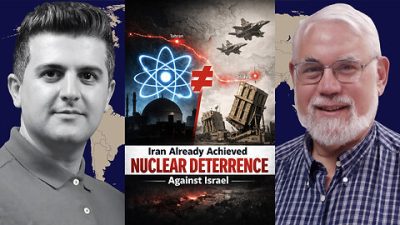
Prof. Ted Postol: Iran Already Achieved Nuclear Deterrence Against Israel
or go to
Aletho News Archives – Video-Images
From the Archives
How the occupied mentality syndrome works
Saudi Arabia on the American chessboard – Part 3
By B. J. Sabri | American Herald Tribune | June 27, 2016
Read part 2: “The occupied mentality Syndrome“
Previously I argued whether Saudi Arabia’s repeated involvements in U.S. interventions and wars stem from free national will or in response to a specific condition. For starters, in Saudi Arabia there is no national will. In Saudi Arabia, the national will is the will of the Al Saud clan. Still, when a major Arab state allies itself with a superpower that committed unspeakable crimes against humanity in almost every Arab country, then something is wrong. This fact alone should compel us to examine the U.S.-Saudi relation for one exceptional reason. As a result of the U.S.-Saudi wars, hundreds of thousands of people in Afghanistan, Iraq, Iran, Libya, Syria, Yemen, and Somalia have lost their lives. Millions became displaced in their own homelands. And millions more rendered refugees.
Attributing the Saudi policies to the bonds of “partnership” with the U.S. is frivolous. There are no bonds between these two thugs except those of business, military deals, secret plots, and wars. Proving this point, bonds such as these have no space for the American and Saudi peoples to share significant cultural or societal exchanges. If partnership is not the reason for the Saudi contribution to the U.S. strategy of empire and imperialism, then another reason must exist.
This leads to three possibilities. … continue
Blog Roll
 Aletho News
- NIAID/NIH and USDA Fund Bioengineered Chimeric Influenza Viruses Built Using Pandemic H1N1 Components: Journal ‘Science Advances’
- Hezbollah hits Israeli warship off Lebanon’s coast, sets it aflame
- Iran slams US strikes on B1 bridge, Mahshahr petrochemical plants as ‘blatant acts of state terrorism’
- In letter to UN chief, Araghchi warns of dire consequences of US-Israeli attacks on Iran’s nuclear facilities
- Why the CIA conspiracy to invade Iran with Kurdish militias failed
- Why Are Upbeat US Claims About Mission to Rescue Pilot ‘Highly Questionable’?
- Aircraft destroyed during US ‘rescue’ of downed F-15 pilot cost more than $100 million each
- Washington University removes professor who condemned US-Israeli war on Iran
- Russia Warns of Retaliation as UK Authorizes Seizure of Vessels
- Serbia thwarts plot to bomb Russia-Hungary gas pipeline – Vucic
- If Americans Knew
- In Iran, Israel-US take aim at “reason, research, and freedom of thought” – Daily Update
- US loses planes over Iran, Israel downgrades Lebanon war goals – Daily Update
- Israel Is Blocking Palestinians from Easter at Church Where Jesus Resurrected
- Plot to assassinate Palestinian activist follows harassment campaign promoted by Zionist groups and elected officials
- Prominent New York synagogue hosts presentation on why U.S. Jews should support the ethnic cleansing of Gaza
- Tapper vs. Piker: Is the CNN Anchor Auditioning for David Ellison?
- Shouldn’t Democrats Be Able to Condemn Genocide?
- Israel-US kill negotiators, destroy civilian structures, but Iran’s military capabilities still largely intact – Daily Update
- ‘War crime’: Global condemnation as Israeli ministers celebrate death penalty law targeting Palestinian prisoners
- 7 Ways Israel Is Turning Lebanon Into Gaza
- No Tricks Zone
- An Inconvenient Tree: Uncovered In Alps… Europe Much Warmer Than Today 6000 Years Ago
- New Study Reports A 60% Slowdown In Greenland’s Ice Loss Rate In The Last Decade
- Low Intensity Tornado Wrecks Major Solar Farm, Creating A Potential Toxic Dump
- New Study Finds Warming Saves Lives…Cold Temperatures 12 Times More Deadly Than Excess Heat
- German Science Blog Accuses PIK Climate Institute Of Hallucinating Climate Tipping Points
- Devastating Assessment Of Comirnaty Vaccine By Former Senior Pfizer Europe Toxicologist
- New Study: CO2 Is ‘Effectively Negligible’ As An Explanatory Climate Change Factor Since 2000
- Former Pfizer Toxicologist Dr. Helmut Sterz Tells Bundestag Hearing Pfizer Vaccine Should Have Never Been Approved
- Energy Expert: Germany’s Nuclear Phaseout Was A “500 Billion Euro Mistake”
- New Research: South Australia’s Mid-Holocene Sea Surface Temperatures Were 4°C Warmer Than Today
 Aletho News