Hamas rejects PA president’s alignment with Zionist narrative in UN speech
Palestinian Information Center – September 26, 2025
DOHA – The Islamic Resistance Movement, Hamas, responded Thursday to Palestinian Authority President Mahmoud Abbas’s speech before the United Nations General Assembly, affirming that Palestinian resistance is a “national and moral responsibility, deriving its legitimacy from our steadfast Palestinian people and their natural right to resist occupation, as recognized by international laws and conventions.”
Hamas categorically rejected what it described as Abbas’s “alignment with the false Zionist narrative,” asserting that accusing the resistance of targeting civilians is an attempt to distort its image.
The Movement underlined that “all attempts to impose guardianship over our people and their will are doomed to fail,” adding that Abbas’s declaration that Hamas will have no role in governance constitutes “an infringement on the inherent right of our Palestinian people to determine their own destiny and choose their leadership, and an unacceptable submission to external agendas and projects.”
Hamas emphasized that “the weapons of resistance are untouchable as long as the occupation remains entrenched on our land.”
It condemned Abbas’s call to surrender arms, especially “in light of the genocidal war being waged against our people in Gaza, and the brutal crimes and savage assaults committed by armed settlers and the occupation army against unarmed civilians in the occupied West Bank.”
Hamas reiterated that the only path to safeguarding the national cause and confronting the occupation’s plans to “exterminate and displace our people in Gaza, annex the West Bank, and Judaize Jerusalem and al-Aqsa,” lies in “national unity and consensus around a comprehensive resistance program to confront the criminal Zionist occupation, until our people’s aspirations for liberation, return, and the establishment of a Palestinian state with Jerusalem as its capital are fulfilled.”
The statement concluded by affirming that “our steadfast people are the source of legitimacy, and the weapons of resistance are a red line that cannot be compromised.”
Since October 7, 2023, Israeli occupation forces, backed by the United States and Western countries, have been waging a devastating war in Gaza, resulting in the martyrdom and injury of approximately 233,000 Palestinians to date. According to the Palestinian Ministry of Health in Gaza, 442 Palestinians, including 147 children, have died from starvation.
Israel’s Doha Strike Burns Bridges for Peace, Marks Dangerous Strategic Overstretch – Experts
Sputnik – 10.09.2025
Israel expanded the geography of countries it has bombed on Tuesday, targeting a delegation of Hamas officials involved in peace negotiations in Qatar. Sputnik asked a pair of regional experts how the aggression will impact Israel’s position in the region in the long term.
Israeli military operations in Gaza, Lebanon, Syria and now the Gulf signal an “overstretch” that won’t be left without serious diplomatic repercussions, Ankara-based security analyst Dr. Hasan Selim Ozertem has told Sputnik.
“Looking at Europe, looking at the US, looking at the Gulf, these countries have started to articulate their concerns about Israeli aggression, which was not the case before because of the leverage of the Israeli lobby, especially in US politics,” Ozertem explained.
With Qatar serving as mediator in the Gaza war, the Doha attack “also undermines Israel’s credibility” among the Gulf powers Tel Aviv wants to forge ties with through the Abraham Accords.
Israel’s aggression may even result in the creation of new regional pacts, Ozertem says.
“The Saudi Crown Prince said [Riyadh] will be supporting Qatar. In the past, we know that Qatar and Saudi Arabia had political problems. They managed to solve them. Now we are talking about a military alliance…an anti-Israeli opinion or bloc in the region among local actors… increasing the probability of potential confrontation between Israel and others.”
Burning Bridges
“By attacking Doha as peace negotiations for ending the Gaza genocide were in progress, Netanyahu once again demonstrated his disdain for negotiations and his preference for brute force as the ultimate solution,” says Mehran Kamrava, a professor of government at Georgetown University in Qatar.
Netanyahu’s strategy of “managed chaos” threatens to spiral out of control, and further isolate Israel “by making it a rogue, pariah state,” Kamrava said.
Besides Israel’s reputation, the attack promises to “cost the US much of its already diminished credibility in the Arab world,” the scholar says, emphasizing that unconditional US support for Israel is proving “extremely costly” as the Israeli government takes actions that make it seem increasingly “unhinged” and “devoid of all rationality.”
Qatar Vows to Retaliate After Israel’s Unsuccessful ‘Operation Summit of Fire’ in Doha
21st Century Wire | September 10, 2025
After nearly two years of balancing diplomatic efforts, Qatar found itself at the centre of the very conflict it had sought to mediate. An Israeli airstrike on Doha on Tuesday, aimed at members of Hamas’s political bureau, disrupted months of negotiations aimed at resolving the conflict in Gaza and may hinder Qatar’s ability to facilitate a ceasefire between the opposing parties. Hamas stated that the strike conducted by Israel under the name “Operation Summit of Fire“, which took months of preparation according to Israeli media, did not take the lives of Khalil al-Hayya or other high-ranking officials; however, it did result in the deaths of his son, three bodyguards, and a Qatari security officer.
Earlier this week, Qatar’s prime minister, Sheikh Mohammed bin Abdulrahman Al Thani, had met with Hamas representatives to discuss a proposal that Trump envoy Steve Witkoff had presented the week before in Paris. The Hamas representatives, possibly including some who had just flown in from Turkey, opted to reconvene on Tuesday to discuss the proposal further. Israel, aware of the group’s assembly in Doha, seized this opportunity to launch its attack.
On Tuesday, Israel targeted Hamas leadership in the West Bay Lagoon area, close to the Qatari Defence Minister’s HQ, and in the vicinity of the central business district, home to many foreign embassies, wealthy residences, schools and supermarkets. The strike targeted high-ranking Hamas officials as part of the Hebrew State’s ongoing campaign against the resistance group. This strike — which Israel claimed was executed following an attack that left six dead at a bus stop in Jerusalem on Monday — struck residential buildings that housed several members of the Hamas Political Bureau, as the group’s key figures convened to deliberate on a US ceasefire proposal concerning the Gaza Strip.
Many believe that Israel, in partnership with the United States, might have lured Hamas into a trap, using a 100-word proposal, which is believed to have been crafted by Israel, aiming to bring Hamas’s leading political figures under one roof in Doha under the guise of negotiations, only to eliminate them. Hamas was expected to provide an answer on Tuesday evening to a US proposal for a ceasefire in Gaza. This clearly mirrors the approach taken by Trump earlier this year to soothe the Iranians through continuous nuclear talks while secretly planning the assassination of senior officials in Tehran.
Qatar had been apprehensive about a potential attack ever since Eyal Zamir, the chief of staff of the Israel Defense Forces, cautioned on August 31 that “most of the remaining Hamas leadership is abroad, and we will reach them as well.” In response, Qatar sought guarantees from the Israeli intelligence agency, Mossad, and the White House that such an assault would not take place on Qatari territory. Although these assurances were provided, Israel once again violated its commitment and went ahead with the air strike, breaking all sorts of international laws while directly challenging Qatar’s sovereignty.
Ahmed Hashim, professor of war studies at Deakin University, believes that “Israel used its modified Adir version of the US F-35 fighter jets, accompanied by its customised F-15I Ra’ams for ‘air cover’, to carry out this illegal operation. Professor Hashim explained that Israel usually keeps about 46 Adir F-35 jets at its Nevatim air base, which is 2,250 kilometres from Doha. Professor Hashim added that “The Adirs can be fitted with fuel tanks that allow them to fly about 2,200km, but they do not need to be flown all the way to a target.”
“I don’t think the planes were over the Doha district. They struck from a distance with precision. And I think they were guided there by intelligence provided by ground.”
Many questions have remained unanswered. For instance, how the Israeli jets could have flown undetected over Saudi Arabia, and most likely Jordan, to reach Qatar, or what projectile Israel used, and why Qatari Air Defenses were not activated? Israeli media are reporting that the strikes involved 15 Israeli fighter jets, firing 10 munitions against a single target, which implies the Israelis knew exactly where the Hamas officials were located. According to an ABC report, retired Lieutenant General Mark Schwartz, who served as US security coordinator for Israel and the Palestinian Authority, said the comments made by the White House indicated that the US leadership was notified of the attack as it was unfolding, “unfortunately, too late” to stop it.
Netanyahu, who has labelled the assault as “justified”, continues to pursue his vision of a Greater Israel along with his ethnic cleansing campaign in Gaza. Meanwhile, US President Donald Trump has openly condemned the Israeli actions and has cowardly distanced himself from the Hebrew state, which has taken full responsibility for the operation. Furthermore, flight trackers’ data suggest that the UK may have provided support for the operation.
The United States claimed it had issued a warning to Qatar prior to the strike.; however, Qatar contests this claim, stating that the Americans communicated with Doha only 10 minutes after the attacks, notifying them that Israel had carried out an airstrike against Hamas in Doha.
Nevertheless, Qatar has clearly affirmed its commitment to continue mediating in the Gaza conflict, even in light of Israel’s unprecedented assault on its territory. Qatari Prime Minister Sheikh Mohammed bin Abdulrahman al-Thani vowed on Tuesday to retaliate against Israel for its strike against Hamas’s political leadership in Doha. At a press conference, the Qatari prime minister stated:
“The State of Qatar is committed to acting in a decisive way against anything that would target its territories and will reserve the right to retaliate and will take all the needed measures to retaliate.”
VIDEO: Qatari PM calls the Israeli attack ‘state terrorism’ (Source: Al Jazeera English)
.
The Israeli strike on Hamas leaders in Qatar has unsettled Gulf allies and strained US relations, prompting concerns about sovereignty and the latitude afforded to Israel. While numerous Gulf nations have succumbed to the US security extortion model to safeguard their oil and gas assets, the dependability of the United States in the Middle East is expected to come under serious scrutiny.
Israel’s “Abraham Accords” now face uncertainty, as experts indicate that the topic of normalisation is currently at a halt in the Gulf Arab nations, at least for the time being…
Moscow slams Israel over Qatar strike
RT | September 10, 2025
Russia has condemned Israel’s strike on Qatar’s capital Doha as a blatant violation of international law and the UN Charter, saying the attack undermines efforts to reach a peaceful settlement between Israel and Hamas, Moscow’s Foreign Ministry said on Wednesday.
Israel struck a residential building in Doha on Tuesday in an operation involving about 15 warplanes and at least ten missiles. The raid, which reportedly left several Hamas members dead, including the son of senior official Khalil al-Hayya, was aimed at taking out the group’s political wing, according to the IDF.
Hamas said its top leadership survived what it called an assassination attempt against negotiators involved in settlement talks.
Russia’s Foreign Ministry said the strike on Qatar, “a country that plays a key mediating role in indirect talks between Hamas and Israel on ending the nearly two-year war in Gaza and securing the release of hostages,” could only be viewed as an attempt to undermine international peace efforts. Moscow urged all sides to act responsibly and refrain from steps that could further escalate the conflict.
Moscow reiterated its stance, calling for an “immediate ceasefire in Gaza” and urging a comprehensive resolution of the Palestinian issue. The Russian Foreign Ministry said “such methods of fighting those whom Israel considers its enemies and opponents deserve the strongest condemnation.”
Qatar, which is hosting Hamas officials as part of its mediation efforts, said a local security officer was among the six people killed in the strike.
Qatari Prime Minister Sheikh Mohammed bin Abdulrahman al-Thani condemned the attack as an act of “state terrorism” and warned that his country reserved the right to respond. He accused his Israeli counterpart Benjamin Netanyahu of undermining regional stability and said the incident has derailed US-brokered mediation efforts.
Israel, which blames Hamas for the deadly October 2023 assault on southern Israel, has vowed to hunt down the group’s leaders “wherever they are.”
Gaza’s authorities say Israel attacks since October 7, 2023 have claimed the lives of at least 64,000 people. Human rights observers have accused Israel of committing genocide by making the enclave uninhabitable and worsening famine conditions through restrictions on aid.
Hamas: US proposal does not aim to end Gaza war
MEMO | September 9, 2025
A senior official in the Hamas movement, Bassem Naim, said on Monday evening that the initial ideas presented by the United States are “clearly intended to be rejected, rather than to reach an agreement that ends the war, ensures a full withdrawal of the occupation forces, and secures a prisoner exchange.”
In a statement sent to Quds Press, Naim explained that the American proposal suggests receiving all prisoners on the first day, linking withdrawal to the formation of a government acceptable to Israel and tasked with security duties. It also includes defining Hamas, considering pardons for its members, and disarming the resistance, “without any mention of reconstruction.”
The Hamas official stressed that the movement and other resistance factions seek “an agreement that stops the war and genocide, and opens the way for a political solution that fulfils legitimate national goals.”
Earlier on Monday, US President Donald Trump said that “the Israelis have accepted the terms of his proposal for a possible prisoner exchange and ceasefire in Gaza, and now it is Hamas’s turn to agree.”
Trump also spoke of the possibility of “reaching a deal soon to end the war on Gaza based on one of the proposals,” issuing what he described as “a final warning” to Hamas about the consequences of rejecting the new offer.
Israeli occupation attacks Hamas negotiators in Qatar, bombs Doha
Al Mayadeen | September 9, 2025
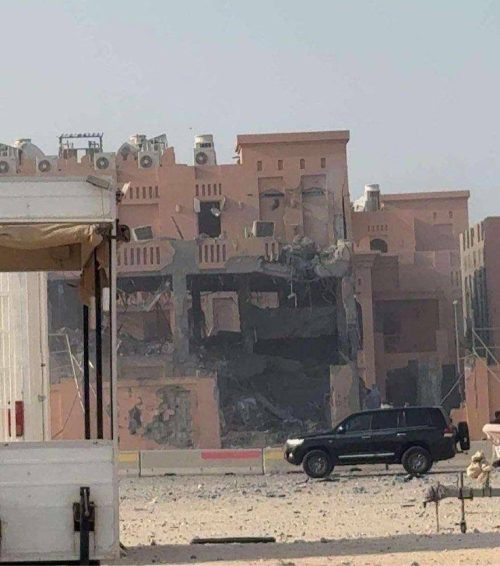
In a statement, the Israeli occupation military, in coordination with its internal security agency, Shin Bet, claimed to have carried out an airstrike on the Qatari capital, Doha, claiming to target the senior leadership of the Palestinian resistance movement Hamas.
Israeli Channel 12, citing military sources, reported that the strikes targeted members of the Hamas negotiating delegation while they were discussing the latest US-mediated proposal in Doha.
Reuters correspondents confirmed hearing loud explosions in the Qatari capital, noting plumes of smoke rising over the Katara district.
This brazen Israeli strike on Hamas’ negotiating delegation in Doha exposes once again the pattern of aggression that has defined Israeli and American conduct, using violence at the very moment when talks for peace are on the table. Just as Washington and Tel Aviv undermined dialogue before they attacked Iran in June, they now repeat the same tactic against the Palestinian resistance, targeting representatives engaged in negotiations.
Far from seeking peace, such actions demonstrate a deliberate sabotage of negotiations and reveal that only Palestinians show a genuine commitment to ending the war, while the Israeli occupation regime and the US weaponize diplomacy as cover for escalation.
Hamas reaffirms commitment to ceasefire proposals
The development comes as Hamas reiterated its commitment, alongside other Palestinian factions, to the ceasefire framework put forward by mediators on August 18.
In a statement, Hamas emphasized its openness to “any ideas or proposals” that would secure a permanent ceasefire, guarantee the full withdrawal of occupation forces from Gaza, ensure the unconditional entry of humanitarian aid, and achieve a genuine prisoner exchange through serious negotiations brokered by mediators.
US President Donald Trump announced Sunday evening on his Truth Social account that “the Israelis have accepted my terms. It is time for Hamas to accept as well.”
In his post, Trump wrote: “Everyone wants the hostages home. Everyone wants this war to end! The Israelis have accepted my Terms. It is time for Hamas to accept as well. I have warned Hamas about the consequences of not accepting. This is my last warning, there will not be another one!”
According to Israeli Channel 12, Trump conveyed a new proposal through his envoy Steve Witkoff, bypassing the usual mediators Qatar and Egypt. The reported plan includes the release of all Israeli captives, both living and deceased, on the first day of the deal in exchange for the release of hundreds of Palestinian prisoners serving long sentences.
Hamas says received US proposal
The Islamic Resistance Movement in Palestine, Hamas, confirmed Sunday evening that it has received new American ideas through mediators aimed at reaching a ceasefire agreement in Gaza.
In a statement, Hamas said it welcomes any real initiative that contributes to ending the ongoing aggression against the Palestinian people.
Hamas expressed its readiness to immediately join negotiations to reach a comprehensive deal that would include:
- The release of all prisoners on both sides
- A clear declaration of an end to the war
- A complete Israeli withdrawal from the Gaza Strip
- The creation of a Palestinian independent committee to administer Gaza, to begin work immediately
The movement also demanded clear guarantees to ensure that “Israel” abides by any commitments, citing past agreements that were repudiated.
Hamas noted that it had already approved a mediator-brokered US proposal in Cairo on August 18, 2025, but “Israel” failed to respond and instead escalated its massacres and ethnic cleansing policy.
Labelling the Palestinian resistance: Political propaganda or legal classification?
By Sayid Marcos Tenorio | MEMO | August 30, 2025
The dominant narrative in the West portrays the Islamic Resistance Movement – Hamas – as a “terrorist group”, uncritically repeating the rhetoric of Israel and its allies. However, when analysing the issue from the perspective of international law and the history of national liberation movements, it is clear that the “terrorism” label is more a tool of political propaganda than a legal definition.
In light of international law and the United Nations Charter, Hamas should be understood as a Palestinian resistance movement in the face of more than seven decades of Israeli colonisation, ethnic cleansing, and military occupation. This also includes almost two years of uninterrupted confrontation with genocide in the Gaza Strip.
The United Nations (UN) has never declared Hamas a terrorist group. Only a few countries, such as the United States, the European Union, Canada, the United Kingdom, and Australia, have unilaterally adopted this classification. International law, in turn, does not criminalise resistance against occupation.
Since 1967, Israel has maintained its occupation of the Gaza Strip, the West Bank, and East Jerusalem, in flagrant violation of the UN Charter and Security Council resolutions. According to International Humanitarian Law, peoples subjected to foreign occupation have the legitimate right to resist, including by armed means, against the occupying power.
This principle is supported by Article 51 of the UN Charter, as well as Resolutions No. 2649/1970, 2787/1971, 3070/1973, and 3103/1974, which explicitly recognise the inalienable right of peoples to fight against colonial domination, foreign occupation, and apartheid. Furthermore, the Geneva Conventions of 1949 and the Additional Protocols of 1977, along with the practice of the International Criminal Court (ICC), distinguish between armed resistance and terrorism.
Therefore, the existence of an armed struggle against occupation does not constitute terrorism, but rather a legitimate exercise of resistance.
Founded in 1987 during the First Intifada, Hamas is not just an armed group; it is also a political, social, and religious movement deeply rooted in Palestinian society.
Its surprising victory in the 2006 legislative elections, which were recognised as free and democratic by international observers, demonstrates its popular representation. It won 76 of the 132 seats, while its main rival, Yasser Arafat’s Fatah, won 43 seats.
Over the decades, Hamas has administered social institutions, hospitals, schools, and assistance programmes, playing a similar role to liberation movements in Algeria (FLN), Vietnam (Viet Minh), or South Africa (ANC), all of which were also labelled terrorists at some point in history. Today, many of these movements are recognised as legitimate builders of their national states.
The classification of Hamas as “terrorist” serves the clear objectives of Israeli policy: To silence the debate on occupation, apartheid, and genocide, diverting attention from the root cause of the conflict; to justify massive attacks against civilians in Gaza, presented as “the fight against terrorism”; to criminalise all forms of Palestinian resistance, whether armed or peaceful – from NGOs to journalists and students.
Judith Butler, an American philosopher from the University of Berkeley, observes that armed resistance under occupation cannot be reduced to terrorism, as this ignores the structural causes of violence: colonialism, supremacism, and military occupation.
Since 2007, Israel has imposed a land, air, and sea blockade on the Gaza Strip, which the UN classifies as collective punishment – a practice prohibited by international law. Millions of Palestinians live without freedom of movement, drinking water, electricity, and medicines. With each Israeli offensive, thousands of civilians are massacred, homes and hospitals are destroyed, and entire neighbourhoods are razed.
The current scenario of indiscriminate attacks on hospitals, schools, and refugee camps is described by international law experts and UN rapporteurs as ongoing genocide, due to the scale of the destruction and the explicit intention to expel or exterminate the original Palestinian population of Gaza.
In the face of this reality, Hamas’s armed resistance should be understood not as terrorism, but as the exercise of a people’s right to self-defence under occupation and ethnic cleansing. The Palestinian struggle is, in essence, a struggle for physical and cultural survival in the face of a colonial project to eliminate all forms of life in Palestine.
The framing of Hamas as a terrorist group is a political construct of Israel and its Western allies, without a basis in international law. Palestinian resistance, whether armed or not, is recognised as legitimate by the UN, the BRICS countries, and international treaties whenever it is intended to confront foreign occupation and colonial oppression.
Calling Hamas “terrorist” is an attempt to delegitimise the struggle of a people seeking freedom, justice, and self-determination. The truth is that Israel, as the occupying power, systematically violates international law, practices apartheid, and commits war crimes and crimes against humanity.
Hamas is an integral part of the Palestinian resistance and must be understood as a national liberation movement, not as terrorism. Recognising this fact is a fundamental step towards a fair and honest reading of the conflict and for seeking a solution based on historical truth, justice, and the right of peoples to self-determination.
The coming war on Iran will be regional, perhaps international
By Robert Inlakesh | Al Mayadeen | September 2, 2025
It is unlikely that the anticipated continuation of the war on Iran, spearheaded by the Israelis but led by the United States, will be confined to a simple tit-for-tat missile trade-off as we saw earlier this year. The reason for this is simple: too much is at stake if this front again flares up.
Since the US-brokered ceasefire between “Israel” and Iran went into effect on June 29, the United States and the Zionist regime have scrambled to move around military equipment, engage in mass surveillance flights over Lebanon and the Persian Gulf. More recently, the US began an early withdrawal of its forces from the Ain al-Assad base and other installations inside Iraq.
The first point of entry to understanding what is currently brewing across West Asia is understanding the mentality at play on both sides of the divide.
On one side, we have the Zionist regime and its Western allies, who are the aggressors and believe themselves to be fighting what Israeli Prime Minister Benjamin Netanyahu calls a “seven-front war”. Although the front in the Gaza Strip has pervaded public consciousness over the past 23 months, overshadowing the wars on Lebanon, seizure of territory in Syria, bombing of Yemen, and attack on Iran, it is very much part of this wider war.
From the Israeli-American perspective, their ongoing war carries the goal of eliminating what is known as the Axis of Resistance, the leader of which is the Islamic Republic of Iran. The thinking clearly is that this period in time has provided a unique opportunity to crush the regional resistance and with it, achieve regime change in Tehran.
In June, the Israelis clearly got ahead of themselves and believed that they could inflict a similar blow in Iran to the blow they inflicted on Lebanese Hezbollah back in September of 2024. In the first few hours of the Zionist Regime’s illegal attack on Iran, their media boasted of landing such a blow. However, to everyone’s surprise, within 15 hours, the Iranians were back on their feet and began firing bursts of ballistic missiles into central “Tel Aviv”.
Even the US strikes didn’t inflict any kind of kill blow that degraded Iran sufficiently, as it proved more than anything that their nuclear facilities could survive US strikes, even if they were badly damaged. The United States certainly poses a major threat to Iran, but the takeaway here is that the Zionist regime can’t take them on alone.
If there is another battle between Iran and the Israelis, the Zionist Entity is already low on interceptor missiles, and its arsenal would be severely drained within around a week or so. We also still do not know the extent of the damage inflicted by Iran’s ballistic missile strikes, due to Israeli military censorship. Simply put, they don’t even allow the public to know the true number of soldiers killed and wounded in Gaza, so forget the notion that they’d admit what Iran did to them.
Another major player here is Lebanese Hezbollah, which appears to be successfully rebuilding itself and is at an intelligence deficit compared to what they had built up over decades and utilized late last year. Yet, what the Israelis do understand is that in the event that a conflict with Iran arises where Hezbollah chooses to enter the fight on the ground, they may face an existential battle for their very survival.
If, and this evidently depends on varying factors, Hezbollah chooses to launch an all-out ground offensive as Iran fires ballistic missiles in bursts across occupied Palestine, it is plausible that the Lebanese party will inflict a total defeat on the Israeli ground forces and seize huge swaths of territory in the north of Palestine.
The Zionist regime is now claiming to be preparing for mission impossible in the Gaza Strip, amassing troops in order to try and occupy Gaza City, an operation that would take between two to five years to complete, according to Israeli military estimates. It would also be extremely costly for the Israeli ground forces and their military vehicles. If they do commit to this, it would leave them open on the northern front. There is, however, the possibility that this is all a bluff.
If the Israelis are bluffing, they could be preparing for an offensive against Lebanon instead. The thinking here would be to try and halt Hezbollah’s rebuilding process, setting it back even further, and could even involve a ground operation, likely using Syrian territory to invade the Bekaa Valley area.
Such a conflict would be existential for Hezbollah, especially as the US works with the Lebanese government to impose a seizure of its weapons. A repeat of what occurred a year ago would work only to advance the US-Israeli goal of seizing Hezbollah’s weapons, while a victory could at the very least liberate Lebanese territory and represent a massive blow to the disarmament agenda.
Therefore, if Iran is currently in the scope of the Zionists, it would make strategic sense for them to either attack Lebanon first or launch a major offensive at the same time it attacks Iran.
The US withdrawal of forces from Iraq is another major indicator of a regional escalation involving Iran, specifically because of the Popular Mobilization Units (PMU) and the potential they have to inflict enormous damage, given that they enter the fold of the war.
Iraq’s PMU is yet to be mobilized, and its role in the ongoing regional conflict has been minimal. The reason for this is that if some 230,000 men are mobilized, or even a portion of them, it is difficult to suddenly put a halt to their operations, and this will mean a dramatic regional escalation, the likes of which the United States will not be able to manage inside Iraq and will instead use their economic levers as a primary weapon of war.
Depending on how far such a conflict is going to go, there is even the possibility that it could go global. While there is currently no evidence to support this notion, there has been talk that the US naval deployment to the Caribbean, triggering a mass militia mobilization across Venezuela, could be connected. Additionally, China and Russia could use the opportunity of a major Iran-US war to carry out some of their long-desired goals, at a time when Washington has diverted its resources to West Asia.
There is again the possibility that another attack on Iran could look similar to what the world witnessed during what is dubbed the “12-day war”, yet the same stalemate outcome would only lead us back to square one again and beget yet another war. At some point, something will have to give.
The reason why the danger of an all-out regional conflagration appears high as of now is purely down to the Israeli-US refusal to end their genocide against Gaza, indicating that they seek total defeat of the Axis of Resistance and nothing less. Inevitably, one side must win and the other lose; there is currently no such thing as deterrence for either side, only who will triumph and carve out a new regional reality.
With traps and tactical ingenuity, Al-Qassam fighters outmaneuver invaders in Gaza
By Ivan Kesic | Press TV | August 30, 2025
In the smoke-filled streets of Gaza, a powerful message is being written these days in the language of resistance and fire by the Palestinian armed resistance groups.
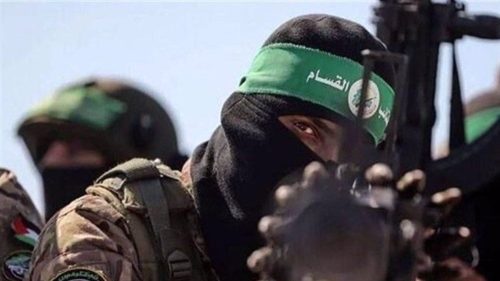
As the Israeli military machine grinds forward with its brutal offensive, it is being met not with submission but with a fierce and strategic defiance from the Palestinian resistance, led by the fighters of the Al-Qassam Brigades, the military wing of the Gaza-based Hamas resistance movement.
From the dense urban labyrinths of Gaza City to the southern approaches of Khan Younis, every inch of Palestinian land is being contested in a series of devastating engagements that have exposed the fragility of the Israeli occupation’s so-called invincibility.
The Israeli regime’s latest assault, codenamed Gideon’s Chariots II, has been met with a humiliating and painful reception. Yesterday, as many as three “security incidents” were officially acknowledged, implying heavy casualties and possibly the deadliest day for the invaders in more than a year.
In the Al-Zaytoun and Al-Sabra neighborhoods of Gaza City, resistance fighters have pushed to the city’s edges, refusing to wait behind barricades and instead taking the fight directly to the advancing invaders in intense, close-quarter combat.
At least four regime soldiers have been missing since Friday, most likely captured by the resistance fighters or eliminated by the occupation forces to prevent them from being captured.
Their advanced night vision capabilities allowed them to detect and ambush Israeli units, triggering fierce clashes that forced the occupation army into a panicked deployment of reinforcements.
The resistance has entrenched itself in formidable defensive positions, turning entire districts into deadly traps where every alleyway holds the threat of a well-planned ambush.
Nowhere is the resistance’s effectiveness more starkly illustrated than east of Hamad City, where a brilliantly executed Al-Qassam Brigades’ ambush targeted the Israeli Kfir Brigade.
In a sophisticated joint operation with the Al-Quds Brigades, resistance fighters struck an Israeli Eitan armored personnel carrier with a Kornet guided missile, scoring a direct hit that necessitated a desperate helicopter evacuation for the crew.
This is not an isolated event; it is part of a sustained campaign of sophisticated warfare.
Israeli Merkava tanks, the pride of their armored corps, have been repeatedly destroyed by Al-Yassin 105 shells and powerful landmines in Jabalia, turning these multi-million dollar vehicles into smoldering monuments to Palestinian ingenuity and resolve.
Faced with this steadfast resistance, the Israeli regime has revealed its true nature: a desperate and criminal enterprise lashing out with indiscriminate force.
Its warplanes strike the Nuseirat refugee camp, its artillery pounds civilian neighborhoods, and its leadership enacts the horrific Hannibal Directive, a policy so barbaric that it involves killing its own soldiers and settlers to avoid capture.
Abu Obeida’s remarks
As Al-Qassam Brigades’ spokesperson Abu Obeida stated on Friday, Netanyahu and his ministers have effectively “decided to cut the number of living captives by half,” knowingly endangering them through their reckless military escalation in a cynical gambit to avoid future prisoner exchanges.
The Palestinian resistance, in stark contrast, operates with a principled transparency and honor that shames its oppressors. Abu Obeida’s pledge to announce the name and provide proof for any captive killed by Israeli strikes stands as a powerful testament to their moral high ground.
“The enemy’s criminal plans to occupy Gaza will be disastrous for its political and military leadership. The enemy’s army will pay the price in the blood of its soldiers, and the chances of capturing new soldiers will only increase,” the Al-Qassam Brigades spokesperson said.
“Our fighters are on full alert, ready and in high spirits. They will present exceptional examples of heroism and bravery, and they will teach the invaders harsh lessons, with God’s help,” he added.
His warning that the invasion of Gaza City will be “disastrous” for Israel’s political and military leadership is not mere rhetoric; it is a promise backed by the extraordinary heroism and high morale of Al-Qassam fighters, who are prepared to deliver harsh lessons to the invaders.
They fight as the guardians of a people who have been left with no other option but to resist a genocidal occupation, and through their bravery, they are not just defending Gaza; they are exposing the world’s greatest military powers as paper tigers and writing a new chapter of dignity in the Palestinian liberation struggle
Deadly summer continues
The summer of 2025 has proven to be a season of profound humiliation and strategic failure for the Israeli regime. Despite unleashing the full, brutal force of its military machine in a series of operations with biblical pretensions like “Gideon’s Chariots,” the occupation forces have been met with an unyielding and devastating response from the Palestinian resistance.
Far from being crushed, Hamas has adeptly shifted to a sophisticated war of attrition, leveraging its intimate knowledge of the rough terrain and unparalleled ingenuity to turn Gaza into a graveyard for Israeli ambitions and advanced weaponry.
The regime’s much-hyped “Operation Gideon’s Chariots,” which ran from May to early August, was a catastrophic endeavor despite its claims of territorial gain.
While the regime forces boasted of controlling 75 percent of the Strip, this “victory” was revealed as hollow and illusory. The operation failed in its core objectives: Hamas’s governance and military capabilities remain potent, and the goal of freeing all hostages was abandoned.
More damningly, it came at a staggering cost, with former Israeli army Chief of Staff Moshe Yaalon estimating a shocking 15,000 Israeli soldiers killed or wounded by March 2025—a number that has only swelled throughout this deadly summer. This is not the sign of a victorious army but of one being bled dry in a quagmire of its own making.
In response to this aggression, Hamas launched its own “Stones of David” counteroffensive, a masterclass in asymmetric warfare.
This campaign has seen resistance fighters move with audacious skill, refusing to cede the initiative. Instead of waiting behind barricades, Al-Qassam Brigades fighters have pushed to the edges of Gaza City, engaging invading forces in close-quarter combat and springing devastating ambushes.
Their tactics are a testament to their strategic acumen: operating in small, agile cells, they have exploited the extensive tunnel network not as a hiding place, but as a dynamic web for staging attacks, storing weapons, and moving undetected beneath the feet of a disoriented enemy.
The results of this resistance have been tangibly catastrophic for the Israeli war machine.
In a stunning display of effectiveness, the Al-Quds Brigades alone announced the destruction of over 52 military vehicles in the eastern neighborhoods of Gaza City—including Shuja’iyya, al-Tuffah, and al-Zaytoun—using a combination of pre-planted Thaqib and Zelzal explosive devices and reverse-engineered bombs crafted from Israeli munitions.
These are not random acts of violence but the outcome of meticulous preparation and battlefield intelligence. The Al-Qassam Brigades have consistently targeted the enemy’s nervous system, striking command and control centers, as with the attack on a site on Mansoura Street using machine guns and Rajum rockets.
Rushing to repeat mistakes
The launch of “Operation Gideon’s Chariots II” by the Israeli regime, aimed at seizing Gaza City, is not seen as a sign of strength but an admission of the first operation’s failure.
It is a move of sheer desperation, one that has been met with widespread international condemnation and deep fear for the fate of the remaining captives.
The regime’s response—calling up 60,000 more reservists to throw into the meat grinder—speaks to a leadership devoid of strategy, relying solely on overwhelming and indiscriminate force.
Through their bravery and strategic genius, the Palestinian resistance has exposed the fundamental weakness at the core of the Israeli military project.
They have turned the regime’s multi-billion-dollar Merkava tanks into smoldering wrecks and its much-vaunted technological superiority into an irrelevant talking point.
Each ambush, each destroyed vehicle, and each fallen soldier is a testament to the failure of the occupation and the unstoppable will of a people fighting for their freedom.
The resistance does not just endure; it prevails, teaching the Israeli regime and the world a harsh lesson in the power of a just cause.
Here is why the Israeli occupation of Gaza won’t work
By Robert Inlakesh | Al Mayadeen | August 26, 2025
At every key juncture of the Zionist regime’s “seven front war”, it has announced new plans that it will claim are going to defeat Hamas or that they will reach a ceasefire agreement. The truth is that they have no intention of reaching a negotiated settlement, nor do they have a plan to achieve “victory” in Gaza.
At the beginning of the Zionist entity’s ground invasion of the Gaza Strip, in late October of 2023, its military campaign had focused on northern Gaza. For those who remember, the major goal of their operation at the time was to take control of al-Shifa Hospital in Gaza City, claiming it to be a “Hamas command and control center”.
Back then, the Western corporate media reported that US intelligence reports supported the notion that at the very least, there was a Hamas “command node” based there, as the Israeli army released CGI footage featuring an extensive tunnel network under the hospital.
After committing various massacres, in and around al-Shifa Medical Complex, it became clear that the claims were all lies and no Hamas infrastructure existed underneath the hospital. However, the Israelis and their Western allies did not admit that the entire military operation was based upon a pack of lies and that no Hamas targets were there; instead, they simply moved on to the next major set of lies, as the Zionist military finished off its genocidal missions in northern Gaza.
Failing to inflict any major blow, let alone a total defeat upon Hamas or any of the some dozen Palestinian armed groups in northern Gaza, then came the claim that “the real Hamas headquarters” were in Khan Younis. In December of 2024, again with the full backing of their Western allies and their media machines, the Israelis launched the invasion of Khan Younis.
After besieging Khan Younis in January of 2024, they eventually made it their final mission to assault the Nasser Hospital, again claiming that it was used by Hamas as a major base. By this time, the Israelis had launched a campaign to systematically target every hospital their forces worked in the vicinity of, seizing medical workers and the injured as captives, inflicting massacres, setting up bases inside the hospitals, and always claiming that Hamas was there.
As the military campaign on the ground waged on, the Israeli public realised that they were not even one step closer to the “total defeat” of Hamas that Israeli Prime Minister Benjamin Netanyahu had promised them. So then began the talk of invading Rafah.
Israeli political leaders vowed that without invading Rafah, they could not “win the war”. They claimed that tunnels were leading into Gaza from Egypt, despite knowing they were all sealed off around a decade ago.
In the lead-up to the invasion of Rafah, a massive deception campaign was launched with the full unquestioning complicity of the Western media. We heard about then US President Joe Biden’s alleged “red line” being Rafah. Up until that point, we had also heard about Biden hanging up the phone on Netanyahu, yelling at him and even swearing, for which there was never any evidence produced.
We had the propaganda of a “Christmas ceasefire” and a “Ramadan ceasefire”, with even the UN Security Council voting on the temporary Ramadan ceasefire that never materialised. The public was also informed about all of the alleged hard work that the US government was doing to achieve a ceasefire, which we would later learn never happened from Israeli media leaks; Biden never once asked his Israeli allies for a ceasefire.
In the lead-up to the invasion of Rafah, which would eventually happen on May 6 with full US support, we heard two main narratives. One warned of the impending humanitarian disaster after the Israelis had displaced the majority of the population to Rafah, the second was the idea that this would mean the defeat of Hamas and would rob the group of its financing networks.
Evidently, the Israelis launched their invasion, and unsurprisingly, it was more of the same; they continued mass murdering civilians and destroying Gaza’s infrastructure. Hamas still lived. There were even initiatives then like the failed US military aid pier, which only appeared to have been used one time, for a deadly military operation in Nuseirat that killed around 300 civilians to seize back Israeli captives.
Fast forward to October 2024, when we began to hear about the infamous “General’s Plan”, an operation that was again sold by the Israeli regime and its media as the final blow to end Hamas by besieging northern Gaza entirely and then starving out the remaining fighters. This went on for months, until there was a ceasefire declared in January.
On March 18, the Israelis violated the Gaza Ceasefire. Then came an escalation in its genocidal campaign against civilians in the territory, an uptick once again in the bombardment, coupled with the total blockade on all aid into the territory that would last over 80 days.
For some time after violating the ceasefire, the Israeli media and regime’s officials promoted the idea of a new operation that was going to be the most explosive yet and the final blow against Hamas. They spoke of potentially new weapons and strategies, hyping up the campaign to be a game changer.
The May offensive was then labelled “Operation Gideon’s Chariots”, dubbed “Phase 2” of the Gaza war. First, the Israeli media hyped it up and put out reports that 20,000 reservists had been called up to duty, then we heard 60,000, the next day 50,000, some even claimed 100,000 soldiers would be used to invade Gaza.
The real result was a few small incursions into the outskirts of major cities and camps, which were met with deadly ambushes carried out by the Palestinian resistance. “Gideon’s Chariots” was a game changer, but repeated the exact same cowardly strategy as every Israeli operation before it.
So now we have the approval of plans to “occupy Gaza”. Originally, the idea communicated across Israeli media platforms was that all of Gaza would be occupied, which is what Netanyahu would go on to claim. Then it went back and forth between all of the territory and just Gaza City, which is not the established goal of the newly approved operation.
Logistically, this plan makes no sense for an already overburdened Zionist military force that does not want to fight in the Gaza Strip at all anymore. They’ll need an absolute minimum of 200,000 soldiers just to occupy Gaza City, a plan that, according to Israeli military analyst,s will take between 2 to 5 years to properly complete.
On top of this, the strategy runs contrary to the Israeli military’s doctrine and strategy that it has followed throughout the entire war. The reality on the ground is that with the exception of a limited number of special forces operations, the Israeli army never targeted Hamas. They invaded with the intention of making Gaza unlivable and have systematically dismantled the territory’s infrastructure, while inflicting a genocide.
The truth is that they have no military strategy to defeat Hamas. They don’t even have an answer as to how to end the fighting at all, even as their allied Arab regime attempts to give them solutions. A ceasefire would happen within a day if they wanted it to, but they clearly don’t, and no Israeli politician even accepts the notion of the Palestinian Authority taking over Gaza because they believe it will lead to a so-called “Two-State solution”.
So here we are again, back to the same old tired Israeli script. They send negotiating delegations with no intention of reaching deals and launch new operations that will ultimately fail to achieve anything other than continuing the slaughter of civilians.
The Zionist Entity has done everything except actually target and try to fight the Palestinian Resistance on the ground, hiding in fortified areas and inside their military vehicles, occasionally getting picked off by ambushes. This is also why they have no battle footage despite having fought for 22 months, because they only engage in armed clashes on the ground when they are being attacked by the Palestinian armed groups. There is no real army, it’s a glorified police force that was built to bully teenagers, with a sophisticated intelligence apparatus and air force behind it.
It appears very unlikely that we will see Israeli soldiers manning checkpoints in between tent cities in Gaza and managing everyday life like we see in the occupied West Bank. Simply put, they are too cowardly for this task, and unlike the case in the West Bank, it will be extremely dangerous for them to do this, costing them thousands of casualties over a long period of time.
More likely than not, this has all been psychological warfare, as the Israeli military prepares to attack on a different front. Although it does seem likely they will launch some kind of operation in northern Gaza, one which will accelerate its mass murder of civilians, but will fail to achieve its stated objectives.
Hamas agrees to Gaza ceasefire proposal presented by mediators
Palestinian Information Center – August 18, 2025
GAZA – An official Hamas source said on Monday that the Movement delivered a positive response to an Egyptian-Qatari proposal for a 60-day ceasefire in the Gaza Strip.
An informed Palestinian official also said, on condition of anonymity, that the proposal forms a framework for indirect negotiations over a permanent ceasefire between Hamas and Israel.
The response came after internal consultations held by Hamas with major Palestinian factions.
The source did not reveal details of the proposal, but other informed Palestinian sources reported that the proposal stipulates a prisoner exchange deal that includes the release of 10 living Israeli captives and 18 bodies in exchange for the release of 140 Palestinian prisoners serving life sentences and 60 others serving sentences of more than 15 years, as well as 1,500 from Gaza.
The sources explained that the new Egyptian-Qatari proposal includes a modification to the Israeli withdrawal lines from the Gaza Strip during the 60-day truce period, limiting them to a distance of 800 meters along the eastern, northern, and southern borders of the coastal enclave.
According to the proposal, discussions on a comprehensive agreement or permanent ceasefire will begin immediately once this truce takes effect
The proposal also includes the entry of urgent humanitarian aid into the Gaza Strip immediately after the agreement enters into force, including fuel and water, and stipulates the rehabilitation of hospitals and bakeries, and the provision of rescue teams with rubble removal equipment.
The UN and its agencies, along with the Red Crescent and international organizations operating in the Gaza Strip, should be responsible for aid distribution.
Over the past two years, the Hamas leadership has accepted proposals for a ceasefire and the release of Israeli captives and Palestinian prisoners only for Israel to reject them and insist on continuing the war.
The major sticking point has been the duration of the ceasefire. Hamas wants a permanent end to the war, but Israel has been seeking a temporary truce that would allow it to resume its genocide and its destruction and displacement campaign in Gaza after its captives in the territory are released.
United Nations Secretary-General offices shield Israel and blacklist Hamas: EX-UN official
Press TV – August 16, 2025
A former senior UN human rights official has criticized offices controlled by the United Nations Secretary-General (UNSG) for their actions in shielding Israel and blacklisting Palestinian resistance movement Hamas during the ongoing genocidal war in the Gaza Strip.
Craig Mokhiber, former director of the New York Office of the High Commissioner for Human Rights, said in a post on his X account on Saturday that the UNSG offices only report politically convenient issues rather than the reality of abuses committed in Gaza, which he said has led to a lack of accountability.
Mokhiber said there is a need for a more comprehensive and impartial approach to address human rights violations in the besieged Palestinian territory.
He further mentioned his longstanding criticism of the “politicized thematic offices under the UNSG”, while highlighting their reporting practices, which differ from the UN’s independent human rights rapporteurs.
The human rights lawyer went on to say that the failure to effectively address the Israeli regime’s actions in Palestine has highlighted the political corruption that exists within those offices, adding that they are often under pressure from powerful states, particularly in areas such as genocide, sexual violence, and children in conflict.
The former UN official further denounced as “shameful” a recent report issued by a UNSG-controlled office monitoring sexual violence in conflict for creating a new category called “on notice” to avoid blacklisting Israel, despite substantial evidence that exists to condemn the regime.
Conversely, the report has blacklisted Hamas, even though there is an acknowledged lack of evidence against the group, he said.
Mokhiber further slammed the double standard of the report for saying that a lack of access to Israel and areas in the Occupied Palestinian Territory had prevented the listing of Israel, while the same reason did not apply to Hamas.
He said these offices “do more harm than good” to the protection of human rights, adding that their dismantling has long been overdue.
Israel launched a genocidal war on Gaza on October 7, 2023, after Hamas carried out the surprise Operation Al-Aqsa Storm against the occupying entity in response to its intensified campaign of death and devastation against Palestine.
The regime’s bloody onslaught on Gaza has so far killed over 61,776 Palestinians, many of them women and children, while displacing the territory’s entire population of nearly two million people.
Featured Video

Pax Judaica Explained | Prof. David Miller
or go to
Aletho News Archives – Video-Images
From the Archives
History and Biblical Scholarship: Al-Quds Is Not Jerusalem
By Dr. Elias Akleh | Global Research | July 3, 2018
The Zionist Israeli state calls on the Old Testament/Torah as a historical document to prove its legality to “re-claim” Palestine; their god’s promised land. To assert this legality and the myth of the promised land Zionist Organization, since its establishment, had recruited the science of archaeology, employing western Christian biblical archaeologists, to provide the required “historic” proof of the right of the Jews; alleged modern Israelites, to Palestine. This became very critical after Julius Wellhausen; the biblical scholar and Professor Ordinarius of Theology and head of the German School of Biblical Criticism, published his 1883 book “Geschichte Israels”, later titled as “Prolegomena zur Geschichte Israels” claiming that the Old Testament/Torah stories were invented during the Babylonian exile to serve certain theological and political purposes.
American biblical scholars and archaeologists, such as William Fox Albright, were recruited to refute Wellhausen’s claims. Albright was endorsed by covertly Zionist financed Biblical Colloquium; a scholarly society devoted to the analysis and discussions of biblical matters, and the preparations, publication, and distribution of biblical literature to brainwash readers and students with a specific theological ideology. Albright, as well as other biblical archaeologists like him, was also honored (bribed) by the American Friends of the Israel Exploration Society. His writings; such as “Why the Near East Needs the Jews”, are flagrant racist Zionist propaganda ignoring the vast archaeological history of the indigenous Palestinians while emphasizing the fake unproven Israelites’ narrative in Palestine. … continue
Blog Roll
 Aletho News
- Hungary’s Blocking of EU Loan to Ukraine May Jeopardize IMF Funding – Reports
- Pax Judaica Explained | Prof. David Miller
- Was MAHA Too Good to Last in the Trump Administration?
- Vermont advances bill letting unelected Health Commissioner decide which vaccines ctizens should receive
- Why the US-Israeli alliance will lose against Iran
- US envoy Huckabee claims Israel has ‘biblical right’ to conquer all West Asia
- Testing the Alliance: Netanyahu’s Washington Visit
- Britain is once again poisoning peace diplomacy with Russia and fueling war in Europe
- Russian fuel tanker to test US sanctions amid Cuba crisis
- EU state issues ultimatum to Zelensky over Russian oil supplies
- If Americans Knew
- Palestinian church leaders admonish Christian Zionist Mike Huckabee – Not a ceasefire Day 135
- Ominous messaging from Trump’s “Board of Peace” – Not a ceasefire Day 134
- ‘Christians Out’: Jerusalem Church Tagged With Hate Graffiti, Police Investigating
- Israeli Settlers Kill American Teen
- ‘We returned from hell’: Palestinian journalists recount torture in Israeli prisons
- No mercy for Gaza in Ramadan – Not a ceasefire Day 133
- The Israeli Government Installed and Maintained Security System at Epstein Apartment
- Tucker Carlson interrogated in Israel, has passport seized after interviewing US ambassador
- 6,000 Amputees in Gaza Face Impossible Recovery amid Israeli War Ultimatum
- The Lancet: Gaza death toll far higher than reported – Not a ceasefire Day 132
- No Tricks Zone
- Germany: Electric Car Catches Fire At Charging Station, Sets Off Local “Inferno”, Widespread Damage
- New Study: Canada’s New Brunswick Was 1°C Warmer Than Today During The Medieval Warm Period
- Coal Power Back In Trend As Globe Tries To Keep Pace With Growing Demand For Power
- New Study: A 4°C Warmer Beaufort Sea Had ‘No Sea Ice’ 11,700 – 8200 Years Ago
- Unfudging The Data: Dutch Meteorological Institute Reinstates Early 20th Centruy Heat Waves It Had Erased Earlier
- German Gas Crisis…Chancellor Merz Allegedly Bans Gas Debate Ahead of Elections!
- Pollen Reconstructions Show The Last Glacial’s Warming Events Were Global, 10x Greater Than Modern
- Germany’s Natural Gas Storage Level Dwindles To Just 28%… Increasingly Critical
- New Study Rebuts The Assumption That Anthropogenic CO2 Molecules Have ‘Special’ Properties
- Climate Scientist Who Predicted End Of “Heavy Frost And Snow” Now Refuses Media Inquiries
 Aletho News