Iran’s presidential election takes predictable turn
By M K Bhadrakumar | Indian Punchline | April 22, 2017
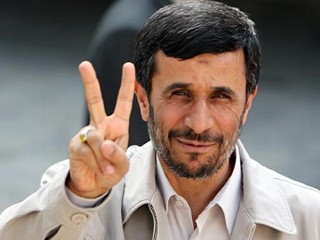 The ‘known unknown’ in the fateful decision handed down on Thursday by Iran’s Guardian Council on the approved list of candidates for the forthcoming presidential election on May 19 was as regards the candidacy of former president Mahmoud Ahmedinejad. That was for three main reasons. First, he is a colorful personality who occupies a unique spot in Iran’s political spectrum, which qualifies to be called ‘leftist’. Iran’s politics needs such a platform, given the nature of its problems of development.
A contestation between the Conservative Right and the Moderate Right detracts from the authenticity of the electoral arena. The paradox is that while there is a faction known as ‘reformists’ in Iran, it serves the same class interests as the conservative religious establishment. The 1978 revolution had leftist moorings, given its genesis as a popular democracy movement, but ended with the establishment of the world’s first Islamic state. And in a bitter struggle within the revolution, progressives got eliminated. It remains a hugely controversial chapter in Iran’s modern history and keeps popping up every now and then, reopening old wounds.
Second, Ahmedinejad was a rare ‘non-cleric’ president. Highly educated, intelligent, articulate and a self-confident intellectual credited with progressive outlook, he showed that a politician can have mass appeal in Iran sans the patronage of the religious establishment. Although deeply religious in his private beliefs and Spartan lifestyle, he lighted up a potential path in Iran’s evolution as a practising democracy that lay unexplored. Indeed, Iran’s progress as a modern state stands to gain if the religious establishment also becomes accountable to the people – not only to god. Did the religious establishment feel challenged by him? It seems so.
Third, in world politics today, we need a Bolivarian leader and therefore if there is no Ahmedinejad, it is a poorer world. Someone should speak up when a mother of all bombs is dropped on a hapless nation which is already at the end of its tether after years of occupation and ransacking and savagery, or when a color revolution is being insidiously fostered in faraway Venezuela. Multipolarity in world politics cannot be a fig-leaf for a concert of big powers to cover their back side.
Ahmedinejad was genuinely an internationalist who dared to punch above his weight and almost got away with it. The world needs him in the era of Donald Trump. The alternative is to settle for Kim Jong Un, which is of course bizarre.
However, in its wisdom, Iran’s Guardian Council has debarred Ahmedinejad from contesting next month’s election. Six candidates have been short-listed, but no official reason has been given. And there is no higher appeal, either.
What explains it? To be sure, there will be myriad conspiracy theories. To my mind, it is a highly political decision that the Guardian Council took. Some time back, Supreme Leader Ayatollah Ali Khamenei had reportedly asked Ahmadinejad not to put his name forward for this year’s election, so as to avoid “polarising” the country. But the latter displayed strategic defiance. If so, it was a hopeless act.
If an analogy is drawn from Indian politics, it was as if LK Advani had projected himself as the prime ministerial candidate of the BJP in the run-up to the 2014 poll, even after figuring out the RSS’s game plan. Advani showed prudence, while Ahmedinejad needed to be restrained. But then, that is also what makes Ahmedinejad adorable – to fight and lose rather than to shy away.
Ahmedinejad’s exit improves the chances of re-election for President Hassan Rouhani, whose performance on the economic front has been dismal with high unemployment (12.5%) despite the impressive 6.6% growth rate. Rouhani’s main opponent is likely to be the conservative cleric with a background in the judiciary (and Iran’s alleged extra-judicial killings) who heads the prestigious and powerful (and incredibly wealthy) religious foundation known as Astan Quds Razavi with responsibility for overseeing the country’s holiest Shia shrine in the city of Mashhad — Ebrahim Raisi.
It is an “in-house” affair, with a level playing field available for two conformist figures of the religious establishment – one far-right and the other moderate-reformist – testing their popularity. For neither, of course, this is the end of the road in their career. Ahmedinejad would have given an existential dimension to the election, and elevated it as the occasion for a great battle of ideas and roads taken and not taken. Put differently, Iran’s establishment is opting for cautious policies.
Iran news agency slams CNN for ‘fabricating’ Rouhani’s Holocaust remarks
RT | September 26, 2013
Iran’s state-owned Fars News Agency (FNA) claims that CNN has ‘fabricated’ the remarks made by President Hassan Rouhani in response to the question about the Holocaust. The US news channel added to or changed parts of his remarks, the agency said.
On Tuesday, the newly elected Iranian president gave his first English-language TV message in an interview with CNN’s Christiane Amanpour. The interview made international headlines with hundreds of news agencies worldwide boasting titles like “Iran’s President Rouhani calls Holocaust ‘reprehensible’ crime against Jews” or “Rouhani recognizes the Holocaust as crime against Jews”.
Asking about Rouhani’s take on the Holocaust, Amanpour noted that his predecessor, President Ahmadinejad, infamously denied the Holocaust. “Do you accept what it was, and what was it?” the US journalist asked.
However, according to Iran’s FNA, the news channel made up parts of Rouhani’s answers, adding the word ‘Holocaust’ among other placatory remarks to its translation from the answers given in Farsi.
According to the exact English translation provided by FNA, the Iranian President said,
“I have said before that I am not a historian and historians should specify, state and explain the aspects of historical events, but generally we fully condemn any kind of crime committed against humanity throughout history, including the crime committed by the Nazis both against the Jews and non-Jews, the same way that if today any crime is committed against any nation or any religion or any people or any belief, we condemn that crime and genocide. Therefore, what the Nazis did is condemned, [but] the aspects that you talk about, clarification of these aspects is a duty of the historians and researchers, I am not a history scholar.”
Meanwhile, the CNN translation of Rouhani’s answer stated:
“I’ve said before that I am not a historian and then, when it comes to speaking of the dimensions of the Holocaust, it is the historians that should reflect on it. But in general I can tell you that any crime that happens in history against humanity, including the crime that Nazis committed towards the Jews as well as non-Jews is reprehensible and condemnable. Whatever criminality they committed against the Jews, we condemn, the taking of human life is contemptible, it makes no difference whether that life is Jewish life, Christian or Muslim, for us it is the same, but taking the human life is something our religion rejects but this doesn’t mean that on the other hand you can say Nazis committed crime against a group now therefore, they must usurp the land of another group and occupy it. This too is an act that should be condemned. There should be an even-handed discussion.”
According to FNA, the word ‘Holocaust’ as well as the statement “whatever criminality they committed against the Jews, we condemn” are “the worst parts of the fabrications which totally change what President Rouhani has said.”
“It’s US Turn to Show Political Resolve”
Interview with Iran’s Foreign Minister Mohammad Javad Zarif | August 17, 2013
 The new Iranian Foreign Minister Mohammad Javad Zarif is taking over the Ministry of Foreign Affairs of the Islamic Republic of Iran from his predecessor, Ali Akbar Salehi, at a time that the entire Middle East and North Africa from Syria to Egypt, from Tunisia to Libya, and also from Bahrain to Iraq and Lebanon, are grappling with various political and security crises. Iran’s nuclear case has been also relatively stagnant. In the meantime, the radical politicians in the United States as well as pro-Israeli lobbies in the US Congress and Senate are keeping up their loud cries for the intensification of sanctions against the Islamic Republic. On the verge of his official inauguration as the new Iranian foreign minister, in the following interview we have discussed with Mohammad Javad Zarif such important issues as the true meaning of moderation in Iran’s foreign policy, the new administration’s plans for the continuation of the nuclear negotiations, the possibility of transferring management of the nuclear case from the Supreme National Security Council to the Ministry of Foreign Affairs, Iran’s possible positions on radical moves taken by the United States and the pro-Israeli lobby, and the possibility of future direct talks between Tehran and Washington in the light of the existing political equations in the region.
Q: The issue of “moderation” was one of the main mottos of the “Administration of Foresight and Hope.” How do you define moderation in the area of foreign policy?
A: I personally believe that moderation means realism and creation of balance among various needs of a country for the advancement of the foreign policy and pursuit of the foreign policy goals through plausible and rational methods and a suitable discourse. Moderation does not mean to forget about the values or discard the principles. Moderation neither means to fall short of materializing the country’s rights. In other words, as I said in my address to the Majlis (Iranian parliament), moderation has its roots in self-confidence. The people who confide in their own ability, power, possibilities and capacities will tread the path of moderation. But those who are afraid and feel weak mostly go for radicalism. Radicals in the world are cowardly people and although their slogans may be different from one another, there are close and good relations among them. The world of today needs moderation more than anything else and the Islamic Republic of Iran, as a powerful country, can push ahead with a suitable foreign policy approach through moderation.
Q: In his first press conference after the inauguration ceremony, President [Hassan Rouhani] said resumption of the nuclear negotiations with the P5+1 group will be one of his priorities. Do you have any new plan or proposal for the resumption of these talks?
A: There have been discussions inside the administration with Mr. President about how to follow up on the country’s nuclear rights and reduce unjust sanctions which have been imposed against the Islamic Republic of Iran. The basis for our work is to insist on the rights of Iran and do away with logical concerns of the international community. As the Supreme Leader and the President have emphasized, it would be easy to achieve this goal provided that the main goal of all involved parties is to find a solution to the nuclear issue. We believe that finding a solution to the nuclear issue needs political will. On the side of the Islamic Republic of Iran, the election of Dr. Rouhani – in view of his past track records with regard to this case – proves that the Iranian people are willing for the nuclear issue to reach a final solution with power and strength and within a reasonable time frame. We wish the opposite side will also have the necessary political resolve for the resolution of the nuclear issue. In that case, we would have no concern with respect to assuring the world about the peaceful nature of our nuclear energy program because according to the fatwa [religious decree] issued by the Supreme Leader and based on the strategic needs of Iran, nuclear weapons have no place in our national security doctrine and are even detrimental to our national security.
Q: There have been rumors about the possibility of transferring the management of the nuclear case from the Supreme National Security Council to the Ministry of Foreign Affairs. Do you confirm such speculations or deny them and, basically, are there any specific plans for the transfer of this case?
A: I have not heard such a thing. This is a decision for the President to make. At any rate, in view of the experience I have in this regard, I will do my utmost to be of service for the advancement of the nuclear case in any position I am and to any degree possible. However, it is for the highest ranks of the Islamic Establishment to make the final decision about how to pursue the nuclear case, the form and framework of negotiations, and the best methods to be used in this regard.
The main issue is whether the necessary political resolve [among member states of the P5+1 group] will be present and whether the US government is ready to stand in the face of the interest groups and prevent the whole case to be steered by radical groups?
Q: We have witnessed the emergence of anti-Iran currents at both the US Congress and Senate concurrent with the election and inauguration of President Hassan Rouhani’s administration. On the other hand, Israelis claim in their propaganda campaigns that the administration in Iran has changed, but policies are the same as before. What is your plan to offset such radical moves?
A: The warmongering elements are apparently concerned about reduction of problems and are clearly doing their utmost to resort to any pretext in order to intensify the crisis with Iran. The important point is that decision-makers in Europe and the United States should come to grips with the real nature and goals of warmongers. On this basis, they should not allow a warmongering and tension-seeking agenda – which aims to put unjust pressures which have no place in international law on the Iranian nation – to prevent them from taking advantage of opportunities which can be used to find solutions to existing problems. The political agenda of radicalism clearly proves that radicals are cowards and are afraid of negotiations and dialogue. Therefore, such groups make recourse to hasty and ineffective methods in order to bar the progress of moderation. Such cowardly people usually fail to achieve their political goals as well.
Q: Will you agree to engage in bilateral direct talks with the United States if such a thing is proposed to you on the sidelines of such international meetings as the United Nations General Assembly sessions or negotiations with the P5+1 group?
A: The Supreme Leader has made his opinion about [direct] talks [with the United States] public time and time again. Negotiations, per se, is not an issue here, but the main issue is what topics are going to be discussed in such negotiations and how much political determination exists in the opposite side for the settlement of the existing problems. The main issue is will such a political resolve take shape and whether the US administration is actually ready to stand up to radical groups and prevent such radical groups from setting the course of the whole issue? This will be in fact a litmus test for the government of the United States to show its readiness to play a more serious role and pave the way for the achievement of a final solution.
Q: Don’t you think that bilateral talks between Tehran and Washington constitute the secret precondition for the improvement of relations between Iran and Europe?
A: In my opinion, political will is the precondition for the improvement of relations. The methods [to do this] can be discussed, but what is necessary is the emergence of such a political will and its manifestation in practice. In that case, various methods can be used to achieve goals. At a time that it is not still clear whether such a political will exists or not, the efficiency of using new methods cannot be clearly decided. In Iran, the election of Mr. Rouhani shows that people have made up their mind to engage in constructive interaction with the world. Mr. Rouhani, on the other hand, has shown through his words and deeds that he has the necessary political will to do this. Now, the important requisite is for such a political will to take shape on the other side of the equation.
Q: You are taking charge of the Ministry of Foreign Affairs at a time that the Middle East is going through a hectic period of its history. We are witnessing different crises from Syria to Egypt, and from Bahrain to Lebanon and Iraq. What are your priorities among these regional cases?
A: Conditions in the region have become hectic and inflammatory as a result of shortsightedness of certain political players – most of them coming from outside the region – during the past few years, and we need a collective effort to curb in the crisis. On the one hand, we are faced with fundamentalism while, on the other hand, we see how people’s votes are forgotten and downtrodden. And of course, we can see the clear hands of foreign interventionist powers that foment unrest in the region the result of which is the loss of thousands of innocent lives. Unfortunately, we have been witnessing a severe escalation of domestic conflicts in Egypt during the past few days in which hundreds of innocent people have lost their lives. As a result, it is not only incumbent on us to find a way to put an end to the ongoing crisis in Egypt, but a more serious need of the region and the world is to prevent further spread of radicalism by taking advantage of the indigenous models of democracy. I believe that the Islamic Republic of Iran will be able to play a crucial role in this regard, especially after the political epic that took place during the current [Iranian calendar] year [through the presidential election in the country].
Source: Iranian Diplomacy (IRD)
http://www.irdiplomacy.ir/
Translated By: Iran Review.Org
Related articles
Featured Video
John Mearsheimer: US Already lost Iran war – No off-ramp in sight
or go to
Aletho News Archives – Video-Images
Frlom the Archives
70 Neocons Petition Congress To Effectively Allow Israel To Say When The US Should Attack Iran
By Damian Lataan | January 10, 2014
Seventy senior Israeli-centric neoconservatives have written an open letter to Congress imploring them to do more to ensure Iran complies with the conditions of any agreement finally reached with the P5+1 over Iran’s nuclear program.
While the neocons are ostensibly asking Congress to ensure compliance, it is clear that their real aim is to convince members of Congress to support the bill currently passing through the Senate which calls for tighter sanctions against Iran in the event of any waywardness on Iran’s part.
The neocons are eager to see the bill currently passing through the Senate with enough support to make it veto-proof, not so much because they are concerned about Iran’s so-called nuclear weapons program – there’s still not a skerrick of hard evidence that Iran has a nuclear weapons program – but, rather, because embedded within the bill is this clause:
… if the Government of Israel is compelled to take military action in legitimate self-defense against Iran’s nuclear weapon program, the United States Government should stand with Israel and provide, in accordance with the law of the United States and the constitutional responsibility of Congress to authorize the use of military force, diplomatic, military, and economic support to the Government of Israel in its defense of its territory, people, and existence…
Essentially, the clause is an automatic trigger for the US to attack Iran at any time the Israelis choose to launch a first strike – regardless of whether President Obama is in favour or not.
Partial list… continue
Blog Roll
 Aletho News
- ‘Heinous crime’: Iran denounces Israeli assassination of 4 Iranian diplomats in Lebanon
- John Mearsheimer: U.S. Already Lost Iran War – No Off-Ramp in Sight
- UK Parliament Plans ISP Blocking and Age Verification Powers
- World cannot remain silent as US and Israel attack ‘heritage of humankind’: Iran
- Emirati billionaire rebukes US senator over call for Gulf states to join war with Iran
- Op. True Promise 4: Iran’s missile blitzkrieg dismantles US war machine in West Asia
- Aramco CEO warns ‘catastrophe’ imminent if Strait of Hormuz remains shut
- What If Iran Says No?
- Trump Threatens to ‘Hit’ Iran ‘Twenty Times Harder’ Over Strait of Hormuz Oil Flows
- Spare the hypocrisy: Baghaei slams Ursula’s support for US
- If Americans Knew
- Israel Decided the War, But Trump’s America Fights and Pays the Bill
- Conscientious Objector Group: Phone ‘Ringing Off Hook’ As Huge Mobilization Underway
- U.S. support for Israel continues to plummet, despite media’s best efforts
- Threats and missiles fly, death tolls soar in Iran, Lebanon, Gaza – Not a ceasefire Day 151
- Lebanon: Israel’s White Phosphorous Use Risks Civilian Harm
- Corporate Media Go All Out To Support The US-Israeli War On Iran
- US-Israel war on Iran is creating a steady growing number of amputees
- Israel planned this war on Iran for 40 years. Everything else is a smoke screen
- The wrong question about the war in Iran
- ‘Your Tax Dollars Being Used to Raise Your Gas Prices’: US-Israel Bomb Major Iranian Oil Depots
- No Tricks Zone
- New Study Documents A 20-Year Pause In Arctic Sea Ice Decline – Driven By Internal Variability
- Wake-up Call: Survey Shows Majority Of Germans Now Favor Postponing Climate Targets!
- Televised! Leading German Political Candidate Tells Schoolchildren CO2 Makes Sun Hotter!
- New Study: A Century Warming Of 1.1°C Is ‘Commonplace’ And ‘Not Unusual’ During This Interglacial
- New Study: ‘Internal Noise’ And Volcanic Forcing Can Trigger 10-15°C Warming Within Decades
- Glaciers Worldwide Are Suddendly Surging, Experts Blame Warming!
- Surprising Discovery: Sahara Is Greening…Billions Of Trees Where Once Thought To Be Barren
- New Research Reaffirms Clouds, Aerosols, And Surface Solar Radiation Are ‘Driving The Climate System’
- Germany: Electric Car Catches Fire At Charging Station, Sets Off Local “Inferno”, Widespread Damage
- New Study: Canada’s New Brunswick Was 1°C Warmer Than Today During The Medieval Warm Period
 Aletho News