Emmanuel Eisenberg explains his right to disregard international law and destroy private property
Excavations continue on Abu Haikel Land
CPTnet | May 19, 2014
AL-KHALIL (HEBRON) – The Israeli Antiquity Authority (IAA) continues to expropriate Palestinian land in Hebron, on the Tel Rumeida hillside. On Sunday 18 May 2014, the IAA workforce, under the instruction of project coordinator Emmanuel Eisenberg, continued to cause structural damaged to the Abu Haikel land, deploying questionable and illegal archeological practices, while at the same time utilizing the Al Jobeh family’s land without the family’s consent.
The excavations are illegal under Israeli law, according to the Oslo Agreement, which Israel signed in the mid-90s— a process jointly agreed upon by Israel and Palestine as a vehicle to peace and stability. Article 2 of the Israeli-Palestinian Interim Agreement describes in detail how Israeli and Palestinians would jointly administer archeological projects in Palestinian territory. The IAA has not abided by this agreement in Tel Rumeida.
As previously reported, the IAA had verbally agreed to halt the archeological excavations on the land bordering the Abu Haikel plot until the borders of the property were properly demarcated. Despite the agreement, the IAA illegal activities continued onto the Abu Haikel’s property, eventually undermining a retaining wall, causing it to collapse and exposing the roots of a centuries-old olive tree to the elements. These breaches were not the first damage to the Abu Haikel land as a result of the excavations.
The disregard of both international law and Israeli law, combined with verbal and physical assaults of the families living on Tel Rumeida is not an isolated incident, but rather constitute a colonial methodology by the Jewish settler enterprise in Israel. These tactics were the same political instruments that led to the establishment and expansion of the Israeli settlement of Tel Rumeida.
Explaining how he could destroy the foundations of the Abu Haikel’s wall, Emmanuel Eisenberg said explicitly that he, “Doesn’t give a shit,” and articulated at length the nature of his work, in which he envisioned the site becoming a tourist destination with a kiosk or restaurant on the Palestinian lands. At one point during the dialogue, Eisenberg had attacked a human rights observer.
As has been chronicled by Israeli Jewish historian Illan Pappe, among others, forced displacement, harassment, and the suppression of basic rights has been the central component of Israeli policy toward the Palestinians. This reality is demonstrated with facts on the ground in Hebron specifically, with over a thousand Palestinian homes and shops evacuated, razed, or confiscated for the benefit, protection, and expansion of Jewish settlements.
Eisenberg’s work on Tel Rumeida is an extension of formal Israeli policy to settle in “Judea and Samaria” and another instrument of the settlement plan to force Palestinians to leave Hebron.

The gate to the Abu Haikal house
In Jewish religious ritual, settlers torch private Palestinian olive grove
Ma’an – 18/05/2014
 HEBRON – Israeli settlers set fire to a private Palestinian field in the Tel Rumeida neighborhood in the southern West Bank city of Hebron on Saturday night as part of a celebration for the Jewish holiday of Lag BaOmer.
Settlers circled around the field and watched as the fire burned olive trees, in a field that locals said belongs to the Iqneibi family.
Some of the settlers reportedly assaulted a cameraman who works for the Israeli daily newspaper Haaretz as he tried to take film the fire.
Lag BaOmer marks the the death of a 2nd century sage associated with Jewish mysticism, and is traditionally marked with bonfires.
Activist and co-founder of the Hebron activist group Youth against Settlements Issa Amro told Ma’an that Israeli settlers have recently been harassing and assaulting the Palestinian residents of Tel Rumeida in an attempt to scare them and get them to leave their houses and lands.
Hebron is a frequent site of tensions due to the presence of around 500 Israeli settlers in the Old City, many of whom have illegally occupied Palestinian houses and forcibly removed the original inhabitants.
Tel Rumeida hosts one of the most militant Jewish settlements in the city, and locals complain of near daily harassment and attacks by the groups, who are under heavy Israeli military protection.
Fighting for the history of Tel Rumeida

International Women’s Peace Service | May 17, 2014
Hebron, Occupied Palestine – The Israeli occupation uses many methods to take over land – from settlements and military camps to the nature reserve and political treaties. However, the Abu Haikal family of Tel Rumeida in Al-Khalil (Hebron), faces a much more unexpected enemy: archaeologists. Currently, the family home is completely surrounded by an Israeli archaeological excavation – there is only one gate into the property, which can be shut at any time, leaving the family isolated from the surrounding city.
At first glance, the presence of an archaeological site seems quite positive, or at the very least harmless, however a quick look at the politics surrounding the Tel Rumeida excavation shows that this is far more sinister than a simple historical inquisition.
Under the Oslo Accords, the Israeli Antiquities Authority (IAA) must coordinate all of their work in the West Bank with the Palestinian Ministry of Tourism and Antiquities. In Tel Rumeida, Palestinian officials have been denied entry.
IAA archaeologists – many of whom live in the surrounding illegal settlements – began digging in Tel Rumeida on January 5th, 2014. They claimed they were looking for the graves of Jesse and Ruth, figures from the Hebrew Bible. The IAA has also stated their intent to turn the area into a ‘Biblical Archaeological Park’, depending on what the dig turns up.
While no uniquely Jewish artifacts have been found, Palestinian officials confirmed that the settler-archaeologists have destroyed several Muslim graves that were found on the site. Residents of Tel Rumeida have reported that IAA employees are also in the process of bulldozing an ancient Canaanite retaining wall. For them, the deliberate annihilation of non-Jewish history in Hebron is anything but innocuous.
The Israeli Antiquities Authority has been a tool for settlement expansion and land grabs in the West Bank for a long time, including the East Jerusalem neighbourhood of Silwan, the town of Khirbet Susiya, and other settlements within Hebron. The strategy is simple: Archaeologists enter an area and search for signs of uniquely Jewish history. When a site or artifact is discovered – or possibly fabricated – the area is declared to be an integral part of the ‘Jewish State’. To ‘protect’ the land, a settlement is built on top of the site, driving away the Palestinian owners. – Video interview
AL-KHALIL (HEBRON): Settlers attempt construction of new access path at Tel Rumeida
CPTnet | March 27, 2014
 |
|
Attempt by settlers to begin construction of walking path on Tel Rumeida. The blue fence is on the |
On 24 March 2014, settlers attempted to begin construction of a walking path outside the fenced “archaeological” dig near the Abu Haikal home on Tel Rumeida. The settlers pounded in metal stakes in an area just below the fence erected by Israelis around what was once the orchard of the Abu Haikal family, and is now an archaeological site to which Palestinians, including Palestinian archaeological experts, are denied access. The stakes are a first step in an apparent attempt to link the settlement of Tel Rumeida to the fenced area of the archaeological dig.
Palestinians living in the building adjacent to the land on which the settlers were trespassing called the police, who ordered the settlers to stop. However, the following day, 25 March, soldiers arrived at the home of the Abu Haikal family and threatened them with arrest.
Feryal Abu Haikal had just finished hosting a group of neighbors, along with the Palestinian Liaison Officer and an officer from the Hebron Governor’s office, when soldiers arrived at her home and began to dispute the ownership of some of the land on Tel Rumeida, showing her a map that contained false information. The soldiers told Feryal Abu Haikal that no visitors are allowed on the land surrounding her home, and threatened to arrest and deport any internationals there, including members of the Abu Haikal family.
For background on the settler archaeological dig on Tel Rumeida click here
To see a map of multiple land-grab efforts by settlers in Hebron click here.
Related articles

AL-KHALIL: Palestinian property rights under attack; setters attempt multiple land-grabs in Hebron
CPTnet | March 13, 2013
 |
| The Al-Rajabi building. Photo EAPPI |
Settlers have won a victory in their ongoing attempt to grab land for a new settlement in Hebron. On 11 March 2014, the Israeli Supreme Court agreed to hand over the Al-Rajabi building in the Old City of Hebron to settlers, despite the grim humanitarian impacts of the decision on Palestinians living in the neighborhood. The Hebron Rehabilitation Committee (HRC) has appealed to the international community to speak out against this violation of Palestinian property rights, and to use all means available to prevent the creation of a new settlement in the Old City of Hebron.
Settlers claimed ownership of Al-Rajabi house on 19 September 2007, when a group of them stormed into the building in the middle of the night. In November 2008, the court found that the settler’s purchase documents were forged and evicted them, placing the building under military control pending a final decision. In reaction, Hebron settlers set fire to Palestinian homes, farms, olive trees, and vehicles in the area. Six Palestinians were injured, two with live ammunition. On 11 March 2014, the Israeli Supreme Court ruled that the Palestinian owner of the building must, against his will, accept payment from Israeli settlers in the amount specified in the forged sale documents.
A thirty minute walk from the Al Rajabi building settlers are using “archaeology” to rewrite the history of the city and take control of two large plots of land on top of the hilly neighborhood of Tel Rumeida. On 5 January, Israeli settlers and soldiers uprooted fifty almond trees belonging to the Abu Heikal family, and began digging on two plots of land that surround the family’s home, and which the family has leased and cultivated for sixty-five years.
Since January, the settlers have used heavy earth-moving equipment to remove truckloads of soil from the orchard. Tall metal fences now cut the Abu Heikal home off from the orchard, leaving the house accessible by only a narrow drive. Fencing off the land, which soldiers have declared a “closed military zone,” has also isolated portions of the Tel Rumeida neighborhood, making it difficult for residents to walk to shops and the nearby mosque.
 |
| Israelis have unearthed and desecrated what Palestinian archaeological experts believe are three Muslim graves, constructed on bedrock with stones pointing toward Mecca. Pictured is second of three Muslim graves unearthed by settlers digging on Tel Rumeida. In this photo, the grave has been partially removed. |
 |
| This public footpath has been fenced off and replaced with a longer path with a gate at each end, leading to these steep and precarious dirt steps |
According to Hamed Salem, chairperson of Birzeit University’s archaeology department, the dig is illegal and is merely an attempt to “advance the settler’s political agenda by using archaeology to justify their presence in Hebron.” An archaeologist from the Palestinian Ministry of Antiquities recently attempted to inspect the site but was denied access. The Israeli Culture Ministry and Civil Administration are financing the dig, and expect it to cost an estimated NIS seven million. Residents of Tel Rumeida fear that because such a large sum has been allocated there may be plans for much greater destruction of surrounding ancient olive trees and orchards. The Abu Heikal family is currently challenging the legality of the excavation in the Israeli Civil Court system.
Roughly midway between the Al Rajabi building and Tel Rumeida, near the Ibrahimi Mosque, settlers are attempting to gain control of five buildings: the Bouderi House and the Tomb of Abner, both directly outside the entrance to the Ibrahimi Mosque, the Ashhab Shops, across the street from the Gutnick Center, which is directly in front of the Ibrahimi Mosque, the Abu Rajab house near Checkpoint 209, and the Al-Sharif House, the front door of which opens onto the street just below the Ibrahimi Mosque. In recent months settlers and soldiers seeking to access the Al-Sharif building have attempted to open the house from the front directly below the mosque by breaking open a welded door, and have repeatedly invaded the home of the Al-Atrash family, which shares an enclosed courtyard with the Al Sharif building. If settlers are allowed to occupy these seven sites the humanitarian impacts on residents of Hebron’s Old City neighborhoods will be devastating. The targeted properties are links in a chain that, if completed, would effectively encircle the Ibrahimi Mosque and link the four existing settlements inside the Old City to the larger settlement of Kiryat Arba, which borders the Old City. This connection would cut off Palestinian neighborhoods and homes from access to schools and services, and would put all of the Old City under increased risk of settler incursions and violence. Currently about 500 settlers live in the four downtown Hebron settlements of Beit Hadassah, Avraham Avinu, Beit Romano, and Tel Rumeida. An additional 7,000 live in Kiryat Arba.
Related article

ISM volunteers attacked by Zionist tourists in Hebron
International Solidarity Movement | March 11, 2014
Two International Solidarity Movement activists walking on Shudaha Street area were brutally attacked by French Zionist tourists who were visiting to attend the weekly settler tour of the Palestinian part of Hebron.

Zionist perpetrator responsible for the attack.
At around 1:30 PM the activists were walking in the direction of Shuhada Street when the 6 young men rounded the corner, upon seeing the activists they spread across the road. Within seconds, the group attacked the ISM activists, chasing one back in the direction of the Ibrahim Mosque and continued to attack while soldiers leveled their weapons at the attacker.
The other activist was chased, tripped and kicked in the body and face by the Zionist assailant until he was chased away by the two soldiers. On gaining his feet, the activist was punched in the face by the man who had just chased his companion away. The activist ran and the army stopped his pursuer.
The incident was reported to the police, who found two of the attackers in Shuhada Street and took their details. They were not detained as it was the Sabbath when religious Jews are rarely arrested. The activists were taken to a local Police station to make a statement and overheard aggressive integration of a Palestinian prisoner.
We also received a report that an Italian tourist was attacked by 10 religious Zionists in the city on the same day of the attack. After his beating, was told that if he wants to come back he must wear a Kippah.
AL-KHALIL (HEBRON): Schoolchildren exposed to teargas seven of the last eight days
CPTnet | February 25, 2014
Israeli soldiers have shot teargas and sound grenades at children who cross checkpoints 29 and 209 on their way to school in the morning on seven of the last eight school days.
International observers and human rights workers in Hebron have witnessed Israeli soldiers repeatedly firing grenades and sound bombs into the streets near these checkpoints while children are walking to school. The children attend several schools located both in the Old City and in the area of Hebron designated as H2, on the other side of the checkpoints, and include preschool students as young as four. Depending on where they live and which school they attend, children must cross these checkpoints in both directions to reach schools both inside the old city and in H2.
Because the Israeli military does not allow buses that transport younger children to preschool and kindergarten classes in H2 to cross the checkpoints, very young children living in the Old City must walk through these checkpoint areas in order to reach their school buses.
At times, the use of teargas by soldiers has been in response to several children throwing stones, but internationals have also witnessed soldiers firing teargas canisters without provocation. In any event, because so many children pass through the same area to reach school at the same time, hundreds of children, many of them in primary grades, suffer the effects of gas on an almost daily basis. Additionally, because the agents used to manufacture teargas are actually solids, they remain inside shops, on clothing, and in the streets where children walk and play throughout the day.
Although the Chemical Weapons Convention (CWC) prohibits the use of teargas and pepper spray in warfare, domestic police and state forces are allowed to use these weapons on people as “riot control” agents.
Tear gas is a non-lethal chemical weapon that stimulates the corneal nerves in the eyes to cause tears, pain—which can be extreme, immediate and severe nausea, and even blindness. Longer term effects include persistent coughing, shortness of breath, and other lung-related problems (heightened in people who already have lung problems), heart and liver damage, delayed menstruation, and an increase in miscarriages and stillbirths in women exposed to the gas. The NGO Physicians for Human Rights believes that “‘tear gas’ is a misnomer for a group of poisonous gases which, far from being innocuous, have serious acute and longer-term adverse effects on the health of significant numbers of those exposed.”
In addition to the effects of the gas, the teargas cartridges fired by soldiers can cause serious injury and even death if they strike people, especially if soldiers fire the cartridges straight into crowds rather than into the air. Internationals and Palestinians report having seen soldiers fire teargas straight into the roads near these checkpoints.
The teargas used on school children in Hebron comes primarily from the United States and is manufactured primarily by Combined Systems Inc. of Jamestown, Pennsylvania and Defense Technology of Casper, Wyoming. Combined Systems Inc. (CSI)—often manufacturing under the brand name Combined Tactical Systems (CTS) are owned by Point Lookout Capital and the Carlyle Group. CSI is the primary supplier of tear gas to the Israeli military as well as a provider to Israel’s police (and border police) for use in occupied Palestine.
Defense Technology is headquartered in Casper, Wyoming. Along with U.S. company Federal Laboratories, with which it shares a product line, it has links to the U.K. arms giant BAE Systems through BAE’s ownership of U.S. arms company Armor Holdings.
The War Resisters League has launched a campaign to abolish teargas, and to encourage people who have been impacted by its use to tell their stories. The campaign seeks “the global ban of tear gas by first ending the sale, manufacture, and shipment of tear gas made in the US through organizing and applying grassroots pressure on
- companies that produce the gas,
- the US government agencies that approve the export licenses for the sale of tear gas,
- US government officials who allow for the sale and transfer of tear gas to repressive regimes abroad,
- the prison and police forces within in the US who use tear gas and similar chemical weapons such as pepper spray to threaten, injure, and torture people.”
To learn more about teargas in Palestine and throughout the world, or to add your story to the campaign, visit facingteargas.org
Related articles
Israeli forces use tear gas against schoolchildren in Hebron
International Solidarity Movement | February 17, 2014
Hebron, Occupied Palestine – On Sunday, the 16th of February, Israeli soldiers and border police in Hebron fired tear gas and sound grenades at children on their way to school. The border police also chased the children, attempting to arrest them.
At Checkpoint 29, around 7:30 a.m., a few children on their way to school (there are three schools near the checkpoint) were throwing stones at the soldiers stationed there. In response to this two border police and a soldier appeared from an alley and threw a sound grenade at the kids close to the United Nations school on Tareq Ben Ziyad Street.
This frightened not only the children who had thrown stones but all the children on their way to school, causing them to flee. When they did not catch any children the two border police and the soldier stood in front of the school blocking the entrance and started firing teargas at those who had fled.
As the border police and the soldier returned to the checkpoint, three new soldiers came out of an apartment across the street, preventing the children from entering their school. The soldiers continued firing teargas towards the crowd of upset and frightened children.
Tear gas is a nondiscriminatory nerve gas which affects all persons nearby. The gas often takes a long time to disperse, forcing children to go through the half-dispersed gas clouds on their way to school, leaving them crying and coughing. The use of tear gas against schoolchildren is common in Hebron.
In total, seven soldiers and two border police were involved in the incident, firing six tear gas grenades and two sound grenades at the children.
Related articles


PALESTINE: Border Police detain, humiliate and arrest men trying to go to Friday prayers; CPTer’s camera taken.
CPTnet | February 11, 2014
On 7 February 2014, CPTers went to the routine Friday mosque patrol around prayer time. Often during Friday prayers, Israeli Border police will take the IDs of young Palestinian men while they going into the Ibrahimi Mosque, check to see if they have any outstanding warrants and then return the IDs when the men come out of the mosque. This Friday, however, Border Police were not allowing the men to go to the mosque while they were checking the IDs.
When CPTers called members of the Temporary International Presence in Hebron (TIPH), TIPH personnel told them that Border Police were detaining men at several H-2 checkpoints. The CPTers decided to look at Checkpoint 29 and found Border Police detaining twenty to thirty men there. Several of them were quite angry because of the way the Border Police had been treating them. Other men were trying to calm the situation. When one man, after realizing he was going to miss prayers at the mosque, began to lay his prayer rug on the ground to pray at the checkpoint, one of the Border Police shoved him against a wall, which really enraged several people in the crowd.
Soldiers pepper-sprayed a boy who appeared to be about eleven or twelve and an older man, who was later hospitalized. The boy passed out and was taken down the hill to a shop. Additional soldiers arrived and began deploying sound bombs and teargas. Police arrested eight men.
Video of Border Police pepperspraying man
After the police took away the men they had arrested, CPTers remained in the area because of the heavy soldier and Border police presence. Civilian police approached one and asked for his passport and his camera. They insisted on taking his camera to the police station and he accompanied it. While he was at the police station, they asked him questions about what he had witnessed, periodically coming out of a room and telling another CPTer that “your friend isn’t arrested; he is just giving testimony.”
As of this writing, six of the men arrested on Friday have been released, while two are still in custody.
Related articles
International activists physically and verbally abused in detention
International Solidarity Movement | January 15, 2014
Occupied Palestine – On Wednesday 8th January, Vincent Mainville and Fabio Theodule were arrested by Israeli border police in Khalil (Hebron).
The two boys were handcuffed and taken to Jaabara police station where they were forced to kneel on the concrete floor for approximately 30 minutes. Fabio was blindfolded with his own keffiyeh and while kneeling he was pushed against the wall by Israeli border police officers and kicked in his legs.
After an hour passed, the makeshift blindfold was removed although their hands remained cuffed behind their backs for the next four to five hours.
Fabio and Vincent were questioned by Israeli forces, both refusing to sign documents that were written in Hebrew. They were went taken to Kiryat Arba police station, fingerprinted and then interrogated once again. Several hours passed and it was only at this point that they were allowed to call their legal representative.
They were transferred to a police facility near Ben Gurion airport where they were made to wait outside in a prison courtyard for two hours. Fabio asked for water and was told by a border police officer, “If you want to drink, you can drink my piss”.
Fabio and Vincent repeatedly asked for jackets or a blanket due to the cold weather, they were both ignored.
They were taken inside this facility for 30 minutes before being transferred back to Kiryat Arba police station in Khalil. Their handcuffed were removed at 12:30 at night and they were placed in a cell to sleep.
In the morning, on Thursday 9th January, Vincent and Fabio were awakened and handcuffed at 6:30 in the morning. They received no information about their situation and were not informed they had a court hearing that morning. When they arrived at court in Jerusalem they were allowed to speak to their lawyer for approximately four minutes outside the courthouse, with Israeli border police present.
After they had the short conversation with their lawyer they were taken to the immigration office in Tel Aviv. The two activists tried to refuse to enter this building as they knew their lawyer was attempting to argue against their arrest [which was eventually declared illegal]. It was at this point Israeli forces became extremely aggressive, dragging both Vincent and Fabio by their handcuffs causing their wrists to bleed.
Vincent attempted to resist as they dragged both boys up a set of stairs and it was at this point a man from the immigration center kicked him in his ribs and his face. They were taken into a room and after one hour, were able to contact their lawyer, though they were not allowed privacy for this phone call.
Vincent asked if he could file charges against the man who has beat him, and he was told he was not allowed to do this.
At this point Vincent and Fabio were given food for the first time in 25 hours.
The boys were then taken to Giv’on prison in Ramle, close to Tel Aviv. They were unable to contact their lawyer again and received no information about their case, until they were finally able to be contacted by ISM two days later.
Vincent and Fabio are very likely to be deported within the next few days, their arrest has been ruled illegal by an Israeli court but this has not made any difference to their situation. Their treatment since being arrested should serve as a reminder in terms of how Israeli forces are able to treat their prisoners, whether justified or not. However, Vincent and Fabio as internationals have received far better treatment then Palestinian prisoners. The brutal treatment of Palestinian prisoners echoes throughout Palestine and serves as a daily reminder of the Israeli occupation.
Related articles
Featured Video
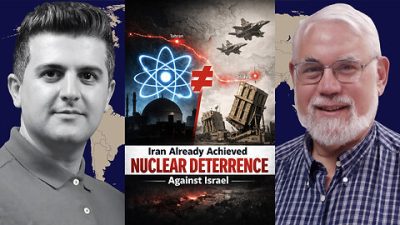
Prof. Ted Postol: Iran Already Achieved Nuclear Deterrence Against Israel
or go to
Aletho News Archives – Video-Images
From the Archives
How the occupied mentality syndrome works
Saudi Arabia on the American chessboard – Part 3
By B. J. Sabri | American Herald Tribune | June 27, 2016
Read part 2: “The occupied mentality Syndrome“
Previously I argued whether Saudi Arabia’s repeated involvements in U.S. interventions and wars stem from free national will or in response to a specific condition. For starters, in Saudi Arabia there is no national will. In Saudi Arabia, the national will is the will of the Al Saud clan. Still, when a major Arab state allies itself with a superpower that committed unspeakable crimes against humanity in almost every Arab country, then something is wrong. This fact alone should compel us to examine the U.S.-Saudi relation for one exceptional reason. As a result of the U.S.-Saudi wars, hundreds of thousands of people in Afghanistan, Iraq, Iran, Libya, Syria, Yemen, and Somalia have lost their lives. Millions became displaced in their own homelands. And millions more rendered refugees.
Attributing the Saudi policies to the bonds of “partnership” with the U.S. is frivolous. There are no bonds between these two thugs except those of business, military deals, secret plots, and wars. Proving this point, bonds such as these have no space for the American and Saudi peoples to share significant cultural or societal exchanges. If partnership is not the reason for the Saudi contribution to the U.S. strategy of empire and imperialism, then another reason must exist.
This leads to three possibilities. … continue
Blog Roll
 Aletho News
- Hezbollah hits Israeli warship off Lebanon’s coast, sets it aflame
- Iran slams US strikes on B1 bridge, Mahshahr petrochemical plants as ‘blatant acts of state terrorism’
- In letter to UN chief, Araghchi warns of dire consequences of US-Israeli attacks on Iran’s nuclear facilities
- Why the CIA conspiracy to invade Iran with Kurdish militias failed
- Why Are Upbeat US Claims About Mission to Rescue Pilot ‘Highly Questionable’?
- Aircraft destroyed during US ‘rescue’ of downed F-15 pilot cost more than $100 million each
- Washington University removes professor who condemned US-Israeli war on Iran
- Russia Warns of Retaliation as UK Authorizes Seizure of Vessels
- Serbia thwarts plot to bomb Russia-Hungary gas pipeline – Vucic
- Al Mayadeen voices solidarity with Dr. Marandi amid death threats
- If Americans Knew
- In Iran, Israel-US take aim at “reason, research, and freedom of thought” – Daily Update
- US loses planes over Iran, Israel downgrades Lebanon war goals – Daily Update
- Israel Is Blocking Palestinians from Easter at Church Where Jesus Resurrected
- Plot to assassinate Palestinian activist follows harassment campaign promoted by Zionist groups and elected officials
- Prominent New York synagogue hosts presentation on why U.S. Jews should support the ethnic cleansing of Gaza
- Tapper vs. Piker: Is the CNN Anchor Auditioning for David Ellison?
- Shouldn’t Democrats Be Able to Condemn Genocide?
- Israel-US kill negotiators, destroy civilian structures, but Iran’s military capabilities still largely intact – Daily Update
- ‘War crime’: Global condemnation as Israeli ministers celebrate death penalty law targeting Palestinian prisoners
- 7 Ways Israel Is Turning Lebanon Into Gaza
- No Tricks Zone
- An Inconvenient Tree: Uncovered In Alps… Europe Much Warmer Than Today 6000 Years Ago
- New Study Reports A 60% Slowdown In Greenland’s Ice Loss Rate In The Last Decade
- Low Intensity Tornado Wrecks Major Solar Farm, Creating A Potential Toxic Dump
- New Study Finds Warming Saves Lives…Cold Temperatures 12 Times More Deadly Than Excess Heat
- German Science Blog Accuses PIK Climate Institute Of Hallucinating Climate Tipping Points
- Devastating Assessment Of Comirnaty Vaccine By Former Senior Pfizer Europe Toxicologist
- New Study: CO2 Is ‘Effectively Negligible’ As An Explanatory Climate Change Factor Since 2000
- Former Pfizer Toxicologist Dr. Helmut Sterz Tells Bundestag Hearing Pfizer Vaccine Should Have Never Been Approved
- Energy Expert: Germany’s Nuclear Phaseout Was A “500 Billion Euro Mistake”
- New Research: South Australia’s Mid-Holocene Sea Surface Temperatures Were 4°C Warmer Than Today
 Aletho News