AL-KHALIL: Settlers re-occupy Abu Rajib house
CPTnet | September 24, 2013
On 23 September 2013, in response to the death of Israeli soldier Staff Sgt. Gal Kobi, Prime Minister Benjamin Netanyahu called for illegal settlement expansion in the Old City of Hebron.
At 1:00 a.m. on Tuesday 24 September, the Christian Peacemaker Team in Hebron received reports from the Hebron Rehabilitation Committee that Israeli settlers had re-occupied the Abu Rajib house west of the Tomb of the Patriarchs. Settlers had been evicted from the building in April of 2012.
The resettlement of the Abu Rajib house is a direct and significant risk to the community of Hebron, international law, and human rights, as settlements are illegal under international law and impede the ongoing peace process.
In addition to the illegality of the settlement, the location of Abu Rajib will constitute a severe threat to the freedom of movement for Palestinians. The house sits between two Palestinian Schools and Israeli military checkpoint 209, which CPT monitors every morning as part of its school patrol. If the settlement remains, it will be in the middle of an area hundreds of Palestinian children must pass each morning to attend classes.
Over the past week of the Jewish holiday of Sukkoth, the Israeli military has increased its presence with additional soldiers on the ground, occupying Palestinian homes and turning them into military outposts in and around the area of the Abu Rajib house. As a result, school attendance at Al-Faihaa girl’s school and Al-Ibrahimmiye has dropped.
On Monday, 23 September, the Al-Faihaa girl’s school was shut down completely since so few students were able to attend classes. The added Israeli military presence installed around the settlement will continue this trend.
Israeli settlement expansion has led to several cases of violence between Palestinians and Israelis, including near the settlement of Tel Rumeida.
“For the residents of Tel Rumeida, living next to settlers means living under constant threat of attack,” said a representative from the human rights observer organization, the International Solidarity Movement (ISM). “The Abu Shamsiyeh family who live in Tel Rumeida is particularly vulnerable to attacks, as settlers and Jewish tourists tend to enter their roof and even invade their garden without permission. Most use this private Palestinian roof to enjoy the view of the city, but incidents have occurred where settlers threw stones and garbage down at the family, urinating into their garden and verbally harassing the family.
“Last month, settler youth entered the family’s garden, threw stones at them, and beat their thirteen-year old son. When Abu Shamsiyeh asked the soldier stationed outside their house for help, he came down and watched as settlers kicked Abu Shamsiyeh, and another soldier pushed his wife, who was videoing the incident, to the ground.”
If the Abu Rajib settlement is allowed to stay, in breach of international law and during the ongoing peace negotiations, the rise in settler violence against Palestinian youth and adults will escalate.
Related articles
Netanyahu Orders Court To Allow Settlers Back Into Hebron Home
By Saed Bannoura | IMEMC & Agencies | September 23, 2013
Following the deadly shooting of an Israeli soldier in Hebron city, in the southern part of the occupied West Bank, Israeli Prime Minister, Benjamin Netanyahu, vowed to boost settlement activities, and ordered the Civil Administration, to take all needed measures to allow the return of Israeli settlers into a Palestinian home they previously occupied in Hebron.
The Israeli Civil Administration Office is run by the Israeli military in the occupied West Bank.
Back in April of 2012, a group of settlers was removed from the home, near the Ibrahimi Mosque in Hebron. They allegedly purchased the property but the purchase was deemed invalid, especially since such deals must be first approved by a commander of the Israeli occupation army.
The settlers were removed after the then-Israeli Defense Minister, Ehud Barak, issued an order in this regard following a court ruling.
The decision to allow the settlers to return to the property was made on Sunday night; Netanyahu said that the settlers “must be allowed into the home without any delay”.
After being removed from the property, the settlers filed several court appeals, demanding a recognition of the alleged transaction, while Israeli Defense Minister, Moshe Ya’alon, also vowed to do whatever he can to authorize their “return to the home”.
Netanyahu made his decision hours after a Palestinian sniper shot and killed an Israeli soldier in Hebron, following ongoing tension that led to clashes between the soldiers and dozens of local youths who hurled stones at them.
It is also related to the death of an Israeli soldier who was killed two days ago in the Qalqilia district, in the northern part of the occupied West Bank.
“Anyone who attempts to remove us from Hebron, from the city of our patriarchs, will just achieve the exact opposite”, Netanyahu said according to the Israeli daily Haaretz, “We will boost our settlement activities”.
Netanyahu said that the “return of the settlers to the Hebron home would still have to go through legal means”; yet, he ordered all related government facilities, to do whatever they can to ensure their fast return.
His decision comes despite the fact than an appeals committee, looking into the purchase did not recognize the documents presented by the settlers, but criticized the way this purchase was denied.
Haaretz added that, should the process be finalized, Netanyahu and his Defense Minister could sign off the deal, and authorize the settlers back.
In related news, Israeli Economics Minister, Neftali Bennet, demanded that Netanyahu stop the release of Palestinian political prisoners, as part of peace talks with the Palestinians, and said that the Palestinians “must be punished for the killing of the two Israeli soldiers.”
Bennet, of the Jewish Home Party, who also serves at the Ministerial Council, said that “the release of Palestinian prisoners is based on progress of talks, and our duty should be a war on murderers…” according to the official.
Israel’s Transportation Minister, Yisrael Katz, said that he previously voted against the release of any detainee, and that the release of what he called “terrorists” encourages others to attack Israel.
Following the fatal shooting of the Israeli soldier in Hebron, the army initiated a large campaign and broke into and searched hundreds of homes close to the Ibrahimi Mosque area where the soldier was shot.
Hundreds of Palestinians were kidnapped, and where rounded up in the southern area of the occupied city of Hebron.
The soldiers also occupied rooftops of several homes, using them as monitoring towers, while the army operated in the area.
The military declared Hebron a closed military zone, preventing the Palestinians from entering or leaving it.
Last week, Israeli soldiers shot and killed one Palestinian, and injured four, including three children, in different attacks carried out in the occupied Palestinian territories.
The army carried out 49 invasions into Palestinian communities, and kidnapped at least 41, including 9 children.
Two Palestinians have been killed, dozens have been injured, and hundreds were detained, by Israeli forces since the beginning of the month.
Related articles
Tension rises in Khalil during Sukkot celebrations
International Solidarity Movement | September 21, 2013
Hebron, Occupied Palestine – Sukkot is a joyful festival in Judaism; however its impact upon day-to-day life in Khalil has only caused greater problems for the Palestinians. Many residents of Khalil have commented that it is during this holiday period every year where daily life in the city becomes all the more difficult.
Last week soldiers began preparations for taking over a house next to the container checkpoint 209 (Quatoum/Abu Rish), which belongs to a Palestinian family. The family received a military order informing them that this house would be occupied by the Israeli army until Tuesday 24th September, the end of Sukkot. Due to the large number of Jewish tourists visiting Hebron during Sukkot, reinforcement brigades have been sent to Hebron, and due to lack of accommodation for these additional soldiers, the army decided to take over this Palestinian house and use it as a military base for the duration of the holiday. Residents of this area have stated that since the soldiers began occupying the house, child detainment and arrests have increased, and there are further concerns that checkpoint 209 may be moved in an attempt to increase control in the surrounding area.
Today, Saturday 21st September, several clashes and attacks took place between settler youth and Palestinian children and teenagers in Tel Rumeida. Additionally, as on every Shabbat, settlers invaded the roof of the Abu Shamsiyeh family and verbally attacked international activists who, at the request of the family, were monitoring the entrance to the roof as it is often entered without family permission. In the past, settlers have attacked the family by throwing stones, spitting at, beating members of the family and urinating into their garden.
On Friday 20th September, clashes erupted in the afternoon as Palestinian youths threw stones at checkpoint 56. After the PA (responsible for this area of Hebron which is part of H1) chased away the stone-throwers, the clashes moved into the OldCity and souq of Hebron, which is part of H2 and thus under Israeli military control. Throughout Friday evening and most of Saturday, Palestinian youths were throwing stones and Molotov cocktails, whilst Israeli soldiers responded with sound grenades, teargas and rubber-coated steel bullets. International activists witnessed border police shooting teargas canisters directly at protesters, as opposed to shooting it in an arch as they are supposed to under Israeli army regulations. Further clashes are expected tomorrow as settlers and Jewish tourists invade area H1.
On Sunday 22nd and Monday 23rd September, tens of thousands of Jewish tourists are expected to descend upon Hebron for Sukkot celebrations. On important Jewish holidays, there is a tradition of the settler community, alongside Jewish tourists, visiting a house in H1 (the Palestinian-controlled part of Hebron) which they claim used to be the home of a rabbi and thus holds religious significance. The Israeli military has ordered the closure of the road outside checkpoint 56 leading to Yatta between 10am and 3pm on Sunday 22nd September. The house that the settlers and Jewish tourists pilgrim to is located on said road, however it is the first time ever that the Israeli military has formally ordered the closure of the road and the shops located there. This order is a clear violation of the Hebron Agreement, signed in 1997 by the Palestinian Authority and the Israeli government, which divided the city into areas H1 and H2 under Palestinian and Israeli military control respectively.
Related articles
Military Training Amid Villages in South Hebron Hills
CPTnet | September 19, 2013
During their most recent weekly visit to villages in the South Hebron Hills, CPTers witnessed a large group of Israeli soldiers in the area and heard an artillery training activity. Every week, Christian Peacemaker Teams, along with other internationals, provides a presence in an area, home to twelve villages, that the Israeli military has designated as Firing Zone 918—a closed military zone for training maneuvers.
On Sunday, 15 September, CPTers witnessed soldiers and a military vehicle near the village of Halaweh and two helicopter flyovers as children studied and played at the school in Al Fakheit. They heard several other helicopters flying nearby during the night. On the morning of 16 September, CPTers heard what seemed to be bomb detonation and machine gun fire. Later in the morning, when they visited the village of Jinba, residents confirmed that the Israeli military had conducted infantry training exercises nearby from about 6:00 to 8:00 a.m. that morning.
During their visit to Jinba village, CPTers learned that the Israeli authorities had stopped employees of World Vision as they were driving from Jinba to Al Fakheit and confiscated their car on 11 September. According to a United Nations employee, soldiers said they would not return the car for at least sixty days.
The area has been relatively quiet since May – with no training activities seen or heard, though helicopter flyovers continued even during this “quiet” time and settler violence and a military raid occurred in July. Here is a video of an Israeli military helicopter harrassing the village of Al Fakheit:
On their way into the area, CPTers also witnessed the digging of a new cistern. The Israeli government issued a stop work order on the cistern saying it is in a “nature reserve” (as well as the firing zone.) Nevertheless, the work continues.
The area is currently the subject of a court case in the Israeli Supreme Court. Eight of the twelve villages, where about 1,000 people live, are under eviction orders. Many structures within those villages also have demolition orders. When the case came to court on 2 September, the judicial panel proposed mediation. The case will again come before the court on 2 October. The military exercises CPTers witnessed were the first since the 2 September court date.
The U.N.’s 2012 Humanitarian Impact of Israeli-declared “Firing Zone” in the West Bank Factsheet reports that in addition to restriction on grazing livestock (the livelihood of many inhabitants of the area),
residents of firing zones face a range of other difficulties including the confiscation of property, settler violence, harassment by soldiers, access and movement restrictions and/or water scarcity. Combined, these conditions contribute to a coercive environment that creates pressure on Palestinian communities to leave these areas… International law also prohibits the destruction or confiscation of private or public property, unless for reasons of military necessity, as well as the forced displacement or transfer of civilians.”
Related articles
- Soldiers Demolish Northern Plains Village (imemc.org)
- Israeli forces seize tents in demolished village (altahrir.wordpress.com)
The settlers
By Melanie Ward | September 12, 2013
“They consider us as the enemy. These are extreme settlers.”
Hishem, a Palestinian, sits with us in the shade of an olive tree in front of his home in Wadi al Hussein, Hebron. His children are playing on the hill behind us, and directly behind them stands the vast Israeli settlement of Kiryat Arba. There, a man – a settler – is standing on his balcony watching us.

Hishem’s children play in the shadow of Israeli settlement Kiryat Arba
It is hard to know where to start when trying to explain the settlers of Hebron. They are at the heart of the problems here. One of my first encounters with them was on my second proper day of work, when I was walking down Shuhada Street and found myself on the wrong end of an egg thrown by a little settler boy of 7 or 8 years old. One of the local shopkeepers, Munir, has now nicknamed me ‘Umm Baydah’ or ‘Mother Egg’, for being the first of my group to be hit by one. He said “now you are a Palestinian”, and told me to start a tally count.
You might think, what kind of parents give their children things to throw at people walking down the street? But eggs are the least of it. Hishem’s extended family has been attacked, had their windows smashed, their homes set on fire and even been shot by their settler neighbours.
The settlers of Hebron are a religiously motivated group of Israeli Jews who occupy four areas, known as settlements, in the centre of H2 (Israel-controlled), Hebron, and two settlements in the Wadi where Hishem lives. They are known for their willingness to use violence, harassment and intimidation against those they perceive to be standing in the way of them achieving their goals, which are primarily to rid the city of Palestinians. The settlers never refer to Palestinians, always to Arabs because they deny that there was ever such a place as Palestine or such a people as the Palestinians. They say that the Palestinians should leave and go to one of “their own” Arab countries.

Graffiti on the outside wall of Cordoba School in H2 says “Gas the Arabs”
All settlements, including those in East Jerusalem, are illegal under international law. Every country in the world recognises this except Israel. From some of my stories so far, it might seem like there is one set of rules for Israelis and one for Palestinians. That’s because there actually is. In the West Bank the Israeli authorities enforce Israeli civil law on settlers, but military law on Palestinians.
The settlers believe in Eretz Israel – greater Israel – that Israel should permanently encompass the Palestinian territory of East Jerusalem, the Gaza Strip and the West Bank. These are the areas currently occupied and/ or controlled by the Israeli army. Some settlers believe that Israel’s borders should stretch even further afield than this into other countries. Their beliefs contradict all international understandings of where Israel’s borders should be.
These are the nuts and bolts of the daily battle being played out in H2. Everything is about who owns what, who can walk or drive where, even who can stand where. Hebron is the only city in the West Bank to have Israeli settlers living in its centre. The city is of religious significance because it is where Abraham and his sons and their wives lived, and are buried. It is the second holiest site for Jews, the fourth holiest site for Muslims, and is also of significance to Christians.
The settlers believe that they are doing God’s work in ridding Hebron of Palestinians, and dream of turning it into a Jewish city. But I don’t know of any God that would approve of their behaviour. Ironically, there tends to be most trouble on Friday nights and Saturdays – the Jewish Sabbath. One of my jobs is to be present whilst hundreds of settlers walk from Kiryat Arba through a Palestinian neighbourhood to pray at the synagogue on a Friday night. Dozens of extra soldiers are bussed in to protect them but some of the settlers carry their own rifles too. I find it quite bizarre, and certainly one of the least holy sights I have ever seen.

Armed settlers flanked by the Israeli army go to pray in Hebron on the Jewish Sabbath
On the Sabbath last week, a colleague from another international organisation saw a group of teenage settler girls spitting at a group of Palestinian girls on Shuhada Street. Again, not so holy. I met Nadar, Noocha and their family, who showed me their windows which were smashed by settlers. They live next to the synagogue in Hebron. A Palestinian I meet called Hani tells me he does not believe that the settlers follow the true Jewish faith.

Me with Meyar, Nadar and Noocha’s 4 year old daughter. Their windows have been smashed by settlers
The settlers seem to be willing to do almost anything to achieve their aims. This short film clip, from Israeli human rights organisation BT’Selem, first shows one of the settlers explaining things for herself, and then some of her actions. At least watch the first 2 minutes if you can – I’m pretty sure you’ll be shocked.
You might have noticed the solider standing by whilst the settler abuses her neighbour and then the solider pushing the Palestinian woman, rather than dealing with the settler children attacking her home. Palestinians often report that soldiers do nothing whilst settlers are on the attack. I have already seen for myself the close relations between many settlers and soldiers, with settlers bringing food and drinks to soldiers throughout the day, and even settler children playing in military watch points whilst soldiers are on duty there.
In March this year, the United Nations High Commissioner for Human Rights said,
“settler violence continues to be perpetrated with impunity… Israel needs to hold perpetrators accountable. While investigations are not opened into most incidents of settler violence, between 2005 and 2011, only 9 per cent of the investigations opened resulted in an indictment.”
Hani, Reema and their family live just past the caged house in that BT’Selem film clip, by the settlement of Tel Rumeida. They have to walk past the settlement and through the yard of an Israeli army base to get to their house. They can’t take a car to their house. They have been harassed and attacked by their neighbours many times. The settlers have even tried to burn down their home, and have come in the night to smash it up. About a month ago, they tried to burn down the family’s 300 olive trees for the ninth time, scorching the land, and making some of it impossible to harvest this year. Burning and chopping down olive trees is a common tactic of settlers across the West Bank.

Hani and Reema’s scorched olive trees, burnt by settlers a few weeks ago for the ninth time
“Aren’t you frightened?” I ask Reema and she replies, “At the start we were frightened but now we are used to it.”
One of our duties on the Sabbath is to spend time sitting on the roof of the Abu Shamsiya family’s home in H2. The flat roof of the family’s home backs onto Shuhada Street, and has a small Israeli army watchtower on it which does not appear to be used at present. From the roof you can look out across the city of Hebron, and down onto the family’s terrace below. The terrace has a cage around it to try and stop the family being struck by objects thrown by settlers on the roof. In the past, these objects have included eggs (they seem to be a favourite) and stones, and settlers have even urinated on them.

The Abu Shamsiya family’s terrace from their roof, where settlers come and attack them
So the reason for our presence is to deter settlers from coming onto the roof. The first time I sat there, we prevented three settler groups from coming onto the roof. A teenage boy in one of them had a rifle slung across his person. On Tuesday, we were unable to prevent one settler coming onto the family’s roof when we were there. He pointed at the view of the Palestinian city, “This is Israel” he said. ”It’s Palestine” I said. “Lo” (no) he said. Another group that my colleague saw gestured at the view of the Palestinian city and said “All of this will be Jewish”.
Virtually every Palestinian home in H2 has a kind of cage across the windows to try to guard against settler attacks. It is hard to get used to seeing children waving and shouting hello to us from behind these cages.

Children in H2 wave to us from behind the cage placed there to protect them from settlers
On Monday last week when I was doing the lunchtime school run (accompanying Palestinian children to Cordoba School down Shuhada Street) about 150 settlers, most of them teenagers, arrived apparently on some kind of tour. Remember – they can go anywhere in H2 but the Palestinians are very restricted as to where they can even walk. The settlers were congregating at the bottom of the school steps. When it came time for the kids to go home from school, many of them were scared to go down the stairs because of the settlers. I walked up and down the steps with them, to try to make them feel more secure, and it seemed to give them confidence to be able to get home. Although the truth is that I had no way of knowing whether the settlers would cause trouble. Luckily, the worst they did was to stare at us all, and shout and throw things at the feet of my male colleague who arrived to help me.
Not all Israeli settlers are religious extremists like those in Hebron. Some, who live in settlements in Palestinian East Jerusalem for example, are economically motivated. They are attracted by the housing subsidies that the Israeli government provides in many settlements.
Wherever they are located though, there is no doubt that the settlers and settlement expansion, are a major barrier to peace between Israel and Palestine.
Hani and his son have both spent time in prison for retaliating when settlers have attacked them. But Hani tells me that he now believes in non-violent resistance because it gets more positive results. He says it helps him to separate hatred for a policy from hatred for a people, and believes that it can help those in other countries, especially Jews, to see what is happening here.

Non-violent resistance at the Youth Against Settlements project: “They can pull out our trees but we will always plant more”
You might ask, how do the Palestinians put up with this? Why don’t they give up? How can they carry on living where they do, facing such violence and harassment on a daily basis? I asked a few of the people I met whether they would ever think of leaving,
“At the end of the day, it’s our right to our land,” says Hani.
“We are here, and we will stay here. This is our land.” says Hishem.
“We will stay here in a tent if we have to, we will not leave,” says another.
Many of them could not afford to go elsewhere, and where would they go anyway? Over 60% of the West Bank is directly under Israeli control. And many of them, like Hishem’s family, have already been refugees once from the time that the State of Israel was created. And why should they leave? As international law confirms, this IS their land.
But there is another reason, one which is about the Palestinians as a people.
The truth is that they must not leave if the dream of having a Palestinian state is ever to be realised. The settlers and the soldiers must not succeed in cleansing Hebron – or anywhere else in the West Bank – of Palestinians.
I hope that my presence here, and that of my EAPPI colleagues, somehow helps to make it a tiny bit easier for them to stay. One man tells me, “When settlers see people like you they are less likely to cause problems, especially on a Friday and Saturday.” And Hani says, “Before, we were alone as Palestinians with the Israelis but because of the internationals – people like you – we have witnesses to the violence of the settlers. This makes things a bit better for us.”
Just knowing that makes being here worthwhile.
Related articles
- Four young boys arrested and beaten in Hebron (alethonews.wordpress.com)
- Soldiers assault a twelve-year-old Palestinian while settlers invade family rooftop in Hebron (alethonews.wordpress.com)
- “Shabbat shalom” – no peace for Palestinians in Hebron this Saturday (alethonews.wordpress.com)
- Yom Kippur – Illegal Israeli settlers attack Palestinian farmer attempting to harvest almonds (alethonews.wordpress.com)
- Israeli settlers torch Hebron family’s property for eighth time (alethonews.wordpress.com)
Four young boys arrested and beaten in Hebron
International Solidarity Movement | September 1, 2013
Hebron, Occupied Palestine – On Friday 30th August, Israeli soldiers arrested four Palestinian boys and held and abused them in a military base for around four hours.
Ashaq (15), Ali (15), Anwar (14) and Ahmed (10) were walking down the Shilal Street in the Old City of Hebron at around 6.30pm, when soldiers near Bab Al-Baladia violently grabbed them and accused them of throwing stones. Anwar’s shirt was torn by a soldier as they arrested him. They took the four boys through the yellow gate into Beit Romano military base. All four were blindfolded, and Ashaq was slapped in the face by a soldier. The soldiers also ate seeds in front of the boys and then spat the shells at them. The boys were held in the military base for nearly four hours. International activists who went to the military base to demand information on whether the boys were being held inside and why they had been arrested, were told by soldiers “we don’t know”, and were asked to leave. As they were waiting outside the military base, they were insulted and threatened by a settler. Subsequently the army forced them to leave Shuhada Street and threatened one international with arrest if she tried to return.
At around 10.15pm, Youth Against Settlements (YAS, a Palestinian activist group which seeks to end Israeli colonization and settlement activities in Palestine through non-violent popular struggle and civil disobedience) received a call by worried residents who had seen twelve soldiers taking the four blindfolded boys up into the cemetery opposite the military base. The youngest, Ahmed, had a bag put over his head. Members of YAS rushed to the scene, and when the soldiers saw them they seemed scared, released the boys and left quickly.
This incident stands out from other child arrests which are almost a daily occurrence in occupied Hebron due to the forced movement of the boys into the cemetery. This worrying act highlights the arbitrary nature of the occupation as well as the virtual impunity with which the soldiers are allowed to act.
Related articles
Israeli soldiers violently attack and arrest peaceful protesters in Beit Ummar
International Solidarity Movement | August 17, 2013
Beit Ummar, Occupied Palestine – Yesterday, the 16th August, four people were violently arrested at a peaceful demonstration taking place near the village of Al-Masara, on the outskirts of Hebron(Al Khalil). Around sixty demonstrators calling for the dismantlement of illegal Israeli settlements upon Palestinian land were attacked and the protest was disbanded by Israeli soldiers within minutes.
At around 11.30am the procession began, with many people waving flags and calling chants for freedom. An Israeli military vehicle drove by, immediately turned around and blocked the road. Within two minutes two more military jeeps and one police car had joined the blockade. Heavily armed soldiers stormed the procession, splitting the group into two and beating protesters to the ground. The soldiers pushed protesters back and formed a wall of plastic shields. Four men including two Palestinian and two international protesters were arrested.
One of the arrested men, Abed, was holding a camera and documenting the demonstration when he was violently grabbed and pushed by an Israel soldier. Abed shouted at the soldier to let go of his arm and tried to pull away from the soldiers grasp. The soldier responded by strangling and arresting him. Another protester, Muad Al-lahham, was arrested while calmly waving a Palestinian flag.
Local Palestinians are incensed by the continuous settlement expansion and subsequent annexation of their land that deliberately prevents farmers from harvesting their crops. This disabling act of aggression has led to local Palestinian families being financially crippled. As an act of resistance, the local people regularly hold peaceful demonstrations that are consistently met with force from the Israeli occupation. These acts, usually held on Friday – Juma’a – often use symbolism to convey their message. Two weeks ago the locals erected a tent on occupied Palestinian land, as a mark of resistance to the Israeli settlements.
Palestinians here are used to being arrested at their demonstrations. Yesterday, Mahmoud from Al-Masara had his permit taken from him, which is indicative of imminent arrest. For Mahmoud, this is routine and he calmly smoked a cigarette while soldiers decided his fate. Mahmoud was allowed to maintain his freedom, but he never knows when an arrest may come. Asked why he continues to protest he said: “Our goal is to live in peace and to have our freedom like anybody else in the world. Israelis have occupied Palestine, but they can never occupy our minds.”
The majority of protesters came from the villages of Beit Ummar and Al-Masara, which are both affected by Highway 60, built by Israeli authorities. The highway cuts through the villages, dividing people from their farm lands. As well as this, the inhabitants of the Israeli settlement of Kami Tzur that is close to the villages use intimidation and force in attempt to prevent the farmers harvesting their crops. The force used by the Israeli army at yesterday’s protest demonstrates the intolerance toward peaceful protesters who make a stand against this injustice.
Related articles
- PCHR Weekly Report: 1 killed, 2 wounded, 60 abducted by Israeli troops in last two weeks (imemc.org)
- AL MASARA: Israel suppresses weekly demonstration, arrests journalist 17Aug13 | Australians for Palestine (ramyabdeljabbar.wordpress.com)
- Palestinian youth abducted in Beit Ummar by Israeli occupation forces (ramyabdeljabbar.wordpress.com)
Soldiers assault a twelve-year-old Palestinian while settlers invade family rooftop in Hebron
International Solidarity Movement | August 3, 2013
Hebron, Occupied Palestine – Saturday August 3rd was not a peaceful Saturday for the Palestinians in Hebron. At approximately 16.30 two settlers invaded the roof of the Abu Shamsiya family in Tel Rumeida, whilst three soldiers attacked a twelve year old boy in the street nearby.
When the settlers on the roof were approached by internationals and told that they were on private property and therefore had to leave, they refused and said they came there every week. The fact that they had entered a private home without consent of the family did not concern them, on the contrary they expressed that they felt it was their right. When asked to leave the settlers behaved aggressively by yelling and continuously refusing to do so. After having argued with internationals one of the settlers threatened to lie to the soldiers and say that they had been hit by the internationals. He argued that even though it was not true, the soldiers would believe him over the international activists.
As seen in the video below, in the meantime three Israeli soldiers assaulted three young boys just down the street. The soldiers started by harshly pushing one boy, afterwards they grabbed a second boy, Islam by the hair and kicked him. Thereafter a third boy ran to his house chased by the soldiers. When internationals asked why the military was chasing the boy, they lied and said the boys had been throwing stones. The boy said that he had simply ran because he was scared after having seen his twelve-year-old friend, Islam being brutally attacked by soldiers for no apparent reason.
These are not unusual events. The Abu Shamsiya family is often victim of settler and military harassment, the family’s roof is on street level and settlers often go there to throw stones, harass the family and break their property. Saturdays are particularly violent in Hebron, only last week both Abu Shamsiya and his son Muhammed were attacked by settlers whilst the military was watching, with Abu Shamsiya then being arrested on false charges while the settlers were freed without charges.
Hebron has large settlements in the middle of the city housing approximately 500 settlers some of whom are extremely aggressive and violent. Additionally there are 2500 Israeli occupation soldiers stationed in the city.
Related articles
Israeli settlers torch Hebron family’s property for eighth time
International Solidarity Movement | July 29, 2013
Hebron, Occupied Palestine – On Sunday, July 28, Israeli settlers severely burned land belonging to Hani Abu Haikel and his family in Hebron. Occupation soldiers, though at first trying to help stop the fire, ended up blocking the road so that Palestinian firefighters were delayed in reaching the scene. Several very old olive trees were destroyed in the fire which swept over immense swathes of land very quickly. In the video below, Hani Abu Haikel speaks about the incident and how Israeli settlers, soldiers and police work together to pressure Palestinian families to leave the Israeli-controlled H2 district of occupied Hebron.
The previous evening, July 27th, Israeli police came to Hani Abu Haikel’s house and questioned him about a variety of subjects including whether he has any plans of leaving the area, to whicb he answered in the negative. Apparently this questioning is a regular occurrence. Israeli soldiers have also arrested Abu Haikel and his children on spurious charges, later releasing them without charge. The soldiers continue to regularly detain and interrogate members of the family.
Yesterday afternoon Abu Haikel saw settlers present in the area of the Israeli military base. As this is a common thing for them to do, he thought nothing of it at first. However, after this Abu Haikel saw the settlers spray water all over the small plot they have illegally cultivated on his land, right beneath the military base. He then saw them spray another, apparently flammable chemical over his land – soon after this, his land was on fire. Observers noted that Israeli soldiers were obstructing people from reaching the scene to help. Palestinian fire engines were prevented from reaching the scene for at least half an hour, allowing the fire to spread rapidly and scorch the land, despite volunteers passing buckets of water between them to try to quell the flames.
The only part of the Abu Haikel land that wasn’t completely scorched was the small plot cultivated by Israeli settlers. Hani Abu Haikel explained that this is the eighth time settlers have burned his property, including an incident ten years ago when they burned all of his trees, meaning that many of the trees that were burnt this time were very young. It has taken him these ten years to effectively replant his land again and now, again it will be years before his land is as it was before this crime.
Related articles
- Live ammunition shot at Youth Against Settlement house in Hebron (alethonews.wordpress.com)
- “Shabbat shalom” – no peace for Palestinians in Hebron this Saturday (alethonews.wordpress.com)
- Soldiers invade two Palestinian houses – for training only (alethonews.wordpress.com)
- Jabari family once again facing harassment from settlers and soldiers (alethonews.wordpress.com)
“Shabbat shalom” – no peace for Palestinians in Hebron this Saturday
International Solidarity Movement | July 28, 2013
Hebron, Occupied Palestine – Stone and egg-throwing, beating and kicking, headscarves torn off and an arrest based on two soldiers lying. This sunny Saturday in Hebron (Al-Khalil) was all about settler youth attacking innocent Palestinians and internationals while soldiers looked the other way.
Today, 27th of July, the Shabbat started as usual in Hebron with the settler tour through the Old City. A group of settlers surrounded by soldiers entered the Old City through the Peace Garden and went through the streets, preventing Palestinians from passing. The soldiers invaded several Palestinian houses in order to access the roofs. After an hour, the “tour” left the Old City through the entrance to Beit Romano settlement.
Later, at around 4pm, whilst walking down Shuhada Street international activists had stones thrown at them by two settler teenage boys. When they returned an hour later, they were attacked again by settler youths who jumped at them and violently pulled off their headscarves outside Beit Hadassah settlement. When the internationals complained to the soldier stationed at the nearby checkpoint, he showed no sympathy and said his job was only to protect the Jews living in Hebron.
About half an hour later, three international activists were passing by the Qurtoba School when a masked settler ran up the hill towards them, throwing eggs. One activist was hit in the face with two eggs whilst soldiers looked on from the watchtower above the school – they took no action against the settlers saying only “What do you want us to do?”
At around 6pm some settlers – who had previously been bathing in the Abraham spring close to the Islamic cemetery next to Shuhada Street whilst being guarded by a group of soldiers – tried to steal a home-made kite off two Palestinian kids. A Palestinian teenager managed to prevent them from taking it.
At around 6.30pm, a group of about thirty settler youths entered the property of the Abu Shamsiya family in Tel Rumeida. They threw stones at the family who were outside on the veranda preparing food for the iftaar fast-breaking meal. They also beat the 11-year old son of the family, Muhammad. When his father, Abu Shamsiya, went to the soldier stationed at the checkpoint just outside his house to complain and ask for help, the soldier simply told the settlers to go ahead and continue attacking the family.
A settler youth then ran up to Abu Shamsiya and violently kneed him in the stomach right in front of the soldier. Another soldier grabbed Abu Shamsiya’s wife Fayseh, who was filming the incident, by her hair and pulled her to the ground. The police, who happened to be parked in their car just up the road, finally decided to intervene. Abu Shamsiya complained against the two soldiers who had attacked him and his family and were complicit in the settler violence.
In a rare turn of events, the police believed Abu Shamsiya’s story – although the soldiers denied it – and took these two soldiers to the police station for further questioning. However, they did not arrest any of the settlers, who escaped into the Tel Rumeida settlement and the police chose not to follow them. The group of settler youths returned soon after and although Abu Shamsiya and various other eyewitnesses clearly pointed out the attackers to the police, they took no action.
Abu Shamsiya himself was later taken to the police station in order to file an official complaint and so that the police could examine his video footage of the incident. The Abu Shamsiya family were initially hopeful that this might lead to some positive result, but two hours later they got a phone call that Abu Shamsiya was now being detained in the police station on the charge of spitting at soldiers. Clearly the two soldiers whom he complained against wanted revenge and made up this story to incriminate him. His family is deeply worried and hopes he will be released by tomorrow.
During the same incident, which attracted a lot of onlookers outside Abu Shamsiya’s house, Palestinians, settlers and internationals alike, a settler woman who is notorious for being extremely aggressive and has attacked internationals and Palestinians on several occasions, started pushing and shouting at an international activist as well as pulling at her scarf to strangle her. This happened right in front of a group of soldiers who chose to just stand by and watch, and even mocked the international activist when she complained and asked whether they thought it was okay for her to get strangled in the middle of the street.
Although the settler attacks in Hebron are not always as numerous and severe as they were on this particular day, none of what happened today is new or unusual to the residents of Hebron. Hebron is the only West Bank city that has settlers living inside the city itself. It is home to a particularly extreme and aggressive settler community, numbering about 500, that constantly harasses, intimidates and attacks Palestinians with near impunity and the protection of about 2,500 Israeli occupation soldiers stationed in Hebron.
Update 28th July: Israeli authorities are demanding 1000NIS on bail to release Abu Shamsiya. He will have a court hearing soon (exact day still unknown).
Related articles
- Jabari family once again facing harassment from settlers and soldiers (alethonews.wordpress.com)
- Soldiers invade two Palestinian houses – for training only (alethonews.wordpress.com)
- Live ammunition shot at Youth Against Settlement house in Hebron (alethonews.wordpress.com)
- Palestinian activist detained in Israeli raid (alethonews.wordpress.com)
Live ammunition shot at Youth Against Settlement house in Hebron
International Solidarity Movement | July 26, 2013
Hebron, Occupied Palestine – Last night at 10 pm, a live ammunition bullet was fired at the headquarters of the human rights organisation Youth Against Settlements (YAS) in Hebron.
The spokesperson for YAS, Damer Atash, explains that a group of activists were sitting in front of the house headquarters when the bullet was fired. The bullet was shot from the nearby olive groves making it impossible to see the shooter, although two voices were heard. Luckily, the group of activists were not hurt, instead, the bullet bounced off the window right behind them. “At first we thought it was a stone but instead we found a bullet”, said one of the activists.
At 22:15 pm, the group called the Israeli police, who arrived some 40 minutes later at approximately 11 pm, after the police arrived the military joined them and stayed for about 20 minutes. However, none of them searched the premises for the bullet canister.
The shooter was not seen, but it is likely that it was an attack from one of the neighbouring settlers, as the bullet was bigger than those used by the army. Even though this is the first incident of shooting against YAS, this would not be the first time the house has been attacked by settlers. They have previously tried to burn the house, set the kitchen of the headquarters on fire and uprooted trees. In these incidents the Israeli army or police have not taken any action against the settlers.
Israeli army and police also participate in the harassment of YAS and its human rights organizers. On Wednesday alone, the army invaded the house three times during the evening and night for what it is believed to be a training exercise for the army.
The despair and fear this causes is not uncommon for the 35,000 Palestinians living under complete control of 1500 Israeli soldiers and police officers, and the constant harassment and violence from the 500 settlers illegally living in the Israeli controlled H2 area of Hebron.
Related articles
- Palestinian activist detained in Israeli raid (alethonews.wordpress.com)
- Jabari family once again facing harassment from settlers and soldiers (alethonews.wordpress.com)
- Shocking Video | Israeli Soldier Cooks Bird Alive! (occupiedpalestine.wordpress.com)
- Hebron man arrested for filing complaint about settler attack (imemc.org)
Featured Video
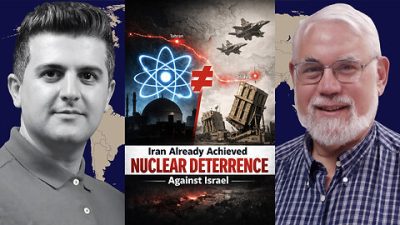
Prof. Ted Postol: Iran Already Achieved Nuclear Deterrence Against Israel
or go to
Aletho News Archives – Video-Images
From the Archives
How the occupied mentality syndrome works
Saudi Arabia on the American chessboard – Part 3
By B. J. Sabri | American Herald Tribune | June 27, 2016
Read part 2: “The occupied mentality Syndrome“
Previously I argued whether Saudi Arabia’s repeated involvements in U.S. interventions and wars stem from free national will or in response to a specific condition. For starters, in Saudi Arabia there is no national will. In Saudi Arabia, the national will is the will of the Al Saud clan. Still, when a major Arab state allies itself with a superpower that committed unspeakable crimes against humanity in almost every Arab country, then something is wrong. This fact alone should compel us to examine the U.S.-Saudi relation for one exceptional reason. As a result of the U.S.-Saudi wars, hundreds of thousands of people in Afghanistan, Iraq, Iran, Libya, Syria, Yemen, and Somalia have lost their lives. Millions became displaced in their own homelands. And millions more rendered refugees.
Attributing the Saudi policies to the bonds of “partnership” with the U.S. is frivolous. There are no bonds between these two thugs except those of business, military deals, secret plots, and wars. Proving this point, bonds such as these have no space for the American and Saudi peoples to share significant cultural or societal exchanges. If partnership is not the reason for the Saudi contribution to the U.S. strategy of empire and imperialism, then another reason must exist.
This leads to three possibilities. … continue
Blog Roll
 Aletho News
- NIAID/NIH and USDA Fund Bioengineered Chimeric Influenza Viruses Built Using Pandemic H1N1 Components: Journal ‘Science Advances’
- Hezbollah hits Israeli warship off Lebanon’s coast, sets it aflame
- Iran slams US strikes on B1 bridge, Mahshahr petrochemical plants as ‘blatant acts of state terrorism’
- In letter to UN chief, Araghchi warns of dire consequences of US-Israeli attacks on Iran’s nuclear facilities
- Why the CIA conspiracy to invade Iran with Kurdish militias failed
- Why Are Upbeat US Claims About Mission to Rescue Pilot ‘Highly Questionable’?
- Aircraft destroyed during US ‘rescue’ of downed F-15 pilot cost more than $100 million each
- Washington University removes professor who condemned US-Israeli war on Iran
- Russia Warns of Retaliation as UK Authorizes Seizure of Vessels
- Serbia thwarts plot to bomb Russia-Hungary gas pipeline – Vucic
- If Americans Knew
- In Iran, Israel-US take aim at “reason, research, and freedom of thought” – Daily Update
- US loses planes over Iran, Israel downgrades Lebanon war goals – Daily Update
- Israel Is Blocking Palestinians from Easter at Church Where Jesus Resurrected
- Plot to assassinate Palestinian activist follows harassment campaign promoted by Zionist groups and elected officials
- Prominent New York synagogue hosts presentation on why U.S. Jews should support the ethnic cleansing of Gaza
- Tapper vs. Piker: Is the CNN Anchor Auditioning for David Ellison?
- Shouldn’t Democrats Be Able to Condemn Genocide?
- Israel-US kill negotiators, destroy civilian structures, but Iran’s military capabilities still largely intact – Daily Update
- ‘War crime’: Global condemnation as Israeli ministers celebrate death penalty law targeting Palestinian prisoners
- 7 Ways Israel Is Turning Lebanon Into Gaza
- No Tricks Zone
- An Inconvenient Tree: Uncovered In Alps… Europe Much Warmer Than Today 6000 Years Ago
- New Study Reports A 60% Slowdown In Greenland’s Ice Loss Rate In The Last Decade
- Low Intensity Tornado Wrecks Major Solar Farm, Creating A Potential Toxic Dump
- New Study Finds Warming Saves Lives…Cold Temperatures 12 Times More Deadly Than Excess Heat
- German Science Blog Accuses PIK Climate Institute Of Hallucinating Climate Tipping Points
- Devastating Assessment Of Comirnaty Vaccine By Former Senior Pfizer Europe Toxicologist
- New Study: CO2 Is ‘Effectively Negligible’ As An Explanatory Climate Change Factor Since 2000
- Former Pfizer Toxicologist Dr. Helmut Sterz Tells Bundestag Hearing Pfizer Vaccine Should Have Never Been Approved
- Energy Expert: Germany’s Nuclear Phaseout Was A “500 Billion Euro Mistake”
- New Research: South Australia’s Mid-Holocene Sea Surface Temperatures Were 4°C Warmer Than Today
 Aletho News