Saad Hariri’s sudden resignation from Lebanon’s premiership, announced from Saudi Arabia, has raised fears that regional tensions were about to escalate and that the small country would once again pay a heavy price.
Hariri quit his post on Saturday in a televised speech broadcast by Saudi Arabia’s Al-Arabiya television, during which he appeared tense as he carefully read out from a written statement.
He claimed that he feared the same fate as his assassinated father and accused Iran and the Lebanese resistance movement Hezbollah of meddling in Arab countries’ affairs.
Hariri’s departure sent shockwaves through Lebanon as the country is struggling to maintain stability at a time when much of the Middle East is gripped by Takfiri violence rooted in Saudi Arabia.
Lebanon’s Minister of Justice Salim Jreissati said the development was “confusing and suspicious in its timing and location as well as the way it was delivered and the content of the resignation.”
“The optics are terrible — for Hariri to resign from Riyadh, imagine how his audience [in Lebanon] feels watching that,” said Emile Hokayem, a regional analyst at the Institute for Strategic Studies.
“God protect Lebanon from the evil of Saudi Arabia’s reckless adventures,” Sheikh Nabil Kawouk, a member of Hezbollah’s central committee, told Lebanon’s Al Jadeed television.
Last week, Qatar’s former prime minister Hamad bin Jassim revealed how the US coordinated support by Doha, Riyadh and Ankara for terrorists operating against the Syrian government.
Syria has always been a thorn in the side of Israel. The Arab country is part of the “axis of resistance” along with Lebanon’s Hezbollah and Iran, which has brought Daesh to the brink of elimination.
The triangle of Saudi Arabia, Israel and the US is alarmed and the prospect of an eventual triumph of this axis which has now become inevitable has prompted them to take drastic measures.
On Friday, as Syria began celebrating the capture of Dayr al-Zawr, Nusra Front terrorists launched a massive assault on a Druze village neighboring the occupied Golan Heights.
According to Syrian state media, the onslaught was carried out with Israeli coordination and assistance but Tel Aviv used the occasion to threaten direct intervention in the war.
Hariri’s resignation over what he called Hezbollah’s “grip” on Lebanon is the latest drastic step which Saudi Arabia and its allies have taken to tip the scales even at the cost of turning Lebanon into another Syria.
With the prime minister out of the political landscape, the architects of the new “plot” could claim that Lebanon was exclusively under Hezbollah’s control. That idea was articulated by Israeli minister of military affairs Avigdor Lieberman on Saturday.
“Lebanon=Hezbollah. Hezbollah=Iran. Lebanon=Iran,” he tweeted.
Hariri was appointed as the Lebanese premier in late 2016, after two years of political deadlock in the country. He formed a national unity government that included almost all of the main political parties in Lebanon, including Hezbollah.
Under the Lebanese constitution, the prime minister should be picked from among the Sunni community, but Saudi Arabia has tried to use the prerogative to maintain its influence in the country.
Riyadh says the government should be purged of Hezbollah, especially at a time when the resistance movement is emerging stronger from the Syria conflict.
Over the past few weeks, Saudi Arabia’s Minister of State for Persian Gulf Affairs Thamer al-Sabhan had unleashed a series of vitriolic attacks against Hezbollah, saying the group “should be punished… and confronted by force.”
The accusations coincided with new sanctions approved by US House of Representatives on the Lebanese resistance movement.
Hossein Sheikholeslam, a senior Iranian politician, told Al Mayadeen TV that Hariri’s’ resignation had been coordinated before between US president Donald Trump and Saudi Crown Prince Mohammed bin Salman.
He said, “After the defeat of Daesh and the US in the region, Washington and Riyadh are trying to fuel tensions in Lebanon and the region.”
Hossein Amir-Abdollahian, an adviser to the Iranian parliament speaker, agreed. “The decision has been made by the anti-Iran and anti-Hezbollah front following the disillusionment of US and its allies with Daesh,” he said.
In Lebanon, political leaders expressed their apprehension, including the leader of Lebanon’s Druze minority, who has frequently played kingmaker in Lebanese politics.
Walid Jumblatt, the leader of Lebanon’s Progressive Socialist Party (PSP), warned of the political burden and consequences of the resignation.
Hilal Khashan, a professor of political science at the American University of Beirut, said Hariri’s departure was “a dangerous decision whose consequences will be heavier than what Lebanon can bear.”
“Hariri has started a cold war that could escalate into a civil war, bearing in mind that Hezbollah is unmatched in Lebanon on the military level,” he added.
Israeli Prime Minister Benjamin Netanyahu, however, welcomed the decision and said Hariri’s departure should be a “wake-up call” to the international community to what he described as the threat posed by Iran.
November 5, 2017
Posted by aletho |
Wars for Israel | Hezbollah, Israel, Lebanon, Middle East, Saudi Arabia, Syria, United States, Zionism |
Leave a comment
It seems that matters are coming to a head in the Middle East. For many states, the coming period will likely prove to be the moment in which they determine their futures — as well as that for the region as a whole.
The immediate peg for “crunch time” is Russia’s fast-track proposal of a conference to be held in Sochi, with the near-full kaleidoscope of Syrian opposition invited, which, if all goes as planned, might mean 1,000 delegates arriving in Sochi as soon as Nov. 18.
The Syrian government has agreed to attend. Of course, when one hears of attendance in these numbers, it suggests that this is not intended as a “sleeves rolled-up” working session, but rather as a meeting in which Russian thoughts will be mooted on the constitution, the system of government, and the place of “minorities” – with a chaser that Russia wants fresh elections pretty darned quick: which is to say, in six months’ time. In short, this is to be the “last chance saloon” for opposition figures: come aboard now, or be shut out, in the cold.
This initiative has plenty of push behind it, including President Putin’s personal endorsement, but no guarantee of success. Both Iran and Turkey (the co-guarantors of Astana) privately may have reservations, not knowing precisely what Moscow might unveil. Iran is insistent on Syria retaining a strong centralized government, and Turkey is likely to worry about whether the Kurds might receive too much from Moscow; it will also have reservations about sitting down with the YPD (Syrian Kurds), which it views to be little more than a re-branded PKK, which Turkey regards as a terrorist organization. If Turkey does pull out, it will take an important slice of the opposition with it.
Critical moments in history, however, do have a habit of proving to be less critical than first imagined, but this one effectively marks the beginning of the winding up process of the Syrian war and of the 20-year “New Middle East” project (as devised by the U.S. and Israeli governments). How each state responds, will determine the Middle East landscape for the next years.
Military Mop-up
Late last week, the Syrian army took the rest of Deir Ezzor city, and with its rear now secure, the Syrian army is free to continue the 30 or so kilometers to reach Abu Kamal (al-Bukumal) – the last ISIS urban outpost – and the vital border crossing on the Euphrates with Iraq. It is estimated that there may be 3,500 Da’esh (another name for the Islamic State or ISIS) in Abu Kamal. But Abu Kamal’s “twin” (on the Iraqi side of the border), al-Qaim, was taken by the Iraqi government’s PMU militia forces on Friday. The Iraqi forces are now clearing the city of its estimated 1,500 Da’esh fighters.
Syrian President Bashar al-Assad
The Syrian army, backed up by several thousand recently injected Hezbollah forces, is poised to enter Abu Kamal in the coming days from two directions – and from the south, a co-ordinated thrust north up and into Abu Kamal by the Iraqi Hash’d a- Sha’abi (PMU) militia, will form a pincer.
American-supported SDF (Syrian Democratic Forces), however, are also trying to reach Abu Kamal from the east (the U.S., pressured by Israel, would like to seal and close the border crossing). U.S. allied forces can move more quickly, as U.S. officers are seeking to bribe local tribal leaders who formerly had sworn allegiance to ISIS (with Saudi money), to switch sides, or at least to allow the SDF forces to advance unhindered by ISIS (as happened in the environs of Deir Ezzor).
In short, the military outcome in Syria is done (after six years of war), and now comes the political bargaining. How this plays out will determine the relative strengths of the forces that will shape the Middle East in the coming years. The outcome will likely see whether Turkey can be bullied back towards NATO (by threats such as that by General Petr Pavel, head of NATO’s military committee, warning of “consequences” for Turkey’s attempts to buy Russian air defenses), or whether Turkey’s determination to limit Kurdish aspirations will see Turkey position itself alongside Iran and Iraq (who share a common interest).
Turkey’s role in Idlib, in overseeing the de-escalation zone there, remains opaque. Effectively, its forces are positioned more to control the Afrin Kurdish “canton” (rather than monitor the Idlib de-escalation zone). It is possible that President Recep Tayyip Erdogan is hoping to use Turkish troops to carve out a buffer zone along the Turkish-Syrian border – in contravention to the Astana understandings. If so, this will place him at odds with both Moscow and Damascus (but will not necessarily imply a return to the NATO camp, either).
Syria’s Future
The bargaining at Sochi will also make clearer whether Syria will be a strong centralized state (as Iran prefers), or a looser federal state as America (and perhaps Russia) would prefer. Sochi will be something of a litmus for the extent to which American influence can shape outcomes in today’s Middle East. At present, it looks as if there is co-ordination between Moscow and Washington for a speedy political settlement in Syria, a U.S. declaration of victory over ISIS, Syrian elections, and an American exit from the Syrian theatre.
The outcome of the conference will also perhaps clarify whether the Syrian Kurds finally will remain with the U.S. CentCom project for retaining a permanent U.S. presence in northeast Syria (as Israel wants), or whether the Syrian Kurds will cut a deal with Damascus (after witnessing the crushing of the Barzani Kurdish independence project by neighboring powers).
If the latter occurs, the argument for retaining a longer-term U.S. presence in northeast Syria would lose force. The Saudis will have either to accept defeat in Syria, or act the party-pooper (by trying to re-ignite the remaining proxy forces in Idlib) – but, for that, the kingdom would need Turkey’s compliance, and that may not be forthcoming.
Iraq too, irked by U.S. Secretary of State Rex Tillerson’s comments suggesting that the PMU are Iranian – and must “go home” – has already shown signs of re-orientating towards Russia. (It has recently signed an expansive energy and economic protocol with Russia – after having reclaimed control of its borders and of Iraq’s energy resources – and is procuring Russian arms). Evidence of Iraq’s close connections with Syria, Turkey and Iran was very manifest in the quick execution of the put-down to the Kurdish independence gambit.
But the state facing the biggest dilemma in respect to the Syrian outcome is Israel. Alex Fishman, the doyen of Israeli defense columnists, has written that Israel simply has failed to adjust to strategic change, and is locked in a narrow “cold war” mentality:
“The Syrians fire rockets at open areas: Israel destroys Syrian cannons in response; the Iranians threaten to deploy Shiite forces in Syria: Israel announces ‘red lines’ and threatens a military conflict; Fatah and Hamas hold futile talks on a unity government: the prime minister declares Israel is suspending talks with the Palestinans – and everyone here applauds the security and political echelons: – ‘there, we showed them the meaning of deterrence’, [the Israeli leadership repeats].
“But what we are seeing here is a provincial defense policy, a false representation of a leadership that barely sees beyond the tip of its nose, and is busy putting out fires day and night.
“It’s a leadership that sees national security through a narrow regional viewpoint. It’s as if everything beyond Hezbollah, Hamas and Iran doesn’t exist. It’s as if the world around us hasn’t changed in the past decades, and we are stuck in the era of aggressive solutions in the form of reward and punishment as the main political-security activity. The current political-security echelon isn’t solving problems, isn’t dealing with problems, but simply postponing them, passing them on to the next generation”
Missing the Strategic Picture
What Fishman is pointing to is profound: Israel has gained some tactical victories in the neighborhood (i.e. over the Palestinians generally, and in weakening Hamas), but it has lost sight of the wider strategic picture. In effect, Israel has lost its ability to dominate the region. It had wanted a weakened and fragmented Syria; it had wanted a Hezbollah mired in the Syrian mud, and an Iran circumscribed by Sunni sectarian antipathy towards the Shi’a generally. It is unlikely to get any of these.
Rather, Israel finds itself being deterred (rather than doing the deterring) by the knowledge that it cannot now overturn its strategic weakness (i.e. risk a three-front war) – unless, and only if, America will fully enter into any conflict, in support of Israel. And this is what worries the security and intelligence echelon: Would America now contemplate a decisive intervention on behalf of Israel – unless the latter’s very survival was at risk?
In 2006, Israeli officials recall, the U.S. did not enter Israel’s war against Hizbullah in Lebanon, and after 33 days, it was Israel that sought a ceasefire.
Fishman is right too that attacking Syrian factories and radar positions “out of old habit” solves nothing. It may be sold to the Israeli public as “deterrence,” but rather it is playing with fire. Syria has started to fire back with aged surface-to-air missiles (S200s) at Israeli aircraft. These missiles may not have hit an Israeli jet yet, and maybe were not even intended so to do. The Syrian message however, is clear: these missiles may be old, but they have a longer range than the newer S300: Potentially, their range is sufficient to reach Ben Gurion Airport outside Tel Aviv.
Are the Israelis sure that Syria and Hezbollah don’t have more modern missiles? Are they certain that Iran or Russia will not provide them such? The Russian defense minister was very angry on his visit to Tel Aviv to have been faced with an Israeli retaliatory air attack on a Syrian radar and missile position – as a welcome gift on landing in Israel. To his protests, his Israeli counterpart, Defense Minister Lieberman condescendingly said that Israel needed nobody’s advice in respect to Israel’s security. General Sergey Shoygu reportedly was not amused.
Can Israel come to terms with its new strategic situation? It seems not. Ibrahim Karagul, a Turkish political commentator and an authoritative voice of President Erdogan, writing in Yeni Safak, notes that
“the foundations of a new disintegration [and] division are being laid in our region. Saudi Arabia’s ‘We are switching to moderate Islam’ announcement contains a dangerous game. The U.S.-Israel axis is forming a new regional front line.”
Karagul continues:
“We have been watching the strange developments in Saudi Arabia, the United Arab Emirates (UAE), Egypt, Israel and the U.S. for some time now. There is a new situation in the region, which we know is [principally aimed] against Iran; but has recently taken an open anti-Turkey state, aimed at limiting Turkey’s influence in the region … You will see, the ‘moderate Islam’ announcement will be immediately followed by a sudden and unexpected strengthening of Arab nationalism. This wave will not differentiate between Shiite or Sunni Arabs, but it will isolate the Muslim Arab world from the entire Muslim world.
“This separation will be felt most by the Shiite Arabs in Iraq. With this new block, Iraq and Iran are going to stage a new power showdown [i.e. will react forcefully to counter it]. Iraqi Prime Minister Haider al-Abadi’s future in power is also most likely going to [become contingent on the outcome to] this showdown.”
An American ‘Buy-in’
To give this project American “buy-in,” Israel and Saudi Arabia are focusing it on Lebanese Hezbollah, which the U.S. has declared to be a terrorist entity though the movement was part of Lebanon’s government, which was headed by Prime Minister Saad Hariri until he ominously resigned today in an announcement made in Riyadh, Saudi Arabia. (Hariri is a dual Saudi-Lebanese national.)
Saudi State Minister for Gulf Affairs Thamer al-Sabhan (in Beirut last week) called for “toppling Hezbollah” and promised “astonishing” developments in “the coming days. Those who believe that my tweets are a personal stance, are delusional … the coming developments will definitely be astonishing.”
Al-Sabhan added that the kingdom’s escalation against Hezbollah could take several forms that would “definitely affect Lebanon. Politically, it might target the government’s relations with the world. At the economic and financial levels, it could target commercial exchange and funds, and militarily it might involve the possibility of a strike on Hizbullah by the U.S.-led coalition, which labels Hizbullah a terrorist organization.” (Comment: this latter point probably was made more in hope, than in expectation. Europe and the U.S. set considerable store on maintaining Lebanon as stable).
Karagul reflects further on this U.S.-Gulf-Israeli initiative:
“The moderate Islam project was tried the most in Turkey. We always said this is ‘American Islam’ and opposed it. The February 28 military intervention is the product of such a project. It was implemented by the U.S./Israel extreme right-wing and their partners on the inside. The Fetullah Terrorist Organization (FETO) is the product of such a project, and the Dec. 17/25 and July 15 attacks were made for this very reason. They were all aimed at trapping Turkey within the U.S./Israel axis.
“But Turkey’s local and national resistance has overcome them all. Now they are burdening Saudi Arabia with the same mission. That is how they are making it appear. I do not think that it is possible for Saudi Arabia to undertake such a mission. This is impossible both in terms of the regime’s character and its social structure. This is impossible because of the ‘Israel/U.S. sauce’.
“The discourse of making the switch to moderate Islam will cause serious confusion in the Saudi administration and grave social reactions. The actual conflict is going to take place within Saudi Arabia. Also, the Riyadh administration has no chance of exporting something to the region or setting an example.
“Especially once it is further revealed that the project is security-based, that a new front line has been formed, that it is all planned by the U.S.-Israel, it will result in a fiasco. This project is suicide for Saudi Arabia, it is a destruction plan; it is a plan that will destroy it unless it comes to its senses.”
Karagul makes the point well: the attempt to make Islam in the Christian “Westphalian” image has a disastrous history. The metaphysics of Islam are not those of Christianity. And Saudi Arabia cannot be made “moderate” by Mohammad bin Salman just ordering it. It would entail a veritable cultural revolution to shift the basis of the kingdom, away from the rigors of Wahhabism to some secularized Islam.
More War?
Where is this taking the Middle East: to conflict? Maybe. But Israeli Prime Minister Benjamin Netanyahu is not noted for his audacity: he his noted more for rhetoric which often has proved empty; and Israeli security officials are being cautious, but both sides are preparing against the possibility of what Karagul calls a “great power showdown.” It looks, though – from this and other Turkish statements – as if Turkey will be with Iran and Iraq, and standing against America and Saudi Arabia.
And President Trump? He is wholly (and understandably) preoccupied with the low-intensity war being waged against him at home. He probably tells Netanyahu whatever it is that might advance his domestic battles (in Congress, where Netanyahu has influence). If Bibi wants a fiery speech at the U.N. berating Iran, then, why not? Trump can then call on the trifecta of White House generals to “fix it” (just as he did with JCPOA, passing it to Congress “to fix”), knowing that the generals do not want a war with Iran.
The danger is a “black swan.” What happens if Israel goes on attacking the Syrian army and industrial premises in Syria (which is happening almost daily) – and Syria does shoot down an Israeli jet?
Alastair Crooke is a former British diplomat who was a senior figure in British intelligence and in European Union diplomacy. He is the founder and director of the Conflicts Forum.
November 4, 2017
Posted by aletho |
Ethnic Cleansing, Racism, Zionism, Timeless or most popular, Wars for Israel | Hezbollah, ISIS, Israel, Lebanon, Middle East, SDF, Syria, Zionism |
Leave a comment

NY Congressman Eliot Engel (second from left) is lead sponsor on recent anti-Iran bills. Engel, who is the top Democrat on the House Foreign Affairs Committee, has traveled to Israel often and is one of its most fervent defenders. (Photo is from his Congressional website.)
Ever since Iran’s increasingly despotic Shah was overthrown by a popular revolution in 1979, Israel has targeted Iran for attack because of the country’s support for Palestinian rights. (The Shah had been put in place by a 1953 UK-US engineered coup against the country’s Prime Minister, Mohammad Mosaddegh.)
The Israeli ambassador to the U.S. said recently that Iran is Israel’s number one concern, and an Iranian newspaper reported: “Iran is the primary target of the Mossad’s actions, which number in the hundreds and thousands each year.”
The Israel lobby has accordingly worked for U.S. policies against Iran, including disseminating advertisements that demonize Iran; an example is this 2010 full-page advertisement in the New York Times :

The list on the left is of the groups that sponsored the ad, as evidenced by their icons at the bottom of the ad.
Now Congress has obliged Israel and its lobby by passing four more bills against Iran. Below is a report on the latest legislation. (Photographs and some additional information in Italics have been added.)
Despite a purely partisan Republican push to alter the terms of the Iran nuclear deal, an overwhelming majority of US lawmakers from both parties continues to advance legislation to counter Iranian behavior throughout the Middle East.
The House passed four bills today and Wednesday taking aim at Iran’s ballistic missile program and its support for Hezbollah, the Lebanese Shiite paramilitary group fighting alongside Iranian forces on behalf of the Bashar al-Assad regime in Syria. In addition, Iran hawks in Congress continue to press the Donald Trump administration to ban US aircraft sales to Iran and designate the Islamic Revolutionary Guard Corps (IRGC) as a foreign terrorist organization.

Lebanese resistance group Hezbollah has opposed Israeli invasions and occupation. Photo is of a Beirut suburb bombed by Israel in 2006.
“The whole thing with the [nuclear deal] that irked me throughout was that during the course of the negotiations … we were told consistently that this was only about nuclear weapons,” Rep. Eliot Engel, D-N.Y., the top Democrat on the House Foreign Affairs Committee, told Al-Monitor. “We couldn’t raise terrorism, we couldn’t raise ballistic missiles. We couldn’t raise all the other things against Iran and it frustrated me to no end.”
“I think those of us who really feel that Iran is a major cause of instability in the Middle East need to make sure that Iran is sanctioned,” Engel added.
[U.S. intelligence agencies have found no evidence that Iran is developing nuclear weapons.]
In July, Congress passed the first round of sanctions on Iran since the 2015 nuclear accord. The Iran Ballistic Missiles and Sanctions Enforcement Act, which the House passed 423-2 today, would further expand sanctions on Iran’s ballistic missile program. The Senate must now vote on the additional sanctions package before it can head to Trump’s desk.
Engel, the lead cosponsor of both Iran sanctions packages, has described today’s bill as “pretty similar” to the July sanctions package. The new version, however, would affect entities and individuals supporting Iran’s ballistic missile program even if they don’t have assets in the United States.
The House also passed three bills targeting Hezbollah on Wednesday. The US government considers Hezbollah a terrorist group and US lawmakers overwhelmingly regard it as an Iranian proxy.

House Majority Leader Kevin McCarthy (R-CA) at the ‘National Leadership Assembly for Israel’ event organized by the Conference of Presidents of Major American Jewish Organizations. (National Press Club July 28, 2014 in Washington, DC.)
“They’re giving the money to Hezbollah to kill individuals and fund terrorism around the world,” House Majority Leader Kevin McCarthy, R-Calif., said on Fox News before Wednesday’s votes. “And we’re putting an end to that, continuing to put the sanctions and the pressure on.”
The primary Hezbollah sanctions bill, the Hezbollah International Financing Prevention Amendments Act, introduced by House Foreign Affairs Committee Chairman Ed Royce, R-Calif., passed the House unanimously on Wednesday. It is designed to cut Hezbollah’s funding streams from foreign states such as Iran while cracking down on the group’s alleged racketeering activities abroad. The Jerusalem Post reported in September that Iran now gives Hezbollah roughly $800 million a year, an unprecedented level of funding.

Congressmen Ed Royce (L) and Eliot Engel (R) with Israeli Prime Minister Benjamin Netanyahu.
Companion legislation passed the Senate unanimously earlier this month. The House version, however, contains some extra provisions that single out Iran and Russia for their support of Hezbollah.
Specifically, the House version amends a 2010 Iran sanctions package to include Iran’s support for Hezbollah and directs the administration to sanction government entities that are already on the State Department’s state sponsor of terrorism list if they support Hezbollah. Iran, Syria and Sudan are currently the only three countries on that list.
Engel, the lead cosponsor of the Royce bill, told Al-Monitor that he’s optimistic its Iran provisions will survive reconciliation with the Senate version.
“I think ultimately they won’t disappear because I think both sides of the aisle understand that Iran’s a threat and even those who want to keep the [Iran deal] don’t want to take the pressure off Iran,” said Engel. “When we do things and wrap it up for the year, I think the Iran sanctions have to be in there.”
The House also unanimously passed legislation from Rep. Mike Gallagher, R-Wis., to impose overlapping sanctions on foreign states and individuals for providing support to Hezbollah due to its alleged use of human shields. The sanctions in both Hezbollah bills would target the same individuals and entities, but its supporters say the Gallagher bill still has value.
“The purpose of these bills, especially the reporting part, is to highlight the various harmful actions which Congress wants to expose with regard to Hezbollah,” said Joseph Gebeily, the president of the Lebanese Information Center, a think tank critical of Hezbollah.
Gebeily added that the Gallagher bill “puts more focus on the United Nations Security Council’s responsibility in disarming Hezbollah and preventing its military operations in Lebanon.” The bill requires the US ambassador to the United Nations to “secure support for a resolution that would impose multilateral sanctions against Hezbollah for its use of civilians as human shields.”
Lastly, a resolution offered by Rep. Ted Deutch, R-Fla., to urge the European Union to designate the political wing of Hezbollah as a terrorist organization passed the House unanimously. While the EU considers Hezbollah’s paramilitary wing to be a terrorist group, US lawmakers have repeatedly voiced their frustration that it does not extend that designation to Hezbollah parliamentarians and Cabinet officials in Lebanon.

Congressional Representatives Ilyana Ros-Lehtinen and Ted Deutch with Israeli Prime Minister Netanyahu. Deutch’s website says: “Congressman Ted Deutch is a passionate supporter of Israel whose advocacy for a strong U.S.-Israel relationship stretches back to his youth. Ted spent his summers at Zionist summer camp, worked as a student activist in high school and college, and served in leadership roles on several local and national Jewish organizations throughout his professional career. Today, Ted serves as Ranking Member of the House Foreign Affairs Committee’s influential Middle East and North Africa Subcommittee, where he continues to champion Israel’s security during a time of great volatility in the Middle East.”
And House lawmakers aren’t done.
House Homeland Security Committee Chairman Michael McCaul, R-Texas, continues to push for adoption of his bill urging the State Department to designate the IRGC as a foreign terrorist organization. Sen. Ted Cruz, R-Texas, has a companion bill in the Senate.

US Rep. Michael McCaul (sixth from left) led a 2015 bipartisan Congressional delegation to meet with Israeli Prime Minister Benjamin Netanyahu.
Trump himself designated the IRGC as a terrorist-supporting entity when he declined to certify the nuclear deal earlier this month, but the move falls short of what some in Congress are asking for.
“There’s not really an expansion of sanctions on the IRGC,” said Kenneth Katzman, an Iran sanctions expert at the Congressional Research Service. Trump’s executive order “has a slight travel restriction, obviously, but how many IRGC people … are going to realistically get visas to come to the United States?”
McCaul agrees more could be done.
“The president, when he sanctioned the IRGC, went a long ways in terms of getting the idea of it,” he told Al-Monitor. “However, they didn’t designate it as a foreign terrorist organization. So I’d like to complete that.”
McCaul told Al-Monitor that his bill is currently held up by staff on the House Judiciary Committee who believe that designating terrorist organizations should remain strictly within the purview of the administration.
“Maybe we’ll work with leadership to put it to the floor anyway,” he said.
Iran hawks in the House are also fighting to preserve legislation that would that would bar US aircraft manufacturers, such as Boeing and Airbus, from selling civilian airliners to Iran. Rep. Peter Roskam, R-Ill., included the language in a spending package in September.

Congressman Peter Roskam speaks at AIPAC fundraiser in Chicago, 2013. (Video here.) Roskam co-chairs the House Republican Israel Caucus and is a member of the bipartisan Israel Allies Caucus.
The 2015 nuclear deal paves the way for such sales, but Roskam and others fear that Iran could use the civilian airliners to transport troops to fight on behalf of the Syrian regime. The Senate version of the appropriations bill, however, does not contain such language.
October 27, 2017
Posted by aletho |
Ethnic Cleansing, Racism, Zionism, Timeless or most popular, Wars for Israel | Hezbollah, Israel, Sanctions against Iran, United States, Zionism |
Leave a comment
The Trump administration is accelerating on a collision course with its European allies over the Iran nuclear deal. Washington is essentially demanding the EU joins in backdoor sanctions against Iran – or face financial penalties. In short: browbeating, arm-twisting, and bribery.
In a sign of the times, the Europeans are resisting American pressure. With huge investments already lined up between EU countries and Iran, the Trump administration is being viewed with contempt for daring to bully European economic interests.
In a classic backfire, Washington’s browbeating of European allies is pushing them to reorient their strategic interests toward China, Russia and a multilateral global order in which US power diminishes even further.
Earlier this week, US Secretary of State Rex Tillerson gave an extraordinarily explicit warning to Europe over Iran. At a news conference in the Saudi capital, Riyadh, Tillerson said European companies are “at great risk” if they invest in Iran owing to the Trump administration possibly re-imposing sanctions on Tehran in the coming months.
Trump’s dangling of sanctions follows his “decertification” earlier this month of the international nuclear accord signed with Iran and five other world powers: Russia, China, Britain, France, and Germany. Known formally as the Joint Comprehensive Plan of Action (JCPOA), the July 2015 deal promised to lift trade sanctions on Iran in exchange for the latter’s restriction on its nuclear energy program to prevent any weaponization.
Washington’s repudiation of the JCPOA is not shared by the Europeans, Russia nor China. The UN nuclear watchdog, the International Atomic Energy Agency, has also confirmed that Iran is in full compliance with the terms of the accord. EU leaders and diplomats have adamantly said they have no intention of abandoning the agreement or renegotiating it. China and Russia likewise concur.
From the early days of Trump’s presidency, he has been griping about the Iran deal, calling it the “worst ever.” He and others in Washington claim Iran is using sanctions relief to finance support for Syrian ally Bashar Assad, Lebanon’s Hezbollah movement and clandestine terror operations in the Middle East. Washington’s claims are invariably vague and unsubstantiated. Tehran has dismissed Trump’s accusations as ignorant.
Evidently, the Europeans do not have the same pejorative view of Iran as a “global sponsor of terrorism” as the Americans. Neither does China or Russia. Even before Trump decertified the JCPOA – a move which could trigger a full-blown cancellation after a Congressional review requested by the president – there was already talk about Washington and Europe clashing. “Europe and the USA on collision course,” ran a headline in Deutsche Welle in August.
Now, after Tillerson’s pointed warning to the Europeans to “stay out of Iran,” the US is ramping up the clash. Bloomberg headlined last week: “Trump’s Iran policy is a headache for EU business.” The report noted, however, that: “America’s U-turn on nuclear accord won’t spike existing [European investment] deals.”
Since the signing of the JCPOA two years ago, European investment and trade with Iran have burgeoned. For example, French oil major Total earlier this year finalized a 20-year oil and gas project worth around €5 billion, along with a Chinese firm.
That followed the announcement of multi-million euro investment plans by car manufacturers Renault and PSA (Peugeot and Citroen) to expand factories in Iran. This month, only days after Trump announced he was decertifying the JCPOA, a Norwegian-led consortium signed a €3 billion project with Iran to build solar panels for the international market. “Norway is fully committed to the JCPOA,” said the Norwegian ambassador to Iran.
Germany and France have both seen exports to Iran rapidly multiply. The German chamber of commerce expects total bilateral commerce to double in the next two years. Next month, the EU’s foreign policy chief Federica Mogherini is to travel to Washington where she will reiterate the bloc’s resolute support for the nuclear accord. Last week, Mogherini made the case that Europe must now take global leadership. She didn’t mention Trump by name, but it was clear she was rebuking Washington’s isolationist policy.
Germany’s Foreign Minister Sigmar Gabriel has also berated Washington’s bullying tactics over Iran. Gabriel said Trump was inevitably pushing Europe toward consolidating economic interests with China and Russia.
Following Tillerson’s lecturing to the EU earlier this week about not investing in Iran, the New York Times reported: “European diplomats have said they would defend their companies against such sanctions, potentially setting up an epic battle between close allies and two of the largest commercial markets on the planet.”
This is the ineluctable thing. The Europeans have already committed enormous amounts of capital to developing trade and industry with Iran – a country that ranks in the global top five for oil and gas reserves. With a population of 80 million and a high standard of education, Iran promises to be a lucrative growth area. Even under decades of US-led sanctions, the country scored impressive achievements in development, innovation, and engineering.
Unlike the Europeans, the US has negligible commercial ties with Iran. It is therefore easy for Washington to threaten sanctions against that country. Washington has little to lose. Not so the Europeans. For the Trump administration to say that investments are “at risk” is therefore seen as an outrageous infringement on Europe’s future economic plans.
As France’s Finance Minister Bruno Le Maire told American officials ahead of Trump’s expected knock-back to the Iran deal: “The US must not appoint itself as a global policeman.” The irony is that Washington’s overweening attitude toward its European “allies” is likely to hasten the global dynamic it most fears. That is the decline of American economic power and the rise of a multipolar global order.
Former US President Jimmy Carter acknowledged the shift when referring to North Korea this week and the need for diplomacy. He said the US was “no longer dominant” and that “Russia was coming back, and China and India were coming forward.”
The once-mighty American dollar is increasingly challenged in its status as the world’s top reserve currency. China is moving to a gold-backed yuan payments system for its imports and exports. Russia is stockpiling gold reserves, in another move which is seen as Moscow making preparations for a break with the US-dominated financial order.
Washington still retains tremendous control over international banking and finance. It has veto power at the International Monetary Fund, and it dominates the SWIFT banking system for payments.
Nevertheless, nothing remains forever. China and Russia are making strides toward economic life without the dollar. The Europeans already have a reserve currency with the euro. If push comes to shove, the EU could conduct its business with Iran and let the Americans go hang. With China and Russia already forging ahead on a new multipolar global order, the Europeans might soon realize that their best interests are served from breaking away from Washington’s shadow.
It is increasingly apparent especially under Trump that American interests are colliding with those of European “allies.” In the end, it comes down to the exigency of self-interest. Europe is finding it simply can’t afford America’s stupid arrogance. Washington’s hectoring of allies is digging its own grave as a global power.
October 24, 2017
Posted by aletho |
Economics, Timeless or most popular, Wars for Israel | European Union, Hezbollah, JCPOA, Sanctions against Iran, United States |
Leave a comment
According to a report circulating unofficially in Arabic, the latest in a sixty-nine year history of proposals to resolve the western Zionist invasion of Palestine (AKA the Israeli-Palestinian “conflict”) is about to see the light of day. It claims Israeli Prime Minister Benjamin Netanyahu originated the proposal and that secret deliberations have been underway for more than five months.
Netanyahu has now presented the proposal to the US, which made some changes and agreed to promote it. Palestinian President Mahmoud Abbas will carry the plan, called “the Agreement of the Century” to Egypt, Jordan, Saudi Arabia, the United Arab Emirates and Kuwait for review and discussion.
The provisions
The proposal has 21 points, but the main provisions are that the West Bank will be federated (or re-federated) with Jordan, and the Gaza Strip with Egypt. Together, they will be known as the Palestinian Confederation, ostensibly converting the Palestinian “Authority” into a national government, although it is already widely recognized as such and although it will not have any of the authority or sovereignty that nation states are deemed to have under international law.
Israel will govern Jewish settlements directly and Jerusalem is excluded from the proposal, for resolution at a later time. The primary function of Jordan, Egypt and the Palestinian Authority, therefore, will be to take over the security functions currently administered by the Israeli armed forces; i.e., to protect Israel and repress Palestinians. As they say in Israel, “When you have a dirty job, give it to an Arab.”
Other provisions concern development of infrastructure, international guarantees, and conversion of Hamas into a purely political party while integrating its military wing into the Palestinian security forces. The borders will be based on the armistice lines as of June 4th, 1967, with some territorial swaps. Refugees will be permitted to “return” to the West Bank and Gaza, even if it is not the home from which they were displaced. This is not going to be accepted by expatriate refugees in Lebanon, Syria and other countries, but they have always been disenfranchised in all proposals, and this one is no exception.
Unanswered questions
The biggest unanswered question is the status of Jerusalem. Will the Arab leaders accept an agreement that has no assurances at all with respect to Jerusalem? This is hard to imagine, and it was, in fact, the major stumbling block to an agreement at the Camp David Summit in 2000.
Another major unknown is what happens to the West Bank areas designated A, B and C in the Oslo agreement. Area A is the only one of the three where Oslo grants full administrative and security control to the Palestinian Authority, and it comprises less than 15% of the total area of the West Bank, itself only 18% of historic Palestine. Israel is unlikely to hand B and C over to Palestinian authority and limit the settlements to their current footprints, without prospect of outward expansion or new settlements. More likely, they will insist upon continuing the current arrangement, allowing Israel to continue expanding the settlements indefinitely. This is also unlikely to be acceptable to the Arabs and to the Palestinian people.
Analysis
What do the parties to the agreement expect to gain from it?
Israel wants to rid itself of the Palestinians. It wants the land but not the people. It also wants to stop being considered an occupier of someone else’s land. In 1948 it achieved this by massive ethnic cleansing and genocide. In 1967 it used the same methods but was somewhat less successful except on the Golan Heights, where it expelled 94% of the population. Since then, expulsions have been gradual and slower, except for the 2006 expulsion of a million people in south Lebanon, which was subsequently reversed by the victory of the Hezbollah resistance.
If the above assumptions about areas A, B and C are correct, a signed agreement means that Israel concedes nothing at all and will be able to continue with its territorial ambitions. However, it will rid itself of the Palestinians by farming out the occupation to Jordan, Egypt and the Palestinian Authority. The agreement also removes the teeth (such as they are) of Hamas, and makes Israel appear to be a “peacemaker” with a “generous proposal”.
Mahmoud Abbas’s interest is to become the president of a “real” (though not sovereign) country, recognized universally, even by Israel. He also gets Gaza in the bargain, as well as some handsome development funds that will improve the economy, at least in the short run. The recently announced “unity government” between Hamas and Fatah can be seen as a prelude to such an agreement, and a means of strengthening Abbas’s hand in the negotiations (which is why Israel is not very happy about it).
Hamas gains the least of any of the parties, but Israel’s decade-long siege on Gaza is now so debilitating that they are possibly loathe to dash the hopes of their people for relieving their isolation. They are under tremendous pressure to improve the intolerable living conditions, and may not wish to be seen as spoilers.
The Arab monarchies and Egypt want to be rid of the problem and to get on with other concerns, chiefly their rivalry and potential conflict with Iran. In this case they would like to be able to collaborate and ally themselves more openly with a powerful Israel, which the agreement will legitimate. Iraq and Syria, who are friendly to Iran, are not currently on Abbas’s itinerary, which underscores that their views are not likely to be given consideration.
The US also gets a Middle East peace agreement that has eluded eleven administrations since 1948, and which Trump desperately needs to bolster his flagging image on the domestic front. The agreement would also strengthen the hand of both the US and Israel to undertake aggressive action against Iran and destroy it as a regional power, which is an ambition of both countries and the conservative Arab regimes.
All of this assumes that the agreement will be approved. That is still a very big “if”. But Israel is also prepared for failure, which also works to their advantage. In that case Israel will do what it has always done: blame the Palestinians for refusing to be complicit in their own demise. They will then give their military a free hand to commit another pogrom, known in Israel as “mowing the grass”.
In fact, Israel may pull another plan off the shelf, one using a more direct means of ridding themselves of the Palestinians. They learned in Lebanon that they could create a million refugees in ten days, and thereby clear the land of its inhabitants. Instead of “mowing the grass”, this would be more akin to “scorching the earth”, which is also a definition of the term “holocaust”.
Paul Larudee is one of the founders of the Free Gaza and Free Palestine Movements and an organizer in the International Solidarity Movement.
October 19, 2017
Posted by aletho |
Ethnic Cleansing, Racism, Zionism, Illegal Occupation | Egypt, Hamas, Hezbollah, Israel, Middle East, Palestine, Saudi Arabia, United States, Zionism |
Leave a comment
The United States, Israel and Saudi Arabia have yet to demonstrate that they have the “courage” to attack Iran directly and it is still conventional wisdom among most observers that none of Iran’s self-defined adversaries will ever develop an appetite for a hot war on Iranian soil any time soon.
One of the reasons for this reticence to attack Iran directly, especially where more moderate members of the Pentagon are concerned, is that such an operation would be suicide from a military-strategic point of view. Ultimately, the US would likely lose any war on Iranian soil that was not a nuclear war. The latter option would of course be a cataclysmic disaster for the planet.
This is one of the reasons that the US continues to construct a totally nonfactual narrative about “Iranian terrorism”. Because no such thing exists (on the contrary Iran both fights and is a victim of Takrifi jihadism), the US along with Israel continues to peddle the narrative that the Lebanese party Hezbollah is an ‘Iranian terrorist group’, even though Hezbollah’s latest accomplishment has been destroying ISIS and al-Qaeda in Lebanon while continuing to help the secular Syrian government fight jihadists.
While many pundits highlight the fact that if a US politician articulates the name of any group with an Arabic or Farsi name, it is easy to pass off such a group as a terrorist organisation, this simplistic explanation for Washington’s continued attacks on Hezbollah as an “Iranian terrorist group”, in spite of the fact that Hezbollah is a Lebanese political party and security force, actually bears a far more sinister explanation.
Because many in the US and Israel are in fact afraid of taking on Iran directly, they are actively working to undermine Iran by attacking its smaller allies. The continual demonisation of Hezbollah is clearly defined by the US as an attempt to weaken the appeal of Hezbollah in Lebanon, in order to convince Lebanese Shi’a Muslims to withdraw electoral and moral support for the party, thus eliminating the power of an Iran friendly group in the heart of the Levant.
This is not speculation or conjecture, but a reference to an important US policy document, drafted as a ‘gift’ for Israeli leader Benjamin Netanyahu in 1996. The document known as “A Clean Break” was authored by the future Chairman of the Defense Policy Board Advisory Committee in the Bush administration, Richard Perle. The document was meant to provide guidance for the future of US-Israeli policies in the Middle East.
At the time, it was reportedly dismissed by Neyanyahu as being too extreme, even by Israeli standards, but since 9/11, many of the proposals have either been executed or attempted, including regime change in Iraq and Syria, aggression against Shi’a factions in Lebanon and an increasingly militant approach to Palestine.
Perle’s proposals for Hezbollah make for a reading that is one part frightening and another part laughable. Perle suggests a full-scale campaign to weaken and demonise Hezbollah, something which has clearly failed as Hezbollah’s popularity, even among Christians and Sunnis has only risen since the 1990s, as many Lebanese see Hezbollah as an insurance policy against both Israeli aggression as well as against jihadist terrorism of the ISIS and al-Qaeda variety. The laughable part is when Perle suggests that the Sunni Hashemite Jordanian regime could somehow fill the void left by a would-be weakened Hezbollah, because of alleged latent sentimental attachments among Levantine Shi’as towards the Hashemite dynasty. Such an enlargement would have been far flung even in the 1920s and in 2017, the following segment from “A Clean Break” reads like a bad script to a would-be sequel to Lawrence of Arabia.
“Israel can shape its strategic environment, in cooperation with Turkey and Jordan, by weakening, containing, and even rolling back Syria. This effort can focus on removing Saddam Hussein from power in Iraq — an important Israeli strategic objective in its own right — as a means of foiling Syria’s regional ambitions. Jordan has challenged Syria’s regional ambitions recently by suggesting the restoration of the Hashemites in Iraq. This has triggered a Jordanian-Syrian rivalry to which Asad has responded by stepping up efforts to destabilize the Hashemite Kingdom, including using infiltrations. Syria recently signaled that it and Iran might prefer a weak, but barely surviving Saddam, if only to undermine and humiliate Jordan in its efforts to remove Saddam.
But Syria enters this conflict with potential weaknesses: Damascus is too preoccupied with dealing with the threatened new regional equation to permit distractions of the Lebanese flank. And Damascus fears that the ‘natural axis’ with Israel on one side, central Iraq and Turkey on the other, and Jordan, in the center would squeeze and detach Syria from the Saudi Peninsula. For Syria, this could be the prelude to a redrawing of the map of the Middle East which would threaten Syria’s territorial integrity.
Since Iraq’s future could affect the strategic balance in the Middle East profoundly, it would be understandable that Israel has an interest in supporting the Hashemites in their efforts to redefine Iraq, including such measures as: visiting Jordan as the first official state visit, even before a visit to the United States, of the new Netanyahu government; supporting King Hussein by providing him with some tangible security measures to protect his regime against Syrian subversion; encouraging — through influence in the U.S. business community — investment in Jordan to structurally shift Jordan’s economy away from dependence on Iraq; and diverting Syria’s attention by using Lebanese opposition elements to destabilize Syrian control of Lebanon.
Most important, it is understandable that Israel has an interest supporting diplomatically, militarily and operationally Turkey’s and Jordan’s actions against Syria, such as securing tribal alliances with Arab tribes that cross into Syrian territory and are hostile to the Syrian ruling elite.
King Hussein may have ideas for Israel in bringing its Lebanon problem under control. The predominantly Shia population of southern Lebanon has been tied for centuries to the Shia leadership in Najf, Iraq rather than Iran. Were the Hashemites to control Iraq, they could use their influence over Najf to help Israel wean the south Lebanese Shia away from Hizballah (sic), Iran, and Syria. Shia retain strong ties to the Hashemites: the Shia venerate foremost the Prophet’s family, the direct descendants of which — and in whose veins the blood of the Prophet flows — is King Hussein”.
Of the many things an overzealous Richard Perle got wrong. The most staggering are as follows:
–Underestimating the non-sectarian popularity of the Ba’athist government in Syria
–Not accounting for the Shi’a majority in Iraq who would be politically unleashed in a post-Saddam society
–Overestimating the appeal of the hereditary Jordanian regime to Arabs living in republican states
–Overestimating Jordan’s desire to be anything more than a parking lot for western military hardware
Of course, failing to realise Turkey’s contemporary pivot away from NATO could not have reasonably been foreseen in 1996, but the statements on Turkey still make for perplexing reading with the benefit of hindsight.
Fast forward to the present day when jihad has failed in Syria and Iraq, Hezbollah is more popular than ever in Lebanon (while its opponents are in many ways weaker than ever) and where Iraq has a Shi’a dominated government with openly warm relations with Iran.
Iraq’s present geo-political position is that of the only country in the world where the two most influential countries inside its borders are the United States and Iran. To put this in perspective, imagine a country where the two most influential powers, each with its own troops working with various factions of such a state’s army, were Japan and North Korea.
But this is the awkward reality of modern Iraq, a country whose armed forces coordinate airstrikes with the USA and where in other parts of the country, on the same day, members of Iran’s Islamic Revolutionary Guard Corps, train Iraqi troops and Popular Mobilization Units to fight terrorism. What’s more is that Iraq has recently approached Iran to sign a wide ranging military security pact. All the while, the US maintains multiple military bases in Iraq, in addition to an embassy in Baghdad that is better described as a military fortress.
If the US was intent on ‘containing’ Iran at all costs or even maintaining a power in the Middle East with a track record of not being afraid of Iran, the US could have simply continued to fund and arm Saddam Hussein. In rejecting Saddam and engaging in illegal regime change, the US severely underestimated the potential of a post-Ba’athist Iraq not to devolve into a battle ground of identity politics, one in which sheer mathematics would dictate more pro-Iranian factions than any other.
Now, the US is stuck in the rut that is contemporary Iraq. On the one hand, Iraq has been a major material investment for the US. This is one of the leading explanations for why the US condemned the recent Kurdish secession referendum in northern Iraq. Where Iraqi Kurds were once the go-to faction in Iraq for the US to undermine the old Ba’athist government and since 2003, a faction that the US exploited to promote a so-called ‘Iraqi success story’, today, the US wants to have its Kurdish cake and eat it too. In other words, while the US does not intend to publicly defame Iraqi Kurds, they also seek to preserve the unity of their investment called Iraq.
At least, this is what the US says in public, but privately, this may have already changed. Kurdish secessionists in Iraq decided to include the oil rich Iraqi city of Kirkuk on the map of a would-be Kurdish state, as part of the widely condemned secession referendum process. This has infuriated the Arab and Turkomen population of Kirkuk who see Kurds as attempting to annex a city which is not part of the existing autonomous Kurdish region of Iraq.
Over the last 24 hours reports from Kirkuk detailing intense fighting between the Iraqi military and the Kurdish Peshmerga militia have been flowing in, albeit under the radar due to the media focusing more acutely on Donald Trump’s anti-Iran speech. While most Arab sources describe the battles as being fought between Iraqi Troops and Peshmerga, Kurdish outlets speak of clashes between a “foreign backed Iraqi army” along with Shi’a forces versus Peshmerga.
Thus one sees that generally pro-western and clearly pro-Israel Kurdish writers are proliferating a narrative where a foreign power, meaning Iran, is backing Shi’a Iraqis in a fight against Kurds.
The clear intention is to send the world a false message that the current fight in Kirkuk is an Iranian proxy battle against ‘wholesome Iraqi Kurds’. In reality, when reading between the lines, even in Kurdish propaganda outlets, one realises that the majority Shi’a Iraq army, the Sunni Arabs and Sunni Turkomen of Kirkuk, are all united behind the Iraqi flag against the Kurdish flag. In this sense, a battle which Kurds are trying to paint as a proxy sectarian war, is actually a rare example of Iraqi unity between Arabs and Turkomen, Shi’a and Sunni.
Thus, one sees the blueprint as well as the folly of the US and Israel’s real proxy war against Iran. Having failed in Syria and Lebanon, Iraq is the place where anti-Iranian forces will continue and likely ramp up their long-term anti-Tehran proxy war.
Whereas ISIS failed to destroy Iraq and also failed to limit Iranian influence on Iraq, the Kurds in Iraq will likely be the next proxy force used to attempt and draw Iran into a new conflict in Iraq. In the coming weeks and months, the headlines in fake news outlets warning of an ‘Iran/Hezbollah plot to take over Syria’, will likely be replaced with stories of ‘Iranian terrorists committing atrocities against Iraqi Kurds’. Of course, the more this strategy fails on the battle field, the more absurd the fake news stories will get, just as fake stories about Syrian chemical weapons tend to appear every time Damascus scores a substantial victory against al-Qaeda and ISIS.
The problem with the new plan for more proxy wars with Iran in Iraq, is that in the process, many Iraqi Arabs, as well as Iraqi Turkomen, may revive a pan-Iraqi identity in the process. Furthermore, if pro-Iranian Popular Mobilization Units in Iraq begin fighting for the rights of Sunni Arabs and Turkomen against Kurds, it could actually help to reconcile Iraqi Sunnis with Iraqi Shi’as.
This is the real game-plan against Iran and while it is a dangerous one, it ultimately will not be an effective one. In many ways, it may even be less effective than the attempt to use ISIS and other Takfiri groups to draw Iran into a losing war in the Arab world. Here, the opposite has happened, Iran has worked with legal state partners to cooperate and ultimately secure victory against Takfiri jihadists.
When and if the conflicts in Iraq finally end, the only question remaining will be: What to do with the deeply unpopular US bases in Iraq? There are only two options:
1. Perpetual stalemate
2. A 1975 Vietnam style withdrawal
The United States plans to end Iranian power in Iraq, but it is becoming increasingly likely that Iraq will instead be the graveyard of US hegemony. In many ways, it already is.
October 14, 2017
Posted by aletho |
Ethnic Cleansing, Racism, Zionism, Timeless or most popular, Wars for Israel | Hezbollah, Iran, Iraq, Israel, Middle East, Syria, United States |
Leave a comment
Russia is ready and willing to mediate in establishing relations between Saudi Arabia and Iran, Russian Deputy Foreign Minister Mikhail Bogdanov has stated.
“We tried several times and offered [to help Iran and Saudi Arabia sit down at the negotiating table], but we do not impose our intermediary role,” Bogdanov told reporters.
“But we have always told our partners in both Saudi Arabia and Iran that we are ready to provide both a platform for contacts and friendly services.”
Bogdanov added that Moscow has always highlighted the need to resolve the issues between the two countries.
“Many problems would have been much easier to resolve had there been mutual understanding and trust between Tehran and Riyadh,” Bogdanov said.
He added that the situation in the entire region, especially regarding antiterrorism efforts, depends on mutual understanding and cooperation between Iran and Saudi Arabia.
Bogdanov stressed that Russia always tells Saudi Arabia and Iran that it is ready to report something from one side to another or to organize their bilateral contacts. “These proposals remain on the table both with our Saudi and Iranian partners,” he said.
In May, an Iranian Foreign Ministry spokesman accused Saudi Arabia of supporting terrorism and seeking confrontational policies in the region. He was responding to comments by the Saudi deputy crown prince, who earlier ruled out dialogue with Tehran. Saudi Deputy Crown Prince Mohammed bin Salman al-Saud, the kingdom’s defense minister, said it was impossible to mend relations between his country and Iran due to Tehran’s “extremist ideology” and ambitions to “control the Islamic world.”
Diplomatic ties between the two countries were severed in 2016 after Iranian protesters attacked the Saudi embassy in Tehran, following the execution of prominent Shiite cleric Sheikh Nimr al-Nimr in Riyadh. Saudi Arabia’s foreign minister responded by accusing Iran of setting up “terrorist cells” inside the kingdom. Iran then issued a warning that “divine vengeance” would come to Saudi Arabia as a punishment for Nimr’s execution as well as for Riyadh’s bombings in Yemen and support for the Bahraini government.
In February of this year, Iranian President Hassan Rouhani, while on a visit to Saudi ally Kuwait, said that Tehran would like to restore relations and improve ties with all its Gulf Arab neighbors.
One area where Moscow and Riyadh disagree is Iran’s involvement in Syria.
Riyadh, a main backer of the Syrian opposition, is against the actions of Iran’s Islamic Revolutionary Guard Corps (IRGC) and the Hezbollah group in Syria. According to Saudi Foreign Minister Adel Jubeir, these groups influence the situations in Iraq, Syria, Lebanon, the Gulf countries, and Yemen, and have no place in Syria or any other part of the world. Riyadh’s primary objective has been to put an end to Iran’s involvement in the region.
Meanwhile, Russia has argued that Iran and Hezbollah are operating in Syria at the official request of President Bashar Assad.
“We don’t see Hezbollah as a terrorist organization. We believe that both of them [Iran and Hezbollah] – like Russia’s air forces – came to Syria following the request of the legitimate government,” Russian Foreign Minister Sergey Lavrov stressed in April.
October 11, 2017
Posted by aletho |
Aletho News | Hezbollah, Iran, Russia, Saudi Arabia, Syria |
Leave a comment
The US has offered a total of $12 million in rewards for the capture of two senior Hezbollah officials, saying the Iranian-backed group is plotting attacks inside the US. The announcement comes as Washington mulls canceling the Iran nuclear deal.
A $7 million bounty applies to Talal Hamiyah, head of Hezbollah’s external operations. Another $5 million is being offered for Fuad Shukr, the group’s senior military official, accused of masterminding the 1983 Beirut barracks bombing that killed 241 US Marines.
Hezbollah is “focused on US interests, including here in the homeland,” National Counterterrorism Center Director Nicholas J. Rasmussen told reporters at the State Department Tuesday.
While he declined to comment on any specific, credible or imminent threats, Rasmussen said the US intelligence community continues to see “activity on behalf of Hezbollah here inside the homeland.”
“It’s our assessment that Hezbollah is determined to give itself a potential homeland option as a critical component of its terrorism playbook,” he added.
The FBI arrested two Hezbollah operatives in June, one in New York and another in Michigan, said Counterterrorism Coordinator Nathan A. Sales.
Asked whether this would affect Washington’s financial support to the government of Lebanon, which includes several Hezbollah members, Sales replied that it will not. He added that the US does not recognize any distinctions within the group.
“Hezbollah has no political wing. It is a single organization, a terrorist organization, and it is rotten to its core,” Sales said, pointing to Iran as the group’s chief sponsor.
The State Department designated Hezbollah – or Hizballah, as the US government spells it – as a foreign terrorist organization in October 8, 1997. In February this year, the US offered a $5 million bounty for Mohammed Ali Hamadei, a Hezbollah member who allegedly took part in the 1985 hijacking of TWA Flight 847 in which US sailor Robert Stethem was killed.
Although the bounties were officially announced Tuesday, news of their existence was reported Monday by the Israeli newspaper Ma’ariv. … Full article
October 10, 2017
Posted by aletho |
Ethnic Cleansing, Racism, Zionism, Wars for Israel | Hezbollah, Lebanon, United States, Zionism |
Leave a comment
The secretary general of the Lebanese Hezbollah says the United States does not want Daesh Takfiri group to be destroyed and is providing Takfiri terrorists with assistance through its bases in Syria.
Sayyed Hassan Nasrallah made the remarks while delivering a speech at a ceremony held in al-Ain town in North Bekaa region to commemorate two martyred members of the resistance movement.
The ceremony was held after Hezbollah commander, Ali al-Hadi al-Asheq, and Hezbollah fighter, Mohammad Nasserdine, were killed, along with five other fighters, while fighting the Takfiri terrorists in Syria last week.
“It is only the United States, which does not let Daesh be totally annihilated,” Nasrallah said in his speech.
The Hezbollah leader added that the US was helping Daesh through its base in the Syrian city of Raqqah and also through a base it runs near Syria’s border with Jordan where Daesh terrorists are trained.
“US Air Force does not allow the Syrian army and resistance groups to advance toward positions occupied by Daesh,” he added.
Stressing the need to continue the ongoing fight against Daesh despite efforts made by the US, Nasrallah said, “If we do not continue the war against Daesh, the Takfiri group will hit again and resume its campaign of massacre and terror.”
Nasrallah emphasized that Daesh would return to all areas it had lost if the fight against the group stopped, because Daesh was like a malignant cancer, which must be uprooted.
Nasrallah stated that the US did not want the Lebanese army to fight Daesh in those areas, which had been occupied by the Takfiri group, and to achieve this goal, it even stopped its aid to the Lebanese army for a period of time.
The leader of the Lebanese Hezbollah stated that the “Wahhabi Takfiri Daesh” group was only present in small parts of Iraq and Syria, but the group must be totally annihilated, because if not, it would continue to threaten Iraq and Syria.
He noted that the main strategy followed by Daesh was to extend its existence, so that, it could launch new battles to reclaim liberated towns and villages.
Elsewhere in his remarks, Nasrallah noted that the Middle East region was facing a new scheme devised by the United States and Saudi Arabia, which was mainly aimed at Iran.
He stated that Washington and Tel Aviv kept lying about Tehran’s nuclear program as they were outraged by the Islamic Republic’s influential role in the Middle East.
The Hezbollah chief said the main problem between the US and Iran was that the Islamic Republic had caused the Saudi-US plot to crash across the region.
He added that the Riyadh regime’s policies would eventually fail in Syria despite the fact that the Saudi authorities were funneling huge sums of money and munitions to Takfiri terrorists there.
Nasrallah then stressed that Hezbollah was a popular movement, which enjoyed great support both inside Lebanon and across the Middle East, noting that US policies and sanctions would fail to change the group’s positions.
October 8, 2017
Posted by aletho |
Illegal Occupation, War Crimes | Hezbollah, Middle East, Syria, United States |
Leave a comment
The Israeli defense minister has urged Washington to engage more in Syria, where President Bashar Assad “is winning.” The official has asked for increased US involvement, saying Israel is struggling to deal with the “Russians, Iranians, and also the Turks and Hezbollah.”
“We hope that the United States will be more active in the Syrian arena and in the Middle East in general,” Avigdor Lieberman said in an interview with Israel’s Walla news on Tuesday.
“In the northern arena, we are faced with the Russians, Iranians, and also the Turks and Hezbollah. The public does not know everything and it’s a good thing, but it’s an investment and an effort 24 hours a day, seven days a week.”
The minister went on to express his apparently grave concerns that “in spite of everything, Assad is winning the battle.” He also called the situation in Syria “one of the greatest absurdities.”
“The United States has quite a few challenges of their own, but as a trend, the more active the US is, the better,” Lieberman said.
According to the right-wing Israeli official, “suddenly everyone is running to get closer to Assad,” including countries in the West “queuing” to win the Syrian president’s favor.
In another unfortunate scenario for Israel, the situation in Syria has led to widespread Iranian consolidation, according to Lieberman, who is known for his harsh statements and anti-Iranian stance.
Despite Israel generally not being involved in the Syrian war, there has long been a concern that the situation would see some of its main foes – Iran and Hezbollah, the Lebanese militant organization designated as a terrorist group by Israel and the US – gain a foothold of power in Syria.
Claiming “errant projectiles” from Syrian territory have reached Israel, the IDF has on several occasions targeted positions of the Syrian Army and allied forces. The Israeli military have also targeted military convoys within Syria, claiming they were carrying weapons for Hezbollah.
In a recent development in the region, Israel endorsed a referendum on the creation of an independent Kurdish state, despite a number of other nations having condemned the vote. Having warned that the Kurds’ independence drive is a threat to the whole region, the Hezbollah chief, Sayyed Hassan Nasrallah has called the referendum a part of the US-Israeli plot to carve up the Middle East, saying that those nations are back on course to plunge the region into chaos by sowing division.
October 3, 2017
Posted by aletho |
Ethnic Cleansing, Racism, Zionism, Timeless or most popular, War Crimes, Wars for Israel | Hezbollah, Iran, Israel, Middle East, Syria, United States, Zionism |
Leave a comment
The leader of the Lebanese party Hezbollah, Sayyed Hassan Nasrallah has articulated a defence of territorial unity across the Arab world while also calling for respecting the human rights of all non-Arab minorities across the region. In a speech which invoked the ideals anti-imperialist Arab nationalism, Nasrallah made it clear that the opposition to the recent referendum by Kurds in Northern Iraq among those calling for Arab unity, is based on considerations regarding political survival and one that rejects ethno-nationalism in all its forms.
Hezbollah’s official news outlet Al-Manar reports the following (Nasrallah’s quotes are indicated by bold lettering)
“Following the defeat of ISIL, the region is before a dangerous scheme of division, Sayyed Nasrallah said, warning that such scheme is represented in the secession of Kurdistan region in Iraq.
“We say to our beloved Kurds that the issue is not about deciding your fate, but about dividing the region according to sectarian and ethnic belonging.”
The Lebanese resistance leader called on people of the region to confront such scheme which echoes the “New Middle East”, which was plotted by former US president George W. Bush.
“The people of this region bear responsibility of confronting this scheme of division.”
His eminence also called on people of the region to refrain from resorting to ethnic bias.
“There should not be ethnic bias between Arabs, Kurds or Iranians, the problem is not with Kurds, it’s political one.”
Sayyed Nasrallah in this context warned that wars in the region are in favor of ‘Israel’ and US along with the latter’s arms companies”.
This view which embraces an all encompassing anti-imperialist Arab nationalism, one that rejects the ethno-nationalism of any one group, is consistent with the traditions of the great secular Arab nationalists movements including Ba’athism, Nasserism and Gaddafi’s Third International Theory. While Hezbollah is a religious party, it is careful to reject faith based sectarianism let alone ethno-nationalism.
As I wrote yesterday in The Duran,
“The 20th century witnessed the birth of Arab nationalism, a series of movements and political parties which aimed to restore independence and unity in the Arab world after centuries of Ottoman rule, as well as more recent decades of western imperialist occupation and aggression.
Arab nationalists were anti-tribal, progressive and anti-sectarian. Arab nationalists sought to retain the traditional harmony in which Arab Muslims lived with one another as well as with their Christian and Jewish neighbours. Likewise, Arab nationalist parties did not favour discrimination against ethnic minorities. In many cases, Greeks, Armenians and Assyrians welcomed Arab nationalism as a progressive respite against late Ottoman realities that were increasingly ethnocentric and genocidal.
The progressive realities of Arab nationalism contrast with the aggression of western imperialism, the backwardness of Wahhabism, the settler colonialism of Zionism and the ethno-nationalism of present day Kurdish secessionists.
In this sense, while the Kurds have spun a narrative that they are oppressed freedom fighters, the reality is rather different. Iraqi Kurds are attempting to break apart the unity of the Arab world and in so doing, threatening the survival of what remains of the Arab nationalist ideal. If the Kurds got their way, many Arabs and other minorities such as Turkomen would find themselves becoming refugees in their own country as a result of Kurdish ethno-nationalism. By contrast, in the modern Arab world, Kurds are not threatened. One could say that they are fact, in a privileged position.
Furthermore, with many Arab nationalist governments being the victims of neo-imperialism from the west, Wahhabi terrorism from Saudi Arabia and its allies, in addition to Israel occupation and intimation, one can easily see why Arab states like Iraq have clearly stated their opposition to a further dagger in the heart of the Arab world”.
October 1, 2017
Posted by aletho |
Ethnic Cleansing, Racism, Zionism, Timeless or most popular | Hezbollah, Iraq, Middle East, Syria, Zionism |
Leave a comment
The leader of the Lebanese based Hezbollah has said that Israel and its allies are worried over the imminent defeat of the Islamic State terrorist “project,” and are back on course to plunge the region into chaos by sowing division, starting with Iraqi Kurdistan.
Sayyed Hassan Nasrallah warned against the partitioning of Iraq in the wake of this week’s Kurdish independence referendum, arguing that its secession from Iraq will set off a chain reaction and lead to more endless wars in the region.
“It will open the door to partition, partition, partition,” Sayyed Hassan Nasrallah emphasized, according to Reuters. He added that “partition means taking the region to internal wars whose end and the time frame is known only to God.”
On Monday, the Iraqi Kurdistan region held a non-binding referendum, where some 3.45 million ballots were cast. Over 92 percent of those who voted opted in favor of independence, according to local authorities.
The Iraqi parliament condemned the vote and has imposed a number of trade and economic restrictions on the region. Neighboring Turkey, Iran and Syria also oppose the creation of an independent Kurdistan, mainly over concerns that it may spur separatist sentiment in their own Kurdish-populated areas.
On Saturday, the Hezbollah chief warned that the Kurds’ independence drive is a threat to the whole region. Nasrallah called the September 25 referendum a part of the US-Israeli plot to carve up the region, a policy, which according to Nasrallah, is driven by arms companies.
“We say to our beloved Kurds that the issue is not about deciding your fate, but about dividing the region according to sectarian and ethnic belonging,” the Hezbollah leader noted, according to Almanar news.
“After the failure of the ISIS project, it’s now back to the project of dividing up the region, first from the area of Kurdish Iraq,” he added, according to the Jerusalem Post.
The leader of the militant organization, designated as a terrorist group by Israel and the US, believes the threat of partitioning the region increases with the looming defeat of the Islamic State (IS, formerly ISIS/ISIL terrorist group).
“Daesh is at its end. It is a matter of time in Iraq and Syria,” Nasrallah, whose Hezbollah forces are actively fighting ISIS in Syria said. “ISIL is incapable of regaining territory. The group is trying to exhaust the Syrian army in order to delay its end. However, this plan is ineffective because the decision to wipe out ISIL has been taken.”
At the same time, he called on all people of the region to confront any efforts to sow the seeds of division.
“The people of this region bear the responsibility of confronting this scheme of the division,” Nasrallah noted. “There should not be an ethnic bias between Arabs, Kurds or Iranians, the problem is not with Kurds, it’s political one.”
Most world powers have criticized Monday’s referendum. Moscow said it respects the desire of Kurds to have a national state but underlined that autonomy should be pursued only through peaceful dialogue and within a unified Iraqi state.
Washington, which has been reliant on Kurdish forces fighting against IS and other terrorist groups both in Iraq and Syria, has called on Iraq to maintain its territorial integrity.
“The United States does not recognize the Kurdistan Regional Government’s unilateral referendum held on Monday. The vote and the results lack legitimacy and we continue to support a united, federal, democratic and prosperous Iraq,” US Secretary of State, Rex Tillerson said Friday.
October 1, 2017
Posted by aletho |
Ethnic Cleansing, Racism, Zionism, Wars for Israel | Hezbollah, ISIS, Lebanon, Middle East, Zionism |
Leave a comment
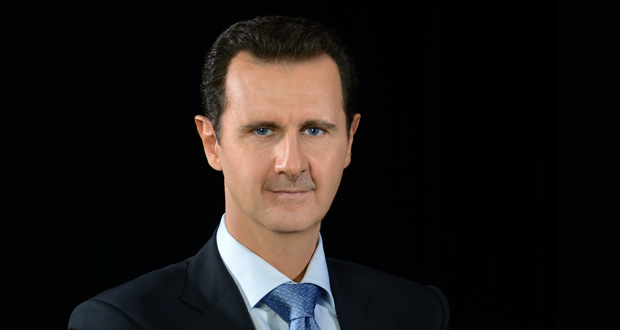


 Aletho News