Mueller’s Investigation A Farce: Files Joke Indictment Against Russian Trolls
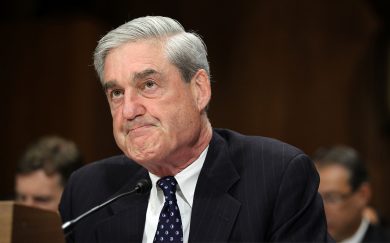
Photo by Alex Wong/Getty Images
By Elizabeth Vos | Disobedient Media | February 16, 2018
If one needed proof that Mueller’s investigation was an utter farce, they were in for a treat this morning when the Deputy Attorney General announced the indictment of indicted 13 “Russian trolls,” for allegedly interfering in the 2016 Presidential election by posting on social media accounts.
Laying Mueller’s disregard of the First Amendment aside, the indictment is blatantly hypocritical in light of active social media intervention by pro-Clinton David Brock and his multi-million dollar efforts to ‘Correct The Record.’
The indictment alleges that: “Beginning in or around June 2014, the ORGANIZATION obscured its conduct by operating through a number of Russian entities, including Internet Research LLC, MediaSintez LLC, GlavSet LLC, MixInfo LLC, Azimut LLC, and NovInfo LLC.”
The indictment further alleges that: “The ORGANIZATION sought, in part, to conduct what it called information warfare against the United States of America through fictitious U.S. personas on social media platforms and other Internet-based media.”
According to the indictment, the co-conspirators “engaged in operations primarily intended to communicate derogatory information about Hillary Clinton, to denigrate other candidates such as Ted Cruz and Marco Rubio, and to support Bernie Sanders and then-candidate Donald Trump.”
The indictment represents the latest mutation of Russian interference allegations that have dragged on for over a year. As this author previously noted, the definition of Russian interference has mutated from unsubstantiated claims of Russian hacking, to Russian collusion, and finally to Russian social media trolling.
The Washington Post reported in 2015 that David Brock’s Correct The Record would work directly with the Clinton Campaign, “testing the legal limits” of campaign finance in the process. How did Correct The Record skirt campaign finance law? The Washington Post tells us: “by relying on a 2006 Federal Election Commission regulation that declared that content posted online for free, such as blogs, is off-limits from regulation.” And post online, Brock’s PAC did: “disseminating information about Clinton on its Web site and through its Facebook and Twitter accounts, officials said.”
Time reported the opinion of a lawyer at the Campaign Legal Center who characterized Correct The Record as: “creating new ways to undermine campaign regulation.” Meanwhile, The New York Times detailed the “outrage machine” that Brock and fellow Clinton supporter Peter Daou had created:
“Peter Daou sat with his team at a long wooden table last week, pushing the buttons that activate Mrs. Clinton’s outrage machine. Mr. Daou’s operation, called Shareblue, had published the article on Mr. Trump’s comment on its website and created the accompanying hashtag.“They will put that pressure right on the media outlets in a very intense way,” Mr. Daou, the chief executive of Shareblue, said of the Twitter army he had galvanized. “By the thousands.”
Going further, the New York Times details fervently the $2 million budget of Daou’s Shareblue and admits that the intent of the entire operation is interference in the outcome of the 2016 Presidential election in favor of Hillary Clinton: “Beyond creating a boisterous echo chamber, the real metric of success for Shareblue, which Mr. Brock said has a budget of $2 million supplied by his political donors, is getting Mrs. Clinton elected. Mr. Daou’s role is deploying a band of committed, outraged followers to harangue Mrs. Clinton’s opponents.”
The New York Daily News put the matter most bluntly: “Hillary Clinton camp now paying online trolls to attack anyone who disparages her online.” The LA Times described the active election interference: “It is meant to appear to be coming organically from people and their social media networks in a groundswell of activism, when in fact it is highly paid and highly tactical.”
Despite the millions of dollars poured into a pro-Clinton ‘outrage machine’ bent on her support, Clinton inexplicably lost the election to Donald Trump, a fact which still seems not to have sunk in for the former First Lady and Secretary of State.
But why bring up this apparently old news, in the face of Mueller’s latest mockery of the American judicial process and the First Amendment? Because it reveals in the words of the legacy press that by definition Mueller’s circus has zero interest in campaign or election integrity and is solely interested in getting scalps for Clinton and for the unelected powers she represented.
Despite obvious hypocrisy given the actions of Shareblue and David Brock’s Correct The Record, corporate media ignored all double standards and attempted to report on “Russian twitter trolling” with a straight face. Business Insider wrote: “Russian Twitter Trolls Tried To Bury Or Spin Negative Trump News Just Before Election,” as if that wasn’t what Correct The Record spent millions on doing for the benefit of Clinton.
The double standards applied to Clinton for her benefit goes beyond hypocrisy. Many have claimed that constantly metamorphosing allegations of Russian interference represents an insidious effort to silence dissent and anti-establishment political discourse: for example, by turning third-party, anti-establishment or conservative voices into “Russians” by proxy of their opposition to Clinton.
By converting legitimate American free speech into insidious “Russian bots,” a pretext is created to silence dissent across the board. Without the Russian interference circus, the efforts to breach the First Amendment would be overtly authoritarian and would be inexcusable even by the most corrupt establishment media standards.
The results of such a clamp-down on free and effective speech have manifested in censorship crackdowns across large social media platforms including Twitter, Youtube, and Facebook, with Twitter admitting to actively censoring roughly 48% of tweets that included the “#DNCEmails” hashtag. It seems anyone with an opinion the establishment doesn’t like is liable to be memory-holed.
Mueller’s indictment of 13 Russians perfectly timed to be buried in media cycle
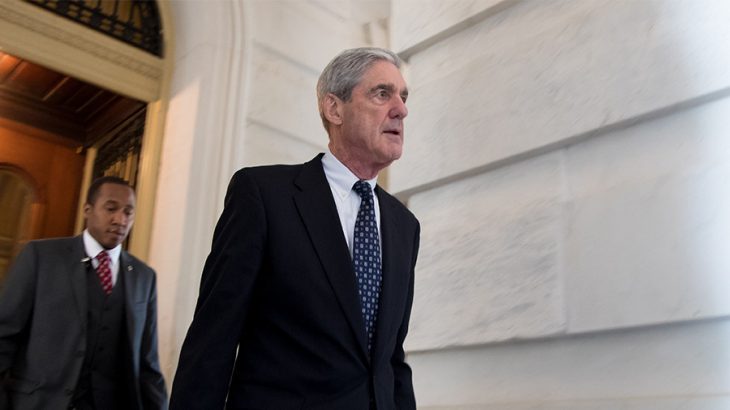
© Ting Shen / Xinhua / Global Look Press
RT | February 17, 2018
The latest not-so-smoking gun in the ‘Mueller time’ saga – the indictment of 13 Russian nationals suspected of interfering with American democracy – comes at a time when it is certain to get the least media coverage.
FBI Special Counsel Robert Mueller published the indictment on Friday evening – just two days after a high-profile school shooting in Florida. Both factors are likely to reduce the media coverage of the release, which apparently falls short of expectations of a smoking gun to take down the administration of Donald Trump, which many ‘Russiagate’ proponents have been hoping for.
“The fact that Mueller dumped these indictments out today proves that he is kind of hoping to go undercover – as far as is possible – to go undercover with political news like that,” conservative radio host Dave Perkins told RT. “[Mueller] has indicted these Russians knowing that he will never actually have to bother to prosecute them. Which is why he indicted them for peculiar, almost not-named crimes, very low-level things.”
“What has happened is Mueller is setting himself up, having tossed red meat to the base on the left: here is your Russians, here is your conspiracy, see, they have tried to affect the outcome of the election. And then he can fade back into the hedge.”
The indictment targets Russian nationals allegedly involved in a campaign meant to sow discord in America through social media. The document does not mention the hack of the DNC server or the phishing attack on Hillary Clinton campaign chair John Podesta, which both resulted in leaks of sensitive emails. Nor does it indicate that any of the Russians colluded with the Trump campaign or any other individuals in the US. Nor does it claim that the persons indicted were acting on orders from the Russian government. The document says there was no evidence the alleged campaign had any impact whatsoever on the outcome of the election.
Friday afternoon is “a great time to release news if you want to bury the news,” Just Foreign Policy Group director Robert Naiman said, though he doubts this was done intentionally. He added that the new development in the Russia probe is unlikely to tip public perception of it in a significant way. “People who want to put forward the Russia story – many of them will see this as vindication. They won’t care really what the details are.”
“This is an indictment. In the US system this means that a threshold has been met for taking a case to trial. It doesn’t mean anything has been proved,” he said.
The details of the indictment make it a shaky case for trial, media analyst Lionel pointed out, arguing that most of the things the 13 Russians are alleged to have done are not even a crime and had been done by others during the election campaign.
“They were apparently Russian nationals that didn’t say, hey, we are Russian nationals” while conducting their election-related activities on social media, he told RT. “I have never seen an indictment so bereft of citation and case law… I would have loved to argue this one in a motion to dismiss.”
If the indictment was properly covered by the US media, Americans would realize there was not much to it, independent journalist, author, and former Wall Street Journal correspondent Joe Lauria believes, but this is unlikely the way the story will be remembered.
“If these things did happen – they may be guilty of identity theft and certainly didn’t register as foreign agents – but the idea that this had an impact on the election is farcical. And if it was seen that way in the United States, Trump would have nothing to worry about. But the corporate media is going to push this as the smoking gun.”
The reporting, he predicted “will put more fuel on the fire to create more smoke that somehow Russia helped Trump steal this election from Hillary Clinton, which this indictment does not show in any way.”
Mueller indicted 13 Russians to drag probe out and keep his position – State Senator Black
RT | February 17, 2018
By indicting Russian nationals and entities for meddling in the 2016 US election, FBI Special Counsel Robert Mueller seeks to drag the probe out for his own gain, Virginia State Senator Richard Black told RT.
Thirteen Russian individuals and three entities, were accused of attempting to advance the presidential bid of Donald Trump and tarnish the reputation of Hillary Clinton with the ultimate goal to “spread distrust towards the candidates and the political system in general.” However, none of the activities described in the indictment were able to sway the vote, US Deputy Attorney General Rod Rosenstein told media.
According to Black, the lackluster outcome of the ever-widening investigation invokes suspicion that although Mueller knows there’s nothing substantial to uncover, he and his team will continue feeding the media headline-grabbers to keep his rather lucrative job.
“To a certain extent, I think, Robert Muller is struggling to keep alive his position of a special counsel. The special counsel has already earned 7 million dollars. When you become a special counsel, you have an open checkbook for the US Treasury and you are guaranteed to become a mega-millionaire if you simply can drag out the proceedings,” Black told RT.
“I suspect that this is just a case of dragging out the proceedings, throwing some indictments on some silly things – not registering as a foreign agent – that typically is not prosecuted, but they are prosecuting it in this case because they are running out of ideas.”
The latest twist of the Russia probe saga, which has so far failed to provide any proof of Trump’s collusion with Moscow, indicates that “there is simply nothing there to go after,” Black said. He noted that since both sides appear to agree that the alleged meddling could not have changed the outcome of the election, the probe is essentially “irrelevant.”
The record of US intelligence, which is no stranger to providing “completely fabricated” intel, does not lend much credibility to the “intelligence assessments” over the Kremlin’s alleged role in the election, Black said.
“I’m not really impressed, I want facts; I don’t want some generalized conclusions from these intelligence agencies,” he said, noting that if he were Trump, he would ask them to “show precisely” what evidence they have in their hands.
Back believes that what is really on the agenda is to rein in Trump so he will not oppose the hawks in their pursuit of hostile foreign policy towards Russia.
“One of the things they wanted to do is to undermine Donald Trump and to keep him constantly on the defensive against Russia so he cannot do the rational thing, which is to reduce the tensions with Russia, to draw back from the Russian borders,” he said, noting that the “deep state” seeks confrontation with Russia as it allows them to “sell weapons and increase the size of the military.”
Speaking about the claims that Russia-linked operatives spent $100,000 on Facebook ads to promote divisive social and political issues to stir up American voters, Black compared it with “throwing a penny to a beggar,” arguing that by “creating chaos” in the election, nobody could have achieved anything, “no matter who they are.”
US indicts 13 Russians for 2016 election meddling, but ‘no allegations’ they influenced outcome
RT | February 16, 2018
A US federal grand jury has indicted 13 Russian nationals and three Russian entities accused of interfering with US elections and political processes. However, there are “no allegations” they influenced the 2016 election.
The indictment accuses the defendants of “supporting the presidential campaign of then-candidate Donald J. Trump… and disparaging Hillary Clinton.” It also claims the defendants staged political rallies and bought political advertising while posing as grassroots entities. The document says an organization known as the Internet Research Agency “sought, in part, to conduct what it called ‘information warfare against the United States of America’ through fictitious US personas on social media platforms and other Internet-based media.”
“By in or around May 2014, the organization’s strategy included interfering with the 2016 US presidential election, with the stated goal of “spread[ing] distrust towards the candidates and the political system in general,” the indictment says, referring to the Internet Research Agency.
The defendants, according to the indictment, were advised to “focus their activities on purple states like Colorado, Virginia, and Florida.”
US Deputy Attorney General Rod Rosenstein said during a press conference that the defendants engaged in “information warfare against the US, with the stated goal of spreading distrust towards the candidates and the political system in general.”
It is alleged that the two traveled to the US in 2014 to collect intelligence for their operations. They also reportedly purchased space on US servers to establish a virtual private network (VPN) and made hundreds of accounts on Facebook, Instagram and Twitter. They “posed as politically and socially active Americans, advocating for and against particular candidates,” Rosenstein said during a press conference.
He went on to say that they “recruited and paid real Americans” to engage in political activity by pretending to be grassroots activists, adding that those Americans did not know they were working with Russians. Rosenstein noted, however, that “there is no allegation in the indictment that it had any effect on the outcome of the election.”
The indictment was not left unanswered though. Spokesperson for the Russian Foreign Ministry, Maria Zakharova, called the latest affront by the US “absurd.” She noted that 13 people would have hardly reached the desired outcome even if they planned to meddle with the polls.
Russian businessman Evgeny Prigozhin, who was also on the list, opted for a lighter tone, saying that Americans are “emotional people” and jokingly suggested that one should allow them to “see the devil.”
Moscow has repeatedly refuted the claims of alleged meddling in the 2016 presidential elections. Russian President Vladimir Putin also ridiculed such claims, suggesting that the US was “not a banana republic” to be treated that way.
Steele wrote memo based on information fed through Clinton campaign — released documents

RT | February 5, 2018
People close to Hillary Clinton were feeding information to Christopher Steele who compiled the Trump dossier on Trump’s alleged connections with Russia, according to a criminal referral filed by Republican senators.
A newly-released document from the Senate Judiciary Committee says Steele wrote an additional memo, besides the controversial dossier, using information that came from the Clinton campaign.
The newly-released memorandum is an unclassified and heavily-redacted version of the criminal referral targeting Steele, filed on January 4 by Republican Senators Chuck Grassley and Lindsey Graham. It is addressed to Deputy Attorney General Rod Rosenstein and Director of the FBI Christopher Wray who Grassley and Graham are asking to investigate Steele.
The report reveals coordination between the extended Clinton circle and the Obama administration in an attempt to source damaging information about then-candidate Trump.
Steele was hired by private firm Fusion GPS in June 2016 to gather information on alleged links between Trump and Russia. His dossier, parts of which were leaked to the media before the elections, was the basis for the warrant to spy on Trump adviser, Carter Page, according to the memo released on Friday.
The report alleges that there was a circular flow of information between Clinton associates and Steele. A memorandum dated October 19, 2016 says that foreign sources provided the information to an unnamed associate of Hillary and Bill Clinton, who then gave the information to an unnamed official in the Obama State Department, who would then pass the information to Steele.
“It is troubling enough that the Clinton Campaign funded Mr. Steele’s work, but that these Clinton associates were contemporaneously feeding Mr. Steele allegations raises additional concerns about his credibility,” the report states.
“It appears that either Steele lied to the FBI and the British court, or that the classified documents reviewed by the Committee contain materially false statements,” the report states.
On January 4, Senators Grassley and Graham referred Steele to the FBI for further investigation after reviewing Justice Department documents that conflicted with Steele’s sworn court statements about the distribution of his research.
“Seeking transparency and cooperation should not be this challenging. The government should not be blotting out information that it admits isn’t secret, and it should not take dramatic steps by Congress and the White House to get answers that the American people are demanding. There are still many questions that can only be answered by complete transparency. That means declassifying as much of the underlying documents as possible,” Grassley said in the release accompanying the document.
Leaked to Buzzfeed in January 2017, Steele’s dossier contains unverified allegations that Russia holds information on Trump which it’s using to blackmail the US president. It further alleges sustained and close working contacts between Trump aides and Kremlin representatives, with Russia “feeding Trump and his team valuable intelligence on his opponents” for years prior to 2016. The allegations have not been proven.
As alleged in the ‘Nunes memo‘, this dossier “formed an essential part” of the FISA probable cause order obtained by the FBI from the Foreign Intelligence Surveillance Court (FISC) in 2016 to spy on Trump adviser Carter Page. The warrant was extended three times, also on the basis of the Steele dossier.
US Democrats’ Accusations Against Russia Distract Public From Real Problem
Sputnik – 26.01.2018
US Democrats have asked Facebook and Twitter for evidence of Russia’s involvement in an online campaign to release a politically charged memo.
The move comes as Congressional Republicans have been calling for the public release of a four-page classified memo they claim reveals reported abuses of the Foreign Intelligence Surveillance Act (FISA) by the Obama administration, which approved surveillance against Trump’s team on behalf of the Clinton campaign.
Dr. Jeanne Zaino, American political analyst and professor of Political Science at Iona College told Radio Sputnik in an interview that by asking for an investigation into allegations that Russian bots are behind #releasethememo, US Democrats are drawing the public’s attention away from the real question. That question is whether the memo actually exposes severe surveillance abuses, Zaino said, noting that Republicans claim the explosive content of the memo could upend special counsel Robert Mueller’s ongoing investigation into allegations of Russian meddling in the 2016 US election and collusion with the Trump campaign.
“They are saying that this push to release the memo is being conducted by Russian bots. Whether that is the case or whether it is not the case… it is almost beside the point, because the real question — particularly in a democracy where we value transparency — should be what does the memo contain,” Zaino told Radio Sputnik.
She pointed out that while the FBI and the Justice Department have been blocking the memo’s release saying it would violate national security, whether that is actually the case should be decided in a court of law.
“They simply cannot keep information and materials top secret just because they think it might embarrass them or embarrass the administration, embarrass Congress or whoever this memo might embarrass,” the analyst said. “I really think that the Democrats are trying to have us look left when in fact we should be looking right and saying what in fact does the memo contain and is it really something that we need to protect for national security reasons.”
Zaino stressed that she doesn’t know whether the memo “shows abuse of the government surveillance program by the Obama administration”, as is being claimed, but if the question is raised, the memo should be released if it is not protecting national security.
“You cannot just classify [the memo] that way. We have an overclassification problem in this country where almost everything is classified as top secret,” Zaino said. “The Democrats are asking us to focus on the bots, that’s fascinating and interesting, but it doesn’t get to the heart of the question which is what does this memo show and did we see an abuse of the government surveillance programs under the Obama administration.”
“Too Big To Believe” – Massive Scandal Is Brewing At The FBI
By Tyler Durden | Zero Hedge | January 24, 2018
As the Potemkin Village walls of The Left’s ‘Trump Collusion’ narrative crash and burn along with special counsel Mueller’s credibility, The New York Post’s Michael Goodwin sees far more wide-ranging problems ahead for America’s ‘intelligence’ agencies as the anti-Trump ‘secret society’ and lovers-texts-gate debacles threaten the core of the Deep State.
Goodwin writes that, during the financial crisis, the federal government bailed out banks it declared “too big to fail.” Fearing their bankruptcy might trigger economic Armageddon, the feds propped them up with taxpayer cash.
Something similar is happening now at the FBI, with the Washington wagons circling the agency to protect it from charges of corruption. This time, the appropriate tag line is “too big to believe.”
Yet each day brings credible reports suggesting there is a massive scandal involving the top ranks of America’s premier law enforcement agency. The reports, which feature talk among agents of a “secret society” and suddenly missing text messages, point to the existence both of a cabal dedicated to defeating Donald Trump in 2016 and of a plan to let Hillary Clinton skate free in the classified email probe.
If either one is true — and I believe both probably are — it would mean FBI leaders betrayed the nation by abusing their powers in a bid to pick the president.
More support for this view involves the FBI’s use of the Russian dossier on Trump that was paid for by the Clinton campaign and the Democratic National Committee. It is almost certain that the FBI used the dossier to get FISA court warrants to spy on Trump associates, meaning it used the opposition research of the party in power to convince a court to let it spy on the candidate of the other party — likely without telling the court of the dossier’s political link.
Even worse, there is growing reason to believe someone in President Barack Obama’s administration turned over classified information about Trump to the Clinton campaign.
As one former federal prosecutor put it, “It doesn’t get worse than that.” That prosecutor, Joseph diGenova, believes Trump was correct when he claimed Obama aides wiretapped his phones at Trump Tower.
These and other elements combine to make a toxic brew that smells to high heaven, but most Americans don’t know much about it. Mainstream media coverage has been sparse and dismissive and there’s a blackout from the same Democrats obsessed with Russia, Russia, Russia.
Partisan motives aside, it’s as if a scandal of this magnitude is more than America can bear — so let’s pretend there’s nothing to see and move along.
But, thankfully the disgraceful episode won’t be washed away, thanks to a handful of congressional Republicans, led by California Rep. Devin Nunes, chairman of the House’s Permanent Select Committee on Intelligence. After he accused the FBI of stonewalling in turning over records, the bureau relented, at least partially.
The result was clear evidence of bias against Trump by officials charged with investigating him and Clinton. Those same agents appear to have acted on that bias to tilt the election to Clinton.
In one text message, an agent suggests that Attorney General Loretta Lynch knew while the investigation was still going on that the FBI would not recommend charges against Clinton.
How could she know unless the fix was in?
All roads in the explosive developments lead to James Comey, whose Boy Scout image belied a sinister belief that he, like his infamous predecessor J. Edgar Hoover, was above the law.
It is why I named him J. Edgar Comey last year and wrote that he was “adept at using innuendo and leaks” to let everybody in Washington know they could be the next to be investigated.
It was in the office of Comey’s top deputy, Andrew McCabe, where agents discussed an “insurance policy” in the event that Trump won. Reports indicated that the Russia-collusion probe was that insurance policy.
The text was from Peter Strzok, the top investigator on the Trump case, and was sent to Lisa Page, an FBI lawyer and also his mistress.
“I want to believe the path you threw out for consideration in Andy’s office — that there’s no way he gets elected — but I’m afraid we can’t take that risk. It’s like an insurance policy in the unlikely event you die before you’re 40 . . . ” Strzok wrote.
It is frightening that Strzok, who called Trump “an idiot,” was the lead investigator on both the Clinton and Trump cases.
After these messages surfaced, special counsel Robert Mueller removed Strzok and Page from his probe, though both still work at the FBI.
Strzok, despite his talk of an “insurance policy” in 2016, wrote in May of 2017 that he was skeptical Mueller’s probe would find anything on Trump because “there’s no big there there.”
Talk about irony. While Dems and the left-wing media already found Trump guilty of collusion before Mueller was appointed, the real scandal might be the conduct of the probers themselves.
Suspicions are hardly allayed by the fact that the FBI says it can’t find five months of messages between Strzok and Page, who exchanged an estimated 50,000 messages overall. The missing period — Dec. 14, 2016 through May 17, 2017 — was a crucial time in Washington.
There were numerous leaks of classified material just before and after Trump’s inauguration on Jan. 20.
And the president fired Comey last May 9, provoking an intense lobbying effort for a special counsel, which led to Mueller’s appointment on May 19.
Jeff Sessions, the attorney general, has emerged from his hidey hole to notice that the FBI has run amok, and said Monday he would “leave no stone unturned” to find the five months of missing texts.
Fine, but the House is racing ahead of him. Nunes has prepared a four-page memo, based on classified material that purportedly lays out what the FBI and others did to corrupt the election.
A movement to release the memo is gaining steam, but Congress says it might take weeks. Why wait? Americans can handle the truth, no matter how big it is.
This Does Not Represent the Views of the University
By Maximilian Forte | Zero Anthropology | January 20, 2018
I know that I am not the first person to ask this, but when did universities start having “views”? When some professors indulge their rights to free speech or put academic freedom into practice, they can sometimes express views that some members of the public find controversial, distasteful, or reprehensible. In such cases, one frequently reads their university administrations publishing memos to the effect that, “Professor X’s views on Subject Y do not represent the views of the university”. What does that mean? Has “the university” studied the subject to the same degree as the professor, thus allowing it to conclude its views are the correct ones? Was the professor supposed to be instructed on the correct views to represent, since the job of professor apparently means not having an independent mind? Does it mean that Professor X does not represent the views of all professors and students at the university? How could anyone ever assume that one professor spoke for all others? Does it instead mean that the professor does not represent the views of those in the administration? The support staff? If so, who cares? And where exactly did the university administration publish its “party line”? When I was twice hired for tenure-track positions, the one thing I recall no Dean ever telling me was: “Here is a list of the views of the university. Only if you uphold these views can you consider working here. Should you ever express any differing views, you may be subjected to disciplinary action”. Nonetheless, the attitude of some university administrations in North America is that they have a right to publicly castigate faculty for not toeing the line. It is as if “the university” has been reduced to working as a mere cell of a ruling political party.
One could ask similar questions as above, only in reverse. What entitles administrators to speak for the university as a whole? How do they know that Professor X’s statements really do not reflect the views of the university? Did they ever consult faculty and students? Where is all the survey data that reveal the views of faculty on any subject? How is “the university” defined? Is it just the board of governors? Whose views does the university represent? Since I work in a public university—Canada only has public universities, with maybe one or two little exceptions—can we then assume that the “views of the university” neatly align with the broad majority of the public that we presumably are meant to serve? Is it the job of professors to simply reflect the views of others? Since when did it fall to professors to “represent” their universities—and will they get paid extra for doing PR work?
Three transformations have happened more or less simultaneously, and relatively recently, which may explain these bizarre communiqués from university administrators. One has to do with the politicization of university directorates, especially as even public universities have turned to support from private donors, most of whom have big axes to grind. Private donors are keen to buy support, and silence. Few are the donors who give generously just because they are thrilled by learning—that would be too countercultural in the North American context in which we lionize our meat packers and vilify intellectuals. From this first point, where private donors act as lobbyists for special interests, almost all else follows. To assure donors that universities are being run in a “smart” fashion, administrators have multiplied administrative positions and stacked them with persons from the private sector, who draft “strategic plans” and design what are essentially corporate business models. In other words, politicization stems from privatization and corporatization—this is the neoliberal transformation of the public university. To be clear, this transformation has its origins neither in university administrations nor the private sector, both of which lack the political power and authority necessary to effect such a transformation. Instead, governments are the ones that actively took the decision to cut back on funding for public universities, which is their responsibility, even as taxation levels either remained the same or continued to rise. They chose to redirect public funding away from universities, just as they did with education as a whole, as well as healthcare, social welfare, and so on. Governments pressed universities to raise funds from private sources, just as they pressed them to expand their governance by including more individuals from the private sector.
The second change has to do with universities seeking to raise their public profile, to gain visibility, and advance in the rankings through enhanced public recognition. To gain recognition, university websites have shed their traditional dull and dour functionality, and have become replicas of CNN. Even the university shields have been tossed, in favour of some terrible, and terribly expensive, brand logos produced by private consultants and graphic designers. Universities now also have “media relations” units, with expert staff that spend their days in Twitter and Facebook, and writing up newsy articles about what select faculty members and students are achieving (more on the political functions of “media relations” units, below). These same media units then do the rounds of the departments, advising faculty on how best to interact with journalists. To the laughter of everyone in my Department, one team showed us a video that advised us to dumb down our research so that “even your grandmother could understand it”. I still have no idea why they focused on grandmothers, not grandfathers, and why they assume that all grandmothers are ignorant rubes—perhaps theirs are? In addition, the media units encourage us to list ourselves as experts, for any journalists perusing the university website, by listing the presumably edgy and sexy topics we have mastered with our unrivalled expertise. Not enough, they then invite professors to do professional photo shoots in which they pose playfully for the camera, with a single short sentence in huge print next to them which somehow encapsulates their decades of research: “Do humans really like food?”
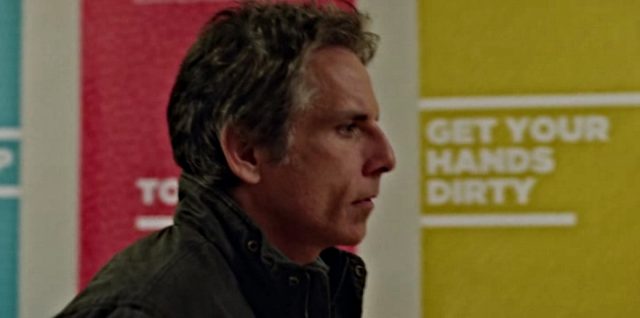
The third major change has to do with how university administrations understand academic freedom, and separately, freedom of speech. One might say they understand these concepts very poorly, or not at all, but I think that misses the above points. The desire by administrators to chill speech, to counter the embarrassingly contrary statements made by publicly outspoken professors, has to do with assuaging private donors as the public university is realigned with the political interests of the so-called top 1%. The immense irony of this is that it is university administrations themselves that actively pushed faculty into the public limelight in the first place, under the strategic rubrics of “knowledge mobilization” and “community outreach”. My university has posted banners around campus that urge us to “mix it up,” “get your hands dirty,” and “embrace the city, embrace the world”—vapid commercialist fluff. Even Hollywood took notice. Bleak Ben Stiller bleakly walked past some of these same bleak posters in his recent bleak film, “Brad’s Status,” which apparently was partly shot on the campus of Concordia University (not that the university is listed in the credits of the film—in fact, the movie credits claim the film was shot either in Hawaii or Boston, Montreal itself is not even mentioned):
Having urged us to “get out there,” university administrators then later express regret when they feel compelled to counter a given professor’s statements with press releases affirming that “this does not represent the views of the university”. This is an “own goal” on the part of university administrators. They have worked assiduously to make the university into a media organization, to turn professors into celebrity advocacy-journalists, and to make the institution responsive to market audiences to such an extent that the autonomy of the university becomes untenable.
Firings of tenured professors by university administrations, over a difference of opinion, are still relatively rare in Canada, when compared with the US or the UK. In fact, it is not an easy option: tenured professors have not only the protection of their tenure, but of their union, and a legally binding contract negotiated with the union on behalf of faculty which ensures academic freedom and due process. Faculty unions in turn belong to a national umbrella organization, CAUT, which boasts a multi-million dollar academic freedom fund and gets actively involved in supporting faculty. Canadian universities are also deeply fearful of lawsuits which could easily demolish their already frail budgets, most of which are running deficits already. Poor financial management and the backlash of legal damage often results in the top administrators being toppled. Rather than go the messy route which, heaven forbid, could also give rise to “bad press”—good lord, not “bad press,” that’s the other court which administrations fear—administrators have had to develop quieter, more insidious and subtle forms of suppression. The way to send “the right message” to the outside world, to properly convey the unspoken “views of the university,” is to publicly promote and praise certain select professors, the ones whose views and whose work best align with those of private individual and corporate donors, or with the ruling party, or the military. To take a recent example: as Donald Trump neared electoral victory, articles were published on the university website, in its magazine and elsewhere, that featured the expert analysis of select faculty—strangely enough, all of whom were clearly pro-Hillary Clinton, anti-Trump, a number of them American expatriates, and who evinced a certain Liberal Party affinity. Unlike in a real university, there was no debate among this small cluster of people bewailing the dawn of the “post-truth” world.
The paradox is that neoliberal university administrators have adopted a policy of containment, at the same time as they seek to publicly advertise themselves. Not wanting “the wrong views” to get notice, they engage in restricting speech by selecting that speech which suits their purposes. Speech is thus not just restricted, it is regulated, by promoting only those persons whose views are safe and deemed worthy of recognition. Speech is thus effectively restricted to those academics that the administrators judge to be “qualified” to speak, thereby limiting not only what is said, but who can say it. Media relations departments have the primary responsibility of inventing online rituals around speech, practicing containment through promotion. In some cases such departments actively tutor budding young “public intellectuals” through seminars and by shadowing them online, always ready for the opportune time for that strategic “retweet”. As weak, vain, and ineffective as these policies are, they serve as a useful reminder of how liberal authoritarianism works. In this case, liberal authoritarianism produces fictional representations of “the views of the university,” by thinning out the work actually done by faculty, spreading out the words of a few to represent the words of all.
Another method of indirect silencing is for the university to “celebrate” the media “accomplishments” of select faculty only, by listing stories of faculty who have appeared in the media… only in select media, depending on the “prestige” of the outlet. This is a way to ensure that professors whose views are worthy of being courted by the corporate, neoliberal imperialist media are the only ones featured. In other words, a professor mentioned in a story on CNN is deemed to be worthy of note; a professor who appears on RT, is ignored, as if the event never happened. Selective pride is a way of signalling selective shame. It has the effect of rendering silent the actual media accomplishments of faculty, in order to produce a false picture of where faculty stand, thus assuring the egos of financial donors and politicians. The policy is implemented with the naïve hope that misaligned professors will quietly yearn for that elusive little place on the university website, a place that amounts to nothing more than a few ephemeral pixels seen by few and forgotten by all.
On a range of other issues, near and dear to regime changers, liberal imperialists, and the pro-Israel lobby, one sees the pattern being reproduced, as I can affirm after close scrutiny that has endured for over a decade. If the topics are Iran, Libya, Syria, refugees, wars, nationalism, and so on, one sees the selectivity being actively enforced, even if it means publishing, praising and promoting the same two or three professors time after time. Rather than a university of hundreds of professors, added to tens of thousands students, we become a university of three individuals. Rarely, probably never, do we see university articles dealing with the working class, with poverty and inequality, critical of neoliberalism, globalization and imperialism. Thus the university presents its “views,” of such a one-sided nature and so bereft of any healthy dissent and disagreement as one would find on no university campus that ever took itself seriously.
Viewed from afar, there might even be something comical about a university administration busying itself with inventing a secret university, one that covertly lurks beneath the chosen public representation of the university. That is the point of creating “signature areas” that determine “strategic hiring”: lifting hiring decisions from the hands of Departments, now it is university executives who impose the parameters on what constitutes a desirable candidate, and decide which areas need to be filled. Slowly they thus invent for themselves the university they desire, as opposed to the real one that actually exists. Finally, they will have something they can sell with confidence. One has to almost feel sympathy for the administrators, who feel the keen pressure of public politics and special interest lobbies, into whose arms they have been driven by governments that renege on their obligation to support public universities.
The “views” of the university are a mercantile fiction, a falsehood designed to mislead the public and to caress donors and politicians, the kinds of individuals who are apparently empty and infantile enough to believe that the winning arguments are those that are advanced in the absence of criticism. What if we taught our students that the best way to learn is to ignore whatever they do not like to hear? That is indeed what is being pushed, ironically under the signs of “tolerance” and “inclusion,” the usual neoliberal claptrap. Thus we witness the university turned into a mere echo chamber for the comfortable, a safe space for moneyed elites to flatter themselves, creating a virtual world of unrivalled ideological purity, contrived harmony, and eternal hegemony.
Finally, messages from university administrators along the lines of “this does not represent the views of the university,” might serve an additional function, but I am just speculating. This might be a polite way of telling rabid members of the public to lay off. We heard you, yes it’s all quite disconcerting, and here is our little statement, now move along. Had universities with their bloated administrations and overt political leanings not wished to enhance their public profiles and represent themselves as quasi-media outlets, they would spare themselves such unnecessary exercises. In the end, pronouncements about “the views of the university” end up multiplying the damage to the university, both as a self-inflicted wounds within the university, and as a sign of intellectual cowardice in the face of bullies. A university administration that engages in such conduct has failed its first and most basic function: to administer university resources in order to facilitate teaching and learning.
Featured Video
U.S. General Caine Warns: STRIKING IRAN is a HUGE RISK
or go to
Aletho News Archives – Video-Images
From the Archives
Stealth Bombers and Bunker Busters
Analysis of the so-called 12-Day War, and the triumphantly celebrated Operation Midnight Thunder

By William Schryver | imetatronink | November 28, 2025
The GBU-57 is a big fat gravity bomb with fins. To achieve effective precision, a B-2 bomber must drop it on its intended target from no further than about five nautical miles — essentially right on top of the target.
Its penetration depth is claimed to be 200 feet. But that capability has NEVER been tested against a seriously hardened deep-underground target encased in layers of high-performance concrete, and topped with a few dozen meters of solid rock. In that sort of real-world scenario, the GBU-57 would be lucky to drill down 50 feet, if that.
It was always ridiculous silly talk to suggest the GBU-57 was the wonder weapon it was made out to be. There is a good reason the US only produced a couple dozen of them and then stopped: they understood its acute limitations in a non-permissive combat environment.
And, notwithstanding the hyperbolic Israeli propaganda, there was never any credible evidence that Iranian medium- and long-range air defenses against fixed-wing aircraft were attrited to any significant degree. And Iranian short-range air defenses were increasingly effective against long-range Israeli drones with each passing day.
As for the B-2: it is a big fat subsonic aircraft. It flies at airliner speeds. A strike on Fordow would entail flying at least 500 miles in and out of Iran. … continue
Blog Roll
 Aletho News
- Zelensky Refused to Discuss Druzhba Pipeline Issue – Fico
- U.S. General Caine Warns: STRIKING IRAN is a HUGE RISK /Glenn Diesen & Lt Col Daniel Davis
- Israel designates five Palestinian media outlets as ‘terrorist organizations’
- Israel, not America, first: Carlson’s Huckabee interview lays bare US foreign policy priorities
- Israeli troops executed Palestinian aid workers at ‘point blank range’: Report
- Iran war What if today’s Iran is resigned to a long, hellish war with the US?
- Why Israel Is Escalating Its War Crimes Against Lebanon
- Iran in the face of the armed diplomacy of imperialism
- The US build-up around Iran constitutes strategic war option, not ‘deterrence’
- Iran to US: Sanctions and war failed; try diplomacy and respect
- If Americans Knew
- Footage Shows Israeli Troops Waiting in Ambush, Then Opening Fire on a Palestinian Teen
- The US is on the brink of a major new war that Trump has not even bothered explaining
- Latest Epstein document dump is one more cover-up
- No Protection, No Justice: US Citizens Killed with Impunity by Israel
- Maria Farmer: Epstein Victim Reveals Explosive Information Covered Up by Media
- Average of five Palestinians killed by Israel every day in Gaza since ceasefire – Not a ceasefire Day 136
- Palestinian church leaders admonish Christian Zionist Mike Huckabee – Not a ceasefire Day 135
- Ominous messaging from Trump’s “Board of Peace” – Not a ceasefire Day 134
- ‘Christians Out’: Jerusalem Church Tagged With Hate Graffiti, Police Investigating
- Israeli Settlers Kill American Teen
- No Tricks Zone
- New Research Reaffirms Clouds, Aerosols, And Surface Solar Radiation Are ‘Driving The Climate System’
- Germany: Electric Car Catches Fire At Charging Station, Sets Off Local “Inferno”, Widespread Damage
- New Study: Canada’s New Brunswick Was 1°C Warmer Than Today During The Medieval Warm Period
- Coal Power Back In Trend As Globe Tries To Keep Pace With Growing Demand For Power
- New Study: A 4°C Warmer Beaufort Sea Had ‘No Sea Ice’ 11,700 – 8200 Years Ago
- Unfudging The Data: Dutch Meteorological Institute Reinstates Early 20th Centruy Heat Waves It Had Erased Earlier
- German Gas Crisis…Chancellor Merz Allegedly Bans Gas Debate Ahead of Elections!
- Pollen Reconstructions Show The Last Glacial’s Warming Events Were Global, 10x Greater Than Modern
- Germany’s Natural Gas Storage Level Dwindles To Just 28%… Increasingly Critical
- New Study Rebuts The Assumption That Anthropogenic CO2 Molecules Have ‘Special’ Properties
 Aletho News