Facebook’s ‘anti-fake news’ plan looks like effort to curb alternative media
By Bryan MacDonald | RT | December 18, 2016
There are serious concerns over a social media giant’s plans to debunk spurious news stories. And many are puzzled about the real agenda at play.
You don’t need to worship at the altar of George Orwell to see where this is going. Under tremendous assault from the American establishment media over the proliferation of what they define as ’fake news’ on the platform, internet behemoth Facebook has finally caved in and agreed to regulate content. While, in principle, the concept sounds relatively noble, the manner in which it’s proposed to implement it merits many questions.
Among them are the continuing dangers of American domination of the world wide web and the liberal bias of that country’s popular press. But most worrying is the uncharted territory we are entering. Because there has never been a media portal as dominant as Facebook. In the past, big broadcasters or newsagent chains might have enjoyed outsized influence, but Mark Zuckerbeg’s firm is an effective monopoly.
Whereas papers have always been curated by editors, their power was limited by the sheer number of competitors in every national market. And the more different they were, the better for society in general. However, there is only one Facebook, and its power, in this regard, is extraordinary.
Of course, another big problem here is that one person’s “fake news” could be another’s truth. And that’s before we mention how some of the outlets pressuring Facebook are often guilty of making up stories themselves.
Strange Bedfellows
To filter content, Facebook has joined up with Poynter, a self-proclaimed “international fact-checking network,” which presents itself as a neutral body with great integrity. Yet, a cursory glance at its funding sources is enough to set alarm bells ringing. They include Pierre Omidyar, George Soros and Washington’s National Endowment for Democracy, a CIA soft-power cutout. As it happens, regular RT readers will remember these three as the primary foreign backers of Ukraine’s Maidan coup in 2014.
Thus, it’s clear that this project could easily wind up as some sort of “ministry of truth” with only organizations who adhere to liberal Washington’s official line permitted unfettered access to Facebook’s primary news feeds. And this is very dangerous.
Additionally, the fact that Poynter’s sponsors, which also include Bill Gates and Google, almost uniformly supported Hillary Clinton in the recent US election is very troubling. Because it’s another indication of how, having endured a series of electoral setbacks this year, the globalist elite is now effectively trying to block out dissenting voices.
That said, nobody is disputing whether “fake news” is a problem. It’s just hard to find agreement on its definition. For instance, very few in the west would define the Washington Post, Guardian, Daily Telegraph or New York Times as providers of fictional reportage, but viewed from Moscow it’s often a different story.
Mainstream Muck
Only last month, WaPo accused 200 non-mainstream sites of acting on behalf of the Kremlin, in a story which has been definitively debunked by numerous credible sources. And, just last week, the NYT carried a front page story alleging that Vladimir Putin was using “kompromat” to destroy the reputations of his political opponents. For ‘proof’ they used the case of Vladimir Bukovsky, who was being investigated by British police over possession of child pornography.
The paper’s readers were greeted with this soft-soap intro from correspondent Andrew Higgins: “His indomitable will steeled by a dozen years in the Soviet gulag, decades of sparring with the K.G.B. and a bout of near fatal heart disease, Vladimir K. Bukovsky, a tireless opponent of Soviet leaders and President Vladimir V. Putin of Russia, is not a man easily put off his stride.” And to back up his yarn, Higgins made a series of unsubstantiated claims linking Russian state meddling to other similar schemes.
Yet, sadly for Higgins – and Bukovsky, of course – his hero admitted a few days later that he actually collected the child porn images himself, as “research.”
Then there’s the Guardian, where its former Moscow correspondent Luke Harding has been alleging for years that Putin is the richest man in Europe, if not on earth. A statement that is frequently repeated in similar outlets, where his fortune – without any explanation – suddenly leaped from $40 billion to $200 billion recently, according to the same Washington Post.
These journals of renown base their figures on a single, very shaky, source. And we can’t forget the Daily Telegraph, which appears to have given up on using professional journalists to cover Russia, and has produced some right porkies in recent times. Including outrageous stuff like Putin jetting to Switzerland, incognito, to oversee the birth of a love child and Moscow developing a Star Trek-esque teleportation device.
Are all these not examples of “fake news?” But given that they are establishment names in the western press, don’t expect Poynter to subject them to the same treatment as newer alternative outlets. And this is the problem with the entire exercise.
Fragile Foundations
The list of signatories to the International Fact-Checking Network also sets alarm bells ringing. For they include some fairly dubious organizations. Take Politifact, for example. This group has been accused of having a left-wing bias and openly favoring Clinton during the US election campaign. As Breitbart observed: “When Trump said Clinton wants “open borders,” PolitiFact deemed his statement “mostly false” — despite the fact that Clinton admitted as much in a private, paid speech to a Brazilian bank on May 16, 2013. “My dream is a hemispheric common market, with open trade and open borders,” she said at the time.”
There is no doubt that blatantly made up, let alone poorly fact-checked, stories are poisoning political discourse. And Facebook is right to tackle the type of companies who produce twaddle such as “Hillary invented the Aids virus” or “Trump wants to distribute Mein Kampf to school kids” or whatever nonsense is being pushed today.
However, will it also censure “respected” mainstream outlets who allege that Putin has stolen $200 billion for himself or is planting child porn on dissidents?
Because unless they are also labelled with the “fake news” badge, this looks more like an exercise in the US liberal establishment trying to gain control of the distribution of news on social media, as they once did with newspapers and broadcasters.
Orwell might have called it a sort of “Minitrue.”
The Bad Losers (And What They Fear Losing)

Photo by Cliff | CC BY 2.0
By Diana Johnstone | December 19, 2016
Paris – If the 2016 presidential campaign was a national disgrace, the reaction of the losers is an even more disgraceful spectacle. It seems that the political machine backing Hillary Clinton can’t stand losing an election.
And why is that?
Because they are determined to impose “exceptional” America’s hegemony on the entire world, using military-backed regime changes, and Donald Trump seems poised to spoil their plans. The entire Western establishment, roughly composed of neoconservative ideologues, liberal interventionists, financial powers, NATO, mainstream media and politicians in both the United States and Western Europe, committed to remaking the Middle East to suit Israel and Saudi Arabia and to shattering impertinent Russia, have been thrown into an hysterical panic at the prospect of their joint globalization project being sabotaged by in ignorant intruder.
Donald Trump’s expressed desire to improve relations with Russia throws a monkey wrench into the plans endorsed by Hillary Clinton to “make Russia pay” for its bad attitude in the Middle East and elsewhere. If he should do what he has promised, this could be a serious blow to the aggressive NATO buildup on Russia’s European borders, not to mention serious losses to the U.S. arms industry planning to sell billions of dollars worth of superfluous weapons to NATO allies on the pretext of the “Russian threat”.
The war party’s fears may be exaggerated, inasmuch as Trump’s appointments indicate that the United States’ claim to be the “exceptional”, indispensable nation will probably survive the changes in top personnel. But the emphasis may be different. And those accustomed to absolute rule cannot tolerate the challenge.
Bad Losers On the Top
Members of the U.S. Congress, the mainstream media, the CIA and even President Obama have made fools of themselves and the nation by claiming that the Clintonite cabal lost because of Vladimir Putin. Insofar as the rest of the world takes this whining seriously, it should further increase Putin’s already considerable prestige. If true, the notion that Moscovite hacking could defeat the favorite candidate of the entire U.S. power establishment can only mean that the United States’ political structure is so fragile that a few disclosed emails can cause its collapse. A government notorious for snooping into everybody’s private communication, as well as for overthrowing one government after another by less subtle means, and whose agents boasted of scaring the Russians into re-elected the abysmally unpopular Boris Yeltsin in 1996, now seems to be crying pathetically, “Mommy, Vlady is playing with my hacking toys!”
Of course, Russians would quite naturally prefer a U.S. president who openly shies away from the possibility of starting a nuclear war with Russia. That doesn’t make Russia “an enemy”, it is just a sign of good sense. Nor does it mean that Putin is so naïve as to imagine that Moscow could throw the election by a few dirty tricks. The current Russian leaders, unlike their Washington counterparts, tend to take a longer view, rather than imagining that the course of history can be changed by a banana peel.
This whole miserable spectacle is nothing but a continuation of the Russophobia exploited by Hillary Clinton to distract from her own multiple scandals. As the worst loser in American electoral history, she must blame Russia, rather than recognize that there were multiple reasons to vote against her.
The propaganda machine has found a response to unwelcome news: it must be fake. The Washington conspiracy theorists are outdoing themselves this time. The Russian geeks supposedly knew that by revealing a few Democratic National Committee internal messages, they could ensure the election of Donald Trump. What tremendous prescience!
Obama promises retaliation against Russia for treating the United States the way the United States treats, well, Honduras (and even Russia itself until blocked by Putin). Putin retorted that so far as he knew, the United States was not a banana republic, but a great power able to protect its elections. Washington is loudly denying that. The same mainstream media who brought you Saddam’s “weapons of mass destruction” are now bringing you this preposterous conspiracy theory with straight faces.
When intelligence agencies become aware of the activities of rival intelligence agencies, they usually keep the knowledge to themselves, as part of the mutual spook game. Going public with this wild tale shows that the whole point is to persuade the American public that Trump’s election is illegitimate, in the hope of defeating him in the electoral college or, if that fails, of crippling his presidency by labeling him a “Putin stooge”.
Bad Losers On the Bottom
At least the bad losers on the top know what they are doing and have a purpose. The bad losers on the bottom are expressing emotions without clear objectives. It is false self-dramatization to call for “Resistance” as if the country had been invaded by extraterrestrials. The U.S. electoral system is outmoded and bizarre, but Trump played the game by the rules. He campaigned to win swing states, not a popular majority, and that’s what he got.
The problem isn’t Trump but a political system which reduces the people’s choice to two hated candidates, backed by big bucks.
Whatever they think or feel, the largely youthful anti-Trump protesters in the streets create an image of hedonistic consumer society’s spoiled brats who throw tantrums when they don’t get what they want. Of course, some are genuinely concerned about friends who are illegal immigrants and fear deportation. It is quite possible to organize in their defense. The protesters may be mostly disappointed Bernie Sanders supporters, but whether they like it or not, their protests amount to a continuation of the dominant themes in Hillary Clinton’s negative campaign. She ran on fear. In the absence of any economic program to respond to the needs of millions of voters who showed their preference for Sanders, and of those who turned to Trump simply because of his vague promise to create jobs, her campaign exaggerated the portent of Trump’s most politically incorrect statements, creating the illusion that Trump was a violent racist whose only program was to arouse hatred. Still worse, Hillary stigmatized millions of voters as “a basket of deplorables, racist, sexist, homophobic, xenophobic, Islamophobic — you name it.” These remarks were made to an LGBT rally, as part of her identity politics campaign to win over a clientele of minorities by stigmatizing the dwindling white majority. The identity politics premise is that ethnic and sexual minorities are oppressed and thus morally superior to the white majority, which is the implied oppressor. It is this tendency to sort people into morally distinct categories that divides Americans against each other, every bit as much – or more – than Trump’s hyperbole about Mexican or Islamic immigrants. It has served to convince many devotees of political correctness to regard white working class Americans in the “fly-over” regions as enemy invaders who threaten to send them all to concentration camps.
Terrified of what Trump may do, his opponents tend to ignore what the lame ducks are actually doing. The last gasp Clintonite campaign to blame Hillary’s defeat on “fake news”, supposedly inspired by The Enemy, Russia, is a facet of the growing drive to censor the Internet – previously for child pornography, or for anti-Semitism, and next on the pretext of combating “fake news”, meaning whatever goes contrary to the official line. This threat to freedom of expression is more sinister than eleven-year-old locker-room macho boasts by Trump.
There will and should be strong political opposition to whatever reactionary domestic policies are adopted by the Trump administration. But such opposition should define the issues and work for specific goals, instead of expressing a global rejection that is non-functional.
The hysterical anti-Trump reaction is unable to grasp the implications of the campaign to blame Hillary’s defeat on Putin. Do the kids in the street really want war with Russia? I doubt it. But they do not perceive that for all its glaring faults, the Trump presidency provides an opportunity to avoid war with Russia. This is a window of opportunity than will be slammed shut if the Clintonite establishment and the War Party get their way. Whether they realize it or not, the street protesters are helping that establishment delegitimatize Trump and sabotage the one positive element in his program: peace with Russia.
Adjustments in the Enemy List
By its fatally flawed choices in the Middle East and in Ukraine, the United States foreign policy establishment has driven itself into a collision course with Russia. Unable to admit that the United States backed the wrong horse in Syria, the War Party sees no choice but to demonize and “punish” Russia, with the risk of dipping into the Pentagon’s vast arsenal of argument-winning nuclear weapons. Anti-Russian propaganda has reached extremes exceeding those of the Cold War. What can put an end to this madness? What can serve to create normal attitudes and relations concerning that proud nation which aspires primarily simply to be respected and to promote old-fashioned international law based on national sovereignty? How can the United States make peace with Russia?
It is clear that in capitalist, chauvinist America there is no prospect of shifting to a peace policy by putting David Swanson in charge of U.S. foreign relations, however desirable that might be.
Realistically, the only way that capitalist America can make peace with Russia is through capitalist business. And that is what Trump proposes to do.
A bit of realism helps when dealing with reality. The choice of Exxon CEO Rex W. Tillerson as Secretary of State is the best step toward ending the current race toward war with Russia. “Make money not war” is the pragmatic American slogan for peace at this stage.
But the “resistance” to Trump is not likely to show support for this pragmatic peace policy. It is already encountering opposition in the war-loving Congress. Instead, by shouting “Trump is not my President!” the disoriented leftists are inadvertently strengthening that opposition, which is worse than Trump.
Avoiding war with Russia will not transform Washington into a haven of sweetness and light. Trump is an aggressive personality, and the opportunistic aggressive personalities of the establishment, notably his pro-Israel friends, will help him turn U.S. aggression in other directions. Trump’s attachment to Israel is nothing new, but appears to be particularly uncompromising. In that context, Trump’s extremely harsh words for Iran are ominous, and one must hope that his stated rejection of “regime change” war applies in that case as well as others. Trump’s anti-China rhetoric also sounds bad, but in the long run there is little he or the United States can do to prevent China from becoming once again the “indispensable nation” it used to be during most of its long history. Tougher trade deals will not lead to the Apocalypse.
The Failure of the Intellectual Establishment
The sad image today of Americans as bad losers, unable to face reality, must be attributed in part to the ethical failure of the so-called 1968 generation of intellectuals. In a democratic society, the first duty of men and women with the time, inclination and capacity to study reality seriously is to share their knowledge and understanding with people who lack those privileges. The generation of academics whose political consciousness was temporarily raised by the tragedy of the Vietnam war should have realized that their duty was to use their position to educate the American people, notably about the world that Washington proposed to redesign and its history. However, the new phase of hedonistic capitalism offered the greatest opportunities for intellectuals in manipulating the masses rather than educating them. The consumer society marketing even invented a new phase of identity politics, with the youth market, the gay market, and so on. In the universities, a critical mass of “progressive” academics retreated into the abstract world of post-modernism, and have ended up focusing the attention of youth on how to react to other people’s sex lives or “gender identification”. Such esoteric stuff feeds the publish or perish syndrome and prevents academics in the humanities from having to teach anything that might be deemed critical of U.S. military spending or its failing efforts to assert its eternal domination of the globalized world. The worst controversy coming out of academia concerns who should use which toilet.
If the intellectual snobs on the coasts can sneer with such self-satisfaction at the poor “deplorables” in flyover land, it is because they themselves have ignored their primary social duty of seeking truth and sharing it. Scolding people for their “wrong” attitudes while setting the social example of unrestrained personal promotion can only produce the anti-elite reaction called “populism”. Trump is the revenge of people who feel manipulated, forgotten and despised. However flawed, he is the only choice they had to express their revolt in a rotten election. The United States is deeply divided ideologically, as well as economically. The United States is threatened, not by Russia, but by its own internal divisions and the inability of Americans not only to understand the world, but even to understand each other.
 Diana Johnstone is the author of Fools’ Crusade: Yugoslavia, NATO, and Western Delusions. Her new book is Queen of Chaos: the Misadventures of Hillary Clinton. She can be reached at diana.johnstone@wanadoo.fr
Is the United States facing a coup d’etat?
By Annie Machon | RT | December 18, 2016
I fear that soon the curtain will finally be brought down on the puppet show that passes for democracy in America, and those who for decades have been pulling the strings will come raging into the light, red in tooth and claw.
The illusion that the people really have a choice of president every four years will be irreparably shattered.
The old British truism that “it does not matter whom you vote for, the government always gets in” can also be applied to the US presidency – usually all candidates are approved and massively funded by the modern incarnation of Eisenhower’s infamous “military-industrial complex” and then assiduously supported by cheerleaders in the old corporate media, leaving the electorate with damn little meaningful choice.
This has been true from Reagan to Bush the First, from Clinton the First to Bush the Second and then on to Obama (the First?). It was supposed to have been true in the most recent election, where the elite’s choice pointed towards a contest between Bush the Third or Clinton the Second, either one of whom would have worked to the interests of Wall Street and continued the increasingly dangerous, interventionist, and hawkish global US foreign policy.
As a little aside, since when did the USA fall for the concept of inherited political power, a de facto new monarchy? But then an oxymoronic billionaire “man of the people” crow-barred his way into the contest and slashed all the strings of puppetry and privilege. Enter, stage left, the bullish, seemingly bigoted, and bemusingly successful Donald Trump.
As a Brit, currently cut adrift in a pre-Brexit Europe, I hold no brief for the dangers he may or may not pose to the much-vaunted American way of life in the good ol’ homeland. However, as I have stated before, with The Donald’s apparent determination to follow a strategy of US isolationism, to cut a deal in Syria, and effect a rapprochement with Russia, the wider world may just have dodged a nuclear bullet or at least an era of unending war.
Plus, the American people appear to have wanted a change, any change, from the hereditary privilege of the Washington elite. That change could well have come from another outsider, Bernie Sanders, if he had been given a fair chance. However, as we know from the leaked Democratic National Committee (DNC) and Podesta emails, the Democratic Party would stop at nothing to ensure the anointing of the chosen one – Clinton the Second.
So why do I think that there may be a coup d’etat looming in America’s very near future?
Trump was elected on the promise of “draining the swamp” of the Washington political and corporate elites – this is deeply threatening to the vested interests, not least the CIA, whose daily briefings have been spurned by Trump, thereby rupturing the co-dependent relationship between the president and the politically compromised intelligence agencies that has existed since 9/11 and which has caused so much global harm, starting with the ill-informed and illegal rush to war in Iraq in 2003. I shall return to the CIA later.
The American elite is facing the inauguration of a self-professed outsider who is threatening all their easily-bought privileges, one who seems more interested in cutting deals with countries than bombing them. Nor do they like his nominees to high office, especially that of Rex Tillerson, the current CEO of ExxonMobil, to the post of Secretary of State – after all, he has a track record of cutting deals too and with the Russians no less. Such a person as the top US diplomat might, gasp, help to bring to a close the new not-so-Cold War that is so important to the hawkish warmongers and their masters in the thriving US arms and security industry.
Therefore, once Trump had been declared the official Republican nominee, the establishment push-back was all too predictable. The story of “Russian hacking” was initially trailed merely as media bait to divert the press from the real story – Hillary Clinton’s potentially illegal use of a private web server while acting as Secretary of State.
Then in November Wikileaks began to release even more damaging emails from the DNC and the Podesta files, which demonstrated quite how the Democrats had stitched up the candidacy of Bernie Sanders. The Democrats immediately cried foul – it must indeed be the Russians hacking their files and handing the information to Wikileaks (now cast as a ‘Russian stooge’ – a move extremely useful in America’s ongoing attempts to frame the prosecution of Wikileaks editor Julian Assange as “espionage”, even though he is an Australian publisher stuck in Europe).
Unusually, Assange went on the record to say the emails Wikileaks published did not come from the Russians: Wikileaks traditionally refuses to discuss its sources.
Then former UK Ambassador and Wikileaks ally, Craig Murray, went public by saying that, while he was in Washington earlier this year, he was given files that were then published on Wikileaks. His view is that the information came from a Democrat whistleblower with legal access – it was a leak by an insider, not a hack by an outsider.
Also earlier this week a group of former senior US intelligence officials, including the former Technical Director of the NSA, wrote an open letter to Congress explaining that, if indeed the Russians had hacked the DNC, the NSA would have been able to provide evidence to to prove this. Yet, at such a time of potential constitutional crisis, none has been forthcoming, either directly or via the CIA, even in the face of calls for the usual congressional hearings and special investigations.
So there is apparently no substantive evidence of Russian hacking during the election. However, there does appear to be some evidence around the issue of Clinton’s illegal server.
Eleven days before the American election the Director of the FBI, in the wake of the Anthony Weiner sexting case, reopened the investigation into the Clinton server scandal and published the fact, as he said, in the national interest. This caused howls of rage from the Democrats, and again “Russian hacking” was hyped in the media, thereby easily conflating the concept of the illegal server, the alleged hacks, the Russians, into one big lump of geek-speak that most people would not have the will to disentangle. Two days before the election, James Comey backed down, but the hacking seed had germinated.
Now it is coming into bloom – last week the CIA re-entered the fray, with reports about Russian hacking leaked to both the Washington Post and the New York Times. Since then, nameless “intelligence sources” and grandstanding politicians have been falling over themselves to speak to this subject, but it all remains very evidence-lite.
Plus there is apparently by no means a consensus among all seventeen of the US intelligence agencies with regards to the CIA’s claims. Indeed, until recently the FBI has directly contradicted them, and the FBI is in the business of pulling together evidence to prosecute a case under law.
That, now, is all changing. Only recently it was reported that the FBI is now supporting the CIA’s “beliefs”. I was puzzled about this volte face until I read this prominent op-ed by Clinton campaign manager, John Podesta, in the Washington Post where, in addition to blaming the Russians for “hacking the election” (note, no longer just the DNC emails and his own), he is attacking the FBI and its head, James Comey, and suggesting that the organisation is broken and “what’s broken in the FBI must be fixed and quickly”. Perhaps, for whatever reason, Comey can see the overturning of the election result as a real possibility now and is desperately rowing back.
In parallel, it seems that the CIA is fearful of retaliation if, against all their endeavors, Donald Trump does indeed get sworn in as the 45th president of the USA on 20th January next year. That goes some way to explaining why they are challenging the election result by pushing this line that the Russians “hacked the election”, the new headline that has morphed through the global MSM over the last couple of days from belief to established fact, with no evidence produced.
The CIA claims that Russian “hackers” were delving around in the emails of both the Democratic National Congress as well as the Republican equivalent for months before the November election. And yet only the Democrat emails were, the CIA asserts, passed on to Wikileaks and thereby published to order to sway the election result. Where is the proof? They have produced no evidence, in the face of of expert testimony from former senior intelligence officers as well as direct assertions from Wikileaks about the source of the DNC leaks. Indeed, the Director of National Intelligence, James Clapper, is refusing to brief the Congressional intelligence committees, despite repeated requests from the members.
That has not stopped the global mainstream media from whipping up an imagined new truth: that the Russians “hacked the election”. And the media frenzy has grown exponentially over the last few days.
This is why I fear an American coup d’etat, possibly starting as soon as 19th December, the date when the Electoral College meets to ratify the election of Trump. All this Cold-War, anti-Russian hysteria is being used as a stick to beat the Electoral College members into ignoring their duty and vote in the way directed by the majority of the people of their state whom they are pledged to represent. Plus, who knows what juicy carrots may also have been offered?
If enough prove faithless to the electorate, then the election result will be overturned and Clinton the Second could ascend to the American throne. Even if the Electoral College does its sworn duty to the people, I fear that the CIA anti-Trump campaign may now have gathered so much momentum that the establishment may still find a way, any way possible, to stop Trump’s inauguration as president – after all we still have five weeks to get through before 20th January.
Trump is a known unknown and retains potential possibilities intriguing to the wider world. However, if the Electoral College starts a coup d’etat on Monday and against all constitutional norms the coronation of Clinton proceeds, we know all too well what lies ahead: war.
Annie Machon is a former intelligence officer for MI5, the UK Security Service, who resigned in the late 1990s to blow the whistle on the spies’ incompetence and crimes with her ex-partner, David Shayler. Drawing on her varied experiences, she is now a public speaker, writer, media pundit, international tour and event organiser, political campaigner, and PR consultant. She is also now the Director of LEAP, Europe. She has a rare perspective both on the inner workings of governments, intelligence agencies and the media, as well as the wider implications for the need for increased openness and accountability in both public and private sectors.
Making Russia ‘The Enemy’
By Robert Parry | Consortium News | December 15, 2016
The rising hysteria about Russia is best understood as fulfilling two needs for Official Washington: the Military Industrial Complex’s transitioning from the “war on terror” to a more lucrative “new cold war” – and blunting the threat that a President Trump poses to the neoconservative/liberal-interventionist foreign-policy establishment.
By hyping the Russian “threat,” the neocons and their liberal-hawk sidekicks, who include much of the mainstream U.S. news media, can guarantee bigger military budgets from Congress. The hype also sets in motion a blocking maneuver to impinge on any significant change in direction for U.S. foreign policy under Trump.
Some Democrats even hope to stop Trump from ascending to the White House by having the Central Intelligence Agency, in effect, lobby the electors in the Electoral College with scary tales about Russia trying to fix the election for Trump.
The electors meet on Dec. 19 when they will formally cast their votes, supposedly reflecting the judgments of each state’s voters, but conceivably individual electors could switch their ballots from Trump to Hillary Clinton or someone else.
On Thursday, liberal columnist E.J. Dionne Jr. joined the call for electors to flip, writing: “The question is whether Trump, Vladimir Putin and, perhaps, Clinton’s popular-vote advantage give you sufficient reason to blow up the system.”
That Democrats would want the CIA, which is forbidden to operate domestically in part because of its historic role in influencing elections in other countries, to play a similar role in the United States shows how desperate the Democratic Party has become.
And, even though The New York Times and other big news outlets are reporting as flat fact that Russia hacked the Democratic email accounts and gave the information to WikiLeaks, former British Ambassador Craig Murray, a close associate of WikiLeaks founder Julian Assange, told the London Daily Mail that he personally received the email data from a “disgusted” Democrat.
Murray said he flew from London to Washington for a clandestine handoff from one of the email sources in September, receiving the package in a wooded area near American University.
“Neither of [the leaks, from the Democratic National Committee or Clinton campaign chairman John Podesta] came from the Russians,” Murray said, adding: “the source had legal access to the information. The documents came from inside leaks, not hacks.”
Murray said the insider felt “disgust at the corruption of the Clinton Foundation and the tilting of the primary election playing field against Bernie Sanders.” Murray added that his meeting was with an intermediary for the Democratic leaker, not the leaker directly.
If Murray’s story is true, it raises several alternative scenarios: that the U.S. intelligence community’s claims about a Russian hack are false; that Russians hacked the Democrats’ emails for their own intelligence gathering without giving the material to WikiLeaks; or that Murray was deceived about the identity of the original leaker.
But the uncertainty creates the possibility that the Democrats are using a dubious CIA assessment to reverse the outcome of an American presidential election, in effect, making the CIA party to a preemptive domestic “regime change.”
Delayed Autopsy
All of this maneuvering also is delaying the Democratic Party’s self-examination into why it lost so many white working-class voters in normally Democratic strongholds, such as Pennsylvania, Michigan and Wisconsin.
Rather than national party leaders taking the blame for pre-selecting a very flawed candidate and ignoring all the warning signs about the public’s resistance to this establishment choice, Democrats have pointed fingers at almost everyone else – from FBI Director James Comey for briefly reviving Clinton’s email investigation, to third-party candidates who siphoned off votes, to the archaic Electoral College which negates the fact that Clinton did win the national popular vote – and now to the Russians.
While there may be some validity to these various complaints, the excessive frenzy that has surrounded the still-unproven claims that the Russian government surreptitiously tilted the election in Trump’s favor creates an especially dangerous dynamic.
On one level, it has led Democrats to support Orwellian/ McCarthyistic concepts, such as establishing “black lists” for Internet sites that question Official Washington’s “conventional wisdom” and thus are deemed purveyors of “Russian propaganda” or “fake news.”
On another level, it cements the Democratic Party as America’s preeminent “war party,” favoring an escalating New Cold War with Russia by ratcheting up economic sanctions against Moscow, and even seeking military challenges to Russia in conflict zones such as Syria and Ukraine.
One of the most dangerous aspects of a prospective Hillary Clinton presidency was that she would have appointed neocons, such as Assistant Secretary of State for European Affairs Victoria Nuland and her husband, Project for the New American Century co-founder Robert Kagan, to high-level foreign policy positions.
Though that risk may have passed assuming Clinton’s Electoral College defeat on Monday, Democrats now are excitedly joining the bash-Russia movement, making it harder to envision how the party can transition back into its more recent role as the “peace party” (at least relative to the extremely hawkish Republicans).
Trading Places
The potential trading places of the two parties in that regard – with Trump favoring geopolitical détente and the Democrats beating the drums for more military confrontations – augurs poorly for the Democrats regaining their political footing anytime soon.
If Democratic leaders press ahead, in alliance with neoconservative Republicans, on demands for escalating the New Cold War with Russia, they could precipitate a party split between Democratic hawks and doves, a schism that likely would have occurred if Clinton had been elected but now may happen anyway, albeit without the benefit of the party holding the White House.
The first test of this emerging Democratic-neocon alliance may come over Trump’s choice for Secretary of State, Exxon-Mobil’s chief executive Rex Tillerson, who doesn’t exhibit the visceral hatred of Russian President Vladimir Putin that Democrats are encouraging.
As an international business executive, Tillerson appears to share Trump’s real-politik take on the world, the idea that doing business with rivals makes more sense than conspiring to force “regime change” after “regime change.”
Over the past several decades, the “regime change” approach has been embraced by both neocons and liberal interventionists and has been implemented by both Republican and Democratic administrations. Sometimes, it’s done through war and other times through “color revolutions” – always under the idealistic guise of “democracy promotion” or “protecting human rights.”
But the problem with this neo-imperialist strategy has been that it has failed miserably to improve the lives of the people living in the “regime-changed” countries. Instead, it has spread chaos across wide swaths of the globe and has now even destabilized Europe.
Yet, the solution, as envisioned by the neocons and their liberal-hawk understudies, is simply to force more “regime change” medicine down the throats of the world’s population. The new “great” idea is to destabilize nuclear-armed Russia by making its economy scream and by funding as many anti-Putin elements as possible to create the nucleus for a “color revolution” in Moscow.
To justify that risky scheme, there has been a broad expansion of anti-Russian propaganda now being funded with tens of millions of dollars in taxpayer money as well as being pushed by government officials giving off-the-record briefings to mainstream media outlets.
However, as with earlier “regime change” plans, the neocons and liberal hawks never think through the scenario to the end. They always assume that everything is going to work out fine and some well-dressed “opposition leader” who has been to their think-tank conferences will simply ascend to the top job.
Remember, in Iraq, it was going to be Ahmed Chalabi who was beloved in Official Washington but broadly rejected by the Iraqi people. In Libya, there has been a parade of U.S.-approved “unity” leaders who have failed to pull that country together.
In Ukraine, Nuland’s choice – Arseniy “Yats is the guy” Yatsenyuk – resigned amid broad public disapproval earlier this year after pushing through harsh cuts in social programs, even as the U.S.-backed regime officials in Kiev continued to plunder Ukraine’s treasury and misappropriate Western economic aid.
Nuclear-Armed Destabilization
But the notion of destabilizing nuclear-armed Russia is even more hare-brained than those other fiascos. The neocon/liberal-hawk assumption is that Russians – pushed to the brink of starvation by crippling Western sanctions – will overthrow Putin and install a new version of Boris Yeltsin who would then let U.S. financial advisers return with their neoliberal “shock therapy” of the 1990s and again exploit Russia’s vast resources.
Indeed, it was the Yeltsin era and its Western-beloved “shock therapy” that created the desperate conditions before the rise of Putin with his autocratic nationalism, which, for all its faults, has dramatically improved the lives of most Russians.
So, the more likely result from the neocon/liberal-hawk “regime change” plans for Moscow would be the emergence of someone even more nationalistic – and likely far less stable – than Putin, who is regarded even by his critics as cold and calculating.
The prospect of an extreme Russian nationalist getting his or her hands on the Kremlin’s nuclear codes should send chills up and down the spines of every American, indeed every human being on the planet. But it is the course that key national Democrats appear to be on with their increasingly hysterical comments about Russia.
The Democratic National Committee issued a statement on Wednesday accusing Trump of giving Russia “an early holiday gift that smells like a payoff. … It’s rather easy to connect the dots. Russia meddled in the U.S. election in order to benefit Trump and now he’s repaying Vladimir Putin by nominating Exxon Mobil CEO Rex Tillerson as secretary of state.”
Besides delaying a desperately needed autopsy on why Democrats did so badly in an election against the also-widely-disliked Donald Trump, the new blame-Russia gambit threatens to hurt the Democrats and their preferred policies in another way.
If Democrats vote in bloc against Tillerson or other Trump foreign-policy nominees – demanding that he appoint people acceptable to the neocons and the liberal hawks – Trump might well be pushed deeper into the arms of right-wing Republicans, giving them more on domestic issues to solidify their support on his foreign-policy goals.
That could end up redounding against the Democrats as they watch important social programs gutted in exchange for their own dubious Democratic alliance with the neocons.
Since the presidency of Bill Clinton, the Democrats have courted factions of the neocons, apparently thinking they are influential because they dominate many mainstream op-ed pages and Washington think tanks. In 1993, as a thank-you gift to the neocon editors of The New Republic for endorsing him, Clinton appointed neocon ideologue James Woolsey as head of the CIA, one of Clinton’s more disastrous personnel decisions.
But the truth appears to be that the neocons have much less influence across the U.S. electoral map than the Clintons think. Arguably, their pandering to a clique of Washington insiders who are viewed as warmongers by many peace-oriented Democrats may even represent a net negative when it comes to winning votes.
I’ve communicated with a number of traditional Democrats who didn’t vote for Hillary Clinton because they feared she would pursue a dangerous neocon foreign policy. Obviously, that’s not a scientific survey, but the anecdotal evidence suggests that Clinton’s neocon connections could have been another drag on her campaign.
Assessing Russia
I also undertook a limited personal test regarding whether Russia is the police state that U.S. propaganda depicts, a country yearning to break free from the harsh grip of Vladimir Putin (although he registers 80 or so percent approval in polls).

Red Square in Moscow, Dec. 6, 2016. (Photo by R. Parry)
During my trip last week to Europe, which included stops in Brussels and Copenhagen, I decided to take a side trip to Moscow, which I had never visited before. What I encountered was an impressive, surprisingly (to me at least) Westernized city with plenty of American and European franchises, including the ubiquitous McDonald’s and Starbucks. (Russians serve the Starbucks gingerbread latte with a small ginger cookie.)
Though senior Russian officials proved unwilling to meet with me, an American reporter, at this time of tensions, Russia had little appearance of a harshly repressive society. In my years covering U.S. policies in El Salvador in the 1980s and Haiti in the 1990s, I have experienced what police states look and feel like, where death squads dump bodies in the streets. That was not what I sensed in Moscow, just a modern city with people bustling about their business under early December snowfalls.
The police presence in Red Square near the Kremlin was not even as heavy-handed as it is near the government buildings of Washington. Instead, there was a pre-Christmas festive air to the brightly lit Red Square, featuring a large skating rink surrounded by small stands selling hot chocolate, toys, warm clothing and other goods.
Granted, my time and contact with Russians were limited – since I don’t speak Russian and most of them don’t speak English – but I was struck by the contrast between the grim images created by Western media and the Russia that I saw.
It reminded me of how President Ronald Reagan depicted Sandinista-ruled Nicaragua as a “totalitarian dungeon” with a militarized state ready to march on Texas, but what I found when I traveled to Managua was a third-world country still recovering from an earthquake and with a weak security structure despite the Contra war that Reagan had unleashed against Nicaragua.
In other words, “perception management” remains the guiding principle of how the U.S. government deals with the American people, scaring us with exaggerated tales of foreign threats and then manipulating our fears and our misperceptions.
As dangerous as that can be when we’re talking about Nicaragua or Iraq or Libya, the risks are exponentially higher regarding Russia. If the American people are stampeded into a New Cold War based more on myths than reality, the minimal cost could be the trillions of dollars diverted from domestic needs into the Military Industrial Complex. The far-greater cost could be some miscalculation by either side that could end life on the planet.
So, as the Democrats chart their future, they need to decide if they want to leapfrog the Republicans as America’s “war party” or whether they want to pull back from the escalation of tensions with Russia and start addressing the pressing needs of the American people.
Investigative reporter Robert Parry broke many of the Iran-Contra stories for The Associated Press and Newsweek in the 1980s.
New York Times undermines its own case Russia was behind Clinton leaks
By Alexander Mercouris | The Duran | December 15, 2016
The New York Times has published a lengthy article setting out what it says is the “evidence” that Russia was behind the leaks of the DNC and Podesta leaks by Wikileaks.
The article reveals nothing that is really new, but a number of points did immediately strike me:
(1) The article goes to some lengths to claim that the way the Russians go about carrying out cyber-attacks is far more stealthy than say the Chinese. Thus we read comments like this
“The Russians had not gone away, of course. “They were just a lot more stealthy,” said Kevin Mandia, a former Air Force intelligence officer who spent most of his days fighting off Russian cyberattacks before founding Mandiant, a cybersecurity firm that is now a division of FireEye — and the company the Clinton campaign brought in to secure its own systems.”
and this
“The Russians grew stealthier and stealthier, tricking government computers into sending out data while disguising the electronic “command and control” messages that set off alarms for anyone looking for malicious actions. The State Department was so crippled that it repeatedly closed its systems to throw out the intruders. At one point, officials traveling to Vienna with Secretary of State John Kerry for the Iran nuclear negotiations had to set up commercial Gmail accounts just to communicate with one another and with reporters traveling with them.”
We also learn that the Russians attempted to conceal their responsibility for the leaks by creating the persona of a supposed Romanian hacker called “Guccifer 2.0” who supposedly claimed responsibility for the hacks and warned he would publish the information he got from them.
It is very difficult to understand why in that case these so very “stealthy” and presumably well-resourced Russians failed to make sure that “Guccifer 2.0” was able to speak fluent Romanian. I say this because it is clear that whoever has created the persona of “Guccifer 2.0” obviously does not speak Romanian. See for example this paragraph
“That gave Mr. Franceschi-Bicchierai an idea. Using Google Translate, he sent the purported hacker some questions in Romanian. The answers came back in Romanian. But when he was offline, Mr. Franceschi-Bicchierai checked with a couple of native speakers, who told him Guccifer 2.0 had apparently been using Google Translate as well — and was clearly not the Romanian he claimed to be.”
Presumably Russian intelligence agencies are not short of fluent Romanian speakers they can call on in situations like this?
It becomes even more bizarre when one reads the following
“Cyberresearchers found other clues pointing to Russia. Microsoft Word documents posted by Guccifer 2.0 had been edited by someone calling himself, in Russian, Felix Edmundovich — an obvious nom de guerre honouring the founder of the Soviet secret police, Felix Edmundovich Dzerzhinsky. Bad links in the texts were marked by warnings in Russian, generated by what was clearly a Russian-language version of Word.”
That does not sound at all “stealthy”. On the contrary it suggests that whoever is behind “Guccifer 2.0” was going out of his way to try to implicate Russia’s intelligence agencies in “Guccifer 2.0’s” activities.
That in turn suggests that “Guccifer 2.0” has nothing to do with Russia’s intelligence agencies, and that whoever has created his persona is either trying to cover his tracks by misdirecting investigators towards the Russians, or is engaging in an anti-Russian provocation.
What this means is that if “Guccifer 2.0” is the persona of the person responsible for the leaks, then he almost certainly has nothing to do with Russia’s intelligence agencies, and he may not even be Russian.
As it happens, the fact “Guccifer 2.0” pretends to be Romanian but is apparently unable to speak Romanian points to whoever he is being a private individual rather than an intelligence agency.
(2) A great deal in The New York Times article turns on the fact that the DNC and Podesta hacks were carried out by two groups of hackers identified respectively as Cozy Bear and Fancy Bear.
The connection of either of these two groups of hackers to Russia’s intelligence agencies appears to be inferred from their previous activity rather than based on actual knowledge. However the important point is that whoever they are they were clearly not working together
“To their astonishment, Mr. Alperovitch said, CrowdStrike experts found signs that the two Russian hacking groups had not coordinated their attacks. Fancy Bear, apparently not knowing that Cozy Bear had been rummaging in D.N.C. files for months, took many of the same documents.”
Given the sensitivity of any covert operation to swing the US Presidential election to Donald Trump, it is a certainty that if someone like Putin or Nikolay Patrushev (the secretary of Russia’s Security Council who is believed to coordinate the work of Russia’s intelligence agencies) had ordered it they would have ensured that it was coordinated and kept under tight control.
The fact this was not the case, and that Cozy Bear and Fancy Bear were apparently acting independently of each other and at times even at cross purposes, is an extremely strong reason for doubting such an order was ever given.
If Cozy Bear and Fancy Bear really are run by Russian intelligence agencies, then the fact they were not coordinating with each other suggests they were each engaging in ordinary spying activities and not in anything more sinister.
(3) Lastly, what the New York Times article shows is how exceptionally sloppy cyber security on the part of the DNC and Podesta was, and how extraordinarily complacent they were about the possibility of being hacked.
Whilst that makes it possible they were hacked by Russia’s intelligence agencies, it also leaves open the possibility they were hacked by all sorts of other people, including people within the US. Any one of these people might have been the person or persons behind the persona of “Guccifer 2.0”, or might have been the source of the leaks that were provided to Wikileaks.
In summary, I don’t think this article in The New York Times adds very much. If anything it shows how thin the case the Hillary Clinton campaign and the CIA are making that Russia was behind the leaks in order to swing the election to Donald Trump actually is.
The Abnormalization of Dissent

corbettreport | December 13, 2016
The spin, lies, manipulation and deceptions are coming so fast and thick it’s increasingly difficult to document them all, let alone analyze them. But in the broad sweep of recent events we can see a common theme emerging: the abnormalization of dissent. And when political ideology boils down to nothing more than “real” and “fake” the control of political discourse through language itself is almost complete. Can outright censorship be far behind?
SHOW NOTES: https://www.corbettreport.com/?p=20792
See also:
It’s Beginning to Smell a Lot Like Totalitarianism, and I Don’t Mean Russia
By F. William Engdahl – New Eastern Outlook – 13.12.2016
If we smell precisely the stench of the totality of steps taken in NATO countries in recent months, especially in the United States and the European Union, we can smell the stench of totalitarian rule or some would call it, fascism, being quietly imposed on our basic human freedoms. Some recent examples give pause for reflection as to where we are allowing our world to drift.
Let’s begin with a most ominous, bizarre, Jesuitical interview that the Roman Catholic Pope Francis gave to a Belgian paper December 7, comparing what he calls defamatory news to what he called the “sickness of coprophagia.” He stated:
QUESTION – A final question, Holy Father, regarding the media: a consideration regarding the means of communication…
POPE – The communications media have a very great responsibility…It is obvious that, given that we are all sinners, also the media can…become harmful… They can be tempted by calumny, and therefore used to slander, to sully people, especially in the world of politics. They can be used as a means of defamation: every person has the right to a good reputation, but perhaps in their previous life, or ten years ago, they had a problem with justice, or a problem in their family life, and bringing this to light is serious and harmful… This is a sin and it is harmful. A thing that can do great damage to the information media is disinformation: that is, faced with any situation, saying only a part of the truth, and not the rest. This is disinformation… Disinformation is probably the greatest damage that the media can do, as opinion is guided in one direction, neglecting the other part of the truth. I believe that the media should… not fall prey – without offence, please – to the sickness of coprophilia, which is always wanting to communicate scandal… And since people have a tendency towards the sickness of coprophagia, it can do great harm.
Coprophilia is defined in the Merriam-Webster dictionary as “marked interest in excrement, especially the use of feces or filth for sexual excitement.” And coprophagia is eating feces by humans, literally, eating shit.
What people precisely, Holy Father, have a “tendency to towards the sickness of coprophagia”? Is this the dominant sickness of the human race? And if not, why do you make such a disgusting likeness between eating shit and citizens who read about politicians and their misdeeds or media that report on same? And who is to judge if factually true dissemination of facts about political figures from their past is relevant or not to help voters judge their character? I would say the comments are a perfect example of what he pretends to condemn.
Were it only a single, off-the-cuff remark by a religious figure, we could dismiss it along with claims such as the papal infallibility declaration proclaimed by the Vatican I on 18 July 1870. However, precisely because of such dogma and of the influence of the Roman Catholic Church and its Pope, notably in the countries of Western Europe, the United States and Latin America, such vague and dangerous remarks ought to be taken seriously as a signal of what lies ahead for the public freedom of speech.
“Fake News”
The papal comments on coprophagia and journalism come amid an explosion of charges in the USA and EU that Russia is planting “fake news” as it is now being called, about Hillary Clinton in the US media by way of certain alternative media. Robby Mook, Hillary Clinton’s former campaign manager, said “fake news” was a “huge problem” the campaign faced in the recent US election: “I still think we have to investigate what happened with Russia here. We cannot have foreign, and I would say foreign aggressors here, intervening in our elections. The Russian were propagating fake news through Facebook and other outlets, but look, we also had… Breitbart News, which was notorious for peddling stories like this.”
Online stories that claimed a Washington D.C. pizza restaurant, Comet Ping Pong, was used by candidate Hillary Clinton and her campaign manager John Podesta for child sex, the so-called “Pizzagate” Scandal, is now being used to drum up popular opinion for censorship of the Internet as well as Facebook and other social media.
Senior New York Times reporter David Sanger wrote a vague, anonymous “according to senior Administration sources,” article on December 9 under the headline, “Russia Hacked Republican Committee but Kept Data, US Concludes.” What we are seeing is precisely the kind of fake news that Hillary Clinton and the Pope talk about. But it is mainstream establishment media doing the fakery.
The fakery is being orchestrated by the highest levels of the mainstream media in collusion with NATO circles and intelligence agencies such as the CIA, which has saturated the ranks of mainstream media with their disinformation agents according to former CIA head William Colby, who once allegedly said, “The CIA owns everyone of any significance in the major media.”
The campaign will continue, likely with some horrendous stories about some psychopath taking a gun and bursting into Comet Ping Pong pizza place shooting innocent customers, because it was said he read in alternative media fake news about the pedophile ring. That already took place, but the man fired no shots. The population is being manipulated to accept extreme censorship of internet and other alternative media, something unimaginable just months ago.
Like clockwork, the “fake news” campaign has spread to the European Union. After announcing she will run again in 2017 for Chancellor, Angela Merkel spoke ominous words suggesting government censorship of independent “populist” (sic) media might be necessary: “Today we have fake sites, bots, trolls — things that regenerate themselves, reinforcing opinions with certain algorithms and we have to learn to deal with them.” She declared, “we must confront this phenomenon and if necessary, regulate it… Populism and political extremes are growing in Western democracies..” Her remarks came after Google and Facebook cut off ad revenue to what they declared to be “fake” news sites.
In the EU, especially Germany, populist has an implicit negative or even fascist connotation as in “right-wing populist” parties who oppose Merkel’s open door to war refugees policies, or who these days oppose almost anything her heavy-handed government puts forward.
War on Cash
Now if we begin to see stealth propaganda preparing us to accept severe clampdowns on the one remaining free media, the Internet and related social media, we can also see an equally ominous, indeed, totalitarian move to create acceptance for the idea we give up the right to hold paper money, giving private, often corrupt, banks total control over our money, and in turn giving government agencies total control over where we spend for what.
This is the so-called cashless society. Arguments put forward are that elimination of cash will be more convenient to consumers or that it will eliminate or greatly reduce organized crime and shadow economy that evades taxation. In the EU, Sweden has already virtually eliminated cash. Sweden cash purchases today are down to just three per cent of the national economy compared to nine per cent in the Eurozone and seven per cent in the US. Public buses don’t accept cash. Three of Sweden’s four largest banks are phasing out the manual handling of cash in bank branches. Norway is following the same path.
In France today, it’s now illegal to do cash transactions over €1,000 without documenting it properly. France’s finance minister Michel Sapin, in the wake of the Charlie Hebdo attacks, blamed the attacks on the ability of the attackers to “buy dangerous things with cash.” Shortly after the Hebdo attacks he announced capital controls that included the €1,000 cap on cash payments, down from €3,000, to “fight against the use of cash and anonymity in the French economy.” In high-inflation Eurozone €1,000 is not a huge sum.
Even in conservative Germany, a leading member of the Merkel coalition proposed to eliminate the €500 note and capping all cash transactions at €5,000. Some weeks later the European Central Bank, where negative interest rates are the order of the day, announced it would end issue of €500 notes by December 2018 arguing it made it too easy for criminals and terrorists to act.
And in the United States, as the campaign to sell skeptical citizens on cashless digital bank payments increases, JP Morgan Chase, the largest and one of the most criminal banks in the US, has a policy restricting the use of cash in selected markets. The bank bans cash payments for credit cards, mortgages, and auto loans; and it prohibits storage of “any cash or coins” in safe deposit boxes. So if you have a rare cold coin collection, you better stuff it in the mattress…
Negative Rates and Cashless Citizens
As long as cash–bills and coins of a national currency–are the basis of the economy, the central banks of the USA and EU as well as Japan, are unable to impose a severe negative interest rate policy much beyond the flirtation today by the ECB and Bank of Japan. If central bank rates were to go very negative, banks would be charging customers the absurd charge to make them pay to keep their cash on deposit or in savings at those banks. Naturally, people would revolt and withdraw in cash to invest in gold or other hard, tangible valuables.
Harvard economist and member of the Economic Advisory Panel of the Federal Reserve, Kenneth Rogoff, an advocate of the “war on cash,” noted that the existence of cash “creates the artifact of the zero bound on the nominal interest rate.” In his 2016 book, The Curse of Cash, Rogoff urged the Federal Reserve to phase out the 100-dollar bill, then the 50-dollar bill, then the 20-dollar bill, leaving only smaller denominations in circulation, much like what the mad Modi has just done in India.
Any serious observer of the world economy, especially of NATO nations in Europe and North America since the financial crisis of September 2008, would have to realize the current status quo of zero or negative central bank interest rates to prop up banks and financial markets is not sustainable. Unless cash is eliminated that is.
On April 5, 1933 President Franklin D. Roosevelt signed Executive Order 6102, “forbidding the Hoarding of gold coin, gold bullion, and gold certificates within the continental United States.” That was rightly denounced by many as outright theft, confiscation of privately held gold, by the Government.
Radical solutions such as done by President Roosevelt in 1933, yet in a monetary order where gold no longer dominates, is clearly becoming more attractive to the major bankers of Wall Street and the City of London. Rather than confiscate citizens’ gold, today the Gods of Money would have to find a way to steal the cash of citizens. Moving to their “cashless” banking, limiting how much cash can be withdrawn and then eliminating cash entirely as Swedish banks are doing would enable tax authorities to have perfect totalitarian control on every citizen’s use of money. Moreover, governments could decree, as did FDR, that cash above certain levels must be taxed under some or another national declaration of emergency.
As such bold, radical moves advance, they would of course be vociferously attacked not on CNN or The New York Times or Financial Times or other mainstream media tied to those criminal financial institutions, but in alternative media. Keep in mind it was the uncritical New York Times and Washington Post that uncritically retailed the fake news that led to declaration of war on Iraq in 2003, namely that Saddam Hussein had weapons of mass destruction aimed at Washington. That war has spread death and destruction of a scale unimaginable. No one complained at the time about that fake news.
The protest over moves to confiscate citizens’ bank holdings would come through alternate, independent media such as Zero Hedge or countless others. Recently, US media uncritically republished a purported list of “fake news” blogs and websites prepared by Assistant Professor of Communications at Merrimack College, Melissa Zimdars. Zero Hedge was on it.
This is not about endorsing or not endorsing any alternative blog or website. It is about the essential freedom of us all to be able to read and decide any and all opinions or analyses and not to have government decide what I am or am not allowed to read. It’s about the freedom to keep privacy about what I choose to buy and not leave a digital trail that my bank could release to the tax authorities or to Homeland Security or the FBI, or sell to profiling consumer operations. Controlling public communication and controlling private money would go a long way to creation of the perfect totalitarian state. Not a good idea, I would say.
F. William Engdahl is strategic risk consultant and lecturer, he holds a degree in politics from Princeton University.
Hypocrisy Behind the Russian-Election Frenzy
By Robert Parry | Consortium News | December 13, 2016
As Democrats, the Obama administration and some neocon Republicans slide deeper into conspiracy theories about how Russia somehow handed the presidency to Donald Trump, they are behaving as they accused Trump of planning to behave if he had lost, questioning the legitimacy of the electoral process and sowing doubts about American democracy.
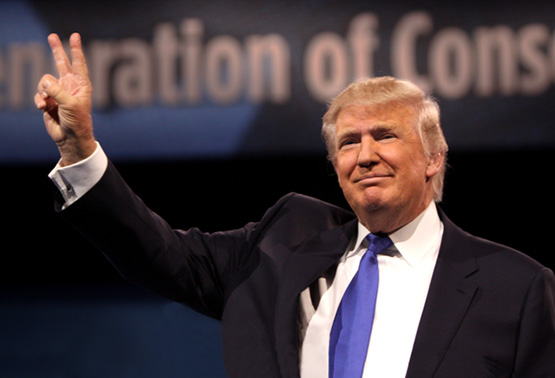
US President-elect Donald J. Trump
The thinking then was that if Trump had lost, he would have cited suspicions of voter fraud – possibly claiming that illegal Mexican immigrants had snuck into the polls to tip the election to Hillary Clinton – and Trump was widely condemned for even discussing the possibility of challenging the election’s outcome.
His refusal to commit to accepting the results was front-page news for days with leading editorialists declaring that his failure to announce that he would abide by the outcome disqualified him from the presidency.
But now the defeated Democrats and some anti-Trump neoconservatives in the Republican Party are jumping up and down about how Russia supposedly tainted the election by revealing information about the Democrats and the Clinton campaign.
Though there appears to be no hard evidence that the Russians did any such thing, the Obama administration’s CIA has thrown its weight behind the suspicions, basing its conclusions on “circumstantial evidence,” according to a report in The New York Times.
The Times reported: “The C.I.A.’s conclusion does not appear to be the product of specific new intelligence obtained since the election, several American officials, including some who had read the agency’s briefing, said on Sunday. Rather, it was an analysis of what many believe is overwhelming circumstantial evidence — evidence that others feel does not support firm judgments — that the Russians put a thumb on the scale for Mr. Trump, and got their desired outcome.”
In other words, the CIA apparently lacks direct reporting from a source inside the Kremlin or an electronic intercept in which Russian President Vladimir Putin or another senior official orders Russian operatives to tilt the U.S. election in favor of Trump.
More ‘Group Thinking’?
The absence of such hard evidence opens the door to what is called “confirmation bias” or analytical “group think” in which the CIA’s institutional animosity toward Russia and Trump could influence how analysts read otherwise innocent developments.
For instance, Russian news agencies RT or Sputnik reported critically at times about Democratic nominee Hillary Clinton, a complaint that has been raised repeatedly in U.S. press accounts arguing that Russia interfered in the U.S. election. But that charge assumes two things: that Clinton did not deserve critical coverage and that Americans – in any significant numbers – watch Russian networks.
Similarly, the yet-unproven charge that Russia organized the hacking of Democratic National Committee emails and the private email account of Clinton’s campaign chairman John Podesta assumes that the Russian government was responsible and that it then selectively leaked the material to WikiLeaks while withholding damaging information from hacked Republican accounts.
Here the suspicions also seem to extend far beyond what the CIA actually knows. First, the Republican National Committee denies that its email accounts were hacked, and even if they were hacked, there’s no evidence that they contained any information that was particularly newsworthy. Nor is there any evidence that – if the GOP accounts were hacked – they were hacked by the same group that hacked the Democratic Party emails, i.e., that the two hacks were part of the same operation.
That suspicion assumes a tightly controlled operation at the highest levels of the Russian government, but the CIA – with its intensive electronic surveillance of the Russian government and human sources inside the Kremlin – appears to lack any evidence of such a top-down operation.
Second, WikiLeaks editor Julian Assange directly denies that he received the Democratic leaked emails from the Russian government and one of his associates, former British Ambassador Craig Murray, told the U.K. Guardian that he knows who “leaked” the Democratic emails and that there never was a “hack,” i.e. an outside electronic penetration of an email account.
Murray said, “I’ve met the person who leaked them, and they are certainly not Russian and it’s an insider. It’s a leak, not a hack; the two are different things.”
‘Real News’
But even if Assange did get the data from the Russians, it’s important to remember that nothing in the material has been identified as false. It all appears to be truthful and none of it represented an egregious violation of privacy with some salacious or sensational angle.
The only reason the emails were newsworthy at all was that the documents revealed information that the DNC and the Clinton campaign were trying to keep secret from the American voters.
For instance, some emails confirmed Sen. Bernie Sanders’s suspicions that the DNC was improperly tilting the nomination race in favor of Clinton. The DNC was lying when it denied having an institutional thumb on the scales for Clinton. Thus, even if the Russians did uncover this evidence and did leak it to WikiLeaks, they would only have been informing the American people about the DNC’s abuse of the democratic process, something Democratic voters in particular had a right to know.
And, regarding Podesta’s emails, their most important revelation related to the partial transcripts of Clinton’s paid speeches to Wall Street banks, the contents of which Clinton had chosen to hide from the American people. So, again, if the Russians were involved in the leak, they would only have been giving to the voters information that Clinton should have released on her own. In other words, these disclosures are clearly not “fake news” – the other hysteria now sweeping Official Washington.
In the mainstream news media, there has been a clumsy effort to conflate these parallel frenzies, the leak of “real news” and the invention of “fake news.” But investigations of so-called “fake news” have revealed that these operations were run mostly by young entrepreneurs in places like Macedonia or Georgia who realized they could make advertising dollars by creating outlandish “click bait” stories that Trump partisans were particularly eager to read.
According to a New York Times investigation into one of the “fake news” sites, a college student in Tbilisi, Georgia, first tried to create a pro-Clinton “click bait” Web site but found that a pro-Trump operation was vastly more lucrative. This and other investigations did not trace the “fake news” sites back to Russia or any other government.
So, what’s perhaps most telling about the information that the CIA has accused Russia of sharing with the American people is that it was all “real news” about newsworthy topics.
What Threat to Democracy?
So, how does giving the American people truthful and relevant information undermine American democracy, which is the claim that is reverberating throughout the mainstream media and across Official Washington?
“Corruption” allegations against Yanukovych – pushed by OCCRP – were integral to the U.S.-supported effort to organize a violent putsch that drove Yanukovych from office on Feb. 22, 2014, touching off the Ukrainian civil war and – on a global scale – the New Cold War with Russia.
Yet, in the case of the “Panama Papers” or other leaks about “corruption” in governments targeted by U.S. officials for “regime change,” there are no frenzied investigations into where the information originated. Regarding the “Panama Papers,” there was simply back-slapping for the organizations that invested time and money in analyzing the volumes of material. And there were cheers when implicated officials were punished or forced to step down.
So, why are some leaks “good” and others “bad”? Why do we hail the “Panama Papers” or OCCRP’s “corruption evidence” that damaged Yanukovych – and ask no questions about where the material came from and how it was selectively used – yet we condemn the Democratic email leaks and undertake investigations into the source of the information?
In both the “Panama Papers” case and the “Democratic Party leaks,” the material appeared to be real. There was no evidence of disinformation or “black propaganda.” But, apparently, it’s okay to disrupt the politics of Iceland, Ukraine, Russia and other countries, but it is called a potential “act of war” – by neocon Sen. John McCain, R-Arizona – to reveal evidence of wrongdoing or excessive secrecy on the part of the Democratic Party in the United States.
Shoe on the Other Foot
Russian President Putin, while denying any Russian government attempt to tilt the election to Trump, recently commented on the American hypocrisy about interfering in other nations’ elections while complaining about alleged interference in its own or those of its allies. He described a conversation with an unnamed Western “colleague.”
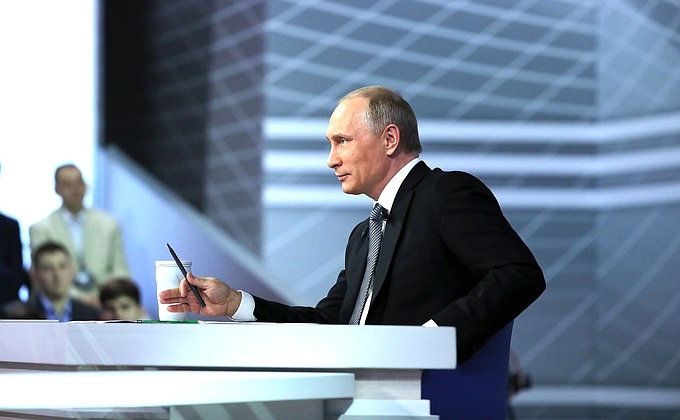
Russian President Vladimir Putin
Putin said, “I recently had a conversation with one of my colleagues. We touched upon our [Russian] alleged influence on some political processes abroad. I told him: ‘And what are you doing? You have been constantly interfering in our political life.’ And he replied: ‘It’s not us, it’s the NGOs’. I said: ‘Oh? But you pay them and write instructions for them.’ He said: ‘What kind of instructions?’ I said: ‘I have been reading them.’”
Whatever one thinks of Putin, he is not wrong in describing how various U.S.-funded NGOs, in the name of “democracy promotion,” seek to undermine governments that have ended up on Official Washington’s target list.
And another aspect of the hypocrisy permeating Official Washington’s belligerent rhetoric directed toward Russia: Aren’t the Democrats doing exactly what they accused Trump of planning to do if he had lost the Nov. 8 election, i.e., question the legitimacy of the results and thus undermine the faith of the American people in their democratic system?
For days, Trump’s unwillingness to accept, presumptively, the results of the election earned him front-page denunciations from many of the same mainstream newspapers and TV networks that are now trumpeting the unproven claims by the CIA that the Russians somehow influenced the election’s outcome by presenting some Democratic hidden facts to the American people.
Yet, this anti-Russian accusation not only undermines the American people’s faith in the election’s outcome but also represents a reckless last-ditch gamble to block Trump’s inauguration – or at least discredit him before he takes office – while using belligerent rhetoric that could push Russia and the United States closer to nuclear war.
Wouldn’t it be a good idea for the CIA to at least have hard evidence before the spy agency precipitated such a crisis?
Investigative reporter Robert Parry broke many of the Iran-Contra stories for The Associated Press and Newsweek in the 1980s.
THE CIA MOVES TO INVALIDATE U.S. PRESIDENTIAL ELECTIONS BY BLAMING RUSSIAN HACKING
By The_Real_Fly | ZeroHedge | Dec 10, 2016
It’s happening. After careful analysis of all the media punditry and the ‘leaks’ coming out from the CIA, I can only conclude that there is a concerted effort taking place to invalidate the U.S. elections, in an effort to unseat Donald Trump. Last night the Washington Post reported a leak from inside the CIA, saying they had a report that showed evidence that Russia hacked the elections in order to elect Donald Trump. They’re being very specific about that point. Pay attention.
Source: Reuters
The CIA has concluded that Russia intervened in the 2016 election to help President-elect Donald Trump win the White House, and not just to undermine confidence in the U.S. electoral system, the Washington Post reported on Friday.
Citing U.S. officials briefed on the matter, the Post said intelligence agencies had identified individuals with connections to the Russian government who provided thousands of hacked emails from the Democratic National Committee and others, including the chairman of Hillary Clinton’s presidential campaign, to WikiLeaks.
The officials described the individuals as people known to the intelligence community who were part of a wider Russian operation to boost Trump and reduce Clinton’s chances of winning the election.
“It is the assessment of the intelligence community that Russia’s goal here was to favor one candidate over the other, to help Trump get elected,” the Post quoted a senior U.S. official as saying. “That’s the consensus view.”
The Post said the official had been briefed on an intelligence presentation made by the Central Intelligence Agency to key U.S. senators behind closed-doors last week.
The CIA, in what the Post said was a secret assessment, cited a growing body of evidence from multiple sources. Briefers told the senators it was now “quite clear” that electing Trump was Russia’s goal, the Post quoted officials as saying on condition of anonymity.
In October, the U.S. government formally accused Russia of a campaign of cyber attacks against Democratic Party organizations ahead of the Nov. 8 presidential election.
President Barack Obama has said he warned Russian President Vladimir Putin about consequences for the attacks. But Russian officials have denied all accusations of interference in the U.S. election.
A CIA spokeswoman said the agency had no comment on the report.
In response to the Washpo article, the Trump campaign issued the following statement.
“These are the same people that said Saddam Hussein had weapons of mass destruction,” Trump’s representatives said in a statement attributed to the transition team. “The election ended a long time ago … It’s now time to move on and ‘Make America Great Again.'”
Bob Baer, former CIA and current ‘Hunting Hitler’ shill, said in an interview today that if the evidence regarding Russia hacking the elections are true, then the only logical thing to do is to hold new elections.
‘If the evidence is there, I don’t see any other way than to vote again.’
Bear in mind, this is all in response to the Wikileaks revelations about the abject corruptness of both the DNC and the Hillary Clinton camp, via the Podesta emails. Instead of offering an explanation for their egregious actions, the elite cadre inside of the Clinton camp have instead gone on the offensive to blame the messenger. The media is running with this story with long strides, not only suggesting that Russia hacked the elections, but also saying Trump was — in fact — a ‘witting asset’ of Moscow. What’s next, an arrest order for Trump and his campaign staff for being covert Russian spies?
‘This nation was attacked by a cyber warfare operation.’
Whatever happened to the smug certainty that the elections wouldn’t be rigged? I suppose what Obama meant was they wouldn’t be rigged had Hillary won, yes?
Paul Joseph Watson offers some valuable insight, in regard to the naked hypocrisy of America’s ruling elite:
Russia interfered in the election! (no evidence).
LEFT FREAKS OUT.
Saudi Arabia provably bankrolled Clinton’s campaign
MEH
Featured Video

U.S. General Caine Warns: STRIKING IRAN is a HUGE RISK
or go to
Aletho News Archives – Video-Images
From the Archives
Stealth Bombers and Bunker Busters
Analysis of the so-called 12-Day War, and the triumphantly celebrated Operation Midnight Thunder

By William Schryver | imetatronink | November 28, 2025
The GBU-57 is a big fat gravity bomb with fins. To achieve effective precision, a B-2 bomber must drop it on its intended target from no further than about five nautical miles — essentially right on top of the target.
Its penetration depth is claimed to be 200 feet. But that capability has NEVER been tested against a seriously hardened deep-underground target encased in layers of high-performance concrete, and topped with a few dozen meters of solid rock. In that sort of real-world scenario, the GBU-57 would be lucky to drill down 50 feet, if that.
It was always ridiculous silly talk to suggest the GBU-57 was the wonder weapon it was made out to be. There is a good reason the US only produced a couple dozen of them and then stopped: they understood its acute limitations in a non-permissive combat environment.
And, notwithstanding the hyperbolic Israeli propaganda, there was never any credible evidence that Iranian medium- and long-range air defenses against fixed-wing aircraft were attrited to any significant degree. And Iranian short-range air defenses were increasingly effective against long-range Israeli drones with each passing day.
As for the B-2: it is a big fat subsonic aircraft. It flies at airliner speeds. A strike on Fordow would entail flying at least 500 miles in and out of Iran. … continue
Blog Roll
 Aletho News
- Drug traffickers trained in Ukraine attack state forces in Mexico
- The tragic reality of Brazilian mercenaries in the Ukrainian conflict
- Zelensky Refused to Discuss Druzhba Pipeline Issue – Fico
- U.S. General Caine Warns: STRIKING IRAN is a HUGE RISK /Glenn Diesen & Lt Col Daniel Davis
- Israel designates five Palestinian media outlets as ‘terrorist organizations’
- Israel, not America, first: Carlson’s Huckabee interview lays bare US foreign policy priorities
- Israeli troops executed Palestinian aid workers at ‘point blank range’: Report
- Iran war What if today’s Iran is resigned to a long, hellish war with the US?
- Why Israel Is Escalating Its War Crimes Against Lebanon
- Iran in the face of the armed diplomacy of imperialism
- If Americans Knew
- The NY Times on the “MAGA” Split Over Israel & USS Liberty
- In Gaza, Ramadan without mosques, imams – Not a ceasefire Day 137
- Footage Shows Israeli Troops Waiting in Ambush, Then Opening Fire on a Palestinian Teen
- The US is on the brink of a major new war that Trump has not even bothered explaining
- Latest Epstein document dump is one more cover-up
- No Protection, No Justice: US Citizens Killed with Impunity by Israel
- Maria Farmer: Epstein Victim Reveals Explosive Information Covered Up by Media
- Average of five Palestinians killed by Israel every day in Gaza since ceasefire – Not a ceasefire Day 136
- Palestinian church leaders admonish Christian Zionist Mike Huckabee – Not a ceasefire Day 135
- Ominous messaging from Trump’s “Board of Peace” – Not a ceasefire Day 134
- No Tricks Zone
- Surprising Discovery: Sahara Is Greening…Billions Of Trees Where Once Thought To Be Barren
- New Research Reaffirms Clouds, Aerosols, And Surface Solar Radiation Are ‘Driving The Climate System’
- Germany: Electric Car Catches Fire At Charging Station, Sets Off Local “Inferno”, Widespread Damage
- New Study: Canada’s New Brunswick Was 1°C Warmer Than Today During The Medieval Warm Period
- Coal Power Back In Trend As Globe Tries To Keep Pace With Growing Demand For Power
- New Study: A 4°C Warmer Beaufort Sea Had ‘No Sea Ice’ 11,700 – 8200 Years Ago
- Unfudging The Data: Dutch Meteorological Institute Reinstates Early 20th Centruy Heat Waves It Had Erased Earlier
- German Gas Crisis…Chancellor Merz Allegedly Bans Gas Debate Ahead of Elections!
- Pollen Reconstructions Show The Last Glacial’s Warming Events Were Global, 10x Greater Than Modern
- Germany’s Natural Gas Storage Level Dwindles To Just 28%… Increasingly Critical
 Aletho News