What the Fake Syria Sniper Boy Video Tells Us About Media Experts

By Maram Susli | New Eastern Outlook | November 27, 2014
Many mainstream media websites helped a fake video go viral this month. The video showing a young Syrian boy running through sniper fire to save a little girl, was exposed as a fake when the Norwegian producer Lars Klevberg made the fact public. One of the stated aims of the Norwegian film makers was to “see how the media would respond to a fake video.” This article examines how that experiment went.
The western press very quickly accepted the video as real and used it to support the US administration’s narrative on Syria. Many top US news sources began to spread the story. Even though the producer said he explicitly added big hints that the video was fake, like the children surviving multiple gun shots.
Propagating false stories on Syria, is nothing new for the western press. In the lead up to the conflict many stories were exposed as frauds, such as the Anti-government activist “Gay Girl in Damascus” which turned out to be a middle-aged American man in Scotland. Syrian Danny Abdul Dayem which was frequently interviewed by CNN was using fake gun fire and flames in his interviews.
The fake sniper video wasn’t enough to support US government narratives by itself, as the now deleted original upload didn’t suggest the identity of the snipers. So the west’s media suggested that it was Syrian military snipers that were targeting the children without any evidence. Journalists failed to mention how they reached the conclusion that an actor in Malta was shot by the Syrian military. It may be that the western press is quick to trust pro-rebel sources, as the video was uploaded by the pro-rebel Sham Times along with their own twist.
The Guardian’s headline for the video was “Syrian boy ‘saves girl from army sniper’” and the Telegraph delicately suggested the Syrian military was responsible for the fake bullets. The International Business Times stated, “the snipers, who reportedly are said to be the government forces loyal to Syrian President Bashar al-Assad.” IB Times never explicitly mentioned who reported this information. They then took it a step further and concluded the article with “the incident certainly is not the first time that Pro-Assad gunmen have targeted children”. Well it is at least not the first time the mainstream media has presented false reports as fact. In 2012, CNN claimed a bullet that killed a four year old girl in Aleppo was shot by government snipers even whilst admitting the bullet came from rebel held buildings.
Other journalists took to Twitter to make unfounded claims about army snipers targeting the boy. Vinnie O’Dowd who has done work for Channel 4 and Al Jazeera tweeted “Syrian Regime Targets kids”. Liz Sly of the Washington Post tweeted incredulously that “Soldiers kept shooting” at children.
These tweets were inline with an official State Department Twitter account @ThinkAgain_DOS which blamed Assad for the fictitious bullets in the film. This casts doubt on how deeply the US administration scrutinizes information it bases it’s policy on. In 2013 they relied heavily on video footage provided by rebels to support its planned attack on Syria in the wake the Ghouta chemical attack.
Scrutinising the Scrutinisers (Experts)
 But it isn’t just the mainstream media that was easily duped by the convenient propaganda film. The video experts that were asked to scrutinise the video, failed to recognise that the video was a fraud. The Telegraph stated that upon enquiry “experts told them they had no reason to doubt that the video is real”. International Business Times went a step further spinning the statement to “experts told The Telegraph that they have no doubts on the authenticity of the footage.”
This is very strange since both children in the film walk away after being directly and repeatedly hit by bullets. The creators of the film said he purposely scripted this as a big hint that the video is fake. The lack of scrutiny the media experts employed suggests incompetence or the same level of bias as the media that employs them.
Heather Saul of the Independent wrote that one of the ‘Middle East experts” she showed the video to was from Human Rights Watch. Indeed, Human Rights Watch European Media Director Andrew Stroehlein, showed no doubt on the authenticity of the film when he tweeted it out to his followers. The New York based human rights organisation is not new at tweeting false information, last month they used an image of the Odessa fire, where US-backed militia’s burned thirty two people to death, as an example of ‘Putin’s repressive policies’. In 2008 Venezuela expelled two HRW staff members accused of “anti-state activities” after producing a report against the Chavez government. Guardian journalist Hugh O’Shaughnessy accused HRW of using false and misleading information in the report, as well as pro-Washington bias. In 2009 HRW received financial donations from the Saudi government which may, in part, explain the anti-Syrian slant.
 HRW employed so called video expert Eliot Higgins and his colleague Daniel Kaszeta to investigate the August 21 chemical attack in Ghouta, and quickly reached the conclusion the Syrian government was behind the attack. Daniel Kaszeta was referred to as a fraud by prominent physicist and MIT Professor Theodore Postol. HRW’s CEO Kenneth Roth recently used a report by Eliot Higgins to make unfounded claims about Ukrainian rebels shooting down Malaysian flight MH17. Heather Saul did not respond to questions on whether Eliot Higgins was one of the expert she asked for advice. However the mainstream media’s most often quoted video expert, did not recognise that the video was a fraud, tweeting cautiously that he wasn’t sure if it was authentic but gave the video a reaction non the less.
However many viewers who aren’t referred to as video or Middle East experts, immediately recognised the video was a fraud and flooded social media sites Twitter and Youtube with doubts on its authenticity. If Heather Saul had used these individuals as experts rather than HRW, she would have reached the correct conclusion about the video. But perhaps it is this unbiased eye that the mainstream media avoids. The vast majority of Higgin’s conclusions support US government narratives and agendas, and that’s the kind of bias the mainstream media prefers.
Blaming the Producer
Instead of humbly accepting blame for spreading disinformation, many western journalists and their experts reacted by blaming the producer of the film. The collective rage of the entire mainstream media forced the film’s producer to delete any trace of this 30,000 dollar experiment. Some journalists took to Twitter to express their rage at being exposed as easily duped by convenient propaganda.
The experts that were fooled by the video also strongly protested. HRW posted a complaint that the fake video “eroded the public trust in war reporting”, in other words blind trust in HRW analysis and war propaganda. Eliot Higgins posted an open letter to the producer of the film on his website Bellingcat, condemning the film.
GlobalPost referred to the film as ‘irresponsible and dangerous’ but not because it could be used to promote wars and make false accusations. What the real danger to the mainstream media and their experts seems to be, is that as a result of the film’s exposure as a fraud, future video claims may now have to be properly scrutinized and the public may not be so unquestioning in future. However it is the journalists’ lack of scrutiny that is truly what is irresponsible and dangerous. Had the director not admitted the film was fake, these journalists more than likely would have kept promoting the story as an example of Syrian Army war crimes.
Maram Susli also known as “Syrian Girl,” is an activist-journalist and social commentator covering Syria and the wider topic of geopolitics.
Ecuador Slams Human Rights Abuse Claims
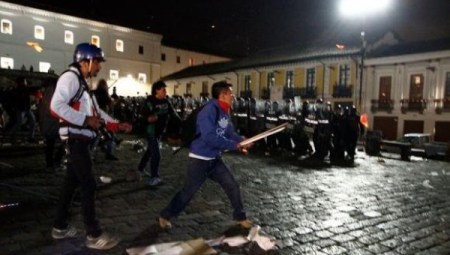
Opposition protesters took sticks and other objects to attack policemen (Photo: ANDES).
teleSUR | October 22, 2014
The Ecuadorian government hit back on Tuesday against a report claiming it repressed protestors during a recent demonstrations.
The Ecuadorian government is challenging a lawyer cited in the report to prove his allegations.
It was responding to accusations made by U.S. based organization Human Rights Watch (HRW).
Interior Minister Jose Serrano announced during a televised interview that the government will sue the lawyer who told HRW that students and protesters detained on September 17 and 18 were tortured by the police.
“This lawyer had the audacity and cynicism to say that the police had tortured them … this individual will have to prove what he said … is effectively true,” Serrano said.
The Interior Minister also clarified that those apprehended were caught on video attacking policemen. All of them confessed to the charges against them.
President Rafael Correa had warned ahead of the September 17 protest that the opposition would try to use similar tactics to those used by the Venezuelan opposition, seeking to generate violent incidents which would then generate controversy and international reactions.
On September 17, opposition activists and government sympathizers both organized mobilizations which were located very close to one another. To avoid a small violent group from reaching the government sympathizers, a group of policemen blocked streets which connected both sites.
Opposition activists attacked the police to try to break into the pro-government rally, with arrests following.
“We had announced ahead (of the protests) that there were groups amongst the protesters which would use vandalism and violent strategies,” Serrano reminded.
According to the official, the International Red Cross was called days before the protests to guarantee that, if any detention was made, the organisation was present in the detention center.
“Mr. Vivanco (Jose Miguel Vivanco, HRW chief for Latin America) will have to show the whole world who is financing him, where are they getting their resources from, and why does he have this particular aversion against Latin America’s progressive governments,” Serrano said.
HRW is increasingly being held account by intellectuals and experts in the United States and the world due to its close relationship with the U.S. State Department.
Journalist Keane Bhatt has previously documented several cases in which HRW members have become senior U.S. State Department officials, in what Bhatt calls a “revolving door policy”.
Nobel Peace Prize Laureates Adolfo Perez Esquivel and Mairead Maguire together with former U.N. Assistant Secretary General Hans von Sponeck and over 100 scholars wrote a letter in May requesting Human Rights Watch to change its policy so as to avoid links with the U.S. State Department.
3 Ukrainian atrocities lacking ‘transparent’ investigation
RT | October 10, 2014
Ukraine has been flooded with violence this year – snipers in Kiev, the Odessa massacre, the discovery of mass graves in E. Ukraine are just the tip of the iceberg. However, almost no proper investigation has been carried out so far – even of these cases.
The Ukrainian crisis that broke out almost a year ago resulted in a military conflict – which, in its turn, resulted in horrible crimes.
But current efforts to examine even the three most prominent cases seem to be not enough, RT’s Maria Finoshina found out.
On September 23, three unmarked graves with at least nine bodies were discovered, near the Eastern Ukraine city of Donetsk. The finding of self-defense forces was later confirmed by the OSCE Special Monitoring Mission (SMM).
Chief medical examiner Konstantin Gerasimenko told RT that “All of them [the victims] had multiple gunshots and their hands bound.”
Russian Foreign Minister Sergey Lavrov called on the international organizations to give a “clear, unbiased and responsible response.” It was followed by Washington’s words of support for a “full and thorough” investigation destined “to get to the bottom of the facts.”
However, little progress has been achieved in the investigation of the killings by the OSCE, whose monitors are currently working on the scene, as well as by the monitoring mission of the Office of the UN High Commissioner for Human Rights who promised to take part in the investigation of the matter.
Spokesperson for EU Foreign Affairs and Security Policy told RT via e-mail that “As underlined by the OSCE SMM and as far as we’re aware there has been no forensic analysis of the bodies so far.”
The answer of the Human Rights Watch organization is hard to call positive, as well. “At this moment we don’t have any factual information about the progress of these investigations, so it’s better not to comment.”
Another tragedy happened on May 2 in the southern city of Odessa, where nearly 40 people died in flames that burst out in a building where anti-Maidan protesters tried to take refuge. The international community was quick to condemn the massacre, though closing its eyes to the part Right Sector radicals played in setting the fire.
RT has recently contacted the EU Council, but all the spokesperson for EU Foreign Affairs and Security Policy had to say five months after the violence was the “investigation must be swift and transparent, free of political influence, clarifying the facts and looking at the role of all parties involved, protesters as well as law enforcement services.”
As a matter of fact, the Ukrainian authorities carried out an investigation, but the resulting report called it “impossible” to arrive at an objective conclusion about the causes of the deaths “due to the lack of state-of-the-art equipment”.
The probe was slammed by the local media as “fabricated” and “lacking evidence”.
Svetlana Fabrikant, a member of the Ukrainian parliament and secretary of the parliamentary commission probing into the massacre in Odessa on May 2, even withdrew her signature from the published version, calling it “different” from what she had signed. Reportedly, the redacted final version did not contain witnesses’ accounts about the involvement of about 500 radicals who have been allegedly transferred to Odessa with the help of the region’s governor, Vladimir Nemirovsky. Also, it lacked information implicating the involvement of Andrey Parubiy, then-secretary of Ukraine’s National Security and Defense Council, in organizing the massacre.
In February, over a hundred people were killed on Maidan by sniper fire.
There have been complaints from human rights advocates that the investigation is going on slowly, and some important evidence has been destroyed.
The preliminary investigation blamed ousted president Viktor Yanukovich and the Berkut special division, who denied any connection to the snipers.
In a leaked tape that emerged in March Estonia’s Foreign Minister told EU’s Foreign Policy Chief Catherine Ashton about the bloody events that “It is really disturbing that the new coalition, they don’t want to investigate what exactly happened.” He added that there was “A stronger and stronger understanding that behind the snipers it was not Yanukovich, but it was somebody from the new coalition”.
A number of Berkut special unit members have been arrested on charges of Maidan killings, and they are currently facing trial.
There has been no international investigation into either of those crimes.
READ MORE:
Odessa slaughter: How vicious mob burnt anti-govt activists alive (GRAPHIC IMAGES)
‘Taped hands, gun wounds’: RT witnesses exhumation of mass graves in E. Ukraine
Compare and Contrast: Cluster Bomb Usage in Syria, July 2014 Vs September 2014
Interventions Watch | September 6, 2014
Rick Gladstone, writing in The New York Times, July 30th 2014:
‘Cluster bombs, internationally banned weapons that can maim and destroy indiscriminately, not only have been frequently used for the past two years by government forces in the Syrian civil war . .
. . . According to an assessment by Human Rights Watch, a member of the Cluster Munition Coalition, Syrian government forces used the weapons in at least 224 locations, in 10 of Syria’s 14 governorates, from July 2012 to this March, with new indications that their “use is ongoing.” The assessment is incomplete and based partly on remnants recorded by video, Human Rights Watch said, suggesting the actual use may be even more widespread.
Syria’s government has denied the use of cluster munitions in the conflict, which is now in its fourth year. But Ms. Blakemore said that the insurgents fighting to topple President Bashar al-Assad did not have the capacity to deploy such weapons.’
So then, rebels in Syria simply aren’t able to use cluster bombs. No siree! It’s all the work of the Assad regime.
Rick Gladstone, writing in The New York Times, September 1st 2014:
‘The Islamic State in Iraq and Syria, the extremist militant group now almost universally vilified for atrocities that include boastful beheadings, summary mass executions and enslavement in the areas it aspires to control, also has attacked enemies with cluster bombs, the banned weapons that kill and maim indiscriminately, Human Rights Watch said on Monday.
Stephen Goose, the arms division director of Human Rights Watch, said in a statement that “credible evidence” had emerged that ISIS forces used ground-fired cluster munitions on July 12 and Aug. 14 during fighting with Kurdish militia members in Aleppo Province near the northern Syrian border with Turkey.
“The use of cluster munitions by nonstate actors such as the Islamic State shows the urgent need for Syria and all nations that have not yet done so to join the ban on cluster munitions and destroy their stockpiles,” Human Rights Watch said in the statement’.
No wait! The rebels do have the capacity to deploy cluster bombs after all, and they are deploying them! And they were even when we said they weren’t! Or at least ISIS are!
And how convenient that this new ‘credible evidence’ has come to light just as the U.S. et al are embarking on a long term, overt war in Iraq – and very probably Syria before too long – to be justified by the ISIS ‘threat’.
Airline Horror Spurs New Rush to Judgment
By Robert Parry | Consortium News | July 19, 2014
Despite doubts within the U.S. intelligence community, the Obama administration and the mainstream U.S. news media are charging off toward another rush to judgment blaming Ukrainian rebels and the Russian government for the shoot-down of a Malaysia Airlines plane, much as occurred last summer regarding a still-mysterious sarin gas attack in Syria.
In both cases, rather than let independent investigators sort out the facts, President Barack Obama’s ever-aggressive State Department and the major U.S. media simply accepted that the designated villains of those two crises – Bashar al-Assad in Syria and Russian President Vladimir Putin on Ukraine – were the guilty parties. Yet, some U.S. intelligence analysts dissented from both snap conventional wisdoms.
Regarding the shoot-down of the Malaysian jetliner on Thursday, I’m told that some CIA analysts cite U.S. satellite reconnaissance photos suggesting that the anti-aircraft missile that brought down Flight 17 was fired by Ukrainian troops from a government battery, not by ethnic Russian rebels who have been resisting the regime in Kiev since elected President Viktor Yanukovych was overthrown on Feb. 22.
According to a source briefed on the tentative findings, the soldiers manning the battery appeared to be wearing Ukrainian uniforms and may have been drinking, since what looked like beer bottles were scattered around the site. But the source added that the information was still incomplete and the analysts did not rule out the possibility of rebel responsibility.
A contrary emphasis has been given to the Washington Post and other mainstream U.S. outlets. On Saturday, the Post reported that “on Friday, U.S. officials said a preliminary intelligence assessment indicated the airliner was blown up by an SA-11 surface-to-air missile fired by the separatists.” But the objectivity of the Obama administration, which has staunchly supported the coup regime, is in question as are the precise reasons for its judgments.
Even before the Feb. 22 coup, senior administration officials, including Assistant Secretary of State Victoria Nuland and U.S. Ambassador to Ukraine Geoffrey Pyatt, were openly encouraging protesters seeking the overthrow of Yanukovych. Nuland went so far as to pass out cookies to the demonstrators and discuss with Pyatt who should be appointed once Yanukovych was removed.
After Yanukovych and his officials were forced to flee in the face of mass protests and violent attacks by neo-Nazi militias, the State Department was quick to declare the new government “legitimate” and welcomed Nuland’s favorite, Arseniy Yatsenyuk, as the new prime minister.
As events have unfolded since then, including Crimea’s secession to join Russia and bloody attacks directed at ethnic Russians in Odessa and elsewhere, the Obama administration has consistently taken the side of the Kiev regime and bashed Moscow.
And, since Thursday, when the Malaysian plane was shot down killing 298 people, the Ukrainian government and the Obama administration have pointed the finger of blame at the rebels and the Russian government, albeit without the benefit of a serious investigation that is only now beginning.
One of the administration’s points has been that the Buk anti-aircraft missile system, which was apparently used to shoot down the plane, was “Russian made.” But the point is rather silly since nearly all Ukrainian military weaponry is “Russian made.” Ukraine, after all, was part of the Soviet Union until 1991 and has continued to use mostly Russian military equipment.
It’s also not clear how the U.S. government ascertained that the missile was an SA-11 as opposed to other versions of the Buk missile system.
Slanting the Case
Virtually everything that U.S. officials have said appears designed to tilt suspicions toward the Russians and the rebels – and away from government forces. Referring ominously to the sophistication of the SA-11, U.S. Ambassador to the United Nations Samantha Power declared, “We cannot rule out Russian technical assistance.” But that phrasing supposedly means that the administration can’t rule it in either.
Still, in reading between the lines of the mainstream U.S. press accounts, it’s possible to see where some of the gaps are regarding the supposed Russian hand in Thursday’s tragedy. For instance, the Post’s Craig Whitlock reported that Air Force Gen. Philip M. Breedlove, U.S. commander of NATO forces in Europe, said last month that “We have not seen any of the [Russian] air-defense vehicles across the border yet.”
Since these Buk missile systems are large and must be transported on trucks, it would be difficult to conceal their presence from U.S. aerial surveillance which has been concentrating intensely on the Ukraine-Russia border in recent months.
The Post also reported that “Rear Adm. John Kirby, the Pentagon press secretary, said defense officials could not point to specific evidence that an SA-11 surface-to-air missile system had been transported from Russia into eastern Ukraine.”
In other words, the mystery is still not solved. It may be that the rebels – facing heavy bombardment from the Ukrainian air force – convinced the Russians to provide more advanced anti-aircraft weapons than the shoulder-fired missiles that the rebels have used to bring down some Ukrainian military planes.
It’s possible, too, that a rebel detachment mistook the civilian airliner for a military plane or even that someone in the Russian military launched the fateful rocket at the plane heading toward Russian airspace.
But both the Russian government and the rebels dispute those scenarios. The rebels say they don’t have missiles that can reach the 33,000-foot altitude of the Malaysian airliner. Besides denying a hand in the tragedy, the Russians claim that the Ukrainian military did have Buk anti-aircraft systems in eastern Ukraine and that the radar of one battery was active on the day of the crash.
The Russian Defense Ministry stated that “The Russian equipment detected throughout July 17 the activity of a Kupol radar, deployed as part of a Buk-M1 battery near Styla [a village some 30 kilometers south of Donetsk],” according to an RT report.
So, the other alternative remains in play, that a Ukrainian military unit – possibly a poorly supervised bunch – fired the missile intentionally or by accident. Why the Ukrainian military would intentionally have aimed at a plane flying eastward toward Russia is hard to comprehend, however.
A Propaganda Replay?
But perhaps the larger point is that both the Obama administration and the U.S. press corps should stop this pattern of rushing to judgments. It’s as if they’re obsessed with waging “information warfare” – i.e., justifying hostilities toward some adversarial nation – rather than responsibly informing the American people.
We saw this phenomenon in 2002-03 as nearly the entire Washington press corps clambered onboard President George W. Bush’s propaganda bandwagon into an aggressive war against Iraq. That pattern almost repeated itself last summer when a similar rush to judgment occurred around a sarin gas attack outside Damascus, Syria, on Aug. 21.
Though the evidence was murky, there was a stampede to assume that the Assad government was behind the attack. While blaming the Syrian army, the U.S. press ignored the possibility that the attack was a provocation committed by radical jihadist rebels who were hoping that U.S. air power could turn the tide of the war in their favor.
Rather than carefully weigh the complex evidence, the State Department and Secretary of State John Kerry tried to spur President Obama into a quick decision to bomb Syrian government targets. Kerry delivered a belligerent speech on Aug. 30 and the administration released what it called a “Government Assessment” supposedly proving the case.
But this four-page white paper contained no verifiable evidence supporting its accusations and it soon became clear that the report had excluded dissents that some U.S. intelligence analysts would have attached to a more formal paper prepared by the intelligence community.
Despite the war hysteria then gripping Official Washington, President Obama rejected war at the last moment and – with the help of Russian President Putin – was able to negotiate a resolution of the crisis in which Assad surrendered Syria’s chemical weapons while still denying a hand in the sarin gas attack.
The mainstream U.S. press, especially the New York Times, and some non-governmental organizations, such as Human Rights Watch, continued pushing the theme of the Syrian government’s guilt. HRW and the Times teamed up for a major story that purported to show the flight paths of two sarin-laden missiles vectoring back to a Syrian military base 9.5 kilometers away.
For a time, this report was treated as the slam-dunk evidence proving the case against Assad, until it turned out that only one of the rockets carried sarin and the maximum range of the one that did have sarin was only about two kilometers.
Despite knowing these weaknesses in the case, President Obama stood by his State Department hawks by reading a speech to the UN General Assembly on Sept. 24 in which he declared: “It’s an insult to human reason and to the legitimacy of this institution to suggest that anyone other than the regime carried out this attack.”
In watching Obama’s address, I was struck by how casually he lied. He knew better than almost anyone that some of his senior intelligence analysts were among those doubting the Syrian government’s guilt. Yet, he suggested that anyone who wasn’t onboard the propaganda train was crazy.
Since then, investigative journalist Seymour Hersh has revealed other evidence indicating that the sarin attack may indeed have been a rebel provocation meant to push Obama over the “red line” that he had drawn about not tolerating chemical weapons use.
Now, we are seeing a repeat performance in which Obama understands the doubts about the identity of who fired the missile that brought down the Malaysian airliner but is pushing the suspicions in a way designed to whip up animosity toward Russia and President Putin.
Obama may think this is a smart play because he can posture as tough when many of his political enemies portray him as weak. He also buys himself some P.R. protection in case it turns out that the ethnic Russian rebels and/or the Russian military do share the blame for the tragedy. He can claim to have been out front in making the accusations.
But there is a dangerous downside to creating a public hysteria about nuclear-armed Russia. As we have seen already in Ukraine, events can spiral out of control in unpredictable ways.
Assistant Secretary Nuland and other State Department hawks probably thought they were building their careers when they encouraged the Feb. 22 coup – and they may well be right about advancing their status in Official Washington at least. But they also thawed out long-frozen animosities between the “ethnically pure” Ukrainians in the west and the ethnic Russians in the east.
Those tensions – many dating back to World War II and before – have now become searing hatreds with hundreds of dead on both sides. The nasty, little Ukrainian civil war also made Thursday’s horror possible.
But even greater calamities could lie ahead if the State Department’s “anti-diplomats” succeed in reigniting the Cold War. The crash of Malaysian Airlines Flight 17 should be a warning about the dangers of international brinkmanship.
~
Investigative reporter Robert Parry broke many of the Iran-Contra stories for The Associated Press and Newsweek in the 1980s. You can buy his new book, America’s Stolen Narrative, either in print here or as an e-book (from Amazon and barnesandnoble.com).
Whitewashing Venezuela’s Right Wing
In the heated media war over Venezuela, studies produced by well-funded NGOs (usually with ties to powerful states) have been regularly cited by the western corporate media to paint a grim picture of the country.
A Venezuela report released by the International Crisis Group (ICG) in May might give some people the impression that it is an even handed account done by authors committed to decreasing political violence in Venezuela. The report makes a few good recommendations, but it actually reveals that the ICG’s commitment to whitewashing right wing extremists is much stronger than any commitment to sensible analysis or to reducing political violence.
In the crucial section of the report where it discusses protest related violence, the ICG claims that there is only “weak evidence” that any opposition supporters ever used firearms:
In contrast to the abundant evidence linking security forces and pro-government civilians to deaths and injuries, it is unclear whether some in the opposition used firearms. In any case, the evidence on this is weak. The only deaths that appear clearly linked to the protesters are those involving accidents caused by barricades, including the use of barbed wire or other obstacles.
As far as the ICG is concerned, the bodies of several police and other pro government people shot to death while attempting to clear barricades in opposition strongholds are “weak evidence” of firearm use by anyone in the opposition. It might be argued that “concrete proof” of the exact individuals who shot every one of those victims is lacking. However saying that anti-government protesters are not very strongly implicated in the shootings of any government supporters or police is beyond preposterous.
In an attempt to make the evidence appear weak, the ICG mentions one incident in which a journalist working for a right wing business newspaper, El Universal, claims that a government supporter shot and killed a policeman at an opposition barricade. This kind of counter claim had also been made by government officials about some opposition protesters who have been shot (some government officials claiming the shots were fired by other opposition people), but the ICG wouldn’t dare use these claims to conclude that there is only “weak evidence” that government supporters had ever used firearms. In fact, the ICG discusses the death of opposition protester Génesis Carmona without ever mentioning government claims that she had been shot by another protester. Such inconsistent and biased standards for assessing evidence cannot possibly lead to a reliable version of events.
In addition to various opposition aligned sources, the ICG defers to the New York City based Human Rights Watch (HRW) to assess responsibility for violence. HRW was very recently sent a letter signed by two Nobel Peace Prize laureates Adolfo Pérez Esquivel and Mairead Maguire; former UN Assistant Secretary General Hans von Sponeck; current UN Special Rapporteur on Human Rights in the Palestinian Territories Richard Falk; and over 100 scholars all requesting that it take steps to close the revolving door between it and the US government. The letter noted:
In a 2012 letter to President Chávez, HRW criticized the country’s candidacy for the UN Human Rights Council, alleging that Venezuela had fallen “far short of acceptable standards” and questioning its “ability to serve as a credible voice on human rights.” At no point has U.S. membership in the same council merited censure from HRW, despite Washington’s secret, global assassination program, its preservation of renditions, and its illegal detention of individuals at Guantánamo Bay.
Ken Roth, head of HRW, once referred to Venezuela and a few other ALBA countries as the “most abusive” in Latin America – an insane remark as he should know by merely sampling his own organization’s reports about Colombia. Daniel Wilkinson, another HRW official, went so far as to lie about the Venezuelan TV media in an op-ed published in the New York Review of Books. HRW’s responses to the 2002 coup in Venezuela and as well as the 2004 coup in Haiti were disgraceful. By now, anyone who uncritically cites HRW about any country at odds with the US is, at best, uninformed about HRW’s track record.
The ICG’s report makes no mention of numerous falsified images the opposition has spread through social media to bolster its allegations of repression. Even a corporate outlet like Reuters made mention of this tactic but the ICG ignored it. The ICG also cites the anti-government newspaper El National various times – a newspaper whose dishonesty is so flagrant it has sometimes dismayed opposition people. An atrocious record doesn’t “weaken” El Nacional articles as evidence in the view of the ICG or provoke any statement of caution.
Attempts to put the 2004 recall referendum results under a cloud
The ICG report made the astounding remark that the opposition merely lacked “concrete proof” of fraud in the 2004 recall referendum that was won by Hugo Chavez. The report stated:
Concrete proof [of fraud] was not presented, though a peer-reviewed statistical analysis of the results later found significant anomalies. Maria M. Febres and Bernardo Márquez, “A Statistical Approach to Assess Referendum Results: The Venezuelan Recall Referendum 2004”, International Statistical Review, vol. 74, no. 3 (2006), p. 379. Jennifer McCoy, Carter Center election observation head in Venezuela, found the anomalies had not affected the referendum outcome.
In fact, elaborate statistical arguments – one of them based on “anomalies” in the distribution of votes – were made immediately after the referendum took place, not years later as the ICG implies. The Carter Center hired a team of very specialized statisticians – not simply Jennifer McCoy as the ICG very sloppily suggests – whose only job was to assess those arguments. The statisticians explained why the arguments did not substantiate allegations of fraud. The oppositions’ various “statistical analyses” received expert scrutiny that decided something far more important than acceptability for publication (which is what peer-review committees decide for journals) and that required extensive review of the arguments made by both sides. One of the key points made by the Carter Center’s statisticians was that there was no credible explanation how the government could have perpetrated fraud such that the random audit of the results would have failed to expose it.
The government’s victory in the 2004 referendum was subjected to a remarkably severe test. One of the key monitors, the Carter Center, is deeply tied to the US establishment which has been very hostile to Chavista administrations. In spite of all that, the ICG still pretends that there is reasonable doubt about the results. That will encourage the members of the opposition who allege that Chavista victories are stolen no matter how overwhelming the evidence is against them.
It’s unsurprising, given the ICG’s willingness to smear the 2004 referendum which was very far from close, that it also published a hopelessly one-sided account of the dispute surrounding the vastly closer presidential election of April 2013. The ICG absolved the opposition in advance for any act of violence by stating that the government must “clarify” the validity of the results or face “violent consequences”. In reality, the Election Day audit of the results, as CEPR has reported, already proved that the odds of a Capriles victory were less than one in 25 thousand trillion. The audit was, nevertheless, expanded.
It is quite clear to anyone who has been paying attention that opposition claims of electoral fraud are not driven by the facts but by the level of support they expect from the US government, foreign media and groups like the ICG.
Speaking the opposition’s language
In section IX of the report the ICG contrasts the “left leaning regimes” of the Bolivarian Alliance for our America (ALBA) with “those representing more market-friendly, centre and right-leaning governments”. On the left the ICG describes “regimes” while elsewhere on the political spectrum it describes “governments”.
Some political scientists use the word “regime” in a neutral way, but it is most commonly used to describe an oppressive and undemocratic government. I can find no example of the ICG ever referring to US government as a “regime” despite its abysmal human rights record and money-dominated political process. However it is very easy to find ICG reports replete with the word “regime” to describe states that the US government opposes.
The ICG also adopts the use of the word “coletivo” to mean an armed government supporter. It acknowledges that this is highly partisan usage by noting that it “is a term that covers pro-government community organisations of various kinds, most of them non-violent. But it has come to be used in particular for armed groups of the revolutionary left that have proliferated under chavista governments.”
In short, the opposition media (whom the ICG attempts to hide through the use of passive voice “has come to be used”) has demonized the word “colectivo” and the ICG reflexively follows suit.
Tamara Pearson, a proud colectivo member who has been living and working in Venezuela for several years, remarked about the media vilification campaign:
Where previously everything, even the drought or the actions of big business, were Chavez’s fault, now it must be “the collectives”. Now that Chavez is gone and the opposition still hasn’t got its electoral victory, they have realised it’s not enough to call the current president a “dictator” and belittle him because of his lack of formal university education, they need to demonise the active and organising people too. Because they aren’t going away.
A few good suggestions completely undermined
The ICG said that “the opposition can, and should, drop calls for the Maduro administration to step down “. This is a sound suggestion, no doubt, but one that is hypocritical and ineffective coming from the ICG. Whitewashing opposition violence and impugning clean elections, as the ICG does, is a propaganda gift to the “regime change” crowd.
The ICG recommends that Venezuela’s “international partners” should “help de-escalate the violence by sending clear messages that only peaceful methods will be tolerated.” UNASUR, and even the OAS which has traditionally towed Washington’s line, have already sent that message. The ICG is sending the opposite message.
Written for teleSUR English, which will launch on July 24
West Funds Insurgencies
By Felicity Arbuthnot | Dissident Voice | May 19, 2014
Thursday, May 15 marked Nakba Day, Yawm an-Nakba, “Day of Catastrophe”, the onset of the displacement of up to 800,000 Palestinians, at the time 67% of the population, followed by the destruction of over 500 villages since the establishment of the State of Israel in 1948, under the commitment agreed to by the then British Foreign Secretary, Lord Arthur Balfour, in November 1917.
This week: “Figures released by the Ramallah-based Central Bureau of Statistics … put the number of registered Palestinian refugees at 5.3 million. Those refugees live in 58 United Nations-run camps in Syria, Lebanon, Jordan, the West Bank and Gaza Strip.” Tragedy on a scale near unimaginable – ongoing.
Hardly the day to plan another one. However, undaunted, Britain’s current Foreign Secretary, William Hague (“I have been a Conservative Friend of Israel since I was sixteen”) hosted a meeting of the “Friends of Syria” group (Egypt, France, Germany, Italy, Jordan, Qatar, Saudi Arabia, Turkey, the United Arab Emirates, the UK and the US) to continue plotting to further decimate another Middle East country and overthrow yet another sovereign head of State.
As increasingly chilling, verified images appear of “opposition” – read insurgent – atrocities in Syria: beheadings, behandings, crucifixions, summary executions and, of course, cannibalism, Hague announced that: “the Syrian opposition would have its diplomatic status in the UK upgraded”, according to the BBC.
The Foreign Secretary was clearly following in his master’s footsteps since last week the Obama regime granted diplomatic foreign mission status to the “Syrian National Coalition” offices in New York and Washington, with a welcome present of a further promised $27 million increase in “non-lethal assistance to rebels fighting to oust President Bashar al-Assad.” This brings the total US support for the above crimes to $287 million.
Strangely, two days before the London meeting, it was announced that Israel’s Justice Minister Tzipi Livni was awarded “special mission” temporary diplomatic status to visit London, “to protect her against arrest and potential prosecution for alleged breaches of international law, including war crimes” relating to Israel’s attack on Gaza in December 2008-January 2009.
In December 2009 Livni cancelled a visit to Britain after an arrest warrant was issued by a London Court. “The British government subsequently changed the law on universal jurisdiction … in connection with international war crimes … Previously, citizens could apply directly to a Judge for an arrest warrant.”
Currently, London lawyers Hickman Rose working with Gaza’s Palestinian Centre for Human Rights (PCHR) had again been seeking a warrant for Livni’s arrest, Hickman Rose requesting that the Crown Prosecution Service advise the police to apprehend her: “for suspected war crimes and to liaise with the Attorney General to approve criminal charges.”
PCHR Director Raja Sourani commented of the Foreign Office’s stunt: “As lawyers for the victims of widespread suspected Israeli war crimes, PCHR is very concerned that these kind of political acts endorse the ‘rule of the jungle’ rather than the ‘rule of law.’” Indeed.
The Foreign Office is remarkably selective when it comes to alleged war criminals. Livni’s visit met “all the essential elements for a special mission, and for avoidance of any doubt on the matter, the Foreign and Commonwealth Office has confirmed consent to the visit as a special mission”, they commented.
The reason for Livni’s visit was shrouded in secrecy. What is known that the evening of the “Friends of Syria” meeting, she was to address a fund- raising dinner for the Jewish National Fund at London’s luxury Jumeirah Carlton Tower Hotel ($725 a night current lowest available rate, no wonder funds are needed.) But all those Foreign Office diplomatic sleights of hand to enable something she could have done by video-link?
Well, here’s a thought. Two days before Ms Livni’s arrival in London aided by the Foreign Office’s diplomatic goal post displacements, Major General Amos Yadlin, former Deputy Commander of the Israeli Air Force, who headed military intelligence between 2006-2010 said that “ Israel should weigh launching a military strike at Syria if the Assad regime uses chemical weapons against his civilian population …”
Preferable, though, mooted the General, would be a NATO led action led by the US, with Turkey the key country, establishing a no fly zone over Syria “at the very minimum.” Libya revisited. There should also be “standoff strikes” by NATO aircraft at strategic government targets.
“If Israel discovers that Assad is using chemical weapons against his people in mass attacks, it should intervene militarily”, said the representative of a regime who has used chemical weapons – not alone white phosphorous but also depleted uranium, both a chemical and radioactive weapon – against the Palestinians. Ironically, the article is headed: “Israel should punish Assad for killing civilians”, an expertise Israel has honed with impunity over sixty-six years.
Right on cue, on May 13th, in the lead to the London Conference, Human Rights Watch produced a report of “strong evidence” that Syrian government forces were using chlorine bombs.
Coincidentally, the previous day a letter had been sent to Kenneth Roth, Executive Director of Human Rights Watch, querying the organization’s seemingly extraordinarily partisan relationship with the US government.1
A flavour of the content is at paragraph 2:
For example, HRW’s Washington advocacy director, Tom Malinowski, previously served as a special assistant to President Bill Clinton and as a speechwriter to Secretary of State Madeleine Albright. In 2013, he left HRW after being nominated as Assistant Secretary of State for Democracy, Human Rights & Labor under John Kerry.
The letter was also signed by former UN Assistant Secretary General, Hans von Sponeck, current UN Special Rapporteur on Human Rights in the Palestinian Territories, Richard Falk and over one hundred scholars
John Kerry was, of course, also in London for the meeting, two days after he and President Obama had met with alleged former brothel owner Ahmed al-Jabra, who heads the “Syrian National Coalition”, in Washington. Jabra too had hopped on a ‘plane to London to attend the up-market plotting venue. A world away from the prison cell in Syria where he allegedly spent time for drug dealing.
Al-Akhbar has written regarding Ahmed al-Jabra of security records showing him:
“as a fugitive wanted for criminal offenses, including fraud, corruption, and even assassination plots that were not carried out. According to the source, records show that Riyadh handed over ‘the suspect Ahmad al-Jarba’ to Damascus in 2008, on charges of drug trafficking, in accordance with an extradition agreement between Saudi and Syrian security services … Jarba was tried and sentenced to a prison term at the time.”
Moreover:
“ … another entry involving Jarba, which the Qatari security services undoubtedly also have in their records. After the coup staged by the outgoing Emir of Qatar Hamad against his father Khalifa al-Thani, the latter’s Foreign Minister fled to Syria, where he became a vocal supporter for restoring the previous Emir. At the time, according to the records, Emir Hamad’s people asked Ahmad al-Jarba to assassinate the exiled Qatari Foreign Minister … Al-Jarba even received payment after accepting to carry out the mission, the source claimed.”2
Perhaps these most serious allegations regarding the man who now has upgraded diplomatic status in the US and UK have passed the State Department and Whitehall by. Whatever, they certainly seem to play fast and loose with awarding diplomatic credentials. In context, if the real reason for the action over Justice Minister Livni’s status change was not so she could attend the plotting against Syria – just over three weeks before the Syrian Presidential election on 3rd June, which President Assad is widely expected to win – it would be beyond astonishing.
Incidentally, at the Jewish National Fund cash-making bash, Livni told an illuminating tale:
“Recalling her family history, the minister also jokingly confided to the audience that as Justice Minister it was ‘embarrassing that my parents met while they were robbing a British money train to buy weapons to fight against the British army.’
“Ms Livni told her audience: ‘The first thing I want to emphasise is my parents were freedom fighters and not terrorists. I am not willing to accept any comparison with terrorists like Hamas who are looking for civilians to kill.’”
Clearly this was a week of triumph for selective perception.
Meanwhile, double standards at all levels are the order of the days. Obama, Kerry and Hague repeat the same words: “(President) Assad has no place in Syria’s future” (will any one ever ask what business it is of theirs?) Syria’s election has been declared a “farce”, but that of the US imposed fascist Junta in Ukraine on 25th May is regarded by as a “vote crucial to finding a way out of the crisis and preventing the country from tearing apart further …”
“The US and its allies are working ‘to send a unified message to pro-Russian separatists …’” that interference will not be tolerated. Whilst in sovereign Syria they are giving ever escalating $millions and arms to up to 80 groups of foreign terrorists led by an alleged serial criminal to bloodily interfere at mass murderous level.
In all there is only one consistency: illegal interference in nation states and barely believable levels of double standards. Incidentally Mr al-Jarba refers to the coming “new Syria.” For anyone looking at the ruins of the US’ “new Iraq” and “new Libya”, that should be enough to send all banging on government doors, emailing, telephoning, demonstrating: “Never, ever again.”
Human Rights Watch Keeps the Distortions Coming about Venezuela
By Joe Emersberger | Zblogs | April 11, 2014
In a blog post for the New York Review of Books, Daniel Wilkenson of Human Rights Watch (HRW) wrote:
“Supporters of Chávez and Maduro often seek to downplay concerns about press freedoms in Venezuela by pointing to reporting critical of the government in the country’s newspapers. It is true that the government has not targeted the print media as aggressively as television, perhaps because the number of Venezuelans who read newspapers is a small fraction of the number who watch TV.”
In other words, it is very easy to expose the lies spread by HRW, RSF and most of the international media about the state of press freedom in Venezuela by simply monitoring the content of the country’s largest newspapers. Wilkenson must therefore find some way around that inconvenient fact. Anyone who reads Spanish will be immediately shocked by the quantity and vehemence of anti-government tirades that appear. As I’ve explained elsewhere, it is child’s play to find op-eds every day that openly call Maduro a “dictator” or “assassin” or words to that effect.
What about Wilkinson’s suggestion that the numbers of people who read newspapers is too small to matter much to the government? It doesn’t stand up at all. Relative to the Venezuela’s population, the combined daily circulation of its four largest newspapers is about the same as the combined daily circulation of the four largest newspapers in the USA.
Think about that. If an anti-government group in the USA is very well represented in the Wall Street Journal, New York Times, USA Today and the LA Times, how credibly could that group claim that it has been unable to effectively get its views out to the public? And how plausible is it that a group with such a strong presence in the print media would be shut out of the TV media? Common sense should lead anyone to say that it probably isn’t true and that is exactly what very recent studies of the Venezuelan TV media have revealed.
There is no question that some of the ways the Venezuelan government has balanced media coverage since the 2002 coup can be reasonably criticized. However what Wilkenson does in this piece, and what HRW has done relentlessly since it disgraced itself by the way it responded to the 2002 coup, is too use allegations of censorship to completely mislead people about the actual content of the Venezuelan media. As Keane Bhatt recently noted, until HRW closes the revolving door between itself and US elites, nobody should expect much better from them.
Eight Logic Defying Ways Venezuela’s Violent Opposition Is Hopelessly Hypocritical
By Ryan Mallett-Outtrim | Venezuelanalysis | March 20, 2014
Venezuela’s opposition is sending a few mixed messages about violence and freedom. Unlike the moderate opposition (which is laden with its own hypocrisies), the extremist opposition groups are a minority within the wider anti-Maduro movement. Despite an overwhelming majority of the population opposing their violence, the barricaders and other aggressive opposition elements somehow maintain the support of much of the private press, and established opposition parties. They draw sympathy from human rights organisations like Human Rights Watch, which pretends the violent opposition aren’t armed. The State Department likewise appears to have nothing less than unconditional support for violent opposition groups.
It’s hard to believe the opposition protesters oppose violence when they start shooting at people on the street. They want a free media, but they try to lynch journalists. They demand to be let into the political process, but refuse to join peace talks, while exacerbating the scarcity they’re protesting against.
Of the many imaginative ways the opposition has proved itself hopelessly hypocritical, here are the top eight shameless contradictions.
1. Protests against scarcity by blocking supplies
The opposition doesn’t seem to have figured out that there is a very close correlation between the number of delivery trucks they torch, and the number of deliveries that aren’t made.
Just a few hours before writing this article, I passed one such torched truck in Merida, near one of the city’s largest supermarkets. There was a banner hanging off the burned skeleton of the vehicle, with a complaint about food scarcity. Anyone who things it makes sense to protest food scarcity after destroying a delivery truck outside a supermarket probably needs to spend some time in a quiet corner contemplating the dictionary definition of cogent.
Meanwhile in reality, scarcity levels remain high in Venezuela, with many basic consumer products ranging from flour to milk being difficult to reliably obtain. Unsurprisingly, however, blocking roads only makes a bad situation worse. In the opposition stronghold of Merida, even cooking gas deliveries became intermittent in February, as the city’s main thoroughfares are semi-permanently blocked by opposition groups.
2. Protests violence…with more violence
Occasionally, barricades are adorned with posters demanding “no más violencia”. Venezuela is one of the most violent countries in the hemisphere, so it’s no surprise security is a major issue in public discourse. But smashing over US$1 million in public property isn’t exactly a sure-fire way to make people feel safer. Nor is hanging barbed wire over roads to decapitate motorcyclists. In fact, now that there are groups of masked opposition thugs wandering around with guns, explosives and traps like home-made caltrops, it’s harder than ever to feel safe. The MUD has set a reduction in crime as a precondition for peace talks – something which might be difficult to achieve while their supporters keep shooting at people in the streets.
3. Defending media freedom by attacking journalists
Despite the fact that the majority of Venezuela’s media remains privately owned and anti-government in terms of editorial lines, one of the opposition’s favourite complaints is that they have no voice in the mass media. Henrique Capriles himself cited a lack of access to media as his reason for creating his humbly titled online show, CaprilesTV. On 4 March, the opposition held a march demanding “greater media freedom”. The next day, they attacked three journalists from private media outlets. It takes something really special to claim you defend journalists one day, and beat one with a lead pipe the next.
Unfortunately, that’s just the tip of this self-satirising iceberg. The opposition groups have repeatedly lashed out at the media. The majority of attacks have targeted public media outlets such as VTV, which was under a semi-permanent state of siege throughout February 2014. Community media outlets have been vandalised, and Venezuelanalysis journalists have also been attacked. One VA writer had rocks thrown at him when he tried to approach a group, while another was held at gunpoint after she photographed a group attacking public transport.
4. Wants to be listened to, but doesn’t want to listen
The opposition has justified going to the streets by claiming they have been largely ignored by the government. Yet when the Maduro actually invites them to attend peace talks, they boycott them. Perhaps it’s not Maduro that’s doing the ignoring.
5. Opposes the killing of peaceful protesters…by killing more peaceful protesters
Attend any opposition rally and it isn’t hard to find someone out to slam the government for the deaths of opposition protesters. Every death is indeed a tragedy, unless they can’t be martyred. Trying to find anyone at an opposition rally condemning the shooting of Gisela Rubilar isn’t easy. To be fair, though, I have seen one person with a placard condemning her death; but they had the wrong face glued on. Moreover, they didn’t seem interested in entertaining the idea that the opposition group that had fired at people clearing barricades in the area the night before may have been involved in Rubilar’s shooting.
6. Opposes corruption by demanding bribes
One of the opposition’s most salient complaints of the Venezuelan government is its failure to deal with corruption. It’s a reasonable criticism, given that Venezuela scores an abysmal 20/100 in Transparency International’s Corruption Perception Index. However, the opposition hasn’t exactly shown itself to be anything near a credible alternative. Opposition groups are increasingly demanding tolls for anyone to pass their barricades. People who feel emotions generally refer to these tolls as bribes.
Worse still, the opposition’s organisational structure is murkier than a bowl of mondongo on Monday afternoon. Their nationwide campaign of violence is well organised, with logistical support and at least hundreds of people coordinating across the country. However, nobody seems to know who is running barricades, and how. They clearly receive some funding, but nobody knows from where. Corruption festers where there is a lack of democracy and public criticism – and the opposition on the street is open to neither.
7. Calls Maduro a dictator, while acting like a dictatorship
Since February the opposition protests have defined life in Merida. Checking where they are attacking people has become as habitual as watching the weather forecast. It’s hard to believe opposition groups really oppose authoritarianism when they force you to pay tolls to pass their barricades, decide where you can to walk, decide when you can turn your light on in your own home, decide if supplies can reach your neighbourhood and decide you when you’re able to go to work. While the protests were at their worst, businesses figured out that the barricaders like to sleep in; so they started opening in the mornings, and closing before lunchtime. In other words, shops were forced to change their opening hours to suit the sleep patterns of these thugs. If everyone wasn’t being forced to change their routines to accommodate the whims of the barricaders, maybe their claims that they support freedom would carry some weight.
8. Complains Chavismo has ruined Venezuela…demands US intervention
Anyone who signs this petition needs to have a long conversation with someone from Iraq or Afghanistan. Simple.

‘Human Rights Watch’ on Syria: relentless war propaganda
By Tim Anderson and Mazen al-Akhras | Pravda | February 2, 2014
The Washington-based group ‘Human Rights Watch’- controlled by the US foreign policy elite – has released another volley in its campaign to back the ‘humanitarian war’ being waged against the independent nation of Syria.
This is not the first or second fabrication against Syria run by Human Rights Watch. The group was amongst the first to falsely blame the Syrian government for the East Ghouta chemical weapons incident of August 2013. The ‘moral panic’ from that accusation almost sparked a major escalation of the war.
Several reports have since proven that the accusation was a fraud. A group led by Catholic nun Mother Agnes Mariam produced a report showing the video evidence of the incident had been manipulated and staged; US investigative journalist Seymour Hersh showed that US intelligence implicating the Syrian Government had been fabricated; and the New York Times retracted its support for speculative telemetry evidence, which they had claimed implicated the Syrian Army. On the other side, Syrian witnesses, a Jordanian reporter and a Turkish human rights group (‘Peace Association and Lawyers for Justice in Turkey’) implicated Saudi-backed terrorists. Further, the last UN report on the incident says that, in most instances, chemical weapons were used ‘against soldiers’; that is, against the government. HRW has neither retracted nor apologised for its role in this scam.
The latest HRW story (‘Razed to the Ground’, 30 Jan) is that the Syrian Government over 2012-13 demolished residential buildings in seven areas of Hama and Damascus as ‘punishment’ for certain neighbourhoods supporting ‘the rebels’. Thousands of families lost their homes in this way, yet there have been ‘no similar demolitions in areas that support the government’.
HRW said it ‘has not documented that anybody was injured or killed in the process.’ Nevertheless, the use of home demolition as punishment was ‘a violation … of the laws of war’ and amounts to a war crime. HRW ‘calls on the UN Security Council to refer the situation in Syria to the International Criminal Court’.
Of course, this claim will go nowhere, as previous more serious provocations have failed at the UNSC. Yet the HRW report adds to a poisoned climate of vilification and intervention, appearing to add moral logic to arming the sectarian groups. Yet propaganda for war is a war crime, in itself.
Syrian NDF soldier and political analyst Mazen al-Akhras points out that videos associated with the HRW report show the presence of anti-government ‘militants’ as witnesses (just as in East Ghouta), tainting the story at the outset. The HRW report does not observe that areas like Tadamon had been crowded with illegal constructions and, when they were damaged during the conflict, the government decided it more efficient to demolish and rebuild.
HRW does not mention that the government took the decision, many months ago, to compensate ‘all citizens whose houses were damaged or totally destroyed by the conflict’. Al-Akhras says HRW ignores the compensation already paid, and then pretends to ‘demand’ compensation. His full commentary is below.
The BBC, which has played a key role in relaying and amplifying propaganda for war on Syria, promoted this ‘Razed to the Ground’ story. An earlier notable contribution by the BBC was to help cover up the terrorist murder of Syria’s most senior Muslim cleric, Sheikh Mohamad al Bouti. He and fifty others were murdered inside the al Iman mosque on 21 March 2013 by a suicide bomber from the al Qaeda-linked and Saudi-backed Jabhat al Nusra.
Because Sheikh Bouti had always opposed salafist sectarians, the armed sectarian gangs (‘takfiris’) said he was ‘not a real Sunni’ and called for his death. After they murdered him they celebrated and then, in typical fashion, blamed the Government.
Jim Muir of the BBC picked up the al Nusra scam, based on the fact that the Sheikh did not die instantly, to run claims that he had been killed by some other means. Nevertheless, in December 2013, five members of al Nusra confessed on Syrian television to the murders. Al Nusra cleric, Samir al-Ordoni, had given them religious permission to enter the mosque and kill other Muslims.
The BBC also gave full prominence to a more recent stunt put on by the oil monarchy of Qatar, a major funder of sectarian Islamist fighters. On the eve of the Geneva 2 peace talks, they promoted a report by three British lawyers, hired by Qatar, which pronounced the Syrian Government guilty of ‘torture and 11,000 executions’. The lawyers had gone to Qatar to interview one man, who said he had not witnessed any torture or murder, but gave them thousands of photos of dead bodies. They examined some of these photos and made some extravagant statements. Yet with such tainted evidence, who knows where the bodies came from or who killed them?
Human Rights Watch has been a key player in the manufacture of propaganda for war and foreign intervention. It gets most of its funds from a variety of US foundations, in turn funded by many of the biggest US corporations. HRW Middle East reports often rely on and acknowledge grants from pro-Israel foundations. The group is tightly linked to the US Council on Foreign Relations (CFR), a virtual ‘Who’s Who’ of the US foreign policy elite.
HRW has ‘soft-pedalled’ on US-compliant regimes such as Colombia, the worst human rights abuser in Latin America as shown by the murder of trade unionists, journalists and other social activists. By contrast, HRW repeatedly attacked the government of the late Hugo Chavez in Venezuela.
The group has always had a political agenda. According to José Miguel Vivanco, director of the group’s Americas division, its December 2008 report on Venezuela (‘A Decade under Chavez’), was written ‘because we wanted to demonstrate to the world that Venezuela is not a model for anyone’. That report was roundly criticized by more than a hundred academics for not meeting ‘even the most minimal standards of scholarship, impartiality, accuracy or credibility’. Rather than a careful report on human rights, it was an attempt to discredit a government, mainly on the basis of allegations of ‘political discrimination’ in employment and the judiciary. The evidence was poor and the approach anything but systematic. HRW disregarded this criticism.
—————–
Mazen al-Akhras from Damascus comments on ‘Razed to the Ground’
‘Before we were evacuated due to the military conflict in November 2012 I was a resident of Harasta, one of the eastern suburbs of Damascus, and the closest to Duma, which in turn, is the stronghold of the anti-government forces in the outer suburbs of Damascus.
‘Harasta is adjacent to the freeway connection Damascus to the north (Damascus-Aleppo freeway), and can be seen by eye while travelling, and it can be also monitored by Satellite images. And like many other towns around Damascus, Harasta had its share of demonstrations and battles. And although it was considered the second stronghold for the anti-government forces in the eastern Ghouta, Harasta has not witnessed anything similar to the accusations in HRW’s report.
‘There are several other examples of the same situation around Damascus like Al-Tal, Zabadani and Qudsaia, and if one goes a bit further to the north, such alleged demolitions mentioned in HRW’s report did not take place in Nabk, or in Qara (Kara).
Even in Qussair, demolitions were limited to the results of the battles that happened there, and once the fighting stopped, there was no act of demolition or destruction. Quite the opposite, the government rushed to restore electricity and water and other public services to the city, while putting reconstruction works into action where they were possible.
‘One might need to be reminded that Qussair was not just a city that opposed the government, it was also the strongest stronghold for the militias opposing the Army in mid-west Syria.
‘All these examples and many others are actual real-life proof that the government is not “punishing” areas for supporting the insurgency like HRW’s report claims.
Now, to the videos, they show no sign or indication of the places they were filmed, and one can argue many details about the ID of the militants showing in the second part of the video.
‘While HRW’s report maliciously wonders why other areas of illegally-constructed residences have not been demolished, and assuming (with the same malicious ill-will) that it’s because the areas are Pro-Assad, they fail to mention that these areas already provide shelter and refuge for thousands of families who have evacuated their areas because of still ongoing battles, including those areas that are being demolished. So, in other words, they are simply wondering why the Syrian government doesn’t kick those refugees (again) from the safe areas, along with thousands more of families who were originally in these areas. Of course such wondering is acceptable for them because doubling the numbers of homeless families inside Damascus (or any other city in Syria) poses no discomfort on their dead consciences.
‘Any resident of Damascus knows that Tadamon (among many other areas) is a crowded area of illegally constructed residences, and that the Syrian government has been trying for years to organize it, and now with all the battles-caused destruction, it is very difficult and expensive to just renovate the area, making it easier and cheaper for the government to bring down the rest of the area and then reconstruct it in an organized way, eventually guaranteeing the residents to go back to a healthier and better shaped area.
‘That itself is something else HRW’s report failed to mention, and this time it’s not by mistake, they deliberately chose to ignore the simple fact that the Syrian government had already decided and announced they would be compensating all citizens whose houses were damaged or totally destroyed in the conflict, and that was many months before HRW made their report and “demanded” what the Syrian government had already granted.
‘Mashaa Al-Arbaeen in Hama (as anyone can inquire and verify) is nearly the same as Tadamon, only with worse official documentation of property.
‘So, to sum it all up: many areas, towns and cities are a living proof that the government is not “punishing” anybody. Yet, HRW issues a report about a governmental plan of reorganizing some areas of illegally-constructed residences that are already damaged because of the battles, then HRW twists that plan into an alleged “punishment”, because the plan does not – yet – include other areas (although those areas were not in the conflict and were not damaged, and demolishing them now will double the numbers of homeless families in Damascus, which will also include the families that were evacuated the first time), and to add insult to the injury, HRW ignores the compensations granted and promised by the government to the Syrian citizens and chooses to “demand” those compensations.’
———————————————————
References
Tim Anderson (2010) ‘How Credible Is Human Rights Watch on Cuba?’, MRZine, Feb, online:http://mrzine.monthlyreview.org/2010/anderson160210.html
Peace Association and Lawyers for Justice in Turkey (2013) War Crimes Committed Against the People of Syria, December, online: http://www.barisdernegi.org/en/war-crimes-committed-against-people-syria-report-peace-association-turkey-and-lawyers-justice
Rodolfo Acuña et al (2008) ‘More Than 100 Experts Question Human Rights Watch’s Venezuela Report’, online: https://nacla.org/news/more-100-experts-question-human-rights-watchs-venezuela-report
Human Rights Watch (2013) ‘Attacks on Ghouta: Analysis of Alleged Use of Chemical Weapons in Syria’, 10 September, online: http://www.hrw.org/reports/2013/09/10/attacks-ghouta-0
Human Rights Watch (2014) ‘Razed to the Ground’, 30 Jan, online:http://www.hrw.org/reports/2014/01/30/razed-ground
Robert Parry (2013) ‘NYT Backs Off Its Syria-Sarin Analysis’, Global Research, 30 December, online:http://www.globalresearch.ca/nyt-backs-off-its-syria-sarin-analysis/5363023
ISTEAMS (2013) ‘Independent Investigation of Syria Chemical Attack Videos and Child Abductions’, 15 September, online:http://www.globalresearch.ca/STUDY_THE_VIDEOS_THAT_SPEAKS_ABOUT_CHEMICALS_BETA_VERSION.pdf
Seymour M. Hersh (2013) ‘Whose Sarin?’, London Review of Books, Vol. 35 No. 24, 19 December, 9-12, online: http://www.lrb.co.uk/v35/n24/seymour-m-hersh/whose-sarin
BBC (2014) ‘Syria accused of torture and 11,000 executions’, 21 January, online:http://www.bbc.co.uk/news/world-middle-east-25822571
Featured Video
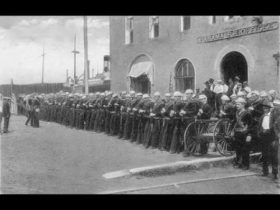
US Marines Seized Panama in 1903
or go to
Aletho News Archives – Video-Images
From the Archives
Precedents for Pizzagate
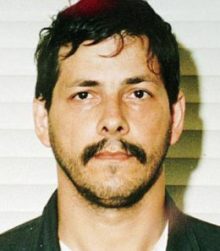
Marc Dutroux, Belgian pedophile, sadist, and serial killer with friends in high places
By Aedon Cassiel | Counter – Currents | December 23, 2016
To reiterate a point that should be clear to the more astute reader, my goal in this series (part 1, part 2) has not been to defend “Pizzagate” as such. My goal has been to defend the people who want to investigate it against specific accusations levied against them by people who think Pizzagate has revealed no intriguing information at all—for a specific reason, which I will be honing in and focusing on much more directly in this closing entry.
Whereas the mainstream critics of Pizzagate would have you believe that the dividing line is between paranoid conspiracy theorist followers of “fake news” and level-headed people who follow trustworthy news sources and rely on cold, hard reason to determine the truth, my goal has been to show that—whatever is or is not happening with Pizzagate itself—this framing of the issue is arrogant, insulting, and the product of extremely narrow tunnel vision. … continue
Blog Roll
 Aletho News
- Israeli firms transform cars into intelligence devices: Reports
- Zionist-controlled companies to surveil British citizens
- THE CHILDREN GAMBIT
- A note on comment posting at Alethonews
- Trump stalls over Iran strike plan, Iran holds all the aces
- Zelensky’s Ceasefire for Elections is Strategic Gambit, Not Democratic Move
- US and Dutch pilots flying F-16s for Ukraine – Western media
- West’s Claims of Non-Involvement in Ukraine Conflict ‘Epitome of Hypocrisy’ – Expert
- Putin aide urges retaliation to ‘Western piracy’
- The Depth Charge in the Womb
- If Americans Knew
- Israel’s Favorite American President
- Israel’s “Yellow Line” Is a Death Trap for Palestinians. We Drove Into It.
- Why Israel’s expanding occupation in Syria presents a critical legal test
- Gaza is not a natural disaster. It is the victim of genocide enabled by global inaction
- Netanyahu’s plan to “end” US aid to Israel is to give even more money under a different name
- Israel ceased firing on Gaza for just 15 days of the “ceasefire” – Not a ceasefire Day 130
- In Gaza, “rats run over our faces” – Not a ceasefire Day 129
- Israel-backed border guards, GHF-linked aid – Not a ceasefire Day 128
- Israel battles Palestinian right of return, one Palestinian at a time – Not a ceasefire Day 127
- Noor’s short life of unimaginable suffering
- No Tricks Zone
- New Study: A 4°C Warmer Beaufort Sea Had ‘No Sea Ice’ 11,700 – 8200 Years Ago
- Unfudging The Data: Dutch Meteorological Institute Reinstates Early 20th Centruy Heat Waves It Had Erased Earlier
- German Gas Crisis…Chancellor Merz Allegedly Bans Gas Debate Ahead of Elections!
- Pollen Reconstructions Show The Last Glacial’s Warming Events Were Global, 10x Greater Than Modern
- Germany’s Natural Gas Storage Level Dwindles To Just 28%… Increasingly Critical
- New Study Rebuts The Assumption That Anthropogenic CO2 Molecules Have ‘Special’ Properties
- Climate Scientist Who Predicted End Of “Heavy Frost And Snow” Now Refuses Media Inquiries
- Polar Bear Numbers Rising And Health Improving In Areas With The Most Rapid Sea Ice Decline
- One Reason Only For Germany’s Heating Gas Crisis: Its Hardcore-Dumbass Energy Policy
- 130 Years Later: The CO2 Greenhouse Effect Is Still Only An Imaginary-World Thought Experiment
 Aletho News