US Department of State Discloses Names of 5 Europeans Sanctioned for Censorship Against US
Sputnik – 24.12.2025
US Under Secretary of State Sarah Rogers has disclosed the list of five Europeans who have been sanctioned by Washington for the extraterritorial censorship of Americans.
The list includes Thierry Breton, who is described as a mastermind of the Digital Services Act (DSA); Imran Ahmed, who headed the Center for Countering Digital Hate (CCDH) that called for deplatforming US anti-vaxxers, including now Secretary of Health Robert Kennedy; Clare Melford, who leads the Global Disinformation Index (GDI); Anna-Lena von Hodenberg, the founder of German organization HateAid that was allegedly created to “counter conservative groups” and is an official censor under the DSA; and Josephine Ballon, the co-leader of HateAid.
“These sanctions are visa-related. We aren’t invoking severe Magnitsky-style financial measures, but our message is clear: if you spend your career fomenting censorship of American speech, you’re unwelcome on American soil,” Rogers wrote on X.
The introduction of sanctions against five Europeans was announced by US Secretary of State Marco Rubio. The secretary said that “these radical activists and weaponized NGOs” had aided censorship crackdowns by foreign states, targeting American speakers and American companies.
Victoria Moves to Force Online Platforms to ID Users and Expand State Powers to Curb “Hate Speech”
Victoria’s push to unmask online users marks a turning point where the rhetoric of safety begins to eclipse the right to speak without fear
By Cindy Harper | Reclaim The Net | December 23, 2025
Victoria is preparing to introduce some of the most far-reaching online censorship and surveillance powers ever proposed in an Australian state, following the Bondi Beach terror attack.
Premier Jacinta Allan’s new five-point plan, presented as a response to antisemitism, includes measures that would compel social media platforms to identify users accused of “hate speech” and make companies legally liable if they cannot.
Presented as a defense against hate, the plan’s mechanisms cut directly into long-standing principles of privacy and freedom of expression. It positions anonymity online as a form of protection for “cowards,” creating a precedent for government-mandated identity disclosure that could chill lawful speech and dissent.
During her announcement, Premier Allan said:
“That’s why Victoria will spearhead new laws to hold social media companies and their anonymous users to account – and we’ll commission a respected jurist to unlock the legislative path forward.”
Under the proposal, if a user accused of “vilification” cannot be identified, the platform itself could be held responsible for damages. This effectively converts private platforms into instruments of state enforcement, obligating them to expose user data or face financial risk.
The Premier also announced plans to accelerate the introduction of the Justice Legislation Amendment (Anti-vilification and Social Cohesion) Act 2024, which had been due to take effect in mid-2026. It will now be brought forward to April 2026.
The law allows individuals to sue others for public conduct, including online speech, that a “reasonable person” might find “hateful, contemptuous, reviling or severely ridiculing” toward someone with a protected attribute. These protected categories include religion, race, sex, gender identity, sexual orientation, and disability, among others.
This framework gives the state and private citizens broad interpretive power to determine what speech is “hateful.” As many civil liberties experts note, such wording opens the door to legal action based on subjective offense rather than clear, objective harm.
Weakening Oversight of Speech Prosecutions
Premier Allan also intends to remove a major procedural safeguard from Victoria’s criminal vilification laws: the requirement that the Director of Public Prosecutions (DPP) consent to police prosecutions. Without that check, police could independently pursue speech-based offenses, bypassing higher legal oversight.
This change would hand significant discretion to law enforcement in determining which speech crosses into criminality. Once enacted, it would mean that a person’s online comments could be prosecuted directly, without review from the state’s top legal office.
The “anti-hate” package extends beyond censorship. It proposes new powers for police to shut down protests in the aftermath of “designated terrorist events” and establishes a Commissioner for Preventing and Countering Violent Political Extremism to coordinate programs across schools, clubs, and religious institutions.
These measures, combined with the online anonymity restrictions, represent a substantial consolidation of state power over communication, movement, and association, all justified in the name of combating hate and maintaining safety.
Requiring companies to unmask users fundamentally undermines the principle of anonymous participation, a cornerstone of free expression, whistleblowing, and political organizing. Anonymity has historically protected vulnerable groups, dissidents, and small voices from retaliation.
Under Victoria’s proposal, those protections could erode rapidly as platforms are pressured to reveal identities or face litigation.
Laws targeting “hate speech” often extend far beyond their original purpose, evolving into broad speech controls that deter public criticism, satire, and unpopular opinions. Once enacted, such powers rarely contract.
More: Chris Minns Defends NSW “Hate Speech” Laws Linking Censorship to Terror Prevention
Who is the Pro-Israel Clique behind TikTok’s US Takeover?
By Romana Rubeo – The Palestine Chronicle – December 20, 2025
The short-form video social media platform TikTok, which has more than 170 million users in the United States and has become a central space for political discourse, journalism, and youth activism, finalized an agreement on Thursday to transfer control of its US operations to a newly created joint venture dominated by American and allied investors.
The deal, reported by multiple US media outlets including CNBC, Reuters, and the Associated Press, follows years of bipartisan efforts to force ByteDance, TikTok’s Chinese parent company, to divest from the app or face an outright ban under US national security legislation. The agreement is expected to close in January 2026.
Under the terms of the deal, TikTok’s US business will be placed under a new entity, commonly referred to as TikTok USDS, with majority ownership held by a consortium led by Oracle Corporation and the private equity firm Silver Lake, alongside MGX, an investment vehicle based in Abu Dhabi. ByteDance will retain a minority stake of just under 20 percent, the maximum allowed under US law, while existing ByteDance-linked investors will collectively hold a further share of the company.
Oracle will play a central role not only as an investor but also as TikTok’s so-called “trusted technology partner.” US officials have stated that Oracle will be responsible for hosting American user data and overseeing key aspects of the platform’s algorithm, an arrangement presented by the administration as a safeguard against foreign influence.
Is Israel Involved?
While no Israeli company or state-linked entity is formally involved in the ownership structure of the new TikTok US venture, the deal has sparked debate over the political affiliations and ideological positions of some of the corporate figures associated with the transaction.
Oracle, one of the principal investors, has long-standing ties to Israel through its leadership. The company’s chief executive, Safra Catz, is Israeli-American and has previously made public statements expressing strong support for Israel.
According to TRT, an email sent by former Oracle CEO Safra Catz to former Israeli Prime Minister Ehud Barak was disclosed following a hack of Barak’s email account.
“We have all been horrified by the growth of the BDS movement in college campuses and have concluded that we have to fight this battle before the kids even get to college. We believe that we have to embed the love and respect for Israel in the American culture. That means getting the message to the American people in a way they can consume it,” Catz reportedly wrote in February 2015.
Oracle co-founder Larry Ellison has also been widely reported to have close political and personal relationships with Israeli leaders and to have donated to pro-Israel causes over many years.
According to the Jewish Telegraphic Agency, Ellison is among the largest private donors to the Israeli army. Reporting on a Beverly Hills gala organized by The Friends of the Israel Defense Forces in 2017, the JTA wrote: “Larry Ellison, the co-founder of Oracle and its executive chairman, gave $16.6 million — the largest single gift in FIDF history.”
Ellison has also publicly described Israel as his own state.
According to Responsible Statecraft, the online magazine of the Quincy Institute, Ellison holds extensive interests across major news, television, and Hollywood media companies, largely through the recent takeover of Paramount by Skydance Media, a group now led by his son, David Ellison. The report also noted that David Ellison is considering appointing openly pro-Israel journalist Bari Weiss to a senior executive role at the newly acquired CBS network.
The report also mentioned that David Ellison is considering appointing openly pro-Israel journalist Bari Weiss to a senior executive role at the newly acquired CBS network.
Limitations on Freedom of Expression
Civil liberties groups and pro-Palestinian advocates have repeatedly warned that the restructuring of TikTok’s ownership could have consequences for freedom of expression, particularly regarding content related to Palestine and Israel.
These concerns come against the backdrop of repeated complaints from activists and journalists about the suppression or downranking of pro-Palestinian content across major social media platforms since the start of Israel’s war on Gaza.
Pro-Israel Organizations Welcome the Deal
At the same time, pro-Israel organizations in the US have publicly welcomed the sale, framing it as an opportunity to address what they describe as antisemitism and hostile narratives on TikTok.
For example, leaders of the Jewish Federations of North America (JFNA), one of the largest umbrella groups representing Jewish communities in the US, issued a public statement framing the proposed TikTok deal as an opportunity to tackle what they described as the “antisemitism” on the platform.
Israeli officials and commentators have also emphasized the strategic importance of social media platforms in shaping public opinion, particularly among younger audiences.
Even former US Secretary of State Hillary Clinton has recently claimed that young Americans, including young Jewish Americans, hold increasingly critical views of Israel because they are being misled by “pure propaganda” and “totally made up” videos on TikTok and other social media platforms.
Speaking at a summit in New York hosted by Israel Hayom on December 2, Clinton repeatedly suggested that widely documented information circulating online about Israel’s genocidal actions in Gaza is fabricated, and expressed concern that students “don’t know the history and don’t understand.”
Clinton described it as “a serious problem” that young people rely heavily on social media for their information, despite the fact that the videos, documentation, and reporting she dismissed have been independently verified by journalists, human rights organizations, UN bodies, and legal experts investigating Israeli war crimes and genocide.
Romana Rubeo is an Italian writer and the managing editor of The Palestine Chronicle. Her articles appeared in many online newspapers and academic journals.
Ukrainian investigative journalist ‘kidnapped’ by draft officers
RT | December 23, 2025
A Ukrainian investigative journalist is reportedly missing after being seized by conscription officials days after filing a criminal complaint against his local city administration.
A video shared on the Facebook account of Aleksey Brovchenko, which went viral this week, was purportedly filmed by CCTV cameras at his home in Podgorodnoye in Dnepropetrovsk Region on Monday morning. It showed people in military and police uniforms apprehending a man and forcing him into a van despite a woman’s vocal objections – which the description called a “kidnapping.”
Brovchenko’s family said he was beaten earlier in the day and called police to file a complaint, but was instead taken away and has since been out of touch with them.
Last week, the journalist reported an “interesting situation” at a police station where he went to file a complaint against the town mayor for alleged fraud. He said officers accused him of being a draft dodger but let him go instead of transferring him to military officials – a move he described as a sign that “the police will soon switch to the side of the people.” Brovchenko’s reporting often highlights suspected abuses by conscription centers.
City head Andrey Gorb, whom the journalist had accused of wrongdoing, claimed on Tuesday that Brovchenko is a “fake journalist” who “did everything to derail the mobilization.” He thanked police and military officers “for doing their job.”
Military mobilization is a contentious issue in Ukraine, viewed by many as unfair due to corruption that allows the wealthy and powerful to evade mandatory service. Videos of what critics call abductions regularly go viral, even as officials downplay the so-called “busification” as not a serious problem.
Public resistance to recruiting also exacerbates existing issues with Ukrainian troop desertion. The Prosecutor General’s Office recently stopped reporting the number of cases against soldiers who have left their posts, a move critics say is an attempt to conceal the scale of the manpower drain.
Trump Administration Moves to Overhaul Childhood Vaccine Schedule, Embrace Informed Consent Model
By Sayer Ji | December 20, 2025
In what may prove to be the most significant transformation of U.S. vaccine policy in decades, the Trump administration is preparing to fundamentally restructure how childhood vaccines are recommended—shifting away from blanket federal endorsements toward a model that empowers parents and physicians to make individualized decisions.
According to a December 19th report in The Washington Post, federal health officials are developing guidance that would encourage parents to consult directly with their doctors about vaccination decisions, rather than simply following a standardized federal schedule. This “shared clinical decision-making” approach represents a profound departure from the paternalistic model that has defined American vaccine policy for generations.
The Denmark Model: Less Is More
Central to the administration’s emerging framework is Denmark’s approach to childhood vaccinations. While the current U.S. schedule calls for vaccinations against 18 infectious diseases, Denmark recommends the injections against 10—yet maintains excellent health outcomes.
Tracy Beth Hoeg, a top FDA official, presented the Danish model to the CDC’s federal vaccine advisory committee earlier this month. Her presentation highlighted what she characterized as the “Danish Vaccination Schedule Benefits,” including making “more time for overall health at doctors’ appointments” and decreasing the “medicalization of childhood.”
The policy shift “kicked into high gear” immediately following President Trump’s directive earlier this month to consider recommending fewer shots. In his announcement, Trump noted that the United States is an “outlier” among developed countries and emphasized that “many parents and scientists have been questioning the efficacy of this ‘schedule.’”
Informed Consent Takes Center Stage
Perhaps most significantly, the administration is moving toward what health freedom advocates have long championed: genuine informed consent.
Under the emerging framework, vaccines would shift to “shared clinical decision-making”—meaning parents would consult with medical professionals about the risks and benefits before proceeding. Critically, insurance coverage would remain intact, preserving access while restoring choice.
The CDC has already begun implementing this approach for covid vaccines and the hepatitis B vaccine for children. This marks a fundamental acknowledgment that vaccination decisions are not merely technical matters to be dictated by government committees, but personal medical choices that belong in the hands of families and their trusted physicians.
A Vindication Decades in the Making
For those of us who have spent years (even decades) advocating for medical freedom, parental rights, and genuine informed consent, this moment represents a profound vindication.
Those like Secretary Kennedy, part of the “disinformation dozen,” viciously targeted during the Covid-19 era, have long argued that the U.S. vaccine schedule—which has expanded dramatically over the past four decades—deserves rigorous scrutiny rather than reflexive acceptance. We have insisted that parents are capable of making informed decisions about their children’s health when given accurate information about both risks and benefits. We have maintained that comparing health outcomes across nations reveals that more vaccines do not automatically equal better health.
Health Secretary Robert F. Kennedy Jr., who has called for additional scrutiny of the childhood vaccine schedule throughout his career, now sits at the helm of HHS. Martin Kulldorff, a renowned epidemiologist and biostatistician, has been named a chief science officer at the department. The voices that were systematically marginalized and deplatformed are now shaping policy.
Del Bigtree, founder of the Informed Consent Action Network, told the Post he supports the shift: “Our belief is there are just too many vaccines. It’s very exciting.”
What This Means Going Forward
The policy remains in development, and specific details—including which vaccines would move to the shared decision-making model—have not been finalized. HHS spokesperson Andrew Nixon cautioned that until official announcements are made, reports remain “pure speculation.”
However, the direction is unmistakable. The era of unquestioning deference to an ever-expanding federal vaccine schedule is drawing to a close. In its place is emerging a model that:
- Respects parental rights as the foundation of children’s healthcare decisions
- Restores the physician-patient relationship to its proper central role
- Acknowledges uncertainty rather than projecting false consensus
- Aligns with international norms rather than treating American exceptionalism as an excuse for over-medicalization
- Preserves access while eliminating coercion
The Resistance Has Already Begun
Predictably, the public health establishment is sounding alarms. Former CDC official Demetre Daskalakis called the Denmark comparison “not gold standard science.” The recently defunded American Academy of Pediatrics rejected what it termed the “one-size-fits-all approach” while simultaneously opposing any departure from the current one-size-fits-all schedule.
Even a Danish health official questioned the shift—though notably, his objection was that “public health is not one size fits all” and is “population specific,” which is precisely the point advocates have been making for years. If public health is population-specific, then surely it should also be individual-specific, with families empowered to make decisions appropriate to their unique circumstances.
A New Chapter for Health Freedom
We are witnessing what may be the most consequential health policy transformation of our lifetimes. After years of censorship, deplatforming, and marginalization, the health freedom movement’s core principles are being integrated into federal policy.
This is not about being “anti-vaccine.” It is about being pro-informed consent, pro-parental rights, and pro-science that welcomes questions rather than demanding compliance.
The battle is far from over. State mandates remain in place. Institutional resistance is fierce. The entrenched interests that have profited from the expanding schedule will not yield quietly.
But the tide has turned. And for parents who have long demanded the right to make informed medical decisions for their children, this moment represents nothing less than the restoration of a fundamental freedom.
UK doctor arrested under pressure from Israel lobby over ‘anti-genocide posts’
Press TV – December 21, 2025
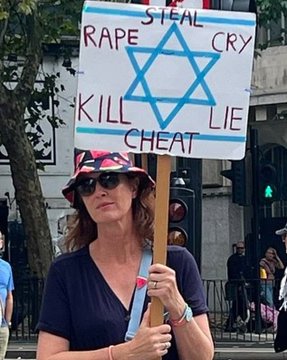 British police have arrested a senior doctor under pressure from pro-Israel lobby groups over social media posts condemning the regime’s genocide against Palestinians.
Ellen Kriesels, a consultant paediatrician with more than 15 years of service at London’s Whittington Hospital, was arrested at her home on Saturday by officers from the Metropolitan Police.
According to a colleague of Kriesels, she was arrested in front of her children.
“The Israeli lobby began hunting her in September because of her sign at a national Palestine demonstration,” Doctor Rahmeh Aladwan wrote in a post on X.
“Britain is doing this to our NHS doctors for Israel. Britain is occupied,” she added.
Kriesels was first targeted after appearing at a pro-Palestine protest holding a placard opposing Israel’s genocidal war on Gaza. Within days, she was suspended from Whittington Hospital.
She was subsequently reported to the General Medical Council (GMC) and later to the Medical Practitioners Tribunal Service (MPTS), which suspended her medical license for nine months.
Healthcare workers’ group HCWs Against Censorship also condemned Kriesels’ arrest, which it said was followed by a coordinated campaign against her after she participated in a national pro-Palestine demonstration in September.
“The Israeli lobby strikes again,” the group said, adding that police acted following complaints from pro-Israel lobbying organisations, including UK Lawyers for Israel (UKLFI) and the Campaign Against Antisemitism (CAA).
The arrest was carried out “on behalf of a foreign-aligned lobby,” the group said, describing it as “an absolute outrage.”
“This is what Britain now does to NHS doctors for speaking about Palestine,” one supporter said. “It is repression, plain and simple.”
No formal charges have been publicly confirmed yet. The Metropolitan Police have not released details of the specific offences under investigation.
In a post on X dated September 17, Kriesels criticized the NHS for reporting her to the police over her “anti-genocide posts and placards.”
“Leaving the front door ajar so the police don’t have to use force when they come and get me,” she wrote at the time.
Her arrest comes as British police have threatened a renewed crackdown on pro-Palestinian demonstrations, warning they will arrest anyone chanting the phrase “globalize the intifada” or displaying it on placards.
Intifada, an Arabic word meaning uprising, is used by Palestinians to describe resistance to Israel’s occupation of their land.
The Metropolitan Police made their first arrests linked to the chant at a pro-Palestine demonstration in London on Sunday, claiming the slogan constitutes “a call for violence against Jewish people.”
Pro-Israel lobby groups are pressing for a harsher crackdown on demonstrations and have even suggested that chants such as “Free, free Palestine” inherently incite violence.
Pro-Palestinian protests have surged across London over the past two years, amid Israel’s genocidal war on Gaza and in response to the UK government’s military and diplomatic support for Israel.
Lebanese Detainees in Israeli Prisons: When Silence Becomes Surrender

Al-Manar | December 18, 2025
This is no longer a humanitarian file delayed by bureaucracy. It is a national test that Lebanon is failing in slow motion. Lebanese detainees remain locked inside Israeli prisons while their names circulate in press statements, their families count months without news, and the state responds with restraint that borders on abdication. When citizens are taken, hidden, denied Red Cross visits, and subjected to abuse, silence is not prudence. It is complicity by omission.
For an audience that understands the cost of confrontation and the meaning of deterrence, the facts are unmistakable: “Israel” is not holding detainees because it must, but because it can—because the political cost remains low.
File That Refuses to Close
The number of Lebanese detainees currently held by the occupation stands at 19 to 20, based on the latest confirmations from released Palestinian prisoners who encountered Lebanese captives previously listed as missing. The uncertainty itself is revealing. It is the result of deliberate Israeli obstruction, including the ongoing ban on Red Cross visits and the refusal to provide any official accounting. A large group of civilians—fishermen, a shepherd, and workers arrested in their fields—some of whom were detained after the ceasefire was declared.
These are not arrests justified by war. They are acts of abduction, carried out under the cover of “security,” and sustained by international inaction and local hesitation.
The ceasefire of November 27, 2024, was supposed to mark an end. Instead, it marked a shift in method.
Ali Younes was detained after the so-called cessation of hostilities.
Ali Tarhini was arrested inside the Lebanese town of Odeisseh on January 28, 2025.
Mohammad Ali Jheir—a fisherman from Naqoura—was shot with a rubber bullet and taken from his boat by Israeli naval forces, then transferred to Ofer Prison and placed in solitary confinement.
These are not isolated incidents. They form a pattern: ‘Israel’ exploits calm to seize civilians, converting ceasefires into opportunities for leverage. Months later, families still have no official information. The International Committee of the Red Cross has confirmed that Israeli authorities are blocking access to Lebanese detainees. This is not procedural delay—it is policy.
Testimonies from released prisoners speak of severe beatings, humiliation, and sexual abuse—violations that meet the definition of war crimes. The denial of visits is meant to do one thing: keep these crimes out of sight. A prison without witnesses is not detention. It is a black site.
Families Carrying What the State Will Not
With the state moving cautiously, families stepped forward forcefully. From protests outside ESCWA to meetings in Baabda, they have said what officials have not: This is not a humanitarian appeal. It is a demand.
Former detainee Abbas Qabalan spoke of civilians arrested while farming their land.
The mother of Mohammad Abdul Karim Jawad—a civilian nurse—has waited more than a year without a single official update. The wife of Ali Younes called for action “through every legal, diplomatic, and political means.” The mother of Ali Tarhini named the date and place of her son’s arrest—inside Lebanon.
These families are not guessing. They are documenting publicly because the file has been left on their shoulders. Officials have called the detainee file a “priority.” But priorities are measured by action, not vocabulary. So far, the issue has been confined to the so-called mechanism committee, a framework chaired and constrained by U.S. oversight—hardly a venue known for pressuring ‘Israel.’ Rather than securing releases, it has allowed the occupation to freeze the issue while continuing violations.
The Ministry of Foreign Affairs, which should have escalated the file internationally, remains largely absent. No sustained UN campaign. No legal offensive. No international naming and shaming.
This is not incapacity. It is a political choice.
Human rights researcher Ghina Ribaai was direct: Lebanese detainees are paying the price for a state that wasted leverage. The handover of an Israeli detainee without any reciprocal release sent a dangerous message—that ‘Israel’ can detain Lebanese citizens without consequence. That message still stands.
Detainees as Bargaining Chips ‘Israel’ has made its strategy clear. Lebanese detainees are not prisoners—they are hostages, to be traded against unrelated political files: borders, negotiations, “working groups.” Lebanon has rejected this logic rhetorically. But rejection without pressure is empty. ‘Israel’ responds only to cost—political, legal, and strategic.
What Must Change—Now
This file cannot remain seasonal. It requires:
• A clear sovereign decision
• An aggressive diplomatic and legal campaign
• International escalation, not quiet mediation
• Continuous media pressure that keeps the issue alive
For an audience that understands resistance, this truth is familiar: rights are not returned through patience alone. The detainee file is not a test of sympathy. It is a test of statehood.
‘Israel’ does not release prisoners because it is reminded of morality. It releases them when detention becomes expensive. As long as Lebanese detainees remain an afterthought—raised in speeches but not imposed as a cost—’Israel’ will continue to detain, abuse, and bargain.
The families have said it plainly, and history confirms it:
A nation that does not fight for its detainees forfeits a core element of its sovereignty.
In a country whose modern identity was shaped by the principle that prisoners are never abandoned, failure here is not neutrality. It is surrender by silence.
6 Palestinians Killed in Israeli shelling of shelter in Gaza, including children
Palestinian Information Center – December 19, 2025
GAZA – Six Palestinians were killed and several others were injured on Friday evening after Israeli artillery shelled a school sheltering displaced civilians in Al-Tuffah neighborhood, northeast of Gaza City, marking a new violation of the current ceasefire in the Strip.
Local sources reported that Israeli forces bombed the area around Al-Tuffah School, near Al-Durra Hospital, resulting in multiple victims, some bodies torn to pieces, inside the school, which housed hundreds of displaced people.
Sources added that Israeli forces prevented ambulance and civil defense crews from reaching the scene to recover the dead and evacuate the injured, as heavy gunfire continued around the school.
According to preliminary information from shelter administrators, the attack targeted the second floor of the school building, where many of the displaced civilians were gathered to attend a wedding celebration, causing an even higher number of casualties.
Israeli forces continue to fire heavily on the school, sources said, making it difficult for civilians to move or for evacuation operations to proceed.
Earlier today, four civilians—including a woman—were killed in Israeli airstrikes targeting a group of people in Bani Suheila, east of Khan Yunis in southern Gaza, with medical teams unable to reach the area.
Israeli forces also opened fire in the Al-Alam area west of Rafah City in the south and conducted multiple airstrikes alongside artillery shelling on eastern Khan Yunis.
Israeli naval boats also opened heavy fire off the coast of Khan Yunis.
According to data from the Ministry of Health, the death toll from Israel’s genocide since October 7, 2023, has reached 70,669 martyrs, while 171,165 others were injured.
Since the announcement of the ceasefire on October 10, 2025, 395 additional people have been killed and 1,088 injured, with 634 bodies recovered so far.
Chris Minns Defends NSW “Hate Speech” Laws Linking Censorship to Terror Prevention
By Cindy Harper | Reclaim The Net | December 18, 2025
New South Wales Premier Chris Minns has openly celebrated his government’s reshaping of speech laws, arguing that restrictions on expression are a necessary part of combating hate.
Speaking with Sky News Australia host Sharri Markson, Minns said he wants “a situation where hate speech is not allowed and illegal in NSW and those who practice it are prosecuted,” adding that the state “does not have the same free speech laws that they have in the United States.”
The Premier repeatedly linked speech regulation to public safety, connecting online discussion and public protest to the Bondi Beach terror attack.
According to Minns, “hate speech, antisemitism” begins with chants at marches, “then it migrates online to a tweet or some kind of post,” leading to property damage and arson, and finally, “then you see this horrible, horrible crime.”
He insisted that authorities “need to attack it at every single level,” a statement that positions censorship as part of the government’s crime prevention strategy.
Minns described the Crimes Amendment (Inciting Racial Hatred) Bill 2025 as “absolutely vital” and called for “prosecutions of people” under it.
That sequence of events has become a flashpoint, with civil rights lawyers warning that a law born from misinformation risks turning into a tool for political and social control rather than public protection.
During the interview, Minns bristled at those who have questioned the law’s legitimacy or its impact on open debate.
Minns went further, leaving the door open for expanding the legislation, stating, “I’m going to be judged on outcomes here, and if the law’s not fit for purpose, we’ll look at it again.”
Minns also took personal credit for reshaping what he called “free speech laws” in the state.
By asking the public to “give time” for the new rules to take effect, Minns is effectively telling citizens to get used to narrower speech boundaries. It’s not a pause; it’s a conditioning period.
The longer these powers stay in place, the easier it becomes for “hate” to mean whatever the government needs it to mean at a given moment.
Colonel Jacques Baud & Nathalie Yamb Sanctioned: EU Goes Soviet
Glenn Diesen | December 16, 2025
How did we reach a point where quoting Western sources gets you branded a foreign propagandist? Is the EU’s executive branch now completely out of its mind, punishing dissenters without trial under the guise of fighting “propaganda”?
Who gets to be a hostage? The language that legitimises Palestinian captivity
By Jwan Zreiq | MEMO | December 17, 2025
The answer lies deeply entangled within global biases in how violence and captivity are framed. Consider two seemingly similar terms: “hostage” and “prisoner.” Hostage evokes an image of innocence violated; a life unjustly taken. Prisoner implies process, legality, perhaps even guilt. A prisoner, after all, tells us less about the person held captive than about the system that confines them. But what happens when the system itself is one of oppression and racial apartheid? Should we blindly adopt these terms without questioning the power structures that deploy them?
The answer here lies within the global biases in how violence and captivity are framed. For instance, consider Israeli soldiers like Matan Angrest, who were captured from his tank following October 2023. International media outlets, such as The New York Times, consistently describe these incidents like Matan as being “kidnapped from his tank,” a phrase that emphasises personal vulnerability while intentionally sidestepping the soldier’s combatant status. This framing shifts focus, drawing on narratives of personal suffering rather than the broader political and military context. As these soldiers are released, they are often publicly reintegrated as civilians and family figures, and some, like Edan Alexander, announced their intent to resume his service in the Israel Defense Forces (IDF). These statements and the media’s celebration of their return shape perceptions of their humanity, painting IDF prisoners of war as victims of violence rather than active participants in the system of oppression and apartheid against Palestinians.
In contrast, the media reduces Palestinians to the category of “prisoners,” a term that pretends to give legality while erasing the reality of their captivity. Across the West Bank, Israeli forces routinely conduct raids targeting men, women, children and the elderly with neither charges nor trials, a process that is at once arbitrary and normalised. Israeli forces take these individuals hostage through a system designed to make indefinite imprisonment routine under the legal label of “security measures” and “administrative detention.” Violence, home demolitions and the deliberate cultivation of fear accompany these operations, while Israel systematically takes over the surrounding lands to expand its settler colonies.
Right now, thousands of Palestinians remain hostages in Israeli prisons, where they endure systematic torture. The numbers speak for themselves. Prior to recent releases, more than 10,000 Palestinians were held in Israeli prisons, including at least 3,500 in administrative detention without trial. The number of political prisoners had doubled, rising from 5,250 to nearly 10,000. From rape and torture to electric shocks and the full range of degradation that no human being should ever endure, this constant assault on the Palestinian body and soul is inseparable from the system that detains them. Yet, despite overwhelming evidence that Israeli forces arbitrarily hold many Palestinians, the world calls them merely “prisoners.”
One might wonder why Israel bothers with even putting up with the terms of legality; after all, this is a regime whose very logic is apartheid and colonisation. Each raid, each detention, is a small yet indispensable step in the relentless machinery of land seizure. Israel maintains the fiction of legality because international law requires it. The label “prisoner” thus functions to sanitise violations of international law that are, in reality, structural and deliberate. This terminology transforms oppression into procedure, erases the moral weight of captivity and normalises systemic violence. It governs not only how we perceive the victims of violence but whose pain we deem worthy of recognition.
In this discourse, the Palestinian experience is characterised by collective endurance, an abstract suffering with little room for individual human stories. By contrast, Israeli suffering is personalised, humanised and sanctified. Such language, which distinguishes between “hostage” and “prisoner,” produces profound inequalities in empathy and legitimacy, reinforcing power imbalances and shaping international opinion and perception.
The Red Ribbon Movement rejects the sanitised language that permits this violence to continue. The red ribbon is visible refusal, a refusal to accept the terms “administrative detention” and “security measures” for what amounts to collective hostage-taking designed to terrorise an entire population and facilitate ongoing dispossession.
Dr Mustafa Barghouti calls on people worldwide to join the Red Ribbon Movement to wear red ribbons in solidarity with Palestinian hostages held in Israeli prisons. This visible act of refusal demands that we interrogate the language that permits this violence to continue.
The urgency of this moment demands immediate action and solidarity. We return to the question the labels themselves preserve: who is deemed human enough to be a hostage, and who is simply a statistic?
The red ribbon answers: Palestinians held in Israeli prisons are hostages of apartheid, and the world must recognise this truth now, not later, not eventually, but in this moment of ongoing violence and captivity.
Israel’s all-seeing eye is the stealthiest cruelty of all in Gaza
Journalist Mohammed Mhawish describes how total surveillance is relentlessly controlling, often lethally, the violence is determined algorithmically.
By Connor Echols – Responsible Statecraft – December 16, 2025
Discussions of the war in Gaza tend to focus on what’s visible. The instinct is understandable: Over two years of brutal conflict, the Israel Defense Forces have all but destroyed the diminutive strip on the Mediterranean coast, with the scale of the carnage illustrated by images of emaciated children, shrapnel-ridden bodies, and flattened buildings.
But underlying all of this destruction is a hidden force — a carefully constructed infrastructure of Israeli surveillance that powers the war effort and keeps tabs on the smallest facets of Palestinians’ lives.
Few people understand this system more deeply than Mohammed Mhawish, a Palestinian journalist who fled Gaza in 2024 after being targeted by Israeli airstrikes for his reporting. In a recent essay for New York Magazine, Mhawish traced the contours of Israel’s surveillance system through the eyes of the Gazans who live through it every day.
RS spoke with Mhawish over email to get his insights about how this system of surveillance has powered the war in Gaza and created a culture of fear among Palestinians. The conversation also touches on Mhawish’s decision to leave Gaza — and how he knows that Israel tried to kill him for his journalism.
RS: In your piece, you mention a poll saying that “nearly two-thirds of Gazans believed they were constantly watched by the Israeli government.” How does this feeling of surveillance affect life in Gaza? How would you describe the feeling to those of us who have never experienced it?
Mhawish: In Gaza, surveillance actively structures daily life. It determines how people move, communicate, gather, and survive. Nearly everyone I spoke to understood themselves as data points inside a system that continuously observes, records, and evaluates them.
This awareness produces a constant state of constraint. Phones are treated with suspicion, even fear. People limit calls, change SIM cards, power down devices, avoid repeated routes, and hesitate before gathering with others. Parents instruct children not to linger in certain places. Journalists and medics described modifying their work because they knew patterns could be extracted and interpreted later. Surveillance works by narrowing the range of what feels safe for everyone there.
What distinguishes Gaza is that surveillance is both totalizing and opaque. People know they are being watched, but they don’t know how, by whom, or according to what criteria. There is no way to clarify a misunderstanding or correct a false assumption. The system does not explain itself. That uncertainty turns ordinary behavior into potential exposure.
For those who have never lived under it, they might need to imagine that every movement, call, or association could be logged and assigned meaning by an unseen authority, and that those judgments could lead directly to deadly consequences in real time. It is fear of being misclassified by a system that can not be challenged.
RS: Israeli officials often point to the fact that they withdrew from the Gaza Strip in 2006 as evidence of their benevolence. They argue Israel had essentially allowed Palestinians to have a territory that they could govern on their own, and Palestinians had wasted that chance by allowing Hamas to take power. How does your work complicate the narrative of Israeli disengagement from Gaza? What did surveillance look like before the war?
Mhawish: My reporting shows that Israeli “disengagement” from Gaza was never a withdrawal from control. It was merely a shift in how control was exercised. Physical presence was replaced with technological dominance.
Long before the current war, Gaza existed under constant aerial surveillance, communications interception, population registries, and data-driven monitoring. Israel controlled Gaza’s borders, airspace, coastline, electromagnetic spectrum, and civil registries. Movement in and out of the Strip, access to medical care, imports, and even family reunification were all mediated through Israeli databases informed by surveillance.
Surveillance allowed Israel to manage Gaza remotely and comprehensively. Intelligence sources and prior investigations describe systems that mapped neighborhoods, tracked social and familial networks, and analyzed behavioral patterns. Control did not require soldiers on every street, only access to required sensors, databases, and algorithms capable of rendering the population legible from afar.
This fundamentally undermines the idea that Gaza was ever allowed to govern itself. Governance without sovereignty is not autonomy. Surveillance ensured that Israel retained decisive authority over Gaza’s population while maintaining the fiction of withdrawal.
RS: Israel bombed your apartment in late 2023, destroying your home and injuring you and your family. What led you to conclude that this attack was a response to your journalistic work? Did other press colleagues have similar experiences?
Mhawish: The bombing of my apartment was a direct result of my reporting.
In the weeks leading up to the strike, I received multiple threats from the Israeli military in response to my journalistic work. These included direct communications warning me about my reporting. Eventually, I received a phone call informing me that my house would be bombed. Shortly afterward, it was.
My apartment was civilian. There was no military activity there. My family was inside. The strike destroyed our home and injured my family members.
What made this experience even more unmistakable was how common it was among Palestinian journalists. Colleagues told me a similar sequence: reporting, threats, warning calls, and then strikes on their homes rather than on them in the field. These attacks often targeted family residences, maximizing harm while sending a clear message.
This is part of a systematic effort to intimidate journalists by demonstrating that reporting carries consequences not only for them, but for their family. It collapses the distinction between professional risk and private life and makes journalism itself a punishable act.
RS: What do we know about the role of American companies in this surveillance regime?
Mhawish: American technology companies are not peripheral to Israel’s surveillance architecture. Israeli military and intelligence units rely on U.S.-based cloud infrastructure, data storage, data processing, and AI-related technologies to collect, analyze, and retain vast amounts of information on Palestinians.
This relationship is reinforced by the movement of personnel between Israeli intelligence units and major tech firms, creating a feedback loop in which military expertise informs commercial products and commercial tools enable military surveillance. While companies often claim neutrality, their technologies are embedded in systems that monitor, categorize, and target a civilian population under occupation.
Gaza demonstrates how commercial technologies developed for efficiency, scale, and optimization can be repurposed for population-level surveillance and warfare. The issue is [companies] are not willing to accept responsibility when their tools become foundational to systems of domination.
RS: How could this surveillance regime be used for the proposed system of only allowing “vetted” Palestinians to live in rebuilt communities on the Israeli-occupied side of the yellow line in Gaza?
Mhawish: The proposed vetting system is only possible because the surveillance infrastructure already exists. Israel has spent years building databases capable of assigning suspicion and risk scores to individuals based on opaque criteria derived from communications data, movement patterns, and social networks.
Applied to reconstruction, this system could determine who is allowed to return, who receives travel permits, who is denied treatment outside, and who is permanently excluded. Vetting does not follow a transparent legal process, because it’s based on an algorithmic judgment rendered without explanation or appeal.
This kind of system enables displacement without explicit expulsion. People would be filtered out quietly — through denied access, stalled applications, or unexplained rejections — while the underlying logic remains hidden. Surveillance becomes a mechanism for shaping the postwar population under the language of security.
In that sense, Israel’s surveillance of Palestinians in Gaza is about controlling who is allowed to exist, where, and under what conditions afterward.
Connor Echols is a reporter for Responsible Statecraft. He was previously the managing editor of the NonZero Newsletter.
Featured Video

Rewriting the risk? Inside the government’s vaccine safety messaging
or go to
Aletho News Archives – Video-Images
Book Review
“Davos Can Really Replace the UN”
Inside the book that maps the architecture behind global governance — from the Epstein files to the Pact for the Future
Lies are Unbekoming | April 1, 2026
On June 13, 2019, the United Nations and the World Economic Forum signed a partnership deal to “accelerate the implementation of the 2030 Agenda for Sustainable Development.” That same evening, WEF president Börge Brende — Norway’s former Foreign Minister — had dinner with Jeffrey Epstein at Epstein’s Manhattan townhouse. The Epstein files, released January 2026, contain an exchange between the two from the previous year. Epstein to Brende: “Davos can really replace the UN. C21, cyber, crypto . genetics… intl coordination.” Brende back to Epstein: “Exactly — we need a new global architecture. World Economic Forum (Davos) is uniquely positioned — public private.”
The next day, the UN General Assembly adopted the framework for restructuring global governance.
That sequence — the partnership signing, the Epstein dinner, the candid admission about replacing the UN with a public-private architecture, and then the formal adoption — opens Jacob Nordangård’s The Digital World Brain. Pages two and three. Footnoted to the UN resolution number, the Epstein files, and the General Assembly record.
I keep coming back to it because it captures what this book does that almost nothing else in the independent research space manages. I’ve followed Jacob’s work for years now and interviewed him about his research. Each book peels back another layer of the same institutional architecture, and each time I think he’s reached the limit of what can be documented, the next one goes further. Nordangård doesn’t speculate. He doesn’t editorialize much. He lays institutional actions next to each other in chronological order and lets the pattern announce itself. … continue
Blog Roll
 Aletho News
- What’s Behind U.S./Israeli Strikes On Iranian Pistachio Factories?
- Seyed M. Marandi: U.S. Military DIVIDED? Iran’s Secret Defense EXPOSED
- How I fell foul of the BBC thought police
- The End of NATO
- 37 days of war on Iran cost US staggering $42bln, tracker shows
- Baghdad tells Asian refiners, traders to begin loading Iraqi crude amid Iranian exemption
- Under fire, Moscow and Tehran close ranks
- Iran, US receive Pakistan-mediated plan for ceasefire then final deal
- Iran submits demands for end to war as mediators scramble ahead of Trump deadline
- Iran Threatens Retaliatory Strike on Stargate AI Project in UAE
- If Americans Knew
- U.N. experts demand Israel release prominent Gaza doctor after reports of ‘severe torture’
- Israel’s Latest Genocide Is Against the Shias of Lebanon. Why Is the World Silent?
- How Eliot Cohen’s influence over U.S. war-making paved the way for Trump’s war crimes in Iran
- Israelis don’t pay for the weapons we ‘sell’ to them — US taxpayers do
- While Distancing from AIPAC, Most 2028 Democratic Hopefuls Are Still Embracing Israel
- A brief history of the Israeli nuclear program, the open secret at the heart of the Iran war
- Israeli Settlers Killed a Palestinian Farmer on His Own Land, in Front of His Father. Yes, Again
- The US-Israeli War on Science is an Assault on our Future
- 100+ International Law Experts Say US Strikes on Iran Violate UN Charter, Could Be War Crimes
- ‘Vile, Horrifying, Evil’: Trump Threatens to Bomb Nation of 90 Million People ‘Back to the Stone Ages’
- No Tricks Zone
- An Inconvenient Tree: Uncovered In Alps… Europe Much Warmer Than Today 6000 Years Ago
- New Study Reports A 60% Slowdown In Greenland’s Ice Loss Rate In The Last Decade
- Low Intensity Tornado Wrecks Major Solar Farm, Creating A Potential Toxic Dump
- New Study Finds Warming Saves Lives…Cold Temperatures 12 Times More Deadly Than Excess Heat
- German Science Blog Accuses PIK Climate Institute Of Hallucinating Climate Tipping Points
- Devastating Assessment Of Comirnaty Vaccine By Former Senior Pfizer Europe Toxicologist
- New Study: CO2 Is ‘Effectively Negligible’ As An Explanatory Climate Change Factor Since 2000
- Former Pfizer Toxicologist Dr. Helmut Sterz Tells Bundestag Hearing Pfizer Vaccine Should Have Never Been Approved
- Energy Expert: Germany’s Nuclear Phaseout Was A “500 Billion Euro Mistake”
- New Research: South Australia’s Mid-Holocene Sea Surface Temperatures Were 4°C Warmer Than Today
 Aletho News