Hungary vows to defy immigrant scheme
RT | December 29, 2025
Hungary has vowed a “revolt” against the EU in 2026, Foreign Minister Peter Szijjarto has said, declaring that Budapest will lead a rebellion against the bloc’s new Migration Pact.
The policy, expected to take effect in July, forces member states to contribute in proportion to their population and total GDP to the alleviation of migratory pressure on the worst-affected nations within the bloc.
Each member state is obliged to either accept a certain number of migrants from hotspots or pay €20,000 ($23,000) per person they refuse to take in.
”Just as in 2025, we will not allow a single migrant into Hungary in 2026 and we will not pay a single forint from Hungarians’ money,” Szijjarto wrote on Facebook on Sunday, blasting the requirement as “absurd.”
The EU mandate clashes with Hungary’s own tough national measures, which include border fences and a rejection of mandatory quotas. The stance has already led Brussels to penalize Budapest, with the European Court of Justice forcing it to pay a daily penalty of €1 million since June 2024 for non-compliance.
Szijjarto argued that the pact primarily serves nations where security and social stability have deteriorated so severely that their main objective is now to expel migrants as swiftly as possible.
Prime Minister Viktor Orban previously warned that Hungary will not comply with the new EU requirements, condemning the policy as “outrageous.” Orban is known for his staunch criticism of EU policies, including those related to migration and the Ukraine conflict.
Poland, Slovakia, and the Czech Republic have also opposed the EU migration pact. Warsaw and Bratislava have demanded an exemption, and the new government in Prague wants the policy renegotiated.
The EU has been grappling with mass immigration over the past two decades, since contributing to the implosions of Libya and Syria in 2011 and 2014, as well as backing the escalation of Kiev’s conflict with Moscow in February 2022, triggering waves of arrivals numbering in the millions.
EU Morphing Into Its Own Worst Enemy – Viktor Orban
Sputnik – 24.12.2025
The decline of the European Union, rather than the Ukrainian conflict, is what really threatens to plunge Europe into war, Hungary’s Prime Minister Viktor Orban told the Magyar Nemzet newspaper.
The real reason of the existing risk of escalation, Orban argued, is the political, economic and social decline of Western Europe, whereas the Ukrainian conflict is more of a symptom of the current situation rather than its cause.
According to him, the process that led to this state of affairs started during the 2000s and was exacerbated by Europe’s inadequate reaction to the ensuing financial crisis.
Orban also noted that a war in Europe may break out soon, and that 2025 might have been the last peaceful year for the region.
He pointed out that the decisions that were made at the EU summit in Brussels last week were aimed at prolonging the Ukrainian conflict and continuing Europe’s confrontation with Russia.
Though there are powers in Europe that seek peace – like Hungary, for example – Orban warns that those European elites who seek war seem to be gaining an upper hand.
Next year’s election is a choice between peace and war, warns Hungarian PM Orbán
By Thomas Brooke | Remix News | December 23, 2025
Hungarian Prime Minister Viktor Orbán has said that recent anti-war rallies in Hungary serve to explain to the public what he described as decisions being taken behind closed doors as Europe prepares for war.
Speaking on TV2’s Tények program, he said European leaders at a summit over the weekend had effectively convened a “war council,” with speeches focused on defeating Russia, and argued that a growing divide has emerged between the United States and Europe since the inauguration of Donald Trump in January.
“Previously, it was unthinkable within NATO that the United States would say no to something and European states would still go ahead and do it,” the prime minister said.
Orbán warned Europe is much closer to war than most Hungarians realize, noting what he described as a German war plan to seize Russian currency reserves held in Western Europe, a move he claimed that would openly turn Europe into Russia’s enemy.
According to the prime minister, Hungary will now have a war-free Christmas, but the danger has not passed. He said the European Union wants to provide Ukraine with €90 billion over two years, despite having no funds of its own, and is therefore seeking loans from banks that he claimed would never be repaid. Orbán said Slovakia, the Czech Republic, and Hungary refused to provide guarantees for the borrowing. “This would have cost Hungarian families 400 billion forints. We will not pay that — full stop,” he said.
Orbán argued that Europe has more private-sector assets in Russia than the value of the funds it would have seized, adding that Hungary also holds significant corporate assets there. He expressed hope that U.S.-Russian negotiations would succeed despite what he called counter-campaigning by Europe’s political elite. He claimed that anti-war views now dominate Western public opinion as the economic costs of the conflict rise.
“From a Hungarian perspective, war is the most horrific thing that can happen,” he said. “We know how a war consumes a nation’s future and decades of hard work.”
The prime minister also argued that financial interests are pushing politicians toward conflict. He said bankers were driving Europe toward war, as they did before World War I, and claimed that within months the divide between Hungarian and European politics would become even clearer. Germany, he said, is pro-war, as is the European People’s Party, while his administration in Budapest represents what he called the party of peace.
“We will not allow ourselves to be dragged into war,” Orbán said, adding that Europe’s stated aim of being ready for war with Russia by 2030 turns Hungary’s upcoming elections into a choice between peace and war. “We — and I personally — will succeed in keeping Hungary out of the war,” he said.
Turning to domestic policy, Orbán spoke of what he described as a “tax revolution,” saying the government had launched fixed-rate home-ownership and business loan programs, restored the fourteenth-month pension, and introduced lifetime tax exemptions for mothers with two or three children. “By the end of the year, every program was launched. Only we are doing this in an era preparing for war,” he said.
On the opposition Tisza Party, Orbán said, “The Tisza Party’s program is Brussels’ program. But Hungary must not take the Brussels path — we must stay on the Hungarian path.” He added that Hungary’s low household energy prices could only be maintained through agreements with Russia, the United States, and Turkey, warning that EU plans to scrap the policy would amount to “brutal austerity” for families.
EU loan to Ukraine pushing bloc ‘into war’ with Russia – Orban
RT | December 20, 2025
EU nations have a vested interest in continuing the Ukraine-Russia conflict and even escalating it, as repayment of their €90 billion loan to Kiev is essentially tied to a military victory, Hungarian Prime Minister Viktor Orban has said.
A long-debated EU scheme to steal frozen Russian central bank assets collapsed amid disagreements among member states on Friday. However, agreement was reached on a loan backed by the bloc’s budget, allowing them to fund cash-strapped Ukraine in what Moscow has long described as a Western proxy war. Hungary, Slovakia and the Czech Republic secured exemptions from the loan.
“Whoever lends money wants it back. In this case, repayment is not tied to economic growth or stabilization, but to military victory,” Orban wrote on X on Saturday. “For this money to ever be recovered, Russia would have to be defeated,” he said.
A war loan inevitably makes its financiers interested in the continuation and escalation of the conflict, because defeat would also mean a financial loss.
Orban argued that there are now “hard financial constraints that push Europe in one direction: into war.”
Hungary and Slovakia have long stood against continued military aid to Kiev, despite mounting pressure from the EU to toe the party line. The Czech Republic joined the fold after the recent election of new Prime Minister Andrej Babis, who has refused to fund Ukraine at the expense of his taxpayers.
Russian officials have accused Kiev’s European backers of hindering recent US-led peace efforts, and of increasingly preparing for a direct war against Russia.
Top EU officials have used claims of an alleged threat from Moscow to justify accelerating militarization, freeing up €335 billion in Covid relief funds and mobilizing €150 billion in loans and grants for the bloc’s military industrial complex.
Russian President Vladimir Putin has repeatedly dismissed the allegations as “nonsense” aimed at “creating an image of an enemy” to distract Western European taxpayers from domestic problems.
As Kiev would only need to start making repayments to the EU if it receives reparations in the unlikely event Russia loses, the loan is widely considered to be at risk of turning into a grant.
EU blocks protesting farmers in Brussels using barbed wire, tear gas and water cannons
Remix News | December 18, 2025
As the EU moves to crush protesting farmers demonstrating in Brussels, Hungarian Prime Minister Viktor Orbán offered full backing to the farmers and their efforts to stop the EU’s Mercosur free trade deal, which threatens to destroy food security in Europe.
“Farmers are 100 percent right,” said Orbán, who is currently in Brussels attending the EU Summit.
He added that the farmers have obvious issues with the Mercosur package, a free trade agreement with Latin American countries, because it “kills the farmers.”
“Hungary is one of the countries that does not support the Mercosur agreement. There were serious professional debates about this in Hungary, and the Hungarian position was that we do not support this,” said the prime minister.
Viktor Orbán reminded that the agreement would require a qualified majority, and according to his expectations, there is not enough support.
“Mercosur opponents make it impossible for this agreement to be signed. The plan is that the President of the European Commission wants to sign this later this week. I think this needs to be stopped here now, and we can prevent it,” he said.
He also said that another problem for farmers is the Green Deal, which leads to expensive overregulation in agricultural work in such a way that it represents a serious cost and competitive disadvantage for European food producers.
“So I have to say that with the Mercosur agreement, they are shooting European farmers in the foot, but before that, they tie their legs together so that they have no chance in the global competition,” he stated.
“That is why the farmers are absolutely right, the Hungarian government is 100 percent with the farmers,” said the Hungarian leader.
Farmers met with force
The use of force against farmers in Brussels is drawing criticism from Hungarian journalists, including Dániel Deák, the senior analyst of the Század Institute. He published a video report showing the European Commission building, or Ursula von der Leyen’s workplace, surrounded by barbed wire.
According to him, with these measures, they are trying to prevent farmer protesters from getting close to the president of the European Commission.
In the report, he also drew attention to the fact that if they tried to limit a demonstration in Hungary in a similar way, by placing barbed wire, it would provoke significant protests from the left, and the European Union would also talk about the use of “dictatorial means.”
In his opinion, all this once again points to the hypocrisy that is often used against Hungary. He also emphasized that demonstrations in Hungary can be held and that no attempt is made to make them impossible with barbed wire.
Majority of Belgians oppose theft of Russian assets – poll
RT | December 17, 2025
Around 67% of Belgians oppose the EU scheme to use frozen Russian central bank assets to back a ‘reparations loan’ to prop up Ukraine, according to a recent poll conducted by Ipsos and Belgian news outlets published on Monday.
The bulk of sovereign Russian assets frozen in the West are held in the Belgian clearinghouse Euroclear. Prime Minister Bart De Wever has steadfastly opposed EU moves to “steal” the funds, citing disproportionate legal risks to Belgium, despite mounting pressure from the European Commission.
EU leaders were set to vote on using the assets to back a controversial €90 billion ($106 billion) ‘reparations loan’ to help cover Ukraine’s floundering budget, which faces an estimated $160 billion shortfall over the next two years.
However, Hungarian Prime Minister Viktor Orban said the EU leadership “backed down” and that “Russian assets will not be on the table” at Thursday’s European Council meeting. The council “pushes joint loans, but we will not let our families foot the bill for Ukraine’s war,” he wrote on X on Wednesday.
Last week, the EU tightened its grip on the frozen Russian assets by invoking Article 122, an economic emergency treaty clause, to bypass the need for a unanimous decision amid opposition from a number of member nations.
By using the mechanism, the bloc stripped “Hungary of its rights,” Orban said at the time.
Belgium, Slovakia, Italy, Bulgaria, Malta, and the Czech Republic joined Hungary to oppose raiding the Russian assets to finance Ukraine.
Last week, the Russian central bank sued Euroclear in a Moscow court, accusing it of the “inability to manage monetary assets and securities” entrusted to it. The firm estimates that it holds nearly $19 billion in client assets in Russia, which could become targets for legal retaliatory measures.
The Great European Asset Heist Will Fail
By Leanna Yavelskaya | Ron Paul Institute | December 12, 2025
Let’s stop pretending Brussels is engaged in noble statecraft. The EU’s rush to steal more than €180 billion in frozen Russian sovereign assets held at Euroclear is the most reckless gamble Europe has taken in decades. Moscow’s central bank is not wrong to call the move unlawful; its lawsuit against Euroclear merely underscores a simple truth: weaponizing sovereign reserves violates long-standing norms that have protected global capital flows for half a century. Brussels may dress this up as “solidarity with Ukraine,” but using immobilized reserves as collateral for massive loans crosses a line that Western institutions once treated as sacrosanct.
The political sales pitch — that these are merely Russia’s “war chest” — deliberately ignores an uncomfortable reality: sovereign reserves ultimately underpin a nation’s entire economy, including its citizens’ savings and pensions. Seizing or leveraging them sets a dangerous precedent: any country deemed objectionable by a majority of EU governments could one day see its wealth confiscated. That is not rule-of-law liberalism; it is discretionary power cloaked in humanitarian rhetoric.
Euroclear, one of Europe’s critical financial arteries, now finds itself caught between Brussels’ political ambitions and Moscow’s threats of counterclaims. Belgium knows the danger intimately — its own officials have repeatedly warned that breaching sovereign-immunity doctrines could expose the country to massive liabilities. When even EU member states start raising alarms, you know the legal ground is shaky.
What is truly astonishing is the European Commission’s refusal to confront the broader consequences. Financial systems run on trust, not idealistic speeches. Undermine the principle that sovereign reserves are untouchable, and investors everywhere — not just in Moscow — take note. China, which holds substantial euro-denominated assets, has already condemned the EU’s approach as destabilizing. Beijing may not dump its euro holdings tomorrow, but the EU is actively encouraging major powers to question Europe’s reliability as a financial partner. That alone should alarm anyone who cares about the euro’s long-term viability.
The internal politics are equally explosive. Hungary, Slovakia, and even Belgium itself have raised serious objections on both legal and risk grounds. If Brussels forces the plan through regardless, it will only strengthen the already potent narrative in several member states that the EU is willing to trample national interests and established law in pursuit of ideological crusades. This is the kind of overreach populists dream of — an elite-driven project that can be portrayed, not entirely unfairly, as prioritizing geopolitical theater over the economic security of European citizens.
Then there is the Ukraine question itself. For many Europeans, supporting Kiev is neither a moral nor a strategic imperative. Ukraine’s deep governance problems are real and have been acknowledged by its own officials and Western auditors alike. Pouring unprecedented sums into the country without ironclad safeguards invites legitimate criticism that Brussels is acting on emotion rather than sober judgment.
Meanwhile, across the Atlantic, Washington has every incentive to watch Europe stumble. If investors lose confidence in the euro, the dollar benefits. If European financial institutions face turmoil, American ones expand their reach.
Europe could still choose a wiser path. Instead of prolonging an unsustainable conflict by stealing sovereign Russian assets — a move that virtually guarantees escalation and risks spilling the war into the Eurozone itself, with unimaginable and utterly destructive consequences — European leaders could support genuine peace efforts.
The EU cannot afford to make the wrong choice. Yet that is precisely what it is doing, and for nothing more than short-term political posturing.
‘Backstabbing’ NATO chief ‘fueling war’ – Hungary
RT | December 12, 2025
NATO Secretary General Mark Rutte is “fueling war tensions” by claiming that Russia could be ready to attack the bloc within several years, Hungarian Foreign Minister Peter Szijjarto has said, calling the remarks “irresponsible.”
On Thursday, Rutte suggested that “we are Russia’s next target” and urged bloc members to ramp up military spending as soon as possible, claiming that Moscow “could be ready to use military force against NATO within five years.”
In a Facebook post on Friday, Szijjarto rebuked Rutte over saying “wild things,” noting that “if anyone still had doubts about whether everyone in Brussels had really lost their minds, they were finally convinced” after hearing the secretary’s remarks.
Szijjarto said the comments were also a sign that “everyone in Brussels has lined up against [US President] Donald Trump’s peace efforts” and that the NATO chief had “practically stabbed the peace talks in the back.”
“We, Hungarians, as members of NATO, reject the Secretary General’s words! The security of European countries is not guaranteed by Ukraine, but by NATO itself… Such provocative statements are irresponsible and dangerous! We call on Mark Rutte to stop fueling war tensions!!!”
Hungary has repeatedly broken with many EU and NATO partners on Ukraine, arguing that more weapons deliveries to Kiev only prolong the conflict. Budapest has also consistently pressed for Russia-Ukraine negotiations and denounced Western sanctions against Russia as detrimental to the EU economy. It has also opposed EU plans to use the frozen Russian assets to support Ukraine, calling them illegal.
Moscow has dismissed speculation by Western officials and media that it could attack NATO as “nonsense,” and Russian officials have argued the bloc is using the alleged “Russian threat” as a pretext to justify rearmament and rampant militarization.
Hungary Warns EU’s Support for Ukrainian Attacks on Russian Energy Could Set Dangerous Precedent
Sputnik – 10.12.2025
The European Union is threatening global security by openly praising and welcoming Ukraine’s attacks on Russian energy facilities, as this could set a dangerous precedent, Hungarian Foreign Minister Peter Szijjarto said on Wednesday.
“The European attitude threatens global security. Just consider that EU leaders are glorifying actual attacks on energy infrastructure facilities. The Ukrainians attacked the Druzhba oil pipeline, which did not hurt Russia, but harmed Hungary and Slovakia, and European leaders are praising these actions. This is an extremely dangerous attitude, as others may deem that attacks on infrastructure facilities are something positive,'” Szijjarto said at a meeting of the energy ministers of the Organization of Turkic States.
The top Hungarian diplomat recalled the attack on the Nord Stream gas pipelines, saying that “glorifying government terrorism” was unacceptable. It is said that “allegedly responsible European politicians make such statements,” he added.
Szijjarto also condemned the recent attacks on tankers in the Black Sea.
In August, Slovakia and Hungary stopped receiving oil from Russia via the Druzhba pipeline for several days following a Ukrainian attack on the facility. Budapest subsequently banned Robert Brovdi, the commander of the Ukrainian unmanned systems forces and the person responsible for the Druzhba attacks, from entering the country and the Schengen Area.
Russia has strongly condemned Kiev’s recent attacks on tankers in the Black Sea and on the Caspian Pipeline Consortium (CPC) infrastructure near the city of Novorossiysk, urging all reasonable actors to denounce the Kiev regime’s destructive actions. Russian Foreign Ministry spokeswoman Maria Zakharova has said that the same forces behind the Black Sea sabotage, previously implicated in derailing peace talks, are now seeking renewed armed escalation.
Two member states to sue EU over Russian energy ban – Szijjarto
RT | December 8, 2025
Hungary will seek to overturn the EU’s RePowerEU Russian energy ban at the European Court of Justice once the plan is adopted next week, Foreign Minister Peter Szijjarto has said.
Brussels launched the initiative in 2022 after the escalation of the Ukraine conflict, aiming to eliminate all Russian fossil fuel imports by the end of 2027.
A provisional agreement between the European Council and the European Parliament was announced last week, setting a halt to Russian liquefied natural gas imports by the end of 2026, with pipeline deliveries to be phased out by November 2027.
Hungary and Slovakia, which remain heavily dependent on Russian supplies, have objected to the plan, arguing that the measures would jeopardize their energy security.
In a post on X on Sunday, Szijjarto said Budapest and Bratislava will file an “annulment request to the European Court of Justice” as soon as the regulation is adopted and will ask for the suspension of the rules while the case is under review.
“We are taking this step because banning Russian oil and gas imports would make the secure energy supply of Hungary and Slovakia impossible and would lead to dramatic price increases,” he wrote, describing the regulation as “massive legal fraud.”
The minister argued that the regulation is a “sanctions measure” that requires the unanimous approval of all 27 member states. The European Commission bypassed the Hungarian and Slovak vetoes by shifting the decision to EU trade and energy laws that only require a qualified majority.
Hungarian Prime Minister Viktor Orban has repeatedly warned that cutting off Russian supplies would raise costs and undermine long-term energy stability. Slovakia has taken a similar position, with Prime Minister Robert Fico saying on Wednesday that his country has “sufficient legal grounds to consider filing a lawsuit.”
EU planning for war with Russia by 2030 – Orban
RT | December 7, 2025
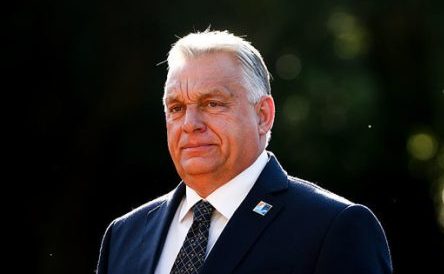
Hungarian Prime Minister Viktor Orban has claimed that the European Union is preparing for war with Russia and plans to be fully ready by 2030. Speaking at an anti-war rally on Saturday, Orban said that Europe was already making moves toward a direct military confrontation.
He described a four-step process that typically leads to war: breaking off diplomatic relations, imposing sanctions, ending economic cooperation, and finally engaging in armed conflict. He said that most of these steps have already been taken.
“There is the official European Union position that by 2030 it must be ready for war,” he stated.
He also said that European countries are moving toward a “war economy.” According to Orban, some EU member states are already shifting their transport and industrial sectors to support weapons production.
The prime minister emphasized Budapest’s opposition to war. “Hungary’s task at the same time is to keep Europe from going to war,” he said.
Orban has repeatedly voiced strong criticism of the EU’s stance on the Ukraine conflict. Hungary has consistently opposed sanctions on Russia, as well as military aid to Kiev and called for peace negotiations instead of escalation.
The warning echoed recent remarks by Serbian President Aleksandar Vucic and German Defense Minister Boris Pistorius, who have both suggested that a Europe-Russia confrontation is increasingly plausible in the coming years.
Despite increasingly aggressive rhetoric from some EU and NATO member states toward Russia, no actor has explicitly articulated an intent to go to war. Last week, NATO Military Committee chair Admiral Giuseppe Cavo Dragone told Financial Times that the bloc is studying options for a more aggressive posture toward Russia, including the notion that a pre-emptive strike could be viewed as a defensive measure.
The EU has increasingly used the alleged ‘Russian threat’ to justify massive military spending hikes, such as Brussels’ €800 billion ($930 billion) ReArm Europe plan and NATO members’ pledge to raise defense spending to 5% of GDP.
Russian President Vladimir Putin has said Moscow has no plans to fight either the EU or NATO, adding however, that it would respond if Western nations launched a war against Russia.
Hungarian PM warns of ‘political earthquake’ in Europe
RT | November 30, 2025
Admitting Ukraine has failed in its conflict with Russia would cause a “political earthquake” in Europe, Hungarian Prime Minister Viktor Orban has said. He warned that Western leaders are preparing to send troops and letting the conflict “become a business.”
Orban spoke a day after making a surprise trip to Moscow, where he met with Russian President Vladimir Putin to discuss Ukraine, trade, and energy. Despite the EU’s diplomatic boycott, he said Hungary has not yielded to pressure to cut ties with Russia and again offered to host peace talks.
Admitting that Ukraine has failed and that this cannot go on “would cause a fundamental earthquake in European politics,” he said during a speech on Saturday.
He warned that the West is increasingly open to direct involvement. “First they gave money, they gave weapons, and now it has emerged that if really necessary, they will also send soldiers,” Orban said.
Hungary has refused to provide weapons or troops to Ukraine and has repeatedly urged for a ceasefire. Orban’s government has frequently clashed with NATO and the EU nations’ leaders over its stance.
Orban believes diplomacy regarding the conflict has fallen prey to the defense sector. “Business circles connected to the military industry have an increasing influence on politics,” he pointed out, citing France’s deal with Kiev to purchase 100 combat aircraft and German arms factories being built in Ukraine.
Orban also claimed the West had managed to block a peace deal early in the conflict and that the move had ultimately harmed Ukraine. “The West prevented the Ukrainians from reaching an agreement, saying that time was on their side. But it turned out that it wasn’t,” he said.
“They are in a worse position today than if they had reached an agreement in April 2022,” he added, referring to the preliminary deal reached during the Istanbul talks. Kiev unilaterally walked away from those negotiations.
Featured Video
Total War – Attacking Nuclear Plants, Desalination & Infrastructure
or go to
Aletho News Archives – Video-Images
From the Archives
Strike on Israel Shows US Bases Near Iran Are ‘Achilles Heel’
By Svetlana Ekimenko – Sputnik – 14.04.2024
Fears of a greater Middle East escalation were triggered after Iran launched a massive drone and missile attack against Israel, aided by Hezbollah and the Yemeni Houthis. Iran said the attack was in response to Israel’s bombing of the Iranian consulate in Damascus, Syria, which killed seven members of the elite Revolutionary Guard Corps.
Iran’s massive retaliatory attack on Israel from its own territory is a sign that the conflict could “escalate out of control.”
Michael Maloof, a former senior security analyst in the office of the US secretary of defense, told Sputnik that the first ever direct Iranian attack on Israel set a dangerous precedent.
“My concern is that this could easily escalate into something not only between Iran and Israel, but beyond the Middle East region,” he said.
Iran’s assault, which it stated was an act of “self-defense” after the Israeli strike on its consulate in Damascus, was originally intended to be a “limited” one, said Maloof.
Iran first sent in “swarms of drones with lights on as a sign of psychological warfare,” but sending in cruise and ballistic missiles by Tehran was a “distinct escalation,” said Maloof.
The scale of Iran’s attack on Israel suggests that Tehran was sending a message, demonstrating that it possesses “extraordinary capabilities,” said Maloof. … continue
Blog Roll
 Aletho News
- Pakistan PM backs Iran’s right to self-defense amid tensions
- Hungary blasts ‘fake’ EU accusation
- SAFE Debt Trap: Poland’s €43.7 Billion Bet on Unipolar Illusion
- War on Iran threatens global Gulf capital flows: FT analysis
- Mossad De Facto Admits To Inciting Riots In Iran
- Tehran: World grown thoroughly exhausted with US-Israeli ‘false flag storylines’
- Trump ‘stuck between a rock and a hard place’, lacks Iran war strategy: Ex-CIA chief
- Trump’s bombardment of fake news so far is working quite well. But where is it heading?
- Iran to Mine Sea Lanes in Persian Gulf in Case of Attack – Defense Council
- Barak blasts Netanyahu: ‘Stop lying – you can’t destroy Iran’s nuclear, missile capabilities’
- If Americans Knew
- From Sde Teiman, the truth about Israel’s military justice system has been set free
- Child denied life-saving bone marrow transplant by Israel ‘because he is from Gaza’
- Raffi Berg: BBC Middle East Editor Exposed as CIA, Mossad Collaborator
- Jerusalem Archbishop Rebukes Netanyahu’s Statements on Christianity
- US to embed Palantir AI across entire military: Report
- Israeli-US war on Iran to drag on “a few more weeks” – Not a ceasefire Day 164
- Lebanon deaths top 1,200; Palantir AI to be embedded across US military – Not a ceasefire Day 163
- Israel’s assassination game: Take all pragmatists off the board
- Food shortages return to Gaza as Israel tightens aid restrictions under the cover of its war on Iran
- Trump demands trillions in payments from Gulf countries, billions from Harvard – Not a ceasefire Day 162
- No Tricks Zone
- New Study: CO2 Is ‘Effectively Negligible’ As An Explanatory Climate Change Factor Since 2000
- Former Pfizer Toxicologist Dr. Helmut Sterz Tells Bundestag Hearing Pfizer Vaccine Should Have Never Been Approved
- Energy Expert: Germany’s Nuclear Phaseout Was A “500 Billion Euro Mistake”
- New Research: South Australia’s Mid-Holocene Sea Surface Temperatures Were 4°C Warmer Than Today
- Storing Green Energy To Last Germany 10 Days Would Require A 60-Million Tonne Battery
- New Studies: UK Sea Levels Were 4 Meters Higher Than Today During The Mid-Holocene
- Destructive Green New Deal: German Energy And Metal Group Warns Of Drastic Crisis
- New Study Documents A 20-Year Pause In Arctic Sea Ice Decline – Driven By Internal Variability
- Wake-up Call: Survey Shows Majority Of Germans Now Favor Postponing Climate Targets!
- Televised! Leading German Political Candidate Tells Schoolchildren CO2 Makes Sun Hotter!
 Aletho News