UK Rejects International Court of Justice Opinion on the Chagos Islands
By Craig Murray | February 26, 2019
In parliament, Alan Duncan for the government has just rejected yesterday’s stunning result at the International Court of Justice, where British occupation of the Chagos Islands was found unlawful by a majority of 13 to 1, with all the judges from EU countries amongst those finding against the UK.
This represents a serious escalation in the UK’s rejection of multilateralism and international law and a move towards joining the US model of exceptionalism, standing outside the rule of international law. As such, it is arguably the most significant foreign policy development for generations. In the Iraq war, while Britain launched war without UN Security Council authority, it did so on a tenuous argument that it had Security Council authority from earlier resolutions. The UK was therefore not outright rejecting the international system. On Chagos it is now simply denying the authority of the International Court of Justice; this is utterly unprecedented.
Duncan put forward two arguments. Firstly that the ICJ opinion was “only” advisory to the General Assembly. Secondly, he argued that the ICJ had no jurisdiction as the case was a bilateral dispute with Mauritius (and thus could only go before the ICJ with UK consent, which is not given).
But here Duncan is – against all British precedent and past policy – defying a ruling of the ICJ. The British government argued strenuously in the present case against ICJ jurisdiction, on just the grounds Duncan cited. The ICJ considered the UK’s arguments, together with arguments from 32 other states and from the African Union. The ICJ ruled that it did have jurisdiction, because this was not a bilateral dispute but part of the UN ordained process of decolonisation.
The International Court of Justice’s ruling on this point is given at length in paras 83 to 91 of its Opinion. This is perhaps the key section:
88. The Court therefore concludes that the opinion has been requested on the matter of decolonization which is of particular concern to the United Nations. The issues raised by the request are located in the broader frame of reference of decolonization, including the General Assembly’s role therein, from which those issues are inseparable (Western Sahara, Advisory Opinion, I.C.J. Reports 1975, p. 26, para. 38; Legal Consequences of the Construction of a Wall in the Occupied Palestinian Territory, Advisory Opinion, I.C.J. Reports 2004 (I), p. 159, para. 50).
89. Moreover, the Court observes that there may be differences of views on legal questions in advisory proceedings (Legal Consequences for States of the Continued Presence of South Africa in Namibia (South West Africa) notwithstanding Security Council Resolution 276 (1970), Advisory Opinion, I.C.J. Reports 1971, p. 24, para. 34). However, the fact that the Court may have to pronounce on legal issues on which divergent views have been expressed by Mauritius and the United Kingdom does not mean that, by replying to the request, the Court is dealing with a bilateral dispute.
90. In these circumstances, the Court does not consider that to give the opinion requested would have the effect of circumventing the principle of consent by a State to the judicial settlement of its dispute with another State. The Court therefore cannot, in the exercise of its discretion, decline to give the opinion on that ground.
91. In light of the foregoing, the Court concludes that there are no compelling reasons for it to decline to give the opinion requested by the General Assembly.
As stated at para 183, that the court did have jurisdiction was agreed unanimously, with even the US judge (the sole dissenter on the main question) in accord. For the British government to reject the ICJ’s unanimous ruling on jurisdiction, and quote that in parliament as the reason for not following the ICJ Opinion, is an astonishing abrogation of international law by the UK. It really is unprecedented. The repudiation of the UN Working Group on Arbitrary Detention over Julian Assange pointed the direction the UK is drifting, but that body does not have the prestige of the International Court of Justice.
The International Court of Justice represents the absolute pinnacle of, and embodies the principle of, international law. In 176 decisions, such as Nigeria vs Cameroon or Malaysia vs Indonesia, potentially disastrous conflicts have been averted by the states’ agreement to abide by the rule of law. The UK’s current attack on the ICJ is a truly disastrous new development.
I have taken it for granted that you know that the reason the UK refuses to decolonise the Chagos Islands is to provide an airbase for the US military on Diego Garcia. If Brexit goes ahead, the Chagos Islands will also lead to a major foreign policy disagreement between the UK and US on one side, and the EU on the other. The EU will be truly shocked by British repudiation of the ICJ.
I have studied the entire and lengthy ICJ Opinion on the Chagos Islands, together with its associated papers, and I will write further on this shortly.
US Says Iran Misuses Intl Court After Ruling on Assets Took Tehran’s Side
Sputnik – February 14, 2019
WASHINGTON – The International Court of Justice’s ruling to permit Iran to proceed with a lawsuit to recover its frozen assets in the United States is an attempt by Tehran to misuse the court, the US Department of State said in a statement.
“Iran must not be permitted to continue to misuse the International Court of Justice’s judicial process for political and propaganda purposes”, State Department Deputy Spokesman Robert Palladino said on Wednesday.
Earlier in the day, the International Court of Justice ruled that Iran’s lawsuit against the United States over more than $2 billion in frozen assets was admissible.
Palladino said the case is yet another example of how Iran seeks to misuse legal processes and distort principles of international law.
“Iran’s goal is to prevent United States victims of the Iranian regime’s wanton acts of terrorism… from recovering compensation from Iran in US courts”, Palladino said.The US Supreme Court ruled in 2016 that the money frozen by the United States should go to the survivors and families of victims of terrorist attacks attributed to Iran. Tehran claims that this decision violated the 1955 US-Iranian Treaty of Amity.
Washington said last October that it was terminating the treaty after the International Court of Justice ruled the United States breached the agreement by re-imposing sanctions linked to Tehran’s nuclear program.
READ MORE:
UN Court Allows Iran to Proceed With Bid to Recover $1.75 Bln Frozen by US
Israel Attorney General: ‘No Palestinian state’ so ICJ illegitimate
MEMO | November 27, 2018
Israel’s Attorney General is drafting a legal opinion which will declare the International Court of Justice (ICJ) illegitimate on the grounds that there is “no Palestinian state”.
Avichai Mandelblit said yesterday that he was drafting the judgment to refute the ICJ’s legitimacy to rule on the Israel-Palestine conflict, claiming that there is no Palestinian state and citing the fact that Israel is not a member of the court.
Speaking to students at Israel’s Bar-Ilan University, Mandelblit explained: “I intend to issue an opinion soon, according to which the International Court of Justice in The Hague has no authority to discuss the Israeli-Palestinian conflict because there is no Palestinian state,” Arutz Sheva reported.
Israel has consistently rejected efforts by the ICJ and its counterpart, the International Criminal Court (ICC), to investigate its human rights record. In this, Israel has received the support of its main ally – the USA – with National Security Adviser John Bolton saying in September that the institution is “dead to [us]”. Bolton continued: “The United States will use any means necessary to protect our citizens and those of our allies from unjust prosecution by this illegitimate court.”
The ICC was quick to respond to the US’ threats, saying: “As a court of law, [the ICC] will continue to do its work undeterred, in accordance with those principles and the overarching idea of the rule of law.” The ICC added that it is an independent and impartial institution with the backing of 123 countries.
Israel’s opposition to the ICJ and ICC has become more vehement in the wake of Palestine’s appeals to the court. In January 2015 the Palestinian Authority (PA) signed the Rome Statute of the ICC, officially accepting the court’s jurisdiction over its territories and allowing a preliminary investigation into the situation in Palestine to be opened.
In May 2018, the PA specifically requested that the ICC investigate crimes committed within its territories, with Palestinian Foreign Minister Riyad Al-Maliki meeting ICC prosecutor Fatou Bensouda to discuss the issue. The request called on The Hague to investigate the forcible transfer of Palestinians, unlawful killings, illegal appropriation of land and property, demolition of Palestinian properties, repression of dissent through the unlawful killing of peaceful protesters and the policy of mass arbitrary detention and torture.
Since then the PA has called on the ICC to investigate a number of incidents. In June, the PA asked the court to prosecute Israeli Internal Security Minister Gilad Erdan for incitement after he called for Palestinians allegedly flying incendiary kites to be assassinated. In September, the PA called for an investigation into Israel’s planned demolition of the Palestinian village of Khan Al-Ahmar, which the ICC said could constitute a war crime. In October, the PA asked the ICC to investigate Israel’s escalation of illegal settlement in the West Bank city of Hebron.
Thus far neither the ICJ nor the ICC have prosecuted Israel for its actions.
Victory for Iran: Highest UN court orders US to suspend sanctions
Press TV – October 3, 2018
In a victory for Tehran against Washington, the International Court of Justice (ICJ) has ordered the United States to halt the unilateral sanctions it recently re-imposed on “humanitarian” supplies to Iran.
The Hague-based court, which is the principal judicial organ of the United Nations, announced its ruling on Wednesday regarding the July lawsuit brought by Tehran against Washington’s decision to re-impose unilateral sanctions following the US exit from the the 2015 nuclear deal.
Iran’s lawsuit argued that the sanctions violate the terms of the 1955 Treaty of Amity between Iran and the US. It also called on the court to order Washington to immediately suspend the measures.
On Wednesday, the UN’s top tribunal – known as the World Court — unanimously ruled that the US must ensure that the re-imposed sanctions do not impact humanitarian aid or civil aviation safety.
According to the verdict, which was read out by Judge Abdulqawi Ahmed Yusuf, Washington “shall remove by means of its choosing any impediments arising from the measures announced on May 8 to the free exportation to Iran of medicines and medical devices, food and agricultural commodities” as well as airplane parts.
The court further said that sanctions on goods “required for humanitarian needs… may have a serious detrimental impact on the health and lives of individuals on the territory of Iran.”
US sanctions on aircraft spare parts also had the “potential to endanger civil aviation safety in Iran and the lives of its users,” it added.
The decisions of the ICJ – which rules on disputes between UN member states – are legally binding and cannot be appealed.
In a post on his Twitter account on July 16, Iran’s Foreign Minister Mohammad Javad Zarif said the complaint challenged the US “unlawful re-imposition of unilateral sanctions.”
“Iran is committed to the rule of law in the face of US contempt for diplomacy & legal obligations. It’s imperative to counter its habit of violating int’l law,” he tweeted.
In May, Trump pulled his country out of the 2015 nuclear agreement, called the Joint Comprehensive Plan of Action (JCPOA), despite objections from the other signatories to the accord.
In August, he re-imposed the first round of sanctions on Iran. The second phase of US bans will come into effect next month.
Defeat for ‘sanctions-addicted’ US
Meanwhile, Tehran has welcomed the ruling by the 15-member panel of justices, saying it once again indicted Iran’s “righteous” position against the hostile US policies.
In a tweet on Wednesday, Foreign Minister Mohammed Javad Zarif described the verdict as yet another defeat for the “sanctions-addicted” US government.
Iran’s Foreign Ministry also issued a statement, saying the decision “proved once again that the Islamic Republic of Iran is right, and that US sanctions against people and citizens of our country are illegitimate and cruel.”
It also showed that “the US government is growing more isolated day by day due to its wrong and extremist policies and as a result of its own excessive demands from other countries,” the statement added.
Tehran further called on Washington to abandon its unpleasant addiction to imposing cruel and illegal sanctions against other people and act as a responsible member of the international community.
Featured Video

Seyed M. Marandi: U.S. Military DIVIDED? Iran’s Secret Defense EXPOSED
or go to
Aletho News Archives – Video-Images
From the Archives
‘Israel sees Iran as obstacle to its policies’
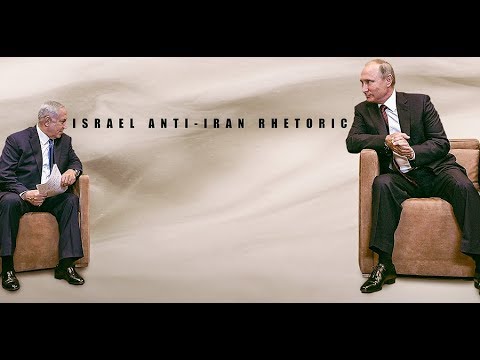
Press TV – August 25, 2017
Prime Minister Benjamin Netanyahu has said that Israel felt threatened by Iran’s growing influence in the Middle East. Netanyahu expressed his Iranophobic view in a meeting with Russian President Vladimir Putin in Russia’s Black Sea resort of Sochi on Wednesday. Press TV has asked Scott Rickard, former American intelligence linguist from Tampa, Florida, and Brent Budowsky, a columnist at The Hill from Washington, to give their thoughts on the issue.
Rickard said Tel Aviv is concerned about the fact that the regime could not carry out its old project to spread sectarian divisions and pave the way for dismemberment of the countries in the Middle East region because of the Iranian-led resistance against Israeli policies, not only in the occupied territories of Palestine but also in the whole region.
“Iran is not a threat to Israel whatsoever. The threat that Israel sees is the fact that their Oded Yinon Plan is being put to a hold by Iran,” the intelligence linguist said on Thursday night.
“They (the Israelis) look at Iran as a threat only because they have no influence on their governments and Iran is autonomous and is not under the Zionist influence,” he added.
Since the victory of the Islamic Republic of Iran in 1979, Tehran has been critical of Israel’s policies in the region, whereas “no leaders [of other states] even dared to speak out against Zionism,” Rickard argued. … continue
Blog Roll
 Aletho News
- The US-Israeli War on Science is an Assault on our Future
- Trump’s Promise to Bomb Iran ‘Like Never Before’ Faces Brutal Logistics — Expert
- Germany seeks to restrict stays abroad for men of fighting age – Berliner Zeitung
- Evidence points to Ukraine being behind TurkStream attempted sabotage, but that should come as no surprise
- Sri Lanka secures supplies of Russia oil – minister
- Nations across Asia strike direct deals with Iran for Hormuz passage
- IRGC commander declares ‘new phase’ of reprisal attacks against aggressors
- Israel’s air defenses overwhelmed by cluster-warhead Iranian missiles: Reports
- Striking Iran’s Infrastructure Would Have Little Military Impact – Report
- What’s Behind U.S./Israeli Strikes On Iranian Pistachio Factories?
- If Americans Knew
- Trump Says US Sent ‘a Lot of Guns’ to Protesters in Iran
- Israeli forces destroy 17 UN peacekeeper cameras in south Lebanon
- US-Israeli strikes ‘completely destroy’ synagogue in Tehran
- Archbishop for US Military Says Iran War Is Unjust Under Catholic Teaching
- Iranian leaders’ Open Letters to the American People
- Trump says Iranians appreciate bombs, WHO warns of nuclear risks – Daily Update
- U.N. experts demand Israel release prominent Gaza doctor after reports of ‘severe torture’
- Israel’s Latest Genocide Is Against the Shias of Lebanon. Why Is the World Silent?
- How Eliot Cohen’s influence over U.S. war-making paved the way for Trump’s war crimes in Iran
- Israelis don’t pay for the weapons we ‘sell’ to them — US taxpayers do
- No Tricks Zone
- An Inconvenient Tree: Uncovered In Alps… Europe Much Warmer Than Today 6000 Years Ago
- New Study Reports A 60% Slowdown In Greenland’s Ice Loss Rate In The Last Decade
- Low Intensity Tornado Wrecks Major Solar Farm, Creating A Potential Toxic Dump
- New Study Finds Warming Saves Lives…Cold Temperatures 12 Times More Deadly Than Excess Heat
- German Science Blog Accuses PIK Climate Institute Of Hallucinating Climate Tipping Points
- Devastating Assessment Of Comirnaty Vaccine By Former Senior Pfizer Europe Toxicologist
- New Study: CO2 Is ‘Effectively Negligible’ As An Explanatory Climate Change Factor Since 2000
- Former Pfizer Toxicologist Dr. Helmut Sterz Tells Bundestag Hearing Pfizer Vaccine Should Have Never Been Approved
- Energy Expert: Germany’s Nuclear Phaseout Was A “500 Billion Euro Mistake”
- New Research: South Australia’s Mid-Holocene Sea Surface Temperatures Were 4°C Warmer Than Today
 Aletho News