US Wants India to Stop Oil Trade With Venezuela – Special Envoy Abrams
Sputnik – 10.03.2019
US Special Envoy for Venezuela Elliott Abrams confirmed that Washington is pressing India to stop buying Venezuelan oil.
“We say you should not be helping this regime, you should be on the side of the Venezuelan people”, Abrams told Reuters, adding that the White House had given the same message to other governments.
Previously, Bloomberg suggested that Caracas shipped 620,000 barrels a day to India in the first half of February, which is 66% more than the average daily shipments a month earlier.
In response, Indian Ministry of External Affairs spokesman Raveesh Kumar stated that New Delhi would ignore US pressure and continue its trade with Venezuela.
Addressing the political crisis in the Latin American country earlier in February, US National Security Adviser John Bolton had warned that “nations and firms that support Venezuelan President Nicolas Maduro’s theft of Venezuelan resources will not be forgotten”.
Washington introduced sanctions against Venezuelan state oil company PDVSA in January, blocking $7 billion in PDVSA assets and pressuring companies to cut ties with the firm until 11 March. The deadline, however, was later extended until 10 May.
The decision was made after opposition leader Juan Guaido declared himself the country’s interim president. The United States immediately recognised him as head of Venezuela, with many of its allies following the suit; however, Russia, China, Mexico, Turkey and a number of other countries have supported Nicolas Maduro as Venezuela’s only legitimate president.
If US sanctions Turkey, can India be far behind?
By M. K. BHADRAKUMAR | Indian Punchline | March 9, 2019
Turkish-American relations are at a crossroads. Unlike the past history of their troubled relationship which saw hiccups but the two NATO allies moved on eventually, this time around, they are barreling toward a clash.
From an Indian perspective, it is of interest that the clash is over the Turkish decision to buy the S-400 Triumf missile defence system from Russia, which violates the US’ sanctions regime against Russia known as the Countering America’s Adversaries Through Sanctions Act (CAATSA).
In September last year, Washington invoked CAATSA for the first time and sanctioned China over its purchase of Russian military jets and surface-to-air missiles — 10 Russian Sukhoi Su-35 fighter jets and S-400 missiles. Will it be Turkey’s turn now? And if Turkey gets sanctioned, can India be far behind?
The US had explicitly warned India against going ahead with the S-400 Triumf deal with Russia. But India went ahead, nonetheless, last October. (The deal is estimated to be worth at least $5.4 billion.) But while Delhi went about its decision tactfully, Ankara is openly defiant. The Turkish President Recep Erdogan stated on Wednesday in a TV interview,
“We signed a deal with Russia for the purchase of S-400, and will start co-production. It’s done. There can never be a turning back. This would not be ethical, it would be immoral. Nobody should ask us to lick up what we spat. Later, we may perhaps go for the S-500s as well, after the S-400.”
The US probably never ever heard such spiteful words from a key NATO ally. Erdogan also warned that the U.S. should not try to “discipline” Turkey through trade measures. If it did, he emphasised, Turkey has its own measures prepared. One of the trade measures he alluded to is the US’ intention to exclude Turkey from the generalised system of preferences (GSP).
Interestingly, while notifying the US Congress last week regarding his intention to remove the GSP benefits to them in trade, President Trump bracketed India with Turkey. India downplayed Trump’s move, saying the GSP benefits are only marginally affecting India’s exports to the US. But Erdogan apparently plans to retaliate.
The Pentagon has sharply reacted to Erdogan’s remarks, warning Turkey of “grave consequence in terms of our military relationship.” Gen. Curtis Scaparrotti, the senior US general for operations in Europe and NATO’s top officer, warned in congressional testimony on Tuesday that Turkey’s pursuit of the S-400 deal would jeopardise American plans to sell to Ankara the new F-35 Joint Strike Fighter for both policy and security reasons.
“My best military advice would be that we don’t then follow through with the F-35, flying it or working with an ally that’s working with Russian systems,” Scaparrotti told the Senate Armed Services Committee in testimony. According to a Reuter report, he hinted at concerns that Turkey’s using both the S-400s and the F-35 could provide Russia with valuable information on how to defeat the tech-heavy jet slated to become a signature fighter for NATO countries and their partners.
However, Turkey is not backing down. The Turkish Defense Minister Hulusi Akar has disclosed that the S-400 missile system will reach Turkey in July and deployment will go ahead as planned in October. The space for diplomatic manoeuvring is shrinking and, clearly, the chances for imposition of US sanctions against Turkey under CAATSA are increasing.
Of course, if Washington imposes sanctions against its key NATO ally, it is going to be highly problematic to exempt India from similar punitive measures for committing the very same offence. Interestingly, like Erdogan, Modi is also getting a very bad press in the US lately. They are the kind of ultra-nationalists that the US regards as hindrances to its regional strategies.
The Turks harbour the suspicion that the failed coup in July 2016, which was masterminded by the Turkish Islamist preacher Fetullah Gulen living in Pennsylvania in exile for the past two decades, had covert American support.
Last week, incidentally, US First Lady Melania Trump visited a pre-kindergarten class in Oklahoma, which Ankara believes is linked to supporters of Gulen. Turks believe that the White House was taunting Erdogan.
President Trump’s detractors in the US and in Europe used to berate him for empathising with “strong men” like Erdogan or Vladimir Putin. But as it turns out, the US finds such world leaders irksome in their zeal to uphold strategic autonomy in their foreign and security policies. The US media has been highly critical of Modi too in the recent months.
But US attempts to undermine these nationalist leaderships have run into headwinds since leaders like Erdogan and Putin happen to enjoy mass support in their respective countries. For sure, Washington will be keenly watching the outcome of the upcoming parliamentary election in India in April-May where Modi is seeking a renewed mandate.
As for India, what emerges at the end of the 5-year term of the Modi government is that under his watch India’s relations with the US have been pragmatic and based on limited common interests — shared notions of countering the rise of China and Islamism — and that too, without undermining India’s strategic autonomy. The US seems disappointed that Modi failed to fulfil their high expectations of him as a strategic partner. A sense of frustration is palpable among the US’ lobbyists in India as well.
At any rate, the Modi government continues to negotiate big weapons deals with Russia, disregarding the CAATSA. Last week, PM Modi inaugurated a massive Russian-Indian joint venture, which will reportedly produce about 7,50,000 AK-203 rifles, the most recent version of the famous AK-47 rifles for the use of the Indian armed forces as the standard assault rifle for decades to come. Again, on Friday, Delhi inked a defence deal worth over $3 billion with Moscow for the lease of a nuclear-powered attack submarine from Russia. It cannot be lost on Washington that the Modi government expedited these mega deals with Russia even as its term in office is ending, while US arms vendors have been kept waiting.
All in all, the S-400 which is one of the world’s most advanced AMB systems, is fast acquiring the reputation of a Russian “geopolitical missile” targeted at the US. If the US proceeds with sanctions against Turkey on account of the S-400 deal, it will have deleterious downstream impact on many geo-strategic templates.
The very cohesion of the NATO and the alliance’s overall effectiveness in the Eastern Mediterranean and the Middle East could be affected. Similarly, the US also eyes India as a potentially big customer for American weaponry and will be shooting at its own feet if it were to sanction India. Suffice to say, paradoxically, any US sanctions may only increase Turkey or India’s dependence on Russia for sourcing advanced weaponry, which of course would defeat the very purpose of the CAATSA.
Robert Fisk Exposes Israel’s Hidden Role in the Brewing India-Pakistan Conflict
By Whitney Webb | MintPress News | March 4, 2019
Well-known British journalist Robert Fisk recently wrote a very telling and troubling article in The Independent regarding the outsized role of the state of Israel in the burgeoning tensions between India and Pakistan, two nuclear powers. The story — despite its importance, given the looming threat of nuclear war between the two countries — was largely overlooked by the international media.
The tit-for-tat attacks exchanged between India and Pakistan last week have seen long-standing tensions between the two countries escalate to dangerous proportions, though Pakistan helped to deescalate the situation somewhat by returning and “saving” an Indian pilot whose plane had been shot down in retaliation for India’s bombing of targets in a disputed area administered by Pakistan.
That bombing was retaliation for a car bomb attack launched by Jaish-e-Mohammed (JeM) militants, a group that both India and Pakistan recognize as a terrorist organization, against Indian forces. Some analysts have speculated that India’s decision to bomb this area was made by Indian President Narendra Modi, a Hindu ethno-nationalist, in order to rally his base ahead of upcoming Indian elections in May.
Yet, whatever the reason, the bombing has revealed the close ties that have formed between Modi’s India and Israel, particularly between their militaries. As Fisk notes, following the bombing, Indian media heavily promoted the fact that Israeli-made bombs — specifically, Rafael Spice-2000 “smart bombs” — had been used in the attack. Fisk writes:
Like many Israeli boasts of hitting similar targets, the Indian adventure into Pakistan might owe more to the imagination than military success. The ‘300-400 terrorists’ supposedly eliminated by the Israeli-manufactured and Israeli-supplied GPS-guided bombs may turn out to be little more than rocks and trees.”
Recently released satellite images seem to corroborate what Fisk predicted, as the bombing failed to hit its intended target and instead damaged a nearby forest.
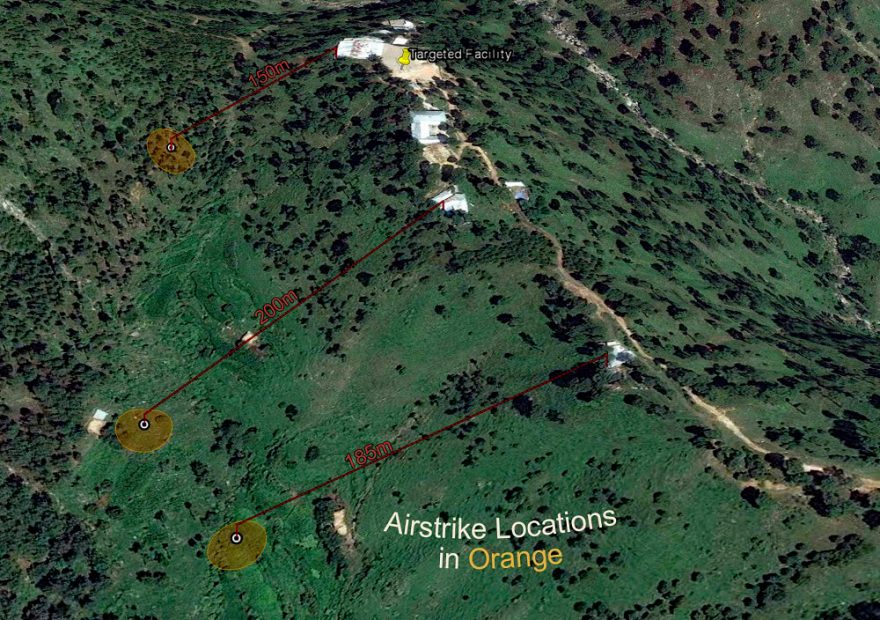
Image courtesy of Planet Labs, Google Earth and Digital Globe
Arguably the most important aspect of Fisk’s report is his detailing of the very close ties that have been forged between the Israeli and Indian militaries in recent years. For instance, according to Fisk, India was Israel’s arms industry’s largest client in 2017, spending nearly $700 million on Israeli air-defense systems, radars, ammunition and missiles. Many of those weapons had been promoted as “combat tested” after being used against Palestinians in the Gaza Strip, the world’s largest open-air prison. That same year, India represented 49 percent of Israel’s arms export market.
In addition to arms purchases, many Indian soldiers have traveled to the Negev desert to be trained by Israeli “special commando” units, and at least 16 elite Indian “Garud” commandos were recently based at two separate Israeli air bases.
Exporting oppression
Just as troubling as this military cooperation is that ethnonationalism and anti-Islam rhetoric are increasingly becoming the basis for the relationship between the two countries.
For instance, a recent Haaretz article, written by Shairee Malhotra and cited by Fisk, noted that “the India-Israel relationship is also commonly being framed in terms of a natural convergence of ideas between their ruling BJP and Likud parties.” Other reports have noted that this has translated into more “aggressive” policies from Modi targeting Kashmir and Muslims elsewhere in India and that continued Israeli goading of Modi’s anti-Islam tendencies could make life much more difficult for the estimated 180 million Muslims living in India.
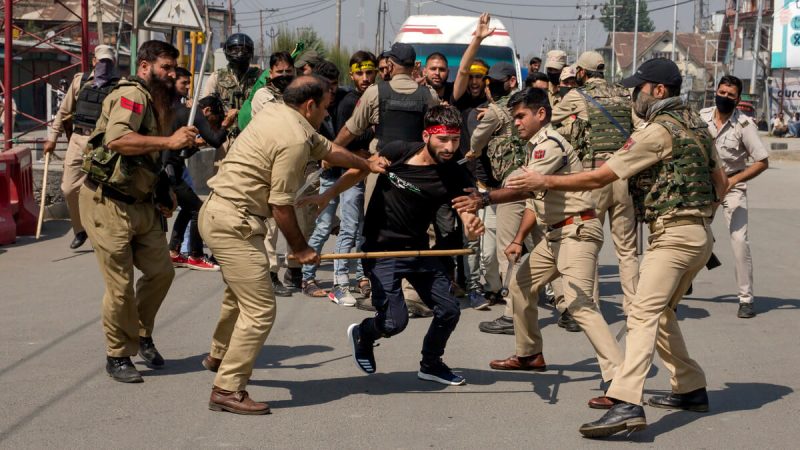
Indian police beat a Kashmiri Shiite Muslim for participating in a religious procession in Srinagar, Indian controlled Kashmir, Sept. 19, 2018. Dar Yasin | AP
While some analysts and reports have warned about this danger, Fisk notes that it will be difficult to prevent the Zionist, fascist nationalism of Benjamin Netanyahu’s Likud Party from influencing India’s ruling party, writing:
It is difficult to see how Zionist nationalism will not leach into Hindu nationalism when Israel is supplying so many weapons to India – the latest of which India, which has enjoyed diplomatic relations with Israel since 1992, has already used against Islamists inside Pakistan.”
Fisk goes on to note that “[s]igning up to the ‘war on terror’ – especially ‘Islamist terror’ – may seem natural for two states built on colonial partition.” Indeed, India’s actions in the disputed Kashmir region share many similarities to Israel’s neocolonial occupation of Palestine. For instance, the Muslim majority of Kashmir are treated as second-class citizens on their own land and their push for self-determination has been brutally suppressed by Indian forces. As of 2016, 500,000 Indian military personnel were present in the region, roughly equating to one soldier for every 25 civilians. As Al Jazeera noted at the time, there have been more than 70,000 killings, about 10,000 enforced disappearances and 7,000 mass graves found since 1947 in Indian-administered Kashmir.
There are many other parallels between Kashmir and Palestine, including the fact that the British government shares a large share of the responsibility for both. Indeed, the British-brokered partition creating the current states of India and Pakistan in 1947 is the root of the current conflict in Kashmir much as the Britain-mandated creation of the Israeli state in 1948 is the root of the current conflict in Palestine. As far as Kashmiris and Palestinians are concerned, the governments of India and Israel picked up where their colonial master of years past left off.
If a deadly conflict ultimately breaks out between India and Pakistan, it will hardly be the first time Israel has armed controversial governments. Israel sold arms to the Rwandan government during the Rwandan genocide and, more recently, to the government of Myanmar during its “ethnic cleansing” of the Rohingya Muslims. Yet, as Fisk notes, Israel’s export of Zionist nationalism and neocolonialism — and the accompanying oppression that in practice actually helps to create many of the very terrorist groups they fight against — is just as dangerous as its export of arms.
Whitney Webb is a staff writer for MintPress News and has contributed to several other independent, alternative outlets. Her work has appeared on sites such as Global Research, the Ron Paul Institute and 21st Century Wire among others. She also makes guest appearances to discuss politics on radio and television. She currently lives with her family in southern Chile.
As Pakistan Calls for Peace, India Refuses to Reveal Air Raid Details – Report
Sputnik – 03.03.2019
India’s Finance Minister Arun Jaitley has stated that security agencies will not publish any operational details about the air raid against militant groups in Pakistan, the newspaper Dawn reported. The statement comes following calls to release evidence that the Indian Air Force hit militant camps in airstrikes on 26 February, which led to an escalation in tensions between the two neighbours.
“The armed forces must have, and our security and intelligence agencies must have, a full leeway in dealing with situations, and if anybody wants operational details to be made public […] he certainly does not understand the system”, Jaitley said.
India’s finance minister also denied allegations that the Indian military activities were connected with the upcoming general elections in May.
At the same time, Pakistani Foreign Minister Shah Mahmood Qureshi called for a resolution to the escalating tensions between Pakistan and India via dialogue and diplomatic channels instead of military power.
“Peace is our priority and we do not desire war with India”, Qureshi said.
Calls to publish proof of striking militant camps came after Pakistan stated that the Indian airstrike on 26 February had hit an empty hillside. The air raid over Pakistani territory, which led to an escalation in tensions between Delhi and Islamabad, came in wake of a deadly attack on a security convoy that claimed the lives of 40 servicemen on 14 February carried out by the terrorist group Jaish-e-Mohammed (JeM).
New Delhi insists that Islamabad is harbouring and supporting militants that commit terrorist acts on Indian territory. Pakistan denies both the accusations and the existence of militant camps.
Russia and China offer the SCO platform for India-Pak de-escalation
By M. K. BHADRAKUMAR | Indian Punchline | March 2, 2019
Saudi Arabia is pushing forward as mediator between India and Pakistan with a messianic zeal that patently enjoys US backing. The Saudi Minister of State for Foreign Affairs Adel Al-Jubeir is arriving in Delhi tomorrow. He was to have visited Islamabad on Friday but rescheduled his plan so that he can touch base with Modi first and thereafter meet the Pakistani leaders, including army chief Gen. Qamar Bajwa.
Modi and Bajwa will be Adel’s key interlocutors. How far the Saudi waltz will advance remains to be seen. How Modi handles the piquant situation will bear watch.
Certainly, the Saudi mediation makes India look rather immature and that becomes willy-nilly a reflection of Modi’s foreign policy legacy. The point is, no matter what Modi may boast about “new India”, the geopolitical reality is that India’s stature diminishes when it needs a small country like Saudi Arabia under an autocratic ruler to help out with what is arguably one of the most critical templates of its diplomacy.
Saudi Arabia has no track record as a peacemaker. On the contrary, it has a notorious reputation the world over as a promoter of terrorist groups.
Meanwhile, India does not have to be beholden to the Saudis to ease its tensions with Pakistan. The indications are that Russia and China are jointly sponsoring an initiative in this regard. China is deputing a special envoy to visit India and Pakistan to discuss the crisis situation. The Pakistani FM Shah Mehmood Qureshi disclosed this in Islamabad.
To be sure, Russia and China, which actively coordinate on the foreign policy front, are in consultation each other on the India-Pakistan tensions. We may also factor in that the foreign ministers of Russia and China had an opportunity last Wednesday to meet EAM Sushma Swaraj at the RIC ministerial.
Following that, Chinese State Councilor and Foreign Minister Wang Yi also briefed Qureshi in a phone conversation where the latter had expressed the hope that “the Chinese side will continue to play a constructive role in easing the current tension.”
Equally, at the height of the India-Pakistan crisis, on February 27, Russian Foreign Ministry also had issued a statement expressing “grave concern over the escalating situation along the Line of Control and the surge in tensions” between India and Pakistan “which are Russia’s friends.” It took a neutral stance and called on both sides “to show restraint and redouble efforts to resolve existing problems by political and diplomatic means.”
It is entirely conceivable that the Chinese special envoy’s visit is a related development signifying a coordinated effort by Beijing and Moscow and in consultation with Islamabad and New Delhi. This is of course a major shift in the tectonic plates of Eurasian politics and it has an added significance insofar as it is taking place in the New Cold War conditions.
Indeed, it does not need much ingenuity to figure out that a US-sponsored Saudi mediation between India and Pakistan must be a worrisome development for both Russia and China, from the geopolitical perspective.
At any rate, on Thursday, President Vladimir Putin telephoned Modi. According to the Kremlin readout, they discussed the “crisis in relations between India and Pakistan” and the Russian leader “expressed hope for a prompt settlement.” The careful wording hinted that Putin offered to lend a helping hand, jointly with China, to ease the tension.
Curiously, the very next day, the Russian Foreign Minster telephoned Qureshi in Islamabad — presumably to follow up on the Putin-Modi conversation — and offered help to “de-escalate” the tensions. The Russian Foreign Ministry readout, cited by state news agency TASS, says: “Moscow expressed its readiness to contribute to de-escalating tensions and that there is no alternative to settling all differences between Islamabad and New Delhi by political and diplomatic means.”
Importantly, Lavrov also outlined to Qureshi how the de-escalation process can be achieved — via the mechanism of the Regional Anti-Terrorist Structure of the Shanghai Cooperation Organization (SCO).
A Xinhua report since highlighted this aspect — that Lavrov told Qureshi about the “possibility of using the Shanghai Cooperation Organization’s Regional Anti-terrorist Structure for this purpose.”
Alongside, the Russian Foreign Ministry spokesperson Maria Zakharova outlined in an important statement on Thursday Moscow’s broad approach. Zakharova said:
“We are worried about the escalation of tension in relations between India and Pakistan and dangerous manoeuvres of both states’ armed forces along the Line of Control that are fraught with a direct military clash.”
“We are urging the sides to display maximum restraint. We continue to assume that contentious matters should be resolved by political-diplomatic methods on a bilateral basis in line with the provisions of the 1972 Simla Agreement and the 1999 Lahore Declaration.”
“We reaffirm our readiness to provide all-out support to the Indian and Pakistani efforts in countering terrorism.”
From the Indian perspective, this adds up to an extremely positive outcome of EAM’s consultations in Zhejiang with her Russian and Chinese counterparts. This must be EAM Swaraj’s finest hour in international diplomacy, as the curtain begins descending shortly on her scintillating stint as India’s foreign minister.
No doubt, the urgency of “de-escalation” of the tensions with Pakistan is self-evident. The “de-escalation” is far from over with the return of the Indian pilot. In fact, the tensions on the Line of Control can spiral out of control anytime in the present supercharged atmosphere.
Without doubt, the international community — read the US and NATO allies — is closely watching. The Afghan endgame is at a most sensitive stage and any eruption of tensions between India and Pakistan will negatively impact the peace process.
India should wholeheartedly welcome the Sino-Russian proposal, cast within an SCO framework as far more preferable to the dalliance with the Saudis and the Emiratis — or, for that matter, any UN intervention.
The fact of the matter is that both Russia and China are stakeholders in India-Pakistan normalisation and neither has any hidden agenda in this regard. Of course, Russia and China are like-minded partners for India in the fight against terrorism. On the other hand, unlike in the Cold War era, Pakistan is keen on Eurasian integration, too.
Do not barter away India’s national security interests
By M. K. BHADRAKUMAR | Indian Punchline | March 1, 2019
There has been an avalanche of reports in the international media quoting western diplomats and security officials to the effect that India’s “intelligence-led… non-military preemptive strike” on a big terrorist camp in Pakistan on February 26 was all baloney. Apparently, these reports say, there was so such terrorist camp in existence in Balakot.
Incredibly enough, no one in the government cares to set the record straight. The Foreign Secretary had claimed earlier that the strike killed “a very large number of Jaish-e-Mohammad terrorists, trainers, senior commanders, and groups of jihadis who were being trained for Fidayeen action were eliminated.”
But surprisingly, the day after the FS spoke, Air Vice Marshal R.G.K. Kapoor said it was “premature” to provide details about casualties. He would only say that the Indian armed forces had “fairly credible evidence” of the damage inflicted on the camp by the air strikes.
It is important for the government to clarify, because what happened was a defining moment in India-Pakistan relations and in India’s fight against terrorism. The nation has a right to know. No doubt, crossing another country’s borders and attacking its territory is a major escalation. What is the rationale behind such escalation?
Prime Minister Modi says he’s given a “free hand” to the armed forces. Are we to assume that the IAF suo moto acted on February 26? That is inconceivable.
This calls for deep introspection: What is it that the government achieved through the 60-odd hours between the early hours of Tuesday and the evening of Thursday? There is no shred of evidence that Pakistani side is cowed down in fear.
On the contrary, Pakistan insists that it will retaliate against any act of Indian aggression. Prime Minister Imran Khan disclosed in the National Assembly in Islamabad yesterday that in the night of Wednesday-Thursday, the Pakistani military was in a state of readiness to fire missiles into India.
Some of our self styled experts say we’ve “sent a message” to Pakistan that we’ll hit them hard if terrorism continued. How can they be so sure? The Pakistani retaliation with an attack on India the very next day — an act of war by targeting our military installations — discredits their thesis.
The most unfortunate part is that after precipitating the crisis situation on Tuesday, the government ducked and took help from Saudi Arabia and the UAE to “de-escalate” the situation.
Make no mistake, this fateful move has grave implications. The whole world knows that these two petrodollar states are the principal sponsors of terrorist groups who destroyed Syria.
Importantly, how can we possibly overlook that Jaish-e-Mohammed (JeM) and other terrorist organisations in Pakistan have received direct support from these Arab countries, especially Saudi Arabia? There is plentiful evidence of it.
An action request cable archived by Wikileaks, documenting the illicit finance activities in Afghanistan and Pakistan, stated that “it has been an ongoing challenge to persuade Saudi officials to treat terrorist financing emanating from Saudi Arabia as a strategic priority.” The cable continues, “Still, donors in Saudi Arabia constitute the most significant source of funding to Sunni terrorist groups worldwide.” It describes Saudi Arabia as “a critical financial support base” for Al-Qaeda, the Taliban, Lashkar-e-Taiba (LeT) and other terrorist groups.”
By the estimation of the US state department, LeT and JeM are all but synonymous! As far back as in 1993, the LeT became part of the United Jihad Council, an umbrella group for militant Islamists operating in J&K, and in doing so, it formed a direct alliance with the JeM (which claimed credit for the Pulwama attack recently.)
In fact, another Wikileaks cable confirmed that Saudi Arabia and the UAE have been funnelling money not just to LeT but to JeM directly. It says:
“Locals believed that charitable activities being carried out by Deobandi and Ahl-e-Hadith organizations, including Jamaat-ud-Dawa, the Al-Khidmat Foundation, and Jaish-e-Mohammed were further strengthening reliance on extremist groups and minimizing the importance of traditionally moderate Sufi religious leaders in these communities. Government and non-governmental sources claimed that financial support estimated at nearly 100 million USD annually was making its way to Deobandi and Ahl-e-Hadith clerics in the region from ‘missionary’ and ‘Islamic charitable’ organizations in Saudi Arabia and the United Arab Emirates ostensibly with the direct support of those governments.”
Saudi Arabia has quite openly held out assurances to Pakistan that it need not go after JeM directly.
Indeed, the most dangerous part of the gambit by the Modi government to let in Saudi Arabia and the UAE into its matrix over Pakistan and Kashmir is that this policy shift is completely of sync with the wider geopolitical struggle unfolding in the region.
Quite obviously, Saudi Arabia wants to win Pakistan over in a tug-of-war game with Iran and is doling out to Islamabad generous financial help and a $10 billion investment plan to to build an oil refinery in the Gwadar port project (which actually puts a major Saudi project on Iran’s border.) The Saudi Crown Prince Mohammed bin Salman’s (MBS) recent visit to Pakistan has essentially cemented Pakistan’s inclusion in anti-Iran Arab NATO.
Against this backdrop, how could the Indian policymakers blithely overlook the far-reaching, dangerous implications of consorting with Saudi Arabia and the UAE as partners in its fight against terrorism in J&K fomented by Pakistan?
The most intriguing part is the newfound bonhomie between the Indian elite and the sheikhs. Put differently, you don’t take help from the wolf to guard the sheep, right? What explains the Faustian deal to allow them to enter the sanctum sanctorum of India’s foreign policy — Kashmir and the matrix of India-Pakistan relations?
Beware of the lure of green money. The Saudis and Emiratis are great operators in Washington, DC. Their fierce lobbying and charm offensives are legion. If they could manipulate the American political class so brilliantly, our oligarchy must be chicken feed.
US Urges ‘Calm’ While Stoking India-Pakistan Conflict
Strategic Culture Foundation | 01.03.2019
International powers this week anxiously urged India and Pakistan to avoid further escalation of military confrontation. Given the two nations have gone to war on three occasions during the past seven decades and are both nuclear armed, the international concern is palpable.
The US has lately joined calls by Russia, China and Europe appealing for restraint, and for the Indian and Pakistani leaderships to negotiate a resolution to avert a catastrophic slide towards conflict.
American President Donald Trump, while in Vietnamese capital Hanoi for a summit with North Korean leader Kim Jong-Un, claimed that the US was mediating to defuse the crisis between India and Pakistan.
“We’ve been in the middle trying to help them both out,” said Trump.
Incongruously, however, the Trump administration has in fact acted in an opposite fashion, to inflame the recent tensions between New Delhi and Islamabad.
Trump’s national security advisor John Bolton and Secretary of State Mike Pompeo have both issued statements which “support India’s right to self-defense against terrorism”. The US officials have also laid the blame on Pakistan for sponsoring acts of terrorism by militant groups in Indian-controlled Kashmir. The northern territory of Kashmir has been the cause of bitter dispute between India and Pakistan ever since they gained independence from Britain in 1947.
The massacre of over 40 Indian troops earlier this month on February 14 in the Indian-side of Kashmir has sparked outrage among the wider Indian population demanding revenge. The suicide bomb attack was claimed by Kashmiri militant group Jaish e-Mohammed (JeM). India claimed that Pakistan had a hand in the atrocity through its support for JeM, which the Pakistani authorities denied.
The mounting of air strikes by India this week deep inside Pakistani territory on a militant training camp – purportedly in retaliation for the Kashmir massacre of its troops – represented a dramatic escalation. If India had limited its strikes to Pakistani-controlled Kashmir the retaliation could perhaps have been argued as being proportionate. But the violation of Pakistani territory – some 50 kms west of the historical Line of Control – was arguably an act of war. The last time Indian warplanes struck inside Pakistan was in 1971 during the two countries’ third and last war.
Not surprisingly, Pakistani fighter jets have subsequently launched strikes on Indian-controlled Kashmir. There were also further alleged incursions by Indian warplanes, two of which were reportedly shot down by the Pakistani side. Pakistan also lost one of its jets in a shoot-down but the aircraft apparently crashed inside its territory.
Tensions have boiled over further with the capture of an Indian pilot by the Pakistanis who released video footage of him apparently injured with a bloodied face. That led to outcry in New Delhi that Islamabad was in breach of the Geneva Convention concerning treatment of prisoners of war. Pakistan’s Prime Minister Imran Khan has vowed to return the Indian pilot as a gesture towards de-escalation.
Nevertheless, the tensions and danger of an all-out war continue to mount. There have been several reports of heavy artillery cross-border exchanges between Indian and Pakistani forces. While both governments say they don’t want a war, the dynamic could explode beyond their control.
The Kashmir dispute is certainly fraught with enormous historical difficulties bestowed by baleful British imperialist legacy of partitioning land and people with such contempt for indigenous rights and traditions, as well as from cynically playing partisan politics for imperial advantage. Washington’s contemporary meddling in Indian-Pakistan affairs has echoes of past British subterfuge.
Pakistan’s relations with Kashmiri militant groups whom India denounces as “terrorist” is only part of a complex equation. Another part of the equation is India’s intensive militarization of the province and its alleged abusive occupation of territory and people who aspire to be part of Pakistan. The region is predominantly Muslim.
If a peaceful resolution is to ever succeed there must be an earnest process of demilitarizing the entire Kashmir area. That onus is primarily on India.
One thing that is certainly not constructive is the simplistic and clumsy way that the United States has intervened recently by pointedly taking the Indian side of the narrative. For senior Trump administration officials to proclaim India’s “right to self-defense” against implied Pakistani-sponsored terrorism is in effect a green light for New Delhi to launch air strikes against its neighbor.
That reckless advocacy by Washington is predictably leading to a spiral of violence which ultimately could result in an all-out war between two nuclear states.
President Trump’s self-congratulatory tone about supposed mediation between India and Pakistan is far off the mark from reality. The Trump administration’s belated words appealing for “restraint” and “calm” are belied by the earlier words from Bolton and Pompeo giving India a license to commit acts of war.
Of course, what would one expect from the American side? The Trump administration is currently in the throes of violating the sovereignty of Venezuela with threats of military invasion against that South American nation. Washington has completely lost its compass on international law and norms of conduct.
There are indeed deeper reasons for why Washington would like to see a conflict between India and Pakistan blow up. Such a confrontation would cause major geopolitical problems for China, which is historically an ally of Pakistan but which has also recently endeavored to build a rapprochement with India. Stoking a confrontation in South Asia would serve Washington’s interest in destabilizing China and Russia’s strategic plans for economic integration of Eurasia.
India and Pakistan’s political leaderships must keep cool heads and think of the bigger global picture. Only recently, India’s Narendra Modi and Pakistan’s Imran Khan were expressing an aspiration for improving ties between the two South Asian states. They must resist playing politics for internal political gains, and they must resist being manipulated by external powers which seek to gain advantage at the expense of Asian divisions. The historical thorn of Kashmir can be resolved if India and Pakistan entered into a genuine and mutual compromise.
Zionist Media Cites Bin Salman’s Failure to Provoke Pakistan, India & China against Iran
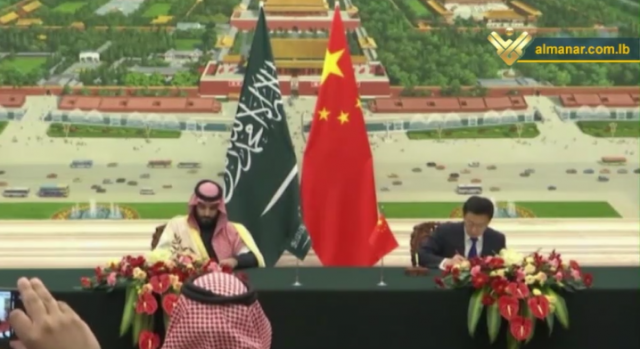
Al-Manar | February 23, 2019
The Pakistani State-run TV Channel muted the broadcast of the speech delivered by the Saudi state minister for the foreign affairs Adel Al-Jubeir while he was tackling the Iranian cause, one Zionist political analyst said.
The Israeli media channels cited the Saudi crown prince Mohammad bin Salman’s failure to provoke Pakistan, India and China against Iran, adding that India rejected his offer to sell it the same amount of oil it purchases from Tehran for a lower price.
The Zionist analysts considered that Bin Salman tried to build more political partnerships and alliances in order to improve his conditions in his relation with the United States.
India wades into Afghan peace talks

(Russian Foreign Minister Sergey Lavrov greeting Taliban officials at Moscow peace conference, November 2018)
By M. K. BHADRAKUMAR | Indian Punchline | February 1, 2019
The Ministry of External Affairs spokesman’s remark on Thursday in New Delhi that “it is important that the presidential election in Afghanistan takes place as per the schedule” is the first major Indian comment on the current peace talks in Qatar between the United States and the Taliban.
Whether that was an off-the-cuff remark or not remains unclear, but if it has been a considered statement, it puts India at odds with the peace talks in Qatar, which is working toward commencing the intra-Afghan dialogue, forming an interim government in Kabul and declaring a nation-wide ceasefire. Arguably, India’s strong advocacy of the charade of a presidential election in Afghanistan at this juncture is tantamount to the debunking of what is happening at the Qatar talks.
The point is, the Indian stance is virtually identifying with the ‘rejectionist’ camp of Afghan opinion, which fears that the reconciliation with the Taliban will mean the end of the road for them. This camp principally consists of President Ashraf Ghani and his circle – his newfound associate Amrullah Saleh, in particular – who are justifiably nervous about their own political future if the peace talks at Qatar advance toward the formation of an interim government.
But why should India try to bolster their career prospects? It may create misperceptions that India has ulterior motives. Clearly, the conditions in Afghanistan do not allow the holding of the presidential election. Even if the election is held, its credibility will be in serious doubt. The result of the election is almost inevitably going to be hotly contested. Quite obviously, the recent parliamentary election tells a sordid story. The political legitimacy of the “victor” in any presidential election will remain highly suspect. Even Ghani’s government was formed 5 years ago only after protracted efforts by the US to work out a compromise formula of power sharing.
In fact, much of the present crisis in Afghanistan is to be directly attributed to the weak government in Kabul that lacked political legitimacy and popular support, and to its leadership that is widely perceived as an American concoction. What is the point in repeating such a futile experiment? As it is, Afghanistan is hopelessly fragmented and another Ghani as its next figurehead and another puppet regime in Kabul can only spell doom for the country.
The fact of the matter is that the Afghan government is not at all representative of the nation. The latest Russian initiative to convene a conference of the Taliban representatives and prominent Afghan politicians in Moscow next week underscores the political undercurrents in Afghanistan today. Reuters has quoted a Russian official as saying, “Senior Taliban leaders and prominent Afghan politicians will travel to Moscow for a day-long summit. At this sensitive stage, it was best to not have Afghan government officials at the table.”
Interestingly, the Afghan personalities who may take part in the conference in Moscow on this coming Tuesday include former President Hamid Karzai. Whatever the Russian motivations might be in taking such an initiative, it only highlights that Ghani’s camp is fast becoming irrelevant to any serious intra-Afghan dialogue involving the Taliban and other Afghan groups.

(Pakistan Foreign Minister Shah Mehmood Qureshi with Russian Special Representative on Afghanistan Zamir Kabulov, Islamabad, Jan 29, 2019)
It goes without saying that the Russian initiative is in tandem with Pakistan following the visit by the Russian special representative on Afghanistan Zamir Kabulov to Islamabad on January 29. Ironically, Russia is facilitating the first round of intra-Afghan dialogue with Pakistan’s tacit support and Taliban’s readiness to participate in it. Ghani is not going to like that he has been bypassed and ignored. But then, if the international community has not so far questioned his locus standii, it was out of decorum and/or courtesy, but a time has come when Russians obviously decided that enough is enough.
Ghani was entirely an American creation and he lacks a support base. His tactic is to gather around him a cabal of figures who, like him, also stand to lose in peace settlement. He may try to be a ‘spoiler’ but ultimately, he will be overtaken by events and cast aside. Simply put, he is of no more use to the Americans who will discard him sooner rather than later. The case of Saleh is equally pathetic. The Americans built up Saleh for certain specific assignments related to security and they may cut him loose once he ceases to be of use to them. Unsurprisingly, Ghani and Saleh are now left with no option but to blow the nationalist bugle to rally support among patriotic Afghans, but that won’t impress anybody – neither the Afghans nor the international community.
Why should India get embroiled in the shenanigans of the ‘rejectionist’ camp in Kabul? True, the Modi government too would have a sense of ‘betrayal’ – that after having been the US’ loyal supporter in Afghanistan, India finds itself in a cul-de-sac. But the fault lies entirely with Delhi. The Modi government viewed Afghanistan through the prism of India-Pakistan tensions and Kashmir and the zero sum mindset has damaged Indian interests and brought about the current isolation.
Without doubt, President Trump intends to withdraw the troops from Afghanistan. And without American support, the roof will come crashing down on the head of Ghani, Saleh, et al, within no time. Delhi should be realistic about its capabilities and, more importantly, be mindful of its limitations. Does India have the grit and the resources to swim against the current? Only fools rush in where angels fear to tread.
Let bygones be bygones. Delhi should not compound the folly. The prudent thing will be to refrain from being a ‘spoiler’ at this sensitive juncture. Let the peace talks proceed ahead. What is needed on India’s part is strategic patience. Its Manichean fear that Pakistan is about to conquer Kabul has no basis. Pakistan knows Afghans only too well not to harbor any such illusions.
On the other hand, Afghanistan is India’s neighbor and there is abiding goodwill toward our country on the part of the Afghan people. A new beginning is always possible and India can safeguard its core interests by building bridges with the new regime.
India baits US while Pakistan tells Trump, ‘There’s nothing like free lunch’
By M. K. BHADRAKUMAR | Indian Punchline | January 12, 2019
Breaking a prolonged period of several months, the Pakistani allegation of Indian involvement in terrorist attacks has surged. This appears during the first detailed media briefing by the Pakistani authorities in Karachi on January 13 on the results of the investigation over the terrorist strike on the Chinese consulate in the city last November.
Pakistan has blamed the Balochistan Liberation Army for staging the terrorist attack. Graphic details have been given claiming that the attack was “planned in Afghanistan” from where the Balochi terrorists travelled to Karachi.
India’s alleged role has been described variously in the Pakistani press as rendering “assistance” to the terrorists and “funding” them. One report mentions that the attack was “carried out with the assistance of Indian intelligence agency.” Indeed, immediately after the attack on November, a Pakistani security official had suggested that India “orchestrated” it. An AP report at that time had mentioned that Pakistan was investigating whether the Baluch separatist commander Aslam Achhu, who masterminded the attack, was in India.
The Pakistani assessment is that the Karachi attack was well planned over months and intended to cause rift in the China-Pakistan ties as well as to undermine the China-Pakistan Economic Corridor (CPEC) by highlighting the volatility of the city. It stands to reason that Pakistan would have shared with the Chinese any details in this regard.
The salience that must be noted here is that Pakistan has not finger-pointed at Kabul authorities directly or implicitly. In the past, the Pakistani allegation used to be that Indian and Afghan agencies collaborated in such enterprises.
Some other things stand out as well. The timing of the Pakistani disclosure is significant. First and foremost, it comes amidst signs of US-Taliban talks intensifying. A fourth round was expected to take place on Wednesday, but was called off by the Taliban on grounds of “agenda disagreement” with the Americans, in a clear snub to the US special representative Zalmay Khalilzad. Elsewhere, Taliban spokesman also told Reuters, “We (Taliban) have the feeling that Zalmay Khalilzad doesn’t have enough power to make important decisions.” Evidently, there is a fly in the ointment.
Interestingly, a former Pakistani diplomat Zamir Akram, who is an old India hand, wrote yesterday counseling that Pakistan should not harbor “unrealistic expectations” out of the Trump administration, as there may not be a “real change in policy towards Pakistan.” To quote Akram, “Washington continues to view relations with Islamabad through the prism of Afghanistan and not on the basis of relations with Pakistan in and of itself.”
He added, “Our Prime Minister should also resist the temptation, which his predecessors did not, of accepting a meeting with the American President as a “reward” in itself — a meeting devoid of any substantive outcome for Pakistan. This has been a usual American tactic mainly reserved for light-weight leaders who can be fobbed off with an Oval office photo-opportunity. Any meeting with Trump must lead to concrete results otherwise it would not be worth the effort.”
Amongst other things, Akram voiced disquiet that Washington is disrupting the India-Pakistan strategic parity in favor of India, and that “Pakistan’s relations with China and CPEC in particular are emerging as contentious issues in Pakistan-US relations.” He said that in an environment of “a convergence in US-India relations but a growing divergence in the Islamabad-Washington equation,” Pakistan must diversify its foreign relations, and in particular, it “must further strengthen strategic partnership with China for which successful implementation of CPEC, despite American and Indian opposition, must be ensured.”
Zamir concluded by underscoring that a political settlement in Afghanistan should provide for an outcome that served Pakistan’s interests “in terms of ending Indian use of Afghan territory to promote terrorism in Pakistan, recognition of Pakistan’s security interests in Afghanistan, return of Afghan refugees and removal of US sanctions. We have the leverage to attain this, given the American reliance on Pakistan, not just for the dialogue with the Taliban but also due to the air and ground access we provide to the US for its presence in Afghanistan.” (Express Tribune )
Plainly put, strategic (nuclear) parity in South Asia, restrictions on Indian activities in Afghanistan, Pakistan’s security interests in Afghanistan, return of Afghan refugees and removal of US sanctions on Pakistan – they are still on the table. If Trump’s game plan is to swing a settlement riveted on Pakistani acquiescence with a reduced US military presence in Afghanistan (enabling him also to flaunt “troop withdrawal” by election year 2020) by pandering to PM Imran Khan’s vanities, it may not work.
Given India’s hardline policies toward Pakistan, it is improbable that Islamabad will compromise on its agenda to purge the Indian presence in Afghanistan. Therefore, the media disclosure on the terrorist attack in Karachi at this juncture must be taken as a signal to Washington as much as to Delhi. Most certainly, it coincides with the US Special Representative Zalmay Khalilzad’s visit to Delhi, where he enjoys a fabulous reputation for being an inveterate anti-Pakistani Afghan-American.
Unsurprisingly, chaffing under the Taliban’s snub, Khalilzad was assured of a warm reception in Delhi. The press reports based on briefings suggest that Indian officials tore into Pakistan warning the Trump administration about Islamabad’s machinations. Clearly, Delhi sized up that it has in Khalilzad a most receptive audience.
Alongside, there has also been a sudden burst of enthusiasm to inject some verve into the US-Indian ties, which have been languishing during recent years. It is entirely conceivable that India may place some orders for weaponry from American vendors, which would of course please Trump immensely.
To be sure, Trump’s travails in withdrawing US troops from Syria may turn out to be a picnic in comparison with what is in store in Afghanistan.
Why India should pay attention to US-Turkey spat over S-400
By M. K. BHADRAKUMAR | Indian Punchline | January 6, 2019
Such a lot of nonsense was dished out by the American lobbyists through the past year to the effect that Washington was straining at the leash to punish India for buying the S-400 ABM system. This phobia was carefully planted in the Indian discourses by American think tankers. The most celebrated instance was of the Indian-American strategic expert Ashley Tellis penning a forceful essay, featured by the Carnegie in Washington last August titled How Can U.S.-India Relations Survive the S-400 Deal?
Tellis somehow inspires awe among Indian analysts, who blithely assume that he wields immense clout in the White House and US foreign-policy establishment in defining American policies vis-à-vis India. (Presumably this naïvety prompted PM Modi’s advisors too to get him to patronize Tellis personally by releasing his book in Delhi circa 2014.)
The American lobbyists were actually indulging in a ‘psywar’ to create panic among the policymakers in Delhi who were trying to close the S-400 deal after protracted negotiations with the Russians. In retrospect, the ploy failed to work and India went ahead with the S-400 deal.
That entire experience ought to show that Americans are bluff masters. No sanctions followed. Common sense ultimately prevailed – although some Indian analysts still fondly harbor the notion that Washington showed a favor to India. Whereas, sanctioning the policymakers or decision makers in the Indian defence establishment or the Indian arms procurement bodies (leave alone the end users of S-400 ABM system) was never really a viable option for Americans. The US today is a top arms supplier to India. In reality, the whole pressure tactic aimed at undermining the Indian-Russian relationship. (Tellis’ essay brought out this hidden agenda.)
Now, all this makes Turkey’s S-400 saga a morality play for India’s strategic community and defence establishment. Turkey, too, has placed an order for the S-400 system. Indeed, the Americans went berserk, threatening Turkey with dire consequences, including sanctions. But Turkish President Recep Erdogan didn’t blink.
The US then threatened to withhold the supply of the newly developed F-35 stealth fighters to Turkey. (Reports say Turkey plans to buy 111 such fourth-generation jets, each costing at 2019 prices approximately $85 million per unit complete with engines and full mission systems.) Clearly, Lockheed’s deal with Turkey is worth a mind-boggling amount running into tens of billions of dollars over the years. In addition, Turkey, being a “Level 2” partner of the US’ F-35 stealth aircraft project, has also been contributing to the development costs of these fighter jets.
Suffice to say, Erdogan correctly assessed that the Americans will kill a goose that lays the golden egg. In time, he was proven right. The US has since quietly withdrawn the threat and is going ahead with the transfer of the F-35 fighter jets to Turkey. (Initially, American experts had argued that the S-400 system installed in Turkey might enable Russians to study the weaknesses of the F-35 stealth aircraft.)
Washington is still hoping that Turkey can be cajoled to cancel the S-400 order with Russia (despite Ankara’s repeated assertions to the contrary.) A Pentagon delegation travelled to Ankara last week to make another effort. The US has now made an offer to sell the Patriot air defence system to Turkey (which it had hitherto refused) if only Turkey cancelled the order for S-400. (Turkey’s position is that it can have both S-400 and Patriot systems.)
But there is a catch. According to Turkish press reports, the discussions in Ankara last week showed that Russians may have sold the S-400 at a “fraction” of the cost at which the US is now offering the Patriot as a substitute. And, furthermore, the US will not transfer any technology relating to the Patriot.
Of course, imagine what would have been India’s plight if it had given up on the S-400 deal and instead heeded Ashley’s advice that PM Modi should “make a deal with Trump.” To quote from Tellis’ August 2018 essay,
“It (deal with Trump) would probably require India to move forward on one of the several major defense acquisition programs it has discussed with the United States over the years, thus… giving Trump an incentive to speedily issue the waiver that India needs. Both sides could thus come out ahead. For such a workaround to attract Trump’s attention, however, India’s proposal must be lucrative enough to the United States and remarkable in its potential geostrategic impact. And the details should emerge close to fully formed from a quiet dialogue between Indian and U.S. policymakers at the highest levels. Quickly resolving some of the more pressing trade disputes would only help this process further.”
Thereby hangs a tale. Turkey’s experience is not fundamentally different from India’s insofar as the chance of the US sanctioning Turkey over the S-400 deal is virtually nil. But Indian analysts have much to learn from the US-Turkish spat, since Turkey has a long history as America’s Cold-War era ally.
Quite obviously, Trump will never show the audacity to mock Erdogan publicly, as he repeatedly did to Modi. On the contrary, he shows to Erdogan the courtesies that he unfailingly reserves for Vladimir Putin and Xi Jinping. Trump is even planning a visit to Turkey.
Featured Video
Will the Gaza Genocide be the Beginning of The End of Israel & Zionism?
or go to
Aletho News Archives – Video-Images
From the Archives
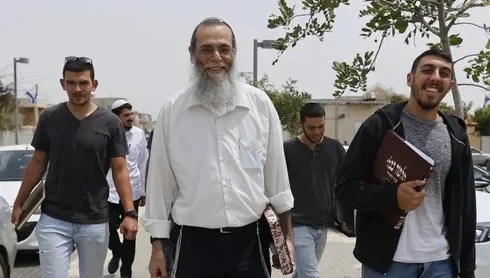
Israeli rabbi says ‘kill everyone in Gaza, including babies’
The Cradle | March 24, 2024
Rabbi Eliyahu Mali, head of the Shirat Moshe yeshiva (religious school) in the occupied city of Jaffa, called on the Israeli army to kill everyone in Gaza, including babies.
During a conference on 8 March, Mali said that “according to the halachic principle (a religious-ethical system of legal reasoning in Judaism), all residents of Gaza must be killed.”
When asked during the conference if babies should be killed as well, he said: “The same thing. You can’t be clever with the Torah. Today he’s a baby, tomorrow he’s a fighter. There are no questions here. Today’s terrorists were previously 8-year-old children.”
“Those who create the terrorists” should also be killed, he said in reference to women in Gaza.
The Rabbi went on to explain that Israel’s war on Gaza is a “Mitzvah war,” which is defined as a war of “commandment” in Jewish tradition. According to Jewish law, this kind of war does not require permission from a “Sanhedrin,” also known as a council or assembly, such as the war against Amalek – previously declared in a biblical reference by Israeli Prime Minister Benjamin Netanyahu at the start of the war on Gaza.
“There is a difference between a civilian population in other places and a civilian population in Gaza. In Gaza, according to estimates, 95 to 98 percent want us destroyed.”
“Since this is a sensitive issue, and I was told that it is being uploaded on the Internet, I want to be ahead of the curve and say that the bottom line is that you have to do exactly what is said in the IDF’s order,” Mali added.
The rabbi’s students in the Shirat Moshe yeshiva serve in the Israeli army. The Yeshiva is sponsored by the Israeli government. … Full article
Blog Roll
Recent Comments
Richard Ong on Israeli forces arrest writer a… Bill Francis on How reporting facts can now la… Gemma on Israel’s diamond industr… Bill Francis on Victoria Moves to Force Online… papasha408 on The Empire of Lies: How the BB… loongtip on US Weighs Port Restrictions on… Bill Francis on Chris Minns Defends NSW “Hate… Sheree Sheree on I was canceled by three newspa… Richard Ong on Czech–Slovak alignment signals… John Edward Kendrick on Colonel Jacques Baud & Nat… eddieb on Villains of Judea: Ronald Laud… rezjiekc on Substack Imposes Digital ID Ch…


 Aletho News
- The Epstein Saga: Chapter 3, Those friends in the Secret Service
- Venezuela under siege: Why US escalation could destabilize an entire region
- Italy arrests Palestinian activist amid crackdown on anti-Israel voices
- US Arms Sales to Taiwan Push Region Toward Conflict – Chinese Embassy
- Anti-Russia States Cannot Join Ukraine Peacekeeping – German Lawmaker
- Zelensky demands more money from Western backers
- HHS/CDC Fund Online Game ‘Bad Vaxx’ to ‘Psychologically Inoculate’ Vaccine Resistance
- NSW Premier Admits New “Security” Bill Restricts Civil Liberties, Promises More “Hate Speech” Laws Ahead
- US Under Secretary of State Slams UK and EU Over Online Speech Regulation, Announces Release of Files on Past Censorship Efforts
- Head of EU Parliament’s biggest faction wants German soldiers in Ukraine
- If Americans Knew
- Gaza hit with another winter storm – Not a ceasefire Day 79
- When will Israel’s crimes (and US complicity) end? – Not a ceasefire Day 78
- Christmas in the grip of genocide, occupation – Not a Ceasefire Day 77
- Palestinian Christians offer “Kairos,” an alternative Christmas Day sermon – Not a Ceasefire Day 76
- The Faces of AIPAC: the largest pro-Israel lobbying org in the US
- Gazan Christians mark 3rd Christmas under genocide – Not a Ceasefire Day 75
- Israeli scams children with cancer out of millions fundraised for their treatment, BBC finds
- Casey Kennedy Fired from AG Scientific Amid Zionist Troll Campaign Over Track AIPAC Work
- The Hasmoneans: The Jewish Dynasty That Gave Us Hanukkah Is a Symbol of Murder, Not Heroism and Hope
- Int’l NGOs may be blocked from Gaza starting Jan. 1 – Not a Ceasefire Day 74
- No Tricks Zone
- Meteorologist Dr. Ryan Maue Warns “Germany Won’t Make It” If Winter Turns Severe
- Merry Christmas Everybody!
- Two More New Studies Show The Southern Ocean And Antarctica Were Warmer In The 1970s
- Der Spiegel Caught Making Up Reports About Conservative America (Again)
- New Study: 8000 Years Ago Relative Sea Level Was 30 Meters Higher Than Today Across East Antarctica
- The Wind Energy Paradox: “Why More Wind Turbines Don’t Always Mean More Power”
- New Study Reopens Questions About Our Ability To Meaningfully Assess Global Mean Temperature
- Dialing Back The Panic: German Physics Prof Sees No Evidence Of Climate Tipping Points!
- Astrophysicist Dr. Willie Soon Challenges The Climate Consensus … It’s The Sun, Not CO2
- Regional Cooling Since The 1980s Has Driven Glacier Advance In The Karakoram Mountains
 Aletho News