US Mk-41 Systems Deployment in Romania, Poland Contradicts INF Treaty – Moscow
Sputnik – October 10, 2018
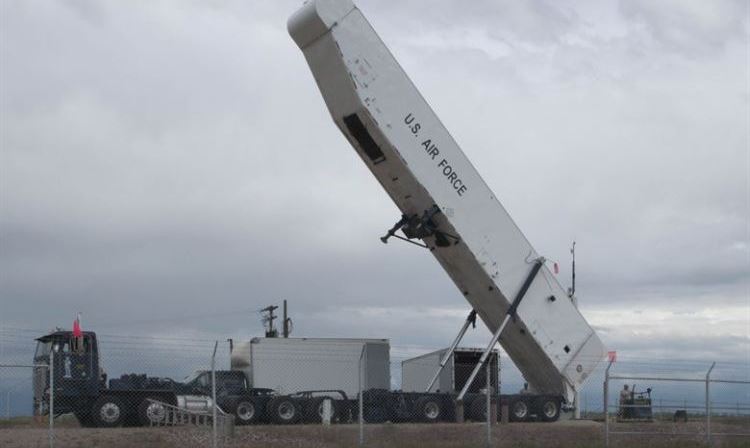
The United States started deploying Aegis Ashore missile defense systems, as well as MK-41 Vertical Launching Systems tubes that could be used to launch intermediate-range cruise missiles in Europe in June, according to the Russian Foreign Ministry.
Deployment of the US Mk-41 launching systems in Romania and Poland contradicts the Intermediate-Range Nuclear Forces (INF) Treaty, Vladimir Ermakov, the head of the Russian Foreign Ministry’s Department for Nonproliferation and Arms Control, stated.
“There are also serious questions regarding the actions of our American colleagues that are contrary to the INF Treaty, including the ground-based deployment of universal Mk-41 launchers in Romania and Poland,” said Head of the Russian Foreign Ministry’s Department for Nonproliferation and Arms Control Vladimir Ermakov during a general debate in the First Committee of the UN General Assembly.
He noted that Russia as a responsible and consistent supporter of the nuclear disarmament process for over 50 years has made a large-scale contribution to the reduction of strategic offensive weapons, and on February 5, 2018, Russia reached the maximum levels of carriers and warheads under the Russian-American START Treaty, as a result of which Russia’s nuclear arsenal has been reduced by more than 85% compared to the peak of the Cold War.
In May, US President Donald Trump accused Russia of allegedly violating the INF Treaty and ordered US Secretary of State Mike Pompeo to propose new sanctions against Russia in connection with these breaches. The Kremlin responded by saying that Russia had never violated the agreement.
The INF Treaty, which the Soviet Union and the United States signed in December 1987, requires the parties to eliminate all of their nuclear and conventional missiles and their launchers with ranges of 500 to 5,500 kilometers (311 to 3,417 miles). Russia and the United States have repeatedly accused each other of violating the INF Treaty.
READ MORE:
‘Most Plausible Conclusion’: NATO Sec Gen Alleges Russia Breached INF Treaty
The Demise of Arms Control Draws Near: No Light at the End of the Tunnel
By Andrei AKULOV | Strategic Culture Foundation | 26.09.2018
There have been ups and downs in the relationship between Russia (the Soviet Union) and the US, but both nations have become accustomed to the fact that their arsenals of offensive nuclear weapons are under the control of an agreement to prevent an arms race in this area. Some type of treaty has been in place since the Partial Nuclear Test Ban Treaty was concluded in 1963. Since 1972, when the first Strategic Arms Limitation Talks (SALT I) agreement was signed, there have always been negotiated constraints on nuclear arsenals. But today, there are ominous signs that the system that has worked so well to push the superpowers back from the brink of the nuclear abyss is being unraveled.
Andrea Thompson, Under Secretary for Arms Control and International Security, speaking before a Senate Foreign Relations Committee hearing on Sept. 18, claimed that Russia’s new strategic weapons that were announced by President Vladimir Putin last March were an obstacle to Washington’s agreement to extend the New START treaty. She also asserted that the issue has not been discussed through the formal New START process. She did not explain why not. The official said the final decision had not been made as yet and, “All options are on the table.” The same applies to the other remaining treaties that Washington is accusing Moscow of violating.
The options under consideration are: withdrawing from the New START; renegotiating the provisions related to the verification process; or signing another treaty instead, such as the 2002 Moscow Treaty or the Strategic Offensive Reductions Treaty (SORT). The undersecretary said that the US administration wanted Russia’s recently unveiled strategic nuclear weapons to be included in the count.
Negotiations are possible over the issue of the new weapons that are being tested or are already part of Russia’s arsenal. Moscow has been calling for a strategic dialog for quite some time, and Russia is not to blame because Washington is reluctant to start the process, whatever its motivation. A duplication of the 2002 treaty is unacceptable. It has already been finalized. No such radical reduction is possible without other nuclear states joining in, and they are not doing so. It’s really hard to understand why the undersecretary would bring this up, knowing perfectly well the proposal would have no chance.
David Trachtenberg, Deputy Undersecretary of Defense for Policy, also insists that the extension of New START was uncertain, despite the fact that on-site inspections and monitoring were useful.
The Senate hearings showed that the lawmakers are divided on the future of arms control and are prone to putting the blame on Russia for violating each and every agreement in existence without taking a proper look at what the US is doing. There is slim chance of an extension of the New START and hardly any prospects for a new deal.
The New START will expire in 2021 unless extended by agreement of the US and Russian presidents or replaced by a follow-on treaty. The US and Russian presidents discussed the New START during a phone conversation in January and at the Helsinki summit in July, where the Russian leader suggested that the parties thoroughly review all the components of the arms-control regime, including New START and the INF treaty, the 2011 Vienna Document on confidence-building measures in Europe, and the Open Skies Treaty. After meeting Nikolai Patrushev, the head of Russia’s Security Council, US National Security Adviser John Bolton said the extension of the New START was far from a slam-dunk decision. Meanwhile, the United States is moving ahead and designing a new ground-based missile that is in open violation of the 1987 Intermediate-Range Nuclear Force (INF) Treaty.
The long-range Kalibr sea-based cruise missile that was added to the arsenal of the Russian armed forces in late 2017 would violate the presidential nuclear initiatives (PNIs) of 1991 if it were equipped with a nuclear payload. Technically, it is capable of carrying a nuclear warhead but it does not. Russia’s non-strategic arsenal is large and sophisticated enough as it is — there is no need to violate its obligations under the PNIs. The US has a great numerical advantage in sea-based long-range missiles, and there is no verification mechanism in place to ascertain whether or not they are equipped with nuclear warheads.
The US has always been reluctant to discuss ways to enhance the PNIs by adding verification measures. The long-range cruise-missile capability demonstrated by Russia’s Navy during the Syrian conflict came as a surprise, but this does not mean it is a violation. Things change and it’s only natural to adapt to a new reality. It’s widely believed that the best way to tackle the problems related to national security is through talks, but the US administration and many people in Congress see it differently.
There is something important to remember — the US sea-based nuclear-tipped TLAM/N missiles are still part of the US arsenal, and there is no way to make sure they are not clandestinely installed on nuclear attack submarines. This issue could be discussed separately from the strategic nuclear agenda. The problem cannot be neglected. No one is standing in the way of launching a dialog. President Bush and President Gorbachev managed it. In theory, President Trump and President Putin could do the same thing, but the American leader should be prepared to be attacked for dealing with Russia. Those in America who stand in the way of an arms-control dialog between the two leading nuclear powers are actually undermining the country’s security, but they will do it anyway in order to pursue their own political ends, because they are filled with hatred against both the US president and Russia.
The 2018 Nuclear Posture Review states that the United States will pursue a nuclear-armed, submarine-launched cruise missile in order to “provide a needed nonstrategic regional presence, an assured response capability.” How does this jibe with the fact that the PNI is still in effect? It looks like the initiatives’ future is as uncertain as the fate of other treaties.
Of course Russian strategists have never forgotten that the US still has 50 empty silos ready to hold ICBMs, with several hundred additional warheads that are also in storage and could potentially be loaded.
There are only three years left until the New START expires. The experience of history demonstrates that that is hardly enough time to prepare a new treaty that actually has no chance of being ratified by the Senate in an era when the overall bilateral relationship is at its lowest ebb. The US still has no clear idea of what its future nuclear triad will be like. Discussions are underway. All we know is that it is investing more than $1.2 trillion over the next 30 years to modernize its aging nuclear forces, which will include new ground-based missiles, new missile submarines, and a new bomber.
No major arms-control treaty will be concluded until the administration and Congress know exactly what components will be included in the arsenal and what programs are to be implemented to achieve the established goals —once all the assessments and estimations are complete and the guideline documents in place. Thus, an automatic five-year extension is the only hope for the New START’s survival. That could be accomplished through a simple executive agreement. Without a New START in effect, other agreements, such as the INF Treaty and the PNIs, have no chance. The very real prospect of an end to arms control and the non-proliferation regime is looming. That’s something leading experts in Russia were warning about as far back as 2015. Very serious discussions must be launched right now in order to prevent such a scenario. It’s a scary prospect!
The good news is that the patient can still be saved. There is still a little time left, although not much. There are no options but for Russia and the US to put their differences aside, forget about Ukraine, Syria, trade wars, and other issues that divide the two nations and concentrate on ways to save arms control or whatever is left of it. With their relationship at its lowest point since the end of the Cold War, it is even more vital to keep the nuclear risks in check and prevent a new nuclear arms race. Russia (Soviet) and US officials have always emphasized that any plan that keeps nuclear weapons under control and subject to proper verification procedures is a better option than an unfettered arms race. The US administration and its lawmakers seem to disagree.
Russian Embassy in US Debunks Accusations of Alleged INF Treaty Violation
Sputnik – March 2, 2018
Moscow’s Ambassador to the United States Anatoly Antonov has refuted the US State Department’s accusations of violating the Intermediate-Range Nuclear Forces (INF) treaty by possessing the new strategic weapons announced in Russian President Vladimir Putin’s address.
“Apparently, the US State Department is poorly proficient on the subject. Putin spoke about strategic armaments that are not subject to the limitations of the INF treaty…. We would like to recall that we consider the accusations against us regarding the ‘violation’ of this treaty groundless,” Antonov said in a statement.
The accusations are backed up neither by technical specifications of the launcher, which are allegedly not in accordance with the treaty, nor by flight telemetry data, Antonov noted.
“I would like to stress once again that Russia, while developing its nuclear potential, has not violated any agreement in the sphere of disarmament and arms control. Everything that is done by the Russian Defense Ministry and Russian defense industry is in strict accordance with our international obligations,” the ambassador stressed.
The diplomat recalled that Moscow has repeatedly urged Washington to discuss the issue professionally.
“We have warned more than once and warn again that the destruction of the INF treaty would be a heavy blow to the arms control and non-proliferation regime…. At the same time, we have serious concerns about the fulfillment of the treaty terms by the United States,” he stressed.
Putin’s address to the parliament on Thursday broke a record in terms of duration, having lasted for one hour and 57 minutes. It was for the first time accompanied by a multimedia presentation which showed the tests of Russia’s most modern weapons.
In his speech, Putin said that Russia had begun developing special strategic weapons invulnerable to missile defense systems, including nuclear capable cruise missiles and the new hypersonic aviation and missile system dubbed Kinzhal (“Dagger”).
Earlier, US State Department Spokesperson Heather Nauert had claimed that Putin’s address to the parliament confirmed that Moscow had been developing weapons in violation of its treaty obligations, including under the INF treaty.
The 1987 INF Treaty envisages the destruction of ground-launched ballistic and cruise missiles with ranges of between 500 and 5,500 kilometers (from 311 to 3,317 miles), their launchers and associated support structures and support equipment. The United States and Russia have repeatedly accused each other of violating the treaty.
Antonov was Russia’s Deputy Foreign Affairs Minister in 2016-2017 and Deputy Defense Minister in 2011-2016.
US Allegations of Russia Violating INF Absolutely Unfounded – Moscow
Sputnik – 09.12.2017
The INF treaty, which prohibits the development, deployment and testing of ground-launched ballistic or cruise missiles with ranges between 300 and 3,400 miles, celebrated its 30th anniversary on December 8.
“The United States has long been claiming that we are allegedly exceeding the limits of the Treaty prohibiting the deployment of cruise missiles with a range of 500 to 5,500 kilometers. But there is an interesting pattern — just as with the well-known statements about ‘Russian meddling in the US elections,’ no real evidence is provided … In other words, the accusations are absolutely unsubstantiated, they are not supported either by the technical characteristics of the launcher allegedly not meeting the Treaty, nor by flight telemetry data. And it is understandable why — because it simply does not exist,” Russian Deputy Foreign Minister Sergei Ryabkov said on Saturday.
The deputy foreign minister has explained that the US growing “anti-Russian campaign” is an indicator of US wish to withdraw from the Intermediate-Range Nuclear Forces Treaty (INF), with Washington appearing to be looking for a pretext and trying to create its own ideas for the introduction of new sanctions against Moscow, adding that the dissolution of the document would deal a hard blow to the global nuclear non-proliferation regime.
“So anti-Russian propaganda campaign in the context of the INF treaty looks increasingly like an attempt to project US issues onto another entity. Its increase may be a sign of Washington readying to withdraw from this treaty just as it withdrew from the Anti-Ballistic Missile Treaty,” Ryabkov said.
The high-ranking official has yet again reiterated Moscow’s commitment to the deal, “On our side, we are fully committed to the treaty, always have rigorously implemented it and are ready to continue to do so. However, if one side stops to comply with it, we will have, as Russian President Vladimir Putin said previously, to issue a mirror-like response.”
INF Treaty and Anti-Russia Sanctions
The statement was made in wake of the reported approval of new sanctions against Russia by US President Donald Trump earlier in the day over the alleged violations of the INF deal. The move followed the US Secretary of State Rex Tillerson’s accusations made in September, regarding the alleged violations of the treaty, a claim which has been repeatedly denied and called groundless by the Russian Foreign Ministry.
Moscow has also warned the United States against trying to talk to Russia with the language of ultimatums, or to exert military and political pressure.
The 1987 INF treaty prohibits the development, deployment and testing of ground-launched ballistic or cruise missiles with ranges between 300 and 3,400 miles.
READ MORE:
Why INF Treaty Between US, Russia Remains Key to Global Security
Trump Approves New Sanctions Against Russia Over Alleged INF Treaty Violations
Trump Approves New Sanctions Against Russia Over Alleged INF Treaty Violations
Sputnik – December 8, 2017
The US Commerce Department will impose sanctions on Russian companies that have provided technology to help develop the new weapon outlawed by the Intermediate-Range Nuclear Forces (INF) Treaty, Politico reported on Friday.
US media also reported, citing a senior administration official that US President Donald Trump has approved these new restrictions against Moscow.
Earlier in the day, US Department of State spokesperson Heather Nauert said in a release the United States is prepared to stop its intermediate-range missile systems research if Russia complies with all the terms of the INF treaty. Nauert explained that while the United States will continue to seek a diplomatic solution, it is now pursuing economic and military measures to induce Russia to return to the INF treaty compliance.
The State Department spokesperson added the United States remains committed to its INF treaty obligations and seeks Russia’s return to compliance with the agreement.Earlier on Friday, the Russian Foreign Ministry said Moscow will comply with all the terms of the INF treaty as long as the United States complies with them, and is ready to conduct professional dialogue with Washington.
The Foreign Ministry stressed that the United States was interpreting its commitments under the INF treaty freely while bringing unfounded accusations against Russia of violating the agreement. Moreover, the Foreign Ministry warned the United States against attempting to talk to Russia with the language of ultimatums, or to exert military and political pressure.
In September, US Secretary of State Rex Tillerson accused Russia of violating the INF treaty. The Russian Foreign Ministry said the US accusations were groundless, adding that the United States did not present any evidence to support its claims.
Russian President Vladimir Putin said in October that, before the INF treaty, US missile capabilities had already included air- and sea-launched missiles, while the Soviet Union had not developed such weapons. Since the INF treaty banned land-based missile launchers, the disarmament was done unilaterally by the Soviet Union.
The 1987 INF treaty prohibits the development, deployment and testing of ground-launched ballistic or cruise missiles with ranges between 300 and 3,400 miles.
US Push for Scrapping Nuclear Forces Treaty With Russia ‘Menace for Europe’
Sputnik – August 6, 2107
US media reported that Congress is preparing several bills, the provisions of which would require the Pentagon to violate the 1987 Intermediate-Range Nuclear Forces (INF) Treaty between the United States and Russia.
According to Politico, the Senate will soon debate a provision in its version of the defense policy bill, which would set aside $65 million and also require the military to reintroduce a missile with a range of between 500 and 5,500 kilometers.
The bill in the House of Representatives will point out that while the new missiles would be conventional, they, along with nuclear missiles, would still be considered banned under the nuclear disarmament agreement.
“Encouraged by the signing of the new anti-Russian sanctions, American lawmakers are going straight ahead. It was earlier reported that the State Department and the Pentagon are planning to supply Kiev with lethal arms. But the new initiative [concerning the INF Treaty] is going to have record-breaking negative consequences,” political commentator and analyst Ilya Kharlamov wrote in an op-ed for RIA Novosti.
The INF Treaty is an unlimited duration agreement signed between the US and the Soviet Union. It was signed by US President Ronald Raegan and Soviet leader Mikhail Gorbachev in December 1987 and came into effect on June 1, 1988.
The treaty prohibits the production, tests and deployment of ground-based ballistic and cruise missiles, with ranges of 500-1,000 km (short-range) and 1,000-5,000 (medium-range). It also eliminated all launchers and ground-based missiles with a range of 500-5,500 km. By summer 1991, the USSR eliminated 1,846 missiles systems while the US – 846 systems. The treaty was implemented in 1991 with inspections carrying on until 2001.
According to Kharlamov, the agreement marked the first real disarmament step by the two powers and contributed a lot to global stability and security. But now the US establishment wants to jeopardize this milestone achievement for the sake of immediate political gains and in the interests of the American defense industry.
“If this is aimed at making America great again then it looks menacing for the whole world, especially for Washington’s allies in Europe. The White House has not endorsed the initiative so far. But Congress will push Trump to take new measures to ‘deter’ Russia. If he refuses to do so this may be interpreted as evidence of Trump’s alleged ties to the Russian government,” Kharlamov suggested.
Meanwhile, commenting on the report, the Kremlin said that Russia remains committed to the INF Treaty and expects the same from its partner.
“Russia remains committed to its obligations under this treaty, despite some claims which were voiced before. Of course, we expect that our partners under this agreement will adhere to their international obligations in this context,” Kremlin Spokesperson Dmitry Peskov told journalist, adding that the president of the two countries did not discuss the issue.
The US announced an initiative on revising the INF Treaty for the first time in February in order to stop alleged Russian violations of the agreement. The Intermediate-Range Forces Treaty Preservation Act was proposed by Republican Senators Tom Cotton, Ron Johnson and Marco Rubio and supported by Republican members of the House of Representatives, Ted Poe and Mike Rogers, who introduced the bill to the lower chamber.
In turn, Russia has repeatedly said that Moscow remains committed to the deal and that Moscow has never violated the agreement.
Moreover, in February, Trump expressed doubt that the key strategic deals between the US and Russia, including the INF Treaty and the New Strategic Arms Reduction Treaty (START), are profitable for Washington.
In an interview with Reuters, Trump said, “I am the first one that would like to see everybody – nobody have nukes, but we’re going to fall behind any country even if it’s friendly country, we’re never going to fall behind on nuclear power.”
According to Politico, advocates of the new bill believe that the move would be a response to Russia’s alleged violations of the bilateral accord. At the same time, opponents say that it could increase the chance of a nuclear confrontation at a time when relations between Washington and Moscow are at their lowest level since the end of the Cold War.
Plekhanov suggested that despite the opposition to the initiative in Washington the majority of US lawmakers advocate for a more hardline approach on Russia.
In addition, the US eyes developing a next-generation intercontinental ballistic missile (ICBM), which costs an estimated $85 billion.
“Of course, this would be a honeypot for American defense companies. The current geopolitical situation also favors this idea. The defense industry would have lucrative contracts while Washington policymakers would have the chance to drag Russia into a new arms race,” Kharlamov concluded.
READ ALSO:
Killing INF Treaty to Unleash New Nuclear Arms Race – Ex-Pentagon Official
Trump Would Engage With Russia on Arms Control, Maintain Nuclear Superiority – Adviser
US Congress to Undermine INF Treaty and Entire Existing Arms Control Architecture
By Andrei AKULOV | Strategic Culture Foundation | 05.08.2017
The House and Senate are currently considering defense authorization legislation which, if passed into law, would start dismantling some of the bedrock agreements of US-Russian arms control – the 1987 Intermediate-Range Nuclear Forces Treaty (INF Treaty), as well as longstanding US–Russia arms control efforts. The treaty eliminated all ground-based nuclear and conventional missiles, as well as their launchers, with ranges of 500–1,000 kilometers (310–620 mi) (short-range) and 1,000–5,500 km (620–3,420 mi) (intermediate-range). Signed in December 1987 by President Ronald Reagan and Soviet leader Mikhail Gorbachev, the INF deal is accredited with significantly reducing the threat of nuclear confrontation and accelerating the end of the Cold War.
The landmark deal for the first time eliminated an entire class of missiles in Europe and set up a new framework for verifying compliance. Russia and the US have recently exchanged accusations of breaching the treaty but there have been no substantive talks on the issue.
Both versions of the National Defense Authorization Act for 2018 require the development of medium-range missiles the INF Treaty bans. They authorize programs of development on a new US mobile ground-based cruise missile (GLCM) with a range of between 500 and 5,500 kilometers.
Politico cites the Office of Management and Budget, saying it «unhelpfully ties the Administration to a specific missile system, which would limit potential military response options». Legal experts are also criticizing the legislation as congressional overreach, saying the Senate can only ratify treaties and the president alone can negotiate or pull out of them. The House has no role whatsoever in approving treaties, Politico notes.
The House version states that if Russia failed to comply with the INF terms within 15 months of the bill’s enactment, the US would no longer be legally bound by the treaty as a matter of domestic law. A similar provision could be inserted into the Senate version of the bill.
Russia’s alleged violations serve as a pretext for deploying shorter and intermediate range weapons to strike other countries, like North Korea. The US Army is believed to lack sufficient firepower in a large-scale conflict, such as missiles that can hit targets hundreds of miles away. David Johnson, a military analyst at the Center for Strategic and Budgetary Assessment, believes that «the lack of long-range firepower in the Army [is] a problem that could haunt land forces in a war in Eastern Europe».
Army Deputy Chief of Staff Lt. Gen. John Murray told lawmakers about the need for a «long-range precision fires» program to develop a powerful new missile that can reach targets 499 kilometers out, or about 310 miles. The range has to stay below 500 kilometers to comply with the INF treaty. If it’s not in force anymore, then the Army will get what it wants.
Mark Gunzinger of the Center for Strategic and Budgetary Assessments (CSBA) thinks that pulling out from the treaty is the right thing to do. He believes that future ground-based strike systems could help the US suppress Russia’s advanced integrated air defense systems and freedom of action in the event of a conflict. The intermediate range missiles could help the American military gain more advantage over China and North Korea. «Perhaps the time is right for a serious debate over the US withdrawing from the INF Treaty», Gunzinger says. Michaela Dodge of the Heritage Foundation affirms that, the Treaty is no longer relevant, and the US should withdraw.
Launching a program to develop a new ground-based cruise missile would add to the fact that some missiles to be eliminated under the terms of the INF Treaty are used as targets for ballistic missile defense tests, while Aegis Ashore systems use the launching pads that can be used to fire medium range Tomahawks. The Senate version of the bill says the US has no intention to tear up the treaty but the need to close the capability gap opened by Russia is given as a reason for launching the program. The two things contradict each other. The sum of these factors make the US actually abandon the agreement while not leaving it officially.
The same thing applies to Iran. Formally, the United States has not torn up the Joint Comprehensive Plan of Action (JCPOA) with Iran. At the same time, imposing sanctions on Tehran over its ballistic missile program makes the agreement deprived of any substance. No matter what pretext is used, the fact is that punitive measures against Iran are in place. It makes Iranians put into doubt the need to further comply with the JCPOA.
The US-Russian relations under ex-President Obama left much to be desired but the issue of violating the INF Treaty was not on the agenda. If the medium-range missile development program had been launched, the Congress would have been in violation of the international agreement. It did not occur then, but it is happening now under President Trump.
This would put into doubt the reputation of the United States as a reliable partner. If one international agreement is breached by the Congress, any other treaty can be abrogated, too.
Other defense programs would suffer, with money directed to implement the program in violation of the INF. The defense budget already includes funding to develop a fleet of nuclear air-launched cruise missiles. The more, the better?
No European ally has given consent to have the weapon on its soil. Would Europeans agree to have nuclear weapons on their soil? It makes the 1983 protests leap to memory.
The US will not benefit greatly if it withdraws from the treaty. It does not have an intermediate-range ballistic missile, and developing a new one will take time and effort. The bill does not mention intermediate ballistic capability anyway. Land-based cruise missiles would not tip the balance into US favor because they are too slow to effectively knock out critical infrastructure sites in a first unexpected strike. The US military need ballistic missiles with short flight times to decapitate the enemy but the Congress wants a cruise, not a ballistic, missile.
If Europe-based cruise missiles are fired, Russia will have enough time for a launch-upon-attack against those European states, which host the weapons, and the United States.
With the INF Treaty effective no more, Moscow will be free to deploy intermediate-range missiles without restriction. In theory, its Iskander-M systems could be armed with ballistic and cruise missiles with extended range, while the American military has nothing to respond with.
The House version has a provision that would prohibit the use of funds to extend New START until Russia complies with the INF treaty. But the conclusion, whoever makes it, about Russia’s compliance can be biased or outright wrong. Signed into law, the bill would undermine the whole architecture of arms control. The New START and the INF are the only two treaties still in place. Without them, the way to uncontrolled arms race would be unhindered.
The Congress would exceed its authority. It actually forces the administration to abandon an international treaty. The Senate can ratify international treaties, not abrogate them. The House does not vote on them. Both versions of the bill encroach on the president’s foreign policy prerogatives the same way the Countering America’s Adversaries through Sanctions Act does.
The bill includes provisions to undermine the treaty while the opportunities offered by the Special Verification Commission (SVC) envisioned by the INF treaty are far from being exhausted. The parties could use the SVC venue to consider additional confidence-building measures and information exchanges that take into account technological and political developments that have occurred recently.
The bill wants the Open Skies Treaty that could be used for INF verification to be deprived of funds. The observation capabilities could be upgraded. The NATO-Russia Council could serve as another mechanism to address specific security concerns. A lot of things could be done to preserve arms control regime and prevent its crisis. The world is facing the most serious and comprehensive crisis in the fifty-year history of nuclear arms control with almost every channel of negotiation deadlocked and the entire system of existing arms control agreements in jeopardy. The US Congress appears to be adamant in its desire to make things even worse.
US ‘Constitutional Shift’: Powerless President and Omnipotent Congress
Sputnik – August 4, 2017
What the international community is observing now in Washington could be called a sluggish constitutional shift, Russian political analyst Andrei Suzdaltsev told RIA Novosti in a reference to Congress twisting Donald Trump’s arm. Meanwhile, Congress is about to stir up new frictions with Trump over the INF Treaty with Russia.
The world is witnessing what could be called a constitutional shift with Congress de facto obtaining more power than the US president, Moscow-based political analyst and academic Andrei Suzdaltsev told RIA Novosti.
On Wednesday US President Donald Trump signed into law a US sanctions bill aimed against Russia, Iran and North Korea. The sanctions target Russia’s defense, intelligence, mining, shipping and railway industries and restrict dealings with Russian banks and energy companies.
To make matters even more complicated, the new law limits the US president’s ability to lift or ease sanctions on Russia, as Congress’s approval to reconsider the restrictions will now be required.
In an apparent reference to the bill, Trump tweeted Thursday that the US-Russian relationship is at a “very dangerous” low.
”Our relationship with Russia is at an all-time & very dangerous low. You can thank Congress, the same people that can’t even give us HCare!” Trump wrote.
Incredible as it may seem, the president of the country has turned out to be powerless, Suzdaltsev said, adding that one now has to hold a dialogue with Congressional representatives.
“In fact, we are witnessing a sluggish constitutional shift in the US political system. Being a presidential republic where the head of executive power had a solid mandate America always looked at the reaction of Congress. But there was a counterweight system. Now the American elite is divided,” Suzdaltsev told RIA Novosti.
The Russian academic drew attention to the fact that the internal political crisis, which started during the election campaign in autumn 2016, is still raging on.”By forcing Trump into signing a new sanctions bill into law Congress… implemented a constitutional shift,” Suzdaltsev stressed.
“Trump is now a powerless figure incapable of conducting a political dialogue,” he said. “If one wants to hold negotiations, one needs to do this with congressmen in both houses. Actually, there is no president.”
“We are entering a period that may even be harder than the years of the Cold War,” the academic remarked.
Meanwhile, Politico reported Thursday that the US Congress continues to discuss the bill which implies America’s de facto withdrawal from the INF Treaty by suggesting developing medium-range missiles banned by the document.
The INF Treaty, concluded in 1987, envisaged the reduction of non-strategic weapons by prohibiting all nuclear and conventional missiles and their launchers with a range between 310 and 3,420 miles.
“Congress is moving to force the Pentagon to violate a nuclear arms treaty with Russia — in yet another effort to box in President Donald Trump on relations with Moscow,” the media outlet noted, adding that “the legislation is also likely to stir up new friction between lawmakers and Trump, who has already accused Congress of illegally meddling in his dealings with Russia.”
Commenting on the matter, Kremlin spokesman Dmitry Peskov highlighted that Russian President Vladimir Putin and US President Donald Trump did not discuss the issue of the INF Treaty during their meeting. He stressed that Moscow remains committed to its obligations under the agreement and expects the same from its partners.
“Russia remains committed to its obligations under this treaty, despite some claims which were voiced before. Of course, we expect that our partners under this agreement will adhere to their international obligations in this context,” Peskov told reporters.
Citing legal experts Politico remarked that the proposed legislation could be regarded as congressional overreach. “The Senate can only ratify treaties and the president alone can negotiate or pull out of them,” it argues.
INF Treaty Withdrawal Debated in US: Does Arms Control Have a Chance to Survive?
By Alex GORKA | Strategic Culture Foundation | 26.06.2017
According to POLITICO, the US administration is considering the possibility of withdrawing from the 1987 Intermediate-Range Nuclear Forces Treaty (INF Treaty). The INF Treaty is a bedrock arms control agreement banning an entire class of nuclear missiles with ranges of 500 to 5,500 kilometers. It has removed thousands of nuclear weapons from the European continent and marked the first time the superpowers agreed to actually eliminate nuclear weapons and utilize extensive on-site inspections for verification. Now the landmark Treaty is teetering on the brink.
Russia and the US have exchanged accusations of violating the Treaty recently. The Trump administration is under pressure from some Republicans trying to compel President Trump to take steps to develop new missiles in response.
Rep. Mike Rogers of Alabama, who chairs a key oversight panel on nuclear weapons, told POLITICO he thinks it is «irresponsible for us to continue to adhere to a treaty when the only other participant has long moved on from it».
Indeed, many lawmakers and pundits are wondering if the US should abandon the landmark agreement altogether. Mark Gunzinger of the Center for Strategic and Budgetary Assessments (CSBA) believes that walking away is an option. According to him, future ground-based strike systems could help the US suppress Russia’s advanced integrated air defense systems and freedom of action in the event of a conflict. The same weapons could also help the Pentagon overcome some of the military roadblocks put up by China and North Korea in the Western Pacific. «Perhaps the time is right for a serious debate over the US withdrawing from the INF Treaty», Gunzinger says.
Michaela Dodge of the Heritage Foundation says that after 30 years, the Treaty is no longer strategically relevant, and the US should withdraw. In February, Sen. Tom Cotton (R-Ark.), along with Senators Ron Johnson (R-Wisconsin) and Marco Rubio (R-Florida), introduced the Intermediate-Range Forces Treaty (INF) Preservation Act to declare Russia in material breach of the Treaty — the first step to withdrawing. The legislation would also authorize transferring intermediate-range systems to allied countries, establish a new program for ground-launched missiles within the banned ranges, and provide $500 million to fund countervailing-strike options. Congressmen Ted Poe (R-Texas) and Mike Rogers (R-Alabama) introduced companion legislation in the House of Representatives.
The discussions on INF take place at a time the future for US-Russian arms control looks dim at best.
The extension of the New Strategic Arms Reduction Treaty (New START) due to expire in February 2021 is in question. There are still no talks on the issue but when the treaty reaches its end date there will no strategic nuclear arms agreement at all for the first time since SALT I Treaty was signed in 1972. The two sides are not currently engaged in talks on further strategic nuclear reductions beyond New START. Negotiations of arms control have never been stalled since the 1963 Partial Test Ban Treaty.
Does the idea to tear up the Treaty really meet the interests of the United States? The only reason to warrant such a decision is development and deployment of a new intermediate range missile in Europe. Will it be a popular move at the time the US DoD budget is already stretched in an effort to meet many competing demands? Would Europeans agree to have nuclear weapons on their soil? It makes the 1983 protests leap to memory.
From the point of view of military superiority, the US will not make great gains if it withdraws. It does not have intermediate-range ballistic missiles, and developing a Pershing III system will take time and effort, while land-based cruise missiles would not tip the balance into US and NATO favor because they are too slow to effectively knock out critical infrastructure sites in a first unexpected strike. At present, only ballistic missiles with short flight times and hair-trigger alert can deliver a decapitating attack.
If Europe-based cruise missiles are fired, Russia will have enough time for a launch-upon-attack against those European states which host the weapons and the United States. With the INF Treaty effective no more, Russia will be free to deploy intermediate-range missiles without restriction. In theory, its Iskander-M systems could be armed with ballistic and cruise missiles with extended range, while the American military has nothing to respond with.
The US move would not be a great setback for Russia. From Moscow’s perspective, the development by the United States of air- and sea-based, long-range precision strike capabilities has reduced the value it derived from the INF Treaty. With other countries developing their own INF arsenals, there are no prospects for globalization of the Treaty to greatly reduce its value. This is a potential threat for Russia due to its geographic position. America is under no threat from intermediate-range missiles of any other state in the world, while Russia is within range of such missiles of all states that possess them. Moreover, Russia may need ground-based intermediate weapons to counter the US ballistic defense sites in Europe and Asia.
The US and Russia have not used opportunities to discuss all the INF-related the problems within the Special Verification Commission (SVC) – the implementing body of the Treaty. There are technical issues giving rise to controversy that could be tackled at the experts’ level. The potential of NATO-Russia Council has not been exhausted. It’s a pity that the attempt to launch arms control talks proposed by the German Foreign Minister Steinmeier in 2016 has made little progress. If talks to discuss the proposal were launched, the agenda could be extended to include intermediate-range nuclear weapons.
There are only two options. One is to apply efforts to save the arms control and non-proliferation regime that served the two countries so well during so many years and which is disintegrating at present. The other is to do what some US lawmakers and pundits are calling for – to walk away from the INF Treaty. It will make impossible achieving progress on the New START and ultimately leave the sides without any arms control agreement in force at all. Whatever has been achieved during all these years as a result of the hard efforts will go down the drain to push the world to the brink of nuclear abyss. That’s what is actually being debated in the United States. President Trump has to make his choice.
‘Aggressive Plans’ Behind US Repeatedly Accusing Russia of Violating INF Treaty
Sputnik | March 12, 2017
On Wednesday, the United States once again accused Russia of violating the Intermediate Nuclear Forces (INF) Treaty, an allegation repeatedly denied by Moscow.
Speaking in Congress, a senior US general said that Russia has allegedly deployed prohibited cruise missiles with a range of 500-5,000 kilometers.
“We believe that the Russians have deployed a land-based cruise missile that violates the spirit and intent of the Intermediate Nuclear Forces Treaty,” Gen. Paul Selva, the vice chairman of the Joint Chiefs of Staff, told the House Armed Services Committee.
The general added that by deploying prohibited missiles, Moscow poses a threat to “NATO and to facilities within the NATO area of responsibility.”
Earlier, the US had accused Russia of developing a ground-based analogue of the Kalibr-NK cruise missile and concealing the capabilities of the Iskander tactical missile system.
In mid-February, American senators also submitted legislation to toughen Washington’s stance on the INF Treaty, presuming funds for active defense measures and a retaliation strike. Moreover, the proposed bill would also enable transfer of INF missile systems to US allies.
Commenting on the allegations, Viktor Ozerov, the chairman of the Russian upper house of parliament’s defense committee, said that Russia has not violated the agreement.
“Russia strictly observes the agreement signed by Mikhail Gorbachev in 1987, despite the fact that, according to our evaluations, the agreement was not in the interests of the USSR and then Russia. In particular, it should be taken into account that the US has deployed missile systems and missile defenses in several European countries,” Ozerov said.
Aggressive Trend
Moscow and Washington have occasionally exchanged accusations of violating the INF Treaty. From time to time, Washington’s claims sound absurd; for example, calling to expand the treaty to include the RS-26 Yars-M mobile missile system, which possesses an operational range of 6,000-11,000 km.
The system, which has nothing to do with short-range and medium-range missiles, is expected to enter service with the Russian Strategic Forces in 2017. The missile is believed to be imperceptible for existing and advanced missile defenses.
“Probably, the US is concerned with its own exposure to a retaliation strike by the Russian Strategic Forces, rather than the security of its European allies. As a result, Washington has been engaged in complicated maneuvers, including inflating the mythical ‘Russian threat,’ strengthening NATO, expanding it to the east and accusing Russia of violating the INF Treaty. At the same time, the US continues to deploy its missiles across Europe,” Russian journalist and political commentator Alexander Khrolenko wrote in a piece for RIA Novosti.
According to the author, all of the above further contribute to the familiar American trend of resolving “geopolitical tensions by force” bypassing international law and the UN Security Council.
“However, there cannot be ‘shock and awe’ for Russia efficiently countering the pressure from the US and NATO. Probably, Washington’s allegations against Moscow [over INF Treaty violations] are only a façade for aggressive plans,” Khrolenko suggested.
Compromise
The Intermediate-Range Nuclear Forces Treaty is an indefinite agreement signed between the US and the Soviet Union in 1987. It came into effect on June 1, 1988.
The treaty prohibited the production, testing and deployment of ground-based ballistic and cruise missiles, with ranges of 500-1,000 km (short-range) and 1,000-5,000 (medium-range). It also banned all launchers and ground-based missiles with a range of 500-5,500 km.
By summer 1991, the USSR eliminated 1,846 missiles systems, while the US – 846 systems.
A longtime standoff between Washington and Moscow in the mid-1970s resulted in the creation of advanced missile target seekers, including laser and infrared systems. They guaranteed an unprecedented accuracy of a missile strike. In 1974, the US codified its limited nuclear war doctrine in the national nuclear strategy and began upgrading its forward bases’ missile defense system for European allies.
In 1977, Moscow responded with upgrading its arsenal of heavy intercontinental ballistic missiles with scattering warheads and deployed RSD-10 medium-range missiles to the Western border.In 1983, the NATO Council decided to deploy 572 Pershing II missiles to Europe. The missile had a flight time to the target of 6-8 minutes.
Finally, a compromise was reached in 1987 between the US and the USSR, after years of negotiations.
What’s Next?
The deployment of US Mk-41 launchers to Poland and Romania was a major violation of the INF Treaty. Those systems can be used for launching Tomahawk medium-range missiles.
Currently, the guidance system of the Pershing II is used in the Hera target missile, which can be qualified as a ground-based medium-range ballistic missile. The Pentagon continues missile defense tests and intensifies the development of heavy attack drones and cruise missiles.
“The US says that the modernization of its nuclear triad is not aimed at a new arms race. However, such efforts should have a practical goal. And if they are directed against Moscow the US should consider the modernization of Russia’s nuclear potential,” Khrolenko concluded.
See also:
Washington Assessing Security Consequences of Russia’s INF Treaty Violation – State Dep’t
US Accuses Russia of INF Treaty Violation to Exert Pressure on Trump – Lawmaker
McCain Calls for ‘Meaningful’ Response to Russia’s Alleged INF Treaty Violations
Moscow: Deployment of US Missile Base in Romania Undermines INF Agreements
Featured Video
Theodore Postol: Iran’s Missiles & Drones Were Underestimated
or go to
Aletho News Archives – Video-Images
From the Archives
What is the Israeli Lobby in Australia Doing in Interfaith Dialogue?
By Ali Kazak | Dissident Voice | October 11, 2015
For years Israel and its lobby around the world have been trying to normalise their relations with Arabs and Muslims without solving the Palestine Question.
One of the methods they resorted to in the last few years is using human rights and community organizations such as interfaith dialogue and Multiculturalism to achieve this objective and to: isolate the Palestinians, marginalise the Palestine question, end Israel’s isolation, and prevent criticism of Israel, knowing that these organisations will be the first to stand against Israel’s violations, racial and religious discrimination.
The group responsible for this task in Australia is The Australia/Israel & Jewish Affairs Council (AIJAC); its Director of International & Community Affairs, Jeremy Jones is in charge of lobbying religious community organizations, specifically Muslims and Christians. Consequently he convened the Faith Communities for Reconciliation, founding participant in the Australian Partnership of Religious Organisations and the Australian National Dialogue of Christians, Muslims & Jews.
AIJAC is a private political propaganda group. It is recognised as the main Israeli lobby in Australia. It coordinates its activities and works intimately with the Israeli embassy in Canberra and different institutions in Israel. It is privately funded by some Jewish businessmen. It monitors closely Australian politicians, the media, ethnic and religious groups, (especially Arabs and Muslims), unions and academics on their stands towards Israel and the Palestine question. … continue
Blog Roll
 Aletho News
- The Most Important Bet You’ve Never Heard Of
- The killing of three Indonesian soldiers in Lebanon should remind Jakarta that Israel does not want peace
- Defeated and delusional: Netanyahu’s remarks reveal $80bn war failure, says analyst
- Iran’s friends are about to make life much more difficult for Israel and the US
- The war of liberation of the Arab and Islamic peoples expands across the Gulf
- Envoy warns UN on Trump’s threat to ‘obliterate’ Iran’s civilian infrastructure
- The Larak Corridor: Iran’s Rial Gate With No US, No Israel, and No Way Around
- ‘Economic terrorism’: Steel facilities hit again in US-Israeli strike
- ‘War Crime’: Iran condemns attacks on Arak, Ardakan nuclear sites
- Two-thirds of Americans want quick end to Iran war even if goals unmet
- If Americans Knew
- Gaza families reunite years after babies evacuated amid Israel’s war
- International Rescue Committee warns Gaza’s children face grave protection risks
- Iran’s Alleged 47-Year War on America: Debunking the 1,050 American Deaths Canard
- Israel wants US to bomb more of Iran’s civilian structures (113,000 is not enough) – Not a ceasefire Day 173
- Ann Coulter Rips Into Fox News for Iran War Coverage
- Joe Kent Urges Americans To Call White House and Congress To Object To Sending Troops Into Iran
- DNC Resolution to Reject AIPAC Funding Puts Democratic Leaders in the Hot Seat
- Swedish foundation to build 400 schools as over 650,000 Gaza children remain without education for 2 years
- Israeli army admits photshopping image of slain Lebanese journalist
- This is how Israel is systematically killing health workers under the cover of war in Lebanon
- No Tricks Zone
- New Study Finds Warming Saves Lives…Cold Temperatures 12 Times More Deadly Than Excess Heat
- German Science Blog Accuses PIK Climate Institute Of Hallucinating Climate Tipping Points
- Devastating Assessment Of Comirnaty Vaccine By Former Senior Pfizer Europe Toxicologist
- New Study: CO2 Is ‘Effectively Negligible’ As An Explanatory Climate Change Factor Since 2000
- Former Pfizer Toxicologist Dr. Helmut Sterz Tells Bundestag Hearing Pfizer Vaccine Should Have Never Been Approved
- Energy Expert: Germany’s Nuclear Phaseout Was A “500 Billion Euro Mistake”
- New Research: South Australia’s Mid-Holocene Sea Surface Temperatures Were 4°C Warmer Than Today
- Storing Green Energy To Last Germany 10 Days Would Require A 60-Million Tonne Battery
- New Studies: UK Sea Levels Were 4 Meters Higher Than Today During The Mid-Holocene
- Destructive Green New Deal: German Energy And Metal Group Warns Of Drastic Crisis
 Aletho News