ICC sides with Israel, rejects Gaza war crimes probe
Al Akhbar | April 3, 2012
Amnesty International accused the International Criminal Court (ICC) of “political bias” after it refused to investigate crimes carried out by Israelis during the 2008-9 Gaza War.
The court’s chief prosecutor on Tuesday rejected a bid by the Palestinian Authority to clear the way for the permanent war crimes tribunal to investigate the attacks, which left at least 1,300 Palestinians dead.
The UK-based rights group criticized the ruling, saying the ICC had risked its independence.
“This dangerous decision opens the ICC to accusations of political bias and is inconsistent with the independence of the ICC. It also breaches the Rome Statute which clearly states that such matters should be considered by the institution’s judges,” said Marek Marczyński, head of Amnesty International’s International Justice campaign.
The ICC based its decision on Palestine not being determined as a state by UN bodies and ICC states, but Amnesty insists the court has ruled in error.
“For the past three years, the prosecutor has been considering the question of whether the Palestinian Authority is a “state” that comes under the jurisdiction of the ICC and whether the ICC can investigate crimes committed during the 2008-9 conflict in Gaza and southern Israel.”
“Now, despite Amnesty International’s calls and a very clear requirement in the ICC’s statute that the judges should decide on such matters, the Prosecutor has erroneously dodged the question, passing it to other political bodies.”
The long-awaited written ruling by Luis Moreno-Ocampo is also a setback to the Palestinian campaign for international recognition as an independent state.
Israel launched a deadly war on the Gaza Strip at the end of 2008, carrying out a series of indiscriminate bombing raids and ground invasions on heavily populated civilian areas.
Israel also bombed UN compounds in Gaza during the war.
Palestinians have attempted to seek justice through the international criminal system, with attempted prosecutions of Israeli war criminals.
In December 2009, a British court issued an arrest warrant of former Israeli Foreign Minister Tzipi Livni for her role in the killings, but the ruling was later overturned.
Related articles
- Israel using Gaza as testing field for weapons: Meshaal (alethonews.wordpress.com)
US suspends aid to Malawi over governance and receiving Sudanese president
Sudan Tribune | March 23, 2012
KHARTOUM – The United States on Friday announced that it is suspending $350 million allocated to Malawi through the Millennium Challenge Corporation (MCC) citing deteriorating human rights in the country.
“The MCC Board expressed very serious concerns about the economic and political situation in Malawi, and emphasized the need for the Government of Malawi to respect the rights of its citizens and civil society organizations to assemble and speak freely,” said today’s MCC statement published on its website.
The $350.7 million MCC Compact was meant to revitalise the country’s faltering energy sector
Several major donors cut their aid last year to the poor southern African nation over concerns about the infringement of democratic freedoms, economic management and governance.
Last week, a loose alliance of opposition and civil society groups backed by influential religious leaders gave Malawi’s President Bingu wa Mutharika a two-month deadline to step down or face large protests.
But Mutharika dismissed the call.
“If I wanted to, I would use the majority I have and amend the constitution to rule for another term, or forever,” he told supporters at a rally.
“I will not resign because that’s not what the law says. I will only be able to do that when my term expires in 2014,” Mutharika said.
“While the Government of Malawi had taken initial steps in the right direction after the violence of July 2011, more recent events — including the arrests of opposition and human rights leaders and inflammatory rhetoric by senior government officials — supported MCC’s finding of a pattern of actions inconsistent with good democratic governance” the US body said.
The aid agency board, chaired by US Secretary of State Hillary Clinton, also said it was concerned with the lack of progress on economic policy to bring the country’s International Monetary Fund (IMF) program back on track, which it says has contributed to significant deterioration of the economic environment and put at risk the viability of MCC’s planned compact investments.
MCC also said that Malawi’s invitation to Sudanese president Omer Hassan al-Bashir was an added factor in the decision to freeze aid.
“Malawi’s decision to allow Sudanese President Omar al-Bashir to attend a trade summit in Lilongwe, despite the International Criminal Court’s (ICC) outstanding warrant for his arrest, further deepened MCC’s concerns,” said the statement.
The Hague-based court issued two arrest warrants for Bashir on 10 counts of war crimes, crimes against humanity and genocide and as a signatory to the ICC’s statute, Malawi was obligated to execute the warrants and arrest the Sudanese leader on its soil.
Malawian President had previously said that African leaders should not be dragged to the ICC for offences committed in Africa.
At the time US Congressman Frank Wolf called on President Barack Obama to cut aid to Malawi.
“We’re asking that the Millennium Challenge (Account) grant be pulled back and canceled, totally canceled, and all foreign aid be ceased. Here we’re going to give American taxpayer dollars in these tight economic times to a country that has welcomed Bashir and that’s inappropriate,” Wolf said.
Malawi’s budget has traditionally relied on aid for about 40% of its funding.
Related articles
- Western Donor Nations Working To Topple the Malawi Government. (therearenosunglasses.wordpress.com)
Middle East: Stupid is the Order of the Day
By PETER LEE | February 29, 2012
The stupid Attack Iran obsession seems to have infected virtually all discussion of the Middle East.
Marc Lynch of G.W. University said something stupid… then Amnesty International said something stupid… and how about those stupid Islamic terrorist plots?
I have already written about Marc Lynch’s rather terminal and embarrassing misunderstanding of the jurisdiction of the International Criminal Court in the matter of Syria, a major problem since he presents threatening Assad and his cohorts with prosecution by the ICC as the cornerstone for his vision of coercive diplomacy.
Largely because of the insistence of the United States, the ICC does not enjoy universal jurisdiction. It cannot pursue crimes against humanity regardless of where they occur; it can only act 1) in the case of “state parties” – nations that have both signed and ratified the Rome Statute, thereby binding themselves to submit to the jurisdiction of the ICC or 2) when the UN Security Council decides that the superseding demands of world peace and security dictate that a malefactor, whether or not he or she belongs to a “state party” should be turned over to the court.
As long as Syria—a signatory but not ratifier of the Rome Statute—is shielded in the Security Council by Russia and China, Lynch’s riposte to Syrian recalcitrance, the threat of ICC prosecution, appears ludicrous.
Of course, there is always the possibility that the West will refuse to accept defeat and simply try to change the rules under which non-state-party despots are exposed to ICC jeopardy.
Andrea Bianchi and Stephanie Barbour try to do their best to expand the ICC’s reach, despite a rather sober sided piece of reporting by AP that highlights the limits to ICC jurisdiction in the matter of Syria:
“Experts said the list is likely to be more of a deterrent against further abuses than a direct threat to the Assad regime. Syria isn’t a member of the ICC so its jurisdiction doesn’t apply there, and Russia would likely block any moves in the U.N. Security Council to refer the country to the Hague-based tribunal.
“But Andrea Bianchi, a professor of international law at Geneva’s Graduate Institute, said anyone on the U.N. list might still be arrested and prosecuted if they traveled from Syria to a country that has signed up to the international court.
“‘Personally, if I were on that list I would worry,’ he said.
“Human rights group Amnesty International urged that the list be kept secret to prevent suspects from being tipped off.
“‘If in the future there is to be any potential to issue sealed arrest warrants the list has to remain confidential,’ said Stephanie Barbour, coordinator of the group’s campaign for international justice.”
Personally, if I was of the opinion that the ICC was basically an arbitrary tool against dictators that the United States and its allies doesn’t like, I guess I’d worry, too.
And if I was a professor at some Geneva institute of higher education, or a coordinator at AI, I’d be rather ashamed that I wasn’t spending some time highlighting the fact that the United States has gone even further than Syria in removing itself from the ICC’s jurisdiction.
But that’s just me.
Here in Connect-the-Dots-Istan, we were also struck by the parallels between the stupid Muslim assassin in Washington story and the stupid Iranian terrorists in Thailand, Georgia, and India story.
Foreign Policy tells us about the long and winding path to arrest of the Moroccan who tried to assassinate President Obama with a bogus suicide vest thoughtfully provided by the FBI:
A would-be suicide bomber was arrested on Capitol Hill today after accepting what he thought was an explosive vest from undercover agents. Roll Call’s Emma Dumain has the details:
“The arrest was the culmination of a lengthy and extensive operation,” the statement continued. “At no time was the public or Congressional community in any danger.”[…]
Local reports by Fox News describe the individual in custody as “a man, in his 30s and of Moroccan descent” who has been a target of a lengthy FBI investigation. Fox News reported that the suspect believed the undercover FBI agents assisting him were al-Qaida operatives.
Roll Call notes that the story is similar to that of Rezwan Ferdaus, who was arrested last September in the midst of a plot to attack the Capitol with a remote-controlled aircraft. Ferdaus was also in communication with FBI agents posing as al Qaeda members.
The case is also similar to that of Farooque Ahmed, who thought he was going to blow up the DC Metro system in 2010, Mohamed Osman Mohamud, who thought he was going to blow up a Christmas tree-lighting ceremony in Portland Oregon in 2010, David Williams, who thought he was going to blow up a Bronx synagogue in 2009, and the “Fort Dix Five,” who thought they were going to attack a New Jersey military base in 2006.
In each case, undercover FBI agents spent months communicating and providing fake resources to the suspects before springing the trap. …
The increasing frequency of these operations is bound to raise some questions about whether law enforcement agencies are pushing along the development of plots that the individuals involved might never have acted on without the long term encouragement of their “al Qaeda contacts.”
Now, I don’t have any special insights into the concurrent anti-Israeli bomb plots with Iranian principals that were simultaneously busted in Georgia, India, and Thailand, but Arshin Adib-Moghaddam wrote in Counterpunch to offer a perspective on the conspiracies:
Let’s assume that sections of the military and security apparatus in Iran are responsible for the string of bombings in Georgia, Thailand and India. What would be the motive? The argument that Iran is retaliating for the murder of five civilian nuclear scientists in Iran is not plausible. If Iran wanted to target Israeli interests, it has other means at its disposal. It is hard to imagine that the Iranian government would send Iranian operatives to friendly countries, completely equipped with Iranian money and passports – making the case against them as obvious as possible.
If the Iranian Revolutionary Guards are as professional, highly trained and politically savvy as we have been told repeatedly by Israeli politicians themselves, if they have successfully trained and equipped the cadres of Hezbollah and other movements with paramilitary wings in the region, then why would they launch such a clumsy and self-defeating operation?
And why India, Georgia and Thailand, three countries that Iran has had cordial relations with during a period when Iran is facing increasing sanctions spearheaded by the United States? A few days ago, India agreed a rupee-based oil and gas deal with Iran and resisted US pressures to join the western boycott of the Iranian energy sector. As a net importer of 12% of Iranian oil, India’s total trade with Iran amounted to $13.67bn in 2010-2011. What would be the motive for damaging relations with one of Iran’s major trading partners and regional heavyweights?
For Iran it doesn’t make sense to risk alienating India by launching an assassination attempt in the capital of the country. Similarly, Iran has good economic and political relations with Georgia and Thailand. Why would the leadership in Tehran risk a major crisis with these countries during this sensitive period when IAEA inspectors are moving in and out of Iran to investigate the country’s nuclear program?
Good, good questions. Especially when it was recently revealed that the Israeli intelligence agencies were mounting false flag operations, convincing Balochistan militants that their attacks against Iranian targets were being orchestrated by the CIA, not Mossad.
I would also not hesitate to draw the conclusion that US and Israeli security services have a sizable roster of extremist dingdongs on tap, available to incite and detain as the needs of public safety and anti-Muslim/anti-Iran diplomacy require.
PETER LEE has spent thirty years observing, analyzing, and writing on international affairs. Lee can be reached at peterrlee-2000@yahoo.com
Related article
- Washington DC: FBI Foils Own Terror Plot (Again) (alethonews.wordpress.com)
Britain’s MoD uses torture systematically
Press TV – September 9, 2011
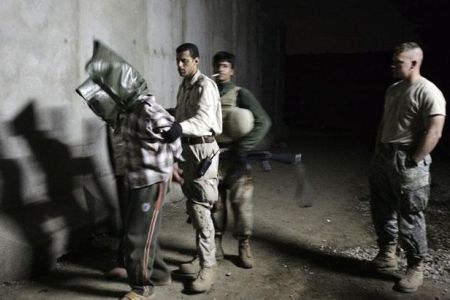
Britain’s Ministry of Defence (MoD) has decided to shake off allegations of systematic abuse at any cost, as hard evidence corroborates the British Army’s use of torture techniques.
The findings of an inquiry into the death of an Iraqi civilian at the hands of British soldiers has sparked widespread criticism, even condemnation, of the treatment of Iraqi detainees by British soldiers.
Baha Mousa, a 26-year-old hotel receptionist, was detained when soldiers from the First Battalion of the Queen’s Lancashire Regiment in the Iraqi city of Basra raided the hotel at which he worked. Two days later, Mousa died while in British Army custody.
The MoD was optimistic about the findings of the inquiry into Mousa’s death trying to bypass any allegations of systematic torture. Nevertheless, as the MoD tries in vain to persuade the public that its detention policies have undergone systematic reforms, analysts have come up with evidence that contradicts any such claims.
A high profile British human rights lawyer, Phil Shiner, has provided several reasons supporting the systematic use of torture and abuse in the British military during the Iraq war.
First, Shiner asserts that the detention policies, which involved torture and abuse, were not restricted to just one battle group, namely 1QLR, as he states that such practices were common, at least, at 14 UK facilities over the period between March 2003 and December 2008.
Shiner asserts that the set of techniques and practices included “unbelievably debased sexual behaviour, mock executions, vicious threats of rape of detainees’ female relatives, and systematic use of hooding, sleep deprivation, sensory deprivation, temperature manipulation and solitary confinement for weeks.”
Second, Shiner says that the shameful techniques and practices were systematically taught, as the Joint Forward Intelligence Team was the mastermind behind the techniques used by British troops.
Furthermore, as the British Defence Secretary, Liam Fox, refused to accept a key finding of the inquiry, Shiner is of the opinion that the MoD has no intention of implementing the “73 carefully measured recommendations” made by the chairman of Mousa’s inquiry, Sir William Gage.
Shiner predicts that the MoD “will continue to hide damaging documents, mislead our courts, run unworthy legal arguments and use its mighty coercive power to keep the public in the dark, not just about Iraq but also Afghanistan.”
More importantly, Shiner argues that the MoD still approves the very same shameful techniques employed by interrogators in Iraq, though Sir William has severely criticised such practices. Forcing a person or two into a sandbag, harshing, and hooding are techniques that are still used by the MoD.
Video Report
Press TV News/Analysis on September 8, 2011
What do Baha Mousa, Ian Tomlinson, Smiley Culture and Mark Dugan have in common? They are people who have died because of tactics used by UK police and in Baha Mousa’s case, British soldiers, why are “unlawful killings” as they are called taking place in the first place? Whether inside Britain or in war zones, it has put the spotlight on UK’s disproportionate and excessive use of force, as was evident in the recent unrest in the UK.
Related articles


Featured Video
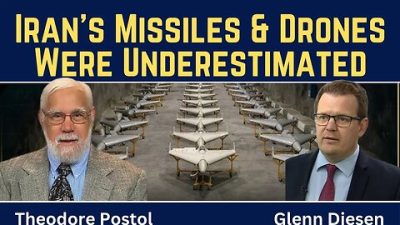
Theodore Postol: Iran’s Missiles & Drones Were Underestimated
or go to
Aletho News Archives – Video-Images
From the Archives
What is the Israeli Lobby in Australia Doing in Interfaith Dialogue?
By Ali Kazak | Dissident Voice | October 11, 2015
For years Israel and its lobby around the world have been trying to normalise their relations with Arabs and Muslims without solving the Palestine Question.
One of the methods they resorted to in the last few years is using human rights and community organizations such as interfaith dialogue and Multiculturalism to achieve this objective and to: isolate the Palestinians, marginalise the Palestine question, end Israel’s isolation, and prevent criticism of Israel, knowing that these organisations will be the first to stand against Israel’s violations, racial and religious discrimination.
The group responsible for this task in Australia is The Australia/Israel & Jewish Affairs Council (AIJAC); its Director of International & Community Affairs, Jeremy Jones is in charge of lobbying religious community organizations, specifically Muslims and Christians. Consequently he convened the Faith Communities for Reconciliation, founding participant in the Australian Partnership of Religious Organisations and the Australian National Dialogue of Christians, Muslims & Jews.
AIJAC is a private political propaganda group. It is recognised as the main Israeli lobby in Australia. It coordinates its activities and works intimately with the Israeli embassy in Canberra and different institutions in Israel. It is privately funded by some Jewish businessmen. It monitors closely Australian politicians, the media, ethnic and religious groups, (especially Arabs and Muslims), unions and academics on their stands towards Israel and the Palestine question. … continue
Blog Roll
 Aletho News
- The killing of three Indonesian soldiers in Lebanon should remind Jakarta that Israel does not want peace
- Defeated and delusional: Netanyahu’s remarks reveal $80bn war failure, says analyst
- Iran’s friends are about to make life much more difficult for Israel and the US
- The war of liberation of the Arab and Islamic peoples expands across the Gulf
- Envoy warns UN on Trump’s threat to ‘obliterate’ Iran’s civilian infrastructure
- The Larak Corridor: Iran’s Rial Gate With No US, No Israel, and No Way Around
- ‘Economic terrorism’: Steel facilities hit again in US-Israeli strike
- ‘War Crime’: Iran condemns attacks on Arak, Ardakan nuclear sites
- Two-thirds of Americans want quick end to Iran war even if goals unmet
- Trump to Give “Important Update on Iran” Wednesday in Prime-Time Speech
- If Americans Knew
- Israel wants US to bomb more of Iran’s civilian structures (113,000 is not enough) – Not a ceasefire Day 173
- Ann Coulter Rips Into Fox News for Iran War Coverage
- Joe Kent Urges Americans To Call White House and Congress To Object To Sending Troops Into Iran
- DNC Resolution to Reject AIPAC Funding Puts Democratic Leaders in the Hot Seat
- Swedish foundation to build 400 schools as over 650,000 Gaza children remain without education for 2 years
- Israeli army admits photshopping image of slain Lebanese journalist
- This is how Israel is systematically killing health workers under the cover of war in Lebanon
- Carrying life under fire: Israeli invasion of Lebanon leaves pregnant women facing deadly risks
- Champagne all around for the new death penalty (for Palestinians) law – Not a ceasefire Day 172
- Why are Palestinian books struggling to be seen on Amazon?
- No Tricks Zone
- New Study Finds Warming Saves Lives…Cold Temperatures 12 Times More Deadly Than Excess Heat
- German Science Blog Accuses PIK Climate Institute Of Hallucinating Climate Tipping Points
- Devastating Assessment Of Comirnaty Vaccine By Former Senior Pfizer Europe Toxicologist
- New Study: CO2 Is ‘Effectively Negligible’ As An Explanatory Climate Change Factor Since 2000
- Former Pfizer Toxicologist Dr. Helmut Sterz Tells Bundestag Hearing Pfizer Vaccine Should Have Never Been Approved
- Energy Expert: Germany’s Nuclear Phaseout Was A “500 Billion Euro Mistake”
- New Research: South Australia’s Mid-Holocene Sea Surface Temperatures Were 4°C Warmer Than Today
- Storing Green Energy To Last Germany 10 Days Would Require A 60-Million Tonne Battery
- New Studies: UK Sea Levels Were 4 Meters Higher Than Today During The Mid-Holocene
- Destructive Green New Deal: German Energy And Metal Group Warns Of Drastic Crisis
 Aletho News