Two international activists arrested on visit to military court
International Solidarity Movement | January 29, 2014
Occupied Palestine – On Wednesday 29th January, 2014, two international human rights activists were arrested at Salem Military Court, in Jenin district. The activists, Norwegian and Canadian, were at the court to attend a hearing for Ahmad Atatreh, a 20-year-old Palestinian activist who had been arrested ten days earlier at a peaceful demonstration in the Jordan Valley.
Following the hearing, which the activists had attended in solidarity with Mr Atatreh and his family, Israeli soldiers violently pushed the defendant, who was in handcuffs, out of the courtroom. When the internationals asked why he was receiving this rough treatment, the soldiers took the passport from the Norwegian and arrested her on the accusation of having “slapped a soldier.”
The two remaining activists and the family of Mr Atatreh left the court facilities and were getting into a car outside when they were approached by another soldier, who subsequently arrested the Canadian, accusing him of “attempting to prevent an arrest.”
The activists were held overnight in the police station in the illegal settlement of Ariel. Under Israeli law they should be taken before a civil court judge within 24 hours of their arrest, although in recent cases the police have disregarded this, preferring to initiate deportation procedures without following due process.
The Canadian citizen was released on Thursday afternoon. The Norwegian citizen is being processed for deportation.
In the past month alone, five international human rights activists have been arrested, leading to concerns of a military crackdown on international solidarity with the Palestinian people.
With regard to the case of Ahmad Atatreh, who was arrested on the accusation of assaulting a soldier, the judge postponed the trial for a further month, in order to re-examine the evidence. The next time he appears in court he will have spent six weeks in administrative detention.
The Israeli military judicial system has been criticized by various human rights groups for their lack of fair trial guarantees and discrimination in procedural law. For more information on Israeli military courts see: http://www.addameer.org/etemplate.php?id=291

Salem Military Court
Related articles


Peaceful protest ends in deportation and imprisonment
International Solidarity Movement | January 20, 2014

Photo by ISM
Occupied Palestine – On Saturday 18th January during a peaceful protest in the Jordan Valley, 19-year-old Ahmad Walid Atatreh, a Palestinian activist and 24-year-old Sven W, a German activist who lives in Switzerland, were arrested and beaten after a march held in Jiftlik Adam Junction. Ahmad is a law student, studying at Al-Quds University in Jerusalem.
The march in Jiftlik was organized in protest against a legislation bill recently approved in the Knesset to annex the Jordan Valley to the current state of Israel. While the Israeli government declares that the move is purely for security reasons, the large number of illegal agricultural settlements and theft of Palestinian water rights demonstrate that the motives are largely economic.
Almost 95% of the Jordan Valley lies in Area C, under full Israeli civil and military control. Palestinian Bedouin herders suffer repeated demolitions of their homes and animal shelters, and water tanks are frequently confiscated. A large section of the area is reserved as a firing zone and residents are often forcibly removed from their homes to make way for military exercises.
Approximately 60 people gathered in the Jordan Valley and began a protest holding banners and chanting against the Israeli occupation of Palestine. As the march ended, Israeli forces invaded the area and began to arrest Palestinian demonstrators. Sven W and a British volunteer succeeded in stopping the detention of a Palestinian youth and in the process were both arrested by the Israeli army.
The two international activists were violently pushed to the ground by an Israeli soldier and handcuffed. The British activist managed to escape detention, whilst Sven was blindfolded and forced to kneel on the ground.
One Israeli soldier purposefully pushed Sven’s face in dirty water before taking him behind a military jeep and repeatedly kicking him in the ribs. Ahmad was also beaten after his arrest and received injuries to his knee. The British activist received a similar assault before escaping detention.
During the arrests, Israeli soldiers fired live ammunition into the air, and on several occasions pointed their rifles at protesters’ faces.
Sven and Ahmad were blindfolded for 3 hours and were driven to an Israeli military base. While they were blindfolded, Israeli forces attempted to intimidate and frighten the activists by pointing guns in their faces.
At the military base Sven was told he was a “terrorist” and was arrested because he “threw stones”.
Sven is committed to non-violent resistance and during this particular demonstration, no stones were thrown.
Both activists were taken to a ‘medical’ room in the military base where their blindfolds were briefly removed, although their handcuffs remained. Sven told the Israeli soldiers that he had a headache after being unable to see for such a long period of time, and also that his ribs were sore due to the beating he received after his arrest. According to Sven this information was noted down although Israeli forces did nothing to assist with his pain. During this time in the medical room, many Israeli soldiers entered and took pictures of both Sven and Ahmad using their mobile phones.
Ahmad and Sven were then blindfolded again and driven to a police station in the illegal settlement of Ariel, neither activist was given any information with regard to where they were being taken or allowed to contact legal representation. During this drive Israeli forces stopped the car, tightened Ahmad’s blindfold and stole a camera from Sven’s bag, using it to take pictures of the two blindfolded men.
When they arrived at Ariel, Sven was finally informed of the three charges against him, assaulting an Israeli soldier, attempting to steal a rifle from a soldier and blocking a highway and therefore ‘”endangering” lives (however at no moment was anyone blocking the main highway, activists were gathered at the side of the road). The same charges were also given to Ahmad and are completely fabricated for both activists.
Sven and Ahmad spent the night in Ariel police station along with five other Palestinian prisoners. The light was kept on all night with Israeli forces constantly entering the cell, ensuring that none of the prisoners were able to sleep. At one point Sven was woken by a police officer and told he would have court in the morning.
Under Israeli law internationals must be taken before a judge within 24 hours.
In the morning of the 19th, Sven repeatedly asked when he would be transferred for his court hearing and he was ignored by Israeli police. At this point neither Sven nor Ahmad were allowed to contact legal representation. Ahmad also requested to speak to his lawyer and was told that unless he gave information about the demonstration he would not be allowed to contact anyone.
At 5pm, Sven was transferred from Ariel police station to a terminal at Ben Gurion airport. He was never taken before a judge and was instead asked to sign a piece of paper saying he agreed to be deported to Germany, although he has been living in Switzerland for the last 4 years.
Sven refused to sign unless he was allowed to speak to legal representation. Finally he was allowed to make a phone call, though was unable to get through to his lawyer and therefore unwilling to sign the document.
Sven was transferred to a prison in Ramle, near Tel Aviv, which is where he currently resides. He is expected to be deported on Thursday. When Sven left the illegal settlement of Ariel, Ahmad was still imprisoned. He has now been transferred to Hadarim prison in Netanya and should attend Salem court within the next few days. However he has still not been allowed to contact his lawyer, the first time Ahmad will speak to him will be when he is taken before a judge.
When Sven is deported this week, he will be the third international activist in less than two weeks to be arrested and deported by Israeli forces. Vincent Mainville and Fabio Theodule were arrested on the 8th January and deported a week later. Their arrest was ruled illegal by an Israeli court in Jerusalem, although this did not stop their transfer to the immigration center.

Photo by ISM

Photo by ISM
Related articles
International activists physically and verbally abused in detention
International Solidarity Movement | January 15, 2014
Occupied Palestine – On Wednesday 8th January, Vincent Mainville and Fabio Theodule were arrested by Israeli border police in Khalil (Hebron).
The two boys were handcuffed and taken to Jaabara police station where they were forced to kneel on the concrete floor for approximately 30 minutes. Fabio was blindfolded with his own keffiyeh and while kneeling he was pushed against the wall by Israeli border police officers and kicked in his legs.
After an hour passed, the makeshift blindfold was removed although their hands remained cuffed behind their backs for the next four to five hours.
Fabio and Vincent were questioned by Israeli forces, both refusing to sign documents that were written in Hebrew. They were went taken to Kiryat Arba police station, fingerprinted and then interrogated once again. Several hours passed and it was only at this point that they were allowed to call their legal representative.
They were transferred to a police facility near Ben Gurion airport where they were made to wait outside in a prison courtyard for two hours. Fabio asked for water and was told by a border police officer, “If you want to drink, you can drink my piss”.
Fabio and Vincent repeatedly asked for jackets or a blanket due to the cold weather, they were both ignored.
They were taken inside this facility for 30 minutes before being transferred back to Kiryat Arba police station in Khalil. Their handcuffed were removed at 12:30 at night and they were placed in a cell to sleep.
In the morning, on Thursday 9th January, Vincent and Fabio were awakened and handcuffed at 6:30 in the morning. They received no information about their situation and were not informed they had a court hearing that morning. When they arrived at court in Jerusalem they were allowed to speak to their lawyer for approximately four minutes outside the courthouse, with Israeli border police present.
After they had the short conversation with their lawyer they were taken to the immigration office in Tel Aviv. The two activists tried to refuse to enter this building as they knew their lawyer was attempting to argue against their arrest [which was eventually declared illegal]. It was at this point Israeli forces became extremely aggressive, dragging both Vincent and Fabio by their handcuffs causing their wrists to bleed.
Vincent attempted to resist as they dragged both boys up a set of stairs and it was at this point a man from the immigration center kicked him in his ribs and his face. They were taken into a room and after one hour, were able to contact their lawyer, though they were not allowed privacy for this phone call.
Vincent asked if he could file charges against the man who has beat him, and he was told he was not allowed to do this.
At this point Vincent and Fabio were given food for the first time in 25 hours.
The boys were then taken to Giv’on prison in Ramle, close to Tel Aviv. They were unable to contact their lawyer again and received no information about their case, until they were finally able to be contacted by ISM two days later.
Vincent and Fabio are very likely to be deported within the next few days, their arrest has been ruled illegal by an Israeli court but this has not made any difference to their situation. Their treatment since being arrested should serve as a reminder in terms of how Israeli forces are able to treat their prisoners, whether justified or not. However, Vincent and Fabio as internationals have received far better treatment then Palestinian prisoners. The brutal treatment of Palestinian prisoners echoes throughout Palestine and serves as a daily reminder of the Israeli occupation.
Related articles
Kifl Hares: Closure of village and settler harassment
International Solidarity Movement | January 12, 2014
Kifl Hares, Occupied Palestine – On Friday, 10th January 2014, at approximately 4 o’clock in the morning a group of twenty settlers from nearby illegal settlements entered the Palestinian village of Kifl Hares. Some of them arrived in cars, others on foot. The settlers made noise and broke windows of parked cars. Palestinians on their way to the mosque for the first prayers were harassed and settlers in cars tried to run them over. Children were frightened and the villagers were afraid to leave their homes.
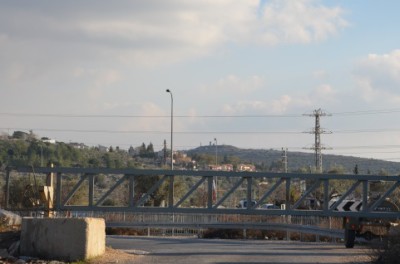 Previously, on Tuesday 7th January, the Israeli army closed the gate at the main entrance to the village, which leads to the main road. When villagers asked the reason for this, the soldiers stationed in a watchtower nearby answered that the gate would be closed indefinitely for security reasons.
On Thursday, 9th January, an emergency occurred, when an ambulance attempted to take an elderly lady living near the entrance to a hospital in Nablus. The residents requested that the Israeli soldiers open the gate for just five minutes so that the ambulance could reach the main road. The Israeli forces refused and the paramedic had to carry the lady by hand on a stretcher from her house to the other side of the gate. This delayed her arrival at hospital.
The gate has been opened only once in the past few days. This happened on Friday, when the settlers entered the village, implying that the Israeli forces knew of the settler attack.
Illegal settlers and Jewish tourists have entered Kifl Hares on many occasions. The village is located in the northern West Bank in the Salfit district and close to Ariel, the largest of the illegal settlements. The pretext for the incursions into Kifl Hares is a pilgrimage to three disputed tombs. The centuries-old tombs belonging to the village are also important for Muslims. Large numbers of settlers arrive on visits organized by the DCO and with Israeli army protection. Settlers and Jewish tourists from all over the world arrive by bus, frequently during the night. During the incursions, Israeli forces declare the village a closed military zone and Palestinians are required to stay in their homes until the settlers have left. This event occurs around twenty times a year. Nevertheless settlers also come weekly without army protection to pray in the tombs and often to harass or attack villagers. Several years ago Palestinian youth would resist these incursions by throwing stones at the illegal settlers and Israeli forces. This resistance was invariably responded to with night raids and arrests that resulted in imprisonment for up to five years. Since then villagers have been afraid to resist these settler attacks.
Related articles


Two international activists to be deported after their arrest is declared illegal
International Solidarity Movement | January 9, 2014
Occupied Palestine – Yesterday, Wednesday 8th January, at approximately 11am in Khalil (Hebron), Vincent Mainville and Fabio Theodule (Swiss and Italian citizens respectively), were arrested by Israeli border police officers.
The two international activists were first detained while trying to stop Israeli forces firing live ammunition and tear gas canisters towards a group of Palestinian youth and children throwing stones towards the soldiers.
Israeli forces accused the two activists of trying to assault a border police officer and obstruction of military action. Both activists are committed to non-violent solidarity work.
Vincent and Fabio were handcuffed and transferred to Jaabara police station, where they were left in the handcuffs for over three hours before finally being allowed to contact legal representation.
The two activists attended Hasharon court this morning in Jerusalem; they were escorted by Israeli border police and were handcuffed throughout the night. When they arrived in the courthouse they were escorted to several different rooms before being led outside the court without seeing their lawyer. Vincent and Fabio were then taken to the immigration center where deportation procedures were begun without a court hearing.
Although the judge later ruled that the activists had been illegally arrested, it was too late to prevent their transfer to immigration and therefore prevent their deportation.
The activists are now being held by Israeli forces and it is not known how long they will be held for before they are deported from the country.
Related articles


Palestinian activist arrested in night raid in Nablus
International Solidarity Movement | January 7, 2014
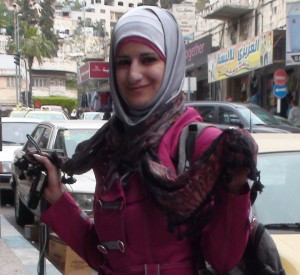 Nablus, Occupied Palestine – At 2:30am on Tuesday morning, Israeli soldiers and secret service agents entered a house in the city of Nablus and arrested Sireen Khudairi, a 24-year-old schoolteacher and activist. No arrest warrant was given, although Sireen was threatened with physical violence if she did not accompany the soldiers.
This is the second time in a year that Sireen has been arrested without a warrant. On May 14th 2013 she was arrested and held for two months on the charge of having written a Facebook page that “compromised the security of the state of Israel”. Her detention included 22 days of solitary confinement and no access to a lawyer or her family. She was eventually released from prison but placed under house arrest, having paid bail of NIS 7000 and on the condition that she refrain from using the internet.
On 16th September, the Israeli military court found Sireen not guilty but ordered her to refrain from activism for five years.
Sireen’s family home has been raided various times since then, as it appears that she is wanted to testify against other activists. This is yet another event in the ongoing campaign of intimidation against non-violent Palestinian activists, and the criminalization of protest by the Israeli state.
For more information on Sireen’s case and how to act, please visit:
http://freesireen.wordpress.com/
Related articles


Murad Eshtewi, head of the Popular Committee of Kafr Qaddum, has been arrested
International Solidarity Movement | December 21, 2013
Kafr Qaddum, Occupied Palestine – Yesterday morning, Murad Eshtewi, the head of the Popular Committee of Kufr Qaddum and leader of the Friday demonstrations was arrested and is still being held by Israeli forces.
At around 3:00 on Friday morning, Israeli soldiers entered the village of Kafr Qaddum, in Qalqilya district, arresting two citizens on the accusation of having taken part in the regular Friday demonstrations held in the village. The men were released the following morning without charges.
The house of Murad Eshtewi, the head of the Popular Committee of Kafr Qaddum, was also raided during the night incursion and he was subjected to aggressive questioning.
Later, at approximately 10:00 on Friday morning, two hours before the demonstration was due to begin, Mr Eshtewi was walking on the outskirts of the village and was ambushed and arrested by soldiers. He did not resist this arrest and yet Israeli forces were extremely aggressive in their use of both pepper spray and stun grenades. He has not yet been released.
His attorney, Lymor Goldstein, stated that, “Contrary to the fundamental principles of due process we have not been presented with the accusations against Murad nor has he been interrogated since his arrest. “
In recent weeks there has been a steady escalation of night raids, increasingly violent repression of Friday demonstrations, flying checkpoints and seemingly arbitrary arrests. In the past month alone there have been more than twenty night raids on houses in the village.
Last month a new army commander responsible for the area gave a verbal warning to villagers stating that, unless they suspend their Friday demonstrations, the military harassment outlined above would be increased.
A typical night raid will involve up to around fifty soldiers surrounding and entering a particular house. Tear gas is often released and live ammunition may be fired into the air to intimidate residents. Israeli soldiers may break windows and doors in order to enter the houses.
Arrestees are blindfolded and handcuffed before being taken for questioning to another location. Interrogation may take place in the back of an army jeep, on the ground at the side of the road, or within the police station. Frequently they are subjected to verbal and physical abuse. When released, the detainees are often left in the road, kilometers from their homes.
The villagers of Kafr Qaddum are currently unable to access much of their land due to the closure by the Israeli army of the village’s main and only road leading to Nablus in 2003. The road was closed in three stages, ultimately restricting access for farmers to the 11,000 dunams of land that lie along either side to one or two times a year. Since the road closure, the people of Kafr Qaddum have been forced to rely on an animal trail to access this area; the road is narrow and, according to the locals, intended only for animals. In 2004 and 2006, three villagers died when they were unable to reach the hospital in time. The ambulances carrying them were prohibited from using the main road and were forced to take a 13 km detour. These deaths provoked even greater resentment in Kafr Qaddum and, on 1 July 2011, the villagers decided to unite in protest in order to re-open the road and protect the land in danger of settlement expansion along it.
Related articles
- Month-old child injured during Israeli raid in Kafr Qaddum (altahrir.wordpress.com)
- Israeli forces attack protests commemorating Mandela across West Bank (altahrir.wordpress.com)
- PHOTOS | Israeli forces open fire on West Bank protests, injuring dozens (occupiedpalestine.wordpress.com)
An unrelenting assault on the village of Deir Istiya’s farmland
International Solidarity Movement | November 28, 2013
Deir Istiya, Occupied Palestine – The village of Deir Istiya has encountered severe disruption to its agriculture and water supply since 1990 from the Israeli authorities and nearby illegal settlements. This has culminated in the Israeli army’s planned action to uproot nearly 2,500 olive trees in the very near future.
The army’s mandate to perform this action stems from a court ruling given in May 2013 that gave permission for them to cut down all olives trees in the Wadi Kana (a valley making up a large part of the village’s farmland) that are under two years old. However trees that were planted over five years ago have been included in the marking action over the last five months, a marking action typically precludes the actual uprooting process.
On the 26th of November, four men in civilian clothing marked 157 more trees across the village farmland. Before the army actually begins the action, under Israeli law, they have to inform lawyers representing the village of the date that this will commence. Although from past experience, villagers across the West Bank have not received such prior warning in similar cases. If the army succeeds with its plan, the destruction of more than 2,500 olive trees will decimate the village’s agriculture and economy, destroying the livelihoods of many of the 4,000 inhabitants of Deir Istiya.
This is the latest in a long line of aggressive acts that the Israeli government, army, courts and nearby illegal settlers have inflicted upon the people of this village. In 1990 nearby settlers deposited sewage from three separate illegal settlements into the 12 springs that provided water for the village. This water was crucial for the irrigation of the traditional crops of the village, lemon and orange trees. As water became scarce for the village, the farmers abandoned the orange and lemon crops, replacing them with olive trees due to the fact they require far less water. This is typical of the Israeli state to dramatically reduce the Palestinians methods for survival only to attempt to snatch away the small ray of hope that they have managed to build for themselves in the face of such adverse conditions.
Moreover, on the 23th of November, illegal settlers from a nearby settlement trespassed on Palestinian land in order to steal 100 meters of fencing material. The purpose of this fence was to protect a number of olive trees from pigs that have infested the area since Israeli settlers began releasing them for the exact purpose of disrupting Palestinian olive farming.
Continued settler harassment and international arrested in Hebron
International Solidarity Movement | October 13, 2013
Hebron, Occupied Palestine – One international was arrested after settlers fenced off the Asseh family home for a second day in a row in Hebron’s Tel Rumeida area.
Yesterday, early Saturday morning, settlers tied a fence across the exit of the Asseh family home with a wire gate to prevent them from leaving for a second day. After the family and internationals removed the gate, settler children threw rocks, water and water mixed with faeces at them. Two Israeli soldiers stood close and did nothing. The police arrived but also took no action despite being informed of what had happened.
Within an hour of the Asseh family and the internationals dispersing, the gate had been reassembled and reinforced. One adult male settler stood over the gate and prevented anyone from passing through or disassembling it. After 20 minutes the Asseh family and internationals finally managed to remove the gate despite repeated physical attacks by the settler. A number of internationals sustained minor injuries. During this, soldiers continued to stand by and do nothing.

Palestinians view the fence around the Azzeh home
The police arrived and first questioned the settler and then two soldiers who were present. After being shown video footage by an international, police demanded that four internationals accompany them to the police station to file a complaint. When the internationals requested to file the complaint later, police became violent and arrested one international. Other internationals were thrown to the ground by police and soldiers who assisted the arrest. The arrested international was eventually released after being questioned in the police station at the illegal settlement of Givat Havot.
Related articles
Illegal settlers prevent family from leaving their home and attack internationals whilst Israeli soldiers watch
International Solidarity Movement | October 12, 2013
Yesterday, 11th October at 7 pm, a group of settlers of the illegal settlement of Tel Rumeida surrounded the entrance of the Azzeh family property and built a wire fence to block the exit. Young settlers fixed the fence in place using plastic cable ties.
Hashem Azzeh and his family were about to leave the house when they found the gate blocking their way and the settlers confronted them saying they couldn’t go out that way any more. A group of Israeli soldiers were present but did not stop the action.

Baruch Marzel. (Photo credit: Wikipedia)
Two international activists arrived on the scene and were surrounded by settlers and physically and verbally attacked by them, one of them had water thrown over his camera and another was kicked. An international journalist also present was hospitalized after a settler threw bleach into her eyes. After more international activists arrived, they managed to remove the fence. Despite multiple appeals to the Israeli soldiers to prevent the settler violence by both the Azzeh family and the international activists, they took no action. Jewish Defense League leader Baruch Marzel, was left free to verbally attack Hashem Azzeh.
The Azzeh family has long been a target of settler intimidation and harassment. Last Thursday during the night settlers trespassed on the Azzeh family property and stole about 400 Kilos of olives from 40 olive trees. Hashem Azzeh had been prevented from starting his olive harvest pending a permit from the Israeli Civil Administration. Four days after his olive trees had been raided, he was suddenly informed by the administration that he should start his harvest immediately, but unfortunately he doesn’t have any olive trees left.
Related articles
Jewish settlers steal olives from 110+ trees in Abu Huwar
International Solidarity Movement | October 7, 2013
Deir Sharaf, Occupied Palestine – On the 5th of October, local farmers discovered that the olives from more than one hundred trees had been stolen, and that another ten trees had been damaged or destroyed. Abu Huwar farm, belonging to Yasser Fuqaha, Sidqi Fukaha, Mustafa Fuqaha and other farmers from the Meri family.
A local factory worker reported that he had seen two buses loaded with settlers pull up and unload next to the farm, in the night between the 3rd and 4th of October. About 150 metres into the field the olives had been swiftly picked from the trees, leaving small amounts on the tops, and the damaged trees bore markings from sharp-edged cutting tools. Yasser Fuqaha reported that the amount stolen from him represented about three quarters of his expected total yield, a devastating blow to his income. This attack precipitated the start of the olive harvesting season, and puts pressure on the local farmers to start harvesting the olives before they have reached optimal ripeness.
Abu Huwar has not had an easy run over the years. The local Palestinian farmers reported that, in 1996, the part of the olive grove that was on the other side of the hilltop (itself the location of an illegal settlement) had been completely uprooted by radical settlers and moved into various places on the other side of the 1967 Israeli border. Also, in the period 2000-2008, the farm and surrounding farmlands had been closed off from Palestinians by the Israeli military.
A national symbol, the olive tree represents the most essential source of income and sustenance for many Palestinians. The destruction of olive trees and theft of its yields is a serious crime and a huge loss for the local farmers.
Related articles
AL-KHALIL: Settlers re-occupy Abu Rajib house
CPTnet | September 24, 2013
On 23 September 2013, in response to the death of Israeli soldier Staff Sgt. Gal Kobi, Prime Minister Benjamin Netanyahu called for illegal settlement expansion in the Old City of Hebron.
At 1:00 a.m. on Tuesday 24 September, the Christian Peacemaker Team in Hebron received reports from the Hebron Rehabilitation Committee that Israeli settlers had re-occupied the Abu Rajib house west of the Tomb of the Patriarchs. Settlers had been evicted from the building in April of 2012.
The resettlement of the Abu Rajib house is a direct and significant risk to the community of Hebron, international law, and human rights, as settlements are illegal under international law and impede the ongoing peace process.
In addition to the illegality of the settlement, the location of Abu Rajib will constitute a severe threat to the freedom of movement for Palestinians. The house sits between two Palestinian Schools and Israeli military checkpoint 209, which CPT monitors every morning as part of its school patrol. If the settlement remains, it will be in the middle of an area hundreds of Palestinian children must pass each morning to attend classes.
Over the past week of the Jewish holiday of Sukkoth, the Israeli military has increased its presence with additional soldiers on the ground, occupying Palestinian homes and turning them into military outposts in and around the area of the Abu Rajib house. As a result, school attendance at Al-Faihaa girl’s school and Al-Ibrahimmiye has dropped.
On Monday, 23 September, the Al-Faihaa girl’s school was shut down completely since so few students were able to attend classes. The added Israeli military presence installed around the settlement will continue this trend.
Israeli settlement expansion has led to several cases of violence between Palestinians and Israelis, including near the settlement of Tel Rumeida.
“For the residents of Tel Rumeida, living next to settlers means living under constant threat of attack,” said a representative from the human rights observer organization, the International Solidarity Movement (ISM). “The Abu Shamsiyeh family who live in Tel Rumeida is particularly vulnerable to attacks, as settlers and Jewish tourists tend to enter their roof and even invade their garden without permission. Most use this private Palestinian roof to enjoy the view of the city, but incidents have occurred where settlers threw stones and garbage down at the family, urinating into their garden and verbally harassing the family.
“Last month, settler youth entered the family’s garden, threw stones at them, and beat their thirteen-year old son. When Abu Shamsiyeh asked the soldier stationed outside their house for help, he came down and watched as settlers kicked Abu Shamsiyeh, and another soldier pushed his wife, who was videoing the incident, to the ground.”
If the Abu Rajib settlement is allowed to stay, in breach of international law and during the ongoing peace negotiations, the rise in settler violence against Palestinian youth and adults will escalate.
Related articles
Featured Video

Pentagon insider says high US official Douglas Feith reported to Netanyahu
or go to
Aletho News Archives – Video-Images
Frlom the Archives
Who’s to blame for the Iraq war?
A not-so-trivial quiz
By Maidhc Ó Cathail | 14 March 2010
Maidhc Ó Cathail names and shames the top 19 politicians, academics and policy makers – all con men and all Zionist Jews – who lied and conspired to steer the US toward aggression against the Iraqi people. … continue
Blog Roll
 Aletho News
- Iranian model of warfare bleeds US dry while Persian Gulf states watch and learn: Analyst
- IRGC orders ‘defeated’ US to evacuate industrial facilities in region
- Hegseth’s call for ‘no mercy’ to Iranians deemed war crime
- Iran War Exposes Limits of US Military Power – Journalist
- Even The Neo-Cons Admit The Iran War Is Failing
- Inside the Caucasus Drone Corridor Fueling Tensions With Iran
- ‘Not our war’: Trump’s naval coalition to reopen Strait of Hormuz dead in the water
- Iran declares support centers for USS Gerald R. Ford legitimate targets
- Moscow issues warning over Trump’s Golden Dome plan
- Brussels wants ‘our sons to die for Ukraine’ – Orban
- If Americans Knew
- ‘I Liked the House’: When Israeli Soldiers Turn Palestinian Homes into Barracks
- ‘They Were All I Had’: Lebanese Father Buries Parents, 4 Daughters Killed by Israeli Bombing
- Israel and its supporters are causing attacks on Jewish institutions. Case in point: Michigan synagogue tragedy.
- These are the casualties and cost of the war in Iran 2 weeks into the conflict
- Chicago Teachers Union accuses AIPAC of swaying elections with ‘dark money’
- Predictions of another 9/11, amid Israel-US killing spree – Not a ceasefire Day 157
- As US-Israel war on Iran rages, Gaza faces massive dust storm – Not a ceasefire Day 156
- No let-up in attacks on Gaza as Israel takes on Iran, Lebanon – Not a ceasefire Day 155
- ‘Of Course’: IDF Drops Case Against Soldiers Accused of Raping Palestinian Prisoner
- Don’t Fall for the Regime Change Talk. Israel Is ‘Mowing the Lawn’ in Iran
- No Tricks Zone
- Storing Green Energy To Last Germany 10 Days Would Require A 60-Million Tonne Battery
- New Studies: UK Sea Levels Were 4 Meters Higher Than Today During The Mid-Holocene
- Destructive Green New Deal: German Energy And Metal Group Warns Of Drastic Crisis
- New Study Documents A 20-Year Pause In Arctic Sea Ice Decline – Driven By Internal Variability
- Wake-up Call: Survey Shows Majority Of Germans Now Favor Postponing Climate Targets!
- Televised! Leading German Political Candidate Tells Schoolchildren CO2 Makes Sun Hotter!
- New Study: A Century Warming Of 1.1°C Is ‘Commonplace’ And ‘Not Unusual’ During This Interglacial
- New Study: ‘Internal Noise’ And Volcanic Forcing Can Trigger 10-15°C Warming Within Decades
- Glaciers Worldwide Are Suddendly Surging, Experts Blame Warming!
- Surprising Discovery: Sahara Is Greening…Billions Of Trees Where Once Thought To Be Barren
 Aletho News