‘I much prefer a nuclear deal’: Trump dismisses talk of US–Israeli attacks on Iran
The Cradle | February 5, 2025
US President Donald Trump has denied that Washington and Tel Aviv are planning military attacks against the Islamic Republic of Iran, saying that he would “much prefer” a nuclear agreement preventing Tehran from acquiring an atomic weapon.
“I want Iran to be a great and successful Country, but one that cannot have a nuclear weapon. Reports that the United States, working in conjunction with Israel, is going to blow Iran into smithereens, ARE GREATLY EXAGGERATED,” Trump said early on 5 February on his social media platform Truth Social.
“I would much prefer a Verified Nuclear Peace Agreement, which will let Iran peacefully grow and prosper. We should start working on it immediately, and have a big Middle East celebration when it is signed and completed. God Bless the Middle East!” the president went on to state.
In early February, reports said that Trump shot down Israeli plans for an attack on Iranian nuclear facilities.
Trump expressed hope late last month that a nuclear deal could be “worked out without having to go that further step,” referring to an attack.
A Wall Street Journal report in December said Trump’s team was mulling options for strikes on the Iranian nuclear program and that there was a “rare opportunity to counter Iran’s nuclear buildup.”
This week, the US president signed an executive order restoring his “maximum pressure” policy of sanctions on the Islamic Republic, as reports had said he would prior to his second presidential term.
“If the main problem is Iran not having nuclear weapons, this problem can be solved,” Iranian Foreign Minister Abbas Araghchi said on Wednesday, adding that “maximum pressure is a failed experiment and testing it again will lead to another defeat.”
Trump withdrew from the 2015 US–Iranian nuclear deal in 2018 – during his first term – and restored harsh sanctions against Iran.
Tehran is subject to the Nuclear Non-Proliferation Treaty (NPT) of 1970, as well as a religious fatwa outlawing the development and use of any form of weapons of mass destruction.
Former CIA director said last month that “we do not see any sign” that Iran is planning to weaponize its nuclear program.
Iran to Trump: Another maximum pressure, another defeat for Washington
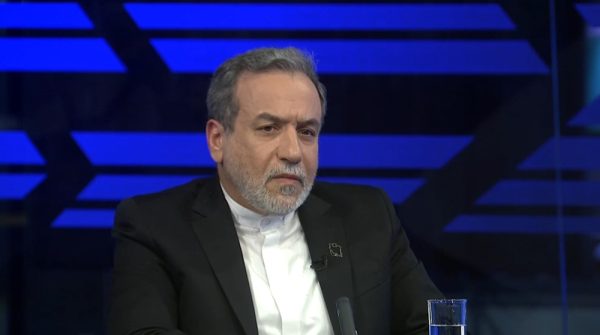
Press TV – February 5, 2025
Foreign Minister Abbas Araghchi has asserted that another round of deployment of the “maximum pressure” policy on the part of the United States against Iran will only lead to another defeat.
“The policy of maximum pressure has already proven to be a failure, and any attempt to revive it will only lead to another defeat,” the top diplomat told reporters on the sidelines of a cabinet meeting on Wednesday.
Araghchi was referring to the policy that the US adopted during Donald Trump’s former tenure, as part of which Washington quit a 2015 nuclear deal with Iran and world powers, returned the sanctions that the agreement had lifted, and piled up even more illegal and unilateral bans against the Islamic Republic.
Retaliating against the measures, Iran took legitimate nuclear steps that have featured its operationalizing advanced centrifuges among other things.
The country also explored various means to skirt the sanctions and boost its economy by fostering foreign trade and enhancing domestic production, causing Washington to suffer “maximum defeat” in adoption of such policy.
On Tuesday, Trump promoted new “tough” measures aimed at, what Washington has called, “deterring” Iran from obtaining a “nuclear weapon.”
Trump also signed a presidential memorandum, authorizing stricter illegal actions against Iran, while saying, “They can’t have a nuclear weapon, we’d be very tough if they insist on doing that.”
Washington’s adversarial stance comes despite Tehran’s repeated assurances that its nuclear activities remain in full compliance with international regulations, and the International Atomic Energy Agency (IAEA)’s invariable verification of the peaceful nature of the Islamic Republic’s nuclear energy program.
Reacting to Trump’s remarks, Araghchi said, “If the main issue is that Iran should not pursue nuclear weapons, this is achievable and not a difficult matter.”
“Iran’s stance is clear, and it is a member of the NPT (Nuclear Non-Proliferation Treaty), and there is also the fatwa (religious decree) of the Leader, which has clarified the matter for us,” he added.
Leader of the Islamic Revolution Ayatollah Seyyed Ali Khamenei’s has prohibited pursuance, attainment, and storage of such non-conventional arms through an official decree as per religious and moral grounds.
“The Leader’s fatwa has made Iran’s position crystal clear,” Araghchi concluded.
‘Iran has never had, will never have nuclear weapons program’
Also on Wednesday, Mohammad Eslami, head of the Atomic Energy Organization of Iran (AEOI), likewise reacted to Trump’s remarks, saying, “Iran has never had, does not have, and will not have a nuclear weapons program. Iran’s approach in this regard is absolutely clear.”
He added, “Iran’s peaceful nuclear program is being implemented within the framework of Safeguards [Agreement] and the NPT.”
IRIB head confirms journalist held by Israeli forces in occupied territories
Press TV – January 28, 2025
The head of the Islamic Republic of Iran Broadcasting, Peyman Jebelli says an IRIB journalist has been detained by Israeli forces in the occupied territories.
Jebelli on Tuesday revealed that following extensive inquiries, it has been confirmed that the journalist is currently imprisoned and held captive by the Israeli regime.
Highlighting the sensitivity of the matter, the IRIB chief noted that the family of the detained journalist had preferred not to publicize the matter, which has complicated efforts to secure the release.
He emphasized that the journalist remains in captivity in the occupied territories and is not in Gaza.
Jebelli said, “We are hopeful that he will be freed from captivity soon.”
Journalists working within the Palestinian territory encounter heightened risks while covering the genocidal war, particularly in light of Israeli ground assaults and airstrikes, as well as challenges such as disrupted communications, shortages of supplies, and power outages.
Despite these dangers, Palestinian journalists continue to document the atrocities of the war, serving as the eyes and ears of the global community during one of the deadliest wars of the 21st century.
Last month, the Palestinian resistance movement Hamas condemned the deliberate targeting and killing of journalists and media professionals by Israeli forces in Gaza, labeling such actions as a “war crime.”
The statement emphasized that such attacks are meant to “terrorize Palestinian journalists and prevent them from performing their role in exposing the crimes and atrocities being committed by the occupation army against our people and land.”
Since the start of the Israeli war, an unprecedented number of journalists and media workers have been arrested — often without charge — in what they and their attorneys say is retaliation for their journalism and commentary.
More than 200 journalists have also been killed since Israel unleashed its strikes in October last year.
Nonetheless, media workers remain committed to reporting developments in Gaza, even in the aftermath of the recent ceasefire between Hamas and Israel.
Trump might defy policy to reach nuclear deal with Iran: Responsible Statecraft
Al Mayadeen | January 27, 2025
President Donald Trump has signaled an unexpected shift in the conventional US policy regarding Iran, revealing that the only issue his administration would face with the Islamic Republic is its development of a nuclear weapon.
Speaking on Fox News’ Hannity show on January 23, Trump did not address Iran’s regional policies, its defiance of the Israeli occupation, or the possibility of enforcing a regime change. Rather, his only focus was preventing Iran from acquiring nuclear weapons.
In this regard, a Responsible Statecraft report, written by Eldar Mamedov, recalled previous statements by Iranian officials, confirming that the nation does not seek nuclear weapons, adding that this could facilitate a political agreement between Washington and Tehran.
Tehran has also gestured its willingness to re-engage with the West, particularly following the election of Iranian President Masoud Pezeshkian and his government coming to power. However, despite the mutual political willingness, the path to a deal remains highly complex and is vastly different from 2015, when the JCPOA curtailed Iran’s nuclear program.
Is a nuclear deal possible?
Following Trump’s 2018 withdrawal from the JCPOA, his imposition of sanctions, and the EU’s failure to abide by the terms of the deal, Iran significantly advanced its program, including enriching uranium to 60%—a step away from weapon-grade levels (90%)—and deploying advanced centrifuges. Nuclear expert Kelsey Davenport notes that Iran could now produce enough material for five to six nuclear bombs in just two weeks, according to Mamedov.
The situation is further complicated by the limited access the IAEA has had to Iran since 2021, heightening concerns about unmonitored nuclear material potentially being moved to covert sites, as well as shifts in Iran’s nuclear rhetoric that suggest a potential rethinking of its doctrine.
While Tehran officially maintains it is not pursuing nuclear weapons, regional challenges could incentivize Iran to consider a nuclear deterrent, Mamedov explained.
Israeli Prime Minister Benjamin Netanyahu’s threats of a direct attack, possibly with US support and cover, could possibly motivate Iran to contemplate threshold weaponization as a defensive measure.
Mamedov writes that negotiations to achieve a potential deal would have to consider Iran’s extensive nuclear program, as well as the set of motivations it has to expand its nuclear manufacturing. In this context, concessions would have to be made, addressing the regional situation and Iran and its allies’ security concerns, which prompted nuclear development in the first place.
Although Iran’s Leader Sayyed Ali Khamenei approved re-engagement and Pezeshkian’s reformist government advocated for a more proactive approach, majorly to ease US sanctions on the Islamic Republic, some Iranian politicians still have reservations, citing the US decision to withdraw from the JCPOA. This makes the matter one of “how to engage”, rather than if engagement should be initiated.
Some Iranian officials see little benefit in trading their nuclear leverage for uncertain sanctions relief. They are also bolstered by a new strategic partnership with Russia, which includes military and security cooperation, providing deterrence against potential attacks by “Israel” or the US.
The time is now!
Currently, proponents of waiting for a US initiative hold sway in Tehran at the moment. Reformists, however, argue this approach wastes time, suggesting Trump may seek a quick deal to enhance his peace-making image, especially with the Ukraine conflict dragging on. A limited framework deal, similar to Trump’s DPRK agreement, could be quickly drafted if the political decision is made, according to Mamedov.
While doubts remain about achieving a substantive follow-up deal, even a symbolic agreement—such as a handshake between Trump and an Iranian leader—could de-escalate tensions, marginalize pro-Netanyahu factions, and create room for broader negotiations addressing nuclear issues, sanctions, and regional concerns, Mamedov wrote.
Diplomatically, Iran has engaged with the EU and E3 (Britain, France, Germany) to prevent them from undermining progress by invoking UN sanctions before the October 2025 deadline. While Tehran has no illusions about the EU’s ability to restore the JCPOA without US involvement, these talks signal Iran’s seriousness about a deal and aim to avoid the E3 acting as spoilers out of fear of being excluded from future US-Iran agreements.
The most viable path forward seems to be a limited bilateral deal between the US and Iran to ease tensions, followed by multilateral negotiations with the original JCPOA signatories. With political will apparent on all sides, the opportunity to advance diplomacy is now.
Iran’s hard choice on FATF conundrum
Press TV – January 26, 2025
The issue of Iran’s membership in Paris-based Financial Action Taskforce (FATF) is one of the hotly disputed topics, with proponents and opponents each ardently sticking to their respective positions.
Supporters argue that Iran’s continued inclusion in the FATF blacklist has become a major challenge for the economy and a problem for the Iranian policy-making system for many years.
For years, economic and trade activists and entrepreneurs have accused decision-makers of indifference to financial transaction problems resulting from Iran’s disconnection from the global payments network SWIFT.
They cite the high cost of trade, economic and financial transactions due to the use of unconventional and obsolete methods such as exchange offices and commodity barter which has led the growth of dealership and rent-seeking activity, corruption, and a shadow economy, calling for legal and policy measures to remove Iran from the FATF blacklist.
In 2016, Iran under the administration of president Hassan Rouhani agreed to an FATF action plan to move from the blacklist to the gray list, accepting 37 of the Western watchdog’s 41 recommendations and introducing relevant legislation to implement them.
By 2020, however, the FATF reinstated the country on its blacklist due to what it called Iran’s failure to complete the process.
The dispute centers around the Palermo Convention on combating transnational organized crime and the CFT Act on fighting the financing of terrorism, which the Iranian parliament approved in 2018, but the Guardian Council rejected due to their conflicts with “resistance economy guidelines”, national security policies, and “contradiction with the Sharia”.
Opponents of the FATF membership believe that with multiple US sanctions imposed on Iran over the years, the approval of Palermo Convention and the CFT Act and a subsequent removal from the blacklist would not improve trade and transaction for the Islamic Republic.
The 39-nation FATF, established by the Group of Seven (G7) largest developed economies at a Paris summit in 1989, is billed as a global body that aims to develop policies to combat money laundering and terrorist financing, thus protecting the integrity of the international financial system.
Its founders praise it for its global standards. However, global standards consist of a standard setter and a standard user. The standard setter influences independent organizations and standard users to adopt standards based on the expert knowledge that is suitable for the standard setters’ logic of appropriateness.
Scholars say FATF primarily reflects the preferences of power countries and is a tool for the US and Europeans to force those preferences on other jurisdictions.
FATF’s core agenda reflects consensus among the US and EU member states to paint non-compliant jurisdictions as rogue, unreliable players, thereby scaring off would-be investors.
According to IMF data, the world economy had a gross domestic product (GDP) of $105 trillion in 2023, some $90 trillion of which belonged to FATF members. The sum included about $5.2 trillion in laundered money, most of which belong to major economies.
As for terrorist financing, the FATF has never subjected the US and the Europeans to its anti-terrorism standards for supporting the Mujahedin Khalq Organization (MKO) which until recently was on their list of terrorist organizations. Ironically, Paris hosts the annual meetings of the MKO which has a history of bombings, terrorist attacks, horrific murders like burning, decapitation, dismemberment, as well as money laundering and heist from banks.
The proponents of the FAFT still have a case. They argue that without membership, the development of economic relations with neighbors will face serious challenges and costs since they are all members of the group.
The dossier is before the Guardian Council amid fears and hopes since the country’s national interests are at stake. Ultimately, maximum care should be taken to ensure that any decision would improve the country’s situation and not lead to any self-imposed sanctions and not shoot the country in the foot.
Can Trump Fix Our Broken Foreign Policy?
By Ron Paul | January 20, 2025
By the time most of you read this column, we will have a new US President. Donald J. Trump will be inaugurated for his second term today at 11:30 AM, Eastern time, and many Americans are hopeful that the disastrous foreign policy of the past four years under Biden will be improved. There is good news and bad news.
First the good news. It is no surprise that Trump’s appointees to foreign policy and national security positions are to the person very hawkish on China. However Trump, as he often does, has defied conventional wisdom on what his China policy might be by not only inviting Chinese leader Xi Jinping to attend the inauguration, but actually picking up the telephone and having a conversation with his Chinese counterpart.
According to a read-out of the call, the two discussed “trade, fentanyl, TikTok, and other subjects” and agreed to remain in regular contact. Winston Churchill is often (inaccurately) credited with the phrase “jaw-jaw is better than war-war,” but nonetheless it is an accurate statement. It is much better to engage even with “adversaries” than to refuse contact and add more sanctions. Those who prefer sanctions over communications are the true isolationists.
On TikTok, the popular application has credited Trump with preventing the Congressional ban from taking effect. If true, it is another good Trump move in favor of our Constitutional free speech guarantees.
Likewise with Russia, media reports suggest that holding a conversation with Russian President Vladimir Putin will be among the first things Trump does as President. That is great news for all of humanity, as Biden’s dangerous proxy war in Ukraine and refusal to communicate with the Russian president has brought us to the very edge of a once-unimaginable nuclear exchange. When the end of life on earth is at stake, it is reckless to ignore the possibility of de-escalation.
In the Middle East, incoming President Trump is being credited with securing a ceasefire in Gaza, an achievement the Biden Administration seemed incapable of or uninterested in seriously attempting for the past year. Does Trump deserve all the credit? We don’t know. But we do know that thousands have been needlessly slaughtered while Biden dithered and sent more weapons. The wholesale destruction of Gaza with US bombs and financial support will be Biden’s enduring legacy and a stain on everyone involved.
The bad news is that because of President Trump’s decision to appoint the most hawkish advisors, he will be surrounded by individuals who will constantly encourage him to confront rather than disengage. For example, his special envoy on the Ukraine war has recently boxed Trump in on Iran by declaring a return to the failed “maximum pressure” campaign of his first Administration. The policy failed to achieve the desired results when first implemented and it will fail again if adopted again. Why? Iran has developed far more extensive trade ties outside the influence of the US government, for example among the BRICS countries. It is not possible to isolate Iran as it has been in the past. As with China and others, with Iran it would be far better to jaw-jaw than to war-war. Let’s hope President Trump understands that.
We will no doubt see some disappointments in incoming President Trump’s foreign policy, but there are solid reasons to be cautiously optimistic. Particularly when measured against his predecessor.
Russian Victory or Political Settlement in Ukraine?
Ambassador Chas Freeman, Alexander Mercouris & Glenn Diesen
Glenn Diesen | January 15, 2025
I had a conversation with Alexander Mercouris and Ambassador Chas Freeman, a former Assistant Secretary of Defense for International Security Affairs. Besides being a former ambassador to Saudi Arabia, Freeman’s career included opening China with Henry Kissinger and Richard Nixon in the 1970s and developing the post-Cold War security architecture in Europe.
We discussed the messy world that the Biden Administration is handing over to Trump. There is seemingly a genuine desire to end the proxy war in Ukraine, and Trump may also achieve a ceasefire in Palestine. However, NATO’s escalations in Ukraine to sabotage possible negotiations and the reckless support for HTS in Syria have reduced the possibilities available to Trump. Will the Ukraine War be resolved by a Russian victory or a political settlement?
Graham Calls on Trump to Take Out Iran Nuclear Facilities
By Kyle Anzalone | The Libertarian Institute | January 19, 2025
Ultra-hawkish Senator Lindsey Graham said incoming President Donald Trump should take out Iran’s nuclear facilities once he returns to power. Iran does not have a nuclear weapons program, but the South Carolina Republican said Trump should take advantage of Iran’s weakened position to strike the Islamic Republic.
Graham was interviewed Sunday by Margaret Brennan on “Face the Nation.” “The next topic I will be engaging in with President Trump, is to take this moment in time to decimate the Iran nuclear program,” he said. “I don’t think diplomacy works. [Iran’s] proxies [are] incredibly weakened. Israel can go anywhere they wanna go.”
Graham claimed Iran had been weakened in the Middle East, making it an opportune time to attack Tehran. That view is also shared by Trump’s envoy to the Ukraine conflict. Last week, retired General Keith Kellog said there was an opportunity “to change Iran for the better” but said it wouldn’t last for long. Adding, “We must exploit the weakness we now see. The hope is there, so must too be the action.”
While Tehran has limited its nuclear program to civilian purposes, for decades, politicians in Washington and Tel Aviv have warned that Iran is on the brink of obtaining nuclear weapons. The US intelligence community recently restated that the Islamic Republic is not attempting to weaponize its nuclear program.
In 2015, then-President Barack Obama negotiated a deal with Iran that placed unprecedented safeguards and inspections on Tehran’s nuclear program. Graham was a stalwart opponent of the Iran Nuclear Deal, and Trump broke the deal during his first term when Tehran was in compliance.
Trump brands himself a great negotiator and said on the campaign trail that he would “have to make a deal” with Iran if reelected. Graham told Brennan that it was impossible to engage diplomatically with Iran.
“This is a … religious Nazi regime,” he said. “They want to destroy the Jewish state. They wanna purify Islam and drive us out of the Mideast. It’d be like negotiating with Hitler. I am hoping there will be an effort by Israel to decimate the Iran nuclear program supported by the United States, and if we don’t do that, it’ll be a historical mistake.”
Earlier this month, Axios reported that there was a “real possibility” of American strikes on Iran during Trump’s second term.
300 Million Cubic Meters a Day? Russia-Iran Pipeline Promises Major Energy Boost
By Svetlana Ekimenko – Sputnik – 18.01.2025
The Comprehensive Strategic Partnership treaty signed between Moscow and Tehran on January 17 shed light on a new project to deliver Russian gas to Iran.
The gas pipeline’s route has been agreed on, it will pass through Azerbaijan, Russian Energy Minister Sergei Tsivilev confirmed.
Negotiations are in the final stages, volumes have already been agreed, and the sides are developing an approach to pricing, Tsivilev added. Russia will cover the infrastructure costs.
Volumes
The project is expected to start with deliveries of up to two billion cubic meters annually, with the prospect of increasing to 55 billion cubic meters.
When Gazprom and the National Iranian Gas Company (NIGC) signed a strategic memorandum on Russian gas supplies in June 2024, the Iranian side noted that about 300 million cubic meters of gas per day will be supplied daily (109 billion m3/year) via the Caspian Sea for domestic consumption and supplies to neighboring countries.
The declared volume of 55 billion cubic meters annually is comparable to the capacity of the Nord Stream twin undersea pipeline system to Europe, sabotaged in 2022.
The 30-year deal will supply Russian gas to Iran both for domestic consumption and for neighboring countries.
Why Does Iran Need Russian Gas?
Despite holding the world’s second-largest natural gas reserves (34 trillion cubic meters, after Russia), Iran is facing a fuel shortage as demand for natural gas exceeds production. Most of these reserves are untapped due to US-led sanctions that stall investment and technology improvement.
Iran’s main gas fields are concentrated in the south, and large consumers are in the north, in a region with a fairly harsh climate. In winter, Iran faces a daily shortfall of at least 260 million cubic meters of gas, straining the electricity supply.
Explainer: What makes Iran’s Rezvan and Raad loitering munitions prized assets?
By Ivan Kesic | Press TV | January 15, 2025
During the Great Prophet 19 military drills, Iranian armed forces displayed and tested cutting-edge loitering munitions, highlighting rapidly advancing capabilities.
At an important military facility, the Rezvan loitering munition was officially unveiled in the presence of the media alongside new-age combat drones and precision-guided missiles.
At the same time, the Raad loitering munition underwent testing in western Kermanshah province.
Just days later, the Iranian military announced the delivery of a new fleet of 1,000 domestically produced drones. These advanced drones boast radar-evading capabilities and can strike targets over 2,000 kilometers away, further solidifying Iran’s growing defense prowess.
What is a loitering munition?
Loitering munitions, a class of expendable drones equipped with built-in warheads, are designed to “loiter” over a target area, waiting patiently for the perfect moment to strike by crashing into it.
Often referred to as suicide, kamikaze, or one-way-attack (OWA) drones, these weapons differ from their basic counterparts. Unlike preprogrammed kamikaze drones that function as mini-cruise missiles, loitering munitions can alter their mission mid-flight or even return to base if no target is detected.
Outfitted with sophisticated sensors, precision guidance systems, and versatile warheads, loitering munitions can search, identify, track, and engage both static and mobile targets with precision.
Depending on their model and design, they can hover for several minutes or even longer, with target acquisition managed either by a ground operator using real-time imagery or autonomously, without human intervention.
Compact, transportable, and easy to deploy, loitering munitions are extremely difficult to detect or intercept, making them a powerful tool for crippling enemy forces and morale.
In recent years, these drones have seen a surge in use, demand, and technological development, becoming a cost-effective, reliable alternative to traditional high-value platforms.
The Russia-Ukraine war highlighted their versatility, with long-range loitering munitions striking targets hundreds of kilometers away and tactical variants reshaping frontline battles.
Despite their growing prominence, there remains no foolproof defense against loitering munitions, particularly on the tactical battlefield. Existing countermeasures are expensive, limited in availability, and often unreliable, according to military experts.
The evolution of loitering munitions presses on, incorporating cutting-edge advancements such as enhanced sensors, AI-driven capabilities, jamming resistance, quieter and more efficient engines, and aerodynamic designs for seamless flight and agile dives.
These innovations continue to solidify their place as a game-changing weapon in modern warfare.
What are the characteristics of Raad and Rezvan?
Iranian military sources have unveiled the Raad and Rezvan loitering munition systems, providing their names, photos, and footage, though technical specifications remain sparse.
Footage of the Raad test was first shown in February last year, then as an unnamed weapon, while its name was revealed in recent days.
Last April, based on similarities to the Russian Lancet system, Iranian media estimated a flight endurance of 30 to 60 minutes, a range of 40 kilometers, and a warhead of 3 to 6 kilograms.
Rezvan, however, made its debut just last Thursday. Only its front half was visible, protruding from a cylindrical launcher. With a reported range of 20 kilometers and a 20-minute flight duration, it’s positioned as a short-range tactical drone.
Both drones feature tactical X-wings for enhanced maneuverability during dives but differ in launch methods. Raad utilizes a booster and is launched from a tripod, distinguishing it from Russia’s catapult-launched Lancet and Scalpel systems, which feature a different wing configuration.
Raad boasts four fixed lifting wings and four smaller tail fins, manually mounted before launch. Rezvan, on the other hand, has foldable wings that deploy mid-launch.
It is not known what kind of tail fins Rezvan has, as there are configurations without them, such as the Russian Izdeliye-53, nor what kind of propulsion it uses, but it is most likely a propeller.
Also, considering the aforementioned range, it is expected to have an electric motor that is significantly quieter than a fuel-powered piston engine, making it a greater surprise for the enemy when diving.
Raad and Rezvan have a similar rotatable pod with cameras and sensors positioned in the lower half of the nose, which distinguishes them from similar foreign drones.
One notable difference compared to last year’s and the recent launch of Raad is that the latter features an antenna installed vertically on the frame.
Both loitering munitions were developed by Islamic Revolution Guards Corps (IRGC) military experts in cooperation with domestic knowledge-based companies.
Raad and Rezvan are ideal tactical equipment for protecting Iran’s borders in mountainous areas, especially in the northwest and southeast where foreign-backed terrorist groups operate.
In recent years, these groups, with knowledge of the local geography, have tried to bring their sabotage teams inside the country and in most cases were ambushed.
The newest loitering munition systems provide a more effective way to deal with such terrorist and sabotage groups at safe distances, without fear of human casualties.
What are similar Iranian and foreign systems?
The IRGC has made a big investment in the development of loitering munitions in recent years and a range of advanced systems have been employed in various military exercises across Iran.
Shahed-131, Shahed-136, Shahed-238 and Omid belong to the category of loitering munitions, but they differ in many ways from tactical Raad and Rezvan because they use gasoline engines, have a cropped delta-wing shape, a long-range (from 1,000 to 2,500 km) and are intended for strategic targets.
The latter category also includes Ababil-2, Raad-85, Arash-1 and Arash-2, cylindrical blunt-nosed fuselage designs, with different wing and fin configurations.
Smaller tactical drones similar to Raad and Rezvan are Shahin-1, Meraj 521, and Sina, all launched from tubes and with foldable wings and fins.
Partial similarities also exist with the 358 missile, a loitering munition intended for searching for and destroying air targets.
Of the foreign drones, the most similar based on the X-wing design are the Russian drones Lancet, Scalpel and Izdeliye-53, the German HX-2 and an unnamed North Korean loitering munition.
The Zionist regime’s media claimed that the Rezvan is an alleged “copy” of one of their X-wing Hero loitering munitions, however, there are significant differences in the design details, including frame, rotating pod, wings, tubes, etc.
Tactical tube-launched loitering munitions have multiple obstacles and are limited to a few basic designs, so there is not much room for radical new ones.
There is also no evidence that Rezvan does not predate its so-called archetypes and was developed long ago, as was the case with numerous other systems such as the Shahed-136 and 358-class missile, which were publicly presented years after the first sightings.
Iranian President Addresses Trump Assassination Claims and Nuclear Stance
Sputnik – 15.01.2025
Iran has never tried to assassinate US President-elect Donald Trump, Iranian President Masoud Pezeshkian said on Wednesday.
“This is another one of those schemes that Israel and other countries are designing to promote Iranophobia. … Iran has never attempted to nor does it plan to assassinate anyone. At least as far as I know,” Pezeshkian told the NBC news broadcaster.
Trump earlier accused Iran of what he called specific steps against him, adding that “the entire US military is watching and waiting.”
In September, the Trump campaign said in a press release that Trump had been briefed by the Office of the Director of National Intelligence concerning possible assassination attempts by Iran on his life, adding that Iran is “terrified” of Trump’s strength and resolve and wants then-Democratic presidential nominee Kamala Harris to win the election because of her “weakness.”
On Trump’s Role in Middle East Conflict
“I do hope that Trump will conduce to peace in the region and the world, not conversely, contribute to bloodshed and war,” the president said.
On Possible US-Israeli Attack
When asked about Tehran’s response to a possible US-Israeli attack aimed at halting the Iranian nuclear program, Pezeshkian said that the country is ready for any development.
“Naturally enough, we will react to any action. We do not fear war, but we do not seek it,” the president said.
He also expressed hope that the situation would not deteriorate that far, as an open conflict would be “detrimental” to all actors.
On Nuclear Weapons
The president emphasized that the country does not seek to build nuclear weapons, though Iran is accused of creating it.
“We upheld all the commitments that we had to commit to,” he said when asked about Iran’s talks with major powers about its nuclear program. “But unfortunately, it was the other party that did not live up to its promises and obligations.”
The State of Western Warcraft
Deep Dive with Lee Slusher | January 12, 2025
In early 2023, the head of the US European Command and Supreme Allied Commander of NATO, General Christopher Cavoli, remarked, “precision can beat mass.”1 This is true; precision can beat mass. But some countries now have the capability to render Western precision much less precise, both by “hard kill” (kinetic) and by “soft kill” (electronic). More to the point, these countries now possess both precision and mass, whereas the West is left to rely on a degraded version of the former and has long since abandoned the latter.
Power Projection versus National Defense
The “unipolar moment” of the post-Cold War period has led to thoroughly misguided notions about the nature of military power. Here it is important to understand the difference between power projection and national defense. Most militaries exist to provide the latter, i.e., the means by which to protect their nations from threats in their respective regions. Very few ever hold the ability to project power far from home.
But the US military primacy of recent decades, specifically the ability to wage and sustain war in far-flung locations, has become to many the hallmark of military power writ large. In this view, any nation unable to project power globally—essentially everyone except the US—is therefore inferior on the whole. This view is incorrect. What matters ultimately in war is the force that can be brought to bear, both the attacker’s and the defender’s, at the specific time and place it is needed.
Consider the conclusion many drew about Russia in the wake of the Assad regime’s collapse. “Russia is a paper tiger with nukes!” According to such thinking, Russia’s inability to continue propping up Assad, or its decision not to do so, somehow translated into weakness elsewhere, most notably in Ukraine. This, too, is incorrect.
When Russia intervened in Syria in 2015, it was entirely uncontroversial to conclude that this operation was likely the limit of Russia’s power projection capabilities. Yes, the country has formidable strategic air, naval, and rocket forces, but these serve mainly as a deterrent. The primary focus of all other Russian forces is to defend Russia, especially on its Western and Southern borders opposite NATO. Here Russia remains incredibly strong. Similar logic applies to China. For instance, those who mock the country’s lack of a true “blue water” naval capability overlook the potency of that force in the waters that line China’s shores.
Operation Desert Storm was the watershed moment for the brief period of US military primacy. It occurred shortly after the fall of the Berlin Wall and shortly before the collapse of the Soviet Union. There is an ongoing debate in military circles over the significance of Desert Storm. Both critics and supporters continue to misunderstand several key takeaways.
Critics point out that the US-led coalition had many months to amass a force in Saudi Arabia, did so uncontested (save the Scud missile attacks), and then smashed an inferior enemy. These things are all true. What critics fail to realize is that the ability to do all of this—diplomatically, economically, logistically, militarily, etc.—was itself an expression of extraordinary power. Moreover, they downplay the fact that this coalition really did possess operational technologies that others, including Russia and China, did not have at the time, as well as the innovations these asymmetries would prompt in weapons development in the years to follow. This was especially the case in Moscow and Beijing.
The primary failure of the war’s admirers, including many current rank and file in the US defense establishment, is to think such an operation is replicable today. They brush aside the fact that most members of the coalition still maintained their enormous Cold War-era forces, but have long since abandoned them. They exaggerate the current reach Western diplomatic influence and industrial capacity. Lastly, they cling unflinchingly to the notion of superior Western military technology. Such people are frozen in the amber of 1991.
The Fluid Nature of Capability Gaps
For decades, the US effectively had monopolies on many decisive capabilities, particularly in terms of deploying them at scale and with broad geographic reach. These included precision-guided munitions, night-vision, global strike, and others. The absence of high-intensity conflict between the US and other nations underscored this reality.
But the list of nations with advanced capabilities continues to grow, and capability gaps continue to narrow. In some cases, these gaps have closed, particularly in missile technology (including hypersonics), air defense, electronic warfare, and, more recently, unmanned systems. More importantly, and to the persistent disbelief of naysayers, some countries now have an edge over the US and its allies in some areas.
Push back hard enough on the arguments of NATO evangelists and one will find, eventually, the sole pillar on which their belief system rests. Such an exchange might begin with their boasting about Tomahawk cruise missiles. By the time these projectiles lazily make their way to their intended targets, and assuming most are not shot down or defeated electronically, Russian missiles—superior in speed, range, and payload—will have already been launched. Some will have already struck, and the others will trail behind them.
Consider the Oreshnik, for which there are no publicly known countermeasures. The prevailing theory is that the Oreshnik is a redesigned intermediate-range ballistic missile that carries six multiple independently targetable reentry vehicles, each of which carries six projectiles. It is capable of striking targets across Europe, and elsewhere, within minutes. Although the Oreshnik is nuclear capable, such warheads would be unnecessary—short of Armageddon—given the missile’s range, speed, and destructive power. This is a key point. Russia is trying to achieve strategic overmatch while removing the need for nuclear weapons. Perhaps it already has. This would be checkmate, at least in terms of a conventional war.
Of what use is the Oreshnik? There are the obvious answers, like striking NATO’s missile systems, bases, and factories, but there is a much more significant target set. Central to NATO’s plan for a defense of Europe is the expectation that American and Canadian troops and materiel would reinforce the continent, and the US was always the long pole in this tent by far. But how would they get there? Airlift would be insufficient; it simply lacks the necessary throughput. Such a conflict would require mass, and mass moves by sea. One could assume Russia keeps European ports under persistence surveillance, including on the ground. With the Oreshnik and other missiles, Russia could destroy the ports within a half hour, supplying follow-on strikes as necessary. The continent would be left with whatever it had on hand. The weakest link would become the primary one, and everything in Europe would remain vulnerable to continued strikes from Russia’s over-the-horizon systems.
Here NATO’s defenders play their perceived trump card, airpower. However, many of these aircraft are outdated while many of Russia’s have grown more advanced. Furthermore, along its periphery with NATO, Russia has the most advanced air defense network and electronic warfare complex in existence. The latter has already proven effective against many of the very technologies on which NATO’s entire way of war depends, particularly GPS-guided bombs.
All of their hopes appear to be pinned on the F-35. It all comes down to this plane, an aircraft dubbed Lightning even though it has demonstrated difficulty flying in that very weather. Could the F-35 defeat all these many threats? No one knows and that is the most honest answer anyone could provide. Neither the US nor anyone else has flown against such formidable threats—ever. Doing so would be an extraordinary gamble and ought to be understood explicitly as such. Here many suffer from a potentially terminal case of “F-35 brain” for which catastrophic defeat might be the only remedy.
Anyone who thinks China lacks similar capabilities, perhaps with the exception of an Oreshnik analogue, is a fool. Consider the possibility of a US-led defense, or even a resupply, of Taiwan in the event of a war with China, a wildly popular fantasy within the US foreign policy establishment. China has built a robust sensor-to-shooter capability that links spaced-based and terrestrial surveillance with many thousands of missiles capable of striking targets well into the adjacent skies and seas. Even if the US had sufficient armaments to support such a war (it does not), the country lacks the sealift and the ability to penetrate Chinese defenses. The entire notion of such an operation is militarily and logistically illiterate. It belongs mostly to the polished history obsessives with no real-world operational experience who populate the thinktank ecosystem.
Contrary to Western talking points, Iran possesses at least some of these capabilities. Yes, much of Iran’s war machine is rickety, but these lackluster elements coexist alongside advanced capabilities. Western governments and media celebrated the “defense” of Israel in April and October of 2024. They derided Iran’s missiles as “crude” despite the fact that the projectiles penetrated Israel’s air defense en masse and struck sensitive targets. That Iran did not execute a wide-ranging, catastrophic assault was wrongly interpreted as a lack of ability instead of as a sign of restraint. Iran responded to Israel’s provocations by messaging that it did not want a wider war and, critically, by previewing some of its high-end offensive capabilities. Regarding Israel, one should also consider the Houthi’s ability to send missiles to Tel Aviv even in the presence of the US’s premier air defense systems, known as THAAD.
Forces and Sustainment
It is common in the West, particularly among NATO member nations, to point to charts that display collective strengths in men and materiel. These graphics depict total personnel, including reservists, and tallies of a range of vehicles, artillery pieces, aircraft, and other tools of war. Such things display nicely on a PowerPoint slide. The assumption here is that synergy would occur in a conflict, that together these disparate factors would form a whole greater than the sum of its parts. While the thirty-thousand-foot view can be instructive in some instances, this is not one of them.
Individually, most Western militaries possess combat power similar to or only marginally greater than that of gendarmeries (militarized police forces capable of dealing with extensive, internal civil disturbances). As such, their suitability for foreign deployment is limited to peacekeeping operations and the provision of humanitarian aid—and, even then, only under conditions in which the warring parties are sufficiently weak or disinclined to engage them in combat. The ability of such militaries to defend their own countries from foreign threats faces similar limitations. Even the once-mighty British Army could field, at most, three brigades.
To be clear, a handful of Western militaries are larger and more capable than their anemic brothers, though none possesses its former mass. What then of their collective ability, the large and the small? Such a thing is difficult to establish, much less to maintain, without frequent, large-scale exercises in which participants stress-test every step of the “road to war” and do so as a collective. This would include: the mobilization, training, and equipping of reservists; the deployment of forces from garrisons to staging areas to front lines; fire and maneuver across wide geographic areas; and many other things. This last happened during Exercise Campaign Reforger (Return of Forces to Germany) in 1993. NATO has since opted for small, infrequent exercises, often involving only command elements or limited operational forces. Even then, the exercises revealed further deficiencies. Yes, these countries have since gained many years of experience in peacekeeping in the Balkans and in low-intensity combat in Afghanistan, but such experiences occurred under ideal conditions, most notably air superiority and uncontested supply lines.
A far more pressing problem is the current state of defense industrial production throughout the West. Though some of us have made this point for years, reality has finally begun to make its way into the mainstream discourse beyond the confines of the defense and foreign policy commentariat. In December 2024, The Atlantic published an article titled, “The Crumbling Foundation of America’s Military.”2 The piece noted, correctly, that the US is incapable of supplying Ukraine with sufficient weapons and ammunition to sustain high-intensity combat against Russia. This would be true even if Ukraine had the necessary manpower (it does not). It went on to question, again correctly, whether the US could manufacture enough materiel to fight a high-intensity war of its own. The US could not do this at present or at any point in the immediate years to come, and its allies are in an even more perilous position.
Like with the charts that show aggregate strengths in Western manpower, vehicles, etc., many derive the wrong conclusions from total Western economic might. Think of this as “collective delusion over collective GDP.” The years of fighting in Ukraine have revealed shortfalls in both production and stockpiles throughout the West. Yet, many persist in the belief that the sum of Western economic power means victory against Russia—whether in the proxy war in Ukraine or a potential direct war with NATO—is assured. “Russia is an economic dwarf!,” they shout.
GDP is but one measure of economic mass, and often a misleading one. For instance, except in extreme comparisons between the richest and poorest nations, GDP says little about the economic wellbeing and day-to-day quality of life of a regular person. It says even less about a country’s capacity to make war. Again, what matters in combat is the force that can be brought to bear and at the specific time and place it is needed. A similar logic applies to the production and distribution of armaments. In Western nations, GDP consists largely of things like professional services, real estate, and non-military government spending. In other words, collective GDP cannot be loaded into a howitzer and fired at the enemy.
The relationship between GDP and military power exists only to the extent a nation can turn wealth into weapons. The height of America’s ability to do this was during World War II, a conflict from which incorrectly-derived lessons continue to plague us. The US turned Detroit into a massive armaments factory, and did much the same throughout the rest of the country. Not only did the US have the factories at the time to do this, it also had the know-how. With the loss of domestic manufacturing came the disappearance of many of its necessary skill-sets. Then there are the supply-chain realities, which are just as stark. Those who claim the US could fight a war against China need to explain how the country could produce sufficient weapons and ammunition while also relying on its enemy for so many of the necessary material inputs. Then, of course, there is the question of how to pay for all of this.
Reckoning with Reality
A common criticism of arguments such as mine is the supposed implication that the West’s adversaries are somehow omnipotent or invincible. This is a misunderstanding at best and a strawman at worst. Again, one must consider the intended purpose of a military and its associated design. The US’s post-World War II military was sufficient to contest Soviet influence. The post-Cold War era enabled the growth of the “rules-based international order,” particularly as former foes struggled through the stages of domestic strife and economic reorientation. But the game has changed.
In more recent years, the US’s most powerful competitors built formidable national defenses capable of contesting Western power projection. These nations correctly identified and adapted to the asymmetries between their own forces and those of the hegemon. They did not dismantle and outsource the industrial machinery necessary to sustain the defense of their respective homelands. Thus, their rise occurred in tandem with imperial decline. But throughout the West, so strong was the perception of perpetual US military primacy that America’s allies willingly accepted their own decades-long slide into military impotence.
The current balance of military power between the US and its adversaries reveals a symbiosis. The US is incapable of projecting power sufficient to subjugate its adversaries, but these adversaries are even less capable of projecting power against the US homeland—at least for n
This piece belongs to the thematic series, “Flipping the Board.”
(1) https://www.businessinsider.com/ukraine-war-scale-out-of-proportion-with-nato-planning-cavoli-2023-2
(2) https://www.theatlantic.com/politics/archive/2024/12/weapons-production-munitions-shortfall-ukraine-democracy/680867/
Featured Video

NEW FAUCI EMAILS EXPOSE ATTACK ON NATURAL IMMUNITY
or go to
Aletho News Archives – Video-Images
From the Archives
Fourteen Incredible Facts About 9/11
By Kevin Ryan | Dig Within | August 8, 2015
… What is known about 9/11 is that there are many incredible facts that continue to be ignored by the government and the mainstream media. Here are fourteen.
- An outline of what was to become the 9/11 Commission Report was produced before the investigation began. The outline was kept secret from the Commission’s staff and appears to have determined the outcome of the investigation.
- The 9/11 Commission claimed sixty-three (63) times in its Report that it could find “no evidence” related to important aspects of the crimes.
- One person, Shayna Steiger, issued 12 visas to the alleged hijackers in Saudi Arabia. Steiger issued some of the visas without interviewing the applicants and fought with another employee at the embassy who tried to prevent her lax approach.
Blog Roll
Recent Comments
eddieb on Fourteen Incredible Facts Abou… Bill Francis on European leaders’ shift in the… seversonebcfb985d9 on Villains of Judea: Philip Esfo… loongtip on Report warns that ‘Jewish terr… Craig Nelms on New study shows that toxic gas… loongtip on A Funny Thing Happened on the… loongtip on EU free trade pact on hold as… John Edward Kendrick on Regime Change In Iran Is The F… Bill Francis on Australia Passes New Hate Spee… seversonebcfb985d9 on Australia Passes New Hate Spee… Bill Francis on Britain’s AI Policing Plan Tur… loongtip on Miami Beach Resident Questione…


 Aletho News
- Israel moves to restrict Palestinian re-entry to Gaza, ‘encourage outflow’: Report
- Trump aims to create new UN and own it, Brazil’s Lula warns
- UN rapporteur says Israeli demolition of UNRWA compound reflects broader attack on UN system
- From Proxy to Disposable: The US Betrayal of the Syrian Kurds
- Six injured in stabbing spree at Kurdish rally in Antwerp, victims stabbed ‘indiscriminately’
- US pledges to ‘starve’ Iraq of oil revenue if pro-Iran parties join new government
- Is China a threat to Greenland?
- South Korea’s Prime Minister Proposes US Send Special Envoy to North Korea — Report
- Pentagon downgrades China threat, shifts focus to homeland, hemisphere
- Ireland Moves to Legalize Spyware Use by Police
- If Americans Knew
- Another Gaza baby freezes to death on Netanyahu’s watch – Not a ceasefire Day 106
- Oppose Israel’s Abuses While You Still Can
- UNRWA Heads Tell Ha’aretz: ‘We Don’t Radicalize Palestinians – Their Lived Existence Does’
- Plans Call for “New Rafah” Built in Israel’s Image — Without Palestinians
- Posing as priest, reporter is spat at many times, highlighting anti-Christian sentiment in Israel
- Leaked Documents: “Planned Community” in Rafah Would Force Palestinians Into Israeli Panopticon
- ‘Permits of Humiliation’: How Israel Strangles Christian Education in Jerusalem
- “The world sees death, destruction and injustice – and they see dollar signs” – Not a ceasefire Day 105
- War criminal Netanyahu kills 11 in Gaza, joins Board of Peace – Not a ceasefire Day 104
- Another baby dies of cold in Gaza, as Rafah crossing remains locked down – Not a ceasefire Day 103
- No Tricks Zone
- Polar Colding…Antarctica Saw Its Coldest October In 44 Years!
- New Study: Sea Levels Rose 20 Times The Modern Rate During The Roman Warm Period
- As German Gas Storage Dips Dangerously Low…Shortage Hardly Avoidable
- New Study: Brazil’s Relative Sea Level Was 2+ Meters Higher And SSTs 3-4°C Warmer 6000 Years Ago
- Philosopher Schopenhauer: Climate Science Certainty Stems From Stupidity, Ignorance
- New Study: Species Extinction Rates Declining Since 1980 – ‘Climate Change Is Not An Important Threat’
- Denmark Places Climate Protection Above Animal Welfare, Poisoning And Culling Cows
- New Study: Greenland Was 3-7°C Warmer And Far Less Glaciated Than Today 6000-8000 Years Ago
- German Media Report That Current Frigid Weather Can Be Explained By Arctic Warming!
- Berlin Blackout Shows Germany’s $5 Trillion Green Scheme Is “Left-Green Ideological Pipe Dream”
 Aletho News